Trade Relations
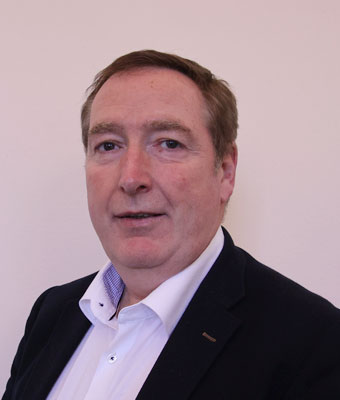
7. Deputy Tony McCormack asked the Tánaiste and Minister for Finance his assessment of the impact recent international tariff changes are having on the Irish economy; and if he will make a statement on the matter. [64103/25]
Like my colleague Deputy Brennan, I wish the Tánaiste the best with his new portfolio and look forward to working with him.
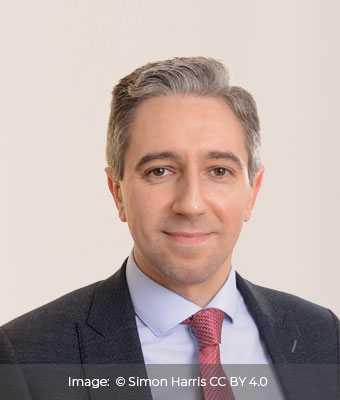
I thank Deputy McCormack very much for his kind words. I look forward to working with him. I also very much welcome this question because while I look at it from the Department of Finance perspective now, previously in the Department of Foreign Affairs and Trade I engaged significantly on trade and tariffs at an EU level. It is so important we continue to, as he rightly says, monitor the impact all these issues have or could have on the Irish and European economies were there to be further changes.
I very much welcome that the EU and the US have reached a deal on reciprocal trade. This provides much-needed certainty, or at least more certainty, to exporters. That said, tariffs continue to represent a clear headwind to domestic activity, particularly given the highly globalised nature of our economy. Updated analysis on the impact of tariffs on the economy was conducted by my Department and the ESRI. It was published alongside budget 2026 to reflect the current global tariff landscape. In this analysis, the introduction of tariffs is estimated to reduce our modified domestic demand by around 1.25% over the medium term when compared with a scenario with no tariffs, so it is having an impact. This represents a moderation in growth rather than a decline in economic activity.
It is difficult at this stage to make a definitive assessment of the impact tariff changes are currently having on the Irish economy. In the first three quarters of the year GDP recorded double-digit growth on an annual basis. Front-loading of pharmaceutical exports to the US in anticipation of tariffs played a key role in driving headline activity in the opening months of the year. The continued strength of GDP in recent quarters suggests structural factors may also be at work, including significant underlying demand for a limited range of subcategories of pharmaceutical exports. My Department will continue to monitor developments in economic activity as more data becomes available. It is also important to say that forecast done by my Department was on this idea of a 15% tariff. We need to remember pharma is still at 0% because we have not yet had the outcome of the section 232 process and we need to monitor that very closely as well.
It is evident global trade has become increasingly less conducive to the free and open exchange that characterised recent decades. In responding to the more challenging trading environment, this Government remains committed to ensuring the continued competitiveness and resilience of the Irish economy - controlling what we can control.
Gabhaim buíochas leis an Tánaiste. Our economy has shown remarkable resilience in recent years and Irish exports have held up strongly despite global tariff uncertainties. That is a credit to our businesses. However, SMEs and retailers are operating on very tight margins and tariff-linked increases in import costs risk eroding their competitiveness on the ground. Will the Tánaiste outline what steps his Department can take to support SMEs and retail businesses in managing tariff-related cost pressures in order that they can remain competitive, protect jobs and continue contributing so strongly to Ireland’s economic performance?
The Deputy is very much right. That is the reason we set up the Government trade forum. We have in the room now all relevant Departments, including mine, along with the Departments of Foreign Affairs and Trade, public expenditure, agriculture and enterprise. We also have the IDA and Enterprise Ireland meeting ISME, Chambers Ireland, IBEC, the American Chamber of Commerce Ireland and all the various agencies so we can continue to hear from the front line exactly what challenges they face.
We continue to see an economy that is growing despite the tariffs. We continue to see a significant amount of what we export being exempt from the tariffs but it is why we have taken a number of decisions to try to support Irish businesses and SMEs. It is why we took the decision on the VAT rate on hospitality. It was not popular with everybody in this House but it makes a real difference in supporting cafés, restaurants, hotels serving food and the rural pub. It is also why, through the NDP, we are investing significantly in the infrastructure our towns, villages and cities need to remain competitive. We also published an action plan on market diversification with supports available through Enterprise Ireland.
One area feeling the impact of tariffs more directly is the Irish whiskey sector. Irish Distillers, Tullamore Dew and other smaller whiskey producers are paying higher tariff rates in the American market than Scotch producers while American bourbon enters the EU with no equivalent tariff. Irish whiskey is an export success story and a major employer across rural Ireland. Will the Tánaiste work closely with our EU partners to secure improved tariff conditions for Irish spirits so brands like Tullamore Dew can compete fairly and continue to grow on the world stage?
I absolutely will. The Deputy is right. This is the sector that got away from the final deal. I know from talking to the EU Commission and counterparts this is the next big priority for Europe because of course it affects us here via Tullamore Dew and Irish Distillers but it also affects France, Italy and other countries, as well as Scotland, if you like, outside the EU. This is an issue we as a country and as a Union would have liked to see in the deal. From my conversations with Secretary Lutnick and Ambassador Greer, President Trump's trade representative, what we all have to do now is show good faith in delivering on the agreement that is in place. That work is under way on both the EU and US sides. Then we have to sit down around a table again and see whether there are areas where it simply makes sense to do more.
The Deputy is right. I have been in Washington, New York and across the United States and there are Irish companies and distillers that would have made investments in the US that would have created US jobs but that have stopped or at least paused those as a result of the impact of the tariffs. President Trump's agenda is about creating more jobs in his country. We can help with that agenda but the 15% tariff is a problem in relation to that.
Tax Code
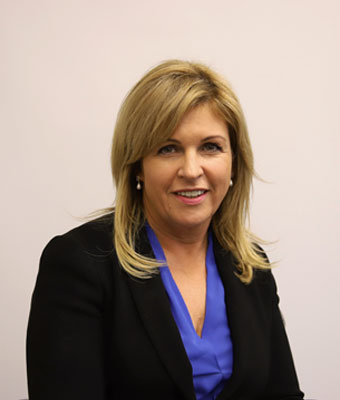
8. Deputy Rose Conway-Walsh asked the Tánaiste and Minister for Finance if his Department is considering any review or potential increase of the VAT registration threshold for the self-employed; and if he will make a statement on the matter. [64580/25]
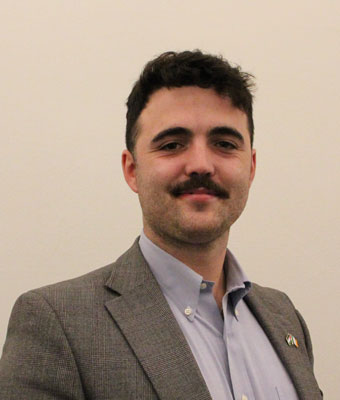
15. Deputy Barry Heneghan asked the Tánaiste and Minister for Finance the reason a graduated VAT system based on business size or turnover was not considered to support small and family-run SMEs; if his Department has examined such an approach to provide meaningful relief for community businesses; the alternative measures being developed to ease the VAT burden on smaller enterprises; and if he will make a statement on the matter. [64591/25]
I ask this question in the context of how sole traders and self-employed people are struggling right now. I ask in particular what consideration the Tánaiste has given to raising the VAT threshold, especially in the area of services from €42,500 to try to alleviate the administrative burden on these sole traders and self-employed people.
I wanted to raise this as well to ask the reason a graduated-----
I am sorry Deputy, the Minister responds first and then you.
Sorry, I am still new to the House.
I am not and I did not know what happens.
I thank the Deputies for these questions. I propose to take Questions Nos. 8 and 15, together.
The VAT registration thresholds are, as the Deputies note, subject to the requirements of EU VAT law, with which Irish VAT law is obliged to comply. Under the directive there is an upper limit of €85,000 on registration thresholds that member states may apply. Ireland’s VAT registration thresholds are set at €85,000 for supplies of goods and €42,500, as Deputy Conway-Walsh noted, for supplies of services. These VAT goods and services thresholds were increased from €80,000 and €40,000, respectively, in the Finance Act 2024.
Even if the turnover is less than a threshold limit, a business may elect to register for VAT. Ireland’s current registration thresholds are some of the most generous thresholds in the EU, with some member states not operating any threshold, meaning all businesses are required to register for VAT. We have one of those higher thresholds. The thresholds are kept at an appropriate level to support small businesses by reducing administrative burden, but also not to cause competitive distortions or undermine tax compliance.
The VAT directive provides that member states may fix varying thresholds for different business sectors based on objective criteria. A separate threshold cannot be set for self-employed people, SMEs or family-run businesses, as an example. Thresholds must be sector-based and not based on the type of business structure. As a result, a review of the registration threshold for the self-employed is not proposed.
Budget 2026 tried to take a number of measures to assist small and medium businesses in light of the action plan on competitiveness and productivity, and the programme for Government commitments. The programme for Government commits to implementing a pro-enterprise tax policy over the course of the term. This includes commitments to deliver change to hospitality, to examine further tax credit supports for R and D and innovation, and to continue to review and simplify existing enterprise reliefs. I believe budget 2026 makes some progress in this regard.
The question is why there is a different threshold for goods and services. Ireland's VAT legislation applies different registration thresholds to the supply of goods and services. The rationale for this relates to the difference in the nature of the two supplies. In general, the value added on the supply of goods is much smaller relative to turnover compared to the supply of services, where the value added reflects the direct input of the business proprietor or staff, along with the cost of indirect inputs, such as parts. We keep both of these threshold levels under review and will continue to do so in the forthcoming budget.
I am asking the Minister to undertake greater exploration of this. One of the reasons for this concerns the impact of inflation. We live in an environment that is constantly changing and it is important to examine these things. I am familiar with the different rates in the EU; some are higher and some are lower. In Britain, for instance, it is the same for goods and services at a straight £90,000 sterling. We need to listen to the self-employed. I try to speak to as many of the self-employed as possible. What they are saying to me is that they find it too low, given where they have to register, and that is also the case when passing it on to consumers. They say it is okay if they are trading with another business, but they might be trading with a vulnerable person or a television repair person trying to fix somebody's television, or something like that. They say that they have to pass this on, although the person in the house might not have a lot of disposable income in the first instance.
I would support a graduated tax system based on business size and turnover - a tiered system, like in other EU countries. I would particularly support small family-run SMEs. Is the Department examining such an approach to providing meaningful relief for community businesses? Are alternative measures being developed to ease the VAT burden on smaller enterprises? The Minister referred to this in his statement.
I also raise the issue of the burden of the cost of renewing the general employment permit after two years. It is €1,500. For a small SME, that is a lot of cups of coffee and scones to be sold to reimburse the cost. I do not think it should be as high to renew the general employment permit after two years. I can understand the initial cost, but it should be reviewed for SMEs.
I thank the Deputies for their questions. To recap my position, I have tried to outline why, to date, there has always been a policy differential in the threshold for goods and services. There is some validity to that. The Deputy is right that there are some European countries that might have a higher threshold than Ireland, but Ireland certainly has one of the higher thresholds, so we are certainly at the upper end in Europe. I am quite comfortable with that, by the way, as I think it ensures we are exempting small businesses from that administrative burden.
The Deputy did not ask directly, but I want to put this on the record of the House because it is useful for the Deputy’s work. If we were to increase the €42,500 to €85,000 for services and, in other words, equalise it, this would cost in the region of €100 million. At this stage, it is useful to put that out there.
We cannot differentiate between the self-employed and the family-run. I am not saying that is what Deputy Heneghan is looking for me to do, but I know what he is looking for me to do, which is to better support them. We want to do that. We can differentiate between the sectors but we cannot differentiate between ownership types.
I will keep under review for forthcoming budgets the broader point that Deputy Heneghan makes. We have taken some actions in this budget to try to assist small and medium businesses. Deputy Conway-Walsh referenced the selling of scones. I am very proud of the reduction that we are making to VAT in the hospitality sector, although some are not. I think it is going to make a big difference to people because it is effectively reducing the cost of running a café, a restaurant or a pub that serves lunch. At a time when there is so much external pressure on the Irish and European economy, it is prudent to try to support jobs and those who create the jobs in that sector.
We have also made changes to the R and D tax credit. That is often talked about as an FDI initiative and foreign direct investment benefits from it. Interestingly, the larger number of applications for it are from Irish companies, many of which are SMEs and microenterprises. We need to get more information out about that to further encourage the uptake. I will reflect on what both Deputies have said.
I am very supportive of the R and D tax credit. A previous question was asked about our competitiveness. Innovation at all levels of business is very important. I am glad the Minister said it would take €100 million to bring it to €80,000 for services. The Minister may already have this information. If he does, I might ask him another question to try to get information on the position if we were to bring it to, say, €50,000, €60,000 or €70,000. It is worth examining this with regard to how we might change it. We have to remember that one of the other big things is that these people are not allowed to pay the PRSI rate that would enable them to get sickness cover or anything like that. They are often in a very vulnerable situation. I know we cannot just have it for the self-employed and sole traders. However, we need to look at this because supporting small and medium businesses, the self-employed and sole traders is important to our economy.
I am not asking for more supports. I know there have been a lot of them, and I am proud of some of the supports in the budget. I am asking whether the Department is examining a tiered tax system based on turnover per business, say, €300,000 to €400,000, based on the differentiation in their turnover.
The Minister spoke about supporting entrepreneurs. The current wage subsidy scheme needs to be reviewed for self-employed people with disabilities and self-employed entrepreneurs who are employing people with disabilities. Such a measure would be very welcome and long overdue. As I have stated in the House, my PA, Michael Reynolds, has a disability, but I cannot avail of the wage subsidy scheme to support him. It has not held him back. However, we need to review that for those in this House. The more people with disabilities we have near policymakers, the better we will be at dealing with and fighting for people with disabilities. If the wage subsidy scheme could be extended to Members of this House, it would really help us with that.
I was checking the figure on the R and D tax credit while the two Deputies were speaking. Some 87.5% of claimants of the R and D tax credit are SMEs, so while the greater quantum is claimed by FDI because of the size of FDI, the overwhelming number of applications is coming from SMEs. That shows it is working and has the potential to work even better.
I would make the point that we raised the thresholds in the Finance Act 2024. Both Deputies made the point but, in the past, we have done that. Of course, there are issues that can be considered in future budgets.
Both Deputies will understand that I have been Minister for Finance for a couple of weeks and that we have yet to pass the Finance Bill for this year's budget. I am not going to speculate on what will potentially be in the next one, other than to say that we can have useful debates and discussions and tease through these issues over the course of the year in the House, at committees and through parliamentary question sessions and the like, in advance of future budgets. We all want to pursue pro-enterprise policies. We have to back indigenous business. We have to continue to make our economy competitive and make it a good place to invest. We are reliant on FDI for many reasons, and those companies also benefit from being located here. However, the backbone of the Irish company has always been our indigenous industry. We all need to work together to see how we can best support that.
On the wage subsidy scheme more broadly, I am conscious that the Chair of the Oireachtas social protection committee, Deputy John Paul O’Shea, is the Acting Chair. We have published the new national disability strategy and the human rights strategy. There is a real focus in that strategy, rightly, on employment for people with disabilities.
The first meeting of the oversight group was yesterday. Deputy Heneghan's PA, Michael Reynolds, does an excellent job. I am sure good work could be done through the Oireachtas committees and through that new strategy on how we help more people with a disability to get into the workforce and how we help more businesses to hire and employ people with a disability who can make a very good contribution to their businesses. I will ask the Minister, Deputy Calleary, to link with the Deputy.
Derelict Sites
9. Deputy Thomas Gould asked the Tánaiste and Minister for Finance if he has met with the Revenue Commissioners to discuss the new derelict sites tax. [63073/25]
Will the Tánaiste update the House on whether he has met the Revenue Commissioners to discuss the new derelict sites tax? Will he consider starting the collection of the derelict sites tax on 1 January 2026 or early 2026, and not 2027?
I thank the Deputy. I have heard him speak in this House passionately about lots of things, including the issue of dereliction in recent times. Dereliction during a housing emergency is a particular challenge as something that should be almost socially unacceptable. We have an emergency. All of us recognise that. We have different views on how best to tackle it, but tackling dereliction needs to be an important part of that.
I have to be honest, as I was during earlier question replies. There is quite a significant piece of work to do to move from a derelict levy collected by the local authorities - I am not in any way having a go at them; they do a good job - to a consistent national tax collected by the Revenue Commissioners. The benefit of announcing the tax in the budget a couple of months ago was that we all want this tax to act effectively as something to change behaviour. We are not actually looking for this tax to collect loads of money; we are looking for it to send out a very clear message that if you are sitting on a derelict property in a housing emergency, we are going to tax you. It is not just that we are going to tax you; it is also that Revenue will collect the tax. People know Revenue is very good at collecting tax. That there is a benefit in making it very clear - as my predecessor, Pascal Donohoe, did - that there will be a derelict tax that will be collected not by the local authorities but by the Revenue Commissioners is important.
We will have to do quite a few things, being honest, to get this ready. I have spoken briefly to the chairman of the Revenue Commissioners on this matter, and I will be speaking to him more substantively soon, but I know Revenue is gearing up for this. My officials have had lots of significant engagement with Revenue. The big piece of work to be done here is that we will have to legislate in this House for it and we plan on doing that in 2026. I will bring forward legislation and I look forward to debating the design and structure of that tax then. We have not set a rate for it. I will say in the House this evening that it certainly will not be lower than the 7% that is currently charged as the dereliction levy.
The local authorities have a piece of work to do as well in mapping out and identifying all of the derelict properties and ensuring that is done in a consistent manner regardless of whether one lives in Cork or Wicklow. Otherwise the tax would not be sound, quite frankly. There is a big body of work to be done. I want to see the tax introduced as quickly as possible, but we will not be in a position to collect this tax in 2026. I would be misleading if I suggested otherwise but we can get a lot done in 2026.
The Revenue Commissioners taking over the collection of the derelict sites levy is one thing we can support. It is something Sinn Féin has been advocating for years. My worry now is this: for how long more will land hoarders and speculators who are sitting on sites be able to get away with it? Cork City Council is one of the best local authorities at implementing the levy but it is still only collecting one third of it. Cork City Council has €5 million outstanding. There are millions of euro outstanding while speculators see the value of their properties go up and destroy communities at the same time. Will the Tánaiste commit that the levy will come into place on 1 January 2027 at the very latest? Local authorities have derelict sites registers at the moment, but they are not complete. I agree with the Tánaiste on that. There is a lot of work to do but there are registers there. Can we start with the people who are, in most cases, the worst offenders?
I enjoy these rare moments of agreement between Deputy Gould and me. He often shouts at me from the other side of the House and the odd time I shout back as well. As we come up to the Christmas period, it is nice to have a rare moment of harmony so let us cherish that. We are having this rare moment of harmony because we both recognise that dereliction is a real scourge. Deputy Nash made this point earlier from a public health point of view, a safety point of view and the point of view of a sense of community, but the housing emergency also puts an acuity on it. I want to do this as quickly as possible. I do not want to mislead the Deputy or the House on it. I take the Deputy's point and accept his bona fides when he asks if we can start with a certain group. The truth is that once we introduce a national tax, we cannot start anywhere; we have to start everywhere. It is no different with the movement from the current levy to the new tax. It has to be consistent and applied without fear or favour, no matter where the property is located in Ireland and no matter which local authority area is involved at present. This is a big body of work for the local authorities. I will help and support them, as will the Government, in undertaking this. I will visit Cork City Council, on the invitation of its chief executive, in January. I am sure we will have a chance to discuss dereliction and other issues. We will do this as quickly as possibly but the plan is to legislate in 2026 and we can tease through all of these issues in the course of the legislation.
The Tánaiste and the Minister, Deputy Browne, have said that this tax will get more derelict sites turned into housing delivery, which I support. If housing delivery is not happening, the tax must hurt those who are abusing their communities. When I walk around a brilliant European city like Dublin, I look at the dereliction. It is the same in my own city of Cork. It drags the whole city and community down. I want to ask the Tánaiste a couple of things. Will the derelict sites levy that is collected in a local authority area be put back into that area to tackle dereliction locally? There is a job of work to tackle dereliction, to acquire these places through CPO and to take on these land hoarders. At this moment, if someone who has a derelict site paints it and can camouflage it, it is not considered derelict. I suggest that if someone has a derelict site that has been lying idle for years, even if it has a coat of paint, that is not good enough. If a site is not being used for housing, business or the community, it is derelict and the tax must apply.
Deputy Conway-Walsh has a supplementary question.
In parallel to this, it is very important to look at derelict sites that are owned by local authorities. The Tánaiste says this is a big job of work for them, and it absolutely is, but it is critical that we cannot be taxing someone on one side of the street when the local authority has a huge derelict site on the other side of the street and is doing nothing about it. I do not necessarily blame the local authorities. They need to work with the centre. I respect that the Tánaiste is not the Minister for housing, but he is the Tánaiste. That has to be done because even his own councillors on Mayo County Council were raising this issue yesterday. Councillor Ger Deere was raising this in respect of Castlebar. That situation is not tolerable either. There needs to be a fast-tracking of the local authorities' derelict sites to make them into accommodation that can be used in towns. There is also the unsightliness of these sites at a time when we are trying to do urban renewal and make these towns look attractive.
The point Deputy Gould makes about what is derelict, and getting all of that right and underpinning it in legislation, is exactly what we will have to do when we are bringing the legislation through this House. The Deputy is right when he says that it cannot be just a lick of paint or somebody pretending to resolve the dereliction. We all have to be serious about this. We can debate the structure and composition of the tax - all that sort of stuff, including some of the questions the Deputy asked - during the course of the debates on the legislation. We all agree that we do not want this tax to be something that brings in loads of money. We want it to be something that changes behaviour. Quite frankly, we want the financial penalty of having to pay the tax to be something that moves the dial. That is the aim.
It is a bit like the residential zoned land tax we were discussing earlier. I am kind of pleased we held our nerve, as a Government and as an Oireachtas, in relation to the residential zoned land tax. There were teething issues. We all heard from farmers with legitimate issues. The fundamental idea is that it is not for farmers, who are not landlords at all. If someone is sitting on land and hoarding it and it is in a residential zone, they are meant to be building houses on it. Their options are to build houses on the land, sell the land to someone else who will build houses on it, or pay a tax. There is a housing emergency. The residential zoned land tax is in place. We are moving from a levy which is inconsistent, and even the best local authorities have challenges in collecting it, to a tax collected by the Revenue Commissioners.
Urban Development
10. Deputy Paula Butterly asked the Tánaiste and Minister for Finance if Dundalk and Drogheda will be included in the Finance Act 2024 to ensure that the living cities initiative can commence in 2026; and if he will make a statement on the matter. [57738/25]
As it is my first time to address and put a question to the Tánaiste as Minister for Finance, I wish him very well in his new role. On budget day, Dundalk and Drogheda were cited as two of the towns that will be part of the new living cities initiative. Will the Tánaiste be so kind as to outline the next steps and how we will get it up and running in 2026?
I thank Deputy Butterly for her kind words and I look forward to working with her, as we already do on many issues.
The living cities initiative is a targeted measure which is aimed at specific areas in need of regeneration. It currently offers income or corporation tax relief for qualifying expenditure incurred in the refurbishment and conversion of qualifying residential and commercial buildings located within special regeneration areas of Cork, Dublin, Galway, Kilkenny, Limerick and Waterford.
The recent budget announced a number of enhancements to the living cities initiative to strengthen the scheme, with such changes included in the Finance Bill which has gone through this House and is now progressing through the Seanad. It was announced, much to the Deputy's delight and the delight of her constituents, I am sure, that the living cities initiative would be extended to five regional centres as set out in the national planning framework: Athlone, Drogheda, Dundalk, Letterkenny and Sligo.
The Finance Bill also creates a new category of relief which will apply to the part or full conversion of commercial premises, shops, buildings, etc., into residential premises. Importantly, the building age rule will not apply to such conversions. It is about trying to make it as easy as possible to get above the shop space or derelict commercial space back into use as well.
The specific cities and towns in which special regeneration areas may be located are not specified in primary legislation - they never are. The existing areas were designated following consultation with the relevant city councils and an independent review by a third-party adviser. Specific criteria were set down in respect of the areas which should be included within the remit of the living cities initiative which were required to be taken into account by the relevant councils when putting forward the proposed area for each city.
For the scheme to start to apply in the five new towns, including Dundalk and Drogheda, special regeneration areas in each town must first be identified and designated by statutory order made by me in accordance with powers already provided for in the Taxes Consolidation Act 1997. The designation of the new special regeneration areas will require careful planning and preparation in consultation with the relevant local authorities.
I intend to ensure that we write to the local authorities this week and ask them to return their draft maps by the end of January. I would expect the mapping process to be completed by the end of quarter 1, with applications to open by June at the latest. I hope this will be good news to people in Dundalk and Drogheda.
When two of the five towns identified are Dundalk and Drogheda in such a wee county, the Tánaiste can obviously imagine that the wee county is jumping for joy because we see this as a vote of confidence in the county in the famous, or infamous, M1 corridor. Drogheda and Dundalk have huge potential but let us acknowledge the fact that we have a lot of underutilised and older buildings - a lot of stock that can be regenerated. When these maps are sent in by the local authority, and I have it on good authority - pardon the pun - that Louth is ready to submit these maps to the Department for review, I ask that we take into consideration not the here and now, not a restrictive town centre with a couple of streets here and there, but the expansion out towards the settlement boundaries, and that we are planning for today but also for tomorrow and for ten years. Let us make the most of this initiative and give the businesses and the communities the possibility of reaping the benefits of such an initiative.
There is so much potential in the M1 corridor, that north-east economic area. The announcement of the partnership between Dundalk Institute of Technology, DKIT, and Queen's University Belfast has the potential to be transformational. I really believe that. Coupled with the living cities initiative, that will bring much-needed Government support through the tax system to Dundalk and Drogheda to tackle vacancy and dereliction. It will be welcome.
We designate the areas - the maps - in consultation with the local authority. I am pleased to hear and know of their enthusiasm in Louth County Council. They are ready to do this. We will write to the authorities this week formally asking them to get their maps in by the end of next month. We will then have an independent third-party assessor. That is important for the integrity of the scheme. We did that previously. I would like to get the mapping process done by the end of quarter 1 and I would like applications to be able to be received over the summer period, from Dundalk and from Drogheda. I say that in the hope that the communities, the local authorities and everyone can begin to prepare for that reality.
This is not only about bricks and mortar. This is about restoring vibrancy and safety. Let us not undervalue the fact that when we get our town centres regenerated, working again and bustling, there will be the important effect of passive surveillance. People feel safer on the streets, but also at night-time, when you have people living above the shop. There is an added layer of security. When I say it is not only about bricks and mortar, it is about reviving communities. It is about faith and confidence in the local economy.
Drogheda and Dundalk have huge potential. A lot of it has been undervalued in Drogheda. We have to keep going, but I am also very positive about the number of initiatives that have been taken over the last 12 months: the commitment from the ESB, the commitment from Uisce Éireann, and phases 1 and 2 of the port area northern cross route, PANCR, about to get going. I sincerely hope that phases 3 and 4 will receive the Government funding they need.
A supplementary from Deputy Neville.
I thank the Cathaoirleach Gníomhach for allowing me in. The Tánaiste would be surprised if I heard about the liveable cities and towns and potential economic benefits going to other areas and I did not take the opportunity to mention north Kildare and the need for regeneration of the towns in the context of the liveable cities. I am talking about liveable towns and how we can widen the scope of the scheme, which is obviously welcome.
Last week, I spoke in the House about the housing Bill and the benefits of it. I referenced that when benefits are introduced, a lot of the time we see the small scale to the small towns and village and a significant amount of grant funding going rural communities. Often we see the urban regeneration and development fund, URDF, and the living cities initiative funding going to these older towns to regenerate them. Often the towns that are missing out are those such as the Tánaiste's own town of Greystones, and Bray, Leixlip, Naas, Maynooth and Kilcock. How do we introduce a scheme that can benefit those towns in a similar way to the living cities initiative?
Deputy Neville is right. We have to be willing to look at every possible way to help tackle vacancy and dereliction but also to bring back vibrancy in towns, including towns that are not classified as older towns but are vibrant and growing and often have other challenges such as the population growing so fast and keeping up in terms of the infrastructure. The Deputy regularly keeps me on my toes in this House on the infrastructural needs of Kildare. There are some supports such as the vacant premises refurbishment grant that is in place nationwide and is having real benefits in getting premises back into use.
Deputy Butterly is right that safety is a big issue. If we can get town centres with people living over the shop again, with no derelict buildings and either new businesses open or premises that will not open being converted into homes in a housing emergency, this is what it should be about. How do we recreate? What is the new main street or new town centre looking like? I am really excited. There are real benefits to Louth in this, to Dundalk and Drogheda. Not only have we extended the scheme to the five new areas under the national planning framework, including Dundalk and Drogheda, we have also improved the scheme. I encourage everybody to look at the improvements we have made to the scheme, including the new living over the shop element.
Tax Reliefs
11. Deputy Joe Neville asked the Tánaiste and Minister for Finance if his Department has considered increasing the domestic excise duty threshold for Irish brewers from the current 30,000 hl previously set at 20,000 hl prior to 2019; and if he will make a statement on the matter. [64556/25]
I welcome the Tánaiste here in his position as Minister for Finance and extend best wishes to him in his term ahead. My question is to ask the Minister for Finance if his Department has considered increasing the domestic excise duty threshold for Irish brewers from the current 30,000 hl, previously set at 20,000 hl prior to 2019, and if he will make a statement on the matter.
I thank Deputy Neville for the good wishes. I look forward to working with the Deputy on all things Kildare and all things national in this role, as we do already.
I thank the Deputy for this question in what is an important and growing sector of the Irish economy. The EU legislation which governs the harmonisation of taxes on alcohol across the Union allows member states to offer certain excise relief to independent small breweries. Under Article 4 of the alcohol structures directive, member states may provide relief of up to 50% of their standard excise rate on beer produced by qualifying microbreweries in the EU. Where a member state provides such relief, the member state must also provide the relief to any qualifying microbrewery supplying that market but which produces its beer in another member state or in Northern Ireland.
Ireland has implemented the excise relief for microbrewers of beer since 2005. Under Irish law, a microbrewery can qualify for relief if it produces up to 75,000 hl per annum, or 7.5 million litres, in the EU. Relief is available on up to 30,000 hl, or 3 million litres, produced by a qualifying microbrewery. The relief is granted at a rate of 50% of the standard Irish excise rate on beer. This means that the excise on relieved beer produced by a qualifying microbrewery is €11.27 per hectolitre per cent of alcohol instead of the standard rate of €22.55 per hectolitre per cent of alcohol.
Two or more breweries working together with a licence, franchise, contract or other co-operation arrangement in place are permitted to avail of the relief if their joint production is up to 150,000 hl per annum. The excise relief of 50% is at the maximum permitted under the alcohol structures directive. Any change to increase the volume of beer subject to the excise relief would require legislative amendment. Policy considerations would include the impact on the overall cost of the relief and the fact that the measure would narrow the tax base. Also, the relief is not limited to Irish producers only so changing its availability would not solely benefit producers located within the State. EU-based microbreweries exporting beer into the State could be significant beneficiaries of any expansion to the volume threshold. However, we produce tax strategy group papers each year. On foot of the Deputy raising this issue, the prudent and sensible thing to do is keep the operation of the microbrewery relief scheme under review annually as part of the budgetary cycle and in the tax strategy group papers in advance of the next budget.
Like every other market, it is evolving continually. Microbreweries is an industry that really took off over the past number of years. It has grown really well but at the same has its own difficulties and considerations. There has been some contraction in the industry. There have been a lot of increases in costs which has caused difficulty for some of those breweries. The Tánaiste referenced breweries going together but ultimately there are individual businesses and breweries brewing on behalf of other companies and passing on to them. The problem is the person brewing it, when it has come through those customers, even though they are brewing on behalf of someone else, they can get caught in that. In the end, we might actually be restricting competition by not extending it.
That is a fair point. I will provide some figures which might be useful. I can send them on in tabular form to the Deputy with more detail. Since 2021, the amount of relief claimed by way of remittance is around €7 million to €8 million per annum. Most claimants are understood to opt for remission. In terms of claims made each year, there are around 70 to 90. To give an example, in 2024, the most recent year I have full figures for, the number of relief claims was 80. There were 74 in 2025 up to 31 August. We introduced the relief in 2005. We made changes in budget 2015 in the qualifying production threshold and the quantity on which the relief may be claimed was increased. In budget 2016, a measure was introduced by which claimants can opt to receive relief by way of remission as well as repayment. We took more measures in budgets 2017, 2020, 2023 and in budget 2025 we extended the relief to include high-strength cider and other fermented beverages other than cider and perry. We continue to keep this under review. It is a growing and an important sector of the Irish economy.
I welcome the Tánaiste's response especially his view that we have to keep monitoring this. Like every industry, we need to support it as best we can. It can be a fundamentally Irish product and industry. We want to protect it, look after it and enable it to grow considering it has its own difficulties. We all know the difficulties these sort of industries face. We spoke about it earlier with the whiskey industry and a lot of brewers that export to the US but face difficulties in that regard. It is important and incumbent on us to continue to look at this and how we can support the industry. I welcome the opportunity to discuss this with the Tánaiste tonight. I will continue to liaise with him and his Department.
I could not but help but put my hand to ask a further question when I heard a Deputy talk about something being fundamentally Irish. When I hear the words "whiskey" and "beer", I am automatically reminded of the farmers and tillage farmers in particular. While I know this is a request that will require cross-consultation with the Minister for Finance, the Minister for agriculture, Deputy Heydon, and the Minister for enterprise, Deputy Peter Burke, we have to look at an incentive or a tax regime that will allow tillage farmers to produce and provide the grains necessary to the brewery system. We cannot have whiskey and beer produced in Ireland that is primarily made from imported grain. We have find an incentive so that we can use Irish grains in Irish whiskey. A solution has been found in Scotland. There is a case for it. I would love a further opportunity to discuss this with the Tánaiste and the Ministers for agriculture and enterprise. It is possible. It would be good for the industry, both the brewers and the tillage farmers.
I thank Deputy Butterly. I am happy to take that opportunity. I will ask the Ministers for agriculture and enterprise to engage with her in relation to that. The ideal is an ecosystem that works for everyone but I do not profess to be extraordinarily knowledgeable on this. I would welcome that because tillage is a sector we want and need to support. It is one of the sectors, from an agricultural point of view, that aligns very much with our climate objectives. We have clear commitment in wanting to grow the amount of tillage farming in this country but it is a sector that often finds itself under pressure. I would welcome that conversation too.
I agree with Deputy Neville. Not only is this an important, direct benefit to the Irish economy in producing Irish products we sell here and abroad, we have to support people in selling it abroad in a challenging environment. That is why the Minister for enterprise and I launched the action plan on market diversification. It has also now become a tourism product. Lots of distilleries have tourism experiences which bring people into our towns. I am committed to working with people on this. I am proud of the measures we have put in place. The tax strategy group papers are an important place to continue to monitor this matter in advance of future budgets.
Question No. 12 taken with Written Answers.
Fiscal Policy

13. Deputy Naoise Ó Cearúil asked the Tánaiste and Minister for Finance the way in which the findings of the 'Future Forty' report will shape Ireland’s fiscal policy in the coming years, with particular reference to demographic change and global trends; and if he will make a statement on the matter. [64370/25]
In September, the Tánaiste's predecessor published the Future Forty report. In what way will the findings of this report shape Ireland's fiscal policy in the coming years, particularly when it comes to demographic change and global trends? I am sure the Tánaiste is aware that a quarter of the population by 2060 will be over the age of 65, the Tánaiste and myself included, believe it or not. That will have a significant impact on State finances.
That gave me an awful wake-up call. I had not thought of it like that but it is factually correct.
I thank Deputy Ó Cearúil for raising this question. Future Forty is a really important piece of work. I can say that because I had nothing to do with it. It happened before I was in the Department of Finance. Huge credit is owed to the officials in the Department of Finance, the chief economist John McCarthy and others, who worked very hard on this. We are often accused in politics, sometimes with legitimacy and sometimes not, of short-termism. Nobody can suggest there is anything short term about publishing a plan as to where Ireland will be not in five, ten or 15 years but in 40 years. That is the exact sort of big thinking and analysis one would expect a Department of Finance which has responsibility for economic policy to do. It is not a modern version of Mystic Meg; all it can do is look at various scenarios and, of course, scenarios can change depending on the policies we pursue. I say daily and will say again tonight that while it looks out to 40 years, it basically tells us there is a window of about a decade to put in place policies to mitigate against some of the challenges we may face in demographic change and slower economic growth, potentially, but also to look at the opportunities and how we can best harness them. Future Forty was published earlier this month. It explores the key drivers of Ireland’s economy and public finances over the next forty years, on a no-policy change basis which of course is not what is going to happen because we will have lots of policies during that time from this Government and future Governments. It examines the long-term economic and fiscal impacts of global megatrends and other structural shifts including climate change, demographics, housing, healthcare, digitalisation, deglobalisation and potential EU expansion. The report presents a central scenario for our population, economy and public finances but also examines over 2,000 alternative scenarios using differing assumptions. It does not identify which scenario is most likely to occur but there are clear patterns which emerge across all trends and projections. I say to everybody in public policy - the Government, Opposition, Government Department and State agencies - that this is a tool for all of us to use to inform evidence-based policy.
Go raibh maith again, a Thánaiste. While I said in jest we will both be retired by 2060, you never know. The main thing to bear in mind is that a quarter of the population will be at retirement age. That is going to have a significant impact on pensions and healthcare. Measures have been taken already - auto-enrolment will begin in the new year, which needs to be acknowledged. It is a crucial step to ensuring the future fiscal security of a lot of people, going into old age.
However, there will be revenue challenges, particularly when it comes to our reliance on corporate tax receipts. There could be a vulnerability in this regard so we need to consider broadening the tax base. This will be quite difficult, as we all acknowledge. If we are to take the document as a strategic one on how we are going to manage the economy, we will have to make painful decisions in the short term that will benefit society in the long term.
The Deputy is correct. Future Forty does highlight that expenditure related to demographic ageing is expected to grow substantially in the coming decades. Healthcare, long-term care and pensions are expected to take up an increasingly larger amount of the Government's budget. Mitigation of the ageing costs will depend on improving efficiencies and ultimately boosting productivity in public services, including by integrating innovative medical technologies into our health system. Encouraging healthy living can help to keep costs manageable in the long run, too. Future Forty projects that climate costs will rise rapidly due to both Iong-run climatic changes and the increased frequency of extreme weather events. Although there is considerable uncertainty about the future cost of climate change, Ireland must prepare in advance to lower adaptation costs in the future. Additionally, I point to the cost of servicing our national debt. While this might appear relatively minor at present, Future Forty points to its becoming a growing burden if deficit and debt are used to cover rising costs elsewhere. Future Forty outlines hypothetical issues. Of course, there are also positive outcomes and opportunities. The decision on automatic enrolment, as the Deputy rightly said, is one whose immediate benefit people will not see in the short term, but they absolutely will see it in the future when they retire with better pensions.
I thank the Tánaiste. I appreciate all that. The report contains measures we could take to achieve productivity gains. There are elements we could really tap into when it comes to digitalisation, in particular, and the likes of artificial intelligence, AI. There need to be guardrails for AI and that is why the national AI office is being established. There needs to be a proper and comprehensive examination of AI, which the Oireachtas joint committee and other bodies are doing, but we need to start considering ways to increase productivity significantly and take some of the drudgery out of administrative tasks. These could apply to the likes of waiting lists for surgeries and normal administrative tasks in various Departments. This is where we could start to see immediate and long-term economic benefits.
Deputy Ó Cearúil's reference to drudgery and repetitive tasks brought me back to my days in PricewaterhouseCoopers, where I started as an auditor. There were many repetitive tasks.
Specifically on Future Forty, the Tánaiste's predecessor as Minister, Deputy Donohoe, put a very sensible budget in place. He was very anxious to ensure we would be left on safe ground for the future. Future Forty refers to corporation tax as something we cannot necessarily rely on and it also refers to broadening the tax base. Notwithstanding the sensible approach of the previous Minister, we really do need to focus on corporation tax to ensure we do not become overly reliant on it. As Deputy Ó Cearúil alluded to, we need to ensure the tax base is widened and not narrowed, as the Opposition continually seeks despite the fact that it talks about the need to increase spending on this and that.
Then again, it never wants any taxes whatsoever to be raised. That is the dichotomy we have to deal with in this House. I just want to get the Tánaiste's views on it.
I agree with Deputy Neville on the importance of continuing to run budget surpluses and invest in our Future Ireland Funds – the Future Ireland Fund and the Infrastructure, Climate and Nature Fund – and the importance of continuing to be prudent in our spending of public money. That is why the Minister for public expenditure, Deputy Chambers, and I will bring to the Cabinet next week the medium-term fiscal framework, which will anchor our spending and tax plans not just for a year but also for the five years ahead. That is important for guarding our economy and for planning the delivery of public services that we get on with implementing the programme for Government.
I agree with Deputy Ó Cearúil on the use of technology, including AI. I am aware that the Minister for public expenditure, Deputy Chambers, is very strong on this. He has introduced a plan on digital services and the use of digital technology in the public service. Of course, there have to be guardrails and all of that. AI is not going away, as has been said. It is actually a tool that can be used for good, subject to having a proper system of safeguards in place, including in the area of speeding up assessment times. Let us consider the progress we have been able to make using technology for passports. When we read Future Forty, as the Deputy has done, we see that the use of technology to increase productivity is a key component in addressing some of the challenges we will face in the time ahead and ensuring the costs of the delivery of public services will remain manageable.
National Treasury Management Agency
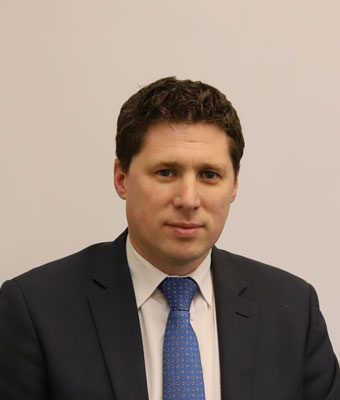
14. Deputy Matt Carthy asked the Tánaiste and Minister for Finance the progress he has made divesting State moneys from companies that derive profits from their activities in the occupied Palestinian territories. [64395/25]
Why is Irish taxpayers' money still being invested in companies that derive their profits from the illegal occupation of Palestinian territories? Will the Tánaiste give the House an update on efforts to divest from such companies?
I thank the Deputy for this question, in which he has rightly asked me to outline the progress that has been made in divesting State moneys from companies that derive profits from their activities in the occupied Palestinian territories. The Government is clear in its opposition to illegal Israeli settlements, which are contrary to international law and damaging to the pursuit of peace in the Middle East. Ireland has not been found wanting in its support of the Palestinian people and has taken practical steps at national, EU and international levels. Indeed, we have been recognised internationally as a leading voice on this. Ireland has provided over €100 million in support of the people of Palestine since 2023.
The Ireland Strategic Investment Fund, ISIF, has complete independence in implementing its investment strategy under the NTMA Acts through an investment committee that reports to the NTMA's board. ISIF has taken a decision to divest from six companies, all of which remain on the updated UN database. While divestment from these companies does not mean that Israel will stop maintaining its presence in the occupied Palestinian territories, sadly, ISIF will continue to monitor its investments.
It is important to state the companies are ones that operate all over the world. ISIF's investment in them represents a very small proportion of its overall investments. More broadly, as the Deputy knows, efforts to secure a just resolution to the Israel–Palestine conflict and to the genocidal activity taking place in Palestine are ongoing. Our focus must remain on strengthening the ceasefire and bringing about peace.
ISIF has taken a decision to divest from six companies, all of which remain on the updated UN database and with a total value at the time of divestment of approximately €2.95 million. The six companies are Bank Hapoalim BM, Bank Leumi Le-Israel BM, Israel Discount Bank Ltd., Mizrahi-Tefahot Bank Ltd., First International Bank Ltd. and Rami Levi Chain Stores Ltd. I will provide the Deputy with the list in writing.
ISIF does not comment on individual investments but a list of ISIF investments is available in the 2024 NTMA annual report. I have been informed that ISIF will continue to monitor its holdings to ensure investments remain aligned with its risk profile and investment parameters, but it does not comment on individual investments. I am due to meet officials from the NTMA shortly.
It is not good enough that we continue to invest taxpayers' money in companies that derive their profits from a systemic apartheid regime, which involves the occupation of the West Bank in particular. We have known about this for years and that the occupation is illegal. We know of the real-life impact it has had. We also know that because Israel has faced no consequences whatsoever, it has continued to act with impunity, including through engaging in genocide in Gaza over the past couple of years. The very least we can do is ensure we are not investing public moneys in companies benefiting from all of this. While I welcome that there is divestment from six companies, that just shows that progress is far too slow. The Tánaiste indicated that he is going to meet officials from the NTMA. Is he going to instruct the NTMA to accelerate the process?
I will discuss and get an overview on a variety of issues with the NTMA at a first sit-down meeting. ISIF has divested from six companies on the UN database. The NTMA also divested from directly held sovereign bond holdings with a global portfolio across Egypt, Israel and Jordan in July 2025.
It is important to note, as my notes suggest, that companies can come onto and off the UN database.
Many of these companies are large, global companies. There needs to be that context too. These are large, global companies which can have a presence right across the world. Ireland's position on the occupied Palestinian territories has been clear and consistent in relation to their illegality. ISIF obviously has independence in relation to its investment strategy. That is not just independence that I say but independence under the law of the land, the NTMA Act, and under the investment committee that reports to the NTMA.
Companies can come on and off the UN database list but the question is what the point of having it is if it does not ensure that states act accordingly. The UN database sets out those companies that are deriving profits directly from the occupied territories, but it does not even cover all of the companies that are benefiting from Israeli war crimes. One company, Palantir, for example, has seen Irish investment increase since 2021. We are at a point where our holdings are increasing but the value is increasing exponentially. This is a company that has provided the IDF with the resources to conduct its genocide. Is Ireland still investing in that company? Are there plans to divest from that company?
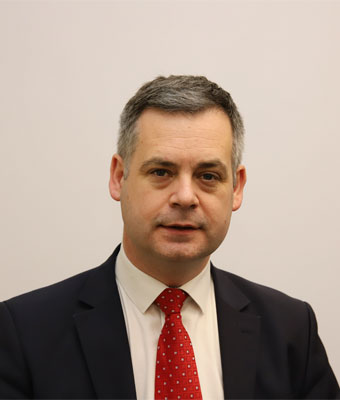
This issue has been raised for many years. We have a new finance Minister. I would like a bit of straight talking from this finance Minister about his position. We are all appalled by the genocide that we have seen before our eyes with 70,000 people slaughtered. Deputy Carthy talked about one company. When accusations were put to the CEO of that company that his equipment was involved in the killing of Palestinians in Gaza, he said that is true. The UN human rights report stated that the company had provided defence infrastructure, military software and AI that allows automated decision-making, so it is using AI to automate the slaughter of Palestinians. Sometimes there is not much we can do about that. We can raise our voice, have sanctions and so on but one thing we can do is not invest in the company that is proudly associated with the IDF and the genocide in Palestine. That is what we need to do. Deputy Harris is a new Minister. I want him to state clearly to the House whether he believes that taxpayers' money should be invested in companies like that. There are many companies across the world that our money could be invested in. The NTMA does a good job but surely to God the Tánaiste can make a statement here that any other decent Irish person would have no problem with. Do not invest in companies that are involved in supporting genocide.
When the Deputy uses words like "any other decent Irish person", I am not sure whether he is trying to suggest that we are indecent or to vilify.
I am hoping the Tánaiste would make the statement and join the rest.
I am wondering because the Deputy uses these loaded comments to suggest that he is decent and we are not.
It is not decent to invest in genocide. I am clear that it is not decent to invest in genocide and I think the Tánaiste would be stretching it to suggest-----
Deputy Doherty, the Tánaiste, without interruption please.
Do not shout me down. I do not know how long this bully-boy routine of shouting me down is going to go on but if the Deputy could just ask me a question and allow me to answer it, it is how a democracy works. Stop shouting me down. It is a bit of basic respect.
I am not shouting the Tánaiste down. I am just telling him it is not decent to invest in genocide.
The Deputy has been at this a long time. He knows the law of the land under the NTMA Act. Does he accept that the NTMA Act allows ISIF full independence in relation to its investment decisions? Does the Deputy accept that the Minister for Finance-----
I accept that the Minister for Finance-----
No, I am sorry, I am speaking. Then I will sit down and the Deputy can speak.
The Tánaiste is asking questions.
I am asking them rhetorically of the Chair.
The Tánaiste, without interruption please.
Does Dáil Éireann understand that under the NTMA Acts, the investment decisions of ISIF are completely and utterly independent? Deputy Doherty tried to do this to my predecessor, suggesting that he was making decisions in relation to it. It was not true then and it is not going to be true now. The Deputy is not going to do it to me. If the Deputy wants to bring forward legislative proposals to change things, bring them forward.
We have legislation. The Government is blocking it in the committee.
We can have the discussion. The Deputy is asking me in parliamentary question time.
The second point I want to make, amidst the heckling on a serious issue, is that I do not need to be lectured on how to support the people of Palestine. Ask the Palestinian President, Prime Minister or ambassador how they have found our levels of support. I do not need a lecture from the Deputy. Is it his position that ISIF should not have any ability to invest in massive global companies that have presence right across the world, in many countries, including European countries, some which might even have headquarters in Ireland, if they have a presence in-----
We are out of time.
If they are involved in genocide in genocide, the answer is very simple, yes.
Is that the Deputy's position? That raises very serious questions.
If they are involved in genocide, yes. I think any decent person would say the same thing.
The consequences of that are very significant.
The Tánaiste did not answer any questions I put to him. At least Paschal answered the questions-----
Deputy, please address the Chair.
The Deputy misses Paschal.
-----yet the Tánaiste is giving me lectures on democracy.
Is féidir teacht ar Cheisteanna Scríofa ar www.oireachtas.ie.
Written Answers are published on the Oireachtas website.