Saincheisteanna Tráthúla - Topical Issue Debate
Is the Minister of State taking the Topical Issues?
Yes, ten Topical Issues.
Ten Topical Issues, okay. We begin with Deputy Ó Murchú.
School Facilities
I thank the Minister of State. Fair play to anybody who is going to sit through ten Topical Issues. It is a matter of actually getting delivery on some of these issues. This issue is one where you think there must be a simple solution, so it is a matter of us finding that solution. I was sent a letter from the board of management of Ardee Educate Together National School and its principal, Ann Middleton. I was lucky enough to go around the site for the new build. All I can say, which is no different from what is in the letter, is that it is absolutely fabulous work. It needs to happen as soon as possible. As I said, I had a site visit. They are great grounds. It is an absolutely spectacular building. It looks like something that is fit for purpose, as we would expect of any new build these days. However, there are particular issues and I think they could be very easily addressed now. If they are not addressed now, it will be very costly to deliver later.
These are the details that were sent to me regarding special needs provision, buses and transport. The school has five special needs classes for pupils with autism, comprising 30 pupils. They do not have enough drop-off and collection points for special needs buses. They barely have room for two minibuses, whereas they require five. The lack of bus parking will cause backup for the remaining buses and cars and result in huge traffic jams and delays. Special needs pupils with autism have difficulties with transferring and waiting and this could affect pupil regulation and cause meltdown for pupils with challenging behaviours. The present system will result in absolute traffic chaos. The principal has repeatedly raised this with Louth County Council and the architects, Kennedy Fitzgerald Architects. I went to Louth County Council myself and was told this had gone to the design team, which had refused it on the basis of cost, and that it would have to go back for planning. However, I agree with what is written in the letter in that this issue can be easily resolved by continuing the bus parking set-down area by three spaces to the west onto unused space, of which there is a lot, between the school and the boundary fence. The letter actually says "see map" but we do not need to get into that.
This is quite simple. If you are going into the school building, you will come off the road and swing a left. That is a road on the school property that could be extended. Regarding the school car park, I was sent a plan showing how it could be extended with a widened road. There are 21 spaces. There is a need for probably double that number. There are two set-down minibus spaces and you would almost have to park perfectly to get into them. Like I said, there are five minibuses that will leave children with challenging needs to the school. In addition, they come from various places, so it is not as though the school can just put more children onto one particular bus.
This has been in operation for a long time. The school building was promised in 2012. It may be that a ratio that was delivered earlier regarding parking spaces does not take into account the five autism spectrum disorder, ASD, classes. Staff are coming from right across Louth, Meath, Monaghan and beyond, so it is not as though people are able to cycle or whatever else.
I was shown the works and met the contractor. He will very soon carry out tarmacking and other works. If the work was done at this point in time, it could be done cheaply and would only involve removing stuff that has been put in from an aesthetics point of view. I ask that we find a solution as soon as possible.
I thank the Deputy for raising this matter, which I am taking on behalf of the Minister for Education and Youth, Deputy Hildegard Naughton.
As he said, the brief for this major school building project is to provide an eight-classroom school with an additional four classroom special educational needs, SEN, base included. The project has been devolved to Louth County Council for delivery. The project is currently at stage 4, that is, construction, of the delivery process. It is envisaged that, pending no unforeseen delays or issues, the estimated completion date will be within the first quarter of 2026. It is great to hear that the Deputy had a site visit and saw with his own eyes how well the construction is proceeding. From his account, it sounds like the project is on track to meet the deadline.
The Department has been actively engaging with the design team and Louth County Council throughout the process and will continue to engage to provide practical advice and assistance on this important project. The Minister for Education and Youth acknowledged that the school previously submitted a request for additional car park spaces which was reviewed by the Department but was not approved.
The design team is now required to construct and progress the project in accordance with the project brief, as agreed in the service level agreement and in accordance with any local authority planning conditions. The number of car parking spaces currently provided for is what is in the planning conditions. What is currently provided for is in line with the approved planning requirements and what happens generally. While I appreciate the Deputy has said the problem could be resolved simply, it sounds like it would require changes to a planning application.
Since 2020, the Department has invested over €6 billion in schools throughout the country under the national development plan, involving the completion of over 1,300 school buildings. In addition, repurposing and optimisation of existing accommodation capacity across the school estate has been a key enabler of timely, local provision of special class capacity in a way that supports best practice in inclusion and integration. About 80% of new special classes in 2025-26 are being facilitated in repurposed classroom accommodation.
In July, the Government announced a capital allocation of €7.55 billion for the Department of Education and Youth for the period 2026 to 2030 under the new national development plan, NDP. As part of this allocation, the Department will place a strong emphasis on provision for children with special educational needs, with a particular focus on meeting annual school place needs. Regarding project roll-out for larger-scale projects and the additional school accommodation scheme, the approach will be to continue to maximise capacity and prioritise the most urgent needs.
The Deputy spoke about a solution for his school put forward by the principal, namely, widening the road and extending the car park. To me, this might require planning permission and would be something he would need to engage on with Louth County Council.
Louth County Council is almost a facilitator. It speaks to the design team. I raised this issue with the Taoiseach in terms of the need to streamline regulation. We all know the issues that exist in respect of planning. We need a system that can be more agile. While we need checks and balances, that should be possible.
If mistakes are made or issues are seen, they could be addressed in a timely manner. The project could proceed through the process and the problem would still persist and would need to be dealt with in six months. There may be a new planning application, but at that stage we would consider removing parts that have been added in, such as hedges, fencing, pavement or tarmac and other works that need to be done.
At any point in time, we could have a proper and speedy review of what is possible and how quickly we could fix this. There will be traffic chaos, which has been pointed out. There are very simple issues.
The process was probably simpler once upon a time when the school was given responsibility to deliver projects. I am sure there were problems and mistakes in that system, but at least schools did not have to go through three layers. Louth County Council is only one of those layers and then we have the Department, building unit, architects and contractors. This is not working. The process is taking too long.
There are issues in respect of the yard size. I have written to the Minister and will hand the Minister of State a letter later. I ask that she follows up with the Minister. We need to try to deal with this as quickly as possible. This will become a bigger problem very quickly and it will become a more expensive problem. It is an absolute necessity that action is taken.
I thank the Deputy. I hear and appreciate his frustration. The number of car parking spaces currently provided for is in line with the approved planning requirements. In order to change the plans, there would need to be a new planning application. I appreciate he does not want to do that after the new school is built, given that it would involve additional disruption. The advice would be to engage now with Louth County Council to see it is if it is possible for the planning changes to happen.
It not the council; the Department has a role to play.
I will pass on the Deputy's feedback to the Minister to see if planning was granted whether it would be possible for the Department to fund those works. Right now, there is no planning grounds for it. That seems to be the problem and that is where I will advise the Deputy to take this next.
Schools Amalgamation
I thank the Minister of State for taking this question. I want to raise the issue of the proposed amalgamation of Shanbally and Ringaskiddy national schools in County Cork. They are two existing schools in older buildings. Ringaskiddy has a school population of approximately 60 students and Shanbally is larger with approximately 199 students. The proposed amalgamation has been on the cards for a decade and a half at this stage. Unfortunately, despite this long time it is at the earliest possible stage, namely pre-stage 1 of the school building programme.
There are emergency needs in these schools. I have had the good fortune of being able to visit these schools in my time. I most recently visited Shanbally, the larger of the two schools. Of the nine classrooms in the school, six are prefabs. Many of the prefabs are over ten years old and are in an appalling condition. I witnessed it myself. Floors are collapsing and ceilings are bulging with dampness. There are health and safety issues, in that ceilings could collapse on students. There is dampness and mould. I could go on. There are significant issues with electrical trip switches, which are tripping because of the dampness in the school. There is a chronic need to develop the new school so that the students can get out of these older and dilapidated buildings.
As I said, despite the time involved, the project is at the earliest stage of the school building programme. There is deep frustration locally about the slowness of the process. This has been a long running process. A site was identified a number of years ago. Unfortunately, the site had to be acquired for the development of the M28 motorway. That was one setback. A new site was identified and is fully in place. Everything is now ready to go in terms of developing the new schools.
Given the issues I outlined earlier with the condition of the buildings, the principals of the schools have had to fight tooth and nail is to get emergency funding to carry out works. They have been put through the wringer in trying to get funding to carry out works for roof repairs and to address dampness and other safety issues in school buildings. It is simply not good enough in this day and age that such a number of children are being educated in these facilities.
To be fair, the children receive a good standard of education. The principals and teachers in Ringaskiddy and Shanbally national schools are doing their level best to provide good levels of education. They are also doing their best with regard to special education and are certainly playing their part in providing places for students with additional needs. They need the school building programme to progress quickly and for this school project to be on a proper trajectory towards the delivery of a new school building.
I hope the Minister's response can give some hope to the communities, teachers, pupils and parents locally that the school building project will progress and they will see credible and substantive progress in the near future.
I thank the Deputy for raising this matter. I am taking this on behalf of the Minister for Education and Youth. This gives me the opportunity to outline to the Dáil the current position regarding the proposed amalgamation of Ringaskiddy Lower National School and Shanbally National School in County Cork.
This project is planned to be delivered as part of phase 2 of the Department’s Adapt 4 programme. That programme uses a professional external programme manager to co-ordinate and drive the integrated project team to achieve the best possible timeframe for the project through the stages of architectural planning, to tender and construction. This programme is being led by integrated project teams consisting of highly skilled and experienced design professionals, architects, engineers, project managers, quantity surveyors and various other consultants to deliver the projects.
The project manager for this particular project was appointed in the third quarter of 2023 and is in the process of preparing documentation for the tender process for the appointment of integrated project teams for the phase 2 bundle of projects. The brief for the project is to provide a new 16-classroom primary school with four classrooms for pupils with special educational needs. The new school is expected to be located on a 6.068 acre site which is currently privately owned but is anticipated to be transferred into the ownership of Cork Diocesan Trust. Currently the two national schools are located off site, in two separate locations where they will remain until the new school building is completed.
From the account given by the Deputy today, it sounds like the conditions the students and staff are operating in are not satisfactory. I will pass that on to the Minister and ask that it be taken into consideration as the plan is progressed with urgency.
I thank the Minister of State for the reply. I appreciate the response. As the Minister of State said, this is to be a new 16-classroom primary school with four classrooms for children with special education needs. This facility is so badly needed in the local community and the constituency that I represent. My main reason for submitting this Topical Issue matter was to get a status update. I appreciate that the Minister of State has provided an update in relation to the project manager being appointed in the third quarter of 2023 who is in the process of preparing documentation for the tender process for the appointment of the integrated project teams for the phase 2 bundle of projects. While I appreciate the reply, it is lacking in clarity in relation to the timeline. It does not give me a lot to go back to the school community, parents or principal and teachers with, in relation to the timeline. If there is any additional information, I would be very grateful for it.
I note the appointment of the project manager and the preparation of the documentation for the tender process but at the same time, this school amalgamation process has been in the pipeline for so long that we do need some credible timelines at this stage, especially because the current conditions are so unsuitable. The facilities where the pupils are receiving their education are not fit for purpose. Despite the conditions, both schools are providing an education to the highest standard but they are really up against it in terms of the environment in which they operate. I visited the schools and saw first hand the conditions and they really are not acceptable. I ask the Minister of State to relay that to the Minister and to stress the urgency of this particular project.
I thank Deputy McGrath for his response, for his advocacy on behalf of the schools and for taking the time to go and visit both schools and provide feedback on the floor of the Dáil on what he has seen. This is a little bit more complex than some proposals because we are talking about the amalgamation of two schools. We are also talking about a site that is privately owned and that must come into the ownership of the Cork Diocesan Trust first. The fact that a project manager is already in place and is looking at this and preparing the tender documents is quite helpful but there is that added dimension of ownership which I assume will need to be sorted out.
I went back to the Department of Education to ask if would be possible to get a clear timeframe that I could give the Deputy today. As the Deputy said in his opening remarks, this is at pre-stage one which is why the Department was not able to give me either a start or completion date. The context is that the site needs to be transferred into new ownership and the tender needs to go live. The documentation is being worked on for that tender to go live, which I hope the Deputy will agree is very encouraging. I will pass on his feedback in relation to the conditions the staff and students of the schools are working in.
Special Educational Needs
Today I want to raise issues in relation to special education needs in Wicklow. I am really concerned about children who have special education needs. I have been trying to raise this with the Minister of State and am really disappointed that he is not here today. I have been trying to talk to him on the floor of the Dáil for the past few weeks in relation to this issue. I am worried from a number of different perspectives but ultimately, there are three areas of concern.
First, the NCSE has set up a new system through which parents can get a letter of eligibility which they then use to get a special needs place in a school. The portal for that letter of eligibility closed on 1 October. That deadline was for children who need classes in 2026. We both know how difficult it can be to get the assessments done as well as the costs involved, the timelines and the waiting times. Therefore, there is a cohort of children who did not make that 1 October deadline. The NCSE's page on the portal says that the council will give guidance to those parents who did not make the deadline and that guidance would be available within a matter of weeks. That was on 1 October but the council still has not updated the page. I have asked the council and the Minister of State over and over what those parents and children are meant to do. It is not just an issue for Wicklow but across the country. I have been contacted by parents across the country whose children did not get their letters through the portal.
The second issue is that those parents who did get the letter of eligibility have not been able to secure a school place. They were told that this was the process they needed to go through and when they had done so, the supports would be there but they are not hearing anything at all about school places. Children who have special needs and their parents need not only to be sure of a place, they also need time so they can get their children ready for going to school. Any transition like this is very difficult for children with additional needs. The fact that parents still do not know whether their child will get a sanctioned place is completely unacceptable. The whole point of having this new online system was that it would take the uncertainty out of it for parents but that uncertainty is still there. I have spoken to principals who have yet to be told whether they will be sanctioned for classrooms for next September. Those principals need to get everything in place and they are not being told anything by the NCSE. I ask the Minister of State to pass this on to the NCSE and to the Minister of State with responsibility for special education needs. Parents need to be informed immediately. If there is a shortfall of places, those places need to be found somewhere. They need to sanction and open up new classrooms. It absolutely has to be done and they need to get on top of it now.
The other concern I have, which is really worrying, relates to what I have heard from medical professionals who do assessments for children. On multiple occasions when they did medical assessments and made recommendations, the SENO, who is not medically qualified, has refused to accept their recommendations. I was told of a child in Wicklow who is autistic, non-verbal and cannot toilet themselves but was deemed to be not complex enough to warrant a letter of eligibility. That information goes back to the parents and not to the medical professionals. I am wondering how many parents out there have been told "No" by the SENO when their medical professional has said "Yes". This is something that I am really worried about.
I thank Deputy Whitmore for raising this really important issue. At the outset, I want to assure her that the Government is absolutely committed to the provision of additional special places for children with special educational needs. Budget 2026 secured funding for 3,000 new specialist places and the NCSE is currently examining where these places are best located for the coming academic year.
Deputy Whitmore raised three specific issues which I will address in turn. I have a number of pieces of information in relation to Wicklow but I will speak to the three points that the Deputy raised. The first concerned the NCSE, the new system and the letter of eligibility.
Yes, the NCSE brought in a new system. It brought in a much earlier deadline in order to be able to do exactly what the Deputy has articulated, that is, make those offers earlier to give both parents and children the certainty they deserve and need. At the moment, the NCSE has done that and it will have a clear, locally-mapped picture of local demand right across the country for special place classes for the coming academic year once it reviews and assesses the information that was provided through the parents notification portal, which, as the Deputy said, closed on 1 October. I am informed the NCSE will start sanctioning new special classes for the coming academic year shortly. The Department and the NCSE will continue to consider options for increasing special school capacity for exactly the reason the Deputy outlined, that is, to ensure capacity where there is need. This can be achieved either through the expansion of existing special schools or the establishment of new schools.
The earlier notification deadline is about getting us to that point. It was introduced this year to support forward planning and earlier equip the NCSE with the local information as to the students who will be leaving school, transitioning to post-primary specialist places, seeking specialist primary places or placement or entering education for the first time. That information is absolutely critical to examine where provision needs to be placed in order to meet demand. That information is not fully collated or assessed yet. Once the NCSE has fully collated and assessed the information, it will then be in a position to engage with the schools and the principals across the country, which the Deputy spoke about, in order to open new special classes. In doing this, the NCSE will also have due regard to any vacant places in existing special classes in an area and any places that will become available through the normal movement of children leaving primary or post-primary school.
With regard to the Deputy’s point about parents who missed that cut-off deadline, I am assured directly by the Minister and the NCSE that they will continue to support all children made known to them, whether that is after that deadline. It is important that we put this deadline in place for forward-planning purposes and that an earlier timeframe is worked to in which the NCSE has much more local knowledge and detail as soon as possible.
I appreciate the information is not online. That is probably causing an information vacuum. I am encountering it myself. Parents are coming to me saying they have missed that deadline. I have been in touch with the Minister in this regard. Ultimately, what needs to happen is that the NCSE will collate and assess the information which has gone in - it was only in the last number of weeks it has gotten the information – and it will make decisions based on that. I will also ask it to put that information up online.
In respect of SENOs refusing letters of recommendation, that is something the Deputy might raise directly with the Minister of State with responsibility for special education, Deputy Moynihan.
I was hoping to.
I appreciate that. There is inconsistency around this from a nationwide perspective and it is quite important that every child, no matter where he or she lives, gets the same treatment.
I am finding this really frustrating. In the response the Minister of State gave – I absolutely acknowledge that is the response she was given and I know this is not her portfolio – she stressed that the NCSE will continue to support all children made known to it after 1 October. First, how are children to be made known to the NCSE if the portal is closed? Second, this has not happened. There has been no contact at all in respect of those parents and children who were not able to get their letter of eligibility. They are now in a vacuum and the risk is that those children will not have a school place, or a suitable school place, for 2026. They could end up in a mainstream school but that is not the best place for them. That is the first point.
It is absolutely incredible that two months after the NCSE said that it would update its website to inform parents about the next steps if they did not meet the deadline, the website is still not updated, even though I have raised it by email with the Minister and the NCSE. I have also raised it on the floor of the Dáil. It is completely unacceptable. It is so un-child and un-parent centred; it is incredible. I am all for forward planning but please treat people with respect and provide them with the information they need to relieve some of their stress.
When it comes to developing a clear picture of local demand, I absolutely have no problem with the principles behind this process. The reality is that for two months now, the NCSE has had a picture of the exact number of children in an area eligible for a letter of eligibility. It has had that information for two months. While all of the children in mainstream schools are now being told whether they have a school place and the school they are going to, children with additional or special education needs have no idea because the NCSE still has not provided that information. I understand the need for a new process but the NCSE is absolutely failing to implement this properly in the first year of its existence.
I, too, agree with the need for a new process. Every year for countless years, we have had parents at the last minute not knowing where their children are going to school. This is about reducing, as much as possible, that stress, strain and uncertainty. We now have the information as of 1 October. The NCSE is working hard to collate, process and map that out to figure out the schools that may have physical capacity to take on additional classrooms and where we might be able to put in additional special schools.
It was great to see the sod turned for a new building for St. Catherine’s Special School in the Deputy’s constituency earlier this week. These projects are happening around the country.
The information is needed to be able to inform the strategy of the areas where those projects are needed the most. I will absolutely take it up directly with the NCSE as to why more information is not available for parents on its website, particularly for parents who missed that 1 October deadline because they missed it through no fault of their own; they were waiting for an assessment. I will absolutely do that.
While I am sure it will be written into the Dáil record, the Deputy should have information specific to Wicklow because this Topical Issue was originally to discuss special education in Wicklow. There are 132 special classes now in operation, providing capacity for 800 students. That includes 12 special classes for this year. That means the number of classes in County Wicklow has almost doubled in the past five years. The earlier notification system will help us when it comes to continuing to roll out new special schools and new special classes across the country.
I suspect I will be raising a lot of the issues Deputy Whitmore raised. I am coming to this from a position of enormous frustration because of the lack of co-ordination and planning within the Department of education in tandem with the Department of Health over many years. The parent notify system, in theory, is great. I know the date was, of course, brought forward this year to allow both Departments to be able to plan for the future. I very much welcome it. However, the actual process is failing a number of families really badly across the country. Families have contacted me who have put in their application for 1 October but because all parts of the assessment of need process, the service statement in particular, were not ready, they have been told by the special educational needs organiser, SENO, that they cannot get a letter of eligibility and they are just going to have to wait until next year. It is simply disgraceful for a system that was set up to try to identify children. The child has had the assessment of need; they are just waiting on the service statement but they are still told, “No”. It is another barrier being put up to these children.
For how many years have people stood up in this Chamber talking about the families who are having to apply 20 or 30 schools? Think of the cost of a birth certificate for every single application. We have to transform how special educational places are allocated in this country. There is a huge mismatch as it is. I welcome initiatives like the parent notify system but it is not working, particularly when these barriers are being put up at a local level.
We have to remember the assessment of need process takes three to four years in most areas across the country. The particular issue that I ask the Minister of State to look into concerns the service statements. We know there can be a delay of six months or more for parents to receive their service statement because of quality control issues with regard to outsourced assessments of need and co-ordination within children's disability network teams, CDNTs.
We have that context. Then we have the context of the lack of special classes and special schools. Of course there is the whole issue of the lack of special needs assistants, SNAs, in certain primary schools across the country. We need a degree of common sense and cop on, which is not what we are seeing from some SENOs.
I have previously been very critical of parts of the National Council for Special Education, NCSE. I think there is some fantastic work being done by the NCSE but it is really patchy. There is a lack of consistency with regard to what is being done across the country. We know that some SENOs are not applying common sense with regard to the letter of eligibility.
I want to use my remaining time to raise a related issue with the Minister of State. I understand what she will say about the new special schools that have been built. That is wonderful, but there are 16 CDNTs across this country that have no special school in their catchment area. One of those areas is Dublin 1. No child in Dublin 1 will ever be top of the waiting list for a special school because there is none in the Summerhill CDNT area. That is wrong. That is so wrong because the level of need in that area is higher than in many other parts of the country. We need a special school in Dublin 1.
I appreciate that the Minister of State, Deputy Higgins, is stepping in for the Minister of State, Deputy Michael Moynihan today. We had hoped he would be here. The specific point I am putting to the Minister of State is that we need to see a change to the parent notify system.
I thank Deputy Sherlock for raising this important issue. We have just had a discussion on the same issue with Deputy Whitmore. I reiterate that the Government is fully committed to the provision of additional special places for children with special educational needs. In this academic year, we have surplus special education provision. It was provided based on the numbers notified through the parents notify process, and a number of these places still exist nationwide. Over 2,700 new special education places have been provided. Many of these are in special classes, meaning there are now 3,741 special classes in our education system.
We will further build our specialist provision next year by providing at least 3,000 new places, placing provision in locations where it is best placed to meet existing and future demand. The Deputy has outlined that in her own local area there is demand and there is no special school. This will be borne out in that plan because we are doing it to make sure that existing and future demand is catered for. In addition, special school capacity was also expanded across a number of special schools nationwide and 16 new special schools have been established in recent years.
The NCSE will soon have a clear picture of local demand for special classes and special school places for the 2026-27 academic year after they review and assess all the information, which is then provided through the parents notify process that closed on 1 October, as the Deputy pointed out. This new timeline was publicised widely and was communicated to schools, special education advocacy groups and parent representative bodies. Of course, it is not as if any parent missed this deadline; there was a delay in getting the information they needed to be able to provide that through the portal. The NCSE also undertook some work at local level to ensure that families were aware of the set of timelines and processes, a lot of which was outside of their control. As the Deputy will be aware, the earlier notification deadline was introduced this year to equip the NCSE at an earlier stage with local information on the numbers of students who would be leaving school, transitioning to post-primary specialist places, seeking specialist placements or entering education for the first time. This information is absolutely critical for forward planning and examining where provision needs to be best placed to meet demand. The earlier date in October coincides with when the schools begin enrolment processes and it affords parents the opportunity to enrol in existing classes. Many mainstream schools, particularly at post-primary level, start the admission process for the following year on 1 October. That is why the date was chosen.
The NCSE is working now on sanctioning as many new special classes as possible for the 2026-27 academic year by 31 December. This will be four months earlier than last year and it will bring clarity and certainty for parents and schools as to where classes will be located. It will also afford greater lead-in times for schools that might require repurposing or major building works to get work started and completed. It will allow schools to recruit staff and undertake the training needed so that children are fully supported in those placements. Once the NCSE has fully collated and assessed the information they receive from the parents notify process, it will engage with schools across the country to open new special classes.
The NCSE will also have due regard to any vacant places in existing special classes in an area and any places that will become available through the normal movement of children leaving primary or post-primary education. They advise that the majority of children and young people coming through the parents notify process are already enrolled in school and are being supported by existing special education teachers and special needs assistants. I stress that the NCSE has committed that it will continue to support all children made known to them after that 1 October deadline.
I thank the Minister of State for that. We all appreciate the expansion in the number of places but the reality is that there was a time when Ministers here would get up and say that one did not need an assessment of need and that the education system did not need a diagnosis to provide additional support. Of course, that is the case for special schools but what we are seeing now is a potential deepening inequality between families. One of the families that approached me could not afford to go private for their child's assessment of need. They waited and their child is aged five now. They only got their assessment of need this year. They have been precluded from the process because they did not get all their service statement. They will now have to wait until next year. Another family with a child of the same age had the money to go and get the assessment done privately, and they have now got through the hoop and they are going to be assessed for next September. Why are we exacerbating this inequality between families with children with additional needs? It is beyond me why we would have a process put in place to supposedly show compassion and understanding, and to prevent the mismatch that we are seeing happening whereby children who should be in special schools are in autism spectrum classes, and children who should be in autism spectrum classes are in mainstream classes. This is a new barrier that has come into the education system.
I ask that the Minister of State would take this back to the NCSE. Something has to be done now, not for next year. It must be done now with regard to those families who have gone through the 1 October deadline and presented paperwork, even if it is incomplete, so that they are given a letter of eligibility. The second key thing is the need for a special school in Dublin 1. I ask that this be a priority for the Minister of State, of all the areas across the country, given the level of educational disadvantage. We need to see progress on that.
I agree with the Deputy. I do not think that an assessment of need should be a barrier to receive extra support. It is not in terms of preschool, or from an access and inclusion model perspective, or from an SNA perspective. I certainly want to get to a point where it is not a requirement for a special class or a special school either. That makes sense and I agree with the Deputy on that. This is something I will undertake. I am undertaking to work with the Minister for Education to get to that point.
With regard to a special school in the Deputy's constituency, these decisions will be made based on the data available to the NCSE. They now have new data available as of 1 October. They will be using the time between now and the end of the year to ascertain where the need is greatest and make the decisions based purely on that. If the need is very big, as the Deputy has suggested, I am sure this will come out in the data.
I assure the Deputy that the NCSE will continue to support all children made known to them who require specialist support. It is important to remember that support comes in so many forms within our education system. The vast majority of students with special educational needs are supported to attend school in mainstream classes with their peers. Obviously, they get fantastic support from SNAs but it is also really important that we continue to grow the number of special school places and the number of special schools that exist. This is something the Government has done in the last year and is doing again this year. It is a huge part of our national development plan and infrastructure commitments going forward.
Bus Services
I want to raise the issue of capacity on the E1 and E2 bus routes, on the E-spine of BusConnects. The E1 and E2 routes go between Northwood and Bray, and between Harristown and Dún Laoghaire, respectively.
The E2 is the much-lamented old 46A. We in Dún Laoghaire miss it terribly. We have to call it the E2 now. I take the E2 bus and I am grateful for it. It is also a 24-hour service which is not to be sniffed at. I take it home from Kildare Street after late votes on a Wednesday. There is not a capacity issue after midnight during the week, but there is a capacity issue in the mornings. I receive representations about this all the time. There is a problem with capacity. I know from getting the bus in the morning that there can be times when the bus passes full. It affects people on the E1 and the E2, particularly before the Foxrock church bus stop, because each of the buses serves that part of its route on its own. If there is a ghost bus as it is known locally, or a bus that does not turn up because a driver has not turned up at the depot in Dún Laoghaire or Ballywaltrim and the bus therefore cannot leave, the next bus is so full that nobody can get on it at Galloping Green and Stillorgan, etc., on the route to town. It is a significant problem.
I acknowledge that this is an excellent service for the most part. It runs every seven or eight minutes during rush hour, morning and evening, and every nine or ten minutes during the day. It is a great service. It provides a really important link for people in the suburban areas to the south east of the city into town. I am not taking it down in that way. However, it is a long bus route. I know from talking to people and from people emailing my office that there are several instances at rush hour when the bus arrives at a bus stop locally and they cannot get on because it is full, or the bus does not turn up. That is a major problem.
I have been engaging with the Department and the National Transport Authority, NTA, on the issue. I acknowledge that a review took place in September. A review was undertaken. I understand that other buses have been added to the system and that is welcome. The problem continues, however. It is particularly the case on the E2 service, with which I am familiar. There are times when you are standing at the bus stop, but the bus is full when it comes.
We have invested a huge amount of money in BusConnects. I have supported that. It has been problematic in areas like Shankill, where I have opposed it on the basis that it will cause knock-on impacts for local communities. However, BusConnects as a project has been really positive. It has shown the commitment of the State and the Government to providing public transport that is attractive, usable and incentivised for people all over this city, so it is a good thing. If we want people to use that public transport, however, we have to make it easy, comfortable and reliable for them. The problem I have with the E1 and the E2 is that is not always the case. The bus can be rammed, first of all. We would live with that but what is much worse is not being able to get on the bus at all. When people go to their normal bus stop to get to work and an earlier bus has not arrived, it causes a backlog at the bus stop. Similarly, the previous bus stops will have been more crowded than usual. This means that when the bus arrives, it is so crowded that people cannot get on. In that situation, it cannot be okay to tell people they are not going to get to work on time today because the bus they normally get - the bus they expect to be there at a particular time with capacity to get on - cannot take them. That is not okay. Such unreliability is not fair to the people who live in these areas.
I have engaged with the NTA and I accept that a review has taken place. I am certainly anxious to hear what the results of that will be. However, can we please make a commitment to drive with the NTA to ensure there is capacity and reliability so that people can depend on that service?
I thank Deputy Ward for raising this really important topic, which I am taking on behalf of the Minister for Transport, Darragh O'Brien. From the outset, it would be remiss of me not to clarify that while the Minister for Transport has responsibility for policy and overall funding in relation to public transport, neither the Minister nor his officials is involved in the day-to-day operation of public transport services. The NTA, to which the Deputy referred, has statutory responsibility for securing the provision of public passenger transport services nationally. It works with the public transport operators who deliver the service and have responsibility for day-to-day operational matters. That said, I would like to reassure the Deputy that, as outlined in the programme for Government, Securing Ireland's Future, the Government is strongly committed to enhancing transportation networks and infrastructure development. Public transport obviously plays a key role in delivery of that goal.
To support this objective, in budget 2026 the Department of Transport secured €940 million of funding for public service obligation and TFI Local Link services. That was a 43% uplift, a really significant uplift and an increase from €658 million in 2025 to €940 million for next year. This package includes funding for the continuation of various fares initiatives such as the young adult card and the 90-minute fare until the end of 2025. Funding has also been provided to extend free child fares on public service transport to include those aged five to eight years of age and to support the roll-out of new and enhanced bus and rail services under programmes such as BusConnects, to which the Deputy referred, and Connecting Ireland. BusConnects, as Deputy Ward acknowledged, is a transformative project and investment in the bus system that is providing better bus services right across our cities. It is the largest investment in the bus system in the history of the State. It is managed by the NTA with the aim of improving the existing Transport for Ireland system through enhanced services with high-frequency spines and new local orbital and radial routes.
In terms of those high-frequency spines, Deputy Ward's constituency is a beneficiary of the E1 and E2 routes. As he said, the E2 was formerly known as the 46A. In relation to capacity on those routes, Dublin Bus has confirmed that its operation teams have identified capacity issues with the E1 service. I know the Deputy has been working closely with Dublin Bus and the NTA, which have helped to make sure those problems were addressed by providing additional morning and evening services. He spoke about how much of a pinch-point rush hour is. These additional services, which are now implemented, are there to tackle the morning and evening pinch-points on the E1.
Dublin Bus has informed the Department that along with the NTA it is monitoring the E2 service, and the data available show that customer demand is currently being met. I know that does not tally with the experience shared by the Deputy today. That is something I will definitely ask the Minister to take back to the NTA.
I want to reassure the Deputy that the Department of Transport, the NTA and the public transport operators are working to ensure the optimised deployment of resources across the network to best meet passenger demand.
I acknowledge the points made by the Minister of State about the investment in the bus service and the provision of the 90-minute fare. These are all positive things. I do not dispute that for a moment. I also welcome the acknowledgement by the NTA that there are capacity issues on the E1 route. I think that is correct. I do not agree that passenger demand is being met on the E2 route, although I will say that when it works the way it is supposed to work, that is probably true. The problem arises when a bus driver is sick and does not turn up for his or her shift in Dún Laoghaire that morning. His or her bus then does not leave Dún Laoghaire. I do not know what provisions are in place to replace that driver to ensure that a bus leaves. The service is then a bus short and there is a knock-on effect all along the route. People cannot get on the bus when it gets to Honeypark, where I live, or when it gets to Deansgrange or wherever it might be. That is the issue. Maybe the review shows that when it works well, it works well. I would not dispute that. However, I know from hearing from people and, unfortunately, from standing at the bus stop myself that there are times when the bus comes and you cannot get on it. That is not okay.
This is a long route so that knock-on effect continues right the way along the route, all along the N11 and into town. With such a long route, maybe there are issues that could be addressed by starting a bus somewhere along the route; for example at Donnybrook garage. Donnybrook garage sends chills down people's spines because when you get to Donnybrook garage, you can sometimes sit on the bus for five minutes as the drivers change over, which is not ideal either. If an empty bus started at Donnybrook garage, however, it could deal with many of the capacity issues created by a ghost bus coming through the system and causing problems.
I acknowledge that a review has taken place. I acknowledge what the Minister of State said about Bus Átha Cliath continuing to monitor the E2 route. I welcome that. I ask that it would take into account the fact that it does not always work the way it is envisaged to work. It does not always do what it needs to do. It does not always meet passenger capacity. Unfortunately, my neighbours and I are sometimes left standing at a bus stop because we are not able to get on the bus.
I know the frustrations the Deputy and many of his constituents are feeling. It is not satisfactory to be left waiting at a bus stop as a full bus passes by. I am pleased that the Deputy worked so successfully to ensure there have been additional commuter services on the E1 route. As the Deputy suggested, if the E2 ran on time it might meet demand but some of the issues arise from the fact that there might be driver shortages.
I assure the Deputy that the performance of all public transport operators is monitored by the NTA as part of the contractual arrangements in place. As part of this, and in line with the regulatory powers available to the NTA to measure performance, it reports on and seeks to maintain standards across the network. There are also instances where, as the Deputy has mentioned, performance can drop and financial penalties are therefore applied, unless the cause of the performance issue is outside the control of the operator. There are measures the NTA takes to try to mitigate any such issues.
On driver shortages, changes were made to the employment permits system to allow for the issuing of 1,500 permits for bus and coach drivers with the aim of alleviating recruitment challenges by supplementing our workforce with drivers from outside the European Economic Area. The goal is improving service reliability. Public transport operators are hopeful that successful recruitment and retention of critical staff, especially drivers, will lead to improvements in reliability in the coming months. It is clear from what the Deputy has said that his issue is the reliability of the E2. I am really pleased the E1 route now has these additional buses. On behalf of the Minister for Transport, I thank him for bringing this matter forward. I will of course provide his feedback to the Minister.
Public Transport
I thank the Minister of State for being here on behalf of the Minister for Transport. I congratulate her on her recent elevation. The matter I am raising affects families, especially in rural and regional Ireland, in a way that is unfair and out of step with the Government's transport and climate objectives. I am referring to the exclusion of commercial bus operators from the under-nines free travel scheme. Successive budgets have introduced measures designed to reduce public transport costs and these have been broadly welcomed as they are very good, but there is a significant and unexplained gap in policy and it affects the children and families I represent in rural Ireland.
Children under the age of nine travel free on public service obligation, PSO, services but not on commercial bus routes, even though these routes are often the only public transport options in rural towns and villages such as those in north Tipperary and north-west Kilkenny. Commercial operators play a central role in our transport system. The private bus sector is responsible for carrying over 75 million passengers a year. It supports 11,000 jobs and contributes more than €600 million to the economy. It is already participating in the free travel scheme and the young adult card. Despite this track record, it was left out of the under-nines initiative without a clear rationale even though this should be low-hanging fruit. It is a very inequitable system for rural and regional areas. A two-tier system has been created. In cities with extensive PSO networks, children travel free. In rural Ireland, where families have few alternatives, children continue to pay full fares. This creates an obvious urban-rural disparity and it is difficult to justify.
The exclusion of these children from this initiative also runs counter to our climate ambitions. A single coach can remove as many as 40 cars from the road. Even a modest shift of 10% away from car travel at peak times would reduce annual emissions by more than 14,000 tonnes. We cannot credibly ask families to leave the car at home if public transport for their children is more expensive simply because they live outside big cities or large rural areas. Importantly, there is an easy fix to this problem. Including commercial operators in the scheme would cost less than €1 million per year. As the Department of Transport has an annual budget of €4 billion, it would be money well spent in rural Ireland. The Leap card technology is already in place and can deliver the scheme without an administrative burden on the State. More importantly, the benefit goes to families, including those I represent in north Tipperary and north-west Kilkenny. It eases the cost-of-living burden on parents of young children at a time when everyday expenses continue to climb.
My questions are quite straightforward. Will the Department move to include commercial bus operators in the under-nines free travel scheme as a matter of priority? When can we expect this to take place? Families across the country deserve a consistent and equitable transport system. This is a small change but it would have a large and immediate impact. I mentioned that this would cost less than €1 million from a budget of €4 billion. I mentioned that this inequity within our system means that the people I represent in rural Ireland - in north Tipperary and north-west Kilkenny - are not getting the same access to transport as those in large urban areas. At a cost of less than €1 million, from a budget of €4 billion, it is low-hanging fruit we can deliver for the young people and families I represent in rural Ireland.
I thank Deputy O'Meara for raising this important issue, which I am taking on behalf of the Minister for Transport. While the Minister has responsibility for policy and overall funding in relation to public transport, neither the Minister nor his officials is involved in the day-to-day operation of public transport services. The statutory obligation for securing the provision of public passenger transport services nationally rests with the National Transport Authority, NTA, which works with the public transport operators that deliver the services and have responsibility for day-to-day operational matters. The NTA has statutory responsibility for the regulation of fares charged to passengers in respect of public transport services provided under PSO contracts. They are the PSOs and the actual public ones.
I assure the Deputy that improving the accessibility, reliability and affordability of public transport, while ensuring the system remains well funded and responsive to passenger needs, is a core priority of the Government under the programme for Government. The 2026 PSO funding allocation of €940 million represents a significant 43% uplift from last year. It further supports subsidised bus and rail services across Ireland, including rural Ireland. This allocation also maintains targeted fare initiatives, such as the recently introduced free travel for all children up to the age of nine and the young adult card for those aged 19 to 25, as part of the NTA's national fares strategy. That of course is in the PSO contracts.
I am pleased to confirm that the free travel for children between the ages of five and eight initiative, which launched in September of this year, extends free travel on PSO services, thereby building on the previous policy that granted free travel to children under the age of five. This measure was announced as part of the budget 2025 package. It delivers on a key programme for Government commitment to make public transport more affordable and accessible for families. Uptake of this initiative has been really strong. Approximately 25,000 child Leap cards were issued in the first month after the launch of this scheme, and applications are continuing apace.
As the Deputy will be aware, the Government's decision did not include provision for extending free travel for children under the age of nine to commercial bus operators. While the NTA is responsible for licensing commercial bus services, any decisions regarding fares charged by these services are managed by commercial operators themselves, which largely operate without any State subvention. As such, while commercial operators are licensed by the NTA, they determine their own fare structures independently. I am sorry to not have better news for the Deputy on this. I am aware it is something he has campaigned on, cares very passionately about and wants to see provided for children in the areas he represents. All I can say is that this is now policy, is now law and is now happening on PSO services. I will provide the Deputy's feedback on licensed commercial bus services directly to the Minister, but his proposal is not currently in the plan.
I appreciate the response the Minister of State has given me on behalf of the Minister for Transport. I appreciate that a lot of the work that has been done has been really positive, but I really do not appreciate where the policy stands. I hope the Minister of State will carry that back, while she is at Cabinet, to the Minister. I represent a constituency that does not have PSO routes and does not have public routes either. A number of years ago we lost the X12 and X8 routes, which were direct routes that travelled through County Tipperary.
Deputy Ward spoke earlier about the 46A, which I had quite a fondness for during my years in UCD. We all mourn its loss. Interestingly enough, during that time I travelled on the X12 regularly. It ran from Limerick to Dublin. That is gone. We do not have it anymore. We have private operators.
We do not have the PSO routes but we have children under nine who cannot qualify for free transport or the free travel scheme in the way that their peers in areas that have PSO routes or urban areas can qualify. It is, quite simply, an inequity in the system.
In her response, the Minister of State stated: “I would like to assure the Deputy that improving the accessibility, reliability, and affordability of public transport, while ensuring the system remains well-funded and responsive to passenger needs, is a core priority under the programme for Government.” I ask the Minister of State to carry that exact sentence back to the Cabinet and the Minister, Deputy O'Brien. If we want to improve the accessibility, reliability and affordability of public transport, particularly public transport for young children under nine in rural Ireland, we need to give them the same access to those routes as children in urban areas or areas with PSO obligations. Just because we are unlucky enough not to have them does not mean that the children and families I represent in rural Ireland should be unlucky enough not to be able to access the system.
The Deputy makes a very good argument for this, and I fully appreciate where he is coming from. Something that might help to strengthen the Deputy's case is the fact that the young adult card scheme was broadened in 2022 to include eligible services operated by commercial bus operators on an opt-in basis. Individual commercial operators chose to participate, and the NTA then compensated them for the agreed discount and the fare that was forgone, effectively. This was done to ensure that young people benefited from the reduced fares across both subsidised and participating commercial services. Perhaps there is some hope for the Deputy in the fact that this has happened from a young adult card perspective. It may bolster his case to put forward a proposal that would mirror this specifically for young children. If he does that, I will make sure it gets into the hands of the Minister for Transport, who has asked me to reaffirm that the Government remains committed to making public transport as accessible and affordable as possible, while also ensuring that our system remains financially sustainable in the long term.
International Protection
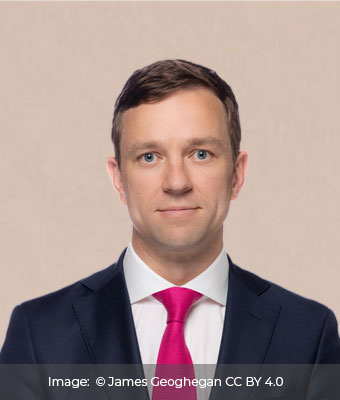
First, I congratulate the Minister of State on her appointment to her new role as Minister of State with responsibility for disability at Cabinet. It is a very important and challenging role.
The issue I am discussing is not unrelated insofar as it concerns the safeguarding of children. Some weeks ago, the CEO of Tusla appeared before the Committee of Public Accounts. We probed her in respect of the issue of unaccompanied minors seeking international protection and how they are cared for within a Tusla setting. At that meeting, the concern that Tusla has on the whole area of age verification was revealed to us. As it happens, that particular meeting predated a number of incidents, which I will not speak about here, including some tragic incidents that have taken place. It is a real worry and concern. Today, we have the figures, given in response to a parliamentary question, that there are over 200 people who Tusla has identified as, in fact, being adults, not children, and who have resided in a centre designed for children with international protection applicants who are unaccompanied minors. This is a real child safeguarding issue.
My concern is that it appears two State agencies - Tusla and the Department of justice - are somewhat at loggerheads and in dispute. Some weeks after the appearance of Tusla before the Committee of Public Accounts, we heard from the Department of justice, which was very firm in its view that the responsibility for carrying out age assessments or age verification rests solely in the hands of Tusla. However, when the Department wrote back to the committee several weeks later, it acknowledged that as a matter of law - the laws that have been passed in the Dáil, Seanad and Houses of the Oireachtas - the legal responsibility for carrying out age verification is, in fact, vested in the Department of justice and the Minister for justice.
It has been the practice for at least a decade that Tusla and its predecessors have, effectively, been given this function as an outsourcing function. When we think about what Tusla's responsibilities are, they are not to carry out legalistic determinations as to whether or not the people who are in its services require its services. Its job is to look after some of the most vulnerable children in this country, no matter what nationality the child may be, no matter in what circumstances the child entered its services.
There is now this additional challenging issue. Perhaps this is why it has not come to the fore previously but it has now. The issue is that the number of unaccompanied minors seeking international protection in Ireland has risen significantly at a time when the overall number of people seeking international protection is on the decline. At a time when we have enough accommodation to accommodate persons seeking international protection in this country, it is on the increase when it comes to unaccompanied minors. In the past year, there has been a 13.5% increase in the number of unaccompanied minors seeking international protection.
The truth is that we have a real challenge. We are looking after up to 600 unaccompanied minors, some of whom will have come from devastated parts of the world, and some of whom, no doubt, will have gone through traumatic journeys, where the risk of trafficking is significant. Now, added to that, we have the admitted concern that there are adults in the centres where there are children. What needs to happen is an intervention whereby we can get clarity as to who is carrying out age verification and how it is going to be properly invested in and resourced.
I am taking this matter on behalf of the Minister, Deputy O’Callaghan. I thank Deputy Geoghegan for raising this important matter and providing the opportunity to give clarity. I hope the Deputy gets that clarity from the comments that the Minister has asked me to make on his behalf.
I am aware that this matter has been discussed by the Committee of Public Accounts and that the Department has responded in writing to a range of queries from the PAC. First, I would like to set out the legislative position regarding age verification. The International Protection Office, IPO, is responsible for determining the age of an applicant, and the Child and Family Agency - Tusla is responsible for determining if an individual is entitled to access its services, including the provision of accommodation. These issues are addressed under the International Protection Act 2015 and the Child Care Act 1991, respectively.
The International Protection Act states that where it appears to an immigration officer or an international protection officer that a person seeking international protection is under 18 and has not been accompanied by an adult, the child should be referred to Tusla. At that point, in accordance with the International Protection Act, it is assumed that the person is a minor and that the Child Care Acts and the Child and Family Agency Act 2013 apply.
The International Protection Act states that Tusla is responsible for making an application for international protection on behalf of the child. It also makes provision for the IPO to arrange an assessment to determine an applicant’s age, but this cannot happen without the consent of the person, or Tusla acting on the person’s behalf. Independent of this process, Tusla carries out an assessment to determine the eligibility of the person, who has been assumed to be a minor, to access its services. In practice, and for many years, it is this latter assessment that is taken as being determinative of age for the purposes of both eligibility for services and for the processing of an international protection application. In cases where Tusla decides that the person is not eligible because they are judged to be an adult, the applicant is referred back to the IPO, which will process their application as such.
While this has been the long-standing practical process around age verification, there is an acknowledgement that it needs to be adapted. The Minister, Deputy O’Callaghan, and the Minister of State, Deputy Brophy, intend to use the forthcoming International Protection Bill to amend the statutory mechanisms for age determination. The measures under the EU Migration and Asylum Pact set out safeguards and procedural guarantees for unaccompanied minors in the international protection process and will be given effect in the International Protection Bill. The Bill will also provide for appropriate alignment with the screening regulation. As required by the pact measures, the Bill will make provision for the appointment of representatives to assist and safeguard the interests of unaccompanied minors.
Additionally, the International Protection Bill 2026 will propose that the determining authority - the replacement for the IPO - will arrange and be responsible for age assessments. It will set out in far greater detail how age is assessed and provide for regulations governing the standards for that process and the qualifications needed for staff. I hope that clarifies the matter.
I thank the Minister of State for this very comprehensive reply given on behalf of the Minister, Deputy O'Callaghan. The challenge, as we await new legislation and what seems to be a new announcement I had not seen before, is that age assessment will be governed by regulations pursuant to this new legislation, the International Protection Bill, but the number of unaccompanied minors does not appear to be on the decline. In fact, it seems to be the opposite. The risks will continue to rise and while I understand every effort has been made to initiate and get this Bill through - perhaps even in the first half of next year - as the Minister of State knows, it will take time to commence relevant provisions and for the determining authority to be established. It will take time to ensure the appropriate staff are resourced and, if there is a more prescriptive measure in terms of how age is to be assessed, to ensure training would accompany such regulations. All of that is welcome but will take a lot of time. It is important the Minister for justice indicates what will happen on an interim basis, pending the introduction of this new regime. It seems Tusla is very concerned about this issue and about its responsibilities in ensuring it is protecting every person who is presumed to be a child when he or she arrives to Tusla as an unaccompanied minor. Then, on the other side of the equation, there is the issue of where Tusla may have identified somebody as not being a child who enters into adult services but it is later proven that person is a child and remitted to child services. This is a very complex area and I think interim approaches are necessary.
I thank the Deputy and fully agree it is a very complex area. We need to make sure we are getting this right. There is a long-standing process around age verification of unaccompanied minors seeking international protection in place. That process will continue to be the practice until the new International Protection Bill is enacted and all of the relevant measures behind it come into force.
On behalf of the Minister, Deputy O'Callaghan, I thank the Deputy for giving us the opportunity to have this discussion on the floor of the House and to put some of that new information on the record of the House. Also, I thank the Deputy's colleagues on the Committee of Public Accounts because I know they also had a number of queries. The Department has responded in writing to a range of queries on this issue following the recent appearance at a committee meeting the Deputy referenced. This has given us the opportunity to clarify and expand in more detail on the plans in this area. To be crystal clear, the Minister intends to use the forthcoming pact legislation as an opportunity to amend the statutory mechanism for age determination. Both the Minister, Deputy O'Callaghan, and the Minister of State, Deputy Brophy, are absolutely committed to working closely with the Department of Children, Disability and Equality - my own Department - and Tusla on matters relating to unaccompanied minors in the international protection process. Their aim is to ensure our national legislation and our operational practices will accord with requirements under the pact and will ensure the appropriate care and protection of unaccompanied minors.
Water Services
The people of west Cork are genuinely at the end of their tethers. Since July, they have had 14 water breakages. It has led to the local crèche and school having to close because if they do not have water they cannot remain open, use toilets or whatever else. I was at a public meeting the other night which was attended by other public representatives. The local Airbnbs had to give money back to people because they could not shower in the morning. People who had coffee shops basically had to close their doors. These are small things that mean a lot to businesses. It was the same with animals who were stressed without water, which was a huge issue throughout the summer. I went through it myself 20 years ago in Schull.
A number of solutions were put forward during the public meeting. Some made sense and some did not but they need to be discussed. We need to sit down with Uisce Éireann and we need a pathway forward. I, and the public representatives who were there - and I have met them since in the corridor here - are worn out looking for Uisce Éireann to give a straight answer. Will the Minister meet the local community group, maybe three individuals, with the Oireachtas Members to talk about what Uisce Éireann's intentions are in laying down a new water pipe for the people of Adrigole so they can get a proper water supply and do not have to look over their shoulders and worry whether they will be closing their business or their school tomorrow morning? The water was out for a spell and somebody said to me recently that a newborn baby had to be taken to stay at someone else's house overnight. It is the basics.
The bottom line is that I genuinely cannot get an answer. What I hope I can get this evening is an answer because I have really pulled out all of the stops on this. I understand the stress people are going through because I went through it myself 20 years ago. At that time, it was the council. The councils were more or less in charge and that is the way it should have stayed because we had some accountability and councils were able to give answers. Councillor Danny Collins, who is my brother and an Independent Ireland councillor down there, has been dealing with this issue on a week-to-week basis. Apparently the council is now saying we can no longer bring Uisce Éireann up in a motion because it no longer has anything more to do with Uisce Éireann. That is outrageous because public representatives should be bringing up whatever issues they have and then it is up to the council. Obviously, the council cannot resolve the issue now; it is Uisce Éireann. The council should pass the issue on to Uisce Éireann and let it come back on it.
The bottom line is that in all of my weeks bringing this issue up, and previously as well, I cannot get an answer. The Minister of State from Cork South-West cannot get an answer nor can the Fine Gael Senator. I spoke to them and they told me so. We want Uisce Éireann to sit down and meet the local group, including ourselves, to tell us what it intends to do and what will happen. It might take two month or six months but, please God, it will happen. God almighty, it is a living terror to think all I am getting is a generic answer. All the Minister is getting is a generic answer. All everybody is getting, including the community group I set up to deal with this issue, is a generic answer.
There is a huge room full of people protesting because they want their common right; a clear water supply so they know they can turn their taps or shower on in the morning or get an animal a bit of water. It is very basic. That is being denied to the people of Adrigole right now. I ask the Minister whether we can have a meeting with Uisce Éireann and what the plan for Adrigole is. I pray to God the Minister of State here has an answer and that it is not the generic one we got because it was the most crazy answer. It was all about the dry summer and the floods and then Adrigole, was dropped in. It just alters the answer and throws in "Adrigole" because it has thrown in hundreds of other communities up to now. That will not work. It is like an AI-generated answer but it will not work. I sincerely hope the Minister of State has an answer for me and that she gives me a good, clear answer in her four minutes, so I can go back to west Cork and say that things are going to be sorted and we are all working together on this issue.
The Deputy will be glad to know I will not say "dry summer" or "flooding".
Thank you.
I thank the Deputy for raising this issue. It is obviously a really important issue for the people he represents and it must be very frustrating for them. The Deputy will appreciate the supply of public water and the provision of water services in general are, as the Deputy alluded to, matters for Uisce Éireann in the first instance. Uisce Éireann has statutory responsibility for all aspects of water services planning, delivery and operation at national, regional and local levels. The Minister has no function regarding the specific Uisce Éireann’s operations in Adrigole to which the Deputy referred.
To be helpful, the Department has made inquiries to Uisce Éireann on the Deputy's behalf and has been informed that there were 18 bursts recorded in Adrigole between May and 31 October of this year. For unforeseen unplanned outages, it is not possible to provide advance notice to customers. When these occur, Uisce Éireann immediately mobilises repair crews to investigate the source of the burst and works as a matter of priority to repair the water main and restore normal water supply to impacted homes and businesses as quickly as possible. Uisce Éireann does that for exactly the reasons the Deputy outlined because coffee shops, farmers, families and everybody relies on clean, accessible water.
When an unplanned outage occurs and repairs have been undertaken, typically, it takes three to four hours for normal supply to be restored to all customers affected. However, it may take longer for normal supply to be restored to customers at the end of the network or on higher ground as the system recharges. Uisce Éireann has informed the Department that the situation in Adrigole has stabilised since 31 October, and I hope that has been the Deputy's experience and the experience of his constituents. It said there has been a noticeable easing off in the frequency of bursts.
Uisce Éireann has given a commitment to continue to monitor the area, mobilise repair crews promptly and provide updates to elected representatives, including Councillor Danny Collins, and the community as more information becomes available.
Similar to other townlands across the country facing comparable challenges due to weather-related pressures and ageing infrastructure, Uisce Éireann is working through these systematically. The frequency of bursts is taken into consideration when prioritising water main rehabilitation projects. However, they are limited in what can be rehabilitated each year.
A case for mains rehabilitation works for the Adrigole area is currently under consideration by Uisce Éireann. I presume this was one of the suggestions the Deputy mentioned came out of the public meeting he attended. As the process is only in the initial stages, it is too early to confirm a timeframe at this stage. Uisce Éireann has committed to me that it will share further updates with elected representatives and the community in this regard once available.
Our water and wastewater infrastructure requires substantial and sustained investment over a number of investment cycles to bring the systems up to the standards required of a modern service and to provide for population growth and to build resilience in the face of climate change. That is why this year the Government provided record funding to Uisce Éireann under the national development plan to ensure that we continue to prioritise these types of infrastructure upgrades and new developments.
I will break the reply down to the basics. The Minister of State said, "A case for mains rehabilitation works for the Adrigole area is under consideration by Uisce Éireann. As the process is only in the initial stages, it is too early to confirm a timeframe at this stage." It has admitted there have been 18 bursts since last May. How can be "in the initial stages"? People have been without water 18 times since May. I hate making comparisons, because we must represent the people of Dublin, but that would not happen in Dublin. There would not be 18 disruptions without something being done immediately and without an answer being given. I would plead with the Minister of State if she has not got that answer. I need that answer immediately. For three or four weeks, I have been asking then those works are going to start.
There has been a temporary solution. There is talk about a temporary water pipe up on the ditch, as happened in other communities. It worked out. I have no issue with that but I would rather something more permanent. The community has come back to me recently with a more permanent solution. Councillor Danny Collins is working on that as well to make sure we maybe lay the pipe opposite to where the pipe is laid already. The bottom line is that works need to commence, we need a date for the works but that is not happening.
The Minister of State can only read out the reply she got. I respect her for that. The bottom line is I cannot go back to the community with that reply because it is going to go nowhere. That will not ease the worry of the crèche owner, the school owner or the Airbnbs. They know there will be a lot more breakages and I am going to be back in the Dáil in 12 months talking about it.
The Minister of State said, "The Minister has no function ...". Good God almighty, the Government is giving €13 billion of taxpayers' money to Uisce Éireann. Surely to God somebody has responsibility for it because it has given up being responsible. At one time, you could sit around the table but it was only a short amount of time. Now we cannot even sit around the table.
All I am asking the Minister of State is whether she can give me a date as to when it will meet or a date as to when works will start in Adrigole in west Cork.
I cannot because the process is only at the initial stages. A case for the mains rehabilitation works in the Adrigole area is currently under consideration by Uisce Éireann. It has not made a determination on that. Only when it makes a determination on that will it be possible to move forward with a timeframe. The frequency of bursts is taken into consideration when it prioritises water main rehabilitation projects. We have outlined that there have been 18 bursts in a short period of time. That will be taken into consideration.
It also needs to be taken into consideration that Uisce Éireann has said that this situation has stabilised since 31 October and there has been what it describes as "a noticeable easing off in the frequency of bursts."
From an initial perspective, we want to reduce and mitigate bursts and Uisce Éireann is working to do that. Taking a longer term approach, it wants to do rehabilitation works on that line. That is something it is now considering doing. When it has made a decision that, it will come back and let public representatives, including councillors, know it had made that decision. I am sure I will be in a position to update the Deputy on timeframes at that point.
The Deputy stated in his initial remarks that the county council has said that it is not possible to take motions that refer to Uisce Éireann and I am quite surprised by that. That is not the standard approach in local authorities up and down the country. I would certainly encourage the Deputy to speak to Councillor Collins and maybe suggest that he take that up with one of the representative bodies, Local Authorities Members Association, LAMA, or the Association of Irish Local Government, AILG, as that needs to be sorted as well.
The pipe is in an awful way. It is creaking at the seams. We need a meeting and we need the new water works to be commenced there.
The Deputy's time has passed.
Renewable Energy Generation

In my constituency, we have a huge number of energy developments at various stages of planning and development, between wind energy, solar farms, gas plants, etc. These are causing a lot of concern. I have raised this previously. It is important for me to say at the outset that my constituents are not against renewable energy. They fully understand the importance of energy security but they want it to be done right.
Today I am glad to get the opportunity to focus on solar energy developments, including battery energy storage, in two projects, in particular, that have brought to my attention by my constituents. In Monivea and Abbeyknockmoy, the proposed Belleville solar project, led by Power Capital Renewable Energy, PCRE, is planned to cover approximately 1,000 acres within the community across multiple different sites. This is a small rural community that would be left totally unrecognisable should the development go ahead in its current form.
Where?
Belleville in Monivea and Abbeyknockmoy. In Grange and Gregmore, the Ballymoneen solar project, also led by PCRE, is currently under construction. I am from the local area. The construction has caused enormous disruption locally between damage to roads, road closures, noise and consistent breaches of planning conditions. Local residents have been informed in recent days that the developer now intends to expand the development and it has a number of new sites identified locally.
People have serious concerns around safety, health and well-being, the impact on their homes, property values, the quality of life, the local landscape and environment, whether their children will be able to build there in the future, what the future of farming will look like in the area - this is prime agricultural land that has been taken up - where all of this end, whether the developers will keep expanding and whether vast swathes of the countryside will ultimately covered in these farms. There has been no clarity provided to people on these issues.
There was no public consultation initially in terms of the Ballymoneen development. The consultation for the Belleville development was seriously lacking. Most people were uninformed. The reality is that the concerns being expressed by local people are not being taken into account and the questions they have are not being answered. The core of this problem is the legislative vacuum the Government continues to tolerate. Due to the lack of clear mandatory national guidelines on solar development, the system is rigged in favour of developers. Our countryside is like the wild west at present. It is open season for these developers to come in, to land these proposals right on top of homes and to change local communities beyond recognition with no real input from the people who live in those communities. These people are being treated with contempt and it is completely unacceptable.
I am fully committed to climate action. I recognise the importance of meeting our renewable energy targets but climate action cannot be delivered by corporate land grabs that destroy rural social fabric and undermine our food security. I am calling on Government to end the unacceptable delay in bringing forward specific planning guidelines on solar energy developments. We need guidelines that will protect communities, ensure appropriate land use, ensure safety, and ensure proper set-back distances and real community consultation. If the Government is serious about a just transition, it will introduce these protections immediately. If the Government fails to act, it is endorsing the industrialisation of rural Ireland one community at a time. The people I represent and people right across rural Ireland deserve better than to be sacrificed for corporate profit.
I thank the Deputy for raising this issue, which I am taking on behalf of the Minister for Housing, Local Government and Heritage. I welcome the Deputy's remarks at the start of his contribution that he is not against renewable energy measures. As he will be aware, the Programme for Government 2025 - Securing Ireland’s Future has reaffirmed Ireland's targets of 80% of electricity demand to be met by renewables in the near term, with plans to move to net zero by 2050. The deployment of renewable electricity, including solar energy, is vital for Ireland to meet its ambitious domestic targets and international commitments.
Solar energy is already a growing source of electricity with approximately 2.1 GW of solar power capacity currently installed in Ireland. However, there is no doubt that further solar capacity is required for Ireland to meet its domestic and international targets.
In this regard, the programme for Government reaffirms Ireland’s ambitious targets of 8 GW of solar capacity connected to the grid by 2030. From a planning perspective, the programme for Government contains a commitment to introduce new planning guidelines for solar energy development, which the Deputy called for without delay.
An important development in this regards is that chapters 1 through 4 of Part 3 of the Planning and Development Act of 2024 came into effect on 2 October. As the Deputy may be aware, this provides the statutory basis for the national planning framework and the regional spatial and economic strategies, and introduces provisions for the new national planning statements that will replace section 28 planning guidelines. Therefore, the solar guidelines, once finalised, will issue as a national planning statement under the 2024 Act. This will ensure enhanced clarity and increased consistency across the planning systems at all tiers.
The Department of Housing, Local Government and Heritage is currently undertaking a scoping exercise - it is at an early stage - to identify the component factors relevant to the preparation of this national planning statement, including any appropriate environmental reporting and public consultation requirements, which the Deputy called for. This includes our European obligations such as the renewable energy directive, battery storage facilities and the possible timeframe for publication of the national planning statement. In line with EU directive requirements, a strategic environmental assessment will be carried out on any draft national planning statement regarding solar energy development. The Department intends to undertake a public consultation on the draft statement before it is finalised to give the individuals, communities and organisations the Deputy referred to the opportunity to submit observations on this draft statement. Consequently, any draft national planning statement will be prepared following detailed analysis and consideration of the submissions received during the consultation phase. The finalised draft will be subject to Government approval. In the meantime, public participation remains a cornerstone of all substantial decision-making processes in planning legislation. It is of course open to any member of the public to make an observation or submission on a planning application including in relation to solar energy developments. The planning authority is statutorily obliged to consider such submissions before making a decision on the application.
The programme for Government also contains a commitment to a land use review to ensure that optimal land-use options inform all relevant Government decisions. The second phase of this review, which is under way, will seek to identify the key demands on land both public and private to inform policies for land use across key Government objectives, improving socioeconomic, climate, biodiversity, water and air quality outcomes. The conclusions of this review will be factored into any draft national planning statement on solar energy development. Until the finalisation of the national planning statement, it will remain the case that, as with the large majority of development types, there are currently no specific planning guidelines that deal with solar energy development.
The Deputy mentioned planning conditions not being adhered to. I highly recommend that he get in touch with planning enforcement in the relevant local authority. In the short to medium term, the planning system provides a sufficient, robust policy and legislative framework in this regard.
The Minister of State said the scoping exercise for the guidelines and the land use review are under way. Can we get clarity on the timelines for the finalisation of those exercises? That was missing from the response. These applications are coming thick and fast across the State. We know these companies have their sights set on expanding their operations where it is profitable for them to do so and where they can get access to land. That is why it is important that the can is not continually kicked down the road. If possible, will the Minister of State provide timelines for all of this? When it comes to large-scale developments, the social fabric of communities also needs to be considered, which I also ask the Minister of State to acknowledge.
These projects are proving very divisive in communities. Neighbours and families are falling out with one another over land and access. My fear is that this will end up like the wind energy guidelines saga whereby the Government put a commitment in place for guidelines but the matter drags on for years and the can keeps being kicked down the road. Ultimately, communities are left facing these developments with no protections in place whatsoever. The Government's performance when it comes to the wind energy guidelines certainly does not inspire confidence in how it will deal with this issue.
There is a similar issue around solar energy developments. It is my firm view that the Government is failing communities with the absence of a plan-led approach to such developments. Communities have genuine concerns. They are reasonable and just want clarity on the key questions they have. We all understand and support the development of renewable energy but the Government needs to get a grip on the situation. Protect communities and get guidelines in place as soon as possible.
I take this opportunity to reaffirm to the Deputy that the Government and, in particular, the Department of Housing, Local Government and Heritage are absolutely committed to working towards the publication of a national planning statement on solar energy development. That is in line with our programme for Government commitments. We are currently undertaking a scoping exercise in that regard. It is at an early stage, but work is under way. This work will include all the appropriate public consultations and the need to ensure the finalised national planning statement is fit for purpose, given the evolving and reforming planning policy context. I take on board the Deputy's point in relation to the social fabric, which is important. That is why public consultation will be at the heart of this too.
The forthcoming national planning statement will enhance existing policy and legislation around the governance of solar energy developments and provide additional measures and guidance for the ongoing development of solar energy while ensuing compliance with existing and future national, EU and international renewable energy policies and targets. In the interim, which I know the Deputy is concerned about, the existing planning system, supported by Government policy more generally, provides a sufficient, robust policy and legislative framework to facilitate the roll-out of solar energy developments in a sustainable manner and to assist with meeting our renewable electricity requirements. We need to balance the perspectives of local communities and our renewable electricity suppliers. That is what we are trying to do to allow for public and stakeholder engagement. It is a balance, but it is something the Government is committed to achieving.
Cuireadh an Dáil ar fionraí ar 5.07 p.m. agus cuireadh tús leis arís ar 5.10 p.m.
Sitting suspended at 5.07 p.m. and resumed at 5.10 p.m.