Humanitarian Aid
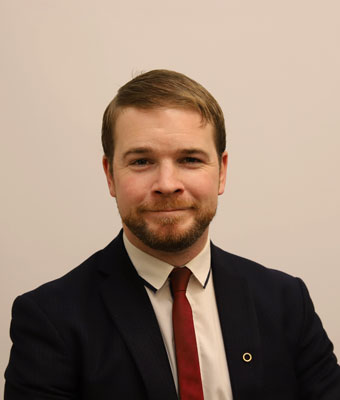
1. Deputy Donnchadh Ó Laoghaire asked the Minister for Foreign Affairs and Trade her views on the humanitarian crisis in Cuba; her views on whether the blockade of Cuba needs to be ended; the steps she is taking to alleviate the crisis; the steps being taken to ensure humanitarian aid is provided to Cuba; and if she will make a statement on the matter. [50708/26]
At the outset, and on a separate manner, I take the opportunity to condemn strikes on Kyiv last night resulting in the loss of over a dozen citizens, and perhaps more. It is another example of the war of aggression that is taking an enormous human toll.
The first question I have is in relation to the blockade of Cuba. The humanitarian situation there escalates by the day. The impact that it is having on the ordinary people of Cuba, particularly children and those who are sick, is profound. Clearly, a resolution is needed. The Government needs to make statements.
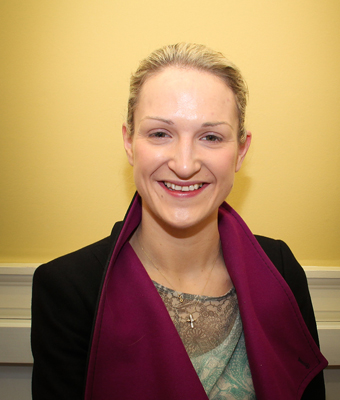
I, too, condemn the attacks last night. It makes it all the more important - in terms of our focus and priority during the Presidency - to ensure that we do everything possible, not just to support Ukraine but also to maintain pressure on Russia. That is something we very much communicated and engaged directly on with President Zelenskyy yesterday.
I thank the Deputy for raising this question. As a country, we are monitoring the humanitarian situation in Cuba.
I very much echo the UN Secretary General's concern at the growing humanitarian crisis in the country. Our position on the embargo imposed by the United States on Cuba is long-standing and clear. We have consistently voted for UN resolutions calling for the ending of the embargo, most recently last October at the UN General Assembly. Restricting the flow of basic goods, and particularly fuel, to Cuba heightens the suffering of ordinary Cubans. The Deputy's colleague discussed this last night. Due to the lack of fuel, we can see the impact it is having on the ability of farmers to be able to tillage, plough and deliver food. The impact that is then having on cities and people more generally is becoming more profound and something that we are extremely concerned about.
Ireland provides ongoing humanitarian assistance directly to Cuba through funding to global positioned humanitarian funds, which work with local partners to deliver assistance. These include the United Nation's central emergency response fund, the International Federation of Red Cross, IFRC, and the Red Crescent Societies' disaster relief emergency fund and the START Network. In the past year, the central emergency response fund has allocated €6.4 million to UN agencies in Cuba. The IFRC has allocated €1 million and the START Network has allocated €270,000 to Care International for its work in Cuba. Ireland has also committed €100,000 through the Food and Agriculture Organization of the United Nations to support Cuba to build capacity and develop a strategy to respond efficiently to extreme events, such as hurricanes. Ireland will continue to engage with its humanitarian partners to assess needs.
Like other issues, the humanitarian aid is necessary but more than that, a political solution is needed. It is clear that US sanctions are pushing the people of Cuba to the brink. Children are dying because doctors cannot access essential medicine and supplies. This is not just what I have said but UN human rights chief, Mr. Volker Türk, and the UN have called the immediate lifting of the United State's sanctions against Cuba. Mr. Türk said, "The fuel restrictions imposed since early 2026 and the recent tightening of sanctions, taken together, are directly harming Cubans, especially the most vulnerable." The daily blackouts are now exceeding 20 hours. Conditions are rapidly deteriorating. The UN Human Rights Office has cited frightening figures. Infant mortality has doubled to 9.9% per 1,000 births. Childhood cancer survival rates have fallen from 85% to 65% and essential medicines are available at only 30% of normal supply levels. The key point is that although the Government is voting for these resolutions, how is it raising this in international forums to ensure movement?
As time previously did not allow, I wish to stress that the European Commission is providing financial support. For all the reasons the Deputy outlined, it is important that humanitarian aid and support is provided. There is €2 million in aid in response to the crisis currently. That follows €4 million of EU funding approved as a regional allocation to the Caribbean, which was primarily allocated to the response in Cuba. In 2025, almost €6 million was provided for disaster preparedness and emergency response. A twin approach is needed. As the Deputy said, it is about providing that direct humanitarian assistance but also making sure this does not fall off the political or international agendas. I understand Cuba has requested an additional debate at the UN General Assembly on 7 July next week due to the escalation of measures that have been taken by the US in recent months, as well as threats of military action. While this is strictly procedural and it is to vote on whether there will be a further debate on this, we will be voting in favour on 7 July that we would have a wider discussion on this, so we can discuss and assess the current humanitarian situation and that we can use our position within the UN and our voice to call for this type of embargo and these types of sanctions to be lifted. As the Deputy said and we all agree, the main people who are suffering here are civilians and citizens who cannot access medicines, cannot get food to those who need it and cannot go about their daily business in the way the Deputy or I can.
While there are commitments in terms of humanitarian aid, the difficulty is that the current blockade means that even with access to cash, the international payment systems have, to a substantial degree, been blocked off and, indeed, supply of energy is not being facilitated. Countries that would have previously supplied energy, including Mexico and so on, have now substituted to other forms of aids but, ultimately, the fuel is not getting through and, therefore, the system is grinding to a halt. Deputy Farrell said last night that there is food rotting in the fields because there is not the energy to harvest it. Ultimately, as well as cash, there is a need to ensure there is the ability for Cuba to receive energy, fuel, petrol and gas. At the end of the day, the international community has broadly taken a clear enough position with some exceptions. Ultimately, it is the United States that is responsible for this blockade. Has the Minister directly raised her concern in relation to this issue with representatives from the United States Government ?
There are two things here. We need to make sure the European and international community are very clear in our view and position on this. Ireland has been very clear and taken a very clear position. Over a number of years, although we are discussing the fact things have escalated further, we have had ongoing dialogue and contact with the US on a range of international issues. That includes Cuba. We have relayed and conveyed our concerns directly with them. We have communicated our position on the US embargo, the impact of the embargo and the international response to the humanitarian crisis but also the importance of maintaining diplomatic engagement. Earlier on this year, there was progress made between the Cuban Government and the US. However, that then shifted and changed. This continuing approach has not changed. What we want to do is ensure that the dialogue and the structure are there. We have an EU-Cuba political dialogue and co-operation agreement. There are some calls for that to be reviewed or changed. We need to look at the structure that is there now. We need to engage directly with that government.
There have been concerns around human rights, democracy, government concerns and how we work directly with the government to address those concerns while at the same time engaging directly with the US. This is about dialogue. The only way this is going to be resolved is through dialogue and through the US engaging directly with Cuba but also the Cuban Government addressing and responding to some of the significant challenges that been identified by the international community. Our position through that co-operation agreement should be to ramp up and enhance that dialogue and engagement, particularly at a time where we are seeing devastating consequences for many people because of the sanctions or the blockade that has been imposed.
Question No. 2 taken with Written Answers.
Foreign Conflicts
3. Deputy Donnchadh Ó Laoghaire asked the Minister for Foreign Affairs and Trade her views on the war in Sudan and on the Government's position on same, in particular the need to ensure access to appropriate aid; her position on the continuing concerning flow of weapons into the country; and if she will make a statement on the matter. [50709/26]
We have often discussed the appalling conflict in Sudan - the greatest humanitarian crisis on the planet at this moment in time. Millions of people are displaced and hundreds of thousands have been killed. It is a situation that continues to escalate, particularly now in the Kordofan and Blue Nile states. There is a need to address the humanitarian crisis and to ensure the protection of civilians and humanitarian workers. Ultimately, what is required also is pressure to ensure that the ongoing flow of weapons, which continues to this day, and finance in relation to fuelling this conflict are addressed. It is important that this be a priority in terms of this theme of the Presidency.
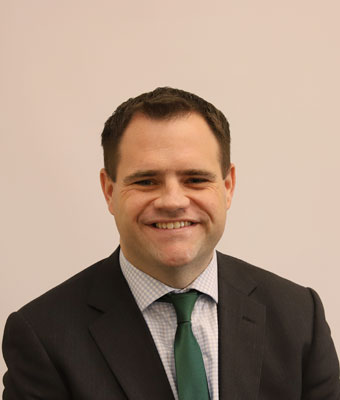
I thank the Deputy for consistently raising this issue in questions and debates and shining a light on what is the greatest humanitarian disaster currently happening on this planet.
The conflict in Sudan continues to have a devastating impact on the Sudanese people, particularly women and children. I am particularly alarmed by the Rapid Support Forces' offensive of the city of El Obeid. Following their appalling attacks in El Fasher last year, there is a grave risk of the RSF committing further mass atrocities. The warring parties must adhere to their obligations under international human rights and humanitarian law, including the protection of civilians and humanitarian workers. Civilians must be able to leave the city safely and all parties must ensure rapid, unimpeded and sustained humanitarian access.
On 23 June, the Minister, Deputy McEntee, signed a joint ministerial statement from Ireland, France, Germany, Italy, the Netherlands, Norway and the UK on the situation in El Obeid. The Ministers stressed that external support continues to sustain the conflict and called on those fuelling the conflict to cease. Those with influence must exercise it now to avoid further bloodshed. Ireland also continues to advocate for the expansion of the UN embargo to the whole country. The critical issue of humanitarian access and the need to remove bureaucratic obstacles to aid are at the heart of Ireland's diplomatic engagement on Sudan. I attended the International Sudan Conference in Berlin on 15 April. The EU and its member states, including Ireland, pledged over €812 million in humanitarian assistance to support the people in Sudan and to respond to the regional refuge crisis. Ireland will significantly increase our humanitarian assistance this year from over €14.3 million provided in 2025 to €21 million this year. Our funding will be channelled through trusted partners to reach the most vulnerable.
On 12 June, we launched a call for proposals from Irish agency partners working on the ground in hard-to-reach areas in Sudan. My Government colleagues and I are determined to ensure that this devastating crisis is not sidelined or forgotten. We will continue to ensure a sustained focus on Sudan during our Presidency.
I am glad the Minister of State referenced El-Obeid. The moment in which the world paid most attention to Sudan was at the end of the siege of El Fasher when RSF arrived into that city and literally struck people down in the street with machetes. It was the kind of slaughter that was redolent of what happened in Rwanda. Tens of thousands of people were killed. It is difficult to get a clear sense of the loss of life, but it was absolutely enormous. Unfortunately, the world has begun to look away again at a time when, potentially, we face the same type of circumstances at El-Obeid. The latter is a significant city. Hundreds of thousands of people live there, many of whom are already internally displaced. Many of them may have left places such as El Fasher. It is vitally important to do whatever we can do to put pressure on to prevent a recurrence. I have referenced the role of the United Arab Emirates, UAE. The UAE is not the only country involved, but it is clearly a crucial one in terms of the supply of weapons to those involved in this conflict. That needs to be called out at both an Irish and a European level.
In reference to El-Obeid, on 19 June, Fr. Youhanna Al-Amin, a Roman Catholic priest, was killed in an attack on Holy Cross parish church. On the same date, in another attack on an office and warehouse of a partner organisation of Trócaire in South Kordofan, a guard working for the organisation was killed and a colleague wounded. The warehouse, which contained UNICEF medical and nutrition supplies, was looted. Trócaire is an organisation familiar to all of us. We know that the work of Trócaire takes place on a worldwide basis; it is not just located in Maynooth.
The depravity that happened in El Fasher and to which the Deputy referred is unfortunately spreading. We see that in terms of what is happening at El-Obeid. We also see the continuing need for a strong humanitarian response, which Ireland certainly has not been found wanting on, the need to expand the UN embargo, which we have talked about before, and the need to consistently raise this matter with partners.
I note the Deputy's reference to the UAE. As he knows, I have raised that matter with the Minister a number of times. I raised it with the Ambassador again just yesterday. I will continue to raise it.
The Minister of State might have seen a very troubling report in The Guardian in recent weeks regarding Nathaniel Raymond, an American human rights investigator from Yale University, who alleged that representatives of the Foreign, Commonwealth and Development Office in Britain told him there was significant private pressure from the UAE which meant that the UK would not publicly divulge information linking Ethiopia and the Emirates to support for the RSF, which was responsible for the atrocities in El Fasher, and that there had been an attempt to downplay the scale of death and human rights abuses. Obviously, I have no way of establishing the this, but the concern is that similar pressure and reticence exists across countries within the EU. I asked the Minister of State, and he has broadly agreed, that during its Presidency, Ireland needs to continue to raise this issue. Does he sense any movement or any greater willingness on the part of European countries to ensure that greater pressure will be exerted, particularly in the context of the supply of arms?
Absolutely. Let us not mince our words. What is occurring in Sudan is the worst humanitarian disaster on the planet. There are acts of pure depravity being perpetrated. Rape is being used as a weapon of war on a scale that has not been seen for a long time. The Irish Government is absolutely committed to continuing to keeping Sudan at the top of the agenda. We have done this consistently at European Council meetings. We have done this through the UN, particularly at the UN General Assembly high-level week. The Minister, Deputy McEntee, has included it as an item for the upcoming Foreign Affairs Council meeting. I raised it at the most recent meeting of the development ministers. It will be discussed at the informal meeting of development ministers to be held in Dublin in October.
Unfortunately, Sudan is often a forgotten crisis for too many people. We know how what is happening is spreading across to the entire region and of the sheer scale of the numbers of those affected. Hundreds of thousands of people who have died, millions are being displaced and millions are facing hunger. This crisis is simply too grave and too big for Ireland not to use every diplomatic tool at its disposal to continue to highlight what is happening and to continue to exert pressure.
Humanitarian Aid
4. Deputy Donnchadh Ó Laoghaire asked the Minister for Foreign Affairs and Trade her views on the need for an immediate ceasefire in the Democratic Republic of the Congo and Rwanda, which is urgently required to prevent the Ebola outbreak spreading further and taking more lives; and if she will make a statement on the matter. [50710/26]
The Democratic Republic of Congo has suffered incredible humanitarian situations, conflict and atrocities over the course of several decades. Millions of people have been killed in war. Unfortunately, on the back of multiple wars, civil wars and invasions, we are now seeing a deadly Ebola outbreak that is spreading quickly and that is also affecting Rwanda This is all happening against the backdrop of the conflict to which I refer. Does the Minister of State agree that there is a need for a ceasefire in order to ensure that there can be humanitarian approach to mitigating the impact of the Ebola outbreak on the region?
I am very grateful to Deputy Ó Laoghaire for raising this issue. The Government remains deeply concerned by the security situation in the eastern part of the Democratic Republic of Congo. Some progress has been made in the peace process facilitated by the United States, Qatar and the African Union, but the situation remains a matter for very serious concern. We join calls on all parties to respect ceasefire agreements and engage in a process to attain a sustainable peace. All sides must respect their obligations under international humanitarian law and ensure unhindered humanitarian access. These are critical factors in enabling an effective response to the Ebola outbreak in the eastern part of Democratic Republic of Congo.
In the context of the Ebola outbreak, to date far in 2026, Ireland has provided €3 million for the WHO general programme of work. A sum of €2 million has been approved for the WHO contingency fund for emergencies, which released €3.3 million to support government responses in Democratic Republic of Congo and, crucially, Uganda. Ireland’s NGO partners have also drawn down contingency funding and accessed items from our humanitarian stockpiles. Democratic Republic of Congo is one of the top recipients of Irish humanitarian funding. Between 2020 and 2025, Ireland contributed over €30 million in humanitarian assistance for Democratic Republic of Congo.
The Minister, Deputy McEntee, discussed the conflict and the Ebola outbreak with the Minister of Foreign Affairs of Democratic Republic of Congo, Ms Thérèse Kayikwamba Wagner, during her visit to Ireland in May
Ireland recognises the importance of the EU’s voice being heard in respect of this grave security and humanitarian situation. We support efforts to agree further EU action to respond to the crisis. EU Humanitarian Commissioner, Hadja Lahbib, visited the region in February for meetings regarding the conflict and in June to discuss the Ebola outbreak. Again, we will closely follow these issues during our Presidency of the Council of the European Union.
The scale of death and suffering in recent decades in the Congo has been very under-reported. Some estimates suggest that about 6 million people have died since 1998 due to conflict. Conflict in the region has rarely been in abeyance, but it spikes during certain periods. The conflict currently is between the Congolese Government and the Rwandan-backed M23 rebel group. It is primarily taking place in Kivu state in the east of the country and in surrounding regions.
Ebola is a horrific and highly transmissible disease. It has already claimed hundreds of lives. It will claim thousands of lives if it continues to spread. The concern is that it will escalate further and that, as a result of the conflict, the authorities will struggle to get to grips with it. Will the Minister of State outline the Department's assessment of the current situation in terms of the outbreak and the extent to which the conflict is adding to it?
We can all agree that the history of this part of Africa, from the pillaging days of King Leopold, to the decades after, to the time when Irish peacekeepers lost their lives there and to the days of Zaire and beyond, has been absolutely horrendous and has been marred by conflict, disease and cruelty. To be quite frank, there was cruelty on the part of western partners as well as domestic actors. Unfortunately, this is the latest chapter of a very vicious conflict that is compounding the escalation of an outbreak of a disease that many people cannot fathom the severity of.
The European Centre for Disease Prevention and Control assesses the infection risk for people living in Ireland and elsewhere in the EU to be very low. However, as of 28 June, Democratic Republic of Congo had reported 1,274 confirmed cases, including 360 deaths. In Uganda, 20 confirmed cases have been reported, including deaths. One confirmed case was reported in France on 24 June. This outbreak continues to spread.
The deteriorating condition of health systems due to the removal of development assistance is certainly having a serious impact and gives rise very real concern, not just on the part of the Irish Government but also among many of our partners. The CEOs of Oxfam Ireland and Trócaire have written about this very recently.
That brings me to my next question. In his reply to the previous question on Sudan, the Minister referred Trócaire's connection to Sudan. Is he aware of any Irish aid agencies which, either directly or through sister organisations, have a presence in Congo and whether they are affected by or involved in this in any respect? The violence that is currently happening has displaced hundreds of thousands of people and forced them to leave their homes. Obviously, that is disrupting access health care. Humanitarian workers and officials need access to provide that support now more than ever. A ceasefire is a medical necessity and is urgently needed in order to support the provision of life-saving care, protect health workers and strengthen security, especially in hard-to-reach areas like the Ituri province and other remote areas.
We are asking the Irish Government to do all it can at diplomatic level and through the EU to make all efforts to ensure that an immediate ceasefire is brought about. Is there an Irish connection with or presence of any kind in the region.
I am very grateful to the Deputy for referring to the very real Irish connection, not just with Democratic Republic of Congo but also with the wider region, including Uganda and neighbouring countries that are often responsible for many of the impacts of these crises, be they conflicts or humanitarian crises. There are over 2,000 Irish citizens in the broader region. Most of them work in the aid sector. Trócaire has a significant presence there. The CEO of Trócaire was due to travel there until very recently. He was in Rwanda during the Easter period. Oxfam has a very real presence in Democratic Republic of Congo as well. It is one of Ireland's largest humanitarian partners outside of our programme countries. Within Irish Aid, we have a very strong history of working in this region.
I referenced the role of Irish peacekeepers - missionaries also played a part - over the period. This is a conflict and a humanitarian disaster that we absolutely will continue to keep to the fore at European level, at bilateral level and, more broadly, through our work with the United Nations.
Question No. 5 taken with Written Answers.
Technological Universities
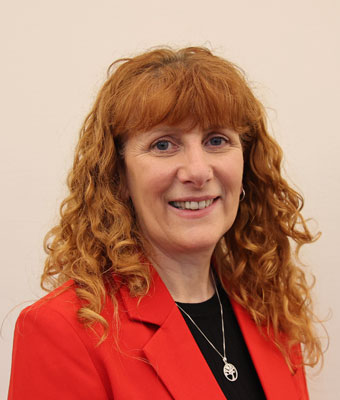
81. Deputy Donna McGettigan asked the Minister for Further and Higher Education, Research, Innovation and Science to carry out a full review of the technological universities to ensure that they are reaching the targets set out for them when they were established. [49642/26]
Will the Minister carry out a full review of technological universities to ensure that they are reaching the targets set out for them when they were established?
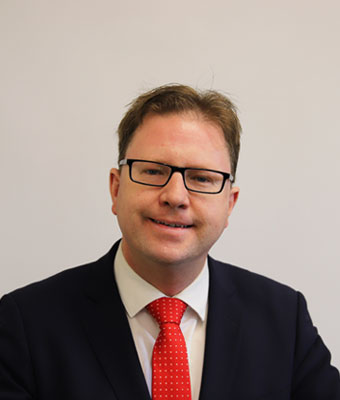
Advancing the technological university, TU, and institute of technology, IoT, sector is a major priority for Government, and for me. This is evidenced by significant targeted investment over many years and demonstrates our commitment to balanced regional development, building research and innovation capacity and with it, Ireland’s global competitiveness, all while increasing access to university education for more students and delivering it on a regional basis as the TUs are doing.
My Department has provided extensive funding and support to aid the TUs that are undergoing extensive and complex transformation programmes. Most recently, I announced allocations of up to €65.8 million under the targeted enhancement fund, TEF, to support the continued transformation and strategic development of higher education institutions in the technological sector and publicly funded specialist colleges. That TEF funding is to enhance that offering in terms of capabilities and everything from information technology, IT, systems to project management and human resources management, and make sure they are fully strengthened and given the capacity-building supports they require.
At this point, legacy management structures in the IoTs, have transitioned to new cross-campus executive university management structures in four of the five TUs. The predecessors in the IoTs have been amalgamated into cross-campus executive teams. The final one, South East Technological University, SETU, is in transition and is currently being assessed. These roles are critical in supporting the TUs to deliver the strategic missions.
Additionally, I expect to see further progression now that I have sanctioned a new professor grade for TUs, which I secured Cabinet approval for just last December. That will support the TUs in their engagement, education, research and innovation capacities. I have also distributed over €223 million in capital funding to the sector across a variety of programmes over the past term, and I continue to work on the metrics under the TU Act, working towards the ambitions to make sure they are an absolute success.
I am not sure if the Minister is familiar with the recent report published by two Munster Technological University researchers. When asked if Irish TUs are failing, they concluded that the Irish TU project has been characterised by financial pressure, the death of regional provision in higher education, mission drift and confused policymaking, and that it has failed to meet any key targets. I acknowledge a lot of this was carried out before the Department of further and higher education was even established but it is still important to reflect on the success or failure of the concept.
Reading the report, the Higher Education Authority, HEA, was set on forcing IoT mergers through impoverishment of smaller institutions, and that there was a drop of 38% in State funding. Academic staff issues were largely ignored. There was very little meaningful engagement. In their applications for TU designation, all consortia stated that they expected increased student numbers and all except Technological University Dublin, TUD, stated that they expected an extra increase over the short term due to TU designation but this bounce never came to pass.
I am aware of the report. I have read it. I should say that has not yet been peer reviewed. It is a draft report by two academics in, I think, Tralee that is in circulation . I am open to all feedback and suggestions, but I add the caveat that it has not yet been peer reviewed. Other academics I have spoken to do not think it will pass the peer review process, but that is open-ended.
It is a curious report in many ways. One of the claims it contains is to the effect that the planned amalgamation between Dundalk Institute of Technology, DKIT, and Queen's University Belfast is a system failure. I find that quite extraordinary, because I think that is a great, ambitious and exciting all-island university project. It depends where you are coming from and I think those academics may have a particular axe to grind. They are entitled to have that - it is their prerogative - but I certainly would not share all of the report's findings. There may be hitting some points but I think it is a curious perspective they have taken.
More generally, I would say that TUs are not failing. The number of students, including research students, at the TUs continues to grow. There might be ups and downs, as in any sector, but, widely, they are growing, and they certainly they continue to invest.
We have a number of exciting, new courses. For example, the new professional veterinary course will be offered in both Atlantic Technological University, ATU, and South East Technological University, SETU, from this September. I might come back on this point in the next round. There are many new courses coming on stream.
As I said, this all started before this Department was created but there are a few outstanding questions. There is a difference in the salaries of TU graduates compared with those from the university sector. A total of €363 million was spent. Does the Minister think that represents value for money?
The Minister talked about research students, but there is a difference in this regard. Smaller institutions seem to be losing out while the larger ones seem to be gaining in some cases. That causes implications for the balance of power within the university sector and poses significant challenges to regional provision.
There are questions around fees for consultants. It is a massive issue, particularly when some consultants were appointed outside the procurement process. Some of them were former senior Government authorities, appointed to the very institutions they were responsible for regulating. A report on the whole needs to be looked at.
I am always open to feedback. The academics and authors of that report are entitled to their views, as are others. I just do not share all of their conclusions. As the Deputy said, the consultant spending was before my time. A lot of it was before the Department even existed. The TU sector on the whole has been an enormous success, however. We now have TUs up and down the country. We have regional universities in Letterkenny, Tralee and Waterford, places which never had university status before. There are many other locations as well. It is exciting for those regional areas and towns and their hinterlands.
I mentioned the veterinary course in ATU. That means that we now have veterinary students coming through from Donegal, Sligo and the north west who do not have to travel to Dublin or, even worse, Poland for their professional education. I was in Waterford recently launching the new SEAM lab, which is a material science facility as part of SETU. It will engage in exciting, leading-edge and enterprise-focused research. The TUs have been a tremendous success already, providing world-class university education in the regions, along with investment in research.
In respect of reviews, spending controls etc. the HEA has commissioned a review of both the technological university transformation fund, TUTF, and the technological sector advancement fund, TSAF. There are reports under way. We always have to ensure we are getting value for money, spending competitively and getting resources to meet our approach.
Third Level Fees
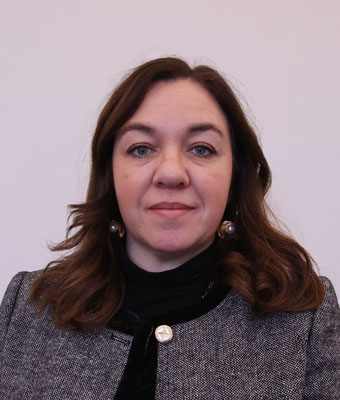
82. Deputy Jen Cummins asked the Minister for Further and Higher Education, Research, Innovation and Science his plans to reduce fees for this coming academic year ahead of the summer break, CAO results and planning for the academic year ahead. [50685/26]
The summer break is ahead. I am sure many leaving certificate students are relaxing on a beach somewhere. Others have got jobs and are planning the year ahead. They are trying to figure out what they are going to do next year, how they are going to do it, where they are going to live, etc. However, what they want to know the most is the level of fees next year and whether it will be reduced.
I thank the Deputy. I wish all students sitting examinations the very best of luck, as well as all those students who are coming to an end of their secondary education, whether they are going to college, further education or elsewhere. Like the Deputy, I will not get much of a break. While this House breaks up in two or three weeks’ time, I will host the European research Ministers the week after that. There are a number of engagements over the summer as part of the Presidency. We will all be busy in our constituencies as well. I hope those in this House get some break, however. It is important to get a chance to recharge.
While there are several hundred commitments in the programme for Government, every year, this budgetary measure seems to be the one that gets asked four or five months ahead of the budget process. No more than any Minister in any Department, I simply cannot write the October budget in June or July. However, I will engage with the Ministers in the Department of Finance and the Department of public expenditure on this. A budget Estimate package is being put together in my Department. I am working with my officials to devise it. It will focus on the cost of college and supporting students in every way I can. That can be multifaceted. While it can include fees, it may also include areas such as SUSI, student accommodation, cost of travel, cost of materials and a variety of other things, such as placements. We will be engaging on all of those areas. Certainly, it would be premature for me to make any prediction, good, bad or indifferent, as to the content of my budget package four months out.
I will recap on some of the measures I have introduced already because it is important to put them on the record again. In the previous budget, I was pleased to introduce the first ever permeant fee cut for students since free fees were introduced almost 30 years ago with a €500 permanent reduction. It replaced the transient, previous cost-of-living measures, which were only ever temporary and could not be relied upon year to year. The €500 reduction is here to stay. It has benefitted an estimated 108,000 undergraduate students and 14,000 apprentices. That reduction cost €55.4 million this year. It is baked in at the baseline. While I may well do more every year, that reduction is there to stay. It is not temporary like previous measures. As I said, going into the budget ahead, I will again be engaging on fees and many other items. While fees are extremely important for anyone who is liable to pay them, many families and students do not pay them at all because they are subsidised, either in full or in part, by the SUSI grant system.
I know people were happy with the reduction. It is swings and roundabouts as to whether the total level went up or down, but it is what it is. No one in this House can deny the challenges students face. Of course, there are students who do not pay because of SUSI. I appreciate that the threshold for SUSI increased, but there are students stuck in the middle. This is the challenge. We have heard of students sleeping in cars or dropping out because they cannot afford it. Some students are working almost full-time jobs to get through their college course. This is not what we want. As I have said before in this House, the love of learning is why we want students to go to third level, whatever course they decide to do.
Students who have just finished the leaving certificate or the leaving certificate applied have been under huge pressure. They need time to figure out who they are and what they want to do and discover what the future might hold for them. However, if they are under massive pressure during this time, they will not be able to do that. That will cause students to leave third level education, which will affect their self-esteem and all the different parts of their life.
I am committed to continue to reduce the cost of college and support measures, including fee reductions, wherever I can. Let us talk to the two cohorts the Deputy mentioned. Students sleeping in cars is an appalling vista. Of course, no student should be in that situation. If those students are paying fees, something has gone badly wrong. The only students who should be paying full fees – they are €2,500 because they have been reduced by €500 on a flat rate – are those students in households with an income above €120,000. If a student has a household income of €120,000 and is sleeping in a car, something is not adding up. I invite any student in that situation to engage with me. Alternatively, they can engage with the Deputy and she can bring it to my attention. We can then see whether something is slipping through the cracks because that should not be happening.
When it comes to students working full time, I have increased the student disregard for SUSI eligibility to ensure that students’ part-time work is not counted against them when they are applying for their grants.
I have also taken a number of other measures as well as increasing the threshold to €120,000, which brought more and more students into the system. When it comes to the non-adjacent rates, I increased the grants for any student who has to travel 30 km or more to college. There is also more funding for students with disabilities or mental health challenges. A variety of packages have been introduced in the last budget. I hope to do a lot more in the coming budget but four months out is too early to outline exactly what it will contain.
The Minister is right about students sleeping in their car whose parents earn over €100,000. While €100,000 is a huge amount of money, the difficulty and challenge are when there are several children in the family also in college or doing things. That puts pressure on family budgets. We have also spoken in this Chamber about students who are alienated from their parents but cannot access SUSI grants because their income is based on what their parents earn. We need to iron that out. While we are talking about a small number of students in this situation, we need to iron it out completely to have an education system inclusive of everyone.
Of course, it is not just young people struggling with fees. Older people who decide to go back to college are also affected. It is a huge strain on them. I am aware of a mother who is under huge pressure. She is a lone parent and has to pay fees on top of paying rent and trying to get her kids through things. It is a challenge. We need to be as supportive as we can. It is not just about those aged 17 and 18 going to college; it is also about the older person who decides to go back to college or go to college for the first time. They need to be supported as much as we can. Broadly, it may work for most, but it does not work for everyone, and we must focus on including everyone.
I agree with what the Deputy said. For the record, it is €120,000 rather than €100,000. I increased the threshold last year. Indeed, the Tánaiste, when he held this portfolio, increased it before me. We have continued to increase that threshold to the level that up to 70% of Irish households now qualify for at least some form of fee subvention. In fact, all benefit from the universal measures but 70% of households are now eligible for other supports.
The Deputy mentioned the scenario of multiple children from a household attending college. These are the cases I would like to look at in a bit more detail in order to see how they might be dealt with by means of targeted measures as opposed to taking a one-size-fits-all approach, which we may well do also. We must consider whether there are particular courses that are missing out at the moment and on which we could focus? The Deputy mentioned the alienation scenario, which is always raised with me and which I am taking a good look at in order to identify what we can do.
There are a number of other measures. The student accommodation strategy is up and running. Some results have begun to emerge already and some proposals emanating from the strategy in terms of greater accommodation provision. I hope to see that being accelerated as fast as possible. We have invited all colleges to make submissions in respect of the strategy. There are a number of different facets to the cost of attending college and making life easier for students.
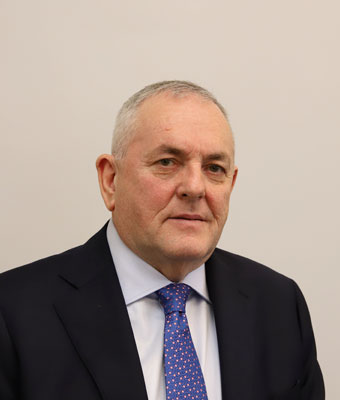
I call Deputy Kenny.
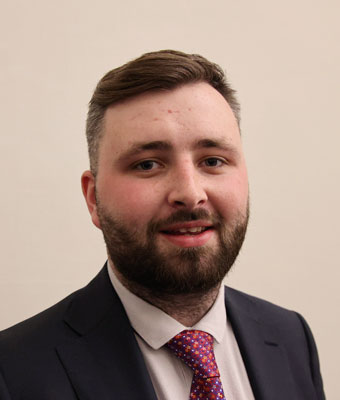
There is a question in my name, but Deputy McGettigan's question is the next to be taken.
Transport Infrastructure Ireland
83. Deputy Donna McGettigan asked the Minister for Further and Higher Education, Research, Innovation and Science to review the issue of commuter student terminology; and to recognise the poor experience of many commuter students in the higher education system. [49643/26]
Will the Minister initiate a discussion around commuter student terminology? Will he recognise the poor experience of the many commuter students in the higher education system?
For some students, commuting to college may be a practical choice if they live close to campus. For many others, however, it is not a choice; it is a necessity. This is not about preferences; it arises as a result of accommodation shortages. Two of my daughters recently commuted to college, so I understand it gives rise to an additional burden and can be an impediment in terms of full participation in campus life. One of the things I have said is that it is an absolute goal of mine to allow students to have the full college experience, which means experiencing broader education, taking courses outside of their core disciplines, taking part in the whole networking experience, participating in student societies and doing all of the things that are part of college life. The provision of high-quality student accommodation at scale on campus is a lever to unlock that. It is critical that we deliver this.
In the context of those students who are commuting for their own reasons, including with regard to the distance they live from campus or for family reasons, it is important to recognise that we want to support them in terms of their need to commute and what we can do in each case. We provide student accommodation for those who want to live on campus or adjacent to it, but we also want to support the commuter student experience in other ways.
The national student accommodation strategy published in March found that in 2024, the most recent year for which data are available, 18% of students living at home experienced commutes that are considered to be excessive. That highlights the ongoing need for suitable accommodation, and that is central to the planning in the student accommodation strategy. One of the reasons I increased the level of grants in the most recent budget was to recognise the additional costs for students who are commuting and travelling long distances. People also have access to the student assistance fund, student accommodation systems and 1916 bursary. An additional €10.5 million has been made available this year to support those students, and 30,000 or more undergraduate and postgraduate students have benefited as a result. Collectively, those measures recognise the additional burden faced by students who are commuting to college and should go some way towards assisting them.
I take this opportunity to mention a study by Professor Liz Thomas that was informed by a commitment to institutional change rather than just expecting commuter students to fit in with unreformed higher education institutions, HEIs, which states:
This would be facilitated by an institutional enabling environment which involves aligning institutional policies, processes and organisations, and engaging with stakeholders from senior leadership to staff and students around a shared goal of an inclusive experience and equitable outcomes ...
I have spoken to students about this. I spoke to students at Jigsaw yesterday who informed me that they feel that nobody seems to be talking or speaking to them about this and that they want to be recognised as a group. They said it is a burning issue for them. One of the issues they spoke about was having to get public transport at times that do not match up with their lectures. They get to college very early and do not get home until late at night. They have to leave early. The Minister says he wants them to enjoy the whole college experience, but they are not able to do this. Because of the issue with buses, some of them are missing lectures. There is a poor outcome in some data which shows that those making long commutes are suffering.
I talk to students all the time. I have almost daily interactions with them. I also meet formally with AMLÉ on a regular basis. I sad down with its representatives very recently and had a good chat. That is an ongoing conversation I am involved in.
In terms of what initiatives can be taken, I welcome the Deputy’s reference to Professor Thomas's report. If she wants to share it with me, I will be to look at it and see if we can action some of the recommendations it contains. One thing we are actioning is a new pilot initiative to bring together the higher education institutions, the National Transport Authority, NTA, councils and transport operators to look at a pilot scheme to improve sustainable commuting for students and to consider the different routes and timetables and the journeys that students make in order to see if can we make sure they are all aligned and synchronised to support the student experience. The Government has supported young people with the young adult Leap card, which complements the student Leap card and which offers a 50% discount on travel fares across the Transport for Ireland network. That is practical assistance. My children use the student Leap card, which is a very helpful and practical support.
I very much welcome the NTA, local councils and students being brought together. That is going to be very positive in terms of helping those who are commuting. The TU students' union also brought out a report. It states that approximately 25% of students say they have to commute for two hours or more. When I spoke to students about having to commute on buses for that length of time, we discussed whether they could use it as study time. However, it emerged that travel sickness would prevent some people using it for that purpose. That is on top of everything else. It will be great if that group works out and if helps students, because then will then be able to enjoy some of the overall college experience. At the end of the day, however, as the Minister mentioned earlier, the lack of student and affordable accommodation is an issue, particularly when it comes to trying to resolve the situation in its entirety.
I used to commute by train and would try to get a bit of work done, but it depends on the nature of a person's journey and whether they suffer from travel sickness or whatever. This goes back to the core point I made at the start that while some students might find it convenient and preferable, it would be really unfair to suggest - and I would never do so - that students are doing it by choice in all cases. Some people just have no choice and would prefer to have accommodation close to campus. That is why we have a pilot scheme.
I have engaged with the Minister, Deputy O’Brien, in the context of our Departments working together on this matter. I am looking to drill down into the detail of smarter travel plans and of aligning matters. When we are meet representatives of colleges, they will inform us that there is a pattern of issues, including no bus stops outside lecture halls, students having to walk a mile down the road or whatever to get a bus or timetables not being aligned with lecture times. There are quick wins that we can identify by means of the pilot scheme. We can also look at ways to pull everything together in a way that works better for students and colleges. There may well be some relatively easy changes that we can make. If there are, we will certainly make them.
I apologise to Deputy McGettigan for getting the call wrong earlier.
Apprenticeship Programmes
84. Deputy Eoghan Kenny asked the Minister for Further and Higher Education, Research, Innovation and Science the way in which apprenticeship provision to the higher education sector is funded; and whether his Department expects the funding in question will be used to increase administrative and support staffing in line with the growth in apprentice numbers and the recruitment of additional lecturing staff, technicians and heads of trades, given that some institutions have recorded increases in apprentice registrations of up to 72%, without any corresponding increase in administrative staff. [50204/26]
There is a positive aspect to this question. In the context of the way in which apprenticeship provision is funded through his Department, does the Minister expect the funding in question to be used to increase administrative and support staffing in line with the growth in apprenticeship numbers, for the recruitment of additional lecturing staff, technicians, and heads of trades, given that some institutions have recorded an increase in apprenticeship registration of up to 72%, without any corresponding increase in administrative staff. We have seen an increase in the number of apprenticeships people are taking up. In lie with that, the number of administrative staff and those teaching apprentices must also be increased.
As the Deputy said, very fairly and positively, investing in Ireland’s apprenticeship system is a central priority for me, as Minister, and my Department. Investment in the apprenticeship system has more than doubled, from a base of €184 million in 2020 to more than €415 million this year. That is very significant increase in investment in the apprenticeship sector. It reflects the Government's focus on the apprenticeship system and includes support staff, administrative staff and staff in other roles.
I am not aware of the specific case the Deputy referenced. He mentioned that there are some cases where support and administrative staff to go with the apprentices have not been provided. I am very open to the Deputy coming to me with the details in that regard. I will then be happy to interrogate the matter a little further if there is an issue in a particular location.
Higher education institutions are autonomous bodies with responsibility for managing their own staff and resources. My Department provides them with significant funding, but, to an extent, how they manage that in terms of staff hires or otherwise, is within their own control and remit.
This year, my Department is providing €113 million in apprenticeship funding to the HEA. That money will be suballocated to the higher education institutions. It covers the full costs of delivery, including operational costs like those relating to staffing. For craft apprenticeships, funding is provided by means of block grants, with a set amount allocated to each apprenticeship training block delivered by individual providers.
That allocation covers all apprenticeship costs, including teaching, technical and administrative staff costs. For consortia-led apprenticeships, the Higher Education Authority agrees a unit cost with providers that covers the full cost of delivery, including staff costs. Decisions on recruitment, deployment and internal resourcing are matters for the institution themselves, but notwithstanding that, I am happy to have a look at the individual case. I might refer it on to the relevant HEI or education and training board, ETB, as appropriate. If the Deputy likes, he can bring it to my attention and I can do that.
More broadly, SOLAS has been tasked with working through the apprenticeship system and making sure that we address any backlogs that have arisen and fast-track the creation of more places.
That is appreciated. Institutions have come to me directly to say that, although they understand that they are the ones that deploy staff to the busiest departments of their institutions, they feel that there is not enough funding coming to them to do so, given the increase in apprenticeships in all of their institutions.
While I thank the Minister for giving me the opportunity to focus on one particular institution, there is a broader aspect to this question. We have seen a significant number of people taking up apprenticeship roles in this country, which is positive and I thank the Minister and his officials in the Department for that. Is the Department looking at giving additional funding for the institutions to provide them with the opportunity to employ more staff, including technicians and administrative staff, so that they can keep pace with the number of students coming to them looking for help with their apprenticeships?
A few recent recruitment drives have been undertaken. SOLAS launched a recruitment campaign in late 2024 for new further education and training, FET, instructor staff nationwide. A campaign was run in the national media looking to recruit those personnel. One of the outputs of that saw the Dublin and Dún Laoghaire ETB in Loughlinstown fill a number of electrical instructor posts through a radio advertising campaign. Another five training centres in the City of Dublin ETB were also supported through that. There were various different recruitment campaigns looking to fill other posts. Some 135 posts were filled as a result. It started with the electrical instructors but it spread right across to carpentry and joinery, plumbing, motor mechanics, pipe fitting, heavy goods vehicles, HGVs, metal fabrication, advanced manufacturing, hairdressing and much more. I will not go through every single area. There were a couple of dozen different disciplines that had increased recruitment as a result of the campaigns. We are certainly trying. In some cases, the difficulties may not be due to a lack of budget, but a lack of available staff. That is why we are trying to do recruitment campaigns to bring in instructors, support staff and people for other such roles.
I am sure that the Minister is aware of this but I want to put it on the record. The figure of 72% came to me through Munster Technological University, MTU, in Tralee, which the Minister is very familiar with and has visited. It is important to put that on the record, but it is also important to outline the broader aspect of it. We hear a great deal about the need to build more homes, deliver major infrastructural projects and strengthen Ireland's competitiveness. None of these ambitions can be achieved unless we invest in the people who train our apprentices. Investment in apprenticeships is not simply an education issue, but an economic necessity. I know the institutions where staff have worked tirelessly to accommodate record numbers of apprenticeships, like MTU in Tralee. It is important that we continue to put this on the record.
Over the last 18 months in the Chamber, we have had robust debates about apprenticeships. There are a lot of challenges facing apprenticeships. I will specifically mention pay and conditions for apprentices. I know that is being worked through with the Department, albeit perhaps through a piecemeal approach. I again want to put on the record that the number of people taking up apprenticeships in every sector is positive, and has been so for the last 18 months.
I entirely agree. I thank Deputy Kenny for his support and the support of his party on the broader policy initiative. What he says is true. I have visited MTU in Tralee. I have visited all of the different technological universities, TUs, and their components at least once, if not a few times. I recently held a construction skills roundtable event in UCD where we brought together the employers in the construction space, the trade unions and the training agencies - SOLAS, the ETBs and the HEA for a conversation on exactly that.
The Deputy touched on our ambition as a Government to build housing and infrastructure at scale, be it the metro, the DART+ projects, the roads network, renewable energy or the energy grid. We are investing significantly in all of these under the national development plan, with a budget of over €200 billion over the lifetime of the Government. To meet infrastructure, housing and other needs, we must have the capacity to build this out. That requires multiple craft apprenticeships coming on stream and being supported, and having that pipeline of talent coming through. I am committed to driving that on. It is a key part of our national initiative.
Third Level Education
85. Deputy Richard Boyd Barrett asked the Minister for Further and Higher Education, Research, Innovation and Science whether he will intervene urgently to address the concerns raised by petitioners, unions and academic bodies in a recently published open letter (details supplied), by immediately providing ring-fenced funding for non-commercial research. [50756/26]
I am sure the Minister is aware of it but I want to draw his attention to the open letter signed by more than 2,300 academics and researchers, which rings the alarm bell about Research Ireland's 2026 to 2030 strategy. The letter states, "The new strategy is structurally, rhetorically and materially focused on commercially translatable research and economic impact rather than supporting bedrock, fundamental, discovery research and research for the public good." Will the Minister take this on board and meet the petitioners? Will he intervene?
As the Deputy is aware, Taighde Éireann - Research Ireland - was established in 2024 with the legislative remit to promote excellence and research across all activity fields and disciplines. Its first strategy was published this March following extensive consultation. I am satisfied that the strategy meets the legislative remit of the agency. The strategy and the publicly available programme plan accord with my own central philosophy, which applies just two very simple criteria to all disciplines: research should be excellent and impactful. What "impactful" means is not defined narrowly, but very broadly. It can mean many things. It can be societal resilience, economic impact or a long-term, slow-burn project that manifests in an entirely different way than how it was first conceived, as with all basic and frontier research. Impact is not a narrow metric at all; it is quite a wide one.
I have also codified into my Department's strategy as one of its four central pillars that curiosity and the pursuit of knowledge are a public good, which speaks to the benefit of discovery research a priori without any particular exit conditions or targets at the start. The strategy has a balanced portfolio across all disciplines and career stages, with funding across different areas of study, from the arts, humanities and social sciences, AHSS, through to science, technology, engineering, and mathematics, STEM - and across the spectrum of funding.
I am very familiar with the letter. Obviously, I have read it but I also met the petitioners and the lead authors of it very recently. I am engaging with them. The Deputy quoted one line from the letter. I think they have actually resiled from that line because when we met, they refocused their attention on one or two particular items. I dare say there is a level of rhetoric or subjectivity in the letter - that is their prerogative. Some of the arguments do not stand up to scrutiny but others have more merit and I am engaging with them on those. I was open to engaging with them on all of the arguments but a number of those are perhaps a little bit political or subjective. Having said that, there certainly are some very good people involved and I have been engaging with them. I have asked Research Ireland to have a structured engagement with the group going forward to ensure the petitioners' concerns are heard and reflected in the new plan.
It seems to me that what has happened is effectively a corporate or partially corporate capture of our research programme. If it continues, this is going to be to the detriment of all of us and the detriment of our education system and society, which will lose out on research that does not have an immediate commercial application and, therefore, is not being prioritised under the new strategy.
The petitioners emphasise that there was a lack of participatory process in the development of this strategy. It was not based on evidence. They emphasise that what we see here is industry-centred, commercially-focused, profit-seeking priorities at the expense of arts, humanities and social sciences. In particular, they warn about the dismantling of the current PhD scholarship and postdoctoral fellowship programmes. That is what is being proposed, with a prioritisation of research that is profit related and commercially driven by corporations. This would be to the detriment of us all.
There were seven bullet points in the letter. I think six of them have been accepted as perhaps not being of the same level of concern as they were. The engagement was helpful in that regard because of the engagement with the authors on a number of those points.
I strongly reject the assertion of a corporate culture. Again, maybe it is a little bit political and subjective.
I appreciate that the Deputy is entitled to say it but I do not think it is a fair characterisation. There is no requirement whatsoever that there be an immediate, or any, economic impact. In fact, the strategy is very wide-ranging and allows for significant funding of discovery research, which I have always argued for. There are no metrics tied to corporate outputs, as the Deputy might have suggested. That was probably more than a little unfair.
I take the point on the Government of Ireland scholarship. That is the one that we agree needs to be revisited and examined. There are certainly merits in the proposed new approach but I also accept that there are legitimate concerns raised as well. There is engagement under way, facilitated by myself but ultimately between Research Ireland and the research community. I have had a number of meetings on that in recent weeks and will continue to do so.
Just to confirm, the Minister is saying that he is open to changes continuing to take place to this strategy. That would obviously be welcome. I ask the Minister to commit to prioritising research that is for the public good. "Research on economic inequities, democratic participation, mental health, housing injustices, climate justice, education, and the full range of human experiences and societal processes must be valued on its own terms". That is a quote from the petition, which I think is very important. The current proposal suggests that non-applied research has to demonstrate its future economic utility in order to qualify for funding. That is precisely the problem with a short-term economic utility focus, which then leads to a downgrading of humanities, social sciences and so on in favour of those that have a more immediate commercial application, which would be a real problem.
I do not think it actually does say that. I say that in a genuine spirit of partnership. I am not trying to catch the Deputy out or correct him. If he can find where it says that and bring it to my attention, I would welcome him doing so and we will have a look at it. I know the letter makes those claims but I do not think they are borne out in a detailed study of the strategy. If they are, it is not something I would support. I have been on the record of this House for many years saying that we need to support research across the full technology readiness level, TRL, spectrum from discovery and frontier research right through to applied. Of course, applied research has a really strong place in economic engagement and driving our enterprise and our knowledge economy is at the core. That creates jobs, talent and knowledge that can support both our economy and our society. Equally, discovery research is ultimately at the heart of all knowledge. Most of the leading, significant progressions of society and civilisation have come about through discovery research.
In terms of funding for the arts, humanities and so on, that is ring-fenced within the strategy. It is proportionate to international comparisons and benchmarks, and certainly on a par with the historic funding of arts, humanities and so on through different research agencies such as the Irish Research Council, Science Foundation Ireland or the previous organisations. There is no reduction in that at all in the strategy or elsewhere. In fact, it is actually a ring-fenced fund.
Question No. 86 taken with Written Answers.