Ukraine War
1. Deputy Donnchadh Ó Laoghaire asked the Minister for Foreign Affairs and Trade for an update on her Department’s recent engagements with the government of Ukraine in relation to the ongoing conflict and efforts made to reach a ceasefire. [66753/25]
First, I want to take the opportunity to wish the Minister, Deputy McEntee, the best of luck in her new role. I look forward to working with her on issues of concern to Ireland and our interests.
The question relates to our engagement with the Government of Ukraine and to the ongoing conflict and the efforts made to reach a ceasefire. Unfortunately, some of the discussions in recent weeks and some of the proposals on the table are rather partial and, unfortunately, undermine the position of the Government of Ukraine. That is regrettable, but ultimately we are all hoping for a peace that is sustainable and just. I look forward to hearing the Minister's response to the Irish Government's assessment of the situation.

I thank the Deputy. I look forward to working with him and our colleagues on many matters.
At this critical juncture for Ukraine, after almost four years of brutal Russian aggression, I want to emphasise Ireland’s unequivocal support and solidarity with Ukraine. This something I have emphasised a number of times, most recently when I attended the meeting of the Foreign Affairs Council on 20 November where Ukraine’s foreign affairs minister, Andrii Sybiha, spoke about recent Russian attacks against Ukraine.
A meeting of the Foreign Affairs Council which took place yesterday was also addressed by the foreign affairs minister.
I welcome the ongoing efforts of President Trump and the United States to end Russia’s war of aggression against Ukraine and to achieve just and lasting peace and security, not just for Ukraine, but for the EU and Europe more widely. It is more important than ever that Europe and the United States continue to work together to achieve this. The emerging US proposals, as well as plans for further negotiations, represent a step forward. I welcome the progress made at Sunday’s meeting between the US and Ukraine in Geneva. We look forward to these talks continuing in a positive manner and to further progress being achieved.
Ukraine is engaging positively and constructively in these discussions despite the ongoing Russian military assault on its towns, cities, ports and critical energy infrastructure. It is crucial that any agreement upholds Ukraine’s sovereignty and independence based on respect for the principles of the UN Charter. The fundamental principle that borders cannot be changed by force must be upheld.
Any agreement must also protect Ukraine and Europe’s vital security. That means strong, credible guarantees that ensure Ukraine can defend its sovereignty and territorial integrity to avoid a repetition of the past. As the Deputy said, while the proposals in the plan put forward by the United States are welcome, there are very clearly areas that need further work. I am sure that is exactly what is happening at the moment. This is not just vital for Ukraine, it is also vital for the European Union and all member states, including Ireland. It is welcome that assurances have been given that the EU and Europe will be involved in discussions on issues that directly affect us, including enlargement and immobilised assets.
The Taoiseach and I remain in close contact with our European and Ukrainian counterparts. The Taoiseach took part in a meeting of the European Council on 24 November and attended a meeting of the coalition of the willing on 25 November, which was on the margins of the EU-African Union Summit. I will revert to the Deputy on further engagements.
I think it was last week that we had statements on Ukraine. They are now an annual occurrence. Every time they occur, many contributors reflect that they hope the next time such statements happen, there will be a ceasefire. Unfortunately, the war and assault on Ukraine continue unabated. In recent weeks, we have seen some appalling attacks, including on Ternopil, with civilians and civilian infrastructure being targeted. In that context, it is very difficult and almost near-impossible to see that Russia's interest in peace is in any way sincere. For a long time, it has been merely paying lip-service to that.
It is unfortunate the confusion that exists in relation to the role of the United States in mediating. If it is taking on a role in mediating peace, it is welcome. Clearly, it has the potential to play a leadership role. Unfortunately, what has emerged is somewhat confusing in terms of what is being said by Marco Rubio on the one hand and by Steve Witkoff on the other. I think this has made the position of Ukraine difficult. What is the Government's assessment of what is currently being proposed by the US Government?
I agree with the Deputy's initial comments. My own view, and I think that of many member states, as was reflected in our recent meeting, is that the actions of Russia indicate that it is not a country that is seeking peace. That is very clear, not just from the fact that innocent civilians have been killed in recent days and weeks but also the fact that there continue to be persistent hybrid threats to neighbouring member states. Our friends in Poland told us very clearly of the blowing up of a trainline and only for one device not detonating, there would have been significant casualties. Similarly, hybrid threats are happening at airports in nearby countries, such as Lithuania and others. These are not the actions of a country that wants peace.
I genuinely welcome the engagement of the United States and its efforts to bring forward a peace agreement. Again, I have to stress that the 28-point plan that we initially saw over the weekend very clearly had elements that needed further work. The engagement of EU member states, the United States, Ukraine and the EU institutions in discussions is welcome, as is the clear indication from President Trump more recently that the deadline of today is no longer a deadline. I think it shows a clear commitment on all sides, separate to Russia, to reach that agreement. We need to make sure all sides are putting pressure on Russia to come around the table to realise that long-lasting peace and to make sure that it is a peace that will not just have strong implications for Ukraine, but for the EU and the European region in general.
Arbitrary deadlines are challenging at the best of times, but arbitrary deadlines when the goalposts keep shifting are even more challenging. It is important that time be taken to properly calibrate realistic proposals. This is about justice, but it is also about sustainability and ensuring a sustainable peace. A peace that is unjust and does not reflect the rights of the people of Ukraine will ultimately fail to be sustainable and will only embolden Russia.
The work that the Irish Government and other governments have done in relation to the several thousand abducted children is very important. I hope they will continue that work. It is a profound crime and a crime against humanity. It is hard to imagine the pain and grief this has caused for individual families. It is also an assault against the Ukrainian people. Will the Minister outline how the Government intends to advance that particular work and ensure that there is justice and accountability for that crime?
We will continue to support all efforts towards a peaceful resolution. In the meantime, and separate to and in conjunction with that, there are other ways in which we can provide support and assistance.
In relation to the forcibly transported or deported Ukrainian children, we will continue to raise this at every avenue possible. We have been clear in condemning what is the absolutely horrific crime of taking young children from their families. We are engaging with UN agencies to try to find other solutions to this issue and I will consistently raise it with my colleagues at the Foreign Affairs Council, through our UN agencies and with the High Representative.
In terms of other ways in which we are providing support, we will continue to provide financial support, making sure that we provide the humanitarian aid needed in Ukraine. We will also provide the non-lethal support that is needed. We are also being very strong in our support for Ukraine's accession. It is really important that Ukraine and others see its pathway towards membership of the European Union. From the outset, we have been very strong in providing that support and we want to make sure that continues. It is something that we will be focusing on very strongly throughout our Presidency.
Middle East
2. Deputy Duncan Smith asked the Minister for Foreign Affairs and Trade to provide an update on the Israeli settlements (prohibition of importation of goods) Bill; and if she will make a statement on the matter. [66299/25]
4. Deputy Donnchadh Ó Laoghaire asked the Minister for Foreign Affairs and Trade the current progress of the drafting of the Israeli settlements (prohibition of importation of goods) Bill. [66755/25]
I genuinely wish the Minister, Deputy McEntee, all the best in her new role. I am sure the experience gained in her previous Ministry in European affairs will be a great grounding for the work she has ahead.
My question is seeking an update on the prohibition of settlement goods Bill, which has been the primary Bill in terms of the public's attention during this calendar year. It has been on the books for seven years in some form. I would love an update to see how it is progressing.
I propose to take Questions Nos. 2 and 4 together.
In June, the Government approved the general scheme of the Israeli settlements in the occupied Palestinian territory (prohibition of importation of goods) Bill. The main purpose of the Bill is to prohibit the importation of goods into the State from Israeli settlements in the occupied Palestinian territory, including East Jerusalem. The Joint Committee on Foreign Affairs and Trade held a number of hearings on the general scheme and received submissions representing a range of views and perspectives.
Pre-legislative scrutiny is an important part of the legislative process and the Tánaiste thanked the committee for its report on receipt. Detailed work to analyse the report and its recommendations is well underway. The regulatory impact assessment is also currently being finalised by the Department of Foreign Affairs and Trade and will be available on the Department’s website when completed, which I hope will be soon. The next steps in the process, including the timeline for the progress of the Bill, are being considered by the Government.
The general scheme fulfils our commitment in the programme for Government to prohibit the import of goods from settlements in the occupied Palestinian territory. Trade in services is considerably more complex than is the case with goods and there remains considerable legal uncertainty as to whether the inclusion of services is permissible under EU law. Legal clarity is needed on this point. This is something that I want to receive, but I made it very clear at the very outset when being appointed to this role that I intended to fulfil our commitment in the programme for Government to enact this legislation. We must also take account of practical issues with regard to the implementation should services be included in the scope of the Bill.
It remains the Government’s preference that collective action would be taken at an EU level and we continue to pursue this. In this context, Ireland has welcomed the announcements by the Dutch, Spanish, Slovenian and Belgian Governments regarding the banning of the importation of goods produced in illegal Israeli settlements.
We obviously know that those measures were introduced prior to the ceasefire, but those announcements by the Dutch, Spanish, Slovenian and Belgian Governments were welcome. We are working with all of them.
Notwithstanding the positive and welcome developments with regard to the ceasefire and hostage release deal in Gaza, Ireland has also made clear its view that the EU must keep the package of measures proposed by the Commission in response to Israeli human rights and other breaches on the table. It is an issue that Ireland raised and led the charge on. We want to ensure a significant response and to keep those measures on the table. They are very much firmly on the table.
The primary focus at EU level right now is ensuring the success of the ceasefire and peace deal, and of making a contribution to international efforts in this regard, as well as making sure that the humanitarian aid that is so badly needed does not just continue to flow but increases. There are significant concerns about the number of young people who will face starvation if the number of trucks does not increase significantly. It is essential that peace be given a chance to succeed. It is essential that the humanitarian aid and assistance that are needed are allowed to enter Gaza. The Government in Ireland will do everything in our power to ensure we support both of these objectives.
Pre-legislative scrutiny ended on 31 July and a report was delivered. On 2 October in this Chamber, the previous Minister for foreign affairs said it was his expectation that the Bill would be before the Dáil by the end of November. Today is the last sitting day of November, so that is obviously not happening. Between 2 October and now, what has happened and what has changed?
The Minister said in her initial contribution that there remained legal uncertainty. What work is the Attorney General doing to unravel that legal uncertainty? Has the Minister set a deadline for when she wishes to receive legal certainty on services? We believe there is legal certainty, and this was well-aired and demonstrated during the pre-legislative scrutiny stage. This feels as if it is being delayed unduly.
On the economic impact side, we are awaiting a report from the Department of foreign affairs. Has the Minister set a deadline for when that report will be delivered to her? What pressure is she putting on the Department of foreign affairs in that regard?
The occupied territories Bill still matters. It has always mattered. It mattered long before the last two and half - almost three - years of slaughter in Gaza. It was all the more important during that period. It is important that every state that wants to stand against a genocide uses whatever leverage it can. It mattered before that and it still matters because my position and that of the Irish Government and many other people is that we want to see a sustainable two-state solution. The Israeli Government is continuing its actions, even now, against the backdrop of a ceasefire. It is difficult to call it a "ceasefire" when hundreds of people have been killed by Israeli forces in the period. We have seen attacks on people by settlers. We have incursions and continued undermining of the two-state solution. It cannot be that we freeze here with the ceasefire, insofar as it is a ceasefire, and leave it at that. Clearly, we need to see pressure put on Israel to ensure that the two-state solution is made sustainable.
The Government's position has been clear that our overall objective is a two-state solution. We have been working towards that for some time and not just in recent years. It has always been our goal and objective. That is why we recognised the State of Palestine. It is why we are doing everything to ensure that this peace is lasting. It is why we will be hosting a global alliance summit in January, bringing together Heads of State to show how we have, on our own island, progressed a peaceful resolution to what was a long-lasting conflict. We want to do everything in our power to ensure the territorial integrity of Palestine is upheld. That will be our continued goal and objective.
In terms of the legislation itself, I, as Minister, have in the past week given a clear commitment that we will fulfil our commitments in the programme for Government. Deputies will appreciate that I have only been in the Department for a week. I am looking for the advice of the Attorney General on services. We have always been clear that enacting the legislation in terms of services is more complex. I await the advice of the Attorney General. I have not received the draft Bill but anticipate I will receive it soon. I expect the work that is being carried out on the impact assessment to be ready soon.
The Deputies will appreciate that I have only been in the Department for a week. I want to ensure that I have all of the information available to me to be able to progress this legislation. I will work with colleagues on all sides of the House. I am absolutely clear that as a country, we need to do everything in our power to bring what is a very fragile ceasefire to a more permanent ceasefire. We need to ensure that we continue to use whatever levers are available to us to hold people accountable. I acknowledge that, since the ceasefire, there have been killings of innocent civilians. That is why the measures against the EU-Israel agreement are firmly on the table. This issue was raised at the most recent meeting of the Foreign Affairs Council. I am pleased to say that it is still firmly on the agenda. Other colleagues and I made it clear that it needed to remain on the agenda because we cannot have a situation where the ceasefire is broken on either side. Deputies can be assured of my commitment to making sure that we make progress and continue to support the Palestinian people in what is an absolutely dire situation at the moment.
Notwithstanding the short time she has been in the job, this is the only new legislation that has come through the foreign affairs brief this year. It is not a small Bill. It has been well aired. The Minister spoke about it in the national media this year as a member of the Government. At this stage, the people of Ireland and Opposition TDs need more certainty in respect of timelines. It is not good enough for the Minister to say that the legal advice is going to come soon. We would like timelines for where it is going to happen. What are the issues in relation to the legal uncertainty?
The Minister mentioned last week that she may have to have discussions with American politicians. I would like more clarity on her plans in that regard. It feels as if this legislation is being delayed unduly, with a wall of silence at this point.
Following on from that, I think communication with any politicians in America or anywhere else must make clear exactly what this legislation does. It is squarely within the footprint of international law. It is targeting the occupied territories and nothing else.
I will make a couple of points on the legal side of things. I find this debate rather frustrating. We have been told there is legal uncertainty. It is difficult to understand how it was possible to ensure there was an effective ban on trade in goods and services in response to the situation in Ukraine. The fact that it originated at European level does not make a difference to how it is implemented at a domestic level. If it is initiated domestically, the functional way in which it is implemented is much the same. What legal obstacles did not exist in the other case that exist in this one? It is very hard to understand.
I made the point that the Minister was new in the brief. I hope a change of course can happen. It seems to me that the Government has been stuck between deciding to drop the Bill, slow-pedal it or water it down, and has decided to do all of the above, to date. It is hard to justify, given the way it has been articulated for so long, how it has taken so long to get to this point.
I do not think it is any secret that our colleagues in the United States of America do not support this legislation. It is no secret that many states have anti-boycott legislation and have been clear about how this would be enacted. I do not think we should ignore that. At the same time, Ireland has always done what is the right thing in terms of-----
We should be clear about what it is.
Ireland has always done what has been the right thing to do, including in recognising Palestine and encouraging other member states to do so. I am pleased that so many other member states have done that. We have provided financial assistance. We were one of the first member states to support the South African case. We have ensured that at every step of the way, we have done the right thing. We will consistently continue to do the right thing.
I intend to write to my colleague, the High Representative, the chair of the Foreign Affairs Council, in relation to humanitarian aid. Given the update I received this week, I am not happy that we are doing enough to ensure more aid is getting to those who need it the most. There is more we can do, and can continue to do, to ensure that those who need our help the most get it immediately and that our actions have an impact.
The Government has not been shy about saying that collective responses have a greater impact. We have been working with our European colleagues to ensure there is clearly an item on the table to remove preferential tariffs from Israel if it continues in the same vein. That needs to remain on the table. Ursula von der Leyen's most recent comments expressed that it was something that must remain on the table.
In terms of the legislation, there are certain things that still need to be completed. I assure Deputies that once I have the legal advice from the Attorney General and the results of the work being done to look at the overall regulatory impact assessment, and once I assess that and the huge body work that was done by the committee - I acknowledge that, and my colleagues who put considerable work into pre-legislative scrutiny - we will be able to work collectively to bring forward legislation and ensure that our overall commitment to support Palestine and a two-state solution, and to bring about a lasting solution, can be front and centre in what we do here.
Conflict Resolution
3. Deputy Donnchadh Ó Laoghaire asked the Minister for Foreign Affairs and Trade her views on the situation in Sudan; her position on same and in particular the need to ensure access to appropriate aid; and her further position on the concerning flow of weapons into the country. [66754/25]
The scenes we are seeing in the media on our phones and televisions from Sudan are horrific. They are redolent of the kinds of scenes we saw in Rwanda 30 years ago. People are being cut down in the street and being slaughtered indiscriminately and unfortunately it seems to be escalating. Tens of thousands of people in Darfur are unaccounted for. We do not know where they are or whether they have got out of El-Fasher. We will have a debate on it later, but it is vital that we keep focus on this issue. I look forward to hearing about the Government's position.
I thank the Deputy for raising this matter. Deputies Duncan Smith and Heneghan have asked similar questions and we will have a longer debate on it this afternoon.
The conflict in Sudan has resulted in the world’s most severe humanitarian and protection crisis, with more than 150,000 deaths, over 2 million forcibly displaced and more than 21 million people facing crisis levels of hunger. Following the appalling recent attacks against civilians by the Rapid Support Forces, RSF, in El-Fasher, violence continues to escalate in north Darfur and the Kordofan regions. Large-scale, ethnically motivated atrocities, including summary executions, civilian detentions and rape and starvation as weapons of war, are unfortunately widespread.
The Government has consistently highlighted the scale of the humanitarian crisis and the urgent need to act to ensure the protection of civilians, particularly women and girls, and safe passage for those fleeing. Also critical is the need to ensure unimpeded humanitarian access in line with international humanitarian law to reach those must in need. This year, Ireland has provided €14.3 million in humanitarian assistance to support the people most in need in Sudan and those displaced in neighbouring countries. This assistance is channelled through trusted UN, Red Cross, Irish NGO and local partners to provide life-saving assistance. We are committed to further increasing our assistance in 2026.
At EU level, Ireland has taken a leading role in initiating discussions on Sudan, including on the establishment of the EU sanctions regime and, most recently, in calling for the implementation of the October Council conclusions. The November EU Foreign Affairs Council, which the Minister, Deputy McEntee, attended, adopted restrictive measures against a senior RSF commander. We are gravely concerned by reports that arms continue to reach parties to the conflict, despite existing UN and EU embargoes and sanctions. Along with our EU and other partners, we have called on all external actors directly or indirectly supplying arms and funds to the parties to cease their support immediately. Ireland, with the EU, will continue to advocate for the expansion of the arms embargo to the whole territory of Sudan.
I welcome the statement. It is perhaps more robust than the statements made previously, in the latter part. The people of Sudan have suffered for a considerable period and unfortunately the hope they had a few years ago that a democratic settlement would emerge has not materialised. This appalling conflict is now happening. It is important that all parties to the conflict, the government forces and the RSF, seek peace to the greatest extent possible. The Government just made a good statement about the flow of weapons. It has been widely commented on and is widely believed that the Government of the United Arab Emirates is one of the surrogates. The Irish Government seems to be reluctant to identify that. Has the Government raised directly with those governments that are escalating the conflict our concerns about the flow of arms?
On discussions, as I mentioned, the Government has raised this at EU and UN levels, where appropriate. I have also personally discussed it at a political level with senior officials and ministers from the UAE. That happened at a meeting in Dublin a number of months ago, meetings held in Abu Dhabi and Dubai and at High-Level Week of the UN General Assembly, and I will be meeting the UAE ambassador in a few hours.
We have made it clear to all parties that we do not believe there should be any breaches of the arms embargo. Any allegations of that have been consistently denied by the UAE, as the Deputy will appreciate. However, the UAE, alongside the USA, Saudi Arabia and Egypt, is a member of the Quad, a group formed with the aim of resolving the conflict and we have encouraged all parties with influence to advocate for a peaceful resolution to the conflict and an end to the suffering of civilians. However, substantive political engagement and co-ordination is also needed between the EU, the African Union, the Quad and other international and national actors on de-escalation and mediation efforts.
I appreciate that it is denied. Whether those denials are credible is another question. I welcome that the Minister of State will meet the ambassador later. It is important that this issue is on the agenda. Unfortunately, it seems that the people of Sudan are to some extent pawns in a struggle for regional influence and they are paying a very high price for it. The other humanitarian element of it is the huge refugee crisis. The neighbouring countries, particularly Egypt and perhaps Chad and others, have significant numbers of refugees. I understand from what the Minister of State said that the Irish Government will continue to support investment in ensuring those refugees are supported. It is the largest movement of people in the world at the moment. Literally millions of people are looking for refuge.
Let there be no underestimation. This is the worst humanitarian crisis happening in the world at the moment and it has been for a considerable time. It is the largest displacement of people, and Ireland will not be found wanting.
As I mentioned, so far this year, we have allocated €4.3 million in humanitarian assistance. That included an additional €3 million announced by me and the Tánaiste in September at the UN and we are committed to increasing that in 2026 as needed. We also made sure our payments to UN agency partners were brought forward this year due to the liquidity crisis, to make sure refugees from this conflict and others were not victims of a liquidity crisis. I intend to visit Uganda, which is home to a lot of refugees, particularly from South Sudan, in February next year and will continue to make sure our support is known about and felt.
Question No. 4 taken with Question No. 2.
European Union
5. Deputy Naoise Ó Muirí asked the Minister for Foreign Affairs and Trade if she will outline the preparations currently under way in her Department to meet the demands of Ireland’s Presidency of the European Union; and if she will make a statement on the matter. [66109/25]
Ar dtús báire, déanaim comhghairdeas leis an Aire ar a ceapachán mar Aire Gnóthaí Eachtracha agus Trádála. Go n-éirí léi ina post nua.
My question concerns the significant opportunity Ireland will have this year to help to shape the clár, or agenda, of the European Council. Will the Minister outline the preparations currently under way in her Department?
I thank the Deputy. As he outlined, Ireland will hold the EU Presidency in the second half of 2026. This is an important opportunity and, as the new Minister for Foreign Affairs and Trade, I am looking forward to engaging actively on our policy and operational preparations. My engagement with officials in the Department has already started. I am determined that we will make the most of our Presidency to shape the EU agenda. The priorities and policy programme for our Presidency will take into account the EU’s strategic agenda for 2024 to 2029 and the legislative work programme of the European Commission. They will also be shaped by our own priorities across an array of areas, including but not limited to, the protection of EU values at home and abroad, the enlargement of the Union, European security and the competitiveness and simplification agenda, which covers a wide range of areas including housing, the delivery of infrastructure, agriculture and many other areas. It is important to stress, however, that our policy programme will only be finalised and published shortly before the start of our Presidency term in June 2026. The Deputy will appreciate that many things change, many issues come off the agenda because they are concluded and other issues need to be further addressed. We need to take that into account in setting out our final priorities.
I recognise the importance, in particular, of ensuring that stakeholder groups also have their voices heard. We need to make sure that everyone in Ireland feels they have an opportunity to have their say and be part of the overall discussion and work. A series of consultation meetings with stakeholders from across business, civil society, trade unions and other interest groups has recently taken place.
A call for written submissions on the development of Ireland’s policy priorities, hosted on gov.ie, launched on 5 November and will run until 12 December. I encourage anybody who wants to have their say to take part in that online consultation. Work is also under way to prepare for more than 250 meetings that will be hosted in Ireland during the Presidency. These will include a summit of the European Political Community, an informal meeting of the European Council and up to 22 informal ministerial meetings. The Government has made a firm commitment to resource and deliver a successful Presidency. I am confident that in 2026, Ireland will be able to make a significant and positive contribution in leading the EU’s agenda.
It is clear that there is a lot of work already under way on planning. I welcome that. There will be over 250 meetings in Ireland over a short period of time. It is going to be intense, as we saw before, in 2013. It is an opportunity for the country as we take a leadership role in steering the EU agenda for that period of time and dealing with some of the challenges that confront us collectively across the EU bloc. The Minister mentioned stakeholders. At the climate committee yesterday, the question was raised as to how members of the committee could in some way help shape the agenda of those six months from a climate, energy and environmental perspective. The current US Administration has unfortunately turned its face against renewable energy but, in the long term, the European Union could take a leadership position in an area like that. How could an Oireachtas committee or other groups feed into that agenda?
There is still significant time to be able to shape that agenda because we will not have our final policies set out until June. We have six months to make sure that we are clear as to what we want on the agenda and that we are following on from items that are currently being discussed. There have been in-person meetings to date. For example, the Tánaiste had a large meeting with IBEC where there were representatives from climate and sustainability organisations and individual Ministers. The Minister for climate is having meetings and discussions. I have no doubt that each individual committee will be able either to make a submission or have a face-to-face engagement with the relevant Ministers to make sure that, as we develop our policy priorities, the elected representatives in this House have their voices heard clearly on the agenda. Again, I encourage those who perhaps are not in this House to make sure their voices are heard through the online submission process. I will make sure that in my work in my Department - we are co-ordinating all of this - as many opportunities as possible are made available to everyone to be able to shape the overall agenda, including when it comes to climate and sustainability.
We would appreciate that opportunity from the committee's perspective. I will pass that onto the committee. To come back to the matter of the United States, the US is a long-term ally of Europe and Ireland. Irrespective of what Administration is in place in the United States and the coming and goings of individual Administrations, that relationship is important for Ireland and Europe in the long term. When it comes to formulation, engagement and leadership in the coming period, I ask that Ireland try to take a leadership role in making sure that relationship with the US are maintained and strengthened, so that we continue it long term into the future and the partnership between the US and Europe flourishes once again. The current Administration has changed certain priorities. That is fair enough; it is democratically elected. However, in the long-term that relationship needs to endure. What are the Minister's views on that?
I assure the Deputy and others that we will always work hard to maintain, enhance and grow what is a strong and important relationship to us, namely, the Irish-US relationship. We see in that an opportunity to strengthen and grow the EU-US relationship as well. Only this week, at the European Foreign Affairs Trade Council, we had a visit from Ambassador Greer and Secretary Lutnick and there were warm discussions and engagement, despite the fact that we have had a challenging number of months in our trade and in the overall position we find ourselves in now. What is clear from that engagement is that the relationship between the US and EU is a lasting relationship and one of the most important relationships. Within that, we see our relationship with the US as being a vital support to that and vital for us, not just in economic terms but in cultural terms and in so many other ways as well. Whether it is through the US trade council or our engagement on climate, cultural affairs or other areas, we will ensure that, through the Presidency and at every other stage, we are prioritising and working on that relationship, irrespective of who is in the US Administration.
Ceisteanna ar Sonraíodh Uain Dóibh - Priority Questions
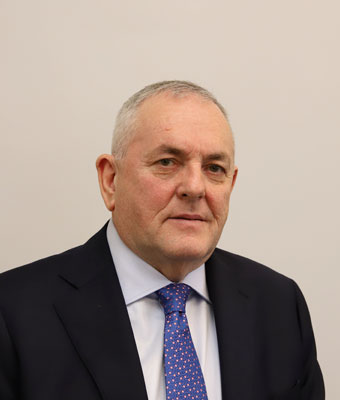
Deputy Duncan Smith has given notice that he will take Question No. 99.
Forestry Sector
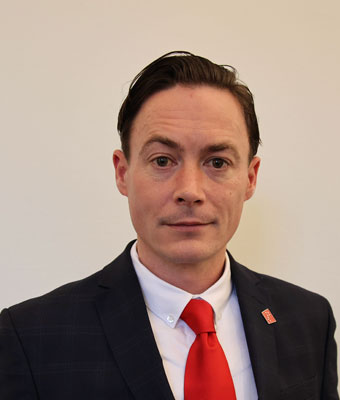
99. Deputy Robert O'Donoghue asked the Minister for Agriculture, Food and the Marine his plans to introduce a dedicated support scheme to address the significant and ongoing losses experienced by the forestry sector as a result of recent storms; the expected timeline for the development and implementation of such a scheme; and if he will make a statement on the matter. [66951/25]
I recognise the impact that Storms Darragh and Éowyn have had on the forestry sector throughout the country. This presents significant challenges for the forestry stakeholders. I also welcome the positive progress that has been made by the forestry sector on the mobilisation of windblown materials in forests.
The volume of timber normally felled over a 2.5 year period was blown down overnight during storm Éowyn. The latest damage assessment maps show that over 27,000 ha of forests were windblown, with 11,400 ha impacted in private forestry. Following the storms, I quickly established the forest windblow task force and delivered an action plan, created in conjunction with relevant stakeholders, which focused on the mobilisation and processing of windblown timber. To further speed up the process, my Department has allowed the use of both thinning and felling licences in removing storm damaged trees, and our data now shows that over 77% of windblown trees already have a felling licence issued by the Department. All this means is that more than 90% of the harvesting capacity in the country is now working in windblow areas. My Department is currently finalising negotiations of the administration of a reconstitution scheme, which is expected to provide supports to those affected by windblown sites, and I will make an announcement on this matter in the coming weeks. I would like to confirm again that all forest owners who have been affected will not be disadvantaged by undertaking works to clear windblown material, and if they do not currently have a felling licence, they should consult with a registered forester as soon as possible.
The answer to this is that it was a bad story but it has been dealt with adequately. If it was not, I would tell the Deputy. There is a reconstitution scheme. It is going to be in place. It will be implemented and delivered in the coming weeks. People will know exactly what they can get. However, in terms of going ahead now and working on their forest, the Deputy knows from his time in local authorities that a person should never engage in any work without getting approval. The senior Minister and I have stated clearly and publicly that people can come along and carry out the necessary works but they should do so in a safe fashion, and they will get their reconstitution scheme after.
I thank the Minister of State for his detailed and very clear response in relation to this. As he articulated, the storms caused unprecedented damage, felling tens of thousands of hectares, wiping out years of growth and inflicting huge economic losses. There is encouragement in the Minister of State's response. An estimated 26,000 ha of forest has been felled or destroyed, impacting the long-term investment income retirement security of many foresters. They have been severely eroded. The Minister of State can understand that many of them are looking for urgent clarity. I know he said it will be in the coming weeks. I am not trying to pin him down too much because his response was detailed, and I think it will give an awful lot of encouragement. However, does he think there will be greater visibility on how that scheme will look maybe this side of Christmas or are we looking at the first few weeks of January? That is my follow-up question.
I love straight questions, and I like giving straight answers. Yes, absolutely, before Christmas, people will know exactly how much they will be able to receive per hectare to reconstitute so, again, there is no reason in the world anybody should not go ahead and carry out their works. The one thing I would advise people on the record of the Dáil is to please deal with registered people. As the Deputy knows, if someone is selling an animal tomorrow morning, he or she wants to do it in a proper way to make sure he or she will be paid. We have a template for people who are selling and engaging in clearing timber from their forests to make sure they are dealing with reputable people and that they will get paid and, again, carry out their work in a safe fashion. Unfortunately, farm deaths have increased. This is also a type of activity on the land. I just want to make sure because sometimes the forest can be dangerous, so it is to make sure they are dealing with proper registered people and get paid. They will have their reconstitution scheme, and they can have every confidence.
I thank my staff in the Department, the head of forestry, Mr. Barry Delany, and all the others who worked so diligently in this reconstitution scheme and, of course, the co-operation of the Minister and the Department of Public Expenditure, Infrastructure, Public Service Reform and Digitalisation in ensuring we are able to deliver this.
I have no more to add. I brought this up on behalf of my colleague, Deputy Robert O'Donoghue. I thank the Minister of State for his detailed response.
Fisheries Protection
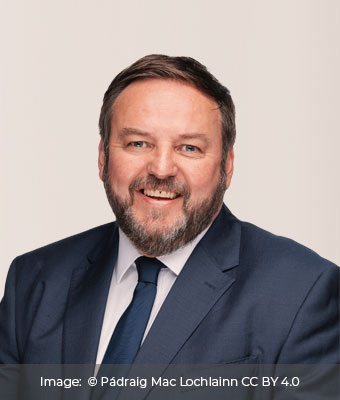
98. Deputy Pádraig Mac Lochlainn asked the Minister for Agriculture, Food and the Marine his plans for the December EU Fisheries Council to mitigate further losses in fish quota to Ireland's fishing fleet; his engagements over recent weeks with his counterparts in other member states to defend our interests; and if he will make a statement on the matter. [66298/25]
The Minister of State knows that the Irish fishing fleet took a huge hit as a result of Brexit, and the EU–UK Trade and Cooperation Agreement resulted in a huge loss of fish, but it is about to get a whole lot worse with the imminent cuts to the mackerel quota. Mackerel is a prime fish species, which is really critical to so many jobs in Ireland. I want to get a sense of the Government's plan on how to mitigate this and also to ensure that those who are recklessly overfishing are stopped urgently.
I thank Deputy Mac Lochlainn for raising what is a really significant and very important issue. At the outset, I would like to acknowledge the challenges facing the seafood sector in 2026, and the concerns felt across the industry arising from the scientific advice for 2026 for some of our most important fish stocks, particularly mackerel, as Deputy Mac Lochlainn outlined. I am aware of the seriousness and impact this advice will have on the sector.
Ireland has repeatedly raised the overfishing of mackerel by some coastal states outside the EU over recent years. We raised the issue under any other business, AOB, at the October Council of Agriculture and Fisheries Ministers, calling for urgent action at EU level to protect our key pelagic stocks. I reiterated this again last week at the November AGRIFISH Council meeting. The Minister of State, Deputy Dooley, and I will continue to highlight this critical issue for our fishers and engage intensively with the European Commissioner for Fisheries and Oceans and other member states on possible actions to protect our stocks. At that November Council meeting, I also confirmed Ireland’s intention to invoke the Hague Preferences at the appropriate time along with the Minister of State, Deputy Dooley. The Hague Preferences give Ireland an increased share of important fish stocks, as the Deputy knows, when total allowable catch, TAC, levels reduce below a specified level. It was made clear to member states at the November Council meeting that the Hague Preferences are a fundamental part of relative stability and have been recognised as such in the legal framework of the Common Fisheries Policy since 1983 when the CFP was established.
Most of the EU fish stocks for which Ireland has quota are shared with third countries. The European Commission has sole competence to negotiate with third countries on behalf of the EU and our priority is that the EU secures the best possible outcome for the Irish fishing community. That is why we continue to advocate. The most important thing we do is use every channel diplomatically open to us to advocate but also explain the impact previous fishing activity has had and what the implications of that are for our fishing industry into next year.
The difficulty is that there are corporations based in the European Union that have invested in the fleets in Iceland and the Faroe Islands that have been recklessly overfishing. My concern is that there has been a lack of political will as a result of their lobbying skills over the last number of years. We have been watching this slow-moving car crash. Mackerel is a precious species. It is a migratory species. It spawns off the west coast of Ireland and works its way up to those northern waters. To see it recklessly overfished to the point where we could lose it very soon is utterly heartbreaking. There are hard-working people who took chances in this country and who built up a pelagic industry, and they have been betrayed by this failure to deal with this issue. This is a matter of great urgency, and it goes to the heart of the need to really have a Common Fisheries Policy that is just and fair to our people.
I absolutely understand. The Deputy articulated quite clearly the sense of injustice and the upset and concern. What we do is use our voice within the EU because the EU is the competent negotiator in terms of that trade, and there are a lot of negotiations going on with third countries. The EU-UK negotiations began on 4 November and will continue until the first week of December. The EU-UK-Norway negotiations began on 27 October. The second round took place on 17-20 November, and the third round is scheduled for the first week in December. The EU-Norway negotiations began on 3 November, with the second round on 24-27 November in Oslo. At the coastal states consultation on the TAC setting for mackerel, the EU, Norway, Iceland and Greenland were prepared to set the 2026 TAC in line with the International Council for the Exploration of the Sea, ICES, advice of 174,357 tonnes. However, the UK and Faroe Islands indicated that they needed more time. Therefore, there currently is no agreement for a TAC agreement for mackerel. The coastal states also agreed the TAC for blue whiting and Atlanto-Scandian herring in line with the ICES advice. That is all ongoing, and our job is to input into the EU the very significant impact this is having in Ireland.
I do appreciate the fact that we have a dedicated Minister of State for fisheries, which has been a welcome development, who is engaging and listening to our communities. We now need to use that resource with all the knowledge, working hand-in-hand with the Irish industry, to confront this injustice once and for all and to say to the European Commission that what happened with Brexit was so wrong.
We did not have burden sharing and we carried so much of that weight. I am glad the Minister mentioned the UK. It is a party to this recklessness. It benefited from Brexit. It got an agreement that was not based on relative stability or track record. It was based on what is called zonal attachment and those communities closest to the fishing waters. This is what we would love to have in Ireland. It is what Britain got and it cannot have its cake and eat it. This is about countries which I respect, such as Norway, the Faroe Islands and Iceland. I have nothing against their people or the British people but this is reckless behaviour. It is unjust and unfair. We have to call it out and it has to stop. We need to have fairness and justice. We need to protect jobs in our vulnerable coastal fishing communities.
The Commission has indicated its intention to conclude the consultations in time for the AGRIFISH Council on 11 and 12 December. It has yet to be seen whether it will be successful in this. As we move towards the finalisation of setting 2026 fishing opportunities, my focus, and that of the Minister of State, Deputy Dooley, over the coming weeks will be to continue to work towards the best possible outcome for Ireland's seafood sector in 2026, one that ensures the sustainability of the stocks and a level playing field for our fleet. It is also important to recognise the resilience and determination with which the sector has addressed challenges in recent years. The Government recognises that resilience and determination, and funding opportunities for the sector will continue to be delivered in the lifetime of Ireland's €258 million seafood development programme, EMFAF.
I will also continue to work with ministerial colleagues across government to assess what supports may be available to the seafood sector in the context of EU state aid rules, and within the constraints of national and Union funding, to support the sustainability of the sector in 2026 and beyond. To address the core point, I absolutely accept that fishers want a fair deal. I agree that having a Minister of State dedicated to this area is positive. The Minister of State, Deputy Dooley, has my full backing. We work hand in glove, and we will both be out in Brussels together, to make sure we articulate very clearly the impact of ICES on our fisher communities and to get the best deal possible.
Food Safety
100. Deputy Martin Kenny asked the Minister for Agriculture, Food and the Marine if he is aware of any Brazilian or South American beef being imported into Ireland that is produced using hormones and antibiotics that are banned in Ireland under food safety standards; and if he will make a statement on the matter. [66303/25]
As the Minister is aware, there is great concern about the Mercosur trade agreement. Even before it comes into place, tens of thousands of tonnes of Brazilian beef are being imported into the European Union. Much of this beef has been produced using hormones and antibiotics that are banned in the European Union and in Ireland. The Irish Farmers' Journal and the Irish Farmers Association did great work going out there to investigate this and they have reported on it. Have we done similar investigations in Ireland into beef that has been coming into this State from Brazil and other Mercosur countries and the levels of antibiotics and hormones that are used?
I thank Deputy Kenny for raising this point. Reports of the Irish Farmers' Journal investigation into the sale of hormones and antibiotics in Brazil raise important issues and merit careful examination. We know that Brazilian beef already enters the EU market and it is, therefore, important to ensure that none of the unregulated products referenced in the investigation are used in its production. While there is no evidence that this is the case, these reports reinforce the need for continued vigilance.
According to Central Statistics Office data for the last number of years, Ireland has not imported beef product in any significant quantities from Brazil. In 2024, imports from Brazil amounted to 97 tonnes of a total of 34,000 tonnes imported. Beef imports from other Mercosur countries were virtually nil. The EU has very stringent standards, known as SPS, sanitary and phytosanitary, standards, to protect human, animal and plant health. These are among the highest standards in the world and the European Commission has insisted they are not negotiable. These SPS standards remain unaltered, regardless of any trade agreement concluded by the EU.
This is something that came up during my trade mission to America in April, when the insinuation was made that our blocking of hormone-fed beef into the EU was a non-tariff trade barrier. It is not. We do not want hormone-fed beef in Europe, European consumers do not want it and the European Union is opposed to having it in here. America has access to supply 35,000 tonnes to the EU, which is a small amount relatively, but it is not filling it because it is not interested in the difficulty in supplying it. It just goes to show the context of SPS standards, which are different from environmental standards. They are non-negotiable and the Government is very firmly of the view that these EU SPS standards must continue to be rigorously upheld for the benefit of European consumers. It is also important that the European Commission continues to engage with the Brazilian authorities to ensure this is the case. We will continue to make that point with officials across the EU.
I thank the Minister. I am aware there are very small amounts of Brazilian beef coming into Ireland, of course, but quite large amounts are coming into the European Union as a whole. As the Minister said, the standards we expect Irish and European farmers to meet are not being met by the Mercosur countries, in particular Brazil, in respect of beef. We also have a problem with chicken and other products. To focus specifically on the beef issue, the reality is that Irish farmers and Irish consumers will be put at risk if we have a food safety issue whereby the beef and products coming in from these countries are not to the same standards and are using hormones, pesticides and antibiotics that are banned in the European Union.
There is a great deal of evidence, and not only from what has been uncovered by the Irish Farmers' Journal and the IFA. For a long time, it has been widely known there is no traceability, there is widespread mass vaccination of animals in these countries, and there is no way they can possibly meet the same standards that European consumers expect for their food. In this context, will the Minister ensure the Irish Government blocks the trade agreement at the European Council meeting and forms a minority there to do so? France is already interested in doing this, as is Poland. I understand that Hungary announced this morning it will do so. If Ireland is on board with this, we are very close to a position where we can block this agreement.
I am happy to discuss the proposal on the trade agreement. I have held the Government position, as outlined in the programme for Government, to work with like-minded countries, as I have done since 23 January, which share similar concerns about the Mercosur trade deal and the impact it could have on trade. It is a different point from the question. The Mercosur trade agreement is about tariff rates. It is about the point at which it comes in and whether it gets preferential tariff rates. SPS standards and food safety standards are non-negotiable. For product coming into Europe already, and Deputy Kenny made the point that very little of it comes into Ireland but plenty of it comes into the EU, it is a non-negotiable standard.
I do not accept that it has been known for a long time that there are lower standards there. No more than we do not get hormone-fed beef from other member states, we do not accept it into the EU from Mercosur countries either. There are very clear audits. We need to double down with the European Commission to make sure the audits, checks and testing of product coming in are rigorous, and that the tests in Mercosur countries and here are rigorous, because this is non-negotiable. The concerns I have on the trade side are about environmental standards but they are very different from SPS standards.
The Minister's answer is concerning. Basically he is saying he wants to shift the responsibility over to trade, and that it is a trade negotiation.
I will answer on the trade agreement.
The reason I asked the question in this context is that I was afraid if I tabled it to the Minister as a trade question, I would be told it should go to the Minister with responsibility for trade. This is why I asked it in the context I did, as the Minister will understand. The Minister mentioned the programme for Government and working with like-minded countries. There are already at least three, and maybe more, like-minded countries that are prepared to form a blocking minority. Is Ireland prepared to be part of that and to block the trade deal, not only to be there to stand firm for Irish farmers but also for European consumers faced with the huge negative health consequences of importing very dangerous product into the European Union, which is produced using products that are banned in the European Union?
I was answering the specific point on SPS first and I am happy to discuss the trade agreement also. Throughout the EU Mercosur negotiation process, the Minister for Foreign Affairs and Trade, who has lead responsibility for trade agreements policy, and I have actively engaged with the European Commission and other member states to voice Ireland's concerns about the EU-Mercosur agreement. While I am not the Minister with lead responsibility for this, the impact of it would be greatest on our beef farmers so, of course, I have an interest. That is why, since my appointment as Minister in January, I have raised these concerns at every AGRIFISH Council I have attended. Trade is on the agenda of every meeting and I have raised our concerns about Mercosur at every meeting. I have also raised them with like-minded counties through bilateral meetings on the margins of these Council meetings. In recent months, I have met with my French, Italian, Austrian, Latvian and Polish counterparts to exchange views. Most recently, I have met with my Italian and French counterparts en marge of the November AGRIFISH Council meeting in Brussels, which was only ten days ago. We continue to engage and share these points, for the very reason Deputy Kenny has outlined.
Nitrates Usage
101. Deputy Jennifer Whitmore asked the Minister for Agriculture, Food and the Marine if his Department has developed a contingency or plan B in the event that Ireland is not granted a further extension of the nitrates derogation; and if he will make a statement on the matter. [65973/25]
A week is a long time in politics and it seems my question could be out of date. It is on whether the Department has developed a contingency or plan B in the event that Ireland is not granted a further extension of the nitrates derogation.
The nitrates derogation has been my number one priority since I was appointed Minister at the beginning of this year, and for very good reason. Our derogation farmers are making great efforts and strides around improving water quality, operating to a higher standard of conditionality. Our pasture-based system is very different from the rest of Europe. These have been very challenging and sensitive negotiations and there has been much at stake.
We have had three meetings of the nitrates technical committee so far this year, in March, June and September, and Ireland has been on the agenda and presented at each of them. I have dealt with and met Commissioner Roswall on several occasions. At a meeting in Brussels in September, I invited the Commissioner to visit Ireland, which she did, with her officials, in recent weeks. I met her again subsequently in Europe as we continued to engage back and forth. Throughout that time, we have sought to have the Commission put forward a proposal for implementing a decision to the next meeting of the nitrates committee, on 9 December, giving us an extension. The Commission wrote to us in June, highlighting the need for us to address the habitats directive as part of this process. This placed a significant extra burden on us to work through a process as to what that would look like and to have a negotiation in that regard.
I can confirm to the House today that the Commission has finally agreed to put a proposal to the nitrates committee for an extension of the existing derogation. It is not a new derogation; it has different terms and conditions around time and conditions. These have been very sensitive negotiations. The proposal is that the nitrates derogation extension will be for a three-year period, with new conditionality. I have worked very closely with many key stakeholders on this but it is sensitive issue. This is still only a proposal going to a technical committee that has a vote on it. We will not have a derogation on 1 January unless that committee votes to approve this proposal from the Commission. In the intervening period, my focus has been to continue to work with member states to make sure we get the result we need for Irish agriculture and our overall economy on 9 December.
The Minister mentioned the habitats directive has been a key part of these negotiations and that he had discussions in the summer with the Commissioner regarding incorporating the habitats directive into the plans. Can he give more information on exactly what that will mean for farmers, and what supports will be provided to ensure they can comply with that? The habitats directive is a robust compliance measure, so this is going to be very hard. This has been one of my arguments all along. We have had the derogation for 20 years but we have never once met any of the environmental conditions placed by Europe. Our water quality has never improved. Certainly, in the last report from the Environmental Protection Agency, they had not improved. What conditions will be placed on us as regards the habitats directive? What will that mean for farmers? How will the Minister support them in meeting hose conditions?
Farmers are on that journey already in a variety of ways, particularly in the area of water quality. Requirements include the need for Ireland, as outlined during the summer, to conduct environmental assessments to address the habitats directive at catchment level in order to demonstrate compliance with the directive. This is a massive undertaking. It will require significant investment of time and resources to complete these assessments for all 583 catchments. That is why the Commission has agreed to propose a three-year derogation to facilitate the completion of this work. The issue with time was something I continuously raised. Four years is the maximum time allowable under that, and we looked for the maximum. There was very much a desire for much less time to be given but we had to clearly outline, based on the science, how much time the process would take, both to be fair and to allow our farmers to work through that process and to allow the Department to assess those 583 catchments. That is very onerous and there are other conditionalities too. I want to be fair to all stakeholders and Government colleagues by briefing them properly. The stakeholders have been very constructive in their engagement throughout this process.
My understanding is the nitrates action plan has screened out appropriate assessments. Is that correct? How does the habitats directive fall into that action plan? The Minister is saying appropriate assessments may be part of this for farmers. I do not know whether that is on a catchment level or an individual site level.
Our concerns have always been that farmers were being led to a cliff and there was a level of uncertainty for them. There is now a three-year gap but, unfortunately, I imagine we could be back into this situation again in three years, where farmers are at the end of their tether and wondering what will happen in a number of months. I ask that the Minister completely avoid this.
It is also interesting that when the nitrates directive is mentioned, whether it is the Taoiseach or the Minister's colleague, the Minister of State, Deputy Michael Healy-Rae, the immediate response is to deflect to Mercosur. It seems there is a conflation of Mercosur and nitrates in the minds of some Government TDs-----
Where did the Deputy get that from?
The Minister of State, Deputy Healy-Rae, was asked about Mercosur on the TV during the week and he immediately went to the nitrates derogation. Can the Minister confirm there has been no deal done in Europe that the nitrates derogation would be given, contingent on his support for the Mercosur deal or not fighting or opposing it?
The Deputy should conclude.
I am happy to confirm all my engagement with Commissioner Roswall has been around the substance of the nitrates derogation. It has a very important role here and the Commissioner saw that first-hand when she visited. The Deputy will forgive me in not taking her direct advice because if I had taken that earlier in the year, the Social Democrats and the Deputy would have had us wave the white flag and concede the nitrates derogation. We have a strong case, based on science, that we have a very different farming system here.
This is a sensitive topic. There are other countries in Europe that would like to have a proposal for a derogation and are looking at this. For this reason, I commend farm organisations, the industry and key stakeholders impacted by this across the board on their patience and trust in allowing me to work through this process. My hope had been to bring this to Cabinet and to engage with stakeholders in a way that allowed me to continue to engage with other member states, which will vote on this proposal on 9 December. The technical committee will vote on it.
All our focus has been on the habitats directive and water quality. The nitrates action plan 6, which is currently out for public consultation, has new conditionality on water quality. We had to make a detailed proposal on assessments to address the habitats directive, outlining the time they will take. It is not practical to talk about doing that on a farm level, and we have always been clear on that. That is why I am talking about it on a catchment and sub-catchment basis.
Water Pollution
102. Deputy Roderic O'Gorman asked the Minister for Agriculture, Food and the Marine if he is aware of the report undertaken by the Joint Committee on Climate, Environment and Energy regarding pollution in Lady's Island Lake; the measures his Department or agencies related to his Department are undertaking to respond to the report; and if he will make a statement on the matter. [66952/25]
Senator Noonan and I have raised the environmental damage at Lady's Island Lake on several occasions in both Houses. I welcome the recent announcement of funding by the Minister for housing, Deputy Browne, for Wexford County Council to help tackle the issue. What is the Minister's Department and the agencies associated with it doing in response to the report of the joint committee regarding the pollution in Lady's Island Lake.
I thank Deputy O'Gorman for raising this point.
I am aware of the joint committee's report regarding Lady's Island Lake and I am working closely with my colleague, the Minister of State, Deputy O’Sullivan, who is leading the Government's engagement in this area. My Department, along with Teagasc experts, are centrally engaged in the interdepartmental Lady’s Island oversight group led by Wexford County Council, which also involves the Department of Housing, Local Government and Heritage, the local authorities waters programme, LAWPRO, and the National Parks and Wildlife Service, NPWS.
Wexford County Council, with the guidance of the interdepartmental group, has developed a site-specific action plan to address the challenges faced by Lady's Island Lake within the framework and mechanisms of the water action plan 2024. The recent announcement of funding by the Department of Housing, Local Government and Heritage to support this work aims to support development of the Lady’s Island Lake sustainable farming and communities water quality management plan, which will facilitate a holistic approach to improve water quality in this coastal lagoon.
In the Lady's Island Lake catchment, my Department, along with the Department of Housing, Local Government and Heritage, is funding free confidential advisory support for farmers through the agricultural sustainability support and advisory programme, commonly known as ASSAP. Under that programme, ASSAP advisers are working in the lake's catchment to identify appropriate on-farm measures to address the challenges faced by the lake. The farming for water European Innovation Partnership, EIP, led by LAWPRO, is working in partnership with Teagasc and Dairy Industry Ireland in the lake's catchment area. Through this EIP, my Department is providing €50 million nationally in funding for specific targeted on-farm actions which go beyond regulatory requirements.
A significant number of farming for water EIP applications have already been completed in the lake's catchment area.
The problems in Lady's Island Lake are not new. The reports of pollution there go back as far as the early 1980s. Every few years it seems the problems get so big that there is a call for action and that is usually dealt with through the breaching of the sand spit at the southern end of the lake. The EPA report from January, which the Green Party would credit with sounding the alarm, could not have been clearer about what is needed, namely, enforce existing regulations on agricultural nutrients entering the lake, help farmers change practices and improve the buffer zones around the water sources that flow into the lake. Will the Minister of State, Deputy Christopher O'Sullivan, be taking a leading role in engaging with local farmers? I was glad to hear the Minister mention the European Innovation Partnership. This was quite successful nearby, at Duncannon beach, in dealing with pollution. I ask the Minister for some detail about the innovation project that is being designed to support farmers specifically around Lady's Island Lake?
Yes, I can confirm that the Minister of State, Deputy O'Sullivan, is taking the lead on this but we are working closely in consultation. I am not deflecting in saying this, but it will be worth raising this point with the Minister of State as well because he is dealing with it on a day-to-day basis. We are providing, as I said, financial support of €50 million through the ASSAP programme. I agree with the Deputy that it is a really positive programme. It is leading to great work being done, not just in the Lady's Island catchment area but by thousands of farmers all over the country taking on voluntary additional conditionality.
In addition, EU and nationally funded schemes, such as the agri-climate and rural environmental scheme, ACRES, and the targeted agricultural modernisation scheme, TAMS, are available to farmers in the catchment. Again, these benefit water quality by incentivising farmers to go above and beyond regulatory requirements. We see the demand for TAMS, with 6,100 applications in the most recent tranche, which is double the number traditionally. Farmers are investing in water quality, increased nutrient storage and low-emission slurry spreading, and we are supporting them to do those things through TAMS.
I just would like to bring the discussion back to Lady's Island Lake specifically because there is a real opportunity here to take measures that will restore the lake to a functioning ecological system. We are still in the dark about some of the specific details about what is happening. Have farming inspections around Lady's Island Lake increased? Have there been inspections of septic tanks? Has there been engagement with Irish Water about the treatment plant at the lake? I know people are concerned about that as well. Local campaigners are worried that in a couple of years' time, we will be back here making the same points across the floor. We have a model that works, the innovation partnership model funded by the EU. It has worked in other areas, and it also is effective in that it does not scapegoat farmers. It recognises that they are stewards of the land and it helps them to adapt without risking their own livelihood. We have the willingness to draw together the relevant actors here, but we need clarity on the steps that have been taken so far. If the Minister does not have all that information here, he can come back to me in writing with the extra detail, which would be appreciated.
I will do so. I agree with the Deputy that this is about partnership. As with all areas related to addressing environmental challenges, the partnership approach is what works really well. As I stated, Wexford County Council, with the guidance of the interdepartmental group, has developed a site-specific action plan to address the challenges faced by Lady's Island Lake within the framework and mechanisms of the Water Action Plan 2024. The recent announcement of funding by the Department of Housing, Local Government and Heritage to support this work aims to support the development of Lady's Island Lake sustainable farming and community's water quality management plan. That is the very specific approach the Deputy is talking about. Separate from that, my Department is working closely with the Department of Housing, Local Government and Heritage to develop Ireland's next nitrates action programme, which is due to apply from January 2026, with the objective of reducing and preventing water pollution caused by nitrates from agricultural sources. These proposals for the next nitrates action programme are currently out to public consultation and that is due to be completed on 1 December.
EU Meetings
103. Deputy Colm Burke asked the Minister for Agriculture, Food and the Marine to provide an update on his recent meeting at the European Agriculture and Fisheries Council, AGRIFISH, in Brussels; and if he will make a statement on the matter. [67158/25]
I thank Deputy Burke for raising this important issue. Once a month, I go to Brussels to meet the other 26 ministers for agriculture at what is known as the AGRIFISH Council. The most recent meeting took place in Brussels on Monday, 17 November. With Ireland's Presidency of the EU commencing in less than eight months, I took the opportunity to continue my proactive engagement with ministerial colleges to ensure that Ireland delivers an impactful Presidency for all of the EU. At the Council, I took the opportunity to raise a number of important issues for Ireland. In the round-table discussion regarding the post-2027 CAP, I stressed the importance of the CAP continuing to remain a fully funded policy capable of delivering a viable income for our farmers, as well as ensuring food security and promoting rural resilience. The future of the CAP is extremely important in safeguarding the viability of our farmers and rural communities. It is, therefore, important that the specifics of the CAP are provided for the next EU budget, our multi-annual financial framework, MFF, and the CAP is sufficiently visible as a discrete entity within the overall budgetary structure.
Challenges facing EU trade were also on the agenda and I raised a number of important issues in this regard. Regarding the carbon border adjustment mechanism, known as CBAM, I stressed the real challenges that this regulation poses in the context of its potential impact on the fertiliser costs for EU farmers. I highlighted the importance of working together to provide certainty for affected operators and to monitor closely any impacts on the Irish and EU agricultural sectors.
I have also raised Ireland's concerns regarding preferential EU market access being given to Mercosur countries if South American farmers are not subject to the same sustainable farming standards as our own farmers, particularly when it comes to the beef sector. I also reiterated Ireland's unwavering support for Ukraine.
In relation to fisheries, I outlined Ireland's concerns and priorities regarding ongoing negotiations on fishing opportunities for 2026. I will continue to work with the Minister of State, Deputy Dooley, to articulate the importance of supporting our fishers at this difficult time of negotiations.
Where are we with the Mercosur issue? The Minister outlined that the same level of regulations do not apply. We in Ireland have strict protocols and regulations in place, yet we are allowing products to come on the market that will not necessarily have the same level of scrutiny. If this goes ahead, we will be in a situation where there is an unfair set of regulations for Irish and EU producers compared to producers from outside the European Union. Are we satisfied with that? Is enough analysis being done on the regulations in place for those countries?
As a proposed trade agreement, Mercosur is the responsibility, first and foremost, of the Minister for Foreign Affairs and Trade. As Minister for the agriculture sector and farmers, I continue to highlight the sensitivities of this trade proposal for our beef sector in particular. I believe strongly that Ireland and our agriculture sector benefit greatly from our open trade policy and from being part of the EU, including, in general, the trade agreements it concludes. This does not mean we have to support every single trade deal. In alignment with the programme for Government, we work with like-minded countries because we have those concerns and sensitivities. We have also analysed the safeguards that have been put in place by the EU. The proposals around how they would be implemented and interact with the legal instrument is a really important consideration as well. To stop this deal would require a blocking minority of at least four member states, with at least 35% of the population. That is why I have engaged with key colleagues. At the most recent meeting, I met my French and Italian counterparts, continuing the commitment in the programme for Government to work with like-minded countries that share those concerns around the proposal.
The Minister referred to the period post-CAP 2027 and the challenges there. CAP has given support to farmers in Ireland and across the EU. The question now is what will happen post 2027. There is also a scenario arising with those involved in farming. We have an older age profile. What is being done to try to keep people in the sector across Europe? This is not just an Irish problem but one right across Europe. The issue is that if we do not have people involved in agriculture, we then have a difficulty with food security. Is enough being done at European level to make sure we have a sufficient number of people producing the goods in order that we have food security for all member states?
These are the pertinent points for all the negotiations on the new CAP. We are aligning that discussion on what the new CAP will look like with the proposals around the multi-annual financial framework at the same time.
Ultimately, at the heart of what the CAP can deliver beyond 2027 is the question of how much money is in the pot for it. We know Commissioner Hansen secured a ring-fenced commitment of 80% of the existing budget. That is not enough; we need more. Ireland has a key role to play in the Presidency from July of next year for six months. It is 13 years since we had this role. What I am doing at present at AGRIFISH council level is building that engagement with other member states, colleagues and counterparts, and, through bilaterals, understanding what their priorities are for the CAP.
From my perspective, the EU is a very successful peace project. The Common Agricultural Policy was one of the first initiatives at the heart of the then EEC and this was because it was recognised that hunger was one of the biggest causes of conflict. No more than we have become a bit complacent about peace in Europe, we have become complacent about food security as well. That is why we argue really strongly that while there are new demands for increased spending on defence, climate and different areas, and that will put the budget under strain, they cannot come at the cost of investing in the Common Agricultural Policy and in our farmers who produce the top-quality, safe and nutritious food that is needed.
I call Deputy Byrne.
I am still to come back in. To come back to the issue of the age profile of the people in farming, I am not sure at European level we are doing enough on that. From an Irish point of view, this is a huge challenge. I was talking to someone recently who lives in an area where there are four major dairy farms within a mile of one another and all of them will be gone within the next five years. I am not sure we are doing enough forward planning on that area.
Very quickly, Commissioner Hansen has expressed in his draft proposals really strong ambition on the area of generational renewal. I want to be able to design approaches in the new CAP that address the issue of generational renewal. However, what I have just talked about in relation to my efforts and the ongoing efforts across the Department of agriculture to retain the nitrates derogation is key for generational renewal and giving certainty and confidence to young farmers. My new bovine TB action plan, funded to the tune of €157 million next year, gives certainty to young farmers who are thinking of investing but are afraid of getting a breakdown in their herd. My support for the tillage sector is about giving certainty-----
I thank the Minister.
Generational renewal is at the heart of everything we do and will be at the heart of negotiations for the new CAP as well.