Road Projects
Ar an gcéad dul síos, ba mhaith liom mo bhuíochas a ghabháil leis an gCeann Comhairle as ucht na saincheiste seo a ghlacadh. I am delighted that the Minister of State, Deputy Healy-Rae, is here because I know that he is an understanding man who travels rural roads every hour of every day of the year. He knows how important this project is. He travelled on this road recently on his visit to Cahir. The N24 from Cahir to Waterford is a massive project that is at a critical juncture this year.
Only €80,000 was given in 2025 to keep the project alive. It did not keep it alive; it actually wound it down. The councils of Tipperary, Waterford and Kilkenny met last Monday night. They are very anxious that this will go ahead. They called on the local Oireachtas Members. I thought that Deputies Cleere, Cullinane and McGuinness would be here. However, Deputy Murphy and I are here pushing with the Minister of State to try to have this important road link moved on.
The number of fatalities over the decades has been just appalling. Twenty-five percent of all fatalities are on that part of the road, which goes from Foynes Port to Rosslare Europort and on to Waterford Port. It is so important for infrastructure, connectivity, trade, business, tourism and everything.
We are making progress on the Cahir to Limerick and the Cloghabreeda to Limerick sections, and that is very welcome, but we want this project now. I am appealing to the Minister of State to ask the Minister for Transport, Deputy O'Brien, whom I speak to on a weekly basis about it, to try to make sure this project is kept alive and that we get the requisite funding to bring it to An Coimisiún Pleanála.
As the Minister of State knows, a lot of money has been spent on this over the decades - almost €20 million. It is wasted money if we are not able to continue it. When Shane Ross was Minister for transport, I took him to the Piltown stretch where it was a slaughterhouse. Thankfully, we installed flyovers there now, although they should have been in on the first day.
I cannot impress enough how important this is for people living on the route, farming on the route and people who want to get planning permission for anything else. This development must get the green light. We must know where we are and get certainty. We have to be sure where we are going.
The N24 upgrade, particularly the Cahir to Waterford section, is a critical piece of national infrastructure yet throughout all of 2025, the project has remained stalled at the preferred route stage with no movement towards detailed design. At the same time, the Cahir to Limerick section has advanced, creating what is a clear imbalance along a single strategic corridor.
In my role as Chair of the Oireachtas committee on transport, I have engaged directly with the Minister and also with Transport Infrastructure Ireland, TII, including as recently as Wednesday last, and I thank both for their engagement. However, engagement is not enough. We now need delivery.
On the ground, the urgency is obvious. The Clonmel bypass is carrying more than 20,000 vehicles every single day, far beyond its intended capacity. This results in daily congestion, compromised safety and real economic loss for businesses and communities across Tipperary and the wider region.
It is not a local issue. It is a bottleneck that is affecting connectivity between Limerick, Tipperary and Waterford and ultimately the functioning of our ports and supply chains. The N24 is a spine linking two major cities yet one half of the corridor moves ahead while the other is left waiting. That is simply not tenable.
I am appealing to the Minister of State for any support and his direct intervention with the Minister, the Department of Transport and TII to ensure the Cahir to Waterford section moves to detailed design in 2026. It is crucial that funding be provided in 2026 to put this project firmly back on track. This not about delivery or delay. We just need to get this project moving.
I thank Deputies McGrath and Murphy for raising this very important issue. Deputy McGrath is correct, in that I travelled the road recently. I know Deputy Murphy has important issues for me to see. I will be going to meet him in the near future because of issues he is raising on behalf of his constituents. I confirm that I will be doing what he wishes.
The Minister for Transport has responsibility for overall policy and Exchequer funding in relation to the national roads programme. Once funding arrangements have been put in place with TII under the Roads Acts 1993 to 2015, and in line with the national development plan, NDP, the operation and management of individual national roads is a matter for TII, in conjunction with the local roads authorities concerned. This will ultimately deliver the national roads programme in line with Project Ireland 2040, the national planning framework and the NDP.
Funding allocated for new national roads projects under the NDP is intended to enable improved regional accessibility across the country as well as compact growth, which are key national strategic outcomes. The funding will provide for the development of numerous national road projects, including the completion of projects that are already at construction stage and those close to it, as well as the development of a number of others.
With regard to the N24 Cahir to Waterford project, this project aims to enhance regional accessibility and improve connectivity between Limerick and Waterford. The project would bypass towns such as Clonmel and Carrick-on-Suir, as well as deliver significant road safety improvements. In addition, the project would provide improved access to international markets, as the N24 connects to the N29, which links directly to the port of Waterford. The N24 also connects to Rosslare Europort via the N25. The project would improve the quality of life of commuters and local residents through improved journey times and the provision of new cycling and walking facilities. It is envisaged that the N24 will enable connection to the Waterford Greenway, which will in turn connect to the South East Greenway which will run from Waterford city to New Ross.
The project is currently nearing the end of the route options selection phase. Kilkenny County Council, as the lead authority for the project, is making final preparations for the publication of the route selection report. The report will be available from the project website once published.
While it was not possible to allocate funding to progress the project to the design and environmental evaluation phase in 2025, it is important to point out that the project remains part of the NDP. As with all national roads projects in the NDP, the delivery programme for the N24 Waterford to Cahir project will be kept under review for 2025 and in future years and will be considered in terms of the overall funding envelope available to TII. It is expected that allocations for 2026 will be announced very shortly in the coming weeks.
In the programme for Government, we have committed to investing in all road projects in the current national development plan and to increasing funding for the new roads as part of the NDP review. With the NDP review having been completed, the Department of Transport’s sectoral plan, which is based upon this review, will guide transport investment decisions in the coming years.
At its outset, this Government gave a commitment to the people of Ireland that it wants tar and that is what it will deliver, namely, tar for projects such as what the two Deputies outlined and others that are going to be announced very soon. This Government is committed to providing tar to the people in the interests of road connectivity, road safety and ensuring people will have proper, safe sources and route selections to go from A to B.
From a road safety perspective, the situation is stark. The 65 km stretch, which is through Tipperary, is 1% of the county's road network yet accounts for 25% of road fatalities, which the Minister of State will agree is an alarming and unacceptable statistic.
The proposed route bypasses Mooncoin and Carrick-on-Suir and provides a flyover for Kilsheelan, yet it inexplicably continues through the existing congested Clonmel bypass, the only urban area with daily traffic bottlenecks. We have to re-examine this and go back to the drawing board.
Along with thousands of landowners and people who live in the area, I am eagerly awaiting the publication of the route option selection documents. Seven homes have to be taken out. We have to twig and rejig this. It is not fair that we would take homes. I am glad the Minister of State is in his position and the Government has now gone back to roads rather than silly projects, many of which were active travel while you could not get funding for roads. I thank the Minister of State for his interest in Tipperary, his assistance with projects he has visited, his intention to visit again and continuing to support us with many projects in south Tipperary.
The message is very straightforward. The N24 is essential national infrastructure and the imbalance in its progression cannot continue. I have engaged with both the Minister and TII. I thank them for that but we now need delivery. The Cahir to Limerick section is moving at pace and will be subject to a significant announcement today. Unfortunately, the Cahir to Waterford section remains stalled. In the meantime, the congestion on the Clonmel bypass shows the cost of inaction. There is pressure on safety, lost economic potential and weakened regional connectivity. Advancing the Cahir to Waterford section to detailed design in 2026 and securing funding for 2026 are the steps required to put this project back on track.
I am very grateful for the Minister of State's support. I thank him for taking this question today. I know that, with his support, this can finally move from engagement to delivery. He is absolutely right. What we want in Clonmel, Kilsheelan, Carrick-on-Suir and the rest of Tipperary is tar and plenty of it.
I thank the Deputies for their diligence and commitment to their constituents, which are extremely strong. The Deputies' efforts on their behalf, with the heart of Government, is most welcome. A number of new road projects, which are included in the current NDP, have already been delivered. These include the N22 Ballyvourney to Macroom project, the Dunkettle interchange upgrade, the N5 Westport to Turlough route, and the bypasses of Moycullen and Listowel. As the greater portion of the NDP funding for national roads becomes available in the second half of the decade, this meant there was a constraint on funding available for projects in 2025. However, approximately €502 million of Exchequer capital funds have been provided to TII for national roads in 2025.
In line with the NDP and Government policy, TII has sought to allocate national roads funding to local authorities in a manner that seeks to achieve the following key outcomes: protection and renewal of the existing national road network; progressing major projects in or near construction; and progressing major projects that are at an earlier stage of the development pipeline. A number of new projects have already been delivered. They include the N22 Ballyvourney to Macroom project, which is of great interest and has been of great interest to Deputy Danny Healy-Rae, the Dunkettle interchange upgrade, the N5 Westport to Turlough, and bypasses of Moycullen and Listowel. The programme for Government commits to increased funding for new roads as part of the NDP review and the maintenance of existing roads.
Coast Guard Service
Before I get into the substance of the issue, I add our support to the matter that was just under discussion. My colleague, Deputy David Cullinane, and I both co-signed that Topical Issue to lend our support to it because it is an issue that affects the whole south east. I know Deputies from Tipperary, Waterford and Kilkenny are supportive of that and working in unison to get the Government to do the right thing by the N24.
To the substance of the issue that Deputy Cullinane and I are raising, the working time arrangement that is now applied to the Coast Guard helicopter crews is unsafe, unlawful and utterly unsustainable. We have a situation where full 24-hour duties, during which crews must be in immediate readiness and are confined to strict response times on site, are being logged as only 16.5 hours of work. It would be bad enough if that was just a misunderstanding by the operator but it is a deliberate reclassification of active duty as standby.
European working time law and the Irish regulations that give effect to it are absolutely clear. There should be no ambiguity about this. When a worker is under the employer's control and required to maintain readiness for immediate deployment, that is working time. Across Europe, the courts have repeatedly affirmed that where a worker's freedom is severely restricted in terms of keeping them on site and being in a state of readiness, as a search and rescue crew's freedom clearly is, that time must be counted in full.
In Waterford, this is not an abstract issue. It is something that is a matter of life and death. We already saw a preceding Minister, former Deputy Eamon Ryan, try to cut Waterford's search and rescue base out of the tender documents for the new contract. A popular campaign locally on the ground in Waterford and across the south east forced a U-turn on that. We do not want to see a diminution of safety standards. We do not want to see workers' rights under attack in this way. We certainly do not want to see a service that is not fit for purpose and where crew safety and the safety of those they serve is jeopardised.
I also lend my support to the previous topic that was raised. The fact that the N24 was not funded for this year is a disgrace, given that the preferred routes were in place.
Hear, hear.
In fact, the only funding that was given from the Government this year was to buy out the contract of the company that actually did the work on the preferred route. There are real concerns that this vital road is now being put on hold. The Waterford to Limerick road really needs to be improved. Deputy Conor McGuinness and I, and all the Oireachtas Members from across the affected counties, will continue to raise this to ensure that it gets proper funding next year.
Today, we are here to raise very important issues about workers whose bravery goes above and beyond the call of duty. These are our air search and rescue crews. We saw that recently in a tragedy in Waterford when an aircraft crashed just outside Waterford airport. Unfortunately, there was a fatality. The air search and rescue service was on the scene very quickly. These are crew members who work 24-hour shifts. They are required to be on site and remain on base for the full 24 hours. At any moment, they can be called to be deployed. They are in a state of immediate preparedness and have to respond, sometimes in a matter of minutes, and they do. We saw that last week.
Bizarrely, the Irish Aviation Authority and, by extension, the Government do not recognise their full 24 hours as work time. In fact, one quarter of the time they do as part of these 24-hour shifts is bizarrely labelled as standby time or rest time. That is clearly not the case. We are asking the Government to listen to the concerns that have been raised by the representative trade union and by crew members whom Deputy Conor McGuinness and I met over the course of the past few weeks. They are raising very genuine safety and fatigue issues. We ask the Government to intervene and that the Irish Aviation Authority ensure they are fully compliant with the European working time directive for these vital workers.
I thank the Deputies. At the outset, I acknowledge their work and commitment. I acknowledge their support and the support of their party for the N24 on behalf of the Government and recognise their contribution to that debate previously. On behalf of the Minister of State, Deputy Seán Canney, who has responsibility for international and road transport, logistics, rail and ports, I thank them both for raising this very important matter on behalf of their constituents.
The Irish Coast Guard search and rescue, SAR, aviation services are provided under a contract that is currently transitioning to Bristow Ireland Limited. The previous contractor, CHCI, has operated the service since 2012. On 30 May 2023, the Government approved the decision to award a contract for provision of the next national SAR aviation service to Bristow Helicopters. The decision to award the next contract for the delivery of an enhanced contract specification followed a comprehensive and robust public procurement process, which was undertaken fully in accordance with all national and EU procurement rules. Bristow Ireland is a subsidiary of Bristow Group Incorporated, a US-based multinational company. Bristow Group Incorporated currently operates similar contracts for SAR services in other jurisdictions, including the UK and the Netherlands. They also have extensive experience in supporting the offshore oil and gas business internationally.
The total cost of the new contract, as signed on 11 August 2023, for the standard ten-year contract term for rotary wing element, plus the five-year minimum term for the fixed-wing elements, amounts to €816 million, including VAT. The Minister has the discretion to extend both the rotary and fixed-wing elements to a maximum of 13 years.
The new enhanced contract specification provides for the operation of six AW189 helicopters, five of which are newly built and have already been accepted into service by Bristow, with the sixth helicopter scheduled to arrive in Ireland later this year. These helicopters utilise latest-generation search and rescue technology, including modern night vision flying equipment. In addition, for the first time, the new contract includes a fixed-wing element, which is being delivered by 2Excel Ireland, subcontractors to Bristow Ireland Limited, BIL, using two King Air aircraft. The fixed-wing service is a notable addition to the State, enhancing the Coast Guard’s SAR capabilities, including inland and maritime provision of top cover communications for longer range helicopter missions; a life raft drop capability; maritime environmental protection measures, including investigation of pollution and ship casualty reports; and capacity to transport up to three ambulatory patients for emergency national or international transfers.
The new integrated aviation service will enhance the Coast Guard’s ability to deliver on its core services, including maritime and inland search and rescue; maritime environmental monitoring, including pollution checks; providing aeromedical supports to the HSE and the National Ambulance Service, including helicopter emergency supports and interhospital transfers; the provision of day and night-time aeromedical support to the offshore island communities; and provision of aviation supports to other State organisations. The new contract also provides improved crew accommodation facilities and enhanced mission management technology.
As with existing arrangements, the new contract provides for the operation of four search and rescue helicopter bases located at Sligo, Shannon, Waterford and Dublin at Weston, and for a fixed-wing service also located in Shannon.
The Minister of State's time is up.
The operation of four helicopter bases provides an inherent resilience that enables continued delivery of nationwide services-----
The Minister of State is 20 seconds over now.
I have to finish this.
You can finish in your second slot-----
No, I cannot. I have to finish this.
The time is up. We are 20 seconds over-----
I am sorry, but I have to say this.
Minister of State, listen-----
When bases go off-line for reasons such as technical outages-----
The Minister of State's time is up.
-----helicopter maintenance, short-term staff unavailability etc., these interruptions are to be expected in the normal course.
The Minister of State is 45 seconds over his time.
The resilience of the four-base strategy has been well proven over the years.
You have been nearly five minutes speaking at this stage.
The base location also provides-----
Your speech is written out here and we can all see it.
-----for a geographic distribution of skilled local employment.
I call Deputy McGuinness.
With respect, the Minister of State provided a lot of information that we already knew about the service provided. We know it because we have met air crews, because we have been following this case and because we do our jobs and keep abreast of these issues. The question we are putting to the Minister of State and his colleagues in government is whether the Government will act to resolve this issue to ensure compliance with the working time directive and aviation regulations so that the working time that search and rescue crews are actually doing is recorded as such. This is about safety and combating fatigue. It is about ensuring that our search and rescue air crews are at their very best when they are answering a call, be it to an offshore island, be it to a fishing trawler in trouble off our coast, be it to a road traffic accident along the N24 the N25 in Waterford, or any of the issues they are asked to respond to. Communities like mine in Waterford know the value of a search and rescue presence but we are concerned when we are hearing from crews themselves that their lives and their ability to do their work have been put in jeopardy by the Government's failure to act.
I think the Minister of State is conflating fatigue risk management systems with accounting of hours. Crews would say they are two completely different things. Of course there should be fatigue risk management systems but this is counting one quarter of their hours as rest time. The Minister of State acknowledged in his response that these crew had to remain on base and were ready to be deployed at a moment's notice. The Minister of State said that this was a HR issue, was not for the Department, and was between the employer, the Irish Aviation Authority and the crew. This reminds me of the HSE where everything is at arm's length, where it is not the Minister's fault, it is not the Department's fault, it is some other agency's fault. There is a responsibility on the State, including the Department and the Government, to ensure that when the crews we send out in the worst seas, in the worst conditions and in the worst weather raise very serious safety issues, fatigue issues and workers' rights issues, they and their representative trade unions are listened to. We ask again that the Minister would intervene, notwithstanding what has been said here about the role of the regulator. There is a role for the regulator, but as importantly, there is a role for the Government.
I apologise to both Deputies for not having time to give them an oral response in full, which they also now have. I recognise their concerns. Following on from what I said, I will be bringing this to the attention of the Minister. I also understand the Cathaoirleach Gníomhach's time constraints.
The Department of Transport is prioritising the safe and effective transition of the aviation contract, without the interruption of services, and is ensuring that the two contracted operators, CHCI and BIL, are providing sufficient capacity, expertise and resources to maintain safe search and rescue operations on a 24-7 basis across all areas of the country throughout this process. The Department engaged with both contractors to facilitate revised transition timelines. The transition timeframe, following engagement and agreement between the two operators, was extended by just over six months. The transition will be completed in February 2026 at no additional cost to the Exchequer and without interruption to the four-base strategy. The operation of four bases continues to provide the resilience for service delivery so that when individual bases become temporarily unavailable for whatever reason, the workload is shared amongst the other bases and the specific requirements for each mission are assessed as they arise. In the case of both contracts, availability of any base can range from full availability to partial availability to temporary unavailability.
The new contract operated by Bristow Ireland will increase the capacity and the capability of the Coast Guard to provide a range of essential services that are of strategic importance to the State, including maritime and inland search and rescue; aeromedical support; maritime environmental monitoring; and aviation support to the other State entities.
The Minister particularly recognises the critical importance of this service to our offshore island communities who rely on the Irish Coast Guard to provide day and night aeromedical support.
Schools Building Projects
I just want to join my Oireachtas colleagues from the south east on the significance and the importance of both the N24 and N25 and in bringing it to the next stage. It is a massive issue. It is a corridor from Rosslare Harbour from Belview right cross to Cork and over to Limerick. I want to thank the Minister, Deputy Darragh O'Brien, for his engagement with myself and other Oireachtas colleagues in trying to get this project over the line. I look forward to seeing announcements today and in the coming weeks.
Specifically, I want to speak about the delays in the schools building programme. Before I say anything, I will start by paying tribute to all of the school community - the teachers, the principals, the parents and the ancillary staff. The emphasis on education that this Government and the Irish people have is absolutely unbelievable and fantastic, but we need a timeline for delivery. In my constituency of Carlow-Kilkenny, there are about 15 different projects that are stalled at the moment. It is not good enough. Education is the heartbeat of this country and it has meant this country has been able to thrive and prosper on national and international stages. We need to make sure we have top-class infrastructure and facilities for our students to go to. I visited a school last week with the Minister of State, Deputy Michael Moynihan. It was Duiske College in Graiguenamanagh. It is a fantastic school and the heartbeat of that rural area. There are, however, prefabs in that school that are older than myself. If the Minister of State does not mind me saying it, they are probably even older than himself. It is in a shocking condition. We need investment in these schools, but for some reason, things have seemed to be getting stuck at the stage 2b. This is a huge concern and huge worry for schools.
Coláiste Abhainn Rí in Callan, Borris College, St. Mary's CBS in Carlow, Duiske College in Graiguenamanagh and Scoil Mhuire National School in Mooncoin are all ready to go. The students and parents deserve it. I implore the Minister of State to do his best to try to get these programmes fast-tracked and to give a timeline for delivery.
I thank the Minister of State for taking this item. Like my colleague Deputy Cleere, I acknowledge the significant investment in the school building programme. However, there does, of late, seem to be slow progress on certain projects. We are looking for an assurance that when it comes to the school building programme the capital is in place to be able to deliver on those much-needed schools. The concern I have is that I placed parliamentary questions at the start of the year and six, seven or eight months later, I seem to get a cut-and-paste answer. There does not seem to be any progress being made.
The Minister of State will know that this is not just a concern that Deputy Cleere and I share, coming from the south east. This is happening across the country. I represent the Wicklow-Wexford constituency, which is one of the fastest growing in Ireland. There are real concerns and implications for the staff and students in those schools. Let me give an example. Glenart College in Arklow has a major problem with leaks. It requires new emergency accommodation and a three-classroom special educational needs, SEN, base. It progressed to stage 2b in May 2024 but there does not seem to have been any movement since. The situation is similar in Bunclody Community College, which is another school stuck at stage 2b.
The Minister of State might remember that in June this year, we were in this Chamber at midnight discussing a Topical Issue about Coláiste Bhríde Carnew. I will let the Minister of State guess at what stage that school is stuck. It is still stuck at stage 2b. To be or not to be is the question. If the Department of education has decided it can progress an education system without clear timelines for capital projects, that is Hamlet without the prince.
I thank both Deputies. I acknowledge their commitment and support for the previous debate with regard to the N24 and N25. On behalf of the Minister for Education and Youth, Deputy Naughton, I am taking this debate.
The Department of Education and Youth has a strong record of delivering the Government's school building programme. Since 2020, more than €6 billion has been invented in schools across the country under the national development plan, NDP, involving the completion of over 1,300 school buildings. In July, the Government announced a capital allocation of €7.55 billion for the Department of Education and Youth for the period 2026 to 2030 under the NDP. As part of this NDP allocation, the Department will place a strong emphasis on provision for children with special educational needs, with a particular focus on meeting the demand for school places. A focus of this plan will be, in the first instance, to maximise the capacity of existing school estates as much as possible. Additional capacity will be provided through targeted and prioritised projects, which will be delivered over the course of 2026 to 2030, to meet the most urgent and prioritised needs.
There are over 300 school building projects under construction to deliver over 30,000 school places. Most of these projects are expected to be completed over the course of 2026 and 2027. It is planned that approximately 80 further school building projects will progress to construction across 2026 and 2027 as part of a two-year rolling programme. Last week, the Minister's Department announced the investment of €90 million in the climate action summer works scheme, which involves the delivery of 297 projects, to support the ongoing investment in the maintenance and upgrade of the school estate. There is a strong modular programme to deliver the most urgent September needs, with a particular focus on educational needs. We will deliver on key climate initiatives, such as the solar PV programme, the EU retrofit programme and the pathfinder programmes, in participation with the Sustainable Energy Authority of Ireland, SEAI.
Project delivery is managed as part of an overall capital programme in line with the Government's infrastructure guidelines and taking account of budgetary parameters. Delays can occur in large capital programmes for many reasons, including factors beyond the control of the Minister and the Department, such as the time taken to secure a site or the relevant statutory permissions, including planning consent. These are managed as effectively as possible, prioritising the most urgent projects where capacity is fully utilised and deploying modular accommodation where additional space is needed in the short term. I take on board the Deputy's concern over that type of accommodation. The current status of all projects is set out on the Government's website, which is updated on a regular basis to reflect project progress through various stages of capital appraisal, site acquisition, design, tender and construction.
I strongly acknowledge, on behalf of the Minister, the commitment of both Deputies to this issue. It is important to teachers, parents, grandparents and, most important, the students. I appreciate the Deputies diligently going to the schools in their localities. They are meeting the concerns of those people and, most important, the students head-on. The Deputies have put that message on the record of the Dáil. On behalf of the Minister, I acknowledge their work and commitment on this important issue. It will be relayed to the Minister. I have read the Minister's response. I hope the Deputies will be successful in their endeavours on behalf of their constituents.
I thank the Minister of State. For seven years, I was chairman of the Kilkenny and Carlow Education and Training Board. Approximately six years ago, we got word that there was to be a new Kilkenny City Vocational School and that a new Gaelcholáiste in Kilkenny for those who want to be taught through the medium of Irish was going to begin its journey. These were to be two new schools in a campus project on a brand-new greenfield site. This particular project has been stuck at stage 2b for the last number of months. In other words, we are ready to go. Everything has been done. We just need the nod from the Department so we can get shovels in the ground and get this project started. The difference that this particular campus will make to Kilkenny City Vocational School and to Coláiste Pobail Osraí, a campus for over 1,000 students in Kilkenny city, which has a growing population, will be absolutely massive. I implore the Minister of State to highlight the issue and fast-track this project, get the announcement out to the principals of the schools and allow the shovels into the ground so that these projects can start and these schools and the school community can benefit as soon as possible.
I thank the Minister of State for the response. I totally understand there can be delays to various projects. In nearly all of these cases, if it has got to stage 2b, the land is there and the school is ready to go. Stage 2b seems to be some sort of bizarre purgatory within the Department.
I welcome the fact that the Minister of State talked about 80 further school programmes. All that many of these schools are asking for is a clear timeline. If it is published on the Department website, as the Minister of State said, that construction on a particular school will start at a particular time, say, September 2026, at least then the schools will know and we can be realistic about the matter. There is a real concern as to how long we will be getting cut-and-paste answers from the Department.
I could mention other schools, including Gorey Hill special school and Ballygarrett National School. For the schools I mentioned that have been stuck for a long time at stage 2b, namely, Glenart College, Bunclody Community College and Coláiste Bhríde Carnew, all they want to know is when they will move beyond stage 2b. The Department should publish that information on the website.
I again thank the Deputies for raising this important issue. The Department of Education and Youth capital investment programme helps to ensure that close to 1 million primary and post-primary students in schools across the country learn in fit-for-purpose buildings. This includes many thousands of children with additional needs who are supported in special schools and classes across the country. Funding under the NDP for 2026 to 2030 will allow the Government to continue to prioritise the effective use of the existing school estate, special educational needs provision and the delivery of additional accommodation, where required. This will be supported by targeted and prioritised project roll-outs to provide required additional capacity where there is no sufficient existing capacity across the schools in an area. The Department of Education and Youth's NDP implementation plan will be published shortly. It will set out in more detail the planned capital investment programme across the school building programme.
I again acknowledge the Deputies' commitment to this issue. I appreciate Deputy Byrne's analogy. It is almost like the Bermuda triangle. It can be very frustrating but at the end of the day, both Deputies are doing their best on this very important issue.
I express my appreciation to Deputy 'Chap' Cleere for his commitment recently with regard to forestry issues. I am straying but I thank him for his concern on behalf of his constituents. I thank both of the Deputies very much.
I thank the Deputies. The next Topical Issue, in the name of Deputy Danny Healy-Rae, is to ask the Minister for Agriculture, Food and the Marine to discuss outbreaks of TB in cattle in Kerry.
Agriculture Schemes
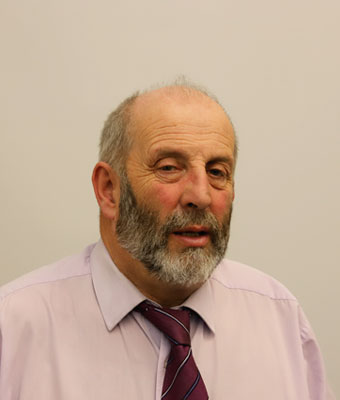
I am glad to get time to raise this very important matter, the spread of tuberculosis and the TB eradication scheme, which is clearly not working. We have more outbreaks of TB now after 46 or 47 years of testing. There are so many farmers going down in east Kerry, mid-Kerry and south Kerry. Even in Kilgarvan, many farmers have gone down, including our neighbour, Mikey Joe Murphy, who is very local to us and does everything right. He has never bought in any cows or animals and gives and does all he can to maintain and improve his herd. If I look out at 7.30 a.m. on a Sunday morning, his cows are leaving the parlour, milked. Half an hour later, we can see him topping or spreading fertiliser, even on a Sunday. He goes at it around the clock. He had an outbreak of tuberculosis last Friday week and 26 of his 66 cows have gone down. That is very hard for any farmer, especially somebody like Mikey Joe, who farms full time and whose farm income is his primary income to provide for his wife and family. He tells me that the compensation he will get is in no way adequate for the type of cows he had. An independent valuer stated they were worth in excess of €4,500. He seems to think he will only get €3,150. The Department should know by now that the cost of cattle has risen sharply in the past 12 months, meaning replacing the animals will cost much more.
We heard the Minister, Deputy Heydon, say he had secured extra funding, but what is it for? Is it to curb the primary cause? I do not think so. It seems to be for the secondary issue of more testing and disposal reactors. The number of reactors has been going up steadily since 2018 when there were 7,500. That figure is now up to 41,630. Is is it true that no culling of badgers has taken place in the past two years and they have only been vaccinated? What good is vaccinating a badger that has TB?
For many years, the Department has denied the fact that deer and badgers are the primary reason for the spread of the disease, as they move unrestricted from farm to farm. Badgers and deer are travelling wherever they want, when they want. I know of one farmer, and I will not tell the Minister of State where or who he is, but he never went down and he was in the middle of four or five farmers who were constantly going down. They would go down and be clear for a few years and then they would go down again. In one year alone, this small farmer snared 103 badgers. He never went down. These were big, small and baby badgers. He culled 103 in one year alone. I ask the Minister of State and Department to dramatically increase the culling of deer and badgers.
The national parks and forests are harbouring the deer in a big way. The farmers cannot follow them into those places. If we have sheep, we must have something to keep them in because a cattle fence will not do. I ask that these entities fence their places off, so at least deer cannot come out of them into neighbouring farms spreading the disease.
I sincerely thank Deputy Danny Healy-Rae for raising this very important issue for farmers in Kerry and throughout the country. I have the exact same concerns with regard to badgers and deer and their role in spreading this disease.
In recent years, there has been a significant increase in bovine TB, with levels nationally causing an economic and emotional burden for farmers, their families and rural communities. Bovine TB is a difficult disease to control and eradicate but it can and has been done in other countries. If we do not do something now, it will continue to affect more farmers and their families throughout rural Ireland.
In 2024, more than 6,000 farming families were affected by a TB outbreak and the herd incidence was over 6%. As of 23 November 2025, on a 12-month basis, herd incidence has fallen below 6% nationally and is 5.9% in Kerry, which, of course, is still too much. One of the key priorities of the Minister, Deputy Heydon, has been to address and review the bovine TB programme to tackle disease levels. Over time, our understanding of TB has increased and evolved, and research has shown our current approach to addressing disease levels on its own is not enough to control and ultimately eradicate TB. The Deputy is correct.
Earlier this year, the Minister had extensive engagement with stakeholders and farming organisations to agree measures to tackle the current disease levels. In June, he received the support of the Government to introduce additional measures to the bovine TB programme. On 9 September, the Minister launched the bovine TB action plan, addressing bovine TB in Ireland. There are five measures and 30 actions underpinned by scientific research, evidence and veterinary expertise in this action plan. These are to support herds free of bovine TB to remain free; reduce the impact of wildlife on the spread of bovine TB, which is what the Deputy spoke about; detect and eliminate bovine TB infection as early as possible in herds with bovine TB breakdown and avoid future breakdowns; help farmers to improve all areas of on-farm biosecurity; and reduce the impact of known high-risk animals in spreading bovine TB, including badgers and deer.
Bovine TB is not a new challenge for farmers, their families and rural communities but engagement with farmers and all stakeholders tells me there is an appetite for change to address the current disease levels. However, these changes will need to be supported and implemented by everyone to have an effect on the current disease levels throughout the country. This action plan is one of the single largest resets of the TB programme since its inception. The Minister and I believe these changes are vital to protect farming families throughout the country from TB.
The Minister is committed to ongoing constructive engagement with all farmers and stakeholders as it is vital that all involved in the programme continue to work together to protect farmers from TB. The Minister and I believe that by continuing to build our TB policies on a foundation of science and veterinary-based advice, which farmers can act on to reduce risks, we can together focus our efforts to protect cattle from infection and farmers from the stress of uncertainty and costs of a breakdown.
I acknowledge that the Deputy's statement that the way people are compensated is unsustainable is correct. I have grave concerns about this myself. Based on current prices, the compensation does not reflect what cattle make at the mart. If we take cases like that of our neighbour Mikey Joe, this puts people at an awful and unfair financial disadvantage when they have an outbreak. That is a matter of grave concern to the Deputy. I thank him again on behalf of the Department for raising it on behalf of farmers in Kerry and throughout the country.
I thank the Minister of State for his reply. It is very clear that we and the Department are not doing enough. If we keep going the way we have gone for the past 46 years and we do not change something, it will be the same story for whoever is here in 50 years' time. There is no point in the world going around vaccinating badgers. We do not know whether they had TB, whether they were infected with it already or what the story is. The fact is they need to be culled. I was getting to the point that the big infestation of deer is in the 26,000 acres of national park.
They are able to roam from there all through east Kerry. They have spread to State and private forestries. We must fence our own lands to keep our animals off the road and to stop them going into the neighbours. The damage deer are doing to cars and people on the road has to be considered. Sadly, seven people were killed in the past two weeks. It does matter how a person is killed - whether it is by a deer, another vehicle or whatever - they are dead.
They go down on the skin test. We are told that when they are slaughtered in the factory, they are clear and there are no lesions or whatever. How is that? That needs to be explained to farmers. It is terrible. I know a farmer called Mikey Joe. He probably has a name for every cow he has. When they come in to be milked twice a day, he knows their names. When a cow goes down, he will know that many of them will turn out to be clean when they are slaughtered.
The Deputy's time is up.
That is devastating for farmers. They cannot understand it. We rarely hear about an inconclusive animal. The numbers are getting bigger.
The Deputy is over his time.
Before it was one, two or three but now if a fella has 60 cows, 26 go down. I apologise to the Cathaoirleach Gníomhach.
I thank the Deputy very much. On the names of cows, the Deputy may recall that our late father had a cow, and he called her Thatcher for some reason only known to himself.
There was another cow called Haughey.
Current TB levels are leading to stress for farmers who have had a bovine TB outbreak. For those who are living in fear of having TB outbreaks and are worried about the impact it would have on their livelihoods, we need to ensure that all necessary measures are taken to reduce disease levels and ultimately take the stress associated with bovine TB out of farmers' lives. The aim of the action plan is to reset the bTB programme in the context of putting in place measures necessary to tackle the current disease situation throughout the country. These measures are targeted at both transmission between wildlife and cattle and transmission between cattle. Some of the measures will be introduced immediately in terms of communication and engagement with farmers. Some will be introduced over the coming months into 2026. Some of these measures require work on IT systems, which is being prioritised, and will be rolled out in the coming months.
Farmers and all stakeholders will be notified in advance of any changes to the TB programme through communication campaigns. The bovine TB eradication programme has secured an increased budget allocation in 2026, providing a total of €157 million. This additional funding is vital in addressing the disease. I am confident it will help drive down the instances of bovine TB levels in future years. Through the implementation of the new measures in the action plan, the Minister and I believe that it is vital that the cost of this disease is reduced for the coming years. This budget allocation will support and enable farm families, who are currently dealing with the stress of a bTB outbreak, to navigate a way out of the bTB restrictions and protect those herds currently free from bTB from the stress of a TB outbreak.
The Minister of State's time is up.
I once again strongly reiterate the Minister, Deputy Heydon's personal commitment to making sure that during his tenure as Minister for agriculture that he, the Department and all of us will work together in reducing the TB outbreaks. I thank the Deputy for raising this most important matter on behalf of the people of County Kerry.
Hospital Waiting Lists
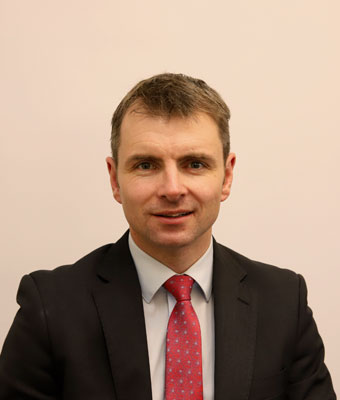
This Topical Issue arises from an ongoing situation in the Louth County Hospital in Dundalk. The ultrasound waiting lists have grown to around 7,000 at the moment. This fits into the parliamentary question Deputy Cullinane got an answer to. That was that we have waiting lists across the State in relation to diagnostic scans of 299,736, of which there are 10,000 children who are on the Children Health Ireland's, CHI, waiting lists. In my own general area, which is the Dublin and North-East health region, we have 58,665 and 7,000 in relation to ultrasounds.
This is an issue that I have brought up. The job for the clinical specialist sonographer in ultrasound was originally advertised in June 2025 after the previous post-holder advised that she was retiring in October 2025. Not only did she carry out management duties but she was also the one person who worked 100% on ultrasounds. We can see how capacity has been lost since she retired. There were five candidates for the position. An interview panel was being put together in the summer for interviews in July with the view of filling the position after the incumbent's retirement. However, that process was put on hold. I have been advised that the reason for this is that a clinical specialist radiographer in interventional radiography needed to be employed in Our Lady of Lourdes Hospital in Drogheda. The Drogheda post was lost because it had not been filled by the time the pay and numbers review took place. Interviews for that clinical specialist radiographer in interventional radiography took place two years ago.
The Minister of State can see the issue. The belief is that the fact the position has not been filled in the Louth County Hospital is there an attempt to use that position to fill this position in Our Lady of Lourdes. I am not taking away from the need for both positions but we need to get an answer. I do not know what I can say about the answers to parliamentary questions I have received other than they do not seem to deal with the reality of those who have applied for the jobs or who are waiting on the service are dealing with. I will deal with that later.
Following questions in this House, the Minister was advised by the HSE that the post in Dundalk was open to applications and the new application deadline is 30 November in four days' time. However, the problem is that none of the five candidates have been advised of this. Those in senior HR positions within the hospitals are not aware of the application deadline. When one tries to look the job up on the HSE website, it does not seem to exist. People can see my worry at this point. How is this possible for a job that we were advised that recruitment was taking place for earlier this month? The last contact the applicants have received from the HSE was on 30 June to acknowledge receipt of their applications. They had been told informally - verbally - that the interviews were not going ahead. I do not know what this means in relation to the answers to parliamentary questions that I have received, in that I cannot say are the absolute truth. I am not saying somebody set out to lie but at best there is a serious miscommunication issue here. I would like the Minister of State to go back to the Minister for Health and that we would see this addressed.
The other issue of major concern is that the HSE's assertion in response to my parliamentary question that there would be no detrimental effect on the clinical service and ultrasound that the public receives but I am advised that capacity is currently down at least 50%. There are 7,000 currently on the waiting lists. In addition, there is no leadership in the ultrasound service at the Louth County Hospital from where the clinical specialist radiographer retired last month. It is all very concerning and all the more concerning that if the HSE moves to clear the backlog, it is going to use the services of private clinics that it has done at times in the past. This is at a huge cost.
Will there be a clinical specialist sonographer and ultrasound post in the Louth County Hospital in Dundalk? How can the HSE say there is no impact on the public when the waiting list surged to 7,000? Why have the applicants not been contacted properly and formally? Why does no one at a management or HR level at the hospitals in Dundalk or Drogheda know about the 30 November deadline?
I am taking this Topical Issue on behalf of my colleague, the Minister for Health. At the outset, I sincerely thank the Deputy and his party for their commitment to the radiology services in County Louth and giving me the opportunity to speak on this important issue. Louth County Hospital is part of the HSE Dublin and North-East health region. In conjunction with Our Lady of Lourdes, Drogheda, these hospitals operate with an integrated managerial and clinical governance system, care pathways and support functions. In relation to diagnostic waiting lists generally, the National Treatment Purchase Fund, NTPF, and the HSE are currently carrying out an exercise to progress the collection of national radiology waiting list data.
The purpose of this data is to provide a national level overview of the number of patients waiting for modalities of CT, MRI and ultrasound. These reports are heavily caveated, including, for example, that in addition to data in respect of urgent and routine activity, the reports also include surveillance of planned activity. As such, the current reports make it difficult to draw conclusions about the number of patients actually waiting for access to a scan. The quarter 2 report indicates that at the end of June 2025, less than ten patients in the county hospital in Louth and 6,414 patients at Our Lady of Lourdes Hospital Drogheda were waiting for an ultrasound.
What is important for patients is the implementation of the NTPF's national radiology diagnostic waiting list management protocol by all hospitals published in October 24. This will ensure that patients are administratively managed in a safe, timely, fair and equitable manner while waiting, as well as facilitating the improved data collection and reporting. Publication of the validated radiology diagnostic waiting list information will enable full analysis of diagnostic waiting times and provide a more completed understanding of how many patients are waiting, how long they are waiting and the specific services for which they are waiting. This is scheduled for quarter 3 of 2026.
As the Deputy is aware, a clinical specialist radiographer vacancy has arisen in Louth County Hospital. A recruitment process to fill this vacancy is under way and I am advised that the position is currently being advertised. The closing date for receiving applications is 30 November 2025. Subject to suitable applications being received, interviews will be scheduled in due course. The Minister has been assured by the HSE that while this recruitment process is ongoing, there will be no disruption to patient care or service delivery. All clinical services continue to operate as normal, ensuring that patients and service users experience no change in access, quality or continuity of care. I also understand that enhanced governance arrangements are being implemented for this position. These are designed to strengthen oversight, improve co-ordination and ensure clear lines of accountability across LCH and Our Lady of Lourdes Hospital Drogheda. The Minister has also been advised by the HSE that the clinical specialist radiographer will be primarily based at Our Lady of Lourdes Hospital Drogheda, with integrated managerial and clinical governance responsibilities across Louth County Hospital, demonstrating this integrated approach. I am informed that many of the outpatient CT and ultrasound appointments from Our Lady of Lourdes Hospital Drogheda are performed in the radiology department in Louth County Hospital, Dundalk.
I could contest the numbers in relation to the ultrasound waiting lists at Louth County Hospital. I have been told they are considerably higher than ten. At this point, we do not have that one person who was actually working 100% on this and doing what is absolutely necessary from the point of view of due diligence and best practice supervising.
In fairness, I get that the Minister of State is providing information that has been provided to him, and that we have got closer to the answer. Initially, the answer I was being given was that everything is fine and this clinical specialist radiographer position is going ahead and the date is 30 November. However, my fear was that the position in Louth County Hospital, which is absolutely necessary, has been taken away and a means has been used to fill a different position in Our Lady of Lourdes Hospital Drogheda. We are going to talk about integrated management systems and so forth, but all I can say is that is absolute cover. I still hear that 30 November is the application deadline. I would love to see where this job is actually being advertised because those who applied for the initial job were basically told informally that it was not going ahead. However, they were given no absolute formal indication in relation to another job for which they could apply. The Minister of State said in his reply that:
The Minister has also been advised by the HSE that the clinical specialist radiographer will be primarily based at Our Lady of Lourdes Hospital Drogheda [that is the shooting match] with integrated managerial and clinical governance responsibilities across Louth County Hospital.
As I said, it is very easy to talk about integrated management. The fact is that is closer to the answer. I ask that the Minister of State go back to the Minister for Health. We are getting closer to an answer, but I think those who have applied for the job need to get it. I am not particularly happy that this position has been lost. It is not best practice. It means capacity is going to be lost in relation to providing ultrasounds in the Louth County Hospital in Dundalk, and we as a State will end up paying a huge amount of money to a third-party operator to deal with this backlog.
I want to once again recognise Deputy Ó Murchú's work and commitment to this very important issue. I thank him again for raising it on behalf of his constituents.
It is important to recognise that significant investment has been allocated to both LCH and Drogheda hospital in recent years, which has uplifted capacity, staffing and bed numbers in each of the hospital sites. These two hospitals operate conjointly and provide a comprehensive suite of services for the people of Louth.
The Minister for Health acknowledges that many patients are still waiting too long for hospital appointments and treatments. The delay in treatments is of concern, and it is putting a burden on patients and their families. The waiting list action plan 2025 was published in February, representing this Government's continued commitment to reducing waiting times for patients and improving access to hospital care. With the multi-annual action plan approach, we are progressing towards the ultimate vision of a public healthcare service in which everyone has timely access to high-quality scheduled care where and when they need it. The Department of Health is engaging with the HSE and the National Treatment Purchase Fund to develop the action plan for 2026, building on this progress delivered to date, renewing the focus on improving waiting times for patients and considering the learnings from the challenges that arose in 2025.
In relation to the post of clinical specialist radiographer, we all know recruitment processes can take time, but I wish to assure the Deputy that progress is being made in this regard. I acknowledge again his commitment to this. Most importantly, the Minister for Health is keen to emphasise that the HSE has confirmed there will be no disruption to patient care or service delivery. All clinical services will continue to operate as normal, ensuring that patients and service users experience no change in access, quality or continuity of care.
I will need an answer in relation to how this decision was made-----
We need to move on. We cannot discuss it now, Deputy.
-----and what is going be done in relation to the position that happens now in Louth County Hospital.
We are moving on from Topical Issues. We will not have a back-and-forth on this.
I can assure the Deputy that I will bring that to the Minister.
Go raibh maith agat. I appreciate that.