Artists' Remuneration
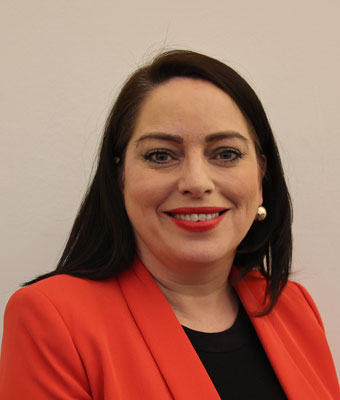
6. Deputy Cathy Bennett asked the Minister for Culture, Communications and Sport when he intends to reopen the basic income for the arts scheme to new applicants. [64552/25]
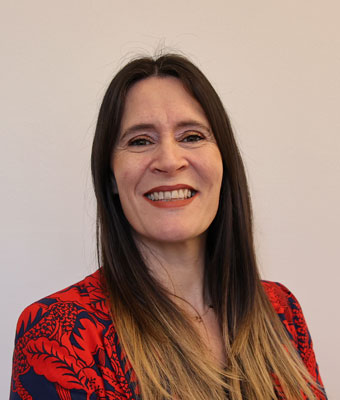
7. Deputy Sinéad Gibney asked the Minister for Culture, Communications and Sport the status of the progress made regarding the establishment of a permanent basic income for the arts scheme; and if he will make a statement on the matter. [64387/25]
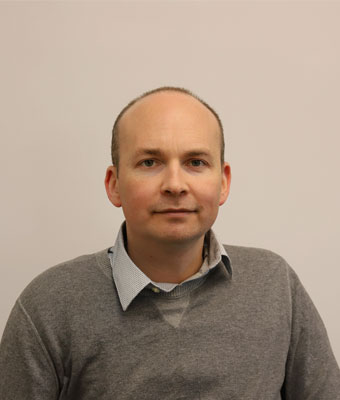
23. Deputy Paul Murphy asked the Minister for Culture, Communications and Sport if he will expand the number eligible for the basic income for the arts scheme; and if he will make a statement on the matter. [64162/25]
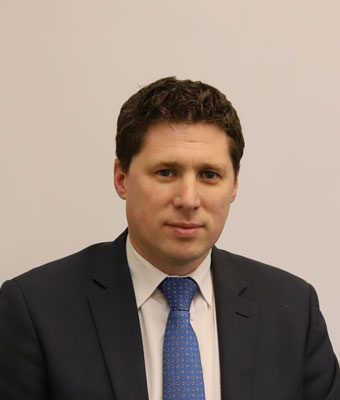
32. Deputy Matt Carthy asked the Minister for Culture, Communications and Sport if he will outline his proposals regarding the continuation of the basic income for the arts scheme. [64393/25]
56. Deputy Paul Murphy asked the Minister for Culture, Communications and Sport if he will extend the scope of the basic income for the arts scheme; and if he will make a statement on the matter. [64161/25]
When will the Minister reopen the basic income for artists scheme? We need to encourage the arts in Ireland. As a country that rates culture and the arts so highly, we must encourage new and emerging artists to thrive through every art form.
I propose to take Questions Nos. 6, 7, 23, 32 and 56 together.
I was delighted to have secured an allocation for a successor scheme to the basic income for the arts pilot as part of budget 2026. While the detail of the future scheme will need to be agreed by the Government, this is a major milestone for the arts in Ireland. I am particularly pleased that the research my Department conducted provided the Government with a clear evidence base upon which to make the decision.
More than 17,000 submissions were received to the public consultation I held in August.
This is a record for our Department and shows how much interest there is in this scheme. I also held a stakeholder forum to gather input from the sector on plans for a successor scheme. There were over 200 attendees from across the arts sector including resource organisations, local authorities and artists, both recipients and those not on the pilot. Eligibility criteria and parameters for a successor scheme have not yet been finalised.
The cost of the basic income for the arts pilot scheme was €35 million for a full calendar year for 2,000 artists to participate, with each recipient receiving €325 a week. There were over 8,200 eligible applicants to the pilot in 2022. To have funded all those eligible would have cost approximately €139 million per year. Agreement has been secured by the Government for a successor to the basic income for the arts pilot scheme with an allocation of €18.27 million in my Department’s 2026 Estimate. I look forward to the design and delivery of the successor scheme. Consultations and planning in relation to this are currently under way. I can confirm that the basic income for the arts pilot scheme will end in February 2026, which is when the final pilot payment will be made to the current cohort of recipients. We intend to announce a successor scheme and open for applications in the new year. While eligibility has not yet been finalised, a new cohort of recipients will be selected on the basis of eligible applications for a successor scheme. Therefore, it will not be the same 2,000 recipients. Applications to that successor scheme will be based on the eligibility criteria and parameters of that scheme. Those details will be published once they have been agreed by the Government.
The pilot scheme provides a weekly income of €325 to approximately 2,000 randomly selected artists and creative arts workers. The primary objective of the scheme is to help artists to deal with precarious incomes and to prevent talent from leaving the sector for economic reasons. The pilot is underpinned by a robust research project consisting of a randomised controlled trial with a treatment group of 2,000 and a control group of 1,000. It is clear from evidence collected to date that it has a positive impact for those in receipt of it. The data shows that the basic income for the arts is having a consistent, positive impact across all indicators affecting practice development, sectoral retention, well-being and deprivation. According to the data the Department has collected, 51% of artists who do not receive the basic income for the arts are living in enforced deprivation, compared with 16% of the general population. The scheme is therefore a means of addressing consistent poverty in the sector. The data also shows that at the start of the basic income for the arts scheme, the median income earned by those on the scheme was €19,200 per annum, which is 54% lower than the national annual median of €41,823. At the same time, recipients’ arts-related income increased by over €500 per month on average, while their income from non-arts work decreased by around €280. Recently, I published a cost-benefit analysis showing that the real net fiscal cost of the basic income for the arts pilot was just under €72 million over the three years compared with a gross cost of €105 million for the three years. This is because the basic income for the arts generated returns in the form of tax revenues of €36 million and savings in social protection payments of €6.5 million. For every €1 of public money invested in the pilot, society received €1.39 in return. The cost-benefit analysis shows that audience engagement with the arts generated an estimated €16.9 million in social value over the three-year pilot and improvements in psychological well-being contributed almost €80 million to the total benefit. Dependence on social protection declined with recipients receiving €100 less per month on average and they are 38 percentage points less likely to receive jobseeker’s payments. The cost-benefit analysis also shows that the scheme produced over €100 million in social and economic benefits. As I mentioned, for every €1 of public money invested, society received €1.39.
The findings of the latest basic income for the arts report on two years of the payment shows that basic income for the arts recipients, compared with those not in receipt of the basic income for the arts, are six percentage points more likely to have worked, spend on average 11 weekly hours more on their creative practice, are 14 percentage points more likely to have completed new works in the previous six months and invest more financially in their practices. The basic income for the arts research has developed a strong, irrefutable evidence base that the intervention has worked and has consistent positive impacts for those in receipt of it. Artists in receipt of the support are typically able to devote more time to their art, produce more pieces of work, experience a boost to their well-being through greater life satisfaction and reduced anxiety and are protected from the precarious nature of this sector to a greater degree than those who are not receiving the support. The research from the pilot has consistently demonstrated both the positive impact the basic income for the arts has for those in receipt of it and how difficult it is to work as an artist in Ireland given the income precarity prevalent in the sector. The basic income for the arts successor scheme will help to sustain the careers of those artists who will receive it and retain their talent in the arts sector.
Based on the amount allocated to the basic income for the arts subhead in the budget of €18.27 million, the successor scheme will support the practices of at least 2,000 artists in 2026 at €325 per week with payment beginning in quarter 4. Stakeholder consultation and engagement with other relevant Government Departments on the design of the new scheme will continue to determine details such as the duration, eligibility and selection method, the details of which have not yet been agreed or decided. Once the parameters of the scheme have been agreed by the Government, I intend to publish them. I hope to take a proposal to the Government as soon as possible and will aim to open for applications at the earliest opportunity thereafter. While the detail of the future scheme will need to be agreed by the Government, this is a major milestone for artists and the arts in Ireland. I was delighted to have secured an allocation for a successor scheme as part of the budget.
I thank the Minister for his response. While Sinn Féin welcomes the six-month extension to the basic income scheme for artists, they are at a loss to know what is going to happen now. The date when the Minister intends to roll out this scheme would be very helpful. He said quarter 4 but what is the actual date? What are artists supposed to do if this extension only goes to February and the scheme is not reopening until quarter 4? I ask the Minister to look at that again. There was actually a €2 million cut in the budget to the scheme. This is going to have an effect on all the artists getting paid from this scheme. I also that people with disabilities be included in the scheme. They are being left behind again, stripped of their basic allowance and not allowed to apply for a medical card through the means test they are subject to.
We in the Social Democrats welcome this programme. It has been wonderful. My office has spoken to dozen of artists who tell me that no matter the medium, the scheme has meant they have been able to produce more art, has helped them to have healthier and happier lives and has allowed their art to get to more people. There are paintings, sculptures, poems and plays that simply would not exist without this scheme. We genuinely feel passionately that it is a positive element. It is helpful to know that the eligibility criteria will be published as soon as possible because I know people in the artistic community are waiting with bated breath to understand how it will run. I think I heard in the Minister's answer that those who have been in the existing pilot will not be eligible for the second scheme, or did I get that wrong? Will the Minister clarify? Will those who have been on the scheme be able to reapply? I share the same concerns that there is a six-month gap and people with disabilities are being penalised.
I welcome that people are so supportive of the scheme. There is a complication with regard to how the scheme runs forward because the pilot was due to end on 31 December, but out of savings in our Department's resources we are able to extend it to February to give an extra two months. At the same time, I mentioned the level of consultation we are doing in the Department. It is probably the largest consultative process we have ever done in the Department. It shows the range of opinions. Not everybody agrees on the mechanisms that should be imported for a new scheme. There is a large cohort for whom this scheme was not an option. I have to make sure that whatever we do is fair and reflective of similar schemes the Government also runs with randomised selection and things like that. The people outside the scheme at the moment are every bit as anxious to know if they will get a chance to come in. If it is the same cohort who roll over again, that is not fair to the people outside of it. I think both Deputies would agree we have to make sure whatever we do is fair. There is also a level of engagement we have to do with the Department of Social Protection with regard to the issues raised. Ultimately, changes in eligibility for Department of Social Protection schemes are a matter for the Minister for Social Protection. I hope that once this level of engagement and consultation with the sector, which is ongoing and led by my Department, has finished, I will be in a position to bring forward shortly - I will not give a date - a proposal to the Government which will get its agreement. I remind the House that since my appointment as Minister for the arts, I have made sure this is to be put on a permanent footing. When I came into the Department, there was no prospect of this being retained. That should be seen as a big positive given the budgetary discussions we had.
It is disappointing to hear that artists who have already been on it will not be considered. These artists deserve an ability to plan for their future. Some have been tied into mortgages, etc., and they are going to be at a loss with this. I also mentioned that people with disabilities were stripped of basic allowances and even medical cards through means tests if they participated. I ask the Minister to look at that again. I also ask him to look at comedians being considered under this tranche. It is disappointing, in the context of the Bill proposed by Deputy Aengus Ó Snodaigh that we debated last week, that artists and comedians are not allowed to apply for this funding.
That is not the case.
Is the Minister telling me they are allowed to apply? In relation to the six-month gap, what are people to do in those six months?
I thank the Minister for the information. We share his passion for this programme. My concern is that it seems that a pilot was run and we are just getting another pilot. We need more certainty, more permanence and a broader cohort of people who can access it. I raised in previous sessions with the Minister the idea that a pilot should also be something that we capture the data from and potentially offer to other cohorts in society. At that time, he dismissed it. He said that he was just looking after his Department and that it was not fair to expect that he would be sharing those results with Cabinet colleagues to identify other cohorts in Irish society who could benefit from a basic income. In the last couple of weeks, in the culture, communications and sport committee, we have identified that a good group of people who would be eligible for this or would potentially benefit from it is journalists, who are within the Minister's area. I also would like to raise again that seasonal farmers are another group. There are lots of groups in Irish society to which this could apply. If we let this pass by without capturing this data, learning from it and seeing how we can apply it to others, we are missing a trick.
I have a question down on this issue, but for some reason it has not been grouped with these questions even though it is on the exact same matter. How long will the new cohort be on the basic income scheme? Maybe the Minister has not worked that out. I think he said that €18 million has been set aside for next year. That indicates that this scheme will not start until June if it is the same funding of €325 a week.
I have not worked out that detail yet. As soon as I do, I will take it to the Government.
With regard to journalists, we have journalistic schemes that are operated from my Department, including the court reporting scheme and the supporting democracy schemes. The Deputy might not be aware of them but we support them. I have not dismissed other Departments using basic income, but I am not the Minister for agriculture, as I have said three or four times at this stage. If the Minister for agriculture wants to bring in a basic income for farmers scheme, that is his prerogative. I am the Minister for arts.
I never said that people on the existing scheme would not be able to apply for the new scheme. That is an unfortunate conflation Deputy Bennett is trying to do here. I do not know whether that is to try to instil fear in the artists. Let me be clear: I have not made a decision with regard to eligibility, or who will or will not be able to apply. As soon as I do, I will go to the Government with it and it will be brought back to the House. To be honest about it, a lot of people are worried. To use that fear today is not something the Deputy should do. Most people in the arts community are very welcoming of the fact that we have permanency of this scheme going forward. Deputy Bennett mentioned mortgages and things like that. She suggested that I am somehow going to scrap the existing 2,000. I never said that. She should reflect on that.
Thank you for the clarification.
With regard to the Bill that was debated last week, Deputy Ó Snodaigh knows quite well my view with regard to comedy. That pertains to the Arts Council and Arts Council grants, which are a totally different thing. I have made my views clear with regard to the Arts Council and the funding of things like country music, Comhaltas Ceoltóirí Éireann, comedy and other genres of arts which are currently not funded by the Arts Council. I am awaiting a report, which I am sure will probably be due any day now, from Professor Niamh Brennan with regard to the serious governance issues at the Arts Council. It is prudent and responsible to receive that first before I consider any other legislation with regard to the Arts Council that would involve having to come back after Christmas with a second Bill. I am sure people like the Deputy would be the first to ask why I did not wait for the report to be finished.
Question No. 8 taken with Written Answers.
National Broadband Plan
9. Deputy Grace Boland asked the Minister for Culture, Communications and Sport the way in which the national broadband plan will address gaps in high-speed broadband connectivity in larger towns such as Balbriggan and Skerries; and if he will make a statement on the matter. [64566/25]
The roll-out of national broadband is delivering high-speed fibre to rural and urban communities. It is a success and progress has been made, yet we know that there is partial coverage in some towns and villages. For example, my own hometown of Skerries has partial coverage of fibre broadband and not access to the national fibre broadband. The Minister might give us an update on when we can expect full roll-out of the national broadband plan in all towns and villages.
The Government is committed to the rollout of high-speed broadband right across the country. The national broadband plan, NBP, is the Government's initiative to deliver high-speed broadband services to all premises in Ireland where the commercial telecom operators' reach will not extend. In addition to the work being progress by National Broadband Ireland right across the NBP intervention areas, progress is also being made by commercial operators in expanding their next generation networks throughout the State and ensuring the targets set out in the digital connectivity 2022 strategy are achieved.
Skerries is predominantly located in the amber area on the broadband map, which is available on my Department's website. The amber area is to be served by the network deployed under the NBP State-led intervention. Balbriggan is largely in the blue area on the broadband map. The blue area represents those areas where commercial providers are either currently delivering or have plans to deliver high-speed broadband services. The Department defines high-speed broadband as a connection with minimum speeds of 30 Mbps download and 6 Mbps upload.
National Broadband Ireland has advised that the majority of premises in Skerries are ready for service, and 2,421 premises in the Skerries deployment area are available to order or pre-order. The remaining premises are currently undergoing survey work and have an anticipated date for connection of October to December 2026. The latest information on when high-speed broadband will become available to premises in the integration area can be found on the website. This website is regularly updated and provides the expected timeline for delivery and status of any works that are initiated at any point in time.
The activities of commercial operators delivering high-speed broadband within blue areas are not planned or funded by the State and the Department has no statutory authority to intervene or report in that regard. However, ComReg provides an online tool on its website to check the available broadband options at a particular address. NBI is bringing fibre broadband to 564,000 premises across the intervention area. The roll-out is divided into 227 deployment areas, each averaging 25 km, although some extend beyond town boundaries due to network design.
I thank the Minister and welcome his update. I have a concern in relation to the blue area. Part of Skerries is in the blue area as well. The Minister mentioned Balbriggan. The problem with the blue area is that the residents of an estate are being told that unless they come together as a collective of 20 to 50 residents who are willing to sign up with one commercial provider, they will not be able to access the fibre broadband, or it will not be delivered. That is not good enough. It also undermines competition. All the residents have to come together and sign up to one fibre broadband provider. Skerries is 35 minutes from the city centre, and broadband is an absolutely essential infrastructure for businesses, for remote working and for our day-to-day lives. Our lives happen online. I would really appreciate if something can be looked at in terms of the blue area.
I thank the Deputy. She is right in relation to the blue area in general. We continue to receive very high volumes of queries with regard to blue areas for high-speed broadband and poor speeds and services and things like that. Notwithstanding the fact that there are issues - if the Deputy wants to give me the particular details with regard to specific parts of Skerries and Balbriggan, I will have the Department look at them - I think people in general will acknowledge that some years ago, when I came into the Dáil first, Taoiseach's Questions, Leaders' Questions, the Order of Business and questions to the Minister were all dominated by broadband. Now I am lucky to get a question once every two or three months with regard to broadband in rural areas and in urban areas as well, which shows that the money allocated by the Government and by Deputy Donohoe in his former role as Minister for Public Expenditure and Reform has been transformative. If it was not working to the extent that it is in constituencies like my own, we would be inundated with questions. There are issues - I am not saying there are not - but we will work through them. If the Deputy wants to give me the particular details, we will have a look at them.
I agree that the roll-out of the national broadband plan has been a success. We just need to make sure that people, families, residents and businesses are not left behind. I will contact the Minister's office in relation to the specific areas.
There is a Dublin-specific issue we have to address. Fadó fadó when cable television came into people's houses - we did not have that luxury in the country, I do not know whether An Cathaoirleach Gníomhach did and Deputy Ó Snodaigh probably did - they had to break footpaths when they brought in cables and in many cases, left no ducting so there is a significant problem involving ducting in a lot of urban areas, particularly in Dublin, that we will have to address with local authorities. It will cost an awful lot of money. I know it is a particularly big issue in suburban Dublin and, in many cases, prevents the delivery of high-speed broadband. It is probably part of the next generation of problems we will have to fix in suburban areas, particularly in Dublin.
We can see the transformation not only in rural Ireland but in urban Ireland over the past number of years with access to proper telecommunications and connectivity. This is only right. We will continue to work on outages and the problems that are there.
National Cultural Institutions
10. Deputy Erin McGreehan asked the Minister for Culture, Communications and Sport his plans to expand and prioritise capital grants for accessibility upgrades in arts centres, galleries and theatres in County Louth, with a particular focus on improving facilities for disabled performers and disabled patrons and if additional ring-fenced funding will be made available to support essential works such as accessible backstage areas, adaptive performance spaces, sensory-friendly infrastructure and improved mobility access throughout these venues. [64318/25]
I wish to ask the Minister about his plans to expand and prioritise capital grants for accessibility upgrades in arts centres, galleries and theatres in County Louth and nationally with a particular focus on improving facilities for disabled performers and disabled patrons and whether additional ring-fenced funding will be made available to support essential works such as accessible backstage areas, adaptive performance spaces, sensory-friendly infrastructure and improved mobility access throughout these venues.
As outlined in the programme for Government, the Government believes that culture and the arts are essential to a well-rounded society providing opportunities for education, expression and community engagement. My Department is taking a number of steps to improve, increase and widen access to the arts.
A network of cultural infrastructure exists throughout the country with the majority in the ownership of local authorities. Annual support, including programming and revenue supports, is provided to this arts and culture infrastructure by local authorities and the Arts Council.
Within my Department, the cultural capital scheme was originally launched in October 2019 with a total fund of €4.7 million. Both An Táin and Droichead Arts Centre in County Louth were awarded funding under stream B and stream D of that scheme. Some €1.4 million is now available under stream E of the scheme, which was launched in June 2023. Grants of up to €50,000 are available to not-for-profit arts and cultural organisations. Projects that address accessibility, including accessibility audits as well as the other works mentioned by the Deputy, are also eligible for funding under stream E.
As I announced after budget 2026, my Department has been allocated €6 million for the new arts capital programme in line with the commitment in the programme for Government. My Department is in the process of designing the specifications of the scheme, including the setting of eligibility criteria. This will see much-needed capital supports for arts and culture organisations.
The Arts Council also provides financial support to a number of initiatives aimed at increasing public access, participation and engagement in the arts. A new All In scheme developed by people with disabilities will support organisations such as theatres, museums, galleries and festivals to improve access, remove barriers and welcome more people with access requirements. The Arts Council is a partner in developing this new scheme with Arts Council England, Arts Council of Northern Ireland, Arts Council of Wales and Creative Scotland.
Finally, as a follow up to the report of the night-time economy task force, the Department commissioned a survey in 2024 to examine the issues for patrons and artists with disabilities when going out at night and engaging in cultural activities. A report of that survey has now been finalised and it contains a number of recommendations that aim to improve access for patrons when going out at night. My Department is currently reviewing those recommendations with key stakeholders with a view to providing an action plan with practical measures towards creating a more inclusively accessible night-time economy.
Under the national human rights strategy, we have an opportunity and an obligation to really drive forward all those ambitious things mentioned by the Minister. It is about making sure we have an clear and ambitious plan to expand and prioritise capital grants specifically for accessibility upgrades. The Minister mentioned the new capital plan on which the Department is working. So many of our theatres are accessible but they are just accessible. The Minister mentioned disabled artists. We have forgotten about disabled artists in many ways. We need to be ambitious in our plan. Disabled artists deserve rehearsal rooms, dressing rooms and stages they can actually use. An Táin is accessible but is it comfortable for disabled patrons? I am not sure, so we need that funding for a really dedicated and ambitious plan.
The Deputy is right. It is 2025. We should not have a situation where in some of our national cultural institutions, people with disabilities cannot go in the front door. That is the reality because of delays. Deputy Ó Snodaigh and I spoke about this a while ago regarding the rehabilitation of sensitive buildings and architecturally conserved areas. There are people with mobility problems who cannot go in the front door of our national cultural institutions. I find that intolerable. It really sticks in my craw that we cannot bring people in the front door regardless of their ability or mobility.
The Deputy raised a very interesting point in which I have a personal interest, namely, disabled patrons. Some of our cultural institutions can be a hellish experience, particularly for people with photosensitivity or neurodiversity, so the resdesign and design of them has to be done in conjunction with people who are neurodiverse and have particular disabilities. I welcome the Deputy's proposals.
I am really heartened by the Minister's really positive response because, as he said, culture belongs to us all. It is not just for people who are able to get access or enjoy it. I look forward to seeing the Minister bring that attitude to practical policies and ensuring that all our people can enjoy our culture and cultural experiences because we have much to offer and a lot of people are not getting access to it.
I will be bringing forward proposals to Government shortly regarding the new arts capital scheme. It will be along the same lines as the sports capital grant scheme. It is a small amount of money to start with. We are testing the waters in year one but I hope to grow it exponentially over the next couple of years. It will be local authority-dependent. They own most of the properties around the country. It will not be open to the national cultural institutions. To be honest, they have enough money, which they get directly from the Department. This will be designed for the smaller groups around the country that do not have access to capital works and capital schemes but I will encourage local authorities to come up with schemes and matched funding and to be ambitious. We will put our toe in the water in the first year but I hope to grow it and, with the support of colleagues in the House, to do for arts and culture what we have done successfully over the past number of years for sport.
Questions Nos. 11 and 12 taken with Written Answers.
Arts Funding
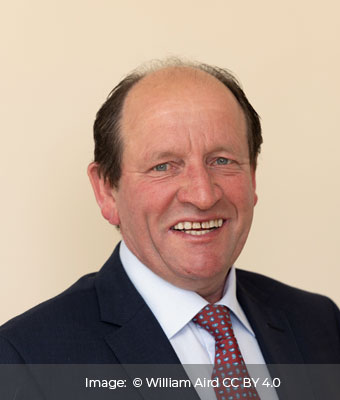
13. Deputy William Aird asked the Minister for Culture, Communications and Sport the funding that has been allocated to a centre (details supplied) in Portlaoise, County Laois, over the past five years; the funding that is planned for the centre in the coming years; whether there are opportunities to access additional departmental or national funding streams to support its ongoing operation, programming, and development; and if he will make a statement on the matter. [63402/25]
I am raising this question to get clear and committed support for Dunamaise Arts Centre in County Laois. This centre opened in 1999. Capital funding was supported by the then Minister for arts, Michael D. Higgins. Matching funding was proposed by me in the council chamber in Laois in 1999. Dunamaise Arts Centre has served as the cornerstone for cultural life in Laois and the wider midlands. I am asking the Minister to provide funding for the centre and outline the additional funding available to support its ongoing operation, programming and development.
As outlined in the programme for Government, the Government believes that culture and the arts are essential to a well-rounded society providing opportunities for education, expression and community engagement. My Department is taking a number of steps to improve, increase and widen access to the arts.
A network of cultural infrastructure exists throughout the country with the majority in the ownership of local authorities. My Department provides capital support for arts and culture infrastructure while annual support, including programming and revenue supports, is provided by local authorities and the Arts Council.
The centre in Portlaoise referred to by the Deputy has been awarded capital funding of over €340,000 under various schemes from my Department since 2006. Within the past five years, it availed of funding to the value of €9,996 under stream D of the cultural capital scheme, a scheme which was set up in direct response to Covid-19 to assist organisations with re-opening safely.
As I mentioned, annual support, including programming and revenue supports, for arts and culture centres is provided by the Arts Council. I understand the organisation in question is in receipt of annual funding from the Arts Council and was awarded €125,000 in 2024 and €145,000 in 2025.
My Department has a capital funding scheme open for applications called stream E of the cultural capital scheme. It focuses on enhancing the existing stock of arts and culture centres throughout the country and provides grants of up €50,000. I believe the organisation in question is aware of this scheme and had been in the process of submitting an application in September of this year but has put it on hold and expects to resubmit the full application in due course. The Department would welcome this application as soon as the applicant is in a position to submit it.
Finally, as announced in budget 2026, my Department has been allocated €6 million for a new arts capital programme for arts and culture organisations across the country in line with the commitment in the programme for Government. My Department is in the process of designing the specifications of the scheme, including the setting of eligibility criteria.
I thank the Minister. For 25 years the Dunamaise Arts Centre has provided a home for drama, music, film, community groups, festivals and the visual arts in my region. It has supported both professional and amateur artists. It has built a reputation for excellence. The centre has vibrant, energetic and ambitious plans and is ready to expand and strengthen its role as the cultural heart of the county. However, the centre urgently requires renewed investment. Its technical and production infrastructure is now significantly outdated. Essential systems have reached the end of their lifespan, including lighting and power distribution, control desks and production computers. Much of the lighting is based on older, unsustainable technology soon to be phased out under EU regulations. Dunamaise Arts Centre needs full modernisation. The estimated cost is approximately €220,000 and this is not outrageous. Without this investment, the ability of the centre to safely and professionally host performances will be compromised.
Thank you, Deputy.
I am asking for the core infrastructure funding for the centre. It is ideally placed-----
Thank you, Deputy.
-----for departmental cultural capital funds------
Thank you, Deputy.
-----Arts Council supports, Creative Ireland initiatives and sustainability-----
Deputy, thank you.
-----based on funding schemes.
The Minister to reply.
There is nobody else here.
As I said a while ago, I understand Dunamaise Arts Centre is due to bring forward an application. It was to bring this forward in September, I think, but it has been delayed for some reason. Once that application is brought forward, it can be assessed. The important thing in the wider scheme for these centres is we will have an arts capital scheme that is the first of its kind, as soon as we have eligibility and a process in place. That has to be approved by the Minister for public expenditure before it can be formally launched. Regional centres and smaller centres around the country do not get as much money as some of the larger ones, especially those based in Dublin, and the national cultural institutions, which are wholly dependent on the State. These centres will have access to smaller levels of funding that can do the things the Deputy was talking about such as sound desks, lighting, improvements to seating and ticket offices, IT enhancements and all that.
We will not be able to do everything. I imagine we will be inundated in year one but if we are I hope that will form the blueprint for us to have a bigger budget from the Department of public expenditure in future years.
I thank the Minister for his remarks. That is the most positive reply I have received since I became a TD. It looks as though we only have to put in the submission and the Minister will look after us reading between the lines. The Dunamaise Arts Centre can serve its community for the next 25 years as it has for the past 25. I acknowledge the exceptional work of the team there including Ciara O'Connell, the CEO, Nick Antonm the technical manager and all the front-of-house, administrative and technical staff. This commitment has kept a vital cultural space alive through significant challenges. I encourage the people of Laois and all surrounding counties to continue supporting the centre.
The last point the Deputy made is the most important. All these arts centres will only be as good as the local community that supports them. No amount of schemes, interventions and grants will ever supplement what the local community can do by attending and supporting artists, whether touring or local. That is the most important issue. Whether they are in parish halls, purpose-built centres like the Dunamaise Arts Centre, hotels or wherever, the most important thing people can do to have a vibrant arts community is to support the artists and go out on a Friday or Saturday night, or even the middle of the week and see what is on in the local area, be that in Portlaoise, Abbeyleix, Rathdowney or wherever. These events need support and do not survive without support and the Government cannot do it all on its own.
On the Deputy's comments about this being the most positive response he has received since he came into the Dáil, I am flattered and thank him very much. I encourage the Dunamaise Arts Centre to put in its application. Obviously once that is in, that will be assessed according to the strict criteria within the Department.
There have not been many who have spoken here this morning so I should be at the top of the list.
We move on. Deputy Aird is up again for Question No. 41. Or is that the same question?
It is the same question.
That question has been dealt with. We will take Question No. 72 as Deputy Ó Snodaigh is here and there is nobody else. He probably did not think we would get to that question.
Sports Events
72. Deputy Aengus Ó Snodaigh asked the Minister for Culture, Communications and Sport if he has engaged with the Department of Enterprise, Tourism and Employment and the Dublin and neighbouring local authorities to ensure that the city, neighbouring towns, communities and soccer clubs can welcome and host fans of the various international teams competing in the Euro 2028 soccer tournament; the social impact and community activity programmes will benefit from a €6.2 million spend as part of Ireland's €93 million investment in Euro 2028 soccer tournament; and if he will make a statement on the matter. [64626/25]
I did not think we would get to this question but some of it has been discussed with the Minister of State in the context of investment in sport and where we finished off discussing Euro 2028. I am asking whether the city, neighbouring towns and communities and sports clubs can host fans and the international teams and create events similar to what happen during the Special Olympics in 2003.
We discussed this in good detail earlier, but the objective will be to ensure there is as much of a legacy and impact across the country from the hosting of Euro 2028 as possible. Being able to host seven games as part of the tournament, including the quarter final, is a great opportunity. I have no doubt it will really take hold of the country over the course of the period. As I said, we estimate the cost at €92 million to €93 million. The economic return to the wider economy will be much more significant than that and it makes a lot of sense from that point of view but we also want to ensure there is a return in the form of an impact on participation in football and sport generally and that we maximise that as much as we can. We are just under three years away from the hosting of that tournament. We are engaging in very strong detail with other organisations and national agencies to make sure it impacts as strongly as possible. We are also engaging with the FAI on discussions about the legacy piece and how we can best maximise the impact of that. I certainly hope we will have another football tournament to participate in between now and then, depending on how the play-offs go in March, but Euro 2028 is a very exciting opportunity for the country. We will work across the board with all stakeholders to make sure we maximise the impact of it in every way possible.
Gabhaim buíochas leis an Aire Stáit. We have an opportunity. While €93 million has been committed it is 2028 so there is an opportunity to add to that. The Government has committed to the €93 million. We know what the return is but between now and 2028 greater investment can be put into local clubs and communities to ensure we get the greatest benefit for Dublin and outside the city as well because even though the matches are being held here, this is the world stage. We need to ensure that similar to other large sporting events that have been held in Ireland in the past, and will be held shortly, we will be on the world stage and need to ensure that not just what happens on the pitch but what happens outside it works well. There is need for a greater investment.
We are certainly determined, from a Government point of view, to maximise the opportunity and to ensure from a point of view of participation that every opportunity is taken to ensure it cuts through and gets people involved in football and other sport. The commitment of the Government in the most recent budget to football and the establishment of academies speaks to how we have been supporting football very strongly in the country. While at Government level will be doing all we can, there is no doubt moments like last weekend and the inspiration provided by Troy Parrott and the rest of the team encourage participation and young people. I recall watching matches in tournaments in the past and I would be bursting out the door afterwards, even if I was on my own, to hit the ball. That is the type of thing that really cuts through and inspires and energise people to participate in sport. From a Government point of view, in terms of the investment and policy structure, we will be doing all we can to maximise that and provide the opportunity for people to participate and engage.
We have a once-in-a-lifetime - though maybe not in a lifetime - opportunity to enhance Ireland's reputation.
In one small area of Dublin city, the north inner city, which has had bad press in recent times, Troy Parrott, Kellie Harrington and people like them have shown that, even when conditions are adverse, sports can shine through. The more we invest in sports and in those communities, the more we will see great sportspeople into the future, whom we can all follow and use to encourage other young people into sport. In an earlier response, the Minister of State mentioned that Dublin City Council will get about €6 million out of this. Again, I encourage him to look at that funding again and to increase it to ensure that the Dublin region as a whole and areas outside of it can get more from the investment.
We should not forget the support that we have given to football over the past number of years, which we continue to give. Some €75 million was allocated to the FAI between 2019 and 2024, with €30 million specifically to support football development aimed at promoting participation by young people. That has been added to in the most recent budget through the investment in the academies and the very significant ongoing investment through the community sports facilities fund, which supports the work of soccer clubs right across the country in developing their facilities, and through the large scale sport infrastructure fund, through which we have made significant commitments to the development of Dalymount Park, Wexford Youths' stadium, Sligo Rovers' grounds and, significantly, Finn Harps' Finn Park in Donegal. That is something we have been doing and that we continue to do. We now want to make sure the opportunity provided by Euro 2028 adds to that very significantly in a way that lasts into the future.
Film Industry
15. Deputy Paula Butterly asked the Minister for Culture, Communications and Sport his assessment of the current distribution of film industry infrastructure and funding across the State; if he will consider targeted supports or new initiatives to promote film-industry growth and infrastructure at regional level; and if he will make a statement on the matter. [64601/25]
Will the Minister outline his assessment of the current distribution of film industry infrastructure and funding across the State? Will he indicate whether he will consider targeted supports or new initiatives to promote film industry growth and production capacity at a regional level?
I had thought we were nearly finished but I thank the Deputy. A range of supports are provided for screen productions in Ireland, including regional productions. These are kept under ongoing review to ensure we remain an attractive location for inward investment and continue to develop our domestic industry. In 2024, Screen Ireland invested more than €6.5 million in productions, festivals, initiatives and activities that contributed to the nationwide development of the screen sector. This included €4 million awarded through the agency's nationwide additional production fund. Screen Ireland also provided funding supports for talent and skill development initiatives across the country, such as the agency's National Talent Academy network, which has key bases in Limerick and Galway.
In 2025, Screen Ireland ring-fenced funding of €5.5 million for nationwide development and Irish-language storytelling. Over 50% of live action feature film and TV drama in Screen Ireland's 2025 slate of productions is expected to be produced or filmed on location in regions outside of the traditional film-making hubs of Dublin and Wicklow. These regions include the counties of Donegal, Limerick, Galway, Monaghan and Sligo.
Ireland is home to several world-class film studios boasting state-of-the-art production and post-production facilities and various support infrastructures, which have helped to attract incoming productions from studios and content streaming companies, including unscripted productions.
Screen Ireland's National Talent Academy network includes: the National Talent Academy for Film and Television, which is led by Ardán in Galway; the National Talent Academy for Animation, which is led by Animation Ireland; the National Talent Academy for VFX, which is led by the Cultural and Creative Industries Skillnet; and three regional academies, which are currently managed by the Atlantic Academy in Galway, Film in Limerick, and the Clermont Enterprise Hub in Wicklow. The network has been established to develop a highly skilled and diverse talent and crew base throughout the country and offers a wide range of activities for the Irish screen industry, including courses, programmes and career opportunities.
Addressing innovation, skills development and sectoral growth, the national talent academies are the result of additional stimulus investment provided by the Department. They form part of a wider strategy to support skills development across all regions in the country. They also seek to address educational skills gaps in the screen sector and drive more Irish talent from all backgrounds into the Irish screen industry.
While all of this is very welcome, it is essential that funding and infrastructure be distributed fairly across the State and never concentrated in a small number of locations. County Louth provides a strong example of the potential that exists regionally when investment and opportunities are made available. The film "Skintown", produced by Keeper Pictures with the support of Screen Ireland and Northern Ireland Screen, was filmed in Dundalk in 2025, further cementing the area's role as an emerging regional hub for film and television. Dundalk and the wider region have a proud film-making tradition. One of our own, John Moore, the Dundalk director known internationally for major action films such as "Behind Enemy Lines", "The Omen" and "A Good Day to Die Hard", continues to contribute to the sector at home through initiatives such as the John Moore Film Award at Dundalk Institute of Technology. At this moment, I will reiterate the great news that Queen's University Belfast and DkIT are going to merge and that Dundalk will be a university town. It has to be regional and not based on a few towns and cities.
I support Deputy Butterly on this. The Minister might update us. We had a regional film uplift fund in the past but, as a result of issues relating to EU supports, that could not continue. He will certainly be aware that, when filming has to take place outside of Dublin and Wicklow, crews have to travel and there is a cost to that. He has outlined the success we have seen with filming right around the country. He will also be aware that there are plans to develop Tara Studios, just outside Gorey in north Wexford. He will also know about the success of Troy Studios in Limerick and the filming that has happened there. As Deputy Butterly said, there are many locations right around the country where regional film, television and animations uplift supports is critical.
We previously had a regional uplift under the section 481 scheme, which was very successful in encouraging film outside of the east coast or the Dublin-Wicklow region. That was interrupted by the Covid pandemic. Has that been looked at again? Has a Gaeltacht uplift been considered in light of the great films that have been created in those regions, where investment has paid off?
I thank all of the Deputies for raising this really important question. I have done a number of trade missions to north America with Screen Ireland and the film sector. It is my intention to do another one to Canada and the United States of America early in the spring because there is substantial potential here. That potential is driven by talent, infrastructure, our climate and the existing section 481 tax relief. Since I have become Minister, there have been increases to the scéal scheme uplift, which is for smaller productions. In addition, we are the first country within the European Union to introduce an uplift for unscripted productions. There have been some discussions with regard to a regional uplift. As Deputy Ó Snodaigh has rightly said, there was one previously but the Covid pandemic put the kibosh on it so we do not really have full data as to what it would have done. I want to revisit it. I have had initial discussions with the Department of Finance on the matter. It would obviously require changes to next year's tax Acts. My priority for this year was to get an increase in core funding for Screen Ireland, which I did, and to bed down the unscripted uplift, which we have done. Over the course of the year and in the run-up to the next budget, I will be looking at regional measures under section 481.
I am going to make a ruling. To be fair to everyone, I am going to take people's questions in the order they came to the Chamber. There is only time left for three questions. I will call Deputies Malcolm Byrne, Brendan Smith and then Ruairí Ó Murchú.
Questions Nos. 16 and 17 taken with Written Answers.
Arts Funding
18. Deputy Malcolm Byrne asked the Minister for Culture, Communications and Sport to provide an update on the planned arts capital programme promised in the programme for Government. [64150/25]
I applaud the Cathaoirleach Gníomhach's efficiency in the Chair. I thank the Minister for taking this question. It concerns the proposal in the programme for Government to develop an arts capital scheme. Will the Minister provide us with an update?
As I have previously outlined to other Deputies, the programme for Government contains this commitment because we believe culture and arts are essential to a well-rounded society and provide opportunities for education, expression and community engagement. A network of cultural infrastructure exists throughout the country, the majority of which is in the ownership of local authorities.
Annual support, including programming and revenue, is provided to the arts and culture infrastructure by local authorities and the Arts Council. The Department focuses on providing capital grants funding for artists' development and to maintain arts and cultural facilities.
In the budget, the Department was allocated €6 million for a new programme of capital funding for arts and culture organisations across the country in line with the commitment in the programme for Government. The Deputy will be aware this scheme was one of the key recommendations of the Oireachtas joint committee report published in July 2024, when he was Leas-Chathaoirleach. This will see much-needed capital supports for communities, including funding for essential equipment for organisations such as amateur drama groups and musical societies. The Department is in the process of designing the scheme, including the setting-out of the eligibility criteria. This will need the approval of the Minister for Public Expenditure, Infrastructure, Public Service Reform and Digitalisation before it can be launched. It will also need to be brought to Government. In the interim, under stream E of the cultural capital scheme, grants of up €20,000 are available for not-for-profit dedicated arts and culture organisations at 85% of the funding rate. Larger grants of up to €50,000, as I said to Deputy Aird, are provided under stream E, at a maximum grant funding of 70%. Local authority-owned facilities are subject to a maximum of 60%. This is a rolling scheme that is demand-led and full details are available.
Another cultural capital funding scheme available from the Department is the €6 million pilot artist workspaces scheme launched in June 2024. Under this scheme, local authorities are invited to propose projects which enable them to provide additional artist workspaces in their regions on a sustainable basis and produce workspaces which are fit for purpose. Funding of up €300,000 is available for densely populated local authority areas and €150,000 for others.
The sports capital programme has been incredibly successful at providing support for sport within our communities. I welcome the Government's continued commitment but we have not placed the same level of investment in arts and cultural facilities in our organisations. I appreciate the point about stream E but, as the Minister pointed out, the maximum grant available is €50,000. In a capital programme, that is not a huge sum. I am thinking of a number of places in my constituency, including Gorey Little Theatre, KMH in Kilmuckridge, St. Brigid's Hall in Carnew and Tinahely's Courthouse Arts Centre. Arklow, for instance, does not have a dedicated arts centre. That sum will not go very far towards that. In the same way as we have a sports capital fund that works successfully, we should introduce an arts capital fund. It is a clear commitment in the programme. I know the Minister is supportive of it but we need to roll it out as quickly as possible.
That is exactly what we are doing. We are starting with a small amount because we want to test the water and get an understanding of how the scheme will work. When sports capital was introduced fadó, fadó, it started at a very small level. When I was Minister of State in the Department the last time, in 2016, the amount available for sports capital was paltry compared to what is available from our Department now - north of €250 million. We need to start somewhere. This is a small scheme. If we are inundated with demand, which I expect we will be, it will strengthen my resolve to increase the amount available in next year's budget. It is capital and not current so it has to be approved under the NDP. We have to see first who the interested parties are. The scheme has not been designed yet but I expect that when I bring proposals to Government, it will be levelled at the local authorities in the first instance to be the applicants because this is work they should be doing anyway. This should be assistance rather than subvention.
I welcome that. Will the Minister outline a rough timeline for that? He talks of local authorities but not all venues are local authority-run or have local authority input. Many venues for amateur drama or the arts are run on a community or voluntary basis. It is about the process of application and capacity-building in the sector. Does the local authority have to be involved? I appreciate the scheme is not fully designed but will the Minister outline his intentions in that regard?
We will take a supplementary from Deputy Brennan on this.
I am here again to speak about sports capital and arts capital. It is hugely welcome but I have asked - and I have the Minister's ear red on this - that areas that have not been supported before be given priority. The town of Arklow has 16,000 people but no venue to put on a show and no town park. These areas must be helped. I welcome the work the Minister has done to date but ask him to please prioritise Arklow and other towns like it throughout Ireland.
I agree with both Deputies. Whether it is arts or sport, we will prioritise areas with growing and burgeoning populations but without facilities. I am going to be very critical of local authorities again. Local authorities have in many cases allowed houses to be built all over the place and done very well out of development levy contribution schemes. Where has the money gone? We have to be honest. In many cases, the Government is being asked to plug holes created by local authorities. They have built thousands of houses, which we need, but amenities seem to be secondary to many local authorities across the country. You cannot build houses without building communities. I am anxious that whatever scheme we introduce is not an alternative to the local authorities doing their jobs. While many community groups across the country have taken on the initiative for it, this is in primary legislation as, first and foremost, a responsibility of the local authorities. In many cases, they have abjectly failed to do their job, walked away from it and made it the Government's responsibility. Meanwhile, many of them are sitting on huge cash reserves from development levy contributions. We have to ask some difficult questions of our local authorities as well.
Questions Nos. 19 to 22, inclusive, taken with Written Answers.
Question No. 23 taken with Question No. 6.
Questions Nos. 24 to 31, inclusive, taken with Written Answers.
Question No. 32 taken with Question No. 6.
Questions Nos. 33 to 43, inclusive, taken with Written Answers.
Sports Funding
44. Deputy Brendan Smith asked the Minister for Culture, Communications and Sport when details of the next community sports facilities fund will be announced; and if he will make a statement on the matter. [64199/25]
As the Cathaoirleach Gníomhach knows, the sports capital programme has been extremely beneficial across our two counties of Cavan and Monaghan. Voluntary groups and sporting organisations have worked hard to provide new and upgraded facilities. No matter what parish I go to, it is great to see the top-quality facilities available. Unfortunately, the Cathaoirleach Gníomhach and I do not have county councils with large cash reserves. We do not have a strong rates base but our two councils, to their credit, are developing local facilities in conjunction with local sporting and voluntary organisations. I hope the Minister of State will be able to announce a new sports capital programme early in 2026.
I thank the Deputy. He has been a strong advocate, as has the Cathaoirleach Gníomhach, for sports capital development and for backing clubs in his constituency. We are preparing to reopen to new applications for the community sports facility fund by the end of spring with the objective of making funding announcements by the end of next year.
The recent pattern has generally been a round every two years. The 2024 round saw record funding of about €270 million in total. Over 3,000 clubs across the country benefited from it. The round before that was about €160 million, so there has been a significant step change. The round two years before that was in double digits, around €80 million. That is a reflection of where the Government has gone to back the ambition of clubs and organisations across the country to develop sporting facilities. We are really ramping it up and we are seeing the benefit of it everywhere in terms of improved facilities. They are needed. We are seeing improved participation in sport across all age groups and massive efforts are being put in by the clubs and volunteers in terms of facilitating people and giving opportunities. Of course, that puts pressure on facilities. There is barely a club you could visit that is not under pressure for space and capacity. It is important we continue to support that effort and that is what we will do next year. We are completing a review of the outgoing sports capital - our community sports facility fund round - in relation to how it worked to make sure when we open it up next time around it is as practical as possible for clubs to apply and benefit from it. The objective is to have that ready to be opened by the end of spring.
I welcome the Minister of State's announcement on the next round. It is a joy to visit any of our sporting clubs on a Saturday morning and see the huge numbers of people participating. Clubs who have relatively good facilities and even county boards with good facilities are always talking to us about the pressure on their grounds and their need for additional facilities.
It is welcome to see more and more participation in sport by young girls. I attended three county camogie finals in Cavan a few weeks ago and saw the crowd and the numbers. Each team was able to line out more than 30 on the panel. In my county and in Monaghan, a huge effort is made to encourage participation.
The sports grounds and county grounds are made available as well to camogie and ladies' football, which was not always the way in the past. Working together, the men's games and the ladies' games, football and camogie, helps big time to increase participation, which is good for everybody.
The last two rounds have been particularly beneficial. A lot of good work has been done but costs are continuing to rise. When assessments are being done, I ask the Minister to ensure that costs are taken into account.
This is something Deputy Smith is committed to and he has been speaking to me about it separately. I look forward to visiting the Deputy and Deputy Maxwell in the constituency in advance of the next round opening up, and making sure that we provide every opportunity for clubs to apply and to be funded.
It is wonderful to see the impact and the value for money that any investment by the Government results in. When it comes into a club, you see everyone come together. You see people giving voluntarily of their time, not only in terms of the work that goes on day in, day out, every week day and weekend, providing coaching but also when it comes to developing that club, with people coming together to work, often voluntarily as well, to make sure that whatever funding is there from the Government and through fundraising goes as far as it possibly can. We will be back at that next year with the reopening of the sports facility fund.
I welcome the Minister of State's commitment in this regard.
As agreed, we will go back to Question No. 14 for Deputy Ó Murchú.
Sports Organisations
14. Deputy Ruairí Ó Murchú asked the Minister for Culture, Communications and Sport the engagement his Department has had with organisations (details supplied) or any other stakeholders following the publication of concerns regarding the welfare of athletes in the high performance programmes at one of the organisations; and if he will make a statement on the matter. [63389/25]
I ask the Minister the engagement his Department has had with organisations, in particular Rowing Ireland, or any other stakeholders, following the publication of concerns regarding the welfare of athletes in the high performance programmes. In fairness, we have all seen it - anybody who has read Paul Kimmage or heard any of the podcasts he has dealt with. It is frightening. We have seen the huge success there has been in rowing and we would like to make sure these particular issues are addressed.
First, and as I have previously and consistently said, it is imperative that it is made clear that there is simply no place for abuse of any kind in sport and that there is zero tolerance for any actions that endanger welfare, whether for participants, staff or those who work for and support sports across the country.
Sport Ireland, which is funded by my Department, works with national governing bodies of sport, NGBs, to ensure that appropriate policies are put in place to take a proactive approach to safeguarding by identifying and mitigating risks to athlete welfare. It also works with national governing bodies to ensure mechanisms are in place to appropriately react to and handle complaints or issues when they arise.
Sport Ireland has informed my Department that when alerted to athlete welfare concerns within the sport in question, it reacted sympathetically, promptly and robustly to the issues within the context of its own statutory remit.
Rowing Ireland, in consultation with Sport Ireland, undertook an independent review after the 2024 Paris Olympics and this prompted changes within its high-performance programme. The previous high-performance director, on conclusion of his contract, has departed the role and the programme is now operating under new leadership.
It is also important to note that all national governing bodies are independent autonomous organisations responsible for their own governance, including safeguarding procedures, personnel choices, and disciplinary and complaints processes.
I am not going to get into the specifics of this. We have all seen it. We know those who have been named. We were even very shocked in relation to the people who, luckily enough, brought this to the attention of the world. What the Minister of State said sounds fine. It is just about ensuring not only that Rowing Ireland has sufficient protocols to ensure we are looking after the welfare of all those involved, including staff, but particularly those who are going out there and doing their absolute for this country. We have had huge success in relation to that but in terms of anything that relates to the issues I have read about, I am not going to go into it because I accept there is nobody here to defend themselves in relation to it. I accept what the Minister of State is talking about in relation to staff being dealt with but can we ensure that we have the protocols across the board, that we have the checks and balances, and that Sport Ireland is also playing its part to ensure that we do not have lapses or situations like this? We will never have a perfect system but we need to make sure that we look after those who are doing their utmost in the sporting field and in other fields.
Sport Ireland has a comprehensive approach to athlete well-being and that is reflected in its athlete welfare policy under the high performance strategy, which runs from 2021 to 2032. To support that policy, national governing bodies are expected to develop their own internal documents, which reflect best practice strategies in respect of athlete welfare.
In 2021, Sport Ireland introduced a culture evolution programme to support national governing bodies to protect and maximise the holistic experience and welfare of athletes, coaches and support staff. This includes a culture review process, an audit delivered by the high performance culture and integrity adviser. That high performance culture and integrity adviser was appointed in 2021 to support that process and to support that engagement with the national governing bodies as well.
In August 2023, a new national code of conduct template for sporting organisations was launched by Sport Ireland. That code of conduct template sets out the guidelines and principles and promotes the behaviour and conduct expected from our athletes, coaches, parents, guardians, supporters, referees, officials and club members.
I appreciate what the Minister of State said. As I said, I was shocked when I saw it, in particular in relation to the sport where we have had a huge level of success. I suppose the question is: how do we ensure this code of conduct is to a degree enforced or policed and that each of the national governing bodies has sufficient level of protocols, checks and balances to ensure we look after the welfare of all those involved from the staff and athletes throughout?
We do it by having the right policies and support network in place, as I said, in terms of the work over the past three or four years, in terms of developing the national approach and the programme to support this and, in particular, the appointment of the high performance culture and integrity adviser to support that work. The latter is an important piece to do with it. Sport Ireland certainly is leading out on this. We very much support that work and acknowledge the absolute importance of it too.
Cancer Services
81. Deputy Catherine Ardagh asked the Minister for Health if there are any plans to introduce lung cancer screening; and if she will make a statement on the matter. [64099/25]
November is lung cancer awareness month. Lung cancer is the leading cause of cancer-related death in Ireland yet unlike for breast, bowel and cervical cancers, there is no national screening programme in place. The Marie Keating Foundation recently launched the Breathless Collection campaign to highlight key symptoms of lung cancer, including shortness of breath, chest tightness, shoulder pain and a persistent cough. It is a simple message: symptoms cannot be ignored. We also now have the benefit of evidence from the lung health check pilot delivered in partnership with Beaumont Hospital, the RCSI and the ICS using a mobile low-dose CT model that has shown real promise in detecting lung cancer at its very earliest stage. My question today is this: when does the Department intend to progress this programme to a full national lung cancer screening programme?
I am committed to supporting Ireland's population screening programmes which are valuable part of our health service. The programme for Government commits to evaluate the current lung cancer screening pilot in line with the WHO criteria and to develop recommendations for a way forward. The pilot, which was led by researchers in Beaumont and the RCSI with support from the EU, the Irish Cancer Society and my Department, is under way. It has issued a call for proposals to advance research in this area focusing on outstanding uncertainties.
I have had several meetings with Gillian Ryan who is a leading lung cancer advocate and a leading advocate for a mobile screening service. I have met her in Cork and have hosted her and her daughter here in Leinster House. I met her again last week to unveil Ireland's first White Ribbon for Lung Cancer campaign. I know the Deputy was involved in that and did the breathlessness piece.
Lung cancer is a very serious condition, particularly for those who are not identified as being at high risk. For example, a number of non-smokers are getting lung cancer and they would not necessarily see themselves as being high risk. They deserve to have the opportunity to have themselves tested. I particularly favour the mobile unit but I recognise that we have a screening programme and screening advisory programme that have worked well for us. This is under broader consideration. We need to do a complex set of calculations to get a careful balance to deliver population benefit. I am told lung cancer is particularly challenging due to the very significant budget impact. There are difficulties with risk stratification and high levels of incidental findings that are not necessarily lung cancer that cause their own problems as well. As I am learning, there is a particular complexity to lung cancer screening that was not apparent to me on the first go. Nevertheless, we are continuing to try to assess what may be done through established evidence-driven protocols, as always. I very clearly hear the Deputy and agree with her that there is a particular need to look at this more closely.
It is good to hear that the Minister is well disposed to putting more research into it and trying to assess whether it is an appropriate screening programme. We know from international evidence, including from the UK, the US and across the EU, that low-dose screening reduces mortality, particularly among high-risk groups such as long-term smokers and those with an extended smoking history. Having said that, I also know that many people who are not traditionally in this high-risk group are presenting with lung cancer and sometimes at quite a late stage. From ongoing work here in Ireland, we also know that there is a stigma around lung cancer and that awareness of the symptoms of lung cancer is quite low, particularly among former smokers. The Beaumont pilot programme has been very successful, especially in identifying lung cancer at a very early stage. We know that drugs exist to treat lung cancer at this early stage. When will the national screening advisory committee, which is scheduled to review the work, issue a report on the possibility of a pilot programme?
I am not in a position to give that date at the moment but I will try to come back to the Deputy as soon as I can. Very few countries have introduced lung cancer screening because of the uncertainty around its effectiveness. That does not mean we should not explore it. As the Deputy has done, I want to commend the pilot programme that has been introduced, instituting a community-based lung health check programme by inviting individuals from north Dublin and the north-east region identified as being at high risk of lung problems to attend for mobile screening, for breath tests and for low-dose CT scans. I have met a number of people who were not high risk who have developed lung cancer. They run marathons and do not smoke, and yet they have lung cancer. As the Deputy has said, in those cases diagnosis often happens at a considerably more advanced stage, which is obviously exceptionally problematic. How do we best capture that group? How do we screen in that group? Under Europe's Beating Cancer plan, in 2022 the recommendation was for further expansion of cervical, breast and bowel cancer screening, and feasibility studies on gastric, prostate and lung cancers. We have to get that balance right around effectiveness. I am so glad to have the opportunity to discuss it in the Dáil today with the Deputy.
I appreciate what the Minister has said. I also congratulate her on expanding the home testing for cervical screening. People who are diagnosed with lung cancer at an early stage have an 80% survival rate. Being diagnosed at a late stage reduces the survival rate by up to 20%. I commend the Marie Keating Foundation and the Irish Cancer Society. The Marie Keating Foundation's Breathless Collection campaign is hugely important in highlighting awareness and also in supporting campaigns for a national screening programme. I ask the Minister to commit to publishing the implementation roadmap and the report from the advisory committee, and to confirm that we will hopefully see a lung cancer screening programme during the lifetime of this Government.
I am not in a position to say that because I do not know what the recommendation will be. Thankfully this is a country driven by science and scientific evidence.
This is a matter of real concern to me.
The Deputy referenced advances in cervical screening. While I have the opportunity, I want to reference that it is expanding and that there are home testing kits, which is a huge advancement for women who do not necessarily feel comfortable presenting for screening or who just want to avail of their sheer convenience. This will help us to make sure those screenings get done. In the same way, we have now extended bowel cancer screening through the community pharmacy agreement. I am so glad to see so many pharmacies sign up to this fantastic opportunity to diagnose common conditions and provide prescriptions to people right around the country from early next year. It also enables pharmacies to identify people within their cohort of patients or customers who should be screening for bowel cancer, register them for the system and give them the kits over the counter that may be used at home and sent back. These are life-changing interventions that can happen in people's homes. I ask anyone who is watching to engage in cervical or bowel screening or any of our screening programmes.
Dental Services
82. Deputy John Paul O'Shea asked the Minister for Health if there are plans to expand or improve dental facilities in Cork North-West, including the delivery of a new or upgraded facilities to meet growing demand in towns such as Macroom, Kanturk, Mallow and Millstreet; and if she will make a statement on the matter. [64083/25]
Are there plans to expand or improve dental facilities, including clinics, in north-west Cork? Are there plans for new or upgraded facilities to meet the growing demands of towns like Macroom, Charleville, Kanturk, Mallow and Millstreet?
I thank Deputy O'Shea. As he is aware, over €230 million is invested in public oral healthcare services annually. The dental treatment service scheme, DTSS, provides oral healthcare free of charge to medical card holders aged 16 and over. Services are provided by private dentists and clinical dental technicians who hold a contract with the HSE.
In the north Cork HSE area, there are currently 33 active DTSS contractors, which is up slightly from the 31 who were active in the same period in 2024, although it is not enough. A package of measures was introduced in 2022 to expand the care available under the DTSS and to significantly increase the fees paid to contractors by approximately 40%, which is a very significant increase. Those measures should improve access to care as indicated by patient and treatment numbers which, to be fair, have increased since 2022.
The Department and the HSE are committed to the reform of services for medical card holders, particularly in the context of the design and development of packages for expanded preventative care. That will require a multi-annual programme of work which is currently being scoped by the Department. We are also trying to improve patient access to oral healthcare in a number of different ways through the implementation of the national oral health policy, which is a complete transformation of oral healthcare services and an expansion to children and adults. I am very focused on the deficits that are there today, particularly for children. There is a three-year implementation plan for the first phase of acceleration of reforms.
When I was in Cork last week, I had the good opportunity to attend the annual conference of the Irish Dental Hygienists Association, the members of which perform enormously good preventative work, cleaning work and identifying work. I commend their work to date. Hygienists can play an important role as part of the Government's priority to improve access to preventative oral healthcare, especially for currently underserved populations including people with disabilities, people in residential homes and children in certain areas. There is a body of work there that is not yet completed but is very possible.
I thank the Minister for that update on dental services, particularly in north-west Cork, north Cork and mid-Cork. Certainly, there seems to be gaps in some areas where the DTSS is not available to many medical card holders. That is a serious issue we must try to alleviate. The number of contractors involved in the scheme has increased, but only slightly. As the Minister said, it is still not enough. I would like to see more people coming into that scheme and I would like it to be available for medical card holders. It is important to recognise the orthodontic team that works within the orthodontic service and not just dentists. The Minister mentioned the role of hygienists as well. I am very grateful that the Minister attended a conference in Cork last weekend to see that we can all work together collectively to ensure there is a robust orthodontic service for the people of Cork and Cork North-West going forward. It is critical that people look after dental health. It is publicly available here. It is important to avail of that service.
I will bring in Deputy Burke on the same question.
I am concerned about the whole dental service. There used to be over 1,200 dentists working privately who offered to provide a public service to medical card holders, but that figure has dropped to under 600. Since 2012 or 2013, the number of dentists employed within the HSE has dropped from over 300 to slightly over 250. Even though there has been a huge increase in our population, the number of dentists publicly employed by the HSE is less than it was ten years ago. We need to deal with this issue. Some people are waiting up to five years for orthodontic treatment. This needs to be dealt with by the Department. We need to get our head out of the sand on this matter. I am contacted every week by a huge number of people who cannot get access to dental care for their children. This really needs to be tackled.
In fact, there are 836 contractors on the scheme as of September 2025, although that is a reduction because there was a major data clear-out. There were 1,490 in 2019, when the number was reducing, and there are now 836. A number of inactive dentists were taken off the list in 2022. I can confirm that the fees paid to private dentists to engage in this scheme have increased by 40% to 60%, depending on the nature of the treatment. It is a matter of some astonishment and some disappointment to me that more of them do not wish to engage in it. Notwithstanding that, an additional 256,000 patients have been treated since 2022. As a result of the expansion of the dental facilities in Cork North-West, for example, an additional 44,208 patients were treated in 2024 compared to 2022. I will give this data to Deputy O'Shea directly. The fees to contractors went up from €49 million to €69 million in the same two-year period. It is a very considerable expansion. Indeed, activity in north Cork has increased this year with an additional 286 treatments provided. I recognise it is not enough, but it is a very considerable expansion within a two-year period.
I thank the Minister for her response. I want to focus on the HSE dental services that are available to children and to adults with significant special care needs. The service provided over the last number of years has been challenged by the Covid-19 pandemic. There have been a number of challenges in terms of providing orthodontics, particularly in ensuring there are enough staff to support clinics right across Cork North-West. We have clinics in Charleville, Newmarket, Mallow and Macroom. We also have St. Finbarr's Hospital and the Cork University Dental School and Hospital in Wilton to support that. However, it has been quite challenging to get the school programmes back up and running. Obviously, there is an opportunity for children in second class and sixth class to avail of dental examinations and appointments. There has been some improvement. I encourage the Minister to see if we can work with the HSE to make more improvements in that regard and make more clinics available more locally. It is a challenge for people in Cork North-West to travel into the city to accommodate clinic appointments in St. Finbarr's Hospital or the dental hospital. More clinics around the vicinity of Cork North-West would be of huge benefit.
I commit to trying to expand access to oral health and preventative oral health in every way. We need to look at the role of dental hygienists within the dental profession. In every other aspect of workforce planning in healthcare, we recognise that we do not have enough healthcare workers to meet our need. As I mentioned earlier, we are trying to have pharmacists work at the top of their expertise in their profession in order that they can diagnose basic common conditions. We now have an agreement with them that they will do that, but they should be working at the top of their expertise. We will try to have pharmacist technicians there to support them. In the same way, there is a much bigger opportunity for dental hygienists. We have advanced nurse practitioners and clinical nurse specialists. We have all of these advances in practice. Dental hygienists can play a particularly important preventative role and community support role. I am not saying they can provide all of the treatments - of course that is not the case - but I do not think we have come to the end of workforce planning in this respect. I know the people of Deputy O'Shea's constituency would welcome the opportunity to see a dental hygienist at a much earlier stage than has been possible to date. I have some work to do to try to support that.
Departmental Data
84. Deputy Edward Timmins asked the Minister for Health the number of operations completed for complex laparoscopy for severe endometriosis to date; and if she will make a statement on the matter. [64607/25]
One in ten women in this country are affected by endometriosis, a condition that inflicts immense pain and suffering and is often unspoken about and misunderstood. Can the Minister advise how many operations have been completed for complex laparoscopy for severe endometriosis to date?
I thank Deputy Timmins. I think it may be closer to one in seven - possibly one in six - women who are affected by endometriosis, rather than one in ten. We are learning more about it together. Our specialist endometriosis services are monitored by the HSE's national women and infants health programme.
At the end of September 2025, 719 specialist endometriosis surgeries had been carried out. The most complex endometriosis surgeries are performed by multidisciplinary teams. Some 263 of the reported 719 surgeries took place in our complex centres in Tallaght and Cork. Surgeries for less complex endometriosis may also be performed in our acute gynaecology services.
I am committed to expanding the scope and standard of our endometriosis services and improving supports for women. In recent weeks, I approved a plan to expedite access to care for women with endometriosis. The HSE will, as a consequence, carry out more than 100 additional surgeries by the end of this year. We expected 1,200 but will instead have 1,300 by the end of this year, an important addition. I have provided an additional €0.5 million directly for this purpose. By way of progress update, in October, 34 additional surgeries had been completed against a target of 33. The majority of these were excision surgeries. Complex and severe cases were prioritised. An additional colorectal surgeon is also being actively recruited to try to facilitate more complex surgical treatments.
On 18 October, I launched the national framework for the management of endometriosis. It is a necessary expansion of services. The HSE’s budget will help to enable expansion and improve all of our services, including endometriosis. We have to increase awareness. I have written directly to all GPs to try to drive awareness where it is not already there and try to drive a better opportunity for women to have referral pathways much more quickly and a presumptive diagnosis, recognising that women are, of course, the most reliable narrators of their own experience and pain.
I thank the Minister for the information. I welcome the launch of the first national endometriosis framework and the recognition of the women and girls who have suffered for many years from this condition. I recently met a constituent in my office who has suffered for over 20 years. She has experienced bottlenecks regarding diagnostics. It is very clear that we must acknowledge the pain and impact this condition has brought to the lives of so many women and girls. We need to ensure the framework is actioned without delay. I understand Cork and Tallaght are super hubs. Is this correct? Do all of the surgeries take place in those hospitals? When is it expected that the additional colorectal surgeon will be in place?
Not all of the surgeries take place in Cork and Tallaght but the most complex ones do. I have expanded a scheme to treat women who require complex surgery abroad. It was the case that they would go abroad and get the funding back via the cross-border directive. We very quickly put in place a scheme whereby people could get funding upfront for such surgery in many clinics in the UK and Europe. I have actively asked clinicians in the HSE to visit two clinics in Athens and Bucharest that women report to me as being very good but which did not meet the criteria in the first instance. We are trying to expand services.
On 1 September this year, I held a patient voice forum in the Department of Health. The Chief Medical Officer, the CEO of the HSE and the chief nursing officer listened to the voices of 60 or 70 women with very complex and painful endometriosis. On 5 September, I put in place a new action plan, drawn up based on the needs of the women at that forum. From 1 October, we had a new plan for additional surgeries in Ireland to be carried out over three months. On 18 October, I launched a framework and plan to support women who are not able to get the scale of intervention they need here, so that they can get that help internationally while we collectively scale up our complexity on imaging and surgeries in Ireland.
I thank the Minister. It is obvious that she is making great progress and is giving this the priority it deserves. We must commit to increasing capacity and implementing the visiting consultant model. Bringing internationally recognised experts to operate alongside Irish surgeons would rapidly and affordably expand skills and capacity, which would be far more effective than relying on an overstretched endometriosis surgery abroad interim scheme, ESAIS. This is especially important if the quote of over 100 extra complex surgeries per month is to be met. Over 30,000 women are on waiting lists for complex endo surgeries. To send each abroad at an approximate cost of €20,000 would result in a total cost in the order of €600 million. For operations and treatment to be provided in Ireland under the visiting consultant model would be more cost-effective and have more long-term benefits. This would demonstrate real commitment to the care of women.
There are not 35,000 people with endometriosis on outpatient gynaecology lists. Approximately 700 are waiting for endometriosis surgeries. An additional colorectal post has been prioritised and advertised for recruitment in Cork University Hospital. The time it will take will depend on the interest generated but I very much hope it will be done as soon as possible.
The Deputy is correct. I do not necessarily want women to be travelling abroad. I would much rather they get surgery here but it is not an either-or situation. I want them to be able to get the right surgery as soon as possible. As we scale up, we must also facilitate women to be able to get the surgery they need. There will be a major conference in January, which will be driven by the Royal College of Physicians and the college of obstetrics regarding endometriosis and the skills available here.
One surgeon, who will remain nameless, offered to travel with her patient to a clinic in the UK to shadow the surgery and better inform herself in order to learn how to provide a better service to her patients. It is that sort of leaning in that I have seen from consultants in recent months who want to provide a service to women, many of whom have advocated for this and want to do more and better for their patients. I was heartened to hear that story from a patient about her surgeon.
Mental Health Services
83. Deputy Cormac Devlin asked the Minister for Health the funding being provided for mental health crisis supports and suicide prevention in 2026; and if she will make a statement on the matter. [64090/25]
The question is in the context of significant additional funding for mental health services over the past five years, resulting in a €1.6 billion investment in mental health services for 2026. For the sixth year in a row, there has been an increase in staffing. I would like the Minister to make a statement on the funding provided for mental health crisis supports and suicide prevention in 2026.
I thank the Deputy. I am taking this question on behalf of the Minister of State, Deputy Mary Butler, who unfortunately cannot be here today. The total allocation for mental health services in 2026 is almost €1.6 billion, the sixth year in a row in which the mental health budget has increased. This increase in funding for mental health services will enable continued policy implementation and service improvements in line with our national mental health policy, Sharing the Vision, and our national suicide and self harm reduction strategy, Connections for Life. Across the board, we have seen mental health promotion and early intervention through specialist mental health services.
This record budget will allow for a focus on improving support for people in mental health crises in hospitals and in the community through an additional €15 million for crisis supports and suicide prevention. Significant progress has been made over the past three years to develop alternative crisis mental health pathways. However, emergency departments continue to see high volumes of mental health presentations.
Investment this year will be used to establish specialist nursing teams in all model 4 hospital emergency departments, three new crisis resolution services in Donegal, Kerry and the midlands, 12 additional suicide crisis assessment nurses and several Traveller-specific suicide prevention initiatives, the development of the new crisis response pathway for children and young people, increased funding for suicide prevention community and voluntary organisations and funding to implement the new suicide reduction strategy. As occurs each year following the budget, discussions take place with HSE on details relating to specific service initiatives in the context of preparing the HSE service plan for 2026, including that for mental health.
I thank the Minister of State. It is extremely important that we continue to progress investment in our mental health services. We still lag behind the internationally accepted norms for spending on mental health as a proportion of our budget. The Minister of State, Deputy Butler, has done some tremendous work in this regard. We have identified the tsunami of mental health issues that have arisen since Covid. As a practising GP, it is important to me that when we refer people who are in crisis that there are adequate pathways for them to achieve treatment. I have dealt with situations where young people in crisis, who are actively suicidal, have sat in emergency rooms for eight or nine hours waiting for an assessment. Putting specialist nursing teams into all model 4 emergency departments is a good initiative because it will provide an immediate assessment by a specialist nurse.
I absolutely agree. The Minister of State, Deputy Butler, is very passionate about this and has been working very hard on it. There are three new crisis resolution services, that is, crisis cafés, to support people in distress. They are located in Donegal, Kerry and Tullamore in the midlands. An allocation of €4 million has been given for this. Funding of €1 million has been provided for 12 additional suicide services where nurses support people in distress who present to GPs in the community. There is funding of €415,000 for several Traveller-specific suicide prevention initiatives, which have been codesigned with the Traveller community. There is increased funding of €1.7 million for suicide prevention in the community and for voluntary organisations, including Pieta. Funding of €1 million has been given to implement a new suicide reduction strategy. There is €4 million to develop a new crisis response pathway for children and young people, with 19 new CAMHS specialist doctors for out-of-hours emergency liaison, as well as five new adult liaison psychiatrists. There is more but my time is up.
I welcome all those initiatives. It is really important that they are integrated with existing mental health services. Initiatives must be even and consistent throughout the country, with adequate access. In addition, we need to look at acute mental health capacity in its totality in terms of beds. In the acute psychiatric unit in Roscommon University Hospital, up to a third of beds are taken by people who would be better served in supported situations in the community. In County Roscommon, there were many community hospitals and problems were identified with them. However, after the closure of the psychiatric hospital in Castlerea, there has been no replacement capacity in the community to step people down into those beds and create space for acute presentations to the psychiatric unit in Roscommon University Hospital.
I certainly will go back to the Minister of State, Deputy Butler, on those very important points. I absolutely agree we need more beds. The Minister, Deputy Carroll MacNeill, is very much aware of that. It is something the Government is looking at and the Minister definitely will work on it.
There is a challenge in dealing with suicide in extremely complex cases. We have seen cases where a single event is the factor that leads someone to take his or her own life. There are huge issues there. We need to get supports in place for families, individuals and communities. An action the Minister of State is working on is the new suicide reduction strategy. It is being drafted and will include information on beds and so on. Implementation of this new strategy will be developed in quarter 1 of 2026. I will convey the Deputy's concerns about the need for more beds and I thank him for highlighting it.
Medicinal Products
85. Deputy Martin Daly asked the Minister for Health the reason the osteoporosis drug Prolia, denosumab, is not routinely available free of charge to men with confirmed debilitating osteoporosis in Ireland in the same manner as it is available to women in equivalent clinical circumstances; and the steps her Department is taking to ensure equitable access for male patients in the Roscommon–Galway constituency who could benefit from this treatment but currently face significant financial or access barriers. [64522/25]
I apologise to the Minister as this question contains incorrect information. I contacted her team to convey that message. I will ask the question and she might get back to me on it. I gave her short notice in respect of it. Romosozumab is a licensed treatment for post-menopausal women with advanced osteoporosis that does not respond to all other therapies. I have had a representation from a young middle-aged man who has a rare form of osteoporosis that has rendered him disabled. He does not have access to this drug by virtue of being a male.
I thank the Deputy for raising this case. He is right that this drug is reimbursed for post-menopausal women with osteoporosis. I would like an opportunity to check this but, as I understand it, the European Medicines Agency, EMA, originally assessed the drug for use in both women and men. However, the company withdrew the male indication during the process following concern over the benefit-risk profile. It has been added to the HSE reimbursement list for post-menopausal women at high risk of fracture but it is not licensed for use in men for that reason. As prescribing it for men would be off label, the HSE does not extend reimbursement to male patients. There is no licence to use it to treat osteoporosis in men. The company marketing the medicine withdrew the licence application for that use. I am sorry to tell the Deputy there is nothing I can do about that.
I appreciate the Minister's answer, which is given at short notice. I am glad I raised the question on the floor of the House. The young man I mentioned is in difficulty. He is a self-employed businessman and is now disabled with multiple non-traumatic fractures. He asked whether there was a possibility he might be reimbursed for this medicine. However, it is down to the company to apply for a licence, as the Minister said. I accept that completely. We will have to revert to the company. I appreciate her reply.
Ambulance Service
86. Deputy Brian Brennan asked the Minister for Health for an update on developments with the ambulance service in the south east; and if she will make a statement on the matter. [64352/25]
It would be remiss of me not to take this opportunity to mention that people from north Wexford have experienced a number of serious medical emergencies abroad. I thank the Minister and her staff for their prompt response and service in these sensitive matters for the families concerned. The responses by the Departments of Health and Foreign Affairs and Trade and the HSE have been really appreciated by the families. One case is still ongoing and I am working closely with the family on it. I must mention one of the Minister's staff, Bríd, who has been more than helpful.
My question asks for an update on developments with the ambulance service in the south east.
The Government remains committed to investing in and developing the National Ambulance Service, NAS, including in the south east. The allocation in 2025 includes an additional €28 million of new service development funding for up to 180 additional posts. Those posts will focus on strengthening front-line emergency services, expanding alternative care pathways and developing specialist services, including critical care retrieval.
Government investment in NAS has increased by 64% since 2020. The HSE Dublin and South-East region is served by 14 NAS ambulance bases. Two NAS pathfinder teams aimed at older persons operate from Waterford and St. Luke's hospital in Kilkenny. Four NAS community paramedics also operate in the region. The south-east region has benefitted from two additional 24-7 emergency ambulances based in Tipperary and Arklow. Additionally, it is served by the NAS national clinical hub, which offers alternative pathway options for low-acuity patients.
The Deputy will be aware of ongoing NAS capital projects in the region, including new ambulance bases for New Ross and Gorey, which are scheduled to proceed to detailed design phase shortly. In addition, a new ambulance base regional training facility and business support hub project is planned for Carlow town and is proceeding towards detailed design phase.
I welcome the strong investment. The Gorey and Arklow area is one of the fastest-growing areas in Ireland. When we add in the coastal area between Castletown and Cahore, there are an extra 40,000 people every summer. The capacity really is stretched. I ask for continued investment in specialised advanced paramedics and community paramedics, who provide a vital service in communities. Second, what is the status of the promised national ambulance training college in the area? The model in Limerick was rolled out very successfully. I understand we are looking at the nursing residential triage tool that allows patients in nursing homes to be treated in situ.
We continue to invest at pace. There are an additional 500 NAS staff since 2020, with the total going from approximately 2,000 to 2,500, which is a very considerable increase of 26%. That increase is needed to ensure the distribution of staff and the different ways in which they can try to keep people close to home, particularly older people whom we do not want having to present at acute hospitals. The south-east region currently has 14 ambulance bases, with 277 whole-time equivalent staff, including paramedics, advanced paramedics and advanced emergency medical technicians. We have new development funding in 2025 for two additional 24-7 ambulances. There is the new rapid response vehicle operating from Newcastle, County Wicklow. The south-east region is served also by 50 active community first responder groups, which play an enormous role. Further aeromedical support is provided to the region by the NAS helicopter emergency service and the Irish Coast Guard. These are the different ways in which we are trying to provide support and divert lower-acuity patients.
I ask the Minister to give a further commitment of funding for non-emergency patient services. In my constituency, Arklow Cancer Support is an example of a charity doing incredible work providing a wonderful transport service for vulnerable cancer patients to and from appointments. It operates on a shoestring and spends a huge amount of time and effort on fund-raising. All the measures we have discussed will put less pressure on Wexford hospital, which provides an excellent service in the south east but is stretched. Although this issue is under the remit of the Minister of State, Deputy Butler, I must point out that the lack of acute mental health services is a real issue in the south east.
The measures I outlined will put less pressure on Wexford hospital.
I recognise the work done by volunteer groups like Arklow Cancer Support and the support they give to cancer patients travelling for blood tests, infusion services and so on. The HSE is not a land development or transport company. I recognise there are many different groups providing an enormous service to cancer patients, some with some measure of State support and others not. While the HSE will never be a transport company, I have met Volunteer Ireland to ask it to compile a list of all the different volunteer groups who provide transport services for health patients, cancer patients or in the disability space - many overlap and intercept. When I have that complete list, I will sit with the Minister for rural affairs, Deputy Calleary, and in particular the Minister of State, Deputy Buttimer, who sits both in the Department of rural affairs and the Department of Transport. There is something we have not yet imagined in terms of rural support services and transport services. It is not the responsibility of the HSE. It should not really be. We cannot do high-quality cancer care and transport. That is not the role but there is something better, more imaginative and more co-ordinated that can be done. I am grateful for the opportunity to discuss it today.
Health Services
87. Deputy Erin McGreehan asked the Minister for Health for an overview of the recently launched national endometriosis framework; and if she will make a statement on the matter. [63981/25]
I thank the Deputy for giving me the opportunity to raise this matter again. It is fantastic to see the amplification and awareness of endometriosis in Ireland. That is part of what the framework is trying to do. We launched the framework on 18 October. I will set out the timeline again. This was in gestation for some period but it was becoming very clear that we were not meeting the needs or responding or perhaps hearing the acuity of what women were describing in terms of their pain, suffering and the impact on their lives. I also have to recognise the very many women in Ireland - I have met and discussed it with them - who received treatment that was absolutely satisfactory for them but perhaps they are at a different level of acuity. For the most complex and severe cases of endometriosis, it was not the case that we were meeting that need. We were not recognising it either in our public awareness of the impact on a person's life in terms of sport, attendance at work, opportunity to look for promotion and to participate in life in a normal way and how that impacts women and girls and can do so for a very long period of their lives. It is also not recognised that many women got surgeries that were successful here but at the more complex end were travelling abroad, paying considerable sums. In many respects they got all or much of that back through the cross-border directive or the treatment abroad scheme but after the fact.
It is not satisfactory to me that women should have had to do that and that the surgeries were not available to them here. Part of what we are trying to do is upskill what we are doing here and the complexity of surgeries. We are recruiting additional colorectal surgeons in Tallaght and Cork to try to enable more complex surgeries. We need to improve our understanding of the diagnostics and imaging. Endometriosis is very difficult to see sometimes. Different types can be very difficult to see. We need to do a lot better on that and upskill more broadly our capacity to do complex surgeries. In the meantime, I want to try to provide women with upfront support to those who need to travel abroad.
I am an endometriosis sufferer. It is physically, mentally and emotionally draining. Some days I come into this House and I am in absolute agony. I negotiate how I sit down and I am afraid I am not fit to finish the day. As the Minister knows, our job is demanding. It is people-facing. It feels like a knife-fight is going on inside you quite often. Many women and girls have to tolerate that pain and agony day in, day out. It is chronic and absolutely exhausting. I am grateful for the Minister's work and that it is recognised and that we have a national framework. I feel emotional about it because it is so important. I was diagnosed and I was absolutely alone. There was no space. I am grateful to the Government for recognising women's health is specific and deserves specific frameworks.
I did not know that. I am sorry I did not. I am so glad the Deputy and I have the opportunity to describe the pain women face every day. As she said, it is like a knife fight inside you and yet she comes to the Dáil, working an extraordinarily demanding job, as everybody here knows. It is exceptionally physically and emotionally difficult and that is just the job. That is on top of all the things we bring to work with us. It has not been understood. The Deputy knows that better than me. She does not need me to explain that to her. I am glad we have a different understanding. I attended a fund-raising last night for a local rugby club and a gentleman came up to me to talk about his 28-year-old who had been in precisely the same situation for a very long time. The impact on women's participation in normal life has to be understood. Teenage girls cannot participate in sport and perhaps cannot sit their exams. There are women who have gone through university, doing phenomenal jobs in the workplace, taking significant periods off and are not able to explain or have that understood by their employer. This impacts women's lives. It is important that it be broadly understood and named. It is a series of cells that can move through the body with exceptional pain right through from pelvis, through the diaphragm up to their shoulders, thoracic region and into women's brains and eyes. It is exceptionally painful. The more we try to explain that pain women have been going through, it will be better understood. It helps me to generate urgency around improvement in services.
The Minister is absolutely correct. I ask for mental health supports alongside the framework and fertility education and counselling for women who are not ready to have children. I am blessed that I have four children. I bucked the odds. I am eternally grateful my body was able to do that for me. We need that GP training and dedicated research funding. This is an autoimmune disease. In Ireland, we have quite a lot. Women are more inclined to have autoimmune diseases. We probably do not have a test bed because of the island are. We could be doing clinical trials and looking at research funding for endometriosis and autoimmune conditions in women. I cannot tell the House how important it is to move forward - go big or go home. The Minister is improving women's health and families. When a woman is sick in their home, it impacts the family. When we improve their health, we improve families and communities.
I will do everything I can do try to drive clinical trials and research. I am launching the clinical trials oversight group this evening. This is an obvious space. It is under-researched more broadly though there is an opportunity for us in France that I might to talk to the Deputy about separately. It is really important that she mentioned fertility. Fertility is inextricably linked to the experience of endometriosis. Many women have not been able to have children, have had to postpone fertility to try to receive endometriosis treatment and there are women trying to work out that intersection. This is why awareness is so important. I have met teenage girls who have had it suggested to them by professionals in the medical system that they have a baby because that would release the symptoms of endometriosis. If it was a once-off case, I would not say it in the Dáil. I have listened to women of different ages, including teenagers, who have been told, go and have a baby; that will fix it. Of course, it will not. I have spoken to women who have had children and it does not necessarily fix it-----
I have had four. It does not fix it.
-----or women for whom it has come as a consequence of pregnancy. Can we just put a line under that now that it never happens ever again in an Irish medical facility that a teenage girl is told to go and have a baby and that will sort her endometriosis?
Hospital Facilities
88. Deputy Brian Stanley asked the Minister for Health to request the management of the HSE to utilise the existing hospital building at St. Vincent's, Mountmellick, when the new wing opens, which would increase the bed capacity in the facility; and if she will make a statement on the matter. [64160/25]
I welcome the framework for endometriosis as well. It is something I have raised with the Minister in the past. I support that work.
It is very important the capacity at the hospital is increased.
St. Vincent's Community Nursing Unit, Mountmellick, County Laois, is a public nursing home that currently provides 56 long-stay beds and one short-stay bed. Phase 1 of the current capital project for St. Vincent's consists of a new two-storey development containing 50 single en suite rooms adjacent and linked to the existing facility.
The project is expected to be construction complete in the next few weeks.
It is currently expected that St. Vincent’s will be operational in Q1 of 2026, following the transfer of residents, the reviewing of staff rosters and the application to vary the registration with HIQA. When complete, St. Vincent's will be registered for 58 beds consisting of 57 long-stay beds and one short-stay bed.
The eight-bed dementia unit in the existing building will continue to operate. The HSE has advised that they are reviewing plans in respect of the future use of the existing facility. However, the main kitchen, canteen, laundry, and storerooms will continue to be accessed by staff. The church will also continue to be accessed by residents and staff as required, and daycare will remain operational in its current location.
The scale and scope of future additional phasing of capital works at St. Vincent’s is currently being reviewed by the HSE, and once completed, the specific scope for phase 2 of the capital project will be determined.
Specifically on the matter raised, as I said, the HSE is currently reviewing plans in respect of future use of the existing facility. More particularly, the HSE is currently in the initiation phase of project planning for utilisation of the existing building, necessitating complete refurbishment, taking account of the demands for additional rehab, long- and short-stay beds in the community nursing unit, CNU. Any development in the old St. Vincent's building will be subject to capital and revenue funding approval.
I thank the Minister of State for his reply. There are 58 beds there at the moment. The important thing when the new wing is opened, which I welcome as it is a €31 million investment we have been long waiting for, is that we increase that bed capacity of 58 beds. The reality is that 25 of the existing beds are in a ward that was refurbished in recent years at huge expense. There are double-glazed windows and completely refitted en suite rooms. It would be outrageous were those 25 beds to be taken out of use. There is capacity here to get the hospital up to 83 beds. There are brilliant staff there. It is a very well run facility. As I said, they are totally refurbished rooms. A total of 25 beds could continue. There is a shortage of nursing home beds in the county. The Minister of State knows the situation he dealt with personally with regard to the residence. I thank him for his work on that and on the private ones. We have lost Ballard Lodge, a private nursing which closed down and which was a good facility. We need extra capacity in the county. I plead with the Ministers of State and the Minister, Deputy Carroll MacNeill, to do everything they can to try to ensure that they increase the capacity to 83.
I put in a parliamentary question and received a reply on the 14 October, outlining exactly what the Minister of State has said. Funding of the sum of €23.7 million was allocated for a 130-bed facility in St. Vincent's in 2016. The project is being carried out in phases, including work on a new 50-bed unit. Will the Minister of State give a firm commitment that the overall capacity will be a 130-bed unit when all phases are complete? I refer to the existing facility in St. Vincent's in Mountmellick, which I know very well because my late mother was a nurse there for many years. A special occasion was when we went to look at the Christmas decorations at Christmas and to visit the patients who were there. I want to make sure we can keep the number of beds we have there. As a politician - we are all politicians at the end of the day working on behalf of the people in our communities - the single biggest issue raised in my clinics every day is by people who are trying to get their loved ones into one of the nursing homes. It is very difficult. There is no capacity in any private residential nursing homes. As has been said, the nursing home in Portlaoise is closed at the moment, which puts huge pressure on the situation. I am asking the Ministers of State and the Minister if they can do everything possible for us.
I thank Deputies Stanley and Aird for raising this matter. As I said earlier, the HSE is currently reviewing matters in respect of phase 2 and, more particularly, in respect of the use of the existing building in terms of pure logistics. The person in charge is in contact with HIQA. There was a request for a preliminary visit of the area in respect of the new building and specifically in respect of the existing building. As I said, the eight-bed dementia unit will continue to operate in the existing building. The HSE advises it is currently reviewing plans in respect of the future use of the existing building. More particularly on that, the HSE is currently in the initiation phase of project planning for utilisation of the existing building in terms of complete refurbishment. I take on board the point the Deputy Stanley made about the 25 beds and the point Deputy Aird made about the increased capacity. We have taken account of the demand for additional rehab, long-stay and short-stay beds in the CNU. Developments in the old St. Vincent's building will be subject to capital and revenue funding approval. I take the points both Deputies made on board. I commit to working on what they have raised.
The first thing I want to say in reply to the Minister of State is that €31 million is the cost that I have been given for the new 50-bed unit that is being developed there. In response to a previous parliamentary question, the Minister said that "scale and scope of phasing of these works is currently being reviewed with service colleagues, and once completed, the specific scope for Phase 2", which is the next wing of the 50, "will be determined." That is a change of from the original plan of three phases. I am trying to be practical about this. I know money cannot be pulled out of the sky but we have 25 beds there out of the existing 50. The first thing is to keep them there. The second thing is to move onto phase 2 for the second 50 beds because we need them. There is a growing elderly population. I do not need to tell the Minister of State that the demand is there for it. A lot of families are coming to me about it.
I was not aware that you could come in on the back of a written question at oral question time.
You can.
It is a new procedure in the Dáil. Maybe the Standing Orders have been changed and the Leas-Cheann Comhairle might advise me afterward.
I allowed him in.
It is good to see such strong cross-party representation from the constituency of Laois. On the particular matter Deputy Stanley raised, there are two aspects. They are currently reviewing the scope for additional works under phase 2. More particularly, both Deputies raised the point in respect of the existing building. I followed up with the HSE yesterday in advance of our debate. I got the update the Deputy is looking for, which is that it is currently looking at the use of the existing building. It is looking at it in the context of the refurbishment that was referred to, the 25 beds, which I will bring up with it, and the need for additional rehab long-stay and short-stay beds. The first step is that the HSE completes its work in that area. We then need to look at funding. I will be following up with the HSE on that particular matter.
Hospital Equipment
89. Deputy Matt Carthy asked the Minister for Health if she will commission a feasibility study into the provision of CT scans in Monaghan hospital. [64412/25]
The decisions by previous Governments to remove all services from Monaghan hospital has proven to be absolutely disastrous for the health services across the region. It has been a battle a day ever since to establish new services at Monaghan hospital. The most recent battle was in relation to an MRI scanner, that eventually we are told will be in place over the next 18 months, which is still far too long. I am asking the Minister that we do not have to go through the same rigmarole and process to get what is blatantly needed, which is a CT scanner in Monaghan hospital. Will she ensure that this is put in place?
Cavan and Monaghan operate as a single entity with integrated managerial and clinical governance systems, care pathways and support functions. They are 46 km apart from each other. Cavan and Monaghan hospitals currently have two CT scanners and one MRI scanner. Two CT scanners is one more than is available to the people in Mayo, where there is only one CT scanner in Mayo university hospital. There is no business case submitted by Cavan and Monaghan hospital for a CT scanner. The hospital does not have plans to seek additional CT capacity as clear clinical pathways exist to support the region. The replacement to the existing MRI has been approved. Works are expected to be completed by the end of the year. It is clear to me that the number of scans done at Cavan general hospital this year is very considerable and has increased but the opportunity to do more also exists.
Up to 31 May 2025, around 22,000 CT scans took place in Cavan and Monaghan hospital, which is a year to date increase of about 6%. As I look at the operating hours, there are normal working hours of nine to five, two outpatient scanning per week from 5 p.m. to 8 p.m. and 24-hour seven-day-per-week emergency department services provided. There is always a well-acknowledged challenge in respect of radiographers and radiologists but it certainly shows that there is capacity in the existing CT machines with additional staffing and rostering to considerably increase utilisation. A business case has not been submitted by Cavan and Monaghan hospital for a third CT scanner.
I have heard about Monaghan hospital a number of times. It is really important to express how much investment in additional staff have gone in there. The budget has increased by 54% since 2020 and the number of staff in the Monaghan element of the Cavan and Monaghan hospital has increased by 70%, which is an outstandingly large outlier having regard to all of the other hospitals.
I invite the Minister to go back and read her statement and those of her predecessors about an MRI scanner at Monaghan hospital and several other issues. She is right. There have been staff increases in Monaghan hospital and services have increased in terms of provision. Every single one required a sustained campaign to force the Department and the HSE to see logic. When it came to the minor injuries unit when Monaghan hospital was operating at the lowest operating hours anywhere in the State, we had to fight tooth and nail to get the same operating hours as everyone else. The then Minister said the exact same as the Minister is saying today. When it came to the MRI scanner, I put down questions to Ministers countless times and they gave the exact same answer as the Minister is giving with regard to a CT scanner yet eventually the logic has become apparent and an MRI scanner will be provided. That is the result of pressure put on the Department and the HSE. The Government should cut out the middle man, cut out the messing and deliver. It should carry out a feasibility study on a CT scanner for Monaghan hospital because it is what the county deserves.
There is nothing the Deputy likes better than a good campaign and nothing he likes less than a few facts. Staffing has increased by 70%. I am so glad to hear him acknowledge it today because there are so many times when I do not hear that about Monaghan.
The Minister had to be dragged kicking and screaming.
That may be the Deputy's perception of all things but if he had been here he would have heard the dialogue around diagnostics, including from his party spokesperson, and the utilisation of them - he is sitting beside Deputy Conway-Walsh, whose county does actually does need a second CT scanner in Mayo University Hospital and the local injury unit. I was there this week.
Deliver it. We have none in Monaghan.
The Deputy does not like answers that do not operate as convenient for him. He is the only Deputy this morning who talked across me as I was trying to give him an answer. He does not like facts.
Because she is not giving an answer.
The Deputy does not like an answer. I am entitled to give him an answer to his question. He asked me about Monaghan hospital. Here is his answer. Cavan and Monaghan have two CT scanners and an MRI scanner. They are the same unit. Staffing has increased by 70%. The budget has increased by 54% for Monaghan alone. What the Deputy does not like is how my colleague, Deputy Maxwell, reminds him of the number of hospitals and services removed in the adjoining area in the North of Ireland that have been closed under Sinn Féin's watch. It is about time Deputy Carthy recognised the totality of services for people in that region as the rest of the country does.
Is féidir teacht ar Cheisteanna Scríofa ar www.oireachtas.ie.
Written Answers are published on the Oireachtas website.