Ceisteanna Eile - Other Questions
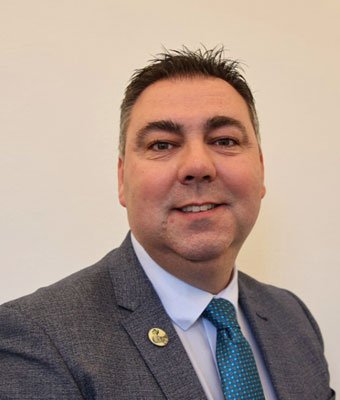
Question No. 6 is in the name of Deputy Gibney.
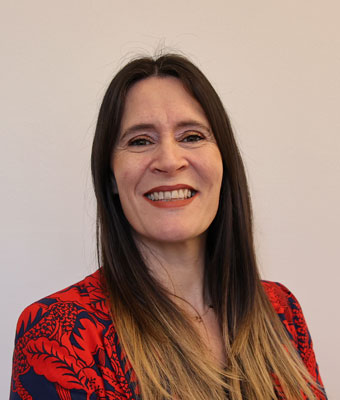
The Department recently published the action plan on collective bargaining. The implementation of this plan is an important and welcome step towards better collective bargaining coverage, but there is no commitment to change the voluntary system of industrial relations. That system gives employers a veto on engagement with their workers collectively. Why is this the case?
We are on question No. 6, which relates to the new AI office.
My goodness, I am so sorry. This is not what I have prepared for. Can I swap the order? I do not have it in front of me. I will have to skip the question.
The question is to ask the Minister for Enterprise, Tourism and Employment the means by which the transition of the new AI office to a fully independent statutory body will be managed.
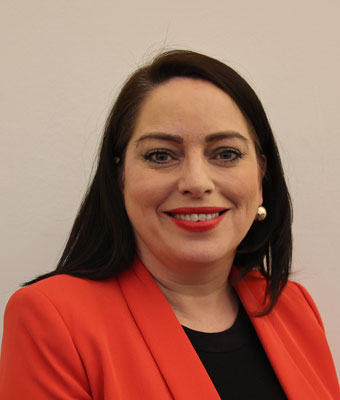
I can swap with Deputy Gibney if she wants to take my time.
Would it be okay to take two minutes to prepare?
If that is okay with the House.
Is that okay with the Minister? Many thanks. My apologies.
I am down the list a bit, so I can swap with Deputy Gibney and she can take my slot.
Perfect.
Business Supports
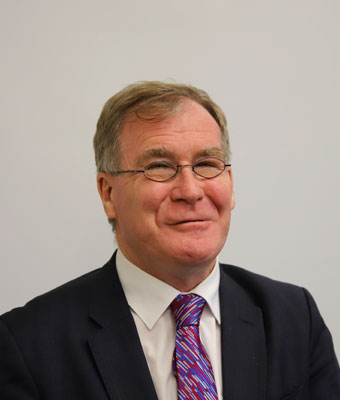
7. Deputy Colm Burke asked the Minister for Enterprise, Tourism and Employment if his Department and Enterprise Ireland plan to introduce a growth equity fund to help scale and co-invest in large privately owned Irish companies with a view to expansion in other jurisdictions; if his Department has researched similar programmes which are operational in other European countries, such as Denmark, Finland and Germany; and if he will make a statement on the matter. [62264/25]
Do the Department and Enterprise Ireland plan to introduce a growth equity fund to help scale and co-invest in large privately owned companies with a view to expansion in other jurisdictions? Has the Department researched similar programmes which are operational in other European countries, such as Denmark, Finland and Germany?
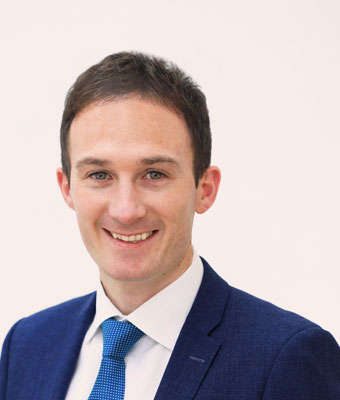
Ireland has a strong start-up ecosystem, but scaling remains a challenge due to limited access to long-term patent capital and finance. My Department is finalising a finance for scaling implementation strategy. This strategy will align with the commitments outlined in the programme for Government and supports the specific actions set out in the action plan on competitiveness and productivity. The purpose of the strategy is to move towards an ecosystem in which firms will have a reliable range of funding options to scale and expand. The strategy will include an SME scaling fund administered by Enterprise Ireland. The exact design features of the fund are being developed, but my Department, together with Enterprise Ireland, intends to have the fund in place as soon as possible. The work to have a fund in place in 2026 will be progressed over the coming months.
It is important to note that the SME scaling fund is only part of a suite of instruments to be delivered across two phases that will work to enhance the ecosystem and, consequently, reduce the gap in the market.
For example, policy actions to further incentivise private capital to invest more at the scaling stage will be developed in the second phase of the work which is already under way.
All of this work follows on from the report of the finance for scale-ups working group entitled the Use of Finance as a Catalyst to Develop a Scaling Ecosystem, which was published by the Department in July 2024 and which is available online. The finance for scale-ups working group examined good practices in other countries and established an international subgroup specifically to examine policy interventions in other EU member states, including Denmark, Finland, France, Spain and Sweden. It also looked at the UK and Singapore. The recommendations in the report were informed by the research of the international subgroup and included the introduction of a State-backed scaling fund.
Ireland has a significant number of indigenous companies that have successfully scaled €100 million in revenue and turnover and 250 employees, creating essential local employment and economic prosperity across the country, especially in rural areas. Despite the efforts of many, the majority of the current State supports treats such companies as too large to be SMEs and too small to be public limited companies, PLCs. While Revenue currently provides direct equity to start-ups and high-potential start-ups, HPSUs, larger Irish companies lack the opportunity for direct equity investment to support international expansion, especially through mergers and acquisitions. I have already outlined that Denmark and Germany are providing support to companies to expand outside their jurisdictions. The gap slows down the scaling growth of Irish companies outside Ireland despite the success of some notable exceptions. The lack of direct State equity backing invariably means most end up using private equity. The opportunity for Ireland to cover it is lost and foreign ownership is the ultimate outcome.
That is basically where I am coming from on this. These companies want to expand. There is an opportunity for them to expand but they cannot do so. If they get the equity, it is extremely expensive. In order to expand, they end up getting into ownership from abroad.
I thank the Deputy for the points he has raised. I assure him that the fund is being designed in conjunction with Enterprise Ireland. We hope it will be operational in 2026. We expect that there will be direct investment in start-ups first. To the Deputy's point, we need to support indigenous Irish SMEs. That will enable Enterprise Ireland, which does tremendous work in the context of co-investing alongside private leads. Enterprise Ireland has a great reputation as being the honest broker in regard to seed and venture capital schemes. We want to sequence this to ensure that SMEs have early deployment and long-term leverage, and that we can give them investment when it is required.
On the size of the equity gap, we estimate that to be in the region of €860 million to €1.3 billion. The State's role is to act as a catalyst as opposed to replacing private markets. We need to support that. The fund will be right-sized within the capital plan.
This is an important matter, because these companies create a huge amount of employment locally, especially in rural areas. It is important that we help them to expand further, particularly where they already have access to markets but are restricted because they need access to finance in order to expand. One of the companies I know has more than 800 employees, is operating outside Ireland and is bringing finance back into the country in the context of what it is doing. It is also giving employment to people who are working here but who also work abroad for certain periods.
There is a huge opportunity here. Many of these companies are not based in the major population centres like Cork city or Dublin city; they are based in rural areas. They have grown gradually over the years and have made a contribution to local economies and to the national economy. They want to continue to do that. Japan has one person employed for every person who is retired. As a result of its work abroad, Japan is able to get money in to support that system.
I agree with the Deputy. Our Department is very much about keeping Irish companies scaling and ensuring that they continue to realise their export potential and create anchor jobs within the regions and right across the country. The purpose in this regard is to protect vital jobs that are the backbone of our economy. That is why we want the strategy to operate on the basis of their needs. Enterprise Ireland already does tremendous work in this space. There is an expert advisory panel comprising industrial leaders, venture capitalists, Scale Ireland and tax specialists. The panel has met on four occasions since December 2024. We want to ensure we are shaping this, that there is a governance standard in place and that, in the context of the Deputy's point, we can support many companies that need of capital at this time in their business journeys.
Artificial Intelligence
6. Deputy Sinéad Gibney asked the Minister for Enterprise, Tourism and Employment the means by which the transition of the new AI office to a fully independent statutory body will be managed; and if he will make a statement on the matter. [62287/25]
I thank Members for facilitating me. Will the Minister outline the means by which the transition of the new AI office to a fully independent statutory body will be managed? Will he provide some details in that regard, please?
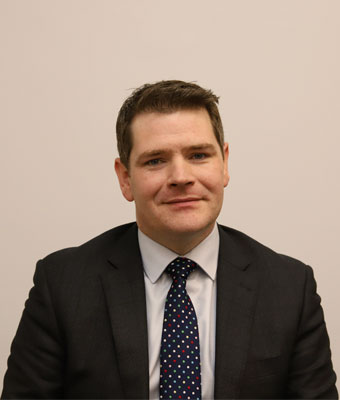
I thank the Deputy. The establishment of the AI office of Ireland is a strategic initiative of this Government. I am delighted to have secured start-up funding of €1.4 million as part of budget 2026 for the office's establishment. The AI office will act as a central co-ordinating body for the implementation of the AI Act in Ireland and will also provide a focal point for the promotion and adoption of transparent and safe AI in Ireland to ensure that we fully capture the strategic opportunity that AI presents.
My officials, in collaboration with Departments across a range of sectors, are developing the general scheme of the regulation of artificial intelligence. This will provide the implementation and enforcement of the AI Act at national level in domestic legislation, including: the establishment of a new national AI office as an independent statutory entity which will act as the central co-ordinating authority for the Act; the empowerment of designated competent authorities with market surveillance regulation powers in accordance with the AI Act; provisions for co-operation among and the sharing of information across the national competent authorities; and the laying down of rules for penalties and other enforcement measures for non-compliance.
It is my intention to bring the general scheme to the Government over the coming weeks. There are provisions within it which will ensure that the transition from interim arrangements to a permanent statutory structure will be legally and operationally seamless. The general scheme will provide powers to decide on the date on which this will happen post the enactment of the legislation.
The distributed model agreed by the Government means that existing sectoral regulators will supervise and enforce the AI Act, supported centrally by the new AI office of Ireland. The national AI Act implementation committee, which is chaired by the Minister of State, Deputy Niamh Smyth, which has responsibility for AI and on which officials from my Department sit, was established in February. In the intervening period, the committee has brought the designated market surveillance authorities, MSAs, together to work on agreeing an approach to prepare for the new enforcement role. Since they were designated in July, additional MSAs have joined the committee.
It is helpful to hear how much effort is going into the establishment of this office. I held two leadership roles in a State agency that is arguably the most independent. The national human rights institution in any jurisdiction is informed by the Paris Principles. We have to understand how that independence is going to be guaranteed in this instance. If the body originates from within the Department of enterprise, then I have concerns that conflicts exist which may create fundamental issues on the foundation of the organisation that will carry on into its future. It would be really helpful if the Department were to look at the Paris Principles and identify how we can ensure independence.
Across the State agency sector, which is where many competent bodies sit, we have varying levels of independence, of powers of reporting and so on. All of these regulatory functions are challenged by a lack of independence and inconsistency across those bodies. AI and what it is going to do to our society are such fundamental issues that we have to get this right from the outset. Rather than focus on speed, I want to ensure that we look for quality at the foundational level.
The Deputy makes valid points on this. The Government has not made a decision yet. We are going through a lot of the issues and seeking advice on them. Hopefully, in the coming months, we will be able to go to Government with a memorandum on the final structure. Enforcement and independence are key. It is important we have public trust in artificial intelligence. Some of the areas the Deputy referenced will be looked at in detail. I also note the distributive model we have taken. For example, we have the Health Products Regulatory Authority looking after drugs and products like that, and the Irish Aviation Authority looking after aviation. That model will stand to us because it really goes to the expertise that has been built up in the State and people know the areas they have been regulating in the past.
The AI office will draw all of that together and will look at areas where we can enhance AI and areas where we can work in a safe manner. Obviously, we have our regulatory sandbox as well, which will be brought up. That will provide a key opportunity as will some of the tertiary partnerships. It is an exciting space but the Deputy is right that we do have to be careful and ensure our independence and public trust which is key in the opportunities that will be there in the future.
I am glad the Minister raised public trust because I feel there is this kind of pushback against regulation in terms of losing our competitiveness, missing opportunities and America and China racing ahead with their AI development. The issue I have is that their development will lead to products built in a regulatory environment that will not have public trust. We must look at that regulatory space and make sure that even the requirements Europe is putting forward to us meet the standards we want here. We have heard from colleagues already this morning that they feel we should be best in class. Sometimes I hear from Government spokespeople that we are best in class. I do not believe that is the case. For example, I do not believe the Data Protection Commission, DPC, has proven its worth in the past number of years. Even though it has the powers, it has not enforced them.
Similarly, if we do not get it right from the outset with the AI office - and we already see online all the ways in which AI can go wrong, for example the slot which is currently generated - it will mean people will not use AI or trust it. It will fundamentally undermine our democracy and society. It is important we get it right from the outset. I encourage the Minister to look at the Paris Principles.
Absolutely. We will consider them as part of our deliberative process. The enterprise committee will be key in our approach. The private sector has done a lot of good things with AI. Insight is the largest research centre in Europe. It is based in Trinity College and shows us how we can commercialise research based in tertiary education.
We do have a lot to do from a public service point of view and in Departments. That is where a huge amount of Government work needs to be carried out. Public trust is important because general purpose technology comes with so many challenges as well as opportunities. We have to ensure we are managing those challenges and maintaining public trust. That is why it is very important - and I do not say this lightly in terms of that distributive model - we have the expertise built in in those key areas that have public trust. Many of them, in terms of the areas they manage, have a very strong track record. I am happy to work with the Deputy on the areas she referenced. This is a collective approach. There are huge opportunities but there are risks and we should be open to that risk and manage it appropriately to ensure we are building public trust as well.
Question No. 8 taken with Written Answers.
Tourism Promotion
9. Deputy Cathy Bennett asked the Minister for Enterprise, Tourism and Employment if he will report on his proposals to cultivate cross-Border tourism. [62277/25]
Will the Minister outline to the House his work on the promotion of cross-Border tourism?
I thank the Deputy for this important question. Enhancing cross-Border co-operation and connections is a key ambition of this Government and tourism is an important asset we have to realise together.
Tourism Ireland is responsible for marketing the island of Ireland overseas as a leading holiday destination and works closely with colleagues in Fáilte Ireland and Tourism Northern Ireland. In addition to a commitment to work with Fáilte Ireland to develop a balanced regional spread of tourism throughout the country, further advancing the experience brands, the programme for Government also includes a commitment to support Tourism Ireland to further integrate tourism offerings on an all-island basis.
The Government is also committed to completing construction of the Narrow Water Bridge and to supporting the local authorities on both sides of the bridge in developing the new tourism opportunities it will bring and to collaborating with partners North and South of the Border.
At the North South Ministerial Council tourism sectoral in June 2024, Ministers signed a joint ministerial statement supporting sustainable tourism and agreed to the establishment of a joint strategic co-ordination group for the sustainable growth of the tourism sector across both jurisdictions.
The all-island strategic tourism group, which is co-chaired by officials in my Department and the Northern Ireland Department for the Economy, with representatives from the three tourism agencies, provides a strategic approach, aligned to policy priorities, to the development and implementation of all-island initiatives. The aim of the group is aligned with the measure in the programme for Government to support Tourism Ireland to further integrate tourism offerings on an all-island basis.
Tourism is also a central pillar of the shared island initiative. The brand collaboration project to connect the Wild Atlantic Way and the Causeway Coastal Route in the north-west region has made significant progress this year with the roll-out of the small grants scheme for destinations on both sides of the Border.
In May, Tourism Ireland launched a new campaign called Coast to Coast: The Scenic Route, which was supported by the shared island tourism brand collaboration project. The campaign reached almost 15 million people across Britain.
I thank the Minister and welcome his response. As Ireland's largest indigenous industry, tourism is a crucial sector and our largest regional employer. It is right that Ireland is marketed by Tourism Ireland on an all-Ireland basis and I welcome efforts to link the Wild Atlantic Way and the Causeway Coastal Route. In effect, this is nearly a circuit of the island of Ireland for tourism trails. Will the Minister speak to any plans to complete the circuit and to link and extend Ireland's Ancient East into the North but also in terms of Ulster being a destination? Will he also speak to his work to encourage cross-Border tourism in terms of Donegal, Derry, Monaghan, Tyrone, Armagh and Cavan?
We are working closely with our partners in Northern Ireland to expand our brands, particularly Ireland's Hidden Heartlands. There is ground for expansion there. I met with Minister Archibald in London last week. We were doing an expo together. It is great to see everyone together trying to push Ireland as a destination. We have discussed a number of areas which we will be supporting through the shared island initiative but also through Tourism Ireland, the all-island body.
There is a huge amount of opportunity. We currently have approximately 46,000 SMEs in the tourism sector. One in every ten jobs is supported in that sector. It is key that we grow its value proposition. I also want to reflect that tourism is now at the heart of the Department of enterprise. There are so many SMEs right around our country that depend on that authentic offering that is really valued all over the world. We will be doing a huge amount to develop business models on our SME side to support the opportunity that there is in the market. I believe we have very bright days ahead. We will hopefully launch our new tourism policy in early December. It will be a big opportunity to show the vision we have as a Government to enhance the product and brand as well as to grow revenues and jobs sustainably. It is also critical that we develop career pathways that are important for people working in the sector.
I look forward to seeing that tourism policy. I hope the Minister incorporates a rail network that runs through Monaghan, Cavan and Donegal. If you look at the top of Ireland on the map, we have no rail network up there. I know it is not the Minister's Department but I hope he is working with the Department of Transport to ensure that happens. It is not on at this stage.
The maximum potential across the avenue of tourism will require an accurate understanding of how the tourism sector is performing. For some time now there seems to be some confusion on that point. The Central Statistics Office, CSO, has been recording a decline in visitors this year, which some stakeholders have refuted. Any confusion should now be put to rest given the latest tourism barometer from Fáilte Ireland. It shows that 43% of all tourism businesses reported a fall in income this summer. The situation seems to be worst outside the coastal tourism trails. Will the Minister outline his response to this and his efforts to support the industry and promote jobs in the sector? Will he also speak on the rail network and whether he has discussed it with the Minister for Transport?
Last year was a bumper year for tourism and it is a big challenge to replicate that. However, we have to look at the evidence and the facts. Some 12% fewer seats came into our country because of the airport cap. That was a very significant challenge for the tourism sector. That will not be the case for the winter ahead. I think there will be approximately 9% more seats in the winter ahead, which will provide capacity for well over 1 million people to come into our country. This will provide a huge amount of additional opportunity.
The plan that we will hopefully launch in early December will show how we are going to grow revenue sustainably and grow the number of visitors coming in, which is critically important. We will also outline career pathways as well as looking at extending the season from St. Brigid's Day right out to Halloween. There is a huge amount of opportunity in those areas.
We will have a very exciting culinary strategy looking at food and beverages. I am going to do that on an all-island basis, which is important, working in co-operation with our colleagues in Northern Ireland. That is a huge opportunity, particularly for markets, like in Europe, which are under pressure in terms of how they view the authentic offering from artisan food producers and distilleries right around the country. We have a lot of opportunity there. I will raise the other issue of rail with the Minister, Deputy O'Brien.
Small and Medium Enterprises
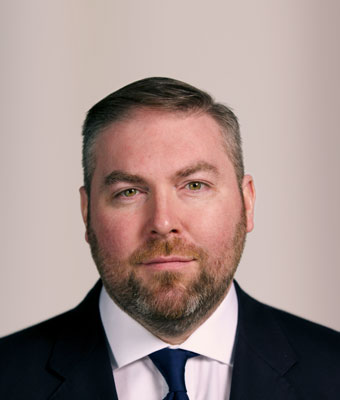
10. Deputy Barry Ward asked the Minister for Enterprise, Tourism and Employment the position regarding supports for any SME that will not benefit from the planned VAT reduction in July 2026; if targeted supports for small businesses that are facing increasing costs will be considered; and if he will make a statement on the matter. [59971/25]
I welcome the VAT 9 proposal which will come into effect in July of next year. However, I am wondering, particularly in the case of small and medium enterprises that will not benefit from the scheme, if there could be targeted supports for them in respect of increased costs of doing business.
I thank Deputy Ward for this very important question. The Government recognises that the cost of doing business has been an issue for firms in recent years arising from both the wider inflationary trends and Government-mandated changes in the form of improvements to working conditions across a range of areas. It is important to note that costs for firms, as measured through the CSO's wholesale price index, are declining and are down 2.6% in the 12 months to September 2025.
Most recently the Government has taken action to address business costs through the publication of the action plan on competitiveness and productivity and the convening of the cost of business advisory forum, which are both commitments in the programme for Government. The focus of the action plan is on actions that can be taken to strengthen Ireland’s competitiveness and productivity which, in turn, will lead to improvements in our economic performance. A core theme of the plan is regulating for growth and controlling costs, with 18 actions, including five priority actions, focused on addressing this issue. Key action areas include better regulation, which will decrease the regulatory burden for business, addressing Ireland’s high legal costs, and improving competition in our markets. The establishment of the cost of business advisory forum delivers on the commitment regarding supports for small business, enterprise and industries. The first meeting of the forum took place on 11 June with representatives in attendance from across Ireland’s enterprise sector, including SMEs, joined by officials from a variety of State agencies, regulators, and Government Departments. The forum is a tripartite collaboration bringing together a broad selection of representative bodies spanning multiple sectors as well as multinational corporations. The purpose is to jointly consider those issues that can lead to higher costs for businesses in Ireland, any associated regulatory or infrastructural issues that merit a changed approach and those steps that could be taken to mitigate these issues. The forum is scheduled to report to Government in the first quarter of 2026.
Budget 2026 has provided an overall package of €9.4 billion, with €8.1 billion provided for public spending and €1.3 billion for new taxation measures. The latter measures will benefit SMEs.
I acknowledge what the Minister has done in relation to small businesses and business supports. I also recognise that there has been a reduction in the cost of doing business, which is well and good. I support the VAT 9 scheme because it is important to provide that leg-up, particularly for small businesses who need it. The reality is, however, that it is a blunt instrument. It is a universal benefit and, therefore, it benefits those enormous companies and even those large companies that do not need the support. I recognise that it is difficult to construct a mechanism that allows us to give the benefit to one group of companies and not to others but the reality is that large companies do not need that VAT reduction. They will survive. They welcome it but they will survive without it. There are small businesses in every town and village in this country, including businesses in my own community and constituency which have been in contact with me, that need that reduction but they will not get it for whatever reason. They are outside the scheme because they are not providing certain goods. Small businesses are not all getting that benefit but are still facing increased costs of doing business. I am wondering if there could be targeted supports specifically for those small businesses.
First, I would robustly challenge the premise that big businesses in the economy are not good. They employ people. Many franchises provide huge employment in many rural parts of our economy. Let us focus on what we are doing as a Government in the sector the Deputy referenced. First, we increased the PRSI threshold for those on the living wage. We brought forward moderations to the living wage and additional sick pay. We introduced an energy efficiency grant under which businesses get a 75% rebate. We have also extended the 9% VAT rate for gas and electricity to support those businesses the Deputy referenced. We have doubled the innovation voucher to €10,000, again supporting small businesses. We have increased the microfinance liquidity loan threshold to €50,000 for small businesses which will be very important for them. We are also working on an additional loan scheme to provide low-cost finance right into the heart of our SMEs. We have brought forward a change to our research and development regime which benefits small businesses. We also have our SME test which is very much about thinking small first in the context of how changes to statutory instruments and primary legislation affect the smallest businesses in our economy. Those are the areas we want to continue working on as well as on a heap of digitalisation grants supporting businesses to grow more revenue. The Government is very much focused on all of our SMEs and the reflection of that is the growth in our job numbers in our economy.
I acknowledge all of that and in no way want to suggest the Minister is not focusing on SMEs. I acknowledge all of the work that is being done. I know SMEs are the backbone of the economy. The quibble I have in relation to the VAT 9 reduction is that it is across the board. That does not mean that big businesses are not valuable - of course, they are - but they do not need the reduction in the way that small businesses do. We have had this conversation previously and I would much rather see a targeted relief for small businesses. Whether one picks a metric of turnover, profit, number of employees or something else, there is a metric that can be picked to do this. Let us take McDonald's as an example. McDonald's is a franchise and is owned by business people all over the country who run good businesses. They will survive without the reduction to 9%. Next door to them there might be a small café that might not survive without it. The point I am making relates to the cost of this measure. As I have said, I support the measure but in terms of its cost, we would be much better off spending the bulk of that money on the SME sector than on those parts of the hospitality sector that do not need it, the large and very large companies that still provide huge value in the economy but that do not have the same reliance on the scheme.
I note the Deputy's concerns but I have not seen any workable framework under the European VAT directive that allows for differentiation on turnover. I have not seen it yet. I have not seen any workable proposal in relation to that. My point is very clear. There are 228,000 jobs supported in our hospitality sector. Many of them are in regional parts of our country and the vast majority of them, well over 90%, are small businesses. That is why as a Government we have taken a view that we are supporting them very robustly.
We are going to have a new tourism plan next month. That is going to look at numerous issues. The Government is giving the sector a big incentive in taxation now. What is the sector going to do for us as a country to grow as a sector, to create jobs and to grow the value proposition and ensure we can absorb the opportunities presented by tourism? We will be working very closely with the sector. As I said, we will have a new culinary strategy. We are growing the season, growing capacity and ensuring that we develop businesses in this country. This is the key issue. We have a unique opportunity now to really develop the model that businesses operate in, to make them more sustainable and ensure they are in a position to take advantage of the huge opportunity. We are in a very exciting time, particularly for tourism and hospitality. We have a lot of work to do in making businesses viable and this is a viability measure to ensure jobs can be retained. So many workers going up through the system get their first job in hospitality. They learn what it is like to be in society, to work and contribute as they go through. It is very important that we stand by all of those areas.
Regional Development
11. Deputy Colm Burke asked the Minister for Enterprise, Tourism and Employment if his Department and Enterprise Ireland are reviewing current policies with a view to expanding opportunities in areas outside of the Dublin region; and if he will make a statement on the matter. [62265/25]
I thank Deputy Burke for his very important question. Balanced regional development is a Government priority and a central component of the White Paper on Enterprise 2022-2030 is to support balanced regional enterprise development. My Department and its agencies work to support this agenda in several ways, including through the work of Enterprise Ireland, IDA Ireland, local enterprise offices, LEOs and nine regional enterprise plans.
Enterprise Ireland supports over 4,000 Irish companies across every region in our country and during 2024, these businesses created more than 15,000 new jobs bringing employment at Enterprise Ireland-supported companies to 234,454, with 66% of those jobs outside Dublin. Enterprise Ireland’s new strategy, Delivering for Ireland, Leading Globally, published earlier this year, sets out a comprehensive roadmap to support Irish businesses to grow and thrive at home and abroad. This will help to drive economic growth and regional development right around the country.
In addition, Enterprise Ireland supports businesses directly through its regional offices and in collaboration with the 31 LEOs around the country. As the first-stop shop for any Irish business seeking development support, the LEOs play a key role in supporting the growth and development of businesses across every town and community in the country. Published last year, the LEO policy statement outlines how the LEOs work to foster a strong entrepreneurial culture and promote enterprise nationally, through a mix of programmes, supports and campaigns.
Foreign direct investment has a significant impact in realising balanced regional growth and IDA Ireland has continued its strong commitment to regional development as one of four key strategic objectives of its 2025 to 2029 strategy, Adapt Intelligently.
Published in February this year, this ambitious strategy aims to secure 550 FDI projects outside Dublin, amounting to 55% of all planned investments. The overarching goal is to create 75,000 new jobs nationwide and generate a projected €250 billion in economic impact. IDA Ireland has also set an ambitious target for regional Ireland. To support regional opportunities, IDA Ireland also offers eight regional locations, providing local support to clients, working closely with local stakeholders, including councils, to attract new and maintain existing investment.
Where I am coming from is that in the Cork area, the land bank IDA Ireland has in Ringaskiddy is now totally built on and there is very little space available for new companies to come in. Likewise, many of the private business parks have been developed, such as Blarney Business Park, which has seen huge growth in the past five to eight years and is running out of space. My question is about the Cork region and the identification of a land bank that could be made available for new companies to start up on or for companies coming from abroad to start up on. It is extremely important. We have had huge growth in the pharmaceutical and medical devices sectors, and in a lot of other sectors, in Cork. That is because we have the support of the third level colleges, which are producing the graduates to work in those companies. The question now is about a land bank that is needed outside Dublin for companies and we need to deal with it fast.
I thank Deputy Burke for all his work in this area. I was with him recently in Cork. We had a great meeting looking at all the opportunities there and met many people from the community.
I will say three quick things. First, the Department is working on a scheme for small manufacturing sites for businesses. There is huge demand, particularly for manufacturing and engineering businesses, for small units. Second, Cork will be key in looking at our next-generation site. We will have a next-generation site in the south of Ireland and Cork would be a fantastic location. It will be over 1,000 acres. That will be where the next-generation Intel, semiconductor company or life science company is. It will be important for Cork. Third, working with IDA Ireland, we are happy to work on the options. A lot of negotiations are going on about acquisition of land in that area and we will be happy to work with the Deputy and his office to try to ensure there is space for opportunity. Lead times are critical and if we can have large sites for bigger corporations, the lead times will be shorter. The sites should be utility rich so the companies can get working quickly. That will be important. Cork will be earmarked for one of those in the south.
There is continued expansion. I visited one company recently that was doing a €60 million expansion and a number of other companies have plans to grow. The challenge is that some of them need to move to bigger sites. I welcome what the Minister said about a land bank because it is extremely important and also because of the port facility. The Ringaskiddy bypass road is now being built. It will take another two years. With the development in the Tivoli Docks area, the port facilities will move to Ringaskiddy and while land will be opening up there, it will be for residential development and other potential development. There are a lot of opportunities in Cork now. It is interesting how, by the local authorities - the city and county councils - IDA Ireland, Enterprise Ireland, the Minister's Department and other Departments working together, we can make sure land is available and the infrastructure is developed so that companies can come in, create employment and grow the local economy further.
I am happy to work with the Deputy on all those areas. He has been a firm advocate for business competitiveness, which is key. In the new infrastructure proposals the Government will be bringing forward in February, it will be key to look at our ports and such authorities to ensure we are quickly able to get the key infrastructure enhancements into those areas. On the national planning framework for businesses expanding, it is key to ensuring they can do so, because there have been impediments to that in the past. Some exciting companies are expanding in the Cork area. I saw it first hand in Mallow with the Deputy recently. We met many good business owners and the chambers of commerce. We have subsequently done our best to resolve the issues they have. I spoke to the chief executive of Cork County Council subsequent to Deputy Burke's meeting. It is important we progress things in some areas where there have been blockages. We need to ensure we value employment and the risk takers. The businesses that are coming forward are key and the Deputy is a firm supporter of them in Cork.
Business Supports
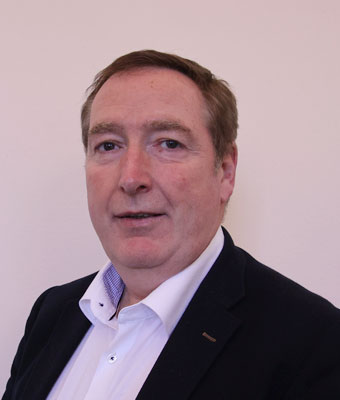
12. Deputy Tony McCormack asked the Minister for Enterprise, Tourism and Employment the measures being taken by his Department to support the retail sector; the initiatives in place to assist small and independent retailers facing cost pressures; and if he will make a statement on the matter. [61547/25]
What additional supports is the Department considering to help small and medium enterprises to manage current cost pressures and restore business confidence and will he make a statement on the matter?
I thank the Deputy for his question. The Government acknowledges that the retail sector contributes to the economy of every city, town and village in Ireland. The sector provides highly important employment with over 220,000 people directly employed in retail. The programme for Government is clear on the intention to support small businesses and as the Minister of State with responsibility for retail, I am aware of the issues facing retailers.
The broad range of supports for the retail sector, including training programmes and funding to help retailers adapt to new challenges and opportunities in retail, can be found on the national enterprise hub, NEH. The NEH is an all-of-government service staffed by expertly trained advisers and is focused on helping businesses to access a range of Government supports. The hub brings together information and resources of over 250 Government supports from 32 different Departments and State agencies. The grow digital voucher offers up to €5,000 to small businesses, including retailers, to invest in technology such as e-commerce software, online booking systems and stock control, which are designed to enhance productivity and competitiveness.
The energy efficiency grant provides up to a maximum of €10,000, with a 75% contribution rate from the Government to support investment in technologies and equipment identified in a green for business, GreenStart or Sustainable Energy Authority of Ireland, SEAI, energy audit. The aim of the scheme is to reduce the impact of enterprises on the environment, thereby increasing the agility and resilience of these businesses.
In 2024, the Government introduced the power-up grant and the increased cost of business, ICOB, scheme, which paid out over €400 million to businesses. Included in this was a second ICOB payment and a €4,000 power-up grant for businesses in the retail sector. The Department opened a reclassification appeals process this July, which allowed businesses in the retail sector that had initially misclassified their business category an opportunity to reclassify.
The cost of business advisory forum has been established, comprising SME and industry representative organisations, and the forum held its inaugural meeting in July. A report is due to the Government in the first quarter of next year, which will outline the forum's findings and highlight the steps that can be taken to mitigate rising costs.
While Ireland's balance sheet looks good on paper and the country is doing well at the moment, some small- and medium-sized businesses, including in retail, are anxious. They are doing their best to keep their doors open, but margins are tight. All the schemes the Minister of State mentioned need a bit of investment from the businesses, which is just not there at the moment. Many tell me that they are not looking for handouts, but a bit of help to steady the ship, practical supports and clearer direction. Schemes like the power-up grant the Minister of State mentioned earlier made a real difference in the past. Will he outline what fresh supports or initiatives are being considered to help small businesses invest, grow and feel confident about the year ahead, particularly in rural counties such as Offaly where SMEs are the backbone of the local communities?
Retail is evolving rapidly. We have seen significant changes in consumer habits. Shoppers now expect an online channel or experience, not just the physical presence on our high streets, as the Deputy experiences in Offaly, but also for them to offer multiple touchpoints, such as the implementation of websites, the digitalisation journey, mobile applications and in-store options. The Government is supporting businesses in that. There is a grow digital voucher of up to €5,000 for e-commerce platforms. We are also supporting business with consultancy advisers in digital transformation and local enterprise offices, LEOs. The Offaly office provides mentoring training and grants for lean, green and digital initiatives. We need to continue to support the retail sector, because we know how important it is. We are working with other Departments and with the Minister of State, Deputy Cummins, on planning statements around a retail strategy. That will ensure we have a balanced retail presence of physical stores and digitally integrated ones.
That is encouraging but it is not what I am hearing on the ground. The feedback that I am getting from business owners is that they often do not know where to start. The Minister of State mentioned the local enterprise offices, which do great work in County Offaly and other counties around the country. We need to make sure that people know about these places. Whether they are applying for funding, going digital or managing rising costs, this needs to be made clearer to them. Would the Minister of State consider developing a more hands-on, locally focused SME guidance programme where trained mentors or advisers could visit businesses directly, offer tailored advice and connect them quickly to the right grants or supports? That kind of practical, person-to-person guidance could make a real difference in helping SMEs to build confidence and plan ahead.
We are undertaking a review of the local enterprise offices to streamline them, reduce the administrative burden and make it easier for SMEs and businesses to access supports. We are conscious that we need to strengthen the role of the local enterprise offices because they have the local knowledge and are the touchpoint for many of these businesses in towns and villages across the country. They need that expert advice and mentoring to ensure that their businesses remain resilient and sustainable into the future. Through the work that we are doing in the cost of business advisory forum and the immediate financial relief that we are providing through the green transition and energy efficiency improvements, we want to support that because we know how important the retail sector is. As I said earlier, there are 220,000 jobs nationwide and we want to continue to support the Deputy's constituents in Offaly through sustainability and the competitiveness agenda, but also see how we can make it easier for businesses to access supports.
Foreign Direct Investment
13. Deputy William Aird asked the Minister for Enterprise, Tourism and Employment his Department’s timeline for identification and servicing of the large-scale regional next generation sites for future FDI and enterprise; in which counties these will be located; the means by which local enterprise offices and regional agencies will be involved; and if he will make a statement on the matter. [62203/25]
I welcome the opportunity to raise this important question with the Minister. Ireland's success in attracting world-class investment has depended on our ability to offer fully serviced, high-quality industrial and enterprise sites. As we look to the next generation of investment in manufacturing, green energy and digital innovation, we must ensure that every part of the country, including the midlands and County Laois in particular, is ready to compete. My question to the Minister is what the Department's timeline for identifying and servicing large-scale regional next generation sites for foreign direct investment and enterprise is, where they will be located and how local enterprise offices, regional agencies and local authorities will be involved in their development.
Developing next generation sites is essential for Ireland to remain competitive if we wish to attract further large-scale, high-value manufacturing opportunities such as major semiconductor and biopharma investments. The next generation site approach will be plan-led, streamlining development and reducing planning risks, and provide pre-permitted, utility-intensive sites, enabling swift development and certainty for investors. Each site will be developed in stages over a number of years to facilitate incremental investment in the necessary infrastructure. Funding for land acquisition for the first two sites, planned for the west and east of the country, is coming from my Department's capital allocation under the revised national development plan. A third site is planned for the south in future years.
Each next generation site development will be undertaken in consultation with local authorities with sites of either 1,000 acres or 500 to 600 acres for tier 2 proposals, in line with the programme for Government and our semiconductor strategy commitment. The IDA will engage with relevant local authorities throughout the process. The sectors targeted by next generation sites will provide quality, skilled employment that pays high salaries, thereby contributing to our corporation tax, PAYE and PRSI receipts. Additionally, further returns on investment will come from site rental or sale.
At a local level, Irish-owned enterprises will benefit from site development opportunities as well as ongoing subsupply to and spin-outs from the large-scale FDI envisaged, as has been confirmed in many studies of past FDI gains, including through the recent mapping of semiconductor sites in our next-generation strategy. Next generation sites will demonstrate that Ireland is a suitable location for establishing new large-scale operations as well as for winning future large-scale foreign direct investment. We are clear that we will not continue investments on yesterday's terms. We need more ambition and to get that next wave of investment. The next generation initiative will sit alongside the IDA's regional property programme, which, during the 2025 to 2029 lifetime of its current strategy, will deliver 23 projects across 21 locations in eight regions, primarily focusing on manufacturing buildings. The IDA will also plan to continue to invest in its existing property portfolio, including land banks, business parks and industrial parks.
I thank the Minister for his response. The next generation sites initiative represents a real opportunity to prepare Ireland for the industries of tomorrow. In Laois, we have the location, the infrastructure and a workforce ready to go. What we need now is clear prioritisation and early investment so that we are fully prepared to deliver for the new enterprises of the FDI projects that come on stream. Laois, as the Minister knows, is strategically positioned, with the M7 and M8 motorways, strong rail connectivity and proximity to Dublin and the south-east ports. Laois offers a skilled workforce in manufacturing logistics and technology, and growing potential in green energy. I know the Minister is committed to balanced regional development, sustainable jobs and giving every county, including Laois, a fair chance to attract the next generation of investment. I am asking his Department to continue to engage with Laois County Council, the local enterprise offices, Enterprise Ireland and IDA Ireland to ensure that Laois and the midlands are represented in the first wave of large-scale, next generation sites.
I am happy to work with Deputy Aird in Laois to ensure that Laois continues to grow. We have our advanced planning permit, which we are now working with IDA Ireland and Laois County Council on for our advanced building solution. It is important that we can reduce lead times and give certainty in that regard. We had a great day at Midland Steel, where we have 70 jobs. It is a good example of where Laois is at the cutting edge of innovation in areas that are critical to the supply chain of our economy. There will be significantly more opportunities. About 145 people are employed by IDA companies in Laois, which I know Deputy Aird is a strong supporter of. I am happy to work with the Deputy in the future to ensure that we grow our footprint of foreign direct investment. I am clear that Laois needs to get more. It is absolutely an area that needs to be enhanced and have further growth of employment opportunities. We need to put in the infrastructure, reduce the timelines and reduce uncertainty, as we are planning to do with our advanced permit. I look forward to working with the Deputy in those areas.
We have the lowest rate of job creation from IDA Ireland in the State at the moment.
I wanted to talk to the Minister about Leprino. I thank him for visiting Leprino in Portlaoise and working with me and the other people. The announcement that Leprino Foods will close its facility in Portlaoise is a huge blow to us in Portlaoise, to County Laois more widely and to the 130 skilled workers who are working in Leprino, their families and the wider local community. We need urgent and co-ordinated action on this. Will the Minister confirm whether a dedicated task force will be established to bring together the Minister's Department, Laois County Council, IDA Ireland, Enterprise Ireland and all relevant stakeholders to safeguard the jobs, support affected workers and attract new investment to this site, which as the Minister knows, is a state-of-the-art site? It is a site where huge investment was put in for all new builds and equipment. This site would be available for many different workforce skills and opportunities. It is just to ensure that the building continues in operation.
I thank Deputy Aird for raising Leprino Foods and the 132 jobs there, which are valued. I know it is working under a timeline at the moment. We are working so hard with Enterprise Ireland and the IDA, looking at a prospectus for a site, because it is a highly valued building. It is highly regulated and utility-rich. It provides a significant offering for a company. We are working really hard to get another buyer and a company into it because it provides a unique location. It has the infrastructure, the connectivity and the talent, and I know it is important to those 132 families who rely on those jobs in Leprino that we get a future for the site. I know Deputy Aird is very much engaged in it. I met the management there. I went through all the options regarding how we got to this stage. I know it can be frustrating to lose high-value jobs like that but we will work so hard to get them replaced. We will work closely with the Deputy. I met and briefed him after our meeting and he has been centrally involved in trying to ensure that we get more services and high-valued jobs and, critically, look out for the futures of those 132 families who are really dependent on the Government getting a response here.
Small and Medium Enterprises
14. Deputy Edward Timmins asked the Minister for Enterprise, Tourism and Employment the supports in place for small companies and businesses to enhance their understanding of profit and loss and cash flow; and if he will make a statement on the matter. [62194/25]
Like the Minister, I have worked in and for small businesses in this country. The highest number of employed people in the country is in small businesses. Many of these businesses are an intrinsic part of their communities. They are also a crucial part of the economy and the social fabric of this State. What supports are in place for small companies and businesses to enhance their understanding of profit and loss and cash flow?
I thank the Deputy for his question. It comes from an accountant and, with the Minister being an accountant, I feel less qualified to answer it but I will do my best.
The local enterprise offices, LEOs, are located in 31 local authorities to promote a suite of supports designed to assist small businesses to reduce their costs and become more productive and competitive. The LEOs provide consultancy and grants to small businesses across all sectors in the areas of lean, green and digital. These supports focus on enhancing productivity while improving competitiveness, and they can help business owners identify opportunities to save money, time and energy. The LEOs also play a crucial role in supporting small businesses to build financial capability, including a practical understanding of profit, loss and cash flow management.
Training programmes are scheduled based on local demand and delivered on a tailored basis to meet the specific needs of small businesses. LEOs are consistently encouraged to prioritise financial literacy when designing their training calendars. This year, the LEOs delivered a wide range of targeted courses to enhance the financial understanding of SMEs. Each course is designed to equip small businesses with practical skills in financial planning, cash flow forecasting and understanding profitability. Among the courses delivered were financial foundations for small businesses, managing cash flow in business, managing your cash flow, fundamentals in business finance and bookkeeping and accountancy for small businesses.
The LEOs also offer a start your own business training programme aimed at those who have a business idea or have recently set up a small business. This programme includes a dedicated finance module to ensure new entrepreneurs gain essential financial knowledge.
I thank the Minister of State. That covers a lot of what I was looking for. These businesses include retail, restaurants, pubs, small family businesses and the self-employed. In my experience, many of them have a poor understanding of profit and loss. They do not understand the basics of gross profit and fixed overheads. If they understood them, they would know their break-even sales figure. This is fundamental to understanding viability. If they understand this, they can know using a weekly turnover figure how well they are doing. This means they can take corrective action before it is too late. Unfortunately, many only know they are not doing well when they see they cannot pay their VAT bill or their suppliers. Even then, they do not understand what the problem is.
I absolutely agree with the points the Deputy raises. Financial literacy is a cornerstone of competitiveness and that is why we have the LEOs ensuring small businesses have the tools to manage their finances effectively. They are on hand to assist at county level, including financial mentoring, training workshops and management development programmes. It is important that owners who want to advance their financial planning skills are supported, that any perceived challenges around financial management are demystified and that business owners make informed decisions and avoid common pitfalls. For start-ups, we have the start your own business programme. That has a specific finance module wherein the LEOs provide specialist mentoring to entrepreneurs and owners on strategies around pricing, cash flow and profit and loss.
In relation to taxes, we have a similar problem. Many businesses think the VAT they receive is part of their business cash, not fully understanding it is cash they collect on behalf of the State. I came across a business selling coffee. They thought the €4 they charge for the coffee was their income and the VAT was a cost. Similarly with PAYE, USC and PRSI, they sometimes use these taxes as cash flow for the business. Can the LEOs provide a basic tool to help small and not-so-small businesses navigate this apparently simple issue, which has driven many potentially successful businesses to the wall? Can such workshops be a regular offering by the LEOs? Can Revenue do the same? Can they inform small businesses of these supports?
I appreciate the concerns the Deputy has raised. For any business owners, it is incumbent on the Government and the LEOs to ensure they are sustainable, have resilience built into their business plan and have access to the mentoring, training and advice that are essential to keeping businesses afloat. Raising the importance of financial literacy and ensuring businesses have access to training workshops is part of the local enterprise offering. They have peer-to-peer learning and engagement with key advisers within each local authority. We want to continue to support this through tailor-made programmes. The start your own business programme has an important financial module. Enterprise Ireland also invests in early-stage leadership development to ensure companies on that journey are supported.
Social Welfare Schemes
77. Deputy Martin Daly asked the Minister for Social Protection the current annual cost of the disability allowance and invalidity pensions schemes; and if he will make a statement on the matter. [62284/25]
My question relates to the annual cost of the disability allowance and invalidity pension schemes. These payments are essential supports for people living with long-term illness or disability. They represent a significant and growing component of the Government's budget and also that of the Department. I am seeking clarity around the current annual expenditure, the trends over recent years and the pressures that might be driving increases in demand. It is important to understand how these schemes are evolving and whether the funding remains aligned with need.
My Department provides a suite of income supports to people with disabilities, including disability allowance, DA, blind pension, invalidity pension and partial capacity benefit. DA is a means-tested payment for people who are substantially restricted from working because of their disability. Invalidity pension is a weekly social insurance benefit payment made to people who are regarded as being permanently incapable of work because of a long-term illness or disability.
As is the case with the majority of my Department's schemes, expenditure on DA and invalidity pension is demand led. All applicants who meet the criteria of the schemes are entitled to a payment. There is no budget cap. If necessary, I bring forward Supplementary Estimates to address any situation where demand and costs exceed that set out in the annual Estimates. In the Revised Estimates for 2025, the expenditure allocation for DA is just under €2.4 billion and the allocation for invalidity pension is €817 million. The total between the two is about €3.2 billion. Looking ahead to 2026, the equivalent figures to be presented to the Oireachtas are €2.6 billion for DA and €800 million for invalidity pension, which is a total of about €3.4 billion.
As part of budget 2026, I was pleased to secure an increase in funding of nearly €200 million across both schemes compared with the 2025 allocations. These increases will provide for: a €10 weekly increase to the maximum personal rate of payment on both schemes, with proportionate increases for qualified adults and those on reduced rates; the largest ever increases to the rate of the child support payment, at €8 per week in respect of children aged under 12 and €16 per week in respect of children aged 12 and over; the extension of the back-to-work family dividend scheme to people on DA and blind pension; and people moving from DA or blind pension to take up work will be able to retain their fuel allowance payment for five years.
I appreciate the figures the Minister outlined and the reference to the growing caseload and broader demographic change. While expenditure is rising, so too are the challenges faced by those depending on supports. Is the Department examining any reforms, either administrative or structural, that would protect recipients while ensuring that schemes remain sustainable? If we are moving towards a cost-of-disability payment,it is important that we focus our resources on people and on the actual costs of disability. Not every disability or every person claiming a disability or invalidity payment is the same. The concern lies with the experience in the UK where there has been an exponential rise in claims, especially from young people aged between 16 and 24, in the areas of social phobia, anxiety and mood disorders. Sometimes we have to consider this in the round in terms of access to services and getting people back to work, particularly young people.
It is important to constantly keep all of the Department's schemes under review and also review what the demand factors are. Work is under way into what a permanent cost-of-disability payment will look like, both in terms of the level of that payment and those who will qualify for it. People's experience of disability is not uniform. There is a challenge in the context of ensuring that those who need it are getting the most accurate payment and most accurate service from the Department. That is what I want to investigate over the course of the coming weeks and months in terms of our negotiations at our strategic focus forum. That will allow us to come back to the House with proposals for a permanent cost-of-disability payment.
I am also very focused on increasing opportunities for employment for people with disabilities. I am looking at new models in that regard. I saw a really interesting model with the NOW Group in Belfast a number of weeks ago. The NOW Group has prioritised and pioneered the just a minute card initiative for people with disabilities to help them to access services. We have increased the opportunities for those with disabilities to access employment. They are people who bring extraordinary talent and skill to any workplace that is lucky enough to have them.
As a result of being on the disability committee and having witnesses come before it over the past 11 months, I am struck by the quite variable needs of some people in terms of their disability. I am concerned that if we sometimes provide supports that are too thin to too many people, we need to have some nuance in order that we support people, especially those who have considerable needs that are not being addressed. There is a need to get these people into employment because, as we know, the level of poverty associated with disability in this country is quite considerable, as is the unemployment rate among people who are disabled. That is where my concern lies. In the longer term, it would be good to have a cost-of-disability payment for people who have considerable needs because it would enable them to re-enter the workforce, which would be good for their sake, most importantly, but for our sake as well.
In relation to poverty, the cost-of-disability payment is going to be very focused on addressing that. As stated, there will be a need to make it as relevant as possible. I want to see us open up our imagination in the context of employment opportunities for people with disabilities and that we offer more opportunities in the digital space and in the creative space. That is why we have made some changes to the wage subsidy scheme to make it more efficient and attractive. We are constantly working to provide opportunities for people with disabilities. During the most recent work and skills week in October, we had a specific careers fair in partnership with AsIAm. That focused on people with autism and the skills and talents they can bring to any organisation. There was a really good response, and I intend to expand on that next year. In that context, Deputy Heneghan just made an interesting proposal regarding employment opportunities here in the Houses.
We need to reimagine what the employment opportunities are for people with disabilities. We are too reliant on older models and I look forward to working with any organisation that can bring solutions to the table in that regard.
Social Welfare Appeals
78. Deputy Catherine Ardagh asked the Minister for Social Protection the reason so many applications for the domiciliary care allowance are rejected; the plans in place to deal with this; and if he will make a statement on the matter. [62262/25]
I am taking question No. 78 on behalf of Deputy Ardagh.
She has been called to another meeting in her constituency.
I want to raise the issue of the high rejection rates for the domiciliary care allowance, DCA, applications. Families caring for children with disabilities are under immense pressure and when these applications are refused, it adds enormous emotional and financial strain. Almost one in three applications are being turned down, with many only succeeding on appeal. A considerable number of the rejected applications are being overturned on appeal. I recognise, however, the decreased waiting times for appeals.
I thank Deputies Ardagh and Daly for this question. DCA is a non-means-tested payment of €360 per month and is payable in respect of a child aged under 16 who has a severe disability. The child must require continuous care and attention substantially over and above that required by other children their age.
Applications for DCA are decided by a deciding officer on an individual case-by-case basis and based on the details provided in the application form by the applicant themselves and by the child’s GP or specialist. All new applications for DCA are referred for the opinion of a medical assessor in the Department. The medical assessor considers the severity of the child's condition, the expected duration, and the child's associated care needs, and then provides his or her medical professional opinion in relation to the child's eligibility for DCA. This is to aid the deciding officer in making a fair and accurate decision on the eligibility of the child for the scheme.
The main reason, to date, for an application for DCA to be unsuccessful is that the application does not show that the child satisfies the medical criteria for the scheme. Eligibility for DCA is not based entirely on the child's disability or diagnosis, but primarily on the impact of the disability or diagnosis in terms of the associated care and attention required by the child compared to another child of the same age without their disability. Where decisions are overturned on review or appeal, this does not mean that the initial decision was incorrect. A decision can be overturned because the person requesting a review or appeal provides additional information that was not previously made available. Applicants are asked to provide as much detail as possible at application stage.
My Department's officials and I are committed to providing a quality service to applicants for DCA. Earlier this year, we extended the MyWelfare service to provide for an online application process. As part of this process, the opportunity was taken to explore the design of the application form to make it easier for applicants. This involved consultation with relevant groups.
Between 2020 and 2024, 52,541 applications were made, with 35,234 granted. Out of the 17,695 that were not allowed, 11,087 were appealed, with 60% of the appeals seeing the original decisions overturned and DCA allowed. Out of 67 cases that were taken for judicial review, 50 were won. I absolutely accept the Minister and the Department's bona fides in this regard and that we must have a robust system so that the DCA goes to the people who need it most, but we have to be careful that the system is not too rigid and does not leave people behind.
I want to talk to the Minister about the filling out of these forms. The parents of children with additional needs are the exact same as every single parent in the State. They want the best for their kids, they want their kids to be given a chance, and they want their kids to be able to thrive. They celebrate the milestones for their kids the same as every parent. In order to be able to fill out a DCA form, they have to write about their children on their worst day, about the implications for the families, about the care needs, about the impact of the disability, and all of the things that are negative about their children. They must write all of the things that they do not want to think about. Like every parent, they want to think about how their children are doing well and the milestones they hit. Instead, the parents have to talk about not hitting those milestones, about the negative impacts on the families, and about the negative impact on their homes. I was with a mother in my clinic on Monday morning and she described having to fill out the DCA form. I was encouraging her to appeal on the basis that 60% were overturned on appeal. She told me that it was exhausting and very hard to have to describe her child like that. I promised her that I would take the opportunity, if I could, to make that known directly to the Minister.
In our discussions last night on the social welfare Bill, I asked the Minister about increasing the eligibility of the DCA from the age of 16 to 18. I also mentioned difficulties a lot of families were having with this particular application. In his reply today, the Minister mentioned the criteria of "care and attention required by the child compared to another child of the same age". This is so hard for a parent to get their head around. Some of the applications are going to a GP who has not seen the child. The GP is filling out the form, ticking the matrix box, and putting down that the child is okay. This goes back to a discussion I had with the Minister about appeals. It is when people get one-to-one meetings with the person across a desk that they are able to describe what is happening on a daily basis in their families. We need to look at this again. I appreciate that the Minister has looked at it but we need to look at the application form. It is way too restrictive. We need to encourage people to look at those 60% of appeals that have been successful and encourage people to do a day-to-day diary of how this affects their family, day in and day out. That is where we need to get to. I appeal to the Minister to go back and look at the restrictive nature of this form.
I have actually started the process of looking at all the forms in the Department. This entire office probably engages with all the forms on a daily basis. I would certainly like to get feedback from all the Deputies. We looked at the DCA form during the year. We engaged with DCA recipients and carers' advocacy groups, which improved the process. We provided additional information and online videos. I want to make the process as seamless as possible. I am very conscious of this and I keep reminding the officials in my Department that parents who are applying for DCA are going through really difficult journeys and that we have siloed them and are making their lives very difficult. We want to try to make this as easy a process as possible, bearing in mind that there need to be controls. We need to make this process as easy as possible.
We have prioritised DCA appeals throughout 2025. There are currently 420 DCA appeals in hand. That figure in January 2025 was 1,700. Of the 420, 92% have been received since August 2025. I have made a very direct decision to focus on DCA appeals. It is going to kick out some other appeals but I really want to make sure that we do these forms properly and that they are not re-traumatising parents who are already in very difficult daily situations.
I thank the Minister for the tone of his reply. It was really important because this is about compassion, fairness and efficiency. The fact that such a high proportion of decisions are overturned on appeal suggests that the initial assessment process is not working as it might. It does create unnecessary stress and pressure on parents who are already under additional pressure. I also want to recognise the increase in the income disregard in the carers' allowance. For a long time and for many of those families in that situation, this was the only payment they were getting from the State to support the children with disabilities. With the Minister's initiative on the income disregard, many more of those families will hopefully receive more support.
Perhaps the Minister has already done so, but will he commit to publishing regular statistics on approvals, refusal rates, processing times and appeal outcomes? Perhaps the Minister will also establish a working group with parent representatives and disability advocates so that we deal with this issue in a humane and compassionate way.
We made a lot of changes in recent years to DCA. In fairness to the Department, there were 29,305 people receiving DCA in respect of 31,628 children in 2015. In 2024, there were 57,319 people receiving DCA in respect of 64,676 children. We are absolutely committed to ensuring that people have that support. We want to make further changes where possible. We have also expanded the payment in relation to DCA to parents of children or babies who remain in hospital immediately after birth. We have doubled the periods for which DCA has continued to be payable for a child who has been admitted to hospital on a full-time basis. As Deputy Daly has said, the changes in income disregard for carers' allowance will also ensure that people get a lot more support.
We are committed to supporting parents. The Department is committed to doing that. We will bring to the table the feedback we get from discussions like this about those forms and the application process. We are constantly ensuring that the appeals process in particular is as efficient as possible. This is why the online process has made a big change.
Social Welfare Eligibility

79. Deputy James O'Connor asked the Minister for Social Protection the number of persons who will gain from the changes in the means test for the carer’s allowance announced in budget 2026; and if he will make a statement on the matter. [62283/25]
Deputy Pádraig O'Sullivan is taking this question on behalf of Deputy O'Connor.
I thank Deputies O'Sullivan and O'Connor for the question. The programme for Government contains the commitment to abolish the means test for carers over the life of the Government. Budget 2026 increases the earnings disregard for carer's allowance by €375 to €1,000 per week for a single person and by €750 to €2,000 per week for a couple from July 2026. These are the largest ever increases in the carer's income disregards. They are evidence of my commitment and determination to deliver on the programme for Government commitment. Since 2022 the disregards will have increased cumulatively by €667.50 per week for a single person and €1,335 per week for a couple.
The budget 2026 measure will benefit those current recipients who are on a means-reduced rate and who will see an increase in their payment rate, and those people making new claim applications subject to a means-reduced rate in 2026. On foot of the increases in the carer's allowance income disregards, a single person who provides full-time care but also does part-time work will next year be able to earn just over €54,000 and receive a full carer's payment. Similarly in a couple household, a person who is providing full-time care and where their partner might earn approximately €108,000 per annum will receive a full carer's payment.
There are wider implications of departing from a means-tested approach and for this reason the income disregard is being abolished in a measured way over a number of budgets in line with the programme for Government commitment. Given that the scheme is demand led, and given also that it is likely that many people who are above the means threshold will have not previously applied for carer's allowance owing to this, it is difficult to estimate potential inflow from these measures. However, as with other schemes, the number of payments to be made under the scheme is not budget capped and the Department will closely monitor the inflow into the scheme to assess any change in trends. Data on take up will be published in all of our quarterly statistical releases.
In budget 2026, recognition was given, as the Minister just outlined, to the massive contribution that family carers make in Irish society. Progress has been made, albeit not as quickly as some may have liked. Nonetheless, I know that more needs to be done. I have listened to the Minister intently this morning and over recent months. I welcome the fact that the Minister has reiterated here once again that his ambition is still to end the means test for carers in the lifetime of the Government.
Will the Minister outline further his plans for income disregards for carer's allowance? I know he said it would be difficult to forecast it, given the variables he is dealing with, but I ask him to outline his approach and how he intends to do it in this staged fashion. Will it be in four equal parts over the four years? Will it be a lot more complex than that? He has probably already indicated that it will be. I will revert to the question and ask whether the Minister has any estimate on the number of people who have benefited from the specific measure introduced in budget 2026.
The context of the commitment in the programme for Government is to do it in a progressive manner as part of the annual budget process. We are still finalising budget 2026 in terms of passing the Bill and we have not given a huge focus to 2027 yet. In terms of abolishing the means test for the carer's allowance, the Department has estimated a cost of approximately €600 million. This is based on administrative data. It is derived from the number of people on a reduced rate payment due to means, the number on a half-rate payment perhaps due to an overlap with another social welfare payment, and those who are in receipt of the non-means-tested carer's support grant. This cost, however, could stretch to a potential €3 billion per annum if everybody who self-declared as a carer in census 2022 were to qualify. This latter figure is a very high-level estimate but it gives a sense of the range. This gives a sense of the implications of departing from a means-tested approach. That is why we will be abolishing it in a measured way over a number of budgets. This year's increase of 60% gives a sense of my ambition and determination in that regard. I certainly will be pursuing further increases. To give a little bit of leeway, we must also bear in mind that we have to look after those who are on existing carer's payments to ensure they get support as well.
I know it might not be popular to say it with some people inside here, but the €600 million VAT exemption given to hospitality might have been better devoted to this area in the budget.
To finish, I want to highlight a particular concern I have about people providing full-time care to more than one person in their homes. Will the Minister please outline how we are going to help these people in particular, as I believe they are a cohort under the most pressure? Will the Minister update us on plans to introduce a pay-related carer's benefit for individuals who have to give up work suddenly in order to provide full-time care for their loved ones?
I will revert to the Deputy on the first point regarding multiple people in a home. With regard to pay-related carer's benefit, and as Deputy O'Sullivan knows, we introduced a pay-related jobseeker's benefit earlier this year. I am waiting to do a full 12-month evaluation of the impact of this scheme. It will give me guidance on introducing it for carers and for parental leave.
Once again, I emphasise my determination to abolish the means test. The income disregards we increased this year mean that people who have never before engaged with the Department of Social Protection will have the opportunity to receive a full carer's payment. That is why it is challenging to estimate the number of people who will be involved. An income of more than €108,000 for a two-adult household is substantial and it will now get a social protection payment. The same carer with an income of €138,000 will retain a partial payment. We are determined to get rid of this means test and to ensure proper supports are given to those on the payment.
Social Welfare Appeals
80. Deputy Pádraig O'Sullivan asked the Minister for Social Protection to advise on the efforts underway in his Department to decrease social welfare appeal waiting times; the average time it takes an appeal to be decided on; and if he will make a statement on the matter. [61989/25]
I thank Deputy O'Sullivan and I acknowledge his ongoing engagement on this issue. In 2024, the Department's deciding officers and designated persons made almost 3.4 million appealable decisions. Of these, 174,000 claims were disallowed or rejected, representing 5% of all decisions, and 40,684 appeals were registered. This represents just over 1% of the decisions overall. At current registration levels, it is projected we will again exceed 40,000 appeals by the end of 2025. This contrasts with appeal volumes of just over 20,000 in previous years.
The increase in appeal volumes is believed to be attributable to two factors. These are demographic factors leading to higher demand for pensions, disability and carer's payments, and the introduction of a simple-to-use online appeals process. Recognising that neither of these two factors is likely to change, the chief appeals officer has put in place measures to deal with the increase in appeals registered. Twenty additional appeals officers were assigned in 2025. Considerable progress has since been made, with 44,307 appeals finalised by the end of October 2025. This is a 96% increase in productivity on the 22,610 appeals dealt with by the end of October 2024. As a result, pending appeals volumes have been more than halved from over 22,000 in January this year to about 11,000 currently. They are continuing to fall and I continue to monitor them on a monthly basis.
Inevitably, reported processing times increase as the office clears the backlog. However, the average time to process an appeal at the end of quarter 3 of 2025 was 21.2 weeks, which is lower than the average of 23.5 weeks for 2024. Processing times are continuing to fall and once the backlog is reduced, I expect they will fall back to between ten and 12 weeks, which, given the complexity of the issues the appeals office deals with, is a reasonable timeframe.
I have tabled parliamentary questions in the past, and I have always said that in terms of dealing with day-to-day stuff from TDs, the Department of Social Protection is probably one of the most efficient Departments and I want to put this on the record. Nonetheless, I have asked this parliamentary question on a number of occasions, as have a number of other Deputies in the past while. The Minister's answer is similar to previous responses about the 20 additional appeals officers put in place.
Are they 20 permanent staff who have been reassigned or is that just temporary? If it is temporary, when does that reassignment cease? It is inevitable that there will be waiting times and backlogs but is there any kind of prediction as to when we will get back within that 12-week period? I know I can cherry-pick certain welfare appeal processes, but the one that always sticks with me is the supplementary welfare allowance. That can take in excess of a year. I am particularly interested in hearing whether there has been a reduction in the waiting time for that.
They are 20 permanent staff for the appeals office. You do not just drop somebody into an appeals office. They need training and experience and there is a process in place within the appeals office to do that. It would have taken time for those 20 to be trained up and get stuck in but they are definitely getting stuck in. I also point out that we introduced new social welfare appeals regulations from 28 April. One of the key changes under those regulations is that the time limit to lodge an appeal has increased from 21 to 60 days. A lot more appeals are coming in as a consequence of that. There is also provision for the chief appeals officer to accept late appeals of up to 180 days in certain circumstances.
The chief appeals officer continues to monitor the appeals on hand and the appeal processing times. I continue to monitor that work in terms of ensuring we get the appeals back as efficiently as possible. There is always a balance between processing appeals and dealing with them. I want to try to make sure we get to a good balance with that and there is no particular scheme that is an outlier. That is why, this year, I have focused predominantly on domiciliary care allowance appeals. We have it down to a situation that I referred to in reply to the previous question.
I welcome the Minister's statement about the domiciliary allowance in reply to the previous question. Specifically, could he address the supplementary welfare appeals in his answer if he has a moment?
In relation to processing times, I am not trying to be unfair or harsh, but I look at the response that the chief appeals officer continues to monitor the number of appeals on hand and that appeal processing times take extra effort to ensure decisions are consistent and timely and I just wonder what the definition of "timely" is in the Department. Somebody who is in dire need of this payment - some more than others - does not have the facility to wait what is often 20, 25 or 30 weeks. Is there any kind of guide as to what people need to be aiming for or are there any targets the Minister could share with us this morning?
Every appeal is different and every scheme is different. Given the complexity of some of the schemes, getting to a ten-week turnaround time would be good for some of the schemes. I will revert to the Deputy, as I do not have the detail about supplementary welfare appeals.
Appeals will also depend on the detail provided. It is not always easy to get the level of detail we need to do an appeal. At the end of quarter 3, the average processing time for all social welfare appeals was 21.2 weeks. I want to get that down. That is why we have made changes, such as assigning the 20 extra people. We have an appeals modernisation project. That was completed in quarter 1 2025, which brings in the online side of things and enhances the experience.
I continue to work with the chief appeals officer, who has put in huge effort, along with the appeals office generally, to try to get these backlogs reduced. Up to the end of quarter 3, we had 29,751 appeals registered. We have reduced the processing times for those appeals. While the volume continues to grow, I want to focus on reducing the processing times as much as we can.
Social Welfare Eligibility
81. Deputy Rose Conway-Walsh asked the Minister for Social Protection if the employees of a company that has entered receivership (details supplied) can apply for new employment, jobseeker’s allowance, supplementary welfare allowance or any other social welfare payment during the lengthy receivership period without this action having a negative impact on their redundancy entitlements; and if he will make a statement on the matter. [62270/25]
Deputy Guirke is taking question No. 81 for Deputy Rose Conway-Walsh.
This question relates to the employees of Fastway.
I thank the Deputy. I also thank Deputy Conway-Walsh for tabling the question and her engagement over recent days about the Fastway workers. All of our thoughts are with the workers affected by this receivership. It is very concerning for all of them and I assure Deputy Guirke that my Department's priority is to support all the workers who are affected and ensure they receive their statutory entitlements and appropriate income supports in a timely manner.
When a company enters receivership, employees are typically placed into a statutory consultation period lasting 30 days. An employee remains in employment during the 30-day consultation period. They continue to accrue an entitlement to wages and holiday pay. That can then be claimed via the insolvency payments scheme if they are unpaid due to the employer's insolvency.
There is no statutory restriction on employees taking up alternative or additional employment during the consultation or receivership period, provided they do not formally resign from their current employment. Accepting other work does not affect an employee's statutory redundancy entitlement as long as the employment contract with their original employer is still in place. Employees should not apply for jobseeker's payments during the consultation period, as they remain employees until employment terminates. Applying prematurely could affect entitlements under redundancy and insolvency payments schemes. Once the consultation period ends and the employment is formally terminated, affected employees may apply for jobseeker's payments.
I assure the Deputy that, in the interim and if immediate financial support is needed, it will be made available through the supplementary welfare allowance scheme. As of yesterday, 45 supplementary welfare allowance scheme urgent needs payments had been issued to people in this situation with Fastway. Other people affected, including the self-employed and franchise and direct employees of contractors, can apply for jobseeker's immediately. As of yesterday, 56 jobseekers' claims had been awarded to people in this regard.
My Department has established a dedicated team to work closely with the Fastway liquidators, workers and their representatives to provide guidance, ensure efficient processing of claims and provide opportunities to resolve any queries collectively, where possible. Our local Intreo and employment services offices are available and are assisting affected Fastway staff as we speak.
In the run-up to Christmas, many of the Fastway workers do not know how they will cope. Rose Conway-Walsh, Senator Maria McCormack, Councillor Claire Murray and I have been meeting every few days and more on these issues as well as on the issues arising that franchise owners are experiencing. Councillor Murray spoke to a franchise owner and issues are coming up regarding the franchise agreement. The way these franchise owners have been treated could be a national scandal.
This receivership announcement is devastating for all affected workers, subcontractors and their families. The timing of this decision could not have been worse. Families are already struggling with the cost-of-living crisis and many now face the real fear of losing their income in the run-up to Christmas. I recently met the affected Fastway workers who were protesting outside Leinster House. I heard first hand from the employees. Can I ask the Minister to meet all those affected and listen to their concerns?
I am listening to concerns directly through the Deputy, Deputy Conway-Walsh and many other Deputies. I have met workers myself in my own constituency. That is why we have put the processes in place that have ensured 45 urgent needs payments have been made and 56 jobseeker's claims have been awarded. The offices are available to the Deputy to process any specific claims he has. I absolutely agree with him about the pressure this is putting on employees and franchise holders. I want to ensure that the supports we can make available at this time can be made available, albeit there is a redundancy process under way. I do not want to see people without an income at any time of the year, but particularly at this time of year. That is why we set up a dedicated team to deal with Fastway workers. Every Intreo office and local employment office in the areas most affected have processes in place to deal with them efficiently and quickly. If there are specific cases the Deputy wants to raise, the team in the Department is more than happy to engage with him or any other Member of the Oireachtas directly in relation to that.
As the Minister knows, these workers and all those impacted deserve clear communication and support from both the company and the Government. Some franchisees have invested heavily to establish their franchises. This must be taken into consideration. Workers need an income and certainty. The Government must engage with the receiver and ensure that all avenues are explored to safeguard jobs, protect workers and ensure those owed money are not left behind.
Senator Maria McCormack and Councillor Claire Murray hosted a public meeting for the workers and subcontractors affected by the closure of Fastway's Portarlington depot. People travelled all the way from Cork, Donegal and all over Ireland to join a jam-packed room. Franchise owners who recently bought into the franchise with Fastway have bought vans on finance and spent €50,000-plus on the franchise.
Now they are left with repayments they cannot meet. Those affected feel like they are being left in the dark. They are fearful that red tape will stop them getting fair payments. Will the Minister ensure the Government does all to support the workers and franchise owners to make sure they are not forgotten about and to protect workers' rights throughout this receivership process?

I thank the Minister and his officials for creating a task force for the Fastway workers. I am conscious that we are not just talking about people who are in typical employment situations. We are talking about people who are self-employed, who are contractors and who are franchisees. According to the information I have, about 1,000 people are in that category as opposed to the 300 who were employed by Fastway directly. When we think about the self-employed provision that is available from the Department for people who will never be paid again, who are out of pocket, in some cases by tens of thousands of euro, there is a huge shift in our employment more generally towards the self-employed population. Having appropriate social protection provision for those people is a key issue we need to solve in this phase of employment. I am also particularly conscious of the fallout for those franchisees. Are there any legal routes for them in recouping the moneys that they spent as a result of the franchisee arrangement they had with Fastway? If the Minister can give clarity on that, it would be helpful.
I thank both Deputies. As I said in relation to the franchisees, the self-employed and the employees of contractors of Fastway, they can apply for jobseekers' payment immediately. We have processed and awarded 56 claims already in relation to that group of people. The work my Department team is doing at the moment is working with receivers, getting records of who is an employee and who is not and who is a franchisee, and getting that level of detail. That has been under way since the company entered into receivership. I thank the staff in my Department who are working on that team. They engaged with this immediately when this issue arose. That team is in place. The offices in the relevant areas are being given resources to deal with this quickly and, most importantly, as they always do, empathetically, particularly given the circumstances of this and to ensure we get decisions turned around quickly. We have done 45 urgent-need payments and 56 jobseekers' claims. That gives a sense of the focus and attention this is getting within the Department.
Pensions Reform
82. Deputy Shay Brennan asked the Minister for Social Protection for an update on the guidance and information he is providing to employers in relation to My Future Fund; and if he will make a statement on the matter. [62073/25]
Will the Minister provide an update on the guidance and information he is providing to employers in relation to My Future Fund. Will he make a statement on the matter?
I thank Deputy McCormack, and Deputy Brennan for tabling this question. The implementation of My Future Fund from 1 January 2026 will fulfil a key programme for Government commitment to ensure that more than 750,000 workers are brought into a retirement savings scheme for the first time, giving those workers more security in their retirement. There has been extensive engagement with employers and representative organisations from the very outset, including during the early design phase of My Future Fund. The phasing of the roll-out, the incremental approach to levying contributions was, for example, specifically designed in response to employer feedback.
Over the past 18 months we have hosted thousands of employers and related professions through many webinars, conferences and in-person stakeholder meetings, with more planned over the coming weeks. We have also implemented an extensive advertising campaign aimed specifically at employers to show them how easy it will be to implement auto-enrolment. In fact, it is as easy as enabling a health insurance or credit union deduction.
Separately, over the past year, my team in the Department has worked incredibly hard and held weekly project meetings with payroll providers who provide payroll services to many employers. We have worked closely with them to ensure that deductions can be implemented in a streamlined manner. We have also made a wealth of information available through our AE hub at gov.ie/auto-enrolment and brought this to the attention of all the representative organisations. This material includes a large range of YouTube videos to explain the system and how it will work. More than 300,000 companies are registered with the Companies Registration Office. They were issued a My Future Fund mailshot in April this year. The Department will be writing to all companies and tax agents that are registered on the Revenue ROS system in early December. That mailshot will be supported by the NAERSA contact centre.
It is important to note that, unlike other pension schemes, employers will have very little to do to facilitate auto-enrolment being implemented because the new State agency, the National Automatic Enrolment Retirement Savings Authority, NAERSA, has been established to oversee and operate the system which will include taking care of all the administrative processes around auto-enrolment, contribution collection, investment and providing access to accounts and information.
This is a significant reform. I acknowledge the work that the Minister and his Department have undertaken in developing My Future Fund. It represents a real step forward in helping workers to plan and save for their retirement. However, as with any major change, the real test will be how it is rolled out. We have had well-intentioned schemes in the past that began strongly but then faded from view, leaving uncertainty around what was required and how to comply. I know the Minister is conscious of that. Clear, consistent communication will be key. Employers need straightforward forward guidance, plain-language information and ongoing support as the system beds in. If My Future Fund remains simple, practical and easy to follow from the start, it will stand the test of time and deliver real value for both employees and those administering it on the ground.
I would like to ask the Minister about community groups, essential youth services that provide vital services in the community, particularly those in County Louth. Has provision been made to combat the cost of auto-enrolment and the increase in the minimum wage? Have they been factored into their budgets and will there be additional budgets for them in 2026?
I thank Deputies McCormack and Butterly for their questions. It is our intention to keep it simple. That is coming from the feedback that was under way for seven years now. We have started a strawman consultation. Employers have asked us to keep it simple and to keep the administration costs as minimal as possible. Most importantly for the approximately 750,000 people, they will have access to their money because for each person in My Future Fund, it is their money and not the State's money. They will see the top up from their employer and the State contribution and have access to that. I have no doubt there will be teething problems. There is going to be but we are trying to minimise those and get information to people inasmuch as we can.
On Deputy Butterly's question, we have advised other Departments that auto-enrolment is starting. They were advised early this year to ensure that groups and funding was properly in place. Within our Department, we have provided extra money for groups such as the rural social scheme, RSS, Tús and CE to ensure that auto-enrolment is covered. However, that is an ongoing communication in place with all the Departments and one that we discussed earlier.
I appreciate the Minister's commitment to ensuring that My Future Fund is implemented effectively. The focus now must be on consistency, keeping the guidance visible, practical and accessible beyond the initial roll-out. Regular updates through payroll providers and local enterprise offices and clear online resources will make a real difference in keeping the process smooth and understandable. With that continued engagement, I have every confidence that under the Minister's leadership, this reform can strike the right balance, strengthening long-term retirement savings for workers while ensuring the administrative side remains straightforward and workable for employees throughout the country.
We have already provided debate opportunities in the House. We have provided guidance in the audiovisual room. We are providing more technical guidance for Deputies and Senators in relation to auto-enrolment so that they can provide information in their constituencies. I would direct every Deputy to gov.ie/auto-enrolment where there are videos and supports in place for all organisations to give people an idea of what is coming and the kind of work that will be involved. It is my intention that work will be minimised for employers, in particular.
Is féidir teacht ar Cheisteanna Scríofa ar www.oireachtas.ie.
Written Answers are published on the Oireachtas website.