Disabilities Assessments
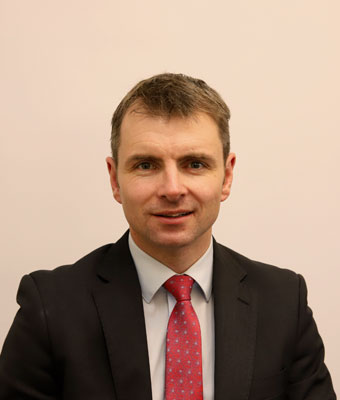
79. Deputy Ruairí Ó Murchú asked the Minister for Children, Disability and Equality the reasons her Department accredits for the lengthy waiting lists for assessment of needs; the progress being made in developing legislation in this area; and if she will make a statement on the matter. [61490/25]
Will the Minister provide the reasons her Department accredits with the lengthy waiting lists for assessment of need? There has been much discussion on this in the last while. There has also been talk of developing legislation in this area. Will the Minister make a statement on the matter? From my last parliamentary question, the number of people on the waiting list is somewhere between 17,000 and 18,000; therefore, there is a lot to be done.
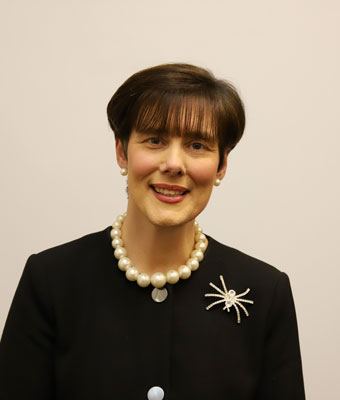
The Government recognises that there are unacceptable delays in accessing assessment of need. The Department and the HSE are committed to addressing these delays.
The delivery of an effective and efficient assessment of need system continues to be a priority for the Government. Intensive work has been under way to deliver actions to achieve this. It is important to note that children do not require an assessment of need to access health services, whether primary care, children’s disability network teams or mental health services. However, as the Deputy has pointed out, demand for assessment of need has increased significantly in recent years. This reflects both the increase in population and the number of families exploring all options to access services for their children. The number of applications has increased significantly since 2020, rising from 4,700 applications to over 10,000 applications in 2024. It is expected that the number will increase further this year. The reasons for this growth are complex and reflect the changing needs and awareness of disability in our society as a whole. Capacity constraints have meant that the system has struggled to respond to the substantial increase in demand. In this regard, the Department is working with the HSE to identify opportunities to enhance processes, improve training and increase administrative supports. It is important to highlight that there has been a noted improvement in the number of completed assessments. Over 4,100 were completed in 2024, an increase of 30% compared to 2023. HSE data shows this trend is continuing this year and there has been a 57% year-on-year increase in completed assessments in the first nine months of the year. This improvement has been achieved by a number of measures, including the assessment of need targeted wait-list initiative. Under this initiative, the HSE procures clinical assessments from approved private providers. Over 6,300 clinical assessments have been commissioned from private providers since the initiative commenced in June 2024.
We all know the issue. The Minister is stating that the reason is the increase in population. We all accept that on some level. However, she is also stating that parents are trying to explore all options available to them. They are doing this out of frustration. I have heard that people who previously would have been able to get a service in primary care in other sets of circumstances are all being put on the assessment of need list. Therefore, can we have an assessment of the assessment of need list in relation to what needs to be done from a legislative point of view but also in relation to how we are actually going to deal with this issue? If we are still talking about it at the end of the year, I suggest that the number waiting over six months will have reached between 24,000 and 25,000. The State is in breach of the law in this regard. We really cannot have this ongoing conversation. We need to find a real solution.
I thank the Deputy. Again, I acknowledge the points he makes. Parents are right to access every opportunity they can for a child. I would do it. They are right to do it but we need to find better ways to progress the assessment of need. As I have said, over 6,300 assessments have been done privately. Some €10 million was made available but it is likely that between €18 million and €20 million will be spent this year.
I acknowledge that other measures have been attributed to the increase as well. Despite the fact that AON is not required to access health services, primary care, CDNTs or mental health services, it is still a route that is chosen.
Specifically in relation to the legislation the Deputy referred to, work is under way to identify relevant legislative changes relating to Part 2 of the Disability Act, which addresses assessment of need. This aims to support the effective and efficient delivery of assessment of need. It is intended to bring forward the legislation before the year end. It will not affect the statutory right of any individual to access an assessment of need or the statutory timeframe set out in the Act. The provision of an effective and efficient assessment of need system continues to be a priority.
I welcome the fact that we are not talking about removing that one right parents have to the six months. I have no particular issue with looking at the best means of offering assessments and therapies - we have had that conversation before - but, as the Minister herself has stated, we have issues in the system itself as to where referrals are going onto the assessment of need list. I am back to the operation of the AON administrative hubs, the Cara's fund money and the use of private practitioners. Have we maxed out the number of private practitioners who are available or is there more capacity there? We are still looking at, as I said, 17,000 or 18,000, and at the end of the year I assume we will still be looking at 24,000 or 25,000 who will be over the six months in which they should have had an assessment. None of this is good enough. Obviously, there is frustration. When will we get a handle on this? We cannot just continue having this conversation.
Specifically in relation to the private capacity, €10 million was made available last year. I did say that if at any point more were required and if there were capacity to do more, more funding would be made available. It is our estimate that between €18 million and €20 million will have been spent, and a further €20 million has been secured in budget 2026. If more is required again in 2026, we will not be found wanting.
We need to look at other measures as well. For example, the HSE is looking at a single point of access model, which I think will be very helpful. It will mean that children will be referred to the right supports and not be placed on a number of different waiting lists. That will be a significant step forward. The HSE is also introducing an autism protocol, which will mean that there will be a specific autism assessment. It is important to remember that 45% of assessments of need in the third quarter of this year alone led to an autism diagnosis. Looking at all levers, whether it is the change in legislation, the private capacity-----
What will that look like?
Pardon?
The change in legislation.
We will present that before the end of this year.
Childcare Services
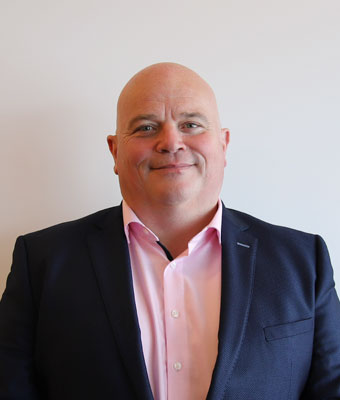
80. Deputy Mark Wall asked the Minister for Children, Disability and Equality if she will comment on the survey findings by a representative organisation (details supplied) which showed that 80% of childminder services will close; and the actions her Department is taking to address the issue. [61743/25]
Will the Minister comment on the recent survey by Childminding Ireland which showed that 80% of childminding services will close, and will she make a statement to the House on the matter?
As the Deputy said, in a survey recently published by Childminding Ireland, 393 childminders responded to a question about their intentions for when registration becomes mandatory. Some 44% said they were undecided, 32% said they intended to stop childminding and 24% said they intended to register with Tusla. While those who responded to the survey and answered the question represent a small proportion of childminders, with census data indicating there may be approximately 13,000 non-relative childminders across the country, I fully understand the sense of uncertainty and anxiety childminders may be experiencing in this period of transition in relation to registration.
Significantly, those childminders who answered the same survey and who had already gone through the process of registration reported very positively on their experiences. In fact, only 4% described their experience as negative - we would not want any percentage there, and we have to work on that - while less than one in eight of those who had been previously registered and who now operate under the new regulations were dissatisfied.
I therefore believe that communications will be essential to addressing many childminders' concerns. A national communications strategy is a key element in phase 2 of the national action plan for childminding during the transition period, which lasts until September 2027. Work on this strategy has begun, aiming to inform childminders and parents about the changes, the supports available and what to expect. The childminding-specific regulations, which came into effect in September 2024, are designed to be proportionate and appropriate to the home and family setting in which childminders work.
Childminders were consulted on and involved in all aspects of the development of the regulations. Both the steering group for the national action plan for childminding and the various advisory groups that have supported it have included childminders as well as representatives of Childminding Ireland. The steering group will meet again in December in relation to the action plan and advancing supports, communications and any further benefit we can give to childminders to support them in terms of registration.
I need not put on the record of the House how important childminders are to the childcare sector in this country. It has been the subject of many conversations we have had here. The Minister is right to say there are concerns among childminders right across the country as to what this new regulation will mean for them. Many of them are minding two or three children in their own homes and have done so for many years. There is a concern, a worry, as to what starting to fill out forms, etc., and registering will mean for them. What they are looking for from the Minister and from the Department is that they will be able to continue in all aspects with what they have done for years. They are the cornerstones of many communities. I need not put that on the record of the House either. There are concerns coming out of what is happening, including one provider in my county who has now been subject to rates, unfortunately. Will the Minister give that reassurance to those childminders who need it? If our childminders are not there, many working families in this country will run into so many difficulties in the coming weeks.
I concede that childminders are hugely important and make a very significant contribution to caring for children right across communities, even in rural communities. I am very familiar with the extraordinary benefit childminders provide.
The Department has committed to a review as part of the transition period. That will commence in 2026.
Supports are available to childminders from the city and county childcare committees. Each city and county childcare committee has been funded by the Department to ensure that it has a childminding development officer who is on the ground and available to support childminders with any questions they might have or supports they might require in terms of pre-registration training courses or anything at all of that nature.
The childminding development grant provides up to €1,000 to assist both registered and unregistered childminders who are providing a childminding service in their own homes. In 2025, the Department has paid €413,338 to childminders through the childminding development grant. A further round of the grant will be paid in 2026.
I have not forgotten the point the Deputy has raised about the question of commercial rates and so on. I am engaged on that with the Minister for housing.
I would welcome if the Minister could mention that because it has become a serious concern for a lot of childminders, who, as she said, are so important to rural life, where it is often a neighbour who is minding two or three children and who has done so for years. If that falls, rural life is really going to be affected for so many people in my area and, I am sure, the Minister's area.
The Minister mentioned communications. That is vital for where we are going with childminders because many of our childminders, as I have said before, have been doing this for years out of love for childminding and love for supporting their communities and being recognised as such within their communities. I encourage the Minister to engage as much as possible, as she has been doing, to ensure that we have communications at every opportunity with our childminders, ensuring that there is somebody available to answer the many questions I and a lot of my colleagues are getting.
Will the Minister commit to meeting with Childminding Ireland to discuss the concerns it has got and is getting about this registration?
I think we all appreciate that registration is important. It is critical to the safeguarding of children. It involves oversight of Garda vetting, proof of insurance, first aid and safeguarding training and so on. That is a positive thing in terms of registration.
Again, there are specific people available through the city and county childcare committees, childminding development officers, who are available on the ground to offer support.
A communication strategy is being developed. I am absolutely engaged with the Minister for housing in relation to this issue that has arisen. It is my understanding it is within a person's own home, but that is a matter for a different Minister and I am engaging with him in relation that. On the meetings, I have already met Childminding Ireland through the stakeholder forum and provider forum but I will be engaging with it on a one-to-one basis as part of the review.
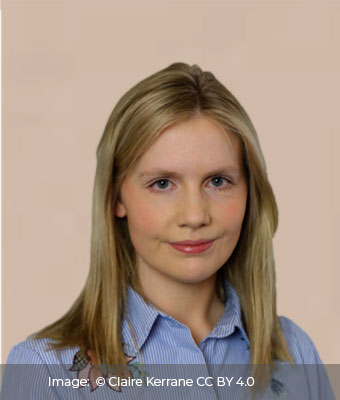
81. Deputy Claire Kerrane asked the Minister for Children, Disability and Equality if she is aware of concerns raised by childminders as to the future of their childminding service, and the impact that childminders leaving the sector would have given the already severe lack of childcare capacity; if she will meet with an organisation (details supplied) which represents childminders; and if she will make a statement on the matter. [61735/25]
I hope the Minister will hear us about the issues that childminders are bringing to our attention and the need for that review to take place as quickly as possible. The regulations have been in place for just over one year. It is the perfect time for that review now to commence. When does the Minister expect that review to begin? Childminders are telling parents that they are already leaving. We need the review as soon as possible.
I thank the Deputy very much. I acknowledge that many childminders, when asked about their intention to register, report that they are undecided, while some say they intend to stop childminding. As I have said previously, I understand the anxiety and uncertainty of childminders in a period of transition. Change is never comfortable. Communication is essential to that. It is a key element of phase 2 of the national action plan for childminding during the transition period. Work on this communications strategy has begun. Childminders are a hugely important part of early learning and care and school-age childcare provision. They continue to be an option of choice, which is important, for many families. I am firmly behind the regulation of childminding services, which is critical to the safeguarding children - I have already outlined this - whether it is Garda vetting, proof of insurance, training courses and all of that.
I am heartened to see that in the recent survey carried out by Childminding Ireland, those childminders who have already been through the registration process and are working under the new regulations report that their experience is a positive one. The childminding-specific regulations, which came into effect in September 2024, are designed to be proportionate and appropriate to the home and family setting in which childminders work. Childminders were consulted on and involved in all aspects of the development. There was an independent assessment by Dr. Bill Maxwell, the former CEO of Education Scotland, former chief inspector of both Scotland and Wales and OECD consultant, which confirmed that the approach that was being taken was proportionate for childminding in Ireland. As I said, I have met with representatives of Childminding Ireland in both the early learning and childcare stakeholder forum and the providers forum. I am determined that I will meet with them on a one-to-one basis before the review of the regulations commences. That regulation is between 2024 and 2027, so the ideal time for the review will be in 2026.
I urge the Minister to ensure that the review takes place early next year. I was on the radio today. There was someone on with me who has been a childminder for 17 years. She is leaving. She has told the parents of the children that she will not be able to look after them at the end of the school year next June. She is one of many. I do not see any reason that a review of the regulations would be delayed. If we go through the regulations, one example of them being unworkable is the emergency cover. There has to be somebody who can provide emergency cover at all times. Unless the provider has a Johnny or a Mary who will sit at the window and look out and wait for the call, that is not possible. If the childminder needs to change that person or that person decides they are leaving, they have to give Tusla 60 days’ notice. Unless that emergency cover is in some kind of a contract with the childminder, how would they get 60 days’ notice from somebody? I know a childminder in Roscommon. They have four emergency contacts via the parents of children that they look after and now she needs to go and find another emergency contact who can be available at all times. This is not workable. I would like some further detail on when the review will take place.
To be fair, there would have been no point in doing a review in the first year. It is important that we have the benefit of the experience of those who registered and went through the process. It is a three-year process. It is appropriate that at a midway point, before September 2027 and during 2026, the review will take place. There is no point in doing it without having the experience on the ground to inform it. As I said earlier - it just so happens that these two questions are coming one after another - childminding development officers employed by the city and county childcare committees are on the ground to support anyone who is having any difficulties or challenges. I ask them to engage directly. We are in agreement that regulation is important. It provides support and security from safeguarding, Garda vetting and proof of insurance points of view and so many other different elements. I absolutely accept the fantastic service being provided by childminders. I do not underestimate that, but we must move towards regulation. We will support those who will move towards regulation.
Respectfully, the problem is that some of those childminders at that point will be gone. If we are waiting for them to register with Tulsa and we then engage with them at that point, is it under 200 of the 13,000 or 14,000 childminders in the State who have registered with Tusla to date? It is happening at a snail’s pace. If that is what we are waiting for, then the review will be almost a waste of time. At a time when we are short about 40,000 or 50,000 childcare places in this State, we have childminders who have given 17, 18 and 19 years of service. They are signing up for regulations, including inspections, that they have no detail or information on in terms of people coming into their homes. They deserve better than that. There is not a childminder in the State that is not willing to comply with the regulations. Most of them are Garda vetted. They have done first aid training. They are doing what is being asked of them in the bulk of the regulations that are laid out. However, I see no reason when we are almost 14 months on that the Minister is not in a position to say that in the new year, we will carry out the review and get this right. That is what we all want, but childminders are leaving now and that is the problem. There does not seem to be an acknowledgement of that. The Minister is hearing it from this side of the House, and it is concerning that she is not actually hearing it.
The Deputy should have no fears. I hear and see exactly what is going on. To be clear, this is a three-year process. It would be entirely inappropriate for any type of review to take place in the first year.
That was the first year. It is over; it is gone.
It would not allow the system to get itself up and running. It would not allow us to learn and gain from the benefit of the experience of those who go through the process. It is appropriate that it would take place in the second year. I have committed to that. I have articulated it clearly. It will take place in 2026. We will have the benefit of the first year of those who have gone through the process. We will have the opportune time until September 2027, realising that is the closing point. It is appropriate that we have the first year and the review take place in the second year. I am committing to that review taking place in the second year. I appreciate the work of Childminding Ireland. I acknowledge that everybody was consulted when these regulations were being introduced in the first place. They were independently assessed by an independent outsider. There are always opportunities to learn from the process on the ground. That is the reason why. There will be a review and it will commence in 2026.
Child and Family Agency
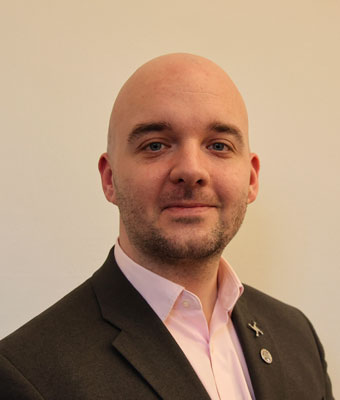
82. Deputy Aidan Farrelly asked the Minister for Children, Disability and Equality if she will provide an update on her engagements with Tusla regarding well-being checks of closed cases; if she has received a progress report or interim report from the agency; and if she will set out the allocated additional resources she has provided Tusla to enhance its capacity to complete the work in a timely manner. [61877/25]
I thank the Deputy for raising this matter, which is of the deepest concern to everybody, both in the Government and across the House. All of us have been greatly saddened by recent cases that have been highlighted. On the questions that the Deputy raised, Tusla has completed its work on the well-being check. This will be overseen by a steering group, which will be entirely independent of Tusla. The purpose of the well-being welfare check is to proactively test and strengthen the current safety net the State provides for children's welfare and protection and to provide assurances about the welfare of vulnerable children. The well-being welfare check is going to focus on cases that were closed to child protection services during the Covid-19 pandemic lockdowns and relates to cases where there has been no further contact with the child since the cases were closed. Often, it is a real positive when a case can be closed. On other occasions, a case can be reopened. The check will be overseen by an independent steering group chaired by Ms Tanya Ward, the CEO of the Children's Rights Alliance.
I can confirm to Deputy Farrelly that phase 1 of the project is under way and that a number of steps have been taken. The membership of the steering group is now finalised and includes representatives from my Department and the Departments of Social Protection; Health; Education and Youth; and Justice, Home Affairs and Migration; along with representatives from the HSE; the Central Statistics Office; Tusla and Barnardos and an independent social work expert. Engagements have taken place with other Government Departments to explore opportunities for appropriate data-sharing use to establish where the children encompassed by this review are currently or recently known to a relevant State service or State-funded service. A national lead has been appointed and a well-being check project team manager has also been appointed. A digital case management system is in place to support the work of the teams.
I think we all, as the Minister rightly says, share in the concerns about the tragic cases that have unfolded in this State in recent months and years. I am really concerned with the Minister's reply. How do we think it is possible for Tusla to conduct a well-being or welfare check with 42,000 children by March of next year? We have not seen the methodology for those checks. I ask the Minister to publish what those checks will look like. Tusla has more administrators than social care workers. It has more managers than family support workers. The questions that arise for me are as follows: who will be doing those checks? How many children have been participating in those checks so far? The Minister said that phase 1 is under way. How much has been allocated by the Department for Tusla to do this? In a year when it received 100,000 referrals, how is it possible within three or four months for Tusla to speak with 42,000 children? Is it not time to call this what it is? It is a proof-of-existence check; it is not a welfare check.
The Deputy asked about my engagement with this. I have met with the chair of the independent steering group. It is important to say that this is independent of Tusla. It is important that the steering group be independent of Tusla. I have met with the chair and will do so again in advance of the commencement of phase 2 of the project. I have secured additional funding in the Estimates for next year to assist with the implementation of the check. Funding of €3.2 million has been secured and is being allocated to cover the period of the review, and this funding includes provision for the additional administrative supports required. I and my officials continue to engage with Tusla on the well-being check. As Minister, I am committed to making our child protection system as robust as it possibly can be. I am shortly bringing forward a Bill to update and modernise the Child Care Act, which provides the foundation for child protection and welfare services in the State. This will strengthen the child protection legal framework and increase the powers available to Tusla. I also intend to bring forward amendments via the child care Bill 2025 to place the national review panel on a statutory footing. This will further enhance the work of the national review panel, as well as strengthening its independence and its ability to compel information and witnesses in respect of all reviews that it undertakes. While the recent tragic events are distressing for all - there is absolutely no doubt about that, particularly for all those who know and love the children involved - they serve as a reminder that safeguarding children is a collective duty across all State bodies.
I want to stay focused. I thank the Minister for providing some information regarding the costs. That works out at approximately €76 per child. If we are looking at 42,000 children, that is what has been allocated. Will each child be spoken to or will a member of their family be spoken to? Kate Duggan told us in committee that the first phase of this will be an automated check to see if children are enrolled in school or services. Is that it? Is that when we deem that the welfare of a child is okay? Given that 100,000 children will be referred to Tusla this year, is it not fair to say that it is a knee-jerk reaction to ask Tusla to conduct a review of 42,000 children? What happens if 1% of those children need follow-on services? Never mind 10%; if the figure is 1%, that is 4,500 children. The organisation is not in a position to offer any sort of follow-up services because it is already working with a huge number of children and young people in crisis. This week I asked Tusla to provide the details of how many children and young people are in its care that it cannot verify the age of. The organisation could not tell me what those statistics are. That is an area of Tusla that needs resourcing. My real concern, from a place of real sincerity, is that what we are calling a welfare check will not be one. We will not know about the welfare of these children and young people. We might know they are there. We might know that they exist, but that simply is not enough. If we are going to do it, we need to do it meaningfully. We need to accept it is not going to be done by March. If we do this right, chances are it would not even be done by March of the following year. If the Minister is going to do this, I implore her to do it right.
I absolutely do not in any way question Deputy Farrelly's sincerity. Equally, I have to say this is not "a knee-jerk reaction". This is an important body of work. There is concern around cases that would have closed during the Covid-19 pandemic, notwithstanding that it can be such a positive when a case is closed by Tusla. It can be a really positive outcome. I am very conscious that many cases are reopened again and again; that is the nature of the work. It is important that we take the time to do this work. A figure of €3.2 million has been made available to do it. Indeed, Tusla in general received a significant uplift in the recent budget. As a matter of fact, Tusla received an increase of more than 50% between 2020 and 2025 in terms of its budget, with a further 14% uplift again this year. It is quite significant and I do not regret one single penny of it. The welfare of children is at the heart of all of this. I am confident that the independent chair is a person of particular and significant standing in terms of child welfare. I am very confident of her independence in the chair. The work that needs to be done will be done effectively for the benefit of the children.
Early Childhood Care and Education
83. Deputy Claire Kerrane asked the Minister for Children, Disability and Equality to outline the measures announced in budget 2026 for the early years sector, including the 2,300 places to be created via extensions to schools and community centres; and if she will make a statement on the matter. [61736/25]
I want to ask the Minister to outline the measures for the early years sector that were announced in budget 2026, particularly the measure to provide 2,300 places via extensions to schools and community centres. Perhaps she will be able to enlighten us as to where that measure came from and how long she expects planning permission to take for these extensions to take place.
In 2026, current expenditure for early learning and childcare will rise to €1.48 billion, representing a year-on-year increase of 9% or €125 million. This additional funding will deliver real and meaningful change to the lives of thousands of children and their families in 2026 as well as to early years educators, school-age childcare practitioners and providers. Some 105,250 children will be supported to access free pre-school education under the ECCE programme next year. Furthermore, 286,000 children will benefit from their statutory entitlement to the national childcare scheme subsidies to offset the cost of early learning and childcare next year. This represents a year-on-year increase of 14%, with 35,000 additional children to benefit from the scheme next year. A figure of 8,400 pre-school children with a disability or additional learning need will benefit from the highest level of support provided through the access and inclusion model, enabling their meaningful participation in the ECCE programme. This is an increase on this year's figure of 7,900 pre-school children. We will also see an increase in the number of services designated for targeted supports under Equal Start and an increase in the numbers of children benefiting from these targeted supports, including through the new Bia Blasta pre-school nutrition programme. This year, 787 services serving 35,000 children have a priority designation under Equal Start. Next year, we estimate that 820 services serving 37,000 children will have this priority designation. Next year, the allocation for core funding will rise by 15%, with the allocation for year five of this scheme set to reach at least €437 million. On top of this, the Government will make available additional funding next year for further improvements to staff pay. This significant level of funding will support a range of key Government priorities next year and into year five of core funding. It will allow us to continue to support growth in the sector, which we estimate will be 4.2% in year five of the scheme. It will allow us to continue to support providers with the cost of employment regulation orders. It will allow us to support providers to sustainably maintain the fee management conditions that are attached to core funding, including a new maximum fee cap that will be introduced in September.
I welcome all of those measures and any measure announced for the early years sector that will make a difference. One of the biggest issues we have in the early years sector right now is capacity. We have serious issues in terms of capacity, whether it is capacity in baby rooms or capacity in childcare places at every level right across the State. As far as I am concerned, when we need 40,000 to 50,000 childcare places, we are in a crisis. I had hoped the building blocks grant would have been expanded. I have raised with the Minister many times the need for that to be expanded to allow new providers as well as existing providers to purchase existing buildings, of which there are many in all of our counties. That would build capacity very quickly. It would be cheaper and more environmentally friendly to use what we have.
There are areas in communities that have high demand for childcare and extensions to schools and community centres will not cut it for them.
I thank the Deputy. In terms of capital expenditure, for the early learning and childcare sector that will comprise €36 million in 2026, thereby allowing the Government to accelerate its work to ensure the supply of early learning and childcare meets demand. The year 2026 will see for the first time the acquisition of buildings to provide the infrastructure for State-led early learning and child care delivery, something which is very close to the hearts of most people here, including Deputy Kerrane. For the first time, a public model of early learning and childcare will be provided for.
Alongside this, I will open a further building blocks scheme in 2026 to allow for extensions to existing premises to support services to offer additional full-day places. This follows on from the successful building blocks scheme in 2025 that is currently operating and will deliver up to 1,500 new places for one to three-year-olds. In terms of the delivery of places, extensions will be provided for and there will be a State-led model. We will also ensure that when we have places, we also have staff. The delivery of an ERO is also important, as is the increase in core funding for providers.
In terms of building capacity, where has the idea of extensions to schools and community centres to create 2,300 places come from? I think of a school in Ballinasloe that has waited almost 30 years for a new build. Schools cannot build and develop what they need to and we are talking about extensions. We need childcare places tomorrow. Extensions to schools, if there is permission from schools in the first instance, involve planning permission and building work. How long will it take to create 2,300 places?
I welcome the acquisition of State-led facilities from next year. How many will there be? How much further detail can the Minister provide in that regard? It will be hard to determine which areas will be chosen. Many areas will want such facilities. I ask the Minister to consider expanding the building blocks scheme to allow community groups, whether existing or new, to buy derelict vacant buildings in prime locations in towns like Boyle, County Roscommon. A detailed needs analysis has been carried out in the town and people have done their homework in terms of need. There is a high level of need in the area. Would the Minister consider such a proposal?
I thank the Deputy. On areas for the State-led public model, there is a forward planning unit in the Department, which is positive. It is specifically examining areas where there is demand but no service provision. I acknowledge that the Deputy has consistently raised issues in her area and the technicalities around the building blocks scheme, in particular for the cohort in Boyle. I am committed to a building blocks scheme in 2026. The detail of that has not yet been worked out, but the principle is there.
In terms of delivery for the State-led model, it is our expectation that anywhere between 600 and 800 additional places will be involved as a first step, together with between six and eight premises. There is a commitment over the next four years, the lifetime of the Government, that we will do more and more in this space in terms of the public-led model. It will involve a combination of what we are doing in that regard, along with the building blocks scheme. As I said, we must not forget that we need to have staff in place. We also need funding for providers.
Family Resource Centres
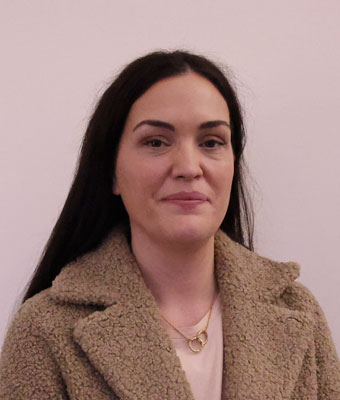
84. Deputy Aisling Dempsey asked the Minister for Children, Disability and Equality to outline the Government’s commitment to family resource centres; for an update on the work done by family resource centres across the country; and the potential for establishing more family resource centres. [61878/25]
I thank the Deputy. As she may be aware, the family resource centre programme is expanding from 121 to 126 members this year. Funding for the expansion was secured by the Department in budget 2025 and I want to acknowledge in the Chamber the former Minister, Deputy Roderic O'Gorman, in that respect.
Regarding the expansion of the family resource centre programme, a comprehensive national application and assessment process was undertaken earlier this year, which was led by Tusla and independently chaired by a representative of the University of Limerick. All applications were reviewed and scored against clearly defined and published criteria, including population need, the level of deprivation, child population data and existing service provision and gaps. This year's expansion is the first since 2018 and is a very welcome development.
The five successful services joining the programme were announced on 29 August and are based in Dublin, Galway, Kildare, Louth and Monaghan. I understand Tusla and the family resource centre national forum will be on hand to assist the new services in assimilating into the programme. The selection process was outlined in the Tusla outcome letter issued to all unsuccessful applicants following the announcement of five new programme members by press release on 29 August. Applicants were also informed that their application will remain under active consideration should additional funding be secured for further expansion of the family resource centre programme in 2026.
In line with the programme for Government commitment to work to increase funding and expand capacity and the network of family resource centres, I am delighted to report that I secured additional funding in budget 2026 for the further expansion of the family resource centre programme by increasing membership by ten to 136. This will see more people benefiting from the many positives that the centres bring to communities.
I expect Tusla will be in a position in the near future to confirm the locations of the additional family resource centres on the basis of need, determined by the published criteria. I appreciate that is a significant uplift to a local community, given the breadth of work the centres do on the ground.
I thank the Minister for the update on the commitment of the Government and Minister to family resource centres across the country. I welcome the opening of new centres as I know how much they can do and add to our communities. I know how much family resource centres add because there is an extremely active and hard-working one in my home town of Trim. I cannot impress upon the Minister enough how important it is to provide additional supports, not least financially, to existing facilities like Trim Family Resource Centre. We have spoken about this on a previous occasion and I know it is a priority for the Minister.
Trim Family Resource Centre is an integral part of the Trim and south Meath community and provides many invaluable services in the locality. Parent and toddler groups, counselling and youth unemployment supports are some of the more obvious services it supplies. Lesser-known activities happen, which could be a service user's only outlet in a week or a real help to working parents during school breaks, such as weekly walk and talks, men's musical meet ups and low-cost summer camps. I ask the Minister to continue to review and increase funding for family resource centres when possible and that their value and addition to our communities is always recognised and rewarded by the Government.
I thank the Deputy. I know first-hand from the Deputy the benefits of Trim Family Resource Centre and the great work it does. She has spoken to me frequently about that. With the resources they have, more and more is being asked of family resource centres and they are constantly stepping up to the mark to deliver. The Deputy outlined the great variety and breadth of work that is being provided by Trim Family Resource Centre, which is a testament to the determination to deliver on-the-ground services for the community.
People may be aware that the funding equalisation scheme for the family resource centre programme was initiated in 2024. This ensures that all programme members received minimum core funding of at least €160,000 from 2025 onwards. Core funding principally covers the salaries of staff along with some operational costs. I can confirm to the Deputy that I have secured additional funding. We are currently working on that and within a short time, I should be in a position to confirm exact funding. There will be an increase in funding from the current figure of €160,000.
I thank the Minister. That is welcome news. Trim Family Resource Centre will not be found wanting in the type of projects it will allocate that money to. It is involved in projects such as zero tolerance, which tackles domestic violence, as well as low-cost rental for partyware, which is a relief to many families in my area. My question remains the same. I know the Minister is committed to the programme. I ask her to keep the pressure on in government and keep the funding for and allocation to family resource centres when she can.
As I said, it is a strong commitment from Government that we will increase the number of family resource centres. I am conscious of the need to improve the core funding that goes to the centres. I am very pleased that, in budget 2026, I am in a position to have secured funding that will ensure there will be an additional ten family resource centres. I am also in a position to say that I secured funding that will increase the €160,000 base that is provided for in core funding.
The great thing about family resource centres is that they do a multiplicity of work and provide a multiplicity of services. The door is open to everyone. Whatever the need might be, family resource centres, in my experience, will always find a way to meet that need. Whether that is education and training, supporting personal group development, offering practical assistance to individuals and community groups, such as to access technology or office facilities or whatever the case might be for the very young or older members or those at any age or stage in life, there is support to be found at the family resource centres. It is my ambition to ensure that we will provide a greater number of family resource centres and that we will also improve the funding to the resource centres.