Child and Family Agency

85. Deputy Ruairí Ó Murchú asked the Minister for Children, Disability and Equality the engagement there has been with Tusla regarding child protection issues highlighted recently in the public domain (details supplied); the plans in place for a fit-for-purpose child protection system; and if she will make a statement on the matter. [61509/25]
I wish to ask the Minister about her engagement with Tusla. I think we have all been absolutely shocked by the tragedies of Kyran Durnin, Daniel Aruebose, Vadym Davydenko and the really distressing case of the ten-year-old who was sexually assaulted and who had been in the care of Tusla. I accept that the Minister cannot get into the ins and outs of these very specific cases, but perhaps we could find out about the review mechanisms and what has been done and then ensure we have the proper protocols and protections in relation to a working child protection system because that is what people need, and that is what is demanded.
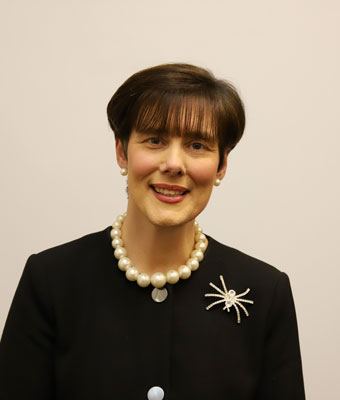
I thank the Deputy for raising these matters. As we said previously, they are matters that are of enormous concern to all of us in this House and, indeed, right across government and I would say right across society. I want to say sincerely that I am deeply saddened by the very tragic cases that have come to light, and I extend my own sympathy and thoughts and those of the Government to the families and loved ones of these children and young people.
I appreciate that the Deputy also acknowledged that these cases are the subject of active and ongoing investigation by An Garda Síochána, and it would not be appropriate for me to comment on the specific details that could, even inadvertently, prejudice that very important investigation by An Garda Síochána. I can say that, as soon as Tusla became aware of these cases, the Department was notified immediately through the agreed protocols and procedures in place. There has been ongoing engagement with Tusla relating to Tusla's own internal reviews of each specific case and on any recommendations that have arisen to date as a result of these internal reviews. I have directed the national review panel to undertake a review of each case as a matter of priority and to make findings and recommendations in respect of these as deemed appropriate. The national review panel is independent and has the remit to review serious incidents, in particular where there is suspected or confirmed abuse of a child in care.
With regard to the well-being check, which we referenced earlier, its purpose is to proactively test and strengthen the current safety net the State provides for children’s welfare and protection and to provide assurances about the welfare of vulnerable children. The well-being check is focused on cases that were closed to child protection services during Covid-19 and relates to cases where there has been no further contact with the child since. As I already confirmed, the well-being check will be overseen by the independent steering group, which is to be chaired by Ms Tanya Ward, the CEO of the Children's Rights Alliance. As I said earlier to the House, I can confirm that phase 1 of the project is under way and a number of steps have been taken to date. The membership of the steering committee has been finalised and includes representatives from a variety of Departments including Social Protection, Health, Education and Youth, and Justice Home Affairs and Migration, along with representatives from the Health Service Executive, the Central Statistics Office, Tusla, Barnardos and an independent social work expert.
All our thoughts go out to the families and friends of these children. We are talking about absolutely brutal circumstances, and we do not want to get into the ins and outs of it. I agree with the Minister on that. However, I think we need to find and ensure that we actually have a system that is fit for purpose. I welcome the fact that there is a review of each of these cases. Is it possible at this point to have a timeline for when we would see the outworkings of those reviews and when we would actually see recommendations? Has any work been done to date in relation to looking at our overall child protection protocols and the need for anything that needs to be done straight away even before any of these happen? Will the Minister give a timeline for when she believes the well-being checks will be done? It is just making sure we do what we can now, and then make sure we assess everything and carry out the recommendations, but in a timely fashion.
I appreciate all the points the Deputy raised. I do want to say that it is not just the setting up of the check and putting in place the independent steering group and all that. Engagement has also taken place with other Government Departments to explore opportunities for appropriate data sharing to establish where the children encompassed by this review are currently or recently known to the relevant State services or State-funded service.
On other things that have been done, the national lead has been appointed, a well-being check team manager has been appointed, a digital case management system is in place to support the work of the teams and so forth. Again, I can confirm that I have met with the chair of the independent steering group on her appointment and, indeed, I will be doing so again in advance of the commencement of phase 2. As I already mentioned, there is funding of €3.2 million being made available.
The Deputy referenced other measures that could be done. I will shortly be bringing forward a Bill updating and modernising the Child Care Act, which provides the foundation for child protection and welfare services in the State. This will strengthen the child protection legal framework and the powers available to Tusla. I also intend to bring forward amendments via the childcare Bill 2025 to place the national review panel on a statutory footing. This will further enhance the work of the national review panel and will strengthen its independence and ability to compel information and witnesses in respect of all reviews that it undertakes.
As I said, could we have a timeline for those independent reviews, when we could be looking at them being completed and their recommendations, and when we think those well-being checks would be done and completed? Beyond that, I welcome what the Minister said from a point of view of anything necessary as regards data sharing and the legislative changes if there are necessary powers and protocols that are required by Tusla and other Government agencies. Could the Minister give me not only the timelines but also some of the detail of what powers are being proposed here? What changes are going to happen to Tusla? What can be done so that we can avoid some of these circumstances to ensure we have the best means of protecting some of the most vulnerable children who are out there?
I recognise that it is a whole-of-house determination to do right here and, where we can improve things and make things better, that we would absolutely do that. The first step for us, of course, is the well-being check in terms of specifically having eyes on children where cases were closed during Covid. I will be led by the steering group on the timeline for that. I will respect its independence in terms of that, but I would be hopeful that we are talking about just a matter of months in that regard. Again, however, I will not be dictating to it. I will allow the work to take place, but I would like it to be done in the tightest timeframe possible. I want it to be a full body of work as well, but that we would speak of months rather than anything else.
I will provide briefings and so forth on the childcare amendment Bill. It is an ideal opportunity now for us now to tighten up where we need to from a legislative point of view. That will include the national review panel and strengthening the child protection legal framework and the powers Tusla has available to it.
What about the timeline for the review of cases?
Again, that is a matter for the national review panel. Prior to anything being published, it will have to be with the permission of the Attorney General. It would have to go through all of that, so as soon as all the Attorney General's work is completed.
Childcare Services

86. Deputy Barry Ward asked the Minister for Children, Disability and Equality the position regarding developments towards reaching the commitment to reducing childcare costs to €200 per child, per month, in the context of a number of childcare providers pulling out of the core funding scheme; and if she will make a statement on the matter. [59969/25]
My question relates to the promised reduction of childcare costs to €200 per child per month, which we all campaigned for and we much anticipate. Will the Minister give us an update on the progress towards achieving that goal?
The Government is committed to ensuring access to affordable, quality early learning and care and school-age childcare, with an investment of €1.48 billion in the 2026 budget. This funding will allow the Department to build on recent progress in the gradual reduction of fees for parents while also supporting supply and the quality of provision. Budget 2026 enables core funding to continue to support fee control measures and will also allow for growth in the sector. The allocation of core funding in 2026 will ensure fees remain at 2021 levels for a majority of providers. As well as this, a new maximum fee cap will be set to reduce costs for families paying the highest fees across the country. Further details of the new lower maximum fee caps will be announced in the coming months. The 2026 allocation for core funding will also support implementation of the recently announced employment regulation orders, which led to a 10% increase in the minimum rate of pay for educators from 13 October. There will also be enhancements in year 5 of core funding to improve pay for educators and school-age childcare practitioners with implementation of new employment regulation orders. Further steps will be detailed in the action plan on accessible, high-quality, affordable early learning and care and school-age childcare, which the Department is continuing to develop. The action plan will be informed by a broad consultation process and will set out plans to achieve programme for Government commitments including the commitment to reduce maximum monthly fees to €200 over the lifetime of the Government.
I am aware that a small number of service providers have, regrettably, chosen to withdraw from the core funding scheme. However, uptake of core funding remains strong and the absolute numbers of providers participating in the scheme nationally are at record levels. As of 10 November, there were 4,533 services signed up to core funding, which accounts for over 92.5% of all services and is the highest number of services signed up to core funding since it was launched in 2022. The number continues to grow. In the interest of clarity, transparency and consistent reporting, I have defined a service that has left core funding as any service that had a gap between contracts for core funding of four or more weeks. While the State cannot mandate providers to participate in the scheme, core funding has been designed with maximum participation of providers in mind, as reflected in the year-on-year growth of investment in the scheme rising from €259 million in year 1 to approximately €437 million in 2026.
I acknowledge what the Minister said about the State not being able to mandate providers to get involved in the scheme. Would she also acknowledge that many have pulled out? It is a cause of huge concern for parents where their child is in a facility exiting the scheme rather than being included in the scheme. It would appear those providers are saying the incentives are not there for them to partake in the scheme. While she cannot mandate them to get involved, what incentives are being put in place? What specifically is the Government doing to target those childcare providers who are saying they cannot do this, that they cannot operate within this framework and that they are out? What are we doing as a Government to get them back in? The Minister and I and all the TDs in our parties campaigned to achieve this goal. I understand it is over a five-year period and it will come in phases, and I acknowledge the work that has been done so far. What can we say to assuage the concerns of parents whose children are in facilities exiting the scheme?
I concede that there are those that have left but, in the round, nationally, we have the highest level of providers choosing to be part of the core funding model, at almost 93%. We have never had it as high, notwithstanding, and I understand the challenges in the Deputy's area, that in certain areas people have chosen to opt out.
In terms of supports being provided in core funding, there has been an unprecedented investment by the State, in the first instance in year 1 of €259 million invested by the State, which in 2026 will rise to €437 million. It is hugely significant. Lots of providers say one of their greatest challenges is staff, staff retention and attracting staff. A total of €45 million was ring-fenced by the Government last year to ensure that would go towards improved salaries for staff. There are also schemes like the building blocks scheme to provide for providers.
I appreciate what the Minister said about the investment. I acknowledge the huge investment and commitment to making this happen. I also appreciate her acknowledgement that the pressures on childcare providers are not the same throughout the country. In a constituency like Dún Laoghaire where the cost of living and the cost of accommodation are so much higher, would the Minister consider, as part of the incentives being put in place to ensure childcare providers remain within the schemes, that the incentives might be varied from one area to another? That would be in recognition of the fact that the challenges are greater for childcare providers in an area like south Dublin than they might be in an area where the cost of living is lesser. Will the Minister commit, acknowledging this is going to happen in stages, to giving us a timetable for how this might happen, when it might happen and when each stage of the delivery of this commitment in the programme for Government might happen?
As the Deputy articulated, this is a commitment across the lifetime of Government in terms of the delivery of the €200 cost. We have maintained the fee freeze at 2021 levels. Those paying who were paying the highest costs at €295 are now paying less than €200 when the subsidies are included. There is more work to be done in that space. It will be over the lifetime of the Government that we will reach the target of the €200. On the challenges in cost of living, I feel they are across the country. It is a difficult thing to say the cost-of-living challenges are greater in one party of the country than in another, notwithstanding the fact there can be nuances in different areas. I am happy to speak to the Deputy about that at another time. I would be challenged in terms of the understanding around that but I am happy to discuss it with him on another occasion.

87. Deputy Roderic O'Gorman asked the Minister for Children, Disability and Equality the engagement she and her officials have had in 2025 with the Minister for Housing, Local Government and Heritage with respect to changing or improving planning rules to ensure delivery of childcare facilities in housing developments; the progress she can report on this; and if she will make a statement on the matter. [61618/25]
The 2001 planning guidelines for local authorities on early learning and childcare settings were issued under section 28 of the Planning and Development Act 2000. The guidelines are intended to ensure a consistent approach to the treatment of planning applications in respect to the land use planning aspects of early learning and childcare provision. The 2001 guidelines have contributed to the creation of supply in residential developments. However, the Department is aware that there are instances where the building provided has not been put to use for its intended purpose and in some instances remains vacant or is being used for another purpose.
The programme for Government commits to reviewing the 2001 childcare facilities guidelines for planning authorities to ensure early learning and childcare spaces are provided and put into use. The 2024 Planning and Development Act and the publication of the national planning framework now provide a strong basis from which to pursue this work. An early learning and childcare planning matters working group with officials from my Department, the Department of Housing, Local Government and Heritage and the Department of Education and Youth was established in 2024 and has met on a number of occasions across 2024 and 2025. Meetings have been held since summer 2025 with members of the working group with officials from different local authorities who were nominated by the City and County Managers Association planning and land use committee.
This engagement with nominated planners was effective in identifying a number of important considerations for the review and is now informing a wider engagement with local authorities on the ground. These issues include ensuring that buildings developed on foot of the guidelines meet the needs of the local population and are fit for purpose and balancing the need to ensure sufficient provision for children and families, regardless of the size or housing type of the development, with ensuring that buildings are effectively operated as intended when they were first built. In parallel, planning is under way to capture the views of other stakeholders who will have an interest in the revised guidelines.
I am also engaging directly with the Minister for Housing, Local Government and Heritage to determine how best to support and inform the drafting of revised guidelines under the new planning and development Act. The approach more widely to ensuring appropriate levels of early learning and childcare supply is core to the work of this Department and will be further articulated in the context of the action plan to build an affordable, high-quality and accessible early learning and childcare system that Government has committed to publishing.
One of the most infuriating experiences parents desperate to get a childcare place for their kid have is to be told the building designated as a creche on the plans they bought their new home from actually is not going to be a creche.
They are told it has been too expensive to fit out, it is because the developer wants to rezone it as a house and sell it as such or, most infuriatingly of all, there is no demand in the area for crèche spaces.
As the Minister has said, the planning guidelines were put in place in 2001 to ensure when developers built a certain number of units, a childcare facility building was put in place but those guidelines are not fit for purpose any more. They are not providing the right number of spaces. They are also often not providing the appropriately designed buildings. When I was in the Minister's role, I put in place a process to address this to get the Department of housing to draft newer, stronger guidelines. Can the Minister give us a sense of when she expects to see those guidelines published?
I appreciate how infuriating it is and I could identify them myself in various areas, where these specific buildings, which were committed to be early learning and childcare facilities have either had a price placed on them that is far beyond what anybody could pay or the design of the building, on occasion, sometimes is not even appropriate. It is there in name as an early learning and childcare facility but in reality, the manner in which it has been built is not appropriate for that. Capital investment, which the Deputy referenced, may be required to fit it out. Oftentimes, the developer may choose to go for a change of use. All of these are the issues we need to knock on the head.
We have engaged on the ground and I acknowledge the engagement we had with the city and county managers. They have been helpful in this regard and this has informed our engagement on the ground with the various local authorities. It would appear some local authorities are better than others so there are opportunities to learn from best practice in one over the other.
I know the Department of housing has a huge amount on its plate in addressing the housing crisis but to be honest, it has always been very clear to me that updating these planning guidelines to make developers provide appropriate crèche facilities in new estates has never been a priority for the Department. In the last Government, I got plenty of excuses about why the Department had not done it yet. It had to wait for the new planning Bill - well, that is done now. It had to wait for new planning regulations - it has had a year to pass those. Resolving this issue cannot wait any longer. There are going to be tens of thousands of houses built in the coming years; there must be to address the housing crisis. If we get these guidelines improved, they can contribute to the delivery of thousands of new childcare spaces. The developers are not going to do this themselves and to be honest, the Department of housing is not going to do it itself. It is going to be up to the Minister and she may have to drag the Department of housing kicking and screaming to the table here. Can she give us a clear timeline of when we will see these new planning guidelines published, and when will we see local authorities implement them?
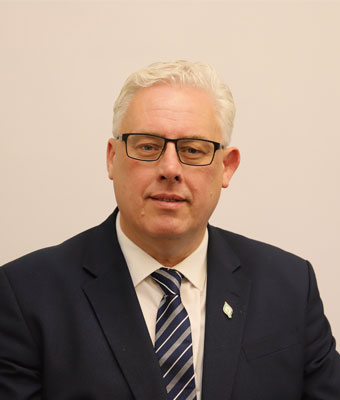
I agree with my colleague on the provision of childcare places and crèches, specifically the right type of building. I have areas in my constituency where massive private housing estates are being built and the childcare centres are not and have not been built at all. I have queried them with Cork City Council regarding one estate in Glanmire where 500 houses are being built with no parks, no playground, no community centre and no childcare centre going in there. To me, we need these guidelines delivered.
We saw during the Celtic tiger what happened when there was just building. We need to build communities, not just buildings. We need childcare facilities and we need the parks and playgrounds to go with them. The other thing is we have people driving all over cities, towns and counties to try to find childcare places for their children, when they should be parked at the local development. That is why these planning guidelines need to be delivered as soon as possible.
I do not disagree with the Deputies. I am conscious this is a logjam and a challenge that should not be there in the first instance. I have always been of the view that where you have housing, you need to have early learning and childcare facilities. You need to have schools. You need to have, as the Deputy said, community developed around it. There are too many stumbling blocks and it has been made far too easy for people to renege on early learning and childcare provision.
Honestly, the date and time is not within my gift and the Deputies will appreciate that. That is a matter for the Minister for housing but I have engaged with him and will continue to do so. Significant work has been undertaken by the working group, some in 2024 and throughout 2025. I have said previously we could not do the work without the engagement we have from the city and county managers and the planning and land use committee. I acknowledge an important step was when we met with individual local authorities where they were sharing their experience of applying the guidelines, what worked and what did not work. I acknowledge it works better in some places than in others. I will continue to engage with the Minister for housing on this matter as a priority.
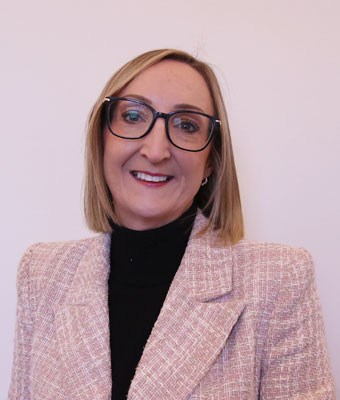
88. Deputy Grace Boland asked the Minister for Children, Disability and Equality if Fingal has been identified as a priority area by the forward planning unit; the criteria used to determine such prioritisation; and if she will make a statement on the matter. [61499/25]
I have mentioned many times that Fingal is the youngest area in the country and is also the fastest growing. Balbriggan is the youngest large town in the country and yet, we have a serious lack of childcare places. In January 2024, a supply management unit was set up in the Minister's Department. It was later renamed the forward planning unit yet nearly two years later, families in Fingal are still waiting. We still have no visible output from the Minister's forward planning unit. Can the Minister please tell us when we will see some output, if Fingal is going to be prioritised and when we can see more childcare places delivered?
Improving access to quality and affordable early learning and childcare is a key priority of the Government. Overall, early learning and childcare capacity is increasing. Data from the annual early years sector profile in 2024 shows the estimated number of enrolments has increased by 19% in the previous two years. However, it appears that demand for early learning and childcare remains higher than available supply in certain parts of the country, particularly for younger children.
The development of the forward planning model is currently under way using the expertise of statisticians on secondment from the Central Statistics Office and other specialists. The model seeks to identify the nature and volume of different types of early learning and childcare places across the country and how that aligns with the numbers of children in the corresponding age cohorts at local level. An extensive data analysis and cleaning exercise is currently being undertaken to map available publicly subsidised supply. This involves combining data from multiple administrative sources, including child population data, using GIS mapping tools.
The analysis of the forward planning model will provide a key input into the approach to the capital programme to be resourced through the allocation in the revised national development plan for 2026 to 2030. It will be one of a number of factors considered when selecting and prioritising projects. Other factors will reflect the policy goals of the Department to support a high quality, inclusive and accessible early learning and childcare system and to ensure value for money.
The forward planning model is being designed primarily as a tool for internal analysis. The maps and data the model will produce will contain projected categories of data and will therefore not be made generally available in full. As the model is further developed along with accompanying policy work related to supply, aggregated statistics, including statistics broken down by geographical area, may be made available if this is deemed compliant with data protection obligations. Preparatory work for this programme of capital investment is under way and the programme is planned to commence in line with the revised NDP allocation from 2026 onwards. As such, no decisions on prioritisation or targeting of certain geographic areas have been made yet.
It is nearly two years. There has to be a sense of urgency by this unit. We need to see a plan from it and we need to see a clear timeline as to when we are going to see outputs. I am not asking for the specifics but I am asking to make sure this Department is delivering. Two years is simply not good enough. People who need childcare are putting off their lives and quitting jobs. They are not participating fully in the workforce. We have discussed this before but female participation in the workforce has been one of Ireland's biggest economic drivers in the past 40 years. Childcare is an essential economic infrastructure. We have to move with a sense of urgency. Unfortunately, I do not see it coming from this unit. I appreciate internal work takes time. There are ways to get around GDPR with data sharing agreements, etc. We know the areas that are the youngest in the country and we know the areas that need to be prioritised. Why is it taking two years?
To be quite honest with the Deputy, I am not sure where the two years is coming out of. I am speaking on the programme for Government for this Government. The Deputy is aware it was this Government that put into the programme for Government the commitment to deliver State-led facilities - not the last Government, this one. As this Government has been in place for less than nine months, I am at a loss to understand her timeline.
Specifically for delivery, the work of the forward planning unit must be allowed to continue.
Specific funding has been made available for 2026. I have given a commitment that in 2026 the public-led model will begin its journey, as it were. Some €36 million in capital funding is available for 2026. This will allow for a variety of things, including the acquisition of new builds, the expansion of existing facilities or whatever the case might be. In 2026, it is anticipated that this public model will deliver between 600 and 800 places. It will facilitate seven or eight new, specific, public-led models as the first step in a journey that will be completed over the lifetime of the Government.
I appreciate that the Minister has only been in her position for nine months, but the Secretary General of the Department confirmed to me that the supply management unit or forward planning unit was set up in January 2024. It is nearly two years later and we still have not seen any visible output from this unit. Will the Minister commit to publishing the criteria that will be used by the forward planning unit, confirm that areas like Fingal are going to be included and will meet the criteria, and set out a timeline for when we can see more childcare places actually delivered on the ground?
Let us be clear: when it was first conceived, the forward planning unit had absolutely nothing to do with the State-led model. The State-led model is an innovation of this Government, which is in place less than nine months. The Deputy is conflating two things that have nothing to do with each other. Let us have absolute clarity about that in terms of the timeline the Deputy is talking about. The Government is committed to delivering the State-led model, beginning this year, as part of a five-year Government commitment. We will do that work. We are committed to beginning that work and having the State-led model beginning to be in place in 2026. It will deliver, as I have said, somewhere between 600 and 800 places, depending on how many of the specific services we can put in place. That will be somewhere between six and eight services and we will build on this year on year as we go on.
In terms of other supports that are being provided for, other resources have been put in place in the Fingal area. Two services in Fingal have been shortlisted in 2025 for the building blocks model, one in Clonsilla and one in Lusk. Some €334,375 is being made available under the private extension strand to support additional places being provided. The State-led model is a new initiative and will take time. We have begun the work and we will see it materialise in 2026.
Departmental Data
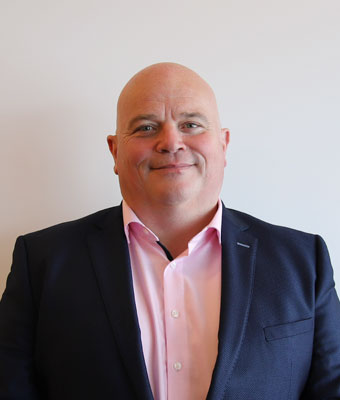
89. Deputy Mark Wall asked the Minister for Children, Disability and Equality if her Department has addressed the IT issue whereby historical fee data was unavailable on the national childcare scheme website; and if she will make a statement on the matter. [61745/25]
It may be a historical question at this stage but I want to ask the Minister if she or the Department have addressed the IT issue whereby historical fee data was unavailable on the national childcare system website.
I welcome the opportunity to provide an update on the matter. I am pleased to confirm that historical fee data is now available on the national childcare service search for fees from the 2021-22 programme year to the present programme year. I acknowledge that this was very important to the Deputy and that he pursued it for some time. The portal hosting this information was originally designed to contain information for the current programme year only. However, the portal was recently upgraded following a concerted effort between the Department and Pobal, the scheme administrator, during a busy period with competing ICT demands due to the commencement of the 2025-26 programme year.
The Department is committed to ensuring information is transparent about fees charged to parents, in line with commitments in the programme for Government. Therefore, this welcome development ensures improved transparency in relation to early learning and childcare fees across the country. I would also like to highlight that in addition to service fees lists, historical and current, the following information is also readily available on the portal: contact details for early learning and childcare services, whether these services are private, community or childminding services; the services calendar, which provides details of services' operating hours per week and operating weeks per year and whether the service offers the ECCE programme; and details with regard to the national childcare scheme, including if it is taking part in the core funding scheme. A key element of the core funding scheme is to improve affordability for parents by ensuring that services have not increased the fees charged to parents above what was charged in September 2021, unless approved by the Department through the fee increase assessment process. While work was ongoing to upload these historic fees lists to the portal, Department officials also delivered a solution to provide access to historic fees list data from 2021-22 to the present through the network of city and county childcare committees. This allowed any individual with fee-related queries to engage with their local city and county childcare committee for additional information and support in understanding fees charged to them.
The network of 30 childcare committees across the country supports parents and guardians to understand their early learning and childcare options and keep an updated directory of early learning and childcare services in their local areas. They can also provide information and support in relation to fees. The contact details for all 30 childcare committees are available at gov.ie.
This is good news. I think I last raised this matter on 29 April 2025 so I think it has taken a slight amount of time to get everything uploaded. It is so important for parents to be able to see what is available for childcare in their areas. We all realise that there is a lack of places, but where there are places, it is important for parents to be able to look at prices.
Previously, the Minister mentioned childcare committees. It was my understanding that the childcare committees had access to and were sharing the ECCE model, but I take it from the Minister's answer that we are now up and running. Parents will be able to access a website which will give them the detailed information that the Minister has just outlined. This is very important for parents to be able to make decision on costs and, in some cases, to ensure that costs are not prohibitive for them to secure a childcare place where they can actually find such a place. This is good news and I thank the Minister and the Department.
I acknowledge that the Deputy has pursued this. It is important that parents have the maximum information available to them. It is also important that the system is seen to be transparent and that is the purpose of the information being made available. I can confirm that it went live on 30 October, just a short while ago. If parents need any additional information or assistance, I suggest that they contact the city and county childcare committees, which are available to assist them with fees data or indeed with any query, question or complexity they might face. If they feel there is a case of potential breach of core funding fee rules by a partner service, they may need to have this examined and a conclusion reached through the core funding fee review process. A link to a list of current services in contract for core funding can be found online, which is helpful to parents as well.
Disability Services
90. Deputy Thomas Gould asked the Minister for Children, Disability and Equality the number of staff recruited in CDNTs in Cork in the past 12 months; and the number who resigned or left. [61723/25]
I ask the Minister of State to update the House on the number of staff that have been recruited in CDNTs in Cork in the past 12 months and the number who have either left or resigned. At the moment, we are facing a crisis in the CDNT units in Cork.
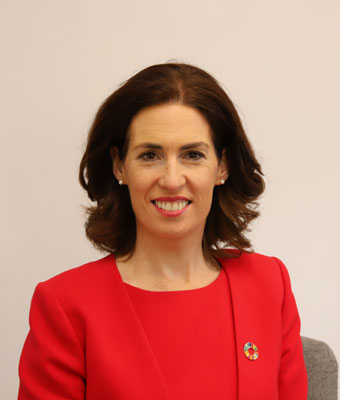
The Government and I recognise the importance of early intervention for children with disabilities and of ensuring they receive the right services at the right time. For children with complex needs, these services are delivered through the CDNTs across the country. In 2025, the CDNTs will provide supports and services to almost 45,000 children with complex needs. This is an increase of some 2,000 children in receipt of services at the end of December 2024. Despite increasing pressures on waiting lists across the country, the number of children on waiting lists has fallen from nearly 13,000 in January to 10,579 at the end of August, which is a reduction of 18%. The HSE has advised the Department that of the 14 CDNTs in HSE South West, a total of 11 provide services in Cork city and county. The approved number of whole-time equivalent posts for the Cork area at the end of September 2025.was 308.77. Of these posts, 234.73 were filled, with a further 32.42 post holders on various types of leave. The Cork area CDNTs are therefore staffed to 87% with a 13% vacancy rate. We acknowledge the current delays in accessing interventions. Work is ongoing by the HSE to maximise the capacity of the CDNTs via recruitment campaigns and other measures. The Government has made funding available in 2025 for children’s services to build on existing recruitment initiatives, focusing on various positions across CDNTs.
A further €8 million has been secured in budget 2026 to allow for the recruitment of 150 staff to the CDNTs. Recruitment and retention of health and social care professionals is the most significant challenge and work is ongoing to increase those staffing levels also.
I am sorry but what was the first figure?
At the end of September 2025 the whole-time equivalent posts for the Cork area was 308.77. Of those, 234.73 were filled and there were a further 32.42 post holders on various types of leave.
Gabhaim buíochas leis an Aire Stáit. The only thing about that figure - she said there was 87% staffing and only 13% vacancy - is that if you take off the 32 staff members who are out sick, on maternity leave or off work for whatever reason, it means the figure is down to a 75% staffing level, which means there is a 25% vacancy rate. If a person goes on maternity leave, is out sick or is out of work for whatever reason, that post still needs to be covered. If it is not, then the children who need the therapies that staff member gives are not getting them. It is very important we do not manipulate the figures here. I am not suggesting the Minister of State is doing that by any means but the Department is supplying her with figures. The figure she gave was 308 and with 234 - someone will have to check my maths - that is a 75% occupancy rate of staff. I am saying if people are on maternity leave or whatever kind of leave, there must be replacement staff for them and the other staff need to be recruited as soon as possible.
I thank the Deputy. He is not disputing the figures. These are the figures that were supplied to me and they include, as he has outlined as well, those who are on various types of leave. Across the board we are engaging in recruitment campaigns. Student placements within our CDNTs continue to be expanded because we want to encourage those on placements within in our teams, so they will come back to work in those settings. There are also a number of bursaries in place to encourage therapists and social care workers to work in our CDNTs. Clinical placements have happened in our CDNTs. They have increased by 55% in the 2024-2025 academic year compared with the preceding one. There are also recruitment drives and new roles and training pathways are being developed to expand the skills mix and strengthen the applicant pools. This also includes developing the role of health and social care assistant and therapy assistant in 2024. There are a range of measures around recruitment here.
Gabhaim buíochas leis an Aire Stáit. I have just double-checked my figures there and 308 full-time with 234 in place is 76%. That means there are 74 therapist staff members who are vital to delivering really urgent therapies to children. If the Minister of State Googles CDNTs and what they do, she will read they are about child development and permitting kids to reach their maximum potential. How can children reach their maximum potential if they are not getting the therapists, therapies and the support they need? How heartbreaking must it be for parents to look at their child not getting the support, therapies or the vital help they need from the State? If these children do not get the support when they need it, they will never catch up. It will have a lifelong effect on their ability to develop, be the best they can be and live to their potential. There needs to be an urgent recruitment policy with additional funding because we need to get 100% staffing levels, and anyone who is out must be covered.
On the Deputy's last point, that is exactly what we are doing. I am not disputing the fact we absolutely need to increase recruitment. There is a huge amount of work happening. In budget 2026 €8 million has been secured to allow for the funding of 150 staff for our CDNTs and the configuration of these posts is under review by the HSE. That expands on the funding of €2.85 million which was made available in 2025 for children’s services. Also, the programme for Government commits to a doubling of the number of college places for speech and language therapists, physiotherapists, occupational therapists, dieticians, psychologists and social workers. In June the Government approved an expansion in training places that will provide up to 361 additional student places by 2028, with the majority of those commencing this year. We have a student sponsorship programme that was advertised by the HSE in April. That will support health and social care professional graduates to take up a job in CDNTs by providing financial sponsorship as part of their education costs. That will then be matched with a job within our CDNTs. That is just an example of the funding investment that is going in here, the recruitment and the awareness campaigns. I assure the Deputy everything that can be done is being done but if he has suggestions, my door is open in relation to this recruitment and retention drive.
Childcare Services
91. Deputy Paula Butterly asked the Minister for Children, Disability and Equality to address the shortage of early childcare places, particularly for children between the age of 0 to two years which is preventing many parents, especially women, from returning to work; and if she will make a statement on the matter. [60793/25]
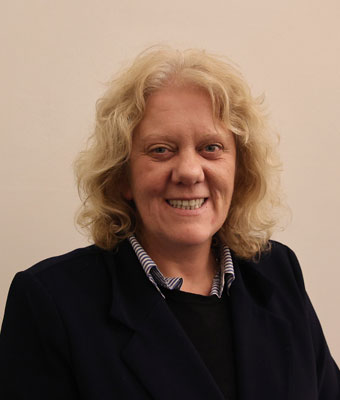
I thank the Deputy very much. Improving access to quality and affordable early learning and childcare is a key priority for Government. Early learning and childcare capacity is increasing. Data from the annual early years sector profile shows the estimated number of enrolments has increased by approximately 19% between 2022 and 2024. However, it appears demand for early learning and childcare remains higher than available supply in certain parts of the country, particularly for younger children.
As announced in the context of budget 2026, €36 million will be available in 2026 for early learning and childcare capital programmes. This will include acquisitions of new buildings through the State-led early learning and childcare programme, continued investment in expansion of existing early learning and childcare operators through the building blocks scheme and a number of quality initiatives, including supports to childminders. The building blocks extension grant scheme earlier this year approved 50 projects to progress to the next stage of the grant process. The scheme will deliver up to 1,500 full day places for children aged between one and three years old. The Department continues to support the ongoing development and resourcing of core funding, which has given rise to a significant expansion of places since the scheme was first introduced. Budget 2025 secured funding for the fourth programme year to facilitate a further 3.5% increase from September 2025. Budget 2026 has made provision for the fifth programme year for a further expansion in supply of 4.2% from September 2026. The total allocation for core funding in the 2026-2027 programme year will increase to €437 million, an additional €44 million on the current full year allocation.
Separately, since August 2024, parent’s leave and benefit have been increased to nine weeks per parent per child, bringing Ireland in line with the EU work-life balance directive. The combined durations of maternity, paternity and parent’s leave and benefit now equate to 46 weeks paid leave for a two-parent family, supplemented by an entitlement to 16 weeks of unpaid maternity leave and 26 weeks of unpaid parental leave per parent. This constitutes significant progress towards achieving the First 5 ambition of enabling children to be cared for at home during their first year, which is supported by substantial research and evidence and reduces the demand for early learning and childcare for very young children, particularly those under the age of one.
I obviously am going to welcome any increases in budget and she is right when she says there are pockets across the country where the demand is far in excess of the places that are available. In County Louth we have 114 childcare services but only 31 of those offer places for children under the age of two. That equates to less than 30%. While maternity leave has been extended, for a family that needs one or both parents to go back to work unpaid maternity leave is of no benefit as they have bills to pay and they need to keep the show on the road. In addition, and despite the advances with men's involvement in family life, an issue that affects women more than men is parents who want to go back to work and progress in their careers while at the same time being able to place their children in care facilities where they are cared for, thereby allowing the parents to go back out to work.
Do we have a timeline for addressing these issues because it is not really acceptable to be below the 30% mark?
I hear the case the Deputy makes but I am obliged to point out the improvements that have been made, which the Deputy has already articulated. Not everybody is in that space but I have to point out the increases to parent's leave and parent's benefit and all of that, although I absolutely acknowledge that does not meet the needs of every single individual. We are very conscious of the need to ensure that there is appropriate provision to meet the needs in different places across the country. Those needs are different and there are greater challenges in some areas and for some ages. In some instances, there may be issues with after-school care and, in others, it might be an issue with the very young cohort the Deputy mentions. Government is prepared to step in to support that equality of opportunity. As I made reference to earlier, there are really three aspects to this. There is the delivery of places, ensuring we have staff in place to man those places, and core funding for the providers. In terms of the delivery of places, €36 million has been made available under the capital plan this year. This will support the development of a State-led model and other models such as the Building Blocks schemes. In terms of supporting workers, €45 million was ring-fenced last year to ensure an increase in salary under the employment regulation order, ERO. Some 67% of workers benefited from that increase because of that €45 million being ring-fenced. A similar ERO will be in place for 2026. With regard to supporting providers, there is a significant increase in core funding, which will reach more than €437 million in 2026.
Do I have another minute?
It is finished, is it? The time is up.

The overall time is up. I will allow the Deputy to speak if she is very brief.
I will be. I thank the Cathaoirleach Gníomhach. He is very kind. I thank the Minister very much for all of the advances she is making. However, back in 1990, Mary Robinson stood up and said that the hand that rocked the cradle had rocked the system. If we do not address this issue and find childcare places for the young babies and toddlers of this generation of young women, the only thing they will be doing in the future is rocking the cradle. There will be no system for them to rock.
Is féidir teacht ar Cheisteanna Scríofa ar www.oireachtas.ie.
Written Answers are published on the Oireachtas website.