Military Neutrality

7. Deputy Colm Burke asked the Tánaiste and Minister for Defence if he will outline the way in which Ireland will balance its policy of military neutrality with increased engagement in EU defence co-operation during its 2026 EU Presidency; and if he will make a statement on the matter. [60416/25]
I ask the Tánaiste to outline the way in which Ireland will balance its policy of military neutrality with increased engagement in EU defence co-operation during the 2026 EU presidency, and if he will make a statement on the matter.
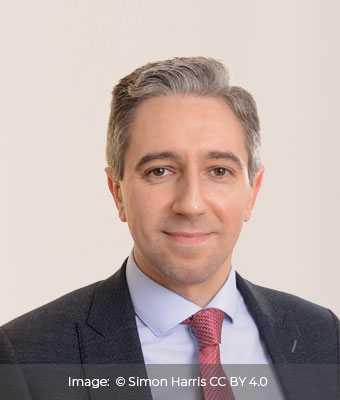
I thank Deputy Burke very much for the question. It is really timely. The first thing I want to say is that Ireland is never going to recuse itself from conversations around defence and security because conversations around defence and security, as the Deputy rightly knows and advocates for, are not the same as conversations about changing Ireland's military neutrality, which we have no intention of doing. When I sit around tables at Europe, there are a number of other countries - not a majority; far from it - that are also militarily neutral. A country can be militarily neutral and take military and defence seriously. In fact, I would argue that there is a greater obligation on you to take the defence and security of your own country and people seriously when it is not militarily aligned as part of any military organisation or alignment.
Our Presidency of the Council of the European Union in 2026 is going to be a major national undertaking. It is a key focus for the work of Government because Ireland will have an opportunity to shape and manage the EU’s agenda for that six-month period. Within the European Union, it is accepted that security and defence is a national competence and that any decisions as regards EU defence arrangements, including any deepening of EU co-operation, does require unanimity. It is within this context that Ireland will balance our policy of military neutrality while holding the Presidency.
It is the prerogative of member states to make arrangements which serve their own national defence needs, which, in Ireland's case, is our policy of military neutrality, as characterised by our non-membership of military alliances and our non-participation in mutual defence arrangements. Holding the Presidency obviously will not change that policy.
Let me be clear, however, the Government remains committed to broadening and deepening our international security engagement as well as our domestic efforts to ensure the security of our country and to allow Ireland to contribute to efforts towards ensuring international peace and security. We are a strong proponent in this country of the important role the EU can play in support of international peace and security. It is essential, therefore, that Ireland remains fully engaged in all processes and contributes fully to the development of policy in order that we can influence its evolution and that our Defence Forces can continue to benefit from this engagement.
Our participation in EU defence initiatives will continue to be guided by a principles-based pragmatism, ensuring that any co-operation respects our sovereign decision-making and legal obligations and will be on a strictly voluntary, project-specific basis.
There are two issues I want to raise. One is in relation to the increase in numbers we require in our Naval Service. It is a big challenge. What progress can be made on that over the next 12 months? It is extremely important from our point of view and from a European point of view.
The second issue concerns a scenario where we had peace in Ukraine. While we all want it, and it would be great if it was in place prior to us taking over the Presidency of the EU, in relation to giving leadership, we would not be able to deploy our members of our Defence Forces there in a peacekeeping mission without a UN mandate. That then would leave us in a very difficult position. On one hand, we are giving leadership within the EU but on the other hand, there is not a mechanism for us to provide personnel to assist in a peacekeeping role in Ukraine should that arise.
On the Naval Service, I am pleased to say I look forward to visiting Cork later this month and, hopefully, visiting Haulbowline with the Deputy. The latest figures available to me are that personnel in our Naval Service stood at 800 at the end of September, which is up from 719 at the end of last year. I am also pleased to say that at the end of September, we had received 2,357 applications for the Naval Service, which is an increase of more than 400 on what we received in the totality of last year. There is a big body of work to do, which I do not dispute in any way, in terms of our Naval Service. I have instructed the Defence Forces to provide me with a regeneration and growth plan for our Naval Service. It is encouraging to see those numbers in terms of recruitment, retention and applications into the Naval Service this year.
On Ukraine, the Deputy is right that Ireland can only partake in peacekeeping missions if they are mandated by the UN. We will not recuse ourselves from that conversation. One would imagine if there was to be peace that was agreed, perhaps that would be possible but I do not know. In the meantime, however, we are continuing to engage with the EU military assistance mission, EUMAM, initiative where we have been providing training to several hundred members of the Ukrainian defence forces.
It is an issue that is going to come up very much. If there is not peace in Ukraine by the time we hold the Presidency, the issue of Ukraine will be very much to the forefront in any EU discussions. We will then be required to provide leadership in that area. I think the Tánaiste will accept that it will be a challenge on the basis that no matter what happens, we cannot go in there and provide support and help without a UN mandate. As we all know, a number of countries have a veto in relation to any UN mandate and that has not happened for quite some time. We need to really have a discussion on what our role is in this whole area when we hold the Presidency. We need to plan for a number of different scenarios so that we can carefully manage it and at the same time provide the leadership that is required at European level.
Certainly, when we hold the Presidency of the Council of the European Union in the second half of next year, our priority from a foreign affairs point of view in relation to Ukraine will be to work very closely with the European Union and with international engagement processes, including with the United States. I intend to work very closely with Ms Kaja Kallas, our EU High Representative of the Union for Foreign Affairs and Security Policy, in trying to bring peace to this horrific conflict. The Deputy is quite right that there is a huge amount of talk and effort put into trying to bring about peace. Unfortunately, that all looks somewhat like folly when we see Putin showing no interest in peace. I believe from a European Union point of view, and this will be Ireland's position, we need to continue to apply economic sanction on Russia to get Putin to change his nexus or his calculus in relation to his illegal aggression. Therefore, it is about continuing to work at a European level to try to maintain that European unity and solidarity in relation to Ukraine. Then, if we get to a point of peace, obviously, Ireland will be wanting to participate in conversations about how we can play a constructive role. However, I think the big challenge, if the war has not ended by then, is going to be to try to bring about peace and be a strong voice in terms of ending the conflict and using the levers at the EU's disposal to maximise that pressure.
I am sorry but there is just one final thing I want to mention and that is the respect that Ireland and the Irish Army has.
I have been in two conflict zones where the Irish Army was. It is important we build on and maintain that and work in particular at a European level on it.
Defence Forces
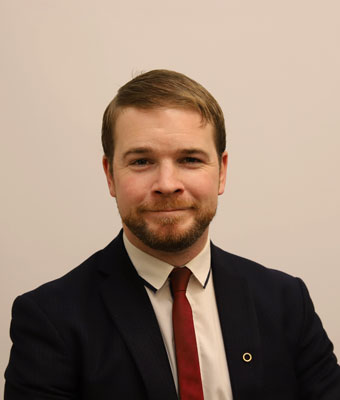
8. Deputy Donnchadh Ó Laoghaire asked the Tánaiste and Minister for Defence to provide an update on the issue of chaplains, who are without representation despite working for, and being paid by, his Department. [60515/25]
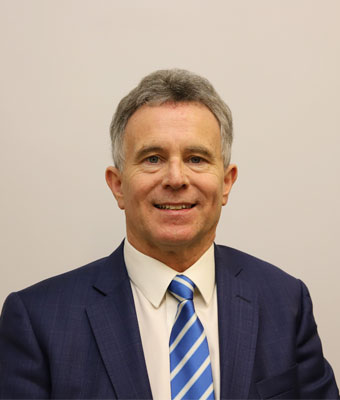
69. Deputy Sean Fleming asked the Tánaiste and Minister for Defence in view of his support for chaplains to the Defence Forces having representation, his plans to agree to amending the PDF’s conciliation and arbitration scheme to provide for such representation in this administrative scheme; and if he will make a statement on the matter. [60435/25]
In August 2024, Fr. Paul Murphy was the subject of a heinous attack at Dún Uí Mhaoilíosa in Galway. It was an appalling attack. It underscored the vulnerability of those serving in the unique and vital role of military chaplains to our Defence Forces. I am seeking an update - I know it was discussed recently - on the issue of representation for chaplains working for and paid by the Department of Defence.
I propose to take Questions Nos. 8 and 69 together.
I join Deputy Ó Laoghaire in paying tribute to Fr. Paul Murphy. I have had the honour of meeting him on a number of occasions. He is currently serving in and possibly about to return shortly from Lebanon, where he has gone with our troops, which underscores the Deputy's point about the distinction with which our chaplains serve. Fr. Paul showed huge bravery and courage that night. I recall talking to him in the aftermath of that horrific attack. I was really taken by his absolute Christianity and humanity. He is quite an incredible person. The Deputy's point is entirely right. Without wanting to shock him, this is one I fully agree with him on.
I acknowledge the excellent work undertaken by our chaplains. I am in no doubt about the importance of their work in providing pastoral care and maintaining the morale of members of the Permanent Defence Force, most particularly when they can be under difficult or testing conditions while serving abroad. The contributions and sacrifices made by Defence Forces chaplains over the years are widely recognised and appreciated by the Defence Forces, my Department, the Government and the people of this country. Chaplains are not subject to military law, other than when accompanying members of the Defence Forces on active service. Chaplains are responsible for the pastoral care of members of the Defence Forces. Up until now, they have been appointed to a military installation by their bishop or religious superior after consultation with the head chaplain and following approval by the Minister for Defence. With regard to chaplains and their representation, I have asked for proposals to address this urgently. I said this at the RACO conference in Mullingar in recent weeks, where it was one of the issues highlighted. This needs to be resolved. I intend to resolve it once I have received proposals from my officials in the next few weeks. I am happy to engage with the Deputy.
Perhaps there is not a great deal more that can be added to that. Fr. Murphy, in particular, is regarded with great affection and trust by members of the Defence Forces. He responded to that attack with great courage and a great deal of grace as well. It is an important role. This was discussed at the RACO conference. As outlined, the legal advice is that chaplains are not members of the Defence Forces but it is difficult to reconcile that with the reality that they wear the uniform, they are employed overseas and they are remunerated by the Department of Defence, as well as other elements. The objective of RACO is that they would receive the allowances, protections and entitlements afforded to all other members of the Defence Forces such that in practical terms, chaplains would be members of the Defence Forces even if legally that is not the case. There are examples in others sectors. School chaplains are represented by the INTO, so there is a precedent.
I agree entirely with the policy principle and I will work with the Deputy and everyone in this House to fix it. I am very clear on that. To flag some information that may be of use to the House, we probably will need to change legislation but we are legislators and there is no reason we cannot do that. At the moment, chaplains are free to join almost any union or representative association of their choice - the Deputy mentioned one example - with the current exception of the military representative associations, RACO and PDFORRA, hence the problem. The law applicable to representative associations is outlined in the Defence (Amendment) Act 1990. Section 1 of the Act defines a member in this context as "an officer, non-commissioned officer, private or seaman of the Defence Forces". RACO is limited in law to representing officers of the Permanent Defence Force and chaplains are not classified as officers so they cannot be represented. That is the legal issue and where we have to fix it. I am clear that we need to work together on it. I have asked for proposals from my officials within the next few weeks and then we will work out the quickest way of bringing forward and changing any legislation that may be required.
As I said, there is not a great deal to add. If it is being worked on, that is welcome. Please keep us updated. It was suggested that a defence amendment Bill may be in the pipeline. I cannot say I will vote for it but I might vote for that section. Please keep the House and the committee updated. I appreciate it is not possible in the current legislative framework but it is logical and welcome that that be addressed.
I agree.
Cybersecurity Policy
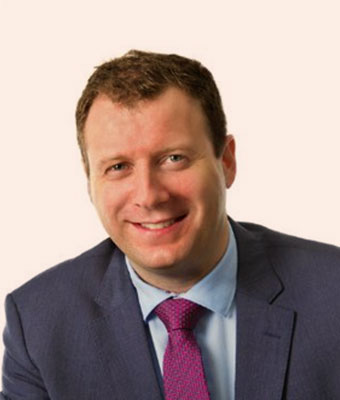
9. Deputy Pádraig O'Sullivan asked the Tánaiste and Minister for Defence the measures being taken to strengthen our cyber defence capabilities; and if he will make a statement on the matter. [59446/25]
174. Deputy Donnchadh Ó Laoghaire asked the Tánaiste and Minister for Defence the progress his Department has made regarding the establishment of a joint cybersecurity command and other actions related to cybersecurity contained in the Report of the Commission on the Defence Forces.; and if he will make a statement on the matter. [60523/25]
This is going to be a challenging area for this and every jurisdiction. I know work is being advanced. Returning to the area of specialist personnel, it is an area that is going to be crucial. Will the Minister provide an update on developments? I know some specialist staff have been taken on. I think we determined previously that the cybersecurity command has been established. Will the Minster give an update on the next number of actions in that area?
I propose to take Questions Nos. 9 and 174 together.
As recognised in the report of the Commission on the Defence Forces and accepted by the Government, the Defence Forces need to be capable of delivering military effects across the cyber domain. To this end, my Department published a high-level action plan for the report of the Commission on the Defence Forces. This included recommendations relating to the Defence Forces' cyber defence functions. As a result, the Defence Forces have established a joint cyber defence command. This command will be able to conduct full-spectrum cyberspace operations to robustly defend against cyber threats, support Defence Forces operations at home and overseas and enhance our national cyber defence resilience and contingent capabilities.
A Defence Forces cyber defence strategy 2024 to 2027 was published last year. This strategy sets out a comprehensive roadmap to ensure that our Defence Forces achieve operational capability in the new domain. To give effect to this strategy, Defence Forces specialists have been assigned to the operation of this unit. I very recently approved a new Defence Forces officer to that role at the higher rank of brigadier general level. In addition, my Department engaged with the Public Appointments Service to recruit civilian cyber specialists to embed them in the joint cyber defence command. It is intended that such posts will be filled as soon as possible. We are funded to fill them; we are just going through the recruitment process. I am satisfied that from a defence perspective we are now on a positive trajectory to ensure that this new cyber defence command unit is well positioned.
We published the high-level action plan in relation to the Commission on the Defence Forces. This included recommendations to create a joint cyber defence command that should manage Defence Forces IT services, CIS and cyber defence. It recommended that we update and publish the cyber defence strategy in line with best international practice and that we provide for additional specialist personnel at part of a joint cyber defence command managing cyber defence, defence IT services and CIS. All actions have been progressed. We now need to build on that in the time ahead. To ensure the new unit has the appropriate support infrastructure, my Department approved the development of a dedicated IT operations and cybersecurity block in McKee Barracks through the refurbishment of an existing building. McKee was chosen as the location to consolidate a number of current operations and provide the necessary high-end infrastructure requirements to support future operations in the cyber domain. The project is at design stage. The design team was appointed in June. The project will cost around €1.9 million. It is proposed to procure a construction contract by way of a restricted tender competition. This facility will provide for the increasing recruitment needs in terms of space of the joint cyber defence command.
We welcome the progress that has been made. A lot more personnel will be needed over time, particularly when you look at the scale of personnel envisioned in the Commission on the Defence Forces. We could do with some clarity on the relationship between the cybersecurity command and the National Cyber Security Centre. It was previously answerable to the Department of communications. It is now in the Department of justice and home affairs. I am open-minded but is there any danger of having too many cooks? Is there a clear understanding? I would imagine that if the National Cyber Security Centre is located in the Department of justice, the primary responsibility for cybersecurity policy therefore rests with the Department of justice.
Operationally, what does that mean? Is the national cybersecurity command answerable to the cybersecurity centre or what exactly is the relationship?
It is a good question. Let me get a detailed note to the Deputy to fully set it out because there have been changes to this area. The decision to relocate the National Cyber Security Centre to the Department of justice is a good one. It is something I have advocated for for quite a while. There are very good people in it but I never felt it was an appropriate fit in the Department of communications because security is always an issue led by the Department of justice. The idea that some element of security would be led by a Department other than the Department of justice or Defence did not make much sense to me.
The Department and Minister for justice lead on cybersecurity and national security; that is clear. Obviously, the Defence Forces and the Garda have specific roles and they feed into the National Cyber Security Centre. Regarding command control and who the structures within the Defence Forces are to answer to, it is the normal military chain of command. At political level, we have also recently established a national security ministerial council, which I am a member of and the Taoiseach obviously chairs, as well as the Minister for justice. That enables us to bring things together at political and Government level.
I know I am over time but the Deputy asked previously, we have assigned 19 Defence Forces specialist posts to the joint cyber defence command to start this and we are also currently seeking to recruit ten civilian cyber specialists.
That is welcome. There are still multiples of that envisioned under the commission on the future of the Defence Forces. Off the top of my head, it was about 300 but that is from memory so I might be wrong on that.
We are in a fortunate position that the intelligence elements of the Defence Forces and the Garda have a good working relationship but that is not necessarily the experience in every jurisdiction and should not be taken for granted. Similarly, in this regard, it should not necessarily be taken for granted. We have to work towards ensuring the relationship between cybersecurity command and the cybersecurity centre is good but also clear and defined. I do not need a further response beyond that but that is important. It is also probably important we have a greater sense of precisely the relationship, the chain of command and the various responsibilities of the two bodies, both of which are very important.
I agree with that and I am satisfied the chain of command is quite clear. It is an appropriate thing for me to provide the Oireachtas or the Minister for justice with a written clarity on that and I am very happy to do so.
Weather Events
10. Deputy Keira Keogh asked the Tánaiste and Minister for Defence the preparedness of the Defence Forces in extreme weather events; and if he will make a statement on the matter. [60427/25]
In light of the disastrous effects of Storm Éowyn in January, can the Tánaiste make a statement on the preparedness of the Defence Forces in the event of further extreme weather events?
I thank the Deputy for the question, which is important and timely. It was an issue many of us in this House as constituency TDs were grappling with in trying to support our communities in the run-up to and the aftermath of the horrific Storm Éowyn, which had a devastating effect on many parts of the country, most particularly perhaps the west and north-west.
As the Deputy knows, the Minister for Housing, Local Government and Heritage, Deputy Browne, and his Department are the lead Department for preparing and responding to severe weather events but the Office of Emergency Planning, under my Department, assists and provides support to the lead Departments during emergency events. I chair the Government task force on emergency planning and I have made it very clear that lessons identified from recent events are to be incorporated into future planning and resilience to minimise the impacts of climate-related emergencies on our communities. To this end, the Department of housing has completed what it calls the lessons learned process following Storm Éowyn. My colleague, the Minister for housing, Deputy Browne, published the lessons learned report on Storm Éowyn last month. The report highlights the necessary response actions taken by the National Emergency Coordination Group and details recommendations considered necessary to try to build on the strengths of the existing co-ordination structures, while also acknowledging the need for continuous improvement with a specific emphasis on community support measures and strengthening the resilience of our critical infrastructure.
Turning to the role of the Defence Forces, as the Deputy will be aware, they are not the first responders in either the preparedness or the recovery phases of events. Their role, when called upon, is to assist civilian authorities in dealing with the various challenges that can be present. In the context of recent weather events, the supports provided by the Defence Forces included: the provision of helicopter flights carrying ESB personnel in order to identify the extent of damage to the affected network; the collection and distribution of generators from Dublin Airport to sectors that had been worst affected; and the making ready of accommodation for ESB crews involved in restoration works with the network if needed.
The Defence Forces continues to stand ready to assist in all emergency scenarios as part of a whole-of-government and whole-of-society approach at both a national and local level.
The Storm Éowyn review makes it clear the most prolonged impacts were felt in counties on the western seaboard, including Mayo, where access was cut off, in some cases, for days. Power outages were widespread and vulnerable people were isolated once communications and electricity failed. The review also acknowledges real progress with expanded generator capacity from Uisce Éireann, strengthened community support centres and, crucially, the roll-out of additional satellite communications to protect the emergency response when the networks collapse. Has the Department carried out a technical assessment of the Defence Forces' storm and post-storm readiness, particularly their availability of trained personnel, engineering assets, off-road mobility and the speed with which they can be deployed in rural and isolated counties, such as Mayo? Is the readiness now aligned with the new communications and resilience investments made since Storm Éowyn?
I agree that what worked well during a very difficult storm was the investment in community. We saw it in our own counties and constituencies where there had been investment in sports facilities, community facilities and vehicles. The ability of those local assets to be deployed and put to use stood up very well. I noticed, as would the Deputy, how many GAA centres, changing room facilities and all that were put to use.
What is absolutely needed is national leadership and co-ordination and I do not shirk this at all. During these events, we become so reliant on the local community response. I made this point recently in government and I will make it again today that it is very important that as well as the national plan that we see county-by-county plans. What happens if a council hears a bad storm is going to hit Wicklow or Wexford? What actions are taken, what do Wicklow County Council and Wexford County Council do, and how is that co-ordinated? That is the next piece. Good work is going on on that. Every county is meant to have its own plan but that is important. Satellite facilities are very important. We saw how dependent we have become on that.
With regard to a security review, there is the Office of Emergency Planning which has funding from the European Commission and support from specialists in the World Bank to conduct a comprehensive review of Ireland's emergency management approach and this is expected to be concluded by the end of the year.
I really welcome investment in Defence Forces. I will never forget when I was canvassing in Arklow and I went to the house of a young soldier who had come back from Lebanon after six months. I went there out of respect because I was called by community leads, who had a little function for him. He had come back from the Lebanon after six months, as I said, and I think he was in the 124th regiment. I could not get over how young he looked but it was the reaction of his parents to seeing him. We can never underestimate that. As somebody said to me, when somebody joins the forces, their family joins the forces. We can never underestimate what these young men - these young Adams - and women are doing for our country in keeping the peace abroad but also what they mean to their communities. He joined the force because there was a man, Jim Ford, around the corner who was there and he was his idol. It is very important the Tánaiste continue the investment into the Defence Forces and personnel.
I fully agree with the Deputy and thank him for saying that.
I was in Custume Barracks last Friday for the review of the 127th battalion, which is being deployed this month. I have done many of these but I was very struck by exactly what the Deputy said - the youth. I met a young 19-year-old man who will be the youngest person deployed. I was also struck by the man I met with his ten-month-old baby and his partner. He will be away for that child's first birthday and for Christmas. This is the sacrifice the men and women of Óglaigh na hÉireann pay and their families pay. It is also fascinating when talking to them that so many have a family tradition. I meet the young man or woman and I meet the grandfather as well; it is that level of service. I always make the point of paying tribute to the men and women who serve with such distinction in Lebanon and other parts of the world but also the families who sacrifice a huge amount always but particularly at important moments like Christmas where there is an empty chair at home. That is why it was important that we took the decision to establish a new office of veteran affairs this week because we owe a duty to those who have served with distinction, not just while they are wearing the uniform but in the aftermath of that too.
Naval Service

11. Deputy Duncan Smith asked the Tánaiste and Minister for Defence the current levels of staffing in the naval force as of October 2025; the operational capacity of current staffing levels in regard to naval vessels; the timeframe for recruitment to ensure operation of all existing vessels; and if he will make a statement on the matter. [60493/25]
30. Deputy Donnchadh Ó Laoghaire asked the Tánaiste and Minister for Defence the capacity in the Naval Service, in terms of personnel, specialist personnel and fleet; and if he will make a statement on the matter. [60510/25]
I continue to be deeply concerned about the level of staffing in the Naval Service. I ask for an update on the operational capacity of the current staffing levels of our naval vessels and the timeframe for recruitment to ensure the operation of all existing vessels.
I propose to take Questions Nos. 11 and 30 together.
I am advised by the military authorities that the strength of the Naval Service, as of 30 September 2025, the latest date such figures are available, is 800 personnel. This is up from 719 personnel at the end of 2024. Let me be honest and say that the establishment strength is 1,094. We are below the establishment strength and we need to get to that number.
The Naval Service currently has a fleet of eight vessels. Four of the vessels are regularly deployed on maritime defence and security operations. These four vessels consist of three P60 class vessels as well as the LÉ Aoibhinn, with all four vessels conducting patrols on a rotation basis. Any decision to deploy additional vessels on maritime defence and security operations is made by the military authorities.
Challenges in the recruitment and retention of personnel in the Naval Service are well-documented and a wide range of recruitment and retention initiatives have been introduced to address these. These include: an increase in the maximum recruitment age to 39 for those roles that had a recruitment age below that, and to 50 for direct-entry officer specialists; an increase in the mandatory retirement age to 62; a doubling of the Naval Service patrol duty allowance after ten days; the extension of the Naval Service tax credit for a further five years; the application of the working time directive across the Defence Forces in January of this year, subject to certain exemptions; and the extension of the provision of private secondary healthcare to all members of the Permanent Defence Forces. There has also been significant progress on pay with the most recent increase paid in August of this year.
Recruitment is presently ongoing through a wide range of pathways, including general service recruitment, re-entry schemes and eight Naval Service-specific direct entry competitions.
Applications for the Naval Service have been very strong this year - I met the commodore yesterday - with the total number of applications received as of 30 September being 2,357, which is 400 more than was received in all of last year when the total was 1,917. Recruitment to date for 2025 has been robust, with 150 inductions to the Naval Service as of 30 September. This is 80 more than the same period last year and 53 more than the total achieved for 2024.
In addition, significant growth in specialist recruitment has been achieved. Since taking up this role, I have learned very quickly that specialist recruitment for skills needed to get a ship to sea is very often the pinch point. As of 30 September, there have been 16 direct entry inductions into specialist roles in the Naval Service, which is the highest number in five years. Some challenges undoubtedly remain but significant progress is being made on a number of fronts. I thank those behind this work in the Naval Service. It is my intention to visit Haulbowline this month. Perhaps this is something we could arrange for the defence committee to do in the new year as well. It would give members the opportunity to engage directly with the Naval Service at the base in Haulbowline. I have also directed the Defence Forces and the Department of Defence to publish a joint plan on Naval Service regeneration and growth. I expect to also receive that this month. Once I bring that to Government I will be very happy to brief colleagues and engage with them on it.
I thank the Tánaiste for the detail in his reply. He mentioned the difficulty in hiring specialists. A total of €250,000 has been spent this year for external contractors to service naval vessels due to the lack of trained personnel. In August, we read a report that the €300 million project to purchase Ireland's biggest ever naval ship is in the doldrums, as senior Defence Forces personnel seek a more combat-orientated vessel. I am unapologetic in wanting to see, as I am sure the Tánaiste is, an increased naval presence given the threats in our waters. With the level of interest shown by 2,357 applicants, will we get to the establishment strength of 1,094 over the next 12 months, or is there still a way to go to meet that number?
The Naval Service is of particular importance to us as an island nation. It is essential. We talked about the full radar picture earlier. It is crucial that we have the capacity. It is unacceptable that we have had a situation over the past year and a half that ships have been put to sea without a functioning main gun because of inadequate personnel. I raised the issue of artificers earlier, and marine engineering officer teams are operating at roughly half strength. This is resulting in increased workload, added responsibilities and declining morale. This potentially runs the risk of some of those personnel, even adding further to the problem, by departing from the Defence Forces. In some of those critical specialist areas, the numbers remain critically low. This remains the case and has real operational implications and personnel implications. Along with the full radar picture, it is perhaps the most pressing need from a national security point of view to ensure that our naval capacity is brought back to something resembling an acceptable level.
I agree with much of what has been said. We need to invest more in our Naval Service and we are doing so. Crucially, we need to do things, namely, increase the number of people in the navy and we need to increase the capabilities and infrastructure of the Naval Service. Work is under way on both fronts. This year will see a significant increase in patrol days at sea on last year. It will see more people in the Naval Service this year than last year. This has already happened. It will see the highest increase in direct entry in five years. That is under way. With decisions made this year, in 2026 very important radar capabilities will be rolled out. A lot of good work is ongoing. I do not say that in relation to the Government but rather in relation to the work being done by the Defence Forces and I thank them.
Deputy Smith has asked me an honest and fair question about whether I am satisfied we will be able to get to the establishment figure of 1,094. Perhaps I could extend the question on to LOA 2. I am satisfied we will be able to continue to increase the numbers and that we are on an upward trajectory. More interventions will be needed to have a step change. That is why I have asked the Chief of Staff to produce a workforce plan by the end of April, which I will then publish and share with Members. This will show how the Defence Forces believe we can get to the figure of LOA 2 by 2028, which is 11,500 people overall, broken down between the Air Corps, the Navy and the Army. It will identify the pinch points. Some might be on our side regarding policy and some may be on their side in terms of training capabilities. We will have this plan by the end of April.
I appreciate the Tánaiste's candour in terms of the numbers going up, but we may not be able to meet the establishment figure. I hope that we will and we really need to strive for it. The Russian shadow fleet as a huge threat and our undersea cables are very vulnerable. Our neutrality is best served by being able to stand on our own two feet and to engage with our allies on our terms rather than having to rely on the likes of British armed forces or the Royal Air Force in our skies. This is where we need to get to and we can only do that through investment, recruitment and offering a career that is financially rewarding and rewarding on a skills level so that people feel they are part of something bigger, which our Defence Forces actually offer. However, we are still far behind where we need to be. A lot of the improvements will come from actions that have been outlined and more. We also need to be framing this differently at a political level to attract people into the Naval Service.
I agree with all that has been said by Deputy Smith. I will also flag the issue of cadets. We spoke about cadets and subsequently officers in the Defence Forces as a whole a short time ago, where serious challenges exist. In the 63rd naval cadet class, six cadets commenced training but only two were commissioned. The remaining four withdrew before commissioning, citing the extended service commitment associated with naval officer training as the primary reason for their departure. The length of these undertakings needs to be reviewed as well as the terms and conditions. We need a mixture in the Naval Service. We need to ensure there is an adequate number of personnel as a whole. We need to ensure that there are enough cadets, from an officer's point of view. We also need to ensure that the specialist staff are there to ensure that ships going to sea are safe. A ship and the personnel required in it is a machine in several respects and each part is necessary. We do not have enough of hardly any of the parts at this point in time, particularly specialist staff.
Regarding the shadow fleet, I also remain concerned, as do European and international counterparts. As we continue to sanction Russia to get it to end its brutal and illegal invasion of Ukraine, these sanctions need to capture the activities of the shadow fleet.
What I would say, and say to those outside this House too, without commenting on important national security issues, is that we are obviously plugged to a range of structures in terms of information exchange and working with others on monitoring situations. We have our ships at sea and our Air Corps. We made a decision, as the Deputies know, to join an information exchange system this year, which is really important for exchanging information with European counterparts on what they might see in their sea heading in our direction and vice versa. We will have a new national maritime security strategy published shortly and over 300 submissions have been made to that.
Recruitment is very much going the right way. Last year was the first year in quite a number of years we saw any stabilisation or increase in the membership of the Defence Forces. This year we will see a significant improvement on that. What I said to our Chief of Staff yesterday is that in and of itself it is not going to be enough. This is a view he and I share. We are going to have to look at what more can be done. We have established a major training centre that will have huge capacity by 2027, I think, in that it will be able to take in 1,000 recruits a year. We need to ensure all the pinch points are addressed.
Regarding Deputy Ó Laoghaire's point, the encouraging thing is there is huge interest now in joining the Defence Forces. Whether it is the Air Corps, the Naval Service or the Army, the number of people saying they want to join is going up and we need to make sure we have processes in place to speedily respond to that in a very competitive market for attracting people. I have outlined to the House a number of measures we have taken to try to make such a career more financially attractive. I accept there are issues with cadet pay. I addressed this at the RACO conference and I am committed to my Department engaging with the Department of public expenditure and representative bodies on that matter.
Defence Forces
12. Deputy Catherine Callaghan asked the Tánaiste and Minister for Defence to provide an update on Ireland's proposed participation in the EU's SAFE initiative; and if he will make a statement on the matter. [59616/25]
Gabhaim buíochas leis an Teachta Callaghan as an gceist. SAFE, which stands for Security Action for Europe, is an EU instrument designed to provide member states with up to €150 billion of loans backed by the EU budget to provide financial assistance to member states to support their urgent public investments in defence, increase production capacity, improve the availability of defence products and address capability gaps. Ireland supported the adoption of the SAFE instrument and is availing of possibilities available under the SAFE regulation which will allow our country to realise our ambition more quickly and more efficiently. I am determined to provide for the development of a full spectrum of Defence Forces capabilities that will bring Ireland in line with other similar-sized European countries when it comes to defence and security. The Government continues to invest significantly in defence through our national budget. We saw an increase in capital funding to €1.7 billion. The funding represents an increase of 55% on the figure for the previous five years or €600 million. This increase in funding will be utilised to address long-standing capability gaps, modernise core infrastructure needs and support the delivery of defence responsibilities.
In the first instance, I have agreed that the Department of Defence should leverage the common procurement opportunities offered under the SAFE regulation as much as possible, so we have decided to opt in to the common procuring under that regulation. By procuring jointly Ireland can achieve lower prices, quite frankly, than we could if we were procuring alone and we will not be competing against other member states for limited resources and we should be able to access additional capabilities more quickly. That is part 1 of the regulation. With part 2, the question is whether we want to draw down loans under the funding mechanism. A decision was taken in conjunction with the Departments of Finance and Public Expenditure, Infrastructure, Public Service Reform and Digitalisation not to draw down funding via the loan mechanism at this time. However, I have engaged and I expect a second round of calls to be made about that, so we do not rule that out at all. We have prioritised very significantly increasing our capital and current budgets for defence. That is where we are putting our initial resources. We are using the procurement mechanism to jointly procure while keeping the option open to opt in to a loan or funding mechanism at a future date.
I thank the Tánaiste for his response. It is very important to acknowledge the marked increase in our defence budget. We are making good progress and it is really important that this momentum should continue. I mention the second part of the SAFE regulation, which is the loan. One way I would have liked to have seen this momentum continue was through availing of the SAFE loan. It was a loan that was very competitively priced and had a long maturity and for me it is a missed opportunity. I understand fully the logic of not wanting to borrow money when we have a very healthy surplus thanks to the work and commitment of the Ministers, Deputies Donohoe and Chambers, but this loan had other advantages too. It would have really bolstered Ireland's commitment to European solidarity and security, especially in light of the ongoing war in Ukraine and increasing threats to our critical infrastructure, including undersea cables that are vital to Ireland and the EU's digital economy, but also to our democracy.
On the joint procurement under SAFE, we have already opened up the contract for the supply of integrated modular body armour systems to other member states, so we are now providing opportunities for other EU countries as well. This means the work of doing more together, co-operating and playing our part in SAFE has started.
On the loan facility, if we think of a domestic household, the credit unions offer very favourable rates but if people have a load of money sitting in their own savings accounts, they do not go down to the credit union to borrow. That was the decision we made in the first instance. I want to be clear as Minister for Defence and as a coalition leader that if money is not forthcoming at the pace needed to get to LOA 2 and deliver for the men and women of Óglaigh na hÉíreann and for national security, we absolutely reserve the right, which I intend to activate, to go back and have further engagement with SAFE so we do not take ourselves off the pitch in relation to this in any manner or means. However, our collective priority was to maximise the amount we get into our own capital plan through the money we have in this country and that is where we have put our energy in the first instance. That said, I certainly do not rule out, and have had conversations about, further SAFE calls from a borrowing point of view that may happen in the future which we may well avail of.
I thank the Tánaiste. That is very reassuring to hear. The logic of creating the SAFE regulation was to ensure EU money stayed in the EU to support and encourage European enterprises to be developed with the long-term goal being to strengthen Europe's industrial and technological base. At a recent defence committee meeting, the Department of Defence said that out of the €340 billion spent on defence purchases by European countries, 80% of that went outside the EU. It is to be applauded, therefore, that the EU is working in this way to ensure our industries and economies will benefit from the necessary increase in defence spending across the Union. There is no doubt that in a small nation like ours the opportunities for economies of scale in procurement are greatly increased by us joining other defence forces across the EU for procurement purposes. As the Tánaiste has said, we get better value for the State's money and equipment can be delivered more quickly too.
What measures is Ireland taking to ensure our SMEs are promoted to other member states as being open for business and part of SAFE procurement options to ensure Irish SMEs have the opportunity to join international consortiums and secure opportunities in high value sectors?
The Deputy is entirely correct the benefit of being able to jointly procure is real. It is real in terms of speed and value for money. She is also right that if we have learned anything over the recent period with a war on the Continent of Europe and the turbulent trade environment, it is that being more resilient as a European Union and the opportunities that gives us in terms of our security and defence - but also those economic opportunities to produce equipment within the European Union - are real. I am currently in discussions with the Minister for Enterprise, Tourism and Employment on how we look at the mandate of Enterprise Ireland to enable it to assist Irish SMEs that may well be able to do more in this space and wish to do more but perhaps have not been covered by the existing Enterprise Ireland mandate. There are huge opportunities for Irish businesses at a time when Europe is going to be spending a lot more in this space. I will ask the Minister to keep the Deputy updated on that too.
13. Deputy Paul McAuliffe asked the Tánaiste and Minister for Defence if as part of the implementation of the working time directive in the Defence Forces, he will provide a timeline for the delivery of the welfare measures under strand 2; and if he will make a statement on the matter. [60386/25]
I thank the Deputy. As he will be aware, in January of this year the blanket exemption from the Organisation of Working Time Act for Defence Forces personnel was removed and most Defence Forces personnel now enjoy the protections of the Act. Due to their specific nature, a number of activities are exempted from the provisions of Act and compensatory rest periods and other protections were agreed for personnel undertaking these activities. Those protections for exempted activities formed what the Deputy refers to as strand 2 and are encompassed in a letter to the representative associations.
A number of strand 2 measures have already been implemented, including the provision of one return commercial home reunion flight to Ireland in respect of an operational tour of duty of six months, where the security assessment by the military authorities determines the individual cannot avail of leave in-theatre.
In addition, enhanced Wi-Fi services have been put in place in United Nations post, UNP, 2-45, which is used by UNIFIL. I am further advised that military management is continuing to progress the remaining protections set out in the strand 2 communication. I have directed that this body of work be concluded without delay. Those measures requiring additional funding beyond existing resources are to be addressed in line with the normal Estimates process.
Most people understand this and want our Defence Forces to be able to avail of the working time directive. Most people will also understand that there are times when those in the Defence Forces cannot avail of elements of that directive. That issue can arise when overseas, for example. What compensatory measures can we put in place? The flight home is one example. That is now in place. The upgraded Wi-Fi in the UNIFIL premises is another example. I have directed that military management now conclude the advancement of the remaining measures in strand 2 as quickly as possible.
Among the concerns of the representative associations is that, while this has been negotiated and agreed at the top level, there has been no audit of the provision of services that are currently lacking and no new bespoke budget has been created to start delivering these provisions or services. Any improvements that are being delivered seem to be somewhat haphazard or delivered by local engagement. The representative associations do not seem to be aware of any budget, plan or direction being provided despite having asked. Will the Tánaiste address those concerns?
There has been extensive consultation with civil and military management and with the Defence Forces representative associations with regard to implementing the working time directive for members of the Defence Forces and the associated proposals for a legislative framework. We have a conciliation and arbitration subcommittee on the working time directive. This is a matter for formal consultation with the representative bodies. I thank PDFORRA and RACO for their constructive and proactive engagement. My Department and I are absolutely willing to engage with the representative associations on any outstanding matters around implementation through this subcommittee. I highlight that operationalisation is a matter for military management, which I know will take this seriously. I understand that a meeting of the working group subcommittee is due to be held shortly. On foot of the Deputy's question, I will suggest that this be scheduled as quickly as possible and that this subcommittee becomes the forum through which the outstanding matters can be progressed with the representative bodies.
The Tánaiste mentioned Wi-Fi as one of the things being looked at but there are other deliverables, including additional or increased bottled water and rations for overseas locations and improvements to laundry and recreation facilities across Defence Forces locations at home and overseas. Perhaps something in that regard could also be looked at.
I want to see this body of work completed quickly. I am really proud of the work that was undertaken and the measures that were put in place in January that finally removed the blanket exemption from the working time directive for the Defence Forces. That is an important recruitment tool and it is an even more important retention tool. It is also an important recognition of the important work done by the Defence Forces and the need to protect our Defence Forces personnel. Obviously, there was complexity in introducing the working time directive for our Defence Forces, including the Army. As a result, alternative compensatory measures were put in place. Good faith now needs to be shown by all sides in bringing this to a conclusion as quickly as possible. I will certainly use my own leadership and interest to get us to that point.
The next question is a grouped question and we will not have time for it so we will move on to questions to the Minister for Climate, Energy and the Environment.
Energy Prices
83. Deputy Pa Daly asked the Minister for Climate, Energy and the Environment the engagements he has had with the regulator and energy suppliers to ensure that the determination of PR6 and the renewable heat obligation do not place upward pressure on household energy bills; and if he will make a statement on the matter. [60288/25]
The amount that can be raised through network charges to fund grid upgrades and the renewable heat obligation will come up soon. The Minister mentioned he has spoken to energy suppliers, but has he spoken to them as well as the regulator on the pressures these will put on household energy bills? While we accept that investment in the grid and transition to renewable heat are essential, what safeguards will be put in place to shield householders from increases?
The programme for Government acknowledges the increased energy cost pressures on households and businesses. I know, as I said earlier, that that is a real issue for people. The programme for Government commits to bringing forward additional measures to address those costs, and we have discussed that. I established a cross-government energy affordability task force. We identified particular measures, which we have dealt with in this budget. A further piece of work we are doing, which I will bring forward, is the final report in 2026. That will look at network charges, structures and so on. There will be a European dimension to this too, and it requires movement from Europe, particularly with regard to the spark gap. That needs to be addressed.
We are committed to reaching our legally binding targets on climate neutrality. We are also committed to bringing about energy sovereignty in this country. As Deputy Ó Cearúil mentioned in the previous question, we have a real opportunity to do that and to secure for ourselves clean energy that is generated and owned by us and that will help us decarbonise our society and reduce our energy bills.
Given the potential impact the RHO could have on end customers, energy affordability and the impact on household energy bills were key considerations in developing the scheme. My Department has carried out extensive analysis and stakeholder engagement, including with energy suppliers, to ensure that final decisions taken in relation to the scheme are evidence based and supportive of its successful introduction. A number of scheme parameters have been designed to allow flexibility to obligated parties in meeting their obligations, which will in turn reduce the overall burden on the end consumer.
Responsibility for the regulation of the electricity market and the implementation of the price review 6 process and its outcomes is a matter for the regulator, the CRU. The CRU is independent and, in relation to the outcome of the price review strategy and associated issues, the Deputy can and may wish to engage directly with it. He should note, however, the significant equity investment the Government is making in the system operators, which we discussed just last night. That in itself is significant-----
Thank you, Minister.
Okay. I will come back in on some of that.
Most people will know, and the people in the Gallery will know, that the need for the grid upgrades is driven in part by the growing energy demands of data centres, whose usage has increased by 400% since 2015. Therefore, all the extra energy we are creating in renewables is being gobbled up by the data centres. The Government's own officials last November, in a memo issued by the Department of public expenditure, pointed out that the upward pressure on energy bills is due mainly to data centre expansion. That followed a warning from the Secretary General of the Minister's own Department in May that data centre growth could threaten our ability to solve the housing crisis. We have repeatedly highlighted the unfairness in the funding model for our grid, but the draft or interim decision for PR6 in July seems to ingrain this. Under the CRU's draft decision, households and SMEs will see their electricity network charges increase but the data centre users will see reductions of up to 18%.
As I have said in the House before, I reject both the assertions from the Department of public expenditure and the comments made earlier this year on housing and data centres. They are not correct. Government policy is clear on this. We have a growing population and growing housing stock, thankfully. Price review 6, when published before the end of this year, will show how we will meet that future energy demand. We need to invest in our grid, and there will be a cost associated with that. I mentioned what we were doing last night in relation to providing the equity investment for ESB and a further equity investment for EirGrid. That reduces the requirement for borrowing somewhat and allows them to leverage off that equity to borrow. Into the future, I will look at maybe longer term borrowing and repayment to reduce the burden on the regulatory framework. That is something we have to balance, but we do need this grid investment. I put it to the Deputy again that projects like the North-South interconnector are absolutely required. This is consented to both sides of the Border and it is not developed. It needs to happen. The connector is one project that will bring down energy bills for businesses and households straight away.
I think we all agree that the equity investment we were discussing last night is necessary. Unfortunately, however, there does not seem to be anything there to safeguard against repeating past mistakes to ensure that the investment is directed towards the social good and to prioritising energy affordability. One company, Energia, justified its recent price hikes based on the network charge increases. On its website it says that it has worked to minimise the impact on customers but that the price changes are unavoidable. At a recent appearance before the committee, however, concerns were raised that network charge increases could not be used to explain its recent price hikes because the network charges increased by €29 but its charges increased by €200. This suggests that the energy suppliers may be using network costs to facilitate extra profit, which is not surprising. To date, the committee has received no update from the regulator about its justification. At a minimum, we need transparency as to how the costs are translated into bills and mechanisms to safeguard against profiteering.
As regards cost transparency, absolutely, and we need an analysis, and we are doing an analysis, of the costs that are there. I have met the four largest energy providers and have interrogated them on this very matter. We have to watch this very closely. Energy bills are too high in Ireland. They are too high right across Europe. In Cyprus, net energy costs are about 20% of average net pay, so we are not on our own on this. We are about the eighth most expensive in Europe. As I mentioned to Deputy Whitmore earlier, there are unique reasons for that because of our being an island nation, but we need to take measures that will drive down costs permanently. We will always be at risk of geopolitical issues too, though. That is why we need to continue and accelerate the delivery of clean energy and renewables - energy that we ourselves own and can generate to decarbonise our society, to reduce energy bills and to secure energy for the future of this country. That is what drives me. Affordability is key and central to that. Every discussion I have at the European Council and with energy providers is about affordability. We have to work hard on that to drive down costs and provide affordability but also support those who need it most. That is why the measures in the budget were so critical.
Energy Conservation
84. Deputy Joe Cooney asked the Minister for Climate, Energy and the Environment the number of home energy upgrades completed to date this year in each county; the way in which this compared with the same periods of the past five years; and if he will make a statement on the matter. [60298/25]
Everywhere I go these days I see houses getting energy upgrades. They will ensure that our homes will be easier and cheaper to heat and keep warm, which is very welcome. Might the Minister have the number of homes that have completed energy upgrades this year and how that compares with previous years?
Gabhaim buíochas leis an Teachta for his question. My Department funds a number of grant schemes administered by the SEAI for solar PV and heat pump installation as part of the national retrofit plan. To the end of September 2025, over 41,500 home energy upgrades had been completed with SEAI grant support. That compares with 38,000 in the same period in 2024, 34,000 in 2023, 16,062 in 2022, 9,938 in 2021 and 12,573 in 2020. That represents 10% growth on last year and 22% on 2023, showing strong momentum.
I acknowledge that the approval and completion timelines remain a challenge. We are particularly focused on deep retrofits and the warmer homes scheme. Average wait times, as acknowledged earlier in the House, remain high because the works are complex and demand is strong. We will continue to invest in skilled workers, more contractors and streamlined processes. We are also taking action including simplification of the application process. We are expanding the one-stop shop, which now comprises over 26 contractors, the home energy improvement loan, with rates of 2.99%, and building capacity, which must grow to meet current demand.
Budget 2026 also provided €558 million, an 89% increase, that will be supplemented with ERDF funding. On the specific data in regard to ramping up delivery, we hope by 2030 that targets of over 500,000 B2 retrofits and over 400,000 heat pumps will be delivered.
One of the issues I have heard from people who have looked to upgrade their traditional built houses, many of which are in our towns and villages as the Minister of State is well aware, is the potential need to engage conservation professionals, given the construction methods. This puts a far greater cost burden on the owner. I am led to believe there is a significant shortage in such professionals, both technical and practical. This makes for huge delay in delivering the energy upgrades and therefore they are far less attractive. For example, the cost of conservation technical expertise to ensure the internal and external walls of these properties are treated properly could erode a grant available of up to 60%. Does the Minister of State have a breakdown of the number of traditional properties that have taken on these energy upgrades? Will the Minister of State consider putting some extra funding in place for people who own these properties to engage conservation professionals?
I thank the Deputy for his question and for outlining the challenges faced by some homeowners. We are looking at continuing policy development in regard to the national retrofit plan. In recent years, significant changes have been introduced as part of the retrofitting scheme. One part of that was a new pilot to support the retrofitting of traditional built homes. I will work with the Deputy on the specific instance he has raised. We have also introduced two pilots aimed at informing approaches to increase the number of heat pumps installed. We know as demand increases a lot of the traditional built homes that may have conservation challenges will become a lot more expensive to retrofit. We are working at streamlining the processes. If there are examples that the Deputy wants to share with us, we certainly will work with SEAI and try to build them into a broader programme that meets the needs of everyone throughout the country.
There is an upgrade scheme through the SEAI at the minute called the traditional home pilot scheme. There is a low uptake, and this is directly related to the costs associated with conservation technical expertise and the lack of conservation professionals. Will the Minister of State provide details as to the number of expressions of interest there have been through the one-stop shops and the number of those who have followed through with the applications? If we are serious about upgrading many of the older properties in the country - and let us be honest there are lots of them - many of them use turf and coal for heating and have thermal inefficiencies, we will have to acknowledge the reality around the added costs associated with treating them properly.
Over 41,500 upgrades have been completed so far this year. We have been building momentum. I do not have the numbers on hand for traditional built housing, but I certainly can get that back to the Deputy. As I said earlier, we need more skills and contractors and better supply chain resilience. That is why we are very much focused on more SEAI staff for the warmer homes scheme, and indeed, more one-stop shop operators. It is at 26 already. To the Deputy's point, it needs to be ensured that all homes are included. To get that specific skill set and expertise is something we can go to back to SEAI on and revert to the Deputy on. We will get the figures to the Deputy around warmer home retrofits for traditional homes.
Fisheries Protection
85. Deputy Liam Quaide asked the Minister for Climate, Energy and the Environment if his attention has been drawn to the large-scale fish kill mortalities that occurred on the River Blackwater in Cork in August 2025; the actions he will take to prevent similar future occurrences; and if he will make a statement on the matter. [54983/25]
I am asking this question on behalf of Deputy Liam Quaide. Has the Minister of State's attention has been drawn to the large-scale fish kill mortalities that occurred on the River Blackwater in County Cork in August 2025; the actions he will take to prevent similar future occurrences; and if he will make a statement on the matter?
I thank the Deputy for the question. The Government, my Department and the Minister of State, Deputy Dooley, are fully committed to protecting our rivers, safeguarding our fish stocks and supporting local communities and anglers. I fully recognise and acknowledge the seriousness of the fish kill on the River Blackwater near Mallow. This event has had a major impact on local community anglers and the wider catchment. From the outset, the Minister of State, Deputy Dooley, was in regular contact with Inland Fisheries Ireland, IFI, the Environmental Protection Agency, EPA, Cork County Council, local councillors and Oireachtas Members in the area. He has visited this site twice and established an interagency group to co-ordinate, investigate and respond. The investigation concluded in September by IFI on behalf of the interagency group set up to co-ordinate the investigation. The report is published on the IFI's website. The report provides a clear account of the State's response to and the investigation into the incident. The incident conclusively rules out systemic disease, water quality issues and licensed discharge. Evidence pointed to a short-lived waterborne irritant that dissipated before it could be traced as a source.
While it is regrettable that no specific cause was found, I assure the House that this was not due to a lack of effort or action but because the event was transient. The Minister of State and the Department are satisfied that every avenue was investigated with over 40 site inspections, 900 chemical screens, pathology tests and extensive monitoring, sampling and surveys were carried out by the interagency group. The priority is now to apply lessons learned from this event, strengthen enforcement and build resilience to ensure that we are better prepared to prevent and respond to any such further incidents. On that note, IFI has commenced the process of formalising a joint protocol with other relevant State agencies to address significant future pollutant events that result in fish kill. This will ensure that a combined emergency response will be deployed as quickly as possible to mitigate the effects of significant pollution discharge that impacts fish and their habitats.
I thank the Minister of State very much. I visited the site with Deputy Quaide and spoke to many of the anglers there. It was a devastating fish kill. It was probably way more than 40,000 fish, such as trout, that were killed. The problem is that once those fish are gone, they are gone. Their reproduction capacity is gone. It will take more than ten years to get the river back to a standard and that will not naturally happen either. There has to be serious management and monitoring of the river because there are invasive species in it and they may now become the dominant species there. It is important issue that needs to be taken care. I welcome the interagency group. It is important that protocol is put in place immediately or as soon as possible. What was clear from investigating this was that all the different agencies were working in their own silos. There was little overlap between them. Unfortunately, the delays that happened allowed for that contaminant to wash through the system before any investigations could happen.
I thank the Deputy for her focus and attention along with her colleagues on this matter. It is the responsibility of Inland Fisheries Ireland to continue to safeguard the fish stock and the habitat within the River Blackwater near Mallow. The Minister of State is extensively engaging on the management plan moving into the future regarding this significant incident. As the Deputy said, three key measures have been established: the joint emergency protocol, the independent review and we and the Minister of State are examining legislative amendments to strengthen IFI's enforcement powers and to ensure that we continue to work with other agencies regarding future and faster responses in the context of the significant incidents that occurred in Cork. The Deputy can be assured that my Department and all of its officials working with IFI are very much focused on what the learnings will be and how we can implement them into any future responses.
What also became apparent during those discussions following that fish kill is that there are major gaps in the EPA enforcement programme.
The agency has a national priority sites register, which has the poorest performing sites on it. For example, it monitors 900 sites and four are currently on that list, so they really are the poorest performing sites and North Cork Creameries is one of them. North Cork Creameries received its licence in 2019. It has been on the national priority list for the EPA in quarter 3 in 2021, quarters 2,3 and 4 in 2022, all of 2023, all of 2024 and two quarters in 2025. Despite all those compliance issues, the EPA has not suspended the creamery's licence yet. It is incredible that an entity can be in non-compliance for the majority of its licence period with no enforcement actions undertaken by the EPA other than an €11,000 fine. For a company that generates a profit in excess of €200 million, €11,000 is a drop in the ocean. It will make no difference. Can the Minister of State please look into the EPA's enforcement processes and ensure that when entities are in non-compliance they are held accountable?
We need to be very careful identifying ----
These are all facts. They are on the register.
-----specific entities here in the House without the right to reply.
They have already been on the climate committee-----
Allow the Minister of State respond, Deputy.
In fairness, we need to be very careful of the language we use regarding the extensive investigation that was undertaken around the ongoing monitoring of the River Blackwater and other catchments. It is incumbent on us to ensure this is done through an evidence-based, fact-finding mission. We are reassured that no water quality issues have been detected. We have also ensured that the river remains safe for angling and recreation. We have also monitored the drinking water for the Mallow treatment plant. That has been confirmed as safe and, indeed, we are taking significant measures in how we can make our system stronger, faster and more resilient to protect fish stock and the habitat.
Energy Infrastructure
86. Deputy Jennifer Whitmore asked the Minister for Climate, Energy and the Environment to clarify the Government’s current policy on commercial LNG infrastructure; if he will progress policy banning commercial LNG infrastructure in Ireland; and if he will make a statement on the matter. [59709/25]
This is not the strategic, public-led, public owned infrastructure; this is the commercial one.
Tuigim an cheist. I want to put this in context. We go back to the Energy Security in Ireland to 2030 report that we published, and we published the Cambridge Economic Policy Associates report as well. We offered briefings on that too. A very clear risk was identified in that we have no gas reserve in this country. That is why we are proceeding with the floating storage and regasification unit, FSRU, which will be State-owned, State-led and State-operated. I expect we will receive a decision shortly from Gas Networks Ireland, GNI, on preferred locations. State-owned and State-led is absolutely needed and required. My focus is on expanding renewables, reducing our dependency on fossil fuels and moving away from them. We operate an open and transparent legal regulatory and planning consenting framework. Any application for fossil fuel infrastructure in Ireland will be subject to appropriate approvals by the relevant bodies. They also have to have regard to the provisions of the Climate Action and Low Carbon Development (Amendment) Act 2021. Government policy on reducing fossil fuel use is set out in our programme for Government. We are absolutely committed to it. We remain of the view that long-term energy security is best achieved through substantial growth in indigenous clean, renewable energy; improvements in energy efficiency, which we have discussed; electrification of heat and transport; and increased electrical interconnection with our neighbours. The Celtic interconnector is under construction. We will have the MaresConnect interconnector, and we are engaging with European partners on another interconnector to continental Europe. Any application made for any fossil fuel generation is a matter for the planning authority, but it must have regard to our climate Act and our programme for Government.
As the Minister will be aware, An Coimisiún Pleanála asked for guidance specifically on commercial LNG facilities and storage from him. His response to that letter and that request for guidance did not mention commercial at all. He did not actually provide a clear answer to the board, and he essentially gave the same response as he has just given to me, but that is not the same as giving a clear policy direction. The previous Government gave a clear policy direction on fracked gas. That is no longer in place. What I am looking for, and I hope the Government will do in recognition of the fact that it wants us to move away from fossil fuels, is a clear policy direction from the Minister to say that private commercial LNG facilities is not a policy the Government wants implemented in Ireland. That was the kind of direction An Coimisiún Pleanála was looking for. It will be making its decision on this in early 2026. Will the Minister please provide that guidance?
As the Deputy knows, I received a letter from An Coimisiún Pleanála that was addressed to the wrong office. It was received months after it was sent. I thought it was a strange letter to receive from An Coimisiún Pleanála, but I did respond to it. I provided the Government's position on it.
The Deputy mentioned the fracked gas policy that was set aside. It was set aside because my predecessor received legal advice that clearly stated it was not legally sound and that policy should not differentiate between the type of LNG. It is a matter for An Coimisiún Pleanála to make a decision on a specific planning application. I do not mean to be evasive, but I am acutely aware that there is an application and proceedings relating to a specific application and I do not want to say anything that would in any way, shape or form be seen as reaching into the planning process. However, I did respond to the letter I received from An Coimisiún Pleanála. I responded to it in the timeframe that was asked. An Coimisiún Pleanála will consider the application as it is received. It is up to the commission to decide upon it.
I understand the Minister cannot reach into specific planning applications, but what he can do, and the Government has a responsibility to do, is provide clear policy positions on energy growth, development and security in this country. The Minister has already done it in relation to publicly owned LNG. I am asking - and this would be in line with the climate Act - that the Minister puts forward a clear policy position to say the only LNG facility the Government will consider appropriate is a publicly owned one and that there should not be any consideration or development of privately owned LNG facilities in Ireland. The reality is, if a privately owned LNG facility is established, there is no way that any Government could justify spending nearly €1 billion on a publicly owned one. My fear is that if the privately owned facility gets the go ahead, the Government will quietly kick to touch the publicly owned one and instead rely on that privately owned one. It is really important the Minister is clear on this.
I understand the point being made. We are committed to the publicly owned FSRU. We have actually advanced it. We meet regularly on this with GNI involved with my own officials and myself to expedite the delivery of it. Hopefully, the Deputy will see that in the coming weeks. I expect there will be a decision regarding options for its location, and indeed, its location. That is what the Government is committed to from an energy security perspective. That is absolutely consistent with the climate action plan. I want continued expansion of renewables and the acceleration of clean energy across all the different methods that we can, be they solar, wind, anaerobic digestion, AD, biomethane and all of that, to feed into our energy system. That is where we are moving. We are doing well but we need to accelerate that further. Any gas reserve will be State-owned and State-managed, and it is not for a private entity to deliver that for the State. That is not our position. It will be State-owned, State-led and State-managed.
Question No. 87 taken with Written Answers.
Renewable Energy Generation
88. Deputy Colm Burke asked the Minister for Climate, Energy and the Environment if consideration will be given to the provision of a solar PV grant for new build properties (details supplied); and if he will make a statement on the matter. [60399/25]
I thank the Deputy for his question. Our Department is very committed to helping households cut energy, reduce emissions and generate their own clean power. Grants of up to €1,800 are available through the SEAI for solar photovoltaic, PV, installations in homes built and occupied before 2021. Since 2022, over 90,000 homes have received grants totalling over €196.7 million, delivering 450 MW of installed capacity and saving over 93 kt of CO2.
This high demand shows the scheme is working and the solar industry has scaled up to meet market needs. Homes built since 2021 must comply with Part 11 of the building regulations which set high energy performance standards. Builders can meet these requirements by installing heat pumps and-or solar PV during construction, which is typically cheaper than retrofitting. New builds, therefore, already enjoy significantly higher energy efficiency compared to older homes.
In addition, since May 2023 the VAT rate for solar PV installation in private dwellings was reduced to zero. This applies to new builds as well as existing homes. There are no plans to change the eligibility criteria at this stage but the scheme will be kept under review. Meanwhile, households can benefit from the clean export guarantee which pays for the excess electricity exported to the grid. The rate is currently between 15 cent and 25 cent per kilowatt, depending on suppliers. The Government is also investing record funding of over €550 million in budget 2026 to support energy upgrades, including solar PV and the national retrofit plan. As we are making it easier and cheaper for households to install solar PV through grants, zero VAT and export payments, we will also ensure newer buildings meet high energy standards from day one.
I refer to a person who has worked abroad to save money in order to come back and build a house in Ireland. Due to the contribution they are making to the cost of building, they are unable to receive any grants and are also excluded from solar energy grants.
People with a set income are only entitled to borrow a certain amount of money. They may also receive support from parents. Where parents provide support, that brings people building a house under the qualifying criteria. Therefore, they do not receive any grants. Parents are providing funding to help a son or daughter build a house but that brings them under the grant qualifications and they are then not entitled to any grants for solar panels. Could that issue be reviewed? I refer in particular to people who are not getting any grants of any description under the new build programme.
I thank the Deputy and understand the merits of the question on affordability and the challenges people may encounter when building homes. However, the grant eligibility for solar PV is very much focused on older homes where the need is greatest. Many homes built since 2021 must comply, as I said in my earlier contribution, with Part L of the building regulations and require high energy performance. Many builders have included heat pumps or solar PV during construction. Indeed, it reduces the overall installation cost because if it is not included in a new build, the costs will be greater compared to retrofitting. We are very much focused on older buildings and, therefore, newer buildings already have a higher energy efficiency than others.
As I said, I am speaking about people who are restricted in the amount they can borrow. Therefore, they are receiving assistance from parents which brings them under the qualifying criteria. Many of the new houses that are being built have air to water systems which are very expensive. People are installing such systems but are getting no support from the State because they receive support from parents. It is an issue that needs to be examined, in particular for those who do not qualify for a first-time purchase or owner's grant. When they get support from immediate family, they are penalised. Should there be a scheme whereby people can qualify for grants for heating systems when they have not qualified for a first-time owners grant? This would provide some incentive to put in place a system that is efficient and cost-effective.
I again thank the Deputy for his response. We have already made changes to the uptake on solar PV installations. In May 2023, in order to bridge the affordability challenges we reduced the VAT rate to zero, which applies to new builds as well as existing homes. That was an important step forward. In doing so, we drove down the cost. As I said, retrofitting new homes on the basis that they will be eligible is not best practice for any builders, contractors or installers. The cost will be significantly greater. We will consider grant eligibility and that will be kept under review. At present, it is not intended to change the scheme. We have prioritised homes with the greatest need and over 90,000 homes have received grants extending to over €196 million.
Questions Nos. 89 and 90 taken with Written Answers.
Question No. 94 taken with Written Answers.
Recycling Policy
95. Deputy Matt Carthy asked the Minister for Climate, Energy and the Environment his proposals to increase the amount of PET plastic recycled in Ireland. [60467/25]
I am standing in for Deputy Carthy. I ask the Minister for Climate, Energy and the Environment his proposals to increase the amount of polyethylene terephthalate, PET, plastic recycled in Ireland. The EU is discussing collating data. We have to export a huge proportion of it. Since the deposit return scheme was introduced, the recycling rate has risen from 49% to 91%, 76% of which is from the deposit return scheme and 15% of which is from mixed recycling. Some €4.6 million was spent on public awareness last year and €50.7 million on administrative costs. While the deposit return scheme has achieved progress, there are serious questions about transparency, compensation and unreturned deposits.
My Department is committed to increasing recycling rates, reducing plastic waste and supporting investment in domestic recycling capacity. In 2023, Ireland recycled 30% of plastic packaging, exceeding the EU target of 22.5%. However, stricter targets of 50% by 2025 and 55% by 2030 will be challenging. These figures cover all plastics, including PET. As EU exporting reporting does not isolate individual polymers, currently most PET collected is recycled abroad due to economic viability, but measures are underway to change that.
The deposit return scheme introduced in 2024 was a game changer, creating a high quality separate PET stream for recycling. Over 2 billion bottles and cans have been returned and there is a 76% return rate, close to the EU target of 77% by 2025. Under the single use plastic directive, PET plastic beverage bottles must include 25% recycled content from 2025, rising to 30% by 2030. This creates strong market demand for recycled PET and makes investment in Ireland's recycling infrastructure more attractive. Schemes like the deposit return scheme and Repak play a key role in meeting targets and supporting investment. Repak currently provides €100 per 10 tonnes of plastics recycled in Ireland and is working with industry to expand capacity. The forthcoming whole-of-government circular economy strategy will set ambitious targets to reduce resource use, increase reuse and drive innovation. My Department is working closely to create conditions for higher PET recycling rates through regulation, market incentives and investment in domestic capacity.
What measures are being taken to ensure a greater proportion of the plastic is recycled? When will they be put in place? Schemes like the deposit return scheme can only be successful with public support. Of course it is, in effect, based on taxpayers' money via the rebate. With the most households already stretched, every additional cent has to be justified.
We need transparency. I know that Re-Turn produced its annual report in August. It failed to disclose the CEO salary, but what we did learn raises questions about how the collected revenue is being used. Five members of the management team were paid €1.1 million in 2024, When it was questioned recently by the Business Post, Re-Turn declined to comment on how much compensation was connected to the package of the CEO. It is, therefore, the second year in a row that it did not disclose key management personnel compensation. The compensation increased by 50% when the board met less often in 2024 compared to 2023. Three quarters of the board is made up of representatives of the drinks industry. They are obliged to conduct a scheme. Will the Government disclose this information to increase accountability, transparency and support from the public?
Re-Turn has done a tremendous job over the last 18 months since the deposit return scheme, DRS, was introduced. Re-Turn, and the composition of its company as part of the extended producer responsibility, EPR, in the delivery of the DRS, is not obliged under the company law Act to publish its salaries. In good faith, however, it does provide its annual report, as per our Department requirements, and we are very much working closely with it to try to ramp up the DRS. To date, it has been very successful. Over €2 billion euro in bottles and cans has been returned. The reality we face here in Ireland is that up to now, we have lacked a full bottle-to-bottle recycling facility and while some plants can produce polyethylene terephthalate, PET, flakes, specialist equipment for food grade recycling has not yet been available. Due to the success of the DRS, we now have a consistent supply of high-quality PET. This makes investment viable, and that is something we are working on into the future.
I thank the Minister of State for that part of the reply, but the question about what happens to the Re-Turn money and the money made from the scheme requires a bit more clarity. The unredeemed deposits are worth over €100 million. Income generated from producer fees and recycled material is €50 million and although the report mentions unreturned deposits of €66 million, it was actually €103.2 million, so Re-Turn deducted €36 million as an estimate of how much deposits would be returned after the year end. These are substantial sums we are talking about, and the public is entitled to know how it will be used because the taxpayer, in effect, is paying the bill. Does the Minister of State know how long Re-Turn will hold the unredeemed deposits? What are its obligations? How will the other income generated be used or returned for the public good? It is scandalous that nearly 90% of the plastic collected is shipped out of Ireland - 7,000 tonnes of plastic - and Re-Turn claims that this is because we do not have the facilities. Has the Minister of State discussed how the unreturned deposits can be given to the public good, and what measures will be used to increase our recycling capacity?
Again, we are working on how we can build additional capacity into our recycling systems to avoid the additional exportation of PET. I will say that Re-Turn has been good to work with. It is very efficient. It is a retail-led scheme. We have seen the success of it. It has been widely recognised. We are exploring avenues in regard to how we make use of the unredeemed deposits. The establishment of a recycling bottle-to-bottle plant will be an important part of how we deal with the additional consistent supply of high-quality PET, and it makes the investment viable. No decision has been made in that regard yet. We are working through that with Re-Turn, and we will make that decision known in due course.
Energy Policy
91. Deputy Ruairí Ó Murchú asked the Minister for Climate, Energy and the Environment if there is scope in the recently announced new technical and financial advisory support, to help Ireland develop district heating systems, by the European Investment Bank to update and correct the system at a development (details supplied); and if he will make a statement on the matter. [60419/25]
A number of Deputies whose questions we passed over were at committee meetings but they have just joined us. I will come back to Deputy Ó Murchú's question. If the Deputy could be brief, we will try to get other Deputies in as well.
Go raibh maith agat. I ask the Minister if there is scope in the recently announced new technical and financial advisory support to help to develop a district heating system utilising the European Investment Bank, EIB. The Minister will not be shocked that I am wondering whether we can find a solution in relation to Carlinn Hall. I have spoken to him before about how stakeholders are trying to put together a solution. There are an awful lot of steps to go, but it is about ensuring we look after people in Carlinn Hall.
I thank the Deputy. Government policy is supportive of the expansion of district heating to contribute to the diversification of fuel supply to decarbonise the heat sector. We have massive opportunities there. We have not done well in Ireland. We have one district heating scheme in place in Tallaght, but we have a number of others that we can deliver in the near term. To this end, the district heating steering group report was approved by the Government the year before last. The report contains a suite of recommendations, but we really need to move on this.
The Sustainable Energy Authority of Ireland, SEAI, has engaged with the EIB on foot of a recommendation in the steering group report to explore financing options for the establishment of a viable district heating sector in Ireland, including supports available from the EIB. I met with officials from the EIB, and we signed an agreement the week before last. My Department is now engaged, through the SEAI, in undertaking a comprehensive advisory project, which will draw on best practice across Europe to help to inform the long-term strategy for developing district heating systems in Ireland. I am speaking at the district heating Ireland conference next week, and I expect to have expressions of interest in other schemes on that.
In tandem, we are looking at the heat (networks and miscellaneous provisions) Bill, which will introduce a regulatory framework on district heating. The general scheme of the Bill has been approved by the Government. It has been drafted with the intention of appointing the Commission for the Regulation of Utilities, CRU, as the regulator for all heat networks, including district and communal heating, which Carlinn Hall falls under. The general scheme sets out proposed functions for the regulator, so there is work ongoing.
The Deputy has raised Carlinn Hall on a number of occasions in this Chamber. It is a private scheme. It is not a district heating scheme. The SEAI has provided - I have asked them to provide - advisory assistance to residents. I believe that is under way. There are some solutions there. We are a long way from the EIB being able to assist Carlinn Hall residents, but if we can continue to provide advisory support to residents, I will continue to ensure that happens. Some bespoke solutions have been put forward to residents in that development and it is something they will need to advance, but if we can provide support in an advisory way, we will.
I asked about facilitation.
Energy Prices
92. Deputy Aindrias Moynihan asked the Minister for Climate, Energy and the Environment for an update on the Energy Affordability Action Plan; and if he will make a statement on the matter. [60405/25]
The cost of energy, oil, gas and home heating oil is a huge burden on so many people. I am conscious that the Minister has been advancing a plan on energy efficiency and affordability in particular. The Minister has already started implementing some of the measures ahead of publishing the plan. One issue that is starting to bite - it is very difficult for people - is the retrofitting and home upgrade area whereby the council grant for older people has been changed so they are not able to get a grant for the oil heater. Again, this is something that will be coming up in an emergency situation very often.
That European directive was transposed in relation to that. We are not permitted, and rightly so, to provide grant aid for fossil fuel boilers. There are other options, however, such as hydrotreated vegetable oil, HVO, and other things at which we are looking. We are looking at some supports within that space. We are moving away from fossil fuel boilers.
We are doing well as a country with regard to energy generation through renewables. As I said, it was over 41% last year. However, particularly, although not exclusively, in rural areas, there is a preponderance of both oil and gas boilers. That grant aid is not permitted any more through EU directives that we have transposed. We will look at other options, particularly around HVO and what we might be able to do in that space.
I know the Deputy was at a committee meeting, but I have given some quite substantial responses with regard to energy affordability this morning. The interim report has been published now. The Deputy rightly said that we have actually taken measures in the budget, such as the permanent reduction to 9% VAT, the increase in the fuel allowance and the expansion of the fuel allowance to the working family payment. We are talking about another 50,000 households in that space. I met with the four main energy companies directly. At my request, they have established hardship funds across those providers for the winter months and I am grateful that they have. Energy affordability remains a challenge and a priority for the Government. That is why the main work of the affordability task force will continue through the course of this year to look at network charges and a regulatory framework.
We also need work at European level in relation to the construct of the European market for electricity and how the Spark app in particular is dealt with. That is a discussion I am having at a European level.
Wind Energy Guidelines

93. Deputy Albert Dolan asked the Minister for Climate, Energy and the Environment if his Department is liaising with the Department of Housing, Local Government and Heritage on the new draft wind energy guidelines; and if he will make a statement on the matter. [59827/25]
Is the Department of climate working with the Department of housing on the delivery of updated wind energy guidelines? I would be grateful for an update on same. Is there any anticipated timeline for when we can expected updated wind energy guidelines? It is of huge concern to the people of Galway East. I appreciate any response.
We are working on them. This has been ongoing for a number of years but since 2023, consultants have been appointed. It is being screened. We are doing a specific piece of work on noise. That is in my Department. We work with the lead Department in relation to the publication of the draft guidelines. This is not passing the buck; it is just a fact that the lead Department is the Department of housing and local government. We are working in conjunction with it. Once the draft guidelines are published, they will be published for public consultation. I want to see an expansion of renewables, which we are seeing, and expansion of wind energy, solar, utilising biomethane and AD and other forms of renewable energy. For clarity's sake and for communities, the guidelines are being updated, need to be updated and will be published in draft form. I cannot give an exact timeframe but work is advanced and nearing completion in that regard. I will respond to the Deputy directly after I consult the Minister, Deputy Browne.
Is féidir teacht ar Cheisteanna Scríofa ar www.oireachtas.ie.
Written Answers are published on the Oireachtas website.