Legal Aid
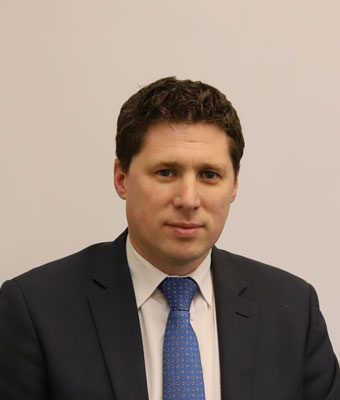
1. Deputy Matt Carthy asked the Minister for Justice, Home Affairs and Migration whether any assessment has been made of the risk that the proposed changes to the criminal legal aid scheme could result in reduced participation by solicitors in criminal legal aid work; the implications of any such reduction; and if he will make a statement on the matter. [49647/26]
As predicted by many, we now have a chaotic situation in the courts, and in the District Court, in particular, due to the Minister’s new criminal legal aid scheme. It would be helpful if the Minister would outline to the House the assessments he carried out beforehand in respect of the risk of the changes to the criminal legal aid scheme, any potential for reduced participation by solicitors in this work and the implications of any such reductions.
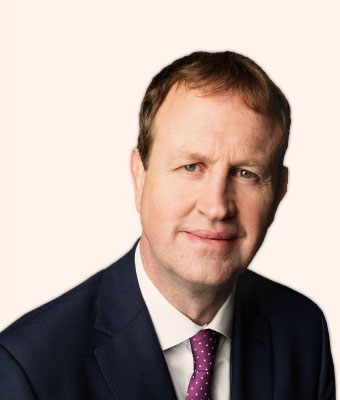
I thank the Deputy for his question. I also thank him for organising the meeting of his committee yesterday and for inviting me to it. I thought it was a very useful and effective meeting. It gave me an opportunity to put out the reasons I am introducing this new scheme in respect of the District Court. Obviously, it also gave other persons whom the committee invited, members of the legal profession, an opportunity to appear before it as well.
In terms of what has happened since yesterday, the first thing I should emphasise is that the 8% increase in criminal legal aid fees, which has long been due and should have been restored a long time ago, has commenced as of today. As the Deputy knows, I said that would happen and it has happened as of today. It applies across the board, including in the Circuit Criminal Court and in the Central Criminal Court. In respect of the €520 flat fee I have put in place for the District Court, as I explained yesterday, that has also had the 8% added to it, on top of the five appearances. I think the Deputy also wrote a letter inquiring about the report. I want him to know that the report has been published on the gov.ie website today in the section with criminal legal aid.
The Deputy’s concern is, I think, whether this is going to lead to an exodus of criminal law practitioners from the legal aid panel. I do not believe it will. Approximately 825 solicitors are on the criminal legal aid panel. This number has gone up significantly since 2023, when there were only 672 solicitors. This means there is a significant number of solicitors there.
Obviously, it is very early days and I do not want to say anything that is going to aggravate the situation. As of today, however, no solicitor has resigned from the panel. Three emails came into the Department from solicitors stating that they would be resigning. As the Deputy knows, however, in order to resign from the panel, solicitors have to contact the section of the Courts Service that deals with this area. I will be keeping a very close eye on this issue.
My question was not about whether the Minister thinks this will have an impact but, rather, whether he carried out an assessment prior to introducing this scheme. I have to take it from the Minister's answer that he has not carried out any such assessment. I welcome the Minister's statement that he does not want to aggravate the situation. It would have been helpful if he had given himself that advice a number of days ago. Many solicitors I have spoken to feel the Minister made an allegation of widespread abuse of the current system against an entire profession. There is deep, deep anger and hurt that has been palpable. The Minister said I know about the system. I do not pretend to know the intricacies of this system. However, I can tell the Minister that people I know and trust, whom I have contacted in respect of dealing with vulnerable cases in the past, have told me they now feel their work is being undervalued, underappreciated and underrecognised by the Minister.
As I mentioned yesterday, I am not here to prioritise the interests of the legal profession and neither is the Deputy. My task is to focus on the administration of justice, people who are brought before the courts, people who are accused of criminal offences and the effective operation of the administration of justice in the criminal section of the District Court. That is my focus. If we look at the fees available, if we want to just leave this as a discussion exclusively about fees, last year, in 2025, the cost of the criminal legal aid scheme was €120 million. Of that, €40 million was attributed to the District Court. Obviously, the significant majority of that money, two-thirds, was attributable to the Central Criminal Court and to the Circuit Criminal Court.
I do not believe there is going to be an evacuation of people from the criminal legal aid scheme. It is still a very profitable scheme for solicitors. It is very well paid. Many people have put down parliamentary questions asking about the amount of money that is paid out. Of the 825 people, those at the top receive in the region of €950,000 per annum. At the bottom, the figure is small, namely a couple of hundred euro.
I have engaged with a large number of those from the legal profession regarding these changes to the legal aid scheme, and I really do believe it would be helpful if the Minister took the opportunity to apologise for the manner in which the remarks have been interpreted. It is being generous to him to say he castigated an entire profession and suggested there is widespread abuse of the current system. The representatives of the legal profession have challenged him to provide evidence of that. I certainly have not seen that evidence yet.
Does the Minister accept, for example, that custody cases, children’s cases, psychiatric cases and probation-linked sentencing cases cannot reasonably be run within five hearings? This relates to the evidence and testimony our committee received and that I have heard directly. If the Minister accepts my point – I am told that anybody who understands the District Court and how it operates would – does he also accept that there is genuine potential that solicitors will withdraw from the scheme in the same way as they withdrew from the civil legal aid scheme because it simply was not viable for their businesses to continue?
The basis upon which I referred to unethical practices is in the report that is now up on the website, gov.ie. In fairness to the Deputy, I do not believe he has seen it. It is in the criminal legal aid section of the website. I refer to the review of the criminal legal aid system in the District Court.
The Deputy mentioned a whole series of cases, including custody cases. I have changed what was originally proposed as a result of my interaction with the Law Society. Any case that now moves forward to a higher court, whether it is the Circuit Criminal Court or the Central Criminal Court, will attract the full fee in the District Court as well. Once a serious case, whether it is a murder case or an assault case, goes to the Circuit Criminal Court, it is going to be subject to the fees that apply in the Circuit Criminal Court and Central Criminal Court, which are very generous and to which, today, I have added 8%.
It is a fair scheme. As I said to the Deputy yesterday, my primary focus in doing this is to try to reduce the number of adjournments in the District Court so that we can have more efficient administration of justice in that court.
Substance Misuse
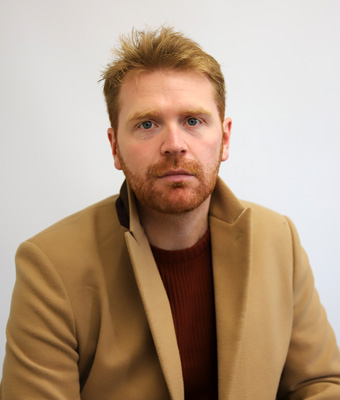
2. Deputy Gary Gannon asked the Minister for Justice, Home Affairs and Migration the position of his Department on the central recommendation of the Oireachtas Joint Committee on Drugs Use that the offence of personal possession of drugs be repealed; his views on whether the Government’s stated commitment to a health-led approach is inconsistent with the continued criminalisation of people who use drugs; the specific legislative steps he intends to take in response to the committee’s final report; and if he will make a statement on the matter. [49887/26]
I want to ask the Minister about the recommendations of the Joint Committee on Drugs Use, particularly as they refer to the decriminalisation of drug use. I had not intended to ask this question so quickly following the release of the report, but it is important to seek clarification on some statements the Minister made in the media. I am looking forward to addressing them because I see that they are also in the response that has been sent to me right now.
I thank the Deputy for his question and, indeed, for his work chairing the drugs committee and the work on its report. I have had an opportunity to read the report. A very significant amount of work went into it. There are 161 recommendations in it. I agree with very many of them. There are parts in the report that are excellent, especially the section that refers to sports, well-being, combating addiction and trying to divert children through the use of sport. As we all know, sport is the most effective diversion project there is in trying to protect children.
I want the Deputy to know I agree with a huge amount of what is in the report. However, in fairness to him and to the media, the one issue everyone wants to address and ask me questions about concerns what he has described as the central recommendation, which is to decriminalise all drugs, full stop. I will give the Deputy my straight answer or my personal view, if he wants. Alternatively, I could say the Department will consider the matter. I have concerns about decriminalisation. The reason relates to what is set out in the report and it is also based on my own views. One of the findings in the committee’s report is that if there is decriminalisation of all drugs, it is likely there is going to be increased public use of drugs in public areas.
I want to consider situations that might arise in my area or the Deputy’s. If, for example, somebody was taking heroin outside a school or smoking joints in a park or another public area, there would be nothing the Garda could do. At present, if that is happening, a person can be moved on. Gardaí can, because there is criminal activity, apprehend a person and seize the drugs because the activity is contrary to what is set out in the criminal law. If there were decriminalisation, I fear that what happened in Oregon and British Columbia would happen here. We would see an increase in public disorder and the public use of drugs. I just want to be conscious of the impact it would have on society more broadly, particularly children.
Gabhaim buíochas leis an Aire for his response. I was coming in here for a fight, but he has disarmed me somewhat with his response. What he has in his written reply is different from what he has said in that he said we went beyond the recommendations of the citizens’ assembly. I wanted to read the recommendation of the citizens’ assembly as presented on 24 October:
The Citizens' Assembly has recommended that the State pivots from the status quo to a comprehensive health-led response to drugs, including decriminalisation for people found in possession of drugs for personal use. The details of how decriminalisation can be legislated for is a question that the Oireachtas should determine following detailed legal scrutiny.
That is what the citizens' assembly states on its website.
We also considered the matter and were quite fearful. I represent the inner city. We examined the Oregon model in detail. What we found there was that Oregon failed on a number of fronts, but for one, it did not have the assets that we have. We use the word “therefore” in our recommendation when we acknowledge the potential for substance misuse or increases on the street. We state we should empower local authorities to have by-laws similar to those on the use of alcohol on the streets. We recognised that after our scrutiny and we would empower the Garda to go further than what Oregon or any other jurisdiction, including Lisbon, was able to include.
This is an interesting discussion. I am very happy to have a policy discussion with the Deputy. We obviously have different views. My concern is what happened in British Columbia. The Minister of Health there is a social democrat, a member of the New Democratic Party. British Columbia introduced decriminalisation about three years ago and is reversing out of it now because, it says, it has led to much public disorder and much public taking of drugs.
I have great empathy for people who have addiction problems. Addiction is a huge challenge for anyone in life, but the Deputy and I also have to consider what the impact is going to be on other people, people who are not taking drugs, if you can openly take all drugs. It is not just cannabis the Deputy is talking about. We are talking about heroin and crack cocaine. If people can take those drugs openly without the Garda being able to say they cannot do that, it will have a very negative influence on people, especially children. If they see this happening, it is going to be normalised.
Does the Minister honestly believe I would stand over a policy decision that would enable an increase in open drug dealing? Does he actually believe that a committee that had representation from members of all parties, including his own and including incredible members such as Deputy Brabazon, whose views differ from mine on this, and Senator Mary Fitzpatrick, would do that? We examined the matter and what we established quite clearly was that the Oregon model failed because wraparound services were not present there. It was the same with the British Columbia model. What we also established was that we have one of the highest numbers of drug-related deaths in the EU. We have several provisions in the Statute Book – sections 15, 22 and 23 – that enable the Garda to go after those who are dealing the drugs. The section of the Misuse of Drugs Act 1977 that criminalises possession for personal use actually prevents people from coming forward to seek treatment.
To ensure there would be no public consumption of drugs, we recommend clearly that council by-laws be passed to enable gardaí to move people on in that scenario. Also, we recommend that if they do not move on, public order measures would enable the Garda to arrest them. I assure the Minister that neither I nor anybody else on the committee would enable or support a situation where public consumption of drugs would even potentially increase.
I am not in the slightest challenging the Deputy's bona fides or genuine beliefs. I just have a concern that a policy advanced by people who are legitimately motivated by the best intentions may have a negative consequence.
There is one thing we agree on, namely, that there is and should be a health-led approach. Under the Government at present, there is a health-led approach to drugs. The health referral scheme, which will be in operation shortly, will provide an opportunity for someone who has, by statute, committed an offence to engage with health services and, as a consequence, avoid a criminal sanction. In this way, we are taking clear health-led steps to tackle the misuse of drugs.
I am concerned about the matter. I want to be frank with the Deputy and I do not want him to think I am sitting on the fence. I disagree with him. I fully respect the opinion he has come to. Just because I disagree with him does not mean that I am right and he is wrong.
I may be wrong but my view, and it is a strong view, is that the decriminalisation of drugs is going to increase the public use of drugs and, as a consequence, also increase the use of drugs generally.
International Agreements
3. Deputy Matt Carthy asked the Minister for Justice, Home Affairs and Migration the progress that has been made on securing a bilateral agreement with Britain to ensure that those international protection applicants who should be processed in Britain can be returned there in a timely manner; and if he will make a statement on the matter. [49648/26]
I will return to the issue of a bilateral returns policy with Britain. The Minister and other Ministers have put on the record of the House on numerous occasions their belief that between 80% and 90% of international protection applicants are travelling here via the common travel area. It would be useful if the House could get a report on any progress that has been made on securing a bilateral arrangement with Britain.
I thank the Deputy. Since the previous occasion that the Deputy and I engaged across the House on these questions, the International Protection Act has commenced. It commenced on 12 June. These are very early stages. We are not even three weeks into it but the statistics I am seeing show that the number of asylum applicants coming to Ireland is down considerably. I do not want it to be understood that will inevitably continue, but that is the case in the very early days of the scheme. I believe the reason it is happening is because of the increased powers in the International Protection Act, including the ability to search the baggage and luggage of individuals who come here to find documentation. We have found a lot of documentation, such as UK driving licences and passports. It is a much more vigorous system. Notwithstanding the fact that the Deputy opposed it, it is improving the situation for us at present.
On the situation with the UK, it was the case that 90% of applicants or more were coming in directly at the port and coming over the Border. That has reduced according to the figures over the past two and a half weeks but, again, it is very early stages. It is in the region of 78% of much smaller numbers. It is going in the right direction. I spoke to the Home Secretary on 15 June after that appalling attack in Belfast and the appalling racist riots afterwards. I emphasised three things. There needs to be greater data sharing between the UK and Ireland. The UK wants that. It wants to get data that we have access to in the EU. We said that we need to have more policing operations on the Border. That will happen. As the Deputy knows, and I keep asking Sinn Féin to emphasise this, the common travel area is only for the benefit of the citizens of Ireland and the UK. We also discussed the issue of returns.
The question was what progress has been made on a returns policy and only in his last four words did the Minister mention "the issue of returns".
I will come back to it.
I would appreciate if the Minister would outline what progress has been made. He outlined that individuals have had British passports and driving licences in their possession when they have applied for international protection. The Minister has no power to do anything about that because there is no bilateral returns policy in place. I love the Minister's confidence that international protection applicants have been following the passage of his legislation through the Oireachtas and awaiting the President's signature. The truth is that he knows there will be periods of time when the system comes under pressure. That is how the international protection system has operated to date and will likely operate again. The Minister has said in the House on numerous occasions that the vast majority have come across the Irish Sea using the common travel area.
That is true.
How is the Minister going to deal with that if he does not have an agreement in place on a returns policy?
There were examples where UK driving licences were found. The passports were not UK passports. The great benefit of the legislation, which, of course, transposed the pact, is that it does make returns much easier - not to the UK because we do not have an agreement with the UK but to other countries in the EU. That is the big advantage of it. Under the Dublin III regulation, as the Deputy is aware, we would have to get the permission of, say, Germany to send somebody back if they had applied in Germany. Now we do not need its permission. It is already agreed that we will send people back to Germany and the airport in all the countries is designated.
On the UK agreement, I have designated the UK a safe third country. I want to see operationalisation of an agreement between the UK and Ireland for returns. However, I cannot force the UK to recommence an agreement or to start accepting people back if it does not agree to do so. I have limited powers in what I can do. I can say I want to do it but I cannot force the Home Secretary or the British Government to enter into an agreement with us.
The Minister knows that I and Sinn Féin support the returns regulation. The big contradiction in everything that the Minister has said is that the returns regulation is important in the context of the EU, but we will manage if we do not have it for the source of 80% or 90% of arrivals. I do not know if the Minister is willing to give a percentage now because a lot of it is pure conjecture and speculation on his part.
The Minister says he cannot reach an agreement if the British Government is not willing to agree. Is that the state of play? I have asked for an update. Is the update that the British Government is refusing to enter into negotiations-----
No.
-----or is holding back? If the Minister wants it and says that the British Government is not refusing, where is the delay in securing a bilateral arrangement? Does he accept that designating Britain a safe third country is pointless if we do not have a returns agreement in place? What proviso or mechanism in law will the Minister use to implement returns if there is no bilateral agreement?
I do not believe it is pointless designating the UK a safe third country. That is what it is. The Deputy is aware of the politics of the United Kingdom probably just as well as anyone else in this House. There are considerable issues of sensitivity in the UK around accepting returns from other countries. The Deputy knows that. It is an issue of political sensitivity. I have spoken to the Home Secretary. I invited her to the informal meeting of the ports alliance on 16 July. We spoke shortly after the riots in Belfast. The reason that was of particular interest to her was because the suspect in that case was somebody who had landed at Dublin Airport, coming from Luxembourg, claimed asylum in Dublin and then left Dublin the very same day for Belfast. The next day in Belfast, he claimed asylum there. I said to the Home Secretary that this is an example of why we need a returns agreement in place.
Road Safety
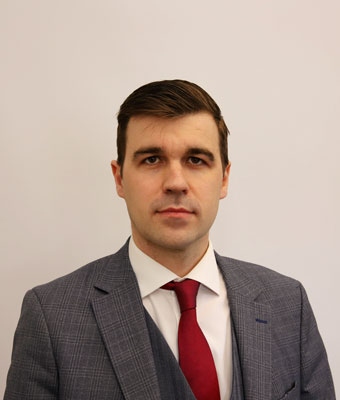
4. Deputy Duncan Smith asked the Minister for Justice, Home Affairs and Migration to confirm if there is currently any policy review under way in his Department regarding the enforcement of speeding laws through the use of static cameras on the national road network; if divergences between the number of fixed charge notices issued for speed detections at individual locations are compared and reviewed by his officials or An Garda Síochána; the engagement his officials have had with the Department of Transport on this issue; and if he will make a statement on the matter. [50222/26]
The question relates to the issue of static speed cameras on the national road network and whether divergences between the number of fixed charge notices for speed detections at individual locations are compared and reviewed by officials and An Garda Síochána. The Minister will perhaps be aware of the massive disparity in the number of fines issued at various different cameras. One has issued 30,599 notices while another has issued 397 in an 11-month period. The Minister might make a statement on the matter.
I thank the Deputy for his question. There are fixed cameras, average speed cameras and GoSafe vans. That type of technology is vital in ensuring that we keep our roads safe. Road safety cameras are intended to be a tool to support safety, prevention and behaviour change across the road network. They are not about catching people out. They are about trying to ensure that we keep our roads safe.
Nine static speed safety cameras have been in operation across the country since 2024. The locations of these cameras were selected based on fatal and serious injury collision data from the preceding seven years and speed data, as well as feedback from stakeholders. We have seen an increase in the total number of fixed charge notices issued for speeding in recent years. In 2024, 137,806 fixed charge notices were issued and in 2025, that went up to 168,882. In terms of analysing any divergences in fixed charge notices generated by particular cameras, I understand that the Garda analysis service supports all functions of the Garda national roads policing bureau. This includes providing the evidence base for roads policing operations, reviewing and analysing operations and providing ongoing support to external stakeholders in the area of road safety.
Further action is being taken in respect of making better or more effective use of static speed cameras.
The Minister of State, Deputy Canney, who is centrally involved in this, published Ireland's first national safety camera strategy in April this year. Officials in my Department were represented on the working group that developed the strategy. The strategy sets out a partnership approach to camera deployment and enforcement between An Garda Síochána, Transport Infrastructure Ireland and the National Transport Authority. This strategy seeks to define the optimal structures and partnerships across State agencies for delivering camera-based enforcement systems on Irish roads going forward, thereby reducing unsafe driver behaviour.
I thank the Minister. I wholeheartedly agree that these cameras are essential, vital and necessary and play an important role in road safety but we need fairness. We need these cameras to be operated fairly. The Minister cannot tell me there is not a problem when one camera in Glenmore, County Kilkenny is reading speeds for 30,599 fines, another camera read 3,000, some cameras read approximately 1,000 and one in Galway read 397. A person does not need to be a detective to understand that 30,599 fines from one camera indicates there is a problem. Can we have an independent review of this to investigate and interrogate why this is the case? People have said all along that they do not have a problem with the cameras but the signage is the problem. They are being captured and entrapped by these cameras. There is a major problem and it needs to be investigated.
It is hard for me to contest that the figures indicate there are aberrations in different parts of the country. When the figures were presented to me, I asked the Department why a greater number of fixed charge notices are being issued by two particular cameras and one list of cameras than by others. I do not have an answer for the Deputy at present but I have asked officials to inquire into it. Maybe there is a road people speed on consistently. I do not know the answer but I will look at it and I will ask officials to inquire into it because there is a significant deviation between the notices being issued by cameras in one area and those in other areas. I do not have an explanation for the Deputy but I heard what the Deputy said and I have already asked officials to look at it.
I welcome the Minister's comments. I am not campaigning for people who are speeding to have their fines rescinded. There is a problem with the signage, particularly in Glenmore. People who are driving in a 100 km/h zone arrive at an 80 km/h sign and are almost immediately captured by the camera and not given a chance to obey the law. People who were driving below 100 km/h and were captured by this camera, many of whom were decelerating, should be fairly treated. This one camera generated €4.9 million in revenue in 11 months. It is off the charts. It needs to be seriously investigated. Court cases are being taken because people have lost their licences as a result of this camera in Glenmore in particular. It is beyond the pale to think we are penalising people unfairly. They must be treated justly and if it comes to it, their fines and points must be rescinded.
I assume people who receive fixed charge notices for speeding are speeding, - hear me out on this - but it may be the case that they are given insufficient time for the change of speed limit from one area coming into another area. I will look at that. I cannot give the Deputy a categoric answer about the reason for this at present but being frank, looking at the data, it seems unusual that two cameras seem to have so many more fixed charge notices emanating from them than others. I do not think it is because people are safer drivers in one area than in another. I suspect the reason is the positioning of the camera, perhaps coming out of an area that permits a faster speed limit into an area that is perhaps very close, with a slower speed limit. That could be the reason for it. I have asked because the figures jumped out at me when I saw them.
EU Presidency
5. Deputy Mark Ward asked the Minister for Justice, Home Affairs and Migration the impact the EU Presidency will have on the availability of the Garda fleet to service our communities, particularly DMR west; and if he will make a statement on the matter. [49649/26]
It is apt for me to ask this question on the day that is in it. It is particularly about DMR west, which includes Clondalkin and Lucan Garda stations. I have a particular interest in the availability of Garda cars and the Garda community bus.
Today is an important day for Ireland. It is the first day of the EU Presidency. It is an important function for Ireland. We want to do it well. As I am sure the Deputy will appreciate, it is a big security challenge for An Garda Síochána. Today, the President of Ukraine was here. A huge amount of security was required for his arrival. The Deputy will permit me to take the time to commend the Commissioner and An Garda Síochána on their work today. It is challenging when a figure with as high a profile as President Zelenskyy arrives.
At present, the Garda fleet is the largest it has ever been. There are 3,680 vehicles distributed throughout Garda divisions and specialist units. However, in the months leading up to the Presidency, An Garda Síochána scaled up its overall fleet capacity. We have moved up fleet capacity for the purpose of the Presidency. It is not as though the fleet is being dispersed because of the Presidency. The scaling up has been the addition of 78 cars, 75 motorcycles and 12 mini-buses.
With respect to vehicles assigned to the Deputy's region, 125 vehicles are currently assigned and available to DMR west. This allocation has increased in recent years, as only 101 vehicles were assigned to the division in 2021.
At the end of May, there were 772 gardaí assigned to DMR west. Some 75 probationers have been assigned from the two attestations held this year. That is the most for any division in the country. If other Deputies were in that position, they would be very happy, because, as the Deputy will be aware, most of the time when people ask me about Garda probationers, they are looking for them. Some 75 have gone this year to DMR west and a further attestation is coming later in July. These gardaí are supported by other national specialist units and by the 63 Garda staff assigned to the division.
I thank the Minister. DMR west is a huge area. It covers Blanchardstown, Clondalkin, Lucan, Saggart, Rathcoole, Brittas, Palmerstown and the junior Minister's area, Ballyfermot. It is a wide area so we need more than 125 cars. I would like to see that scaled up.
I raised a situation here last year that despite having these 125 cars, on one occasion last year, only one Garda car was available to cover the Clondalkin, Rathcoole, Newcastle, Saggart and Ballyfermot area. On that particular night, there was a serious incident, because of which the car was tied up, and that meant that calls in that area went unanswered. The Garda car did not call out. I have concerns about that.
I asked in the question - I know it was not in the written part - about the availability of the Garda community bus to residents in DMR west during the EU Presidency.
The Garda community bus will not be used for any Presidency activity so there will not be any impact on it.
On what the Deputy said about the evening where there was only one car, that may have happened but the resources there now are significant. As I said, 125 vehicles are assigned to that division. The Deputy mentioned it is a large division. There are Deputies here representing Kerry and Donegal.
It is about population size as well.
They look at the different sections of Dublin and wonder why they are not getting more of the fleet as well.
It is about population.
The most important thing is that we have resources. I got a lot of good resources for An Garda Síochána under the national development plan. A huge amount of money is available. I want to see it spent. I want to see the fleet increase and we are seeing it increase. That will be of benefit to the people in the Deputy's area and throughout the country ensuring they can see gardaí in their communities. The most important thing the Deputy and I want to see is gardaí out in communities because it gives a great sense of confidence to people.
I respect that I only mentioned the Garda community bus at the end of my question. I got a response this week from the Garda station saying the DMR west Garda community bus will be unavailable from the end of the month for the rest of the year due to the requirements of the EU Presidency. I met two groups in the area recently, the Quarryvale Butterflies and the Rowlagh women's hub, which are campaigning for an additional bus. The bus that was available was in Blanchardstown, across the River Liffey, and we have managed to get a new bus for that area, which we will use and share. The women were delighted and are still going to campaign for the additional bus.
They are really disappointed with the response I had to send to them this week indicating that the new bus we were getting for the whole of the DMR West was going to be taken for the EU Presidency. We are back to square one with no bus available. This bus is vital for community groups but also for building good, positive relationships with the Garda. I ask that the Minister do everything in his power to restore this bus and also look at funding for an additional bus for the area.
I am sorry that I was not aware of that. I will certainly follow it up. I do not know why a community bus is needed for the Presidency. I do not see the Commissioners going around in a community bus. It is something I will look into.
On the funding, the Deputy might agree it would be preferable if the community had its own bus as opposed to having to use the Garda bus. As he will know, applications can be made to the community safety fund. The Department or rural and community development also has funds available. We will look into the matter and I will raise the issue of the bus. If it is not available for the six months of the Presidency, I am disappointed to hear that. I hope an alternative mode of transport can be provided for that period.
An Garda Síochána
6. Deputy Tom Brabazon asked the Minister for Justice, Home Affairs and Migration if his Department will consider introducing a statutory indemnity for gardaí who are acting within reason while pursuing persons driving scramblers and other vehicles recklessly and illegally. [49644/26]
I raise again the issue of scramblers. We all know responsibility for this is across the Minister's Department and that of the Minister, Deputy O'Brien. We need to get to grips with this problem. We need to take back our streets from scramblers, which are being deployed by criminal gangs as a method of muling drugs and intimidating communities. I warmly welcome the enactment of Grace's Law but, on its own, it is not enough. We need to follow up with enforcement of this law. In that context, will the Minister consider implementing a professional licence or a statutory indemnity for gardaí who act reasonably in the pursuit of scramblers?
I agree with everything the Deputy said about scramblers. We need greater enforcement, and I believe that is happening. The tragic death of Grace and the enactment of Grace's Law was a seminal moment that really changed the attitude of this House and the body politic to how we deal with scramblers.
Already in 2026, over 1,000 scramblers and e-bikes have been seized by the Garda. That is considerably up on the figure for last year. I want to see that continue. I have spoken to the Commissioner. He has said to me, and emphasised publicly, that he wants to see a much more robust response from An Garda Síochána, and we are seeing that. Obviously gardaí need to use their discretion when it comes to whether to pursue a scrambler. The most preferable way of dealing with this is through technology. Drones would be a great mechanism to identify where somebody on a scrambler is going. There may be occasions when it is appropriate for gardaí to start off in pursuit but if something goes wrong and an innocent bystander is injured, very serious questions will be raised about why that happened.
I agree with the Deputy on the proposed changes to legislation. As a brief entry into it, I remind him, though I am sure he knows, that in the UK, under the Police, Crime, Sentencing and Courts Act 2022, there is a separate protection for police officers when it comes to dangerous and careless driving. The provision included there is that a police officer will only be liable for the offence of dangerous driving if "the way the person drives falls far below what would be expected of a competent and careful constable who has undertaken the same prescribed training". It is something the Minister, Deputy O'Brien, and I are looking at.
I welcome the Minister's response in that regard but the suggestion made is only one of a suite of measures to combat this reckless carry-on. We need more accountability from importers of scramblers, more Garda pursuit training, more intelligence gathering and more community involvement in handing over intelligence to Garda authorities. Police services in other jurisdictions are provided with training on scramblers to pursue and apprehend people riding scramblers. This Government must urgently support the Garda, not just with legislation but with the wherewithal to pursue, apprehend and prosecute those involved. The courts must also take a very serious view of this behaviour and back our gardaí in their work.
I agree with the Deputy. This requires a multifaceted response. It requires a policing, criminal justice and youth diversion response to ensure we get kids and teenagers away from scramblers and involvement in criminal activity and divert them towards sport or something that is positive for them. Last Friday, I was in East Wall in Deputy Gannon's constituency to see a place where there is a proper scrambler course. That is where they should be used, rather than on the roads or other public places. The message is getting through but the most important thing is strong Garda enforcement, so people who are in public places on scramblers have their bikes seized and retained. I hear what the Deputy said about importers as well. That is something that needs to be looked at. There are trade policy issues in respect of that but it needs a whole-of-government response.
I thank the Minister again. We must act with a comprehensive suite of measures, as he said, and we must make rapid progress on this. I know what he said about thousands of scramblers being seized by gardaí but there are still many on our streets endangering the public, so we must act with speed.
I agree with the Deputy. There needs to be enforcement and there is more enforcement. That is why we are seeing more scramblers and e-bikes seized. There needs to be more of that. People need to be aware that if they are using a scrambler on a public road or in a public park, it will be seized. That is the great advantage of Grace's Law. If gardaí see someone in a public place on a scrambler, they know they can seize the bike because it is unlawful activity. I am constantly talking to the Commissioner in respect of this. He is very strong on ensuring we do not permit communities to be terrorised by young people on scramblers. Those bikes need to be seized. We also need to strengthen our legislation. The word is getting out there, though I have no doubt it is still happening, that enforcement is up. We also need a societal response to it that says it is socially unacceptable, as well as unlawful, for people to be on scramblers in public areas because they are endangering their own community.