Ceisteanna Eile - Other Questions
Question No. 7 taken with Written Answers.
Prison Service
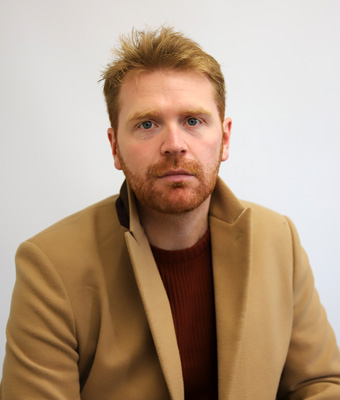
8. Deputy Gary Gannon asked the Minister for Justice, Home Affairs and Migration his views on the fact that there are currently no dedicated addiction nurses working in Irish prisons despite his Department estimating that seven in ten people committed to prison have addiction issues; and when he expects specialist addiction services to commence in prisons. [49882/26]
I commend the Minister on his visit to the Alfie Byrne Road on Friday. It was a source of great annoyance to me that he left such a great impression on the lads down there, so well done to him on that.
Very good.
Back to the fighting. I want to speak to him about our prison services and the fact that we do not have any specialist dedicated addiction nurses within the Prison Service, despite over 70% of the prison population having addiction needs.
I thank the Deputy. I had a very good time in his constituency and I also got a present of a Troy Parrott jersey-----
I hope he declared it.
-----which is going to be hung in the Department of justice, I am pleased to tell the House.
Brilliant.
We have not hired people known as addiction nurses since the mid-2010s. I do not want the Deputy to think - I know he does not think this - that because of that, there are no services. There was a change in how we deal with addressing the addiction needs of people in custody. To use a word that is sometimes overused, the Prison Service adopts a multidisciplinary approach to it. This includes nurses, general practitioners and psychologists, supported by in-reach mental health services and addiction counselling services delivered by Merchants Quay Ireland. Merchants Quay Ireland plays a huge role in the context of the role the addiction nurses used to play. It currently provides 19 addiction counsellors, with one vacancy in Cork Prison. In addition, Merchants Quay Ireland has recently introduced six project workers and two prison recovery educators.
To support rehabilitation, reduce reoffending and facilitate successful reintegration into society, people in custody have access to a broad range of clinical and rehabilitative interventions. These include opioid substitution treatment, counselling, harm reduction initiatives, peer-support programmes and psycho-educational services delivered through prison education units and the prison television channel. Merchants Quay Ireland also delivers the national treatment and rehabilitation programme, which is based in the medication unit at Mountjoy Prison. The Irish Prison Service also works closely with Alcoholics Anonymous and Narcotics Anonymous, which provide ongoing support across the prison estate.
As I said, the Prison Service has not employed addiction nurses per se since the mid-2010s. The historic approach of having a narrow and focused resource has been superseded by the prison primary care team and supporting agencies.
I am correct in saying that the programme for Government includes a commitment to recruit addiction nurses. The last addiction nurses left in 2016. We have a problem in our prisons. People are going in there with addictions. Over 70% of the prison population, or 4,000 people, entered prison with some form of addiction. The Minister knows our recidivism rates. Almost exactly seven out of ten people who go into prison will reoffend within three years. A large part of that is precisely because the addictions with which they went into prison are being compounded, in many instances, and there are certainly no recovery options. I do not doubt for a second that Merchants Quay Ireland is doing good work within our prisons, but its representatives have also said continuously that, actually, the supports available are not commensurate with the needs they are meeting while they are in there. There are also any number of reports that call for specialist addiction nurses going in, which are different from general practice nurses because the skill level is different. Comprehensive addiction assessments, and management of withdrawal and medication, can be offered by an addiction nurse. All of these are specialist skills.
I have been to 12 of our 13 prisons. I am aware, having spoken to prisoners, prison officers and prison management, of the issues of addiction in prison. However, I also want the Deputy to be aware that there are some success stories as well. There is a lot of good work being done in the prisons in training and getting people off addictive substances. There is success there. The real difficulty is with people who are in for short terms. Even if they get a certain amount of recovery in prison, when they get out they get back on to the appalling vista of addiction. There were six addiction nurses employed by the Prison Service in 2006. However, they had all either left the service or moved into general prison nursing posts by 2016. As I said, the role of addiction nurses has now been superseded by the prison primary care team and supporting agencies. The Irish Prison Service actively reviews the need for addiction nurses. However, there are no plans in the short term to recruit dedicated addiction nurses.
The Minister might want to check the programme for Government in terms of the plans in relation to that, but okay. We have a profound problem when it comes to our prisons. I do not doubt for a second that there are some success stories, but that is by no means the norm. That is actually a failure of opportunity because we talk about the people going into prison for absolute reasons, but while they are there, there is an opportunity to ensure that when they come out, they do not continue the hurt that led them there in the first place. That does require intensive treatments for addiction. At the moment in our prisons, clearly, that is not being met. I do not doubt the work the Minister mentioned by Merchants Quay Ireland. However, that is the moment of intervention when we can actually prevent the follow-on hurt that is coming from a recidivism rate that is extraordinarily high because the addictions are not being dealt with in there. I can reference any number of reports that talk about the need for addiction specialist nurses, the most recent being the Crowe report on prison healthcare in 2022. We need to reflect on the absence of those specific specialists in our prisons.
There are a lot of services there providing assessments and care planning, evidence-based interventions, including support for opioid substitution treatment, detoxification and overdose prevention and helping people to access community services on release to reduce relapse and reoffending. There is a good amount of work being done within the Prison Service. There is obviously more that needs to be done. I fully appreciate that. Merchants Quay Ireland is doing a very good job. There is a real challenge in the prisons in terms of trying to deal with people's addiction. I would love to see more resources available to ensure that people can be weaned off addictive substances while they are in prison. The truth of the matter is that there is an opportunity. We do have to use it. I do not mean this facetiously, but there is a captive audience when somebody is in prison. We can try to work on them in the hope that they will not gain access to drugs while in prison. There is a lot of good work being done in keeping drugs out of prisons.
Housing Provision
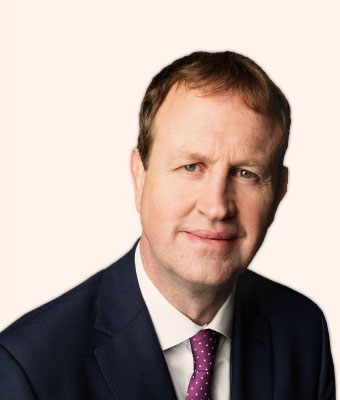
9. Deputy Michael Murphy asked the Minister for Justice, Home Affairs and Migration whether a review has been undertaken of the long-term role and cost-effectiveness of modular accommodation centres established for persons under temporary protection, including a development (details supplied); whether alternative future uses for such facilities are being considered in light of changes to accommodation policy; and if he will make a statement on the matter. [41558/26]
Following on from the decision to withdraw from State-contracted commercial accommodation for beneficiaries of temporary accommodation, to what extent has a review been undertaken of the long-term role and cost-effectiveness of modular accommodation centres, of which there are 11, including whether alternative future uses for such facilities are being considered in light of that change in accommodation policy?
I thank the Deputy for his question. He is referring to developments in Clonmel. The Deputy has spoken to me before about that. I know it is an issue of concern to him.
The rapid build modular units, including those in Clonmel, were built to accommodate beneficiaries of temporary protection fleeing the war in Ukraine. In total, we have 654 units across 11 locations across the country, accommodating 2,640 people in family units of four with children. The long-term use of these units has always been an important aim of the rapid build project. These homes are durable units with an expected 60-year lifespan and are highly energy efficient. They were all developed in an environmentally friendly way.
The Office of Public Works, OPW, is undertaking a post-project completion report to which my Department has contributed. It is still being drafted and is not yet available. To determine the long-term strategy for the sites post temporary protection, we are starting a process of consulting stakeholders. That started back in March 2025 and is chaired by officials from my Department, including people from the OPW and the Department of housing. In tandem with the consideration of the feasibility of potential future uses, this work involves exploring planning regularisation at each site. There has been no final decision made yet on long-term future use as discussions are ongoing. We will explore all potential options within the local areas. These options include social housing and lower-cost affordable housing, such as cost rental. Obviously, the residents there will not be required to vacate this accommodation until March 2027. To meet the conditions of the scheme, they can apply to the new temporary protection transitional scheme. I do not know if they will come within that, but that is an option for them. To date, full occupancy has been maintained with over 90 units relocated since the sites were first occupied. We have not reached a final decision on what will happen after March.
I thank the Minister. I want to focus on Clonmel. As he said, there are 654 units at the national level, of which 82 are in Clonmel. From the very outset, not all, but the vast majority of people understood that these modular homes were built as an emergency response to the war in Ukraine. They accepted that such extraordinary circumstances required extraordinary measures. I am somewhat concerned, though, that there is no final decision on the future of these sites despite that multi-agency process the Minister referred to, which has been under way since 2025. What I am really looking for is an assurance that consultation will take place with the local authority, the locally elected representatives and, in particular, local communities living close to the development. I would really welcome the assurance that engagement and consultation will take place.
I think that has to happen. These have got the support of the Deputy, other local representatives and the community. There needs to be engagement, and that engagement needs to continue. There are also units that can be used. As I said, they could be used for social housing or other purposes. Obviously, we will also take into consideration any suggestions the Deputy or other local representatives have in respect of them. There is uncertainty at present because of the ongoing temporary protection directive. It looks like it will be extended; it may be extended on terms, but it looks like it is going to be extended beyond March 2027. I do think, and I agree with the Deputy, that there needs to be a plan as to what we are going to use these very valuable and useful units for. Certainly, I believe there should be, and I want to see, consultation with the community before any decisions are made by officials within Government Departments.
I welcome confirmation that these are durable homes with a 60-year lifespan. Indeed, I further welcome the Minister's suggestion around social housing or perhaps cost rental. It would be helpful as well if that Office of Public Works post-project completion report is published, particularly in the interests of transparency.
The units in Clonmel were built at an average cost of €436,000 each. Taxpayers have invested many millions of euro. I welcome confirmation from the Minister that the people of Clonmel, together with Tipperary County Council local elected representatives, will have a genuine opportunity to shape the future of the Heywood Road modular unit site. That is key.
They did cost the State a lot of money. They are a valuable resource that we own and we want to see them used effectively.
The Deputy talks about Clonmel. There are 82 units in Clonmel accommodating potentially up to 328 people, but there are ten other sites around the country as well, some of which are even bigger than that in Clonmel. We need to have a plan for what we will use this valuable resource for. They have a good lifespan. They are something that will be of great benefit, I would have thought, to local authorities or, indeed, the Department of housing for the purpose of providing accommodation for those who are in need of accommodation because they clearly are very suitable as medium-to-long-term accommodation units. I will certainly keep in close touch with the Deputy in respect of the matter. The Deputy can always come to me and raise the issue. I will certainly insist that there is engagement on it before any decision is made.
Question No. 10 taken with Written Answers.
Family Reunification
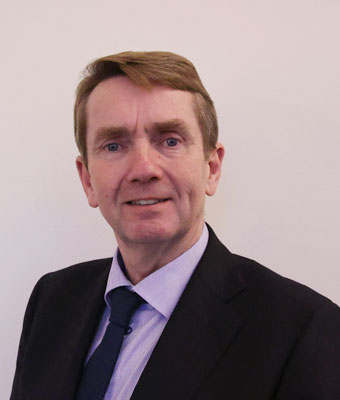
11. Deputy Aindrias Moynihan asked the Minister for Justice, Home Affairs and Migration to outline the measures being taken to address ongoing delays in the processing of family reunification for critical skills professionals working here; and if he will make a statement on the matter. [49851/26]
Family reunification for people recruited here for critical skills is an issue I have raised here previously and it still has not been addressed adequately. I am constantly getting people into my office raising their situation with me where they are waiting for their spouse and children 18 months and more. It is very difficult on families. What immediate action can be taken to reduce those delays?
As the Deputy will be aware, Deputy Brophy has ministerial responsibility for this, but he and I have a close and shared view in respect of this issue. Obviously, we both fully recognise that so-called join family visa applications are very important for the people involved. I understand that people are eager to have their families join them in Ireland and I can appreciate why Deputy Moynihan, as a hard-working Deputy, or, indeed, any other Deputy in the House, is asked frequently by persons who have such occupations as to when they will be provided.
My Department operates seven overseas visa offices, as well as the visa office in Dublin. Processing times for these join family applications can take time. They can vary between visa offices. Most visa applications receive a decision within our published target times. Some applications can take longer, depending on the circumstances. Processing times are influenced by a number of factors, including the complexity of the application, the volume of applications received, and the quality and completeness of the information provided. It is important to recall these applications are screening processes. They require careful probing in order to establish that the person has a legitimate reason to come to Ireland prior to travel.
A critical skills employment permit holder, as I say, can apply for a join family visa at the same time as their employment visa. These applications can then be processed together and typically receive a first instance decision within the ten-to-12 week business target. People who make join family visa applications separately, will generally receive a first instance decision within the 12 month business target. In December 2025, the immigration service of my Department introduced online payment functionality to my Department's online visa system. This allows applicants to pay visa fees as part of the online application process. The initiative is being rolled out on a phased basis and is currently live in 40 countries.
First, I acknowledge the headway that is being made on it. On the idea that most are within target, for many that is not their lived reality. To put it in context, these are the people who are caring for our elderly in our nursing homes, caring for us in our hospitals, maybe doing the NCT on our cars and maybe even cultivating our food on our farms, and they are not able to have their family around them. Many of them, Indians and Filipinos, who have been in contact with me on it are telling me of experiences of 18 month and more. That is a big stress and pressure on families. Is it a capacity issue to clear the backlog that is there? Can people who are waiting longest be prioritised?
Last year, I and the Minister of State, Deputy Brophy, introduced a new non-EEA family reunification policy. It sets out the rules that apply in respect of it. Every country in the world has a regulated system in respect of family reunification. It has to involve a system where there are rules in place. If you fit within the rules and you have the resources to bring family members over, it is permissible.
Part of the reason, I suppose, is that there are so many visa applications being received in the Department of justice. For instance, last year we received over 206,000 visa applications. That was an increase on the previous year as well. There are a lot of join family visas issued as well. In 2025, there were 14,599 join family visas. That was down on 2024. It was 17,000 that year. They have to be probed carefully. I cannot just say, "Give out the family visa".
It is right and proper that there would be proper checks and verification and a thorough examination of all of the different applications. The experience that I am hearing from my constituents is that it takes approximately 18 months or more. I understand that there is a target of 12 months. Even that target seems lengthy, and it is difficult for families. Is it the case that it is slow because there are not enough people to deal with the backlog? Is there a need for additional staffing to clear a short-term backlog and to prioritise people who have been waiting the longest? It is a pressure on those people who have been hired to do critical work in our communities. That pressure will often put them thinking on whether they should be going back home and leaving a skills gap that we need to fill here as well.
A critical skills employment permit holder who applies for a join family visa at the same time as their employment visa typically receives a first instance decision within the ten- to 12-week business target. For stand-alone join family applications and those linked to general employment permits, the current business target for a first instance decision is 12 months. I know they can be frustrating. I assure anyone who has made an application for a join family visa that my Department is doing everything possible to progress these as quickly as possible. It is not an issue of resourcing within the Department. There are a lot of staff in the Department of justice working on this but it requires a lot of information to be procured, to be examined and to be assessed before a decision is made in respect of it. Through advocacy by Deputies such as Deputy Moynihan, the message is coming loud and clear to me and I will pass that back to officials in the Department that I want us to try to see the process expedited.
Question No. 12 taken with Written Answers.
Visa Applications
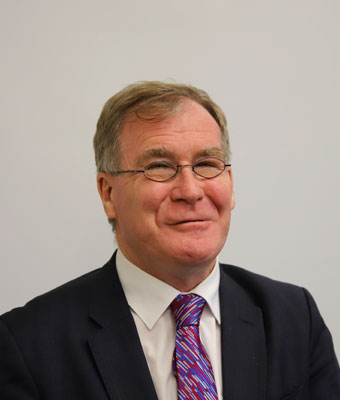
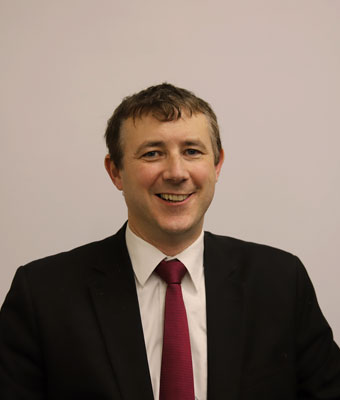
13. Deputy Colm Burke asked the Minister for Justice, Home Affairs and Migration to provide an update on his Department's progress in establishing a single application process for employment permits and visa applications; the progress that has been made to date by the interdepartmental group established to review this process; and if he will make a statement on the matter. [48684/26]
Will the Minister to provide an update on the Department's progress in establishing a single application process for employment permits and visa applications, the progress that has been made to date by the interdepartmental group established to review this process, and will he make a statement on the matter?
As the Deputy will be aware, the Minister of State, Deputy Brophy, is centrally involved in this. Government approved plans in May 2024 to introduce a single permit for people coming to Ireland to live and work. Currently, employment permits, visas and residency permits are processed separately. This is a significant technical project involving the integration of two IT systems. In the short term, we are streamlining the existing process by removing duplication, aligning online information and introducing a single payment model. These improvements will make the system simpler and more efficient.
In recent weeks, the Minister of State, Deputy Brophy, had a very productive meeting with the Minister of State with responsibility for employment, small business and retail, Deputy Alan Dillon, and his officials on this project.
The project is progressing through a phased development and scoping process, with ongoing cross-departmental engagement to support the design and testing of the proposed model prior to wider implementation. A pilot is also currently being scoped out to test the proposed new approach to delivering the single permit directive.
Changes introduced in 2024 also mean that spouses and partners of employment permit holders can now take up employment without requiring separate employment authorisation. These initiatives support the long-term sustainability of our economy while recognising the important contribution that legal migrants make to our society.
My Department is also leading the development of Ireland’s first whole-of-government migration strategy, which I and Minister of State, Deputy Brophy, are working on intensively, and we hope to publish this strategy later this year. There is progress being made in respect of this. The Ministers of State, Deputies Brophy and Dillon, are centrally involved in it and I hope to be able to provide the Deputy with further progress reports on final timelines in due course.
I raise this because one of the areas where I have had many people on to me is for those who are working in nursing homes. There seems to be a huge problem between work permits and residency permits. For instance, I had one case which I sent a parliamentary question on to the Minister, where the person made an application for an IRP card on 6 March and by 30 June - 16 weeks later - it still had not issued. I am concerned there is a lack of information for both employers and employees about the process. I have had cases where applications should have been made well before the card expired, but many people are not doing that and there needs to be more information sent out by the Department.
However, I am concerned about the 16 weeks for an IRP card application that still has not been issued as of today.
That is a concerning period, but people sometimes leave applications until the very last moment and that is not good practice. It will create difficulties for them, so we need to encourage people who are applying for renewals to apply early.
As I said, an implementation team has been established jointly between my Department and the Department of enterprise to commence implementation of the single permit model. This is really the solution to the issue, Deputy. The programme is being delivered on a phased basis in the short-term and officials are examining how best to re-engineer processes to remove duplication and scope possible technical solutions. A single approach to how work permits and visas can be processed is also being developed, with changes to include a single payment model.
I understand the Deputy's concern in respect of the delays, and obviously, this can apply to anyone in the House, but if there are issues with respect to applications they think merit bringing to my attention or that of the Minister of State, Deputy Brophy, they may feel free to do so.
Where it really affects my constituency is, taking Apple computers for instance, which is the biggest employer in the constituency, there are people from 90 different nationalities working in that facility and it is important that this information gets out to employers. The problem arising is the delays in the processing now. I outlined the case of 16 weeks, which should not be happening, but people are being advised they must apply and that it will take 12 weeks. There is then the whole issue of the period in which people can continue to work even where the card has not been renewed on time. That also needs to be looked at.
Until such time that we streamline the system and make it far easier for people to have both the work permit and residency permit and all the processes sorted, we will have people - and I have had several of them - who will be laid off work until the issue has been resolved, which is now causing problems.
It is a challenging task from the point of view of the Department. I have been to the section of the Department dealing with visa applications, and there are huge numbers of people there; you realise the extent to which each application has to be considered and appraised individually. There is a significant number of applications coming in and they need to be considered individually.
I hear what the Deputy has said about Apple. Obviously, we want to ensure people who are here believe and feel they get an effective response from the public service in Ireland. In general, I believe they do. However, one of the consequences and downsides of being a TD is people only ever come to us problems. People who are happy with the systems in operation do not contact us to commend us on the service we provide. We only really see things when issues have arisen and there are failings in the system, but there are many successes also.
An Garda Síochána
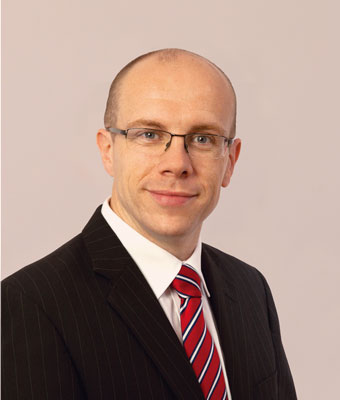
14. Deputy Darren O'Rourke asked the Minister for Justice, Home Affairs and Migration the number of gardaí in County Meath; if he is aware that County Meath has for years had the lowest number of gardaí per population in the State; and if he will make a statement on the matter. [48865/26]
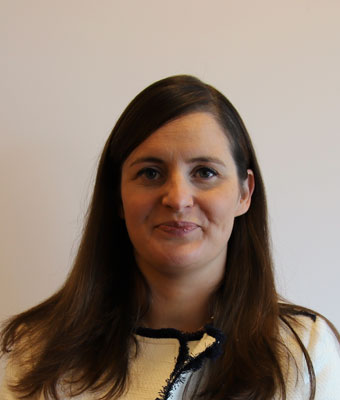
The Garda Commissioner is responsible for the management and allocation of Garda resources. We are assured by the Commissioner that, when allocating Garda resources, consideration is given to commitments and undertakings outlined in the annual policing plan. The requirements of all Garda divisions nationwide are also taken into account, which include local and national crime trends and workloads, policing arrangements and operational strategies, local population and trends, and geographical area and size. Transfer applications, including welfare, personnel issues and concerns, are also taken into account.
Under budget 2026, the Minister, Deputy O’Callaghan, secured funding of €2.74 billion for An Garda Síochána to support recruitment and staffing. This will support recruitment of up to 1,000 gardaí, 200 more Garda staff and additional members of the Garda Reserve. Significant initiatives have been taken to boost recruitment, which have been reflected in the numbers entering the Garda College, which was just under 800 in 2025.
As the Deputy will know, recruitment into An Garda Síochána has gathered real momentum and we are determined to ensure we have a steady pipeline of new recruits into the Garda College so that we can see more gardaí assigned all around the country. Interestingly, the most recent recruitment competition, which closed on 3 June 2026, attracted 4,115 applications. This brings the total number of applications received to join An Garda Síochána to over 15,000 since February 2025.
We are informed that as of 31 May 2026, there are 561 gardaí assigned to the Meath-Westmeath division. This includes 323 gardaí assigned to the Meath south and Meath north community engagement areas, which include Ashbourne, Kells, Navan and Trim.
As regards those figures, it is 323 gardaí in Meath compared with 335 in 2020. The current figures are up a little bit on last year but, compared with 2009 and 2010, we have seen practically no increase. At the same time, we have had a very significant increase in population. The Minister of State outlined the type of consideration the Garda Commissioner makes in terms of allocation of resources, and one of them is local population and trends, and geographical area and size. There must be no weight on that consideration, if County Meath is anything to go by.
What efforts will the Minister of State make to bring County Meath up the ranking tables in terms of the number of gardaí per population, so that it is at least commensurate with other counties of a similar size?
Obviously, population trends are monitored on a continuous basis, but looking at what we are doing to ensure overall community safety in County Meath, the Department is pleased to secure €8 million in budget 2026 for the national office for community safety to ensure the office carries out its functions, including its support for local community partnerships and the work on the national development of a national strategy for community safety.
Much of the Deputy's constituency is obviously rural. One of our success stories is Operation Thor. Several Garda operations are already supporting the plan, such as Operations Thor and Táirge, which tackle burglaries and theft from homes and retail crime, respectively.
In recent years, An Garda Síochána has had unprecedented success in reducing and preventing burglaries through Operation Thor. In the ten years since Operation Thor began, burglary and related offences have declined overall, and the number of residential burglaries during the winter months of October to March have fallen by a remarkable 75%.
There are 220,000 people in County Meath and there are 323 gardaí. Whatever way we cut it up, rural or urban, and the division between them, that is nowhere near enough. I have two specific points. Some of it is the responsibility of the Garda Commissioner. The resource allocation model has to be reflective of the growing population and of the demands in the community. One of the issues is the number of training stations. The number of stations that new recruits can actually be deployed to is limited. That has to be reviewed. The Minister of State has a target set out, and she referenced the annual service plan, of 14,820 sworn gardaí by the end of the year. Will she hit that target?
I take the opportunity to commend the gardaí on the street. We are seeing huge effort being put in gardaí, not just in Dublin city but on a nationwide basis. We can see the number of people going through Templemore and the standard of the gardaí coming out of Templemore is really noticeable. Population trends and community trends are always under review. We are using census data to ensure that populations are represented according to increases in the local population. This will be reviewed on a continuous basis. The Deputy's point is well made and I thank him for asking this question.
Domestic Violence
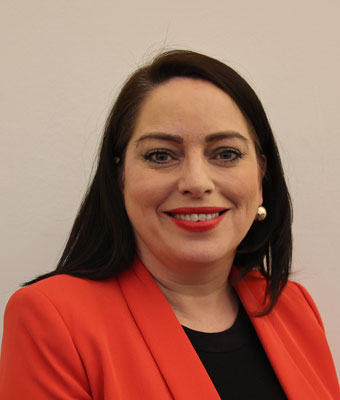
15. Deputy Cathy Bennett asked the Minister for Justice, Home Affairs and Migration the timeframe in which refuges will open in counties Cavan and Monaghan. [49803/26]
I am taking this question on behalf Deputy Bennett. It is to ask the Minister for a timeframe in which we will see domestic refuges open in Cavan and Monaghan.
I recall when I started as Minister, Deputies Carthy and Bennett, the Minister of State, Deputy Smyth, from Fianna Fáil, and their fifth colleague-----
David Maxwell
David Maxwell as well. The issue is that there were no plans for Cavan and Monaghan. As Deputy Carthy now knows, the Cavan-Monaghan region is listed as a priority area for refuge development under zero tolerance. The capital assistance scheme, CAS, stage 1 application for a refuge site in Monaghan was approved by the Department of housing last October. Work is ongoing towards submitting a stage 2 application, which will include further detail and costings on the full extent of works that will be required. The CAS process, I regret, takes on average 75 weeks, with construction typically taking 15 to 18 months. Safe Ireland is the lead approved housing body on this development. This new refuge facility will include 12 independent units of refuge accommodation, along with essential ancillary services, thereby strengthening domestic violence support in the region.
Developments have been progressed with the support of Cuan. An interim refuge with five family units will open in Monaghan this year. Cavan and Monaghan county councils will allocate three units, to deliver three safe homes in each county this year, which will be run by Safe Ireland. All key stakeholders are working together to ensure there is a substantial increase in service across the Cavan-Monaghan region. Safe Ireland is working with the stakeholder group to create a solid infrastructure and a coherent connected response across both counties. An interim refuge with five family units will open in Monaghan this year. It will be run by Safe Ireland. It is being put in place in order to strengthen domestic violence supports in the region. I am conscious that we did not have plans a year and a half ago. There are now plans in place for Cavan and Monaghan. Progress has been made in respect of them. I cannot give the Deputy a date but he knows that an interim refuge will open in Monaghan this year.
I welcome that there has been progress.
I thank the Deputy.
When I was first elected as a TD and raised this issue, the Minister at the time disputed that there was a need at all. There has been quite significant movement. In fact, after the horrendous killing of Ashling Murphy, there was unanimous agreement in this House that every county should, at a minimum, have one refuge. I am holding Government to that. The process for delivering refuges needs to be speeded up drastically. The suggestion that from the beginning of planning to final completion stage could be three or even four years is far too long to deliver what should be a simple infrastructure project.
The second point I want to emphasise relates to the geography of Cavan and Monaghan. The distance from Blacklion at the far end of Cavan to east County Monaghan is a third of the width of the island of Ireland. It is unfeasible to suggest that one centre would cater for the entire two counties.
I thank the Deputy for acknowledging the progress that has been made. I want to ensure that we speed up the process. It is important that we have a good geographic spread of refuges and safe homes throughout the country. It probably will be the case that every county will have one but I am cautious about trying to adopt it as though it is just a county thing. It needs to be spread out in areas where, demographically, refuges are needed. I also repeatedly emphasised, and I am sure that the Deputy will agree, that refuges are short-term solutions to deal with women who have been subjected to domestic violence and need immediate short-term accommodation. The ultimate solution is that the person who is the abuser is the person who should get out of the house as opposed to the woman having to get out of the house and end up in a refuge for lengthy periods. That is legislative measure I am working on too.
The difficulty when dealing with gender, sexual and domestic violence is that there is not a neat provision. That is why refuges are required. There is not a neat one-size-fits-all approach. I am aware, as I am sure colleagues are, of situations where it is not feasible and certainly not in the victim's interest to return to her home, and it is predominantly her home, particularly in rural areas. Peculiarities about the homestead or home parish need to be taken into account. We know there is demand from Women's Aid and all the organisations. In fact, Men's Aid tells us there is a need for men's refuge spaces too, although much fewer. We know there is a critical need. Women's Aid, Rape Crisis Ireland and all the front-line organisations have told us that there needs to be much greater capacity in terms of refuge spaces. As well as looking at demographics, we have to look at geography, particularly when dealing with counties like Cavan and Monaghan, where the public transport network is so deficient. We need a refuge in each centre. The timeframes we are talking about mean that we need to advance the second refuge now as opposed to putting it on the long finger.
Safe homes are very important too and local authorities are providing safe homes, which are places that can be used as safe accommodation for women fleeing violence. Monaghan County Council have promised three safe homes. It is the same with Cavan. There is a need for refuges. If we have more time to have a debate on this, we really need to look at the root causes of these issues as.well. One thing that we will try to do in the Department for the next strategy is to do more research on why certain men get involved in domestic violence. I know people might say that we do not want to spend money on dealing with the perpetrators but we do need to research the perpetrators and find out why certain men are getting involved in violence in a domestic arrangement. People repeatedly tell me that online extreme violent pornography is having a distorting impact on young people. I am fearful about how that will develop in the future.
Question No. 16 taken with Written Answers.
Crime Prevention
17. Deputy Ruairí Ó Murchú asked the Minister for Justice, Home Affairs and Migration to provide an update on the work in his Department to counter money laundering in the State; and if he will make a statement on the matter. [49236/26]
I ask the Minister for an update on the work of his Department to counter money laundering in the State. I am sure that, no more than me, he has been contacted by many people, particularly parents, where kids have been stupid, got messages on the Internet and fallen stupidly into being a money mule, or even other scenarios where they have fallen in with their friends and been used and abused to a degree. In some cases, it is small numbers but still significant, but in others, huge sums have been put through people's accounts.
I thank the Deputy. He asks an opportune question because last week, along with the Tánaiste, I launched Ireland's third national risk assessment on money laundering, terrorist financing and proliferation financing. Risk assessments are key in identifying the risks from money laundering and terrorist financing. There was a report that contains a lot of useful information. One of the things I was trying to do last week, and it is important that we emphasise it again, is that there are many commercial enterprises which are not fulfilling their money laundering obligations. If somebody comes into a shop with €10,000 in cash and they want to buy a handbag, piece of clothing or something like that, it should trigger immediate concern. There are statutory obligations on the part of the shop owner. That is an area that An Garda Síochána is concerned about, that a lot of money laundering is being done by purchasing expensive products. There was the introduction of a ban on cash payments over €10,000 and the extension of anti-money laundering laws to new sectors, including football clubs.
My Department's anti-money laundering compliance unit is engaging with the Central Bank on the establishment of the EU anti-money laundering authority, which will be vital to maintaining the stability and transparency of the EU financial system. On Monday, I signed the Criminal Justice (Money Laundering and Terrorist Financing) (Administrative Sanctions) Regulations 2026 into law, providing the anti-money laundering compliance unit with the power to impose administrative financial sanctions on trust or company service providers for breaches of the Act.
The Deputy mentioned the issue of money mules. People need to be aware that if something looks too good to be true, it generally is not true. They need to be really careful and cautious, because they will find themselves before the courts getting a conviction for doing something that is very serious.
The Minister is right. It is about getting the message out there that as much as somebody might stupidly fall into this, the ramifications for their future life can be serious, as they should be. It is not only kids who are involved in this. We are talking about some highly sophisticated operations. There is huge money in the drugs business. We know the huge impact it has on individuals and communities. The impact on communities is the reason the Committee on Drugs Use came up with the recommendations that it has. We know what is happening at the minute is insufficient and is not dealing with the issue. That is the reality, no matter what the Minister's view is on decriminalisation. We have to get serious. We need to make sure we have the capacity to deal with everything from businesses to small operations that can build into big operations, where people were taking control of people's bank accounts, putting huge money through them and leaving them open to prosecution and whatever else.
An Garda Síochána has a good record when it comes to organised crime. I was at an event last Friday to commemorate the 30th anniversary of the murder of Veronica Guerin. If we think about that, in terms of the organised drug gangs in Ireland, many of them have been taken out of action by An Garda Síochána. They went to Spain. They were then chased out of there. They went to the United Arab Emirates and they are being chased out of there. You cannot get away from the consequences of your actions. It is inevitably the case that somebody is going to take over. For as long as there is a demand for drugs, there is going to be a business in drugs. We also need a strong message to go out that people who get involved in serious crime, in terms of organised crime, are going to face serious sentences. There are lots of people in prison for organised crime and drug dealing. They have been given lengthy sentences. I urge anyone who thinks they can make money easily by allowing their accounts to be used by others to reconsider. They will find themselves before the courts and, potentially, in prison.
We all welcome the action that was taken after the death of Veronica Guerin. It is a pity it took that. I do not think there is anyone who has not welcomed the action taken against the Kinahans. We need to see more of it - quicker, better and faster. It is as simple as that. I have seen many instances of the Criminal Assets Bureau, CAB, taking houses or vehicles off people. Unfortunately, that is just the cost of doing business and they are back in operation the next day. As much as we are not going to police our way out of this situation, we need to deal with those serious criminals who are involved in violence and using vulnerable and younger people to clean their money. It is vital we get the message out there. There will have to be action against those who are doing this. The fact is that we need a huge level of support, including early family supports to deal with the underlying issues in some of these cases.
The Criminal Assets Bureau has a good record. To go back to Veronica Guerin, her murder inspired the enactment of the proceeds of crime legislation and the establishment of CAB. The bureau has a strong record. Other European countries are interested in the fact that one can have a non-conviction based seizure process. People have assets taken from them which are the proceeds of crime, but it is on the balance of probabilities. We do not need to establish in front of a jury. Strong evidence is put forward by a chief superintendent. I commend CAB on the outstanding work it does. It is seizing a lot of assets. At the end of each year, there is a CAB auction online and one can see the types of products that have been seized, including watches, expensive handbags and clothing. The money that CAB generates as a result of the auctions is significant, although obviously it is just a fraction of the money that was spent on these goods. It shows the level of money that is involved in drugs. That is why we need a consistent message in respect of drug gangs, that the State will stand up to them and take them out.
Questions Nos. 18 and 19 taken with Written Answers.
Child Protection
20. Deputy Gary Gannon asked the Minister for Justice, Home Affairs and Migration his views on the prevalence of childhood exploitation into crime; and his plans to address this issue. [49884/26]
It is appropriate that we move on from discussing the successes of CAB and the evolution of how we target the drugs gangs. That has consequences in terms of how the gangs have tried to innovate. One callous activity they have engaged in is the coercion of children into crime. I do not believe eight- and nine-year-olds were being used as drug smugglers 30 years ago. Today, the prevalence of that is substantial. I want to talk about the coercion of children into crime.
The Deputy, the Minister and I all represent inner-city Dublin constituencies and we know very well the devastation the grooming of children into criminality has on all our communities. I have delegated responsibility for youth justice, and it has been a priority of mine since before my appointment to the Department of justice. I am very glad to take this question today.
The Government’s Youth Justice Strategy 2021-2027 creates a whole-of-government framework to address the challenges around children and young adults' involvement in the criminal justice system. It assesses how we can stop young people from becoming recurring adult offenders, as the Deputy described. Among the key actions within the strategy is targeting harder to reach groups, including those subject to grooming and coercive control by criminals.
An interesting programme the Deputy may be aware of is the Greentown programme, which aims to disrupt the grooming of children into network-related criminal activity by adults and provides children with meaningful and practical routes out of these networks. It is made up of four strands, namely, an intensive family programme to help with parenting and general family functioning; providing young people with pro-social opportunities; supporting communities to withstand gang and network influences; and targeting groomers and disrupting their networks. The first Greentown programme progress report from 2023 found that there have been notable improvements in reducing the influence of criminal networks in the trial site communities, including that children and families are better enabled to withstand the powerful attraction of network membership and to make pro-social choices. I am hoping the Greentown project will be rolled out across our communities in the future. Support is provided from An Garda Síochána and expert youth justice services specialising in family support and engaging with hard-to-reach young people.
I can hear the Minister of State's passion for this area. The problem is that in 2017 or 2018 the Greentown project, in its first national survey, found that at any one time over 1,000 children in the State were being coerced into crime. Between 2018 and 2026, every metric has got worse. I have to assume the coercion of children into crime has got worse. The Greentown project has good outcomes but it is very small and geographically based. I would like to see a national programme that is funded, seeks to prioritise prevention and recognises that the factors that make a child vulnerable to be coerced into crime are often the conditions in which they are born, with poverty foremost among them.
Even today we are talking about young people on scramblers, which is very dangerous and we need to cut it out, but a lot of those young people have been coerced into using those scramblers to sell drugs. Only 17 charges have been made so far under Fagin's law. What are we going to do to improve how we go after people who are targeting children?
As the Deputy knows, we are coming up to the end of our youth justice strategy and we will have a new strategy as of the end of 2027. The Greentown project has been extended. The extension of the programme has reduced the influence of criminal networks on children at risk of involvement in crime and improved the likelihood of pro-social outcomes for children who are already involved in criminal networks. We know that investment in these programmes does work, albeit in pilot and smaller models. I agree with the Deputy that this will have to be rolled out across the country, especially across large urban areas. We know, because we represent those areas, that that is where we have the problem.
The Criminal Justice (Engagement of Children in Criminal Activity) Act 2024 makes it an offence for an adult to compel, coerce, direct or deceive a child for the purpose of engaging in criminal activity or induce, invite, aid, abet, counsel or procure a child to engage in criminal activity.
On CAB and-----
Thank you, Minister of State.
Sorry.
The Minister of State will be back in. Deputy Gannon, finally.
The Criminal Justice (Engagement of Children in Criminal Activity) Act 2024 was welcome but there are flaws in the legislation in that it has the expectation built in that a child would be the witness to their own coercion. Too often we do not see children and young people who are being coerced into this as victims even by the very fact that we talked about the recurring offences. We separate ourselves from the fact that these children are literally being coerced into crime. Sometimes we assume it is through money or financial gain but it is often through the threat of violence to them or their parents.
This is a national problem. It extends beyond urban areas into more rural parts. Much of the anecdotal evidence we have on the level of drug-related intimidation in the State involves children being used to carry out the violence. It is at a level where it has to be an extensive national priority to prevent this, to convict those who do it and to stop a network of young people being dragged into this through violence and coercion.
I agree with the Deputy. Words like "multidisciplinary" and "multidepartmental" are often used very flippantly but education has a piece, as do criminal justice and the HSE. We, as legislators, have a piece. Supporting our local community is a part of the puzzle. We all must play our part in it.
On what we can do from a community point of view, I have been to many of the projects in Ballyfermot like skate parks. The Deputy will be aware of the community safety fund, an annual grant fund that supports short- to medium-term projects which allow for the proceeds of crime to be directed back into communities. We have seen some really successful projects around the country where we use ill-gotten gains to fund innovative local projects aimed at building stronger, safer communities. I know Deputies from across the House welcome this. Since the fund launched in 2022, it has supported 127 community safety projects nationally. Over successive years the community safety fund has expanded in both reach and impact, supporting projects addressing youth engagement, domestic and gender-based violence, restorative justice, substance misuse and antisocial behaviour.
Is féidir teacht ar Cheisteanna Scríofa ar www.oireachtas.ie.
Written Answers are published on the Oireachtas website.
Cuireadh an Dáil ar athló ar 10.24 p.m. go dtí 8.47 a.m., Déardaoin, an 2 Iúil 2026.
The Dáil adjourned at 10.24 p.m. until 8.47 a.m. on Thursday, 2 July 2026.