Office of Public Works
4. Deputy Barry Ward asked the Minister for Public Expenditure, Infrastructure, Public Service Reform and Digitalisation the position regarding a departmental review into the way in which the OPW manages projects to ensure value for money for the taxpayer; and if he will make a statement on the matter. [59380/25]
Question No. 4 is being taken by Deputy Neville.
My question is to ask the Minister for Public Expenditure, Infrastructure, Public Service Reform and Digitalisation the position regarding a departmental review into the way in which the OPW manages projects to ensure value for money for the taxpayer and if he will make a statement on the matter.
Securing value for money is a central priority for both this Government as well as the Office of Public Works, OPW. It is at the heart of all decision-making at every stage of a policy, project or programme's lifecycle, as it should be.
Securing value for money is both a priority as well as our duty. It is at the forefront of decision-making on all projects in the OPW, at all stages. The OPW is obliged to adhere to the robust guidance in place to treat public funds with due care and always ensure we pursue optimal value for money. I assure the Deputy that we take our responsibility and obligations very seriously.
The OPW takes a structured and thorough approach to delivering value for money across both its capital and current expenditure programmes, with the capital expenditure programme grounded in the principles and requirements of the infrastructure guidelines and adherence with the capital works management framework.
The capital works management framework aims to deliver cost certainty, better value for money and more efficient project delivery. This is achieved through standardised contracts, guidance notes and a structured approach to project management. The OPW follows this policy instrument to deliver compliant tender processes and construction projects, ensuring that projects achieve value for money, are delivered in an efficient manner, and meet the needs of Government and our clients across the system.
In addition, new guidance on capital works projects with an estimated value of less than €500,000 was fully implemented earlier this year. This guidance covers the approval and oversight for smaller capital works projects and will further strengthen project oversight, regardless of project size. All the recommendations of the internal audit report in March have now been implemented and are assisting in embedding additional value for money consideration and evidence across OPW projects.
I thank the Minister of State for his reply. I raise this in the context of the OPW being an organisation that has its hands on many properties around the country and manages a huge portfolio of different properties. One that is closest to my heart is Castletown House, which has been a key amenity in the Leixlip-Celbridge area for a number of years, and has been a key focal point for the island. It had well over 1 million visitors in 2022. We do not have access in the same way and decisions were made at the time where it might have asked whether value for money was given in 2022. It was decided by the Minister at the time that we should not go ahead with the purchase of the land but, ultimately, we have to see where that lands in future. Costs have been incurred in that way since.
Taking that, and the bike shed located at the back of Leinster House, we think about the OPW and the cost overruns we have had in individual areas. I am a member of the public accounts committee, which the OPW will attend in a few weeks. I want to see what the answer is ahead of that because I am sure issues that came up in the past will come up again, no more than they do for any organisation.
As the Deputy is aware, the OPW is a significant and large organisation with a wide-ranging remit. It is currently processing 100 flood scheme projects and maintains 11,500 km of channel and 800 km of earth embankments. It maintains over 2,000 properties, including offices, Garda stations, parks, gardens, heritage buildings, accommodation for over 50,000 civil servants, which is up by 15,000 over the last ten years, and over 500 office buildings nationwide. It deals with 38,000 client requests through the OPW help desk and with 15 million visitors a year, which is great for our touristed areas.
I assure the Deputy I will not be found wanting as the head of my Department. Since I came to the Department, I inherited the problem everyone mentions in relation to the bike shelter, but I assure the Deputy that rules and regulations have been brought in. With the Department and I working together, along with the chairman of the OPW, I am quite satisfied that what happened in the past will not happen in the future.
The Deputy raised a question on Castletown.
I thank the Minister of State for his response and the way he spoke regarding his work in the Department since he came in. I know the questions and issues I raised were well before the time of his role with the OPW. It was in that context I raised this. One of the key issues that Fine Gael brought forward and raised ahead of the previous election was the view that we needed to look at the OPW to ensure that expenditure was spent, to my key point, in a way that ensured there was value for money for the taxpayer. All across what we do as a State, and why we stand up here, is ensuring the public gets value for money. We know the difficulties we have. The Minister for infrastructure and public infrastructure is here. The biggest single difficulty facing this country is delivery of infrastructure, notwithstanding how we go towards building housing. We need to get value for money across all areas. I am delighted to be able to raise that today in the context of the OPW.
As the Deputy mentioned, I work closely with the Minister, Deputy Chambers. As I said, we brought in all these new rules and regulations. I am quite satisfied that as we go forward with the projects the OPW carries out, we will do them within budget and on time. We have a huge portfolio and an awful lot of areas. In some cases, we have to work with contracts. When I say that we "work with contracts", I mean that we could go into a site where we were to do work on a roof but discover halfway through there is more work to be done with that roof. Do we then stop the contract or the people doing the work? No, we have to continue on. I will continue to do that in the best interests of the public in terms of value for money.
I am working right across the board with all Departments, mostly with my own, to deliver value for money. That is the echo coming across from everybody in government. We have learned from the past but we have to move on. We cannot stop the progress of delivering for the people of Ireland. We talk here all day about infrastructure projects not getting going, but we cannot keep going back to the past. We have to learn from the past, which we have done, but we have to move forward and move forward together as a Government.
National Development Plan
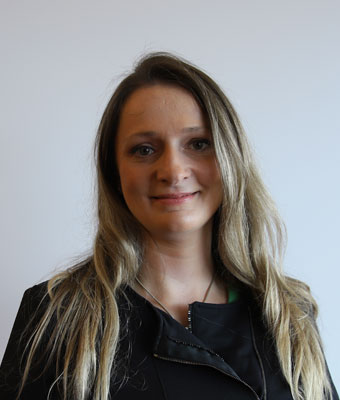
5. Deputy Emer Currie asked the Minister for Public Expenditure, Infrastructure, Public Service Reform and Digitalisation the progress to date under national strategic outcome 10 of the National Development Plan 2021-2030; and if he will make a statement on the matter. [60155/25]
33. Deputy Emer Currie asked the Minister for Public Expenditure, Infrastructure, Public Service Reform and Digitalisation the progress to date under national strategic outcome 4 of the National Development Plan 2021-2030; and if he will make a statement on the matter. [60154/25]
What is the progress to date under national strategic outcomes 10 and 4 of the NDP? I think I get some additional time for my supplementaries.
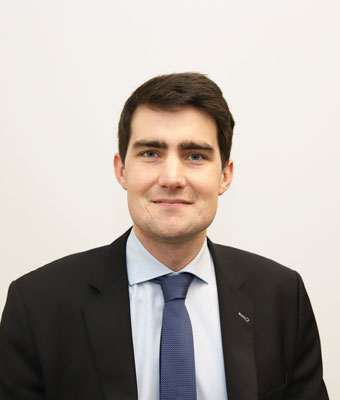
I propose to take Questions Nos. 5 and 33 together.
As Minister, I am responsible for setting overall capital allocations across Departments and for monitoring the relative expenditure and delivery at departmental level. In the national development plan review 2021, the Government originally committed €165 billion in capital investment for the period from 2021 to 2030, and subsequently agreed to additional funding of €2.25 billion in March 2024 for the period from 2024 to 2026. The revised national development plan, published in July, sets out €275.4 billion in public capital investment to 2035, which is the largest and most significant capital injection in our economy in the history of the State. Following the agreement in July of this year of the national development plan review, gross capital ceilings for all sectors have been set out to 2030.
While the Government has prioritised investment towards the critical growth-enabling sectors of housing, energy, water and transport, all Departments are now tasked with developing sectoral plans for the upcoming five years out to 2030. These plans will detail priority projects to be progressed, and Departments must ensure these are affordable within the overall capital expenditure ceilings, as agreed by the Government. These plans will be published in the coming weeks.
The Deputy referenced strategic outcomes 10 and 4. Strategic outcome 10 refers to access to quality childcare, education and health services. The Government has allocated €795 million to the Department of Children, Disability and Equality and €9.25 billion to the Department of Health for the 2026 to 2030 period. A range of projects have already been delivered under this since 2021, including, for example, a €6.9 billion investment in capital infrastructure for primary and post-primary schools resulting in 1,200 projects completed, many of which are in the Deputy's constituency; the establishment of 18 Sláintecare healthy communities in disadvantaged areas under the healthy Ireland framework; the Sláintecare healthy homes scheme, from which 4,500 people benefit; and the ongoing work in communities from a public health perspective.
National strategic outcome 4 relates to sustainable mobility and a commitment to a more environmentally sustainable public transport system. Given the nature of this strategic priority, many projects take a number of years to fully deliver. Transport has been highlighted and focused on as a critical growth-enabling area in the national development plan review. A total of €22.3 billion was allocated to the Department of Transport for the 2026 to 2030 period. A further €2 billion was allocated to support low-carbon transportation projects, including projects such as MetroLink, under the national development plan review. Considerable progress has been made on a range of projects across the country under this objective since the 2021 review, including, for example, planning permissions for nine bus corridors under BusConnects Dublin; final network details for BusConnects Cork; planning permission for BusConnects Galway; planning implementation for BusConnects Limerick; and work is now ongoing on BusConnects Waterford. Over €320 million has been invested in walking and cycling projects through the active travel infrastructure programme.
Full lists of projects and programmes for each of the ten strategic outcomes are regularly published by my Department. The capital investment tracker provides a composite update on all major investments where there is an estimated project cost of over €20 million. There is a detailed map of each of the projects relating to each of the specific and strategic outcomes.
It is important to balance the conversation. We need to accelerate delivery, and we are fronting up on doing an extensive amount more on capital investment in our economy, but a huge amount has been delivered. We are seeing that in our school system in terms of social infrastructure. We are also seeing it with a lot of the public transport projects and continued investment in the road network, as well as the delivering of outcomes for bed capacity in our health system. We need to balance the conversation. A lot of infrastructure is being delivered but we want to do more and do it quicker.
I thank the Minister for his update. I agree with him that a lot of delivery has taken place.
I want to speak specifically about childcare, early learning and school-age care. I believe €795 million has been ring-fenced until 2030 for capital funding for the Department of Children, Disability and Equality. Over the last two years, €45 million was allocated to expand childcare capacity, which is positive. I think we all recognise that is not enough. In this year's budget, €36 million was set aside for 2026 to develop a new programme of acquisition and fit-out of State-led early years and school-age care settings to provide 700 additional places. We have the building blocks extension scheme, which will open in 2026 for extensions and modifications to deliver approximately 1,500 places. That is 2,200 places and it is still not where we need to be.
We have over 13,000 children under three on waiting lists, with infant places especially scarce due to a 35% drop in baby rooms over the term of the last Government. According to Dublin Chamber, 90% of firms claim a lack of affordable childcare is damaging recruitment and retention. Parents, primarily women, are struggling to return to work, as we know from talking to our constituents in Dublin West. This is an economic issue and an equality issue. It is biting and it is hurting families now. Childcare fees are still a second mortgage for families, particularly those whose fees have increased substantially because their crèches pulled out of core funding. We need a big vision of childcare but we also need big delivery. The Department of children is working on an action plan. Capital funding and infrastructure are absolutely key to that. Will the money be there to fund the delivery at the scale we need?
I thank the Deputy. We both share the same constituency with a lot of young families. I share her objective of ensuring we develop more places and more opportunities to have childcare facilities and affordable childcare across our community and indeed in communities across the country. The Minister, Deputy Foley, is working with her allocation of €795 million over the next five years. Obviously, that includes children, equality and disability. She is working on a multiyear sectoral plan to set out specific steps and overall allocations in respect of some of the childcare schemes the Deputy referenced. As part of the budget, we agreed to continue. Obviously, the increased demand for childcare across our economy has had to be funded in the context of budget 2026. An additional 35,000 places under the national childcare scheme are being supported in that context.
We want to complement many of the smaller childcare providers that have developed their own capacity in communities across the country. Obviously, the State will be doing more and the sectoral investment plan for childcare will put the detail on that and provide the specific allocations. We have a wider vision on childcare in the programme for Government whereby we want to make progress across successive budgets when it comes to the affordability initiatives but also the capital allocations, which will be set out in the coming weeks.
I accept that the Minister and the Department are working on the action plan for childcare. I am trying to ensure that the big thinking that is required to deliver childcare at the scale that we need is reflected in the NDP and will be ready to be activated to deliver the spaces that we desperately need. We need systemic change and a new model of childcare. I am looking for reassurance that there will be funding behind it to deliver those plans based on the ambitions that we have and that parents and families need at this point.
In relation to transport, we know DART+ West has cleared the legal challenges. I heard the Minister's update that the Department of Transport is working on funding envelopes for his Department. He said that those envelopes will become clear in the coming weeks. Does that mean that we will hear in the coming weeks that we will get the green light for funding for DART+ West and it can then commence work?
The Deputy and I are in agreement in lots of areas. DART+ West is a project that is not caught in the paralysis, the delays and bureaucracy. It is one that we can try to commence quickly. Where we have opportunities on public transport, we should be using the increased capital allocation from a transport perspective to get projects moving. The Minister, Deputy O'Brien, is working on the sectoral investment plan for the Department of Transport, working with TII and the National Transport Authority. DART+ West is a really good example of a project we need to advance over the coming years. A critical part of the transport sector investment plan will be setting out the timeline for that and putting the detail around that so we give clear certainty to the market about our intent. Trying to attract more international contractors will be critical so we have a broader transformation of public transport investment over the coming years. That will be a priority as part of the capital plan and it is also a priority in the existing national development plan.
The Deputy is looking for a date.
I know. Quickly.
Capital Expenditure Programme
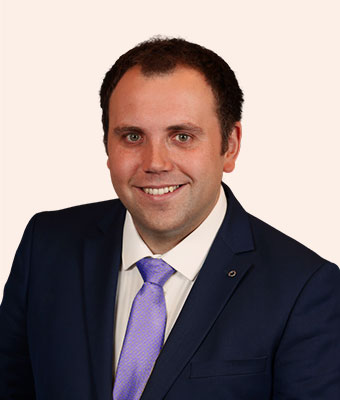
6. Deputy Cathal Crowe asked the Minister for Public Expenditure, Infrastructure, Public Service Reform and Digitalisation the way in which he plans to address delays in delivering capital projects; and if he will make a statement on the matter. [59855/25]
Will the Minister outline some of his plans to address the significant delays in delivering capital projects in the country?
In line with the commitments made in the programme for Government, a new infrastructure division has been established within my Department. Led by a deputy secretary general, this division is focused on how the delivery of critical infrastructure across the State can be accelerated. It comprises a blend of experienced civil servants and sectoral experts with direct experience in infrastructure delivery, many of whom have been redeployed into my Department from key State agencies.
The work of the infrastructure division is supported by the accelerating infrastructure task force, which I chair. This includes six independent experts with extensive infrastructure delivery experience, alongside six ex officio members drawn from commercial State bodies at the forefront of infrastructure development, as well as representatives from the local government sector.
The new division has recently undertaken a major exercise to systematically identify the most important barriers impeding the timely delivery of capital projects. As part of this work plan, officials met with over 50 key stakeholders involved in the development of infrastructure in our country and received nearly 170 formal responses to a public consultation exercise that was conducted in parallel. This was complemented by engagement events, including a session at the national economic dialogue and a regional event in Athlone in June.
Based on this consultation and research, we published the report on the emerging themes on the barriers to infrastructure in July. The report identified 12 key barriers to the timely delivery of infrastructure, spanning the regulatory environment, planning and legal frameworks, and internal government systems. It highlights the urgent need for infrastructure delivery systems that are fit for purpose, efficient and economically viable.
The infrastructure division, in close collaboration with the task force, is now preparing the final report and an action plan to address these barriers. I will present this report to Government in the coming weeks. It will outline a series of targeted, high-impact reforms designed to address all the identified barriers and to deliver critical infrastructure more quickly across the economy with a clear focus on reducing timelines and improving outcomes.
They say every day is a learning day. Recently, I was back in University Hospital Limerick with other politicians looking at a new ward system, a new 96-bed block, a five-storey building. Angela Coll of the Ennis hospital committee was recently in the Minister's office, where the three of us had a good discussion. When I spoke to clinicians that day, they were delighted with this five-storey building and the 96-bed block. However, they made the point that another one is needed and probably even three. I made the point that we should build up and instead of going to five stories, go to ten or 12 storeys. I wrongly believed that there was some planning barrier to this. They told me it was because of the €200 million spending cap. That is just ludicrous because it becomes more costly to go back and build a new one and another one. I take some hope and solace from the fact that the Minister has not finalised his plans yet. When it comes to healthcare, particularly in the mid-west region where there is a healthcare apartheid, I appeal to the Minister to raise the cap so that when we are building a new block, we go higher, we go bigger and we build as many wards with as many beds as we need, not just as many as we can afford to do at that particular time.
I know the critical need to deliver more beds in the mid-west region. Following the HIQA report, it is important that we do that in the context of the new allocation to the Department of Health and as part of the national development plan. I agree with much of what the Deputy has said. The guidelines, as they are, are probably too conservative and there is a need for reform.
That is why we want to go higher, bigger and quicker when it comes to infrastructure and planning for it, be it in the context of bed capacity, social infrastructure or critical economic infrastructure. Rebalancing regulation and removing some of the barriers, steps and internal systems will all be part of the report. These are practical steps that narrow timelines but also rebalance risk. Increasing the risk appetite is critical if we want to deliver more social and economic infrastructure. It is a matter of backing public servants to make the decisions and get on with doing what we know is required, be it in terms of healthcare infrastructure or water, energy, transport and housing infrastructure across our economy.
There are too many constraints that promote a culture of risk aversion. Risk aversion permeates the system, and that is why we have long lists and not delivery now. Part of what we are doing in our infrastructure reforms is cutting a lot of that out, addressing and reforming internal systems and really focusing on delivery. We will be able to set out the detail and the timelines that will shorten as a result of the changes we are going to make.
The whole system is very impractical. When you want to build a new 96-bed block, it is not just foundations you are building; you are digging down, tanking out a whole basement floor and then going up five or six storeys. The upper floor must be load-bearing, so it can take more units and wards if required. All the services, including sewerage, water and electricity services, are then introduced but then you have to stop because the ceiling is reached. That is totally impractical. It does not meet patient needs and is not achieving the value we should obtain from public expenditure. One has to go all the way through the planning process again and build another block. From public healthcare and public spending points of view, we need to deal with this.
I spoke to an official in the Department recently and he told me that back in the recessionary years, gateways were introduced. It was a way of slowing down projects without killing them off. Let us take out the gateways for all the public projects. There should be only three or four stages from conception and planning to funding and, eventually, building. We do not need additional gateways involving analysing and re-analysing. What these inevitably do is raise the cost, and that is the last thing we want.
I thank the Minister for his engagement. I have faith in him. He is going to make proposals in the coming weeks but they need to be practical ones that address this matter.
I agree the proposals need to be practical, quick and make an impact on the wider delivery of economic and social infrastructure. The guidelines the Deputy referred to, which have multiple gateways, need to be reformed and changed. There is too much circular analysis, which in many instances does not add value and adds time. That is why there is going to be change. Some of the reforms we will be introducing will be practical steps that will reduce the time and help deliver infrastructure better.
The Deputy is correct that when developing a site, there should be better intensification and use of it, particularly if it is a hospital site that has only a limited amount of land available and potential future needs. We will be able to detail actions that will make a genuine difference and practical steps we can control within internal systems in government and the State, and then ensure we promote reform. Reform is as important as the allocations around expenditure policy. The obsession in this House is often who gets what and how much. Reform is the most important aspect of resolving issues with infrastructure delivery and rebalancing excessive regulation that is not adding value and is holding back growth. That is what I intend to do.
Public Procurement Contracts
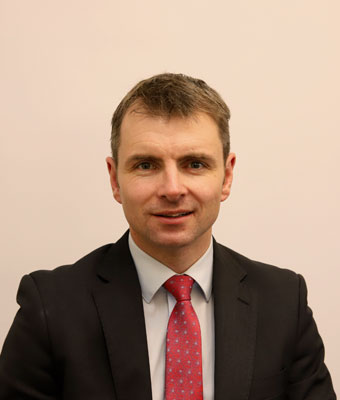
7. Deputy Ruairí Ó Murchú asked the Minister for Public Expenditure, Infrastructure, Public Service Reform and Digitalisation the way in which the incorrectly spelled new sign outside his Department came to be put in place; the total cost of the sign; the estimated cost for the removal and a replacement sign; and if he will make a statement on the matter. [60171/25]
I wish to ask the Minister about the way in which the incorrectly spelled new sign outside his Department came to be put in place, what the total cost of the sign was and the estimated cost for its removal and replacement. I hope the cost is at the lower end. Nobody has made more mistakes than me, and I know a printer who often said, “I print what I am given”, but we would need to see checks and balances. We do not want to see issues like this arise in the future.
Following the change of name of my Department upon the formation of the Government, a procurement process was undertaken to replace the Department’s signage at the Government Buildings complex. After the new signage had been installed, it was noted that one word had been misspelt. The external supplier of the signage confirmed that it made this error when producing it and has replaced the signage at no additional cost.
The Department of Finance undertook the procurement on behalf of my Department in the context of shared facilities services between the two Departments. While we have not yet received an invoice, the quoted price for the original design, manufacture and installation of the external signage at the entrances was €8,460, excluding VAT. I highlight again that there was no additional cost associated with rectifying the supplier’s error.
It cost €8,460 but there was no added cost because the mistake was at the supplier’s end. I suppose that answers the question.
Obviously, there are wider questions on Government spending. These questions, concerning bike sheds, IT systems and the Revenue bill in the Minister’s Department, have almost been done to death here. We must spend public money wisely and have more checks and balances than existed in the past.
I am very glad nobody in the Department was responsible for the signage error. I would not like to have been responsible myself. Obviously, we are talking about something that is costly. I can work on the basis that the Minister sent the printer the correct name and it printed it incorrectly. It was rather costly for it. Could the Minister speak about the due diligence needed to ensure less public waste than we have seen previously?
I have set out the position. Very few Ministers are directly sending items for procurement or are directly involved in the procurement process. When this emerged, the facts were established. The signage is being replaced at no additional cost. Ensuring value for money and financial management are critical in all elements of public expenditure management.
At a wider level, we are reviewing public financial procedures to strengthen accountability and fiscal discipline across government when it comes to the medium-term fiscal and structural plans. Public servants take this very seriously. To give balance to much of what is said here, there are many good projects delivered by people who believe in our public service and do deliver, in many cases on budget and on time, across many sectors in our economy. It is important to balance that with the concerns the Deputy has raised over the need to deliver quicker. A bigger part of the infrastructure conversation is the need to address risk aversion in decision-making, whereby we have lists but not delivery. Better risk appetite regarding capital infrastructure will be a part of the reforms we will have to introduce.
I hope it was not ominous that it was "Infrastructure" that was spelt incorrectly. I think it was missing an "r".
I welcome what the Minister has said. There are many public servants doing really good work. Generally, what we are asking in here is that public procurement and planning work better and in a more streamlined way so we can see the delivery of more projects. I accept that checks and balances can sometimes slow things. We have heard what was said by Mr. Collison and others and we need a balance between having checks and balances and being able to deliver quickly.
Sometimes when going through public procurement, suppliers take into account who is paying, and that needs to be pushed back on. Again, however, it is a matter of streamlining and ensuring everything happens fast, because we know the issues that exist, particularly regarding electricity, water and other major infrastructural projects that need to be completed.
The relevant Minister of State, Deputy Higgins, is doing extensive work on procurement reform. She has led extensive engagement across the country with SMEs and businesses on how we can have better engagement in the tendering process to have more competition and participation by SMEs. There are reforms happening at EU level as part of that too. All elements of streamlining are our focus so as to deliver infrastructure better across our economy and also provide value for citizens regarding what is delivered. The Minister of State, Deputy Higgins, is advancing procurement reforms, which we hope to publish by the end of the year.
Question No. 8 taken with Written Answers.
Flood Risk Management

9. Deputy Louis O'Hara asked the Minister for Public Expenditure, Infrastructure, Public Service Reform and Digitalisation his plans to improve the management of the River Shannon; his plans to tackle the issue of flooding in the Shannon Callows; and if he will make a statement on the matter. [59983/25]
The Shannon flood risk State agency co-ordination group was established by the Government in 2016 to enhance the ongoing co-operation of all State agencies involved with the River Shannon and to introduce co-ordinated solutions that may have a benefit in managing flood risk in the Shannon catchment. The group is focused on prioritising actions and activities that can help manage flood risk along the River Shannon.
A programme of strategic maintenance for 24 sites along the River Shannon has been approved by the group and Waterways Ireland is carrying out this work on its behalf. I announced that funding of €2 million is available for such maintenance. I have asked my officials to engage with other key stakeholders along the Shannon to identify further sites that they believe may require maintenance.
The group approved the appointment of an ecological consultant to carry out high-level environmental studies in relation to a proposed project of the removal of pinch points along the Shannon Callows. The findings of this study highlight that significant environmental assessment is required to fully assess the impact of any such project. The group has established a dedicated working group to consider next steps, including the consideration of further options to address flood risk on the Shannon Callows.
In 2016, the group agreed to introduce the protocol to reduce the levels on Lough Allen. The ESB has obtained a section 21 licence under the wildlife Acts from the National Parks and Wildlife Service to continue with the temporary operation of the protocol to reduce the lake levels on Lough Allen for this coming winter period.
The group also produces an annual work programme to identify extensive work and the co-ordination under way to manage the Shannon. The plan encompasses phase works, maintenance, management, policy and planning.
The group’s website, rivershannongroup.ie, was recently launched. The website contains information on the significant programme of flood relief schemes that the OPW is progressing in partnership with local authorities. This programme protects communities in the Shannon catchment and provides real-time information on the management of water levels by ESB and Waterways Ireland. Minutes of the meetings of the group and plans can also be found on the website.
I remain fully committed to working with the group and key stakeholders to improve the management of flood risk on the River Shannon.
As the Minister of State knows, the ongoing flooding on the Shannon Callows is causing huge issues for farmers and landowners. It is a problem that is getting worse and worse each year as time goes by. It is having a severe impact on the livelihoods of the people affected. There are hundreds of families affected by this and it has caused devastation. For example, in 2023, farmers lost everything as land was flooded through the summer. In recent weeks, there has been severe flooding again, impacting on land and livestock. People in the local area feel that this problem is now almost out of control. They are frustrated as they do not believe strong enough efforts have been taken to tackle this situation. In particular, there has been a lack of investment between Meelick and Athlone to take out the pinch points and a lack of ongoing river maintenance to get the situation under control. A reduction in the water levels of the lakes along the Shannon, such as Lough Allen, Lough Derg and Lough Ree, should be looked at, especially at times when we can expect a lot of rain. Will the Minister of State outline any specific plans in this regard?
I did outline plans, Deputy. As I said, a total of 24 strategic maintenance works will be carried out over the next number of months. Since I resumed my role in the Office of Public Works, I have put forward a number of changes, particularly with regard to the minor works scheme, where local authorities play a key role. I changed the criteria from €750,000 to €2 million. That gives a greater role for the local authority to come to my Department to seek funding to do works, particularly for the areas mentioned in the Deputy's question.
I know the issues regarding the River Shannon at first hand. I know the trauma they cause people. I must also point out, as the Deputy mentioned, that the area of Athlone and Meelick is almost flat. It is only a foot of a fall. We are after having so much rain over the last number of days and levels are rising. I understand the concern from the farmers up and down the callow system, but I assure the Deputy that I am doing everything within my power, working with the agencies that are involved, to alleviate the problem for people.
It is not easy. Climate change is having a real effect. People talk about what has happened over 40 years, but 40 years on, we see the difference from climate change and the effect it has had. I am working, and continue to work, with all agencies but particularly with the farming community along the Shannon. If you look at what we have done from Athlone right down to Limerick and all the flood schemes that are in place, that is enormous, as are the other works being carried out.
I also should say to the Deputy that I announced a vegetation blockage and cleaning scheme. Funding can be sought from my Department for such works. That is open.
I appreciate the Minister of State's response and commitment to this. Obviously, the issue is that this problem is continuing to get worse and my constituents who are speaking to me do not feel that enough is being done to maintain the river to address those pinch points to get water levels under control. I know that the Minister of State is meeting with the Save Our Shannon Organisation, which represents local people affected by this, in the coming days or weeks. These people know the river better than anyone, having lived and worked alongside it for years. They have an important stake and voice in this and, crucially, they want to be at the table where decisions are being made. They need to be included in the Shannon flood risk agency co-ordination group, which is chaired by the Minister of State. They should not be excluded from this group when they are the ones most affected by this flooding. Will this be facilitated? Can the Save Our Shannon Organisation be included in that group?
I have responsibility for the Shannon from one end to the other. I meet many different groups and I understand fully where everyone is coming from. As I said to the Deputy at the outset, we all have to work together. The flooding of the Shannon onto a flat surface is a major problem arising from climate change. I met the group the Deputy mentioned after taking up my role. I will meet it again next week and I will set out what we are going to do over the next number of months.
When I was in government previously, I undertook huge changes to the Shannon in terms of strategic maintenance. We put machines on the river when a machine had not been on the river for a great number of years, or ever. As the former Deputy Denis Naughten said, there had not been one since Queen Victoria left. We achieved it and we did it. I can honestly say that in my five years of absence, very little machine work happened on the Shannon, but I am now back at the helm and I will work to make sure we deliver. I will try to work with the local community, particularly the farmers.
I have a role to play from one end of the Shannon to the other. The changes I have made are significant in bringing forward and helping local businesses, the local farming community and householders. We all need to work together. Everyone is jumping up and down on social media blaming the OPW and the Government. The Minister on my right has given me the money to do the work, but there are environmental things I must adhere to. The Deputy knows that if I went in and did the opposite, like what happened in Lough Funshinagh, we would be back to the drawing board and nothing would get done. It is about us all working together with the Save Our Shannon Organisation and every other organisation to deliver for the communities.
Public Spending Code
10. Deputy Barry Ward asked the Minister for Public Expenditure, Infrastructure, Public Service Reform and Digitalisation the position regarding guidelines and instructions provided to all Departments to ensure strict and transparent control of capital spending budgets; if these guidelines will be made publicly available; and if he will make a statement on the matter. [59379/25]
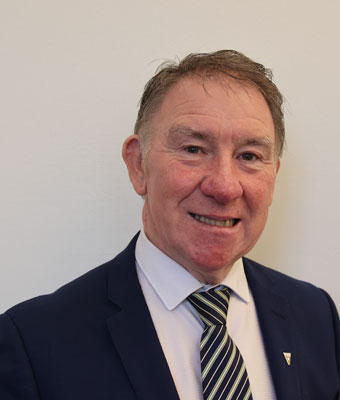
The Government has made repeated commitments to improve transparency and tighten controls around how Departments manage their spending or budgeting. This is essential to maintaining public trust in our ability to deliver value for money when using taxpayers' funds. We understand that the updated regulations are to be introduced to guide how funding needs to be allocated or spent. Will the Minister clarify when these updated guidelines will be issued and whether they will be publicly available?
The review of the national development plan published in July represents the largest capital investment and injection in our economy in the history of the State. As part of the NDP review, the Government agreed substantive annual sectoral allocations for 2026 to 2030 and overall Government capital ceilings to 2035. The review sets out total public capital investment of €275.4 billion to 2035. This comprises €202.4 billion in Exchequer voted capital from 2026 to 2035. Of this, €102.4 billion is being allocated for the next five years, which is an additional €24 billion on what was previously allocated. A further €10 billion in equity and fund releases is being provided for strategic megaprojects in water, energy and transport. This brings the total additional capital investment to €34 billion for the period to 2030.
My Department is responsible, as the Deputy mentioned, for the infrastructure guidelines, which replaced the public spending code for capital appraisal since the end of 2023.
These set the value for money requirements and guidance for evaluating, planning and managing Exchequer-funded capital projects. Management and delivery of investment projects and public services within allocation and within the national frameworks is a key responsibility of every Department, Accounting Officer and Minister. Capital spend is monitored, valued and reviewed each month. Actual spend is compared to the budgeted voted allocation and any variances require an explanation to be submitted to the relevant Vote section in my Department.
Capital sanction is provided to Departments in line with the public financial procedures. Any proposed expenditure that does not fall within the scope of the capital sanction must be submitted to my Department for review and sanction must be sought before any expenditure can occur. Failure to seek and obtain the sanction of my Department may result in a line Department becoming liable to a report by the Comptroller and Auditor General and subject to examination by the Committee of Public Accounts.
It is also important to highlight, as also set out in the public financial procedures, the role of the Accounting Officer for each Department, which is central in terms of accountability, delivery, propriety and ensuring value for money. Each Accounting Officer is personally responsible for the safeguarding of public funds and property under his or her control, for the regularity of all the transactions in each appropriation account and for the efficiency and economy of administration in his or her Department.
I know I am running out of time, but I will set out further details.
I thank the Minister for the comprehensive response. It is fair to say that now more than ever, the public expects transparency and accountability in how public funds are spent. People want to know not just where their money is going, but how decisions are made and whether they deliver value for money. We are very fortunate to be in a position where we can invest in infrastructure, services and innovation, but with that comes a responsibility to ensure that every euro is spent wisely. Clear and consistent budgeting practices across Departments are essential to maintaining public trust and delivering outcomes that benefit communities across the country. I hope that these forthcoming guidelines will strengthen that trust and provide clarity for both Departments and the general public.
We will reform some of the infrastructure guidelines. Some of that is intended to try to remove some of the excessive time that projects take as they move through the infrastructure life cycle. Also central to wider expenditure control will be a reform of public financial procedures and ensuring for certain Departments that we need to have better fiscal discipline in terms of overall expenditure management. Accountability is central there when it comes to Departments or agencies under their remit. We have commenced a review of the public financial procedures. We will be able to set out further direction on the infrastructure guidelines when we publish the task force report. All of that is intended to deliver more, but also to ensure that we have accountability and oversight around overall spending of public funds.
The Minister's response has been reassuring. Like many others, I feel responsible in many ways if there is any guessing or dispute around how moneys are spent. I really welcome that. I am reassured by the Minister's responses.
As there are no further Deputies offering, that concludes questions.
Is féidir teacht ar Cheisteanna Scríofa ar www.oireachtas.ie.
Written Answers are published on the Oireachtas website.
Cuireadh an Dáil ar fionraí ar 3.34 p.m. agus cuireadh tús leis arís ar 3.49 p.m.
Sitting suspended at 3.34 p.m. and resumed at 3.49 p.m.