Bus Éireann
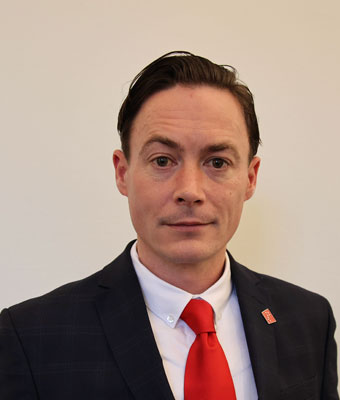
I wish to address the ongoing issue of communication, or more accurately the lack thereof, from Bus Éireann with public representatives. Numerous emails from my office and from colleagues I have talked to have gone unanswered. In other cases, I was even asked to provide written consent from constituents confirming I had their permission to contact Bus Éireann on their behalf. I did exactly that, yet weeks later there has still been no response. The current Oireachtas communication line to Bus Éireann is wholly ineffective. We need to consider a simpler and more direct system. Like the Minister of State, I contact many offices throughout the day for my constituents. I get an answer from some within hours. Some come back in a couple of days, but Bus Éireann communication is at times non-existent. I urge him to seriously examine the communications process between Bus Éireann and public representatives. It is not working currently. It must be modernised and made more accountable.
I will turn to school transport issues in Fingal West. There continue to be multiple problems for children trying to access school transport. To be fair, when my office raised the issue of transport for Rush and Lusk Educate Together and the ASD students attending the school, with the Minister of State, Deputy Moynihan, the matter was resolved in a couple of days. I acknowledge and thank him for his prompt action on that. However, the situation in Kildare town remains deeply concerning. Some 29 students who attend Curragh Community College do not have access to a school bus. These families are doing everything right but are being failed by a lack of planning and communication. The local school in Kildare town is oversubscribed. While a new school was approved as far back as 2018, it only recently received planning permission and construction is yet to begin. It is highly likely that school will not be open in time for the next academic year. The issue was raised directly with the Minister of State, Deputy Moynihan, who assured Deputy Wall's office that he would personally look into it. However, all that has been received since is a generic reply from his office. These students urgently need a school bus. We cannot continue to punish working families because of poor planning and delays.
I also raise the ongoing issue with the Educate Together school in Rathcoole. Bus Éireann continues to refuse to provide a transport service, insisting parents should simply move their children to another school.
This is simply not an option. There are no available places in the nearby schools, so parents are being placed in an impossible position through no fault of their own.
The situation is unacceptable. Those are just three examples in a long list of school transport issues that have spread countrywide. Bus Éireann's rigid approach and the Department’s lack of flexibility are leaving families stranded. This is a clear example of how communications failures and poor planning directly impact children's education and parents’ daily lives. It is time for a practical, compassionate approach that puts students and families first.
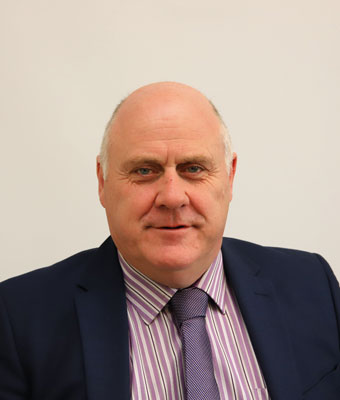
I am responding on behalf of the Minister of State, Deputy Michael Moynihan, who, unfortunately, cannot be present today. On the Minister of State’s behalf, I welcome the opportunity to respond to this matter and thank Deputy O’Donoghue for his question.
The school transport scheme is a significant operation managed by Bus Éireann on behalf of the Department of Education and Youth. It is made up of the primary scheme, the post-primary scheme and the scheme for pupils with special educational needs. Bus Éireann officials have reported challenges in sourcing contractors and drivers nationally. A number of contractors have handed back contracts while, in some places, there have been no bids for contracts. Transport challenges are concentrated in some parts of the country, particularly Dublin, Galway, Meath and Kildare. A number of contractors in the east have ceased school transport operations in recent weeks.
Bus Éireann is prioritising putting in place transport for eligible pupils as quickly as possible. It is important to state that both the Department and Bus Éireann acknowledge and appreciate the role of Oireachtas Members in making representations on behalf of their constituents, and recognise the role of Oireachtas Members in communicating ongoing developments regarding the provision of school transport across the country.
The school transport scheme has expanded significantly in the past six years. In that time, the number of children and young people using the service has grown from under 120,000 pupils in 2018 to over 179,000 pupils in 2025, which equates to an increase of 48%. A total of 1,549 routes were also tendered by Bus Éireann during the summer. In line with such scaling of operations, there has understandably also been an increase in representations. Bus Éireann has advised that representations received by it this year have increased by 50% compared to last year.
Bus Éireann has a dedicated email address for public representatives and a dedicated customer service operation in place to assist members of the public seeking updates on their school transport applications and the operation of services more generally.
We are all aware that it is there because we all use it. However, what parents and public representatives need are results. We need a good communication channel and we need Bus Éireann to start replying to those emails. We need accountability in a system that works. It is simply not acceptable that elected representatives, who are trying to resolve issues for their constituents, are left for weeks without a basic response. It is not good governance, it is not transparency and it is certainly not respect for the public.
Regarding school transport, the examples raised today from Fingal west, Kildare town and Rathcoole are not isolated. They are symptomatic of a wider systemic failure in planning and communication between the Department and Bus Éireann. Working families are being punished because of delays and poor planning. Parents are driving long distances before and after work because no transport is available. Children are missing out on education simply because we cannot match capacity to need. People do not want excuses; they want solutions. They want a transport system that is responsive, fair and child-centred. I urge the Government to take immediate steps to overhaul the communications process with Bus Éireann, ensure direct accountability and provide the resources needed to meet the demand in the communities.
I thank the Deputy for the opportunity to update him on school transport. I remind him of the increase in the number of tickets issued for the 2025-26 school year to date, with an increase of 6% in tickets issued when compared to the same time last year. While Bus Éireann has reported challenges in sourcing contractors and drivers, not only for school transport but in the wider transport sector nationally, it indicates that a lot of progress has been made in sourcing transport for the majority of pupils. Looking forward to the next school year, 2026-27, a lot of work is being done to enhance the current operation to continue to improve technology and improve the customer experience further.
It is recognised that the school transport scheme is vital to families in certain areas to support them in bringing their children to school. The availability of transport to school can be a critical component for children to access education. I want to reiterate the sheer volume of the scheme, with over 179,000 children transported daily in approximately 8,200 vehicles across 10,600 routes to primary and post-primary schools throughout the country. These daily trips cover over 100 million km annually.
This is an issue in my own constituency, and every Member of this House can raise issues in this regard. While the Minister is trying to find solutions, there are challenges in trying to source contractors and, in particular, drivers. When I was on the other side of the House, I always said that we should raise the retirement age for school bus drivers to 70. People can drive an ordinary bus up to any age but school bus drivers have to retire when they are 65. We are looking at that and, hopefully, if it can happen, it will help the situation. I will ensure the Minister of State, Deputy Moynihan, keeps Deputy O'Donoghue updated on the issue he has raised.
Employment Support Services

Sinn Féin introduced Private Members’ business this week in relation to the lack of a cost-of-disability payment. There were many organisations in Leinster House on the day, including Rehab, the Irish Wheelchair Association and the Disability Federation of Ireland and a number of its constituent organisations.
There is a point that needs to be repeated. Everyone accepts what was in the Indecon report commissioned by the Government back in 2021. It found that the cost of disability is, on average, between €9,482 and €11,734 per annum. Given the removal of the one-off payments that were included last year, there has been a huge cut of anywhere between €1,200 and €1,600 for those with a disability.
Another issue that was brought up, particularly by Rehab on the day and by others since, is the wage subsidy scheme. I thank the Minister of State for being present to deal with this matter. I spoke earlier with Deputy Dara Calleary, who is the Minister responsible for the scheme. It is fair to say that the wage subsidy scheme is not fit for purpose. The scheme is the means by which companies get a certain payment for employing those with disabilities. They would get an increased payment for employing a number of people due to added costs of, for example, administration and so on.
The problem with this State is that we have a disability employment rate of approximately 32.6%, which is almost 20% below the EU average of 51.3%. Moreover, the disability employment gap is 38.6%, which is higher than the EU average of 24.4%. This problem has to be addressed.
There were complaints regarding strand 3 funding, which has remained static over 20 years despite an estimated inflation rate of over 50% in the intervening period. We can see how this would impact employers.
I thank Rehab for its correspondence in this regard, which I will put on the record:
We were somewhat encouraged with the announcement of an increase of €1.20, in the WSS base rate, although it was far short of what we had hoped, which was an increase of €3.40, to attempt to start to address ... [wage] increases [which, obviously, nobody is against but there is an impact in relation to these companies]. Strand Two of WSS, allowed for a top-up, depending on the number of disabled people employed from 10% to 50%. As one of the larger employers of people with a disability, if we were awarded the full top-up rate of 50%, this would provide a rate of €1.80 per hour.
However, that did not happen.
I will go through a number of the points raised in the letter. If a company had three to six employees, whereas previously it would have been paid €6.93 - I am talking about fixed rates - that has gone to €7.50. However, it is not a €1.20 increase for them; it is a 57 cent increase.
For those at the higher end, for example at 23% where they would previously have got a 50% wage subsidy, it only jumped from €9.45 to €10. It is an increase, but of just 55 cent. We all know the inflationary difficulties that exist at the minute. I will go through some of the figures from the last while. In 2022, the subsidy was €6.30, or 60% of the minimum wage. By 2025, this was down to 46.6%. If we look at the number of employers, in 2019 there were 1,979 and but that had down to 1,504 by last year. The number of employees was 2,881 in 2019, and it is now 2,466. Those numbers are all going in the wrong direction.
Gabhaim buíochas leis an Teachta. I am responding on behalf of the Minister, Deputy Calleary, who cannot be here. The wage subsidy scheme is a key disability employment support. It aims to encourage employers to offer substantial and sustainable employment to disabled people through a subsidy. As of September 2025, there were 1,538 employers availing of the wage subsidy scheme and 2,445 employees supported through the scheme. Expenditure on the scheme was €23.46 million in 2025. Last year, the Department of Social Protection published a review of the wage subsidy scheme following a public consultation. The review made six recommendations and an additional €3.7 million has been allocated to implement the recommendations. In April 2024, the minimum number of hours for the scheme was reduced from 21 to 15. The scheme now includes employers in the community and voluntary sectors, as well as employers who employ certain people in receipt of the partial capacity benefit. One recommendation was to promote and increase awareness of the scheme to encourage a greater uptake among employers. In June of this year, the Minister launched the reformed scheme together with the Taoiseach, the Minister, Deputy Foley, and Minister of State, Deputy Naughton. Following that, a media campaign was launched to raise awareness of this beneficial scheme. It ran for six weeks. It is hoped that the implementation of the recommendations of the review will result in an expansion of the scheme. The review also recommended that the subsidy rate be reviewed every three years.
We reviewed the rate in the context of budget 2026 and provided an increase in the base rate of the wage subsidy from €6.30 to €7.50. This is an increase of over 19%. Almost 80% of employees are subsidised at the base rate. Previously, there were six rates of subsidy depending on the number employed under the scheme. The scheme was considered highly complex, difficult to communicate to employers and difficult to administer. It was decided to simplify it into three bands instead of six. All subsidy rates were increased in the budget. Employers with up to six employees under the scheme are to be paid the base rate of €7.50 per employee per hour from April 2026. Employers with seven to 16 employees are to be paid €8.50. Employers with 17 employees and more are to be paid €10 per employee. An employer who employs 25 or more active employees with a disability on the wage subsidy scheme is eligible for a grant towards the employment of an employment assistance officer. This role is to support and assist the relevant employees with their needs in employment. The grant is for €30,000 per year. There is a limit of five employment assistance officer positions in any one company. Seven companies received this funding. Based on the recent figures, 1,463 employers will receive the base rate, 18 will receive the middle rate and seven will receive the top rate.
Budget 2026 has provided for a further expansion to people who acquire a disability while in employment and to those who transfer from the invalidity pension to the partial capacity benefit. The programme for Government commits to further review the minimum hours requirement under the wage subsidy scheme for disabled people and to examine an increase to the payment rate. These commitments are also reflected in the human rights strategy for disabled people, which the Government published recently.
That the programme for Government "commits to further review the minimum hours requirement under the wage subsidy scheme" is an absolute necessity. It goes without saying that we need "to examine an increase to the payment rate". One of the fears is with the three-year review mechanism. There will be other factors that will impact the costs faced by the Rehab Group and some of these other organisations, as well as on their ability to operate. We need to make sure there are not more employers who remove themselves from this scheme, which would mean there is less available employment for those with a disability. We are not in a good place in that regard. Beyond that, we need to streamline the entire system. The work and access programme, which allows for reasonable accommodation funding, is not fit for purpose. The wage subsidy scheme at the minute needs to be reviewed. I ask the Minister of State to go back to the Minister from the point of view that this needs to be looked at.
I will pass on the correspondence from a number of organisations that are in difficulty. The following statement is from Reach Ability:
We are a small social enterprise based in Wexford supporting and employing people with intellectual disabilities. We rely on the WSS to support a number of our employers and the widening gap over recent years between the WSS and the minimum wage has put us under increasing financial pressure. Having heard that the WSS is to increase by €1.20 per hour this year, but to then discover that our rate will only increase by 57 cent per hour while the minimum wage is going up by 65 cent, is dispiriting to everyone who is working so hard to maintain our jobs.
They have requested any support that can be offered. I received the following correspondence from Mr. Price:
For employers like us with 23 or more people with a disability on the pay roll, the rate paid increases from €9.45 to €10, an uplift of 55 cent. While this is welcome, it falls far short of offsetting the ongoing impact of successive wage increases.
At the minute, it is not fit for purpose. It needs to be looked at. We need to look after those with disabilities and we are failing at the minute.
We are committed to improving the wage subsidy scheme and supporting organisations employing more than one person under the scheme. The Department of Social Protection offers a range of other employment supports for disabled people and their employers. In July 2024, the Department launched the work and access scheme, which offers seven supports to improve access in the workplace for disabled people. Organisations and employers can apply for support in adapting the workplace, and can avail of disability, equality and inclusion training to gain a better awareness and understanding of disabilities in the workplace. This scheme is available to all non-public sector employers, including charities and voluntary organisations. In December 2023, the Department launched the WorkAbility programme to support people with disabilities into employment through 57 local, regional and national projects. The programme aims to support over 13,000 disabled people over five years. It is important that we work together across government to address the barriers to employment, to improve employment outcome for disabled people and to support employers.
The Government recently launched the national human rights strategy for disabled people, which covers the period from 2025 to 2030. This strategy prioritises a cross-government approach. The Department of Social Protection and the Department of Enterprise, Tourism and Employment will lead the employment pillar, with a focus on improving access to the workplace for all disabled people. I am very pleased that in budget 2026, we are able to increase the subsidy rates on the wage subsidy scheme and expand the eligibility for the scheme. I will bring the issues that the Deputy has raised to the attention of the Minister. I will ask him to respond directly to the Deputy.
Social Welfare Code
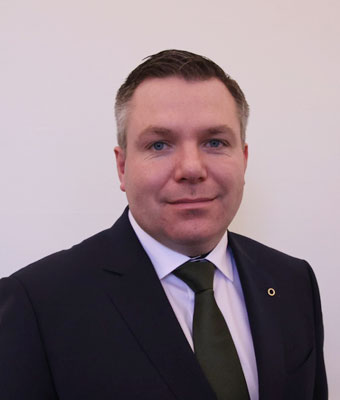
I thank the Minister of State for being here to deal with this issue. We made a big leap forward in last week's budget with the raising of the income disregard for carers, both in single situations and in couples. I welcome that and hope to see a continued progression of that over the lifetime of the Government. I am here today to point out what I think is a loophole in the system. I have raised it through parliamentary questions and wanted to give it an airing in this forum to see if there is any resolution for it, especially in the context of the upcoming social welfare Bill. It was brought to my attention by a constituent who is currently facing both a financial and social consequence as a result of being on maternity leave. This individual works part-time and has been a full-time carer since 2022. She has been means tested for receipt of the full-time carer's allowance and is also receiving top-up payments for child dependants, all of which are fully merited. It is good not only that she is in a position to provide that care but also that she is able to maintain employment for the progression of her career. However, being on maternity leave now means that there is a lacuna by virtue of the fact that her so-called maternity benefit is being paid directly to her employer. She is not in receipt of that payment. Further, because she is on maternity benefit, she does qualify for full-time carer's allowance and moves to half-time carer's allowance. Finally, because she has more than one child, she is not awarded the full rate of €289 maternity benefit but is awarded a reduced rate of €244 per week. This means, in effect, that there is a loss of over €200 per week because she is on maternity benefit.
There is space here to ensure fairness. This is a carer who is still fulfilling her full-time care responsibilities, on maternity leave and caring for children, as was recognised by the child dependant payments and the full-time carer's payment that were being paid to her. It is puzzling as to why she is losing money as a result of going on maternity leave and hence losing access to a full-time carer's allowance. It flies in the face of the principles of the social welfare system which, in the main, is very good at ensuring that people are not worse off when they take on care responsibilities. They definitely should not be worse off if they decide to have another child. Effectively, there is a significant hit to this person's income because she is on maternity leave.
I would like us to address this in the context of the upcoming social welfare Bill. We need to ensure that the full rate of maternity benefit is paid regardless of the number of children and that the awarding of the carer's allowance takes account of the fact that, in some instances, as happened to me when I was on paternity leave, the benefit is paid directly to the employer. The employer takes that payment and then pays the resultant fee. Obviously, in the situation of a carer, that is not necessarily like for like because the person would lose half of the carer's allowance payment as a result of being on maternity benefit, despite the fact that the employer is getting the statutory rate.
Compounding this is the fact that a different rate of maternity benefit is being paid to the employer while the employer is still deducting the maternity benefit. I would welcome a discussion on this. It is something that can be remedied through legislation and I will be speaking to the Minister for Social Protection about it. I am interested to hear the Minister of State's thoughts on it and hope we can advance this and address what is a fundamental unfairness in the system.
I thank Deputy Moynihan for raising this issue, which I am dealing with on behalf of the Minister for Social Protection, Deputy Calleary. The Government acknowledges the vital role that family carers play in our society and remains fully committed to supporting them in that role. This commitment is reflected in both the programme for Government and the recent budget.
The Department of Social Protection provides a comprehensive range of income supports for family carers, including carer’s allowance, the non-means-tested carer’s benefit, domiciliary care allowance and the carer’s support grant. In 2026 spending on these supports is expected to exceed €2.2 billion, with almost 103,000 carers currently receiving the carer’s allowance payment. Carer’s allowance is the main scheme through which the Department provides income support to carers in the community. It is a means-tested social assistance payment for people on low incomes who are providing full-time care to someone who requires ongoing support due to age, disability, or illness. The person being cared for must require full-time care and attention.
As part of budget 2026 we are increasing the income disregard for a single person by €375 per week to €1,000. That is an increase of 60% and means that a single person who provides full-time care but does some part-time work can earn over €55,000 per year from that work and receive a full carer's payment. In parallel, we are also increasing the income disregard for a couple by 60% or €750 to €2,000 per week. These are the largest ever increases in the carer’s allowance income disregard and will mean that even people with what are considered to be relatively high incomes will qualify for a carer’s payment for the first time. For example, a carer in a two-adult household with an income of approximately €110,000 will still retain the full carer’s allowance payment and even with an income of €138,000 a carer will retain a partial payment. We are also increasing the personal rates of payment for carer’s allowance, maternity benefit and other schemes by €10 from January.
The Irish social welfare system is underpinned by the principle of one person, one payment. Ordinarily, individuals who qualify for more than one social welfare payment receive only the higher payment. However, there are limited exceptions, one of which is the half-rate carer’s allowance. This arrangement allows individuals in receipt of certain social welfare payments, who are also providing full-time care, to retain their main payment and receive a supplementary payment, subject to a means test, up to the value of a half-rate carer’s allowance. In the case outlined by the Deputy, a carer on maternity leave may be eligible to receive both the full weekly rate of maternity benefit at €289 and a half-rate carer’s allowance at €130, which is €419 per week. Therefore, in such circumstances, a carer goes from receiving a payment of €260 per week to €419 per week. This is an increase of €159 per week. Where the maternity benefit recipient has adult or child dependants, she may also qualify for an increase for a qualified adult €162 per week and child support payments of €50 per week for children under 12, or €62 for children aged 12 and over. Maternity benefit is compared to the rate of illness benefit, and the higher of the two is paid. When a carer goes on maternity leave, the Department increases the payment made to that person by paying out both the full rate of maternity benefit along with a half-rate carer’s allowance.
This Government has committed to improving supports for carers and those they care for and the significant changes to the means test for carer’s allowance announced in last week’s budget clearly demonstrate that commitment.
I thank the Minister of State for the response. I will start by saying that I acknowledge again the huge step forward that we have made in supporting carers, with our long overdue recognition of the role they play in our economy and society by looking after those who need care. However, it is also important to ensure that when we are spending money on supporting carers the income supports are effective, are working and are not causing unintended consequences, which is the case here. While I accept the facts the Minister of State laid out regarding what the individual in this case would receive, I would point out that it does not make allowances for the fact the person is employed and the payment is made directly to the employer. That is the key difference here. It could be addressed by an amendment to the social welfare Act such that a full-time carer's allowance would still apply in such an instance because the person in this case is not receiving the maternity benefit payment and that is being paid to her employer to absorb the cost of the wage. In this case, she works for 18.5 hours per week and the additional payment of the carer's support allowance is part of her usual or normal income alongside her salary for 18.5 hours. The maternity benefit is deducted from the salary for 18.5 hours per week which means that the maternity benefit is not payable to the individual in question. There needs to be a recognition of situations where a person is working the permitted 18.5 hours per week and is already receiving the full rate of carer's allowance. That should carry over to the maternity benefit because in such an instance, the maternity benefit would not be paid directly. It is really important given that we are constantly trying to encourage women to have full participation in the workforce and that they are not penalised for leaving the workforce when they have children. Little, unintended consequences like this in our social welfare system should be addressed. I ask the Minister of State to raise this with the Minister for Social Protection to see if something can be done to address it in the social welfare Bill.
I thank Deputy Moynihan again for raising this matter. The Government recognises the complexity of caring roles and the reality that many carers continue to provide full-time care while navigating other life events, including maternity leave. As I said in my opening remarks, this Government has committed to improving support for carers and those they care for. The significant changes to the means test for carer's allowance announced in last week's budget clearly demonstrate that commitment. The programme for Government contains a number of commitments to improve the supports available to family carers. These include a commitment to continue to increase the carer's support grant and to progressively increase weekly carer's support payments. It also clearly sets out a timeline which commits to significantly increasing the income disregard for carer's allowance in each budget with a view to phasing out the means test during the lifetime of the Government. We have already made progress in this regard, including in the recent budget. In addition to the changes to the carer's allowance disregard, as part of budget 2026 we are also increasing the rates of maternity benefit and carer's allowance by €10 per week from January. I can assure the Deputy that we will continue to keep the range of income supports available to both carers and those availing of the maternity benefit under review so that the overall objectives of the scheme and the Department are met.
I will bring the very valid issues Deputy Moynihan raised to the attention of the Minister for Social Protection and will ask if they can be included in the forthcoming social welfare Bill. I am sure the Deputy will also raise it with the Minister himself but he will have our support on that.
Vaccination Programme
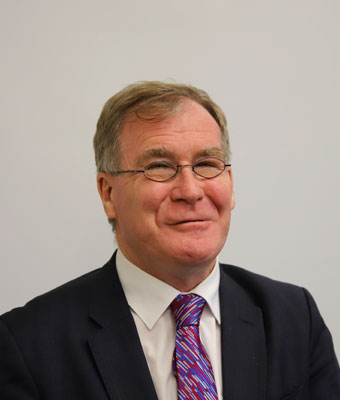
This comes issue under the Department of Health. My question on whether consideration will be given to putting in place a shingles vaccination programme to be made available to people over 65 or to immunocompromised patients in view of the fact that shingles vaccination is recommended by NIAC for those over 65 and for those who are immunocompromised and aged between 18 and 65. Shingles vaccination is currently not available on the national immunisation programme. While the drug for shingles is approved, it is not available under the medical card scheme or under the present health programme. We must remember that when a person gets shingles, especially those over 65, up to 30% of people end up with long-term nerve pain. Anything up to 25% of people are adversely affected in the area around the eye. Shingles is also associated with increased risk of stroke and neurological conditions.
As the Minister of State will be aware, the age profile of the population of this country is changing dramatically. Since 2011, the number of people over 65 has increased from 600,000 to 860,000 and within the next four years, it will be over 1 million. It is also important to note that at any one time, 50% of all hospital beds in our hospitals are occupied by people over 65. I am disappointed that we have not put in place or even started this programme. Even if we decided to go for people over 75, we could easily put in place a programme that would cost us less than €10 million in real terms. In real terms, however, it would probably be a cost saving because if you have people who end up in hospital as a result of getting shingles, due to the knock-on adverse effect it can have on their health, then there is a real saving there. As the Minister of State will be aware, the average cost to the State is €8,000 per week for each week a person is in hospital.
I ask that the Government give serious consideration to putting in place a vaccination programme. While my request is for people over 65, if we cannot do it for over 65s, we should at least put it in place for people over 75. A number of other European countries already have it in place. The UK is putting in place a programme for over 75s. It is recognised that there would be a real saving to the State in the long term. This is particularly true for those over 65 but also for those who are immunocompromised. If they get shingles, if they already have a medical complication, this will add further to their problems, add to the occupancy of hospital beds, and add in real terms to the overall medical cost. That is the reason I am bringing forward this Topical Issue this evening.
Gabhaim buíochas leis an Teachta Burke for raising this matter, which I am taking on behalf of the Minister for Health. Varicella is a common and highly infectious disease caused by the varicella zoster virus. This virus is associated with two distinct clinical syndromes, namely, varicella, commonly known as chickenpox, and herpes zoster, commonly known as shingles. Primary infection with the varicella zoster virus results in varicella, after which the virus becomes latent in the body’s nervous system. The virus may reactivate after a period, sometimes several decades later, resulting in herpes zoster or shingles. Morbidity associated with herpes zoster increases with age. The most common complication is neuralgia, which is a persistent pain in the area of the rash. This has the potential to cause significant reductions in quality of life, activity, mood and sleep. It is estimated that one third of people who have had a varicella infection will develop a shingles infection at some point during their lifetime due to reactivation of the virus. Two thirds of cases occur in those aged 50 years and older.
Currently, a non-live, recombinant shingles vaccine called Shingrix is available in Ireland and is administered as a two-dose vaccine. Shingrix is more effective than the previously available live vaccine, Zostavax, and can be safely administered to immunocompromised patients. Internationally, Shingrix has also replaced Zostavax as the preferred vaccine against shingles. The National Immunisation Advisory Committee guidelines state that the Shingrix vaccine may be considered in those aged 65 years and older, due to the greater burden and severity of disease and neuralgia in this age group, and in those aged 18 years and older at an increased risk of shingles.
It should be noted that in advance of any change in policy, the Minister can request that HIQA carry out an evaluation of the impacts of a potential policy change. HIQA has a statutory remit under the Health Act 2007 to evaluate the clinical and cost-effectiveness of health technologies, providing advice to the Minister for Health on budget impact, organisational and social aspects, and ethical and legal issues. These evaluations take the form of health technology assessments, HTAs. A HTA is a multidisciplinary research process that collects and summarises information about a health technology in a systematic, unbiased and transparent manner. The use of the HTA facility assists decision-makers in assessing the merits and potential shortcomings of a new health technology, policy or service, based on accurate and reliable evidence. The Minister for Health advises that following a request from her Department, HIQA carried out a HTA on the herpes zoster vaccine which protects against shingles. The HTA examined the evidence on the safety and clinical effectiveness of shingles vaccines. The cost effectiveness and budget impact were also reviewed, in addition to the ethical, social and organisational implications of including the vaccine in the adult immunisation scheme.
HIQA's HTA was published on 19 July 2024. The HTA found that including the shingles vaccine in the routine immunisation schedule, at the vaccine price at the time, for all adults aged 65 years and over would not be cost-effective and would have a substantial budgetary impact. While the HTA found that the introduction of the shingles vaccine was not cost-effective based on the cost of the vaccine, it found that it could be cost-effective for vaccination of those at 75 years and 80 years if the cost of the vaccine was reduced by 80%.
Given that the healthcare budget is finite and decisions regarding increased spending relating to a change in one area could impact the provision of other health technologies and treatments within the healthcare system, the cost-effectiveness must be considered in any decision-making process. The Department has considered the findings of this HTA and determined that the introduction of the vaccine could be reconsidered when the cost-effectiveness of the vaccine is confirmed as being more favourable.
I fully accept the answer the Minister of State has given in the sense that cost-effectiveness is also an important issue in relation to any new medicine that is made available under the drugs payment scheme. What I am saying, however, is that I understand that after the decision of July 2024, there were further negotiations but, again, no progress was made. While there was a considerable cost reduction made by the pharmaceutical company, my understanding is that a decision was taken following the HTA not to approve this.
I am concerned about the fact that other countries in Europe now have this in place. We must look carefully at it as well, even if we are to start off with the age group comprising those over 75, and even setting aside some money to deal with that age group. As already stated, the age profile is changing and the demand for hospital services will increase dramatically over the next few years. Therefore, the more people we can keep out of hospital and away from the medical services, the better. One of the ways of doing that is vaccination programmes, whether it is the flu vaccine, the shingles vaccination or other vaccines. Vaccines help to keep people from having to require hospital care. Therefore, this is a programme we should carefully look at, particularly now in relation to over-75s, and review to see if we can get that slot in there to at least start some element of it, in the same way other European countries have done.
I thank the Deputy once again for raising this important matter. Vaccination is recognised as one of the most impactful and cost-effective public health interventions that can be employed, promoting good health and saving many lives year on year. As has already been highlighted today, shingles can impact anyone who has been infected with chicken pox during their life, leaving a significant proportion of the general population vulnerable. Up to one in three people who have had chicken pox will go on to have shingles. It is for this reason that the Department requested that HIQA carry out a HTA to review the evidence for adding shingles vaccination to the adult immunisation schedule in Ireland. It is hoped that the introduction of the shingles vaccination to the immunisation schedule can be reconsidered if and when the cost-effectiveness of the vaccine is confirmed as being more favourable.
The Deputy will be aware that the immunisation programme in Ireland is based on the advice of NIAC. The committee's recommendations are based on the prevalence of the relevant disease in Ireland and international best practice in relation to immunisation. To protect the public from serious outcomes of diseases, vaccines which are included in the national immunisation programme are administered free of charge to those who are in eligible at-risk groups.
More generally, I urge all those who are eligible for any vaccine under the national immunisation programme at all stages of life to avail of the opportunity to be vaccinated. The discussion here today is timely as the HSE launched flu and Covid-19 vaccination programmes earlier this month. All who are eligible for the free vaccine should make their appointment to receive it. In addition, I encourage all parents to bring their young infants, in line with the primary childhood immunisation schedule, to the GP for their important childhood immunisations. Babies born during the RSV season are eligible for RSV immunisation and will be offered immunisation at the relevant maternity hospital. These measures will help us reach the shared objective of protecting public health by preventing the spread of disease in our community.
Cycling Facilities

I wish to raise the S2S, which is a coastal promenade and cycleway around Dublin Bay, from Sutton to Sandycove, which is where the name comes from. I am particularly concerned about the bit between Merrion Gates and Dún Laoghaire Harbour. I was first elected to Dún Laoghaire-Rathdown County Council in 2009, but before I was ever elected I was in favour of this plan. It existed long before I ever got involved. I credit people like Michael Collins in Blackrock who have kept this idea alive. It has been singularly the most frustrating thing I have had to deal with as a politician at any level because this is a universally supported measure. It makes perfect sense on so many different levels. We are talking about a combined cycleway and promenade outside the DART line around Dublin Bay, so you have no traffic lights and no interaction with cars, it is safe, it is a direct route for commuters in and out of town, it is a healthy place for people to enjoy recreation, it would be a tourist attraction and it is something that exists in all kinds of other cities around Europe. Yet we do not have it in Dublin, and the question is why we do not have it. I do not know the answer to that because it makes absolutely no sense that we do not have it. During my time on the council and in the Seanad, I argued for this to happen. It is through a combination of bureaucratic laziness and myopia that it has not happened. It is enormously frustrating. There is almost universal support for this. Some councillors in Dún Laoghaire were against it, but the vast majority of us were for it. In fact, I formed a committee with Dublin City Council exceptionally under the Local Government Act to progress this and we still did not get anywhere, notwithstanding commitments from the management in Dún Laoghaire that we would have environmental impact studies, etc.
The main stumbling block from the beginning was a ruling or a decision from the National Parks and Wildlife Service, NPWS, that this would affect birds roosting on Sandymount Strand or Booterstown Strand, the part of Dublin Bay that dries out at low tide, where birds do land. People walk their dogs there, the dogs run at the birds, the birds fly up and then they land again when the dogs have passed. The notion that a cycleway and a walkway along the side of the DART line would interfere with those birds roosting is absolute nonsense. The thing that really frustrates me, though, is that it was never substantiated by the NPWS. It just made this vague assertion that there was a problem and it was never backed up.
When the then Minister, John Gormley, was in the Department of the environment, he declared Dublin Bay to be an special area of conservation, SAC, and a special protection area, SPA. I do not have a problem with that. What they did in the Custom House, however, was get a big map and a marker and draw the outline of the SPA and the SAC. We have no notion of where the boundary relating to both is because when you get down to ground level, the marker, the actual boundary, is several metres wide. Nobody can tell me where the boundary actually is. The other problem is that you cannot build it because it is in the curtilage of an SPA, but how do we even flipping know where that is? Nobody can tell me.
Two weeks ago I went to an east coast railway infrastructure protection projects, ECRIPP, consultation in the Royal Marine Hotel in Dún Laoghaire, where Iarnród Éireann showed us the plans it has to rebuild the DART wall. The Dublin to Kingstown railway, built in 1834, crossed the sands, created a lagoon at Boosterstown and created Blackrock Park. Ultimately, it also created a relatively straight line along there. The wall is now ageing, however, and in bad weather - hurricanes, low pressure and high tides - the wall is overtopped by the sea, so they have to build it up. Nobody has a problem with that, but those responsible for ECRIPP have proceeded to build this wall. This was the greatest opportunity to build the S2S on top. The original DART wall is 8 m wide. Tell me there is not space there to have a cycleway and a footpath. Instead, they are building a wall that is not going to facilitate it. The consultation is nil from the point of view of the things people have said about what should happen, and they are going to spend millions of euro building a wall that does not even facilitate a basic community facility that would benefit us all. I want to know why that facility cannot be built. Nobody can tell me. It does not make sense and it is disregarding what people want in the area.
Gabhaim buíochas leis an Teachta Ward for raising this issue, which I am taking on behalf of the Minister for Transport, Darragh O'Brien, who unfortunately could not be here this afternoon. I welcome the opportunity to discuss this important topic with Members of the House on his behalf.
I understand that the Deputy's question relates to the proposal to create a continuous 22 km waterfront promenade and cycleway connecting Sutton to Sandycove. As he is aware, the Department of Transport has responsibility for the provision of funding and setting of policy in relation to active travel, while the National Transport Authority, NTA, has responsibility for the allocation of this funding to projects at local authority level and overseeing their delivery.
The significant increase in funding for walking and cycling infrastructure projects in recent years is welcome. Approximately €290 million was provided to the NTA's active and sustainable transport programme this year alone, supporting projects in every local authority. A continuation of this high level of investment was confirmed in the recent budget.
The Sutton to Sandycove cycleway, also commonly referred to as the east coast trail, is a long-standing proposal to deliver a world-class active travel corridor that celebrates Dublin's coastal heritage while supporting national objectives around sustainable mobility, climate action and placemaking.
Its alignment has been under development for over two decades. Despite the incremental nature of its progress, the project remains a strategic priority for both the NTA and the Department of Transport and much has been delivered to date.
The route begins in Sutton, which the Deputy will probably know, where a two-way cycle facility is provided along the waterfront, traversing Dublin Road, Howth Road, James Larkin Road, and Clontarf Road. From there, it branches onto Alfie Byrne Road and continues toward Dublin Port. A protected two-way cycle facility connects Alfie Byrne Road to the recently completed East Wall Road scheme. While a short section at the eastern end of East Wall Road remains incomplete, Dublin City Council is actively developing proposals to close this gap. Once delivered, this section will link into phase 2 of the Dublin Port greenway, currently under construction, which will connect East Wall Road to the East Link.
To facilitate safe and direct passage across the River Liffey, Dublin City Council is preparing designs for The Point pedestrian and cycle bridge. This new crossing, located west of the existing Tom Clarke Bridge, will provide a segregated route for pedestrians and cyclists and will link into the cycle infrastructure planned under the Ringsend to city centre BusConnects corridor. South of the river, the route continues along Pembroke Cottages, into Ringsend Park and onto Strand Road, where a trial of a two-way cycle facility is anticipated, subject to funding. From Strand Road, the trail transitions onto Merrion Road, which is scheduled for upgrades under BusConnects, before reaching the recently completed two-way cycleway along Rock Road. This section, delivered by Dún Laoghaire-Rathdown County Council, leads into Blackrock Park. At Blackrock DART station, the Deepwell section of the cycleway is currently in design. Its delivery is contingent on ongoing discussions with landowners. Continuing southward, the route follows a quietway along Idrone Terrace, leading to a contraflow lane on Maretimo Terrace. This connects to the coastal mobility route.
The outstanding sections of the alignment are active projects and are being progressed through various stages of planning, design and delivery. While timelines may vary depending on funding, statutory approvals and local conditions, it is anticipated that most of the route will be completed by 2030.
This target reflects both the ambition and the complexity of the project, which spans multiple jurisdictions and requires co-ordinated action across agencies and sectors. This cycleway represents a transformative opportunity for Dublin’s communities. It will enhance local and regional connectivity, support modal shift away from private car use, and contribute to the creation of vibrant, liveable public spaces. As the project continues to evolve, collaboration between local authorities, transport agencies and community stakeholders will be essential to realising its full potential.
In the Minister of State's response, he said the "Sutton to Sandycove cycleway, also commonly referred to as the east cost trail". It is not. They are different things. This is the frustrating thing I am dealing with in regard to management at local level, this notion that they are the same thing. They are not. The east coast trail, as the Minister of State has just described, comes inside the DART lane at Merrion Gates. When cyclist come over the Merrion Gates and onto Merrion Road, they are battling with buses, cars and all the other traffic. The S2S is a coastal cycleway and promenade outside the DART line. There are none of the dangers associated with wrestling with traffic, and we do not have to do that.
All of the things the Minister of State has set out there with regard to trying to avoid private car use and all the rest is great. I agree with all of that. Dún Laoghaire-Rathdown County Council has done great work in putting in place what it calls the coastal mobility route, which runs inside the DART line. It is a fantastic facility. It faced a lot of opposition at the time but it is great. However, it is not the S2S. Somehow, there is this decision at local level, which has no democratic legitimacy whatsoever because it is totally contrary to what democratically elected people actually asked for and want, that the S2S is inside the DART line.
I want to know where elected people made this decision. They did not make this decision. When I went up to the ECRIPP consultation, I met with officials and engineers from Iarnród Éireann and it was said that the S2S was essentially written out of the plans. It formed part of our development plans, and over successive plans, officials in Dún Laoghaire-Rathdown and elsewhere have eroded its legitimacy and taken it out through inaction, objection and obfuscation, and they have never said why. They have never given a good reason it cannot go ahead, apart from some problems, every one of which could be overcome.
When Covid hit, one single acting director of services in Dún Laoghaire-Rathdown County Council built the whole of that coastal mobility route without consultation with anyone. If we want to talk about democratic deficits, that is one. If one official can make that decision after decades of locally elected representatives trying to do the same thing, where is the state of our local democracy? The S2S is outside the DART line but it has been written out by officialdom. It is irresponsible and unfair to people who elected councillors to Dún Laoghaire-Rathdown County Council over successive elections and who were in favour of this that it has simply been disregarded.
It is not the Minister of State's fault. I recognise that but I am frustrated about it.
I definitely hear the Deputy's frustration. I am delivering the script that was handed to me. I know that active travel and these greenways are very important for people's health and everything.
In this context, I want to say that over €360 million of grant support for the active travel and greenways networks for next year was committed in the recent budget. This funding helps support projects like the Sutton to Sandycove, S2S, cycleway, which I recognise is very important to the local residents on the route as well as the wider community. As outlined, this cycleway has seen significant progress through a series of schemes delivered under the active travel programme. The NTA, working in close partnership with local authorities, remains firmly committed to completing the outstanding sections of this strategic corridor.
Continued support will be provided to local authorities to advance these projects, subject to the availability of funding and alignment with national transport and climate objectives. Once completed, the route will serve as a landmark amenity for residents and visitors alike, offering a unique opportunity to experience Dublin’s coastline in a safe, active and environmentally conscious way. Realising this vision has required, and will continue to require, collaboration across Government Departments, local authorities, community groups and political representatives. Public support for the project is strong, reflecting a growing appetite for high quality active travel infrastructure and a more liveable urban environment. The Department of Transport recognises the importance of funding our active travel network, including the Sutton to Sandycove cycleway, to provide safe, interconnected networks that facilitate and encourage sustainable transport in people’s everyday lives.
I trust this clarifies the current position with regard to this particular cycleway. I thank the Deputy for the opportunity to discuss the matter on behalf of the Minister for Transport and I will convey his points on this issue to the Minister.
I very much trust it does not. The Deputy will probably take that up, as will the Minister. I thank the Minister of State for being present.