Public Transport
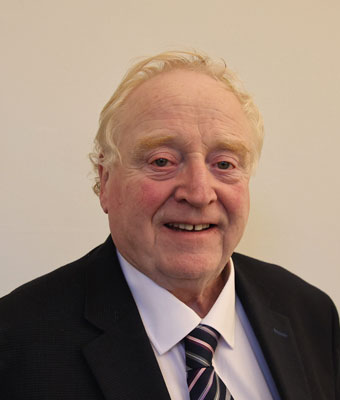
I am grateful for the opportunity to address a matter of great importance to my community, which is the urgent need for a Local Link service along the N17 corridor from Bellahy to Sligo. The commitment outlined in the programme for Government to increase Local Link services in rural areas to better connect villages, towns and cities underscores the Government recognition of our need for improved connectivity. In addition, the intent to integrate Local Link transport routes with health services shows a holistic approach to solving transport difficulties and increasing access. However, we must turn this commitment into action. Currently, the National Transport Authority highlights that the national primary route is serviced chiefly by Expressway services which stop in larger towns only. The service model falls dramatically short of addressing the transport needs of smaller communities. The sentiments of the local public echo a pressing demand for service along the N17 corridor that meets the needs evident in other parts of the country, such as the route serving Bundoran, extending to Grange and Sligo.
These towns enjoy the dual advantage of being served by Bus Éireann and Local Link services, which makes a significant difference to those who rely on public transport. In stark contrast, communities along the N17 face considerable barriers. People who do not drive due to age or health issues or simply a desire to engage in social activity find themselves isolated without viable options to connect with essential services, social engagements and educational opportunities. While Bus Éireann's route No. 66 stops in Tubbercurry, it fails to provide services to the surrounding areas such as Bellaghy, Tullan Strand, Cloonacool, Achonry, Coolaney and Mullanabreena. The absence of Local Link services is keenly felt as the cost of the commercially operated Expressway No. 64 service is not only higher, but also renders essential travel inaccessible for many. It is disheartening to note that residents of the area feel increasingly disadvantaged compared with the neighbouring areas that benefit from more comprehensive transport options. Feedback from the community regarding existing local services such as the Coolaney-Sligo and Ballaghaderreen-Sligo routes indicates that these services are not only well received but are essential for connecting rural communities. This further highlights how the lack of service along the N17 places residents at a disadvantage, making it increasingly difficult to access social, educational and health-related functions in Sligo.
The pressing issue of limited student accommodation for students of Atlantic Technological University, ATU, Sligo adds another layer of complexity to the situation. Without reliable transport, students who cannot drive are effectively barred from pursuing their education at this vital institution. This is not merely a transport issue. It is a barrier to access to education and opportunities. It is essential we secure a Local Link service for south Sligo as doing so would result in a more active and engaged community. I stand firm in the belief that such a service would be busier than the existing Castlerea to Sligo service, ensuring residents can travel freely and safely.
I propose a new Local Link service that would effectively serve the public from Knock airport to Sligo, incorporating vital stops that will serve those in need, such as at Bellaghy, Curry, Banada, Aclare, Toorlestraun, St. Attracta's secondary school, Tubbercurry, Cloonacool, Lavagh and Ballinacarrow, also attending Sligo. The success of rural link services in other areas is a testament to their efficiency in bridging the gap between rural communities and urban centres. When I raised this issue previously, I was informed that while the NTA had no current plan to provide services from Bellaghy to Sligo town, it would keep my request under review. Its concerns regarding unfair competition and the potential undermining of existing commercial services cannot justify the ongoing neglect of these communities. I cannot accept this position. It is our responsibility to ensure everyone, regardless of geographical location, has access to essential services. The Local Link service along the N17 corridor is not just an enhancement, but a necessity.
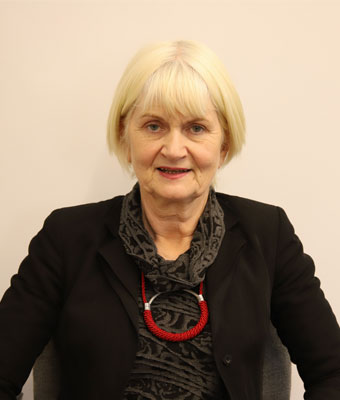
I thank Deputy Scanlon for the opportunity to address the issue of public transport along the N17 corridor. Deputy Scanlon and I are well aware of the specific issues and I agree with him that we need to find better solutions.
I am responding on behalf of the Minister for Transport. While the Minister has responsibility for policy and overall funding in relation to public transport, neither the Minister nor his officials are involved in the day-to-day operation of public transport services. The statutory responsibility for securing the provision of public passenger transport services nationally rests with the National Transport Authority, NTA, which works with public transport operators, which deliver the services and have responsibility for day-to-day operational matters.
That said, I reassure the Deputy that the Government is strongly committed to providing all citizens with reliable and realistic sustainable mobility options and public transport plays a key role in the delivery of this goal. I am well aware, as a Government Deputy representing the same constituency as Deputy Scanlon, of the transport needs of people along the N17 corridor and it is the responsibility of the Government to address them. However, the Minister and his officials are not involved in the day-to-day operations; they provide the funding. In that context, in budget 2026, the Department of Transport secured €940 million of funding for public service obligation, PSO, and Transport for Ireland, TFI, Local Link services. That represents a significant increase of over €280 million in 2025. This funding will go towards funding and subsidising existing public transport services and €31 million has been secured for continued investment in our rural transport service provision in 2026, which is a 38% increase. Funding of rural transport services in the Donegal-Sligo-Leitrim region increased from €7 million to almost €11 million between 2023 and 2024. The Connecting Ireland rural mobility plan is a major five-year public transport initiative to increase connectivity outside our major cities and towns.
I have a lot of detail, which I will pass on to the Deputy, about increases in services, which are significant. Without going into detail, I can say that these increases in services have led to exponential growth in passenger numbers, with almost 8 million passenger journeys recorded across those services in 2024.
As for routes along the N17 corridor, the NTA has informed the Department that it currently has no plans to provide a Local Link service between Tubbercurry and Sligo. I understand how the Deputy will respond to this as I have received similar responses in the past. The Department points out that the connection between Tubbercurry and Sligo is currently served by Bus Éireann and Bus Feda, both on a commercial basis. If the NTA were to provide a publicly funded Local Link route on these routes, it could result in issues of unfair competition. It also states that if the NTA were to provide a new route between Tubbercurry and Sligo, it is extremely unlikely that it would receive road authority approval to stop at any locations outside of the settlements already served due to health and safety conditions.
I will respond further to the Deputy's supplementary question.
I thank the Minister of State. I urge the Department to actively support a Local Link service along the route I outlined. It is essential we engage with the NTA and Local Link to conduct an engagement survey and take any necessary steps to advance this initiative. The current public transport options for students attending ATU Sligo are simply inadequate. Those students are left without a reliable service that would allow them to arrive on time at ATU or St. Angela's College. As it stands, for example, the Expressway route No. 64 from Galway is constantly delayed and can be between 30 minutes and one and a half hours late. This is a fact I can prove. I have the statistics. This means that students who rely on a bus are often unable to get to college on time. Moreover, the evening return journey is no better. Students who finish classes around 4.30 p.m. or 5 p.m. frequently find themselves stranded, waiting for an hour for the late-running return route No. 64 service from Derry. This service often does not arrive in Tubbercurry until 7.30 p.m or 8 p.m., a scenario that is unacceptable for students who have commitments, be they academic ones, part-time jobs or family responsibilities.
I have numerous testimonials from students and residents of the area highlighting the struggle they face due to these unreliable bus services. The stories reflect, not only the immediate inconvenience, but also the longer term implications for access to education and opportunities. As my home town is Ballymote, I know that there is a bus from Castlerea to Ballaghaderreen, Gorteen, Ballymote and on to Sligo. There are two large buses that collect people, particularly students, along the route. These students are delivered at the ATU in Sligo and St. Angela's College. It is a fantastic service. The two large buses are full every day on that route. I have no doubt whatsoever that if a similar route was selected and a bus could serve it, many hundreds of students in the area would use it. People cannot get accommodation in Sligo. They cannot afford it and this bus service would give an opportunity, particularly to students, to get in and out to attend their educational facilities.
I thank the Deputy for his comments. I agree with everything he said because I understand the local circumstances. I am responding on behalf of the Minister for Transport.
The Deputy will recognise that this Government recognises that transport connectivity is hugely important for people who live and work in rural Ireland. As recently as yesterday, the enhanced 563 service between Sligo and Drumahair was launched as part of the Connecting Ireland programme. The route provides peak-time and evening services, enhancing connectivity to Sligo University Hospital, the Atlantic Technological University, including St. Angela’s campus, and regional bus services. In February, the National Transport Authority, in partnership with Bus Éireann, launched the new S3 route as part of the Sligo town bus service expansion as well as significant improvements to both the S1 and S2 routes. These are real improvements. I have here the response from the Department, but I fully recognise what the Deputy is saying about students arriving in time to attend lectures at ATU and St. Angela’s and people getting to work in the mornings. That is absolutely crucial.
The Deputy mentioned student accommodation. I have said many times that having a bus that gets students to college or people to work on time would make such a difference for so many people who live in south Sligo. I have heard what the Deputy said. From personal experience, I agree about the need to service so many of the villages he named. I will not name them all because I will probably miss some of them, but I know them and I know the needs that exist. All I can say is that having heard the Deputy's strong case and given that I understand what he is talking about, I will make strong representations on his behalf to the Department.
Hospice Services

I thank the Minister of State for taking this matter, which relates to the ongoing and serious difficulties people are encountering when trying to make contact with the patient transport service for the south east, which is based in Wexford. This is a service which, as the Minister of State will know, is a vital lifeline for patients and families across community health organisation, CHO, 5, including those in counties Carlow, Kilkenny, Waterford and Wexford and in my constituency of South Tipperary.
In recent months, my office and members of the public have encountered the same persistent problem, namely repeated phone calls going unanswered, emails not being acknowledged and a general lack of responsiveness when patients are trying to arrange or confirm essential transport. This is not an isolated complaint; it is now a consistent and widespread issue. People who are ill, elderly or vulnerable should not have to spend days trying to get through on the phone or wait endlessly for an email reply just to confirm transport to a hospital appointment. The patient transport service plays a crucial role in ensuring that patients, particularly those who require dialysis, oncology or other regular treatments, can attend their appointments safely and on time. It also provides reassurance to families who depend on that reliability. The reality at present is one of frustration, stress and uncertainty. In some cases, patients have had to rely on neighbours or voluntary groups at short notice because they simply could not make contact with the service. I am sure the Minister of State will agree that this is not acceptable.
What people want is very simple: a phone line that is staffed and answered during core hours; a clear system for call backs and responses; and a sense that their needs are being treated with respect and urgency. Will the Minister of State to confirm that the Department and the HSE are aware of the communication difficulties affecting the patient transport service for CHO 5? Will she outline the measures being taken to improve accessibility and responsiveness? Will she ensure that a clear monitored system is put in place in order that these complaints do not reoccur? Patients across the south east, including those in my constituency of South Tipperary, deserve a transport service that they can rely on and trust.
I welcome the opportunity to address the House, on behalf of the Minister for Health, Deputy Carroll MacNeill, on the Deputy's request for information on the Wexford patient transport service and the difficulties his constituents have encountered in contacting Wexford General Hospital's patient transport office.
By way of general background, the Minister is informed by the HSE that the patient transport service, which provides non-emergency patient transport for qualifying patients in the south-east region, was set up in 2013 on a discretionary basis by the HSE. The Minister is also informed that hospitals in the south-east region are allocated an annual budget to provide limited transport for qualifying patients to attend appointments and other acute services. I understand that Wexford General Hospital has a total budget under its control for all patient transport costs in 2025 of €1.56 million, which includes ambulance transportation for inpatients, taxis and non-emergency patient transport services. For patients who require the non-emergency patient transport services in order to attend outpatient appointments, there is an application process involved whereby patients are obliged to provide information pertaining to their medical card holder status and their mobility status, including details concerning any medical conditions that prevent them accessing public or private transport. Applications are then countersigned by patients' hospital consultants. Wexford General Hospital generally asks for two weeks' notice of appointments that will involve the arrangement of transport for patients, but it will always attempt to accommodate patient requests at short notice, where possible.
On the Deputy's specific inquiry concerning difficulties in making contact with the Wexford patient transport service, the Minister for Health is informed that there exists within Wexford General Hospital a dedicated office for the administration and support of non-emergency patient transport serving three hospitals in the south east, namely Wexford General Hospital, St. Luke's Hospital in Kilkenny and South Tipperary General Hospital, Clonmel.
The Minister understands from the HSE, that the National Ambulance Service, NAS, provided temporary support to Wexford General Hospital for a period to assist with co-ordinating the delivery of this service, but that this limited arrangement ceased in December 2023. The Minister is informed that Wexford General Hospital has continued to staff its patient transport office on a rotational basis with available staff. Despite significant efforts taken by Wexford General Hospital to ensure continued delivery of the non-emergency patient transport service, the Minister is informed by the HSE that this temporary rotational staffing arrangement has resulted in some short-term service disruptions. In response to these challenges, the Minister is assured that engagement is ongoing in the HSE involving the integrated healthcare area managers and the relevant hospitals in the region to develop a more sustainable staffing solution for the service.
I thank the Minister of State for the response, but I emphasise again that this issue is not theoretical. It is happening daily. When people are sick, anxious or dependent on transport to receive treatment, the ability to get through on the phone is not a luxury; it is a necessity. This service must be accessible, responsive and properly resourced. I urge that the HSE be directed to carry out an immediate service review focusing specifically on communication systems, staffing levels, call-handling capacity and response protocols.
I also believe that there should be a dedicated contact point within the south-east community healthcare area for public representatives to escalate urgent cases where patients are being left stranded. This is a straightforward fix if there is leadership and oversight. The people of the south east deserve better. My own constituents in south Tipperary deserve better. I am asking that the HSE ensures that this issue is resolved once and for all.
I hear what the Deputy is saying and I can understand the concerns of many people. All I can do is update the Deputy on patient transport services in the south-east region. As I set out a few minutes ago, Wexford General Hospital continues to make significant efforts to ensure non-emergency services are provided for qualifying patients in the south east who require transport assistance to attend their appointments. This includes service improvement efforts to strengthen current staffing arrangements for the non-emergency patient transport office at Wexford General Hospital and to avoid further service disruptions. Reading that paragraph, that makes it clear that they are working on this to avoid further service disruptions. I hope that turns out to be the case for all of those who make the call. The Minister for Health is informed that ongoing engagement within the HSE in this matter involving the integrated healthcare area managers and relevant hospitals in the region will progress these efforts to improve delivery of non-emergency transport services in the south east of the country.
I would also mention briefly additional supports that may be available to qualifying patients in the south east and nationally. The Department of Social Protection offers supports to patients through the additional needs payment which is designed to help individuals with essential expenses that they cannot cover from their weekly income or other resources. This payment can be used for various needs, including recurring travel expenses for medical appointments. Patients wishing to avail of this payment can submit an online application at mywelfare.ie or by post. Patients can also contact the Department of Social Protection directly if they require further information or assistance. That is just extra support.
I hear what the Deputy is saying. I hope the response I have given the Deputy provides him and those who are making those contacts in the south east with some hope that their calls will be answered.
Agriculture Schemes
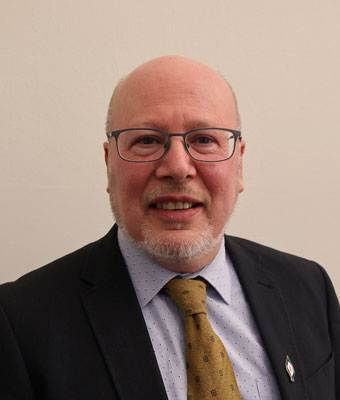
Tillage farmers, as the Minister of State knows, are in deep crisis. The question I want to ask is whether the Government will introduce a proper area-based payment tillage incentive scheme. Currently, the Government is giving just €40 per acre while it needs to be at least €100 per acre or €250 per hectare, as requested by the farming organisations. It really needs to be done as a matter of urgency in this crisis.
Irish farmers are being fleeced with rising input costs, machinery costs, fertiliser, sprays, diesel and other things in the local hardware shop that they are buying. They have less money to spend locally so we are all being affected, directly or indirectly. Fertiliser prices have tripled since the Ukrainian war so I am just wondering how can farmers withstand this. Of course, the Government closed down our own fertiliser industry in Arklow in 2002. Only three years later, they torpedoed the sugar beet industry in the south east and beyond. However, unbelievably, barley now costs the same as it did in 1974, the year that Abba won the Eurovision Song Contest and I started school. That was the price back then and it has not changed. It is crazy stuff.
We use approximately 300,000 tonnes of grain in the drinks industry annually. We know that we do not have enough grain in Ireland, so at the very minimum, we should be using all Irish grain first before mass importation. Would the Government not agree on this? It is fairly obvious. Mass importation of products is not the vision of our patriotic founding fathers, the 1916 Proclamation or the Democratic Programme of the First Dáil - politicians who wanted us to have some level of economic independence. However, Ireland is slowly becoming a dependent vassal state, not an independent and sovereign one that our patriots gave their lives for.
Ireland has stopped growing grain for human consumption, such as flour, would you believe. It imports the majority of it: approximately 69% from the UK, 11% from Germany, and 8% from France. That is why I salute the farmers in the south east who, last week, attempted to blockade a boat coming into Wexford with 300,000 tonnes of foreign barley. Direct action is one good thing we are importing from France and we need to see more of it. The imported grain is substandard and often genetically modified. It is coming in with blackgrass, which is an invasive species. That is not to mention the huge carbon footprint of all this importation of food.
As Deputy Carthy mentioned earlier, we are insanely planning with Mercosur to flood the European market with 99,000 tonnes of untraceable beef produced in South America on land that was once rainforest. It is insane. At the same time, Irish farmers are highly regulated. If things do not change, we could face a food shortage in years to come.
A tillage farmer who contacted me in my area, Thomas Kenny, wants to hand the baton on to his son, Tomás, who is 15 years old and who I used teach. Thomas is a great, passionate farmer, but the question I would like to put to the Government is whether i can guarantee that Tomás will have a future in farming in this country. Will it be viable for him? His father, Thomas, needs to know if he is to pass on the farm to him.
Will the Government introduce a proper area-based tillage incentive scheme of at least €100 per acre, that is, €250 per hectare, because otherwise we will drive a nail into the coffin of Irish farming, and we have been farming for 6,000 years in this country. It looks like we are going to drive every farmer off the land, especially every young farmer. I would like to know the answer.
I thank the Deputy for raising this important issue. I am pleased, on behalf of the Minister for agriculture, to have the opportunity to address the challenges currently being experienced by tillage farmers across the country. To be fair, coming on the back of two extremely difficult years weatherwise, thankfully, conditions for harvest 2025 were much more favourable. It allowed fieldwork to be undertaken and completed in a timely fashion. It was much needed, although many spring crops have not come in as well as winter ones. However, the sector has encountered additional pressures, not least the challenging market situation and downward prices internationally. This, along with high costs of production, has significantly impacted on the margin for growers, with crops on rented land being particularly challenged.
The Government recognises the importance of the tillage sector as an integral part of the Irish agricultural industry. It produces high quality animal feed and bedding for the livestock sector and ingredients for the food and drink industry. The sector makes a significant contribution to the Irish economy, estimated at €1.9 billion per annum over the 2018 to 2022 period. It is hugely important in terms of employment and is estimated to support over 11,000 full-time jobs. Regardless of what the Deputy says, nobody is walking away from it.
The Minister regularly engages with farmer representative bodies on tillage matters. He has met with the Irish Farmers Association and the Irish Grain Growers group on several occasions since his appointment, including through pre-budget engagements and, more recently, at the tillage crisis meeting organised by the Irish Farmers Association on 12 September 2025. The Minister fully understands the concerns expressed by these organisations and their shared ambition to support, grow and develop the sector. The Government shares that ambition and is committed to growing the sector in line with targets set out in the climate action plan.
In 2026, the Department will be supporting the tillage sector with funding of at least €50 million through the protein aid scheme, the straw incorporation measure and the new tillage support scheme.
Having secured this additional funding in budget 2026, the Minister intends to consult further with stakeholders, including the IFA and Irish grain growers, on the design and operation of the tillage support scheme in due course. In addition to these measures, tillage growers will continue to benefit from other schemes next year, including the tillage capital investment scheme, ACRES, and the organic farming scheme.
This year, the budget for the protein aid scheme is €10 million, having increased from €7 million to €10 million annually from last year. Applications covering approximately 66,000 hectares of cereals and oilseed rape totalling €15 million were submitted under the straw incorporation measure, and the Minister made the decision to approve payments to all eligible applicants.
In February this year, the Minister announced €32.4 million in payments under the tillage and horticulture support scheme. The Farming for Water EIP, with a total budget of €60 million, is supporting targeted on-farm measures to improve water quality. Over 1,400 tillage farmers have expressed interest in establishing cover crops under this initiative in 2025.
I have more to say but I will wait until I am replying to Deputy Ó Súilleabháin's supplementary question.
I am not convinced by the Government's response. The fact of the matter is that we are in the middle of a crisis and farmers have no increase this year. It is still €40 per acre. In her response, the Minister of State mentioned the drinks industry. We have such opportunities but it is incredible to believe that our famous Irish whiskey does not have a requirement to have Irish grain in it. This is absolutely incredible. It is one small thing. There would be incredible opportunities if we were to make additional changes, as well as additional payments, and have proper regulation whereby there should be Irish grain in Irish whiskey. It is a very basic requirement. We could do great things and this is one small example. The Government really needs to have a vision for an industry that is dying on its feet. This is something we have been doing in Ireland for 6,000 years and it would be shameful if we were to drive all the young farmers off the land. Many of them do not see a future and neither do their parents with regard to passing on the farm to their children.
I reiterate that the Government wants to grow and develop the tillage sector in the years ahead. It was for this reason that the Food Vision tillage group was established in 2023, to provide a clear roadmap for the sustainable growth and development of the sector, while improving its environmental footprint.
I heard what Deputy Ó Súilleabháin said. I am well aware of the challenges that farmers face throughout the country. I agree that the recent period has been challenging for the tillage sector, with ongoing and exceptional market pressures placing significant strain on farm businesses throughout the country. The Minister has said he is acutely aware of the impact these difficulties are having on the tillage sector. As I mentioned in my opening statement, the Minister really wants to see the tillage sector not only recover from recent challenges but to grow and thrive in the years ahead. The Government has responded decisively to the recent challenges experienced by the sector through targeted supports, and has delivered significant additional funding in recent years to stabilise and encourage growth in the sector. In addition, budget 2026 provides a core package of at least €50 million to help farmers recover from this year's market challenges.
The Minister wants to assure the House that he will continue to work closely with the tillage sector and continue to provide targeted supports wherever possible, recognising its vital contribution and strategic importance in the wider agricultural and agrifood industries.
School Accommodation

My constituency of Dublin Bay South is unique in many respects. We are standing in it right now. It stretches over approximately 10 km² in this wonderfully south-easterly corner of our capital. About 125,000 people live here, about 20,000 of whom are under the age of 18, and there are in and around 12,000 families. There is a relatively high proportion of people with no religion or a religion that is not Catholicism. I am giving all this context so the Minister of State can understand some of the unique educational needs in my constituency, which has been a topic raised with me repeatedly by young parents who would like to educate their children in a particular way.
It would not be a secret in Irish society that many families in south Dublin choose to send their children to fee-paying schools. This is, of course, their choice but I am also frequently asked by many parents in my constituency why it seems it is their only choice. The monopolisation of second level education in south Dublin by exclusive and often extremely expensive fee-paying institutions seems out of kilter with a progressive republic. I request that the Department further explore the capital development of non-fee-paying alternatives in my constituency in south Dublin.
One of the core side effects of the fee-paying school environment is that the exclusivity extends beyond just merely the socioeconomic. I have heard reports recently from many parents of children with autism, and parents of children with special needs more generally, who are not as readily accepted into fee-paying institutions and are instead encouraged to go elsewhere. If this practice is occurring, it would be an egregious exacerbation of social isolation for children already at risk of social exclusion. I must object to its practice in the strongest possible terms and ask the Department to investigate. This is not to say investment in special schools and special school places is not also warranted. It is imperative that we provide the proper and comprehensive educational pathways for each child to achieve their potential.
I was delighted last year to see works commence on the Harold's Cross Educate Together school and it was very welcome. However, like many projects run by the State, the completion of works has dragged on far beyond what was promised. I recently received emails from concerned parents at that school reporting their children are learning in a small cramped area 1 m from the school's toilet facilities because current building works have not been completed. Despite the school leadership's best efforts, capital investment was not sufficiently forthcoming or properly managed by the Department of education, and I am concerned this happens far too often, especially where prefabs are used as a mediocre replacement for school building works.
While the Educate Together schools in Harold's Cross and Sandymount are very welcome, they are, as secular schools, a minority available to parents in my constituency. My view, and the view of many others, is that there are far too few. Many of the people I represent would like to see a commitment to more secular and non-religious ethos education schools in south Dublin.
More generally, I am concerned that the Department of education is not sufficiently focused on wider capital development needs in a broader sense, including sports facilities, canteen facilities, childcare co-location and safe access points for school goers. In particular, there is a severe - I do not use this word lightly - lack of availability of all-weather, properly lit, multimodal and publicly accessible sports facilities for children's teams in my constituency. While I sought last year to have Dublin City Council take a lead on developing such facilities, it does seem the Department of education could play role in this regard also. I would welcome the Department doing so.
I thank Deputy Hayes for raising this matter as it gives me an opportunity on behalf of the Minister for Education and Youth to provide an update on the support provided by the Department to schools in south Dublin. I acknowledge the strong support provided by the Government, including by way of supplementary capital funding, which has brought the total capital allocation for 2025 for the Department to €1.6 billion and the announcement of a capital allocation of €7.55 billion for the Department of Education and Youth for the period 2026 to 2030 under the national development plan.
As part of this allocation, the Department will place a strong emphasis on provision for children with special educational needs, with a particular focus on meeting annual school place requirements.
In relation to project roll-out for large-scale projects and additional school accommodation scheme projects, the approach will be to continue to maximise the capacity of the existing school estate as much as possible in the first instance and to provide necessary additional capacity through targeted and prioritised project roll-out over the course of the period from 2026 to 2030 to meet the most urgent and prioritised needs. The capital allocation will also facilitate the roll-out of projects under the Department’s multi-annual climate action summer works scheme, the completion of the roll-out of the solar PV programme and the EU's REPowerEU retrofit programmes, which will be important elements in supporting the climate agenda and, crucially, will help reduce heating and electricity costs for schools and improve energy efficiency. This is a record level of investment in our schools and highlights the Government’s very strong track record of delivery in providing additional capacity and modern facilities for our school communities.
To move to what is happening in south Dublin, the Department has invested over €590 million since 2020. In the region of €575 million of this funding was invested in school building projects across schools in Dublin Bay South, Dublin South-Central, Dublin South-West, Dublin Rathdown and Dún Laoghaire. This investment has supported the completion of 129 school building projects. This includes seven new school buildings. There are also 39 school building projects currently in construction in south Dublin, of which seven are new school buildings. The Department is now preparing an NDP implementation plan, which is due for publication later in the autumn. This plan will optimise outputs from the NDP allocations with a strong focus on maximising existing school capacity, progressing priority projects where local capacity across schools in the area will not meet future requirements, and ensuring delivery that is affordable.
It is important to say that the Department has increased funding for schools across the country, including those in south Dublin, to help meet rising day-to-day running costs. Recent budgets have delivered significant permanent increases in school funding to support principals and boards in managing their everyday expenses. This includes the increase in the capitation grant in the recent budget. These investments are ensuring schools can better cover essentials like heating, lighting, cleaning and ancillary staffing. I may add a little bit more in my supplementary response.
I hope the Minister of State will relay my thanks to the officials in the Department of education for the hard work they do in the prioritisation of capital investment in developments in south Dublin city, which she has just described. My view is that education is a silver bullet. Schools should be palaces. In past centuries, we built cathedrals. I propose that our schools should be the cathedrals of the 21st century. I hope the Government shares that vision. As a son of educators, I insist on no less.
I will raise the case of a specific school, which might be illustrative. My constituency is home to some communities that have been left behind for far too long by the powers that be. One of those communities in Ringsend has a national school that is badly in need of capital investment works to upgrade its old 1960s building. I toured the school with the principal last week. He highlighted plumbing problems, old electrical wiring and other structural works required for the new merger between the girls' school and the boys' school, which share a building but are not connected, up and running. It is a major priority for me to see this school and its students supported by the Department of education and that it gets the capital investment it requires.
In the past, this school has also been threatened with losing teachers and SNAs because of arbitrary thresholds on student numbers. In one sense, I understand the logic. Resources must go where the needs are. However, I assure the Department and the Minister that, from my own personal experience, I know this is a school full of children who need more investment, not less. The existing faculty do unbelievable work in supporting children in the most unimaginable situations. I plead for resources to be increased as much as possible in that context.
I am concerned by some of the operational hurdles the Minister of State mentioned, which many schools in my constituency are facing at the moment. One parent reported to me that a school in Ballsbridge lost 80% of its teaching staff in one year because of the pressures of the housing crisis. Another reported fundraising to keep the lights on and the heat up in the school. There are acute problems in staffing and proper operational supports for many schools. Despite the efforts the Minister of State has described, I wonder if the Department and the Government are doing enough of the boring hard work of making sure the teachers are there, the lights are on and that schools are well-built, delivered on time and warm along with the new innovative things like changing curricula or announcing the hot school meals programme.
The Department of Education and Youth remains firmly committed to providing continued support and resourcing for south Dublin and across the school system nationwide. The Deputy mentioned a specific case in Ringsend. I do not know the details but, if he wants to send them to me, I will make sure they are passed on to the Minister and the Department.
I agree that education is a silver bullet. Insofar as we can manage it, schools should be palaces. It is a strong statement but I understand what the Deputy is saying and where he is coming from. I hope budget 2026 and long-term funding under the NDP from 2026 to 2030 will allow the Department to continue to meet school place needs, with a particular focus on supporting children with special educational needs, while also ensuring that schools have the facilities, staff and resources they require. The Department will continue to prioritise the effective use of the existing school estate, special needs provision and the delivery of additional accommodation, where required.
The Government is committed to increasing funding for schools of all types across the country - I assure the Deputy that this includes those in south Dublin - to help them meet rising day-to-day costs. Over recent budgets, we have made strong progress with more than €30 million secured in budget 2025 and another €39 million in budget 2026. This brings capitation rates up to €274 per primary pupil and €406 per post-primary student for the 2026-27 educational year.
Rental Sector
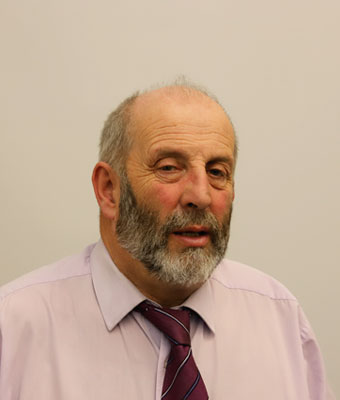
The overhaul of residential tenancies legislation was intended to protect tenants through changes to rent controls and the expansion of tenant protections. However, it is very clear that, since the Residential Tenancies (Amendment) Act 2025 updates were introduced in June 2025 with the intention of stabilising rent prices, they have created a bigger problem as many tenants have been given notice to quit. It is getting completely out of hand. I am contacted every day by tenants who have got notices to quit and who are wondering where they are going to go. It is very clear that landlords are getting out one way or another. They are not prepared to sign up for a total of six years from March onwards so they are getting out before then. I have been contacted by many people and it seems some small landlords are getting out of the market completely because they do not want to be locked into a rental for six years while others are using this opportunity to renovate their properties and get new tenants at a higher rent after March.
I have already been in contact with the Minister regarding the 14 families in the Loreto Chapel estate in Killarney who have received notices to quit from the property owner, the Cypriot property company Xerico Limited, which owns the 14 houses in the estate. I have asked the Minister what can be done for these families because it is very clear that these people are getting out before the March deadline and that these rent controls are having an adverse effect.
Supply will drop with these rent controls. Tenants cannot move. If they want to move to Killarney from Tralee, or vice versa, they will not be able to get houses there. We are shrinking the landlord market when we should be increasing it.
Last year and the year before, I raised the issue of there being so many vacant properties. House owners and landlords will not rent properties for two reasons: the amount of tax they will have to pay, amounting to more than 50%, and fear they will not get tenants out when they want to get their houses back.
I gave the example of 55 houses from Kenmare through Kilgarvan to ten miles down the road to Killarney. They are on the side of the road and each and every one of them can be reached by bus, but the owners will not rent them because of the two reasons I have given. The Government should have been doing something about that rather than shrinking supply, meaning we will not have houses for other people.
There are many people who would build a house if they could get planning permission in Kerry. They cannot do so. There are many who would buy a house but cannot because the prices are exorbitant. They are confined to renting in the private market. We need the private market as well as public housing, including social housing. People cannot get on the social housing list because of the income cap, which is €37,000. If they exceed this, they will not be left on the housing list.
It is the divine right of a house owner to do what they want to do with the house and they should not be made to something they do not want to do. The Government will not succeed in this. The housing officials in the Department of housing who came up with this idea did not do any good for tenants and would-be tenants in the first place, and they are doing no good for the Government because it is putting it down in the ratings. I know this because people are fed up. They cannot rent houses. We are shrinking the market and will have far fewer houses to go around.
I thank the Deputy for raising this important issue. I am taking it on behalf of the Department of housing and the Minister, Deputy James Browne.
On 10 June 2025, the Government approved policy measures, including modifications to rent controls, to come into effect on 1 March 2026, as the Deputy has outlined. The purpose is to boost investment in the supply of homes available for rent and, at the same time, keep existing landlords in the market. The changes agreed will also provide significantly stronger tenancy protections. They are finely balanced between the interests of tenants and the need for further private investment in the rental market across the country, which the Deputy has acknowledged.
The modifications to rent controls have been informed by the findings of the Housing Agency review of rent pressure zones and potential policy options and its preferred recommendation to modify the operation of the existing rent pressure zone controls. Today, the Government approved the general scheme of the residential tenancies (amendment) (No. 2) Bill 2025 for priority legal drafting to commence as the basis for bringing in new rental changes from March.
In general, after six months, a landlord may serve a notice of termination only in very clearly defined circumstances. Section 34 of the Residential Tenancies Act provides that the landlord must state in the notice of termination the reason the tenancy is being terminated, and the notice will not be valid unless that reason relates to one or more of the following: the tenant has failed to comply with the obligations of the tenancy other than the obligation to pay rent; the tenant has failed to comply with the obligation to pay rent under the tenancy; the dwelling is no longer suited to the needs of the occupying household; the landlord intends to sell the dwelling within the next nine months; the landlord requires the dwelling for their own or family member occupation; vacant possession is required for substantial refurbishment of the dwelling; and-or the landlord intends to change the use of the dwelling. In addition, all notices of termination must be copied to the Residential Tenancies Board, RTB, at the same time as being served to the tenant and will be invalid if not so copied.
It is worth noting that during quarter 2 of 2025, according to the most recently published statistics by the RTB, there were 14,742 new tenancy registrations, while 4,728 notices of termination were received by the RTB. This does not represent a significant increase, just less than 1%. It is also important to appreciate that not every notice of termination results in a tenancy termination taking effect. The most recent statistics available through the RTB’s profile of the register show that, since quarter 2 of 2023, the number of registered private tenancies and landlords has continually increased year on year. The figures have remained relatively static this year, with 240,798 registered private tenancies at the end of quarter 2 of 2025, representing an increase of 3.2% annually and an increase of 0.08% from quarter 1 of 2025.
The statistics reflect the constant movement in the rental sector but also that the overall number of tenancies remains steady. The Government and I appreciate that the ending of any tenancy impacts the lives of both the tenant and the landlord. Landlords can be reassured that the current tenancy termination rules will continue to apply to an existing tenancy. The March changes will not apply. A detailed communications campaign will be undertaken by the Department, in conjunction with the RTB, between the publication of the Bill and the introduction of the new legislative measures from 1 March next year.
I thank the Minister of State very much for being here so late at night. I know she will relay my concerns to the Minister.
Many people, including me do not believe it is fair to lock a landlord into a rental agreement for six years. This failed in Scotland, where the authorities have gone back to the arrangement they had in 2016. I am concerned about the Minister of State’s figures because, to me, having been a public representative in Kerry for over 20 years, I have never seen the like of what is happening, including to the 14-house estate in Killarney, and there are many more of those. Day after day, I hear about affected girls with one or two children and couples with two or three children. Every day, they ask where they should go. I am afraid this will blow up altogether in the next couple of months because everyone is sending out notices so they will be clear for 1 March. That is my concern and why I have raised this matter today. I am afraid that what is proposed will not work.
I have the history. There is no stir on the 55 houses along the road from Kenmare through Kilgarvan to Killarney. The reason is the owners will not enter agreements because they are afraid they will not get their houses back. Another reason is that they would have to pay half the rental income in tax if they had some other income. This will affect the people with one, two or three houses. They will not be bothered to go ahead with renting as soon as the existing tenancies end. They will be out of the market. Whatever they do with the houses, they will not rent them at all. That is what I am hearing from them. They will forget about renting privately, whatever else they do. The Department has to review this because it is not fair.
Will tenants be locked into the six-year agreement? I know that the tenants want to move around too.
They have to follow their jobs, but they cannot continue to travel. We know the cost of travelling, and we are told about carbon emissions and all that. Will the Minister of State look at this issue again, particularly as what is happening is hurting a lot of people?
On the basis of the response I have here, it seems that the Government is trying to ensure a fair balance. The Government is focused on growing the supply of much-needed rental accommodation by keeping existing landlords in the market but also by attracting new landlords. I hear what the Deputy is saying, however. By doing this, we must ensure strong and balanced tenancy protections for tenants and landlords.
The residential tenancies (amendment) (No. 2) Bill will be published as soon as possible in order to allow the new measures to come into effect by 1 March 2026. The key message from the Government for landlords is that if they have existing tenancies, for example, those created on or before 28 February 2026, their right to terminate those tenancies will not change on foot of the impending Bill. In fact, if a tenancy ends on or after 1 March 2026 because the tenant leaves or breaches their obligations, the landlord may reset the rent to market rate for the new tenant. Rent controls are being modified to help landlords to keep their rental income in line with inflation and not fall behind market rent.
There is also a key message for tenants. It is that if they create a new tenancy with a new landlord from 1 March 2026 and do not breach their obligations, they will have greater security to remain in situ for a minimum of six years. Some flexibility will be provided for smaller landlords to end tenancies if they face hardship or their family needs to occupy a property.
Cuireadh an Dáil ar athló ar 11.43 p.m. go dtí 9 a.m., Dé Céadaoin, an 15 Deireadh Fómhair 2025.
The Dáil adjourned at 11.43 p.m. until 9 a.m. on Wednesday, 15 October 2025.