Arts Funding
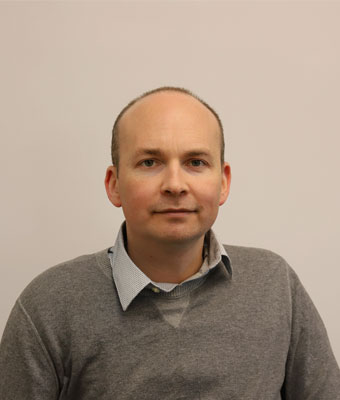
6. Deputy Paul Murphy asked the Minister for Culture, Communications and Sport if he will increase the payment under the basic income for the arts scheme in budget 2026; and if he will make a statement on the matter. [52583/25]
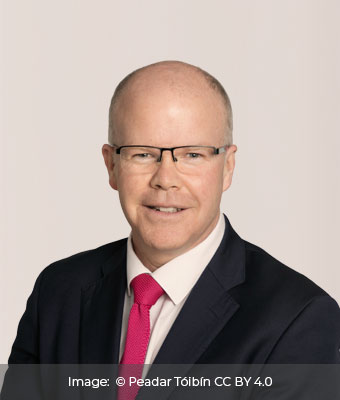
20. Deputy Peadar Tóibín asked the Minister for Culture, Communications and Sport the number of persons in receipt of the basic income for the arts payment; and if he will make a statement on the matter. [51546/25]
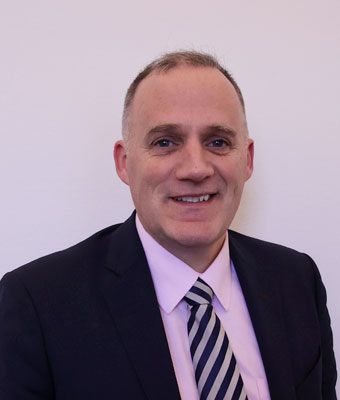
23. Deputy Naoise Ó Muirí asked the Minister for Culture, Communications and Sport when a decision is expected on plans to extend the basic income for artists scheme; and if he will make a statement on the matter. [52174/25]
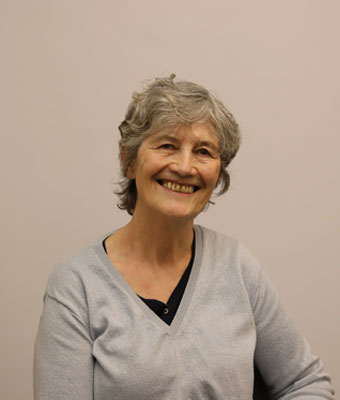
26. Deputy Catherine Connolly asked the Minister for Culture, Communications and Sport for an update on the development of a permanent successor scheme to the basic income for the arts pilot; his plans to publish the cost benefit analysis paper; and if he will make a statement on the matter. [52574/25]
32. Deputy Paul Murphy asked the Minister for Culture, Communications and Sport if he will make the basic income for the arts scheme permanent in budget 2026; and if he will make a statement on the matter. [52584/25]
My question goes back to the previous grouping in relation to the basic income for the arts, BIA, scheme. What the Minister said earlier was unambiguously positive in terms of the evidence of the cost benefit analysis of the scheme. Will the scheme be made permanent? Will it be expanded to four or five times its current size so that all eligible applicants can benefit from it?
I propose to takes Questions No. 6, 20, 23, 26 and 32 together.
The basic income for the arts is a pilot research programme which will inform future Government policy on how best to support Ireland’s artists and creative arts workers. The primary objective of the scheme was to help artists deal with precarious incomes and prevent talent from leaving the sector for economic reasons. It is well established that artists suffer from precarious incomes and the benefits of the arts enjoyed by society are often as a result of unpaid and underpaid labour of artists. This is a chronic ongoing problem.
The programme for Government commits to assessing the basic income for the arts pilot research scheme to maximise its impact, which is why I announce an extension of six months to February 2026 to allow further assessment of the pilot data and to engage in stakeholder consultation to provide a clear evidence base for the Government to make decisions on the next steps.
The BIA recognises of the arts and the role of the creative practice in Irish society. The arts positively impact social cohesion, societal well-being, Ireland’s global reputation and creativity. The BIA has particularly good regional distribution across the country with every county benefiting from the investment and some counties like Leitrim, Clare and Sligo have more artists than would be expected based on their populations bringing much-needed economic investment to those areas as well.
BIA support is hugely valued by those artists in receipt of it. It has been the subject of much positive commentary at home and in an international context and makes an important statement about the value placed on the arts in Ireland.
I fully appreciate the importance of the BIA and have been clear that I think it should be continued. There has been consistent correspondence to my Department in support of a successor scheme. Much of this support has come through the constituency offices of all colleagues both in government and in opposition. It is therefore clear that there is broad support for a continuation of the BIA. My Department conducted a public consultation which closed on 5 September and over 17,000 submissions were received. Of these, 97% were in favour of the BIA being continued.
Consultation is ongoing, including a consultative committee which draws from across Government Departments. I also held a sectoral stakeholder forum on 10 September with around 200 artists, all of whom were in favour of retaining the scheme.
The BIA has been implemented as a randomised control trial which consists of two groups of randomly selected people, all of who complete a lengthy survey every six months as a condition of a participant being on the scheme. This represents the largest randomised controlled trial undertaken by the Government, the gold standard for research. Some 2,000 recipients were selected to receive a payment of €325 a week, while a further 1,000 control group members were selected to participate in research. Analysis of the results involved the comparison of averages between the two groups across a very broad range of possible impacts.
The same cohorts of recipients have remained on the scheme since 2022 in order to gather accurate comparable data. Due to attrition, the total number now on the scheme is 1,962. The pilot is underpinned by a comprehensive research programme and three impact assessments have been published so far by the Department in addition to independent reports on recipient reviews.
It is clear from all of the evidence collected to date under the scheme that it is having a positive impact for those in receipt of it. The data shows that the BIA is having a consistent positive impact across all indicators affecting practice development, sectoral retention, well-being and deprivation. However, the data also shows that the situation of the control group participants who provide the same data as the recipients but who do not get the weekly payment have significantly deteriorated given the cost-of-living crisis.
According to the data the Department has collected, 51% of those who do not receive the BIA live in enforced deprivation compared to 16% of the general population. The BIA is therefore a means of addressing consistent poverty in the sector.
The data also shows that at the start of the BIA the median income earned by those on the scheme was €19,200, which is 54% lower than the national annual median of €41,823. At the same time, recipients’ arts-related income increased by on average over €500 a month, while their income from non-arts work increased by about €280.
The evidence is absolutely clear. As Minister said earlier, the headline from the cost benefit analysis is that society received a benefit of €1.39 for every euro spent on this scheme. The Minister said that he is in favour of this being made permanent, I think, or at least being continued. Does he agree that it should be massively expanded? Just over 8,000 artists applied to this pilot but only 2,000 were selected. It was not a merit-based selection process but instead a lottery. There are another 6,000 artists out there who wanted to participate and contribute in this way. They were not able to because of the limited funds available for the scheme.
Imagine if only one in four workers got paid for their work on the basis of a lottery every three years or only in four eligible applicants received job seeker’s payments. Does the Minister agree that the scheme needs to be expanded so that all artists who want to participate and meet the criteria can do so?
I will finish reading the reply for the record.
Last week I published a cost benefit analysis showing the net fiscal cost of the BIA was just under €72 million over the three years compared to gross cost of €105 million over three years.
For every €1 of public money invested in the pilot, society received €1.39 in return. The cost-benefit analysis shows that audience engagement with the arts generated an estimated €16.9 million in social value over the three pilot years and improvements in psychological well-being contributed almost €80 million to total benefits. Dependence on social protection declined, with recipients receiving €100 less per month on average and being 38% less likely to receive jobseekers' payments. The findings of the report on two years of the payment shows that compared to those not in receipt of the BIA, recipients benefited in a number of ways in terms of weekly output. The BIA research has developed a strong irrefutable evidence base that the intervention works and has consistent positive impacts for those in receipt of the payment as well as broader society.
No decision on a successor scheme has been made, including potential payment levels, eligibility criteria and so on, but I have made it clear, and am making it clear again this morning in the Dáil, that I am in favour of a permanent scheme being put in place.
Again, it is unambiguously positive. It is positive for the artists who participated and for society as a whole. It provides some sort of halt or counterpressure to the drain of mass emigration of many of our most creative young people who are effectively being driven out of here by the cost-of-living crisis and are going to live in less expensive but creative cities which is sucking the energy and life out of many of our cultural scenes.
Is the Minister in favour of the expansion of this scheme to include all who are eligible to participate? This would mean increasing the funding, perhaps even quadrupling it. Another 6,000 artists were eligible for the scheme, having met the criteria, but they lost out on the lottery. We could be getting the benefit of their work as well. Does the Minister agree that there needs to be a new scheme that is open to new applicants so that those who did not apply previously can do so?
I do not know if the Deputy was here for the Priority Questions, but as I said earlier, no decision has been made with regard to a successor. That decision and any decisions on the details of any successor scheme will only be made once there is acceptance of what I have put before the Dáil this morning, which is that the scheme should be continued. The quantum of money available will also be relevant. There is only a week to go to the budget and ultimately, the numbers of people that will be included will reflect the amount of money the Department gets in the Vote in the budget next week.
Sports Funding
7. Deputy Mark Ward asked the Minister for Culture, Communications and Sport to set out the level of funding allocated to League of Ireland clubs for academies; if this funding will be increased in budget 2026; and if he will make a statement on the matter. [52515/25]
I ask the Minister to set out the level of funding allocated to League of Ireland clubs for academies and to state whether such funding will be increased in the budget. Sinn Féin very much supports the Global Findings Report recommendations produced by Double Pass as part of its audit of the League of Ireland academy system. We urge the Government to commit significant funding to same, as promised in the programme for Government. Separately, has the Minister had any communication with the FAI or the LMETB in relation to the youth training programme being run out of Oriel Park which is to cease at the end of the month? I do not think this is the-----
Sorry, what question are we on?
Tá brón orm. Táimid ar Ceist Uimh. 7.
Deputy Ó Murchú is substituting for Deputy Ward on Question No. 7.
Within the context of the question, I will ask a supplementary question about a training programme in Dundalk.
As outlined in my reply to an earlier question, the operation of the League of Ireland and its academies is fundamentally a matter for the Football Association of Ireland which, like all national governing bodies of sport, is an independent, autonomous body responsible for the organisation and development of its own sport.
At present, no specific funding is allocated for League of Ireland academies. However, the programme for Government commits to exploring new mechanisms for the creation of football academies. An additional funding grant of €1 million, which was provided by my Department to the FAI, enabled it to produce the recently published League of Ireland Global Findings Report. The funding also enabled the appointment by the FAI of an academies administrator to support the development of new academy programmes and to track their impact. The Global Findings Report benchmarks Irish football academies against international standards based on an audit of existing academy structures and needs. My Department continues to engage with the FAI regarding this report. A pre-budget submission focusing on academies has recently been submitted to me by the FAI. This will be given due consideration, taking account of the range of requests across the sports sector for additional support and, ultimately, the outcome of the budget process.
While the FAI has sought significant State funding to support its academies, it is important to note that sizable financial support has been directed to the FAI and to football more generally over recent years. Over €75 million in State funding was allocated to the FAI between 2019 and 2024, including €30.2 million specifically to support football development and promote participation in football by young people, with the balance in funding comprising Covid-specific and energy supports. Furthermore, significant capital funding has been granted to football projects around the country in recent years, including €48.9 million to FAI-endorsed football stadium projects at Finn Harps, Dalymount Park, Sligo Rovers and Wexford FC under the 2024 round of the large-scale sports infrastructure fund, LSSIF, and €76 million to support the development of grassroots football club facilities nationwide under the 2020 and 2023 rounds of the community sports facilities fund.
I accept that we are not going to get an outline of what will be in the budget but I seek reassurance that there is still a commitment there. In fairness, the Department played a major role in the Global Findings Report being conducted. That report found there is an absolute necessity to provide significant funding for academies. We know the scenario in relation to professional football, the possibilities that exist and the need to make sure we have the necessary throughput of players. It is all about contact and professionalism but that can only happen if we have the funding.
I ask the Minister to outline as much as he can in relation to that commitment. I am not taking away from the financial commitment that has already been given in relation to the FAI. Deputy Joanna Byrne has spoken about the fact that we would all like to see the Irish team doing much better. At this moment in time, the League of Ireland is flying but also has some issues in relation to funding.
Has the Minister had contact with LMETB or the FAI in relation to the fact that the youth training programme which is run out of Oriel Park is to cease at the end of the month? There is obviously a lot of worry in relation to that. Indeed, SIPTU and many others have commented on it.
As I said to Deputy Byrne a while ago, and as Deputy Ó Murchú has acknowledged, the Government has played a role in terms of the supports it has provided to the FAI. We are operating on the basis of a memorandum of understanding, MOU. A significant amount of reform has happened already. Of the 163 recommendations or conditions, 159, or 98%, are either completed or phase 1 of them is completed. The financial situation in the FAI is still challenging. Since the new MOU was signed on 17 December 2024, State funding has been increased to €6 million for the period from 2024 to 2027. The bulk of this will go towards youth field development and grants which are aimed at the grassroots of the game. The MOU also contains 16 recommendations for the FAI, including completion of outstanding recommendations and conditions from the previous MOU, the maintenance of governance reforms introduced under the previous MOU, the provision of information and reports to Sport Ireland to facilitate oversight and a cascading governance reform to affiliates and grassroots. The last recommendation is really important and was also raised by members of the Oireachtas committee last week. We have to have a cascading effect of reform. While there has been quite a considerable amount of reform with regard to numbers at the FAI itself and so on, we now need to see the cascading effect down to into the grassroots, which I know the Deputy will support.
I am in complete agreement with the Minister. I do not think there is anyone out there who would not say that there is a need for a huge level of reform and that there is more to do in relation to the FAI, particularly in regard to governance. That goes without saying. In terms of the League of Ireland and grassroots football, we need to ensure the necessary supports are there. I ask the Minister to confirm that the commitment is still there in relation to the academies and the need for significant funding. We also need to see more funding for the LSSIF. Deputy Byrne spoke yesterday about the success of Drogheda United, Louth GAA and many others. The fund needs to be open to the likes of Oriel Park for the changes that are absolutely needed there. I ask the Minister to tell us whether he has had contact with LMETB and the FAI in relation to the absolutely frightening story that the youth training programme in Oriel Park is to cease at the end of the month. I do not think it is the first one.
A significant amount of the funding is meant to come from the ETB. It is just a matter of finding this information out. One SIPTU official said that he saw this as pulling up the supports for grassroots football. Will the Minister ensure that engagement happens in order to find out exactly what the story is in this regard and whether it can be rectified in any way?
I have not had any engagement with LMETB. The Department or the Minister of State, Deputy McConalogue, who unfortunately cannot be here today, may well have had some engagement with it. I am not sure about that but I can check afterwards. I do not disagree with what the Deputy said with regard to investment. Every single person who comes in for these questions on sport has a catalogue of things he or she wants implemented. It is not a couple of hundred million euro I would need, but rather a couple of hundred billion euro, which is not practical.
Acknowledgement should be given – at least the Deputy did so – that the report which highlighted the League of Ireland’s potential with regard to academies was funded by the State. At the moment, most of the operating costs are being funded by the State. The State entered into an MOU with the FAI in good faith in order to keep the organisation operable because we need an association that can govern football in Ireland and ensure we have teams that can represent the country at home and abroad with distinction. In recent years, that can has been carried by the State and it will be carried for another while. We cannot just glaze over that and say there is no investment; there is substantial investment in this area.
Will the Minister ensure there is engagement with the FAI and the ETB on this matter? I would appreciate it if he could come back to me on that.
Question No. 8 taken with Written Answers.
Media Sector
9. Deputy Robert O'Donoghue asked the Minister for Culture, Communications and Sport the measures he is adopting to ensure that independent radio and broadcasters have fair access to funding in budget 2026, particularly in underserved or rural areas; the means by which he plans to support current affairs and local news provision; and if he will make a statement on the matter. [52422/25]
What measures is the Minister adopting to ensure that independent radio stations, such as Live 95, which covers the constituencies of the Chair and the Minister, have fair access to funding in budget 2026, particularly in underserved rural areas? By what means does he plan to support current affairs and local news provision?
The programme for Government acknowledges that local and national independent broadcasters perform a vital public service and that this should be supported. Radio Kerry is probably one of the stations that will be tuning in this morning. This is being achieved through a range of media schemes for which local, regional, independent and community radio stations and broadcasters are eligible to apply.
A total of €6 million was provided in budget 2025 to ensure the continuation of the local democracy and courts reporting schemes, applications for which recently closed and are currently being assessed. Two new schemes have been launched this year. A total of €3 million is being provided for the digital transformation scheme, which was launched in September. It will support media organisations to innovate and transition to the digital information environment. The news reporting scheme will provide €4 million, including a ring-fenced €3 million for the commercial radio sector to support public service content that is underprovided for or at risk of underprovision. This scheme is providing an important avenue of funding in support of the provision of independent and trustworthy news and current affairs content. It will assist in promoting a plurality of voices in our media sector. Applications to the scheme closed last Thursday and are currently being assessed.
As recommended by the Future of Media Commission, Coimisiún na Meán is progressing research into current community media supports. This research will help to determine optimal supports going forward and establish the foundations on which a new scheme may be devised. The aforementioned measures are in addition to the Sound and Vision scheme operated by Coimisiún na Meán, which provided funding of more than €22.7 million in 2024 for the production of audiovisual works, of which almost €1.7 million went to commercial radio. More than €600,000 has been provided in 2025 to the commercial radio sector through the scheme.
Coimisiún na Meán will monitor the impact of each of these schemes and update them as appropriate in order to ensure they are accessible to the wider media sector and continue to deliver on intended objectives. I understand the importance of ensuring our local and regional radio stations, which are among the most trusted news sources in the country, remain viable and strong and actively contribute to a thriving and diverse media landscape.
I thank the Minister for the response. Independent radio is a trusted voice for 2.5 million people across Ireland. For less than 1.4% of total media funding, we can protect and strengthen that service, with just €4.5 million coming from the budget. It is good to hear €3 million will be kept ring-fenced in order to continue delivering independent, high-quality news and public service content. A total of €1.5 million is needed to safeguard our transmission system, which is a lifeline for communities when broadband or electricity fails, as we saw during Storm Éowyn, as well as a guarantee that 30% of the Sound and Vision fund goes to independent radio, which will come at zero cost to the taxpayer, which we both like, I assume. That will ensure digital funding continues into 2026 so Irish radio stays strong on every dashboard and digital platform. It is about fairness and giving independent radio the tools it needs to keep serving Ireland. With modest support, we will continue to deliver essential public service broadcasting in every county every day.
My surname is O'Donoghue and I have relations in Kerry. The people of Listowel are a great bunch of lads.
Of course, the Chair is no stranger to Live 95 in Limerick. I often come on that radio station on his coat-tails. Deputy O'Donoghue is right about the importance of local commercial radio. It has given a voice to people across the country who would not otherwise have one. Let us be fair about it: until the advent of local commercial radio stations, the only voices heard on the radio in Ireland were Dublin ones. If a regional voice was heard on the radio, it was ordinarily because of bad news, such as something closing down or an atrocity or something. That is not what people want. The misinformation, disinformation and malinformation strategy that we brought to the Government last year is a fundamental plank in protecting our democracy because local radio is trusted. I have a good relationship with the Independent Broadcasters of Ireland. It has met me on a number of occasions and it has a good relationship with the Department. I have outlined the schemes that we have in situ already. The Independent Broadcasters of Ireland is working with and very supportive of those schemes. I hope to be in a position to expand those schemes over the lifetime of the Government with the programme for Government.
I thank the Minister.
Commemorative Events
10. Deputy Edward Timmins asked the Minister for Culture, Communications and Sport for an update on the American Presidents' trail; and if he will make a statement on the matter. [52572/25]
A total of 23 US Presidents have Irish heritage, with many coming from Northern Ireland. As the Minister knows, I first floated the idea of an American Presidents’ trial in this country earlier this year in the House. This proposal could be a highly positive North-South project and a massive attraction for US visitors, especially those with Irish links. It could be comparable to the Wild Atlantic Way. Will the Minister provide an update on any progress?
In the programme for Government, the 250th anniversary of the US Declaration of Independence was identified as an event that could be marked appropriately. This acknowledges Ireland’s unique connection to the story. The anniversary will be led on two levels. On the international front, the commemorative programme will be led by the Department of Foreign Affairs and Trade. My Department has been given the responsibility to lead on the programme of national events for America250. Given the contribution of people from the Ulster-Scots tradition on the island to American independence, there is much that can be done on a North-South basis. I have had a number of good conversations with my counterpart Minister, Gordon Lyons MLA, in this regard.
The American Presidents’ trail is an initiative that is being considered for inclusion. It is something that I, on the face of it, support. It was brought to my attention by Deputy Timmins along with other examples, including the Ohio Presidential Trail and the Presidential Walking Trail near Mount Rushmore in South Dakota. The trails are being considered as community-led commemorative initiatives that could be delivered in partnership with the local authorities. This would be with support from my Department through the annual local authority commemorations grant funding.
A draft proposal for the American Presidents’ trail will shortly be shared with the newly formed commemorations advisory committee, which provides independent and expert advice to the State on commemorative matters. As Minister with responsibility for commemorations, I hope to shortly bring a memorandum for information to the Government that will contain the approved events that will form the national programme for America250.
Across the island of Ireland, there are many communities that have a proud connection to American Presidents. Through the local authority network, the Department will work with these communities to ensure these connections are shared and remembered.
I acknowledge the passing of the deputy chair of the expert advisory group, Dr. Martin Mansergh, in the past ten days. One of his lasting legacies, among so many other contributions to the State, was his dedication, expert guidance and commitment to forging a collaborative path in commemorations that allowed and encouraged everyone to take part, no matter their background, beliefs or standing.
I am pleased to announce that I have developed a roadmap for the potential American Presidents’ trial. I have pinpointed several key counties to consider, along with a suggested route. Ultimately, this map would benefit all parts of Ireland, enhance relations between the two countries and boost tourism. Tourism numbers in this country are down this year. This project should be a part of a national strategy of Tourism Ireland and Fáilte Ireland. Never has it been so important to highlight the close relationship we have with the United States, and this trail would promote closer ties. It is a perfect example of the use of soft power. Soft power is something we have with the US and we need to constantly remind ourselves of this fact. We must develop it and not take it for granted.
It has contributed to the massive investment by the US in this country.
I do not disagree with Deputy Timmins. He will be aware that in the case of the vast majority of those United States presidents prior to 1900 who had ancestors from the island of Ireland, their ancestors came from County Antrim, so there is a North-South dimension to this as well. The Department deals with that. I have had discussions with the Minister, Gordon Lyons. It will also include the Department of the Taoiseach through the shared island initiative. I am preparing to bring forward a memorandum on this shortly.
I do not disagree with what the Deputy says about soft power. At the end of the day, people crave an understanding of where they come from. I was at the Ryder Cup at the weekend and it was clearly evident in discussions that every second person I met had some connection to the island of Ireland. It is no coincidence that the vast majority of United States presidents, in particular pre-1900, have had very strong, tangible links to the island of Ireland, with some of their parents born here. That is really important. It is not just the presidents of the United States; three of the signatories to the Declaration of Independence were born on the island of Ireland. That is something the Tánaiste and Minister for foreign affairs is anxious to promote for the events that will take place in the United States in 2026.
I could not agree more. I strongly believe my proposal for an American presidents trail could be a hugely positive North-South project. It would fit the whole purpose of the shared island fund, boost the economy of Northern Ireland and deliver benefits that we cannot predict. It would improve co-operation between both parts of these islands and develop relationships that do not exist. This is the best way to unite our island. If we bring people closer together, then borders will simply melt away.
The Deputy's summing-up properly reflect his sentiments and what he is trying to achieve. My Department and I will work with him over the coming months in advance of bringing forward a memorandum to the Government to see how his views can be best represented in that.
Culture Policy
11. Deputy Conor D. McGuinness asked the Minister for Culture, Communications and Sport the engagement he has had with museums, universities, institutes, and archives in other countries regarding the restitution and repatriation of cultural heritage; his engagement with the advisory committee on the restitution and repatriation of cultural heritage; whether a national strategy is in place; and if he will make a statement on the matter. [35815/25]
I want to briefly refer to the criminal actions that happened overnight where Israel kidnapped Irish citizens and other humanitarian personnel and illegally seized 14 vessels carrying humanitarian aid to Gaza. The Government must now implement serious sanctions against Israel. There can be no more impunity. Colleagues of ours in this House and in the other House have been kidnapped in international waters. I just wanted to say that.
The Deputy has only five seconds.
Very briefly, my question relates to the restitution and reparation of cultural heritage, the work of the advisory committee and whether a national strategy is in place.
The issue of repatriation and restitution is an important one, especially in the current global context. While my Department is not engaged directly with institutions in other countries regarding the restitution and repatriation of cultural heritage, it is represented on the advisory committee on the restitution and repatriation of cultural heritage. This committee was established to advise the Government on issues relating to the restitution of historically and culturally sensitive objects in Ireland.
The advisory committee is chaired by Sir Donnell Deeny, an expert in this field of work, and is ably supported by the Heritage Council, as secretariat. The committee comprises a number of independent experts, including representatives from the national cultural institutions, key Departments, the Heritage Council, as well as the wider museum, claimant and academic sectors. Further information about the membership of the advisory committee can be found on the Government's website as well as on the Heritage Council's website.
The advisory committee is tasked with developing policy advice and national guidelines on the restitution of cultural heritage objects in Ireland that may have been illegally or unethically elicited or traded. This approach is grounded in the research and evidence of best practice internationally and the committee has been working hard on reviewing this research and conducting research within our own collecting institutions. Through its work, the advisory committee will also provide guidance on related matters, including provenance research, to cultural institutions and other bodies that have responsibility for managing historic collections.
Progress is well under way on this work. I received a very comprehensive report on the work of the committee from its chair earlier this year. I was greatly impressed at the detailed work programme being undertaken by the committee into this sensitive policy area and its progress across the various programme strands. I also recently met with the director of the Heritage Council, Virginia Teehan, on these matters to assure the committee of my support for its work. I take this opportunity to thank the members of the committee and the Heritage Council for their continued support in this. I look forward to the outcome of the process.
The Minister will be aware that I have submitted some parliamentary questions on the work of this advisory committee. I am really keen to see the report. I do not know if the Minister has published it, or if he is willing to publish it or share it with Members. It is really important that we see the fruits of that work.
The minutes of meetings have been published but there does not seem to be any record of a meeting since February. Perhaps meetings have taken place and minutes have not been published. There is a lot of interest in this topic and in the repatriation and restitution of our cultural heritage that is held in museums and educational institutions in other countries. In many cases it was taken without the permission of the Irish State and the Irish people at times of war and oppression and often stored inadequately, not open for researchers from Ireland or any other country to access and certainly not available for the people of Ireland to enjoy, understand, interpret and hold as part of our intangible cultural heritage.
That is a two-way street, because there may very well be items in Irish institutions, which is something that is also of concern to me, that predate the foundation of the State or may have found their way into State collections by way of benefactors. We have to be conscious of that as well. In my time, for instance, as Minister of State with responsibility for the Office of Public Works, I was very keen to make sure that any of the public buildings under the State's care and managed by the Office of Public Works did not in any way have artistic representation or any sort of presentations that were connected directly to slavery or the trade in human beings. The OPW conducted a very comprehensive body of work at the time and it was able to conclude that none of the State's buildings were in any way involved or had an attachment in any way, for want of a better word, to the remembrance and celebration in some cases, warped and all as that may be, of the trade in human beings.
On the point Deputy McGuinness makes, it is a two-way street and we have to be conscious of what potentially is within our own stores as well. Obviously, the Heritage Council has a role in this and I will engage with it further.
I agree with the Minister that it is a two-way street. In the case of any artefacts or items of cultural heritage held here that are vestiges of the colonial past of this country and its unhappy presence within the British Empire for far too long, they should of course be logged and dialogue should take place for those to be repatriated to their peoples.
I just want to give a very brief anecdote. Recently, a research group from Belfast was in Cambridge and when they visited the archives they were shocked to see the Irish collection in dusty shoeboxes. An astonishing number of Irish historical and cultural artefacts lay undisturbed. They had not been touched. They had never been looked at, but they were kept there. When one of the boxes was opened, an archivist there took out a wooden stick from Gougane Barra in west Cork and said it had obviously been used for counting sheep, such was the ignorance. Of course it was a bata scóir, the piece of wood that was tied around a child's neck when they went to school, on which it was recorded how often they spoke Irish. They were beaten in school and they could be beaten again when they went home. These are important artefacts that we should have in Ireland, our country, so our people can interpret them and access them rather than having them stored in dusty shoeboxes in archives in Cambridge University. I ask that that work take place and that the Minister publish the report and circulate it to Members. He might send me a copy.
In an Irish context, universities are independent entities. As a former Minister for further and higher education, I know they really take pride in their independence. I would encourage them to exercise their independence proportionately and to reflect on what they have in their archives and on display. Universities, including Irish ones, should ask themselves whether the items they have on display are in keeping with the process of repatriation. Ultimately, that will be a matter for the governing authorities of universities, in the same way the issue the Deputy raises is a matter for the governing authority or its equivalent in Cambridge University.
I am not sure if Deputy McGuinness is on the British-Irish Parliamentary Assembly, but I am a former member of it and it is a very good vehicle to get issues like this raised by him or one of the Deputy's party colleagues who is a member of that assembly. It might also form part of a topic of discussion because there may very well be items in Irish museums and universities that could find themselves being repatriated to somewhere in Wales, Scotland or England. As I say, it has to be a two-way street.
Postal Services
12. Deputy Emer Currie asked the Minister for Culture, Communications and Sport for an update on his Department's efforts to fulfil the programme for Government commitment to provide the nationwide network of post offices with funding to ensure their sustainability and enhance the value they bring to local communities; and if he will make a statement on the matter. [52247/25]
The Government is committed to a sustainable An Post and post office network as a key component of the economic and social infrastructure throughout Ireland. The programme for Government states that the Government will continue to provide the nationwide network of post offices with funding to ensure their sustainability and enhance the value they bring to local communities. The Department is working to deliver on this and is engaging with relevant stakeholders in relation to future funding, including for securing of a new mandate from the Government to continue funding at an enhanced level while ensuring an adequate legal basis and compliance with state aid rules. In due course, I will seek the Government's approval to progress legislation to affect the funding to provide certainty to the network post 2025.
An amount of €10 million per annum is being provided over a three-year fixed period from 2023 to 2025 to An Post. An Post then disperses this funding across the post office network, with all contractor post offices benefiting from the Government funding with the objective of securing the stability of the network. The funding is being paid monthly for each 12-month period. To date, over €25 million has been claimed by An Post for the network. The current funding provides time and space for An Post to accelerate the transformation and commercialisation of the network to ensure a relevant, commercially viable network delivering more services to citizens and small businesses.
An Post is a commercial semi-State body with a mandate to act commercially. An Post has statutory responsibility for the State's postal service and the post office network. Decisions relating to the network, including decisions relating to specific post offices are operational matters for the board and management of the company and are not ones in which I, as Minister, have any function. Similarly, the terms of the postmasters’ contract with An Post are a matter between the postmasters and An Post. Any negotiations are a matter for both parties directly.
I welcome the Government's ongoing commitment to continue to provide the nationwide network of post offices with funding to ensure their sustainability and enhance the value they bring to local communities. As the Minister knows very well, it is not simply about delivering post; it is increasingly about connections and access to the world through a local service. My constituency is one of the largest in the country and is continuously growing, with a total of 4,000 homes built over five years. As the area expands, new estates, such as Kilmartin Grove in the area of Hollywoodrath, have recently faced problems with postal deliveries. The estate has not been logged for regular service by An Post, resulting in irregular deliveries and missed notices. There are the same issues in Carpenterstown and Luttrellstown, where residents have said they have been getting extremely erratic deliveries for several months, including no letter deliveries for several days and parcels sitting in our delivery office for up to one week. The same issues are happening in Castleknock and Clonsilla when people are on holidays.
The issue the Deputy raised regarding urban post offices and mail delivery is not a purely urban phenomenon. Unfortunately, we have interruptions in rural services as well. The Deputy might send me the details. While I do not have any role with An Post, I will certainly forward the details to the company. While the Deputy is not suggesting this, as I said in response to a previous question, An Post does not operate on the basis of sentiment. An awful lot of people are bemoaning the fact that post offices are closing. In many cases, they are closing because of the economic inviability. There could be 300 or 400 people turning up to a public meeting. How many of those people use the post office? Postmasters cannot be paid to hang out over a counter and keep people in chat. They have to make a living. Unless people go in and use a post office, the post office becomes unviable. That is not just a rural phenomenon; it is also an urban one. To echo what the Deputy said, we have a use-it-or-lose it policy. Unfortunately, in the reality that we are in at the moment with EU state aid rules, if people do not use their local post offices, then the post offices in many cases will close.
The level of the communication I have received on this shows that people appreciate their postal delivery service. I am fully aware of the period of transformation that An Post has been undergoing in recent years, which is a positive transformation, and the areas of potential growth. Nevertheless, we have to keep the basics working. When issues have been directly raised with An Post and people are told there has been no designated post person for that area for several months, that is quite frustrating. I recognise the changing role of An Post, but we have to get those basics right. I appreciate the Minister raising this directly on my behalf with An Post because these are issues that have been going on for over one year. They are not just affecting one part of the constituency; it is sporadically all parts of the constituency. It is very much areas of new growth and homes that are not being included in the plans.
If the Deputy sends me those details, I will arrange to do that. One thing I have a concern about, which I have previously raised, is that there is an obvious rush and everyone wants to see this rush around digitisation of public services, and that is a good thing. However, every time we take a letter out of the hands of An Post, there is a gap in where the company has to find that money. Over the past number of years, we have taken millions of letters out of the hands of An Post through various digitisation schemes, which have been looked for and welcomed in this House and pushed by people. That is all very well and good, but it has a knock-on consequence. We are not in a position where we can subsidise the postal service under EU state aid rules, as I outlined. Every letter that comes out of the hands of a postman has a knock-on consequence. While An Post is making great strides in parcel delivery, my hope is that it continues in that vein. Postal services across Europe have changed and they are going to change more, and we also have to accept that reality in Ireland. We have to be prepared to accept it. People cannot have a mail service without there being an increase in the price of stamps at the same time. Those two things do not make sense. I appreciate that the Deputy is trying to inject a bit of honesty into this debate, because for too long the postal services in this country have been politicalised to the point of being dishonest.
Question No. 13 taken with Written Answers.
Irish Language
14. Deputy Barry Ward asked the Minister for Culture, Communications and Sport his views on the merits of increasing targeted support for independent Irish language productions, for both television and online streaming; and if he will make a statement on the matter. [51126/25]
I wish to ask the Minister about the merits of increasing support for independent producers in relation to Irish language productions for television, particularly for online media and streaming services, where there is a real opportunity for us to growth the product that is available through the Irish language.
The Government is committed under the programme for Government to enhancing supports for the increased use of the Irish language. The provision of content by the independent production sector has been a key element of public service broadcasting in Ireland for many years. In particular TG4, as a publisher broadcaster, commissions the vast majority of its content from the independent sector and, as such, plays a significant role in supporting and nurturing the sector, especially the Irish language creative sector. Government support to TG4 has increased from €37.2 million in 2020 to €60 million this year. This has enabled TG4 to increase the content it commissions and, as a consequence, increase its investment in and support for the independent productions sector, particularly in the Gaeltacht.
The Sound and Vision scheme continues to provide essential support for the independent production sector, including for independent Irish language productions. In 2024, the Sound and Vision scheme awarded over €7 million in funding support to Irish language or bilingual productions, with approximately 30% of the overall funding provided. In 2025 so far, this figure amounts to €5.5 million, or 39%. A total of €6.5 million in funding was awarded in the latest round of Sound and Vision, with €2.9 million or 46% of this going to support Irish language or bilingual productions. The general scheme of the broadcasting (amendment) Bill provides that funding schemes supporting the production of public service content shall allocate a minimum of 25% of funding in support of Irish language content production. The Future of Media Commission recommended that Coimisiún na Meán conduct a comprehensive review of Irish language media services. The review is being undertaken by Coimisiún na Meán. I await its findings to see how it can inform continued growth in the provision of Irish language content across the media sector. I fundamentally believe in supporting the Irish independent production sector and productions in the Irish language, as is reflected by the many ongoing supports provided to the sector through funding from Coimisiún na Meán and Screen Ireland as well as the section 481 film tax relief.
Gabhaim buíochas leis an Aire. Mar is eol dó, aontaím go hiomlán leis an ráiteas atá ann sa chlár Rialtais, go háirithe maidir le rudaí trí mheán na Gaeilge. Tá sé sin thar a bheith tábhachtach.
We know as well that through the Official Languages Act, there is now an obligation on State agencies to produce at least 20% of their advertising through the Irish language. That is something we hear on the radio and see on the television every day. It has created a tangible improvement for those who wish to live their lives through or experience the Irish language. They can now see it on a day-to-day basis beyond the likes of Raidió na Gaeltachta and TG4. That is important.
Is there specific monitoring of the outputs? The investment is really important and I welcome what the Minister has said and the commitments. I hope there will be more in the budget next week. Is there specific monitoring of how that money is being spent and can we see the corresponding outturn at the end, particularly in respect of streaming services beyond national broadcaster services?
Tá an ceart ag an Teachta. Beidh an Bille a raibh mé ag caint faoi os comhair na Dála go luath. Coimisiún na Meán has a very important role in this in terms of making sure that ultimately the policy objectives of the Government are going to be adhered to. I have enunciated the responsibilities it has with regard to grant assistance and things like that. We have a very ambitious plan around the Irish language, I think that is fair to say in general terms. The funding to TG4 has almost doubled. It is not just TG4, however. Looking at the screen industry and Screen Ireland in particular, supports were given to "An Cailín Ciúin", for instance, and that is just one. The Film Fleadh in Galway during the summer showed a number of small productions that had been supported under section 481, such as a scale uplift I was recently able to provide for, to make sure the Irish language is not only seen on television through TG4 but also on the large screen. The potential is immense. At the moment, there is a kind of athbheochan na dteangacha éagsúla san Eoraip agus is í an Ghaeilge an ceann is tábhachtaí domsa.
I appreciate what the Minister is saying and agree entirely with him. He mentioned "An Cailín Ciúin". It is a fantastic proof positive of the strength of Irish-language productions and the benefit that comes with it. Mar dhuine a d’fhoghlaim a chuid Gaeilge sa Rinn, bhí an-áthas orm an blas sin a fheiceáil agus a chloisteáil sa scannán sin. Mar a dúirt mé, tá sé thar a bheith tábhachtach do dhaoine go mbeidh siad in ann é sin a fheiceáil agus a chloisteáil. I appreciate what the Minister said about the increased funding for TG4, which is hugely important because it translates into direct funding for the independent production sector, from where they get so much of their content. However, "House of Guinness" for example, which is currently streaming on Netflix, is the first Netflix programme with Irish-language subtitles. How are we plugging into that streaming sector to increase the volume of material that is available trí mheán na Gaeilge do dhaoine atá ag féachaint ar Netflix, Apple TV, Prime agus araile? An bhfuil rudaí ar fáil do dhaoine sa chomhthéacs sin?
I have met the streamers on a number of occasions now in the United States and online with regard to making sure the infrastructure is appropriate and adequate here in Ireland for production of television, trí mheán an Bhéarla agus na Gaeilge. As the Deputy rightly said, there has been a major uplift in the number of Irish-language productions in the last number of years and we want to continue that. We have a physical infrastructure now in terms of the stages, including in my own and the Cathaoirleach Gníomhach's area with Troy Studios as well as in Wicklow and Dublin, where the number of productions has skyrocketed over recent years, in no small way due to the work of Screen Ireland, the supports that have been put in place through section 481 and the scale uplift recently. We are hoping that through the programme for Government over the next number of years regional uplift will be given. It was given previously, probably at a really bad time in the context of Covid and everything else. It is something I would certainly like to revisit. Is iad na ceantair Ghaeltachta na ceantair ina mbeidh an seans acu an cos seo a chur chun cinn.
Question No. 15 taken with Written Answers.
Departmental Funding
16. Deputy Keira Keogh asked the Minister for Culture, Communications and Sport following on from the launch of the National Human Rights Strategy for Disabled People 2025-2030, the means by which disability lead and associated grants are funded; the overall funding provided to such grants; and if he will make a statement on the matter. [52009/25]
Tá mé chun an cheist seo a chur ar son an Teachta Keira Keogh as Maigh Eo.
I welcome and support the publication of the new National Human Rights Strategy for Disabled People 2025-2030. The Department’s obligations, and those of bodies under its aegis, are contained under pillar 3 of the new strategy and include implementing Sport Ireland’s disability inclusion in sport statement and commitment to action, encouraging the production of accessible audiovisual content, embedding universal design and accessibility, addressing barriers, providing for an increased and richer participation of disabled audiences and creators in arts and cultural events nationwide, and enabling equal participation in the arts by disabled artists and arts workers.
The disability lead and associated grants are funded through the overall budgetary allocations that my Department provides to the various agencies and bodies under my remit. With regard to the overall funding provided to such grants, my Department provided funding of €1.868 million in 2024 to the Arts Council to support artists and persons with disabilities to access services. In addition, in 2024, €22.7 million in funding was provided to the Coimisiún na Mean Sound and Vision scheme for the production of audio and audiovisual content. To date in 2025, €13.4 million has been provided. A key objective of the scheme is to encourage inclusivity and accessibility, which is achieved through support for programmes with access services like subtitling, audio description and Irish sign language. With regard to sport, there are a range of funding supports for persons with disabilities. While some funding is direct, most of the funding is part of a wider programme of expenditure and is subject to annual budgetary adjustments.
To complement this strategy, I recently published an overview of supports provided by my Department to persons with disabilities and this is available on my Department’s website. This includes supports across the range of Government functions. I am committed to the delivery of goals and actions agreed by my Department for the culture, communications and sport sectors, as outlined in the strategy, and my officials will continue to engage with the Department of Children, Disability and Equality over the lifetime of the strategy.
I particularly welcome what the Minister said about liaising with other Departments. The cross-departmental nature of this funding is hugely important. It is not just the Minister's Department but also the Department of Health, the Department of Transport and the Department of Children, Disability and Equality that need to come together to make sure this funding is effective in how it relates to people with disabilities.
I want to specifically address the accessibility retrofit programme for public transport. We opened a new DART station in my constituency, in Woodbrook, with fully accessible platforms, yet the fully accessible trains that will allow wheelchair users, for example, to get onto them will not come for two years. Those trains are important for people like artists, as the Minister mentioned, to get to different venues and places where they are going to work. That has to be part of the scheme as well. The cross-departmental element is crucial to make sure it is effective and gives people with disabilities what they need.
While I might not be able to give the Deputy an answer with regard to trains, I certainly hope my colleague the Minister for Transport will. Generally with regard to venue accessibility, the Deputy makes a very good point. As somebody who has photosensitivity myself and is precluded from going into a lot of different places because of lighting schemes and the like, I know unfortunately what it is like to have a disability that precludes me from doing things that some people take for granted and just get on with. It can be very debilitating, there is no doubt about it. It means that participating in cultural activities which I would love to be in a position to do, and which I was criticised by The Irish Times for not being able to do - thanks, The
Irish Times - is something I am acutely aware of. In the next round of grants I will be making available, particularly the first round of arts capital grants, I will have a particular emphasis on the issue of disability access, and also in the area of sports capital, which we have done for the last number of years. We have been very keen to bring inclusivity around the area of disability to the fore and will be continuing with that.
I appreciate the work that is being done. It is hugely positive and benefits us all, albeit many of us indirectly. One of the issues with grants, particularly where they are means-tested, is that when they work and the person who is a recipient of that grant makes more money or has more resources available to him or her, they then fall outside the criteria if it is means-tested. This applies across the board in relation to grants for people with disabilities. The reality is that even if they have more money or resources available to them, they still have the same disability, challenge and mountain to overcome. It is counterproductive to have a situation where a means-tested grant is taken away from somebody who has achieved some success in relation to the very challenges they are trying to overcome.
I hope the Minister takes that into account in the way the scheme will operate from here.
I certainly will. The point was raised earlier and we had a good discussion on the basic income for the arts. The Deputy will be as familiar with this as myself but one of the groups of people who are particularly hardest hit are disabled artists. We want to make sure that any replacement we bring to the scheme, which is currently on a pilot basis, does take into account - if we get the resources from the budget next week - the severe impediments and severe hurdles that people with disabilities have on top of being an artist. Having a disability and being an artist in this country at the moment is quite difficult and we want to try to be able to recognise that.
Health Promotion
17. Deputy Colm Burke asked the Minister for Culture, Communications and Sport for an update on the co-ordination between his Department and the Department of Health, in particular in the delivery of community-based and national health promotion programmes assisting people on how they can identify supports in improving their mental health; and if he will make a statement on the matter. [52512/25]
In July 2025, the first strategy action plan for creative arts and health was published as a joint policy document by the Department and the Department of Health. This is a key milestone in a policy partnership that began in 2020 in response to Covid. The plan aims to create a framework that can address the intersectoral and structural issues necessary to embed arts and health in a systemic way in Ireland in order to realise the potential of participation in creative and cultural activity as a positive health behaviour. The vision of the plan is that people living in Ireland have access to creative and cultural activity as part of a holistic health journey throughout their lives, supporting better health and well-being outcomes and enriching the creative and artistic landscape. Funding for the arts and health under the plan includes over €2 million from my Department for the creative health and wellbeing in the community scheme to support collaboration between Creative Ireland and healthy Ireland teams in the local authorities.
The key focus of this initiative is supporting better mental health through participation in creative and cultural activities. Under the auspices of the plan, a number of innovative actions are being progressed, including the next iteration of the Traveller health and wellbeing through creativity scheme; the development of arts and health training for medical undergraduates; and support for the Irish Longitudinal Study on Ageing in Trinity College Dublin to provide further research evidence for the benefits of participation in creative and cultural activity. The Department and the Department of Health have also co-funded a music in nursing homes scheme, through which local authorities bring professional musicians with musical performances to residents.
The benefits of sport and physical activity to physical and mental health are well proven. In partnership with the Department of Health under the healthy Ireland fund, Sport Ireland delivers a wide range of projects and programmes designed to increase the population's participation in sport and physical activity through the network of local sport's partnerships, recognised national governing bodies for sports and other relevant sporting organisations. Through initiatives such as Get Ireland Active and Get Ireland Walking, the outdoor swimming infrastructure scheme, and the physical activity for health programme, we are addressing key health challenges and breaking down barriers to participation in sport.
I thank the Minister. It is accepted that the more people get out of their own homes and are involved in community activities makes a huge difference to their mental health. It is important we continue to promote that but it is important there is co-ordination between Departments as well, especially regarding the cultural area. The Minister mentioned the issue of nursing homes. One example of people getting involved is a group in my own constituency, Mayfield Men's Sheds, whose members visit two different nursing homes every week providing music. They have a very good musical team. A number of them are very talented and they provide entertainment in the nursing homes, which is extremely helpful for the nursing homes. It is projects like that that can be helpful to people, especially in rural communities where people can feel very isolated. I refer to the importance of community activity and making sure we have that support in place for people who may not be involved in sports clubs but want to get involved in cultural events.
I could not agree with the Deputy. It is appropriate that his question has landed just as the Minister for Health has landed to the Chamber because this is an initiative that both Departments work on. The Minister and I are due to visit some nursing homes in the not too distant future to see the work that has taken place between the Department of Health and Creative Ireland. The Deputy is right. It is important that people are given a stimulus regardless of their age. Age should have no bearing on whether they participate in sport or cultural activity. Age should be no impediment or barrier to doing that; neither should someone's place of residence or their mobility or disability. The disability strategy I referred to goes a long way to that but we still have a lot of work to do in this space and in the collaboration between Sport Ireland, Creative Ireland, the HSE, my Department and that of the Minister for Health over the next number of months and years. We have ambition in this space. If Covid taught us anything it is that we cannot just leave our elderly with a radio, to be looked at through a sheet a glass. That is not stimulus and is not what anybody wants for anybody who is in an institution. They might be well looked after but there is more to life than that.
I thank the Minister. Unfortunately, that concludes questions to the Minister for Culture, Communications and Sport as we are out of time.
Hospital Procedures
82. Deputy Peadar Tóibín asked the Minister for Health the number of persons on the scoliosis waiting list for surgery at CHI hospitals at present; and the steps she is taking to reduce waiting lists. [51548/25]
It is now eight years since the Minister's predecessor, Simon Harris, said that no child would be left waiting for longer than four months for a scoliosis operation. This time last year I asked him how many children had been taken off operation waiting lists without their parents knowing. He stated he would find out. However, as yet, there is no evidence that he has found out and let us know. Does the Minister know how many children were taken off the waiting lists without parents knowing, in a similar manner as to what happened with Harvey Sherratt?
I thank the Deputy. There is an audit going on into equity of access on waiting list management. I expect to have that audit at the end of November. I will have to wait until then to confirm any figures. At the end of August this year, there were 135 patients on the CHI spinal active waiting list, compared with 150 in August 2024. That is a reduction of 10%. Outpatient lists are also down, with a 45% reduction in the number of new spinal outpatients waiting on an appointment. While I recognise this progress, there is an awful lot more work to do to drive improvements in spinal services. I have met with families and advocacy groups, and it is important to listen to them.
The Deputy is more than aware that €30 million was allocated to reduce waiting lists in different areas. There is a ringfenced theatre providing dedicated capacity. There are additional outpatient clinics, in particular this year on Saturdays, which have seen over 800 additional patients, and which has reduced the waiting list for initial assessments. We are trying to maximise capacity through national and international outsourcing. As I said earlier, which I appreciate the Deputy was not here for, there is an awful lot more work to do there. I am trying to explore additional options.
Activity has increased with 342 spinal procedures completed so far this year, compared with 304 for the same period last year. This is a 13% increase, but at the same time we are seeing a growing need for those services. There are 370 spinal patients who have been added to the CHI active waiting list, which is a 10% increase compared with last year. While some of this reflects faster outpatient access and better referral pathways, we are also trying to do further analysis to understand some of the source of that demand, which is really important. The services remain an absolutely top priority and I will do everything I can to actively drive progress to address the challenges children face.
The Minister must admit it is quite shocking that it will take 14 months for a question asked in September 2024, about how many children have been taken off waiting lists without their parents knowing, to be answered. It points again to the dysfunction. I welcome that the Minister has met with parents about this. That is a good thing. The Minister mentioned money going into this section. Some €11.6 million was provided to outsource operations abroad for children who need it. As of now, there is no child scheduled for operations abroad. This shows that while money is being provided, it is meaningless if it is not making a practical difference to the lives of these children. The 2024 report of CHI has also not been published. That is scandalous. The 2023 report, in fairness, states that CHI is sitting on approximately €36 million at the moment. My understanding is that it is not spending it because that money has been assigned to fit out the new children's hospital.
Is that the case? The Minister might answer that.
I do not believe so. There is a separate portion of money to do that, so I do not believe that. I will check, but it is certainly not my understanding. I remain concerned about the number of children referred, or not referred, for international surgery. As I said earlier it is a source of deep frustration to me that those services are not being utilised. Part of the audit is an analysis of equity of access on the waiting lists, which is something we have not done previously. This qualitative assessment involves talking to parents and patients and asking them how they ended up in Blackrock, for example, and what the pathway was. I have spoken to parents who told me that the international option was not provided to them or was provided to them too late in the process. I am not clear on it, but I asked for an audit into spinal services, neurological surgery and another medical area in CHI precisely to try to determine that, such was my concern.
I think the Minister understands this perfectly well. Given that it has been so hard to get information from CHI over the last number of years, anything less than a statutory inquiry into the lack of care for children on scoliosis waiting lists is not going to get to the truth. The fact that there has been no information forthcoming from the individuals involved means that if we cannot compel people and papers to find out the truth on this, we are simply not getting to the facts.
I have been here for a while and I have heard of inquiries being announced in tandem with campaign groups, and it being said that the terms of reference will be agreed by the campaign groups. However, when it comes to the inquiry being set up there has been a separation from the actual campaigns. Will the Minister ensure there is no such separation from the families, and that the terms of reference of such an inquiry are fully in sympathy with the needs of the families when they are announced?
I updated the House earlier. They should be fully in sympathy. I also recognise that whoever is leading the inquiry will need to clarify the terms and make a final decision on what they need to be. I anticipate a comprehensive and transparent inquiry where the terms of reference are developed in partnership. The Government is one piece. The advocates are another piece, as is the person leading from both a legal and a clinical perspective on how that is best done.
I updated the House on some of my thinking about this. I am conscious that I spoke with regard to other forms of inquiry, where the public nature or the particular model of statutory inquiry precludes the information in that inquiry being used for any other purposes. We look in particular at Limerick, where for the first time ever in the health system, there are a number of serious disciplinary proceedings happening there, particularly in relation to the Aoife Johnston case and the circumstances of that.
There was review done by Frank Clarke, which had significant powers. I have spoken with Mr. Justice Clarke since to ask if powers of compellability would have made a difference to him. He was satisfied with the model he had. It is my responsibility to scope out the different models and express the pros and cons of the different models. We will ultimately have to agree the nature of it in partnership, but I am conscious of the need for whoever is leading it to be able to do a good job and have their appropriate powers, the requisite timeframe, support and all of those different things. We just need to work out what model is going to work best for that.
Primary Care Centres
84. Deputy Peter 'Chap' Cleere asked the Minister for Health for an update on the proposed new primary care centre for Graiguenamanagh; and if she will make a statement on the matter. [52193/25]
Primary care centres add huge value to communities across the country, including my own in Carlow-Kilkenny. There is a lot of excitement in my home town of Graiguenamanagh about our new proposed primary care centre. I would like an update on how that is progressing.
I thank the Deputy for allowing me to update the house on the new primary care centre in Graiguenamanagh, County Kilkenny. The need for that primary care centre was identified as part of the HSE’s overall primary care centre development programme. It is to be delivered via the HSE operational lease mechanism. As the Deputy is aware, the HSE has advertised for and identified a preferred developer for this new centre. I am pleased to advise that an application for planning permission was lodged by the preferred developer in July 2025. In response to this application, Kilkenny County Council requested further information on 1 September 2025. The HSE has advised me that the developer is in the process of preparing a response to that request.
The preferred developer will issue a construction programme once approvals of the relevant statutory procedures have been secured. Once that programme is available, the HSE will be able to provide further updates on the timeline of the project, including the date of commencement of construction works on the site. When it is opened, it is envisaged that a wide range of primary care therapy services, community nursing services and GP services will be delivered from the centre. It is welcome news that the development of the new primary care centre in Graiguenamanagh is progressing and nationally we are trying to make progress in developing primary care centre infrastructure. There is a total of 180 primary care centres operational across the country with 51 of those opening since 2020. I assure the Deputy that the Department is engaging with the HSE to progress the further development of PCCs throughout the country, including specifically in the Deputy's good county of Kilkenny.
That is most welcome news. I understand the new centre is planned to be a two-storey facility of approximately 20,000 sq. m, with accommodation for GP practices and community nursing, as well as dental services and therapies. However, the key thing about this primary care centre is its rural location, and the accessibility challenges a lot of people where I am from have in getting access to top-class care. Towns and villages like Skeaghvasteen, The Rower, St. Mullins and Borris will be able to feed into this brand-new primary care centre in Graiguenamanagh. It will be a game changer for the region. It is certainly a game changer for my town. While I know it is in its infancy, I have a concern about when the primary care centre is complete, in terms of getting bodies and roles to work in that centre.
There is a challenge in the HSE. I know the funding is there, but getting people to fill a lot of these roles can be a challenge. I want to get the Minister's assurance that she will do everything she can for Graiguenamanagh to ensure that once this facility is complete, those roles will be filled.
Absolutely. When it is operational, it is expected that it will have GP, dental, community nursing, occupational therapy, physiotherapy, speech and language therapy, dietetics and psychology services, as well as diabetic breathanyl screening and outreach for chronic disease help, all of which are so very important. The Deputy is right when he says that recruitment is a challenge. We have vacancies in the system, notwithstanding having the funding for it. I hope the primary care centre model will be a welcome addition to counties Kilkenny and Carlow. The Deputy will be aware of the existing facilities at Kilkenny Ayrfield, Kilkenny city east, Callan, Thomastown, Ballyhale, Ferrybank and Shamrock Plaza in Carlow. There is a further primary care centre in the early stages of development or planning for Tullow. These centres are a really important part of our care network. As I said, we have 51 opened since 2020, with five opening in 2024 and others having opened this year, most recently in Dunfanaghy in north Donegal and in Newcastle West. The facility in Roscrea opened in quarter 1 of 2025. Another seven primary care centres are currently in construction, two of which should become operational before the end of this year. They are an enormous support to the community, and we want to continue to see them driven and staffed.
I thank the Minister. I know from my experience of dealing with other primary care centres around the constituency that there is a really strong, enhanced community and patient experience at such centres. Patients can build long-term relationships with their providers, which can lead to better communication and more personalised care, which is really promising. I am really excited about the various strands of care that are going to be available in my home town. It is absolutely a game-changer and something that is long overdue, and it is going to be a fantastic asset to the town. I seek assurances from the Minister that she will look favourably on two other health centres, in Freshford and Ballyhale, which are in the capital plan and are in the process of being upgraded. While the Graiguenamanagh centre will serve one part of the constituency, facilities in the likes of Ballyhale and Freshford also serve huge pockets of the constituency. I seek assurances from the Minister that they will be dealt with favourably.
I thank the Deputy. Clearly, we are trying to have a network serving counties Kilkenny and Carlow, and we need the staff. The vacancies are there. We are desperately trying to recruit and make sure the complete suite of services is there for the people of the county.
Hospital Waiting Lists
83. Deputy Paul Murphy asked the Minister for Health when she anticipates that no child will have to wait longer than three months for spinal surgery; and if she will make a statement on the matter. [52561/25]
The Tánaiste made an infamous promise to parents in 2017 that nobody would be waiting for a scoliosis operation for more than four months. When are we going to reach that point? It seems that 226 children are on the CHI spinal surgery list. In August, 135 were actively waiting, ready to go. The numbers on the spinal outpatient lists are over 461. The CHI spinal surgery management unit said there are delays of months before children can even be seen. When will this promise be kept?
As the Deputy is aware, the Sláintecare target is 12 weeks for an inpatient procedure. That is how we measure performance across the entire health sector. Some 39% of the children on the active spinal waiting list in CHI were within Sláintecare targets at the end of August 2025, which is an improvement on 28% at the end of August 2024. Additionally, only 7% were waiting over 12 months, which is compared to 24% at the same time last year. There is, therefore, some progress being made in reducing waiting times, especially longer waiting times.
It is supported by a couple of different initiatives. The dedicated GP referral pathway supports the appropriate prioritisation of urgent patients. Children requiring non-complex procedures have pathways to Blackrock and Cappagh to maximise the capacity for the complex procedures that are happening in CHI. International outsourcing has supported 19 patients to have surgery abroad. As I said earlier in the House, I am disappointed with the figures this year and I am unclear as to the referral pathways to maximise that. There is a new orthopaedic surgeon adding some capacity since 11 August.
Crucially, the Mater hospital is now fulfilling its obligations in the adolescent transition spinal service to support seamless transition of care. I am trying to explore what additional measures can be taken. I have asked for a proposal from the Mater to see what more is possible in that regard. We are making some progress, but I acknowledge that it is too slow, and too many children are still waiting. I have met with the HSE and CHI board and executive several times over the past couple of months. I have made new appointments, in particular the appointment of Mr. Fergus Finlay to the CHI board, who will be an excellent advocate on the board working and seriously engaging with spinal services in particular. I have great confidence in him. I have also commissioned an audit of governance and equity in patient access and waiting list management, which has a very important qualitative element to ensure the patient and staff experience is also captured.
There are three issues. Does the Minister have confidence in the clinical lead of the paediatric spinal surgery management unit? This is the person who took Harvey Sherratt off the waiting list without parental knowledge or consent. How many other children were taken off the lists in that way?
Second, does the Minister have any knowledge of any other medical devices that have been used in an off-label fashion at CHI without parental consent?
Third, to refer as she did in a previous answer to the nature of an inquiry, the Minister mentioned that the person leading the inquiry would have a say. I do not really understand that point. The key people who should have a say on this are obviously the people affected. I urge the Minister to ensure that any inquiry is public and is satisfactory for the parents who have been lobbying and campaigning, especially those, like Gillian and Stephen, who have lost a child and continue to campaign on this issue.
Yes, that is my intention. It is a partnership approach. At the end of the day, some terms of reference are going to have to be settled and it is absolutely our intention to do that in a partnership approach. The person leading it, of course, must have some knowledge of how it is going to be done and some hand in how best it can be delivered as well. That is an important perspective. It should not be coming from me to impose it upon them. We are genuinely trying to deliver a partnership approach. We are some weeks away from trying to get the exact model in relation to that. However, I hear very clearly the Deputy's perspective. Yes, I have a concern in relation to medical devices, which I am referring to HIQA to do an investigation and get its perspective. I have a concern generally in relation to governance, equity in patient access and waiting list management at CHI, which is why in May or possibly June - I would like to confirm that; forgive me, please - I asked the HSE to conduct an internal audit specifically into waiting list management and equity of access. I hope and expect to have that back at the end of November or beginning of December.
So the Minister has confidence in the clinical lead, or does she not?
I did not make any comment on that. I said there was an audit-----
Okay.
-----so please do not put words with me because I did not say anything in relation to that.
I am sorry; I will clarify. Parents and advocates are asking about three particular issues in this regard. First, they want to know if the Minister has confidence in the clinical lead. Second, which I do not think she referred to either, is she aware of any other devices that have been used in an off-label way - parents have said this - and inserted into children? Third, we all know that it is not the best approach, obviously, for children of this nature to be going abroad. Why is it always that we cannot bring surgeons here or upskill enough and invest enough that the resources and equipment can be available here? It can be very difficult and expensive for children to go abroad in this way.
Yes, I would also like to do that, but we have to recognise that there are some children for whom it is suitable and who have had good outcomes.
I answered the Deputy's question in relation to medical devices. I said I was referring a concern that I had to HIQA.
In relation to the clinical lead, I said that I have commissioned an audit, which is a really important process. I do not wish to step across that. I am very happy to discuss the outcome of the audit with the House once I have it, but I cannot step ahead of that.
Deputy Brennan had indicated that he wanted to come in on a previous question; I am sorry.
I need an update on behalf of the people of Gorey on the new ambulance station and the primary healthcare centre. For too long, Gorey has waited on this issue. Gorey is one of the fastest-growing towns in Ireland. Come summertime, an extra 40,000 people move in between Courtown, Castletown, Ballymoney and these areas. We just do not have the medical infrastructure to cater for these people. We really need an update. At the moment, we feel the primary healthcare centre has been pushed down the line. The module at the moment is not fit for purpose. We feel that the money being offered per square foot is not enough for a developer to build. In terms of the ambulance service, the people who are running it are incredible workers, but at the moment, they are working out of a prefab. This is simply not acceptable in 2025. The people of Gorey really deserve an update on both of those issues.
I thank the Deputy. I know he has been a very strong advocate for the Gorey primary care centre, the need for which has been well identified. A tender process has been undertaken. As he is aware, a preferred provider had been selected, with a letter of intent issued in 2019. Unfortunately, that selected preferred provider encountered difficulties regarding economic viability resulting in the collapse of the process in 2024. To facilitate the readvertisement of this primary care centre, a full review was taken with relevant stakeholders. A number of stakeholders require accommodation in that centre and a scope has been established. That review is now complete and a tender process is under way. The stage 1 tender advertisement was published on 24 June 2025. Stage 1 expressions of interest were received and evaluated and letters have now issued to all parties. It is anticipated that stage 2 priced offers will be advertised on the eTenders procurement platform in the final quarter of this year. The readvertisement and retender process for the project are necessary under the procurement rules.
On the ambulance service, HSE capital and estates, in collaboration with the National Ambulance Service, has identified and agreed a suitable facility for use as an NAS ambulance base and is in the process of securing approval to purchase same, subject to planning approval being obtained. The facility will require capital investment to fit it out as a purpose-built ambulance base. The NAS and HSE capital and estates have completed the necessary documentation to facilitate the progression of the project in quarter 4 of 2025, which I hope is a good update for the Deputy. The HSE is working to appoint a design team in this quarter, with the aim of developing and submitting a planning application in early 2026 to progress the project. Those are two important updates for Gorey.
Hospital Investigations
85. Deputy Darren O'Rourke asked the Minister for Health for an update on the investigation into unnecessary hip surgeries at CHI; the supports available to those affected; and if she will make a statement on the matter. [51162/25]
My immediate priority following the publication of the Thomas audit on 23 May 2025 was to ensure there was clinical follow-up and care for patients who had undergone pelvic osteotomy surgery. This is a once-off review to assess any complications that may exist and to determine the current clinical state. After this, patients then enter the recommended normal follow-up process. These multidisciplinary team, MDT, clinics have been under way since 6 June for clinical reviews of patients who had osteotomy surgery in CHI at Temple Street and Cappagh. As of Tuesday, 21 September, a total of 196 patients have had clinical reviews as part of the MDT clinics in both CHI and Cappagh.
In relation to retrospective reviews of cases to determine the indications for surgery, as the Deputy is aware, the HSE is establishing a separate process involving external experts. Work to establish that external expert panel is advancing. It is expected that panel will be established this month and the review of individual cases will commence in January 2026. These are international clinical experts. We are trying to establish them to have the availability to do the work here - it takes a little time simply to have their availability - and for them to agree a robust and scientific methodological framework for conducting the review, which will be designed by them between September and December this year, by which everything can be measured.
The HSE has also committed to the involvement of parents and patient advocates in the terms of reference for the review. We had a workshop to discuss the external expert panel with them on 14 August. A further workshop took place on 13 September, with a further workshop planned for today.
Separately, it is my intention to communicate with all of the parents who are not necessarily part of the advocacy group representing parents, recognising that they may not wish to be part of it but also to make sure they have the opportunity to feed into perspectives, should they wish.
I thank the Minister for that update. I have a few follow-up questions. On the initial cohort of 196, does the Minister have an indicative timeline on when that full cohort might be completed? It was a significant number and in excess of 196. Is the Minister close to appointing a lead for the membership of the external review? We are only at the start of the month but there is keen interest in that. There was lots of disappointment that it has taken until January to get the review up and running. Is there a commitment that there will be a six-month timeframe for it to conclude its work?
We are imminently close to appointing a lead. I would have preferred to be in a position to do that today, but I am not. It is imminent, essentially.
I appreciate what the Deputy said about January. It is for this group of experts to determine their process and not for me to step across that. I expect and hope it would be done within six months but, again, if independent clinical experts tell me differently, then I will take their clinical perspective on it, as I am sure the Deputy would. I remain committed to updating the House, when I have the information, at any stage.
I am sorry that I do not have a timeline for the complete group of patients, but I will look into that to see what is possible and come back to the Deputy. Again, it will be an estimated timeframe. I am somewhat pleased that close to 200 patients have had that clinical review. Of course, that has been prioritised for those who might be expected to have complications, as I understand it, but I will look at that further.
I welcome that the Minister outlined a series of dates for engagement, including today. There is some emerging and serious concern about the scope and potential terms of reference for the external review. One area is how it will specifically relate to Crumlin hospital and surgeons operating there, as well as at Cork, Galway and elsewhere across the State and, related to that, how it will apply to children with complex additional comorbidities or needs. Will the Minister commit to ongoing engagement with advocacy groups and representatives on the development of those terms of reference?
Yes. We are having the third meeting today. I will meet the hip dysplasia advocacy group on Tuesday, 14 October in Leinster House. I will also make clear to all parents who may not wish to be part of an advocacy group, or be connected to that, I am here to hear from them at any stage as well.
It is also important to update the House that a meeting was held with the DDH advocacy group and the HSE on 24 September regarding mental health supports. It has been an enormously traumatic experience for many parents, as well as patients, to learn that surgery on their child may not have been necessary. A business case for funding all of the elements on this issue, including counselling, has been submitted as part of the Estimates process. I do not want to lose sight of that element of it too.
Hospital Facilities
80. Deputy Catherine Connolly asked the Minister for Health if her Department’s review of the development control plan and strategic assessment report for the University Hospital Galway campus has been completed to date; if not, the expected timeline for the review to be completed and the documents returned to the HSE; the details of the enabling works underway; the details of any further enabling works planned; and if she will make a statement on the matter. [52567/25]
Deputy Connolly notified us that she might be late. We will take her priority question now.
I thank the Leas-Cheann Comhairle for exercising his discretion. It is back to the matter of University Hospital Galway. I know the Minister is familiar with it now. I am asking very specific questions in relation to her Department's review of the development control plan and the strategic assessment report for the University Hospital Galway campus. Has it been completed? What is its status, if it has not been completed? When will it be completed? What are the details of the enabling works under way at the moment? What further enabling works are necessary?
I thank the Deputy. While we have already invested in the University Hospital Galway campuses, there are significant proposals, as the Deputy is aware, for further investments there. The integrated development control plan, DCP, has been informed by population health needs and clinical demand. That has been developed and now provides a clear masterplan for the sequencing and delivery of new facilities. My Department has received a copy of the DCP and a programme strategic assessment report, SAR, which are currently being reviewed against infrastructure guideline requirements. In parallel, the preliminary business case for the first phase of works is under development. The SAR feedback will be returned to the HSE in the coming weeks for inclusion within it.
A considerable amount of enabling works will be required to deliver the masterplan. The phased transfer of outpatient services from UHG to Merlin Park continues, with phase 1 of the outpatient department block now operational and phase 2 at design stage, which will unlock a portion of the campus. The initial scoping and site investigative works at UHG for various enabling works was recently completed. Site clearance works have already been undertaken to begin to clear the site for the first of the new 150-bed ward block. These include the removal of all above-ground prefab and solid structures on the footprint of the proposed development site and the diversion of a number of underground services. The old neurology building was recently demolished following the relocation of this service to Merlin Park.
Further enabling works are currently at detailed design stage and will proceed to construction in early 2026. Beyond those, there is another tender to appoint an integrated design team for further works, which will conclude by the end of 2025, with further design work starting in early 2026.
A tender is under way for construction of a new electrical energy centre to enhance campus resilience and support future developments there.
I thank the Minister for her comprehensive reply. I will look at it in detail. When I look back at the history of this, the language keeps changing. There is now a strategic plan, a preliminary business case and the strategic assessment report. I welcome what the Minister has given me and the face we will make progress but in 2014, the then Minister, Leo Varadkar, said a new hospital and a new building was the only solution. I will not go through all of this but the questions and answers over the last five years do not give hope this will be completed. The Minister says the two things I have asked for are with her Department and will be going back to the HSE in the next few weeks. I take it that will happen in the next few weeks. A preliminary business case is under way. Who will carry that out and when will that be completed?
The Minister has given details on the enabling works. When will the plan be implemented? Is there any overall date for when the master plan will be implemented?
It is a master plan that is developed sequentially. The Deputy can see the complexity of the work that is going on there with the diversion of underground services. It is incredibly complex work. Deputy Connolly knows the site a great deal better than I do, of course, and it is an old site that requires considerable development work. The last thing I will do is place a timeline on it. I just want to see things progressing and I hope that by the time the Deputy asks me this question on the next occasion, unless of course other matters have taken over, I will have a further update on the business cases.
I will make a couple of important points about how Galway hospital is improving in a couple of other areas because it is important. It recently moved the outpatient department to the facility in Merlin Park but it has recently changed its model of delivery to three-hour slots, three sessions a day, from what had been a two-session model, and that is providing an additional 60 clinical sessions every month. That is a really important and significant change for the people of Galway and for the management of the hospital. The Deputy will be better aware than I am that construction of the surgical hub is well under way. It is expected to be completed in quarter 1 of 2026 and to be operational in quarter 2 of 2026.
I agree with the Minister. I know the hospital very well and I know about the very good services that are provided there. When people get a service, it is absolutely brilliant and I have no problem saying that. I am a committed believer in the public health system. My difficulty is that as we speak, there are 35 people on trolleys, or there was that number yesterday. It has been under enormous pressure for a very long time. I spared the Minister the reading-out of the various comments and all the timelines that were given for different plans to be completed, none of which have been completed. They came forward to the Department of Health, they went back down and they came back up. We then got an oversight management team and many other objectives that were never delivered.
In my opinion, a brand new hospital should have been built in Merlin Park but that did not happen. That was actually the options appraisal that was carried out and it said we should build a brand new one. The Government did not give permission for that so we went back to a congested site with many plans going in lots of directions. That is what we have now. At this stage, all I can do is keep the pressure on to get delivery.
That seems perfectly reasonable and that is what I would do too. As the Deputy has saved me the background, I will save her reading out all of the trolley figures. I will highlight that unless Galway hospital, and the west and north west generally, start to routinely roster consultants on the public-only consultant contract at the weekends, they will continue to have the trolley difficulties they have had. It is very important. A total of 73% of University Hospital Galway's consultants have taken up the public-only consultant contract but the hospital was not able to confirm to me, at an important meeting on this on 11 September, the percentage of those who are routinely working extended days and at weekends.
I will be meeting the team again in January and I expect it will have an update for me on their weekend rostering. To the extent the Deputy can help me maintain that pressure, nothing will change in Galway with trolleys or across the west and north west until consultants are routinely rostered at weekends, as is happening in other hospitals.
Health Services Staff
86. Deputy Brendan Smith asked the Minister for Health the progress to date in recruiting therapists for primary care in counties Cavan and Monaghan, taking into account the urgent need to reduce waiting times for children with additional needs seeking to access essential supports; and if she will make a statement on the matter. [52459/25]
I have previously had the opportunity to mention to the Minister my serious concern about the ongoing delays for children with additional needs accessing therapies in Cavan and Monaghan. The delays that are occurring are absolutely unacceptable. Some children are assessed and do not get follow-up therapies and there are even delays in getting assessed. We need more clinicians in the Cavan and Monaghan area. I sincerely hope that additional efforts will be made to recruit more clinicians across particular therapy areas for those two counties.
I agree with the Deputy. While in 2024, nearly 1.4 million people accessed therapy services across disciplines including physiotherapy, speech and language therapy, occupational therapy, dietetics, psychology, podiatry and all of that, in many cases waiting times are wholly unacceptable. To tackle this, the Department of Health is working closely with the HSE on a targeted, programmatic approach to managing therapy waiting lists in primary care, in particular. As well as looking at the longer term changes that are needed, we are trying to do what is possible right now. I have asked the HSE CEO to now put in place measures to address physiotherapy, occupational therapy and speech and language therapy waiting lists to reduce the waiting times for these three therapies to less than 10 months, which I hope will be achieved. That would be a massive improvement on where we are now. It would remove 60,000 people from the waiting lists across these three therapies and get them therapeutic services. That is a challenge but unless we set a direction and a target, which I have very clearly given to the HSE CEO, I am concerned nothing will change without some direction and the resources and support to do that.
I do acknowledge that we have global workforce challenges, the same as everybody else in healthcare. We are trying to advance initiatives to retain and recruit the skilled professionals we need. Recruitment efforts include offering permanent roles to all Irish HSCP graduates, streamlined registration with CORU, which has improved enormously over the last number of months, and the introduction of 320 new training places via the CAO. The Deputy will be aware that since January 2020, 5,019 additional therapists have joined the HSE, a 30% increase. In that time, 40 additional therapists have been recruited in the Cavan and Monaghan area, bringing the total to 177. The Deputy will be aware that includes 12 new occupational therapists, 14 physiotherapists, 7 dietitians and 3 speech and language therapists, demonstrating our commitment to strengthening front-line capacity. I still acknowledge the concerns the Deputy raised and remain committed to targeted reform in the way I have given direction to the HSE CEO.
I very much appreciate the Minister's determination to deal with this issue once and for all. At my clinics last Friday night and Saturday, there were a number of young parents with children who have not got assessments or therapies. One parent spoke to me about her son who got a speech and language therapy appointment in June 2021 and has not got one since. That child got an occupational therapy appointment in 2022 and 2025. Another of that young mother's children was assessed and diagnosed 18 months ago and there still have not been any follow-up therapies. There is an opportunity in the Cavan area, in particular, to outsource more therapies. Assessments are being outsourced, although I know that is not the answer to all our concerns.
A few years ago, we discussed with the Minister's predecessor, Stephen Donnelly, in this House one night during Question Time the introduction of development therapy assistance. Speaking to clinicians, I believe that can help speed up the number of people delivering therapies and delivering services. I know some of the colleges of further education offer an initial course that enables students to go on to a university or institute of technology to pursue courses across different disciplines, including occupational therapy and others. That may not be included in the Minister's brief but the area of therapy assistance is an area we should pursue and make more progress in.
I thank the Deputy. He might allow me to reflect on that and discuss it with my officials further.
What we are trying to do to build capacity in primary care therapy services is this three-part national programme, which I will lay out for the Deputy. Workstream 1 is an analysis of regional productivity to optimise current therapy care to maximise capacity within existing resources. Frankly, there is variation between regions and we need to understand specifically what that variation is and have a national response that prioritises patients who have been waiting over one year for therapy access. We are developing a primary care therapy waiting list management protocol, the purpose of which is to ensure consistency and transparency during referral, waiting list management and discharge across all primary care in the different regions to improve overall patient experience. We have seen this used in other areas to good effect and it is now time this be properly used for primary care therapies.
I thank the Minister. Another difficulty is that the CDNT in County Cavan is led by Enable Ireland. We know it has difficulties with recruiting and retaining staff because of the issue around section 38 and section 39 workers. I know that is a broader Government issue but it needs to be addressed.
Have the universities and colleges made enough places available to ensure we have the professionals to deliver healthcare and meet the ongoing and increasing demand for different healthcare services across our country? I understand there is still a shortfall in the numbers graduating compared with those who are retiring. We must also consider the increased demand.
An issue was brought to my attention at the weekend. It may not be absolutely accurate. Apparently, study in speech and language therapy, occupational therapy and other therapies takes the form of an apprenticeship in Britain rather than the traditional university or college route that we take. There may be a financial incentive for some students from our State to go to those colleges in Britain. It is an area that the Minister, the Department, the HSE and our colleges need to keep a close eye on. We do not want students being drawn from our State because of a monetary attraction to pursue a specific course at a British college.
I will follow up on a point made by the Deputy. I have spoken to the representatives of some colleges and they have told me that they have the capacity to deliver more therapists and all the professionals we need. They are saying that if they get the funding and resources, they can meet the challenges. I know UCC is rolling out additional courses. There should be more courses to allow universities to deliver more therapists. Parents tell me they cannot get therapists for their children. They feel their children are regressing. There is nothing more heartbreaking for parents than to see their children not living up to their potential because they are being failed by the State and are not getting the support and therapies they need. Parents are heartbroken because they are looking at their children and know that if they do not get support now, it will have a negative effect for the rest of their lives. That cannot be fair.
I thank both Deputies. There are an additional 320 new training places via the CAO in the different colleges. That is a significant expansion. I will speak to my good colleague the Minister for further and higher education, Deputy Lawless. My responsibility is, of course, in respect of the clinical training places that must go alongside the academic piece. We moved from a sort of apprenticeship model of nursing to an academic degree model to try to lift standards and expertise as far as possible, and enable the sort of advanced practice we want across the specialisms. We are now trying to do that with health and social care professionals too.
I have met representatives of CORU about its registration processes, which, frankly, were too slow. There has been an enormous improvement to those processes. I have also met the different professions to signal clearly that we will be aligning ourselves with the European standards to enable even greater numbers of people to come from different parts of Europe to work in Ireland. That has not happened in the past at the rate we should have seen. CORU is working hard with the professions to ensure that clinical training places are available not just in acute hospitals but in primary care and other areas as well.
Health Services
87. Deputy Grace Boland asked the Minister for Health the steps being taken to reduce the average diagnostic delay for endometriosis; the plans to introduce public awareness campaigns and GP training to support earlier intervention; and if she will make a statement on the matter. [52381/25]
97. Deputy Naoise Ó Muirí asked the Minister for Health for an update on the development of the national framework for endometriosis care; and if she will make a statement on the matter. [52187/25]
101. Deputy David Cullinane asked the Minister for Health her intentions regarding the provision of comprehensive endometriosis services; and if she will make a statement on the matter. [52532/25]
Endometriosis is one of the most common women's health issues. Far too many women, including women among my family and friends, often endure chronic pain, fatigue, fertility issues and emotional distress. They often miss time at work and in education. They miss out on life generally. The average diagnostic delay is nine years. I know this is an area on which the Minister is focused. I would like to hear what she is doing to address the diagnostic delay and to ensure that our healthcare workers are fully trained and that our women are getting the healthcare and surgeries they need in a timely way.
I propose to take Questions Nos. 87, 97 and 101 together.
I thank the Deputy. Endometriosis has been under-considered by all of us, including the Department of Health and the HSE, but a significant body of work has happened in recent months. I am pleased to say that the national framework for endometriosis is now ready for publication. I am conscious that the budget is next week and we are trying to find the appropriate moment to publish the framework. It has developed and changed considerably, with significant additional patient voices now included. On 1 September, a patient voice forum was held in the Department of Health with 60 to 70 patients, comprising girls and women who were in difficulty or who had had difficulties and had successful surgeries abroad. I was also in attendance, as were the CEO of the HSE, the chief medical officer, the chief nursing officer, the head of the national women and infants health programme, NWIHP, and all of the senior clinical team. We were not there to participate but simply to listen to the women. We were there for quite a number of hours listening to their experiences. Their voices have directly influenced changes in the completed framework. I am glad we had that interregnum to enable their voices to come into that space and be heard. They have directly changed the language and some of the direction in the framework, as well as the communication of it. I am glad that opportunity arose and I thank each woman who shared her personal experience. Following the forum, I mandated an immediate action plan.
On 5 September, I received an initial plan from the Department and officials from NWIHP. On 15 September, the HSE CEO advised that a working group had been established to develop the plan. On 18 September, I updated those who attended the patient voice forum. On 22 September, I approved the revised national framework for endometriosis and a letter for GPs to go alongside that framework to help advance awareness.
On the details of the plan, the HSE will, crucially, increase the number of surgeries to be done this year. Some 600 surgeries were done in the first part of this year so you would expect 600 to be done in the second half of the year. I have required that an additional 100 surgeries will be made available in quarter 4 of this year and have provided funding for those surgeries. Nevertheless, I am conscious of the quality and nature of surgery, which is an issue we can discuss again, and the need to increase surgical skill everywhere. This condition is misunderstood or too little understood everywhere. The increase to surgical skill must happen internationally and also in Ireland. I have also provided funding for an additional colorectal surgeon. That position has been advertised. The role will be an important part of facilitating more complex surgical treatments.
The HSE is also providing additional support for women within the treatment abroad scheme. It has in the past been too difficult for women to access funding to get effective surgeries internationally. I have a little more work to do in that regard to look at the different international programmes that can be supported. I will update the House as soon as I can.
The HSE has created a different email address specifically to assist women with that service to try to streamline their experience within the HSE, which is important. An endometriosis group, with patient advocates and women's health task force members, has been set up. International endometriosis experts will now be invited to collaborate and engage with our own clinicians for better learning, diagnostics and surgical expertise. I yesterday approved a letter to all GPs, consultants and other relevant healthcare professionals to go alongside the framework, which is an effort to raise awareness of endometriosis. It is affecting many women, perhaps as many as one in seven. By that, I do not mean one in seven people but one in seven women. It is just as prevalent as other very common conditions, and should be as prominent in GP surgeries and should be understood by GPs. The HSE has also planned a GP practice update and a specific endometriosis awareness campaign.
I inform Members that we are taking Questions Nos. 87, 97 and 101.
I thank the Minister for that comprehensive update. I mentioned the nine-year average diagnostic delay. Women have felt ghosted by their GPs. They feel like they have not been offered supports and have not been listened to. It seems that women are expected to put up with this intolerable, intense and chronic pain, and are essentially made to feel as if it is all in their heads. It is important that the Minister has taken the step to listen. The patient voice forum was an excellent idea. Women now feel heard by the Minister and the CEO of the HSE. It is important that the HSE continue to listen to these women.
In her response, the Minister mentioned that she has written to GPs and there will be a practice update. It is important that existing GPs will be properly trained and will understand. Far too often, women have been told that they have to put up with it, that it is in their heads and is not really happening to them. We have to move away from that outlook.
I thank the Minister for the update. Just to add to what my colleague Deputy Boland said, the patient voice forum is a really good step forward. It is incredible that it has not happened before now. Well done to the Minister for putting it in place. It is a model that should work in many different areas of the health service and I really welcome it.
I want to mention the area of diagnosis. As has been said, it is estimated that one in seven women has the condition, although it could be a lot higher. We owe it to women to put the systems in place so that we can get a real estimate. I know that will take time and I imagine it is a long-term initiative but how does the Minister see that happening? I presume it will be done through the GP network but that network has to be upskilled. GPs have a huge role to play in this.
The other issue relates to the two big specialist centres and the regional centres that have been set up in support of more moderate cases. What is the ideal pathway into those centres when all of this work is done and we have, hopefully, a well-running system? What is the pathway for a woman to get in there as quickly as possible?
Like the Minister, I have attended meetings and met women who have described how they have suffered. Their lives have been hugely impacted. Endometriosis has completely changed their quality of life. It has just been horrendous for them. It is good to hear that the Minister is listening to the patient and it is good to see that a framework has been put in place. I accept her sincerity in this but what I do not want to see is more suffering. These women have suffered enough. What we do not want to see is the HSE organising meetings and a lot of things being said but nothing happening. What the women have told us is that on the ground the diagnosis, treatment and support is not available in Ireland. That is what these women are looking for now. The Minister has outlined the work she is doing but she must deliver a patient-centred service. These women have suffered for far too long.
Separately, I want to thank the Minister and the Taoiseach. I brought the case of Aisling Thornhill to the attention of the Dáil a couple of weeks ago. Aisling is terminally ill with leukemia. A treatment for her was sought and I want to thank the Minister and the HSE because that treatment is in the process of happening. Aisling has only a short time to live but at least her family knows that everything possible is being done and they asked me to pass on their thanks. Hopefully the treatment will work but if it does not, at least we know that we have all worked together to try to support Aisling and her family. I again thank the Minister for that.
I thank the Deputy. Our thoughts are with Aisling as she goes through her treatment programme.
On endometriosis, I want to acknowledge the many different groups that have engaged with endometriosis sufferers and the importance of all of that advocacy work. It was a step change to invite women to come into the Department when many of them feel that the Irish health system has so badly let them down. It was difficult for many women to come in and do that but we had to bring that experience right into the heart of the Department, for it to be heard very loud, very proud and right at the centre of policymaking, and to have the HSE there as well. I acknowledge how many different people have already said that.
Of course, the most important point and what is so important in relation to the GPs is that women are the most reliable narrators of their own experience. I need to say it again: women are the most reliable narrators of their own experience, not just on this but on everything. I am absolutely sick and tired of women not being listened to and not being heard. Part of the change with regard to GPs is to operate on a presumptive diagnosis piece and to really listen to women about the complexity of symptoms that can be there that are not necessarily menstrual. There can be constipation, UTI and a whole range of things that are not necessarily presenting as a menstrual issue.
All the Deputies are correct in what they say about the quality of diagnostics and surgery. Many women are getting an inadequate service at present. I recognise that and indeed, they have told me that. For many women, because of the complexity of imaging and diagnostics and the complexity of reading MRIs, we do not have sufficient consistent capacity in this State to that reliably. That is an area that I am trying to develop, both in facilitating international experts coming here to provide additional training and longer-term fellowships and pathways for improvements in diagnostics. I also acknowledge the advances in AI that will facilitate this over time. I have been researching that as well but nevertheless, there is a significant body of work to do. I would say the same regarding surgeries and the complexity of same, including in relation to excision over ablation. I recognise that is a clinical issue but we must move to a model where we are capable of doing very complex surgeries. We do not want women to get to the point where endometriosis is right throughout their bodies. It is important to recognise that it is not simply a gynaecological issue. It can present right through the diaphragm. I have met women who have had endometriosis in their shoulders, eyes, brains, right through their colon and it is a very serious, painful condition. The pain management specialists and supports need to be improved, as does the quality of the surgical capacity. I do not say this to be critical of surgeons but it is just simply not there yet. I know that surgeons have leaned in to wanting to have better collaboration and fellowships with the centres of excellence that exist around the world, although there is not enough of that yet. We are certainly not there yet and we need no congratulations of any kind in relation to this. This is a body of work that has begun and that we will sustain and develop over time. We are trying to seriously improve things but there is a long way to go yet and I fully acknowledge that.
I thank the Minister. I really appreciate her focus on this and as I said, women are so impressed that they now feel heard having literally been told that it is all in their heads for so long. In terms of public awareness, sometimes women, particularly younger girls and women, do not necessarily know what to be looking out for when they are talking about endometriosis. This is particularly true for teenage girls and it is really important that we see a public awareness campaign as soon as possible.
We know from reports in the media that many women have actually taken themselves abroad for treatment, which is an intolerable situation. In that context, I appreciate the work the Minister is doing on looking into options under the treatment abroad scheme. It would be good to hear more from her on those options, as well as when we might see a public awareness campaign detailing the symptoms.
The Minister put it really well herself when she said that women are the best narrators of their own lived experience and their own pain. As long as she can keep that in the centre of all of the work that will be done around endometriosis, she will make progress and she will have the support of this House.
Is féidir teacht ar Cheisteanna Scríofa ar www.oireachtas.ie.
Written Answers are published on the Oireachtas website.