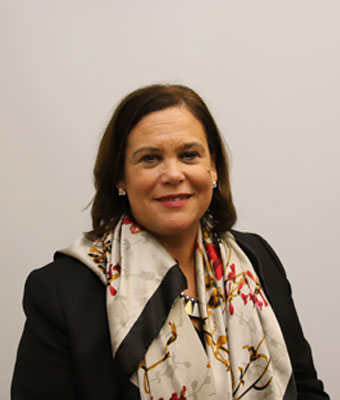
1. Deputy Mary Lou McDonald asked the Taoiseach when the Cabinet Committee on Health will next meet. [46218/25]
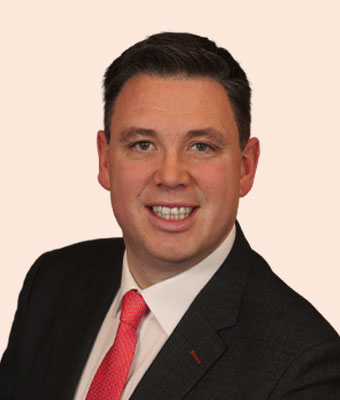
2. Deputy Paul McAuliffe asked the Taoiseach when the Cabinet Committee on Health will next meet. [46882/25]
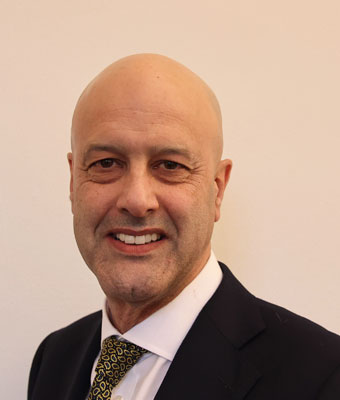
3. Deputy Martin Daly asked the Taoiseach when the Cabinet Committee on Health will next meet. [46852/25]
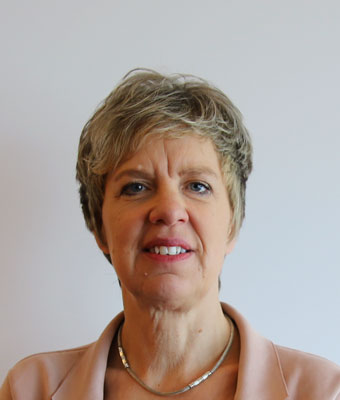
4. Deputy Ivana Bacik asked the Taoiseach when the Cabinet Committee on Health will next meet. [48431/25]
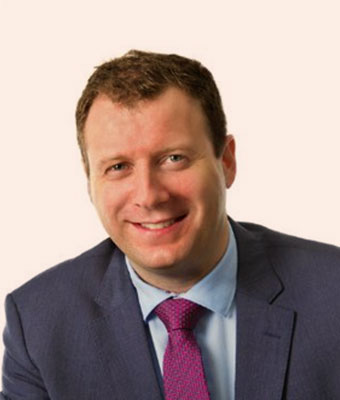
5. Deputy Pádraig O'Sullivan asked the Taoiseach when the Cabinet Committee on Health will next meet. [48524/25]
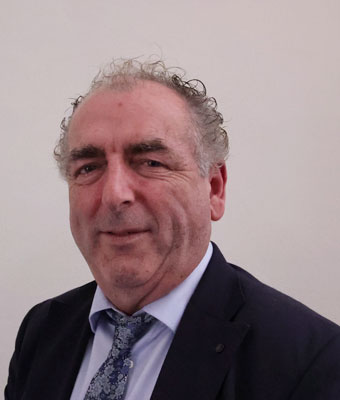
6. Deputy Michael Cahill asked the Taoiseach when the Cabinet Committee on Health will next meet. [48528/25]
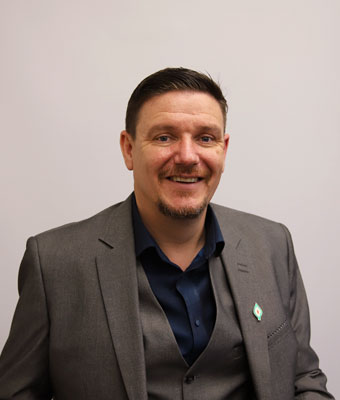
7. Deputy Mark Ward asked the Taoiseach when the Cabinet Committee on Health will next meet. [48903/25]
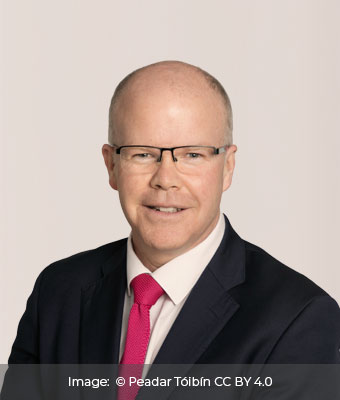
8. Deputy Peadar Tóibín asked the Taoiseach when the Cabinet Committee on Health last met. [49645/25]
9. Deputy Emer Currie asked the Taoiseach when the Cabinet Committee on Health will next meet. [50175/25]
10. Deputy Rose Conway-Walsh asked the Taoiseach when the Cabinet Committee on Health will next meet. [50476/25]
I propose to take Questions Nos. 1 to 10, inclusive, together.
The Cabinet committee on health last met on 17 July and is due to meet again soon. The committee oversees implementation of programme for Government commitments in relation to health, receives detailed reports on identified policy areas and considers health reforms including Sláintecare, the reform of public health and health system preparedness for future health threats. It also receives reports in relation to programme for Government commitments in the areas of mental health and drugs policy. Sláintecare 2025+, our latest Sláintecare strategy published in May 2025, aims to forge the way forward towards accessible, affordable and high-quality healthcare for the people of Ireland when they need it and where they need it. We will deliver faster access to care. Funding of €420 million has been allocated for the waiting list action plan this year. The new regional structures within the HSE have been established, with six new health regions and 20 integrated healthcare areas. Health and social care services are planned and delivered around the specific needs of local populations, leading to better co-ordination of care and access to services. We will continue to review capacity in emergency departments, increase the number of public-only consultants in emergency medicine and ensure more senior staff are rostered in emergency departments during weekends and public holidays for better decision-making. We will continue to build our workforce through the recruitment of key roles, retention measures and additional college places for key disciplines. We will continue to invest in a healthier future, with a national physical activity framework and action plan due to be published in 2025 and a new obesity policy and action plan to be published in 2026. We are launching a new era of innovation and digital transformation in health. The national patient app has been rolled out. The national shared care record is being developed and the electronic health record will also be progressed. Additional projects which are key to the increased digitalisation of the health service include a national system for electronic prescribing and remote health monitoring and virtual care solutions.
In mental health, we will continue to build the mental health workforce and infrastructure and support community-based services. In older people’s services, we will support people to live at home within their own communities and strengthen the nursing home sector. The forthcoming national policy on adult safeguarding for the health and social care sector, a programme for Government commitment, will set out how existing protections will be strengthened. All of these commitments build on the investment and reforms undertaken over the past number of years, including the delivery of approximately 1,330 acute beds, an increased workforce of over 29,000 whole-time equivalents since December 2019, more affordable healthcare through a reduction in the drugs payment scheme threshold to €80, the removal of hospital inpatient charges, the extension of the eligibility for free GP cards for all children under eight and to all earning no more than the median income, State-funded IVF, free contraception for women aged 17 to 35 and free access to HRT. From September 2021 to the end of August 2025, there has been an almost 56% reduction in the number of patients waiting over 12 months. The surgical hub for south Dublin opened in February this year with additional hubs becoming operational in 2026. Care is being delivered closer to home in 180 primary care centres through 96 community health networks. Twenty-seven community specialist teams for older persons and 26 community specialist teams for chronic disease are now operational and 23 community intervention teams are operational, with national coverage secured. We will continue to invest and reform, changing the way our services are delivered this year and into the future
The Taoiseach may be aware that there are four capital projects currently under way in Beaumont Hospital which are at different stages. They include a new emergency department, a new 95-bed ward block, a 64-bed critical care unit and an extension to radiation and oncology departments. Will the Taoiseach give an assurance to the House that these projects will be funded and will be done in a timely way? Despite the complexity of it being a live campus site with services being continued, can we be assured that sufficient supports will be put in place to allow these important extensions to a hospital which serves the north side of Dublin?
The Taoiseach outlined some of what the Government has been doing on health. In this budget forthcoming next week, will he clarify if there will be provision to increase the level of GP coverage around the country? I think all of us, in rural and urban areas alike, are hearing about the difficulty in accessing GP services, and about GPs who report being overworked and facing difficulties in establishing practices and in succession. GPs are retiring and are unable to recruit successors. What will be done in the budget for that? I also want to ask about the extension of free GP care to all those under 18. The Taoiseach referred to it in his opening remarks. The Labour Party in particular has been committed to ensuring that roll-out is continued and we are keen to see something in the budget for that. Finally, I return to the question of the inquiry which we welcome for children with scoliosis and spina bifida as a result of the meeting between the Tánaiste and the Minister for Health with the parents of Harvey Morrison Sherratt. I asked earlier for clarification on the publication of the relevant reports. We need a schedule for publication of the Nayagam report. It was commissioned two years ago but we still have not seen it published.
I raise the elective hospitals and surgical hubs that are being delivered across the country, with particular reference to the Cork situation. Initially, in response to parliamentary questions, we were told it was envisaged that patients would be seen by 2027, all going well. The language used in parliamentary questions of late is frustrating and now suggests patients might not be seen until 2030 in the elective hospitals around the country, including that in Cork. It is a commitment in the programme for Government. There is an envelope of €9.25 million under the national development plan up to 2030. We are disappointed that the language is now changing to say that patients will not be seen until the end of this decade. It is incredibly frustrating. There are waiting lists out your ears to get appointments for certain procedures in CUH. We have been told repeatedly that the elective hospital in Glanmire will be a gamechanger. We need to get it back on track to make sure we will not be waiting until 2030.
There are former residential and reformatory school survivors on hunger strike outside the gates of Leinster House as we speak. I raised this matter last week with the Minister for justice in the Dáil. This is their tenth day on hunger strike. This very serious situation has reached an impasse, with the Minister for education having advised them that their demands cannot be met. The hunger strikers assure me they will see this out to a tragic conclusion if necessary. Is there nothing we can offer them to end this tragic event? After their years of suffering in the control of a State body, they have been left with nothing. Others in similar circumstances have received some compensation. Their demands include each being issued with a HAA card to access comprehensive healthcare and full contributory State pensions to compensate for the years of forced unpaid labour they provided to the State.
There is no family that is not impacted by mental health difficulties and challenges at some point. We know early intervention is key to preventing serious illness, particularly for young people if a mental illness is caught at a young age and the intervention services are available. Jigsaw is an important service as part of the overall supports for young people.
In Waterford, unfortunately, we do not have a Jigsaw service. Waterford is the largest city without that service. Deputy Conor D. McGuinness and I, as well as the Minister of State, Deputy Butler, have raised this issue. I am looking for an update on where that is at.
The second issue I raise is the need to deliver 24-7 cardiac services for the people of Waterford. The Minister committed to doing this, in principle at least. We have the second cath lab but, at this point in time, we do not know when the staff will be hired and what the timeline is. Will the Taoiseach outline when full 24-7 cardiac services will be in place in Waterford and the south east?
I welcome the announcement that there will be an inquiry into the care of spina bifida and scoliosis patients by CHI. It is good news and I give credit to Stephen and Gillian and the advocacy groups for achieving this. It is really important that it be a statutory public inquiry. Any inquiry without the power to compel people or papers will not get to the truth in relation to this. It is also important that the terms of reference are in agreement with the family of Harvey Sherratt and the advocacy groups. We have been here before where terms of reference were promised to be done in agreement with the campaign and then, at the last minute, the group found the terms of reference were not in sympathy with its views. In the case of the Women of Honour, a number of women who were part of that campaign did not agree with the terms of reference. Mention was previously made of the establishment of an office of inquiry. Given that these statutory inquiries can go on at length-----
I call Deputy Emer Currie.
-----it is important that we get to a situation where we have a permanent office of inquiry to make sure-----
Thank you, Deputy Tóibín.
-----these inquiries can be delivered efficiently and speedily.
Approximately 10,000 people in Ireland develop shingles every year, two thirds of them over the age of 50. One in three of us who had chickenpox as children will develop shingles in our lifetime. The national immunisation advisory committee recommends five vaccines for older adults - flu, pneumococcal, Covid, shingles and RSV - yet only three are publicly funded. The shingles vaccine is available only to those who can pay for it, the cost being almost €500. This creates inequity, leaving many unprotected. Ireland is now an outlier, with 15 European countries, including the UK, France, Germany and Italy, already funding shingles vaccination for older and vulnerable people. Will the Taoiseach please consider adding shingles to the vaccination programme?
I raise the serious issue of the shortage of beds in Beaumont Hospital. An example of the impact of this shortage is brought home by the very serious case of one of my constituents. I have his family's permission to raise his case with the Taoiseach because they are absolutely desperate. His name is Henry Keane from Blacksod and he was recently diagnosed with a brain tumour. Since 17 September, he has been waiting in Mayo University Hospital for a transfer to Beaumont Hospital. He is listed under a consultant in Beaumont who has accepted the transfer but Beaumont is waiting to have a bed available. There is no bed available. We can imagine what it is like to be lying in a hospital bed not knowing what the future holds, unable to get the treatment you need and not knowing when that treatment will be given. Every day, you wait and hope and, every day, nothing happens. There is no bed for you today. Is that the way we treat our most vulnerable people in 2025?
Before the Taoiseach responds-----
May I come in on this group of questions, a Cheann Comhairle?
No, I have called nine Deputies. I will call Deputy Murphy on the next group of questions.
If the Taoiseach will allow me the liberty, I acknowledge that the Mexican ambassador, Her Excellency Carolina Zaragoza Flores, has joined us in the Gallery. The ambassador is retiring today. I take the opportunity to thank her for her sterling body of work. Her husband, José, is with her. I thank the ambassador for her kindness to me during her tenure and I wish her all the best in her retirement.
I thank the ambassador for her work over the past number of years. We enjoyed our engagement with her and I really appreciate that.
Deputy McAuliffe raised the issue of Beaumont Hospital. There are four major projects under way there. The national development plan has allocated very substantial funding to the Department of Health and the HSE for the realisation of those projects. The key is to keep the pressure on to get them through the various stages. Health capital tends to be slow and health projects tend to be slow moving. We need to accelerate some of these projects and get them delivered. They are well under way in some respects, with planning going on and so on. I appreciate the point the Deputy made. Beaumont is a national centre for key disciplines and a very important centre.
Deputy Bacik raised the issue of access to and coverage of GP services. In terms of the budget, Estimates discussions are going on. I recall her colleague Senator McDowell saying the Government is being fiscally reckless. He thinks we are spending too much. On the other hand, Deputy Bacik and others will come along and say that we should spend more on health services. Expansion of eligibility and so on will have a cost attached to it. Public expenditure will grow significantly again this year but we have to watch the rate of growth, without question. That will limit what is possible within the health budget in the next couple of weeks and in the announcement in the budget itself. We are endeavouring to have a sustainable health budget along the lines of what we planned over the past two years, which has worked effectively enough in terms of outcomes and improvements and also in terms of fiscal sustainability for the health service. The increase in the budget has been exponential over the past number of years. In my reply, I went through all the various initiatives we have provided in terms of reducing costs for patients. Capacity is very important.
Regarding the inquiry we spoke about earlier into CHI and the publication of reports, I will talk to the Minister in respect of timelines. My understanding is that the Nayagam report will be ready before the end of the year. It needs to be published and it will be important in terms of feeding into any inquiry that will be established.
Deputies Cahill and O'Sullivan referred to the elective hospitals. I will pursue that issue. It is annoying in that going back to 2016 or 2017, there was a different Government planning a second hospital for Cork. We correctly looked at that when we came in after 2020 and we agreed on elective hospitals in Galway and Cork initially and in Dublin subsequently. Those projects have been progressing and are in planning, design and all of that, but they need to get a move on. We have a site in Galway and a site in Cork. The surgical hubs are moving as well. I have made it very clear to officials and to the HSE that these are commitments the Government has decided on and they need to be delivered and implemented. Sometimes, notwithstanding Government decisions, there can be elements in the system who think these things do not have to be delivered. It is my job to sort that out.
Deputy Cahill raised a very difficult and sad situation. I ask that we do everything we can to ask those people to come off hunger strike, which can be very damaging to people's health. There has been a long history of institutional abuse. There have been a lot of supports over the years for survivors of institutional abuse, going back even prior to the report of the Ryan commission being concluded. Redress happened for quite large numbers much in advance of any inquiries. Other initiatives were taken in terms of housing and so on. The Government will engage with the survivors but for their own health and well-being, it is important that they would come off the strike. I understand the Minister met with some of the survivors. I will follow up with her to see what can be done.
Deputy Tóibín spoke about the public inquiry into CHI. I used the words "timely" and "effective" and the Deputy made the point that he would prefer a permanent office of inquiry. He said inquiries can go on, which they can. We have had statutory public inquiries that have gone on for five or six years. I hope that will not be the case here. The Minister is endeavouring to work with the parents and advocates to see whether we can get a bespoke inquiry that will meet the needs and objectives of such an inquiry, which have to be to improve services and have a sustainable improvement in services for children with spina bifida and requiring spinal surgery.
Because of our Constitution and people's legal entitlements, very often these inquiries can evolve into adversarial-type inquiries. One concern we have, which we need to be very clear-eyed about, is the impact on current services. Presumably any inquiry would involve personnel working in the service. We have got to be very clear-eyed and ensure we design this in such a way that we maintain current services, and that we do not have any negative impact on the provision of services on an ongoing basis. A three-week timeline has been provided for work on this. I am confident that we can arrive at a conclusion to this that would be satisfactory all round.
The Taoiseach left out my questions. This is just a reminder.
I have the reply to Deputy Cullinane somewhere.
The Taoiseach skipped over them.
I apologise. They relate to mental health, early intervention and Jigsaw. I will talk to the Minister. There has been a significant growth in Jigsaw services across the country. I will talk to the Minister in respect of Waterford. I agree with the sentiments the Deputy has articulated. Jigsaw is a very good organisation. It has got a lot of good State support in recent years.
A decision has been taken on 24-7 cardiac services. Deputy Cullinane asked about the implementation and delivery of it. A lot of progress has been made on this agenda. I can see that all of the Deputies in Waterford work together. I appreciate that. We will keep the pressure on to get this done in a reasonable timeline.
Deputy Currie raised shingles. Again, we are now into costs. The health budget was €1.3 billion last year. It is an enormous budget. We have done a lot in recent years. I am a great believer in vaccines. They can save money too in terms of people having to be treated subsequently in the acute care system if they develop something like shingles, which can be very serious in its effect on the immune system, elderly people, and those with RSV in particular.
Deputy Conway-Walsh referred to the shortage of beds in Beaumont Hospital. I will speak to the Minister for Health. I ask the Deputy to send the details in respect of Mr. Keane to the Minister. It is shocking that he is waiting since 17 September. He obviously requires specialist care in Beaumont. We will see what can be done in that case. I take the Deputy's point. That relates to the first question I was asked by Deputy McAuliffe about projects that are under way in Beaumont to increase bed capacity and to get a greater flow of patients.
11. Deputy Peter 'Chap' Cleere asked the Taoiseach when the Cabinet committee on climate action, environment and energy will next meet. [46874/25]
12. Deputy Malcolm Byrne asked the Taoiseach when the Cabinet committee on climate action, environment and energy will next meet. [46518/25]
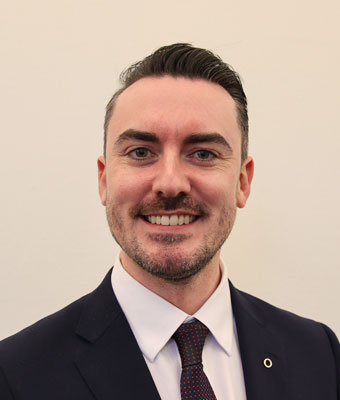
13. Deputy Naoise Ó Cearúil asked the Taoiseach when the Cabinet committee on climate action, environment and energy will next meet. [46855/25]
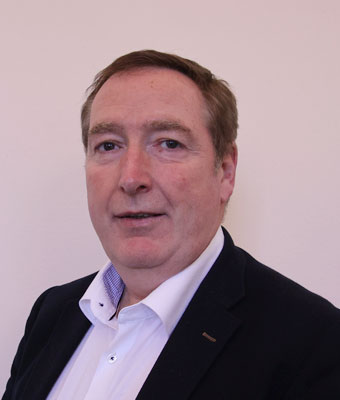
14. Deputy Tony McCormack asked the Taoiseach when the Cabinet committee on climate action, environment and energy will next meet. [46860/25]
15. Deputy Mary Lou McDonald asked the Taoiseach when the Cabinet committee on climate action, environment and energy will next meet. [49936/25]
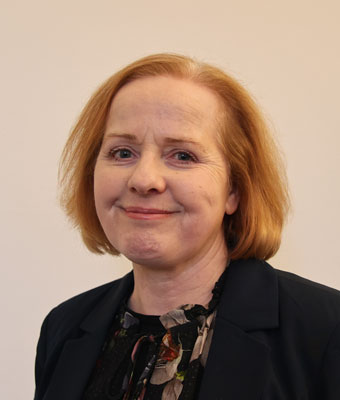
16. Deputy Ruth Coppinger asked the Taoiseach when the Cabinet committee on climate action, environment and energy will next meet. [49986/25]
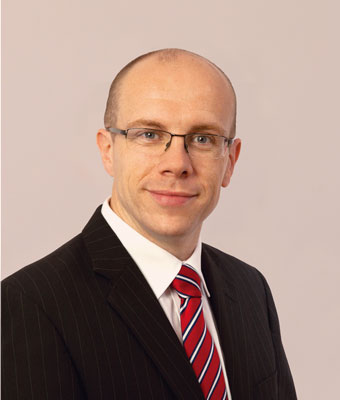
17. Deputy Darren O'Rourke asked the Taoiseach when the Cabinet committee on climate action, environment and energy will next meet. [50084/25]
18. Deputy Ruairí Ó Murchú asked the Taoiseach when the Cabinet committee on climate action, environment and energy will next meet. [50087/25]
19. Deputy Ivana Bacik asked the Taoiseach when the Cabinet committee on climate action, environment and energy will next meet. [50150/25]
20. Deputy Paul Murphy asked the Taoiseach when the Cabinet committee on climate action, environment and energy will next meet. [50159/25]
I propose to take Questions Nos. 11 to 20, inclusive, together.
Ireland has accepted challenging emissions reduction targets at EU and national levels. Our programme for Government has reaffirmed the Government's determination that Ireland will play its full part in tackling what is a global issue.
We are seeing encouraging signs. Ireland's emissions have been falling for the last three years, and we now have lower overall emissions than at any point in the last 35 years, despite our population growing by 50% over that period.
Change is under way across our economy and society to realign ourselves to a low-carbon future. Reducing emissions is now at the heart of all our policies and sectors. We are seeing real progress in the areas of energy, transport, and agriculture; however, EPA projections make clear one thing: we must move faster and do more if we are to meet our targets for emissions reduction.
The Cabinet committee on climate action, environment and energy oversees implementation of programme for Government commitments on the environment, climate action, energy and emergency planning. It considers the wide range of issues that require action in Ireland's transition to a low-carbon, climate resilient and sustainable future: a future in which we take full advantage of the renewable energy potential that we possess, while ensuring that energy policies contribute to energy security, affordability and competitiveness.
The Cabinet committee also oversees implementation of the climate action plan. The committee meets quarterly. The last meeting took place on 7 July. The next meeting will be scheduled in due course.
We all know there is a huge amount of work to be done on flood protection and flood mitigation. I acknowledge the €1.3 billion that has been set aside under the flood risk investment programme. Flooding in Ireland can have a significant impact on homes, businesses, people and communities. While I accept the problem of flooding cannot be eliminated, it can be managed or mitigated to reduce its likelihood, severity or impact. Flood relief schemes are complex projects. They require detailed engineering analysis and public engagement to make sure schemes will work and have the support of the whole community. Six such schemes have been approved in County Kilkenny – in Graiguenamanagh, Ballyhale, Freshford, Inistioge, Piltown and Thomastown. They are all at various stages. Could the Taoiseach give assurances to me and the people of Kilkenny today that these approved projects will be completed and fully funded?
I am glad to see the Government has agreed to progress with the private wires Bill and the development of a private wires policy. It is critical to addressing the energy deficit we face that we move as soon as possible. It is also important that we ensure we have the necessary digital infrastructure to support the digital economy, and that includes data centres. I am sure the Taoiseach would agree with me that data centres, as a critical part of the economy, would benefit from the private wires Bill, in particular if they partner with renewable energy sources in order to be able to power them but also to engage in district heating systems such as the one we see in Tallaght. Could the Taoiseach indicate a timeframe for when we will be moving forward with the private wires legislation and when we may see companies being able to avail of it? In that context, would he envisage nuclear energy forming part of the solution?
In 2004 the Taoiseach introduced the smoking ban, which has saved thousands of lives. This week the EPA reported that approximately 1,700 premature deaths occur in Ireland every year due to poor air quality. A lot of this is due to the continuous burning of solid fossil fuels and traffic emissions. Will the Cabinet committee on climate action, environment and energy consider this report and look at actions to try to resolve it?
The SEAI better energy warmer homes scheme is crucial for tackling climate change and energy poverty but in Offaly and across the country families are waiting up to two years for works to be completed - 12 months for a BER assessment, 14 months for a survey and further delays for retrofitting. Could the Taoiseach outline what steps are being taken, be it increasing the number of assessors and surveyors, streamlining the process or boosting delivery capacity to shorten waiting times so households can benefit much sooner from warmer, more energy efficient homes?
There is a major issue with the retrofitting schemes that are in place. On the one hand, as the Climate Change Advisory Council states, the funding supports for heat pumps are not sufficient and this locks many people out of access to a heat pump. On the other hand, a heat pump is not a practical or feasible solution for many homes, in particular one-off rural homes. Very many people are locked out of access to a heat pump, but also locked out of low-emission and zero-emission alternatives, whatever they might be. The vast majority still have fossil fuels. There is potential for a significant improvement on what families are currently using, be it dirty solid fuels or kerosine. Will the Taoiseach consider reviewing the schemes to ensure that people can make progress?
The European Environment Agency's recent report is nothing short of damning. It sets out the reality for biodiversity and finds that Ireland's natural environment is in very poor condition. Some 85% of protected habitats and almost one third of protected species have an unfavourable status. It is clear that excessive car dependency, unsustainable food production and emissions that are simply not reducing at a fast enough rate are doing untold damage to biodiversity. We are seeing an outrageous situation in Dublin Bay with sewage being pumped into our waters. Swim bans are the norm on far too many beaches and there are fish kills on lakes and rivers with alarming regularity. We need urgent systemic action in this budget.
We need to ensure the budget will take climate seriously. Will the Taoiseach take the urgent action in this budget, which is so obviously needed, to invest in the protection of biodiversity and to reverse some of the decisions made? We are very concerned that the ban on imported fracked gas has been overturned and that it looks as if his Government is opening the door to more fossil fuel infrastructure.
I welcome to the Gallery the relatives of the participants in the Global Sumud Flotilla.
The EU confirmed this week that nature in this country is in a very poor state and that economic growth has been achieved at the expense of the environment. Even in that context, the Blackwater fish kill stands out as an unprecedented ecocide - over 46,000 dead fish floating to the surface, bringing home the mass extinction event happening silently every day due to intensive, industrialised agriculture. It is incredible that none of our State agencies apparently can find the culprit. These are the agencies that are supposed to protect our environment. No wonder locals, anglers and environmentalists are convinced there must be a cover-up. It is scandalous that the investigations have discovered several other criminal polluters that we would never have known about without this event. What is the Taoiseach going to do about this? Will he properly resource protection and enforcement? Will he ensure that repeat offenders, like North Cork Creameries, which has had 122 non-compliance issues and is still non-compliant, are prosecuted and have their licences revoked? Will he stop defending the nitrates derogation and accept it is contributing to the devastation of our rivers?
Deputy Cleere was the first into the fray, regarding flood schemes in Kilkenny. He gave a very articulate presentation of the challenges and complexities of flood schemes. They take a lot of time and consultation. Given the frequency and ferocity of storms today, we need to move faster with some of these schemes, because the devastation of a flood on a household or on a town, or on shops and businesses, is huge and shocking for people. The national development plan, NDP, has allocated substantial money and capital. We want to get all of those schemes approved. I do not have clear details as to where each scheme is right now. I have no doubt Deputy Cleere does, as he is a local TD for the area. He has listed six schemes. I will work with him to ensure those schemes are approved, fully funded and delivered. A lot will depend on the progress in terms of the execution of the issues.
Deputy Malcolm Byrne raised the issue of a private wires Bill. I think it is good legislation and I welcome the fact the Government has accepted a memorandum outlining the legislation and proposals and that we have agreed it, in that respect. We have challenges in terms of data centres, as Deputy Byrne knows. He has been specialising in AI for quite some time. AI will mean a much greater need for energy. It will be energy intensive. Data centres are going to be important in that regard. Offshore wind energy is critical for this. That is why I have convened a clearing house, involving industry and the Government, to deal with macro issues around delivering offshore wind generation as quickly as we possibly can to enable us to be adopters of AI and to maximise the potential of AI into the future. It will also allow us to deal with future industry needs in terms of major, larger sites the IDA will be acquiring to provide for industry well into the future. We have been working with the Commission for Regulation of Utilities, CRU, the Department of enterprise and others on that specific issue. I will come back to Deputy Byrne on the timeline for the legislation. My understanding is that it should not take that long.
On nuclear, we may very well import nuclear through various connectors. We are putting a lot of funding into wind energy, offshore wind in particular, and some onshore wind and some solar. It is interesting. There are people who have come to me in the House saying they are against solar energy, wind energy and fossil fuels. I do not know where we are going to get our energy if we do not have a combination of all three in the short term. We will need a combination of all three. From a State perspective, nuclear would entail a lot of capital investment. We are putting a lot of capital investment into the wind energy side. A lot of it will be private sector developed, but we have to do the ports and a lot of other stuff with that.
Deputy Naoise Ó Cearúil asked a question around premature deaths. The last Government did enact comprehensive legislation in respect of towns, and to make fully nationwide the ban on solid fuels. A lot of it was coming in from the North, actually, and it was leading to a deterioration in health quality. It was way back in the early 1990s that Mary Harney, the then Minister of State, brought in a ban in cities. People may not remember, but at 5 o'clock on a winter evening in Dublin you could hardly walk through Dublin because of the smog. You were breathing in awful stuff, and it was a radical move that improved health quality in cities. The issue will be enforcement. Local authorities and others need to do more on enforcement regarding air quality in towns across the country. Up to a couple of years ago, Enniscorthy had poor quality air on a par with some towns in India, because of the penetration of imported smoky coal getting in under the radar, not being properly monitored and a lack of enforcement. That is critical for health. Deaths, lung injury and COPD can be avoided if we just do the sensible thing.
Deputy Tony McCormack asked about the delays in delivering the SEAI, Sustainable Energy Authority of Ireland, grants and the better energy warmer homes scheme. I take his point. The Minister is reviewing these schemes to see if he can get simpler grant schemes in place and maybe fast-track some of this. We will work on that. I appreciate the point Deputy McCormack has raised.
Deputy O'Rourke raised retrofitting heat pumps and an insufficiency of money. Again, huge money has gone into this in the last five years compared with what went on for the previous 20 years. There are limits to what the State can do with public expenditure, to remind the House of that every now and again. I am sure the Deputy reads the comments from the Irish Fiscal Advisory Council, the Economic and Social Research Institute, ESRI, and the Central Bank. They are suggesting - even a Deputy from the Labour Party has been very conscious about this - that we are spending far too much money on all of these schemes. We do need to be fiscally sustainable. That said, these are important schemes because they save energy in the future and save on household bills for people.
Deputy Bacik raised the issue of the natural environment. In the last five years, we have doubled the budget of the National Parks and Wildlife Service. I involved myself five years ago and met the NPWS. A board was created within the Department. It is an agency within the State. It has had lots of successes. For example, there has been good progress with the corncrake and the white-tailed eagle. We have created new national parks in the last number of years in the north east, and acquired the Conor Pass and marshes around Clonakilty. A lot of good progress has been made. We are dealing with the previous 20-odd years of progress and so on. The Infrastructure, Climate and Nature Fund needs to allocate money specifically for nature restoration and, in my view, for the acquisition of more land for rewilding and for national parks. We will continue on that track. Obviously, I am concerned about the report, and we need to respond to it.
Deputy Murphy raised the issue of the fish kill in the Blackwater, which is absolutely shocking but the EPA, Environmental Protection Agency, has not come up with a culprit for this. It is wrong to just throw up the charge of a cover-up. I do not think that is fair. I do not think it is fair on the EPA because I do not believe the EPA would cover it up. Equally, however, if the EPA cannot pinpoint the exact source of this pollution, it needs to be honest about that too. There is no point in getting ahead. Deputy Murphy would be the first person, in other walks of life, attacking the Garda or the justice system for getting ahead without any evidence. We have to have an evidence-based approach to this. North Cork Creameries has been involved in other compliance issues but not this one. There has been no tracing of it to this fish kill. It employs a lot of people and has been a very successful industry at other levels in that area, which is an area that has not been blessed with multinationals or with other industry. We have to balance the perspective. There is no evidence this fish kill was caused by the agriculture sector either, in terms of farming or anything like that, which the Deputy might have been suggesting, or maybe he had other targets in that regard.
That said, it is not satisfactory that we do not know how such a large fish kill happened. That is a worry. Is our scientific capacity up to speed? This is a major kill and will have major repercussions for biodiversity along the Blackwater and that area in its entirety.
The next group of questions is Nos. 21 to 32 but we only have five minutes left for this item of business. Therefore, with the agreement of the House, I will move to the next piece of business, which is the motion. Is that agreed? Agreed.
That concludes questions.
It is agreed, but it is not satisfactory that we only ever get through two groups of questions. We are even losing five minutes today. We used to get six Question Time sessions per week. The Government got rid of Wednesday's Question Time against our objections. We are down to just Tuesday for Taoiseach's Questions and now, more weeks than not, we get through two groupings rather than three. It is on us as well, but we need to have a discussion about it. We should try to get through three groupings.
I suggest the Deputy raise it with the Ceann Comhairle or at the Business Committee meeting-----
I have.
-----or maybe he can just be more efficient with the use of time.
It is unsatisfactory. I add my voice to that. We do need to raise this at the Business Committee. Clearly, the debate on the motion on the flotilla is hugely important. We all looked for that so on this occasion, there is no difficulty with moving straight to that debate. However, in principle, to have just two groupings of Taoiseach's Questions when we have all prepared for three is not acceptable and we need to change that.
Yes, but I have asked Members to bear in mind that they make contributions on the questions. There is an issue there as well. As I said, the Ceann Comhairle can deal with it in the context of the Business Committee or Members who are on that committee can raise it.
I was up late last night preparing for the third grouping after watching the presidential debate.
I am sure you were. We can take it if you wish.
It is fine.
I hope he watched the debate. It was very good.
He tweeted about it anyway, although it looked like he did not watch it.
I watched it and then I worked on the parliamentary questions.