Health Services
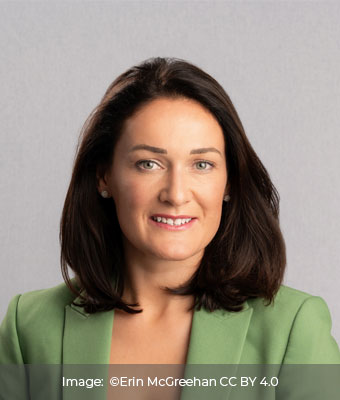
It is good to have the Minister of State here. We pride ourselves on having a health service based on need and not on the ability to pay. Unfortunately, a two-tier system is growing around us, and growing faster than ever before. From lifesaving treatments to basic prevention and, devastatingly, in cancer care, the divide is becoming ever greater. If people can pay privately or if their insurance covers it, people may be able to get access to innovative oncology medicines months or even years before public patients. People who cannot pay have to wait. For people with cancer, waiting is not neutral - it is absolutely lethal. This is not what our State wants. It grates against my core values and I am sure those of the Minister of State and we should not be accepting it. I certainly do not accept it.
The facts are stark. Irish patients wait on average from 644 days to 694 days. Some data actually shows it is up to 1,000 days between European Medicines Agency, EMA, authorisation and HSE reimbursement for new oncology drugs. Only one quarter of EMA-approved cancer medicines since 2020 are available here, which is the lowest rate in western Europe. Every four-week delay in starting cancer treatment increases mortality rates by around 10%. We are building delays into a system that is, sadly, costing lives.
Other countries have acted. They run structured early access schemes that give patients highly governed, time-limited access to breakthrough drugs while price and health technology assessment, HTA, processes continue. Ireland has no such national pathway. Access is ad hoc and clinician by clinician. The system has inequity in it by design.
The programme for Government promises quicker access to innovative medicines. The time has come when we must commit to creating an early access pilot programme for innovative oncology medicines, with a budget line in the 2026 Estimates, clear eligibility criteria, a parallel HTA process and real-world data collection to improve value for money. It is not a blank cheque. It is targeted. It is an evidence-based bridge that stops your treatment options being defined by your ability to pay.
The same two-tier reality is playing out in prevention of disease. Let us take adult vaccination. People in their 50s and 60 today who want a shingles vaccine must pay privately. It costs almost €480 for a two-dose course. People who cannot afford it have to go without. The irony is that this vaccination is among the most cost-effective interventions in healthcare. International studies show that shingles vaccinations prevent thousands of cases of severe disease and long-term nerve pain at cost-effective levels, well within accepted thresholds.
Broader analysis suggests adult immunisation programmes return up to €19 in benefit for every €1 spent. There are savings in hospitalisations, productivity and long-term care.
We are creating a two-tier system, at the end of life and in the prevention of disease. For those who can pay out of pocket, they are protected. For those who cannot, they are absolutely exposed. It is neither fair nor financially sensible.
We have to commit to establishing the area access pilot programme for innovative oncology medicine as soon as possible. We also need to look at the principle of equity and to apply it to adult vaccinations, starting with shingles, by negotiating fair prices and including it in the public immunisation schedule. Cancer does not care whether you are public or private. Shingles does not care whether you can pay €480 to the pharmacy or not, and the State certainly should not care either. Healthcare should be based on need and not on your pocket.
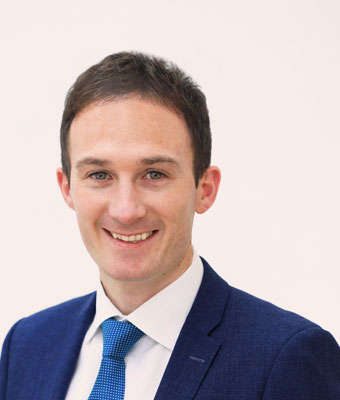
I thank Deputy McGreehan for raising this important issue.
Ireland's healthcare system is changing with the introduction and implementation of Sláintecare, the first cross-party plan for major health reform in Ireland which was introduced in 2017. The Sláintecare vision is to provide universal, accessible, affordable, person-centred, safe and high-quality health and social care for all the people of Ireland. As the Deputy said, it should be based on need, not on the ability to pay.
The Path to Universal Healthcare: Sláintecare and Programme for Government 2025+ was published in May 2025. It includes three high-level priority areas, which are: improving access, improving service quality and delivering capacity. Good progress has been made to date in terms of access. However, the latest hospital waiting list figures, for August 2025, show that important progress has also been made under the waiting list action plan approach which was implemented in late 2021. The number of patients on waiting lists has been reduced, as has the length of time they are waiting. Since September 2021, there has been a 56% reduction in the number of patients waiting over 12 months. In the same period, the total weighted average waiting time for patients on waiting lists has reduced by approximately 44%. We are seeing continued progress in terms of long waiters and the most recent figures indicate there has been a reduction of 7% in the number of patients waiting over 18 months since this time last year.
A total of 66% of consultants have now signed the public-only consultant contract, made up of 943 new entrants and 2,147 change of contracts. This is a key reform aimed at creating a universal, single-tier healthcare by removing private practice from our public hospitals. We have also seen an 8% reduction in the cumulative daily 8 a.m. trolley count for January to August 2025. There were almost 5,700 fewer patients waiting when compared with 2024. This is despite an increase in emergency department attendance of over 10,000, or 7%.
Some 2.53 million people in Ireland, or 46% of the population, currently have private health insurance. Most consumers have private health insurance plans which provide substantial cover in private hospitals, but this cover is mainly provided for semi-private accommodation. Some 8% of consumers have plans which provide cover in mainly public hospitals and these are typically less expensive. Private health insurance is voluntary and there are many reasons that people take out private health insurance. The Government continues to support those who choose to take out private health insurance through tax relief and community rating. This spreads the risk across the system and allows more affordable access for older and sicker people.
The Deputy made reference to specific areas around early access, pilot medication programmes and ensuring the removal of barriers to new innovative medicines becomes part of Government's primary policy. The Minister, Deputy Jennifer Carroll MacNeill, whom I am deputising for today, is very much focused on how we can ensure that medicines are increasingly accessible.
The Minister of State got an answer that was about access to consultants and doctors; it was not about treatments and therapies, which was the question I asked. The Minister of State got an answer to a different question of inequity in healthcare.
I reiterate we cannot continue to allow to have two-tier access to oncology drugs and vaccines based on whether people have the ability to pay. I will keep repeating this. The area access pilot programme to oncology drugs has to come in. We have to, basically, cop-on in the Department of Health in the area of running through and reimbursements of healthcare. People are dying in the public health system because they are not getting access to drugs. People who cannot afford to pay for shingles drugs, for example, are getting sicker, spending time in hospitals, spending time out of work, and unable to take part in their communities and their normal lives because of their inability to pay for a vaccine that works, that is effective and cost-effective, and proven so.
The Minister of State is only reading off what the Department provided and he is not in the Department, and it shows. It is a prime example of why a Minister from the Department should be here answering the relevant questions.
I thank the Deputy for raising this important matter. I certainly agree on the necessity around an early access programme. We are making significant progress in regards to the treatment of cancer. However, I would agree that access to medicines should not become a barrier; it should become part of the normal process. I will report what the Deputy has said here to the Minister.
In regards to the Government's continued work to support the model of care through its Sláintecare programme, we are very much committed to ensuring that patients get first-class access. Indeed, we will continue to invest. We will continue to look at how we can reform the system, very much being focused on productivity but also patient care. It is very much the Government's priority that we continue to improve service delivery, increase capacity across all the hospitals - acute, step down and community healthcare - and, indeed, reduce waiting lists and times, and also, to the Deputy's point, ensure that all patients and all citizens have access to the best medicines available.
Hospital Services
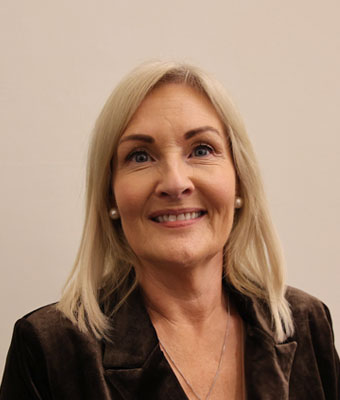
Before I call Deputy Quinlivan, the Cathaoirleach Gníomhach, Deputy Jen Cummins, has a big birthday tomorrow. It is a zero one. We will not ask which one, but "Happy Birthday, Deputy," in advance.

Thank you very much.
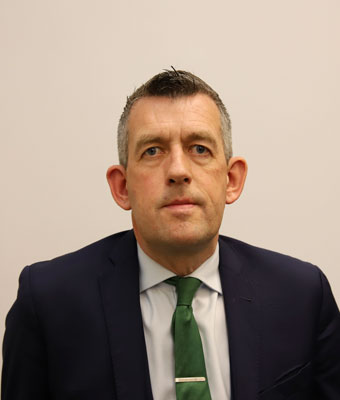
First, I wish to put on the record my disappointment, to put it mildly, that there is nobody here from the Department of Health. The Minister for Health is not here and neither are any of the junior Ministers. I do not believe they are all abroad. They could be here. They will be here in the morning as well. It shows utter contempt for the people of Limerick.
This is an important day, 30 September. It is the end of September, which has been the worst month ever for people on trolleys in University Hospital Limerick since we started counting figures.
In my maiden speech in 2016, I spoke about University Hospital Limerick. Here we are again.
Today, as the Minister of State will be aware, the HIQA report on emergency healthcare in the mid-west was published. At the outset, I welcome the publication of the report, one that we in Sinn Féin requested. We have waited a long time for it. I thank HIQA and the ESRI for their diligence in compiling it. The report has presented three options to the health Minister in terms of addressing the capacity at University Hospital Limerick: the expansion of capacity at UHL; extending the UHL campus to include a second site under shared governance; and an additional model 3 hospital in the HSE Mid-West, providing a second emergency department. While I agree the first two options are the quickest in terms of addressing the immediate capacity challenges, I would urge that these be advanced in conjunction with the third option, namely, the development of an additional model 3 hospital in the mid-west region.
The report has verified that the core issue impacting healthcare delivery in the mid-west is inpatient capacity deficit, both in UHL and across the mid-west.
It goes on to note that this capacity deficit, coupled with the ever-growing demand for services, presents a risk to patient safety. In the legacy of the inexcusable decision by previous Governments to downgrade the facilities at St. John's, Ennis and Nenagh, this is where we find ourselves.
The HIQA report that we are discussing was commissioned by a previous Minister for Health following the inquest into the tragic and untimely death of young Aoife Johnston at UHL. Her tragic death occurred on an evening when the capacity challenges at UHL were evident. Despite her death and the following inquest, these capacity deficits have continued unabated. Already in 2025, over 18,000 people have been treated on trolleys and in corridors. All 18,000 of these people were deemed in need of a bed. It is worth remembering that they are friends, neighbours and family members. They are people who have been deemed in need of a hospital bed yet no bed is available for them. Last year, a record 23,203 people were treated in this unacceptable manner, and that number will be exceeded in 2025. Indeed, since 2011, when Fine Gael came into government, there has been a more than 500% increase in the number of people being treated on trolleys at UHL. The Taoiseach at the time said he would end the scandal of people on trolleys.
The people of Limerick and the wider mid-west deserve much better than they are getting. The staff at the hospital deserve better from Government Departments. The staff do a very good job at the hospital when they can, and I have witnessed this myself on numerous occasions. They do so under very challenging working conditions, where they navigate between trolleys packed together in hospital corridors. Some 2,386 people were treated in these conditions in September alone. This is the highest number of any month ever. It will be part of the Government's legacy. If we are hitting these record numbers in September, many people, including senior medical staff, are seriously concerned about what the winter months will be like for both patients and staff.
Today's publication is welcome. It points towards recognition of the problems caused by Fianna Fáil and Fine Gael Governments’ failure year after year to take the needed actions when it comes to UHL. I have a concern about Government underfunding of the health service capital plan in the national development plan. I am concerned that despite this report and the obvious need for additional services in the mid-west, the Government will not plan to deliver an additional model 3 hospital. UHL desperately needs more capacity and it needs it now. The mistakes made when St. John's, Ennis and Nenagh were downgraded cannot be repeated. I urge the Minister for Health to act urgently in advancing all the options outlined in HIQA's review. This review has provided the clinical underpinning to the solutions offered by my party, Sinn Féin, and healthcare managers in the mid-west. I look forward to discussing this further.
I thank Deputy Quinlivan for the timely opportunity to address the House on capacity at University Hospital Limerick. I am taking this matter on behalf of the Minister for Health, Deputy Carroll MacNeill, who sends her apologies that she cannot be here to provide an update on the measures that are being taken to alleviate overcrowding.
Since the Deputy last raised a Topical Issue on this matter in July, the work to increase capacity and alleviate overcrowding at UHL has continued at pace. In May 2024, HIQA was requested to undertake an independent and expert review of urgent and emergency healthcare services in the mid-west by the then Minister for Health. The priority for this work is ensuring safe, quality acute care. HIQA has today published this review and the Minister for Health briefed the Government on the report this morning. She also placed on the record of the House during Questions on Promised Legislation her points regarding this publication.
The Minister and the Government are concerned at the significant challenges being experienced in Limerick and the wider mid-west, and the impact this is having on patients and their families in the region. I thank the hard-working front-line staff at the hospital, who continue to deliver excellent care for patients every day. The Minister and her officials will now consider the reports and advice provided, including the three options that were identified. The Minister will report back to the Government on these considerations. As the Deputy will appreciate, the reports and analyses involved are extensive and involve a stakeholder consultation, regulatory inspections, data analysis and international evidence reviews. I acknowledge the substantial work that has been undertaken by all of those who conducted and took part in this review.
HIQA’s analysis finds that inpatient capacity in the region needs to be increased to meet current and projected demand. The report identifies three options, including expanding capacity at the Dooradoyle site, extending the UHL hospital campus, and developing a model 3 hospital and, consequently, a second ED for the region. The HIQA review notes that real improvements are continuing to be made at UHL and across the mid-west. This work of improvement and reform will go on while the HIQA findings are being considered.
As the Deputy is aware, through Government investment, 140 new beds have opened in UHL since 2020. This includes the successful delivery of two fast-tracked 16-bed inpatient blocks, which opened in December 2024 and in June this year. More new bed blocks are being developed, which will provide up to 292 additional beds by 2028. This includes two 96-bed blocks, the first of which is starting to receive patients this week. This increase in capacity will go towards reducing the number of people waiting on trolleys. The opening of this new 96-bed block will be a major boost to increasing capacity at UHL. I know it will be welcomed by all the people of the mid-west.
Bed capacity is being further expanded throughout the region through the acute hospital inpatient bed capacity expansion plan. This will deliver 572 new inpatient beds in the region by 2031, including 24 new beds at Nenagh Hospital, 48 new beds at Ennis Hospital and 42 new beds at St. John’s Hospital. I would like to reassure the Deputy and all patients in the mid-west that substantial work is ongoing to improve healthcare services in the region.
I am conscious that, while we debate tonight, there are 133 people on trolleys in UHL today. When I speak on this issue in the Dáil, I am always mindful of the families who have lost loved ones in UHL due to this issue of excessive overcrowding. Unfortunately, the report has come too late for them.
I know the Minister of State is not the Minister for Health or in a health Department, and he probably just read out his response. He has probably never been in University Hospital Limerick in his life.
The 96-bed unit will open on Friday for the first 24 patients, followed by 24 on Monday, 24 on Tuesday and 24 on Wednesday. That is welcome, but it will not have a significant impact in the hospital, where senior staff tell me it will reduce by 17 the number of people on trolleys for the day. The University Limerick Hospitals Group says it needs a minimum of 400 beds to deal with capacity. This does not take into account the factor of population growth, so it will probably need more than that.
Today must be remembered as a positive day for the mid-west but the three options that are on the cards need to be taken simultaneously. We need to increase capacity in the hospital. We have to be careful when we talk about increasing capacity because we have a plan to move maternity services across and there is no space to do both. Either we are doing one or the other, and we can do part of this under option A. Option B is for additional capacity near the campus, which I would also support. We can do both and, in fact, we could start them tomorrow. We should also start tomorrow on option C, which is to deliver what everyone says we need, knows we need and will tell you we need, which is a new model 3 hospital in the mid-west region. That is what we need to deal with the issue of capacity.
The people of Clare, north Tipperary and Limerick have suffered enough. They have been abandoned for years and years. There is no plan. The Minister of State talked about a second 96-bed unit. At the moment, that is with An Coimisiún Pleanála, so we can imagine when that will be built and when it will have any impact on the situation in UHL. As I said, we are here on 30 September following the worst month ever in the history of the UHL trolley crisis. The Government should be ashamed of itself.
We are all in agreement that the people of the mid-west rightly deserve access to responsive urgent and emergency care. The HIQA review was published today. It has an extensive range of findings across the healthcare service in the mid-west. I would be interested to hear what the Deputy disagrees with in the HIQA report.
I did not disagree with anything.
I would be interested to hear if there is anything in the report that he disagrees with.
It will be given full consideration and all the findings-----
We just want the three recommendations implemented as fast as possible.
-----are under way to determine the future direction of the services in the region. It is important to also highlight UHL's annual budget spend has increased from €265 million in 2019 to over €507 million in 2024. A package of wide-ranging reform support measures also is being implemented. It is important these measures are aimed at both capacity and reform of the healthcare system in the region. Increased staffing levels are also being prioritised. Staffing at UHL has grown by 32%, an increase of 1,465 whole time equivalents, since 2019 to August 2025. Other measures and reforms to alleviate congestion include the extension of opening hours for the medical assessment unit in the model 2 hospital in the region and the new surgical hub, which is expected to be operational by quarter 4 in 2026.
These are real steps being taken to ensure patient flow through ensuring sufficient staff and decisions are available for UHL seven days a week. I am sure many of these improvements and those identified within the HIQA report will make a real impact on the delivery of healthcare services in the mid-west.

I will say at the outset that it is a disgrace that the Minister, Deputy Carroll MacNeill, is not here. The downgrading of maternity services at Portiuncula University Hospital is a huge issue that is causing enormous stress and worry for families in my constituency and beyond. She is accountable for this and should have the decency and courage to come in here tonight to take questions. It is deeply disrespectful to all those impacted by this.
Fundamentally, this issue comes down to the health and well-being of mothers and children and ensuring the best possible outcomes for them. The consequence for mothers in my constituency in east Galway is they will have to travel to University Hospital Galway, UHG, to access maternity care. Many mothers who would otherwise have a short trip into Portiuncula could face an hour or more, depending on traffic, travelling to UHG, that is, to a hospital with limited parking and a maternity unit that is already stretched as it is. It is not acceptable to expect high-risk patients to have to travel long distances for essential care and sometimes emergency care. It is causing huge stress and worry for families and is a decision that does not appear to have been fully thought through in terms of the consequences.
Moving these mothers from Portiuncula was not one of the recommendations from the summary review and there are serious concerns with the transparency around this whole process and how this decision was arrived at. The review highlighted a number of issues and many of those issues were the same as those highlighted in the 2018 Walker report. HSE management, however, has insisted those recommendations were implemented in full, while Bernard Gloster has said they were not. I wanted to ask the Minister to outline her position on this but she is not here.
The bottom line is the hospital should have the resources, staffing and infrastructure to be in a position to provide top-class maternity services and mothers in the local community should expect no less than that. The staff at the hospital are fantastic and do their very best but they need the support from the Government and the HSE to address the issues. When something goes wrong, the answer should not be to downgrade the service but to make the necessary improvements.
It is not the Minister of State's Department but I wish to ask if this decision will be revisited and if the Department will commit to a roadmap for restoration of full maternity services at Portiuncula.
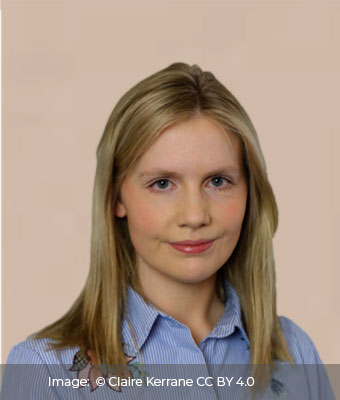
I agree with my colleague that the Minister for Health should be here tonight to stand over a decision she has made. She should be here to answer our questions. The Minister for Health should be here to tell us why pregnant women in our region are going to be forced to travel to access maternity care and have their babies. She should be here tonight to tell us why she and the HSE have made a decision that essentially means we have issues here, we are going to do reviews, we are going to implement the recommendations and then we are not going to restore at any point in the future, full maternity services at Portiuncula.
In 2018, the Walker report followed an independent external review of maternity services at Portiuncula, which was then published. A total of 154 recommendations followed and those recommendations were not implemented. Seven years later, we have some of the very same issues identified again. The response of the HSE was to not let it fix this or let it do whatever it had to do to make this safe and support women in this region. Instead, the response of the HSE was that it has implemented the Walker report. It was to pretend it had implemented it in full and to tell us repeatedly it had implemented it in full. Just last week, I received a letter from the hospital manager who stated all 154 recommendations had been implemented and independently verified as implemented by both HIQA and an independent national HSE team. On the very same day, Bernard Gloster told the health committee that to be clear, it would be not reconcilable for him or someone to say the Walker report was implemented in full. He said that on the same day.
I have come here tonight to ask why, in the case of Portiuncula, a decision was made not to bother to do everything necessary to ensure women across a number of counties in our region get the care they deserve at Portiuncula Hospital.
I thank both Deputies for raising this important matter around concerns relating to the delivery of maternity services at Portiuncula University Hospital. I am taking this on behalf of the Minister, Deputy Carroll MacNeill, who is unavoidably absent today.
The safety and quality of our maternity services are of critical importance to the women and families who use them, as well as to the Government. I understand recent developments at Portiuncula may undoubtedly cause concern and worry for many women and families who attend or plan to attend services at the Portiuncula maternity unit. However, steps are being taken to support the unit and to ensure the safety of women attending maternity services across the region. There are 12 external reviews related to maternity care at Portiuncula, which are at various stages of progress. Seven of these reviews have now been completed. The individual review reports were shared with the relevant families in July 2025. The HSE has engaged individually with each family to discuss the findings of these reviews, address their questions and outline the next steps. The Minister for Health has previously met some of the families concerned and has asked Portiuncula to provide the families affected with whatever support they need. The HSE has set up an information line for women booked with the maternity unit to contact if they have any further queries.
The HSE has advised that work to implement the recommendations arising from the reviews is in progress through the work of the Portiuncula external management team and the regional women’s and children’s managed clinical and academic network. An implementation team has been established to ensure the implementation of the recommendations arising from all reviews and to progress any further changes required over the coming months. There are currently 52 recommendations being implemented, arising from the seven reviews completed to date. This implementation team will also oversee the transfer of care for an expanded group of women with higher risk pregnancies from Portiuncula to University Hospital Galway or the hospital of their choice. This is in line with well-established pathways already in place for the transfer of care of complex or higher risk pregnancies within the regional maternity network. This approach has now been broadened to include women with a wide range of clinical factors known to contribute to higher-risk pregnancies. The HSE has communicated this to the women and families booked at Portiuncula, as well as their GPs. The HSE has advised the Department that ongoing engagement is happening with GPs with a briefing session being held this week.
The reconfiguration of maternity services in Portiuncula University Hospital to move higher risk pregnancies off the site will mean some women in rural communities who previously attended Portiuncula will now need to travel to University Hospital Galway or other units for certain aspects of their maternity care. It is acknowledged these changes may create additional travel demands for expectant mothers and their families. HSE west and north-west, through the work of the implementation team, will consider what contingencies and supports can reasonably be put in place to assist women affected.
A highly experienced external management team was put in place in January 2025 to oversee and manage maternity services at Portiuncula.
This work will continue to progress over the coming months, with close monitoring and engagement within both the HSE and the Department of Health. This will include ensuring that sufficient capacity and resources are in place across the HSE west and north-west region.
Everybody understands that safety is paramount here and that we need to ensure the well-being of mothers and children, but forcing women in high-risk pregnancies to travel long distances is not appropriate. In the Minister of State's view, is that safe? Why would women not be given the choice as to where they can access maternity care? This will place further pressure on other maternity services and it is a downgrading of the maternity services at Portiuncula. The view among people locally, and I agree with them, is that there is an agenda here to remove services from the hospital by stealth and to centralise services. If previous recommendations had been implemented in full and proper resourcing, staffing and oversight put in place, we would not be in this position. The Government must make the necessary investments to support maternity care in Portiuncula and ensure we have a top-class maternity service there. That should be the Government's approach rather than seeking to downgrade services at this hospital. The Minister needs to answer questions about this issue as soon as possible.
I thank the Minister of State for his reply. Of course, the bottom line here is that if you seek an external independent report, get the recommendations, fail to implement those recommendations, and then see the same issues arise again, it is not exactly rocket science to know how that has happened. We, as elected representatives, have been misled. On a really important report in relation to the birth of children at a hospital, a report that is that important, we were misled in terms of the recommendations not being implemented. We need to hear urgently on the floor of the Dáil from the Minister for Health. I stand to be corrected but, as far as I am concerned, she has not said a word on this matter in this House. I wrote to her over two weeks ago seeking a meeting for all of us, as Oireachtas Members across parties, to sit down and meet with her to ensure we can put across to her the worry and the stress at what should be the happiest time for women in their lives. I cannot put across to the Minister of State the stress this has put on women and their families. The Minister should have been here tonight to answer those questions and answer those women.
Again, I thank the Deputies for raising this important matter. I am sure they will understand that the Government and the Minister for Health are very much committed to ensuring that all women and families receive the highest standard of care, both at Portiuncula and across all maternity services nationally. The Minister and her Department officials will continue to work closely with the HSE, the clinical leads and families to ensure that the necessary improvements are delivered and sustained.
Pregnancy in Ireland is predominantly a safe experience with good outcomes. Ireland compares well with other similar countries on international standards. However, considering that the future direction of maternity services and their development will require extensive evidence-based assessment, of which the review of the implementation here is an important provision, I will relay the concerns the Deputies have raised back to the Minister. Through ongoing communication and a management plan, which is currently in place for Portiuncula University Hospital by the HSE, the Department of Health will continue to engage regarding all patient safety incidents to ensure they are being managed in line with the HSE incident management framework but also that the work being delivered through the programme for Government commitment in developing an extensive national maternity strategy is developed and that the new strategy will include wider policy issues arising from the Portiuncula review and its recommendations.
Special Educational Needs
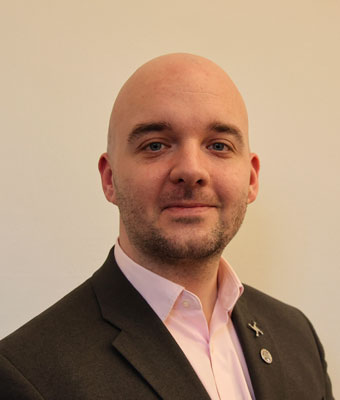
I mean this with the greatest of respect to the Minister of State, but this is the fourth Topical Issue raised with no relevant line Minister or Minister of State here to debate it and to engage in the conversation on it. I am not directing this at the Minister of State. He is here and I appreciate the opportunity to speak to him about this issue, but I cannot expect he will know anything about this specific issue, given his brief. I ask him to take that back to the Chief Whip. It is disrespectful at best to colleagues right across the House that we are not being given the opportunity to raise these issues directly with line Ministers. At half ten on a Tuesday night, there is no prior commitment clashing with this. Whether I am sitting in the Chair or sitting through Topical Issue sessions right throughout the year, we are seeing that it is very rare that a line Minister is here to answer questions and engage in a constructive debate about issues. Again, I emphasise that that is not directed at the Minister of State personally. I am grateful that he is here to take this.
The Minister of State might be aware that north Kildare, and indeed the county of Kildare, has experienced a doubling of the population since 1991. We are now over 220,000 people in the county, from pretty much just over 100,000 in the early 1990s. That is significant growth, and the manifestation of that growth, how it impacts our communities, is very positive in most ways. We have a very vibrant county, a wonderful county to live in and to grow up in, but it does not mean we are immune from any of the consequences of that. That manifests itself in service provision, including GP services and public transport services, but specifically school services and education. Certainly, in communities like Leixlip, Maynooth and Celbridge, where the population has increased greatly, we have not seen the services keep pace with that at all.
I will raise the issue of one school in particular with the Minister of State, if I may, and that is Scoil Mochua in Celbridge, a school of nearly 40 years and of 700 children, who have just gone through an evaluation process with the NCSE. The NCSE has told the school that three SNAs for 700 children is adequate. I do not know the Minister of State's situation. I have three children who have all gone through primary school education. My wife is an SE teacher. I have good insight into what should be provided, and one SNA for 220 children is simply not adequate. I have spoken to the principal today and spoken to many parents on this issue. Frustration does not even begin to describe how they feel. When I get to come back in, I will be able to speak to the Minister of State a little more about expansion at Scoil Mochua. The school has worked with Kildare County Council. Land is available. Short-term, rooms are also available to address this. However, the NCSE has been told that the Minister has met the targets so it will not do any more. We have probably the only school in Ireland that wants to open these classes and it is being told "No". We have planning problems. Tailte Éireann has said it cannot accept a deed of waiver for any land beside the school. The school has been maintaining land for 40 years but it is at a complete juncture. It cannot go any further with it.
There are two clear asks on which I will come back to the Minister of State with regard to follow-up from this. The first was just the opportunity to raise the problem: 700 children and three SNAs. I think he will agree with me there is something wrong there. Can he instruct the NCSE to evaluate this school again? The second thing is that we need a meeting between Tailte Éireann, the school community, the Minister or representatives from the Department, and Kildare County Council to move this forward in the long term. We have opportunities for three more special classes. That would meet the needs of 18 children, but we need to get through the problem with planning first.
I thank Deputy Farrelly for raising this important matter. I take his point. I was a backbencher too so I understand the frustration when you put in a Topical Issue and the relevant Minister or Minister of State is not present. I will relay that back to the Chief Whip.
The Government is very much committed to supporting children with additional needs to reach their full potential, and the programme for Government makes a number of commitments to deliver on this objective.
On the ground, an important way to support children with additional needs in our schools is the provision of SNAs. They play a central role in the successful inclusion of students with additional and significant care needs in our schools. SNAs help to ensure that students can access an education and enable them to achieve their best outcomes and reach their full potential.
As the Deputy is aware, the NCSE has full responsibility for co-ordinating and advising on the education provision for children with additional needs.
The number of SNAs available for allocation has continued to increase annually, resulting in a significant increase in the number of SNAs employed by schools. Budget 2025 provided for 1,600 SNAs, the largest number ever allocated. This means that, by the end of the year, there will be over 23,000 SNAs working in our education system committed to supporting and nurturing children with additional needs. The NCSE manages the allocation of the SNAs to schools and it is the responsibility of the NCSE to ensure that these resources are allocated to the children with the greatest level of need. The NCSE advised each school in June of its allocation for the 2025-26 school year. Each year, schools are advised of their SNA supports, which indicates that the NCSE will undertake reviews to ensure that SNAs are allocated to the children with the greatest level of need. Such reviews can see an increased or reduced level of support or no change in allocation. This has always been part of the work of the NCSE and is necessary to ensure that resources are allocated in line with the level of need.
The NCSE has advised that Scoil Mochua applied for an SNA allocation review during the last school year. A review of the care needs was completed and the school was advised that there was no change to its current allocation. The school has reapplied to the NCSE for an SNA allocation review and this is progressing. The Minister cannot prejudge the outcome of this review. The NCSE has confirmed to the Department of Education and Youth that it will advise the school of the outcome of the review as a priority. Where additional SNA resources are necessary to support the needs of students in the school, they will be provided, as has been done in previous years.
I thank the Minister of State for his response. I appreciate the update with regard to the review by the NCSE and that it is being taken as a priority. We will feed that back to the school immediately. It has potential but the worry is the criteria for the review. We do not know what the criteria are and if the same criteria are maintained from the first review, it would be unreasonable to expect any change. There are 48 children documented for this review in a population of 700 children. We are told these children would not go to school without their SNAs, with whom they have a relationship. They have highly complex medical, emotional and developmental needs. Simply put, three SNAs in that school is not enough. I ask the Minister of State again to appeal to the Minister. I would appreciate it.
Will the Minister of State highlight the following complex issue to the Minister? Kildare County Council has come to a dead end. This parcel of land right beside Scoil Mochua is the perfect location. Nobody owns it. It is beside a housing estate that was finished decades ago and it has it in writing that the developer does not see itself as owning that land. The developer has divested itself of ownership of that land, yet the council cannot take it in charge because Tailte Éireann no longer accepts a deed of waiver, which is where an owner divests. Instead, it needs to be 40 years of adverse possession. The school maintains it has had possession of this land for so long but in order to build, it will need agreement from Tailte Éireann. I ask the Minister of State to bring this to the Minister. Kildare County Council has done what it can. The school community has done what it can. The State needs to step in radically in order for those 18 children in three special classes to get the service they need in an expanding population in north Kildare. I appreciate the opportunity to raise this matter with the Minister of State. The follow-up will be really appreciated.
I thank the Deputy for articulating the case for Scoil Mochua and the challenges it faces. It is no different than any other constituency. Indeed, I have faced many challenges regarding families and children deserving and demanding access to resources. There is a challenging environment. I acknowledge the particular circumstances the Deputy mentioned. When one engages with the NCSE, it is responsive. It is being considered as part of the review process.
On Tailte Éireann, I will work with the Deputy on how we can engage with the Minister of State for local government and planning - Tailte Éireann falls under that remit in the Department of Housing, Local Government and Heritage - to see what solution can be provided regarding that opportunity for the school and for many families with children with additional needs.
On the Department of education's commitment, the Minister and Minister of State are focused on trying to build capacity in the special education sector. That involves working with the NCSE and SENOs on the ground to allocate resources as best we can. On the ratio of three SNAs to 700 pupils, as part of the overall allocation and review, school management has its part to play in engaging with the SENO and the NCSE.
Cuireadh an Dáil ar athló ar 10.36 p.m. go dtí 9 a.m., Dé Céadaoin, an 1 Deireadh Fómhair 2025.
The Dáil adjourned at 10.36 p.m. until 9 a.m. on Wednesday, 1 October 2025.