State Savings Schemes
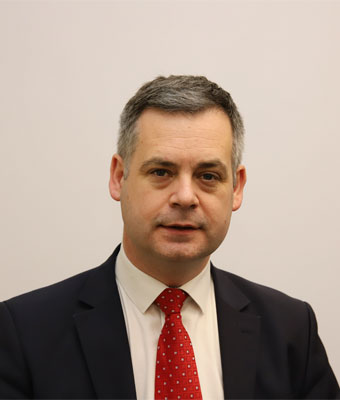
1. Deputy Pearse Doherty asked the Tánaiste and Minister for Finance if there will be any public consultation prior to the launch of the savings and investment account scheme. [48238/26]

4. Deputy Ken O'Flynn asked the Tánaiste and Minister for Finance if he will provide an update on the proposed savings and investment account; the precise details of the scheme, including its design and proposed taxation treatment; and the timeline for publication of those details and for the production of any required legislation. [48371/26]
The Minister’s Department led a forum for stakeholders for representative bodies and policymakers in relation to the savings and investment accounts scheme under design. These voices, no doubt, have a role to play and a place in the discussion. A scheme of this scope, however, would traditionally have had a public consultation process, and that was not the case here. What engagement has there been with the public? What research has been done by the Minister or his Department on public views of how to design a savings and investment accounts scheme?

I propose to take Questions Nos. 1 and 4 together.
I thank Deputy Doherty for his question. An Teachta O'Flynn also has a question. Ireland still does not have a sufficiently diversified savings and investment culture. This is something we largely agree on. Too much of people’s hard-earned savings remains in low-yield deposits, where inflation can erode value over time. Deposit accounts are right for many people and for many needs but they cannot be the only practical option that we have available for many. Investment in capital markets can offer households another path to long-term financial well-being, while also supporting growth and competitiveness in the wider economy.
In recognition of the importance of encouraging retail investment, the last budget provided for a reduction in the rate of taxation on returns from Irish and equivalent investment funds and Irish and certain foreign life assurance policies from 41% to 38%. That budget, however, also included a commitment to publish a roadmap for the taxation of retail investment, and set out an approach to simplify and adapt the tax framework to further support retail investment in Ireland. This arose from a key finding in the funds sector report 2030, which included an extensive public consultation. The starting point for this process, then, was that report. The funds review was then included as established Government policy and set out in the programme for Government.
There has been extensive public outreach on the proposed investment account policy. On 31 March, at the first annual savings and investment forum, I announced that my Department is currently working on the development of an investment account. This forum brought together key stakeholders from across the financial services sector, policymakers and, importantly, consumer representatives, including the Competition and Consumer Protection Commission, CCPC, to support the continued evolution of Ireland’s investment landscape. Together with the Minister of State, Deputy Troy, I recently convened a representative cross-section of the funds and asset management sector. I also convened a consumer round table, which I think was this week, to discuss plans for the introduction of a new investment account.
I and my officials have held over 30 meetings to date in relation to the proposed investment account. These have included meetings with financial services firms, consumer representatives, the European Commission and other member states and jurisdictions which offer such accounts. Officials in my Department are currently developing policy options regarding the investment account framework which will form part of the deliberations for budget 2027. The aim is to legislate for the framework in 2026 and to allow accounts to be offered from 2027.
I say sincerely to Deputy Doherty and all the Deputies in the House that if there are other people who wish to feed into this process and who feel they have not had that opportunity, I ask them to please come forward. We have had extensive engagement. This has already been an elongated process. There was the public consultation as part of the funds review but we are very happy to hear from as many diverse voices as possible. While there has not been a formal public consultation process at this stage, and I take the Deputy’s point, I am very happy to hear any further views that are required for that we could benefit from to feed into the process.
The Tánaiste is right in saying there has not been a public consultation in relation to this issue. The funds review was separate. It looked at the taxation aspect but did not argue for this type of savings and investment scheme.
Sure.
That was not the consultation that was under review at that time. To tell the Minister the God’s honest truth, we know very little because we are still in the dark in relation to what this scheme is going to look like. We are told it is going to be announced on budget day. There has been no consultation with the public. There has been consultation with stakeholders, other groups, with very wealthy asset managers and so on. The Minister has had extensive meetings with asset managers, wealth managers, financial planners, digital platforms, banks and insurance firms but there has been no real engagement with the public. This is concerning, given that this is going to be a major scheme that will impact the public. We know from media reports that, for example, the largest asset management firm in the world, BlackRock, has had extensive meetings with the Department and Ministers. That type of extensive lobbying behind the scenes by some of the largest financial companies in the world raises legitimate questions about whether the public interest is being served. Why has there been no time for a public consultation when discussions have been going on behind closed doors with powerful financial interests for three years now, as we have learned from media reports?
I thank the Tánaiste for his reply to both of us. I appreciate what the Tánaiste is saying. He has had 30 meetings, as he said. There are questions to be answered, however. While I agree with and welcome the entire scheme as it is important to get people, especially younger people saving and into that routine, it does need to be thrashed out by the Oireachtas. I suspect we may need legislation on it.
The questions I want to put to the Tánaiste, and I think these are the questions on everybody’s lips, are: what exact tax rate and threshold will apply to this scheme and will the deemed disposal rule be scrapped? I think the deemed disposal rule is very unfair double taxation. I do not think we have had enough conversation around this aspect. If there has been a conversation around it, it certainly has not been published in respect of the 30 meetings behind closed doors. I am not being facetious in saying that.
We then have to look at the existing investors who have already put their moneys away, and whether tax penalties will apply to them and, if so, what they will be. There is also the question of whether the scheme will be open to investors who have existing accounts to move over to. I ask the Tánaiste to seriously look at what is done in the United Kingdom and how that tax system works very well to get people to open such accounts. I say this because I suspect we may have a problem if we just go with the old system of deemed disposal. It is not going to work and people are going to run away from it.
I reject the assertion that the meetings take place behind closed doors. They are just meetings, the door is closed, but there are lots of people in the room. We have had meetings with the Central Bank, the European Commission, and the CCPC. That was a very public event and people will be well aware of it because it was covered widely in the media.
I do, however, take the point about getting this scheme right. I will make a few points. Obviously, this will definitely require legislation. The intention is to legislate for this in the finance Bill. There will, therefore, be ample time to properly scrutinise this proposal and, indeed, for the Deputy to have an input. I think that is important.
I take the point as well, although I disagree with it, in terms of how much we know about the scheme now. I would argue that we actually know more about this proposal now than we know about most budgetary measures because the budget last year gave a commitment to consult and engage on rates of taxation. Finalising issues in respect of rates of tax and amounts that might be tax free are, as all Deputies will know, matters for a budget day.
By the way, I am happy, at an appropriate point in advance of the budget, to provide a briefing to the Opposition on our thinking on this scheme. We will have different views on this issue but I do hope we can fundamentally agree with the idea that we should be offering a variety of ways for people to save and invest.
As Deputy Doherty said, we have met with lots of banks and digital platforms because they are the people who we require to provide the accounts. I wanted them to be ready to open accounts in 2027.
On the point about broader investment, I agree with Deputy O'Flynn on this point. This is not an either-or situation. I passionately believe that we need personal investment accounts in Ireland like they have in lots of other European countries. This is not my idea. Many other countries have already done this, and my view is that we need to get on board. That will not, however, be enough in and of itself. There are anomalies in the taxation system, and I think deemed disposal is one. Again, all these issues are matters for budget day. Reducing the deemed disposal taxation rate from 41% to 38% misses the broader point, which is whether this measure is fulfilling the policy objective it was intended to fulfil. I am not so sure it is. If there is a need for anti-avoidance measures, is deemed disposal the correct way to go about it? I am not convinced it is, by the way. Do we have a better way, as an Oireachtas, to overhaul this provision?
On the specific example of the UK, I met the Chancellor of the Exchequer on what the UK is doing. I also met Swedish representatives on what that country has done, and representatives from a number of other countries.
We have discussed deemed disposal and how that could be changed, making sure it does not just benefit the ultra-rich and allow for the avoidance of tax on significant assets. There is a real question in relation to the public scrutiny of what is going on. The Minister said we know a lot but, in fairness, we do not. We do not know what the thresholds are going to be. We do not know what the rate is going to be. We do not know if there is going to be tax inside the investment. We do not know if it is going to be for investments in Ireland or investments internationally. There is a lot we do not know and there has been no public consultation. There is no opportunity for the public to actually formally feed in their views in relation to this proposal.
From the very start, we have said this scheme needs to meet two criteria. It needs to work for ordinary people. It cannot be a way for the rich to avoid tax and, effectively, get a tax cut. It also needs to have a public investment aspect. There are also, however, serious risks. The Central Bank warned about the bubble in artificial intelligence, AI, and inflated values in relation to some of the products in that area. Investment is not for everybody. Investment contains risks, so there are serious questions in relation to how this scheme will be designed and implemented, and it needs to have proper public scrutiny. I urge the Minister, therefore, to formally open a public consultation process to allow for ordinary people to give their views in relation to what is under consideration.
I thank the Tánaiste for his reply. I appreciate he is going to open consultation with, and have a briefing for, the Opposition. I think there will be a lot of support across the House for that. I again ask the Tánaiste to look at the UK’s individual savings account, ISA, in respect of which a commitment has been given, in the wake of having met the Chancellor of the Exchequer.
There is a problem with taxation. At the moment, if a person invests €10,000, for example, and that person is being taxed on it every eight years, then the tax on that investment has already been paid. That is a serious anomaly. If I were a private citizen, I would probably be taking a challenge to the High Court regarding this issue because it does seem to be double or even triple taxation. What we are not taking into account is that the value of investments goes up and down. The other thing we are doing that also needs to be addressed is that if someone is a landlord and has a big mortgage, then they are being taxed on the rent they are receiving. Quite often, those landlords do not receive any of that rent because it is being paid directly to the mortgage lender. We need to close off those doors as well because it is unfair taxation.
Very often there are investment plans of 30 years that people have put together because they do not have a pension or a savings fund. I would like a broader conversation about this. I am happy to meet the Minister to give him a couple of ideas. This is not about challenging him; this is about getting the system right and getting people back saving again.
I am happy to be challenged, and I will also be happy to meet because I do want to get this right. I really do because it is important. What we have done is laid out the principles. The details on specific rates of tax and the like would always be a matter for the budget. There is no Minister for Finance who announces tax rates in advance of the budget, as we all know; however, we have already made a number of clear, principled commitments on the design of the account. First, the obligation to ensure the tax is paid would lie with the account provider, not the person who opens the account. That is a game-changer in reducing complexity. Second, there would be an income-free threshold. Third, a person would pay one low flat rate of tax on anything above that threshold. Fourth, on Deputy Doherty's point, because this is not a scheme for the uber-wealthy, there will have to be a maximum amount that can be put into the account, either annually or over the lifetime period. Those are the four principles we have outlined.
The Deputy referred to the Central Bank. We are informed on this by the research of the Central Bank. The Central Bank carried out research called Retail Investor Participation in Ireland: Consumer Research and Analysis. It was published only last December. It examined and engaged with Irish households on how they save, invest and engage with financial markets. It shows that Irish households continue to rely heavily on traditional, low-risk saving habits, with 38% of all financial assets held in cash and bank deposits, a level significantly above the EU average. Direct investment in capital markets is very limited. Irish households hold just 2.3% of their financial assets in listed equities and debt securities. The EU average is 7.5%.
Irish retail investors also have a very distinct profile. They are more likely to be male and to be between the ages of 35 and 54, and are disproportionately drawn from higher-income, higher-educated ABC1 households. Some 73% are in employment and 65% hold higher education qualifications. Investors tend to be concentrated around the greater Dublin area. Therefore, there is not fair access today to investments. Lower-income people, people outside the Dublin area and women are all less likely to invest than men of a certain age living in a certain part of the country. These are some of the challenges and I look forward to grappling with them.
What about public consultation?
We have had very significant public consultation. I reiterate today that if there is any group or body of groups, or set of individuals, with whom the Deputy would like further engagement, he should please let me know. I will provide him with a list of all the people who have been engaged with. I am also very happy to engage with the Opposition.
Central Bank of Ireland

2. Deputy Cian O'Callaghan asked the Tánaiste and Minister for Finance the steps he is taking to ensure that the Central Bank is acting in accordance with international law in relation to its role as the home state for the Israeli bond programme; and if he will make a statement on the matter. [48495/26]
Israel is still issuing war bonds across the EU and using the money to fund the genocide. While the role of approving these bonds has been moved to Luxembourg, Ireland remains the home member state for Israeli bonds. I am asking what steps the Minister is taking to ensure the Central Bank is acting in accordance with international law regarding its role as home member state for the Israeli bonds.
I thank Deputy O'Callaghan. As he will be aware, the Central Bank is the competent authority when it comes to the issuing of prospectus approval. It has informed me that it continues to keep under review its compliance with the applicable international legal and regulatory frameworks in relation to its mandates and engagements. Furthermore, the Central Bank, as the financial regulator, is independent in its functions from the Government, as is necessary in any well-functioning democracy.
The Governor of the Central Bank made the following clear in a reply to a letter from the Oireachtas finance committee on 24 November 2025:
The Central Bank is established by statute to fulfil legal responsibilities and obligations including in relation to the Prospectus Regulation. In carrying out these responsibilities we are at all times required to assess and understand the nature of our legal obligations and responsibilities. We do this on the basis of robust analysis relying on the legal expertise available to us. This takes the form of both internal legal and subject matter expertise and, where necessary and appropriate, of access to external legal advice.
We believe that further action – I believe the Deputy and I agree on this point – is necessary with respect to the EU's relationship with the State of Israel. This is why we are working with others to achieve co-ordinated action at EU level. Ireland will continue to call for and work for concrete EU action in response to the horrific Israeli breaches of human rights and democratic principles. This includes a call for a proposal to prohibit EU trade with Israeli settlements and to suspend the EU-Israel Association Agreement or, at a minimum, to suspend the trade elements of the agreement, as previously proposed by the President of the European Commission. It is expected that the European Commission will bring forward options at the Foreign Affairs Council on 13 July, including on EU trade with Israeli settlements.
The last time Deputy O'Callaghan raised this issue with me here, I think at the last Question Time, I undertook to engage directly with the EU Commission on this matter. I do not believe we disagree on the fundamental issue, but we can agree or disagree on how to resolve it. My very clear view is that this requires EU action in terms of the regulation. I directed my officials to engage with the EU Commission. Department officials subsequently liaised with their counterparts. We drew attention to the work of the Oireachtas, in particular the Oireachtas joint committee's recommendations that the prospectus regulation be amended. This engagement reflected my view that the Commission needs to act on those findings. I also undertook that I would raise the matter directly with the EU Commissioner. I spoke to Commissioner Albuquerque on this issue at the last ECOFIN meeting. I have also written to her as recently as the last couple of days, and I will give the Deputy a copy of that letter.
I welcome any engagement the Minister has with the EU Commission on this but there are actions the Irish Government can take. It was very clear when the Central Bank officials were before the Oireachtas finance committee about a year ago that the bank was saying it would comply if there were any domestic law or instruction on this. Indeed, in the Minister's reply he spoke about the Central Bank following its legal obligations.
The key is that there are no national restrictive measures put in place by the Irish Government when it comes to this, and the Government could be doing that. Article 65.1(b) of the Treaty on the Functioning of the European Union allows restrictions on grounds of public policy or public security. Clearly, there are public policy grounds here. The Irish Government has made its position clear in terms of recognising the State of Palestine, the submissions to the International Court of Justice and calling for EU action.
There is the ability for the Government to act and put legal restrictive measures in place on public policy grounds, and then the Central Bank would follow those. It is welcome that the Minister is engaging with the EU Commission, but who knows if anything concrete will ever actually come out of that? I am asking whether the Minister will take on board the measures called for by the Oireachtas joint committee for the Government to take action on restrictive grounds.
I thank the Deputy. I have been very clear in my view on this. Our clear advice is that even if domestic legislation were passed, it would not allow for the Central Bank to refuse a prospectus where the requirements of the EU prospectus regulation have been met, including the standards of completeness, consistency and comprehensibility. We have to respect EU law and the Central Bank has to abide by it. In my view, EU law needs to change in relation to this. That is why I agree with the Oireachtas joint committee finding. After I directed my officials to engage with the Commission, the Deputy asked me whether I would directly engage. I did. I spoke to the Commissioner in the past week or two. I have written to the Commissioner in the last few days, outlining the very clear view of this Oireachtas that the prospectus regulation needs to be amended.
I intend to continue to pursue this actively. I also hope this could be considered as part of the EU Commission's set of proposals, which it is due to bring to the next Foreign Affairs Council meeting. I will also send the Deputy a copy of the letter and keep him informed of any further engagement. My honest view on the matter is that domestic legislation cannot trump EU law in determining what the Central Bank can and cannot do.
I support any engagement the Minister is having with the EU Commission on this. However, we have independent advice from the Office of Parliamentary Legal Advisers that Ireland could indeed take action to restrict Israeli bonds. It concludes that there is a case for unilateral Irish action on this if it is framed on public policy grounds. I have given the Minister the reasons it could be framed on such grounds, and I have also cited the relevant article of the Treaty on the Functioning of the European Union.
The Minister has options on this beyond EU-level engagement. It would be great if something positive came out of that, but he knows well that it may not because achieving consensus at European level is very difficult. The Government has options to take domestic restrictive measures that would mean the Central Bank would then have a legal basis for taking restrictive measures regarding the Israeli war bonds. Will the Minister take these? It is imperative that the Government act owing to the ongoing killing of Palestinian people in Gaza, and also in the West Bank. Will the Minister do that?
I agree with the Deputy's analysis of the atrocities happening in Palestine and that the actions of the Israeli Government are in breach of international law and despicable. There is a genocide happening in Palestine. The only area we disagree on, or are teasing through, concerns what is legally possible. I will look again at the independent legal advice of the Office of Parliamentary Legal Advisers but I do not want to mislead the Oireachtas. It is the clear view in the advice I have that we cannot do anything domestically to trump the EU regulation. I am certainly not suggesting the Deputy is endeavouring to do this, but we cannot be saying we are standing by international law and then passing legislation here that we know would actually breach our own legal obligations. We cannot progress legislation if it will not work.
I am a bit more optimistic on action being taken at EU level. It has been far too slow. It has been appallingly slow. Ireland has been advocating for action for such a long time on a cross-party basis. There are options that the European Council of Ministers can take that require qualified majority voting instead of consensus, but I agree with the Deputy on consensus being unlikely. There is an onus on the Commission to make proposals for the next Foreign Affairs Council, where there are measures that could be taken by qualified majority and not just consensus.
Fuel Prices
3. Deputy Pearse Doherty asked the Tánaiste and Minister for Finance to outline his approach to excise duty on fuel from the end of July. [48239/26]
I am trying to get to the bottom of what the Minister's intentions are for excise duty. Last week, he passed the Finance Bill in the House, and that Bill will see the price of diesel increased by 32 cent and the price of petrol increased by 27 cent. That is just a number of weeks away, on 1 August.
People are aghast at the idea that in the middle of a cost-of-living crisis prices would rise again. In some cases, prices will go up to €2 per litre, given where they are at the moment.
The Finance Bill is going through the Dáil. It will go through the Seanad and then become law. Can the Tánaiste rule out its taking effect on 1 August or is that still his thinking? People need a bit of clarity.
I welcome the opportunity to try to provide some clarity. For people at home who are watching in, let us be clear what the current Finance Bill is doing. It is giving primary legislative underpinning to the financial resolution; no more, no less. We in this House voted through a financial resolution to reduce the excise duty on diesel, petrol and green diesel. If there is a large gap between a financial resolution and the standard annual budget, you have to bring forward primary legislation to underpin that; no more, no less. The legislation we are bringing forward now is on a status quo basis providing an underpinning to something that this Oireachtas voted on many weeks ago. In that way, it is slightly peculiar that it has to happen, but it has to happen legally.
The total estimated cost of the support measures that the Government has introduced thus far is over €750 million. People know what that meant. It meant reducing petrol, diesel and marked gas oil, MGO, from an excise point of view. It also meant the deferral of the May carbon tax increase on home heating oil fuels and MGO, as well as a reduction in the National Oil Reserves Agency, NORA, levy. We have also had the diesel rebate scheme for licensed road haulage and passenger transport operators, the fuel income support scheme to assist farmers and farm contractors and the road transporter support scheme to help the road transport sector. The fuel allowance was extended by four weeks.
I acknowledge and welcome the current reopening of the Strait of Hormuz. We have seen positive responses on the commodity markets, in that there has been a reduction in oil prices. I accept they are still higher than they were. There does remain, let us be truthful, significant uncertainty over details of the agreement. We have been here previously. Let us hope for a positive situation. I am conscious that the situation is evolving.
Brent crude, the global benchmark for oil prices, as of 23 June stood at approximately $77 per barrel. This is down from a peak of approximately $115 in early May, but still above prices of around $70 per barrel recorded before the war. It is likely that there will continue to be disruption to supply chains and damage to energy infrastructure and it will, therefore, take some time for things to restore to pre-war levels.
We are continuing to monitor the situation closely and reserve the right to adjust our response. We have to get the balance right between solid budgetary management, which gives us an ability to respond in a timely manner, and making sure that people do not see some sort of immediate cliff-edge at the end of July. The Government will make a determination in the coming days.
I am well aware of the legislation, the 1920s Act which requires financial resolutions to be put into primary legislation within four months. The reality is that the Government last week voted against deferring the increase until budget day. As things currently stand in Irish tax law, diesel will go up by 32 cent and petrol will go up by 27 cent in August. The Dáil is only sitting for another three weeks. There are people and businesses, including hauliers, that have to plan. They are wondering about the contracts and commitments into which they are entering. They are thinking that because the cost of diesel is going up, prices must go up. There are contractors, construction workers, who are taking on jobs and do not know what the price will be. Will the Tánaiste rule out a 32-cent increase in the cost of diesel on 1 August? Is that his thinking at this point? Can he give some parameters? We know that things are fluid. We know that fuel prices are set by international energy prices, which themselves are reacting to geopolitical events. What I argued for initially was that there would be parameters there. For example, we could say that we would not want diesel to go above €1.80 or €1.85, or whatever. The law is saying that the cost will go up by 32 cent. That is worrying for people in the middle of this cost-of-living crisis.
Let us not worry people unnecessarily. Let me be clear. There is legislation going through the Oireachtas now that is giving legislative underpinning to the reduction we put in place which is to end on 31 July. That has to happen. It is required legally. That is what it is doing; no more, no less.
There is another piece that it is important we say to people if we are concerned about them being worried, as the Deputy is. I am saying clearly that in the coming days, the Government will make a decision as to what happens post 31 July. It makes sense, and the Deputy can agree or disagree, to give it those coming days because the situation is fast evolving. It is, as the Deputy said, extraordinarily fluid. We need to monitor and make the best decisions. I will say, to be helpful, that I do not believe it is likely that there will be some sort of cliff-edge whereby everything will return to how it was before the packages. We have to think this through and see what is an appropriate and proportionate response beyond 31 July. The Government will make the decision in the coming days. As the Deputy said, this Oireachtas has approximately three weeks left and these decisions will be made in plenty of time to provide that clarity.
First of all, that does not provide the clarity that is needed. This is not as simple as the Tánaiste said, which was that this was putting the resolution into primary legislation.
It is.
It is not.
It is.
The Government voted against delaying this measure until budget day. It voted against not increasing costs on 1 August. That is what happened last week. The Tánaiste was not here, was he?
The Deputy voted against cutting the excise, full stop.
Perhaps the Tánaiste was not here. Let us be clear: that was what the vote was last week. Amendments were put down to defer this measure until budget day for consideration so that these increases would not happen when the Dáil was on holidays. If the Government decides to increase the costs of petrol and diesel, even if it decides that they will only go up by 20 cent, we do not know what is going to happen the week prior to that and the Dáil will not be sitting. The sensible thing to do was to accept what Sinn Féin put forward and not to have prices going up in the middle of the summer when the Dáil is not even sitting. Defer it. I put that amendment down and the Government voted against it. The Labour Party and Social Democrats supported the Government in voting against it and I think that was absolutely wrong. I am now asking the Tánaiste to commit that we will not see price increases in the middle of the summer, not knowing where the geopolitical issue will be, whether the Strait of Hormuz will be open or whether retail prices will be €1.80. €1.60 or €1.50. We will have no idea. Will the Tánaiste give some clarity in that regard?
The Deputy did not call for a vote on that amendment.
There was a vote on the amendment.
On amendment No. 1, there was not.
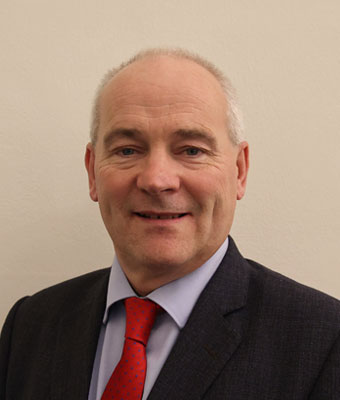
Sorry, Deputies, allow the Tánaiste.
I do not want to interrupt the united Opposition. To be clear, there is only one Deputy currently in the Chamber who voted against the financial resolution to cut the excise duty in the first place. His name is Deputy Pearse Doherty. Let the Dáil record show that Deputies Cian O'Callaghan and Neville, the Cathaoirleach Gníomhach and I all voted to reduce the excise duty but Deputy Doherty decided not to because he wanted to play party politics. He is now deciding that he wants to unilaterally run the Government from the Opposition benches. We are clear that we are going to take decisions. The Deputy has been doing a great job of riling everybody up, worrying them and trying to encourage protest again. He wants to get them all going again. Angry Pearse is not going to work any more. We are going to take a rounded, informed decision based on the evidence available to us as to what the most appropriate thing is. I do not know whether the Deputy is heading off for a long summer break but I am around if there is a need to respond to anything during the summer.
Is the Dáil going to sit?
The Deputy should not worry. The Government has-----
Sorry, is the Dáil sitting on 1 August?
Deputy, allow the Tánaiste.
The Government has an ability to respond. The Deputy knows that.
Perhaps the Tánaiste will clarify. Is the Dáil now going to sit? Is this the Government announcing that the Dáil will be sitting on 1 August to respond?
Deputy Doherty, please.
Is that what the Tánaiste is going to say?
What I am announcing is that the days of the Deputy coming into this House and trying to shout people down and bully them are over. I am speaking and the Deputy stood up and interrupted me. The situation is very clear. Let the people at home who are worried about their bills know that there is plenty of time before this Dáil goes into recess to make informed, evidence-based decisions. This Government acted to help people while the Deputy played party politics to rile people up. It has not worked.
Question No. 4 taken with Question No. 1.
Tax Code
5. Deputy Pearse Doherty asked the Tánaiste and Minister for Finance his views on the most appropriate way to deliver a fair tax package for workers that ensures an equitable distribution of the benefit. [48240/26]
The Tánaiste has made it public that he plans to bring forward tax cuts in this year's budget after leaving workers worse off in last year's budget. That is according not only to Sinn Féin but also to the Economic and Social Research Institute, ESRI. In the election campaign, the Government parties promised to bring forward tax cuts every year and broke that promise to workers and families. The fact that workers were left worse off last year is why it is even more important that any tax package for workers is fair and works for all workers. Does the Tánaiste accept we need a fair tax package? How does he see that being achieved?
I thank the Deputy for the question. The Programme for Government: Securing Ireland's Future contains specific undertakings with regard to personal income tax. It commits to implementing progressive changes in taxation if the economy remains strong, including indexing credits and bands to prevent an increase in the real burden of income tax while, in the event of an economic downturn or unexpected deterioration, there will be postponements to income tax credits or bands, as there were in budget 2021.
To ease the burden facing average and middle-income earners, over successive budgets the previous Government, of which I was a member, substantially increased the entry point to the higher rate of income tax for all earners by €8,700 or approximately 25%. The main credits have also increased by €350, or approximately 21%. In line with the Government policy of ensuring full-time workers on the minimum wage remain outside the charge to the top rates of universal social charge, USC, the ceiling of the 2% USC rate band was increased by €6,898, or 34%, from 2020 to 2025. Budgets 2024 and 2025 also cumulatively reduced the 4.5% rate of USC to 3%.
As the Deputy will be aware, Ireland has a progressive income tax system. It is estimated that in 2026 approximately one third of taxpayer units will be outside the income tax and USC net altogether and, therefore, due to the progressivity of our income tax system, account should be taken of this in any analysis or commentary.
A number of targeted measures were introduced in budget 2026, including mortgage interest tax relief, the rent tax credit and the 9% VAT rate on gas and electricity bills.
I published Ireland’s medium-term plan last December with the Minister, Deputy Chambers. It sets out a binding path for net public spending for the lifetime of this Government.
In the coming weeks, the summer economic statement will be published, which will outline the parameters for budget 2027, including the size of the tax package. Following the summer economic statement, as part of the budget process, my Department will conduct distributional impact assessments to analyse the impact of budget measures on Irish households. We will use the ESRI's tax benefit microsimulation model, simulating welfare, income tax, childcare and health policies, SWITCH, to model proposed tax measures to ensure their fairness. However, it is our intention to have a personal income tax package in the budget. We will outline the size of the tax measures in the summer economic statement. I look forward to debating them on budget day.
When Fine Gael has brought forward tax packages, they have always been two-tier tax packages, which means those on the higher end benefit more than those on the lower end. About half of the workforce benefits far more than the other half. A worker on €50,000 gets a tax cut multiple times larger than a worker on €40,000. I understand the challenges in adjusting tax bands and adjusting for inflation. It is not simple, but there are ways in which it is possible. For example, more focus on the USC and tax credits would make a far better impact for those on lower and middle incomes than simply dealing with the bands. Will the Tánaiste ensure that the half of workers who earn €44,000 or less get a fair tax package compared with people who earn €50,000, €90,000 or €300,000? The packages the Government has brought forward have been unfair in the past, in that the half of the workforce that earns less than that level of €44,000-----
Thank you, Deputy.
-----got far less than they should have.
I appreciate some of the Deputy's comments about the challenges that exist. We live in a country where one third of people pay no income tax or USC. When we talk about progressivity we have to acknowledge that fact. We can argue about whether it is a good or bad thing, but approximately one third do not pay any income tax or USC. That has to be factored into any comments on progressivity.
Second, the entry point to the higher rate of tax is still too low. I think it was €33,000 in 2015. It is now €44,000. It is still below the average. I look to colleagues in the Labour Party, including Deputy Nash. I have heard the comments of the Irish Congress of Trade Unions, ICTU, on this. It might suit Deputy Doherty to say "Oh Fine Gael", but it is ICTU that says the entry point to the higher rate of tax needs to be looked at. IBEC makes that point too. We need to make sure wage growth in the economy, and thank God we are seeing wages rise in the economy, does not get outstripped by the taxman taking all the benefit of it.
The detail of the package is entirely a matter for the Government to consider in the round. The Government has not decided it, but we should not dismiss - I am not sure the Deputy is doing so, in fairness - the threshold point.
I am not dismissing anything. What I am saying is that the Government has consistently brought forward tax packages that are two-tier. For example, the Tánaiste talked about the entry point to the higher rate. If that is focused on instead of USC or tax credits, there will be winners and losers. The winners will be the half of the population who earn more than €44,000 and the losers will be those who earn less than €44,000. What is the better way?
When I talk to constituents who earn €60,000 and would benefit from an increase to the entry point to the higher band, they do not really care whether it is the entry point to the band, or USC or tax credits. All they care about and know is that they are paying too much tax for what they are getting back. They want more money in their pockets at the end of the week, better services and all that. The fairest way to do that is to make sure the Government does not spend a large portion of what is available for tax reductions just on the workers who earn more than €44,000. USC is the best way to make sure there is an impact for all people. We have said clearly in our policy-----
Thank you, Deputy.
-----that the first €45,000 of income should be exempt from USC. That can be started in an emergency budget.
Thank you, Deputy.
It should be followed up in the October budget. These types of measures benefit all workers as opposed to a proposal that will benefit only some.
Another Thursday, another emergency budget. We cannot keep having calls for emergency budgets and mini-budgets every week. Come on. We just cannot. Will the Deputy please read the analysis from the Irish Fiscal Advisory Council and the Central Bank? To look for another budget every week-----
I am not looking for another budget. I am looking for one.
The Deputy is doing it again. The budget will be in around 100 days' time. We need to get into an annual budget cycle. We should have a good, decent, robust debate about what the best composition of that is. I look forward to that very much, but we have to stop with this idea of an emergency budget. We have to run the country in a sustainable way.
We should not look at how we assist people purely through the tax system. When the Deputy talks about lower income people, he leaves out of the analysis the social welfare system we have in place, the significant safety net it provides and the many supports some lower income families receive, including the working family payment and the largest increase received. There are people today, who are not wealthy people, who got up at a ridiculous hour in the morning, sat in horrific commuter traffic and are looking for a bit of a break too. They are annoyed, as are their trade union representatives and employers, at the entry point to the higher rate of tax being too low.
We have not made any decisions in the round on this, but we should not be getting into divide and conquer. There is a legitimate policy debate about the threshold at which the higher rate of tax is paid.
Of course there is a legitimate policy debate. That is what we are having.
The Deputy is dismissing it.
Now you are interrupting me.
Tánaiste.
Apologies.
That is the debate we are having. The reality is that some people win out more than others. That is also the reality. Let us not pretend that does not exist.
What I am saying is the best way to deal with it is through the USC. The people who earn €60,000 or €70,000 would benefit along with the people who earn €30,000 or €40,000, rather than if the Government overly focuses on the bands. I am not saying it should dismiss doing anything with the bands, but every time it has brought forward a package, it has been in that regard. That is why we need a fair budget.
I could stand here and remind the Tánaiste of his campaigning. I campaign for an emergency budget, but not a different budget every day. People need a cost-of-living intervention right now. They cannot wait until 1 January for tax adjustments to happen. That is legitimate. Do not tell me what I can and cannot do. I represent people who are pushed to the pin of their collar because of the Government's decisions and broken promises. Does the Tánaiste want me to remind him of them? One was that the Government would deliver a tax package every year for workers. It broke that promise. Remember the time the Tánaiste and Fine Gael paraded around with placards saying, "We will abolish the USC". Remember the pictures of that. That is another broken promise. I could list all that out, but what this question is about is delivering a fair tax package for workers-----
Thank you, Deputy.
-----to make sure the Government does not deliver the two-tier system it has previously------
Thank you, Deputy.
-----and to impress on the Tánaiste that the USC and tax credits are the best way to deliver a fair package.
The good thing about this country is that we have elections. We had two recently and the Deputy went to Galway extensively - he was there a lot - and told people to send Fine Gael a message, back the Sinn Féin emergency budget and vote for the Sinn Féin candidate and Sinn Féin lost the election, badly. In Dublin Central, the Sinn Féin leader's constituency, it lost the election badly, because people do not believe in this sort of divisive politics, where only Sinn Féin represents hard-working people. Who the hell does Deputy Doherty think the rest of us represent? Who does he think Deputies Nash, Cian O'Callaghan, Ardagh, Neville and I represent? We were all elected to this place and we all represent people to the best of our abilities. The Deputy's angry man routine and dismissiveness of the bona fides of everyone else in this place is getting a bit tiresome at this stage. We are all doing our best.
We will deliver a budget this year that will have a personal income tax package. We took a series of other decisions last year. People will debate the merits and demerits of them. I am happy to debate them too. This year, there will be a personal income tax package. There will also be other ways of assisting people, through the social welfare system, the child poverty work around the working family payment and things like childcare. There are lots of steps we can take together. We have not made any decisions and I do not dismiss the idea of tax credits or USC or thresholds. I just do not accept the idea that the threshold idea is a bad one and I think the Deputy is open to considering that too.
Budget 2027
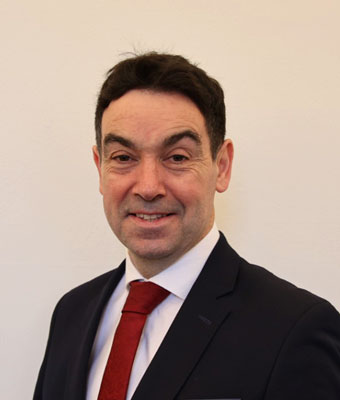
6. Deputy Joe Neville asked the Tánaiste and Minister for Finance if his Department plans to review the current tax bands in the upcoming budget; and if he will make a statement on the matter. [48498/26]
My question also relates to tax measures. I am conscious that one third of people luckily do not pay tax. We have been supportive of the most vulnerable in our society as well. Does the Department plan to review the current tax bands in the upcoming budget?
I thank Deputy Neville for the question. The programme for Government contains commitments on personal income tax. We have been clear that if we saw a significant economic deterioration, we would not be able to proceed with personal income tax measures, but I am pleased to inform the House and the Deputy that we will be in a position this year to deliver a personal income tax package. It is more important, quite frankly, than it has been in a long time. The cost-of-living challenge cannot be dealt with solely through the social welfare system, though it is important.
We have had good engagement with the people who we used to call the social partners and the people we meet through the Labour Employer Economic Forum, LEEF. There is widespread recognition that tax can play a helpful role in trying to assist people. We have made significant progress on income tax bands over the years. I think it was in 2015 that people paid the higher rate of tax at around €33,000. In most budgets over the course of the last Government, the threshold was increased and it is now €44,000. It is still below the OECD average.
That is a slightly crude figure because when you take into account our PRSI system it changes it a bit, but our entry point to the higher rate of tax is still too low. We will decide as a Government the tax package in the round. The next step will be the publication of the summer economic statement next month. That will outline roughly how much we intend to spend on public services and public expenditure and how much of a tax package we intend to do. There will be a real focus on a personal income tax package. The argument about entry points and thresholds is compelling. I am not saying it is the only thing to look at doing but it is compelling. There are a lot of people who feel if they get a promotion, work a few extra hours or get a pay rise - there is wage growth in the economy - the taxman is taking too much of that money back off them, which is not fair.
I thank the Tánaiste very much for his reply. We all know that luckily the country is going really well economically and we are all benefiting. Wages are increasing with that and therefore more people are getting captured at earlier tax levels than they could and should be. That is why I brought up the bands specifically. I am obviously very conscious of the increases in costs for every household. We need to ensure the bands, given the increase in wages, do not function like a stealth tax that means more people get captured before they should, and indeed end up with less money than they began with. I am a chartered accountant who worked on payroll and discussed salaries with many people, so I know the challenges people face. In my capacity I had a meeting with the Central Bank this week and IFAC last week, which brought home to me the requirement for the tax changes we might need to put in place in the coming budget.
I thank Deputy Neville very much. To be helpful, we will see the tax strategy group papers published in the coming weeks and there will be the annual income tax paper from that group, which will set out information on the adjustment of income tax standard bands, including the estimated cost to the Exchequer. These publications are all based on the Revenue ready reckoner and are useful for all of us in this House to determine the different costs of different things. Based on Revenue's post-budget 2026 ready reckoner it was estimated that a €1,000 increase in the standard rate income tax band would cost about €230 million in the first year, so that gives an indication. Revenue will shortly publish its pre-budget 2027 ready reckoner. That, the tax strategy group papers and the summer economic statement will provide us all with an understanding of the space available for a tax package. We will then decide as a Government what the appropriate composition of that personal income tax package is and unveil it on 6 October.
I thank the Tánaiste for his reply. He gave extra detail about a €1,000 increase in the band costing €230 million. It gives us information about, to use a phrase that was used here previously, the fiscal space we have. That space is due to how the country has been well-managed economically by the Tánaiste, this Government and previous governments. I am also conscious of what someone who previously sat in the Tánaiste's seat said about supporting the people who get up early in the morning. That is something we really need to do too and increasing the bands would be of great benefit to those people. There are a lot of people who get up early, have their families and are busy. Obviously, people may be building a future for themselves outside their families. They are the people we really want to have the ability to support in the upcoming budget, through the Government's good governance. I look forward to that and to being in a position where we can do that.
I agree with Deputy Neville. Sometimes, we have debates in this House on taxation measures versus spending measures but it is not an either-or situation. We can help people through the income tax system and we should, for all the reasons the Deputy outlined, and will do that. There are also other issues the public want to see us make progress on with respect to the structural costs they face in their lives, whether it is the cost of the energy bill, childcare, access to disability services or the cost of education. This budget will need to be viewed in the round and the people and the Opposition will view it that way. We should be trying to look at both the tax side and the spending side and seeing together how we can put in place real measures that help. As the Deputy says, they get called different things by different parties in different electoral cycles. Whether it is the squeezed middle or the people who get up early in the morning we are all know who we are trying to help; hard-working people who are doing their best and want to get ahead, not just get by. They need us to use all the levers on the spending side and the tax side to try to make those structural changes to the cost base they face.
Housing Policy

77. Deputy Eoin Ó Broin asked the Minister for Housing, Local Government and Heritage to set out his response to the Oireachtas Joint Committee on Housing, Local Government and Heritage’s report on homelessness published on 18 June 2026. [48577/26]
Last Thursday, the Oireachtas housing committee published an important report on homelessness. At the centre of that report is the call for the introduction of an emergency package of measures to prevent families and single people from becoming homeless, but also to get people out of emergency accommodation more quickly. Now that the Minister has had at least a week to consider the report, will he set out his initial response to its 14 recommendations? Will he let the House know whether it is his intention to bring forward an emergency response to finally get to grips with the ever-deepening homelessness crisis?

Supporting individuals and families experiencing or at risk of experiencing homelessness is an absolute priority for me, my Department and Government. I welcome the committee's focus on this important area. Indeed, many of the recommendations put forward are addressed in our new housing plan, Delivering Homes, Building Communities, and are being progressed by my Department in collaboration with other Departments, local authorities and their service delivery partners.
The report calls for a greater focus on prevention. There are many prevention initiatives already under way in the Department and across government, including the provision of social and affordable housing, HAP and homeless HAP, and our strong tenancy protection legislation. I recognise that more needs to be done and a co-ordinated approach is required right across government. That is why a cross-departmental working group was established to drive the development of a prevention framework. The first draft of the framework is being considered by working group members and the framework will be in place this year.
The report also recognises the importance of a continued focus on measures to address youth homelessness and calls for the development of a child and family homelessness strategy. Again, work is well under way in these two important areas as committed to in the housing plan. I am establishing a standing sub-group of the national homeless action committee to ensure a continued focus on youth homelessness and my Department, in partnership with Department of the Taoiseach, will shortly publish a cross-departmental child and family homelessness action plan.
Many other actions are under way that speak to the recommendations in the report, including the development of the of the housing delivery action plans, a review of the housing assistance payment and the continued funding of the second-hand acquisition scheme, including tenant in situ acquisitions.
Ultimately, increased supply is key to addressing homelessness, meeting need and addressing the challenges in the housing market. The new housing plan aims to deliver 300,000 new homes in the period to 2030, including 72,000 social homes and 90,000 starter homes. This means 12,000 new social homes will be delivered on average each year to the end of 2030.
It is simply not the case that the Minister’s Department is already undertaking the key actions recommended in this report. If that were the case, we would not have wasted our time producing the report. Month on month, the number of adults, children, single people and pensioners falling into emergency accommodation is growing. That means the core recommendation of the report that we now need an emergency response seems to be ignored by the Government. There is an explicit call to fully reinstate the funding for social housing acquisitions, including for housing first and tenant in situ, and to remove the restrictions, something the Minister has set his face against, which is why the number of such acquisitions halved last year on the year before, resulting in many more people becoming homeless.
Crucially, the volume of social homes that is being delivered is not meeting the need. In fact, on the basis of the most recent summary of social housing needs assessments, it will take 55 years to clear current and emerging social housing need. People are waiting ten and sometimes 14 years plus. I would really encourage the Minister to put in place a plan because if he is to have any hope of ending long-term homelessness by 2030 there needs to be a plan with clear targets. That is not in place at the moment and that is why our committee has recommended the 14 points in last week’s homelessness report.
We take the report very seriously and are giving it very serious consideration. Many of the recommendations in it are already in place or are being put in place. We are treating this as an emergency. I have already outlined many of the measures we are taking to make sure we address the situation where we have a very high level of homelessness. One person in homelessness is one too many. We have a very high number in emergency accommodation - I acknowledge that. That is why we need to do even more. I am treating it as an emergency. We are putting in emergency measures to tackle homelessness. Ultimately, we have to drive supply; that is how we will address all the key issues for people who are finding themselves in emergency accommodation and State-supported living as a result of not being able to have somewhere to live. In terms of homelessness, we cannot deal with everybody as a single group. There are those who need more targeted measures. Those suffering from trauma, mental health or addiction issues need very particular supports and we are putting those in place as well.
The report called for the Minister to extend the youth homelessness strategy out to 2030. My understanding is that despite the fact the strategy expired last year, there is no intention to extend it. Yes, the Minister is working on the child homelessness strategy but there is no sight of it. Will it be out this year? Is there a clear timeline? Can the Minister confirm that?
On the housing action delivery plans, it is still not clear whether that will specify not just the number of one, two and three beds but also, for example, very clear targets for every local authority for people with physical and intellectual disabilities as well as right-sizing requirements. More crucially, those plans will not be based on objective need because they will ignore about half of the gross social housing need in the functional areas of the local authorities. There is no talk from the Department about better co-ordinating and ensuring the Minister’s counterparts in the Department of Health and the HSE provide the wraparound supports to sustain tenancies beyond where they currently are. Yes, the Minister or the Housing Agency is reviewing HAP limits but we have no idea where that is at. Of course, two key recommendations, namely, the need for at least consideration of the re-introduction of emergency ban on no-fault evictions and a referendum on the right to housing, are not on the Minister’s agenda. Again I ask when will he introduce an emergency response, above and beyond what he is doing, to start seeing the homeless numbers fall?
We are dealing with it as an emergency response. Last year, we saw a 20% increase in housing delivery overall and the highest number of social houses built in a single year in the history of the State. We are putting in record funding to address the housing crisis. Many of the measures highlighted in the report are already in the process of being implemented.
I would remind the Deputy that, in his own housing plan, he proposes winding down the tenant in situ scheme – something he conveniently forgets every time he raises that scheme.
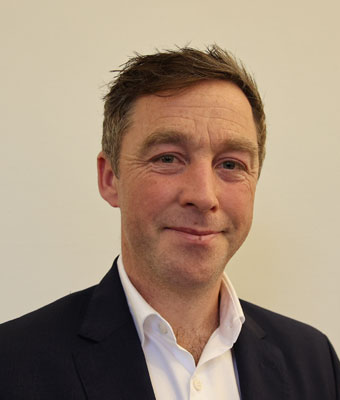
78. Deputy Rory Hearne asked the Minister for Housing, Local Government and Heritage if he will consider a ban on no-fault eviction in light of consecutive months of record-breaking numbers of people and children in emergency accommodation; and if he will make a statement on the matter. [48048/26]
We are in a wave of evictions the likes of which the country has not seen since the Famine. There is such human misery going on. I am contacted daily by people facing eviction. These are elderly people, young people and families. It is absolutely scandalous. It is the highest rate of evictions. Since Deputy Browne became Minister, 27,000 households have been issued an eviction notice. Last week, the Tánaiste came in here and said the majority of tenants are covered by a no-fault eviction ban. Will the Minister correct the record and say the truth? The majority of tenants are not covered by a no-fault eviction ban. We need an emergency no-fault eviction ban to prevent this wave of human misery.
The Deputy is very fond of referring to the Famine. The Famine was a genocide in this country. A million people died and a million people had to leave the country yet the Deputy makes a political football out of it and uses it to come in here to engage in cheap political point scoring. It is very hard to take him seriously when that is the level to which he descends in order to make a political point instead of making a coherent, informed policy point or argument.
We are putting in record funding to address the housing crisis in this country. That includes the homeless crisis and high rents. We have brought in some of the strongest, if not the strongest, tenancy measures to protect tenants in the history of the State and the Deputy voted against them. That is a fact. Tenants entering new tenancies will have the strongest tenancy rights in the history of this State. The majority of tenants will have a no-fault eviction ban.
They will. They do not currently.
There will be much stronger tenant protections as well. For those who are in tenancies at the moment, both tenant and landlord entered into an agreement under what was the law at the time. They understood the law on both sides and they entered into a contract on that basis. That is the reason we are not making those changes.
The Deputy tries to have it both ways when he comes in here. He criticises the changes that were made and then he criticises that they not being applied to the past. As I said, we have brought in the strongest tenancy protection measures in the history of the State. They do apply to new tenancies. While notices to quit did peak, we saw a drop in March and I have no doubt that the drop will continue significantly.
The Minister talks about me making a political football. It is an absolute disgrace. The reason I am pointing out that we have seen the highest rates of eviction since the Famine is because the Minister and this Government are completely out of touch with the human catastrophe going on right now. I do not believe that he does not see it in his own constituency. We know there was a case of evictions. I want to raise one particular case. May Kelly and her husband Michael were in touch with me. Michael is a double amputee - he had both legs amputated recently – and is a wheelchair user. He is facing eviction. They are an elderly couple who have been in their home for 20 years. They are appealing the decision from Wicklow County Council which is saying there is nothing it can do for them. They had an income assessment in 2025 which said they were over the threshold for social housing. He is now retired. They are in absolute terror. Their notice to quit says they have to be out of their home by 10 December. Will the Minister look into this specific case and implement a ban immediately to ensure that no elderly couples are being evicted from their homes when they are in situations like this?
I am not going to speak to an individual case but I am happy to look into the details of the case if the Deputy wants to provide me with them.
We had an eviction ban in this country before and supply just dropped off a cliff. An eviction ban sounds very favourable to those who are currently renting but it creates a cliff edge. What is the Deputy going to do in two or three years’ time when he brings an end to his eviction ban? Supply will only go down in the meantime, as we have seen that in the past. Who will invest in delivering houses in this country when they know there are eviction bans in place? Nobody. The evidence is there that it is not going to happen.
As Minister for housing, I have to look at everything in terms of how I maximise supply. When I am looking at delivering housing it is to help those people who are renting but also to ensure that we have the supply for those people who are living at home who need somewhere to rent so that they can get out of their homes and have somewhere.
We have a shortage of homes in this country. That is what is driving the housing crisis, the homelessness crisis and the high rents in this country. When we get higher supply, those issues will be addressed but you cannot address them without it. That is certain.
Is it an emergency or is it not an emergency? It is not actually true that it is just about supply. These people are in homes. If the Minister put in place a ban on evictions, they could be kept in their homes until supply reaches the point where, if they are evicted, they will not be evicted into homelessness. Where are they going to be able to afford to rent? These are elderly people and other people in my constituency. Mothers with two children are contacting me in terror of being evicted and of not knowing where they are going to go. Couple after couple and family after family are in touch with me and I know they are in touch with politicians across this country. I cannot get my head around not just the Minister but the Taoiseach and the Tánaiste referring to people as "churn", and saying churn goes on. People are just evicted, and they will find somewhere else. These are real human lives. People are suffering and are being traumatised and, yes, it is about prioritising these people right now over corporate landlords who are saying they do not want an eviction ban. This is a human catastrophe, and the Minister is ignoring it at massive human cost.
Nobody is ignoring it. We are putting record funding into solving the housing crisis. Almost one third of all the capital being spent by the State is going to be spent on solving the housing crisis. It is reflected in the decisions we are making. We are treating this as an emergency and putting those measures in place. Instead of constantly coming in here using emotive language and pretending he has a monopoly on compassion, the Deputy should focus on policy solutions. It would serve everybody better to solve the housing crisis.
His policies are not serving these people.
Housing Provision
79. Deputy Eoin Ó Broin asked the Minister for Housing, Local Government and Heritage for an update on his review of the income eligibility thresholds for social housing support. [48578/26]
As the Minister knows, a growing number of working people, as a result of very modest increases in their wages, are being removed from local authority social housing waiting lists when their means assessment comes under review. I know the Minister is looking at this matter and his party colleagues and backbenchers from Fianna Fáil and Fine Gael are raising it with him regularly. Will he give us an update on the review of social housing income limits and some indication as to whether it is his intention to act on it this year?
I thank the Deputy for this question about income eligibility thresholds for social housing support. Applications for social housing support are assessed by the relevant local authority in accordance with the eligibility and needs criteria set down in section 20 of the Housing (Miscellaneous Provisions) Act 2009 and the associated Social Housing Assessment Regulations 2011, as amended. The 2011 regulations prescribe maximum net income limits for each local authority in different bands according to the area concerned, with income being defined and assessed according to a standard household means policy. The baseline income thresholds are €40,000, €35,000 and €30,000 for bands 1, 2 and 3, respectively. These thresholds are net income, which is gross household income less income tax, PRSI, universal social charge and additional superannuation contribution. Income is defined and assessed according to a standard household means policy, HMP. The policy provides for a range of income disregards and local authorities have discretion to disregard income that is once-off, temporary or short-term in nature, and which is outside the regular pattern of a person's annual income. The income bands are expressed in terms of a maximum net income threshold for a single-person household, with an allowance of 5% for each additional adult household member, subject to a maximum allowance under this category of 10%, and separately a 2.5% allowance for each child.
My Department has been examining the existing income limits in the context of current market and household income conditions, including the suitability or otherwise of the current framework, having regard to the significantly changed landscape since the standardised income limits were introduced. This includes examining the findings of research commissioned by my Department and this work is ongoing. I envisage that the analysis will be concluded shortly to facilitate a final determination on next steps. I am also keen to put in place a more structured and frequent process for the review of these limits going forward.
There really is an urgency to progress and conclude the work of the Department. I strongly recommend in the first instance that there is an immediate increase in the income eligibility thresholds. I am strongly of the view, and I know the Minister is considering this, that beyond an immediate increase there needs to be a more rational system of linking those thresholds to an index, whether that is net household income or some other independent index, so the thresholds track that in real time. There is a need to look at the disregards, and whether carers' allowance, disability allowance and certain other payments should continue to be assessed is a matter of some concern. There is also the issue of secondary earners. We increasingly have a case where adults are being forced to live at home because of the housing crisis. That is having significant impacts on eligibility. I also urge the Minister to look again at the three month look-back income assessment. It is far too rigid. When there are significant changes in circumstance you are not seeing those being taken account. Significant one-off payments can be but not changes of income circumstance or of employment and that is creating real difficulties.
I agree with the Deputy. The situation for a long time has been that as social welfare or other family support payments increase, average household incomes increase, and the Department of housing rightly faces calls to increase the limits. We go through this process and there is the opposite of a cliff edge where the numbers all go up. I want to not only increase the limits but bring an end to that kind of process, so people and local authorities have a better understanding of where we are going rather than the process there to date, which is not satisfactory for anybody. My intention is to have this in the near future. I am finalising the proposals for it in order that we can get the limits increased and put a procedure in place, so it is not this constant position where we are depending on the Minister and the ability of the Department and of the workload to see whether or not increases will happen. It is not an appropriate way to deal with it.
I again stress the urgency of this. The longer this takes the more families will lose their position on the list. I am dealing with a family in my constituency. Both are working and have had a modest increase in their income. They are currently homeless and in emergency accommodation through no fault of their own. They were recently given an offer of council accommodation but in the income reassessment, they were marginally above the threshold. We have had it reviewed, and the local authority has acted completely in compliance with the eligibility threshold. Those people are not only going to lose their more than ten years on the list but they now have no exit out of emergency accommodation because they simply cannot afford private rents from their own income. I am sure when the Minister talks to his own backbenchers he will hear that these real live cases are happening everywhere.
There are three other issues I would ask the Minister to consider. The first is to completely get rid of band 3. There is simply no reason to have a third band. It is an out of date concept. There is an argument in the larger urban areas and their commuter belts to have a higher rate than a second band but I do not believe a third band is needed. I also urge the Minister to publish the research as soon as he can and, if possible, to engage with our committee, to not delay anything and to get the experience of committee members on the ground before he makes his final decision. Crucially, that decision needs to be made as soon as possible.
I think we are very much in agreement on the general direction of where we need to go in relation to social housing threshold limits. The way I look at this is that there is a spectrum. Everybody needs to be able to get a home in their local community based on their needs. Whether that is purely private or with supports, affordable purchase, cost rental or social housing, it is about ensuring on that spectrum that people have not only an entitlement but availability so they can benefit and get a home in their local community. That will be to the front of my mind in the coming weeks, and I look forward to hearing the views of the Oireachtas committee when we publish these changes.
Derelict Sites

80. Deputy Conor Sheehan asked the Minister for Housing, Local Government and Heritage the steps he will take to tackle dereliction in advance of the introduction of the new derelict property tax; his plans to mandate local authorities to collect the millions in outstanding derelict sites levies; when the Government will introduce its new Compulsory Purchase Order Bill 2025 with streamlined and strengthened CPO powers; if he will consider introducing compulsory sale orders to bring vacant and neglected homes back into the housing supply; and if he will make a statement on the matter. [48496/26]
I ask the Minister about the steps he and his Department will take to tackle dereliction in advance of the new derelict property tax and how he is going to mandate local authorities to collect the millions in outstanding derelict site levies in advance of that, and when the Government will introduce the new compulsory purchase order Bill. Will he examine the concept of compulsory sale orders to bring vacant and neglected homes back into use?
I thank the Deputy for the question. The Government's housing plan, Delivering Homes, Building Communities, aims to ensure that the activities and resources used to address vacancy and dereliction are co-ordinated and effective, and that legislative powers are used proactively to tackle dereliction and vacancy. The derelict property tax announced in budget 2026 is intended to introduce legislation providing for the tax in the Finance Act 2026. When it comes into effect, the tax will replace the derelict sites levy and will be collected by the Revenue Commissioners. Derelict site levies that remain outstanding when the new tax is introduced will remain as charges on the property and will be the responsibility of each local authority to collect.
In the context of the measures we have introduced to tackle the scourge of vacancy and dereliction, the vacant property refurbishment grant provides up to €70,000 for the refurbishment of vacant and derelict properties for occupation as a principal private residence or for rental. The vacant property refurbishment grant has been expanded as of 1 April this year to include a new “above the shop” grant introduced to support property owners to bring these vacant upper floors over commercial units into use as homes. This provides unprecedented support of up to €135,000.
The CPO activation programme requires a proactive and systematic approach by local authorities to identifying vacant and derelict properties and engaging with owners to bring these properties back into use. This includes using their compulsory purchase powers under the Derelict Sites Act 1990 and the Housing Act 1966 when engagement with the owners of these properties is not successful. All 31 local authorities have full-time vacant homes officers and there is a range of schemes in place. The concept of a compulsory sale order has been examined by my Department and the Housing Agency. I will elaborate further in my follow-up response.
I thank the Minister of State for his response. There is €20.5 million in levies outstanding for derelict sites. I want to press the Government on what new measures there are and what it is going to do to make sure that local authorities collect that money, notwithstanding the new derelict property tax. I will also ask about the compulsory purchase order Bill. The Law Reform Commission gave very clear recommendations in 2023. When are we going to see that Bill?
Will the Minister of State confirm on the record that the derelict property tax will not be littered with exemptions? We have had cases before where measures like the derelict property tax were introduced, but they sound a lot better than they actually are because when they are finally introduced, they are littered with exemptions for this, that and the other.
As the Deputy knows, all local authorities in the country are independently operated. It is their responsibility, and their responsibility alone, to ensure they collect outstanding levies, particularly the derelict sites levies. They are charges on properties, so it often takes time for a property to be disposed of and for the levy to come in. However, it is absolutely their responsibility. We are committed to ensuring that we have the derelict property tax, which will be collected by Revenue, in place as early as possible.
Regarding the compulsory sale order, which the Deputy referenced in his initial contribution, the Department, in conjunction with the Housing Agency, has examined this matter in other jurisdictions. On the basis of that evaluation, it is not intended to progress that measure. The focus will remain on the derelict property tax and the use of CPO powers as the stick for individuals and property owners who have not availed of the many measures put in place by the Government.
The reason I raised the issue of compulsory sale orders is that this is something the Scottish Government had in a 2018 land reform report, although it has not been implemented yet. I am raising it not so much with the idea that the compulsory sale order would be punitive, but for it to be another framework by which engagement can be sought with the owners of problematic sites.
I have two follow-up questions. What is the rationale for the derelict property tax to be applied to towns with a population of over 4,000, given that we have significant issues with rural dereliction? When will we see the compulsory purchase order Bill?
I am glad the Deputy mentioned Scotland because it is referenced in the report that has been done. As the Deputy knows, it has not been introduced in that jurisdiction. It is very difficult to get data on the effectiveness of this, although it has been examined.
Where local authorities are using the Derelict Sites Act to put derelict properties on the register, they have been successful in using their CPO powers. Other local authorities that have not been proactive in this space or have not put notices on properties seem to use the excuse, in my view, that there is an issue with CPO in this country. If that were the case, Limerick would not be able to CPO the number of properties that it has, nor my local authority or some of the other good, notable examples around the country. Where it is working, it is working well. Where it is not working, I do not think it is as a result of deficiencies, but as a result of a lack of focus and co-ordinated effort by some local authorities in this space.
Water Services

81. Deputy Brian Stanley asked the Minister for Housing, Local Government and Heritage if his Department will provide sufficient funding to Uisce Éireann to upgrade the wastewater systems in towns and villages within the wider Dublin commuter belt, which now includes Laois, where lands have been rezoned; and if he will make a statement on the matter. [48497/26]
There is a request, which I have no problem with, that local authorities in the wider Dublin catchment area zone land for a large increase in the population and the number of dwellings. That needs infrastructure. However, given the tight budgets that local authorities operate with, will funding be provided, particularly through Irish Water, for the infrastructure required for wastewater and water supply?
I appreciate the Deputy’s question on water supply, wastewater systems and Uisce Éireann. Both our water and wastewater systems require substantial and sustained investment over a number of investment cycles to bring them up to the standard and quality required of a modern service to provide people with the necessary supports, ensure growth and build resilience in the face of climate change.
My Department is delivering a sustainable funding path to further enhance the ongoing significant improvements in our public water and wastewater services. Since its inception, Uisce Éireann has ramped up capital delivery capability for water services and infrastructure from a mere €300 million in 2014 to €1.4 billion as part of budget 2026. Under the national development plan, the Government is supporting Uisce Éireann with a record allocation of €11.7 billion in funding out to 2030. This funding will support the delivery of the wide range of projects in our cities, towns and regions required for housing delivery, safeguarding public health and the environment and, crucially, providing the capacity required to address the housing crisis in this country. This investment will deliver significant improvements in our public water and wastewater services and support improved water supplies right across Ireland, as well as a range of programmes delivering improved water quality in our rivers, lakes and marine areas, thereby making a significant contribution to addressing Ireland's needs.
Uisce Éireann has statutory responsibility for all aspects of water services planning, delivery and operation at national, regional and local levels. Therefore, the scope prioritisation and progression of individual projects are matters for Uisce Éireann, and are approved through its own internal governance structures. As Minister, I have no function in such matters. Uisce Éireann has established a dedicated team to deal with representations and queries from public representatives.
Where does the responsibility lie? It needs to be clearer. There was a policy decision by the Department to zone these extra lands. In the case of Laois, as the Minister knows, substantial extra lands have been zoned in the last two weeks for an increase of over 8,000 houses, which will bring an increase of approximately 25% in the population in four or five years.
They cannot all be in Portlaoise. I understand, and I support it to solve the housing crisis, that we need to strengthen villages and smaller towns to provide an option for people to live in a village structure where they are close to pubs, shops, community centres and schools. This means upgrading the water system. Uisce Éireann earmarked four villages in Laois for its small villages and towns scheme. One has been done in Ballyroan and I welcome this but those in Borris-in-Ossory, Ballinakill and Ballybrittas have not. They were all earmarked by Uisce Éireann. Somebody needs to intervene to tell Uisce Éireann that these need to be upgraded. In the case of Borris-in-Ossory, 160 extra houses are planned for extra land. There are 56 planned for Ballinakill and 437 for Graiguecullen. These cannot be provided without the infrastructure.
Deputy Stanley makes an important point. We are asking local authorities to rezone a significant amount of land to deliver additional housing. I encourage local authorities to complete this process. I am not happy with the time that many local authorities are taking in what is a housing crisis. I do not believe many local authorities have been treating it as such with the delays in delivering additional zoned land, which is essential to deliver homes and solve the housing crisis in this country so the houses can get built.
In relation to villages, we have introduced developer-led infrastructure to allow developers to be able to provide wastewater facilities in our villages, which is absolutely crucial. Deputy Stanley rightly points out using over the shop units. Using existing services and regeneration in our towns are also crucial.
With regard to Borris-in-Ossory, as Deputy Stanley is aware, Uisce Éireann commenced works to upgrade the Borris-in-Ossory wastewater treatment plant to support future growth and development, with works beginning in March 2026. This is a €4.1 million investment that will benefit homes. The works are expected to be completed in autumn 2027.
I appreciate what the Minister has said about the ones being provided by developers. The Tánaiste in reply to me said a lot will be provided by developers. It is okay if this can be done but the Minister and I know that Uisce Éireann is reluctant to take in charge infrastructure provided by developers. I can show the Minister an example in Laois which has been held up because of this. There has been a lot of back-and-forth with Uisce Éireann, local authorities and the Department on this. As far as I am aware, according to the most recent information I have, that nut has not been cracked yet.
The cases of Graiguecullen, Borris-in-Ossory, where I welcome the progress, and Ballinakill are all in the red. They have been labelled as red by Uisce Éireann in terms of wastewater; in other words, no development can take place. The lands and the extra houses in each of these areas that I mentioned are in addition to what is already under construction or what is already zoned. We need to strengthen our villages and towns. We cannot put everybody in Portlaoise. The Minister and Minister of State who visited Laois know what is happening with private, public and local authority housebuilding. They saw the figures for zoning in the plan two weeks ago. Laois is not behind the curve but we need input from the Government and Uisce Éireann.
In terms of developer-led infrastructure, in any new process it will always be about who is going to be the first mover. When the first couple are delivered, others will see the pathway and move an awful lot more quickly. What we have said to Uisce Éireann, and it is doing this, is to work with local authorities and developers to try to get those first movers across the line as quickly as possible. This will then give confidence to other developers to follow suit. To be clear, these are not pilots - they are first movers. Any developer can move forward to provide these in local villages at the moment. That is happening with Uisce Éireann engaging with local authorities and developers. I am confident a number of these will come through. They have the support of the EPA. Deputy Stanley is right there is a reluctance in Uisce Éireann to take over legacy wastewater projects around the country, often because of the cost involved or legacy issues. These developer-led infrastructure projects have been worked out very carefully with the EPA and Uisce Éireann, which is why I believe there will be success and hand-holding at present to get the first few across the line.
Childcare Services

82. Deputy Emer Currie asked the Minister for Housing, Local Government and Heritage for an update on the review of the 2001 planning guidelines for local authorities on early learning and childcare settings in order to increase childcare supply; and if he will make a statement on the matter. [48705/26]

I would like an update on the review of the 2001 planning guidelines for local authorities on early learning and childcare settings. It is 25 years since they were set out and a lot has changed in our society, in our childcare needs and in best practice for childcare. Will the Minister of State provide an update on the review of these guidelines?
I thank Deputy O'Connell and I also thank Deputy Currie for her work on this. The programme for Government sets out a number of priorities for Government on access to early learning and childcare services, including a commitment to review the 2001 childcare facilities guidelines for planning authorities to ensure childcare spaces are provided and put to use.
Further to the commencement of Part 3 of the Planning and Development Act 2024 in October 2025, provisions for national planning statements have been introduced to replace the provisions for ministerial guidelines issued under section 28 of the Planning and Development Act 2000. The timing of the issuing of national planning statements is based on Government priorities.
The current childcare facilities guidelines for planning authorities, which remain in place until revoked or replaced by a new national planning statement, set out the methodology for calculating an adequate provision of childcare places and ensure consistency in the approach to the consideration of land use planning and development management aspects of childcare provision. These guidelines set out a guideline standard of one childcare facility providing for a minimum 20 childcare places per approximately 75 dwellings, as appropriate to the particular circumstances of each development. Consideration of childcare facilities provision should be raised as early as possible in preplanning discussions for larger housing developments.
National policy objective 41 of the revised national planning framework 2025 also supports the strategic planning and alignment of planned population and employment growth with educational investment, and prioritises the timely delivery of childcare facilities and schools on well-located sites, within or close to existing built-up areas, to support the development of sustainable communities. I know this is an area of utmost importance and we are working with other Departments on a review of it.
As the Minister of State may be aware, and no doubt he is, the cost and availability of childcare are two of the biggest issues in our society. It is certainly an issue in Deputy Currie's constituency and it is very much an issue in my constituency of Dublin Rathdown as well. We have lost 64 providers out of core funding and, in Dundrum, the wonderful provider Once Upon A Time has also withdrawn from core funding. This is causing increased pressure on the system and highlights the challenges in the system. These guidelines date back over 25 years. We need to update them and bring them in line with the needs and demands of our local communities. Children have grown, gone to college, graduated and are having children of their own but the same guidelines are still in place. They are no longer fit for purpose and we urgently need them revised.
I accept the points made by Deputy O'Connell. It is not just a matter of affordability but also of availability. As a new father who has started sending a child to crèche in recent weeks I certainly know this. I acknowledge that the guidelines that have been in place since 2001 were a legacy of that time, when provision was attached to development. It is a cost on development. We do need to move, as I outlined, under national policy objective 41 to where it is more planned. This would be in line with what we do for educational facilities whereby where we have an existing community in a built-up area or a new community that will be developing, we would plan at development plan stage for adequate provision in terms of site-specific locations for childcare facilities of scale and not smaller piecemeal facilities that are often unviable for providers to take on board.
I am glad to hear about the nature of the viability of facilities because, unfortunately, one of the issues that is occurring is that as developments are put in place they provide facilities for childcare but it is often an empty shell. It is not necessarily fit for purpose for that particular community. We also have the issue, particularly in already dense urban areas where apartment developments are going in, of increasing the level of the local population when we do not have the childcare spaces to meet the demand of the existing population.
In growing urban areas, in particular, having 20 childcare places per 75 homes is something we need to look at urgently. We certainly need to look at it in the short term and, in the long term, we need to build some type of flexibility into the system, an adaptation over time, if perhaps we do not need as many spaces in future. For now, we do need to be moving to a more realistic ratio of childcare places to homes as we increasingly urbanise.
The Department of Children, Disability and Equality has established a working group in this area. It is chaired by that Department, in conjunction with our Department and the Department of education. We are reviewing the situation, and all the various points made by Deputy O’Connell and Deputy Currie to me over a considerable period of time will be factored into this review. We are also reviewing development contribution schemes. This may have a role in how we address additional development in established areas. It may be more appropriate where a childcare facility is already operating, expansion is required and there is room for such expansion, that the more viable option may be to have such contributions supporting expansion of existing facilities rather than building smaller, unviable and piecemeal facilities. All these factors will be considered in the round. I thank the Deputy for her interest.