Tourism Policy
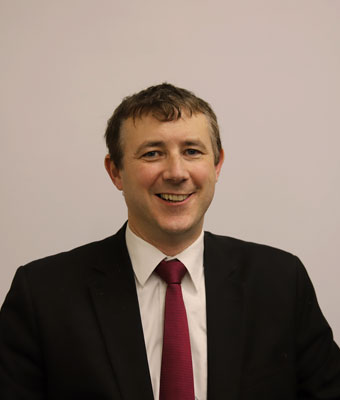
7. Deputy Aindrias Moynihan asked the Minister for Enterprise, Tourism and Employment for the up-to-date position on the development of a tourism plan for the Muscraí district to include the Gearagh, County Cork; and if he will make a statement on the matter. [50804/25]
I must tell the Minister about this magnificent place, the Gearagh, which is right beside Macroom. It formed after the last Ice Age. It is the remains of a post-glacial alluvial rainforest. It is a magnificent place. Migrating birds have nested there for many generation as they travel north to south and back again. People, whether local or international, may not know it well. We want to bring this wonderfully magnificent place to the attention of more people in order that they can share and enjoy it. Can the Minister provide an outline of what efforts are being made to promote the Gearagh?
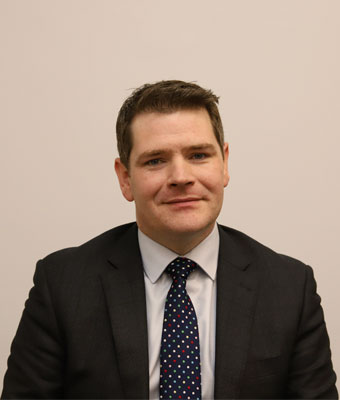
First, I should say that we will have a new tourism plan, hopefully in the next month, following consultation right across Government. That should be a good response to where we need to be for future-proofing the sector.
I should clarify that the promotion and operation of regional tourism is a matter for the local authorities, Fáilte Ireland and other tourism stakeholders. Cork is represented by three regional tourism brands, namely Wild Atlantic Way, Ireland's Ancient East and Ireland's Hidden Heartlands.
Fáilte Ireland's regional tourism development strategies for the period 2023 to 2027 provide a roadmap for the tourism industry and all stakeholders involved in tourism. The development strategies set out a strategic approach to unlocking the commercial potential in each region. They ensure focus on tourism development is sustainable and regenerative and that the benefits accrue to local communities and to nature. To activate these strategies, Fáilte Ireland has established localised five-year destination experience development plans, DEDPs. These local development plans are highly collaborative in nature, involving local stakeholders, and are reflected in agreed action plans where ownership is assigned among the various parties.
The west Cork and Kenmare DEDP, which encompasses Muscraí, was launched in quarter 4 of 2023 to efficiently manage the delivery of actions within the DEDP. Three thematic subgroups were established based on the prevalence of actions emerging in this plan, namely artisan food, outdoor activities and marketing. In 2025, Fáilte Ireland has worked to create six new thematic itineraries for the destination which focus on, food experiences - including high-end food, both coastal and inland - outdoor activities and eco car-free travel itineraries. In addition, the Muscraí tourism action plan is incorporated into the work of the destination experience development plan implementation group.
I acknowledge the huge work that has been done in developing the west Cork and Kenmare development plan. As part of that, there is work also with Údarás na Gaeltachta on developing the Muscraí plan. Muscraí is very much focused on the Gaeltacht area. There is an amazing offering between food, culture, language, the landscape and so much more. The Gearagh is right on the edge of this; it is not the central focus of that plan. It is an amazing nugget on a corridor between the large population centre in Cork, the airport and right out to the Wild Atlantic Way. It is almost slipping between two stools. Can some effort can be made to bring the Gearagh to the fore and to get greater awareness of it?
I thank Deputy Moynihan for his question. Absolutely, I am open to working with the Deputy on that. Maybe we could set up a meeting with Fáilte Ireland to see what is specifically being done for the Gearagh to ensure that the message about its natural beauty is being advertised. Údarás na Gaeltachta and Fáilte Ireland met recently to form a strategic partnership. They have signed a memorandum of understanding detailing their commitment to the area, particularly on the Gaeltacht side. In the context of the Deputy's specific question, I would be happy to set up a meeting to try to see how we can unlock the potential that exists.
One of the key issues in tourism that I am focusing on is trying to see how we get performance indicators into the tourism policy. We are spending a great deal of money. The sector is probably worth €8 billion or €9 billion at present. It has stabilised. It has got back to where it was prior to Covid. We had extraordinary growth last year. It stabilised this year, and it presented some challenges. In relation to a number of matters, including the cap, enhancements to the business sector and growing the SMEs, it will provide a strong value offering. I suggest that we could have a meeting with Fáilte Ireland on the matter to see where we might take things from there.
The proposal to meet with Fáilte Ireland is both positive and one we should take up. There are a number of stakeholders involved. Having ESB, which is the landowner, participating in such a meeting would be very important, particularly as it owns the Gearagh area, which is part of the Lee reservoir. While they have done some work on bird hides, walkways, etc., many feel that there is a lack of energy or interest on the part of the ESB in advancing and promoting the Gearagh. There is limited signage on site for interpreting what is there and limited car parking. Many locals and stakeholders would also feel that there is limited interest on the company's part.
It would be important to engage with or energise the ESB, given that it owns the land. Even if it was not interested in continuing at the site, there is a possibility of transferring the land to a body like the NPWS while allowing the ESB to continue as the authority for operating the reservoir.
I am happy to bring in the stakeholders to see how we can improve the offering. I have no objection to that, especially when, as the Deputy has well described, the asset could have great potential. That is what we need to do. We need to get back to the authentic beauty that Ireland has to offer and the authentic céad míle fáilte that we are so renowned for worldwide. We can do a huge amount of work on that in the upcoming tourism plan, on which I look forward to working with all my colleagues. The tourism officer has had a number of meetings with the DEDP implementation group. I would be happy for us to do further work, have that meeting and talk to the various stakeholders.
Industrial Development
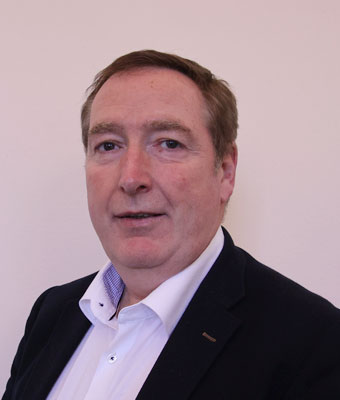
8. Deputy Tony McCormack asked the Minister for Enterprise, Tourism and Employment the steps he is taking to ensure that County Offaly does not fall further behind neighbouring counties in attracting IDA Ireland investment and securing employment opportunities; if his Department will commit to increasing the number of IDA Ireland site visits and targeted investment in Offaly; and if he will make a statement on the matter. [50722/25]

I thank the Deputy for his important question. As somebody from a rural constituency, I am aware of how incredibly important IDA Ireland site visits are. I know the Deputy feels very strongly about those engagements as important opportunities for his county and the midlands.
IDA Ireland remains committed to regional development as one of four key strategic objectives of its strategy for the period 2025 to 2029, Adapt Intelligently. The aim of this ambitious strategy is to secure 550 of the 1,000 investments targeted over the lifetime of the strategy to the regions, including 40 in the midlands. Over half of the 973 investments won under IDA Ireland's strategy for the period 2021 to 2024 went to regional locations. Some 31 of these were in the midlands region, exceeding the strategy target of 25.
There are 1,420 people currently employed in Offaly across 11 IDA Ireland-supported companies. Figures show that employment among IDA Ireland clients increased by 26% in the region over the past five years. The midlands has a significant ecosystem of well-established companies across life sciences, technology, global business and financial services and engineering and industrial technologies. IDA Ireland will continue to position the midlands as a competitive and attractive destination for global investors.
In relation to site visits, I am advised that to the end of quarter 2 of this year, there were two visits to County Offaly, five in 2024 and three in 2023. I should state, however, that these figures represent individual visits and are not necessarily indicative of the number of companies that have visited. In addition, site visits may not necessarily be a true measure of the overall level of FDI activity in a region or county. The goal for the coming years is to build on the region's strengths and competencies to win investment, with a particular focus on high-value manufacturing, services and research and innovation opportunities across established clusters.
In the past ten years, IDA Ireland has made 240 site visits to Westmeath but only 45 to Offaly. That is a more than a five to one imbalance between two neighbouring counties in the midlands. IDA Ireland is also overnighting most of these itineraries in Athlone, where it wines and dines potential clients and, therefore, has a better chance of landing them in the area. The people of Offaly will not stand for being ignored or pawned off by a State agency that is supposed to treat all counties equally. Does the Minister of State accept that this looks like favouritism? What immediate steps will she take to ensure that IDA Ireland directs more visits and resources to Offaly? To be honest, over the most recent period, it has been a case of everything being the same. We need that to change.
I understand the passion and frustration of Deputy McCormack. While he gives us the figures regarding what is going to Westmeath and Offaly, there can be many reasons for that, although I am not defending it in any way. If the Deputy would like me to facilitate a meeting between him and IDA Ireland regarding the visits to County Offaly to see if there is more we can do to bolster those visits, I would be more than happy to try to facilitate him.
A core objective of IDA Ireland is to enable, influence and deliver a competitive property offering that supports the winning of FDI and the growth and expansion of indigenous clients within Enterprise Ireland's portfolio and promotes national economic investment. The availability of quality business parks and strategic sites is a critical component of the regional value proposition and winning investments in the regions. It is crucial that the midlands region has a competitive and sustainable offering to enable the attraction and retention of jobs and investment in the area.
I have a list with me of the companies that have visited County Offaly. As I said, if the Deputy wants me to facilitate a meeting in the future, I am happy to do so.
I thank the Minister of State for the offer of a meeting. Unfortunately, when I have had meetings with IDA Ireland, I get very little information because it is withheld due to it being of a sensitive nature. IDA Ireland-supported employment in the midlands fell last year by 0.45%. Offaly’s only IDA Ireland business park is already full. We need another park. Without new sites and investment, Offaly simply cannot compete with neighbouring counties. What commitment can the Minister of State give today that Offaly will see targeted IDA Ireland investment, including a newly expanded advance business park in Tullamore, with a clear timeline for delivery, as part of its new national plan? Tullamore was earmarked for an advance unit. Without the space to build, however, this will not happen.
The goal in the coming years is to build on the region's strengths and competencies to win that investment. I take the Deputy’s point that you have to have the facilities - sometimes you have to build it and they will come. Very often, the metric that gets people to come is if they see nice facilities and all the wraparound things, such as infrastructure, housing, footfall or whatever. I take the Deputy’s point. As somebody from Cavan-Monaghan, I know that we do not get many visits either, so I feel his pain. From my dealings with IDA Ireland so far, I know that sometimes it cannot dictate where companies go because their representatives come with particular requirements or a vision in their heads as to where they want to go. I take the point that a balance has to be struck if we are to create the proper regional development that we are all concerned about. A part of that is for IDA Ireland to have a greater spread across the regions. I take the Deputy’s points, which are very valid, and I will raise them with IDA Ireland.

9. Deputy Albert Dolan asked the Minister for Enterprise, Tourism and Employment the number of investments IDA Ireland is targeting in the west under its current strategy; its performance in investments in the west under the previous strategy; and if he will make a statement on the matter. [50584/25]
The work of IDA Ireland cannot be underestimated. It has a proven, serious track record of delivery right across the country and of bringing in business and creating jobs. Under the current strategy, how has IDA Ireland performed in the west of Ireland, what is the plan for the future and where are we going from here? Ultimately, it is vital that we make a success of the west. I would appreciate it if the Minister could speak to IDA Ireland’s performance under its strategy.
IDA Ireland’s regional strategy has a proven track record of success, and the agency has reaffirmed its strong commitment to regional development as a core pillar of its strategy for the period 2025 to 2029, which I launched some months ago. The strategy aims to secure 550 regional investments over its lifetime. That is 55% of all investments, including 100 in the west, reflecting IDA Ireland's ongoing commitment to supporting transformation and growth across all regions.
IDA Ireland supported the delivery of 973 investments over the period of the strategy for 2021 to 2024, 54% of which went to regional locations. Some 91 were in the west against a target of 76. The west has a significant ecosystem of well-established companies across life sciences, engineering, international financial services, content, consumer and business services and tech. IDA Ireland will seek to build on the strengths and competencies of the region and will continue to market it, targeting these sectors for investment opportunities.
Suitable property availability can play a key part in winning investments from both new clients and the existing client base. As part of the strategy for the period 2021 to 2024, 19 advance building solutions were progressed across 15 locations, including an advance building in Galway that is available for marketing. IDA Ireland's regional building programme for the period 2025 to 2029 will consist of 23 projects across 21 locations in eight regions, primarily involving manufacturing buildings.
This will include a building in Castlebar, which is at site selection stage, and an additional new building in Galway, subject to the successful marketing of the existing building and, of course, dependent on planning and procurement outcomes. The IDA is also partnering with local authorities to deliver advance planning permits in Ballinasloe, Mayo and Roscommon. As the Deputy will be aware, IDA Ireland’s strategy focuses on partnering with the existing FDI base to increase the competitiveness of their Irish operations, providing the foundation on which they can capture new growth opportunities, alongside attracting new investment to the regions.
Over 31,000 people are employed by IDA companies in the west of Ireland, as the Minister outlined. I welcome the fact that the ambition is going up, from 76-IDA backed investments in the last plan to a target of 100 investments over the lifetime of this strategy. I welcome the publication of the strategy.
I attended the opening of the Medical Technology Ireland conference yesterday in Galway and saw for myself the talent, business and enterprise that was ongoing in the Galway medtech ecosphere. It is vital that we continue to support that. Over the last 20 or 30 years, we have built expertise, facilities and such a successful ecosystem, including relationships between the universities and businesses. Does the Minister have any plans to continue to support that and what will that support look like?
I do indeed. Our new life science strategy will be brought forward next year. That will be in line with the EU life science strategy and will aim to grow the 100,000 employees in the sector and the more than €100 billion in exports. Galway is very much front and centre of that, being a hub of medtech. About 70% of medtech companies are doing research and development and they are very good at the commercialisation of research in our tertiary education settings. One of the key areas of our new strategy is semiconductors, which is also important for the west. Obviously, Galway has been highlighted for its very significant and large-scale site, which will be very important for our next-generation semiconductor investment. The Deputy referenced the 31,000 people employed by IDA companies in the west, particularly in Galway, but there are an additional 25,000 jobs intrinsically linked to the IDA. If one looks at the current semiconductor companies and their supply chains, one of them has 900 SMEs intrinsically ingrained in its supply chain management process, so that will be a significant game-changer for Galway. It is very important that we get that site over the line. We are expecting to bring a memo to Cabinet on it in the next number of weeks, in consultation with our friends in the Department of Public Expenditure, Infrastructure, Public Service Reform and Digitalisation. It is important that we get that on the road.
I really welcome that and I assure the Minister that, when he goes to Cabinet with that memo, he will have my full support. We must make sure that site is unlocked and the potential is realised. What is notable about that semiconductor site, adjacent to Oranmore, is its scale. It is going to be huge and the impact will secure the future of the west of Ireland for the next 20, 30 or 40 years. Something like the advance planning permit that the Minister mentioned in his reply is vital. I saw the success of Dexcom in Athenry. It had such a smooth run through the planning system. There was not one local objection and there was collegiality with Galway County Council. There was an understanding there. The council did its job and attached 58 conditions to the development but it got planning permission in eight weeks. That development will provide 1,000 jobs in Athenry, which is an absolutely huge investment.
The Minister's idea of preplanning permits so that we can have a general outline of the site's potential will be needed at the Oranmore site. Work should begin on that immediately, alongside the Minister's proposal for a €3.2 billion infrastructure package that will not only secure that site, but secure the future of Galway as well.
I understand that work is ongoing with the local authority in relation to that. My Department is very happy to support that planning permit, which will be very important for the sector. There is huge opportunity. We hear some negative things about the planning process but one thing that strikes me, as a former Minister of State with responsibility for planning, is that over 90% of planning decisions in this country do not go to appeal. A lot of good things happen but we do not hear about them. Dexcom is a prime example of that. I met representatives of the company recently and had a chat with them at an event in Galway involving the chamber of commerce. I also met the chief executive of Galway County Council, Liam Conneally, who outlined the ambition for County Galway. If I remember correctly from my days in the Custom House, his is the second biggest local authority in Ireland and has a huge amount of opportunity. The area has grid capacity and power, which we do not have in a lot of areas of the country. Galway has a lot of good cards and hopefully it will get to play them right over the next number of weeks.
Questions Nos. 10 to 12, inclusive, taken with Written Answers.
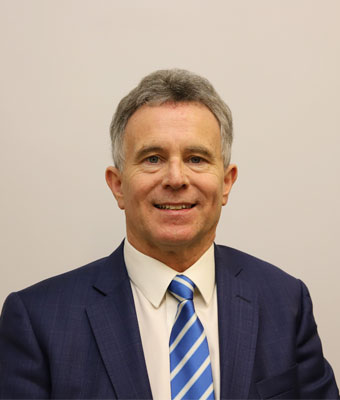
13. Deputy Seán Fleming asked the Minister for Enterprise, Tourism and Employment the number of investments the IDA is targeting in the midlands under its current strategy; its performance in midlands investments under the previous strategy; and if he will make a statement on the matter. [50579/25]
I thank Deputy Fleming for his question on the midlands region. Regional development is a key focus in the programme for Government and is central to the work of my Department and its agencies. In that regard, IDA Ireland has reaffirmed its strong commitment to regional development as a core pillar of its 2025 to 2029 strategy, which we launched a number of months ago. This ambitious strategy aims to secure 550 foreign direct investment projects in rural and regional areas, accounting for 55% of all planned investments. The overarching goal is to create 75,000 new jobs nationwide and generate a projected €250 billion in economic impact. IDA Ireland is targeting 40 client investments to the midlands region over the lifetime of the strategy.
Last year saw the conclusion of IDA Ireland’s 2021 to 2024 strategy, Driving Recovery and Sustainable Growth. Over the course of the strategy, IDA Ireland supported the delivery of 973 investments and creation of 76,790 jobs, or 121% and 153% of the respective targets. Some 54% of all investments were in regional locations outside Dublin. The investment target for the midlands over the period 2021 to 2024 was 25 investments and the total number of investments won for the region was 31. IDA’s goal for the coming years is to build on the strengths and competencies of the region, with a particular focus on high-value manufacturing, services, and research and innovation opportunities across established clusters in life sciences, technology and global business services. Emerging technology trends will continue to create new opportunities for the region in areas such as data analytics, smart manufacturing, cybersecurity and new approaches to working, such as co-working hubs.
As the Deputy will be aware, IDA Ireland’s strategy focuses on partnering with enterprises in the existing FDI base to retain and renew their Irish operations, alongside attracting new investment. The agency provides ongoing support to existing clients through investment in research and development and it will be very important in the upcoming budget to get the research and development value proposition correct. IDA Ireland also provides support for upskilling, talent development, digitalisation and sustainability in the FDI sector.
I thank the Minister for that overview of the midlands region but I am sure he will understand if I speak about Laois in particular. At the end of last year, there were 8,045 IDA-supported jobs in the midlands. Laois has 30% of the population of the midland counties but has only 1.8% of the IDA-supported jobs in the area. If one looks at the county-by-county list produced by the IDA, one sees that Laois has 145 IDA-supported jobs. It is a disgrace. I say that publicly. The total of 145 is, by a mile, the lowest of any county in the country even though the services in Laois are as good and as available as anywhere else.
I was very worried by the Minister's statement. I would ask him to introduce the IDA to County Laois and to arrange a meeting for the TDs and the chief executive of Laois County Council on this. I was especially worried when the Minister said that the IDA wanted to partner with existing FDI investments that were already up and running in the midlands region and nationwide because that means it would exclude Laois. The county does not have those investments. It is remarkable that the Laois figure is so low.
I will be categorical in stating that we are absolutely not excluding Laois. I was down there recently. The Leprino plant is an existing sector business under Enterprise Ireland that we are trying to find a replacement for through the FDI sector. It is a highly regulated plant that needs very significant support. As the Deputy will be aware, we are also working on an advance planning permit for Portlaoise. This is a very important investment which aims to get more high-quality stock into the market to assist County Laois.
As I pointed out, employment in the region increased by 26% over the last number of years. I am happy to arrange a meeting to work with Laois companies and to try to get more investment into the region but we have to be honest about the fact that we are operating in a very constrained space now. Over the next five years, relations with the US Administration will be very constrained. We are under significant pressure in terms of capital investment and we have very strong competitors. Singapore, for example, has very deep pockets. In terms of increases in capital allocations in the budget, we are looking at getting 6%, if we are lucky. That leaves us in a very tight space in the context of the work we do.
We just have to be very honest and we have to protect what we have. I absolutely want to grow Laois. I will be unequivocal about that and will work with Deputy Fleming in trying to assist through the IDA. We are committed on the capital side through our land bank there and the work we have to do on it.
I thank the Minister for that and, in particular, his commitment to help arrange a meeting between the TDs, the chief executive of Laois County Council and appropriate IDA officials - or Enterprise Ireland officials, while we are at it, because the figures for Enterprise Ireland in Laois are abysmally low as well. We are almost at the bottom.
I will make a few key points. The Minister mentioned Leprino. That company provides 135 jobs. We hope we can get a replacement. It is a high-tech business. That replacement, however, would only maintain the jobs already in the county. Portlaoise is ideally located. It has the best road network in the country. It is on the M7. Thirty-two trains leave Portlaoise every day for Dublin and Portarlington. We have the best train service of any provincial town in the country. As regards the housing in Portlaoise, thousands of houses have been built in Laois in recent years, more than in any other county per capita. We therefore have all the facilities that are required in Portlaoise. The IDA has a 30 ha site already in Portlaoise. We want to see an advance factory on that site as urgently as possible. If we have that, we might have a location to bring clients to.
I would absolutely support Deputy Fleming in what he set out, those 30 ha and the critical importance of an advance factory unit or a building solution unit because we know that it shortens lead time for investors. When you are bringing someone on site and you have a ready-made building, or the consent agreed for a building, it makes a difference. We will absolutely work with the Deputy on that. I know from my town, Mullingar, that it can be very difficult at times to secure good, high-quality investments from the IDA, and I feel the Deputy's pain in trying to get additional clients in, but I am absolutely here to work with him on that journey. As he points out, the Leprino site is very highly regulated. I have met with the IDA on a number of occasions in respect of it and met the management in Leprino to try to ensure that it is doing everything to get a good prospectus together in order that we can try to get a replacement into what is a very highly regulated site. I know Portlaoise and Laois very well. The housing increases there have been very significant. You can see as you drive through the town progress at every corner. The town's connectivity, road and rail, is exceptional. We are very happy to work with the Deputy on that.
Question No. 14 taken with Written Answers.
Pigmeat Sector
16. Deputy Aindrias Moynihan asked the Minister for Enterprise, Tourism and Employment to consider supporting producers of pig products impacted by Chinese tariffs; and if he will make a statement on the matter. [50805/25]
China is the sixth largest destination for our agrifood exports, worth over €613 million, and pigmeat is a huge part of that trade, at €102 million last year. The imposition by China recently of what it considers anti-dumping tariffs will really challenge that trade. What efforts are being made to end those tariffs?
I thank Deputy Moynihan for his very important question. In June, the Government of China initiated an anti-dumping investigation on imports of pork and beef products from the European Union, and it has now announced provisional duties on imports of pork from the EU. The European Commission is in the process of assessing this announcement and will consider measures to protect EU industry and economic interests ahead of the deadline for the final determination of the Chinese investigation on 16 December.
I understand that the Department of Agriculture, Food and the Marine is aware of the preliminary findings of China's investigation and that the Department is confident that Ireland's exports of pork and pork by-products to China are fully compliant with World Trade Organization rules. The Department has encouraged the Irish industry to co-operate fully with the Chinese investigations. The Commission will be supported in its efforts to defend EU farmers and exporters on this matter.
My Department, through Enterprise Ireland, provides a range of funds and grants to agrifood businesses, including pig processors, to support export growth and capability development in the sector. Supports are available for capital investment, research and development, digitalisation, training, and sustainability initiatives. Bord Bia also runs promotional campaigns which aim to boost domestic and export demand.
In addition, my Department, together with the Department of Agriculture, Food and the Marine, co-fund the capital investment scheme for the marketing and processing of agricultural products, which is implemented by Enterprise Ireland. This scheme is targeted at businesses in the meat and dairy sectors to support them to expand and diversify and to increase sales of higher value-added products in the global marketplace. Thirty-four projects have been supported, with total public and private investment exceeding €420 million. This investment helps future-proof the sector, sustain jobs and enhance export potential.
These tariffs are a huge burden on the export of pig products to China. Two obvious supports are needed: first, the ending of the tariff and allowing free trade and, second, alternative markets. It is reasonable to expect that China will build its own pigmeat businesses and will be able to satisfy its own market more in the years ahead.
What particular efforts are being made to find alternative markets for Irish pig product across any other parts of the globe, whether South America, North America or wherever else?
As the Deputy knows, the Minister, Deputy Burke, launched the Government's Action Plan on Market Diversification recently. It contains important actions aimed at supporting export-orientated sectors, including the agrifood sector. This focus on market diversification for the sector also aligns with the objectives of the Food Vision 2030 strategy, which is led by the Department of Agriculture, Food and the Marine. The action plan sets out a path to support Ireland's businesses large and small and to adapt to the global trading environment by striking out into new and diverse markets, deepening their engagement in existing markets and expanding where possible and where opportunities exist. As a global and open trading economy deeply connected into international supply chains, the action plan also serves to mitigate the current risks and bolster our economic resilience. Of the grants and schemes that are available, I want to talk about two in particular. The market research grant provides up to €35,000 to help companies assess the impact of tariffs, gain market insights and develop mitigation strategies even in markets where they already operate. The second piece is the new markets validation grant, offering up to €150,000 to support the development of market entry strategies into new markets and new products.
Thank you, Minister. We will get you back in.
To return to the earlier question, this relates to the efforts to end the tariff and to reopen the opportunity for trade. I understand this investigation has been ongoing for some time, with the expectation of an outcome later this year, or possibly by the end of the year. Is there any evidence emerging of dumping going on? Where do things stand at the moment on this? I know that it was raised by the agriculture Minister at the recent AGRIFISH meeting as well with his EU colleagues. Is there any evidence, or is there a risk, that this tariff could continue long-term, or what efforts are being made to ensure that it would be ended?
As I said, the Department has encouraged the Irish industry to co-operate fully with the Chinese investigations, and the Commission will support its efforts to defend EU farmers and exporters on the matter. I am cognisant of the fact that the Minister, Deputy Burke, has done a huge amount in terms of particular sectors being able to take shocks like that, having that resilience in place. That is what the action plan on competitiveness and market diversification is all about. As a Government, we are mindful and cognisant of that, looking to other markets and trying to ensure that we future-proof not just our pig sector but all agrifood sectors that face tariffs, potentially. I would like us to await the outcome of that investigation, which is due to be published on 16 December.
Business Supports
15. Deputy John Clendennen asked the Minister for Enterprise, Tourism and Employment to provide an update on the steps being taken to help reduce the cost of doing business; and if he will make a statement on the matter. [50598/25]
Apologies for my punctuality.
I acknowledge the work the Minister has done in relation to small businesses, especially the establishment of the small enterprise unit within his Department and the National Enterprise Hub.
I ask the Minister to provide an update on the steps he is taking to reduce the cost of business.
I thank Deputy Clendennen. The Government recognises that the cost of doing business has been an issue for firms in recent years arising from wider inflationary trends, including energy costs. It is important to note that costs for firms, as measured through the CSO’s wholesale price index, are declining and are down 3% in the 12 months to August 2025.
Most recently, the Government has taken action to address business costs through the publication of the action plan on competitiveness and productivity and the convening of the cost of business advisory forum, both commitments in the programme for Government. The focus of the action plan on competitiveness and productivity is action that can be taken to strengthen Irish competitiveness and productivity, which in turn will lead to improvements in our economic performance. The development of the action plan was informed by extensive consultation across government with external stakeholders. My Department held a series of bilateral engagements with other Departments in the areas of infrastructure, housing and research and innovation. A core theme of the plan is regulating for growth and controlling costs with 18 actions, including five priority actions, focused on addressing this key issue. Key actions include better regulation, which will decrease regulatory burdens across business, address high legal costs and improve competition in our markets.
Complementary to the action plan, the cost of business advisory forum delivers on the commitment to support small businesses, enterprises and industries across a number of sectors. The forum's key objective is to examine and identify the concerns of the enterprise sector around the impact of the rising costs of doing business by creating a structured space where business owners and representative bodies can speak directly to decision-makers about the real-world impact of regulations, fees and operational challenges. The forum has already met a number of times on energy costs, security of supply and insurance costs. The forum will also focus on other cost driver topics, with each meeting including relevant regulators and agencies to ensure actionable outcomes. The findings will inform a report and set of recommendations to Government to take immediate action to address these short-term issues that merit a changed approach for business owners.
I thank the Minister. I welcome the cost of business advisory forum. Over the summer, I conducted a survey with over 600 respondents. A key finding was that over two thirds of SMEs that engaged in the survey were uncertain about the future and lacked the confidence we need to ensure they have. Other key findings were around easing the cost of labour pressure, cutting energy costs, tackling insurance reform and reducing the tax burden. When it comes to competitiveness in particular, local enterprise offices have a greater role to play. I ask the Minister to look at a review of the role local enterprise offices can play. More often than not, small businesses go to local enterprise offices, are offered mentoring and so on but when they want a small few euro to expand their business, considering the pressures of operational costs are too much, they are ineligible for grants. I ask the Minister to consider broadening grant eligibility to ensure businesses can continue to progress, create further employment and protect jobs.
Deputy Clendennen has been a firm advocate for small family businesses. His voice has been very strong in that regard. We know many of those operate around the kitchen table; they do not have a finance or HR director. They employ two thirds of all people in our economy. That is why we have worked very hard to reduce the red tape in LEOs. We set about working through the centre of excellence in Enterprise Ireland, reducing the administrative burden and number of questions asked for a number of these supports. We reduced questions by 47% across a number of grant forms. We will continue at pace through our simpler, lighter, faster approach, reflecting that the most valuable resource businesses have is their time. We have increased the output of the national enterprise hub from 180 supports to 250 across 32 Government agencies and Departments and with operators on the other end of the phone. The hub had over 7,000 individual inquiries in August alone. Those are leads on the phone, following up on supporting businesses. We have also worked with Enterprise Ireland, reducing the number of questions and red tape, and interoperability of some of those applications where the same information has been furnished previously.
When it comes to protecting jobs, I ask the Minister to strongly consider, along with his Cabinet colleagues, introducing the 9% VAT rate for the hospitality sector in the upcoming budget. The Minister spoke about the kitchen tables to boardroom tables where decisions were made. Small businesses need help. A VAT rate of 9% is an important stimulus in that regard. To look at the figures, there are 20,000 companies with 200,000 employees. Of those companies, 76% have fewer than ten employees and another 20% have fewer than 50. This will target over 95% of businesses in every town and village, ensuring economic and social well-being and community benefit, whether through the coffee shop, restaurant or other small businesses. I urge the Minister and his colleagues to ensure the 9% VAT rate is part of budget 2026.
I thank the Deputy for his strong support of the 9% VAT proposal. I know as tourism Minister as well that the key link in our identity is the authentic offering we have through our independent businesses like small coffee shops and restaurants. That will be key to the Government's response. We know the pressure they are under. There are over 240,000 jobs in regional locations and an €8 billion sector that we need to sustain. That will benefit everyone because the more activity there is, the more the money flowing into businesses goes out into the community. That is where people invest their money because they are a key part of the community. We will bring forward our tourism policy next month, which will look at how to expand Fáilte Ireland's remit to restaurants, helping them to develop their business models, help with costs, get them on board with digitalisation in terms of sustainability grants, and enhance their capacity. Tourism is keenly linked with our SMEs. They go hand in glove. They need to grow together. That is why having tourism at the heart of the Department of enterprise is important.
The work the Deputy did engaging with businesses over the past number of weeks is commendable and will form part of discussions as we approach budget 2026. I look forward to the Ministers, Deputies Donohoe and Chambers, having a strong enterprise budget. This is budget No. 1 of the new Government. It needs to be an enterprise budget focused on sustaining job growth, keeping 2.81 million people employed - a record in our country - and giving everyone the key opportunity in life of a job.
Question No. 17 taken with Written Answers.
Export Controls
18. Deputy Catherine Connolly asked the Minister for Enterprise, Tourism and Employment the number and value of dual-use export licence applications, in respect of end-users in Israel, approved by his Department by quarter to date in 2025; the number refused in each quarter to date in 2025; and if he will make a statement on the matter. [50786/25]
I wish Deputy Connolly well in her campaign in the weeks ahead. She is a brave lady.
As the national competent authority for export controls, my responsibilities centre around the control of exports of dual-use and military items under EU and national legislation. These controls are administered by the Department in accordance with Regulation (EU) 2021/821 of the European Parliament and of the Council setting up a European Union regime for the control of exports, brokering, technical assistance, transit and transfer of dual-use items. The primary purpose of export controls is not to block trade or exports but to enable the free movement of legitimate goods while ensuring that certain sensitive categories are subject to appropriate regulation. These controls are designed to manage risk, uphold international peace and security and ensure Ireland’s compliance with its international obligations.
To date in 2025, a total of nine individual dual-use licences have been issued in respect of end users in Israel. Four were issued in quarter 1 with a maximum value of €797,000. In quarter 2, three were issued with a maximum value of €93,000. To date in quarter 3, two licences have been issued with a maximum value of €172,000. There has been one refusal to date in 2025 in respect of an end user in Israel, which was refused in quarter 1. The bulk of dual-use exports from Ireland, including those to Israel, are mainstream business ICT products, both hardware and software - networking, data storage and cybersecurity. They are categorised as dual-use items because they incorporate strong encryption for ICT security purposes.
I thank the Minister of State for her good wishes.
Exports of dual-use goods have increased phenomenally, which might be good or bad depending on the oversight arrangements we have. In 2023, the value of dual-use exports to Israel spiked to nearly seven times what it was in the previous year. It came down slightly but remained high in 2024. The value of dual-use goods exported in 2022 was €10.7 million. In 2023, as I indicated, it was €70.4 million, and, in 2024, it was €64.3 million. On the figures the Minister of State gave - I do not have the reply in front of me - there seems to be a significant reduction in that figure, which is welcome in a sense. I will look at the figures carefully.
The Minister of State said one application was refused. Will she clarify, as I did not quite catch it, the basis on which it was refused? Respect for human rights and international humanitarian law in the destination country is one of the criteria - I will come back to the others - that were spelled out by the former Minister, Simon Coveney.
I do not have exact details on the reasons the application was refused. I will look for clarity on that and furnish the Deputy with the details. There is extensive engagement between my officials and exporters should any questions or concerns arise regarding any application for any destination, including Israel. If, after engagement, there are any outstanding concerns that the goods being exported will not be used for the stated end use or by the specified end user, as detailed in the application, or if the exporter does not provide enough information on the intended end use for my officials to make an informed decision, the application for a licence is denied. In applying export controls in a robust and transparent way, my Department ensures legitimate business transactions by reputable Irish traders are not damaged in any way, while ensuring exports of controlled goods are thoroughly risk assessed in the context of ongoing conflicts, diversion of goods and humanitarian considerations.
I respect the Minister of State's bona fides and I know she will get back to me. In 2023, our exports of dual-use goods to Israel spiked by seven times, at a time when, in my opinion, genocide was happening and has continued to unfold before our eyes. Back in February 2024, the then Minister, Simon Coveney, said the Department of trade and the Department of Foreign Affairs "review all dual-use export licence applications against the eight assessments set out in [the relevant] EU Council Common Position". These include respect for human rights and international humanitarian law, and the risk of internal repression, in the country of final destination. Certainly, Israel does not comply with that. Other criteria include the internal situation in the country of final destination with respect to tensions or armed conflicts, risks posed to the territory of neighbouring countries and risk of diversion of goods for undesirable uses. They are four of the eight criteria laid down under the EU policy. Can the Minister of State tell me more specifically who carried out the analysis of the licences given and where I can see that analysis?
I reiterate that I will ask the Department, insofar as it can, to furnish the Deputy with much greater detail on the refusal I indicated and the reasons for it. My officials seek real-time geopolitical observations from the Department of foreign affairs in respect of all applications, and those views inform the final decision to grant or deny a licence. The assessment process is rigorous. The officials carry out a series of checks to ensure, insofar as they can, that the item to be exported will be used by the stated end user for the stated end purpose and will not be used or diverted for any other purpose. Ireland remains firmly committed to supporting open, free and responsible trade within a multilateral rules-based international system while ensuring global security and humanitarian concerns are not compromised. Strong export controls are essential to preventing the proliferation of weapons of mass destruction, protecting regional security and stability, combating terrorism and protecting human rights.
I take the opportunity to wish Deputy Connolly the very best of luck in her campaign in the next couple of weeks. I wish her very well.
Go raibh maith agat.
Ceisteanna Eile - Other Questions
Question No. 88 taken with Written Answers.
Pension Provisions
89. Deputy Edward Timmins asked the Minister for Social Protection to review the contributory pension entitlement of someone with fewer than 520 contributions; and to grant those recipients a pro rata pension. [50762/25]
I ask the Minister to review the contributory pension entitlement for someone with fewer than 520 contributions and look to give them a pro rata pension. This policy imposes a cliff-edge cut-off. It is very unfair. Someone with 519 contributions gets nothing but 520 would entitle them to get between €99 and €120 per week, and sometimes much more.
As the Deputy may be aware, the previous Government established the Commission on Pensions to review the State pension system and make recommendations for its future. The commission strongly supported the retention of the qualifying criterion of 520 paid contributions. In part, this is because the actuarial value of the contributory State pension is currently estimated at approximately just under €400,000, so it is reasonable to require people claiming a contributory pension to have made at least 520 paid contributions over the term of their working life to qualify for a payment. Once a person reaches the qualifying criteria of 520 paid contributions, their rate of payment is determined by their total number of contributions, paid and credited, and the applicable calculation method.
In December 2023, legislation was enacted to introduce a series of landmark reforms to the State pension system in response to the commission's other recommendations. A key measure was the introduction of a flexible pension system. This new system is about providing people with choice. People will still be able to retire at 66 and draw down their pension as they always have. Additionally, they may now choose to defer claiming their contributory state pension up to age 70 and receive an actuarially based increase in their weekly payment rate.
People can decide for themselves what best suits their needs and circumstances. For example, a person who reaches age 66 who does not have sufficient contributions to qualify for a contributory State pension may be able to use this period to continue to work to establish entitlement or increase their level of payment. Where a person does not satisfy the conditions to qualify for the contributory pension or qualifies for less than the maximum rate, they may instead qualify for the means-tested non-contributory pension with a maximum payment equivalent to over 96% of the contributory rate.
I also want to address the fact that the home caring scheme does not allow for any additional credits. This is unfair as a mother often gives up work in order to care for her children and is given no increased credits for this time. Can this be revisited as it penalises a parent who makes the decision to give up work, a decision which actually saves the State money?
One of the major reform measures was the enhanced State pension provision for those who have been caring for incapacitated dependents of 20 years or more.
It is being done by attributing the equivalent of pay contributions to such long-term carers to cover gaps in their contribution records for the period in which they were caring for an incapacitated dependant. The measure is available to those who reach State pension age from 1 January 2024 and to those currently over the pension age.
In September 2023, we launched an online system for people to register for long-term caring contributions. We continue to work with people on this. This is the first time that a pension provision has been made for carers. This discussion follows that with Deputy O'Shea just now, on supporting carers and giving them the backup they need in their older years.
I want to address the homemaker's scheme, which is often confused with the home carer's scheme. This only applies from 6 April 1994. Again, this date is an arbitrary cliff edge. It discriminates against people who cared for children who were 12 years of age before that date. It is completely unfair and illogical. It should apply to all caring for children and not only those cared for after 6 April 1994. Similarly, the home caring periods are only applicable from 6 April 1994. Will the Minister look at including all years prior to 6 April 1994?
We have a range of supports available. I am happy to consider the proposal made by Deputy Timmins, but we must also ensure the State pension system is sustainable. The demographics of our country are changing very much as we speak. At present, we have four workers for every person over the age of 66. By the time we get to 2050, however, which is not that far away, this figure will be down to two. In that context, we will have to make decisions that ensure the long-term sustainability of our pension system in order that it will continue to support those who need it in the years to come, especially as those demographic changes happen. We have increased PRSI rates with regard to employees, employers and the self-employed across the Social Insurance Fund in order to sustain it. With that in mind, I will ask the officials to look at this proposal and come back to Deputy Timmins.
Many of these people will have passed away by 2050.
90. Deputy Grace Boland asked the Minister for Social Protection his plans to develop a pension solution for foster carers, in recognition of the enormous contribution they make to vulnerable children in our society, as committed to in the programme for Government; and if he will make a statement on the matter. [50587/25]
What are the Minister's plans to develop a pension solution for foster carers in recognition of the enormous contribution they make to vulnerable children in our society, as committed to in the programme for Government?
The Government acknowledges the very important role that foster carers play. We remain fully committed to supporting them. The contributory State pension system already provides a range of measures to recognise caring periods outside of paid employment, such as PRSI credits, homemaking disregards and home caring periods, to recognise caring periods of up to 20 years outside of paid employment in the calculation of our payment rate. Foster carers are entitled to benefit from these measures on the same basis as other carers and parents. If they are not in receipt of child benefit they can still qualify for the homemaker's scheme or home caring periods, provided the caring periods are confirmed by Tusla.
Since January 2024 long-term carer's contributions can be awarded to a person who has cared for an incapacitated person for a period of 20 years or more. These contributions are treated in the same way as paid contributions for contributory State pension entitlement and can be used to fill any gap in a person's contribution record, including satisfying the minimum 520 contributions required for eligibility. Foster carers who have cared for an incapacitated dependent or dependents for more than 20 years also benefit from this provision.
These measures assist for carers to access the State pension system in the same way as biological or adoptive parents, while ensuring the system remains sustainable. Any future change to the State pension system will have been considered in the overall policy and budgetary context, including, as we have just discussed, the sustainability of the Social Insurance Fund.
I thank the Minister for his response. I am especially conscious of the words in the programme for Government whereby we will seek to examine the pension provision for foster carers to acknowledge their long-term commitment and ensure valued support after years of fostering. I am very conscious that 4,000 foster carers in Ireland provide a service which, as with services provided by other people in this area, benefits the State and makes a difference to individual lives. They help people not only during the time they are with them but also for the rest of their lives. They give them a stable environment which they may not have had otherwise. Deputy Timmins outlined the gender balance issue because most typically it is women who look after children in these situations. We want to ensure they are looked after and that there is fairness and equity in the scheme in this way. As I have said, we have a plan to do it. I thank the Minister for his comment. I hope it is something we can look into in future.
As Deputy Neville knows, there is a commitment in the programme for Government to look at the long-term pension provision for foster carers. The Department is engaging with the Department of Children, Disability and Equality, which has line responsibility and operational management for foster caring, and with Tusla. We will engage with other stakeholders as necessary in terms of looking at the commitment to see how we can operationalise it.
I absolutely assure Deputy Neville that within the Department we are very aware of the very important work of foster carers. This is why this year I expanded the back to school clothing and footwear allowance to specifically include foster parents, who had been directly excluded from the scheme until then. I will continue to work in the Department to ensure we have the best supports available. I plan to have a meeting with Foster Care Ireland in the coming weeks.
I thank the Minister for his very genuine response and for his commitment. As he outlined, he is very aware of the contribution that foster carers make. He has demonstrated his knowledge on the topic and his willingness to engage further in the coming weeks and during in his term as Minister. It is something we will continue to work on together and I will follow up on it. I thank the Minister for answering the question so clearly and with a depth of knowledge and understanding of the issue.
School Meals Programme
91. Deputy Joe Neville asked the Minister for Social Protection the number of schools enrolled in the school meals scheme in 2025; the percentage of waste analysis has been done in these schools; and the nature of the reporting mechanism. [50836/25]
How many schools are enrolled in the school meals scheme? Has an analysis been done of the waste in schools? Will the Minister outline the nature of any reporting mechanism in this regard?
As we discussed earlier, the objective of the school meals programme is to provide regular nutritious food to children to support them in taking full advantage of the education provided to them. The programme is an important component of policies to encourage school attendance and extra educational achievement. In budget 2025, it was announced that the hot school meals scheme would be extended to all remaining primary schools in 2025. By the end of this year, approximately 3,700 schools and 682,000 children will be eligible for the school meals programme.
Under the school meals programme, the primary relationship is between the school and the supplier. The Department provides the funding for the meals directly to each school. It is the responsibility of a school board to administer the programme in its school building, including handling the procurement process in accordance with the rules and guidelines set out by the schools procurement unit of the Department of Education and Youth.
Wherever food is eaten, there will always be the challenge of waste and packaging. Prior to the school meals programme it may have been sandwiches wrapped in cellophane or plastic water and fruit juice bottles sometimes left unopened and uneaten at the end of a school bag. Under the school meals programme this issue is perhaps more evident than before. Therefore, it is clear, as stipulated by the schools procurement unit, that the school meal supplier is responsible for operating policies that progressively address environmental considerations, including waste and packaging. In addition, under tender documentation requirements, the supplier shall make all reasonable efforts to minimise adverse environmental impact in the methods of service delivery and in the materials used. We do not collect, and we do not have access to, the details of the wastage from school meals. This is managed at school level in accordance with the relative contract. However, I have recently made funding available to the Department of Health to employ a dietician, who will be based in that Department, to examine the nutritional content of school meals and to look at the waste issues.
It is clear from feedback from colleagues and schools that waste is an issue we need to look at.
I thank the Minister for his response. I welcome the work that has been going into this and the efforts that this Government and the previous Government have made in putting forward the hot meals programme. Ultimately, it is there to provide meals to people who might not be in a situation to get them otherwise. This is definitely something we need to encourage. It is a great idea but we do need to monitor waste. In fairness, the Minister's team is working on that. As I have said, the Minister is providing the budget for 682,000 students in 3,700 schools. That is a huge effort and a huge contribution from the State to those children's daily lives. However, as I have said, it is important that we get feedback from the schools that we can analyse to help improve the process they are engaged in.
On a related note, in the context of waste within the hot school meals programme, I understand the relationship is between the school and the provider but the Minister's Department issues guidelines and those guidelines refer to things like portion size and calories. Will the Minister issue some guidelines regarding age appropriateness? A child of four does not eat the same portion size as a child of 12. They just do not. If there are to be guidelines and guidance issued in relation to waste, this would be very appropriate to include because, at the one end, you have a child who is not getting enough and, at the other end, you have a child who is getting too much. You cannot ask them to meet up and swap over so that kind of guidance needs to be issued. If the Minister is going to look at waste and get feedback from schools, perhaps he would consider asking that question as well. He might also give guidance to the providers regarding right-sizing the portion sizes.
One issue that pertains to this was brought to my attention last week. It pertains to a number of schools in the Connemara region. Unfortunately, due to the upgrading of guidelines over the summer preventing food from being heated or cooked on site, a number of operators are no longer providing a service to these schools, which has resulted in the loss of the service for the children and families there. The schools are trying to source a new provider but they are having difficulty in doing so. The alteration of the guidelines has caused one or two concerns we need to look at.
Deputy O'Reilly is spot-on regarding waste. I get that feedback all the time. A five-year-old should not be getting the same portion as a 14-year-old. That is something I am going to engage with the dietitian on. The procurement of school meals is done through the Department of education. We have a school meals working group and I have asked it to look at the whole area of waste.
The second issue relating to waste is around menu choices. The challenge is always to get children to eat healthily. We are trying to ensure that, in the analysis we are doing of the diet and nutrition side, the food will still be attractive and tasty for children to eat to ensure they get the nutrition.
To respond to Deputy Connolly, we discussed earlier the issue of a particular group of suppliers withdrawing services. There has been no major change to the procurement guidelines for existing schools. The procurement guidelines have been updated for new schools. The guidelines are based on food safety, food health and ensuring that a situation does not arise that could be challenged for whatever reason. They also ensure that responsibility for the food is not on the school, but on the food provider.
Departmental Schemes
92. Deputy John Connolly asked the Minister for Social Protection the number of active participants in the fish assist scheme in each county, in tabular form; to consider an increase in the rate of payment under the fish assist scheme; and if he will make a statement on the matter. [50828/25]
What is the number of participants in the fish assist scheme? How many are there per county? Could we get that information? In light of budget 2026, will the Minister look at the scheme to see if it could be made more attractive for more participants?
My Department provides the fish assist support, which is available to self-employed fishers on a low income under the means-tested jobseeker's allowance scheme. It is based on the conditions and rate of payment under the farm assist scheme.
The fish assist scheme provides favourable treatment to self-employed fishers compared with other self-employed workers through additional income disregards and entitlement to secondary benefits. For example, under the jobseeker's allowance, self-employed income is assessed at 100%. This is reduced to 70% under the fish assist and farm assist schemes. Child disregards also apply that do not exist for jobseeker's allowance.
My Department also has responsibility for the rural social scheme, which provides income support for those engaged in farming and fishing who have an entitlement to specified social welfare payments. Participants work 19.5 hours per week providing services that benefit rural communities and receive a top-up on their social welfare payment.
Fish assist is a demand-led scheme. There are currently 43 people in receipt of fish assist. These are based in counties Donegal, Galway, Mayo, Sligo, Kerry, Cork, Waterford and Wexford. I will provide the Deputy with a table showing the breakdown per county. He will be interested to know that, of that total of 43, there are nine recipients of fish assist in Galway. Consideration and decisions in relation to any social protection rates as part of budget 2026 will be taken in the context of the overall funding available. The negotiations continue.
I thank the Minister. It is quite a low number of participants considering we are an island nation. Fishing has been a traditional means of earning a living and sustaining some vibrancy in coastal communities in this country for centuries. The number the Minister has given us as regards people availing of this scheme is an indicator of the number of people involved in the industry in general. That is a matter for another debate on another occasion.
One of the things we could look at in trying to ensure people continue in this trade and craft is the other small marine-based trades and industries that could avail of fish assist or for which a similar scheme could be introduced. I think particularly of seaweed harvesting. One of the things about the fish assist scheme that prevents people from also participating in seaweed harvesting is that any income above £1000, that is, €1,270, gained from seaweed harvesting eliminates the opportunity to avail of the fish assist scheme.
I was surprised at the low numbers on the scheme myself. I have asked my officials to interrogate those numbers and to make sure there is awareness of the fish assist scheme in the communities where fishers are based. We will work on such an awareness programme. I will revert to the Deputy with regard to the provisions on seaweed, which he has discussed with me previously. We have a range of supports in place. In addition to fish assist, there is the rural social scheme, which I have mentioned, and other provisions. I wish to acknowledge that. I will absolutely work with the Deputy on promoting the fish assist scheme and, indeed, the farm assist scheme to ensure those who may be entitled to the payment are fully aware that these schemes are open to them.
I again ask the Minister to look at that low threshold for seaweed harvesters. The income threshold for seaweed harvesters who might wish to also participate in the fish assist scheme is very low. It has not changed since the mid-nineties. It is €1,270. Taking inflation over the years into account, we could look at increasing that figure. The equivalent figure today might be €6,000 or €7,000. That would not be a regressive step at all but quite a positive one. Failing that, perhaps we could look at some other type of scheme akin to the fish assist scheme for seaweed harvesters that would be purely for their own industry and trade.
We will certainly engage with the Deputy on that. One of the difficulties in relation to seaweed harvesting is that it continues to be a very informal part of the economy meaning it is very difficult to get statistics and measurements we can stand over as regards those participating in it and earning from it, supply chains and so on. We have looked at it. I have followed up with my officials based on the Deputy's previous representations. We will continue to do so to see what is the best possible support for communities involved in fishing and marine activities.
Public Sector Staff
93. Deputy Peadar Tóibín asked the Minister for Social Protection if his attention has been drawn to the classification of employees of State and semi-State bodies (details supplied). [39838/25]
I am frustrated by the Minister's answer on the pensioners who have worked in An Post for decades who are being given a reduced pension. It is an incredibly serious issue. It determines the standard of living these pensioners have.
Given the Minister's previous answer on this matter, it seems like he is outsourcing a decision to the High Court. It is the responsibility of the Government to set out the rights of pensioners clearly. It is wrong for the Government to come in here and tell the House that the High Court will sort out this particular misclassification. Will the Government take responsibility for this classification problem?
Not for the first time, the Deputy has inaccurately represented what I have said. I did not say that we are outsourcing this to the High Court or we are leaving it to the High Court to sort this out. I said it is not my role to get involved in a case that is before the High Court. Let me be very clear on that. I did not outsource it to anybody. Were I to get involved in a case before the court, the Deputy would probably be one of the first to have a go for getting involved.
On the question, the insurability of public service employees, including local or other public authority workers, is provided for in the Social Welfare Consolidation Act 2005 and SI 312 of 1996. Most public servants employed before 6 April 1995 were classified as modified rate class B or class D social insurance contributors. Public servants recruited on or after 6 April 1995 are liable for the standard rate class A of PRSI. Modified rate contributors pay a lower rate of PRSI, but do not have the entitlement to some benefits, including the State pension, illness benefits and the treatment benefit scheme.
In some cases, people employed in the public service before April 1995 were already classified at class A for social insurance purposes. They are mainly people employed in what are known as unestablished positions. Some of these staff who were subsequently appointed after April 1995 to an established position have sought to be reclassified at the modified rate. This is mainly because they believe it will help to grant them access to an employer's occupational pension scheme. In some cases, there is a belief that, even if they are reclassified to a modified rate, they can retain access to class A benefits. This is not the case. In addition, access to employer occupational pension schemes is governed by their own scheme rules. Social insurance classification is not necessarily a feature of these rules. Having said that, it is the case that in certain circumstances public servants-----
I thank the Minister.
There is currently a case before the High Court. The Minister is in charge of the law at the moment. He quoted the Act determining the situation. There is confusion about the Act. It is obviously not doing what it is meant to do in clearly delineating the different responsibilities people have under the different classes. That is a problem.
The Minister is handing over the decision-making process to the court. He could change the law to clear up the current position. An Post is also a semi-State organisation and operates under the Government's policy and law. Scope is a State agency. It operates under the Government's policy and law. It is the Government's pension law in question that is problematic. I have no doubt that this will last for years; these men and women will find themselves before the High Court in two, three or four years' time. Some will have to pay costs, which can be extremely high, having taken cases against a semi-State organisation.
We discussed this earlier. The Deputy's concern is with An Post. We do not have any information, and I have gone through the reasons why we in the Department do not possess the information the Deputy is seeking.
On Scope, I will engage with it on its decision-making in this space and provide the Deputy with further information on that. It is not just a question of an easy change in the law. Our pension law is incredibly complex. We have already had discussions on the sustainability of the pension system. I do not want anyone to lose out. I do not want any pensioner or anybody who will be entitled to be a pensioner to lose out, but the laws are complex and are not as simple as the Deputy makes them out to be. Changing the law is even less simple than the Deputy makes it out to be.
If this was an isolated incident, there would be some excuse for it. The truth of the matter is that we know there are dozens, potentially hundreds, of people who will be affected by this.
Regarding An Post, a group of retired workers had to hold a national day of action in Dublin before the Dáil broke for its summer recess to protest the unfair pension cap. It was put in place due to the financial crisis in 2008. I understand, admit and accept this is a separate case to the case we have discussed, but in this situation pensioners have had their pensions significantly reduced because of an emergency action taken after the 2008 crisis. Other emergency restrictions imposed on public services were removed many years ago, yet these men and women, aged in their 70s and 80s, are suffering from financial hardship because of the cap. I ask the Minister to look into that particular issue.
As I said, I do not want anybody to lose out or not get the pension to which he or she is entitled. The details provided in the Deputy's question today are not as detailed as those provided previously. I will ask my officials to engage with Deputy's office later today in order to give him the information we have and can share with him. I again make the point that we do not have very detailed information on employers and employer categorisation.
Social Welfare Eligibility
94. Deputy Willie O'Dea asked the Minister for Social Protection his plans to reform the disability allowance payment and remove anomalies in the current means test for the payment. [50675/25]
I wish to ask the Minister about the commitment in the programme for Government to examine the anomalies in the means test for disability payments. Have we progressed that work?
Supporting disabled people is a key priority for me and for the Government. That is why the programme for Government contains a range of measures to support disabled people. One of these commitments was the publication of a new disability strategy. I am very pleased that we recently published the national human rights strategy for disabled people. This strategy sets out a whole-of-Government approach to disability, with its focus on ensuring the full participation of disabled people in Irish society.
Disability allowance is my Department's primary disability-related social assistance scheme. The payment is subject to a medical assessment, a means test and a habitual residency requirement. The means test takes account of the income a person or couple has in terms of cash, property other than the family home and capital. Applying a means test ensures that the recipient has an income need and that scarce resources are targeted to those with the greatest need. This approach supports an economically sustainable and socially equitable allocation of scarce resources.
Disability allowance has one of the highest capital disregards operated by my Department. A recipient can have up to €50,000 in savings and still receive the full rate of payment, compared to €20,000 for most other social welfare payments. Over the last four budgets, the Government has progressively improved payment rates and income disregards for disabled people. The weekly payment rates for disability allowance have increased by €41 per week in that time. The earnings disregard has increased by almost 38% since budget 2021, from €120 to €165. This enables those in receipt of disability allowance to earn more without having a negative impact on their payment. It means that people can earn up to €165 per week and keep their payment in full and can earn up to €517.60 per week and keep a portion of their payment.
We know that disabled people are at a much higher risk of poverty, have lower employment rates and a higher cost of living and we want to address that. The national human rights strategy has tasked my Department with dealing a strategic focus network, including people with disabilities and their advocates, on the cost of disability. The work of this network, which I have asked my officials to expedite, will inform my approach to the reform of disability payments.
I understand the Department is currently reviewing means testing across all of our schemes. Has that job of work progressed? When might we expect its completion? I refer in particular to the means test for the disability allowance. One issue is that a slight increase in household income can lead to a substantial decrease in the allowance paid to disabled members of society. That is one of the major anomalies the review of the means test should examine.
As the Deputy said, we are examining the whole area of means testing. It is important that our supports are targeted and go to those who need them most in terms addressing people in poverty. The work is ongoing on that, in particular as regards the disability allowance.
We have been tasked within the human rights strategy on disability to look at this issue. We have set up a network to examine it. Most importantly, however, we will be engaging with people with disabilities and their advocates in this space with a view to informing me and the Government about the best way to proceed and ensure, first, that whatever changes we make will not disadvantage those on the payment currently and, second, ensure the payment is as relevant and effective as possible to those receiving it as their main income every week.
The programme for Government also makes a commitment to introduce a permanent annual cost-of-disability support payment, with a view to incrementally increasing it over the lifetime of the Government's term. Is this part of the current considerations in terms of the review of the disability payment?
Absolutely, it is. Under the national human rights strategy for disabled people, one of our jobs is to lead a strategic focus network from within the Department. The network will include people with disabilities and their advocates. I have asked the officials to expedite the establishment of that group, and one of the areas we will be looking at is the cost of disability payment. I intend to bring a proposal to the Government in the first half of 2026 concerning this payment. In the meantime, I am engaging with the Minister, Deputy Chambers, and the Department of public expenditure around continuing to give support to disabled people in budget 2026 in terms of a recognition of the substantially higher costs that they face daily and weekly.
We had an engagement earlier with Deputy Quaide around the Indecon report and the ESRI report and the work of the network will involve going through those figures and ensuring we have full understanding within the Department and the Government of the full cost of disability, not just for those who have a disability, but also for their families and their communities.
Social Welfare Schemes
95. Deputy Naoise Ó Muirí asked the Minister for Social Protection the cost of reducing the minimum required hours under the wage subsidy scheme from 21 hours to 15 hours in April 2024; and if he will make a statement on the matter. [50438/25]
My question concerns supporting people with a disability to find substantial, sustainable and meaningful employment and implementing the recommendations of the review of the wage subsidy scheme. I would like to know the cost of reducing the minimum required hours under the wage subsidy scheme from 21 to 15 hours in April 2024 and if the Minister will make a statement on the matter.
The wage subsidy scheme is a key disability employment support provided by my Department. It aims to encourage employers to offer substantial and sustainable employment to disabled people through a subsidy. As the Deputy knows, the employee must work at least 15 hours per week for the employer to qualify for the scheme. The subsidy is payable for a maximum of 39 hours per week. The base subsidy rate is €6.30 per hour, which increases to €9.45 per hour for employers with 23 or more disabled employees. An employer who employs 25 or more employees on the wage subsidy scheme may receive a grant of €30,000 towards the cost of employing an employment assistance officer.
Last year, my Department published a review of the wage subsidy scheme. In April 2024, based on the findings of that review, the minimum required hours for the scheme were reduced from 21 hours per week to 15 hours per week. This change sought to make the scheme more accessible and flexible to disabled people. However, it is also intended to ensure that the wage subsidy scheme maintains a key aim of encouraging employers to provide substantial and meaningful work to disabled people. The cost of the reduction in the hours requirement is estimated at approximately €889,000. This represents the cost of paying the subsidy in respect of employees whose weekly contracted hours are from 15 to 20 hours, inclusive. Prior to the change, employers would not have been eligible for the subsidy in respect of those employees.
The programme for Government recognised that people with a disability face significant additional costs in their daily lives and seeks to improve supports and ensure the welfare system is progressive and empowers people to live full and independent lives. It is welcome to see that the stakeholder review was taken on board by the Department. As the Minister mentioned, the cost of €889,000 associated with this change is relatively minor but it has a major impact. It means that 257 people with a disability or health condition who were not covered previously have benefited from the many social, economic and health benefits that come with sustainable and meaningful employment. We really need to continue to support them. They have valuable skills and strengths to contribute to the workplace and they may want the opportunity to do so. It should be a priority for the Government to remove any barriers that still stand in their way. Are there any plans to implement the other recommendations in the review or how does the Minister see them being progressed?
We are working through all the recommendations and the review with a view to implementing them. One of the key recommendations was to ensure we can keep the minimum required hours and the subsidy under more regular review than was done previously. This is something we are absolutely going to make sure happens. We are also working with our colleagues in Intreo to ensure services and employment opportunities are available to people with disabilities. EmployAbility provides a professional job-matching service and ongoing support, advice and information on employment supports for people with a disability. It also acts as a recruitment advice service for employers and provides the business community with access to a pool of potential employees. In 2023, we also established the WorkAbility programme. This is cofinanced with the EU employment, inclusion, skills and training, EIST, programme to support people with disabilities into employment through 57 local, regional and national organisations. In 2024, more than 1,400 people with disabilities engaged with these projects.
I thank the Minister. I think we still have a way to go here in terms of making progress. I welcome the ongoing review of the subsidy itself and the entry points and levels. According to the Disability Federation of Ireland, just over 30% of people with disabilities here are in employment. The EU average is around 50%, so we need to focus on building skills. I also suggest we need to promote the scheme. I think one element of the feedback from a year or two ago was that employers were basically unaware of the scheme and what it could do for them. Promotion of the scheme, therefore, is very important. Nationwide, we can use the local authorities and the various groups to promote the scheme and to get more people participating in the scheme.
Aontaím leis an Teachta go gcaithfimid an obair ag chur dínn agus an focal a chur amach. We did that this year through the summer after we relaunched the wage subsidy. We promoted it considerably and used targeted promotion to employers to encourage them to take on persons with disabilities and look at the opportunities that would bring to their businesses. In relation to the partial capacity scheme and the wage subsidy scheme, we have allocated an additional €3.7 million. We have also expanded the wage subsidy scheme to the community and voluntary sector and to the commercial State-sponsored sector to open up opportunities possibly on a more local basis than is currently the case.
In July 2024, we launched the new work and access scheme, which offers seven supports to improve access in workplaces for those with a disability. Funding is available for communications support, work equipment, workplace adaptation and training. Jobseekers, employees, self-employed people and employers may apply for those supports. We are very conscious of the need to continue to promote the schemes and this is something I want to focus on through next year.
Social Welfare Eligibility
96. Deputy Peter Roche asked the Minister for Social Protection if he will review the assessment criteria for social protection payments in cases where applicants and-or part-time farming applicants are not in paid employment outside the home but provide essential unpaid care and support within the household; and if he will consider allowing greater flexibility in recognising minimal or subsistence-level farming activity (details supplied), in view of concerns that rigid application of the rules is leaving some families without necessary supports; and if he will make a statement on the matter. [50808/25]
Will the Minister consider reviewing the assessment criteria for social protection payments, especially in cases where applicants, including part-time farmers, are not in paid employment outside of the home but are providing unpaid care within the household? Could there be more flexibility in recognising minimal or subsistence-level farming activity, given the concerns that the current rigid rules are leaving some families without the supports they badly need?
My Department provides a number of supports for small-scale farmers in the circumstances outlined by Deputy Roche. Farm assist is the statutory income support specifically for farmers on low incomes. A person can qualify for farm assist if he or she is aged from 18 to 66, engaged in farming and meets the other statutory scheme conditions of the scheme. The farm assist scheme is similar to the jobseeker's allowance in a number of ways, such as the retention of secondary benefits and access to activation programmes where a person may want to take up off-farm employment or is seeking educational or training opportunities.
However, the means test is more generous on farm assist. For example, under jobseeker's allowance, self-employed income is assessed at 100%; this is reduced to 70% under farm assist. Child disregards apply under farm assist which do not exist under jobseeker's allowance. In addition, account is taken of any exceptional circumstances to ensure the assessment for the scheme reflects the current situation accurately. The scheme is demand-led and there are currently just over 3,300 farmers availing of the farm assist payment.
The Government acknowledges the valuable role that family carers play and remains fully committed to supporting carers in that role, including those who care in a farm situation. This is recognised in the programme for Government. We provide a range of income supports for carers, including carer's allowance, carer's benefit, domiciliary care allowance and the annual carer's support grant. If the Deputy has specific cases that are not qualifying, I ask him to bring them to my attention and we will work to try and assist him on those.
I think all of us would have specific cases. Obviously, it would not be an avalanche by any manner of means, but we have people come to our constituency offices with those circumstances where they would be engaged full time in caring and their farm would be more of a financial burden than financially rewarding. They are doing the State a great service by providing care for their loved one.
The calculation, based on the number of acres and the numbers of livestock, sometimes prohibits them from gaining carer's allowance for their loved one. When I mentioned "rigid", that is what I am referencing. There is a perception, somehow or other, that if you have land and-or a small number of stock, the calculation is that you are doing all right and that you are outside of your means, but there needs to be greater flexibility with those instances that I am referencing.
As I said in my main response, farm assist is a flexible payment as compared to, for instance, jobseeker's allowance, and there are better supports available to those on farm assist. That flexibility is built-in, as I said. Self-employed income, under jobseeker's allowance, is assessed at 100%. Under farm assist, that is 70%. Child disregards apply under farm assist which do not apply to jobseekers.
In relation to the home carer's scheme, we are trying to ensure that carers who look after people within the home - the family carers, be that in a home or on a farm - are also given support through pension and we have reduced a scheme in recent years to ensure that is done.
The means-testing measurement is there to ensure that we target resources at those who most need them and that those resources, which are scarce, go to the areas that need them most. If there are specific cases, we will engage with the Deputy on them.
I fully accept that cases have to be assessed and the criteria are strict. The cases that I mentioned, as I said, involve only a small of people who have come to my constituency office who would fall into that category where they are full time.
In fact, in order to come to the constituency office, they would sometimes have to get somebody to stand in and do the caring while they were absent from the house. That will tell the Minister the level of necessity there is and the requirement there would be for the Department and the Minister to be more compassionate in terms of the way we would deal with cases like that.
Social Welfare Code
97. Deputy Louise O'Reilly asked the Minister for Social Protection if he is aware of the fact that when custody is split between two separated or divorced co-parents, there is no mechanism by which both co-parents may each receive half of the children's allowance and the children's allowance instead universally goes to the mother regardless of circumstances; if he is aware of the financial hardship this can incur on fathers who co-parent equally; his plans to address this; and if he will make a statement on the matter. [50385/25]
I want it to be clear before I put this question that I understand completely why the default is that child benefit goes to the mother. I absolutely respect that. I appreciate where it comes from. However, increasingly I have people coming into my office and contacting my office here in the Dáil to say that they are co-parents, children are not cheap, they split the bills 50:50 and they have access. In some instances, there can be an informal arrangement, but that is not always possible. I wonder if the Minister has given any consideration to how this can be split in a 50:50 co-parenting situation.
I thank the Deputy for the question. As we discussed offline yesterday, it would be good to start a conversation in this space and it might be something that the social protection committee could look at.
Child benefit is a monthly payment to families with children up to the age of 16. The payment continues to be paid in respect of children until their 19th birthday where they are in full-time education or have a disability. It is currently paid in respect of almost 1.3 million children. Child benefit is paid to the person with whom the child normally resides. Where a child spends time across two households, they are considered to reside in the household where they spend the majority of the time.
Legislation does not provide for splitting the payment between both parents, even in instances where the child splits their time evenly between both households. In cases where the parents have an equal custody arrangement, the payment is traditionally awarded to the mother. There are a number of reasons that this policy position has been maintained. First, various international studies have found that, on average, when the child benefit payment is made to the mother, it results in more money spent on the child than when it is paid to the father. For example, a 2017 article published in the International Tax and Public Finance journal found that more money is spent on food when the mother is in control of child benefits compared to when it is jointly controlled. Similarly, researchers found that when the United Kingdom replaced the family allowance payment to the father with a children's allowance to the mother, it resulted in greater spending on children's clothing.
Second, Safe Ireland, which works with more than 40 specialist domestic violence member organisations across the country, has pointed out that domestic violence, which is overwhelmingly experienced by women, often includes economic abuse and that control of household income can be one of the ways in which this type of abuse manifests itself. Many would argue that directing the child benefit payment to the mother can act to mitigate the impact of this kind of abuse. Finally, in split custody arrangements, it would be challenging to split the payment proportionately on a case-by-case basis. However, this is something that we need to engage with more.
I think so. I respect the reply that the Minister has given and I do not disagree necessarily. However, there are instances increasingly where parents can demonstrate, either with a mandate from the court or, indeed, with an informal arrangement, that they split the custody, the care and, more importantly, the bills - as I said, children are not cheap - 50:50. There is an unfairness there. The reasons child benefit goes mostly to the mother are obvious. I absolutely respect those, but we need to start that conversation to encompass the fact that, increasingly, it is 50:50. The regulations state that the benefit goes to the place where the child resides mostly but when it is 50:50, the child is in both and it could equally be one or the other. We both know that children who grow up in lone-parent houses at more at risk of poverty. Therefore, there is scope for us to look at that. I will engage with the Chair of the social protection committee and I would be grateful if the Department would assist us in our work on that.
Absolutely. It is definitely worth an engagement and an analysis. My Department would be more than happy to engage in a conversation around the international experience and the international data, but also engage with the organisations in this space for their expertise on that. Certainly, the Department officials will engage. I look forward to seeing that engagement and I will work with the Deputy in relation to it.
That is a sensible suggestion and one that I will take on board. I welcome the fact that the Minister is not opposed or hostile to the notion that we can look at it. I am not sure exactly what can be done but a conversation on this would be worthwhile at committee. I will engage with the committee Chair and with the Department.
Is féidir teacht ar Cheisteanna Scríofa ar www.oireachtas.ie.
Written Answers are published on the Oireachtas website.