Defence Forces
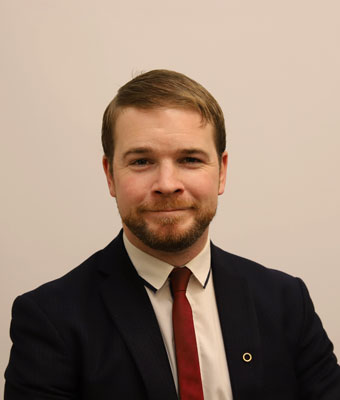
1. Deputy Donnchadh Ó Laoghaire asked the Tánaiste and Minister for Defence his plans to ensure sufficient funding is provided to resource Joint Induction Training Centre, JITC, Gormanston, Baldonnel, Haulbowline and DFTC infrastructure master plans. [49298/25]
This question relates to funding, primarily for training locations at Gormanston, Baldonnel, Haulbowline and the DFTC, and the infrastructure master plans for same.
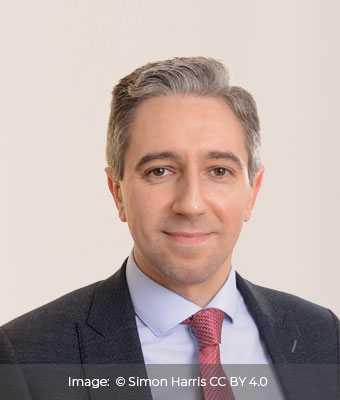
The revised national development plan capital allocation for the defence Vote group for the period 2026 to 2030 is €1.7 billion. This represents an increase of €600 million, or 55%, on the previous baseline of €1.1 billion. For 2026, the defence capital allocation will increase by €85 million, or 40%, to €300 million. Capital investment in defence primarily provides for the renewal, retention and acquisition of major defence equipment and infrastructural platforms - expenditure which enhances and supports our military capabilities and therefore contributes to a more secure and resilient society. The revised capital allocations now provided to defence will assist ongoing efforts at modernising and upgrading our equipment and built infrastructure platforms, and will enable progression on key elements of our commitments within LOA 2 as outlined in the Commission on the Defence Forces report.
The Deputy will note that following the conclusion of the process of agreeing overall departmental allocations, all Departments were requested to consider and outline our sectoral priority projects for delivery over the period to 2030. In that regard, my Department is now prioritising within the revised NDP allocations to meet its sectoral targets and obligations. I have two things to tell the Deputy. On budget day, we will be in a position to publish the projects we intend to deliver on in 2026 so I will have more details that are specific to the Deputy's question then. Also, this autumn we will be expected to publish the sectoral investment plans for the next number of years.
The delivery of infrastructural projects outlined in the infrastructure development plan and the master plan programme is being planned as part of this process. This will encompass consideration of the joint induction training centre in Gormanston, Baldonnel, Haulbowline and DFTC infrastructure master plans and will reflect fully on key factors such as funding availability and contractual commitments to inform future infrastructural needs and priorities.
To make a long story short, we have seen a very significant increase in our capital budget for defence. I welcome that; it was badly needed. It is my Department's job, in conjunction with the Defence Forces, to publish sectoral investment plans to show how we intend to allocate those resources against specific projects and we will do that in the coming weeks.
I thank the Tánaiste. For the record, I appreciate there are constraints, given the window we are in, in terms of what the Tánaiste can tell me. What he will tell me is another question, maybe. In general, I put on record that we support increasing defence expenditure provided it is done in a wise and rational way. It is vitally important that we are investing in the areas of most relevance to us as an island nation, and also in building the Defence Forces on a stable foundation through training, equipment and ensuring that, with the recruits we are bringing in, we are able to arrest the slide in establishment numbers in the Defence Forces. We also need to ensure the equipment and the environment in which recruits are trained are to the highest standard. The issues relating to Gormanston have been well publicised. The consensus is that the current location is in a state of disrepair and not fit for purpose. That is a challenge. There is a need to address the training infrastructure for new recruits at the other key locations of the Defence Forces training college, including locations at the Curragh and the Glen of Imaal, but also at Baldonnel and Haulbowline. I will come back to the issues relating to cadets.
I largely agree with Deputy Ó Laoghaire. I welcome and acknowledge the fact that there is, broadly, cross-party support and support across the House for increased spending on defence and security. We will have different views and perspectives, perhaps, on where to prioritise that level of spending. However, we all recognise as a militarily unaligned neutral country that we still have to take our own defence and security capability seriously, particularly when it comes to supporting key infrastructures and having a better understanding of what happens above in our skies and below in our waters. To do all of that, we could have all of the shiny equipment we want but we need to have the men and women of Óglaigh na hÉireann to carry out those tasks and keep our country safe. That is why investing in its training facilities is really important.
In fairness to the Defence Forces and the Department of Defence, I think the work they have undertaken in terms of developing a series of master plans for each installation to future proof them for 20 to 30 years is a sensible way of doing it. It will identify from the outset the infrastructural requirements in line with capability developments for each installation but will also then allow a pipeline of projects to get each of those facilities to where we wish them to be.
To come back to some of the brass tacks in terms of the training objectives outlined in the report of the Commission on the Defence Forces, there was one objective for the future and another that I hope has been progressed a bit. Will the Tánaiste give an update on it? It was recommended that a new communication information workshop facility at the training centre would commence in 2024. The cadet school headquarters was to be completed in 2023. Will the Tánaiste confirm that those targets set out in the commission's report have been achieved and whether we are currently on schedule? It is proposed by 2027 to have the establishment of an officer training centre comprising the existing cadet school and a new officer candidate school, which would conduct potential late-entry officer courses and Reserve officer courses every two years. That is to be done by 2027. Are we on schedule for the officer training centre, incorporating some of the existing infrastructure, by 2027? Have the communication information services workshop and the new garaging facilities, which were meant to have been completed by this stage, in fact been completed?
I will check that for the Deputy as I do not have that information in my notes and I do not want to mislead the House. I am not aware that they are not on track but I will check and come back to the Deputy on that today.
Yes, we are on track for 2027. As the Deputy rightly said at the outset, I do not want to get ahead of ourselves here in the sense that, in fairness to all parts of the defence infrastructure, we need to go through a rigorous process of which project and when, and that pipeline and prioritisation. We will be in a position to publish the projects we intend to deliver in 2026 very shortly. We will also be in a position a couple of weeks later to publish the sectoral investment plan for defence project by project. That will take us out for the next five years. That work is now under way. I have met the Chief of Staff on this issue together with senior officials in my Department. They are now preparing those investment plans. They are doing so from a position of having a lot of extra capital funding, from a low base - let us be truthful. Even with a lot of additional funding there still needs to be that sense of prioritisation and that work is under way.
Pension Provisions

2. Deputy Duncan Smith asked the Tánaiste and Minister for Defence if pension entitlements will be transferred to the widow of a person (details supplied); and if he will make a statement on the matter. [49022/25]
It was not my initial intention to raise this as a priority question this morning but I am glad of the opportunity. It relates to the pension entitlements of deceased Defence Forces officer Peter Flood and transferring those to entitlements to his widow.
I thank the Deputy for raising this issue. As the Deputy knows, public service pension schemes, including for the Defence Forces, provide for the payment of spouses’ and children’s pensions. However, such pensions are only payable where the deceased had been a member of the relevant spouses’ and children’s scheme.
I do not want to delve too much into somebody's information but the facts of this case have been examined previously and I am advised that, unfortunately, the individual in question was not a member of the relevant Defence Forces contributory spouses’ and children’s pension scheme. Without personalising it to any individual, people have an opportunity to opt in or opt out of the original scheme and an opportunity to opt in or out of a revised scheme. I think that opportunity in regard to the revised scheme would have arisen in 1985. Out of respect to the individuals involved, I will send a more detailed note on the individual's circumstances but, more broadly, my Department would be in correspondence with anybody who has such queries and it would have provided any relevant documents that may have been filled out and showed any paperwork involved where people would have made a decision on which scheme to join or not. I do not wish my answer to sound cold because I of course have sympathy for the situation that has arisen but the factual position is that there is not a legal entitlement or, indeed, an ability to pay a spouse's pension where somebody has not opted in to such a scheme.
Membership of the original spouses’ and children’s contributory pension scheme was compulsory in the case of soldiers who enlisted after 31 January 1978 but it was optional in the case of soldiers already serving at that time. In other words, people who served before 1978 had to choose to opt in or not opt in. Soldiers already serving on 31 January 1978 were included as members of the scheme unless they made a positive option in writing not to become members. It was made clear to all such soldiers that no benefits could be paid under the scheme to their dependants and they would not be afforded an opportunity of joining the scheme at a later date. However, since then a second opportunity was granted in 1985 where people had a further opportunity to opt in.
The reason I raise the issue - the family understand and have been informed of the circumstances by the Defence Forces - is that the individual in question left school after his communion, had no formal education and, in the words of his own family, had severe literacy issues. He found sanctuary in the Defence Forces. He served there for 22 years and had multiple tours of Lebanon. He was a proud Defence Forces member and was always sure and had told his family that if anything happened him, his beautiful wife and his family would be looked after.
There is no blame here as such but I am seeking a way to address this. We are going to spend the next couple of weeks talking about a cost-of-living crisis and its impacts. This is what happens when circumstances transpire that leave people on the outside of a particular scheme. It is no one's fault as such but we need to be cognisant of the fact that if someone does not have a formal education and has severe literacy issues, any forms, be they in 1985 or whenever, can be quite intimidating and difficult.
I am sympathetic to the broader point the Deputy is making and I certainly extend my thanks and that of the State to the individual for their service with distinction in our Defence Forces. Neither the Deputy nor I were around in the seventies or eighties but my note tells me that, at the time, detailed information was provided and there were extensive briefings. There was meant to be that firm cut-off of 1978 and then they gave another opportunity in 1985 for people to reconsider their decision. I make that point more broadly than for any individual. As the long-standing provisions in relation to the Defences Forces contributory spouses' and children's pension schemes are of common application across all public service spouses’ and children’s pension schemes, the situation of surviving spouses of deceased military personnel cannot be considered in isolation. Any change here would have significant policy and cost implications for all public sector pension areas if we were to reopen that concept of a spouses' and children's scheme. I will ask the Department of Social Protection to also take a look to see if there is any further advice or information that can be provided to the family. I will also correspond with the Deputy on the issue further.
I thank the Tánaiste. I will not delve too much further into the details of this. I look forward to his more detailed response and anything the Department of Social Protection can do. I will come back through him if I believe there are any further avenues we can pursue.
I am very happy to do that.
Maritime Jurisdiction
3. Deputy Donnchadh Ó Laoghaire asked the Tánaiste and Minister for Defence to provide an update on the national maritime security strategy; and the level of funding that has been committed for 2026 and 2027. [49299/25]
The area of maritime security is one of the most salient to us as an island nation. If we are talking about increasing defence expenditure, we must surely ensure that our seas are safeguarded against traditional threats but also against new and expanding threats such as threats to undersea cables, hybrid threats and so on. A maritime security strategy is obviously something that is very timely but it is vitally important that the resources will follow it. Will the Tánaiste outline the timescale in question regarding the development of the security strategy and the funding commitments that will follow?
At the outset, I very much agree with the Deputy. For an island nation, the development of a robust, comprehensive national maritime security strategy is key. Indeed, this was identified as a priority in last year's defence policy review. I am pleased to say that the strategy is now being developed in consultation with national and international stakeholders and it is expected to be delivered to me for consideration before the end of the year. In support of the development of the strategy, my Department held a public consultation over the summer to gauge people’s views and to try to build consensus on the diverse threats, risks, challenges and opportunities that are faced by our country in the maritime domain. I am pleased to say the public consultation got a lot of engagement. Approximately 300 submissions were received from a wide range of interested parties and stakeholders, including a number of Departments, academia and industry, but also members of the public. Initial analysis of the submissions has now taken place. I got a note on this the other day. It indicated that there is strong support for a strategy. There is also a very clear understanding from the public of Ireland's most urgent maritime security challenges, particularly the growing threats to critical undersea infrastructure; that came up quite a lot. We also detected significant support for international co-operation to improve maritime security. Analysis of the submissions is ongoing and the input gathered will serve as a critical foundation for shaping a robust and forward-looking national maritime security strategy to ensure Ireland is well prepared to meet current and future challenges in our maritime domain.
Regarding the funding of any capabilities or the funding of the strategy as per the previous question, capital funding of €1.7 billion has been allocated to the defence development plan for the period 2026 to 2030. This is an increase of €600 million and a 55% increase on our capital funding from the previous baseline figure. This indicates a significant commitment to continuing to increase investment in our defence infrastructure as well. We will be outlining how we intend to take that forward in our sectoral investment plan in the coming weeks.
Addressing this in a way that is sustainable will require some current spending as well as capital spending and I might come back to that in my last contribution. The threats that are potentially faced are multiple. There are obviously the traditional issues that the Defence Forces faced in ensuring the protection of Irish waters in a fishing and general sort of sense but also as regards the issue of the undersea cables. I understand more than 95% of international data and voice transfers are routed through undersea fibre-optic cables. When you combine that with Ireland's particular situation in terms of the technology industry and the clustering of the tech businesses in Ireland, it makes Ireland particularly vulnerable. There is also the issue of an increasing number of shadow ships and so on coming into Irish waters. The Defence Forces have dealt with this appropriately but ensuring they have the capacity to continue doing so as these threats potentially increase is going to be crucially important. There is also the issue of the full radar picture which needs to be addressed from a capital funding point of view.
I agree with that. We will get to it in a second but there will of course be current public expenditure as well, including making sure we have the men and women to operate and implement any such infrastructure and that we grow the size of our navy as well. Last year's defence policy review did recommend a focus on maritime security because of our assessed threat level, our geographic position and our responsibility and commitment to support security and defence of Europe. We are a small island in the north Atlantic. Our maritime footprint, our exclusive economic zone, is seven times our land area and our waters are currently home to a considerable percentage of transatlantic data communication. We have significant energy infrastructure running though our waters, particularly gas pipelines and electricity interconnectors. Our most recent national risk assessment, which my own Department co-ordinates, identified damage to undersea infrastructure as one of the 22 key risks for our country. The focus of the new strategy in its initial phase will be on national security and defence matters and we will develop a strategy that combines an enhanced awareness but also a prioritisation of the protection of our critical infrastructure, especially that undersea infrastructure. The Deputy will be aware of the work that is under way in the development of our sonar capability for the Naval Service and this is a priority project at this time.
On that, and it partially relates to my first question, it is important after the budget that the Department would publish a document outlining where we now stand with the revised capital development plan and to mark that against the report of the Commission on the Defence Forces. That would be a useful document if it were possible to achieve. One of the areas in which the gap between the current reality and the ambition is most stark is in our naval capacity. The Naval Service is still in a very under-resourced state. The manner in which it has conducted itself as regards some of the issues that have arisen has been exemplary but we still have the embarrassing situation where boats have been put to sea without a functioning main gun. That is primarily due to lack of personnel and expertise. One of the issues I have raised in the past - the Minister has talked about service level commitment schemes for certain ranks - relates to one of the roles that are most difficult to obtain and retain for the Defence Forces, namely, artificers. They are hugely in demand in the private sector. That needs to be looked at in the scheme.
The Deputy is right to highlight a particular challenge when it comes to our Naval Service. I join him in thanking its members for their exemplary service. We do need to grow our navy and that requires more men and women in our Naval Service. It also requires more than me just saying that at a headline level. It also involves identifying, as the Deputy rightly said, the specialist skills. What becomes very clear very quickly is that a couple of individuals with certain skill sets not being there can result in a ship not being able to go to sea. The pinch points that are there are real. They often relate to very specialist skills. That is why I have asked the Defence Forces and the Department of Defence to jointly produce a plan of action for the Naval Service. I am expecting to receive that very shortly - within a matter of weeks. There are then opportunities, both in the context of the budget and the capital plan which I have referenced, but also the local bargaining provisions that are available under the public sector pay agreements, to consider some of those specialist issues referenced by the Deputy in terms of various allowances that can be considered.
There is only so far 1% will go.
Defence Forces
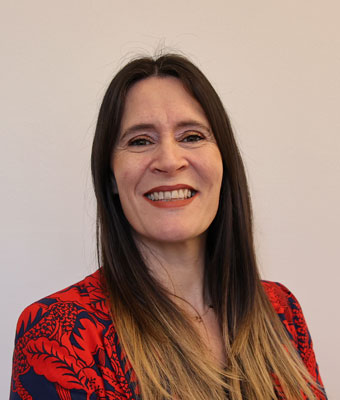
4. Deputy Sinéad Gibney asked the Tánaiste and Minister for Defence the consultation he has had with rank and file members of the Defence Forces in relation to the potential changes to their terms and conditions in the general dcheme of the defence (amendment) Bill 2025, which has recently concluded pre legislative scrutiny, particularly in the context of potentially more dangerous operational parameters of non-UN sanctioned missions; and if he will make a statement on the matter. [49295/25]
5. Deputy Donnchadh Ó Laoghaire asked the Tánaiste and Minister for Defence if he will outline his proposals to remove the triple lock neutrality protection; when he intends to bring forward a Bill; and if he will make a statement on the matter. [49300/25]
The general scheme of the defence (amendment) Bill 2025 represents a fundamental change to how we deploy troops overseas. For the many decades that Ireland has been participating in peacekeeping it has been under the exclusive banner of the UN. When people sign up for the Defence Forces, it is with a reasonable expectation that overseas service will be in a blue beret. Has the Minister consulted with rank and file members of the Defence Forces on this fundamental change to their terms and conditions?
I propose to take Questions Nos. 4 and 5 together. I agree with Deputy Gibney that it is absolutely the Government's intention to bring about a change in terms of how we deploy our troops overseas. I am quite clear on that. Where we disagree is how we see that. I see it as entirely possible to do that while respecting being a militarily neutral country. I have spoken to many of my counterparts in countries that are militarily neutral, none of which have a triple lock in place. We have recently seen what can happen at a UN Security Council with a peacekeeping mission that has been extraordinarily successful in Lebanon and yet one permanent member of the Security Council can decide that all of a sudden it does not want it to continue.
At the outset I must say that I want to be collaborative on this. The committee on defence did a good piece of work on pre-legislative scrutiny. I am considering that and I will report to Government shortly in advance of bringing forward the full scheme. I am open to seeing how we can strengthen any legislation to provide reassurances around the role of the UN Charter. It is absolutely our intention that any mission Irish troops go on would be in keeping with the UN Charter, but that is different from us saying it must be in keeping with a UN Security Council resolution. I am certainly eager to see how we can explore that. I think Irish people are rightly proud of the role that members of the Defence Forces have played in peacekeeping missions right across the world. It is a record that dates back many decades and which has remained unbroken. The current triple lock system is broken, however. It is absolutely broken. We can talk in aspirational terms about hoping somebody fixes it one day, or that Russia changes its mind or China changes its mind or the United States of America becomes really interested in UN Security Council reform, but that is not the real world. That is not the world we are operating in. I do not believe that anybody who is not elected in this country should have a say in where any member of Óglaigh na hÉireann goes or does not go, and that is happening now. Men and women of Óglaigh na hÉireann will not be able to go to southern Lebanon as a result, in effect, of a decision taken by people outside of this jurisdiction. I wanted them to continue, and I am sure the Deputies did as well, but they cannot. We worked to try to get that into a good place relative to where it could have been, to avoid a cliff edge and the likes, but the reality is that mission will end in 2027. We do not wish it to end in 2027. We wanted it to continue but that is the effect of the UN Security Council veto and structure today.
I have consulted with lots of people in relation to this. Obviously with the command structure that works in the Defence Forces it is often difficult to have direct conversations with serving members of the Defence Forces but we do of course talk to their representative bodies on an ongoing basis. The Oireachtas committee heard from them as well and they have made submissions, which are captured in the report that came to me. I know that the men and women of Óglaigh na hÉireann are proud of serving overseas and I imagine they would rather the democratically elected Government and Parliament of this country decide where they go rather than anybody from any other country.
I notice that the Tánaiste did not use the words "General Assembly" when he was describing how broken the triple lock is, so I do think we are still ignoring the fact that there is a facility within the triple lock to actually consult with the General Assembly. I would also point out that all previous Acts refer to this international United Nations force, not an international force. It is defined as, "an international force or body established, mandated, authorised, endorsed, supported, approved or otherwise sanctioned by a resolution of the UN Security Council or the General Assembly of the United Nations." It is to be replaced with an international force that can be under the banner of any international body. From peacekeeping that is guaranteed to be peacekeeping by the UN consistent with the UN Charter, we face a pivot to opening the door to missions of a lower quality and different nature that are branded as peacekeeping or strengthening international security under this legislation. I do not believe that what the Tánaiste has described is an effective level of consultation with the very men and women who are putting their lives on the line to discuss how the context in which they do that will be changed.
I will return to some of the things that we discussed in the committee but I might first respond on the issue of UNIFIL and what this means in terms of the UN. I wish to say clearly that I regret very much the decisions that have been taken in relation to UNIFIL. A lot of work would have gone on behind the scenes to ensure there was not a cliff edge. This was important so that the least worst outcome was avoided but it is still a bad outcome. It is a bad outcome for the regions and a bad outcome for the Irish Defence Forces. However, while it has not been said explicitly, the implication is sometimes carried by Government statements that there is a higher bar for Irish participation in UN peacekeeping missions, or something like that. Obviously that is not the case. There is no UNIFIL after the end of 2027. It ceases to exist. It is not the case that there is a higher bar for Irish participation in UN peacekeeping missions. The requirement that we have put as a sovereign State is that Irish troops participate in UN missions. It is not the case that there are UN missions, which have international respect and that standard of law, that Irish troops cannot participate in. The UNIFIL mission will end. There will no longer be a UN presence. If there is anything to follow, and I doubt there will be, it will happen outside a UN mandate.
Firstly, I agree with the Deputy's characterisation of what happened at the UN Security Council, which I believe is accurate. We did work very hard and I particularly commend the French, who held the pen in trying to come up with a compromise solution. There was a real risk that we would have seen a withdrawal of peacekeeping troops in some sort of chaotic manner from southern Lebanon. I was very worried about the safety and security, in that context, of our peacekeepers and the people of Lebanon. There is a new government in place there and a president in place. They have really taken action against Hezbollah. That idea of the international community turning its back on them at such a crucial moment was not something we could countenance. To get to the end of 2026 before withdrawal begins and then to have a full 12 months for the withdrawal to take place is a better outcome, but it is still a bad outcome. It is not what we in Ireland wanted and I do not believe it is what this Dáil wanted, but it is what has happened.
I do not mean to be combative but I believe the General Assembly piece misses the point. The reality is the General Assembly can make recommendations but one cannot overlook the role of the UN Security Council. The one time that is referenced was the time the UN Security Council was in agreement with the General Assembly. I am off to the UN for a high level week this weekend. The idea that everything is functioning well really misses the point. The UN Security Council has not been in a position to authorise a new peacekeeping mission since 2014. The world has not become more peaceful. It is utterly dysfunctional how the UN Security Council is operating. Why can we not trust ourselves as a sovereign nation? They do not have this problem in Switzerland. They do not have this problem in Austria. They are militarily neutral.

It is called international law. We do not just get to invade other countries.
I know it is the left and the far left but Deputy Gibney is well able to speak for herself and it is her question. Switzerland follows international law very well. Does anybody doubt the neutrality of the Swiss? They do not have a triple lock. Does anybody doubt the neutrality of Austria? They do not have a triple lock. This is trying to whip up a frenzy. I have heard it: "Simon Harris and Micheál Martin want to send our sons and daughters to war." Stop. Stop. It is misleading and it is done to try to do "them and us" as part of the divisive toxicity that people engage in.
No one is denying the difficulties of the Security Council but the Tánaiste has given no effort to actually describe how the General Assembly could be engaged to fall back. It is in the Defence (Amendment) Act 2006. It is part of the triple lock and the Tánaiste is completely ignoring it. Constantly referencing other countries denies our history. It denies the Nice and Lisbon treaties and how we arrived at the point of the triple lock. Beside that, our association with UN mandates was way before then anyway. One cannot compare it to other countries like that. We can say that something is consistent with the UN Charter until we are blue in the face but the charter is clear around the use of force without consent and the backing of the United Nations. Everyone claims to go to war for peace, love, security and human rights but we have seen in the last 25 years how hollow those words can be. UN backing guarantees that peacekeeping missions are of high quality and that the operational parameters do not do more harm than good. We cannot send young men and women abroad into conflict zones with no blue beret and with no safeguard beyond what the Government of any given day thinks is a good idea.
The Swiss and the Austrians have constitutional protections in terms of neutrality so perhaps that is a conversation the Tánaiste wants to have. Instead of legislation governing the triple lock then perhaps the Tánaiste wants to have a conversation about us looking at constitutional protection for neutrality. Let us have that conversation. I suspect that is not what is in the Tánaiste's mind. If the Tánaiste is concerned about sovereignty I suggest that the Government puts this proposition to the people, given there have been two referendums in which the Irish people were assured that the triple lock would remain in place and that it was attached in protocols to European treaties. If the Tánaiste is so confident on the issue of sovereignty then I suggest he puts it to the people.
As regards the committee, a lot of the issues that were instanced by Government representatives as reasons to get rid of the triple lock are not prevented by the triple lock. Carrying out duties as military representatives, filling appointments or postings outside the State, and secondments to international organisations are not prevented by the triple lock. Conducting or participating in training is not prevented by the triple lock. Undertaking monitoring, observation or advisory duties is not prevented by the triple lock. Undertaking reconnaissance or fact-finding missions is not prevented by the triple lock. Participating in supporting duties, inspecting and evacuating stores, undertaking military close protection or undertaking humanitarian tasks - none of these are prevented by the triple lock. That was found and confirmed by the-----
Thank you, Deputy.
Where are we going to send the peacekeepers if we are reliant on the UN Security Council providing a peacekeeping mission?
Where are we going to send Irish peacekeepers, considering it has not supported any peacekeeping missions since 2014 and has now effectively ended-----
Where is the Tánaiste going to send them?
-----the largest overseas peacekeeping mission we are involved in? Where are we going to send them?
Where are you going to send them?
We are going to be sending them on peacekeeping missions that are consistent with the UN Charter and the approval of the Government and the approval of the Dáil. I do not understand-----
That would mean the triple lock then.
The triple lock-----
-----is the UN Charter.
-----requires the UN Security Council.
Eleven missions.
The Deputy was late to my initial remark. I am very happy to have a conversation with Deputies Murphy, Gibney and Ó Laoghaire about how we can strengthen within the legislation references to the UN Charter. I even have some ideas I am happy to discuss with them about how we can oversight mechanisms in making sure anything our peacekeepers go on is consistent with the UN Charter. That is 100%. I value the UN. The UN is a force for good. We value multilaterialism at a time when it is under attack. What I am not going to do is just sit here and suggest that we are going to just allow this to continue until Putin or anybody else changes their mind and says, "Let us reform the UN Security Council". It is doing a disservice to the men and women of Óglaigh na hÉireann, many of whom I can tell Deputies - and Deputies ask if I speak to them - are absolutely gutted that their peacekeeping mission to Lebanon has been ended, many of which they have served on and their mothers or fathers served on previously. That is coming to an end because of the dysfunctionality of a structure the Deputy wants me to continue with. I am not going to do it.
On democracy and mandate and all that, we had a general election. We very clear in my party's manifesto, as was Fianna Fáil, around-----
Fianna Fáil was not.
Fianna Fáil was not at all.
In the current manifesto-----
The Tánaiste's party was not either.
The leader of Fianna Fáil, the Taoiseach of the country, was very clear in his views on the triple lock.
His manifesto was not.
He proposed it when he was Minister for Defence. I have been crystal clear with regard to it as well. We had an election and formed a government. We do not need to run back to the people to have a referendum on every issue. We are very clear, and I believe the majority of people in this country trust their own democracy and certainly not Russia's as to where our peacekeepers go.
6. Deputy Catherine Callaghan asked the Tánaiste and Minister for Defence if he will, in the interests of equity, seek an increase in cadets' pay to bring it in line with the starting pay of a three-star private given both are similarly trained and qualified; and if he will make a statement on the matter. [49483/25]
In the interests of equity, will the Tánaiste seek an increase in the starting pay of cadets to bring it line with the starting pay of a three-star private, as both are similarly trained and qualified?
I thank the Deputy as one of the few Members who has worn the uniform and represented our country with distinction in Óglaigh na hÉireann and indeed in southern Lebanon. She is someone who can speak with authority on a lot of these issues. I thank her for raising the matter.
She will be aware that there has been significant progress made on pay and conditions for Defence Forces personnel, particularly over the past six years. The starting pay of a school-leaver cadet, on commissioning, was €30,884 in 2019. As of 1 August this year, that same school-leaver cadet, on commissioning to second lieutenant, is paid €45,795, an increase of 49% between now and 2019. These are figures we do not talk about. We talk about recruitment challenges. People need to start telling their constituents and get this message out there - it is €45,795, an increase of 49% since 2019. After two years at that rank, they are then promoted and their pay rises to €51,184. Where a graduate joins, the pay rate on commissioning begins at €51,184. These rates all include pensionable military service allowance.
In May 2019, a newly qualified three-star private could have expected to earn €27,759 gross per annum on completion of his or her initial training. This has now increased to €41,880. That is €27,000 to €41,000 since 2019. These are big improvements and rightfully so.
As the Deputy will be aware, different pay scales also apply during the training period for both cadets and recruits. The current pay scale applicable to cadets ranges from €25,748 to €38,526, depending on qualification. In addition, cadets are provided with accommodation with meals free of charge for the duration of their training, as part of their overall package.
The Deputy has referenced the fact that cadets are similarly trained and qualified as three-star privates during the first six months of training, and while I very much appreciate that point made, cadets are required to complete a further period of training of approximately 11 months before they are commissioned and operational. In summary, cadets are not available for duty following their initial six months training and therefore the comparison is not entirely equal. During their training periods, cadets and recruits are not paid the military service allowance. I will come back in a moment.
I thank the Tánaiste. I acknowledge his work to date on improving pay and conditions, some of which he has outlined such as quite rightly increasing pay for three-star privates and reforming the apprenticeship pathway so that technical staff beginning their careers in the Defence Forces correspond with three-star privates after six months. The Tánaiste has also overseen the introduction of the instructor's allowance and established a service commitment scheme for our air traffic controllers in the Air Corps. These are all developments that should quite rightly be applauded.
However, at present, everyone else in the Defence Forces is on approximately €43,000 after six months but cadets remain on the €25,000. I understand the points the Tánaiste outlined but in this post-2013 era of career average earnings and pensions, these cadets are getting penalised on the double in their current pay and future pensions. As we all know, cadets can now join up to the age of 39 so it is conceivable that they have families and mortgages. A business case was prepared by the Defence Forces on foot of a motion asking for this to be looked at. Can the Tánaiste please confirm if this case has been progressed?
I can confirm that this matter was raised with the Department by military management and that business case was subsequently shared with the Department of Public Expenditure, Infrastructure, Public Service Reform and Digitalisation. The Representative Association for Commissioned Officers, RACO, has also raised it with the Department on a number of occasions during its formal conciliation council meetings with the Department. Since the signing of the public service agreement to which members of the Permanent Defence Force are a party, all cost increasing claims can be channelled through the local bargaining process. As I said a moment ago, local bargaining discussions are under way between the Department of Defence, military authorities and the military representative associations. Parties can bring forward proposals up to a maximum value equivalent to 3% of basic pay, with 1% to be paid from the current agreement, and the balance to be addressed in any successor agreement. There is an opportunity to examine pay and conditions, including cadet pay, through this process.
I am pleased that interest in applying for a cadetship remains extremely high, with 1,819 applicants this year alone, and the Permanent Defence Force is currently in the process of making offers to successful candidates. It is anticipated that a class of 80 cadets will be inducted in October. I am also pleased the business case is with the Department of Public Expenditure, Infrastructure, Public Service Reform and Digitalisation, and I will continue to keep the Deputy up to date on that.
I thank the Tánaiste, and I am happy to hear that it is with the Department of Public Expenditure, Infrastructure, Public Service Reform and Digitalisation. I implore him to follow that matter up with the Department, as neither the conciliation and arbitration scheme or national pay talks are going to address this low pay, given the no cost increasing caveat in the national pay deals, as he mentioned. Therefore, some political will is required here to address the matter. Local bargaining is not going to be enough. In the spirit of fair pay for a fair day's work, let us be very clear: our members of the Defence Forces do not just do any old job. They serve this country and bring honour to this country both here and abroad. On their behalf and on behalf of their families, I ask the Tánaiste to continue to liaise with the Department of Public Expenditure, Infrastructure, Public Service Reform and Digitalisation to seek an increase in cadets' pay to bring it in line. As the system currently stands, it takes up to five years for a cadet's salary to equalise with non-commissioned soldiers in an instance where both military personnel begin their service on the same day and are both similarly trained and qualified.
I acknowledge the point the Deputy made. The men and women of Óglaigh na hÉireann, those who serve our country and wear the uniform, do absolutely serve with distinction. I am extraordinarily proud of them and the honour they bring here, at home and abroad. I know that is a sense shared across this House and certainly across society as well. I thank RACO and PDFORRA for the advocacy they carry out on behalf of their members and for that good structure we have to engage with them.
As I have said, a business case has been prepared on this issue regarding cadets. It has been submitted to the Department of Public Expenditure, Infrastructure, Public Service Reform and Digitalisation, and there are opportunities to consider these. I reference the local bargaining because it is there and focuses all of our minds on prioritising what is next with respect to improving terms and conditions. There will also be successor pay agreements in the not-too-distant future. I am certainly eager to keep in touch with the Deputy, RACO and others in relation to this in the weeks and months ahead.
Energy Prices

82. Deputy Pa Daly asked the Minister for Climate, Energy and the Environment the measures he is taking to address the fact that 300,000 households are in arrears on their energy bills; and if he will make a statement on the matter. [49202/25]
Household bills are 70% above what they were in 2022 and the value of arrears has jumped by almost 50%, even with the electricity credits each winter. There are 300,000 people in arrears. The Government has said it does not want electricity credits to be the new normal but the rise in prices and the number of people in arrears are an emergency and not normal either. This demands an emergency response.
I thank the Deputy. I convey the apologies of the Minister, Deputy O'Brien. He is at an EU Environment Council meeting on the 2040 environmental targets. We sought a swap but due to the Dáil resuming that was very difficult.
On the Deputy's question, the Government has made a number of important commitments in respect of addressing the continued high cost of energy. The programme for Government acknowledges the increased energy cost pressures on households and businesses and commits to bringing forward taxation measures to help contain energy costs. The Government approved an extension of the 9% VAT rate currently applied to gas and electricity by a further six months to October 2025 at an estimated cost of €85 million with the net benefit to households from 1 May to 31 October being approximately €26.60 with respect to electricity and €20.28 with respect to gas. This is traditionally 13.5% but has been 9% since 2022 in response to the energy price crisis.
In June 2025, my Department established the national energy affordability task force to identify, assess and implement measures that will enhance energy affordability for households and businesses while delivering key renewable commitments and protecting security of supply and economic stability. A key output of this task force will be to develop an energy affordability action plan which will identify a comprehensive range of solutions, including demand-side solutions for households to allow them to adjust their energy demand and avail of low-cost renewable energy. Task force members are currently working to finalise the preparation of an interim report, which will set out measures for consideration as part of the budget 2026 process.
It is more than unfortunate the Minister is not here in the middle of a cost-of-living crisis to address the concerns of people who are really struggling in an emergency.
Over the summer households have been hit with a spate of emergency hikes from Energia, Flogas, Pinergy and SSE Airtricity. They have been told they can expect another at least another €200 to be whacked onto their annual energy bills. In the first week back in the Dáil the Minister does not show to tell us what he is going to do about it. All we know is the supports that have been there over the last number of years are going to be ripped away despite Irish energy costs being the highest in Europe, at €500 above average and 70% above 2022 levels. When I asked the Minister via parliamentary question what impact he thought the withdrawal of energy credits would have, I was told it was not a matter for the Minister but for the CRU. I find it very hard to believe the impact of policy choices is not the responsibility of the Government, as outlined in the letter from the Leas-Cheann Comhairle, and that it has no duty to consider and analyse its efforts. The CRU might be surprised to hear about this.
We have as a Government delivered over €3.3 billion in credits to over 2.3 million households in recent times, but we need to be strategic with this upcoming budget. Once-off measures are certainly not a long-term fix. That is why, as I said earlier, we have established the national energy affordability task force which is preparing an interim report to inform budget 2026. We are also looking at structural reforms, not just short-term relief.
As I said earlier, we have extended the reduced VAT rate on energy to help households directly and we are very much focused on targeted sustainable measures, not just repeating the same approach. We are also investing record funding in energy upgrades that will permanently lower bills for many of those at most risk.
The Government could not have had a more targeted measure than the energy credits that we have had for the last number of years and people are facing the same if not higher energy prices now. The Government continues to blame everyone apart from itself for it. The costs are due to political choices about whose energy needs get prioritised, who pays and who is protected. However, the Government has chosen to prioritise the energy needs of data centres and the profits of energy companies rather than ordinary people who are trying to keep the lights on and stay warm. If we want to bring down energy prices in the long term, the market needs a radical overhaul. We need major reform of the status quo with new measures to hold the energy companies to account rather than the blatant profiteering that has been taking place. We also need a fair funding model for our grid and the renewable transition rather than the Government's regressive approach which makes households shoulder a disproportionate burden of the cost of the network charges and the PSO levy rather than placing the burden on the data centres, which are, relatively speaking, let off the hook. It is possible to change this and I ask the Government to reconsider and redress the unjust burden placed on small businesses and households.
In the context of what we are discussing, the reality is that Ireland operates in a liberalised EU energy market where prices are set commercially, not by governments. That said, we are not passive observers in this regard. The CRU has statutory powers to oversee suppliers' conduct. We have recently strengthened its protections for consumers this winter. On profits, I accept that energy companies have posted strong returns recently but it is worth noting that ESB profits are being reinvested into infrastructure and renewables. We need to ensure that we continue to invest in our grid and that we have security of supply. The Minister, Deputy O'Brien, has written to many of the suppliers directly and has scheduled meetings to push for stronger supports for many householders feeling the burden of increased prices.
Energy Policy

83. Deputy Ciarán Ahern asked the Minister for Climate, Energy and the Environment if he or his Department have been lobbied with regard to the promised increase in the quantity of oil and gas which is to be purchased from the United States of America by the European Union; the contribution that this State is expected to make towards such an increase, and-or the potential for related loosening of environmental and climate regulations and human rights safeguards; and if he will make a statement on the matter. [49306/25]
My question relates to proposals under the recent trade agreement between the EU and the Trump Administration. The ridiculous tariffs got the headlines, but under this agreement the EU has further bent the knee to "king" Trump and agreed to massively increase the level of fossil fuels being purchased from the United States - €750 billion worth. There have also been reports of US officials, including its energy secretary, Chris Wright, engaging in extensive lobbying with EU member states on this matter, seeking the loosening of environmental protections. Has the Minister of State or his Department been lobbied on these issues by US officials or by officials from within the EU or other member states?
I appreciate the Deputy's question. Ireland engages with the US across a broad range of multilateral energy forums, from the United Nations and the G20, where Ireland is a guest country under the current South African Presidency, to the IEA and IRENA. While respecting different policy emphases regarding, for example, energy mix and the role of renewables in particular, we also enjoy an excellent bilateral relationship with United States colleagues on issues related to energy and beyond.
In relation to gas specifically, my Department has had regular engagements on the topic of gas security of supply with various European and international ministries and embassies, including the US Embassy, where our officials discussed the development of a State-led strategic gas emergency reserve, in the form of a floating storage and regasification unit to secure and protect Ireland’s energy systems from the consequences of any disruption to our subsea gas pipelines. This proactive intervention, once developed, will ensure that Ireland's largest commercial entities that rely on gas for production of pharmaceutical products, medical devices, IT, manufacturing, food and beverages will not experience a disruption to their energy supplies if damage to gas subsea pipelines occurs. The strategic reserve facility will be State-owned and the contract for replenishing with LNG will be through open-market procurement.
There has been no request from, nor promise given to, the US with regard to a diminution of Ireland's application of EU standards with regard to, for example, environmental assessment of infrastructural projects. Nor has Ireland agreed to increase the amount of oil imported from the US. In fact, our overall reliance on oil is decreasing in line with our climate ambitions.
Around 80% of Ireland’s gas supply comes from two interconnector pipelines from the UK, a well-diversified source, and the remaining 20% of natural gas is supplied from the Corrib gas field, off the coast of Mayo. Ireland currently has no other gas supply or entry points.
In relation to energy infrastructure delivery more generally, over the last five years Ireland, along with other EU member states, has looked to support the acceleration of planning for, and delivery of, energy installations through legislation introduced to modernise both the terrestrial planning system and marine planning system. However, Ireland’s environmental assessment process has not been diluted and remains a robust process, and nor has there been a reduction in our ambitious climate goals and objectives.
The Minister of State will be aware of our concerns on this side of the House with the Government's plans to overturn the previous Government's ban on the importation of fracked gas to facilitate the State-led strategic LNG reserve. I am sure the Minister of State is aware of the implications this will have for Shannon LNG and other commercial operators. It is opening the door, inadvertently or otherwise, to massive commercial importation of fracked gas. The Minister of State can make all the claims he wants about commitment to climate action, but importing this highly polluting fossil fuel at this time in our climate struggle and building new fossil fuel infrastructure really calls that commitment in question. I am glad to hear that the Government has not made any new commitments, but what are we going to do in other areas to make up for the inevitable increase in emissions from recent decisions the Government has made, including now the importation of fracked gas? What will we do in other areas to mitigate that?
The Government's intention on the installation of a facility like the floating LNG facility that is proposed is that it is being led by the State rather than a commercial entity. It is being done in a controlled manner that will, as I outlined in the earlier answer, allow us to protect a critical supply in the event of anything happening to the two interconnectors or indeed the subsea pipeline which connects the Corrib field. It is a protection system and will not increase the usage of gas. Those of us who believe in the transition away from fossil fuels to cleaner and renewable energy still recognise that gas will be that transition fuel for quite some time, recognising that the wind does not blow all the time and the sun does not shine all the time.
Last Friday, I launched the Government's next wave of offshore wind energy proposals. We are starting the process of developing a designated marine plan around our coastline which will identify sites suitable for fixed-bottom and floating wind generation. That is our direction of travel and we are committed to that. As the Deputy knows, by 2030 we intend to have another 5 GW of electricity in construction and by 2040 an additional 15 GW. We are absolutely committed to renewables but we must accept that we must have protections in the event of anything happening to the supplies of gas that are already there.
I accept and understand the energy security concerns here. However, the point I am making is that overturning this ban on the importation of fracked gas has opened the door not just to a State-led facility but to commercial exploitation and importation of fracked gas, using the same rules that the State is using to allow it. That is the problem. While the State facility may not be the most damaging way of going about things, it seems the commercial importation of fracked gas will now happen and An Coimisiún Pleanála is adjudicating on that at the moment. That is the huge problem here. Whether it is inadvertent or otherwise, the Government's decision here is potentially opening the door to massive importation of gas and increased gas use at a time when we are trying to avoid that. That is our problem here. There is a backsliding here on our climate commitments. We are asking the Government to stand up for our climate, to find other ways and to have red lines. The Minister of State needs to say to his Department, "We know there are energy security concerns, but find another way with no more fossil fuel infrastructure."
In addition to our support for the renewable energy sector, particularly with wind and solar, we are also enhancing our support for biogas. The Deputy will know that the Government has a strategy on that. We will see seven or eight projects in the very near future coming into play for that biogas system through the anaerobic digestion system.
We are absolutely committed to eliminating, insofar and as quickly as we possibly can, the dependence on fossil fuels to power our economy, while also recognising that our economy is growing with significant demands. We want to move away from using gas to generate electricity. We want to capture more of the renewable energy off our shoreline and utilise biogas as an appropriate means to further displace the importation of fossil fuels.
Data Centres
84. Deputy Pa Daly asked the Minister for Climate, Energy and the Environment the measures he is taking to address the concerns raised by senior Government officials regarding the impact of data centres on household bills and housing development; and if he will make a statement on the matter. [49203/25]
Officials warned that the Government’s approach to data centres is posing a threat to housing targets and driving up our energy costs. Does the Government plan to continue to bury its head in the sand or is it going to tackle this head on? I am not sure which Minister of State is going to take this question, but if it is the Minister of State, Deputy Dooley, I was listening to him on Radio Kerry last week when he was talking about marine planning. He criticised the Government, saying it needed to move away from navel-gazing and that it had sat on its laurels. Is the Government sitting on its laurels on this issue also, or is it actually going to do something about it?
The programme for Government sets out a clear policy direction that balances energy, housing, climate and economic development. It recognises that increased and unprecedented investment in our electricity grid and generation capacity is essential to meet future demand, not just for data centres but for housing, electric vehicles, heat pumps and a growing population. The electricity and gas retail market in Ireland operates under a European regulatory regime. Prices are set by suppliers as entirely commercial and operational matters. However, the CRU has statutory responsibility for consumer protection. It is currently reviewing investment proposals under price review 6, PR6. Under PR6, the CRU has proposed a record €18 billion investment in the grid between 2026 and 2030, with €14.1 billion guaranteed. The Government is underpinning this with €3.5 billion in equity support for EirGrid and ESB Networks. This represents a step change in infrastructure delivery, ensuring our grid can support both economic growth and housing delivery.
While already contracted data centres will be accommodated in the near term, the Government has committed to developing a plan-led approach for future large energy users. This will align with our decarbonisation objectives, supporting Ireland’s knowledge-led economy and providing certainty for the sector.
Let me be clear, data centres are a core enabler of our technology-rich innovation economy. Ireland has successfully attracted global leaders in this space. This must be balanced with the needs of communities, housing developments and energy affordability. That is why system operators assess future demands, including housing targets, population growth and climate goals, and the Government is scaling up investment in critical infrastructure to ensure that all customers benefit and that Ireland’s energy system remains secure, affordable and fit for purpose.
The large energy users the Minister of State is talking about are relatively getting off the hook and they are pushing up household bills. In a confidential memo recently released to us under a freedom of information, FOI, request, the Secretary General of the Department of public expenditure warned that soaring electricity demand, largely attributable to data centres, is forcing the State to spend heavily on new power generation and grid upgrades. As the grid is paid for through network charges, this is inevitably leading to surging household bills.
A single data centre can use as much as electricity as the whole city of Kilkenny. The memo also pointed out that data centres were a risk to energy security, to the extent that there is need to “direct Government intervention in the electricity market to purchase generation capacity on an emergency, non-market basis”. All of this is going to have to be paid by the taxpayer through electricity bills, leading to a disproportionate and unfair burden on households. Not only is this unstainable, it is also regressive. Price review 6, as the Minister of State mentioned, represents the perfect opportunity to right this wrong, but the draft decision, unfortunately, seems to extend it further. Will the Minister of State commit to doing something about it to alleviate the burden?
Let us be clear: households are not subsidising data centres. All users of our electricity grid contribute to its development. The CRU, as the independent regulator, ensures costs are fairly and proportionally allocated. In fact, extra large energy users, including data centres, have seen network costs increase in recent years compared with those for domestic customers. Price review 6 is a great opportunity. Transmission costs for data centres are expected to stabilise and reduce, reflecting the reversal of recent increases linked to security of supply. It is important to have that balance, as I said earlier. Housing is the Government’s number one priority. That is reflected in the national development plan where we have allocated more than €35 billion over the next decade to housing, while also understanding the need for other key infrastructure, such as energy and water infrastructure. That is why the national development plan has been published and is very much focused around programme for Government commitments.
Why then is the Secretary General of the Department saying what is being said and that housing is being threatened by the larger users of electricity? The current proposal in price review 6 is to increase network charges for households. Presumably, the Minister of State does not disagree with that. At the same time, the proposal is to decrease charges relatively for data centres. This is unjustifiable. The excuse used by a lot of the energy providers, such as Energia, is that their network charges are rising.
Small businesses are complaining that it is the same. Data centres are the ones driving up energy demand and gobbling up all the new capacity on the grid, but they have consistently not been paying their fair share. I agree with the Minister of State that there is a need for data centres but let them pay their fair share. Their bills have been subsidised for years by small and medium enterprises and households as part of the large energy user subvention. We in Sinn Féin believe that the determination of price review 6 in December must reflect these facts and right these historical wrongs.
I thank the Deputy. First, the Secretary General of our Department rightly pointed out that policy choices must be made, and we are making them. Certainly, that is why we are investing in housing, the grid and water infrastructure. These are the three pillars that will support sustainable development in this country. The idea that data centres are being prioritised over homes is not supported by facts. That will not happen under price review 6. We are investing in the grid like never before, not just to connect more homes but to ensure we can distribute the renewable energy we are generating across the country and provide homes, businesses and communities with more green renewable energy. The CRU is independent. This review includes a medium-term outlook in terms of balancing housing and climate targets. It is about how we can ensure houses are delivered and our economic development is not staggered.
Just Transition

85. Deputy Brian Stanley asked the Minister for Climate, Energy and the Environment the amount of funding provided to projects and initiatives in County Laois from the national and European just transition funds, under the various headings, to date in 2025, by recipients; the amount granted to each, and the purposes for which it is to be used; and if he will make a statement on the matter. [49377/25]
The issue I am raising with the Ministers of State relates to the distribution of the just transition funding that came from the European Union and the €16 million that came from the State. I have concerns in this regard. It is supposed to be for the former peat harvesting areas. Under EU funding, they are designated as coal regions. The State made the case successfully for funding for the former peat harvesting areas, like the midlands, that are affected. County Laois is one of those areas. I am delighted that there are two Ministers of State in the Chamber to address this because I have questions around it.
I thank Deputy Stanley. From previous Oireachtas terms, I know he has shown a great interest in this particular area and championed it over that time. In total, more than €29.2 million under the EU just transition fund has been allocated to projects that are fully or partially based in County Laois. Of this, almost €3.6 million has been approved for projects under way solely within County Laois, while more than €25.6 million has been approved for projects across several counties, including County Laois. I will provide the Deputy with the full breakdown of these allocations in tabular form, including details of the recipients, projects and amount of support allocated. That information will be provided to the Deputy in that format afterwards.
The diverse range of projects being supported include Emo Court and Estate development, sustainable tourist accommodation in The Forum in Mountmellick, the development of Canal Road Business Park in Portarlington and the Poet's Cottage Community Café in Camross.
All information on projects under the EU just transition fund is publicly available on the beneficiaries section of the Eastern and Midlands Regional Assembly website, the managing authority for the fund. We will provide the details to the Deputy in tabular form afterwards.
The national just transition fund closed in December 2024 and disseminated no funds over the course of 2025. The Minister keeps the operation of the fund under review, including consideration of future calls.
I have a record of the projects that got funding. My concern is that the worst affected areas did not get funding. It was not targeted at them.
Money was allocated by Laois County Council for tourism, which is good, for example to Emo Court. It is located in the middle of the county. I also welcome funding for The Forum in Mountmellick. It is good news that the Junction 17 business park was allocated €1 million. The Poet's Cottage community cafe in Camross also benefited, as well as the business park in Portarlington, which was allocated €1 million. That is all good. However, some of the funding went to derelict pubs in areas with no connection to Bord na Móna workers. I am talking about towns like Mountrath, Mountmellick and Borris-in-Ossory. One project was funded in Mountmellick, but no funding has gone into projects in Borris-in-Ossory or the Abbeyleix area. Former Bord na Móna workers and families are asking me where the benefit is from the total funding of €185 million. That is the question being asked of me as a public representative and I do not have a good answer for them.
I have an extensive list, which I can share with the Deputy. If there is a necessity to meet with some of his constituents about their concerns, I am happy to meet with them. This was a call-led approach, so it was dependent on projects being brought forward to seek funding. It was not as if the Government identified specific locations and sought to create a demand around that. The programme was in place and the calls went out for applications for funding, which were assessed against the criteria during the process. If the Deputy has concerns about specific areas, we will be happy to meet with him and attempt to work through them.
I thank the Minister of State. My concern is that of the total available fund of €185 million, a reply to a previous parliamentary question shows that approximately €93 million has been spent. The reply to the question was received about a month ago. We are about 50% of the way through the funding. The feeling I get from people who have been showing an interest in the fund is that it is being rushed a bit. If we are halfway through spending the money, which is a lot of money, we must be careful about where the remaining €92 million or so is spent. I ask the Minister of State to take an interest in the matter. If need be, we should slow down the process. Perhaps there are deadlines from the EU that have to be met. If that is the case, perhaps the Minister of State would clarify that, but if that is not the case then we should pause the process, take it easy and make sure that the money goes to good projects.
In particular, I want to highlight that, according to the reply to the parliamentary question, only €3.6 million has gone to specific projects in County Laois out of €185 million. That is a very small amount for a county that was badly affected. I refer to towns like Mountrath, Mountmellick and Borris-in-Ossory and the Abbeyleix area where there are a lot of former Bord na Móna workers. I worked with a lot of them. Mountrath was very badly hit.
In fairness to the Deputy, he has always made those points. I appreciate his interest in this matter. The Minister, Deputy Darragh O'Brien, launched a public consultation on the development of Ireland's social climate plan last Thursday. The plan will set out measures to be financed under the EU Social Climate Fund over the period 2026 to 2032. The EU Social Climate Fund is the first EU fund developed with the explicit purpose of alleviating potential energy and transport poverty occurring from the transition towards clean mobility and decarbonised built environment. There may be some opportunities arising from that fund for the Deputy to focus on. We are trying to ensure that the funds that are available meet the needs of those who were impacted to the greatest extent as a result of moving away from the harvesting of peat in the region. The Deputy has identified some areas. It is in the interests of the Government to work with those communities that are most affected to ensure that the transition is as seamless as possible. That is a big statement, because no matter what was done, there was going to be a significant impact on those communities.
I thank the Minister of State.
I recognise the efforts many communities have made to try to assist. Deputy Stanley should please share with us if there are other viable projects or assistance is required.
Recycling Policy
86. Deputy Paul Lawless asked the Minister for Climate, Energy and the Environment the proportion of plastics collected under the deposit return scheme that are processed overseas; and if he will make a statement on the matter. [49283/25]
My question is about the deposit return scheme, DRS. What percentage of plastics and cans that are collected via the scheme are processed here and what percentage are processed abroad?
I thank the Deputy for the question. The deposit return scheme was introduced in February 2024 to encourage higher recycling rates for plastic bottles and cans and to help Ireland meet its EU recycling targets.
Since becoming fully operational in June, 2024, the scheme has delivered strong results. According to Re-turn, the scheme operator, Ireland achieved a 66% collection rate in 2024, which has since increased to 76%, based on rolling averages in early 2025. This puts us firmly on track to meet our EU target of 77% by the end of the year.
Under the single-use plastics directive, producers must use 25% recycled content in PET bottles by 2025, increasing to 30% by 2030. The DRS is critical in supplying the high-quality recyclate that is needed to meet the targets.
While the collection and recycling of containers returned is an operational matter for Re-turn, I can confirm that all material collected is first processed at its contracted facility in Limerick. From there, it is sent to licensed facilities in Ireland, the UK or Europe for final recycling. In 2024, 34% of PET collected was recycled in Ireland, with the remaining 66% exported, primarily to the UK and the EU. This reflects current market capacity and the need for specialised facilities to handle high-grade recyclate. Importantly, one of the long-term benefits of the DRS is the potential to establish Ireland's first bottle-to-bottle recycling plant. This would allow us to retain the economic value of this material, reduce reliance on exports and further strengthen our circular economy.
It is very important that this was sold as an environmental measure. It is clear that a significant volume of material is leaving the country. Does the Minister of State have an assessment of the emissions in that regard? What work is he undertaking to ensure we have the capacity and facilities available in this country?
The reality is that Ireland currently does not have a facility capable of fully recycling PET bottles into new food-safe drinks containers. Some operators do look at the processing of PET into flakes. That said, the DRS has created a consistent stream of high-quality recyclate. Re-turn is actively exploring the viability of establishing Ireland's first bottle-to-bottle recycling plant. Building a stable supply chain is a direct dividend of the scheme. There is a strong strategic opportunity here also, both economically and environmentally, to ensure that such a plant is established in Ireland.
I agree that such a plant should be established but the introduction of the plant should have happened in advance of the scheme. There is a great deal of inconvenience involved. A significant amount of money is going to a private company, which gives rise to a number of questions that I hope we will soon address. It is very important that a bottle-to-bottle recycling plant be set up. Does the Minister of State have a timeline for when the facility will be made available and be able to process the material in this country?
The Deputy should bear in mind that the current technical capacity was not in place previously. The scheme was only introduced in June 2024.
The company had to establish a supply chain to strategically invest in a facility of this type. Thanks to the DRS, we now have a supply chain and market conditions that are favourable and make economic sense to establish a facility like this. We are all in agreement that we need develop it, but this was not a policy failure. The initiation of the scheme has provided huge benefits, and we know that from many litter studies around the country. Indeed, there is a current supply chain where 33% of all PET is recycled in Ireland currently. We have to look at how we can keep the remainder on the island and ensure it goes back into a more circular system bottle to bottle.