Energy Infrastructure

In recent weeks, I have attended a number of different community meetings in my constituency relating to proposed energy projects. These are causing a lot of concern and are very divisive. They are all being led by private investors. To give a few examples, in Athenry, Bord Gáis Energy is proposing to build the Cashla peaker plant 2.5 km from Athenry town. This is an open-cycle gas turbine plant with a capacity of more than 300 MW and a 100 ft high emission stack. In Portumna, a reserve gas-fired generator is awaiting a decision from An Coimisiún Pleanála. This project alone would represent more than 1 GW of generation capacity, with three chimney stacks in excess of 100 ft. These two developments would be among the largest individual generation units on the island. In Monivea and Abbeyknockmoy, the proposed Bellville solar project led by PCRE is planned to cover approximately 1,000 acres within the community across multiple different sites. This is a small, rural community that would be left totally unrecognisable should this development go ahead in its current form. We also have a huge number of wind farms at various stages of planning in my constituency, especially in north Galway. In some cases, these involve turbines of up to 200 m high in close proximity to homes.
We have a significant concentration of developments in east Galway, which is something that needs to be looked at. These are all very large developments in close proximity to residential areas and schools. There is a target of at least 2 GW of new, flexible, gas-fired generation by 2030 in the climate action plan. From the projects I just outlined, the two developments in Athenry and Portumna would provide roughly 1.5 GW, or three quarters, of this target. Two proposed projects within 40 km of each other would contribute three quarters of what is supposed to be a national target.
People have serious questions around safety, health and well-being and the impact on their homes, property value, quality of life and the local landscape and environment. In Monivea, there are particular concerns about the long-term impacts on the community. Will their children be able to build there in the future? What will the future of farming look like in the area, given that prime agricultural land is being taken up? There is no clarity for people on these issues.
When it comes to large-scale developments, we need to consider the impact on the social fabric of communities. Like I said, these projects are very divisive within communities. Neighbours and families are falling out with one another because they may have facilitated land or access.
The role of private developers is also causing a huge amount of frustration. They are landing these massive proposals on top of communities. The public consultation is not sufficient. People are not being made aware of it and it seems to be a box-ticking exercise. Serious allegations have been made of people being misled as to the nature of projects, as well as people being coerced into facilitating access, which is very serious.
That is just a flavour of the issues coming up in the communities I represent. We could talk for a long time in detail about all of the concerns these developments are causing and the frustration with how these private companies are treating communities while they profit massively from them.
The Government is failing communities due to the absence of a plan-led approach with regard to these developments. The wind energy development guidelines are completely out of date. We are told that solar guidelines are starting to be developed, but there is little information other than that forthcoming. There are no specific plans regarding gas plants. Is this something the Government will finally get a handle on? Of course, we need energy, particularly renewable energy, but this is not the correct way to go about it. What response does the Government have to these issues? How will it ensure, as much as possible, that developments are appropriate to communities?

The development of renewable energy is an important issue. Therefore, it is useful to have the opportunity to update Members of the Dáil on the status of planning guidance with regard to wind and solar energy development. From a planning perspective, the programme for Government contains commitments to prioritise the publication of the wind energy development guidelines and to introduce new planning guidelines for solar energy development.
With regard to the wind energy development guidelines, the review is addressing a number of key aspects of the guidelines, including setback distance, noise, shadow flicker, community obligation, community dividend and grid connections. The review aims to strike an appropriate balance between addressing the concerns of local communities by ensuring there is greater and earlier community engagement by wind energy developers. While the review of the guidelines has been ongoing for years – it has been going on too long - significant progress has been made towards concluding the review process. The Department of Housing, Local Government and Heritage, in conjunction with the Department of Climate, Energy and the Environment, which has primary responsibility for environmental noise matters, has been working to advance guidance on the noise aspect of the guidelines. This work, which is highly technical in nature, is substantially complete.
The Department of Housing, Local Government and Heritage will ensure that the final guidelines, once published, are fit for purpose to provide guidance in line with renewable energy and climate targets, while having appropriate regard to the impacts of wind energy development. The evolving policy and technical context, including the Planning and Development Act 2024 and the first revision of the national planning framework, reinforces the need to ensure that the finalised guidelines, once issued, are fit for purpose.
Also included in the programme for Government is a commitment to introduce planning guidelines for solar energy developments. The Department of Housing, Local Government and Heritage has begun an initial scoping process to identify the component factors relevant to the preparation of these guidelines, including the possible timeframe for publication. Until the finalisation of solar panel development guidelines, it will remain the case that, as with the large majority of development types, there are no specific planning guidelines to deal with solar energy development.
In line with the EU directive requirements, a strategic environmental assessment is being carried out on the draft wind guidelines and will be carried out on any draft solar guidelines. The Department of Housing, Local Government and Heritage intends to undertake a public consultation on any draft guidelines, for either wind or solar, before they are finalised whereby individuals, communities and organisations will have an opportunity to submit observations on the draft guidelines. Finalised guidelines will be prepared following detailed analysis and consideration of the submissions received during the consultation phase.
With regard to biogas or anaerobic digestion, the current planning system provides a sufficiently robust policy and legislative framework to facilitate the proper planning and sustainable development of developments, which may be considered on a case-by-case basis in accordance with the relevant county development plan and Government policy, as applicable. In that context, there are currently no plans at present to introduce statutory planning guidelines for these development types.
It is unacceptable that the review of wind energy guidelines has taken several years. It is a dereliction of duty from the Government while these developments are causing such unease in our communities. We all recognise that this is something that will never be perfect. There will always be controversial developments, but the Government, at the very minimum, needs to step in to put some kind of plan or framework in place that regulates where these developments should be located so that the impact on communities can be minimised as much as possible.
The wind energy guidelines are from 2006. They are totally out of date and have not kept up with the technological advances that we have had since then. People are suffering as a result. The updated guidelines need to be brought forward as soon as possible. Similar guidelines need to put in place for other types of development.
The bottom line is that people are frustrated that these companies can bring forward applications for large-scale developments without any real consultation, engagement or proper consideration of the impact on those communities.
We should remember that such developments are hugely profitable for these companies as well. They should be held accountable for not treating communities with respect and not having the decency to engage with people regarding their concerns. That drives people mad, and rightly so.
I fully recognise the need for energy security. I am very much in favour of renewable energy, but the way these projects are being handled and carried out is wrong. It is proving divisive and causing much frustration. These companies are making a huge profit out of other people's suffering. We must make sure that, as much as possible, developments are in appropriate locations and at an appropriate scale and are evenly spread across the State. People in my constituency feel very hard done by with the number of developments that are entering planning in the local area. I urge the Government to take on board the concerns of the communities I represent and to bring forward real guidelines, regulations and a plan as soon as possible.
Deputy O’Hara knows that I represent a constituency that is very similar to his. I attended a number of meetings there during the summer. I understand all the concerns and issues he has highlighted because I have heard them in my constituency. I am also advocating on behalf of my constituents. They want to see the new wind energy guidelines published as soon as possible. The delay has been completely unacceptable. I referred to that in my opening statement.
When the guidelines are published, they will be part of what will be considered when planning applications are lodged, but there are many other factors planning authorities consider when they look at planning applications. As Deputy O'Hara knows from his days on the local authority, permitted developments follow the zoning matrix within a county development plan. As local authority councillors prepare county development plans, they have a significant input and say into the zoning contained within a development plan. They have a major role to play. The guidelines are very important but zoning is even more important. That is what I said at the public meetings in my constituency.
I agree with Deputy O'Hara. I am advised that the guidelines are at a very advanced stage and that they will go to public consultation. I am hopeful that we will see them very shortly. That is what Deputy O'Hara and his constituents want to see, and it is what my constituents and I want to see.
Bus Services
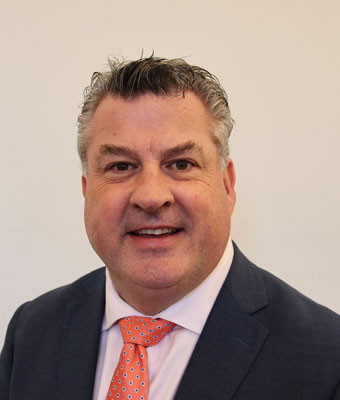
This issue pertains to the extension and expansion of the free travel scheme for under-nines to include and involve commercial bus operators. It aims to build on the Department of Transport's expansion of the fare reduction scheme introduced in recent years. If we are to have equity, equality and fairness, it is essential that this modest but impactful extension would include children under the age of nine travelling on commercial buses operated by companies within the free travel scheme. It would also address a growing disparity between PSO and commercial services. It would ensure equitable access for children across the country and reinforce the national commitment to increasing public transport usage and reducing car dependency. Those relying on commercial bus operators often reside in rural or underserved areas of the country, and they are excluded. This creates a two-tier system that is inconsistent with broader policy goals on transport, equity and inclusion.
The inclusion of the commercial bus operators would ensure fairness for all families, regardless of geography or the service providers. For those children who reside in areas where public transport is not always available – we all know those areas – it would support a broader modal shift by fostering a culture of public transport use from an early age. Commercial bus operators are already integrated into the Leap card infrastructure and participate in the free travel and young adult card schemes, so there is no requirement for any additional technological investment or major operational overhauls to implement this extension. The system is ready and the commercial operators are ready, willing and able to deliver.
A report was compiled by Jim Power in 2024. It was commissioned by the Coach Tourism & Transport Council of Ireland. The report highlighted that unequal application of fare supports is creating an uneven playing field between public service operators and licensed commercial operators. Extending free travel to under-nines on commercial buses is a practical step that would improve competitive fairness while directly benefiting thousands of families. There is also strong public support for it following the findings of a recent survey.
The key figures and costs indicate that after adjusted fare levels and even factoring in occasional long-distance trips, the total cost for the entire country is unlikely to exceed €1 million annually. Large swathes of this country have either a non-existent or a very poor public transport service and are dependent on private bus operators. To exclude children under nine years who cannot avail of public transport and who depend on private operators is just not fair. There is no equality. The inclusion of commercial operators in the free travel scheme for under-nines would deliver strong social value at minimal fiscal cost. It would also align directly with the Department's objectives on equality and accessibility.
I respectfully ask that this move be taken by the Minister for Transport and his Department in an effort to introduce and maintain equality for those people across the country who have no access to public transport at a time when we have commercial bus operators that are trying to compete, unfairly, in this regard. If a child under the age of nine is travelling, he or she gets used to travelling on public transport, but their families also travel with them, which is a success story for everybody. I urge the Minister for Transport to carry out the move I am suggesting.
I thank Deputy Lawlor for raising this important topic. I am replying on behalf of the Minister for Transport, Deputy Darragh O'Brien.
The Minister for Transport has responsibility for policy and overall funding of public transport, but neither he nor his officials are involved in the day-to-day operation of public transport services. Statutory responsibility for securing the provision of public passenger transport services nationally rests with the National Transport Authority, NTA. The latter works with the public transport operators that deliver the services and that have responsibility for day-to-day operational matters. The NTA also has statutory responsibility for the regulation of fares charged to passengers in respect of public transport services provided under public service obligation, PSO, contracts. However, unlike PSO services - where the NTA sets, monitors, and regulates fares - services operated by commercial bus operators fall outside this remit. Fares on services run by commercial bus operators are determined independently by the operators and are a purely commercial decision.
That said, I assure the Deputy that the Government is committed to delivering an accessible, reliable and affordable public transport system for all our citizens, including children. Under the programme for Government, our commitments include the roll-out of contactless payments, keeping fares affordable and examining the further expansion of free public transport for children.
In recent years, the Government has introduced a range of fare initiatives aimed at improving the affordability of and access to public transport, while also encouraging increased usage across all age groups. These measures include the 90-minute fare, the 20% fare discount on PSO services, and the young adult card, YAC. Notably, the YAC scheme has been broadened to include eligible services operated by commercial bus operators. Specifically, in budget 2025, the Government approved the extension of free travel to children aged five to eight years on State-subvented PSO services, with the application portal formally opening on 3 September 2025. This targeted initiative is designed to encourage children to start using public transport from an early age. The Government decision to expand this initiative did not include broadening this measure to commercial bus operators.
As is the case with all such budgetary measures, any decisions regarding potential future fare reductions are a matter for the Government and are considered within the context of the available fiscal parameters and the medium-term fiscal plan.
I appreciate the Minister of State is here with a prepared script not of his making, but from the Department. To say on an issue like this that the Minister is not involved in the day-to-day running is a lame excuse in the context of what I am asking. Effectively what is happening here is discriminatory. The Government is saying to children and their families who reside in an area where we a public transport system is readily available that they can benefit from this, but it is saying to children who do not have that luxury and live in largely rural areas sadly that we are not going to extend it to the bus operator that they have access to. I acknowledge that very good work has been done and very good initiatives have been introduced. The Minister of State has outlined these in the area of children from the ages of five to eight. However, Ministers arrive with great fanfare at these announcements but then tell us that they are not involved in the day-to-day operation, and it is the NTA's issue.
The notion that we would have one set of children being able to benefit from something in this country while others are told, "Sorry, you make your own way", is a bit ludicrous in the context of equality and fairness. I am sure there is a case to be taken and won somewhere. For the amount involved and the fiscal impact this will have, and the return we would get, it is ludicrous for a Minister to wash his hands off it and say: "Look, it is nothing to do with me. I will announce any initiatives. I will take the pat on the back, but when it comes to actually making a decision that is down to the NTA." That is absolutely ridiculous. This is a simple request. It is not going to break the bank in the context of the overall budgetary situation. I urge the Minister of State to go to his colleague and tell him that this is about fairness and equality for the children aged under nine who do not access public services.
This year, the NTA introduced a new distance based zonal fare structure for the greater Dublin area. This move aims to make fares equitable, more consistent and easier to understand with significant reductions for many commuting from outer areas aligning prices more closely with distance travelled. I acknowledge the vital role commercial bus operators play in the overall public transport network by providing essential connectivity that complements that delivered under the public service obligation programme.
I assure the Deputy that the Government remains committed to making public transport as accessible and equitable as possible. The Minister for Transport has met, and will continue to meet and listen to, the representatives of the commercial operators. While fare initiatives have delivered clear benefits for passengers, they also carry financial implications, emphasising the need to balance affordability with long-term sustainability of the public transport system. Any decision regarding fare initiatives will be a matter for Government decision during the annual Estimates process. The equity point the Deputy made is valid. I will relay and press it upon the Minister and the Government.
Fishing Industry
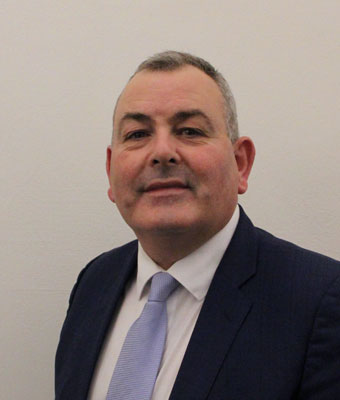
I wish to raise an issue relating to Howth Harbour. Howth has been a harbour and fishing village since the Middle Ages. Boats are experiencing an issue with the harbour's depth. It has not been dredged since the 1970s. That is almost half a century ago. Boats, especially the larger boats, which have a clearance of 5 m or less have a much narrower window to get in and out of the harbour than they used to have because of the silting up of the harbour. Dredging is due to be carried out. There is a programme to build a public park on one side of the harbour and use the dredging materials to build up the soil levels to do that. Unfortunately, the planning permission has been granted, but we are waiting on a consent to issue from the Environmental Protection Agency, EPA. It has been with the agency for some time. This issue came to a head a number of weeks ago when a vessel was stuck in the harbour for a couple of hours at low tide. Dredging is required urgently.
Howth has become a hot spot for tourism. The area is a contributor for both the economy of Dublin and the country overall. Each year tourists and people from across the country travel to Howth to celebrate Howth, Ireland's maritime heritage, our seafood and Howth Maritime and Seafood Festival. In the current global environment, it is essential that we have food security, and our fishermen contribute greatly to that reliable source of food. This is an important project. Dredging will greatly benefit all who use the harbour and assist in the continuance of the tradition of Howth as a fishing village. I ask the Minister of State to impress on his colleague Minister of State, Deputy Dooley, to impress upon the EPA to move this consent process along if possible.
I thank the Deputy for raising this important matter. I am taking this matter on behalf of the Minister of State, Deputy Dooley.
The programme for Government commits to securing a thriving and resilient seafood sector. The appointment of a Minister of State with responsibility across fisheries and the marine to co-ordinate and integrate these key policy areas, in addition to the establishment of the Oireachtas Joint Committee on Fisheries and Maritime Affairs, underpins the dedication of the Government in this regard. Bord lascaigh Mhara, BIM, in its business of seafood report 2024 offers a comprehensive assessment of the economic impact of the seafood sector. The report states that the Irish seafood industry is valued at €1.24 billion, an increase of 4% on 2023. Almost 8,000 people are directly employed across the fishing, aquaculture and processing sectors. This rises to almost 17,000 people when indirect employment is included. Fish landings in Ireland were valued at €461 million in 2024, with €325 million of that figure coming from Irish vessels. The report also shows a value growth of 25% in the aquaculture sector. These figures demonstrate the ability of the sector to adjust to a changing environment when supported with strategic investment, both public and private.
Through the seafood development programme, the Government is delivering essential support to strengthen competitiveness, sustainability and employment across the sector. This programme is cofunded by the Government and the European Commission under the European Maritime, Fisheries and Aquaculture Fund, EMFAF, 2021-2027. Separate to the seafood development programme, the Department also funds supports and services provided by Bord Bia to the agrifood sector, including seafood. Funding supports are also provided to the commercial seafood sector by Enterprise Ireland and by Údarás na Gaeltachta.
In May, agreement was reached between the EU and UK on extending the existing arrangements for reciprocal access to fish in each other’s waters for a 12-year period up to June 2038. This is significantly longer than the four years sought by the UK and, crucially, did not involve any additional transfer of quota from the EU to the UK. Ireland carried a disproportionate burden of the quota transfers to the UK under the trade and co-operation agreement. However, the extension of the reciprocal access period will provide certainty and stability for the seafood sector. This will allow our sector to make sustainable, long-term decisions for their businesses. We will continue to highlight the issue of the disproportionate burden-sharing with both the Commissioner and other member states. We will pursue every opportunity at EU level to increase the available quotas for our fishing fleet.
The European Commission’s evaluation of the Common Fisheries Policy regulation is currently ongoing. During the Department's first meeting with the Commissioner for Fisheries and Oceans, Costas Kadis, the Minister of State emphasised to him the importance of this evaluation in addressing the impacts of Brexit on our fishing sector. Since the Minister of State was appointed, he has engaged regularly with the seafood sector. He has visited four of the State’s fishery harbour centres: Killybegs, Castletownbere, Ros an Mhíl and Howth. He intends to visit Dingle and Dunmore East in the near future. He has also engaged directly with all recognised stakeholder representative groups across the catching, aquaculture and processing sectors. The programme for Government commits to publishing a five-year fisheries sector strategy.
To progress this, the Minister of State has engaged Mr. Kieran Mulvey as a facilitator to work with seafood representatives in order to identify and articulate issues, priorities and opportunities for the sector. This engagement is ongoing.
I thank the Minister of State for the positive outline of the general scenario in regard to the fishing industry, which I of course welcome. I have spoken to the Minister of State directly on the EPA consent regarding Howth and he is aware of it and of the urgency of the issue. I wanted to raise it with the Minister of State on the record, that it is much wider than that. The leisure sector is affected by this as well. I know the Howth Yacht Club, for example, has a very significant investment in a new marina, which has been held up by the fact the dredging has been held up. The big concern I have is that the RNLI operates from Howth Harbour and God forbid that it would need to get out with one of its larger vessels and get struck at a low tide without having a window to get out for a rescue. I would be very concerned about that.
The EPA consent needs to be moved along as swiftly as possible.
I again thank the Deputy for raising this issue, specifically in relation to Howth Harbour. He has rightly highlighted the need for the EPA consent, which I will absolutely follow up with my colleague the Minister of State, Deputy Dooley. As Deputy Brabazon has pointed out quite correctly, it impacts on the commercial sector within the harbour of Howth. It also impacts on the leisure sector and people who are involved in leisure boating. Most importantly, it also impacts on the RNLI service there, which is critical to keeping people safe and is often involved in the rescue and recovery of people who get into distress. The Deputy has made the case very strongly and has articulated it well and I will absolutely follow up with the Minister of State, Deputy Dooley, to ensure we can move this project along and ensure the EPA consent is issued post-haste.
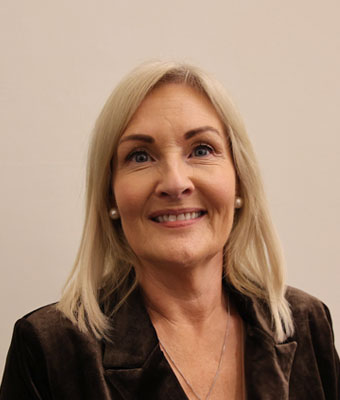
I thank the Minister of State and the Deputy, and I could not agree more.
Planning Issues
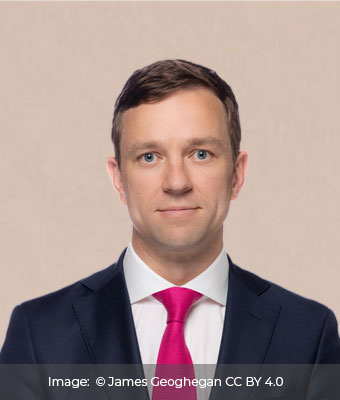
I thank the Minister for being in attendance. He will be aware the greater Dublin drainage project was granted planning permission in July and a judicial review was subsequently initiated. This is an absolutely essential project for the existing half a million homes in this country and tens of thousands more homes that will not be built unless this project is continued. I do not need to tell the Minister, as a Dublin Bay South TD, about the impact the absence of the drainage project is having on the Ringsend wastewater treatment plant. On Wednesday, I raised with the Taoiseach the question as to what more can the Government do about judicial reviews, specifically on this project. The Taoiseach said in his reply that he has asked the Attorney General and the Minister to look at the option of bespoke legislation to drive that project, the Dublin drainage project, through because the common good is overwhelming here. That is one indication of what the Government intends to do about this specific project.
A second area the Government has made clear it intends to act on is to commence the relevant provisions of the planning Act legislation. It is not within the Minister's remit but as part of that there is a requirement that he be consulted in respect of that. At what level will we fix costs in respect of these types of Aarhus Convention environmental proceedings? What we do not want to have is some sort of cost incentive to bring forward these proceedings as distinct from the merits of the proceedings. Where are we with those regulations and the commencements of those provisions and at what level will we fix those costs?
A week ago, the Minister indicated he would bring a memo to the Government in respect of the civil reform Bill, which deals more generally with judicial review. Will the Minister clarify, in respect of that Bill, if it will impact planning at all because I am not entirely clear in regard to that Bill? Some of the recommendations contained in the civil report by President Kelly are already in the planning Act related to planning decisions. It is really about the commencement of the provisions of the planning Act to fix the costs of these types of actions, none of which will impact on these live proceedings regarding the drainage project that are before the courts, but other major critical infrastructure projects are being built in this country and this city, the Shannon to Dublin pipeline being one of them. That is another absolutely essential piece of infrastructure to ensure we see the delivery of housing.
It is essential we take every step possible not to restrict people's legal rights but to ensure the common good prevails. The public wants us to build this infrastructure. We cannot have a system where a single individual or a group of individuals can frustrate over half a million people. That is not proportionate and not within the intent of the Aarhus Convention.
I have a fourth idea for how the Government and State could respond to judicial reviews, namely, being put at risk of costs. Is it completely inconceivable that a party that brings this type of action would not have to face some risk of costs? That is a submission the TFI made to President Kelly's cost report review. Is that something the Government might also consider?
I thank Deputy Geoghegan for raising this extremely important matter. He started his contribution by referring to the greater Dublin drainage project, which is an absolutely critical project not just for the people in the constituencies we share but indeed for the whole Dublin area. Deputy Geoghegan's specific concern is what can be done to ensure unmeritorious judicial review applications brought before the courts can be prevented or short-circuited in some way to ensure the common good and public interest in such a project is represented and protected by the State. I agree with the sentiments he is expressing.
What I have indicated to my Department, and the authority I received from Government on 15 July last, was that I was given permission to prepare the general scheme of a civil reform Bill. I am pleased to say that preparatory work is proceeding expeditiously and I hope to be in a position at some stage, probably next month, to publish the heads of the Bill and go to the Government to seek permission to draft, on a priority basis, legislation that would be entitled a civil reform Bill.
As Deputy Geoghegan is aware, President Kelly produced a very fine report back in December 2020. I am not prepared to let that report sit on the shelves. It needs to be given statutory effect. As Deputy Geoghegan will be aware, many aspects of it relate more generally to the area of civil litigation, such as discovery and trying to give greater powers to the precedents. They are issues I hope to see included in the Bill.
Also within the Bill, however, will be a part dealing with judicial review. As has been indicated by the Deputy, one of the biggest challenges facing the State is the delivery of critical infrastructure and affordable housing for our people. The greater Dublin drainage project is an example of that critical infrastructure. Despite the Government's significant efforts and what has to be recognised as an unprecedented allocation of resources to deliver large-scale infrastructure projects that would improve the living standards of people in our community, we find that many of these projects, which are both urgent and necessary, find themselves delayed because of judicial review applications, many of them in circumstances where there is an internal statutory appeal. The effect of it is that very many of the projects are delayed for significant periods because of judicial review applications. As the Deputy will appreciate, and as I appreciate, people are entitled to bring challenges before our courts but what we should seek to do, and what this civil reform legislation will seek to do in respect of judicial review, is try to rebalance the different sides in that argument. We need to ensure there is legislation in place that recognises and places a statutory obligation on a court to take into account the public interest and common good being served by a major infrastructural project.
That is something that needs specific statutory recognition. There should also be some statutory recognition of the fact that a person who is challenging, by way of a judicial review, a project needs to have some direct impact or interest in the project itself. They must be directly affected by it as opposed to just an individual coming along, taking a challenge on the basis that they have a general interest in it. That is why I have decided to ensure that this general scheme is published. Deputy Geoghegan mentioned a couple of other matters in respect of the planning Act and the Aarhus rules on costs and I have had discussions in my Department about that. As I am sure he will appreciate, that is a matter predominantly for the Department of housing but when it comes to judicial review we will introduce new legislation that will complement and sit alongside the provisions within the planning Act.
I thank the Minister for the reply. It seems to me that we have put the laws in place in the planning Act in relation to trying to reduce the number of judicial reviews. We have not yet commenced the relevant provision as it relates to fixed costs. The Minister has a statutory role in relation to that, although I acknowledge it is the Minister for housing who has to discuss it with him. I wonder when we are going to make an actual decision on this and send a very clear signal of what the State's approach is in getting critical infrastructure over the line. I am still not very clear as to whether the Minister's civil reform Bill will have any impact at all as it relates to planning. It seems to me that the civil reform Bill, how it has been briefed and what is in Mr. Justice Peter Kelly's report, talks about a more onerous leave stage when it comes to judicial review whereas in the planning Act - and those provisions have been commenced - we have abolished a leave stage. I want to ensure that the public are clear as to what the Government is going to do here. I was heartened by what the Taoiseach said on Wednesday in terms of looking at bespoke legislation on the drainage project. He is going to seek the advice of the Attorney General. However, will we be able to do that with long-standing precedent of these Houses legislating as it relates to cases that are before the courts? The public wants this to happen. They want us to do something. We just simply have to do something. The Minister's Bill is very important legislation that will take some time to go through these Houses but ultimately we need to see radical action here because we know what is going to happen. The Taoiseach asked people politely not to judicially review the drainage project but they have done it. We know what will happen with the Shannon to Dublin water project. That, and other critical infrastructure, is going to be judicially reviewed. People are going to suffer. Young people are not going to get access to houses because of these laws and we have to do something radical to respond.
First, on the bespoke legislation in respect of the drainage project, obviously that would be legislation coming from a different Department to the Department of justice. I have not given consideration to it. I hear what the Taoiseach had to say on it but that is a matter that would obviously have to come from the Minister for housing in respect of bespoke legislation. As the Deputy will no doubt appreciate however, introducing a piece of legislation to, in effect, determine the outcome of litigation that is put before the courts, can be subject to frailty. We need to be careful about that. I would like to see the planning Acts commenced as soon as possible. A huge amount of time in the previous Oireachtas was devoted to those Acts. We got them through the Houses of the Oireachtas and they should be commenced promptly. I will certainly speak to my colleague, the Minister, Deputy Browne, in respect of when it is intended to commence them.
Regarding the judicial review legislation that I intend to bring forward, it may not be enacted in time to deal with the Dublin drainage project; although sometimes when you look at the length of time these infrastructural projects take it may very well have an opportunity to deal with it. However, that legislation will put on a statutory basis the type of orders that can be made in judicial review applications. It is all very archaic in terms of orders of certiorari and mandamus. We need to set out what a court can do. We need to set out what the court has to take into consideration in its granting of any judicial review. We need to specify that a court cannot go down the route of engaging with a judicial review if there is an internal statutory appeal process available to an applicant under a statutory scheme. At present, with the greatest of respect to the other branch of Government, the Judiciary, we need to specify more precisely when the courts can intervene in judicial review. At present it is far too broadly available. I want to see a system whereby judicial review challenges are expedited and there are very specific grounds upon which it can be challenged, namely, the decision-making process was impacted and the basis for it will be set out in legislation.
Air Safety
We have to begin by saying that we all agree drones have massive potential for good in society such as for emergency relief mapping and delivering medicines to isolated areas etc. The focus of this Topical Issue is the fast-food drones that have been operating in Dublin 15 in particular. Manna, which operates these drones to deliver fast food, has been doing so for about a year and a half. It is unlicensed, obviously, but it has three bases without planning permission. No consultation was ever held with the community before introducing this very invasive technology over the community. The recent policy framework process that the Department conducted acknowledges that societal concerns must be addressed. It also acknowledges that there must be approval of local authorities. The Dublin 15 service is in breach of both of those stipulations and in my opinion and that of residents, it should cease until there is regulation, community assent and it complies with all of those things. Complaints have been escalating. The impact is overwhelmingly negative given the few who use it for convenience foods such as ice cream and coffee. No environmental impact is required for its impact on wildlife. The privacy protections that Manna claims it has have been found to be completely not the case. It claims they only use cameras for the delivery drop that do not impact other residents. That is not true. We have evidence of that. However, the community is fighting back. A huge meeting took place in Dundrum over the summer, where this is also to be introduced, and Manna and the people who were talking about tech inevitability got their lesson there. In Dublin 15, there is now Drone Action Dublin 15, which is bringing residents together to organise a town hall meeting on Monday, 6 October and to inform and give the residents voice on this issue for a change.

In February of this year, at my request, the first debate on drones in this Dáil was held. In that debate I made the point that I am not against drones. The vast majority people are not against drones. They do play an important role in society but commercial drone activity must be regulated. It must be regulated on issues to do with noise pollution and privacy. These drones have cameras. There are also issues to do with the planning status of drone bases and issues to do with safety. At the time, the Minister of State, Deputy Canney, told me that these issues would be addressed in National Policy Framework for Unmanned Aircraft Systems. That national policy framework was launched - I would call it a soft launch - in August. It was quietly put out there. I can understand why it was a soft launch because on each of those four grounds the policy framework entirely fails to deal with the issues of concern. There are no clear commitments to deal with the current regulatory gaps that exist in the system. Even the council acknowledges these gaps exist in the system. There is no timelines for when the issues that residents and Members of the Oireachtas have raised will be addressed. The document leans in to more experimental use of drones. Under action 16, it is stated that "the Irish Aviation Authority will promote processes that allow for the allocation of airspace for experimental and developing UAS operations to be established." Therefore, the scales are actually being weighed in favour of more drone activity around the country without the necessary regulations taking place. This document is not good enough. I will continue to work to ensure we have the correct rules and regulatory structures in place for the commercial drone development in this country.
I thank both Deputies for raising this important matter.
I am responding on behalf of the Minister for Transport. From an aviation safety perspective the regulation of the recreational and commercial use of drones, which are also known technically as unmanned aircraft systems, UAS, is provided for under the European Union regulations that are directly applicable in Ireland. Two drone-specific EU regulations ensure drone operations across Europe are safe and secure. The two regulations are the Commission Delegated Regulation (EU) 2019/945 and the Commission Implementing Regulation (EU) 2019/947. These set out common rules for the regulation of drones and drone operators including training, licensing and registration. Regulation 2019/947 sets operational rules that apply to both professional drone operators and those flying drones for leisure. Regulation 2019/945 sets the common EU-wide technical requirements for drones and the features and capabilities that drones must have in order to be flown safely. This regulation also seeks to foster investment and innovation in this sector through a harmonised framework across the European Union.
The aim of the EU drone regulations is to achieve the same level of safety for drone operations as in manned aviation. The Irish Aviation Authority, the civil aviation regulator, oversees the implementation of the EU drone regulations and standards. The drone regulations are operation-centric and focus on the risk of drone operations, so regulation is lighter on low-risk operations and more demanding on higher-risk operations. Drone delivery operations are closely regulated from an aviation safety perspective. These types of commercial drone operations may fall into the medium-risk "specific" category which may require specific authorisation by the Irish Aviation Authority. This type of authorisation is recognised in all EU member states. To obtain an operational authorisation an operator must provide a comprehensive safety portfolio, which includes assessing and addressing both ground and air risks with appropriate mitigations. These might include, for example, co-ordination with air traffic control and fitting the drone with a parachute and flight termination system.
At a national level S.I. No. 24 of 2023, the Irish Aviation Authority (Unmanned Aircraft Systems (Drones)) Order 2023 came into force on 2 February 2023 and replaced an earlier drones order. It sets out the investigative and enforcement powers of the Irish Aviation Authority and provides for arrangements between An Garda Síochána and the IAA in relation to enforcement of EU drone regulations. It also includes a section on privacy rights, which draws the attention of drone operators to the preparation of a data protection impact assessment, where required, in accordance with the EU general data protection regulation.
In addition to complying with EU drone regulations, drone operators must comply with national laws including environmental, planning and privacy laws. While there is a comprehensive regulatory framework in place from an aviation safety perspective, there are areas where the rapid pace of expansion of UAS operations has resulted in gaps and uncertainty. The Government, which was aware that the impact of a growing UAS sector needed further consideration, included in the programme for Government a commitment to guide high-level strategic planning and development of the UAS sector in Ireland. The recent publication of the policy framework for unmanned aircraft systems is the first step in fulfilling that commitment. The policy framework aims to guide high-level strategic planning and development of the UAS sector in Ireland through supporting growth and innovation, while ensuring safe and secure operations and managing environmental and other concerns. The policy framework proposes a number of structures and actions that aim to address concerns in relation to increasing UAS usage and operations in balance with the realisation of the economic and societal benefits of the emerging UAS sector. Planning for the implementation of the policy framework is under way at the Department of Transport.
The Minister of State's reply fails to grasp the point. The framework says that the Irish Aviation Authority oversees the implementation of the EU drone regulations, but it does not monitor noise. It said this at the Joint Committee on Transport. There is nobody monitoring what is the biggest single problem of these drones, which is noise. The Minster of State has said that drone delivery operations are closely regulated for aviation safety. There is loads of evidence that these drones are flying in winds beyond what they are meant to fly in. There are a lot of safety concerns around that.
The community has never had its say on this. This technology mainly impacts people who cannot even enjoy their back gardens any longer or cannot even sit outside and read a book because of this constant drone noise. This is a real incursion into people's mental health.
Manna Air Delivery is portrayed as a plucky startup. I put it to the Minister of State that it is not. It is a €60 million venture and Coca-Cola is behind it. People are entitled to have basic privacy, noise reduction and a say in this. They will have a say.
We have never had a conversation about how much of the traffic that currently is on our roads we want to move up into the sky because that is literally what is happening in Dublin 15 right now. Thousands of journeys that took place on our roads are now going over our roofs and going over our gardens. This represents a massive societal change. A change like that has to be done through a rules-based system. It cannot be done as an experiment as is actually proposed in the framework document the Government has put out. It requires a framework of rules. It requires public buy-in.
I thank the Minister of State, Deputy Collins, for coming in today. I know this is not the Minister of State's Department. What he has read out to me is almost identical to what the Minister of State, Deputy Canney, read to me in February, other than acknowledging that the framework is now published. It is published but it is not in any way adequate. I am going to continue to work to make sure we get that regulatory structure in place so there are rules around how commercial drones are used in our country.
I am aware that the rapid pace of expansion of UAS operations has resulted in challenges and generated real concerns and uncertainty among communities, particularly around issues of noise, intrusion and privacy. The recently published policy framework seeks to identify and address any policy, regulatory or legislative gaps. It aims to facilitate consideration of how matters such as planning and environmental issues will be addressed by the appropriate authorities, including in the context of the expansion of commercial drone delivery services. Implementation of the policy framework relies on cross-government structures and the continuation of engagement and support from various Departments, agencies, the UAS sector, and of course the public. It will facilitate the addressing of matters such as planning and environmental issues, including noise nuisance, by the appropriate authorities.
The framework proposes a number of structures and actions that address concerns in relation to increased UAS usage and operations. It proposes 16 actions under three main areas: the use of airspace and planning; compliance and enforcement; and enterprise and innovations. The actions in the policy framework include the establishment of a national working group on UAS geographical zones to develop transparent processes and procedures for the designation of UAS geographical zones; the safe management of the integration of UAS into our airspace and the impact on society and the environment; the establishment of a national U-space steering group to develop an action plan for the implementation of U-space; the establishment of a UAS enterprise and innovation leadership group to foster the development of a robust ongoing policy on innovation and commercialisation; and the introduction of fixed charge offences for infringement of UAS regulations to augment the extensive enforcement provisions in aviation, civil and criminal law already on the Statute Book. All of that planning for the implementation of the framework policy is under way.
Cuireadh an Dáil ar athló ar 7.19 p.m. go dtí 2 p.m. Dé Máirt, an 23 Meán Fómhair 2025.
The Dáil adjourned at 7.19 p.m. until 2 p.m. on Tuesday, 23 September 2025.