Flood Relief Schemes
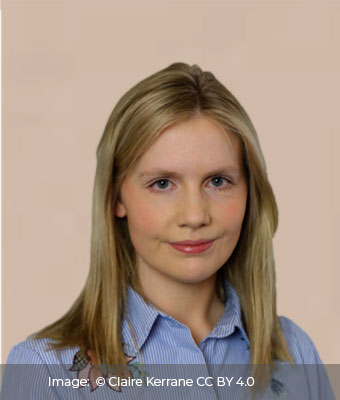
5. Deputy Claire Kerrane asked the Minister for Public Expenditure, Infrastructure, Public Service Reform and Digitalisation to provide an update on a permanent solution for flooding in Lough Funshinagh in County Roscommon; and if he will make a statement on the matter. [38435/25]
This question relates to the permanent solution to the flooding that has affected Lough Funshinagh in County Roscommon for years. As the Minister of State is aware - he was there to make sure it happened - there is a temporary solution in place.
Lough Funshinagh is a designated special area of conservation turlough and has experienced increasingly severe flooding in recent years. Roscommon County Council has implemented temporary flood defences, including road raising and water level management. The council is being supported by an expert working group comprising representatives from the Office of Public Works, OPW, the National Parks and Wildlife Service and Geological Survey Ireland. The group has concluded that the lough is not draining as it used to and that this, in part, is the cause of flooding and is also a risk to the ecological status of this area of conservation. To address this, the council has developed a three-pronged approach, including the provision of individual property protection for those properties at flood risk, which includes TrapBags installed at selected locations around the lough. The OPW has approved funding of €529,000 for the provision of these measures.
Due to the significant flooding that occurred in the spring of 2024, the development of an interim flood relief scheme became the primary focus in advance of the permanent scheme. The €5.2 million interim scheme includes a temporary pipeline and pumping station for over-ground pumping of water from the lough to a discharge point on the Cross river. Planning permission for this scheme was received from An Bórd Pleanála in January of this year, with the pumps activated in March. As of 12 May, thee pumps were deactivated in accordance with the parameters outlined in the planning application until water levels in the lough begin to rise again.
Roscommon County Council has been stopped on two occasions, by means of judicial reviews, from completing emergency permanent works to reduce water levels back to normal. The council, with funding from the OPW, is currently progressing the Lough Funshinagh climate adaptation project. The studies and assessments that have been completed for the interim flood scheme are applicable to the permanent scheme. Roscommon County Council-----
I thank the Minister of State. I am just conscious of time.
I will come back in.
I acknowledge the Minister of State's role and that of his predecessor in getting us to the point where the pumps started in March and the very positive impact that has had. As the Minister of State will know, residents living in and around Lough Funshinagh suffered incredibly as a result of the flooding in 2015, 2016 and more recently. They have been surrounded by water for years now. Some families have had to abandon their homes. Those who have remained in the area around Lough Funshinagh deserve incredible credit for what they have done. As a community, they are extremely resilient. They have battled to get to this point where the interim solution has been in put place. However, they want and need to see progress with regard to the permanent solution. That needs to be the priority now. We need to see both running in parallel. I appreciate that the Minister of State did not have the chance to provide it already, but I would like an update on the permanent solution for the residents and the community at Lough Funshinagh.
I acknowledge and appreciate all the work that has been done, particularly by the people and those in the farming community who live around Lough Funshinagh. It was great to go down there to switch on the pumps. It is great now to see the work on the interim solution coming to fruition, particularly as I was involved with the work on it when I was in government previously.
The long-term solution is on target for planning by the end of the year. As the Deputy knows, we had a consultation day in County Roscommon, which was very well attended. It is very important to get people to attend such events because we can iron out the issues and problems that may be foreseen. As stated, we are on target. This is a good-news story for the people of Lough Funshinagh. I have visited the householders there on a number of occasions. Even when I was not in government and out of politics, I still called at Christmas to see people. I have seen the devastation, etc., at first hand and have tried for years to find a solution. We now have a solution. The Deputy is right; we need the permanent solution. We are on target to deliver that, so it is good work all around by everybody.
I, too, acknowledge the work. It is good to hear that we are on target for planning towards the end of the year. This will be absolutely essential. I am conscious of that as we come into the autumn and winter months. We all know about the winters the families and community around Lough Funshinagh have faced, particularly last winter. It was devastating. There will be a lot of work to be done after the permanent solution is put in place and sorted in terms of people's homes and the damage that has been done. Farmers with lands around the lake have suffered incredibly as well. This has been a real loss and has had a real impact on people, their livelihoods and their families. People have passed away in the meantime. I am thinking of one gentleman who never got the chance to live to see the current solution being put in place. Therefore, we need to ensure that the supports for the families who live in the area are there, whether it is in respect of damage, farmers, land or whatever. We need to see those financial supports for people who have lost a great deal. I am thinking in particular of those who lost their homes as a result of flooding.
I appreciate everything the Deputy said. She is on the ground and knows exactly what she is talking about. She knows more than those of us who are in government. The pressure came from the Taoiseach to the Tánaiste right down to every Minister who had a role in this.
As I said, delivering the scheme is important. I do not know if the Deputy had time to go and visit, but the day we turned on the pumps, it was great to see the local farming community and particularly the people who had suffered most - the families whose houses were affected - and see the excitement on their faces knowing that Government had listened and delivered on what they wanted. However, the final piece is the permanent solution. As I said to the Deputy, the meetings we have had to date show that we are very much on track to deliver that. I live only a stone's throw across the water. It was a very proud day for me because I have so many friends and relations who live down there. Seeing the smiles on people's faces is what we are about. I went into government to ensure delivery of major projects such as this and to give people peace of mind.
Deputy Lahart is not here to take Question No. 6. Question No. 7 is in the names of Deputies O'Connor and McCarthy. I will let Deputy McCarthy go ahead whenever he is ready.

7. Deputy James O'Connor asked the Minister for Public Expenditure, Infrastructure, Public Service Reform and Digitalisation the status of flood schemes for Rathcormac, Midleton, Castlemartyr, Mogeely and Killeagh and any others in Cork East that his Department is considering; and if he will make a statement on the matter. [40173/25]
9. Deputy James O'Connor asked the Minister for Public Expenditure, Infrastructure, Public Service Reform and Digitalisation if his Department will consider a new retrospective scheme for residents of Midleton who wish to purchase higher barriers to protect their premises from any flooding that may occur in the future, considering that parts of Midleton town were under four feet and more of water during Storm Babet; if his Department is aware of any delays installing the current individual property protection, IPP, scheme in Midleton; and if he will make a statement on the matter. [40172/25]
Will the Minister provide an update on flood protection measures currently being undertaken at Rathcormac, Mogeely, Killeagh, Castlemartyr and Midleton in east Cork?
I propose to take Questions Nos. 7 and 9 together.
The launch in 2018 of the flood risk management plans trebled, to some 100, the number of flood relief schemes at design and construction. There remain some 50 schemes, referred to as tranche II, yet to commence work on their design, due to constraints of professional engineering services and skills in Ireland. However, the Government is committed to funding these projects through the €1.3 billion available under the national development plan for flood relief measures.
Cork County Council is leading the delivery of six flood relief schemes, including Midleton, with nine tranche II schemes, including Castlemartyr, Youghal and Rathcormac. The OPW is funding nine staff in Cork County Council to support its delivery of this programme of schemes, and other schemes across the county, including in Mogeely and Killeagh.
The OPW is piloting a new delivery model in counties Donegal and Kilkenny to inform delivery of future tranche II schemes nationally.
The Midleton flood relief scheme, to protect up to 750 properties, is currently estimated to be submitted to An Coimisiún Pleanála in early 2026 and for substantial completion in 2031. A planning application for advance works at Tir Cluain, to protect 111 of these properties, is scheduled for submission as a Part 8 application later this year with construction planned to commence in late summer-early autumn 2026. Cork County Council has begun to engage with landowners on environmental surveys and assessments required to inform the environmental impact assessment report. The council has completed a number of interim flood defence works in Midleton since Storm Babet in October 2023. Cork County Council progressed interim flood mitigation measures for Rathcormac, Castlemartyr and Killeagh and is liaising with the Office of Public Works on interim measures for Mogeely.
In October 2024, the OPW approved €5.8 million in funding for Cork County Council to make individual property protection available free of charge to home and business owners in Midleton and across east Cork who were impacted by Storm Babet in October 2023. This included retrospective payment to property owners who had purchased suitable individual property protection, IPP, measures between 18 October 2023 to 7 October 2024.
Following a review of all applications there were 725 valid applications. Cork County Council is, since April 2025, delivering flood barriers to properties where no civil works is required. The council is fully aware of the urgent nature of this unprecedented project and is constrained by the response from the market for supply of flood barriers and civil works contractors. Cork County Council and the OPW are keeping the delivery of IPP under review.
Cork County Council has advised that the standard height of barrier being delivered under this scheme is 680 mm which is the accepted industry standard height for flood barriers. This is in line with best practice guidance from the United Kingdom to avoid potential structural damage to properties. No review of the scheme’s criteria is being considered.
A quarterly update to elected representatives, members of the business community and the wider community by Cork County Council on the Midleton flood relief scheme and individual property protection scheme is taking place today, 17 July 2025.
I thank the Minister of State. At this time of year, we tend to see less rain, however, this does not stop those in Cork East whose property was damaged by flood water from worrying. I acknowledge considerable flood prevention works have been undertaken across Cork East but concerns will always remain until full flood protection measures are introduced. Lack of insurance cover further increases these fears. I thank the Minister of State for visiting Midleton in April and for his commitment to calling to other areas, such as Rathcormack, Killeagh, Mogeely and Castlemartyr, when his diary allows. When might the Minister of State be in a position to meet the residents of these villages to discuss their concerns in person? I asked this question in February and the Minister of State gave a commitment he would call to Rathcormack but I note he is awaiting funding and I appreciate this. If we could have a date for that visit, I would really appreciate that.
I thank the Deputy. The Taoiseach and I visited Midleton and met the people there. I always say in the House that from start to finish, a scheme takes 11 years. It is very hard for people to accept this, particularly when their houses and businesses have been flooded. I understand well the areas in Midleton and the pressures on them. With regard to the other areas in question, I am making changes to the minor works scheme and looking at other areas where we can provide funding to the local authority to help to try speed it up under tranche II.
We announced the scheme back in 2018 and I will give the Deputy a picture of where we are at today. We have more than 100 schemes at various stages in the planning and construction, which was an enormous move in terms of the Government protecting the people at risk of flooding. In recent months, we have gone from five schemes to 13 with machines on the ground and two more to come at the end of the year. We are about to make changes to minor works scheme where local authorities will be able to come to my Department and speed up the delivery of some of these schemes in tranche II. I hope to be able to deliver for those people in question with the minor works scheme.
On the Deputy's question on calling to the areas, I would say we are looking at approximately two to three weeks. I am probably the only Minister in the House who is under heavy demand. I am everywhere and anywhere but I like to visit people and to see the problems first hand. I am familiar with some of the areas the Deputy spoke about but we will meet the people on the ground to give assurances that Government is there to help and it will do whatever it can, and I know my Department is doing that. My colleague, the Minister, Deputy Chambers, has been very supportive in the recent talks relating to providing funding. Government is very much to the fore in respect of flooding right across the country.
The Minister of State is like Shaws. He is almost nationwide but do not forget Kilkenny as well.
I must also acknowledge that. I thank the Minister of the State and the Minister, Deputy Chambers, for their support.
With reference to Rathcormack, Mogeely, Killeagh and Castlemartyr, they have been in tranche II the catchment flood risk assessment and management, CFRAM, programme for a long period. I welcome the Minister of State's response in that regard. For these villages, flooding is a regular occurrence and residents are afraid tranche II of the CFRAM is not progressing fast enough, which the Minister of State said himself. However, I acknowledge that currently much work is going on the ground to ease their concerns. Residents in some areas, such as Mogeely, are particularly at risk given their houses are timber-framed and cannot withstand further flooding. With this in mind, I appeal to the Minister of State for tranche II to be prioritised and for these villages be moved up to alleviate the fears of people living in these areas at risk of flooding. I sincerely thank the Minister of State for his positive response and I look forward to his visit in the next two to three weeks. It will be good news for the villages concerned.
I thank Deputy McCarthy. I know the pressures he is under as an elected representative, as is everyone in this House. I was in this role before and I know the run of the Department but there are still constraints that do not allow us to deliver the schemes as fast as humanly possible.
In regard to Lough Funshinagh, when we went into try to do the work there, we had not dotted our i's or crossed our t's and we ended up with judicial reviews which held back the project for a number of years. We are now in a good place and working together.
This is not about politics. People have water up to their knees in their houses and are scared for their lives. We should not use this as a place to beat Government up. Rather, we should work together in the House to deliver for these people because we know too well the suffering they are going through at this time.
Question No. 8 taken with Written Answers.
We will move back to Question No. 4.
Ceisteanna Eile - Other Questions
Question No. 84 taken with Written Answers.
Special Educational Needs
90. Deputy Sorca Clarke asked the Minister for Education and Youth to provide an updated list of all primary and post-primary schools that have been sanctioned for an ASD class for the 2025-26 school year. [39382/25]
I want to ask in particular about the schools in which these works are ongoing but yet to be completed and by which a letter of suppression has been received.
The NCSE is the statutory agency with responsibility for the provision of special education places. The NCSE has sanctioned 407 new special classes for the coming school year, of which 398 are autism special classes while three are autism early intervention classes. This brings to 3,742 the number of special classes in our schools. The NCSE has advised my Department that an updated list of these classes is available on the NCSE website and I am also happy to share this list with the Deputy.
Combined with 300 new special school places, this brings to 2,700 the number of new school places for children with special educational needs. This additional capacity, together with the movement of children across existing classes, means that the Department and the NCSE have created more capacity than there were children known to the NCSE by the deadline of February 2025.
The NCSE has advised me that, outside of Dublin, all children known to it by the February deadline and who required a special class placement at primary or post-primary level had received a place. For a small number of children in the Dublin area who are seeking a special class or special school placement, the NCSE is working intensively with those parents and the schools concerned to finalise the arrangements for the 2025-26 school year. In addition, the NCSE is working closely with parents who came forward post the February deadline to support them into available placements.
This year, in order to ensure new special classes could open as quickly as possible for the 2025-26 school year, the NCSE prioritised work with medium and larger primary schools that have available accommodation but do not have an existing special class. This approach maximises the use of existing space that can be reconfigured efficiently while also ensuring that new provision continues to be established.
The increased number of schools with special classes provides parents with greater choice and will also reduce the distances that some children are travelling to access a special class place. This will remain a priority for the 2026-27 school year.
I cannot accept what the Minister of State has said to me. I know what he has said to be untrue. I am happy to share information with him after this session. I have stood in a school in Athlone - Scoil na gCeithre Máistrí - that was approached by the NCSE to open a second autism spectrum disorder, ASD, class. I stood in the classroom. The plaster was drying on the wall when the letter of suppression came in from the NCSE. That class had three enrolments already. I am not saying the Minister of State is the reason behind this but what he has said does not have any credibility. I have physically stood in the classroom. I have a copy of the letter of suppression here in front of me. It was sent to the school on 3 July. It is dated 4 June. In the interim, on 8 June, that school was told to continue to go ahead with the works that were being undertaken for the ASD class. I am happy to share this with the Minister of State. I have sent in parliamentary questions and the answer I got back was less than satisfactory. It referred to "some amount." I have approached the NCSE but it has not come back to me with any details.
I assure the Deputy that the figures in relation to the number of classes being opened around the country are correct. On the individual school the Deputy mentioned, I am very happy to take the details from her after the session and I will work with her to try to get a satisfactory conclusion to it. I have no difficulty in doing that. I have to say that the Minister and I have done significant work on this over the last number of months. We have had weekly meetings with the NCSE and the Department to make sure we have special classes and places across the country to accommodate the need that was identified and is continuing to be identified. In some of the schools, we have been working to try to find resolutions to it. I would appreciate if the Deputy could give me the sequence of letters she has referred to and I will take the matter up.
There is an awful lot of work being done.
I thank all the school communities across the country who have been so accommodating. A lot of them have bent over backwards to make sure they are opening special classes. I will discuss the specific issue with the Deputy after the session and try to get clarity.
There are good working relationships 99% of the time between schools and the NCSE when it comes to opening ASD classes. The same can be said for this specific school in Athlone, which already has an ASD class in its Gaelscoil. However, the Minister of State is familiar with the 2022 document entitled "Autism Good Practice Guidance for Schools", which clearly states that autistic students who attend Irish-medium schools should be taught through Irish, as this is the language in their school environment. I also have a copy of correspondence that clearly outlines that the NCSE strongly indicated to this school that its ASD class should be run through English. That is not acceptable. This is a Gaelscoil; all classes are taught through Irish. The NCSE has no right or authority to call into question the ethos of any school. I would put this in the same category as anybody walking into a school operating through another religion or a non-denominational school and asking it to change its ethos. It is simply not on.
I have some personal experience of Gaelscoileanna and Gaelcholáistí that opened special classes, and they would be taught through the medium of Irish. What the Deputy has said has been brought to our attention before by people, but it is clear that it is whatever the medium is in the school, in this case the medium of Irish. Some of the schools operating special classes are hugely successful and the school ethos is important. I take that point. If a special class is opening in a school taught through the medium of Irish, that class should be taught through the medium of Irish. That is clearly understood, certainly by me, and it should be understood by everybody. I will follow that up internally, but the point is well made.
Schools Building Projects
85. Deputy James O'Connor asked the Minister for Education and Youth the status of school building projects across Cork county of which her Department is aware, in tabular form; the stage of the process they are currently at; and if she will make a statement on the matter. [40175/25]
87. Deputy Pádraig O'Sullivan asked the Minister for Education and Youth if she will provide a list of all capital projects currently under way in Cork city and county, in tabular form; the stages the various projects are at; the amount of capital estimated and spent on each project to date; and if she will make a statement on the matter. [38583/25]
I propose to take Questions Nos. 85 and 87 together.
My Department has a strong track record of delivery. Since 2020, we have invested more than €6 billion in our schools throughout the country under the national development plan, involving the completion of more than 1,400 school building projects. It has provided almost 100,000 additional and replacement school places, significantly increased provision for special education and has upgraded and modernised our school infrastructure with new science laboratories, technology rooms, home economics rooms, multimedia suites, mainstream classrooms, special education tuition rooms and special education classrooms. The impact of this will be felt in communities right across the country. This includes more than 80 school building projects, approximately 57 completed special schools delivering more than 300 new classrooms, modernised school accommodation, more than 1,000 new classrooms, and modernised accommodation for SEN provision built in mainstream schools.
Since 2020, the total capital investment in County Cork schools is in the region of €715 million. This has delivered more than 150 large-scale, additional accommodation and modular school building projects and includes 12 new school buildings. Currently, there are close to 50 school building projects under construction in Cork. There are also more than 170 school building projects in County Cork in the pipeline. These are at various stages of design, of which 19 are for new school buildings. The pipeline includes school building projects in six special schools, of which three are new school buildings, delivering more than 100 new classrooms and modernised school accommodation along with more than 160 projects delivering new classrooms and modernised accommodation for SEN provision in mainstream schools. My Department also announced the opening of a new special school for the coming school year that will be based in Carrignavar and open initially on an interim basis in a Gaelscoil in Fermoy.
Additionally, there are more than 80 small-scale school building improvement projects either under construction or in the pipeline in County Cork at this time, through climate action, emergency work and summer works schemes. Within Cork city specifically, 11 projects are currently under construction, with 42 projects in design phases. This includes seven new school buildings along with 28 smaller scale improvement projects in the pipeline.
The position on individual projects evolves all the time as they advance through various stages. However, Deputies and the schools themselves can look at the status of these different projects, which are set out on the Government website. This is updated on a regular basis to reflect project progress through the various stages of capital appraisal, site acquisition, design, tender and construction. The Deputy will appreciate the ones I have mentioned. However, given the volume of information across a large number of projects, many of which are delivered on a devolved basis by individual school authorities, if the Deputy would like more specific information, I can provide it after today because there is quite a long list there.
I thank the Minister and I would appreciate a list in writing. The reason I asked the question was not to come in here to backslap and say we were all doing great. I taught for 15 years. I was deputy chair of Cork ETB for five of those, and the rate of capital expenditure has been phenomenal in the past number of years, particularly in Cork. That has to be recognised. We have seen projects in my constituency like the new special school in Carrignavar, which the Minister referenced. I think Scoil Mhuire gan Smál in Blarney cost in the region of €80 million. The biggest school campus in the country is in Carrigtwohill in my neighbouring constituency of Cork East. These are massive infrastructural projects. The boards of management and school managements in those circumstances have fought and worked hard for them.
I raise this question because I am looking at voluntary boards, boards of management and school principals that do not necessarily have the expertise. I know the powers are devolved and they get a team to work with them. I think it is worth a rethink in how we do these projects because these people do not necessarily have the expertise, yet they take so much upon themselves and there is pressure with that. Will the Minister register that in her response?
I acknowledge the significant work that goes into any construction project. I acknowledge that, for a lot of principals in schools, this does not happen overnight. It takes many years of initial working with the Department to get that approval, identifying the design team, and going through the design stages and the various pieces of work that have to happen. Insofar as possible, the Department's objective is always to support the school. Where there is an ETB, a huge amount of work is often devolved to the ETBs, which identify the design teams. Where that is not the case, there is a structure within the buildings unit in the Department to help identify the design team, support the principal and board of management through the process and make sure as many projects as possible can be delivered.
There is always the need to work within the budget we have. While we have had significant investment taking place for the past number of years, there are 4,000 schools across the country and many of them are old and need upgrading. We also know that, while the population is decreasing in some areas, it is continuing to increase in others. We need to make sure we are still building new schools and creating more capacity. That is exactly what is happening in Cork, not just in primary and secondary, but also in the significant number of special schools that are being developed.
Insofar as possible, the Department endeavours to support principals, but we are open to any other proposals or suggestions as to how we can improve that working with schools.
I recognise that the Department is always proactive in my engagements with it. As an educator, though, I have concerns, and the Minister may have touched on something there. Cork ETB has a skill set that many voluntary schools would not have. While all schools are not under the patronage of Cork ETB, it has a specific set of skills. It might be worth considering in future that large-scale projects could use the local expertise in the various ETBs across the country.
I remember teaching in a school a decade ago. The Minister might recall that the Sammon construction company had a number of projects in the country at that time, but it collapsed. Our school was 90% complete at the time, but because of difficulties surrounding that situation, we were left looking out the window of the old school at the new school that was nearly finished. We could not go into it for two and a half years because we could not get certification. That is just one example of the pressures and demands placed on boards of management. Whether they are equipped or not to deal with those specific situations, they will require the expertise and leadership of something like the ETB.
We had a similar scenario in my constituency with the same company where there was a school almost built. I am pleased to say that, similar to the Deputy's own, the school is built and the students are there. It is a fantastic complex for them.
We always need to look at how we can improve the structures that are there. There is certainly a level of expertise within our ETBs, but also within the Department. Our principals and boards of management also have a certain level of expertise, but their job is not to build projects.
My objective over the next number of years is to make sure we can provide as much support for our principals as possible, whether it is administrative support or easing the burden of some of the work they are now expected to do and that they perhaps would not have done in the past, while they are, at the same time, managing and, in our smaller schools, also teaching in some cases.
Where we can, we will increase the resources and supports available to our teachers. At the same time, we will make sure the resources and expertise of the Department, in particular the buildings unit, are made readily available to our schools when they are needed. As I said, this is not about back-slapping but it is important to stress that a huge amount of work is happening. Obviously, that is work done by the Department working hand in hand with many of the schools, principals and boards of management.
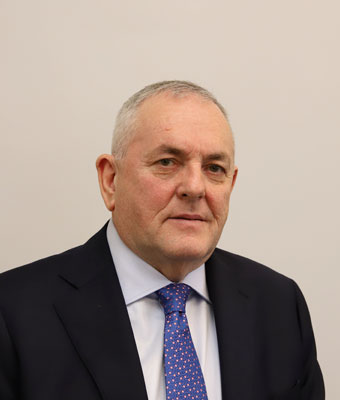
Deputy John Connolly will ask Question No. 86 on behalf of Deputy McAuliffe.
Special Educational Needs
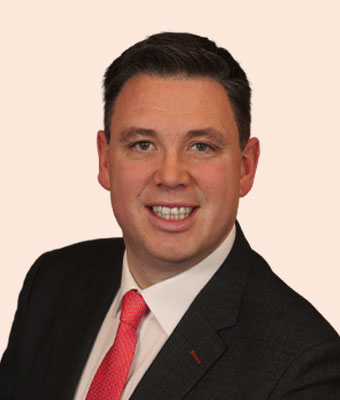
86. Deputy Paul McAuliffe asked the Minister for Education and Youth the number of sanctioned classes nationally for children with additional needs, as announced earlier this year; the number hoped to be operational in autumn 2025 in the Dublin North-West constituency; and if she will make a statement on the matter. [40000/25]
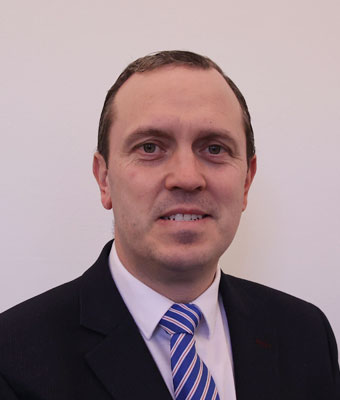
Deputy McAuliffe has asked a pertinent question that is relevant to his constituency but in which I think we all have an interest. It is to ask the number of sanctioned special classes for children with additional needs, as announced earlier this year. The pertinent part is Deputy McAuliffe's request for the number of such classes it is hoped will be operational in autumn 2025.
I have raised with the Minister and the Taoiseach the challenge in filling teaching positions. A Department payroll review highlighted 1,200 vacancies in the primary sector during the last term of the school year. I see a great challenge in filling these positions. I ask for an update on that.
I thank the Deputy for his question and Deputy McAuliffe for his interest in this matter. I thank both Deputies for their continuing interest in education. It is hugely important that it is brought to the fore in the House. Education is a hugely important part of everyone's life, so it is hugely important that we strive to get it right.
The NCSE is the statutory agency with responsibility for the provision of special education places. As I alluded to earlier this morning, there are over 407 new special classes sanctioned for the coming school year. The NCSE does not hold information on special education provision broken down by constituency, but I can say there are 103 new special classes sanctioned for the 2025-26 school year across Dublin, including 81 at primary and 22 at post-primary level. An updated list of these classes is available on the NCSE website, and I am also happy to share this information with the House and the Deputy. Combined with the 300 new special school places, this brings to 2,700 the number of new school places for children with special educational needs.
This additional capacity, together with the movement of children across existing classes, means that the Department and the NCSE have created more capacity than children known to the NCSE by the deadline of February 2025. The NCSE has advised me that outside of Dublin, all children known to it by the February deadline who required a special class placement at primary and post-primary level have received a place. For a small number of children in the Dublin area who are seeking a special class or special school placement, the NCSE is working intensively with the parents and schools concerned to finalise the arrangements.
On the specific issue the Deputy raised, of the special classes that have been sanctioned, over 80% involve a reconfiguration of existing capacity within school buildings. We have sanctioned 407 in total, and it is hoped they will all open. However, I will get the information the Deputy requested to him as a matter of urgency.
I am always conscious when we are discussing this topic of the review that was undertaken of the Education for Persons with Special Educational Needs Act recently. The research that went into that highlighted clearly that the term "additional needs" is preferable to "special education". I am conscious of that and that my language should be more appropriate.
I very much welcome the recent announcement by the Minister of State that training in teacher training colleges will now include a period where the teacher will undertake teaching practice in a classroom for children with additional needs. That will enhance the standard of the teachers being produced.
To return to the first point I made, I am concerned there will not be sufficient teachers in September to fill the additional 400 places that have been developed through the Minister's efforts for classes for children with additional needs. I say that in light of recent data from the Department showing there are already a large number of vacancies in the sector. That is reaffirmed by data provided by the Irish National Teachers' Organisation, INTO. It is a great concern of mine, and schools are concerned by that as well.
The review of the EPSEN Act was very important research. I commend all those who helped with the review. Launched recently, it provides very good information, including on additional needs.
Teacher and SNA recruitment is kept under constant review by the Department. Many of the boards of management of schools and education and training boards are conducting interviews in these weeks to fill vacancies. Teachers also get additional training. It is important to note that many great teachers are coming through the colleges and going into the education system. We have to be very mindful of the possibility that there will be teacher shortages in future. We are working to keep that under review. Boards of management and the Department are working to ensure that staff are in place.
I concur with the Minister of State on the quality of the teaching personnel who are being produced by our teaching colleges. I just think we need more of them. We genuinely need to review that. There are gaps and vacancies that will not be filled in September. I am concerned about that and I think we need to expand the number of teacher training places.
I will bring two other points to the floor for discussion with the Minister of State, one being the categories of classes for children with additional needs. The Minister of State and I had a meeting about this yesterday with parents from the Down Syndrome Ireland Galway branch who are concerned that there is not a sufficient number of the different categories of classes for children with additional needs being provided. In County Galway, for example, there are only two classes for children with mild general learning disabilities. County Galway is the second largest geographical county in the island. It is not fair that children have to travel extensive distances to attend the appropriate class.
I am sure the Minister of State will be aware of the review conducted by the inspectorate of the admissions policies of primary and post-primary schools for autistic children and young people. That review expressed some concerns. In its findings, the inspectorate used the term "concerning", and the main concern was that policies in some schools, if they were implemented as written, could prevent children with the greatest level of need from accessing a place in a class for children with additional needs.
We have had many discussions in recent weeks. The Deputy mentioned the deputation from the Down Syndrome Ireland Galway branch who were here yesterday to discuss mild general learning classes. ASD classes are opening across the country based on the need being presented. We have to be mindful of children with other additional needs and ensuring they are accommodated within the school system. That point has been well made by groups throughout the country and it is one we are very conscious of and keeping under constant review.
On the issue of admissions and the inspectorate report, my understanding is that a circular was issued after that review. It is important that the admissions policy is kept constantly under review because it will enable children to get into schools. We need to put an awful lot of thought into it in future as well.
Question No. 87 taken with Question No. 85.
Energy Conservation
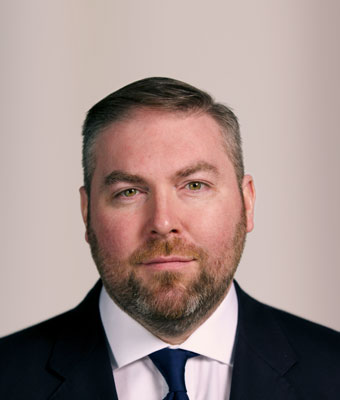
88. Deputy Barry Ward asked the Minister for Education and Youth the position regarding the percentage of eligible schools that have completed or commenced work to install solar panels under the free scheme for schools; if she will consider providing funding to allow private schools to take part in this scheme; and if she will make a statement on the matter. [38827/25]
My question is about the free solar panel scheme for schools, how many schools are in the scheme in progress and whether it can it be extended to private schools.
The schools photovoltaic, PV, programme provides eligible schools with up to 6 kW peak of roof-mounted solar PV installations on their roofs, which equates to approximately 14 solar panels. The schools PV programme is funded by the Government’s climate action fund in line with the Government’s recognition that taking action on climate change is central to Ireland’s social and economic development. It is assisting schools in reducing their energy costs and, most importantly, carbon footprint as part of the response to meeting the 2030 and 2050 climate action plan targets for the schools’ sector.
The overall programme will see up to 24 MW of installed renewable energy provision on schools, with associated savings in the region of €5.5 million per year across the 4,000 schools. The installation of solar panels directly assists schools to reduce their carbon emissions and energy costs, while also educating pupils and the wider school community about the benefits of solar technology. Since the launch of the programme in November 2023, 85% of schools, or 3,300 schools, have progressed to tender stage, with 92% of those, some 3,020 schools, so far approved for funding.
This is a high rate and a significant number of schools that have gone past the early stages. To date, 44% of eligible schools, or 1,713 schools, have confirmed their installations are complete. I have been in many of these schools and while they are at an early stage, they anticipate their bills will reduce. We are hoping to see a significant cost reduction for them.
The Department’s overall approach for projects delivered under the school building programme is to focus on the needs of primary and post-primary schools in the free scheme. This approach reflects how fee-charging schools have an additional source of income which is often not available to schools in the free education scheme. The scheme is funded by the Government’s climate action fund which comes within the ambit of the Department of Climate, Environment and Energy. I am open to exploring, with my colleague, the Minister, Deputy Darragh O’Brien, the possibility of recognised fee-charging schools that are perhaps unable to afford solar panels from their own resources coming within the scope of the schools PV programme, which is due to finish in 2026. There is time to engage with the Minister to see if there is a way it could be extended to the schools I mentioned.
I thank the Minister and am delighted to hear her answer. I welcome this scheme; it is a great one. Even the rate of take-up the Minister outlined is impressive and is key to meeting our climate targets. It allows schools, as much as the rest of society, to address their emissions and reduce their carbon footprint.
The Minister said fee-paying schools and private schools - and we must remember that not all private schools are fee-paying - may have access to fees that non-fee paying or non-private schools do not have. While I accept that, at the same time, if we are committed to this scheme as one that will reduce carbon emissions and our dependence on fossil fuels and allow us to get more renewable energy and, therefore, benefit the whole country, should it not be rolled out automatically to all those schools, rather than deciding that if one school takes in fees, it is ineligible or to parse the scheme in those terms? If the scheme works - and it clearly does - and it reduces emissions and our dependence on fossil fuels, then surely what is good for the goose is good for the gander and it will be good for all schools.
I agree fully with the Deputy. We should be getting to a situation where all our schools and public buildings have solar panels, insofar as is possible. This will feed into our overall reduction and climate targets but also will support our schools in reducing their costs. This is one of the biggest challenges we currently face in making sure we identify ways schools can reduce their costs.
It is heartening and welcome to see that 93% of the schools that are able to access the scheme have already expressed interest and a significant number of those are moving to tender phase. Less than 50%, which is still a high number, are at the stage where solar panels have been installed. I would like to see if we can expand the scheme further. As I said, we might look initially at fee-paying schools that cannot afford to install solar panels. That ranges from smaller to larger schools and they are not just in the Deputy's constituency but in other parts of the country as well.
I will engage with the Minister, Deputy O'Brien, as the scheme is funded through his Department. It would be for the Minister to decide as to how it could be expanded but I am open to working with him and Deputy Ward to see if we can do that.
I am very grateful to hear the Minister is open to the expansion of this scheme. I appreciate what she has said. I believe the take-up would be strong among all schools if the eligibility criteria were extended. I understand entirely that no resource is infinite and the Government has to spend money where it is needed most. I welcome the Minister's commitment to engaging with the Minister, Deputy O'Brien, on possibly expanding the scheme before its conclusion.
There is a danger we perceive private schools as being schools with lots of money. The Minister will know there are many private schools, particularly those that address a minority need, whether a religious or other need, that charge fees but are not wealthy schools. The patrons, parents and families of those schools are not necessarily wealthy. They may be fee-paying or private schools but they still have limited resources. If this scheme is to work well, it should be rolled out to all schools.
I accept what the Deputy is saying. It is not always the case that a fee-paying school has infinite resources. However, it is the case that some schools do have the ability to pay for this. It is about looking at the resources we have and ensuring everyone can benefit from the changes which will not just help support our climate objectives but also help reduce costs.
In the time I have left, I will outline what exactly is being funded under the programme to date. Schools will fund up to 6 kW of roof-mounted solar PV - approximately 14 solar panels - and all associated inverters and cabling to connect to the panels of the school's mains distribution board. Monitoring software is provided to each school to allow review and discussion of the energy generated each day for the staff and students. As I said at the outset, this is an opportunity for the students to learn and understand what exactly is happening. Minimal enabling works required to enable completion of the installation are funded on a case-by-case basis. Additional items such as access provisions, minor enabling works to existing electrical infrastructure and connection to the grid are included to allow unused solar energy to feed into the grid from schools when closed, which is really important because we are coming into the summer period. Schools are closed now so it is important they can feed into it.
To the Deputy's specific point, I will work with him and engage with the Minister, Deputy O'Brien.
Question No. 89 taken with Written Answers.
Mental Health Services
91. Deputy Colm Burke asked the Minister for Education and Youth if she will provide an update on the progress of the €5 million pilot programme of counselling and well-being and mental health supports for the academic years 2024-25; to provide a breakdown of the progress in Cork in particular; if there are plans to expand the programme; and if she will make a statement on the matter. [40008/25]
I thank Deputy Burke for raising this matter. This is an important pilot programme that has been rolled out.
My Department is committed to supporting the emotional well-being of our children. In 2023, the establishment of a €5 million pilot programme of counselling and mental health supports for primary schools was announced. In budget 2025, the pilot received additional funding which has allowed it to continue into this year. It is broken up into two different strands.
Strand 1 is the provision of one-to-one counselling to support small numbers of children in schools. These are in counties Cavan, Laois, Leitrim, Longford, Mayo, Monaghan and Tipperary. We have panels of pre-approved private counsellors in place to provide counselling and there are currently 45 counsellors available. In the 2023-24 school year, more than 2,800 counselling sessions took place and 371 children - I am pleased to say - availed of counselling provision. In the 2024-25 school year, which has just finished, more than 5,600 counselling sessions took place and at least 653 children have availed of counselling provision. Again, it is really wonderful to see those numbers increase.
Strand 2 of the pilot is the establishment of education well-being teams to support 78 schools in cluster areas in Cork, Carlow and Dublin 7 and 16. To date, 20 education well-being practitioners have been recruited. Five education well-being practitioners provide weekly support to the 20 schools in the Cork strand 2 cluster. The focus of the support provided is on strengthening whole-school preventative approaches. This includes the provision of psycho-educational support for parents and teachers and the provision of early intervention on an individual and group basis to children with mild to emerging need using low-level therapeutically informed approaches. The schools received a payment of €2,000 to promote and support well-being-focused initiatives among their school communities.
The pilot is being externally evaluated. On strand 2 in particular, which applies to Cork, there has been really positive feedback from the schools, parents and children involved, giving support to the schools so they can support every single child. While the one-to-one counselling is really important here, there is positive feedback from the broader practitioner work that is happening.
I thank the Minister and welcome the success of this scheme. I am concerned, however, about whether it will continue. On Monday last, I met with Barnardos in Knocknaheeny in Cork where a programme is based. As the Minister will know, Barnardos' total budget for the year is approximately €15 million. It gets €12 million through Tusla and there is a shortfall of approximately €3 million, which it is challenging. Barnardos does similar projects and explained it is meeting a number of people in relation to supporting children who are going to school and parents. I very much welcome this programme is in place and hope it continues. I ask the Minister to outline what the intentions are in respect of rolling it out to the areas I represent in Cork city. What are the long-term plans for this whole area? This is an essential programme, especially the provision of support to parents.
I agree with Deputy Burke that any way in which we can provide support to our students at any age or level should be welcomed. It is my intention to continue the work on strands 1 and 2 in the areas under the pilot scheme, to put this programme in place as quickly as possible and to try to expand it further.
That comes down to measures and what can be achieved in the budget, and this is something I will be working on over the coming weeks with our colleague, the Minister, Deputy Chambers. I do see the benefits of it. While, as I said, the evaluation report is still under way and will be completed by September, we are already getting really positive feedback. What we must ask is whether we are rolling out both strands, where there is the direct, one-to-one counselling, or whether it would be better to roll out the broader supports being provided through the well-being practitioners. It is then about ensuring we have the staff to do it. While we have 45 counsellors under the first panel and the strand, to expand this across the whole country would obviously be greatly intensive in terms of just identifying and finding the practitioners to do it. All this must be evaluated and looked at, but it is certainly something I am open to looking at.
I thank the Minister. One of the issues I raised concerned Barnardos and the work it is doing. These are two separate programmes, but this is about co-ordination and working together. It is extremely important that this happens. The work the Department is doing means it has now acquired a great deal of expertise. It is the same with Barnardos and what it is doing. It also has a large amount of expertise. It is about pooling it and delivering a comprehensive service in areas and giving support. I must compliment the Department on the amount of work it has done in this area. In real terms, while it is spending €5 million, it is a huge saving in the long term for the State. All these projects really benefit the children and families and the State in the long term in respect of assisting people at a very early age.
I agree with the Deputy regarding the importance of being able to support young people early, especially where we know issues are emerging. It is crucial, most importantly, to the young people, but also to our society as a whole. I agree with the Deputy as well that it is important that in the evaluation, we are looking at the work of those in strands 1 and 2, but perhaps also at how they are working with other organisations. I will check to see that this is a part of the evaluation because it is really important all the different strands, organisations and agencies are working together and collaborating insofar as possible. This is certainly something I will do.
This is a pilot for our primary schools but important work is happening in our second schools as well and this is something that is more nationwide. In addition to the counselling pilot, my Department, in partnership with Jigsaw, which we all know is an extremely important organisation in our communities, has a national programme of mental health and well-being resources and training for post-primary schools known as Neart. It is being rolled out. I only officially launched it at the beginning of my term - I think it was in March or April. At that stage already, because it had been available to schools, there was a really high take-up by schools. In one of the schools in my area, I was able to see the benefits it has had already where students engaged with the programme and who were then able to give peer-to-peer support - transition year students with first year students. A great deal of good work is happening and we obviously want to see this expanded.
Question No. 92 taken with Written Answers.
Departmental Schemes
93. Deputy Edward Timmins asked the Minister for Education and Youth further to the roll-out and installation of solar panels in schools, if there are plans to work the ESB in relation to prioritising schools for installation or adjusting the payment rate for schools without smart metres to sell electricity back into the grid (details supplied); and if she will make a statement on the matter. [40201/25]
A little over a year ago, as the Minister knows, the Government started to roll out a scheme of supplying free solar panels to schools. This is a very worthwhile initiative. However, there is a problem. Many schools do not have smart meters, which means they cannot sell excess electricity back to the grid. This installation is taking way too long. I know of a school that will not get a smart meter until 2028. Many schools are now only getting 25% of the electricity generated as a credit, whereas they should be earning much more. Can the Government work to improve the time for installation by the ESB?
I thank the Deputy. The schools PV programme is funded by the Government’s climate action fund in line with our recognition that taking action on climate change is central to our social and economic development. It is assisting schools in reducing their energy costs and carbon footprint as part of the response to meeting the 2030 and 2050 climate action plan targets for the schools' sector.
The schools PV programme provides eligible schools with up to 6 kW peak of roof-mounted solar photovoltaic installations on their roofs, which equates to approximately 14 solar panels. The overall programme will see up to 24 MW of installed renewable energy provision on schools, with associated savings in the region of €5.5 million per year across the 4,000 schools. The meter replacement programme is being delivered by ESB Networks in co-operation with the Commission for Regulation of Utilities, the Department of the Environment, Climate and Communications, the Sustainable Energy Authority of Ireland and all electricity supply companies.
Schools can apply online to the ESB for a smart meter, which may see the ESB prioritise them for early 2028 installation. Currently, the type of meter in the school referred to by the Deputy is not being replaced until 2028 under the phasing of the ESB smart meter programme. In the meantime, the school will receive an estimated or calculated rebate from their supplier without a smart meter. This estimated export is calculated by ESB Networks. The estimate is based on the size of a school's solar panel system, how much energy it typically produces and how much of that energy is likely sent to the grid. All this information is then used to calculate a fair estimate of how much electricity the school exports.
Taking into account what the Deputy said about the timeline, while there is a system in place to try to mitigate the gap until the meters will be installed, I have asked my Department to engage with the ESB to see if there are opportunities to prioritise smart meter installations in schools so we can try to move this timeline forward. I am very happy to engage with the Deputy and the ESB to see if we can do things faster and move things along. Schools can also access competitive electricity and fuel rates through the Office of Government Procurement frameworks. Currently, the electricity supplier offers a microgeneration export rate of 21 cent per kilowatt-hour for electricity exported to the grid.
I thank the Minister. The schools are currently given a 25% credit at, say, 18 cent per kilowatt hour. The schools are closed most of the year. Their generation during this time is huge, and more so since they are closed during much of the peak solar times in the summer. The other issue is that the 10 kW roll out is too small for many schools. They require a much greater coverage of solar panels. I am not saying that larger systems should be fully funded, but they should be supported to some degree, for example, to 50% or 75% of the cost. This will save schools large amounts of money. A small 10 kW system is not appropriate for a large school. We should have a programme appropriately sized for the schools. The one-size-fits-all model is not the best way.
This is something that has been brought to my attention before in some of the schools I visited, especially in larger schools, where I have been asked whether they could get more solar panels for all the reasons the Deputy outlined, including to help to reduce costs and ensure the system is appropriate to the scale and size of the school. The scheme's structure was put in place some time ago. I have been informed that the 6 kW peak was specifically chosen so the grid connection process is covered under the ESB Networks process, which is the NC6 inform-and-fit notification process, unlike the others called the NC7 and NC8 mini and small-scale generator connection processes. There are no additional costs for schools under this process and there are no grid restrictions limiting export. These were the reasons I was given as to why this was set out, but again, I am happy to engage with the Minister, Deputy O'Brien. Looking at the scheme, it has been rolled out very well and many schools have applied for it but, at the same time, there is still a year and a half to go until the scheme is finalised. It would be a welcome opportunity to sit down with the Minister and look at how it is being rolled out, how effective it is and if there are changes that could potentially be made along the lines the Deputy suggested.
On a related matter, this programme can help with the running costs of primary schools. Schools have severe financial difficulties. Many schools are in deficit. I have seen how the ancillary grant, for example, does not cover the cost of caretaking. Could this be increased to match the cost? Additionally, I believe we need to look at increasing the capitation grant further from the new rate of €224 per child. The Parliamentary Budget Office has said it would cost approximately €40 million per annum to increase the amount to €299 per child.
There are two objectives to the installation of the solar panels. The first is to help us to achieve our targets and ensure the schools and the Department of education play their roles in helping to achieve our 2030 and 2050 targets. Second, this is also a real opportunity for us to help to reduce costs for the schools. Many of the schools have just installed solar panels, the 44% that are already there, so it is too early to tell how much of a benefit it will be for them, or what reduction will be seen, but it is certainly estimated that around €5.5 million will be saved across the schools' estate once all the solar panels are installed. Obviously, the more we can provide and the further we can reduce the costs for schools, the better and this is certainly an objective in terms of the capitation and the ancillary supports. It is obviously my objective, and that of the Government, to ensure we continue to increase our supports for schools where they are needed and to look at other ways in which we can reduce costs, with solar panels being one of them. I mentioned before that we need to look at the issue of insurance and how much schools are paying for it and if there is a way we can work to reduce that cost too, so we are not just giving extra money but reducing costs at the same time.
School Curriculum
94. Deputy Edward Timmins asked the Minister for Education and Youth if there are plans to review the transition year programme to include practical life skills as part of the compulsory requirement across all schools: personal legal rights, household management, personal finance, taxation and social welfare and the driver theory test; and if she will make a statement on the matter. [40202/25]
We have a great secondary education system. It is one of the cornerstones of our success as a nation. However, given it is largely academically based, we need to look at ways of bringing life skills to our children that will better prepare them for the real world.
In particular, I refer to the transition year programme. This is a great programme which offers students an opportunity to learn new skills. Can it be extended to cover more aspects of daily life that will benefit our children as they enter adult life?
Transition year is a valuable programme for students that offers opportunities to develop future life skills for personal, social and academic development and to experience other aspects of adult and working life. Transition year can bring a unique and important value in the life of students.
Each school designs its own transition year programme within set guidelines to suit the needs and interests of its students. In establishing their own distinctive programme content, schools are advised to take into consideration students' needs, parents' views, employers and the wider interests of the local community.
As part of the redevelopment of the senior cycle programme, a new transition year programme statement was published in September 2024, which provides schools with a framework for developing their own bespoke transition year programmes.
Over the 2024-2025 school year, all schools had the opportunity to audit their current transition year offering and revise it, where necessary, in line with the updated programme statement. The new programme statement now applies to programmes commencing in the next school year, 2025-2026, across all schools.
Sixty thousand students will avail of transition year. There is a real opportunity, which had not existed in the past, to make sure that what they are doing in that time is as effective and supportive as possible for them, and in some of the ways the Deputy outlined.
The programme statement sets out four student dimensions as the core foundations upon which transition year programmes should be designed. The four student dimensions centre on personal growth, being a learner, civic and community engagement, and career development, respectively. The being-a-learner dimension, in particular, offers the opportunity for schools to offer additional learning experiences to transition year students, including life skills and literacy and numeracy initiatives.
The programme statement continues to offer schools a significant level of autonomy while placing more structure on the design of transition year programmes.
What would be helpful, at this stage, given it is a new statement for transition year and that so many more students are doing it now, is that there would be a review at a certain point to see exactly what type of programmes and what type of modules schools are using, how effective they are and how students are responding to them. That could inform any changes that might need to be made.
I will mention in particular some items that should be included, for example, knowledge of finance and how to manage finance. This is important as it affects everyone. It should cover understanding of income tax and all other taxes. It should also educate about loans and mortgages and explain the difference between different types of loans. Second, it should include legal education and understanding of one's legal rights. It should also include how the political system works, how democracy and elections are conducted and the difference between Departments and local authorities. It should educate our young on the political systems all over the world and the whole area of critical thinking.
I fully support what the Deputy is suggesting, in that we provide students with life skills. These are skills that we all need at certain stages, whether moving into our own home, setting up a new business or exploring different opportunities. Transition year, in a way unlike the rest of the curriculum, is a real opportunity to be able to explore those different avenues.
There is a set of guidelines but it is still open to every school to choose whether or not they could apply those certain type of modules that the Deputy has mentioned. Until we have a full review and see exactly how schools are applying the new structure and system, we will not be able to see exactly how many are partaking in some of those areas.
I will ask my Department to look at how we can review the changes that are taking place and get a better understanding of what type of modules the 60,000 students are taking up, how effective they are and whether there is more that we can do to encourage these type of modules in the transition year programme.
I will list some other items but the list is not exhaustive. Many schools run the mini-company programme in conjunction with the student enterprise programme supported by the local enterprise offices but this programme is only offered to a limited number of students in schools. Could we offer a programme to all students on the following: the skills and steps required in setting up a business; the driver theory test; online safety and the risks and benefits of the online world; and communication, including both verbal and written skills? People who have real-world experience in the above-mentioned areas could contribute to many of these programmes. They could also offer an element of mentoring to young people and bridge the gap between the school and world they live in and the realities they will face when they become adults.
First, in terms of driver theory but, more broadly, road safety, it is something we really have to focus in on for transition year. Last October, there was collaboration between my Department and the Road Safety Authority, RSA, where they developed a specific programme, Road Safety Matters. It was launched to help students become safer road users. The programme, which has been developed by the RSA, is also supported by An Garda Síochána and officially sponsored by Irish Public Bodies Mutual Insurances. This is specifically for transition year students. It is specifically acknowledging that there is maybe greater flexibility in the time available to support students in understanding the rules of the road but, most importantly, making sure they are safe drivers when they go about their theory test and when they start to drive. They learn the importance of sharing the road, developing the knowledge and skills and values and qualities to prepare them as road users as well. In the past year or so, while we have made significant progress in reducing the number of road deaths, we have started to see an incline in the other way. The earlier we can engage with young people to make sure they are using roads safely, the better.
More broadly, on the issues the Deputy raised around the life skills, we have a real opportunity now that nearly every student is able to avail of transition year to make sure they are learning real practical skills. The review that I have mentioned will, hopefully, identify where that is happening.
Information and Communications Technology
95. Deputy Darren O'Rourke asked the Minister for Education and Youth if she recognises that the introduction of one-to-one digital policies in schools can put an impossible financial burden on some parents; the measures she is taking to support parents and students who are unable to afford digital devices in one-to-one digital schools; and if she will make a statement on the matter. [40113/25]
Decisions regarding the use and deployment of digital technology in schools is a matter for the board of management of each school in the context of their digital learning planning. It is very much open to the schools to decide how they adopt and change. Schools are advised to consult with members of the school community, including parents, when planning any introduction of digital technologies. It is important that a school, if it is deciding to move to iPads or certain technologies, engages with parents first and makes sure that whatever it is doing is affordable.
The Digital Strategy for Schools to 2027 was published in 2022. It is underpinned by funding of €200 million over the course of the strategy to support its implementation, which was committed to under the national development plan.
The most recent tranche of funding of €35 million issued to all recognised primary, special schools and post-primary schools in May 2025. To date, €135 million of the €200 million has been paid out. This funding is directly to support schools, whether in buying laptops, ICT, PCs or any other types of equipment.
The funding issues directly to schools, as they are best placed to determine the needs of their own students and have autonomy to do so. It can be used to fund ICT infrastructure, as required in the schools, but also can provide for loan schemes for devices for students as appropriate.
I recognise that the back to school costs on parents can place real financial pressure on families. We need to make sure that we are providing as much support as possible.
Schools are becoming more digital. They are becoming more technology focused. While there may be a slight contribution from parents, we need to make sure as far as possible that we are providing the funding. Since 2015, €325 million has been provided. Obviously, my objective is to make sure that the remainder of the committed €200 million is provided for in the next two years and that under a new national development plan we have further ICT support being provided.
There is an opportunity as well, with the roll-out of the free books scheme, where there is money left over in schools. Where there is a changeover, books are coming back and they do not have to buy new books, schools can use that fund for digital technologies. I accept we are at the early stages and that is not necessarily available to them, but we are trying to provide as many supports as possible.
I have heard the response repeatedly. There needs to be an acknowledgement by the Minister and within the Department that there are two things happening here. The first is a funding crisis in our schools overall. There is a massive shortfall. There is an expectation, because the Government is saying it will not bring in a cost-of-living package, that next year will be worse than this year. The second is a shift towards digital technology. It is not small money. In some cases, it is €800 over two years. There are parents who simply cannot afford that. The suggestion that the funding the Minister provides, which is wholly inadequate to cover the running costs of schools, can be used to provide a loan scheme for parents is simply detached from reality. We need a bespoke response for these parents.
The Minister has seen the Irish League of Credit Unions report yesterday on the high cost of going back to school. In fact, the cost is increasing.
Notwithstanding the positive moves on back to school, there needs to be a bespoke response for the small number of parents who are completely exposed to these costs.
I will give an example. For a 100-pupil primary school, €4,533 is allocated. For a 500-pupil school, the amount is €14,665. For a post-primary, there is a basic grant of €2,000 plus €30.40 per mainstream student. It is not the intention that schools will be buying iPads every year or that every student will need to use them at every stage of the school day. It is to make sure the school has enough technology in order that every child has access to it at different stages. The €325 million that is being provided will continue to be added on. We will get to the point where schools have the technology they need, including whiteboards and TVs, after which it is funding for replacements that is being provided. I want to ensure that schools have clarity on when they will get the grant. A sum of €35 million was announced this year. For next year, I want schools to know when they will be getting it. They need to know they will get it at the same time the following year in order that they can plan ahead. This is about providing resources so that schools will have them. They do not need to be replaced or bought new every year. That is what we are working towards.
The Minister and I share a constituency. She must be aware of what is happening and she must have been contacted. Earlier, she referenced a school that is moving to digital. I have been contacted by parents with children in that school and by parents across the State who have been part of a consultation but whose opinion is not reflected in the policy of the school. They simply cannot afford new digital devices and they are really exposed. Notwithstanding that they have been pointed towards the credit unions or other financial supports, they cannot afford this additional cost. It is not true to say that the school should provide a loan for them or that the funding the Minister is providing will provide a solution. It is not providing a solution for these parents. There needs to be a recognition of that and dedicated support for them.
We have dedicated support and funding for schools, with a commitment for €200 million over the lifetime of the strategy. Through the NDP and the next strategy, we will commit even more funding. Some €325 million has been invested specifically to provide technology in our schools, recognising that is how things are going and that technology is a really positive part of how children learn. I am absolutely committed to ensuring that we continue to support our schools and that they have the technology and equipment they need. We will reach the point where schools will no longer have to replace the technology they have, where they will have all the equipment they need and where this top-up funding will essentially make sure that every new student is able to avail of what is available.
Is féidir teacht ar Cheisteanna Scríofa ar www.oireachtas.ie.
Written Answers are published on the Oireachtas website.