Cabinet Committees
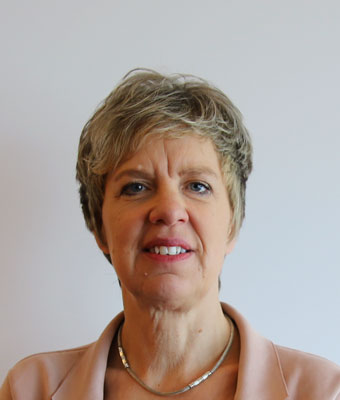
1. Deputy Ivana Bacik asked the Taoiseach when the Cabinet committee on EU and international affairs will next meet. [26918/25]
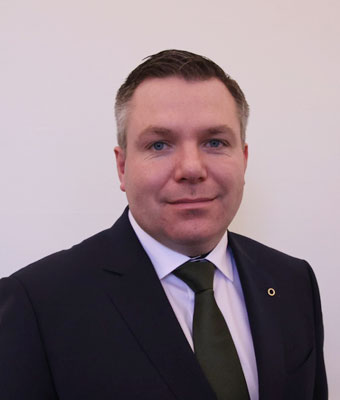
2. Deputy Shane Moynihan asked the Taoiseach when the Cabinet committee on EU and international affairs will next meet. [33560/25]
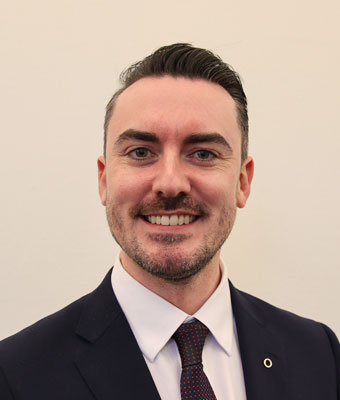
3. Deputy Naoise Ó Cearúil asked the Taoiseach when the Cabinet committee on EU and international affairs will next meet. [34040/25]

4. Deputy Cormac Devlin asked the Taoiseach when the Cabinet committee on EU and international affairs will next meet. [34613/25]
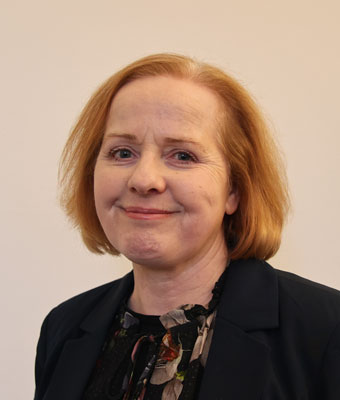
5. Deputy Ruth Coppinger asked the Taoiseach when the Cabinet committee on EU and international affairs will next meet. [35368/25]
6. Deputy Ruairí Ó Murchú asked the Taoiseach when the Cabinet committee on EU and international affairs will next meet. [35372/25]
7. Deputy Malcolm Byrne asked the Taoiseach when the Cabinet committee on EU and international affairs will next meet. [35405/25]
8. Deputy Paul Murphy asked the Taoiseach when the Cabinet committee on EU and international affairs will next meet. [35615/25]

9. Deputy Darren O'Rourke asked the Taoiseach when the Cabinet committee on EU and international affairs will next meet. [37507/25]
10. Deputy Peadar Tóibín asked the Taoiseach when the Cabinet committee on EU and international affairs will next meet. [37565/25]

11. Deputy Paul Lawless asked the Taoiseach when the Cabinet committee on EU and international affairs will next meet. [37587/25]
I propose to take Questions Nos. 1 to 11, inclusive, together.
The Programme for Government 2025: Securing Ireland’s Future, recognises the importance of Cabinet committees to the policy development and oversight work of Government. The Cabinet committee on the European Union and international affairs was established by the Government on 18 February 2025. Its role is to oversee implementation of programme for Government commitments in respect of the European Union, including preparation for Ireland's Presidency in the second half of 2026 and international issues.
A date for the next meeting of the Cabinet committee has not yet been scheduled. It most recently met on Monday, 16 June in advance of the June European Council meeting. The committee considered the substantial items on the agenda for the June European Council. As I told the House in my statement last week, the June European Council discussed developments in Ukraine and the Middle East, including the humanitarian situation in Gaza. European defence and security, global economic developments, competitiveness, migration, preparedness and the European Union's internal security were also on the agenda.
While European Union-US trade negotiations were not a formal agenda item, given the approaching deadline for the end of the US pause on higher rate tariffs, it was discussed among leaders. As the House will be aware, I have expressed my disappointment at the letter sent by the US to the European Union and the indication that a tariff of 30% may be imposed on imports from the European Union. The European Union continues to negotiate with the United States in good faith. Notwithstanding the letter, the facts remain that the deadline for talks is 1 August. The European Commission has been clear that it is working towards the conclusion of a deal as soon as possible and in advance of the deadline. The Government strongly supports these efforts. Our objective remains agreement on a mutually beneficial deal that works for both sides. A negotiated outcome is the best way forward.
I was in touch with President von der Leyen by phone on 7 July and again at the weekend when she updated me on the latest situation in negotiations with the United States. While the European Union will continue to work for an agreement, it will also continue to prepare for other outcomes.
A great deal has happened since 16 June when the Cabinet committee last met. I will come back to the question of tariffs, which I raised with the Taoiseach during Leaders' Questions. The tariff of 30% now threatened by President Trump would, of course, be ruinous, as the Taoiseach rightly said, for EU-US trade. I asked the Taoiseach what the contingency plan is, given that the adjusted deadline is now 1 August. What is the contingency plan? If it appears, coming close to 1 August, that the EU negotiation side has not succeeded in stopping those tariffs coming into effect, will the Dáil be recalled? How will that impact budgetary preparations?
The Taoiseach also mentioned that at the European Council meeting, Ukraine and Gaza were at the top of the agenda. Will he update us? Was any hope or prospect offered of an end to the war in Ukraine? Is there any sign of a change at EU level in respect of the ongoing carnage in Gaza? Are EU leaders moving any closer to any sort of agreed position on stronger sanctions against Israel?
I wish to ask about the current situation in Sudan. A civil war, which started over two years ago, has resulted in the death of over 500,000 children and the displacement of 14 million people. It has left 25 million people facing insecurity. Ireland's record has been strong in this regard. We were the country that initiated the discussion on sanctions and spoke on behalf of the EU at the EU and Gulf Cooperation Council summit. I would like to hear from the Taoiseach about what efforts are ongoing at an EU level to co-ordinate with our fellow European member states with regard to a more proactive response to the conflict in Sudan. What actions are being taken to interact with the African Union in respect of its role in this conflict and bringing it towards a resolution? We need to consider the safety of human life in that regard.
We recently heard of the possibility of an increase in US tariffs from 10% to 30%. EU Trade Commissioner, Maroš Šefčovič, has said that the 30% tariffs would effectively cut off EU-US trade, which is quite a sobering thought. Is the Government liaising with the Commissioner on any possible impacts of the increase from 10% to 30% tariffs?
The ongoing genocide in Gaza is obviously a stain on the European community and the US. Is the fear over tariffs going to inhibit our Government from raising serious human rights abuses within the US?
I have seen videos - I am sure the Taoiseach has too - of children shackled and chained in an LA detention centre by ICE and being transported, in scenes reminiscent of the Holocaust, before the end of the Second World War. I have also seen alligator Alcatraz, in which hundreds of people are being detained, with no convictions and no charges, in the Everglades, in Florida. Trump has called these people deranged and dangerous. They are being kept in cages in a swampland with pythons and alligators. There are 700 people there, apparently. When a Democrat Congresswoman emerged from there yesterday, she was shaken and completely unable to speak about the horrors she witnessed. We have a duty to speak up about human rights abuses in the US or any other powerful nation and not to be deterred for economic reasons.
There has been a lack of movement on the ongoing genocide by Israel in Gaza. We need to push Israel more and we need to see action finally happen. Something we could do here today would be to "let them play". Everyone has heard those words in the context of GAA Palestine and the idea I think everyone is taken with of 47 children from the West Bank coming here, from the desperate lives they have due to the ongoing situation there, and being allowed to play hurling. Earlier, the Taoiseach said there was no appeal lodged. I spoke earlier to Stephen Redmond of GAA Palestine. An appeal was lodged with the Department of justice at 1.15 p.m. GAA Palestine is saying that if those visas could be printed and in Tel Aviv for 1 o'clock or 2 o'clock tomorrow, it will be possible to deliver. If they are delivered later, there will be an issue with moving through, given the issue of violence by settlers. That is the reality these children are dealing with. This is something the Taoiseach or the Minister for justice can deliver on. I accept that other things take a lot more effort and take a long time. This could be absolutely beautiful but it could also be another failure with regard to the Palestinian people and these particular children.
Thank you, Deputy Ó Murchú.
That is the truth. There is no point using any other language.
I call Deputy Malcolm Byrne.
The fact is the Government can and should deliver.
Resume your seat, Deputy Ó Murchú.
It is the only thing to do. We cannot fail these Palestinians any further-----
Deputy Ó Murchú, please resume your seat. I call Deputy Malcolm Byrne.
I agree with my colleague, Deputy Moynihan, about the horrible events that continue to unfold in Sudan.
I raise the EU-China summit which will take place next year. While it is important and increasingly the case that we must have free and fair trade around the world, and I know China and the European Union are committed to try to address some of the trading problems globally, I raise again the issue of continuing human rights abuses in China by the Chinese Communist Party. In particular, I raise the case of Tibet and how the Tibetan minority is treated. I would like an assurance in the context of the EU-China summit that human rights will remain on the EU's agenda, that the Irish Government and the EU will raise the question of the succession of the Dalai Lama and that we will reaffirm the position that it is right for those of the Tibetan Buddhist tradition to choose the Dalai Lama's successor and that his successor should not be chosen by the Chinese Communist Party.
It is very simple: the Department of justice has refused to give the visas needed for children from Palestine to come here and play hurling. That can still be changed. It requires a Government decision to say, "We are going to grant the visas; it is the very least we can do." I urge the Government to act at this late stage. As well as the GAA players being denied entry, we know there have been real issues with medical evacuation of Palestinian children. Over the weekend, I learned that around 20 Palestinian students have applied for visas to attend college in Ireland from September and that only two of them have been approved. There looks to be a pattern here. By way of contrast, any Israeli citizen can travel visa-free to Ireland for up to 90 days. An Israeli child could travel to Ireland and play GAA here with no trouble. Why are we not doing everything we can for these people, to let them play, study and access medical treatment in Ireland?
The Taoiseach's argument consistently has been that we need to wait for the European Union to act in unison as regards sanctions against Israel. It is now clear and widely reported that there is no requirement for unanimity. What measures will the Government take, along with other countries, and what other countries are they, to enforce meaningful sanctions on Israel?
Last week, I raised the issue of the GAA Palestine organisation seeking to get visas for children to play hurling in this country. I think most people will recognise the shocking devastation that exists in their home country, and most people with a heart would seek for them to be able to find solace in Ireland in the coming weeks. I was shocked to hear about a group of people from the GAA Palestine organisation having travelled to Dublin to seek a meeting with the Department. They brought all the documents with them but were denied a meeting with any official within the Department, I am told. One would imagine that the instinct of the Government would be to make sure the Minister met this group and be proactive in seeking a solution to this. Can the Taoiseach indicate what happened there and why no Minister sought to proactively fix this situation so we do not have this current stalemate?
Aontú has raised concerns about the economic threats of the tariffs for quite some time. An Aontú Private Members' Bill sought to urge the Government to take steps to mitigate the consequences of the tariffs. In response, Deputy Alan Dillon, the Minister of State with responsibility for enterprise, stated that there is no threat to Ireland as regards these tariffs. I warned at the time that this was very naive and dangerously complacent and I hoped it was not reflective of the Government across the board. Since then, there has been a narrative change. Recently, the Tánaiste stated that there is a major economic challenge, and the EU trade chief, Maroš Šefčovič, stated that it would be almost impossible for US-EU trade to continue under a 30% tariff. Will the Taoiseach outline in simple terms whether there is a contingency in place should these tariffs continue? What does this mean for the people of Ireland and what does it mean for counties like Mayo, which is so reliant on medtech and pharma, for example?
I thank all the Deputies for raising a range of questions.
Deputy Bacik first raised the issue of tariffs and Deputy Lawless concluded on that. Fundamentally, a 30% tariff is untenable and unsustainable. It would have to be met with a very strong European Union response if it were to be maintained. That would have the effect of creating a reaction in the markets, in my view, and would in itself create an utter economic crisis because Europe and the US have the biggest trading relationship in the world. We therefore hope we can get to a negotiated settlement and a solution here. That has been the mindset of the European Union from day one. There is no question about the impact of this; there will be impacts. The Economic and Social Research Institute did a number of analyses of different tariff levels, particularly a 10% tariff, for example, and what the impact would be. It predicted a decline in economic growth and an ease in employment creation. At 10%, we would not create as many jobs as we have been creating in recent years. If it were 30%, we would be talking about huge economic decline, job cuts or job reductions in the private sector and so on - if that were to come to pass. The situation is very serious; no one is trying to hide that. The European Union does not want tariffs and has not sought tariffs.
We have a number of events coming up. We have the summer economic statement to be published. That outlines the broad expenditure proposals. We have the budget itself. We have the completion of the national development plan. All those are predicated on the Department of Finance finance projections in terms of revenue and so on.
Tariffs could potentially impact tax revenue, employment and sectors in our economy that are very strong, such as pharmaceutical and medtech. Therefore, we have to keep this under review. There is no certainty here; it is a situation of uncertainty. There was a surge of exports prior to the arrival of tariffs at the beginning of the year. That might impact beneficially on the surplus at the end of this year. We do not know; we have to wait and see. That does not mean that will be replicated next year or the year after. Under the European Union medium-term fiscal framework, we have to present a five-year plan to Brussels. The context could not be more uncertain given what is happening.
Deputy Shane Moynihan raised Sudan. I am glad he did and it is welcome because very few people are speaking about the atrocities in Sudan and the level of killing and destruction of the civilian population in Sudan and the enormous displacement of people. It is absolutely horrendous and shocking and goes to the heart of the very destructive inhumanity of warfare. Ireland has raised this at all multilateral forums, at the European Union and at the UN, and we have advocated for stronger sanctions, also on some neighbouring countries which are fuelling this because of their own vested and geopolitical interests. The result is millions of civilians losing out in terms of their fundamental human rights and the basic necessities of life in terms of a home and so forth.
Deputy Ó Cearúil also raised the EU tariffs. I outlined where we are there. I hope, and this is the view in Europe, that the setting of the 1 August deadline presents an opportunity for dialogue, although Europe is conscious of the impacts of all this because Europe thought it had a deal days before last weekend. There was, more or less, an outline agreement in principle which Europe thought had been arrived at and then suddenly this 30% came onto the table. That does not augur well. We have to prepare for all eventualities. We will keep people informed.
Deputy Coppinger raised issues of human rights. Ireland raises human rights abuses and breaches at all multilateral forums and bilaterally with nations and we will continue to do that. On issues within the US, we will look at those and take assessments from various bodies and so on that can comment on those.
In response to Deputy Ó Murchú, Ireland has been, without question, among the foremost countries highlighting the appalling impact of the war in Gaza on Palestinians and also the terrible, shocking terrorist behaviour of settlers in the West Bank. We were one of the first, along with Slovenia, Spain and Norway, to recognise the Palestinian State and we have also pushed for suspension of the EU-Israel trade agreement. A menu has come on the table today from the High Representative of certain aspects we can progress but the problem is that will require support from other European Union countries and it is not yet clear whether that could achieve a qualified voting majority. If, for example, we looked at the Horizon Europe programme in terms of seeking to put pressure on Israel and not facilitate its use of the Horizon programme, would that get the requisite support? That is something we are working on and we are engaging with other like-minded countries, as we have done, with the EU-Israel association agreement. We did it with Spain alone and then with eight other countries some weeks ago. We have also asked the European Union to ask itself whether it is in conformity with the International Court of Justice judgment and opinion.
I am being reminded by Members that we have gone over time on this question.
Could we-----
I am just bringing this to the Taoiseach’s attention.
-----eat into the next question?
There is an allocated time. I can easily hold everyone to their time but Members will not get answers. If they want answers, they need to allow the Taoiseach to respond.
We want the answers.
Maybe we could take off-----
Holding everyone to their time is fine.
We will eat into the time for the next set of questions.
We can take five minutes off the next group.
That is what I am saying.
Yes.
That is fine.
On letting them play, I am perplexed about this. Deputy Paul Murphy raised this as well. I am slightly worried that there is a campaign under way to try to blame the Government or create this narrative, as Deputy Murphy did, that the Government is anti-Palestinian or is not facilitating Palestinians coming to Ireland. The bottom line is 700 visas have been granted to Palestinian nationals since the outbreak of the war.
Is that a lot?
There is no delay in medical evacuations whatsoever. A false narrative has developed around medical evacuation of children from Palestine. I do not know where that is coming from or why people would even want to create that false narrative to undermine the Government..
It is coming from doctors.
No, it is not.
It was a doctor who contacted me about it.
The doctor should maybe contact the Minister. We work with the World Health Organization. Some doctors wanted to do it by another route through Jordan. We can look at that but let us do it properly, through the proper channels, because these are serious matters. These are children with serious injuries. We have to make sure their parents are on board. Family unification is there and we have done that already with 12 children. There are, I think, 45 adults with those 12 children already. I am very clear there will be family reunification. Let us not have Members just saying the Government is anti this or that – it is not.
GAA Palestine has come out of left-field, to be frank. Why was there not proper negotiations or engagement with the Government well in advance before any visas were applied for?
They say there was no interaction.
Sorry, Deputy.
Can we deal with it now?
I am dealing with it now but it is an important point. This is a serious matter. You cannot have a group forming in any locality and simply say, "Ignore all your normal regulatory procedures for visa applications". That is not possible. You have to get the documentation right. We have to know who is coming in with the children. We have to know the passports are proper. A lot of that was open to question, apparently, according to the documentation that was submitted.
The information and the appeal is in.
Just hear me out, please. For the children, additional documents must be verified, including birth certificates and letters of consent to establish the relationship between the child and the adult they are travelling with. Most of the children would not have been travelling with a parent. Then there are all sorts of issues about employment, other ties and indicating that a person has obligations to return to home. Those are all there as regulations. For some reason, over the last four or five days, no appeal was entered at all.
They were allowing for the discretion of the Minister.
I am going to move on to the next group of questions.
How come there was no meeting with the delegation?
I will come to that. The basic thing that should have happened is that an appeal should have been entered.
There is an appeal now.
That was today, at 1 o'clock?
I know but can we deal with it now?
It does not sound right to me that an appeal would come in in that manner given that a week or more has passed since the original decision. The whole thing is somewhat perplexing. That is all I am saying.
I am sure they find it perplexing too.
I do not know whether GAA Palestine is affiliated to the GAA. Normally what would happen is a sporting organisation would come to the Government of the day and say "We want to organise X, Y and Z" well in advance.
Will the Taoiseach meet Stephen Redmond? He is here now. He is the founder of GAA Palestine.
I do not know who is behind the whole thing.
Stephen Redmond is and he is in the building at the minute.
Deputy Ó Murchú, we are not having-----
Sorry, look that is-----
I ask the Taoiseach, if he would not mind, to conclude.
Whose campaign is it? Is it the Deputy's campaign or whose campaign is it? What is going on?
I would just like this issue dealt with. I would prefer not to be dealing with it like this.
So would I.
This is hardly the way. I do not understand why the Government did not deal with this, even to get it off the agenda.
Sorry, but I do not understand the way the Deputy is dealing with it. It seems to be more about the campaign than the children. I hate saying that.
No, I am incredibly straight and incredibly constructive.
We will conclude these questions.
Why was there a refusal to meet a delegation?
We are now moving to Questions Nos. 12 to 17, inclusive.
I am asking legitimate questions. There was no notification that anyone was coming. You do not just rock up to the Department of justice, ad hoc, and say "Minister, come down here". He might not even have been in the building.
They could have met officials.
Yes. They asked for engagement.
All of it suggests that something is not right, in my view. I am not saying anything was done wrong by the organisers but the whole thing seems haphazardly organised. That is all I can say.
I am not sure.
What is the Taoiseach suggesting?
It is strange; that is all I can say.
The Taoiseach would not even meet the delegation.
Can we have some order, please?
We are talking about children here. I think there should be a greater sense of organisation behind this and-----
We are trying to get it sorted.
We want to help.
What about Tibet?
We move to Questions Nos. 12 to 17, inclusive.
I asked about Tibet.
Apologies. Tibet will be on the EU-China forum. We always raise issues with China. China always responds, by the way, robustly and never has any issue with the matter being raised. We do not get a satisfactory response from our perspective. On the Dalai Lama and so forth, I could not agree with the Deputy more.
Taoiseach's Meetings and Engagements
12. Deputy Ivana Bacik asked the Taoiseach to report on his discussions with the new Canadian Prime Minister. [28979/25]
13. Deputy Malcolm Byrne asked the Taoiseach if he has had any engagement to date with the new Canadian Prime Minister, Mark Carney. [35275/25]
14. Deputy Paul Murphy asked the Taoiseach to report on his discussions with the new Canadian Prime Minister. [35616/25]
15. Deputy Darren O'Rourke asked the Taoiseach to report on his discussions with the new Canadian Prime Minister. [37508/25]
16. Deputy Ruth Coppinger asked the Taoiseach to report on his discussions with the new Canadian Prime Minister. [38778/25]
17. Deputy Naoise Ó Cearúil asked the Taoiseach if he has had any engagement to date with the new Canadian Prime Minister, Mark Carney. [39237/25]
I propose to take Questions Nos. 12 to 17, inclusive, together.
Ireland enjoys a deep and strong relationship with Canada, a country with which we share many values. Increasingly, that relationship has an economic focus.
In recent times, we have expanded our presence in Canada with consulates opened in Vancouver and Toronto in addition to our embassy in Ottawa. We also have a strong agency presence in Canada, including the IDA, Enterprise Ireland and Tourism Ireland. Ireland and Canada also have a collaborative relationship on many global issues, including working towards a peaceful resolution and a massive humanitarian response to the war in Gaza, and in supporting Ukraine.
I wrote to Prime Minister Carney to offer my congratulations on his election victory and said that I looked forward to co-operating with him and with his new Government in the period ahead. Like many Canadians, Prime Minister Carney has strong Irish heritage with family connections to Mayo and he has spoken of how important that heritage is to him. I am confident that our bilateral relations will continue to go from strength to strength throughout his tenure. I have not yet had the opportunity to meet the prime minister in person since he took up his new role but I look forward to doing so at the earliest possible opportunity.
I welcome the recent EU-Canada summit attended by Prime Minister Carney. It was a useful opportunity to reaffirm and strengthen the EU-Canada strategic partnership following political changes in Canada and the EU. The Canada-EU relationship, like the bilateral relationship between Canada and Ireland, is based on shared values, a long history of close co-operation and strong people-to-people ties. The summit’s theme of Enduring Partnership, Ambitious Agenda reflects the importance of the Canada-EU relationship at this juncture and Ireland welcomes the ambition of the joint statement for a new and comprehensive partnership across a range of thematic areas.
Furthermore, the Government is committed to ratifying the Comprehensive Economic and Trade Agreement, CETA, between the EU and Canada. This is clearly set out in our programme for Government. Since the agreement was provisionally applied in 2017, we have seen a significant increase in trade between our countries. Goods exports to Canada increased from €936 million in 2016 to more than €4.1 billion in 2024. Services exports grew from €1.44 billion in 2016 to more than €3.6 billion in 2023. Ratifying CETA is firmly in the interests of workers, taxpayers and businesses in rural and urban Ireland and I find it extraordinary that so many in this House have opposed its ratification to date. The global economy is changing in ways that are making trade with like-minded, stable and reliable partners like Canada more important than ever before. I look forward to further deepening relations with Canada in the period ahead.
I thank the Taoiseach for the update. I note the Taoiseach said there was ongoing engagement with Canada on seeking to work together to stop the brutal war in Gaza. Can the Taoiseach brief more on that and the steps that are ongoing with Canada on that?
How closely are the EU and Canada engaging on the tariff threat? We have seen Trump threatening Canada with a further 35% tariff despite the blanket 25% already there. We have seen Canada scrapping a proposed digital services tax apparently in order to appease Trump and yet that has not made a difference. How are the EU and Canada engaging at leadership level to respond to the US and its dominant position on services, particularly tech, and the tariff threat?
The Taoiseach referred to the Government's plan to ratify CETA. There are many people with real concerns about the investor court provisions in CETA and the prospect of the undermining of our own courts. Could the Taoiseach address that concern?
I welcome the Taoiseach's very warm welcome for the new Prime Minister of Canada. I am sure he will also join with me in welcoming the new Canadian ambassador to Ireland Dennis King and his wife Jana, who have just joined us. The Taoiseach's personal commitment to Canada over a long period is very welcome and I look forward to the Government implementing CETA. I understand the memo has been brought to Government but the Taoiseach might outline if it will be fully ratified by the end of this year. It needs to be remembered that over 15,000 people are employed by Canadian companies in Ireland, that over 6,000 people are employed by Irish companies in Canada and that Canada is Ireland's 12th largest trading partner. As the Taoiseach said, Ireland and Canada share so many values.
It surprises me in this House that those warm relationships we have with democratic countries that share our values are attacked so often and yet there are those on the Opposition benches who will never criticise countries like Russia, Iran or Venezuela - countries that certainly do not share our values. Trade is the lifeblood of this economy and having a global economy that has free and fair trade is essential to lift people out of poverty and provide people with employment.
In June, Ursula von der Leyen agreed a new security and defence partnership between the EU and Canada, which is a member of NATO. This will enable Canada to engage in joint weapons procurement with European countries, including Ireland, those who have signed up to ReArm Europe and the so-called safe instrument. Von der Leyen and Canada announced that NATO remains the cornerstone of their defence and that, "Our aim will be to help deliver on our capability targets, including through our defence industries, more quickly and economically and with enhanced interoperability in ways that deliver mutual benefit and reinforce the European contribution to NATO." Would the Taoiseach agree that this new partnership between Ireland and Canada is part of what our President, Michael D. Higgins, described as a dangerous drift towards NATO that puts us behind the shadows of previous empires within the EU and that this flies in the face of the views of the vast majority of people in this country who want to retain neutrality and who follow James Connolly's line of neither king nor Kaiser? Today, that is neither Washington nor Brussels nor Bejing nor Moscow.
Nor Moscow nor Tehran
Nor Moscow nor Tehran nor London. I have been against all of these imperialisms consistently. That was Connolly's position.
The concerns regarding CETA concern the ISDS and the investor court system. Canada has significant investment in the fossil fuel industry in Ireland. I am interested in green energy and the opportunity for research, development and co-operation with Canada. Those are legitimate concerns that relate to Canada and they need to be addressed. What are the plans for co-operation with Canada in research, development and investment in green energy?
Has the Taoiseach raised with the Canadian Prime Minister the ongoing support of Canada for Israel, which is very unfortunate, and Canada's commitment to spend 5% of GDP on arms and to participate in ReArm Europe?
Points have been made by a previous TD about democratic values that we share. TDs who went and dined with the US ambassador while it is funding a genocide are lecturing the rest of us about democratic values but I have been on more marches for Woman, Life, Freedom in Iran, something that that Deputy could never go on because he struck a woman once and paid no price, so I would stay very quiet. I have also been on protests outside the embassy of the USSR, which is something that Deputy has never done. We hear a lot of lectures from people about democratic values. They never raise the values of the US, Canada and other nations.
Since the signing of CETA in 2017, Ireland's exports to Canada have surged from €1.7 billion to €5.2 billion in 2024. However, there was a reduction of over 50% in quarter 1 of 2025. It is believed that much of that is due to pharma being diverted to the US ahead of impending tariffs. We are now looking at the new EU-Canada strategic partnership of the future and negotiations will start soon between Canada and the EU. I ask that strong consideration be given by the Government in those negotiations, and when speaking with the likes of Maroš Šefčovič, to looking specifically at pharma to Canada from Ireland.
We know the scenario regarding Trump and his tariffs and we have significant fears. While the markets do not necessarily believe him at this stage, Canada has been set aside as one of those places where we are looking at trade missions and at increasing trade, which is sound. What elements of CETA are not in place at the moment other than the ISDS? The big fear there is that corporations will be able to take action against this State as it tries to introduce progressive legislation.
I am amazed and somewhat shocked at the orientation and nature of the Opposition's presentations, particularly in terms of CETA.
Someone said these are legitimate questions about the investor courts. The investor courts were dealt with through the European court judgment and will be dealt with in terms of the legislation. All trade agreements have to have a mediating facility and mechanism. Deputy O'Rourke stated that these are legitimate concerns in the context of fossil fuels and so on, but not one of the Deputies opposite mentioned - Deputies Ó Cearúil and Byrne did - that there are 15,000 people employed by Canadian companies. Does that matter to them? It does not matter to any of them. This is almost economic illiteracy. That exports do not matter-----
You crashed the economy.
What is not in play? What do you want out of this?

You brought the troika in.
-----that we do not believe in free trade.
We did not say that. We only asked half the questions, is that it?
Order please.
We only asked half the questions.
You are saying it. Not one of you could say you will vote for CETA or will endorse CETA.
We are against it.
Yes, you are against it.
We are against CETA, yes.
You tell him.
You are against something in the context of which trade from Ireland went up from €936 million in 2016 to €4.1 billion in 2024.
Explain the advantages.
That has already happened.
How could you be against that?
It brings in a parallel justice system for corporations.
Some of the Opposition purport to be in favour of workers. You could not care less about workers, Deputy Murphy. You could not care less about Irish workers. It is Irish workers who benefit from that level of exports. Indigenous companies and people working for multinationals also benefit. You just could not care less.
You only care about corporations.
You do not care about anything to do with the western hemisphere-----
Can the Taoiseach just answer the questions he was asked?
-----and that is your position. This is a fundamental point that has been raised time and time again. Those opposite say they are against this and against that. They do not believe in an enterprise economy, they do not believe in free trade and they do not really believe in workers' opportunity to develop and grow within their employments under the model we have here. That is a very serious issue in terms of this consistency over eight or nine years.
It is provisionally in operation, Deputy Ó Murchú, but it is not legislated for. We have to ratify it. We do so, given the fact we are a small, open economy whose workers depend on trade. We manufacture so many goods that are meant for export because we could not consume them in a small island like Ireland. What is the Opposition at in the context of its economic and trade policies? With tariffs coming from the US, of course we should embrace a Canadian-European Union trade agreement and economic partnership. Ireland has a strong economic partnership with Canada, and we should not apologise for that. Canada is not going to be perfect. We are not perfect. Canada will have aspects to its policy it has developed over the years that we may not agree with. Overall, however, it has been a benign, friendly country. There are huge Irish roots and heritage there.
There is a disconnect in this house between what puts bread and butter on the tables of Irish people and the Opposition's hang-ups about investor courts and this, that and the other. It is a completely disproportionate, illogical approach that the Opposition takes. Not one of the Deputies from Labour, Aontú or any other party could say that they will support the CETA legislation. I find that extraordinary.
I find it extraordinary that you support it.
Get rid of the ISDS. It is out of most trade agreements.
There is a little over one minute left.
Other issues were raised. To Deputy Ó Cearúil, we will embrace the strategic partnership. We have our position of military neutrality. I do not know whether it was Deputy Murphy or Deputy Coppinger who suggested our relationship with Canada was about militarisation, armaments and so on-----
The EU and Canada have a security agreement.
-----but it most certainly is not. Other EU member states are entitled to have their positions on defence.
We are part of the EU.
We are.
Yes.
We are not part of NATO.
No, we are part of-----
If you talk-----
The time is almost concluded on this.
-----to people from Lithuania and Latvia, they have very legitimate existential concerns given their countries' long histories with Russia and the manner in which Russia treated them. Time and time again, it invaded those countries and violated their integrity. If the Deputy was living in Lithuania, he might have a different perspective to the one he has now.
You could say that about a lot of places.
Cabinet Committees
18. Deputy Ivana Bacik asked the Taoiseach when the Cabinet committee on housing will next meet. [25317/25]

19. Deputy Cian O'Callaghan asked the Taoiseach when the Cabinet committee on housing will next meet. [32569/25]
20. Deputy Darren O'Rourke asked the Taoiseach when the Cabinet committee on housing will next meet. [33553/25]
21. Deputy Ruth Coppinger asked the Taoiseach when the Cabinet committee on housing will next meet. [33615/25]
22. Deputy Peadar Tóibín asked the Taoiseach when the Cabinet committee on housing last met. [34037/25]
23. Deputy Séamus McGrath asked the Taoiseach when the Cabinet committee on housing will next meet. [34041/25]
24. Deputy James Geoghegan asked the Taoiseach when the Cabinet committee on housing will next meet. [34130/25]
25. Deputy Barry Heneghan asked the Taoiseach when the Cabinet committee on housing will next meet. [34302/25]
26. Deputy Conor Sheehan asked the Taoiseach when the Cabinet committee on housing will next meet. [35039/25]
27. Deputy Paul McAuliffe asked the Taoiseach when the Cabinet committee on housing will next meet. [35225/25]
28. Deputy Shane Moynihan asked the Taoiseach when the Cabinet committee on housing will next meet. [35226/25]
29. Deputy Ruairí Ó Murchú asked the Taoiseach when the Cabinet committee on housing will next meet. [35373/25]
30. Deputy Mary Lou McDonald asked the Taoiseach when the Cabinet committee on housing will next meet. [35556/25]
31. Deputy Paul Murphy asked the Taoiseach when the Cabinet committee on housing will next meet. [35617/25]
32. Deputy Conor Sheehan asked the Taoiseach when the Cabinet committee on housing will next meet. [38801/25]
33. Deputy Peadar Tóibín asked the Taoiseach when the Cabinet committee on housing will next meet. [39165/25]
34. Deputy Catherine Ardagh asked the Taoiseach when the Cabinet committee on housing will next meet. [39238/25]
I propose to take Questions Nos. 18 to 34, inclusive, together.
The Cabinet committee on housing last met on Thursday 5 June and is due to meet again on Monday 21 July. The committee works to ensure a cross-Government approach to the implementation of our commitments in respect of housing policy. Housing supply has increased significantly over the past number of years, with almost 140,000 new homes delivered since the start of 2020. However, we know we need to do more. Housing is the single most urgent and important social and economic issue facing our country and one we are determined to get to grips with. The programme for Government sets out our ambition to build on the success of Housing for All to accelerate the delivery of homes.
Since entering office, we have allocated over €700 million to housing That is in addition to the €6 billion already allocated in budget 2025. This includes €450 million to build a further 3,000 social, affordable and cost rental homes and an additional €265 million to second-hand social housing acquisitions, bringing the total available for acquisitions in 2025 to €325 million. This increased funding, which will support tenant in situ acquisitions, will greatly help in preventing people falling into homelessness due to the sale of their rental homes.
We have also have brought forward a suite of measures to boost the delivery of homes. Among these, the revision of the national planning framework will enable local authorities to zone the significantly higher quantum of land needed to meet our ambition for housing delivery. We established the housing activation office in the Department of Housing, Local Government and Heritage. It will address barriers to the delivery of infrastructure projects needed to enable housing development. Additionally, the new infrastructure division in the Department of public expenditure will improve efficiency in delivering strategic infrastructure projects, critical to supporting us in scaling up housing delivery over the medium term.
We are moving at pace to reform our planning system, through the implementation of the landmark Planning and Development Act 2024. An Coimisiún Pleanála has been established and will focus on accelerating crucial planning decisions and reducing delays. The Government has also approved changes which will allow current holders of planning permissions for housing developments that have not yet commenced to apply for an extension of up to three years. This is about getting things moving and ensuring we do not lose out on the delivery of thousands of potential homes.
As a further measure to encourage the supply of much-needed homes, Government has published new guidelines which will strike a balance between ensuring apartment development meet the needs of society in terms of standards and quality, while promoting an increased level of delivery overall. In publishing these guidelines, we are taking decisive action without compromising on any essential regulations to ensure apartments are viable to build.
The Land Development Agency, LDA, has proven very successful in delivering social and affordable homes to date. We believe it can do even more, which is why we have agreed to an expansion to its remit. Earlier this month, we agreed to introduce a single-stage approval process for all social housing projects, up to a value of €200 million. This will cut red tape and support local authorities and approved housing bodies, AHBs, to increase and speed up the delivery of much-needed homes. The Government has also agreed reforms to rent pressure zones which, among other things, will strengthen the rights of tenants and will help to stimulate increased investment and development over the longer term. We are currently developing a new housing plan that will be aligned with the outcome of the national development plan, NDP, review process currently under way.
It is clear that we have many significant challenges, especially with the viability of apartment development. We will pursue every action possible and be creative in our thinking as we move to step up housing delivery. These decisions, which will be reflected in the revised plan, will allow us to drive forward and ensure momentum across all different areas of housing delivery over the lifetime of this Government.
At the behest of developers, the Government is committed to reducing apartment sizes and removing the minimum 5% community and cultural space. The Minister claimed this will reduce the cost of apartments by between €50,000 and €100,000, but those savings could only be achieved if every single measure were applied. We have had no detailed evidence for this claim, just an internal summary of the LDA's research. At the housing committee, the Minister told me the research will be published. When will the evidence for these drastic changes be provided in full? Will it be after the emergency planning legislation the Government is ramming through the Dáil and Seanad this week?
We were told a couple of months ago that the Planning and Development Act was a once-in-a-generation reform. Eight months later, however, the Government is rushing through amendments. In 20 years' time, when we are dealing with the consequences of large housing developments built without community or cultural space it will be too late. The plan to allow developers seek modification certificates to change existing planning permissions in line with the proposed new rules does not allow for any appeal to An Coimisiún Pleanála when such certificates are issued. Does the Taoiseach accept that this is likely to be a further recipe for judicial review?
One of the big issues we face is acknowledged to be water infrastructure. I bring to the Taoiseach's attention water infrastructure challenges in County Meath, namely the water mains in Duleek, where there are repeated outages, including two in the past five days, and the water treatment capacity in Kells. Regarding Duleek, we met with Uisce Éireann a number of weeks ago. There is a commitment to act but things are proceeding far too slowly. We want to see those works advanced as quickly as possible. Attention may be diverted elsewhere to another major project in the county, which is welcome investment, but prioritisation must be given to the new mains in the town of Duleek.
It is absolutely pathetic that the only thing the Government can offer young people to reduce the price of a home is to reduce its size. Going from 37 sq. m to 32 sq. m means these units will be smaller than a mobile home. Eight of them, apparently, would fit on a playing pitch. The estimated cost reduction this will bring about is between €28,000 and €40,000. It still will not make apartments affordable for any workers, including teachers, nurses or anyone else. It will not stop the exodus. In addition, the Government is loosening the regulations for builders in regard to light and the provision of windows. Yet again, it is a developer-led system.
Fingal County Council has announced it has stopped the tenant in situ scheme. The only possible means by which a TD can save any person from homelessness has now been removed. There is nothing else. What else can we do? If someone comes to any of us with a termination notice, having gone to the Residential Tenancies Board and Threshold, what else can we offer them? The Government has taken away the budget for the scheme. In Dublin City Council and Fingal County Council, in practically the whole of Dublin and most of the country, this has gone as an option. What is the Government offering people who have termination and evictions notice pending?
According to information we in Aontú have received, 49% of people in emergency accommodation in the State have come from outside Ireland. That is a significant figure and there is no doubt it is putting pressure on the housing sector. Currently, 80,000 people net are coming to Ireland each year. If we include the population growth of the State, that is the equivalent of adding the population of Galway city to the country on an annual basis. Galway has a university, a university hospital, dozens of schools and tens of thousands of houses. The Government is simply not building that infrastructure on an annual basis.
I want to be clear that the lack of supply in housing is the Government's fault. It is not the responsibility of newcomers that supply is breaking down. I also want to be clear that we need to provide shelter for those fleeing war and violence. However, should not asylum seekers who are working here contribute to the cost of their accommodation? Is it fair that where two people in the same town are both working and earning the same, they do not both have to contribute to the cost of their accommodation?
In advance of the new housing plan in the coming month or so, I stress again the importance of increasing our affordable housing targets. There must be a rebalancing towards affordable housing in the plan's targets. I have made the point previously to the Taoiseach that there is a growing cohort of individuals and couples who need support but are not receiving any. Their incomes are above the social housing threshold but are well below what they need in terms of providing accommodation, whether by purchase or rental. They are individuals and couples who have incomes of up to €70,000 or €80,000 but who are not in a position to secure accommodation. They need support. We must meet in the middle in terms of those who qualify for social housing and those who need affordable housing supports. I reiterate the importance of increasing our affordable targets significantly in the new plan. I know the Taoiseach is committed to doing so, but it is important to continue to highlight the point at every opportunity.
I am delighted to see the new private wires policy announced by the Government today. Will this be just for large-scale energy users like Amazon and the big data centres or will it be able to take eco-villages and small, eco- and sustainable projects away from the grid? We risk having a parallel grid that reduces costs for large corporations but does not really help the Irish people. Does the Taoiseach have any update on the North-South interconnector?
I have raised disability housing previously and the issue that has arisen with capital assistance scheme, CAS, funding. This was raised with me by St. John of God in reference to its approved housing body's dealings with the county councils in both Louth and Meath regarding the purchase of properties necessary for those with disabilities. They have been told by the local authorities that funding can no longer be given because the money is in the same bracket as the tenant in situ scheme and all those other schemes. This is creating a real issue. I do not know what the future is for a number of people whose rental contracts are coming to an end as landlords sell their properties. There is no longer the facility to purchase either those properties or alternative properties. We need to find some solution.
The tenant in situ scheme is the only thing that lies between thousands of families and homelessness. The Government, by starving councils of funding for it, is, in effect, abolishing the scheme. It is incredible. Dublin City Council's programme is now officially over as it has run out of money. Fingal County Council is the same. Carlow County Council has now run out of money for its scheme. South Dublin County Council is just about to run out of money. I am sure other councils are only a matter of weeks or months away from being in the same place. South Dublin County Council still has 700 expressions of interest from families who are in this situation and for whom there will be no funding to prevent them going into homelessness. Focus Ireland put it correctly in saying, "Government policy favours the vacant-possession sale on the market rather than the protection of the existing tenant". Will the Taoiseach reverse this cruel policy, properly fund the tenant in situ scheme and prevent a new tidal wave of homelessness?
There exists a huge chasm between Government rhetoric on housing and the reality locally. I draw the Taoiseach's attention to the housing situation in Mayo. The first home scheme, introduced in 2022, has delivered, on average, just six houses each year across the county. The affordable housing scheme, introduced in 2019, has delivered just five units, which is less than one per year. The cost-rental scheme in Mayo has delivered no housing units. There were hundreds of applications for the vacant property grant but just 83 payouts. Only four houses transitioned into the mortgage-to-rent scheme. The tenant in situ scheme has, in effect, ceased in Mayo, which is causing great difficulty.
This is the reality locally in Mayo. Five affordable housing units were delivered. Deputy Séamus McGrath mentioned affordable housing targets. In fact, there are no targets for affordable housing. That is the reality. The Government must introduce targets and apply some urgency in regard to the provision of affordable housing. Most of Mayo is not even considered for affordable housing. Claremorris, Ballina and Castlebar still have no affordable housing.
Will the Deputy please conclude?
Housing delivery has collapsed under Fianna Fáil. This is a very serious issue. I ask the Taoiseach to please not deflect and to give us the reality.
Deputy Lawless, please resume your seat.
Will he actually address this issue?
Deputy Sheehan referred to the size of apartments and the change in the guidance and standardisation in terms of design and so on. That is not being done at the behest of developers. There is a well recognised and analysed viability gap in terms of the construction of apartments in cities and, indeed, across the country. It is well documented that there is a fundamental issue in terms of cost and viability. This is just one measure of a whole range of measures we have taken to try to bring private sector investment into the private rental market and into the apartment area, on top of the huge public sector investment in housing. At present, the main burden of investment in housing is being taken up by the State.
The planning Act introduced a major overhaul of the planning laws. An Coimisiún Pleanála has been established. A range of house and apartment types and sizes will be developed to meet the different needs of those seeking housing.
Not everyone has the same housing need. Positives will come out of this for certain parts of society that require smaller units. Houses will still be built. Two- and three-bedroom apartments will be built. It is a range of construction.
Deputy O'Rourke raised the issue of water infrastructure. I spoke to his party leader earlier on this. The Government is focusing on investment in public infrastructure, and water infrastructure in particular. I will pursue the issue in Duleek with the Minister and alert him that the Deputy raised it.
To respond to Deputy Coppinger, the help to buy and first home schemes have been very effective for new-time buyers. In terms of the tenant in situ scheme, a total of €325 million was allocated this year to local authorities the length and breadth of the country to buy second-hand properties. Tenant in situ social acquisitions are focused on tenants in receipt of HAP and RAS who receive a notice of termination. There are other mechanisms as well. This funding for second-hand acquisitions is part of a wider amount of €2 billion in total. These are supports for local authorities and AHBs to deliver new social homes.
Why were the schemes stopped?
A lot more social homes are built now than there were historically. The building of social homes is at a 40-year record, which does not get recognised at all.
The population has doubled.
Of those on the homeless lists, as I think that is what Deputy Tóibín was referring to, close to 50% are from the EU or the EEA. We have a growing population. The timelines as to when people come on to the emergency accommodation lists are a matter that needs to be examined in the context of the needs of people when they arrive in. The growing population has created new demands and pressures on our system. Of that, there is no doubt.
To respond to Deputy McGrath, while the Government is focused on affordable housing, it has to balance that with social housing. Getting more people out of the private rental sector and into social housing would take pressure off the private market. We are absolutely focused on supporting affordability and getting more affordable homes, particularly for those, as the Deputy said, who are above the social housing income threshold but do not have the financial resources available to purchase a home. That is a very significant group of people who need attention and supports.
With regard to Deputy Heneghan’s question, a statement was issued today on the private wires. A number of areas have been identified where this will be applied and legislation will be forthcoming from the Minister. That will be an opportunity to maybe broaden out some aspects and the breath of the proposal.
Deputy Ó Murchú raised CAS funding. There are a range of Government funding schemes available to housing, and there will continue to be. The national development plan will give a new capital framework for housing over the next five years. I have spoken about the tenant in situ scheme already.
Deputy Lawless referenced a whole range of schemes that he said were not delivering. I note that he said there were hundreds of applications in for the vacant grant and dereliction scheme. Obviously, grants take time to be paid down. It has been a popular scheme and very well received. It is proving to be effective.
What about all the other schemes I mentioned?
I asked a question in relation to accommodation and the different groups of people in Ireland. Some people are paying for accommodation and others are not.
Is that in terms of-----
It is in terms of asylum seekers. There is a question-----
The Minister is pursuing that issue.
So, will there be a change in the approach?
Potentially. We have to wait to see the details of what will come forward from the Minister.