National Treasury Management Agency
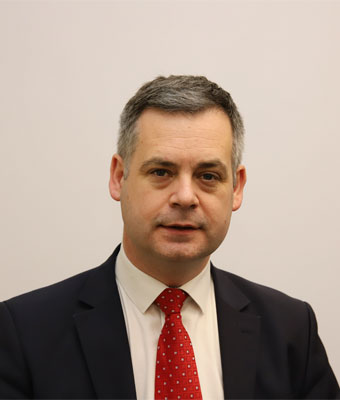
91. Deputy Pearse Doherty asked the Minister for Finance to outline the level of investment by the State in Israeli bonds; and if he will make a statement on the matter. [39745/25]
My first question is about Israeli war bonds. The Minister will know that we had Private Members' business about this before. We learned yesterday that the State continued to invest in Israeli war bonds right through the genocide. As our screens were lighting up with men, women and children being slaughtered by Israel, the State still held investments during that genocide. I would like to know how those investments increased last year. We heard that the National Treasury Management Agency, NTMA, obviously covering its back, said they are now sold. When were those bonds sold?
The Ireland Strategic Investment Fund is a €16.6 billion fund comprising the discretionary portfolio of €8.9 billion and the directed portfolio of €7.7 billion, based on the 2024 annual report. It has a double bottom line mandate to invest on a commercial basis in a manner designed to support economic activity and employment in Ireland. ISIF has complete independence in implementing its investment strategy under the NTMA Acts under an investment committee reporting to the NTMA's board. At year-end of 2024, ISIF held €3.6 million in Israeli sovereign debt, which was 0.07% of its global portfolio. ISIF monitors all of its holdings within its investment portfolio to ensure alignment with its risk profile and investment parameters.
Regarding the divestment, ISIF noted yesterday that security tensions have been rising in the Middle East. This posed an increased risk to assets with economic exposure to the region. ISIF's view is that following the escalation of the Israel-Iran conflict in June 2025, the current situation carried materially greater risk. I am advised by ISIF that, given these escalating geopolitical tensions and conflict, it determined that the risk profile of a number of sovereign bond holdings in the region were no longer within its investment parameters. Following this determination, ISIF divested its holdings of sovereign debt issued by Jordan, Egypt and Israel. As a result, the ISIF team has increased the monitoring of its holdings in the region, in particular in relation to the most impacted and neighbouring countries where ISIF currently has exposures. It will continue to monitor them to ensure that investments remain aligned with its investment parameters.
I find this absolutely outrageous. What did the Minister do in this period? Did he know that the Irish State, using Irish taxpayers' money, was funding a genocide? Israel does not hide behind this. It does not blush about this. It sells and advertises these bonds as supporting the war effort. We all know that it is not a war. We know it is genocide. Before this, regarding the Central Bank's role, one could say that the State was not directly funding it but was just assisting the ability to sell the bonds. This is the State putting cash on the table and investing in war bonds. It appears that the investment increased in 2024, when it was at full tilt. I ask the Minister again when the disinvestment happened. When did ISIF sell its bonds?
The key point to emphasise is that ISIF made the decision to divest of these bonds. It no longer holds them. I understand this decision was made over the last number of weeks.
Exactly. We were asking the Minister how much money ISIF had in war bonds, how much money it was putting on the table and how much money was being invested in the bombs and bullets that were slaughtering children right before our eyes. Children who were queueing up for water were being slaughtered and this State invested money in it. You cannot wash your hands of this. You are the bloody Minister for Finance and an organisation that falls under the remit of your Department is investing in genocide. There are no ifs, buts or maybes. The NTMA had to produce its annual report. It knew it was going to be called out by us and others who are rightly appalled that our taxpayer money was going to fund the genocide in Palestine. It scampered around and sold because it needed a media line in the face of genocide, to control the narrative, but for all of last year, right up until the last number of days, I bet, it still held these investments.
It is sickening and the fact the Minister did nothing about it, despite it being repeatedly put to him here in the Dáil, is disgraceful.
I will make three points on this. First, ISIF no longer holds these bonds. It divested of them. Second, as the Deputy well knows, ISIF independently decides what shares it is going to hold and what investments it is going to make. It does so in a way that is completely independent of me. Third, I thoroughly refute any suggestion of complicity in the appalling violence being inflicted on the people of Palestine. I wish to make clear my condemnation of what is happening-----
They are war bonds.
-----as the Government already has on many different occasions. I emphasise that these bonds are no longer held by ISIF and were sold.
Bogfaimid ar aghaidh go dtí Ceist Uimh. 92 leis an Teachta Ged Nash.
Tax Collection

92. Deputy Ged Nash asked the Minister for Finance his views on the agreement reached between the G7 and the United States in relation to the OECD's global minimum corporation tax rate proportion for large MNCs; his views on the implications for Ireland's corporation tax base, the Exchequer more generally, and inward investment; and if he will make a statement on the matter. [39703/25]
I thank the Deputy. He is making reference to a G7 statement published on 28 June, adopting a common position on a path forward for the OECD agreement. In that statement, the G7 proposed the side-by-side application of the OECD pillar two system, and the US minimum tax rules, which are now under consideration by the OECD inclusive framework. Since January, the US Administration has set out various concerns regarding aspects of the pillar two rules and has proposed a side-by-side solution under which US-parented groups would be exempt from many aspects of the pillar two rules, in recognition of the existing US minimum-tax rules which such groups are subject to. The G7 statement builds on this approach through the agreement of a common approach among G7 countries around a possible path forward. As part of the G7 understanding, the US also agrees to withdraw section 899 retaliatory measures from the USA reconciliation Bill. These measures threaten tax increases against residents of countries that implement the pillar two rules. It is important to note that the statement represents only the views of these countries and does not put forward any proposals on how a side-by-side system would operate. This approach requires very careful consideration and it remains too early to establish what the implications might be in relation to our tax base or the exchequer. Discussions are progressing on a broader OECD inclusive framework, with a view to a potential agreement over the coming months. We remain engaged in that process.
I thank the Minister for his response. I note the publication of that statement and that he has placed on the record of the House that at this stage, this is an understanding. At the time, my recollection is that he welcomed the removal of section 899 retaliatory measures and that is very important for businesses. We have to remember that Ireland has significant foreign direct investment in the United States. This has been described as a form of opt-out for the US. Does the Minister believe this may have worrying implications for the remainder of the OECD deal? This may very well heap more uncertainty on the uncertainty we are already experiencing around the type of tariff regime the US Administration may like to see implemented.
The short answer to the Deputy’s question is that this agreement does have consequences for the OECD agreement overall. There are three in particular. The first is what this means for competitiveness of economies and countries that remain fully inside pillar two. The second is how other economies and important stakeholders in the OECD agreement will respond, given the actions that have been taken by the US, and the third issue is how a side-by-side framework will be implemented technically given that so many of these companies, which are large investors and employers in Ireland, need certainty regarding how tax law is executed. Those are three important issues we have to carefully consider. I hope given the G20 discussions that are under way this week and what will happen in the OECD, I will be at a point of being able to give a fuller answer to those questions over time.
I appreciate this is a bit of an moveable feast but there are uncertainties. The G20 nations were the guardians of the OECD deal originally. The OECD adopted it and we adopted it. I welcomed at the time that we adopted the process ourselves. That was not without risks for Ireland. It was a welcome thing to do. Because the framework of this deal is subject to EU legislation, I assume EU legislation will require to be changed to accommodate this agreement if indeed there is an agreement. That will require unanimity. The likelihood is there will be unanimity because many of the G7 nations such as France, Germany and Italy and so on are part of the G7 group. What is the Minister’s view on that? Will it require legislation that will ultimately have to be adopted by this House if it is to come to pass?
It is possible it could require action at EU level but I cannot give the Deputy a definitive answer to that yet. The reason for that is that what I have seen is the publication of a general agreement on how the US would engage in the OECD framework that raises many questions. At this point in time, I cannot give the Deputy a definitive answer regarding how that agreement will be executed and whether the change would be needed. I believe, just as we entered into the OECD agreement after very careful consideration and taking time to work our way through it, we should also take time to fully understand this agreement and what the consequences of it will be, in conjunction with other stakeholders and partners. As I do that I will of course answer the Deputy's questions and those of the Joint Committee on Finance, Public Expenditure, Public Service Reform and Digitalisation, and Taoiseach on what I accept is a very important policy matter.
Mortgage Interest Rates
93. Deputy Pearse Doherty asked the Minister for Finance if his attention has been drawn to reports that there are mortgage prisoners with vulture funds that have seen no reduction in their interest rates despite eight consecutive interest rate reductions by the ECB; and if he will make a statement on the matter. [39746/25]
I have been dealing with people throughout the State who are mortgage prisoners of vulture funds. They have seen huge interest rates being charged on their mortgages. The ECB has reduced mortgage rates on eight consecutive occasions but there seems to be no let up for those who are mortgage prisoners, and there are almost 100,000 of them. These are mortgages that are now with vulture funds. They are not reducing their rates in any significant way and, indeed, some customers have actually seen their rates increase. What is the Government going to do about this?
The European Central Bank increased interest rates over the course of 2022 and 2023 as a move to combat excessive inflation. Since the middle of 2024, the ECB has reduced its main official lending rate to 2.15%. While changes by the ECB generally have a direct impact on tracker mortgage rates, reductions by the ECB are only one factor that feed into the commercial decisions made by creditors in relation to other lending rates. Other factors can include the cost of funds, risk levels, contractual terms, creditor status and market competition. As a result, mortgage interest rates can vary between creditors and customers. I appreciate this is a very difficult and sensitive matter for those who have been affected by it and have seen their loan books sold. It is important to indicate to the changes on average there have been on interest rates. At the end of March the average interest rate on outstanding mortgages held by banks was 3.5%, down from 3.67% a year earlier.
For the non-bank sector, the average was 4%, down more than half a percentage point from 4.51% a year earlier. For entities in the non-bank sector that do not engage in new lending, the average was 4.57%, down almost a full percentage point from 5.5% a year earlier. These reductions are welcome, and it is expected all mortgage creditors will continue to keep their lending rates under review. It is my clear view that where mortgage rates have in the past increased in line with ECB increases, they should now, in this new interest rate environment, also appropriately adjust downwards. The Central Bank will continue to monitor the level and distribution of interest rates in the mortgage market.
This is an issue I have raised with the Minister numerous times. Along with the former Minister, Michael McGrath, he was a cheerleader for the selling off of these loans to the vulture funds. He obstructed and blocked a Bill that would have prevented it from happening. All of these individuals are now paying more interest than they would be if they were with a main-street lender, even for performing loans. I would like the Minister to give us a further breakdown. How many of those mortgage prisoners are paying 6% or 7% interest rates? Take Pepper as an example. Pepper's interest rates went down twice during the ECB's eight cuts. Mars, as I understand it, only announced one. Some customers of Mars have actually seen their interest rates go up. It has been reported that interest rates have gone from being 7.7% in some cases to 7%, or from 7% to 6.3%. Some of these individuals are being charged extortionate rates. Given that the Minister was responsible for allowing this to happen, does he feel any responsibility for these individuals who are now being fleeced?
First, the Deputy referred to me being "a cheerleader". What I said at the time was that the sale of those loan books from those various banks was an important step in the banks regaining financial health, which, in turn, would help them to lend more in the future and contribute to our economy growing. I understood at that point the sensitivity with regard to it. That is why the consumer protection code applies to those whose loans have been sold. The Deputy said that I obstructed legislation. I voted against his legislation, just as he regularly votes against Government legislation, because I did not believe that it would be productive or play a role in dealing with these issues. At the time, I outlined other issues I had with this legislation. The Deputy asked me about how people are affected in different ways.
I note that the Cathaoirleach Gníomhach is ringing the bell before we get to the end of our allocated time.
Yes, because you go over it all the time.
Is that to encourage us to speak quicker?
I am giving you an opportunity to wind up.
The Cathaoirleach Gníomhach is giving me a forewarning. In the next opportunity, I will do my best to go back to the particular question put to me by Deputy Doherty.
The Minister made the point that he voted against or obstructed the passage of my Bill because he thought it was not in the Government's interest. He is 100% right. He took the side of the banks and the vulture funds. It was not in their interest for that Bill to go through. I will tell the Minister whose interest the Bill was in. It was in the interest of the woman who spoke to me who is charged 6.5% by Mars Capital, or more than 6% by Pepper regarding her mortgage. It was in her interest, in the interest of people in Donegal and in the interest of people in the Minister's own constituency. He took the side of the vultures and the banks. I am raising the thousands of mortgage prisoners whom the Government abandoned and decided they were on their own. The Government pretended that everything would be the same, but it is not. They were not protected under the consumer protection code for a long time. It was only a number of months ago that this loophole was addressed. The problem here is that if they were with the main-street bank they would be saving thousands of euro in interest. That is the problem
Again, the Deputy uses the language of obstructionism. I exercised my right in the Dáil. The Deputy has the same right. That is not obstructionism; that is me having to weigh up what I believe the right decision for our economy is overall and the fact that we need banks to be in a position to lend more in the future and invest more within our economy. That is not because I am making the case for a bank or picking the side of a bank-----
Yes, it is.
What I am doing is looking at what is right for our economy overall and for all of the households, all-----
Was it right for those people?
----- of the families-----
The Minister has the floor.
----- and all of the businesses within it,
Was it right for those people?
I had to consider that in the round.
The Minister has the floor.
Was it right for the person who is being charged 7%?

It is grossly unfair.
The Deputy asked me about those affected. I can give him the information that is available to me this evening, which is that the interest rate for 92% of mortgages held by lending non-banks is 5% or lower. The interest rate for 68% of mortgages held by non-lending non-banks is 5% or lower. While only 68% of mortgages are at 5% or lower, this is an improvement from where we were at the end of 2023. The consumer protection code applies to those affected.
What is being done to the people paying those exorbitant interest rates is grossly unfair.
Military Aircraft
94. Deputy Cian O'Callaghan asked the Minister for Finance if he will take action to ensure that Ireland meets its European Union VAT and customs obligations by inspecting all military aircraft landing at Shannon Airport; and if he will make a statement on the matter. [39678/25]
Will the Minister take action to ensure we meet our European Union VAT and customs obligations by inspecting all military aircraft landing in Shannon Airport?
I am advised by Revenue that it is responsible for implementing customs controls on traffic entering the European Union through Irish ports and airports. This includes customs clearance of goods, the collection of customs duty and associated VAT and the detection, interception and seizure of prohibited and restricted products at points of entry into the State. The Union customs code is the legislation governing customs procedures across the EU, to which Ireland is fully committed. Article 139(2) of the code, which deals with the presentation of goods to customs authorities, provides that goods brought into the EU by sea or air, which remain on board the same means of transport for carriage, must be presented to customs only at the port or airport where they are unloaded or transhipped. However, goods brought into the EU which are unloaded and reloaded onto the same means of transport during its voyage, in order to enable the unloading or loading of other goods, are not required to be presented to customs. In circumstances where military aircraft originating from outside the EU are stopping over at Shannon Airport and no goods are unloaded, other than to allow for other goods to be loaded, there is no entry into the European Union. As such, there is no requirement for customs inspections or customs declarations. Similarly, there is no customs duty or VAT due.
The Minister said this evening that up until a few weeks ago the Irish State was investing in Israeli war bonds. Those are my words. The State has been investing through ISIF in companies associated with illegal activity in the occupied Palestinian territories which are in breach of international law. Is the Government fulfilling its VAT and customs obligations by inspecting all military aircraft? The Minister is saying that the Government is not carrying out those inspections and that he does not know what is happening. Given what is happening in Gaza, where humanitarian aid is being blocked, people queuing for aid are being killed and bombs are being dropped on tents, it is incumbent on this Government to stop any munitions and aircraft going through our airspace. It is incumbent on it to inspect military aircraft.
They are completely different questions. The Deputy asked me whether our customs code is being implemented at Shannon Airport. The unambiguous answer to that question is "Yes". The implementation of that code does not require us to play a checking role on those aircraft.
According to EU Regulation No. 952/2013, customs authorities have the right to inspect goods entering or leaving the customs territory of the EU to ensure compliance with applicable laws. Article 42 of the EU customs code grants customs authorities the right to carry out inspections to verify the compliance of goods with customs regulations. This includes the authority to inspect aircraft and their cargo. I am asking the Minister with responsibility for this to ensure that the obligations are being met. If he is not willing to carry out inspections of military aircraft, how can he be certain that the obligations are being met?
I ask him again. Will he ensure these aircraft are inspected for compliance with our obligations under the EU customs and VAT codes?
It does not matter how many times the Deputy repeats the question; the answer is still the same. We are fully in compliance with our customs code. I have outlined the circumstances in which-----
How does the Minister know if he does not inspect the aircraft?
We are talking about the Revenue Commissioners here, an authority that has implemented the customs code in this country for many decades, and about an airport that has been very active and very busy throughout its existence. I have explained to the Deputy really clearly the circumstances in which customs inspection is due. The subsections to which he refers do not take the place of the reality I have outlined, which is that goods have to be unloaded in particular circumstances and have to arrive into the EU in a particular way for them to be subjected to the customs code. That does not happen in Shannon Airport with regard to military aircraft and for that reason, our customs code plays no role in the issue to which the Deputy is referring.
Go raibh maith agat, Minister. Tá an t-am caite.
It is, of course, a subject for very legitimate debate regarding other policy domains, but not for customs.
Insurance Industry
95. Deputy Pearse Doherty asked the Minister for Finance the steps he is taking to address the increased cost of insurance; and if he will make a statement on the matter. [39747/25]
I have raised this issue with the Minister time and time again and I will continue raising it because people are, to use that phrase again, being ripped off. There is no doubt about it. It is not good enough that the Government is doing nothing about it. Insurance companies are boasting profit margins far and above the European average, far and above what they said they would target if they got the reforms that were passed through these Houses. I see a Government that is impotent in the face of this here and people are being squeezed, whether they are motorists, businesses or sports organisations.

I thank the Deputy for once again raising this issue and giving me an opportunity to put on record the work that has been done by this Government and the previous Government and the work that is ongoing and, indeed, to thank him for his advocacy in this area. The Government remains fully committed to delivering a fairer, more transparent and affordable insurance market. Substantial progress has been made under the Action Plan for Insurance Reform 2020–2025, which we are building on, and we are finalising a new action plan for 2025 to 2029. This will include a number of targeted actions across a number of key themes. A key focus of our reform agenda has been on addressing personal injury costs, which historically accounted for about 70% of overall motor insurance claims costs. Thanks to the introduction of the personal injuries guidelines and related reforms, that figure has moved closer to a 50:50 split between injury and material damage. This significant shift has helped shield Ireland from the full extent of global inflationary pressures in the motor insurance sector.
To put this in perspective, from 2016 to 2024, motor insurance premiums increased proportionally by approximately 65% in the United Kingdom and by around 20% across the eurozone. In contrast, Ireland saw a 34.3% proportional reduction in the average motor insurance premium over that same period. This reflects the impact of sustained reform and a co-ordinated, cross-government approach. These reforms are supported by the national claims information database, which continues to enhance transparency and help identify cost drivers. The forthcoming action plan will build on this progress, identifying greater accountability and transparency in pricing practices and promoting consumer trust. My officials also work closely with the Department of justice on the proposed amendments to the personal injuries guidelines and the Deputy will be aware that the decision taken that they will be laid before the Houses, as required, but that they will not be approved. Our aim remains clear: to support a competitive and sustainable insurance market that delivers fairer outcomes for consumers, businesses and communities across the country.
The response of the Minister of State is disappointing. Until the problem is diagnosed, we are not going to get a solution. I have said this before. It is not just the Minister of State. It must be the Department because his predecessors have done the same thing. That is cheerleading for the industry. The industry is making profits that are way above the norm. Motor insurance is up 10% since the start of the year. Our premiums are nearly double the European average. The profits the insurance companies are making are double those of their competitors in Europe. The profits these companies are making are more than double what they told the committee, if it brought in all the reforms that have been brought in, they would be targeting. The Minister of State says the Government has made substantial progress in relation to the reforms, and he is right. They have been passed. I supported them; some of them I actually brought in myself. The question is who the reforms have benefited, because they are only benefiting the pockets of the industry. Premiums are going up relentlessly. We have to call a spade a spade. The industry is gouging here.
Let us be clear. Insurance premiums increased proportionately by about 65% in the UK from 2016 to 2024 and by around 20% across the eurozone. In contrast, Ireland saw a 34.3% proportional reduction in the average motor insurance premium over the same period. I accept that in the last number of years we have seen the change going the other way and that is why there is a commitment in the programme for Government to establish and carry on the work of the Cabinet subcommittee on insurance reform. In the next number of weeks, we will bring forward a new action plan that will build on the work of the previous action plan and will deliver further reductions in the cost of premiums for our consumer. I also accept, and I agree with the Deputy, that we do need to see greater transparency and greater accountability in how insurance companies are setting the prices, and he will see action in the action plan in this regard.
The Minister of State can splice and dice this any way. Everybody out there knows the cost of insurance is going up. The alliance is saying it. The reforms have been pocketed by the industry. Let us look at Liberty Insurance. Its profits are at 13%. This industry came before the House of the Oireachtas. It begged us to do the reforms. We put it to insurance companies and asked what they would target and whether they would pass it on. The industry said it would, euro for euro, and that it would only target 5%. It is now at 13%. Public liability and employers' liability are worse. The Minister of State provided figures. Insurance has increased by 56% over the last ten years. That is €1,000 on every premium. It is not just motorists who are being squeezed here. Small businesses, retail, community organisations and local GAA clubs are all being hammered. If we strip all the noise away and look at profitability, the key question we have to ask ourselves is how come insurance companies in this country earn double the profit of all the European competitors.
Go raibh maith agat, a Theachta.
How come they are earning more than twice what they told us they would target if we brought in the reforms? The reason is that they have pocketed all the reforms-----
Thank you Deputy. An tAire Stáit.
-----pushed up the premiums and the Government is doing nothing but cheerleading in its speaking notes.
Again, I highlight the work the Government has done in the last number of years. It has rebalanced the duty of care and enhanced the role of the Personal Injuries Resolution Board. I take the opportunity to once again highlight the positive effect that has had. We are aware that claimants who are going through the Personal Injuries Resolution Board have their claims dealt with twice as quickly as claimants who go through litigation. The cost of legal fees going through litigation is 22 times the cost of going through the resolution board. The critical point for claimants who have a legitimate claim is that they are getting only a marginal difference. We need to see more people going through the Personal Injuries Resolution Board to ensure the cost, the legal fees, is not exorbitantly high. We need to see greater transparency regarding the prices set by the insurance companies. A lot of good work has been done, and when we compare how premiums have increased across the UK and the EU, we have been able to modify that increase by the good work that has been done in the last five years. We will publish a new action plan later this summer-----
Please, Minister.
-----and the Deputy will see further actions that will build on the work that has been done.
Tax Collection
96. Deputy Edward Timmins asked the Minister for Finance if he will review the operation of property tax. [39675/25]
I welcome some aspects of the revised calculation of property tax and the calculation of the amount retained by counties. I recognise that the expected average increase of 5% is way below the inflation rate of 16.7% over the past four years. However, more needs to be done to make it a more equitable tax.
In particular, some counties do not retain all of the tax collected in their county.
I thank the Deputy. The answer I have to hand goes through the structure of the local property tax, which Deputy Timmins already knows. I will not take him through that. The issue to which he referred is about the interplay between the amount of revenue a local authority raises in its own jurisdiction and the equalisation fund. I have tried in the various revaluations in which I have been involved - I have now done two - to get to a place where local authorities control and keep more of the revenue they raise. I know there are still policy issues in this regard and areas in which we can improve. I am sure the Deputy will give me his view on those now.
I thank the Minister. In my county, Wicklow, €3 million of the €23 million tax raised will not be kept locally next year. This is an improvement on the €5 million in 2025 but it needs to be eliminated. I do not suggest it be taken from the other counties which receive more than what is collected but that it ultimately comes from Exchequer funding. Two aspects of the system need to be changed. The first is the baseline figure, which is used to deprive local authorities of the tax raised in their counties. This is based on a complex formula with very low weighting given to population. Counties with half or less of the population of Wicklow with similar areas have similar baselines. This makes no sense and needs to be scrapped. Second is the local property tax surplus calculation. This percentage is set to ensure the balance is calculated to reduce the amount a council can retain. It is an arbitrary percentage with no basis. Both of these complex formulae need to be scrapped to allow councils to retain all their property tax.
I understand the Deputy's point. In between the two complex formulae and the spreadsheet I see, which has them on it - I am sure the Deputy is familiar with it - there are a number of local authorities like his own that believe they do not get to keep all of which they raise. The issue, which the Deputy acknowledges in his question, is that if we were to move to a system where all of what a county raises is kept within the local authority raising it, some local authorities would need additional support and intervention directly from the Exchequer to ensure funding they did not lose the funding they had. That would carry a consequence because it would mean funding that we are currently using in local government would have to be moved into that use. I have tried through the two revaluations to make a difference to the issue, which the Deputy acknowledged.
The legislation states the property tax must be reset to the base rate every year. This means if a council has a rate above the base rate, for example, 6%, as it is in Wicklow, it has to restate every year the rate is increasing whereas in actual fact the rate is not increasing. Could the legislation be changed to eliminate the requirement to return to the base rate each year and have the actual tax as the starting point? A positive development is the use of the discretionary fund to the municipal district. This allows a greater say over spending locally. It is something I promoted when I was chairman of Wicklow County Council. Spending in Ireland is too centralised and there is much benefit in spending being done by people close to the issues, namely, local councillors and local officials. I ask that the amount of property tax allowed for the discretionary fund be increased.
On the second matter, I am happy to raise it with the Minister for local government, Deputy Browne, and his colleague, the Minister of State, Deputy Cummins, who is also involved in this issue with me. On the first matter, I examined that issue and inquired into it. I was definitively told I could not make that change. The reason is the budget cycle is annual and the budget cycle here is also annual. When I referred to the annual budget cycle in the first part of my answer, I spoke about the budget cycle within the local authority. For that reason, I was told, the decision in relation to the base rate has to be taken each year when budget decisions are made. I pressed that issue because I am aware of the challenges there can be around making that decision. I am afraid that on that issue, I have to give the Deputy a clear answer but not the one he wants.