Tax Collection

97. Deputy Ryan O'Meara asked the Minister for Finance how VAT receipts to date in 2025 compare to the same period last year; and if he will make a statement on the matter. [39246/25]
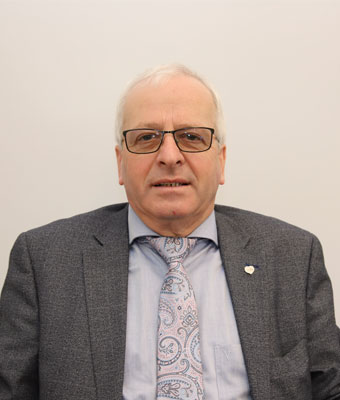
Question No. 97 will be introduced by Deputy Shay Brennan.
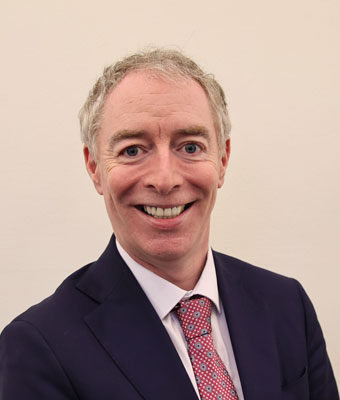
I note June is a non-VAT-due month yet receipts so far have been relatively robust, with cumulative VAT up by €0.6 billion at €11.6 billion, albeit reportedly about €100 million below profile. Will the Minister comment on the significance of these figures?
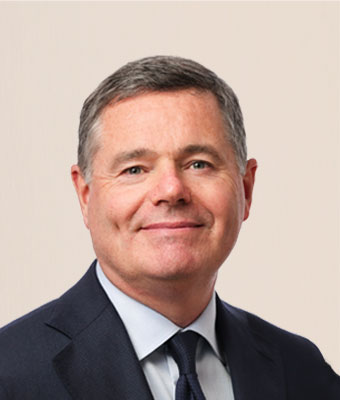
The Exchequer returns for the first half of the year were published at the beginning of the month and the Deputy has just touched on them. VAT receipts amounted to €11.6 billion, which is an increase of €600 million and is just under 6% higher than in the first half of last year. The growth in VAT is consistent with the increase in consumer spending. On an annual basis, nominal spending was up by 4.7% in the first quarter of the year, the latest for which data is available. High-frequency indicators such as card payment data suggest that positive momentum has continued into the second quarter, which is also consistent with the VAT data I shared with the Deputy.
While the increase of €0.6 billion in cumulative VAT receipts is encouraging, there are signals of underlying volatility. VAT is approximately €100 million behind profile, as I stated. Although modest in percentage terms, that may indicate emerging trends. Will the Minister elaborate on what the Department interprets as the trend in VAT collection so far this year? Specifically, does the Minister anticipate receipts will realign with projections or could the gap widen as the year progresses? The programme for Government acknowledges the impact of rising energy costs on businesses and households and pledges tax measures such as changes to VAT to help mitigate these pressures. There is also a commitment to support SMEs, particularly in the retail and hospitality sectors, potentially through adjustments in VAT, PRSI and other measures in the coming budget. Will the Minister indicate whether specific VAT measures will be considered in the forthcoming budget, particularly for sectors facing acute cost challenges?
On overall tax receipts for the year, particularly when it comes to VAT, the advice I have received is that we expect to collect the VAT we indicated we would collect for the year. Currently, we are in line to deliver that target. I am aware of the role VAT can play in helping with the cost pressures businesses are facing. The programme for Government contains a clear commitment in relation to VAT for the food sector and gas and electricity. The decision in relation to VAT for gas and electricity has now been made to extend that up to budget day.
In light of the urgent issues in housing supply, IBEC recently proposed that the Government address apartment construction viability directly by reducing VAT on new-build apartments by 5% and discontinuing development levies on such projects. Its analysis suggests these actions would reduce direct State-imposed costs at a cost of about €86 million, which is less than the shortfall between VAT receipts and the departmental profile. Given the number of apartment completions has reportedly fallen considerably this year to date and IBEC is now arguing for this intervention as consistent with the social imperative for increased housing supply and the VAT directive requirements, is such a targeted VAT reduction or the removal of development levies under consideration by the Government as part of budget deliberations? Does the Minister believe there are alternative tax measures that would better incentivise the construction of much-needed new apartments?
I cannot comment on decisions that will be announced on budget day. Deputy Brennan raised the particular issue of the 5% rate for the apartment sector.
I have been advised by my officials in this area that if any attempt were to be made to move apartments down to 5%, other goods that are sold at the middle VAT rate would need to be moved down to 5% as well. That would have a particular effect on decisions we make with regard to food, accommodation and hospitality.
I am advised that we cannot make a decision on a 5% rate for an apartment dwelling in isolation of the fact that we would need to move other parts of our economy down to the same rate with an extremely significant cost behind that. As I said, any such decisions will be considered carefully and announced in early October.
Insurance Industry
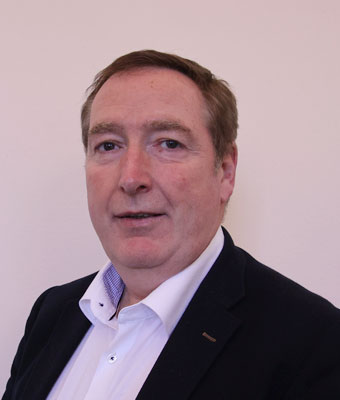
98. Deputy Tony McCormack asked the Minister for Finance for an update on the programme for Government commitments on insurance reform under the remit of his Department; and if he will make a statement on the matter. [38994/25]
I ask for an update on the programme for Government commitments on insurance reform under the remit of the Department of Finance.

I thank Deputy McCormack for raising this issue. Insurance reform, including increasing the affordability and accessibility of insurance, remains a key priority for the Government as outlined in the programme for Government. Many reforms have been introduced, yet it is regrettable that the level of savings and the supply of cover for consumers and businesses has been subsequently eroded due to the rise of international inflation and consequential damage costs.
A key focus for me in my role as Minister of State with special responsibility in this area is the development of a new action plan for insurance reform. The new action plan will build on the significant achievements of the 2020 action plan, including reforms to the duty of care, enhancements to the Injuries Resolution Board and the implementation of new personal injuries guidelines. These reforms have contributed to a more stable and competitive insurance market, helping to attract new providers such as OUTsurance Ireland, Revolut and Fastnet Underwriting.
As part of the development of this action plan, I launched a wide-ranging public consultation that received over 70 detailed submissions from a broad spectrum of stakeholders. The action plan will advance reform under six key themes: transparency and affordability, competitiveness and availability, legal reform, fraud, climate protection, and innovation and skills. There are also a number of priority actions focused on areas where the greatest impact on cost and availability can be achieved.
The Government has shown its firm commitment to insurance reform by re-establishing the subgroup on insurance reform within the Cabinet committee on the economy, trade and competitiveness, chaired by the Tánaiste. The subgroup will meet on a regular basis to drive this action plan forward, taking a whole-of-government approach. I am pleased to say that the Cabinet subgroup’s first meeting on 9 July considered the draft action plan and it is the intention that the final action plan will be agreed at Government level. After that, I would expect to be in a position to publish the new plan.
I thank the Minister of State for the update. I was speaking with business owners whose premiums have gone up exponentially over the last four years, even without any claims. It is hard for them to see the impact of the reforms on the ground. Could the Minister of State outline how his Department is working to make sure reforms generally bring premiums back to sustainable levels for businesses like that?
The Deputy is right. Despite the reforms introduced, premiums are too high and are higher than where we would like them to be. International inflation can account for some of those reasons but there are two other reasons: legal fees are too high, and insurance companies, in certain years, are making profits that are too high.
With regard to the legal fees, the Injuries Resolution Board is a tried and tested mechanism by which people can submit their claims and have their compensation paid out in a timely and cost-effective manner. We need more people with legitimate claims going through the resolution board, ensuring that the legal fees are radically reduced.
On the high profits of insurance companies, we need greater transparency with regard to how premiums are set to ensure that insurance companies' feet are held to the coals and they are passing on the savings being delivered by the reforms introduced by the previous Government.
I appreciate the Minister of State's answer. One business owner even told me he is considering not paying insurance at all. Smaller businesses like landscape gardeners, plumbers and electricians are in the same position. This is all because they want to keep the doors open. That is how desperate some SMEs feel. How can we reassure these small employers that there is a plan to make insurance both fair and accessible so they are not forced to consider such risks?
I compliment the Deputy for the work he is doing and his engagement with the SME sector as a spokesperson on SMEs for the party. When I met RGDATA with the Deputy last week, we listened jointly to the challenges facing the industry, which are not just about insurance but the whole competitiveness area. The Minister for enterprise is bringing forward an action plan on competitiveness. One of the key decisions taken by the Government was not to impose the recommended price increase with regard to personal injuries awards and to park that decision.
I ask SMEs to look at the track record of the Government with regard to the action plan the last time. It did deliver results. The actions were meaningful and we did see premiums decrease at a rate unlike across the water in the UK or across the EU. They have started to increase again and that is why we are determined that the new action plan will build on the progress of the past and we will hopefully see premiums reduced further.
Middle East

99. Deputy Ruairí Ó Murchú asked the Minister for Finance the engagement there has been between his Department, other Government Departments, agencies and legal advisers in relation to the facilitation by the Central Bank of the sale of Israeli war bonds; and if he will make a statement on the matter. [39278/25]
I ask the Minister what engagement he has had, or what engagement his Department has had, with other Government Departments, agencies or legal advisers on the facilitation via the Central Bank of the sale of Israeli war bonds. We are talking about Israeli genocide bonds in real terms. We know there is a particular issue where this State has actually invested in and profited off this but we need to make sure that the State and the Central Bank find a way and means to not facilitate the sale of these bonds that are being used to facilitate war crimes.
The approval of a prospectus document is a matter for the Central Bank of Ireland as the designated competent authority under the EU prospectus regulation. It is an operational matter for the Central Bank as the State’s financial regulator to ensure that a disclosure document for any offer of securities for sale to the public contains all the necessary information required by the EU prospectus regulation.
Under that regulation, a prospectus must be drawn up, approved and published when securities are to be offered to the public and-or admitted to trading on a regulated market in the EU. It is important to be absolutely clear that the Israeli bonds themselves are not sold by the Central Bank, nor are they listed for sale on the Irish Stock Exchange. As such, the Department of Finance does not have a role in approving any prospectus documents for issuers of bonds.
With regard to issues that have arisen on this topic such as parliamentary questions, Dáil debates, Private Members' Bills or motions, my officials to date have had regular engagement with officials from the Central Bank of Ireland and liaised with the Department of Foreign Affairs and Trade, as that Department is the lead Department of government on overseas matters and any proposed restrictive measures against another State.
As I referenced during the Second Stage debate on the recent Private Members' Bill, the Restrictive Financial Measures (State of Israel) Bill 2025, my officials have engaged with the Attorney General’s office. In addition, the Attorney General wrote to me providing preliminary advice on the proposed Bill. My officials would also have liaised with officials from the Central Bank of Ireland in preparing for the debate in the House on the recent Private Members' Bill and motion brought by Opposition parties, on the prospectus approval process. Finally, on 11 July, the Minister of State, Deputy Troy, met with the Palestinian ambassador to Ireland.
I think the Minister was quite clear in saying there were issues with regard to the Sinn Féin Bill. While I might contest that, I am asking whether, as a State, we have engaged with and looked at any means by which this State and the Central Bank of this State would not be facilitating these Israeli war or genocide bonds. I do not know what else you can call them.
There is the wider issue regarding the fact that this State invested in these war bonds and, no matter what figure we are talking about, to a degree has profited. On what date were the Israeli war bonds in which ISIF and the NTMA had invested sold? When he became Minister for Finance, was the Minister aware that this State was involved in investing in these Israeli war bonds, which have been used to facilitate and fund a genocide?
In relation to the different questions, I was aware of the shareholding that ISIF had, indirectly in the Israeli bonds as part of the preparation for the publication of its annual report. I was not aware up to that point. The bonds have now been sold. I have outlined on other occasions, just a few moments ago, the engagement between my own officials and the Central Bank. In terms of the role that we play from a prospectus point of view, the Central Bank plays a very narrow and specific role in relation to the prospectuses and to their evaluation. It has to act in a way that is consistent with its legal obligations, and it does. I and the Governor of the Central Bank are well aware of all the debate around this matter. However, it is acting in a way that is consistent with the obligations it has on a very narrow and specific function.
I get the arguments in relation to narrowness and whatever else but would it be fair to say the Minister accepts there is an issue, that anything should be done from a point of view of ensuring that the Central Bank and the State is not facilitating the sale of these Israeli war bonds and everything should be done at a European level and on a domestic level in relation to making sure that this does not continue, because it is a problem that the Irish people have?
On another issue, the Minister obviously found out that the shareholding by ISIF indirectly was happening. I assume the Minister made a decision ensuring that this would not continue. Will the Minister give us the date on which those war bonds were sold, that is, the war bonds in which the investment was made by this State?
I ask the Minister to square the circle. When he said he rejects the notion that Ireland was funding or complicit in the funding of the genocide, given that these were advertised as war bonds to support the war effort in what we all in this House call not a war but a genocide, does the Minister not acknowledge there was hard cash and profiteering done on the back of the genocide?
The second issue is the Minister stated he was aware in the run-up to the production of the annual report. However, he has answered parliamentary questions as far back as February. At no time during that period did he ever ask whether there was still holding of investments in the name of the Irish State in Israel during this genocide. Please answer the question. I have asked whether the Minister has the answer. If he does not, he should provide it. When did they sell? Did he raise any concern with the NTMA or ISIF when he was told they were investing and profiteering off the genocide in the preparation for the annual report?
Of course, I am happy to give the exact dates to the Deputy. I will ascertain them and come back to him on it. This decision was made by ISIF. The government bonds are no longer held by it. I am happy to come back to the Deputies with the dates they are looking for as to when the decision was made and regarding what Deputy Ó Murchú has said there. Of course I am fully aware of the debate that is there in relation to the role of the Central Bank and the role it plays on the prospectus evaluation, particularly given the debates we have had in this House on the issue. I emphasise again that it has a very narrow set of legal responsibilities to which is has to adhere. It is. It is aware, as am I, of all of the debates around the issue. It has a very small specific role. That is all it discharges.
Banking Sector

100. Deputy Cathy Bennett asked the Minister for Finance if any analysis has been carried to assess the level of dividend forgone as a result of the State selling AIB, for each of the years 2022, 2023 and 2024. [39381/25]
Question No. 100 is in the name of Deputy Cathy Bennett but, with the permission of the House, will be taken by Deputy Pearse Doherty.
What analysis, if any, has been carried out by the Minister or his Department in relation to the dividends forgone as a result of the State selling its shares in the AIB since 2022? As the Minister knows, I argued against the sale of those shareholdings in which at one point in time we had 71% of the shares. What dividend are we losing as a result of the fact that we now do not hold shares that bank?
The long-standing policy of this Government is to return the remaining banks to private ownership while achieving value for the taxpayer. It continues to be the Government's belief that banking in the main is an activity that should be provided by the private sector and that taxpayer funds which were used to rescue the banks should be recovered and used for more productive purposes. The distribution of capital is the responsibility of the board and management of the bank.
To assess this hypothetical scenario, I would need to speculate on both the level of dividends and indeed the mix of capital distribution via cash dividends or buybacks that the bank might have declared in a scenario where the State did not reduce its shareholding between 2022 and 2024. The factual position is that AIB paid ordinary dividends of €166 million, then €696 million and then €861 million in respect of the fiscal years 2022 to 2024. The total yield to the State from those dividends was €463 million.
In conjunction with the payment of ordinary dividends, AIB completed directed share buyback programmes from the State. The total yield to the State from these directed buybacks was €2.9 billion. Regarding the 2024 figure, a €500 million directed buyback was completed during the following half-year results and a further €1.2 billion following the full-year results.
To reiterate, I cannot speculate on what the board of AIB would have done as regards capital distributions over the period to which the Deputy refers, as the State's shareholding would have remained unchanged.
There is no doubt that we will not benefit from hundreds of millions of euro in dividends each year. The Minister can make the point of €273 million of a dividend last year on the basis of a 19% shareholding. Obviously, if we had the 71% that would be significantly increased in a year where the bank paid out close to a billion euro on dividends. This was one of the most financially reckless decisions that have been made in a long time. In 2022, when the public owned more than 70% of AIB, the share price was €2.32. That is when the State started selling at a more aggressive pace. The share price now is about €7. A bit of simple maths would show that, even if we held the shares today and sold them all today, which I would not agree with, but if the State sold them all today it would have made about €4.5 billion more. Through the aggressive selling of the shares of AIB, does the Minister not accept the fact that he probably lost the State more than €4 billion in the value of the shares?
Well, look, the Deputy referred to simple maths. I would refer to a simple understanding of stock markets. I know Deputy Doherty is a little hazy and unclear on the issue of how companies are owned. In regard to AIB, if we were in a position where the financial markets were expecting that the State was not going to reduce its shareholding in AIB over time, of course that would materially affect the value of the shares. The Deputy cannot simply say - he knows this - that if we were still the majority shareholder in AIB, we would be able to sell the shares at a different price. The fact that we were willing to sell the shares in the first place influenced what the price would have been when they were sold. I fundamentally do not accept the argument Deputy Doherty is making. He knows the money we have gained back from the share transactions that have been made. I am at a loss as to why we would want to retain a deep ownership between ourselves and our banking system, given all the difficulties that caused in the past.
It is not just the Minister who is at a loss. The taxpayer is at a loss because of his decision. The reality is, and I asked whether his Department did any analysis of this, one of the major issues in terms of share price is the profitability of a bank or of a company.
We can see the profitability of AIB and Bank of Ireland. The bank was nationalised at a time when it was making losses and was sold privately at a time when it was making significant profits. The two banks between them made €4 billion in profit last year. We know all the reasons for that in terms of ECB interest rates and not passing that on to customers.
There is, however, a simple point. It may be one that the Minister does not want to deal with. The reality is that the share price when the Government sold its holding was just over €2. It is now €7. Does the ownership structure of the entity have an impact? Of course it does. However, I ask him not to pretend that is the reason the share value has gone from €2 to €7. There is an issue here in respect of profitability. The point is that we are at a loss as a result of hundreds of millions of euro in dividends each year. There was always an ability for us to sell but it was sold at the wrong time.
The Deputy is completely wrong. He said he would have been happy for us to keep shares in our banks when he is aware of the long-term risk of the relationship between the financial health of the State and our banking system becoming too close. He understands that as well as I do. Why would we want the financial health of our country to be some way influenced all over again by the movement upwards and downwards of a share price within our banking system? We got good value for the taxpayer in relation to all of this.
We did not. Is the Minister joking me?
The Minister has the floor.
The total transaction-----
Anglo Irish Bank cost €33 billion.
Deputy Doherty-----
There we go.
Come on.
The Minister has the floor.
There we go. When did I make reference to Anglo Irish Bank?
The Minister said we got good value out of all of this.
Speak through the Chair, please.
This has become a very familiar tactic of Deputy Doherty's over many years. He asked me a question about AIB and Bank of Ireland-----
Tell us how we got good value then.
-----and I answered the question about AIB and Bank of Ireland. The Deputy then plucked the huge loss of taxpayers' money in relation to Anglo Irish Bank, which this question is not about.
Tá an t-am caite. Thank you, Minister.
We also lost as a result of AIB.
What the Deputy is doing-----
Please, Minister, you are way over time.
-----is putting forward an argument that does not make sense.
Let me make the argument in respect of AIB.
Resume your seat, please, Deputy.
The Deputy tends to be quite hazy on the issue-----
The Minister likes to ignore the fact that we paid-----
-----of how companies are owned.
Minister, please, you are half a minute over time.
I know that and he knows that. I have answered the question.
The Minister likes to ignore the €700 million in interest every year that the Comptroller and Auditor General has talked about.
Ciúnas, please.
That is not good value.
Central Bank of Ireland

101. Deputy Catherine Connolly asked the Minister for Finance further to Parliamentary Question No. 60 of 29 May 2025, if the 2024 figure, due mid-year, in respect of the value of all State investment in Israel bonds, is now available; if Ireland, through the Ireland Strategic Investment Fund, ISIF, has now entirely divested itself of direct holdings of Israel bonds; and if he will make a statement on the matter. [39400/25]
I am following up on an issue I have raised more than once in respect of the State investment through ISIF in Israel war bonds. I ask the Minister to be very specific. I got the figure for 2023 in a written reply. We had to wait for the 2024 figure. What was that figure? What is the figure for 2025? Will the Minister explain why we are investing in war bonds when genocide is taking place?
The Ireland Strategic Investment Fund is a €16.6 billion fund comprising the discretionary portfolio of €8.9 billion and the directed portfolio of €7.7 billion based on the 2024 annual report. It has a double bottom line mandate to invest on a commercial basis in a manner designed to support economic activity and employment in Ireland.
ISIF has complete independence in implementing its investment strategy. At year-end 2024, ISIF held €3.6 million in Israeli sovereign debt. ISIF monitors all of its holdings within its investment portfolio to ensure alignment with its risk profile and investment parameters.
As regards the divestment, I would say, as I have previously, that geopolitical tensions have been rising across the Middle East, posing an increased risk to assets with economic exposure to the region. ISIF's view is that following the escalation of the Israel-Iran conflict in June 2025, the current situation carries materially greater risk. I am advised that given this, ISIF determined that a risk profile of a number of sovereign bond holdings in the region was no longer within its investment parameters. Following this determination, ISIF sold its holdings of sovereign debt issued by Jordan, Egypt and Israel.
I am glad ISIF has divested of its investment. I received a written reply to a query, which stated that in 2023, the investment was worth €2.62 million. That was the year Hamas crossed the border and Israel started on this genocide.
In 2024, as the genocide continued and worsened, this State invested more money in the bonds. It was not an awful lot more, but there was an increase to €3.62 million. The Minister seemed to be unaware of that when a Sinn Féin motion was debated in the House on how the prospectus works. I specifically mentioned the reply I received that included the figure of €2.62 million. I might have taken up the Minister wrong but I understood from him shaking his head that he did not know or was saying the opposite and that we did not invest. At the time we were discussing the Central Bank, he led me to believe, or did not know, that we were directly investing in war bonds. Not alone did we do that but we increased it in 2024. I would like him to be very specific about his involvement in that decision.
As I said, I do not play a role in determining the investment decisions that ISIF makes. They are made independent of me and this decision was made by ISIF in the way I have just explained to the Deputy.
I will use the time the Minister has not used. I accept he has nothing to do with those decisions and that ISIF is an independent body. However, he has an opinion and is a part of a Government that says genocide is taking place. He stood over a situation whereby through either a lack of knowledge or otherwise, he could not tell me how much money was being invested. Suddenly we have the information. When I received the written reply, I was not told the relevant figure for 2024. I am now being told, and welcome the fact, that there has been a divestment. I am asking the Minister straight how he, as a Minister in a Government, can stand over the Government investing in war bonds.
May I come in?
The Secretary General of the UN has told us:
What we are witnessing in Gaza is a level of death and destruction that has no parallel in recent times. And it is something that undermines, I would say, undermines the most basic conditions of human dignity for the population of Gaza, independently of the enormous suffering that they are having.
We are investing in that genocide.
The Minister's response is bull. That is the reality. His Pontious Pilate approach of washing his hands does not wash. He previously wrote to ISIF but on the issue of investing in a genocide, he sat on his hands. I will quote a Government press release, which stated:
Minister Donohoe has recommended that the ISIF should move from a broad investment strategy that is focused on all sectors, to a focus on the priorities that will support Project Ireland 2040 and have a more direct and positive impact on the economy’s long-term growth potential. These priorities include key sustainable economic challenges, such as investments that support indigenous industry; regional development [and so on]. On this basis, the Government has decided to refocus ISIF funds along the following lines ...
The press release goes on to state that ISIF has taken up the Minister's recommendation and has done so. The Minister has impact. The idea that ISIF is completely independent and that, as Minister, he can do nothing is nonsense. This is a genocide. People have been ripped apart by bullets and bombs, and this State funded it. We brought forward a motion in this House and the Minister sat there as if the State had no role, hand, act or part in it. What has happened is disgraceful. He does not get away with saying it is nothing to do with him.

What the Minister has said in respect of ISIF is simply not credible. He is the Minister for Finance. This is public money and taxpayers' money. In 2024, when a genocide was taking place, it was used to buy more war bonds to fund that genocide. He is the Minister for Finance. He is responsible for how taxpayers' and public money is used. Under his responsibility, our money was used to buy war bonds to fund that genocide. He has direct responsibility for that. He needs to answer about his responsibility in that regard.
I have responsibility for setting the general direction that is given to ISIF. However, I do not play a role in determining the individual bonds and shares that ISIF holds. All the Deputies know that. I do not play a role. I do not direct or communicate to ISIF and tell it what individual investment decisions to make. What I do is communicate with ISIF and set a general direction for it.
The Minister reviews ISIF's investment strategy.
Please, the Minister has the floor. Please, Deputy.
The Minister reviews ISIF's investment strategy.
Deputy Doherty, please. The Minister has the floor.
It is a simple thing. Do not fund the genocide
Please, Deputy Doherty.
The Minister reviews ISIF's investment strategy.
Deputy Doherty, please. This is Deputy Connolly's question. Let the Minister answer.
I am not letting him away with that.
That is the word. What the Deputy is trying to do is to create the impression that I am involved in giving a direction to ISIF-----
I did not say that.
Please, this is Deputy Connolly's question.
-----regarding individual investment decisions it makes. That does not happen. The word the Deputy used is correct. "Strategic" direction-----
The Minister should refocus.
Please, Deputy.
You should have refocused the fund-----
Deputy Doherty, please.
Strategic direction-----
Deputy Doherty.
-----like you did before and said, "Do not fund the genocide."
Deputy Doherty, I will not let you in again if you are going to behave like that.
If the Deputy really was interested in an answer from me, I would hope he would give me the time to give the answer that this issue deserves.
Well, I am out of time. I cannot give you-----
I will reiterate, a Cheann Comhairle, that I do not play a role in issuing a direction to ISIF regarding the purchase of individual Government bonds-----
Thank you, Minister.
The Minister's Government plays a role in doublespeak.
-----in Israel or elsewhere-----
Thank you, Minister.
-----and ISIF itself has decided-----
Tá an t-am caite.
-----and it has implemented this-----
Thank you, Minister.
-----to no longer hold those shares.
Shame on you.
Ceist Uimh. 102, in ainm Catherine Ardagh, is being taken by an Teachta Shay Brennan.
Maybe that call from the Israeli Minister was more important than you let on.
Please, Deputy Doherty. Deputy Brennan, le do thoil.
Tax Credits

102. Deputy Catherine Ardagh asked the Minister for Finance the number of taxpayer units that have made rent tax credit claims since the tax credit's inception; and if he will make a statement on the matter. [39412/25]
Could the Minister confirm the number of taxpayer units that have made claims for the rent tax credit since its introduction in December 2022? With budget 2025 further increasing the credit to €1,000 for individuals and €2,000 for jointly assessed couples, will the Minister comment on the scale of uptake and effectiveness of this credit in supporting private renters and make a statement on how it fits within the Government's broader strategy to assist those struggling with high rents?
The rent tax credit was introduced by the Finance Act 2022 and may be claimed in respect of qualifying rent paid in 2022 and subsequent years to the end of 2025. The value of the credit was €500 for a single person and €1,000 for a jointly assessed couple. For 2024 and 2025, the value of the credit increased to €1,000 for a single person and €2,000 for a jointly assessed couple. The rent tax credit has played a valuable role in providing financial support to renters right across the country. I am informed by Revenue that 313,980 taxpayers, both PAYE and self-assessed taxpayers, claimed the rent tax credit for 2022. Of these, 273,160 taxpayer units benefited from the rent tax credit in that year.
The extent to which a claimant benefits from a tax credit, through a reduced liability or receipt of a refund for overpayment of a tax liability, is determined by their gross tax liability and use of other tax credits and reliefs. Taxpayers who claim the rent tax credit may not benefit from this credit as a result of other reliefs, deductions and tax credits already reducing their net tax liability to nil. To 1 July of this year, the number of claims made by taxpayer units in respect of the rent tax credit are as follows: 307,270 for 2023, 289,700 for 2024 and 73,600 for 2025.
We are all acutely aware of the persistent challenges facing renters. The rent tax credit introduced in budget 2023 at €500 has been a tangible intervention for people grappling with higher rental costs. This credit was subsequently increased to €750 and reached €1,000 for individuals and €2,000 for couples in budget 2025. Since its inception three years ago, it has offered meaningful assistance to many, easing pressure from rising rents and providing relief for thousands of families and individuals. Recognising the programme for Government's commitment to progressively increasing the rent tax credit, will the Minister outline whether additional enhancements are being considered as part of the upcoming budget? Given cost-of-living issues, does he envisage any further increases to the credit or additional targeted measures aimed at supporting renters in the most acute difficulty?
I am very much aware of the value and role that this rent tax credit plays in helping with the cost of living. That is why over a number of budgets I, along with the Minister, Deputy Chambers, and the former Minister, Michael McGrath, have made changes to the value of it. The decisions that will be made on budget day are being carefully considered at the moment. As I said to the Deputy earlier in response to his earlier question, it would not be appropriate for me to indicate now what we plan to do. We have to be very careful because we are making these decisions against the backdrop of an economic environment that is very uncertain. We have to ensure that any decisions we make are ones we will be able to afford in the years to come. I am not suggesting that any one measure on its own might be something we might not be able to sustain into the future, but all of them put together is where the risk arises.
The Minister will probably appreciate that most of the questions he is asked between now and October will be to seek his plans for the upcoming budget. Could he provide an update in the meantime on the overall awareness and uptake of the rent tax credit since its launch? My understanding is that the Department of Finance estimates that around 400,000 renters are eligible to claim this relief. In its initial year, some 250,000 to 270,000 taxpayer units made a claim for the credit. By early 2024, claims across the first two years, 2022 and 2023, exceeded 320,000 taxpayer units, with, I believe, almost €120 million paid out in respect of the year 2022 alone. Given the substantial increase in the value of the credit since then, has there been a commensurate rise in uptake rates and awareness among renters? What measures are being taken to ensure that all those eligible are availing of the support, particularly as the rental market remains under strain?
The figures I shared with the Deputy earlier show overall that this rent tax credit is being reasonably broadly used. I remember when the tax credit was brought in that in the early period in which it was being made available, I was concerned that the drawdown and use of it was not as broad as I would have hoped. Towards the end of the tax year, however, we saw more taxpayers who were eligible for it register.
As regards the communication and drawing attention to it, the advertising the State does directly and then the advice that individual taxpayers can receive are where it becomes so valuable. This is a rent tax credit that can play a valuable role in helping taxpayers deal with the high cost of rent. As I said, we will consider that and other tax credits as part of the preparation for budget 2026.
Maidir le Ceist Uimh. 103, níl an Teachta Cahill anseo - tá sé as láthair - so we will move on to Ceist Uimh. 104, in ainm Cian O'Callaghan.
Question No. 103 taken with Written Answers.
National Treasury Management Agency
104. Deputy Cian O'Callaghan asked the Minister for Finance if he will ensure that the Irish Strategic Investment Fund is fully divested from all companies directly and indirectly involved in illegally occupied Palestinian territories; and if he will make a statement on the matter. [39362/25]
The Ireland Strategic Investment Fund is a €16.6 billion fund comprising a discretionary portfolio of €8.9 billion and a directed portfolio of €7.7 billion based on its annual report. It has complete independence in implementing its investment strategy under the NTMA Acts under an investment committee reporting to the NTMA's board.
At the end of 2024, ISIF held, both directly and indirectly, €7.76 million in six companies listed on the UN database, which is 0.16% of its global portfolio. Direct investments by the Ireland Strategic Investment Fund in companies on the UN database were approximately €5.6 million in four companies, and indirect investments were €2.16 million and included five companies.
ISIF divested from six companies in 2024, with a total value of approximately €2.95 million across that year. The six companies were Bank Hapoalim, Bank Leumi Le-Israel BM, Israel Discount Bank Limited, Mizrahi-Tefahot Bank Limited, First International Bank of Israel Limited and Rami Levi Chain Stores Limited. At that time, ISIF determined that the risk of these investments was no longer appropriate.
Given the scale of the portfolio ISIF manages and how much of our money it is responsible for, it is important to recognise the independence of the NTMA board and the decisions it makes. Divestments have already taken place, and ISIF will determine the correct investments in a way that is consistent with its independence and mandate.
The Minister is saying ISIF is still investing in companies that are operating illegally in the occupied Palestinian territories. That is what he is telling us.
Today, the UN stated that the largest displacement of Palestinians in the occupied territories of the West Bank since 1967 is taking place now. That is how bad the situation is. It is not good enough to say ISIF operates independently. The Minister for Finance can set the strategic direction for ISIF. He should be telling ISIF that under no circumstances should our money, public money, be used to break international law by investing in companies operating in the occupied territories. I do not think there is any support for that in this country. People would be horrified to know their money is being used in this way. How long has the Minister been aware of these investments? Will he direct ISIF to stop them?
I have shared this information with the Dáil on a number of occasions since I was reappointed as Minister for Finance. I am absolutely aware of all the awful humanitarian catastrophe that is unfolding on the people of Gaza and the House is aware of the very strong diplomatic action that this State is taking with regard to it. On this particular issue, as I said, ISIF has divested from a number of companies that are active in that area. It is independent of me. I do not play a role in directing it with regard to individual transactions it makes. I know that the board of ISIF and the NTMA will be well aware of all the issues that are associated with some of these investments, which is why they have exited from a number of them.
It is not okay for the board to simply be aware of the issues. It is not okay for some divestments to take place while there are still investments in these companies that are operating in the occupied territories. This is with our money. Will the Minister direct ISIF to stop investing in companies that are breaking international law? That is what is happening. This is about a breach of international law plus, with a genocide taking place in Gaza, the message that sends to Israel with these companies that are still being invested in. In light of the genocide and the breach of international law, will the Minister direct ISIF to stop using our public money to invest in these companies? It is urgent.
Again, I condemn what is happening to the people of Gaza and the awful violence and trauma that is being inflicted on them. However, the Deputy referred to the importance of international law. I also have to adhere to domestic law and under domestic law, ISIF is independent of me. I can give it guidance, and strong guidance, in relation to its overall strategy, for which I have a statutory role, but I do not play a role in individual decisions it makes with regard to shares or bonds.
So it can ignore international law?
It is important that I do not play a role. This is an organisation that is responsible for €16.6 billion of our money. In order for that money to be looked after and managed in a way that is safe, it is very important that a Government does not play a role in directing it on individual transactions it makes.
It should do when it comes to international law.
I want to emphasise again my condemnation of all that is happening to the people of Gaza.
The Minister turns a blind eye, however, when he funds it. That is the reality, so it is not going to wash.
Tax Code
105. Deputy Pearse Doherty asked the Minister for Finance to provide an update on the OECD tax agreement and the implications for the Irish tax code and corporation tax rates; and if he will make a statement on the matter. [39433/25]
Ireland signed up to a global tax deal some years ago, back in 2021. It provided for a framework of base erosion and profit shifting. There are now reports that an agreement was reached at the G7, with G7 countries agreeing to exclude US multinationals from certain aspects of the pillar 2 global minimum tax rules. That obviously includes France, Germany and Italy. What are the implications for our existing tax codes that we have legislated for now that it has come through an EU directive?
I provided some information on this in my answer to Deputy Nash earlier, so I will just reiterate some of the key points. It will take some time to understand the consequences of this understanding that has been reached between a number of countries and America. The key issue I am concerned about is how this is consistent with the operation of the OECD agreement and the particular issues within that broad framework for me are, first, what this means for the competitiveness of countries and companies that are still inside pillar 2; second, how this side-by-side arrangement will actually happen; and third, how it will be implemented. Engagements in the OECD with regard to this are ongoing. A G20 meeting taking place at the moment may begin to allow us and other countries to understand these issues better.
The G7 is far from democratic but the decisions that are made there can have a serious impact in Ireland. Pillar 2 was dealt with by way of an EU directive. Surely if there are carve-outs as a result, that will require a new EU directive in relation to how France, Germany and Italy will be able to implement this agreement. I have raised the issue with the undertaxed profit rule and how it was envisaged. It was envisaged with America as part of the overall agreement. Can the Minister cast any light on that? We will have to deal with that, or not, in the finance Bill, so that would have to be at an advanced stage at this point. Can the Minister give any indications as to where pillar 1 is? Is it dead or is it on life support?
I do not expect pillar 1 to conclude soon given all the difficulties with regard to pillar 2 at the moment. On whether this would automatically lead to a change in the EU directive, I do not believe it will. As I said in response to Deputy Nash earlier, we are considering what this will mean for the implementation of the EU directive and what that means for Ireland’s competitiveness and for Europe’s competitiveness if Ireland and Europe stay inside the second pillar of the OECD agreement while America is co-existing with it but is not in it. I am considering all of this at the moment with my officials. If it requires any change to the finance Bill, we will certainly do that, but at this stage I cannot give the Deputy a definitive answer.
The Minister is not only finance Minister but he also has an important position in Europe as chair of the Eurogroup. Is it his view that France, Germany and Italy are abiding by the OECD agreement? Whatever the G7 does is separate. A global agreement has been reached and Europe is part of it. Have those countries now stepped outside that as a result of the agreement they entered into in the G7 or not? What is the Minister’s view? Has he spoken, maybe in his capacity as chair, to any of those finance ministers to ascertain their views on it? It appears as though they have done their own solo runs in the G7 and left Europe to deal with this issue now, and us too.
I believe they are still inside the OECD agreement and pillar 2 and those countries are participating in the OECD reaction to all this and making clear they are committed to the OECD process. Therefore, the answer to the Deputy’s question is that, yes, I believe they are still in it. I have not spoken to EU finance ministers on this particular tax issue in the last number of weeks but it was discussed at the Economic and Financial Affairs Council, ECOFIN breakfast that took place a week ago. At that meeting, most of the finance ministers whose countries were affected by this decision did contribute and in those contributions they made clear they were committed to the OECD framework. However, a lot of issues have now been raised by this for Ireland and Europe. I will spend some time considering them and will answer the Deputy’s questions on that in the time ahead.
Is féidir teacht ar Cheisteanna Scríofa ar www.oireachtas.ie.
Written Answers are published on the Oireachtas website.