Housing Schemes

I would like to discuss the first home scheme price ceiling, particularly for County Tipperary. As a young Member, I will highlight yet again that housing is the number one issue affecting my generation. In Tipperary, we are really struggling with privately built housing, particularly affordable housing. The first home scheme is in place to help those of us who could get a mortgage but where the purchase price of the house is higher than our mortgage to bridge the gap. However, the price ceiling in Tipperary is becoming a major issue. According to officials in the local authority, developers or those who would build houses are deciding to go to other local authorities rather than Tipperary because of the price ceiling we face.
Close to 3,700 homes have been bought under the first home scheme since it was launched three years ago this month. Thousands of others have been approved under this scheme and it is growing in popularity. It is working. Charlie Weston had a positive piece on the first home scheme or the shared equity scheme recently in the Irish Independent. This quote is important because he stated:
Buyers in Dublin, Kildare, Cork, Meath and Wicklow represent the biggest proportion of users of the scheme but the price ceiling in Dublin and Wicklow is €500,000; in Kildare, it is €475,000; and in Cork and Meath, it is €400,000. The average price of homes being purchased under this scheme is €386,000.
In early July, the price ceiling under the scheme increased across 16 local authorities but, unfortunately, Tipperary was not one of them. I will give the example of neighbouring counties of which there are a lot. In Galway and Limerick, the price ceiling is €425,000; in Kilkenny, which is part of the constituency I represent, it is €400,000; and in Clare, Offaly, Laois and Waterford, it is €375,000. However, in Tipperary, it is €350,000. To get private developments built in north Tipperary in particular, the price ceiling needs to be adjusted upwards so that we have parity with neighbouring counties. Otherwise builders will go elsewhere where they have more certainty in the market.
I do not accept the Department's calculations. I will give the example of the area I represent in north Tipperary. In Clare on one side of the River Shannon, the ceiling is €375,000 while across the bridge in Portumna in County Galway, it is €425,000. In Kilkenny on the other side of the constituency, it is €400,000 while in Laois and Offaly, it is €375,000. It does not make sense why Tipperary is so different from any of those counties. The clear message coming back from developers to me and the county council is that the scheme is workable, they like it and they can build and provide the houses we need but they are opting to go to the counties next door because of that obvious barrier we face. I have raised social housing, which is being delivered in Tipperary, many times in this House. We need to see more of it along with log cabins and modular homes but affordable housing is key and this scheme helps in this regard. It helps bridge the gap for those of us who could get a mortgage but who cannot reach that final price. I ask the Government to look at raising the price ceiling from €350,000 to possibly €375,000 for Tipperary so that the scheme can be workable.

I thank the Deputy for raising this important matter. I am taking this debate on behalf of the Minister for Housing, Local Government and Heritage. I am glad to have the opportunity to discuss the first home scheme. The scheme, which was launched in July 2022, is a shared equity scheme for eligible first-time buyers, eligible home buyers and self-builders. The scheme is designed to help bridge the gap between their deposit and mortgage and the price of their new home. The price of the new home must be within price ceilings established across the country.
This has been a very successful scheme that has helped thousands of individuals and families buy a home. Over 7,600 approvals have been issued since the scheme launched to the end of last month
with 3,691 homes already bought or built using the scheme. We want to expand on this success and help more people get their own home. In May, the Government approved an additional €30 million for the scheme bringing the total State commitment to €370 million. This is matched 50:50 by the participating banks and brings the total commitment to the scheme to €740 million.
The first home scheme designated activity company, DAC, is fully responsible for the operation of the first home scheme on behalf of all shareholders, including price ceiling reviews. The first home scheme board conducts a review of price ceilings at six-month intervals. I am advised that the board takes into account a range of factors as part of these reviews, including the median price and volume of new builds purchased by first-time buyers in each local authority area. The most recent review concluded at the end of last month and 16 local authority areas had their price ceilings increased.
When the scheme was first launched in July 2022, the price ceiling for the Tipperary local authority area was €250,000. This has been raised following two subsequent price ceiling reviews to €325,000
on 1 January 2023 and then again to €350,000 on 1 July 2024. The first home scheme DAC will continue to monitor the price ceilings, including in Tipperary, as part of any future review. More information on price ceiling reviews is available on the website of the first home scheme.
The last point I will make on this concerns the second paragraph of the Minister of State's reply, which states: "I am advised that the board takes into account a range of factors as part of these reviews, including the median price and volume of new builds purchased by first-time buyers in each local authority area." The key message I hope the Minister of State brings back to the Minister and the board overseeing this scheme is that it is very hard to calculate the median price or the average price of new builds in Tipperary compared to other counties when we have so few of them. The market in Tipperary at the moment mostly involves second-hand homes so how the board can justify a cap of €350,000 as opposed to €375,000 on these homes is very difficult for me to understand. If someone heads across the county boundary to Riverstown in County Offaly or crosses into Laois or across the bridge into Portumna, all of a sudden, the cap is different. That the markets could be so different crossing those county boundaries does not add up for me. The problem for me is the way in which it is calculated. The figure of €350,000 is calculated on the price of a new build. We do not have enough new builds on the market in Tipperary to be able to calculate it but if we look at parity across county councils, we will see a much fairer system. I thank the Minister of State for being here at this hour to answer these questions and for the response he has given me and I hope he will carry these messages back to Government for me.
I assure the Deputy that the price ceiling review being undertaken on the first home scheme is done so in a considered manner. To minimise the risk of price distortions in the first-time buyer market, the first home scheme introduced the concept of price ceilings and six-monthly reviews of the ceilings from the outset of the scheme. I understand that all local authorities, including Tipperary and its surrounding local authorities, are considered in these reviews. The reviews reflect local market conditions by taking into account a number of factors, including the median price and the volume of new builds purchased by the first-time buyers. The Deputy made a valid point that if there is a distorted number of new homes because of affordability, that will distort one of the key factors taken into consideration. He made that point quite forcefully. I give an undertaking that I will bring it back to the Minister to see whether that can be taken into the next review. The one positive here is that it is a six-monthly review so we will not be waiting indefinitely.
The first home scheme commissions periodic research by KPMG to assess the extent, if any, to which the State has contributed to house price inflation. KPMG reports in both 2024 and 2025 concluded there was no evidence the scheme materially contributed to price inflation in new homes. It was also stated it remains critical the first home scheme monitors this risk on an ongoing basis. These regular price ceiling reviews will help to ensure that it does not contribute to new home price growth as the uptake of the scheme grows. This is an important scheme to help people buy a home, as the Deputy alluded to, and with affordability, especially for - unfortunately I cannot say my generation any more - the Deputy's generation in terms of their ability to get on the property ladder.
The Government is determined to continue to support people into homeownership. The Deputy made some very valid points and I undertake to refer them to the Minister, Deputy Browne, and his departmental officials for direct reply back to the Deputy.
Food Security
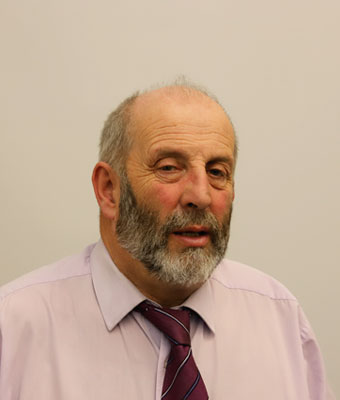
I am hoping the Minister of State will relay my story to the Minister for agriculture. Food security is of paramount importance. We all know if we do not eat, young or old, we will not last very long. It is sad when we see other people and children in need in all these war-torn places starving. We hear and we read there are 750 million people in the world starving, yet we seem to not be doing our best to promote the growth of our beef and dairy industry like we should be. We still remember, because we can see the ridges of garden on the hillsides that were never dug because of the Famine in the 1840s, when the gardens failed. It was not too long ago. We were still exporting beef and meat to England to pay the rent and they would not forgo that and many of our people starved. The ridges that were not dug are still there to be seen.
The thing that is bothering a lot of people is the State seems to be buying up a lot of land. It said in the Irish Farmers' Journal the other day the State is going to continue doing that. First of all, that land is bought against young farmers who want to expand and the State is paying higher than normal prices for it. This land is let go wild, encouraging more deer and more badgers and foxes. In Kerry we have a national park of 27,000 acres. It is lovely and all that, but there is no control in the world over the deer or the badgers coming out of it, spreading TB and killing people on the roads. It is a fact. They are breaking cars and there is no control in the world.
The other thing that is happening is good land is being planted with solar panels. Farmers who had up to 1,100 cows are giving up and covering the place with solar panels. This is happening in west Cork, east Cork and in the royal county of Meath and it is a real worry. I thought solar panels were to be on the roofs of agricultural or commercial buildings. I do not blame any farmer or landowner for switching if they are not being paid properly for their produce but there should be some proper policy on it. Farmers are getting blamed then and feel victimised for climate change and polluting rivers by many in different sectors, including Members in this Chamber. Members in this Chamber are victimising them and blaming them constantly and advising us to eat other tropical-type foods from South America and different places. Do they realise there is a carbon footprint in bringing all these things? Then one of our recent taoisigh went as far as saying he was doing his bit for climate change by reducing his beef consumption. Beef is expensive now because it is getting scarce. It is only proper and right the farmers are being paid for their produce, but lamb is also getting scarce. Dairy farmers are giving up. Young fellows see their friends working a five-day week, getting holidays and not having to be up all night calving cows. They see they have a better time and they are not going to stay at the grindstone like their fathers or their grandfathers building up their big dairy herds. I have more to say.
I thank the Deputy. Ireland is among the most food secure countries in the world and, according to the latest Global Food Security Index, ranks second of 113 countries assessed for food security. The resilience of the food supply chain was clearly demonstrated over the past number of years when dealing with the effects of Brexit and Covid-19. Currently Ireland produces significantly more food than we consume. The Irish agrifood sector is globally orientated, with approximately 90% of Irish beef, sheepmeat and dairy produce exported each year.
As the Deputy is aware, Ireland is part of the EU Single Market and participates in the Common Agriculture Policy, which is the key mechanism for ensuring food security throughout Europe. The EU is largely self-sufficient for many agricultural products but is a considerable net importer for specific products. The current geopolitical situation is challenging established assumptions on food security. The EU communication, Safeguarding food security and reinforcing the resilience of food systems, sets out actions in the three areas of security, stability and sustainability. The EU Agriculture and Fisheries Council of Ministers will continue to focus on these core areas and to support the work of the European food security crisis preparedness and response mechanism.
The agrifood sector drives economic growth in every rural parish in every county in Ireland, as the Deputy alluded to. It reaches out from every corner of the country to global markets. It includes primary production in farming, fishing and forestry and the processing and manufacture of food, beverages and wood products. Agrifood is Ireland’s largest indigenous exporting sector and accounts for 6% of modified gross national income and 8.6% of merchandising exports in value terms. The sector employs 169,300 people, representing 6.1% of total employment, which translates to one in every 16 jobs, and of course a far greater proportion in rural constituencies like mine and the Deputy's. While the last few years have been challenging for the sector, as significant energy price rises and supply chain disruption fuelled inflation and contributed to increased input prices and decreases in output prices, our farmers, fishers, processors and food businesses have demonstrated the resilience of the agrifood sector.
Ireland's approach to delivering sustainable agriculture and food is set out in Food Vision 2030, our shared stakeholder-led strategy for the continuing development of the agrifood sector in Ireland. Its vision is for Ireland to be "a world leader in Sustainable Food Systems", encompassing environmental, economic and social sustainability. It was designed using a food systems approach, recognising the requirement to have greater policy coherence across agriculture, food, and the environment and the involvement of all of the food system stakeholders. The centrality of primary producers in Food Vision 2030 recognises economically sustainable farmers, fishers and forest owners are an integral part of our rural and coastal community and of our natural environment and landscape. It recognises that healthy environments, ecosystems, communities and economies go together.
Irish agrifood exports reached a record €19.1 billion in 2024, which is an increase of over 5% by value on the €18.1 billion achieved in 2023 and an increase of a third by value, that is, €4.8 billion, on the €14.3 million achieved in 2020. This represents 40% of all exports from Irish-owned firms. With highly competitive global markets, the agrifood sector works hard to protect its reputation and continuously strives to innovate and maintain a level of competitiveness and resilience that has enabled it to prosper and develop in a globalised trading environment.
I thank the Minister of State and for being here this late at night. He has thrown out a lot of figures there. My head is not like a computer but I can say to him he is going back to figures for what has happened up to now but I am worried about here on because as I told him, much land is being bought up and let go idle.
Much land is being planted with solar panels.
I am glad the Minister of State mentioned coastal communities and fishing. Our fishers are almost gone. They were paid to decommission. I have mentioned pair trawling in Kenmare Bay previously in here but nothing has been done about it and nothing will be done. It has been completely cleaned out. I think of times past going back along Tahilla, looking into the bay at Kenmare and seeing the likes of Frankie Jim, Joe Jim, Dónal O'Shea and all those fellows, and the O'Briens and others back along by Sneem, out in the bay fishing day after day. They are gone. I did not get any mackerel in the past three years, whereas the village used to be full of them previously. Now they are not to be had at all out of Kenmare Bay.
There are too many schemes now promoting less production. Where there is protected urea, nothing will be grown. A lot of the fertiliser we buy now, whatever is taken out of it, does not grow what it used to grow.
The other point I must mention is that multinational supermarket companies have too much power. If they decide not to sell us this item or the other, we cannot challenge them because all the small shops are gone. The worst thing they are doing is insisting the suppliers, who are the farmers, must allow them three months' credit. I ask that the Minister of State look into that to see how it is fair. Farmers are bankrolling many of the supermarket companies and they have to wait to be paid. The farmers have to pay for everything they get. They cannot ask their supplier to wait for three months. What these companies are doing is not fair on our producers.
Food Vision 2030 looks to protect and build on Ireland's global reputation as a trusted supplier of high-quality, safe and sustainable food to consumers both at home and abroad. As I noted, 90% of what we produce is exported. Irish agrifood has been successful in accessing and developing new market opportunities both locally and in the international markets. Diversifying and developing markets will continue to be a priority. Our new Ministers are working very hard in this area.
Food Vision 2030 aims for the sector to reach €21 billion in exports by 2030, with this growth driven by a steady growth in export value rather than volume. The strategy recognises the challenges but also the opportunities and has a clear vision of Ireland being a world leader in sustainable food systems. The Government continues to support farmers under the €9.8 billion CAP strategic plan and via specific sectoral supports. It is very positive to see the Teagasc national farm survey preliminary results estimating that the average farm income in 2024 rose by 87%, with the 2025 income forecasts also positive. These are real present-day figures.
What about all the years before that when farmers could barely keep their heads above water?
Food Vision 20230 provides a vision of a dynamic, sustainable and innovative agrifood sector ready to adapt and embrace change for a more sustainable future. It is a strategic framework that enables Ireland's agrifood sector to work to achieve its ambition as a world leader in sustainable food systems.
The Deputy has a made a number of points. He will appreciate this is not my area of expertise. I will relay his points to the Minister and Ministers of State at the Department of agriculture. The Deputy has a direct line to one of the Ministers of State and I have no doubt he will raise the matter with him.
Assisted Animal Reproduction
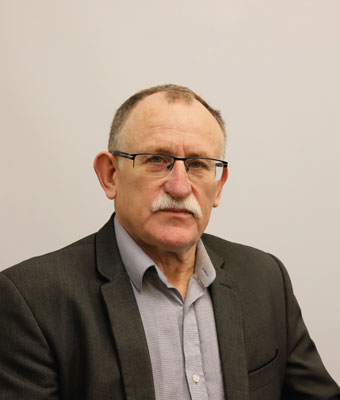
I urge the Government to ban what I can only describe as a barbaric and invasive procedure used on greyhounds whereby they are subjected to surgical artificial insemination. This highly controversial procedure, which is already banned in the UK, involves making a cut in the abdomen of a greyhound and inserting semen directly into its uterus.
This is not an isolated, occasional surgical procedure. Figures from 2023 show that in the previous ten years, almost 5,000 greyhound litters were born in Ireland following surgical artificial insemination. In the past four years alone, more than 500 surgical artificial inseminations were performed on racing and coursing greyhounds.
The process must be distressing for the female greyhound as it is involves anaesthetising it and making a small incision in the abdomen in order to lift out the uterus. The semen is injected directly into the uterus using a fine needle before the uterus is placed back into the greyhound's body and the wound is stitched. The procedure also involves injecting semen extracted from deceased dogs.
The British Veterinary Association has stated its view that this practice is highly unethical and very painful for bitches because the subsequent pregnancy will put additional pressure on the abdominal wounds. All surgeries come with risks but these animals are being subjected to a process that is not intended to correct a medical issue that can only be resolved by surgery. The animals' lives are being put at risk by a non-vital surgical procedure. It is well known that greyhounds are prone to certain complications such as blood clotting that can be exacerbated by this unnecessary surgical procedure. It is not done for the good of the greyhound or for health reasons. It is about the greed of the greyhound industry and the money won at the local dog track.
In general, a greyhound should have only three to four litters in its lifetime. While there is no limit in theory to how many times a greyhound can undergo surgical artificial insemination, and even if it is only carried out for the limit of three or four litters a greyhound should have for its well-being, it is still three or four litters too many. The procedure causes unnecessary strain and stress for the dog. It is nothing to do with the dog's welfare and everything to do with making money for its owner.
Animal welfare organisations have been vocal in expressing their concerns about the procedure. I welcome the announcement in April 2024 by the Veterinary Council of Ireland that it had updated its code of professional conduct for veterinary practitioners prohibiting veterinarians from carrying out surgical artificial inseminations in dogs due to ethical and welfare considerations. It is a cruel, unnecessary and clearly unethical procedure. A report by the Joint Committee on Agriculture, Food and the Marine recommended a complete ban on surgical artificial insemination, noting it carried risks even when performed in a controlled sterile environment.
The practice must be banned. We see from the consultation process carried out by the Veterinary Council of Ireland that the public is against the procedure. A report by the working group on the control of dogs recommended revising the Animal Health and Welfare Act 2013 to prohibit surgical artificial insemination in canines. I urge that the Minister look seriously at these recommendations and introduce the necessary amendments to address this barbaric practice.
I am taking this important issue, which the Deputy set out so passionately, on behalf of the Minister for agriculture. The Veterinary Council of Ireland announced in April 2024 that it had updated its code of professional conduct for veterinary practitioners to prohibit veterinarians from carrying out surgical artificial insemination in dogs due to ethical and welfare considerations. However, this new prohibition does not apply to greyhounds as the practice is provided for in legislation under the Artificial Insemination of Greyhounds Regulations 2005.
The report of the working group on control of dogs, which was approved by the Cabinet in March 2023 and has been published online, includes a recommendation that surgical artificial insemination in canines be prohibited, where the word "canine" encompasses all breeds of dogs, including greyhounds. In 2024, the Department of Agriculture, Food and the Marine held a public consultation on whether the practice of carrying out surgical artificial insemination in greyhounds should be banned.
This public consultation has now closed and will contribute to the legislative process. The results of the public consultation will be published in due course. The Department of agriculture is closely examining this issue and will be providing advice on an appropriate course of action in the near future.
There is a strong commitment to improve animal welfare in the greyhound racing sector in the programme for Government. The Government’s support is contingent on a guarantee of welfare standards being upheld by Rásaíocht Con Éireann on an annual basis to ensure Rásaíocht Con Éireann continues to provide financial support for the Irish Retired Greyhound Trust and contributes to rehoming greyhounds. Since 2020, the Department of agriculture has ensured that a minimum of 10% of the Horse and Greyhound Racing Fund allocation to Rásaíocht Con Éireann is ring-fenced for welfare, including integrity.
Rásaíocht Con Éireann has confirmed that from 2019 to the end of quarter 1 of 2025, it spent €19.3 million on traceability, care and welfare. Rásaíocht Con Éireann continues to operate an ever-expanding greyhound care fund, utilising income from the Horse and Greyhound Racing Fund towards the implementation of the highest possible welfare standards at kennels and racing facilities throughout the country. To facilitate the Department of agriculture in monitoring expenditure on welfare, quarterly reports on progress regarding the continued implementation of the care and welfare programme are required from Rásaíocht Con Éireann.
Provisions in the Greyhound Racing Act 2019 support Rásaíocht Con Éireann in strengthening greyhound welfare. This legislation strengthens the legal basis for the industry, with a view to fortifying the integrity of the greyhound racing sector and improving provision for greyhound traceability. In addition to its care and welfare programme, Rásaíocht Con Éireann has a comprehensive range of activity in the areas of regulatory, integrity and laboratory functions. This includes activity on welfare inspections and investigations, testing regimes, veterinary services and financial support for the Irish Retired Greyhound Trust and contributions to private rehoming agencies. These care and welfare initiatives ran by Rásaíocht Con Éireann are a key priority.
A key element underpinning the welfare in any sector is traceability. The provision of a full IT traceability system for racing greyhounds is important in this respect. The Rásaíocht Con Éireann traceability system came into operation on 11 January 2021. The system provides a mechanism to ensure that racing greyhounds are properly registered and traceable throughout their lives up to the point of rehoming or retirement.
At the track, Rásaíocht Con Éireann makes a considerable effort to minimise the risk of injury by investing considerable sums of money each year on track maintenance and improvements. Veterinary surgeons are present at race times to ensure that only fit dogs run and that injured dogs receive prompt treatment.
The vast majority of people are not aware of this practice. I was not even aware of it for a long time myself. When you explain this to people, they cannot understand how such a practice could take place or how any dog, greyhound or otherwise, could have their uterus taken out, injected and then put back in again. It just does not add up. It is totally and utterly barbaric.
The Minister of State said that in June 2024, the former Minister and current Minister of State, Deputy McConalogue, announced a public consultation on whether the practice of surgical artificial insemination in greyhounds should be banned. My colleague, Senator Chris Andrews, raised this issue twice in the Seanad, on 1 May and 19 June 2025. He was told that the public consultation had closed, which the Minister of State stated, and that the results would be published in due course. When will these results be published? It is dragging on and on. This is a question of cruelty to animals and animal rights. It is not something we can drag on. The suffering of these animals is just not good enough. This practice is outlawed in the UK, Sweden and the Netherlands.
I accept what the Minister of State said about Rásaíocht Con Éireann and the rehousing of greyhounds, which has been an issue raised in recent years, although I will not go into the reasons for that. That has been an important and well taken-up thing because, even in my area, I notice a large number of people walking greyhounds. That is working. This issue here is to do with cruelty to animals, however, and Rásaíocht Con Éireann should have a role in trying to get this sorted out. This really needs to be brought forward. It is no use saying the Government is looking at this. This is going on well over a year since it has been brought up.
On the behalf of the Minister, Deputy Heydon, I thank the Deputy for his dedication to this topic. The Minister agrees that more can be done in this regard. Both he and his Department are fully committed to progressing this work. I have to admit that I honestly was not aware of this practice until I was asked to cover this Topical Issue Debate this evening.
The Department of Agriculture, Food and the Marine has lead policy responsibility within the Government for animal welfare and takes its role most seriously. There is a strong commitment to the policy that animal welfare standards are vigorously applied in a fair and even-handed manner. We know why such improvements had to be introduced in recent years, but they have been introduced. The Department keeps animal welfare legislation under review with respect to developments in the area of animal welfare and with regard to the practical lessons from operating the Animal Health and Welfare Act 2013.
The Deputy has asked a very fair question tonight with regard to when we can expect the conclusions and findings of a public consultation that has been closed for more than 12 months and whether that public consultation will feed into the legislative changes the Deputy is asking for. The honest answer is that I do not know. The Deputy has asked a fair question, which I will relate back to the Minister who has asked me to deputise for him this evening. I will ask for the Minister or his officials to come back directly to the Deputy with an answer to that fair question.
Nursing Homes

Bogfaidh muid ar aghaidh go Saincheist Tráthúil Uimh. 4. Tá an tAire Stáit, an Teachta O’Donnell, á glacadh. Fanfaidh muid bomaite amháin ar an Aire Stáit. Tá an cheist seo in ainm an Teachta Colm Burke.
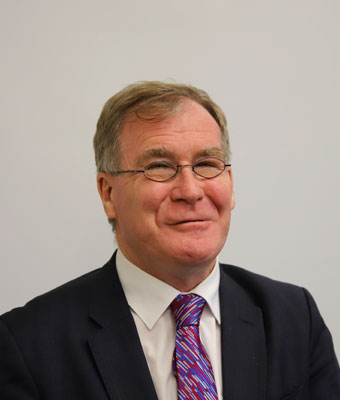
I thank the Minister of State, Deputy O’Donnell, for coming into the House at this late hour to deal with this issue. I very much appreciate it. As the Minister of State knows, this is an extremely important issue. It is to ask the Department of Health whether it intends to put in place a national nursing home care policy following on from the recent publication of the new ESRI report, which projects that we need to grow the number of both short-term and long-stay beds in nursing homes, and whether the Minister of State will make a statement on the matter.
I have been involved behind the scenes in the nursing home sector for the past 20 years. In 2004, as a result of a legal challenge – I have mentioned this previously in this House – that a colleague and I took against the Department and the health boards at the time, more than €450 million had to be refunded. This led to the creation of the fair deal scheme. The challenge we now have from the ESRI report is that it clearly sets out the need for a dedicated national nursing home care policy. Short-stay bed requirements are projected to grow from 3,745 beds in 2022 to between 6,420 and 7,265 beds by 2040, which is a growth of between 72% and 94%. Long-stay bed requirements are projected to grow from 29,579 beds in 2022 to between 47,590 and 53,270 beds by 2040, a growth of between 61% and 80%. In fact, if you take the ESRI report, it suggests that we will require a minimum of 21,056 additional nursing home beds over the next 14 years by 2040. That is 1,403 beds per annum over the next 15 years.
To do that, we need a plan. I am not convinced that we are looking long term. Likewise, what happened in 2004 is that there was not a long-term plan. It was a case of saying how lucky people were with regard to the supports they had got and whether they were in a public nursing home or a private nursing home. We currently have 32,000 people in nursing home care. We need to have a national framework setting out a guide to integration of people in nursing homes, a guide to the long-term funding, a guide to the regulation and also rights-based planning. We have seen the recent reports from RTÉ that have highlighted the issues regarding where there is not sufficient support for patients and patients not being treated in a proper manner.
All of the evidence is that we will have a growing number of people over 65. As the Minister of State knows, the age profile is changing. In 2011, we had something like 600,000 people over 65. The last figure was 831,000. Within four years, there will be 1 million people over 65. Therefore, the growth in demand for nursing home beds will come at a really fast pace. We also need to make sure that we have step-down beds to get people out of hospital on time. That is a problem. I ask the Minister of State if we have a plan that we intend to put in place and what the timescale is.
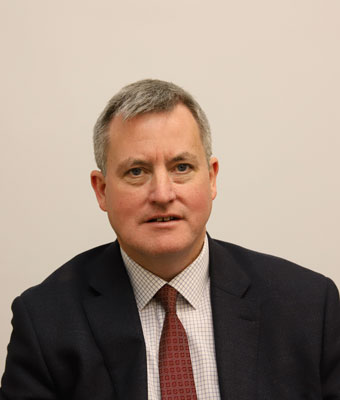
I thank Deputy Burke for raising this important matter. I know his keen interest in this area. I welcome the ESRI report on future capacity requirements in older people's care, which was published on 30 June and encompasses residential care for older people and home support. The analysis in the ESRI report utilises the Hippocrates model to update baseline estimates of demand in 2022 for residential care, both long term and short term, and projects demand and capacity for these services out to 2040. The ESRI report projects that the number of residential beds, both long term and short term, will need to increase by at least 60% by 2040. The Deputy referred to the findings of the ESRI report too. The research was funded by the Department of Health and considers a range of scenarios based on varying assumptions about population growth and ageing, the effects of healthy ageing and policy choices. The ESRI's demand and capacity analysis will be invaluable in advancing evidence-based capacity planning that is responsive, agile and meets the needs of our older population over the coming years and decades.
People are living longer lives and the number of older people in the total population is growing. The success that has been achieved in improving health outcomes and extending life expectancy must be acknowledged and celebrated. However, we must also recognise the challenges we will face in a range of areas in the coming years as our population ages. The ESRI report sets out that we will need a substantial increase in long-term and short-term residential care capacity to meet the demands of our growing and ageing population.
The Government's long-standing strategic goal is to deliver a new model of integrated older persons' health and social care services across the care spectrum, supporting older people to remain living independently in their own homes and communities for longer, in line with the Sláintecare vision for receiving the right care, in the right place, at the right time. However, it is recognised that care provided in long-term residential care settings for older people will continue to be an important part of the continuum of care for older people into the future. As Minister of State with responsibility for older people, I am very conscious of the importance of strengthening the capacity and resilience of our health system through the delivery of health and social care infrastructure. This Government is committed to continued investment in healthcare infrastructure that supports the highest quality care for our older population.
This investment includes the community nursing unit programme, which was launched to ensure that up to 90 of our public community nursing units and community hospitals would be refurbished or replaced to ensure the best quality environments for our older people, and to ensure HIQA compliance. A total of €4 million was allocated in budget 2025 to staff and open an additional 615 community beds this year in capital projects coming to fruition through this capital programme. The 2025 programme for Government also committed to build more public nursing home beds. The Department of Health, alongside the HSE, is developing a new long-term residential care additional capacity plan, which will be published in 2025. This is an absolute priority for me as Minister of State and for the Minister, Deputy Carroll MacNeill.
As Deputy Burke will be aware, the Government established an independent Commission on Care for Older People in March 2024. The commission is charged with examining the provision of health and social care services and supports for older people, including residential care, and with making recommendations to the Government for their strategic development. I look forward to the first report of the commission, which will be published in the coming months. It is evident that significant further investment will be required by the Government to ensure that the appropriate care services are available for our older population and to deliver on the programme for Government, Sláintecare and Project Ireland 2040 commitments. I am absolutely committed to ensuring that this capacity planning is advanced in 2025.
Regarding home care, there is the whole issue of long-term planning. For instance, in 2022, there were 28.7 million hours for home care. The prediction is that by 2040, it will be somewhere between 44.9 million and 54.9 million hours. That is a huge change. One of the problems I have at the moment is the total lack of planning for short-stay beds. We are not producing enough of them and it is causing a huge problem in our hospitals. As we speak here tonight, 50% of all people who occupy hospital beds are over 65 years of age. That is why we need immediate action to develop short-stay beds, through either the private sector or the public sector.
The other issue that I would be concerned about is the inappropriate comparison between the services provided in private nursing homes and public nursing homes. There is a huge gap in funding. The average public nursing home bed is costing €1,969 per week. A private nursing home is getting on average €1,220. There is a gap of €750. In addition, the private nursing home has to pay commercial rates, which for an average 50-bed unit would be around €60,000 per annum. It also has to pay public liability insurance, which could vary between €60,000 and €100,000 per annum. The private sector has to pay huge additional costs that public nursing homes do not have to pay. They are also dealing with the cost of erecting nursing homes in the private sector. We need to look at all this and make sure that we put in place a plan that can be delivered in a timely manner.
I thank Deputy Burke for raising this matter. He will be aware the ESRI health capacity review on future capacity for care for older people is the third in a series of capacity reviews on Ireland's health services, following reports on public acute hospitals and general practitioner services. The ESRI will publish further analysis later this year. I note the points that the Deputy raises in the other matters he highlighted. The ESRI report provides an evidence base that is crucial for future planning and ensuring we provide the right health and social care services in the right place for our older population.
The ESRI report deals with both long-term and short-stay beds, which I acknowledge. It deals with home care too. There has been significant investment by the Government in home care hours. They have gone up by 70% since 2020. The investment is €838 million compared with €400 million. There is a significant commitment by the Government to home care. At the moment, we are working on development of statutory home care. The first step in that is for home care providers legislation, which I am progressing.
As part of the ongoing collaboration between the ESRI and the Department of Health, the commission is building a demand and capacity modelling capability for our modern health service. I have already stated that demand for health and social care services is increasing as our population increases and ages. Older groups tend to use healthcare services more frequently and for a longer duration. I reiterate that we are making progress in increasing residential care capacity for the older population. In response to future capacity requirements, the commitment to building more nursing home beds is an absolute priority for Government. In this context, the Department of Health and the HSE are developing a new public long-term residential care capacity plan, which will be published this year.
It is something I am very committed to. As I mentioned, the Government has established an independent Commission on Care for Older People. The commissioner is charged with examining the condition of health and social care services and supports for older people including residential care and will make recommendations to the Government for their strategic development. I very much look forward to the first report from the commission, which will be published in the coming months under the chair of Professor Alan Barrett. It is doing a considerable body of work.
Protected Disclosures
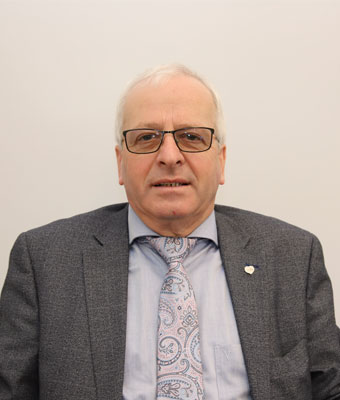
I am very disappointed the Minister for Health is not here. I wish to highlight the vital importance of whistleblowers in our health system, and call for immediate Government action in light of alarming protected disclosures that have been made by a qualified healthcare professional and pharmaceutical researcher regarding health policy, regulatory failures, and Covid-era interventions. This disclosure, made in accordance with the Protected Disclosures Act 2014, raises profoundly serious concerns, which if true, that strike at the heart of patient safety, medical ethics, and public accountability. The issues raised involve alleged misuse of end-of-life protocols, failures in vaccine safety oversight, and potentially criminal levels of regulatory inaction.
I am not here to make allegations against named individuals or to prejudge outcomes, but I am here to demand that the processes for handling protected disclosures, especially in the healthcare sector, be urgently and transparently reaffirmed. What this whistleblower and others like him are telling us is that protected disclosures are not being properly assessed, regulators and Ministers are failing in their statutory duty and disclosures supported by data, FOI evidence, and peer-reviewed science are being ignored, misdirected and stonewalled.
There is no independent oversight ensuring a disclosure leads to timely, fair investigations, especially when those disclosures involve State policy or powerful institutions. That is an intolerable state of affairs in a functioning democracy. Whistleblowers run the risk of their livelihoods, reputations, and sometimes their personal safety to uphold the public interest. Yet, instead of being protected they are often discredited, sidelined, and punished. We must ask ourselves whether our Protected Disclosures Act is fit for purpose when disclosures of this gravity, involving potential loss of life and systemic health failures, are effectively ignored.
I call on the Ministers for Health and justice and An Taoiseach to confirm whether they have reviewed this particular protected disclosure; commit to an independent statutory investigation into the core issued raised; overhaul the protected disclosure system to include a centralised triage mechanism with timelines and enforcement powers; and ensure health-related whistleblowers are never again left in limbo while their disclosures gather dust in ministerial inboxes or on shelves somewhere.
We are facing a moment of truth. A whistleblower has come forward with grave claims supported by evidence and the system must prove it can be trusted to act. If we fail to protect the truth-tellers in our health system, then we fail every citizen who depends on It. This disclosure submitted by a pharmacist and researcher, among other matters, includes strong evidence of the inappropriate and potentially lethal administration of under so-called end-of-life protocols in nursing homes during the first wave of Covid that may have directly contributed to hundreds, if not thousands, of avoidable deaths. The previous speaker was talking about the number of people in nursing homes and the age profile. They are of an age profile and they must be protected but they were not protected and have not been protected. Now that this whistleblower and others have come forward, there needs to be robust and responsible dealing with those whistleblowers, have the matters investigated at the highest level, and have them respected for what they are when they come from professionals, peer reviews and FOI requests.
I thank the Deputy for raising this matter. I am taking this Topical Issue debate on behalf of my colleague, the Minister for Health, Deputy Jennifer Carroll MacNeill. As the Deputy will be aware, the Department of Public Expenditure, Infrastructure, Public Service Reform and Digitisation is the lead-Department on protected disclosure legislation and provides guidance on all protected disclosure processes and guidance. Section 21(1) of the Protected Disclosures Act in Ireland empowers the Minister for public expenditure to issue guidance to public bodies to assist them in fulfilling their responsibilities under the Act. This guidance aims to help public bodies establish and maintain effective procedures for handling protected disclosures. The Minister may also issue guidance on the information that must be published setting out how disclosures may be made to Ministers or Ministers of State. This guidance is issued with the aim of assisting the persons referred to when establishing and maintaining reporting channels and procedures for the making of protected disclosures and for dealing with such reports of disclosures, referred to in this guidance as "procedures". Section 21(2) of the Act provides that the persons referred to above "shall have regard to" this guidance when establishing and maintaining such procedures. This means that while the channels and procedures should be tailored according to the specific business needs of the organisations concerned; they should be in general conformity with the principles set out in this guidance.
The Department of Health encourages all staff to speak up about concerns they may have about potential wrongdoings in the workplace. The Department has established procedures for the making of protected disclosures via our internal and external channels. All reports received are forwarded to the Office of the Protected Disclosures Commissioner. This ensures all reports of alleged wrongdoing doing are dealt with in a fair and transparent manner by the most appropriate prescribed person or other suitable person. Reports received in the Department are treated seriously and investigated where appropriate. The Protected Disclosures Act requires that the identity of the whistleblower is protected and remains confidential to the greatest extent possible. Whistleblowers are informed on how their concerns are addressed and the outcome of any investigation. Whistleblowers are protected from penalisation and should not fear making a disclosure. The Department of Health is committed to ensuring all staff members feel they can safely make reports of any alleged wrongdoings.
As I said, I am disappointed the Minister is not here to take this matter. We do not have a good record in this country of respecting whistleblowers; that goes without saying. The inappropriate and potentially lethal administration of the so-called end-of-life protocols in nursing homes during the first wave of the Covid pandemic may have directly contributed to hundreds, if not thousands, of avoidable deaths. That is a stark figure and it is not my figure. It comes from professionals who are well versed in and understand the situations regarding the pharmaceutical components. There was a failure by the Health Products Regulatory Authority, HPRA, and the Pharmaceutical Society of Ireland, PSI, to act on credible evidence regarding the dangers of Covid-19 vaccines, including serious manufacturing and safety issues, and the intentional suppression of informed consent by the HPRA. The authority was informed of cDNA contamination in vaccines but did not investigate. We had a systemic failure of the protected disclosures process itself, including, as I said, ministerial-level stonewalling of urgent safety data, resulting in zero investigations into serious allegations involving avoidable death, medical misconduct and regulatory malpractice. It is no longer credible to delay. Will the Minister of State commit to commissioning an independent public inquiry into the contents of this protected disclosure? Will he direct the HPRA, the PSI and the Department of Health to respond substantively and transparently to the evidence submitted? Will he ensure the rights of this whistleblower are protected and no further retaliation or obstruction occurs? There is credible evidence of large-scale harm, cover-up and failure to act. Lives have been lost. We have a constitutional, legal and moral duty to investigate these allegations fully and transparently. I beg the Minister of State to bring this to the Minister and act on this immediately.
On behalf of the Minister of Health, who I am taking this on behalf of, I thank the Deputy again for raising this matter. The Department of Health encourages all staff to speak up and raise any concerns they may have relating to potential wrongdoings in the workplace.
The Department provides the necessary supports for any staff member who raises any possible wrongdoings. A staff member who makes a protected disclosure under the Protected Disclosures Act is protected from penalisation or threatened penalisation.
The Department has established procedures for the making of protected disclosures by workers who were employed by the Department and for dealing with such disclosures. These procedures have been developed in accordance with the guidance issued by the Department of Public Expenditure, Infrastructure, Public Service Reform and Digitalisation. The Department has both internal and external channels available for receiving reports of wrongdoing and details of how to make these reports through the appropriate channels are published on the Department's website. In accordance with the Protected Disclosures (Amendment) Act 2022, all reports received via these channels are forwarded to the Office of Protected Disclosures Commissioner. The commissioner ensures that the report is submitted to the most appropriate prescribed person or suitable persons to deal with it. These measures ensure that all reports received are considered with transparency and impartiality. It is also possible for whistleblowers to make reports directly to the commissioner if they wish to do so.
Where a report is received for assessment, the concern is treated seriously and investigated where it is considered appropriate. Where an investigation takes place the identity of the person raising the concern is protected and remains confidential to the greatest extent possible, as required under the Protected Disclosures Act. The person raising the concern will be advised as to how the issue is being addressed, including the outcome of any investigation. Whistleblowers play an important role in revealing serious misconduct such as corruption, unsafe work practices or public health threats and improving accountability and transparency by fostering a culture where serious wrongdoing is not tolerated. As such, whistleblowers are protected under the Act from penalisation including dismissal, demotion, disciplinary action and reputational damage. The Department of Health takes these obligations very seriously and is committed to ensuring that all staff members feel that they can make reports of major wrongdoing without fear of penalisation. I am taking this on behalf of the Minister and will bring the matters raised to her attention.
Cuireadh an Dáil ar athló ar 12.02 a.m. go dtí 9 a.m., Dé Céadaoin, an 16 Iúil 2025.
The Dáil adjourned at 12.02 a.m. until 9 a.m. on Wednesday, 16 July 2025.