Child Protection
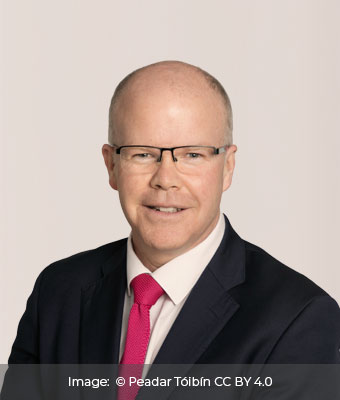
I wish to raise a serious issue on the floor of the House. It is a complex issue, so I hope the Minister of State will be able to give it his attention, if possible. The case involves a seven-year-old child, who I am going to call "Patrick" for the purpose of this discussion. Patrick disclosed physical and sexual abuse by his father. These allegations were brought to the attention of Tusla by the child's mother in 2018. There was an ongoing court case whereby the father was seeking overnight access to the child. In light of the allegations, the court appointed a clinical child psychologist to carry out a section 32 report.
At a subsequent sitting of the court, a social worker informed a judge in writing that the psychologist had told her over the phone that she did not believe the allegations made by Patrick. In an email, the psychologist told the child's mother and solicitor that she had not made that assertion in the phone call to the social worker and that the social worker's account of the phone call, which was relayed to the court, was false. I have seen the email. In reality, the psychologist referred the child to Tusla and contacted the Garda, such was the gravity of the disclosures and her confidence in them.
The psychologist wrote a concerning report to Tusla. It goes into graphic detail about the child's behaviour and disclosures. She wrote that in her opinion, Patrick had been abused. Tusla, however, in its report to the court entirely omitted the contents of the psychologist's report and findings. This led to further injuries to Patrick by his father. In 2021, Patrick was referred to Temple Street hospital with injuries to his testicles.
Subsequently, Patrick was interviewed by a team leader from Tusla. He made further disclosures of what happened. The team leader gave the notes of that interview to the aforementioned social worker, who provided a letter to the court. Unbeknownst to the social worker and team leader, the family had recorded the interview. There exist major discrepancies between the letter to the court and the audio file. The court was told that Patrick had admitted telling a lie. It can be seen from a freedom of information request that the falsified interview report also prevented an investigation by An Garda Síochána into the alleged child sexual abuse. Tusla decided to take the child from his mother and place him in the custody of the person who he alleged was abusing him. The child remains in this arrangement three years later.
This week, a member of An Garda Síochána walked into my constituency office and said that he, along with six other gardaí, are deeply concerned about the way this case has been handled, the way the social workers lied to the judge and the fact that the child had been taken from his mother and placed with a man against whom he has alleged abuse. The garda stated in a letter to me that he has raised these questions with management over the case, including the Commissioner and the Garda Síochána Ombudsman Commission, GSOC, and was reprimanded for doing so. He stated that his name was smeared with suggestions that he was doing something untoward in his relationship with the child's mother; a woman he barely knows.
I find these details shocking, especially the falsified interview with the child. The family can provide an audio recording that it is at odds with what Tusla supplied to the courts. I am extremely concerned that a psychologist appointed by the court is willing to supply an affidavit to state that her report of her interactions was altered and falsified by Tusla before being presented to the judge.
Given that there is a vulnerable boy at the centre of this case, we need a proper and independent investigation. We need to ensure this case is investigated for the sake of the child who I believe is in a shockingly dangerous situation. There is a problem at the heart of what is happening in Tusla if this is the case.
I am responding on behalf of the Minister for Children, Disability and Equality. I thank the Deputy for raising this important issue. Tusla, the Child and Family Agency, and the Department of Children, Disability and Equality are committed to promoting safe and high-quality practices in areas of alternative care. The Child Care Act 1991 is the statutory framework for child welfare and protection in Ireland. The legislation places a statutory duty on Tusla to promote the welfare of children who are not receiving adequate care and protection. It sets the legislative provisions in respect of taking children into care and the responsibilities of the State in that regard, which aim to improve outcomes for looked-after children.
Bringing a child into the care of the State is a serious matter and the Act prescribes the different mechanisms by which Tusla can take a child into care. Importantly, the Act sets out clear thresholds under which an application for a care order can be brought to allow for a child to be taken into the care of the State. Where Tusla is required to make an application for a care order, this application is made to the courts, which provides an additional layer of oversight in respect of the child. The welfare and best interests of the child remain paramount throughout the process. Parents are legally represented in such matters and children may be appointed a guardian ad litem to represent the voice of the child in the court setting. In respect of the role of birth parents who may come into contact with Tusla in respect of a child protection matter, Tusla aims to work with parents to create safety for children so they can live at home.
Tusla interventions aim to be decisive, time-limited and goal-orientated to maintain children within their families of origin. Tusla works to reach agreement with the parents and their extended family about a safety goal for that child and to develop a safety plan containing steps to achieve safety for the child that is revisited at intervals over a prescribed timeline to evaluate whether the safety plan is working. This is called a "safety planning intervention". Parental assessments are carried out in every case where a child comes into care as Tusla must prove the threshold of harm was sufficient for the court to make a care order. Parents who feel aggrieved by their interactions with Tusla, including those related to the decision-making process around State care, have access to formal complaints processes. In respect of complaint management across all services, Tusla strives to resolve all complaints via prompt local resolution, in the first instance, and to proceed with an investigation if a local resolution is not possible.
In the case of Patrick, which the Deputy has raised, I am obviously not aware of the details. The Deputy, of course, is aware of the details and has referred to some of them. All I can do now is advise and encourage him to write to the Minister for justice, Deputy O'Callaghan, and the Minister for children, Deputy Foley, outlining the details and knowledge of the extent of the case he has raised. I am sure they will have the matter examined appropriately.
I have already written to the former Minister for children, Deputy O'Gorman, the Minister for justice, Deputy O'Callaghan, the Minister for children, Deputy Foley, and Tusla in respect of this case. I understand that the Minister of State does not know the background to the case and, in many ways, I am throwing at him the details of a case that is hard to get one's head around in a short time.
It is impossible for the Minister of State to be able to respond to this in detail; I do understand that.
I acknowledge there are thousands of good people working in Tusla every single day doing a phenomenal job and they are under fierce pressure. There are 100,000 children annually who are being referred to Tusla, which is quite a shocking reflection of what is actually happening in the country. Approximately 35,000 more than are sitting the leaving certificate are getting referred to Tusla on an annual basis. I understand that it does not have enough staff and I understand how difficult it is to be able to adjudicate. A person would have to have the wisdom of Solomon to be able to understand who is right and who is wrong in some of these cases. However,this is a phenomenally serious case, and it is a case I want the Minister of State to take on board with regard to his Department. Rather than sending me to Ministers who are not here and who I already have contacted, I ask him to take this on as a personal responsibility to try to find a solution.
This is a young child who is currently, it is alleged, in the charge of a person who is abusing them. For any mother to see a child first of all abused is a heart-wrenching, mind-bending shock. I just cannot imagine how a person would get their head over that situation, let alone for that child to be left in that scenario. There is clear evidence here that Tusla has not done its job and that the staff within Tusla have done significantly wrong by this child. This is not the only case that is coming to me. A large number of cases that are similar are coming to me. I do not imagine all of them are true, but I do think there is a systemic problem. I want the Minister of State to take responsibility to see that there is an investigation into this. Further, I believe there should be an independent panel of experts who become the last opportunity for a family to seek justice in these cases.
To be clear, the Deputy has told me that he has already written to the Minister, Deputy Jim O'Callaghan, and the Minister, Deputy Foley, with regard to this. Arising from today, I will speak to the relevant officials within our Department, and I will ensure that the correspondence and communication the Deputy has sent to the Department via the Minister, Deputy O'Callaghan's office, is acted on promptly and that he is reverted to with its view with regard to it.
I will email my transcript to the Minister of State as well.
That is fine.
Thalidomide Victims Compensation

Gabhaim buíochas leis an Aire as ucht bheith anseo déanach ar an Déardaoin chun déileáil leis an gceist seo. This is an issue I have raised on a number of occasions, that is, the attitude of the State towards the treatment of survivors of thalidomide. The Minister of State will be aware that thalidomide was a drug that was used in the early 1960s by women in relation to morning sickness but what is important is that it has a hugely adverse effect on their subsequent children.
We have fewer than 40 survivors of thalidomide in Ireland today. These are people who have lived throughout their lives with debilitating issues as a result of the fact that they survived thalidomide while their mothers were pregnant. I am conscious that this is a sensitive issue. I am also conscious that this is a sensitive time and I have been encouraged to withdraw this matter this evening for that reason. Let me say very clearly why I have not withdrawn it. First, there is a process under way, which is being led by the retired High Court judge, Mr. Justice Gilligan, a man for whom I have enormous respect, and I do not want in any way to interfere with that process. It is important that continues and that it is completed in whatever way he sees fit and to the conclusion that is appropriate. The openness and transparency that must come with that should never be interfered with. That is not really why I am raising this issue. I am raising this issue because this is an important anniversary.
This week marks the passage of one year since the leaders of the three parties in the previous Government wrote to the survivors of thalidomide and set out what I respectfully suggest was not, in fact, an apology or an acknowledgement, but really a communication in respect of some supports that have been put in place for them. It is also a number of weeks since Jacqui Browne, a fearless campaigner and an individual of great stock herself, passed away aged 64. She was a thalidomide survivor. As we move through this, I understand those who say that now is not the time to discuss it and that there is a process under way; I understand that. The difficulty I have is, if not now, when? This has been going on now for more than 60 years. The survivors themselves are in their mid to late 60s and more importantly, their mothers, most of whom have passed away, are obviously much older than that or are at an advanced age. In fact, I think there are probably only five of them still living, and some of them have passed away in the last year as well. Those women who took the drug thalidomide without any foresight or knowledge as to the effect it might have on the foetus of the infant they were carrying bore throughout their lives huge guilt with regard to what happened to their children in utero. It is desperately unfair on those women who took the drug, again, through no fault of their own and who bore that burden throughout their lives. Most of them have died. The glacial pace with which the State is actually addressing this problem is shameful. The process is under way, let it take its course, but the treatment of thalidomide survivors by allowing the matter to go on for as long as it has is a very poor reflection on the State and the liability the State has. I have been very clear on this; there was a failure by the State in the 1960s for a period of over six months to clearly indicate that this drug should be withdrawn from the market. The information was there; the action was not taken. I am not here to go into the liability issue of it. There is a case in being, although that in and of itself has been dragged on to the detriment of those people who are involved in the case. Really, what I want to raise this evening is how unacceptable it is that, unfortunately, once again, this State finds itself in a position where vulnerable people who have been disadvantaged and injured by the failure to act by this State are once again being treated really badly and appallingly. The time has come to take action and acknowledge that.
I thank Deputy Ward for raising this important issue. I also wish to extend the apologies of the Minister for State with responsibility for disability, Deputy Naughton, for being unable to attend today. She is currently on a delegation to Bosnia and Herzegovina on behalf of the Government to commemorate the 30th anniversary of the Srebrenica genocide.
The Minister of State has also asked that her sincere sympathies and condolences are extended to the Browne family following the passing of their beloved Jacqui. Jacqui was a very valued chair of the disabled persons' organisations network, and she played a key role in contributing to many disability policies and initiatives, including the forthcoming national disability strategy.
The Government is committed to supporting people affected by thalidomide with health and personal social services. In July last year, the Government announced an enhanced package supports, which was co-designed with survivors. Enhanced healthcare, social care and independent living supports are currently available. Also, in April 2024, the national thalidomide advocacy office was established. This office was set up to liaise with thalidomide survivors and assist them to access supports towards their ongoing health and personal social service needs. The support provided is on a one-to-one basis, tailored to the specific needs of the person and in response to contact received from survivors. It includes identifying and liaising with the relevant HSE personnel and other agencies to ensure the required services are provided. Each survivor is also eligible for a medical card on an administrative basis, regardless of means, in addition to aids and appliances, equipment, housing adaptations and access to a full range of primary care, hospital and personal social services.
I thank the Minister of State. I acknowledge the reason for the absence of the Minister for State, Deputy Naughton. I applaud her for acknowledging the massacre in Srebrenica.
I also understand what the Minister of State, Deputy Collins, said; I know he is reading a response on her behalf. The statement that the Government is committed to helping the survivors of thalidomide is all very well but the point I am making is it is taking too long. The process is there and the process is fine but what we have not had is a proper acknowledgement. We have not had a proper apology. We do not have cover. Talking about enhanced services for them is all very well but that is the very minimum we can do. These are people who were injured through the inaction of this State and that has never been acknowledged despite the letter that was written by my party leader, the Minister of State's party leader and the leader of the Green Party a year ago. That is not actually an acknowledgement of the fault of the State. It is not an apology. It is an apology for what they are going through, which states that the Government regrets the position they are in. I understand the restrictions that are there. I have been critical before of the manner in which the State has met the legal case against them.
That is one thing but there is a basic justice to this that has never been met. There is no apology, acknowledgment, full suite of treatment and no compensation. Those are all absent. If we are talking about the issue at the heart of this, which is the treatment of those people who through no fault of their own and through no fault of their parents find themselves massively disadvantaged, injured, disabled as a result of that drug and the inaction of this State, the very least we can do is those four things I pointed out: apologise; acknowledge; cover their medical needs; and compensate them for the injury caused to them. We would do it in any other situation but for some reason the State has dragged its heels. The fundamental crux of this is the treatment of those survivors of thalidomide is fundamentally wrong and shameful and is a stain on the recent history of this State that we cannot get over that and acknowledge the justice of the issue that has to be dealt with.
As previously referenced, in July 2024 an enhanced package for health and social care supports for thalidomide survivors was announced. That included prioritised and simplified access to local health and social care professionals, access to therapies, both clinical and holistic, independent living supports to include housing adaptations, car adaptations and home supports, annual health assessments and a free travel pass. As the Deputy will be aware, there is a thalidomide resolution process under way facilitated by Judge Paul Gilligan. It would not be appropriate for me to comment on that process at this time.
Separately, the German Grünenthal Foundation has confirmed that since 2013 it has accepted applications from individuals for compensation for thalidomide-related injury. It is open to any Irish person to apply to the foundation for assessment of their disability as being attributable to thalidomide. Additionally any Irish person who establishes that their injury is attributable to thalidomide will continue to be offered appropriate supports by the Government commensurate with those currently provided to Irish thalidomide survivors. Support for this assessment process is available for anybody who wishes to be assessed.
The Deputy also raised a proper acknowledgement and apology and the process taking too long and the lack of compensation. I will convey the sentiments he raised here with both the Taoiseach and the Tánaiste.
Media Sector
I wish to raise what I think everyone recognises as a growing threat to society, namely online disinformation and, more importantly, the urgent needs around how we promote and resource media literacy initiatives to counter it.
We are all aware of the alarming rise in the weaponisation of false information online. It is no longer just a nuisance. It is being used to distort truth, polarise communities and threaten our public safety. We have seen it play out in real time, most recently in light of the Dublin riots that devastated part of the city. Many of these events were fuelled by online ecosystems suggesting and spreading falsehoods.
A 2023 study by the Institute for Strategic Dialogue revealed that between 2020 and 2023, over 13 million disinformation posts were detected across 1,600 accounts in Ireland alone. Shockingly just ten of those accounts were responsible for 14% of that content. The drivers of that content were typically far-right groups and individuals pushing narratives on Covid-19 denial, anti-LGBTQ+ rhetoric, misogyny and electoral distrust and distrust in democratic institutions. Another study from DCU found that there are examples of social media platforms rapidly amplifying this harmful content. Male-identified accounts created as part of this experiment were fed misogynistic and white-supremacist material within just 23 minutes of use. Once they were exposed, the algorithms in the cases of some platforms continued to recommend similar content.
It is not just a concern shared by policymakers: it is one also shared by the public. The Digital News Report Ireland 2024 found that 64% or almost two in three people worry about distinguishing real content from fake online content. This is higher than the European average of 50%. During the Covid-19 pandemic and the restrictions, almost half of Irish citizens encountered misleading information about the virus in just one week.
Ireland did rank fifth in the media literacy index in 2022 but we have seen a 5% drop in the basic information and data literacy skills since 2023. This is a dangerous decline, especially for people who rely on messaging apps and social media platforms for their news. Research shows they are significantly more likely to believe in conspiracy theories. This is brought to life by the recent report by the Electoral Commission on the permeation of conspiracy theories. Some 35% of people surveyed for that report believe a small, secret group controls world politics but this number is a lot higher for those who rely on online media where 58% of those people believe in this theory compared with 23% of people who use traditional media.
The Government has taken steps. The introduction of the Online Safety and Media Regulation Act 2022 establishing Coimisiún na Meán as our new online safety regulator is a welcome step in that it brings into force parts of the EU Digital Services Act. The launch of the national counter disinformation strategy in 2025, built on five core principles, has also been extremely important in doing that. Coimisiún na Meán has started leading with the implementation of binding safety rules for social media platforms targeting harmful content and requiring platforms to enforce age checks, parental controls and media literacy tools. However, I fear we have arrived at a point where legislation alone and nor is enforcement of community guidelines alone. It is about empowering the public, young and old, with the skills to critically evaluate the information they consume. Media literacy is no longer optional. It is now a democratic necessity. We need to embed media literacy into our education systems making it a mandatory part of both primary and secondary curriculums. We need to fund lifelong digital skills programmes and prioritise vulnerable groups often excluded form digital education. A resilient society like this is an informed one. We must also continue to support and fund verified fact-checked journalism, which is often the first casualty of disinformation and the last line of defence against it. This is all pivotal to defending our democracy.
As we know, the problem of disinformation is not a new one. What is new is how easily mistruths can be produced, how sophisticated and convincing they are, and how it can be amplified and circulated at astonishing speed.
According to the Digital News Report 2025 published just last month, 68% of people said that they are concerned about what is real and what is fake online. This is clear evidence of how important it is to counter disinformation.
The Future of Media Commission recognised this in its 2022 report and recommended that Ireland develop a national counter disinformation strategy to co-ordinate national efforts in the fight against disinformation, with the intention of limiting the creation and spreading of false, misleading and harmful material.
Disinformation is a serious challenge that requires whole-of-society response, the importance of which was recognised during the development of the national counter disinformation strategy. An independently chaired multistakeholder working group was established in February 2023 to develop the strategy and it was published on 17 April this year.
At national level, Ireland is already using a range of approaches to counter disinformation. The strategy aims to connect key stakeholders across multiple sectors, facilitating enhanced co-operation and collaboration in our efforts to counter disinformation. The strategy highlights education in particular as having an important role in giving people the skills to recognise false material and help to prevent its dissemination. Media and digital literacy initiatives should be seen alongside the promotion of public interest information in this regard. Crucially, the provision of media literacy education for everyone in our society will help to ensure that we are collectively resilient to the threats posed by this kind of manipulation to our democracy.
One such example is the Be Media Smart campaign led by Media Literacy Ireland, which encourages people to stop, think and check that the information they are consuming is reliable. The Sound and Vision 4 scheme is a notable source of funding for media literacy initiatives across television and radio. A total of €7 million has been awarded under the scheme so far this year for television and radio projects, with media literacy initiatives featuring amongst the funded projects. These range from documentaries about misinformation to local programming Irish-language programmes that set out to boost media literacy skills. Some notable examples include Beat 102-103 Digital Media and You; Virgin Media Television’s "Borders & Lies"; TG4’s "Am Abú"; and Newstalk’s "Ctrl Shift Save - Life in a Digital Age". Further funding awards under the Sound and Vision 4 scheme will be announced by Coimisiún na Meán in August 2025.
I look forward to seeing those projects that are to be awarded coming to fruition.
In addition, the programme for Government commits the Government to funding the strategy. The Department of Communications, Culture and Sport is developing proposals around this, including commitments in the strategy to media literacy as part of the Estimates process and subject to the availability of resources. While media literacy is a vital component in our fight to counter disinformation, it must be acknowledged that as a whole-of-government and whole-of-society challenge, there are other ways to counter disinformation. For example, enhanced regulation, which places obligations on online platforms to minimise the availability of harmful and illegal content, including disinformation, is highlighted in the strategy. Coimisiún na Meán is at the heart of Ireland's online safety framework. Comprising the Digital Services Act, the Online Safety Media Regulation Act and the terrorist content online content regulation, the online safety framework has an important part to play when it comes to countering disinformation.
I thank the Minister of State for his comprehensive reply. It is important to say at the outset that the proliferation of new technologies like artificial intelligence and the generation and communication tools associated with that are a massive opportunity in terms of connecting society and making information more plentiful, but also presents a number of challenges. I am a firm believer that innovation should always be promoted and welcomed, but should also be accompanied with safety and very clear expectations and parameters about how to guarantee the safe use of new technologies.
All of the reports generated about employment, labour and the sort of skills we need for the future have correctly identified things like green skills, digital skills and the ability to understand AI skills. Report after report shows that employers and, more broadly, society are looking for people who have critical thinking skills, as well as the ability to solve problems on their own and to differentiate what might be real or false. It is important that we as a society and the Government not only say that these are things employers look for. In order to build well-rounded citizens and people who can actively engage in a democracy, we must ensure critical thinking skills are central to this.
I welcome the funding of the various programmes for broadcasters and media organisations from Coimisiún na Meán. I encourage the mainstreaming of that because it is something we will have to be vigilant about and keep an eye on. That is the core point. We must make sure that we continue to prioritise ongoing research and monitoring to stay ahead of this evolving threat so that we can evaluate how extensive it is and, indeed, how successful our efforts to address and to deal with it are.
Let us continue to act not just to regulate but to educate, and not just to respond but to build resilience in our democracy because the truth is worth protecting. Facts do matter because, ultimately, they underpin the conversations that sustain the open free speech of our democracy.
As I set out, the national counter disinformation strategy explores the challenge of disinformation in Ireland, its harmful effects on society and its complexity as a policy issue. It is important to state that it is not the role of our Government or, indeed, any regulator to decide on individual instances of disinformation.
As mentioned, one of the fundamental aims of the strategy is to promote resilience in people to support media literacy and high-quality journalism to help people to make their own decisions about what is or is not disinformation. Having published a strategy in April, we are moving to implementation. A steering committee has been established and had its first meeting on 20 June. Actions are being progressed which support the commitments in the strategy.
Schools Building Projects

I cannot believe I am about to say this, but right now on Dominick Street, in the heart of Dublin city centre, stands a half-built school that should be opening its doors in September. A Gaelscoil that was promised, planned and funded now lies idle behind hoardings. What is worse is the silence.
This is not a new school project. The project is a result of a 23-year struggle by parents, educators and children who fought year after year for a proper building. The community built the school from scratch in 1988 and has since seen generations of children go to school to learn in their native language in conditions that no child should ever have to learn in. Let us call this what it is. It is a failure of delivery, of care and, at this point, of respect.
I heard the principal raise concerns for over a year. I watched departmental officials assure everyone, in the clearest of terms, that the new building would be open by the 2025-26 school year. That commitment was made not just to the board of management of Gaelscoil Choláiste Mhuire, but also to 170 pupils and their families. Right now, the project has been paused. The site is silent. The cranes are still. The community has been left in the dark while a conciliation process plays out behind closed doors.
Yesterday we were told it is not known where the children are going to go to school. They will go to a building that was entirely unsuitable on Parnell Square to one that is only slightly more suitable, an interim solution on Cathal Brugha Street. That is not progress for the parents, families, children and the generations that went before them, and those who want to teach. It is an insult. We do not know if the building on Cathal Brugha Street will have any special classes. We know children will have to leave four times a day on their lunch break to walk from Cathal Brugha Street to Scoil Chaitríona for yard play in a school based in the Department of Education and Youth. I hope every official who looks out the window will see the failure of the State in respect of those children.
The original budget was €1 million and is now estimated at over €22 million. The delays have been blamed on unforeseen complications, namely protected structures, Luas lines and underground utilities, but anyone who knows the site knows those circumstances were not unforeseen. Rather, they were ignored. They were baked into the bones of the city and should have been built into the plan.
How did we go from a sod-turning ceremony in June 2023 to a stalled project in July 2025? That does not suggest urgency or oversight. This is not just about a school; this is about what happens when a community like ours, a working-class community which is resilient in a way in which very few others could even comprehend and wishes children to learn in the Irish language in an inner-city school, asks for something other communities take for granted, namely a proper school building, a safe and permanent space to learn and a place of pride. Instead, there has been a delay, a doubling of costs, empty timelines and another round of temporary accommodation.
I am sure the Minister of State has a response, but I hope it includes the answers to my questions. When will construction restart? Is there a date? What has the conciliation process uncovered? It is now important that we share those findings. Contract sensitivity does not come into play when the contract has ceased. Will the Department publish a new delivery timeline? Can the Minister of State assure us that will be adhered to? When does the new tender process start? Who is accountable for the doubling of the budget to €22 million and, I presume, counting?
This is not criticism for the sake of it. Most public representatives in Dublin Central have held back for obvious reasons, but that will no longer happen. This is about standing up for children and families who have been more patient than any of us could ask for. They have been more resilient than any of us could comprehend. Gaelscoil Choláiste Mhuire not just a line on a spreadsheet; it is a symbol of what the city can be, namely multilingual, diverse, proud of its culture and committed to its children. It deserves better than hoarding. At this point, there is absolute silence. We will continue to raise this issue every day if necessary until the parents, children and education community get the answers they deserve because they have been failed incredibly badly by the State.
I thank the Deputy for raising this matter as it provides me with the opportunity to outline to the Dáil the current position regarding the major building project for Gaelscoil Choláiste Mhuire in Parnell Square. The Minister and the Department of Education and Youth are fully committed to delivering a new school building for Gaelscoil Choláiste Mhuire as quickly as possible. Department officials are in regular contact with the school authorities, meeting approximately every six weeks or more frequently when required.
The Minister and her Department are committed to continuing this support for the school. This project is included in the Department's construction programme and is being delivered under the national development plan as part of Project Ireland 2040. A number of issues arose on site at the outset, which is not unusual given the nature of a brownfield city centre site, but this led to a delay. While all parties actively engaged to discuss and resolve the issues and to reduce any risk to the programme, these unforeseen matters did lead to a delay.
In response to issues on the site, the Department sanctioned the appointment of a project manager on the project, who has engaged with the design team and contractor to minimise project delays on the programme and ensure clear lines of communication were in operation. The appointed project manager developed various proposals and strategies to remedy any issues impacting the programme, realigning the full project team roles and agreeing the project delivery timelines and goals.
Good progress was initially made following the project manager’s intervention in the summer of 2024 to the end of the year, with significant visible progress being made on the structure.
However, since Christmas the project issues have intensified. The Department has had ongoing engagement with the contractor and the design team to resolve these issues. As a result, the Department entered into a conciliation hearing to try to reach agreement on a solution to ensure the earliest possible delivery of the school while respecting its statutory obligations.
In accordance with standard practice and contractual requirements, the conciliation process is of a confidential nature. A temporary pause on works under the suspension of works provisions of the contract provided an opportunity to consider outcomes from the conciliation process. A notice of suspension of works was communicated to the contractor on 23 May 2025 in accordance with the provisions of the contract. During the suspension, the Department carefully considered the best way to deliver a school building while also respecting its statutory obligations. A notice of termination was issued under the contract on 1 July 2025 following careful consideration of the need to ensure compliance with those statutory obligations. Department officials will continue to work closely with the school principal and board of management.
As an interim measure, the Department is providing accommodation more suitable to the current needs of the school nearby on Cathal Brugha Street. I am informed the school has provided information to parents recently about these next steps for the school. Some small-scale refurbishment works at the building will provide a good interim accommodation solution for the school and include teaching and learning spaces for all the classes, education support and sensory spaces, adequate meeting and office spaces, a staff room, a communal area and access to a safe outdoor space for students. It is anticipated the school will move into the new premises after the October 2025 mid-term break. The Minister and the Department are fully committed to delivering a school building for this school as soon as possible.
I listened to the Minister of State's reply intently. I was hoping to get answers to some of the questions. The Cathal Brugha Street site the school is moving into is barely suitable, if even that, for a school community, but it is expected to move in there in September. The contract on that school Gaelscoil Choláiste Mhuire has been given is to June 2027.
The Minister of State has just told me some complications can be expected in a city-centre site. It is really important that we get the outcome of the conciliation process to understand what exactly went wrong. If these unforeseen complications are happening at a city-centre site, what exactly were they? Was it the Luas line? We understand there are going to be underground issues in the city centre but they were not factored in or considered. I was in the room when the principal raised this with Department officials and asked would it be an issue. I stood in rooms for a year while the school was assured consistently it would be in the building it deserved by 2025. We know that is not a normal school at the moment. It has had to deal with issues very few of us could even comprehend and what it deserved from the State was truth along the way.
There is no space for us to say there are contractual obligations at the same time the Department has told us it is no longer in a contract. We need full information. When is it expected the tender will go out? If the previous builder is going to take a court case, will that delay the tendering? We have a situation where there is a contract for Cathal Brugha Street until 2027. I have a community in the north inner city and surrounds which wants to be able to learn and teach its children through the medium of Irish. That should be a minimum, but what it has had to endure over 23 years is an insult from the State. All the school requires now is truth and while it is in Cathal Brugha Street for it to be flooded with resources so we can be assured these children can have a normal school environment, because they have not had it at all through the last 23 years, affecting generations of children.
To recap, the project brief was for a large-scale capital project, namely the construction of a 16-classroom primary school consisting of a four-storey, 13-classroom block with ancillary rooms facing Dominick Street, a five-storey block with administration, services, library and resource rooms on the corner of Dominick Place and Dominick Street, an elevated first floor bridge block containing three classrooms facing Dominick Place and a general purpose hall with a basement for services to the rear of the site at Granby Row. The site is an area of archaeological interest and abuts a protected structure owned and occupied by Youth Work Ireland. That was the project brief, as the Deputy knows. It sounds like a very complex build.
As I said, a number of issues arose on site at the outset, which is not unusual given the nature of the brownfield site. These included several services on-site, including electrical lines and services related to the adjacent Luas line which were not apparent until excavation began. There was also an issue with the foundations of an adjoining protected building that required careful consideration. While all parties actively engaged to discuss and resolve the issues and reduce the risk to the programme, these unforeseen matters delayed it, as the Deputy knows. It is now prudent to plan on the basis the provision of the new school building will be unavoidably delayed. However, the Department is assessing all options open to it to expedite the delivery of the new school building, as I have previously outlined, and it is in regular contact with the school authorities.
I will convey the Deputy’s sentiments. He has raised it, he has articulated it very well and I understand. We all deal with school issues and they are very important for the children and the entire school community. It is hugely important to them and I understand that. It is not unique; it happens all over the country. That is not diminishing the importance of this case. I will convey the Deputy’s frustration and that of the community.
School Costs

I thank the Ceann Comhairle for selecting this issue. I am raising the issue of the cost many parents are faced with for digital devices like iPads, tablets and laptops when schools move to a one-to-one digital device policy. It is happening quite a lot and comes at very significant cost to families, many of which have multiple students at school. Devices can cost anything up to €800. At a time when many families were expecting to have the cost of school books taken off them the exact opposite is happening. I have a number of examples of where students entering fifth year are faced with a new policy that demands a device costing €800 for their schoolwork.
This question has been asked repeatedly, including by me, and a lot of the written responses point towards Government investment in ICT in schools generally. They point towards the role of the board of management in developing digital learning policies, whether these devices are introduced or not, how the ICT funding is used and the need for consultation before any change in policy is introduced. They also point to a circular issued in 2017 that does not deal with the issue at all and is about measures schools should adopt in relation to uniforms and other costs.
The real issue here is there are families who cannot afford this. They just cannot bear this cost. They can be part of a consultation. This is just the practicalities of it. They might not agree with the policy but they will have to go along with it or else their child will be left behind. We then have a scenario of children being left behind, excluded or isolated or families being pushed into financial hardship. The suggestion from the Government in the responses I have seen so far is that schools can use the ICT funding to develop a scheme to support families, but the funding is not there to do that. What happens in practical terms is schools look for full payment.
They point people towards services like Humm or the local credit union to try to facilitate them. Without a shadow of a doubt, because of these policy changes in individual schools, and I recognise schools have autonomy to a significant degree in relation to these decisions, families are being left in a position where there is no support net at all. They are left completely exposed.
I see nothing in the responses I have received thus far that recognises that fact. I am interested to hear the Minister of State's response today. I hope he indicates there will be some action on this issue.
I thank the Deputy for raising this matter. The Minister for Education and Youth, Deputy McEntee, recently announced €35 million in funding to support digital learning in schools. A total of €35 million in grant funding for information and communications technology has issued to all recognised primary and post-primary schools. Through the ICT grant and the minor works grant schemes, schools are directly funded for their ICT infrastructure.
Schools have autonomy to determine which infrastructure to implement, including software and devices such as tablets, in accordance with their digital learning plans. The funding can also be used to provide loan schemes for devices, as needed. The ICT grant funding is being provided to schools to help them to continue to embed the use of digital technologies in their teaching, learning and assessment.
This is the third tranche of ICT funding under the digital strategy for schools to 2027. The funding issues as a lump sum per school, plus a per capita amount, with an enhanced per capita rate for students enrolled in DEIS and special schools and to pupils in mainstream special class primary settings. Using this model of funding, all schools are treated fairly and transparently and are allocated an amount per student. Schools, in conjunction with parents, are responsible for decisions on the use of digital technology, including tablet devices, laptops and learning platforms, and how best to manage their integration into classroom practice, reflective of their own context and requirements.
Under the Education Act, boards of management have responsibility for the day-to-day management of schools. Decisions regarding the use and deployment of digital technology is therefore a matter for the board of management of each school in the context of their digital learning planning. Schools are advised to consult with members of the school community, including parents, when planning for the introduction of digital technologies. This includes devices with cost and other implications being fully considered by the board of management before a decision is made.
The Oide technology in education division within the Department of Education and Youth provides a support service for teachers specialising in digital technology in teaching and learning. It offers advice and supports to schools on digital learning. Advice sheets are available on digital technology in education, including on the adoption of laptops and tablets in schools.
The digital strategy for schools to 2027, and its associated implementation plan, is underpinned by funding of €200 million over the course of the strategy, as committed to under the national development plan. The funding allocation model is provided for in the NDP and commits to funding issuing over the period of the plan, to be applied by the Department for the digital strategy duration, which is to 2027 for the current strategy. Including the most recent grant, a total of €135 million of the €200 million committed to in the NDP for the strategy has issued to schools through the ICT grant. While the NDP commitment did not guarantee a specific amount in each year, it is anticipated that issuing €35 million in 2025 will enable the balance of €65 million to issue to schools over the remaining years of the current strategy to 2027.
This funding demonstrates the Government's ongoing commitment to supporting and enabling schools to ensure the continued embedding of digital technologies in teaching, learning and assessment.
The Minister of State's response is the response we have been getting to the question over the past few months. I want to put a number of things on the record, which I would appreciate the Minister of State conveying to the Ministers for Education and Youth and Social Protection.
We have a funding crisis in education. We cannot take from ICT funding that is desperately needed to keep the lights on and deliver ICT in schools to provide a loan scheme for students. The money is not there.
We have a cost-of-living crisis. Families very much welcome hot school meals and the elimination of school book charges. However, doing that on the one hand while, on the other, asking parents to come up with €800 for a device is driving people into financial hardship.
I take on board that individual schools can make their own decisions on funding but there must be a recognition by the Department that there is a move towards digital learning, whether in terms of augmentative and alternative communication, AAC, devices for people with disabilities, digital learning plans being developed by schools or the additional assessment components in the new senior cycle redevelopment. Schools are moving in a particular direction, which is digital. That move is causing real financial hardship for a number of people. The system, between the Departments of Education and Youth and Social Protection, must recognise that. We need a fund to support parents. That is what Sinn Féin is calling for. We want a recognition of this and dedicated support to ensure people are not forced under water because of this additional cost. I ask the Minister of State to take that point on board and to convey it to the two Ministers.
The Government recognises that back-to-school costs each September can place real financial pressure on families. The Department of Education and Youth is keenly aware of the challenges faced by educators and parents in regard to these costs. To help address this, schools are expected to follow guidance from the Department, which includes using school uniform items that are generic and affordable and regularly consulting with parents on ways to reduce costs. Schools should also provide a full list of required items with guidance on best-value options.
A number of measures are in place to support educators and parents as part of the Department's ongoing commitment to reduce financial pressure on families and ensure every student is supported to succeed. A circular letter issued to schools in 2017 with measures to be adopted to reduce the cost of school uniforms and other costs, including of ICT devices. The circular also instructed schools to consult with parents and their school community on ensuring costs are reasonable and how to avoid cost acting as a barrier. The circular specified that, wherever possible, generic rather than branded items should be specified, for example, uniforms, clothing, tablet devices and sports equipment. It provided that schools should also consult with parents regarding their views and suggestions on cost reduction initiatives. Schools should provide parents with a list of all required items and their likely cost at best-value stores. Where an exclusive supplier arrangement applies, it should be reviewed regularly and tendered in accordance with the procurement requirements.
To further assist schools, the Office of Government Procurement, HEAnet and the Department of Education and Youth have established a framework of providers of digital services, including tablets, PCs and laptops, with appropriate specifications, agreed pricing and levels of service, as well as providing framework management. Schools are encouraged to avail of these frameworks, which will enable them to comply with procurement requirements and achieve agreed transparent pricing.