1. Deputy Ivana Bacik asked the Taoiseach when the Cabinet committee on children and education will next meet. [22233/25]
2. Deputy Aisling Dempsey asked the Taoiseach when the Cabinet committee on children and education will next meet. [23201/25]
3. Deputy Ryan O'Meara asked the Taoiseach when the Cabinet committee on children and education will next meet. [23202/25]
4. Deputy John Connolly asked the Taoiseach when the Cabinet committee on children and education will next meet. [30268/25]
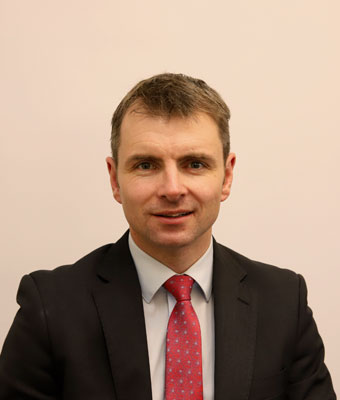
5. Deputy Ruairí Ó Murchú asked the Taoiseach when the Cabinet committee on children and education will next meet. [32141/25]
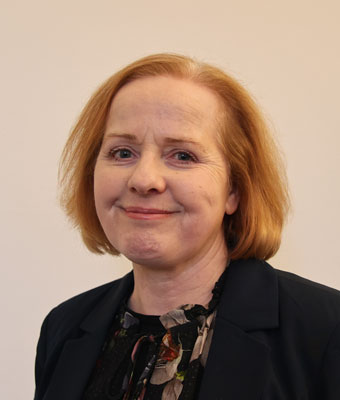
6. Deputy Ruth Coppinger asked the Taoiseach when the Cabinet committee on children and education will next meet. [32399/25]
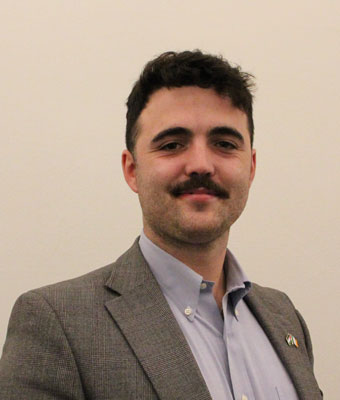
7. Deputy Barry Heneghan asked the Taoiseach when the Cabinet committee on children and education will next meet. [32402/25]
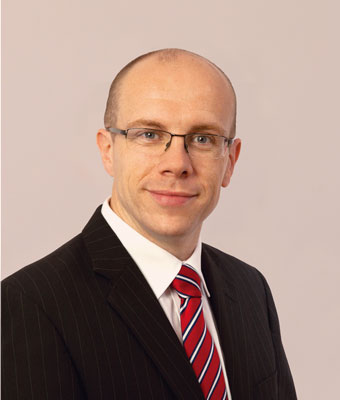
8. Deputy Darren O'Rourke asked the Taoiseach when the Cabinet committee on children and education will next meet. [33552/25]
9. Deputy Pádraig O'Sullivan asked the Taoiseach when the Cabinet Committee on Children and Education will next meet. [33564/25]
10. Deputy Cathal Crowe asked the Taoiseach when the Cabinet committee on children and education will next meet. [33565/25]
11. Deputy Mary Lou McDonald asked the Taoiseach when the Cabinet committee on children and education will next meet. [33779/25]
12. Deputy Paul Murphy asked the Taoiseach when the Cabinet committee on children and education will next meet. [33926/25]
13. Deputy Conor D. McGuinness asked the Taoiseach when the Cabinet committee on children and education will next meet. [35041/25]
I propose to take Questions Nos. 1 to 13, inclusive, together.
The Cabinet committee on children and education oversees the implementation of programme for Government commitments in the area of children and education. It receives detailed reports on identified policy areas such as child poverty and well-being and education. The membership of the Cabinet committee on children and education comprises the Taoiseach, the Tánaiste and Minister for foreign affairs and Defence, the Minister for Finance, the Minister for Public Expenditure, Infrastructure, Public Service Reform and Digitalisation, the Minister for Children, Disability, and Equality, the Minister for Health, the Minister for Social Protection, the Minister for Education and Youth and the Minister for Housing, Local Government and Heritage.
The programme for Government contains many important commitments intended to improve the lives of all children, and especially those children who need our help most. One of the key areas relates to Government ambitions to reduce child poverty and enhance child well-being. The programme for Government commits to retaining the child poverty and well-being office in the Department of the Taoiseach to break down silos between Departments and drive delivery of measures aimed at reducing child poverty. The programme for Government also contains many commitments directly relevant to reducing child poverty and promoting child well-being. These commitments include setting an ambitious child poverty target, progressively increasing the child support payment, expanding eligibility for the fuel allowance to families in receipt of the working family payment and exploring a targeted child benefit payment.
Investment in education is central to this work to address child poverty and disadvantage. The Government’s vision for education is to deliver a world-class education system which breaks down barriers and ensures every child can achieve their full potential. That is why we remain committed to building on the work of the DEIS programme, which since 2006 has been operating to tackle educational disadvantage. The Cabinet committee meets quarterly and will meet for the second time shortly.
In terms of access to education for children with additional needs, I know Cara Darmody is speaking again today with Oireachtas Members about waiting lists for assessments for those with additional needs, and delays in accessing services and therapies. Will the Taoiseach confirm what extra capacity has been added to the system in recent months?
Second, I welcome the announcement that the Minister for education has today confirmed the establishment of a commission of investigation into historical sexual abuse in schools. I pay tribute to survivors like Mark and David Ryan, to Mary O'Toole for her scoping report and to all of those who came forward to share their experience of abuse and shine a light into the dark and shameful corner of our history of education.
I have two questions for the Taoiseach. First, what levers will he establish to ensure that religious institutions will pay their fair share of redress? We have a Labour Party Bill to remove legal obstacles to pursuing religious organisations and unincorporated associations. I will supply him with that, and he might consider taking it on board. Second, will he establish a parallel redress scheme for survivors, so they do not have to wait five years for the outcome of the report?
I am sure the Taoiseach is aware of the teacher fee refund scheme. In 2025, it is aimed at assisting teachers with upskilling and paying for some of their course fees or examination fees. The Department of education has informed me that courses that fall under that with regard to professional development for teachers include tackling disadvantage, discrimination and equality and promoting well-being. I am aware of a career guidance counsellor in a secondary school who has done a counselling course and is not qualifying for the refund scheme. I believe we need to look beyond just the teaching environment to teachers in an example like that, where they are upskilling to be able to help their students, particularly in a counselling or career guidance capacity. When we talk about well-being and the benefits to students outside of a purely teaching and learning environment, I believe it would be a good thing to encourage our teachers and to assist them in that. I ask that the scheme be looked at to see if counselling can fall in under the teacher fee-----
So, counselling does not fall under it.
It does not fall under the teacher fee refund scheme.
The Minister of State, Deputy Moynihan, informed the House last week that all teacher training courses will now include a period where the trainee teacher will work in a classroom for children with additional needs. That is welcome. However, I am concerned by the Department of education payroll review, which highlighted there were 1,800 vacant teaching positions within the system. Some 1,200 of the vacancies are in the primary sector. This correlates with the figures that the INTO has published, which show a significant number of vacant positions and schools having difficulty filling the roles. We have announced 400 additional classes for children with additional needs for this September. I have a great concern that schools will find it difficult to fill the roles associated with those new classes, which will provide schools with great challenges. Some measures have been taken to address the teacher shortage and the lack of teachers available, but the defining measure for me would be an increase in places in the colleges for teacher training. I know the University of Galway has indicated its desire to allow for a postgraduate programme for training primary teachers. I ask the Taoiseach to look at that.
I would like to know the Government's plans to ensure there is an appropriate class place for all kids, particularly those with additional needs. We have seen the issues that occur every year. It has already been stated that the issue of assessment of need has been brought up again by Cara Darmody. We know there is a big fear that legislative changes would take away the right people have with regard to delivery of the assessment of need within six months. Many parents have contacted me in the past while about the issue with school places and what school their children can go to. They have no surety because they have not been able to get an assessment of need. We have the issue of those with mild learning disabilities who fall between stools. There is no space for them. Certain schools will say their complex needs are too complex or not sufficiently complex to fall into this bracket. That is an issue we need to deal with. I bring up the issue of Tallanstown National School, where we had an assessment with regard to class places. There were 281 children in September. There are now 284, but it has resulted in a kid who has Down's syndrome possibly ending up in class of 36. It is a specific issue that needs to be looked at.
Ireland is becoming the most expensive country in Europe to go to college. With the threatened withdrawal of the €1,000 assistance to parents, this will further be the case. Parents and students are making CAO decisions now about whether or not they can limit or pick cheaper courses or courses nearer to where they live, but the Taoiseach will not decide until July. Some 100,000 children are living in consistent poverty. College will become elitist once again, as it always was in decades past. The dropout rate among working class young people is 23%, compared with 11.5% in general. Full-time and part-time jobs are a necessity for working class youth going to college. Will the Taoiseach please give a commitment now, not in July as the cost-of-living crisis bites, that he will restore this? I welcome that there will be a protest outside Leinster House at 6 p.m. this evening, where young people will make their position crystal clear on this.
I welcome the establishment of the commission of investigation into historical sex abuse in schools and the appointment of the chair, announced today. I have questions about the methodology, particularly as it relates to sampling and other areas. However, I ask about redress and pursuit of financial accountability. The Minister says that further work is being to examine the matter of financial redress, and how any future scheme could be funded. This is important to many survivors. It is viewed as a measure of accountability for those responsible for sexual abuse in schools and it is important to get it right. I totally agree with that. I brought amendments to the survivors Bill, which will go through the Dáil tomorrow, specifically to provide a time-framed six month options paper that the State would look at every option available to it to seek financial redress, particularly from religious institutions and orders.
Is there a detailed plan in place? What will the pursuit of financial options look like?
We all understand the importance of workforce planning, nowhere more so than in the area of children, education and health. I heard something concerning last week. It was that pay and numbers are yet to be agreed between the Department of Children, Disability and Equality and the HSE. TDs like myself come in here every week talking about delays for speech and language therapy and physiotherapy and about the delays inherent in the assessment of need system. If pay and numbers have not been agreed yet or the Department of children has not submitted something to the HSE, I am concerned we will be back here next year with further delays and posts not being filled. It is fundamental we get to the bottom of it immediately.
An tseachtain seo caite bhí Deputy Brabazon ag caint faoi Belgrove girls' school. Since then a decision was made by the diocese not to allow the addition of a privately sourced teacher for the school. I do not understand how religious entities can dictate public schools' resourcing of their teachers. Is there anything that can be done for Belgrove girls' school?
I raise again the critical shortage of special needs assistants and the devastating consequences of that in our schools. I will offer two examples from my constituency. Max Ryan is a nine-year-old student at St. Vincent's National School, Glasnevin. He has autism, global development delay, sensory issues, speech and language delay and separation anxiety. When Max entered junior infants, there was one other child in his class with additional needs and St. Vincent's had 2.5 SNA positions. Max is now going into fourth class, where there will be seven children with additional needs, and there are still only 2.5 SNA positions for the entire school. St. Catherine's Infant School in Cabra, like St. Vincent's, has engaged in the review by SENO for additional SNA provision but, like St. Vincent's, it has to date received nothing. The staff at St. Catherine's tell concerning stories of continual stress. They describe a situation that is hazardous for staff and traumatising for students. They are not exceptional. There are many schools in the same situation. They are doing incredible work. Max is just one of hundreds of young children being let down every single day. When will SNA provision truly match the need in our schools?
School secretaries and caretakers have served their schools and communities for years and, in many cases, decades. They are the glue that holds our school system together and they do not want to go on strike. They just want fairness when it comes to pay and conditions but this Government has shown no such fairness. There has been zero engagement. Fórsa trade union has made numerous offers to talk and every one has been ignored. Forced into a corner, Fórsa has written to 2,000 schools to give formal notice of indefinite strike action at the end of August. These workers seek pay justice and pension parity and a basic recognition of their contribution. Instead of action, they have been met with silence. The Ministers, Deputies McEntee and Chambers, have failed utterly to respond despite knowing what is at stake. Will the Taoiseach intervene, direct his Ministers to engage for Fórsa and take immediate steps to deliver a fair and just resolution, or will he allow this strike to proceed?
There is quite a substantial number of questions there. Deputy Bacik raised the establishment of the commission of inquiry.
I welcome it.
I pay tribute to Mark and David Ryan for what they did in providing a catalyst for the establishment of this inquiry and the scoping inquiry before it. It would be unprecedented to have a redress scheme in advance of a commission of inquiry.
In parallel.
That is difficult as well. One has to make an assessment of what is happening. That said, the Department is working on this. Fundamentally, those who have committed the crimes and those responsible for them should pay. That is the religious orders, in particular. A significant degree of work is under way in the Department to identify various scenarios. In previous times, the State went first and got roundly criticised by everyone in this House. I am particularly thinking of the institutional abuse case, where the State got criticised even though it moved quickly to avoid people having to go through the courts and provided a redress scheme for survivors of institutions. In this instance, many of the orders have resources that they can allocate. In any event, that work is under way. As well as setting up the inquiry, the Minister and her Department are working on that issue.
Deputy O'Meara raised the teacher refund scheme. I will talk to the Minister in that regard. I think that is an omission. Counsellors in schools are teachers, predominantly.
Deputy Connolly spoke of teacher vacancies. I want to make the point to everyone in the House that the annual education indicators report for the 2023-2024 school year was presented to Cabinet today. It is published jointly by the Department of Education and Youth and the Department of Children, Disability and Equality. We have more teachers than we ever had. Total teaching posts rose to 76,223 in the last year; that is up from 69,221 in 2020. The pupil-teacher ratio is declining. Class sizes have decreased from 23.3 to 22.5 since 2020. Dividing the number of teachers in schools by pupils gives extraordinary outcomes. The pupil-teacher ratio is 12.8 in a primary school, down from 14.5. It is 12.2 in post primary. That is dividing the number of teachers crudely into the number of pupils. That has created challenges as we seek to expand special classes this year. Some 400 special classes have been confirmed. We need to assess it again. There are particular issues in particular locations with housing and so on but the overall story when you stand back and look at what has happened in recent years is more and more people have come into teaching. Listening to some of the commentary, one would imagine it was going in the opposite direction. There needs to be balance and perspective in the debate. I just thought I would make that observation. I will come back to the Deputy on recruitment of teachers for the 400 extra classes.
Deputy Ó Murchú raised class places for children with special educational needs. Some significant work has been undertaken by the Minister with responsibility for special education, Deputy Moynihan, and the Minister for education, Deputy McEntee. Both are working hard on special education and securing places for children in advance of the school year. They have made good progress. Some schools will need structural work. Some may not be ready in September but will certainly be ready at some stage in the next school year. We are doing everything we can to ensure that in future years planning starts earlier. Trials are being conducted on a common application system to streamline that. When we provide additional places, it is important they are for children on the waiting list, primarily. That is why they are being secured and the NCSE is working hard on that.
In response to Deputy Coppinger, what is significant in terms of third level education is that we are now third in the OECD for tertiary attainment. In Ireland 54% of adults hold a third level qualification which is well above the European Union average of 35%. The national access plan, SUSI grants and the fund for students with disabilities have significantly widened access for disadvantaged, disabled and under-represented students. That is a story of progress that does not get highlighted at all. The share of higher education entrants with a disability rose from 12.4% in 2022 to 14.7% in 2024. Over 14,800 learners with disabilities are now in further education. A Fianna Fáil Minister introduced DEIS more than two decades ago. Norma Foley in the last Government dramatically expanded it.
The good news is that progression from DEIS schools to further and higher education has risen to 64%, closing the gap with the non-DEIS schools, which stands at 80%. These are real achievements at third level and we should not lose sight of them in all the other commentary. I dealt with that issue earlier. The budget and the Estimates will deal with the provision for third level education for the next academic year.
I think I answered Deputy O'Rourke's question on the commission of investigation, in that the Minister and the Department officials are working on that issue. They have a bit more work to do. They will come back to the House when that is completed.
I am not quite clear what Deputy O'Sullivan was referring to in respect of the Department of children and equality not reconciling pay and numbers between the HSE and the Department of children. I will check that with the Minister for children and come back to the Deputy.
On Deputy's Heneghan's issue, is it that the school has privately resourced a teacher?
It is looking to privately resource one.
I will have to look into the background of that and come back to the Deputy with an answer from the Minister. On Deputy McDonald's question about special needs assistants, the numbers are growing exponentially.
Not at St. Vincent's.
I do not know what is happening with individual schools' allocations but the numbers are growing exponentially. We are close to 23,000 SNAs now. It has been a story of increases and increases. I acknowledge the numbers of children who have been identified with a disability has increased as well. It was quite high in the most recent census, much higher than the previous census. Demand is rising but so are the allocations.
Not for those schools.
I do not have the specifics of those schools and the Deputy has identified them-----
I have given them. I will write to the Taoiseach.
----but maybe the Minister can respond to the specifics of that.
On Deputy McGuinness' question, as he knows there had been a previous industrial relations issue about secretaries' salaries. That was settled with Fórsa trade union. The term used at the time was full and final settlement. I acknowledge pensions is a separate issue. First of all, school secretaries are an extremely important part of the entire staff of a school and are key. I welcome the fact we were able to arrive at a settlement on the pay front. The Minister is keeping this issue under review. Obviously, this is an issue that at some stage has to get into a process to get resolved.
14. Deputy Ivana Bacik asked the Taoiseach when the Cabinet committee on infrastructure will next meet. [25318/25]
15. Deputy Aindrias Moynihan asked the Taoiseach when the Cabinet committee on infrastructure will next meet. [26018/25]
16. Deputy Cian O'Callaghan asked the Taoiseach when the Cabinet committee on infrastructure will next meet. [32570/25]
17. Deputy Shane Moynihan asked the Taoiseach when the Cabinet committee on infrastructure will next meet. [33559/25]
18. Deputy Cathal Crowe asked the Taoiseach when the Cabinet committee on infrastructure will next meet. [33566/25]
19. Deputy Ruth Coppinger asked the Taoiseach when the Cabinet committee on infrastructure will next meet. [33614/25]
20. Deputy James O'Connor asked the Taoiseach when the Cabinet committee on infrastructure will next meet. [33856/25]
21. Deputy Paul Murphy asked the Taoiseach when the Cabinet committee on infrastructure will next meet. [33927/25]
22. Deputy Naoise Ó Cearúil asked the Taoiseach when the Cabinet committee on infrastructure will next meet. [34039/25]
23. Deputy Barry Heneghan asked the Taoiseach when the Cabinet committee on infrastructure will next meet. [34303/25]
24. Deputy Seán Fleming asked the Taoiseach when the Cabinet committee on infrastructure will next meet. [34612/25]
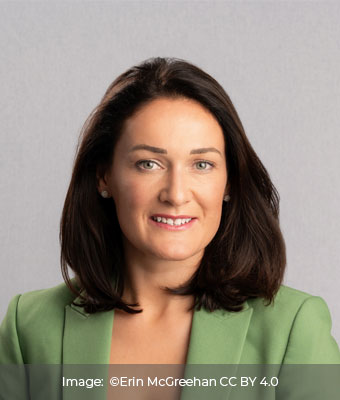
25. Deputy Erin McGreehan asked the Taoiseach when the Cabinet committee on infrastructure will next meet. [34614/25]
26. Deputy Ruairí Ó Murchú asked the Taoiseach when the Cabinet committee on infrastructure will next meet. [35371/25]
27. Deputy Darren O'Rourke asked the Taoiseach when the Cabinet committee on infrastructure will next meet. [37506/25]
I propose to take Questions Nos. 14 to 27, inclusive, together.
The Cabinet committee on infrastructure last met on Monday, 28 April and is due to meet again on Thursday, 17 July. The committee oversees programme for Government commitments in relation to infrastructure delivery and its work reflects the importance this Government is placing on the issue. The delivery of growth enhancing infrastructure is a key enabler for our national competitiveness, fostering regional development, delivering on our housing commitments and meeting social needs. The new infrastructure division is now up and running in the Department of Public Expenditure, Infrastructure, Public Service Reform and Digitalisation. It is examining the means by which infrastructure development can be accelerated.
The division includes experts who have been deployed from EirGrid, ESB Networks, Transport Infrastructure Ireland, Uisce Éireann and An Coimisiún Pleanála. These experts are working with officials in the Department to develop impactful policies that improve the speed and efficiency of critical infrastructure delivery. The new division is currently engaging with experts, consulting with stakeholders and the public and reviewing international best practice. Through this process, it is identifying the most critical barriers to delivery and will develop a set of high impact reform measures to address these barriers.
To oversee the work of the division, an accelerating infrastructure task force has also been established, chaired by the Minister, Deputy Chambers, and is comprised of independent experts along with representatives from commercial, semi-State bodies at the front line of infrastructure development. The Cabinet committee on infrastructure is also overseeing the review process for the national development plan, which will be completed in the coming weeks. The review will set our investment priorities for the next five years, ensuring focus on programmes which will enable economic and social development, with a particular focus on housing, energy, water, grid infrastructure and health digitalisation.
I spoke earlier about the major crisis in our public infrastructure that is clearly delaying progress on the construction of housing and, indeed, delaying progress towards meeting our climate targets. In particular, I speak about difficulties with energy and water infrastructure. I want to focus on water infrastructure because just at the end of May, the Government was warned by Uisce Éireann that house building in Dublin would stall within three years if the greater Dublin drainage project does not progress. Of course, this project was first proposed more than 20 years ago and was granted planning permission in 2019. This was quashed by the High Court. It is now back with An Bórd Pleanála for the past 11 months. This is putting increased pressure on the Ringsend wastewater plant. It is likely to lead to more discharges of untreated water in Dublin Bay. We know there are already real difficulties with water quality, particularly at Sandymount Strand.
What will be done at the highest level to ensure this treatment plant will be delivered on time? The Taoiseach may know I brought forward a Dublin Bay Bill some years ago, seeking a stronger, statutory framework to protect biodiversity and our beautiful bay area. Meanwhile, untreated water is flooding out to sea and Uisce Éireann has warned there are currently two options, given the long delays on the wastewater project. Either it stops new connections, which has a huge, knock on effect on stalling house building in Dublin, or it ignores the discharge licence requirement at Ringsend and risk more frequent spills of unfiltered water into the Irish Sea. This is a terrible prospect. The knock on effect for housing and climate is huge. There is no sense of urgency from Government on it. What is the contingency plan here?
I am encouraged to hear the importance of focusing on our public transport and water infrastructure, which I know the Taoiseach believes in, and the laser focus the Cabinet committee on infrastructure will have over the lifetime of this Government. As I have often mentioned on the floor of this House, public transport is extremely important in my own constituency of Dublin Mid-West where projects like DART+ South West, the Luas Lucan and additional capacity on the red line are all game changers not only to enable development, but also to underpin sustainable communities. It is in that vein of underpinning sustainable communities that the importance of infrastructure is particularly acute, with regard to the availability of a social infrastructure such as playing and sports facilities.
The Taoiseach and I have discussed the importance of ensuring there is adequate sporting facilities for multiple codes and multiple sports a number of times, especially across the greater Dublin area, particularly in constituencies like my own where rapidly growing communities are being established. That is why I would love to hear from the Taoiseach about progress being made with the pitches and playing facilities fund that is in the programme for Government to enable the provision of multi-use pitches across the Dublin area but to also give our volunteer clubs a steady basis and foundation from which to develop. I would also love to hear about the associated social infrastructure, like childcare facilities, schools and so on.
For a year and a half, the people of Dublin West have been guinea pigs for drone infrastructure. The potential for drones to do very important work for humans is definitely there, such as emergency relief, medicine, reaching isolated places due to geography and so on. Such new infrastructure should be with community assent and approval and not inflicted with no recourse by private companies that are in it for a profit and to deliver coffee, burgers and fast food, not medicine or anything that is essential to human beings.
There are incredible levels of noise. There is an erosion of privacy and social cohesion. These are all the issues that should have been explored before this infrastructure was unleashed on the population of Dublin West. Now we see Manna, with Deliveroo, will take part in operating 2 million flights whereas it has been 170,000 heretofore. The Minister, Jack Chambers, was apparently asked to emphasise the uncluttered nature of our airspace to allow these drones in. We see that Enterprise Ireland has given Manna grants, as well as raising money from venture capitalists and Coca-Cola. This should never have happened without community approval. Will our skies become as busy as our roads? Are people ready to give up privacy, community cohesion and peace and quiet in our areas? I do not think so but this is being allowed in the name of inevitability and innovation.
I wish to raise with the Government the rapid development of major solar installations across the east Cork area, part of my constituency. There are large numbers of developments in planning, under discussion or in negotiation that represent very significant land volumes, amounting to thousands of acres. Not to identify any one development but across the region north of Midleton, north of Youghal and Killeagh, developments are being actively pushed through. The concern I want to highlight is that Ireland's policy on this does not seem to take into account the quality of the agricultural ground and its importance to the sustainability of our agrifood network and system and the economic success these have achieved for rural Ireland over many years. Other European countries have rightly regulated this. We do not seem to be regulating so as not to put solar developments on lands deemed to have high quality soil and a high value in terms of agricultural produce, whether those lands pertain to dairy, tillage or other areas of agriculture. Could this be deemed by the Cabinet infrastructure committee to be a matter worthy of discussion given the economic importance of the agrifood sector to the country?
I commend the establishment of the infrastructure committee. It is rightly targeting key areas of society: water infrastructure, energy infrastructure and housing. However, I ask that policy on social infrastructure be considered as part of this. I am referring to schools, Garda stations, crèches, playgrounds, etc. When we are considering the development of towns and villages and increases to the amount of infrastructure, particularly from a housing perspective, social infrastructure should be considered also. The last thing we need is the building of what are essentially shells rather than communities. Building social infrastructure in line with physical infrastructure is crucial in this regard.
The Dublin Bay area has the coastline. In this regard, I commend Deputy Bacik on introducing the Dublin Bay Bill. At present, there are fortnightly tests of water quality with no real-time information. The coastline does not have bacterial sensors. I acknowledge that a lot will be done through legislation but one thing I want to know is whether the Cabinet committee on infrastructure will consider, in addition to the huge investment that is already going into the wastewater treatment plant in the context of the combined sewer outflows, especially at Clontarf and Raheny, and Ringsend and Sandymount on the southside, putting in detention ponds with integrated constructed wetlands, ICWs. These are low cost and have a high outcome when it comes to filtering water and adding biodiversity to an area. I would like an update on that.
I would like to know whether the Taoiseach has a date of publication for the review of the national development plan and whether he knows the period to be covered by the updated plan. As Chair of the Joint Committee on Infrastructure and National Development Plan Delivery, I believe everybody in the House must accept the need for long-term investment in housing, transport, water, electricity and health digitalisation. My view, based on the meetings we have had so far, is that this will require substantial funding in addition to what has been mentioned so far. We should ensure a greater proportion of annual funding for housing and other infrastructure for the coming years. Because of the scale of what is required, we need to do that and not just rely on windfall tax revenue, such as from Apple, or profit on the sale of AIB. We must have a permanent structure for funding for capital investment, but not just based on windfall tax revenue when we get it.
I would like to bring up the issue of Uisce Éireann infrastructure. We have all seen the recent EPA report. In my constituency, Louth, Cavanhill water treatment plant delivers to almost 47,000 people, and the Tallanstown and Greenmount plants together provide to another 6,000 approximately. The quality of these supplies must improve to safeguard public health. The supplies are at risk of disruption because the treatment is not robust and requires remedial action. This is action that has been planned but that has not been delivered.
I ask the Taoiseach to follow up. I am facing an issue in relation to meeting Uisce Éireann at this point. We all go through periods of really good communication, particularly at corporate level, and my connections locally are fine, but I do need this communication to happen. The issue at Cavanhill relates directly to the brown water and the manganese in it. The pilot scheme needs to become an actual working operation.
There is an issue with wastewater in my part of my town. It is impacting on planning and creating the possibility of flooding. This absolutely needs to be addressed.
Beyond these, I must bring up an issue I have constantly brought up here, the supply at Hackballscross, which is at the end of a public water scheme, and the fact that it is constantly kicking out. We need to make sure we have a proper service. If the Taoiseach could follow up and ensure I will have the meeting I want, I will be only too delighted.
I thank all the Deputies for the contributions. Deputy Bacik raised the greater Dublin drainage project. As she said herself, it was quashed by the High Court, for some technical reason or whatever. The Government is not responsible for that. I do not know what the issues were that led to-----
I asked about a contingency plan.
I know but the Deputy asked a very interesting question: what will be done at the highest level? Is she saying we should interfere with An Bord Pleanála? I am not being facetious.
What is the contingency plan?
We want it out of An Bord Pleanála as quickly as we can but, given the experience of the High Court the last time, I presume those concerned do not want to end up there again. We have the commission, An Coimisiún Pleanála, which will over time be given mandatory timelines to deliver on planning positions. It is a very serious issue.
One wonders why we have had serial objections to wastewater treatment plants over the past two decades. Even those who are for the environment oppose water treatment plants even though they are designed to treat raw sewage going into the harbour. This has been a feature of Irish society for quite a while. Then we end up with judicial reviews. The new planning legislation seeks to streamline the practice of judicial reviews but it was opposed by everyone in the House bar those on the Government side in the last Dáil. There is no point in coming in here and asking me what will be done at the highest level. We all agree in here that there has to be separation between An Bord Pleanála’s decision-making process and the Government and Oireachtas. If we started interfering in various decisions, it would be a problem.
I do believe there is an issue. I take the Deputy’s point on being honest in our conversation on infrastructure that is vital nationally. Water is an essential existential resource for the citizens of a city or country. Wastewater treatment is like this. Therefore, these are issues we should keep under review. We have the Constitution and legal frameworks, and people have rights and there are societal rights. In any event, I hope a decision comes through quickly because we do need to get the work under way. The provision of water, to me, has to be the number one priority.
On Deputy Moynihan’s point, public transport is extremely important. There will be significant investment in public transport under the national development plan. I take the point on sustainable communities. I travelled around Lucan and Clondalkin with the Deputy in respect of a very serious issue concerning access to playing facilities and what I would see as poor provision by local authorities in respect of existing land and pitches for clubs, restrictions on them and so on. We do not experience that in other counties. Dublin has particular problems in that regard. I was at a pitch with the Deputy and noted it could not be accessed at all by the club for three months of the winter because it had no floodlights. The councils in Dublin need to get a move on. In Kerry and Cork, there are facilities everywhere. They are not owned by the councils. In many cases around the country, the councils offer long-term leases. In Dublin, a lease is about five years, ten years or 20 years; in Cork, it is 100 years. I am being provocative but if I were a Dublin TD, I would really be kicking someone regarding this issue because there is a paucity. Some clubs have great sports facilities but in others, as in the Deputy’s locality, access is restricted. I never actually recovered from the 60 m sprint I did with the Deputy. Every joint of the body was suffering afterwards as a result.
The Taoiseach won that, though, did he not?
I actually won it but at great cost subsequently, I can say.
In response to Deputy Coppinger, as I indicated earlier there actually is a European directive.
Yes, I know but----
The Irish Aviation Authority has responsibilities here.
Yes.
The Minister, Deputy O'Brien, will publish a policy framework in the summer in respect of drones. I do think there are issues. There is a balance in respect of the growth of technology and Enterprise Ireland supports up-and-coming technology companies. Drones will be used everywhere in different contexts.
For fast food?
I do not agree with it for fast food. I was going to come to that. The Deputy is implying a criticism of Enterprise Ireland for supporting a technology company.
I am.
I do not criticise Enterprise Ireland for supporting a technology company or a drone company. There are applications of drones that would be particularly legitimate. Why someone has to get a drone for a cup of coffee is beyond me. You need to walk around to the local shop and get your coffee, or make the cup of coffee, or green tea or whatever your poison is. I have to agree with the Deputy there. We need balance and perspective but we cannot all control human behaviour. There is an issue in terms of regulation. If it gets to a stage where there are 2 million flights, clearly there is a danger and a health and safety issue if nothing else.
Deputy James O'Connor raised the major solar installations across the country. There are competing issues there. The various climate reports show that Ireland is falling significantly below the targets in terms of the 51% or in terms of the European Union target. One of the most effective routes for us to try to achieve targets is through renewable energy, be it offshore wind, onshore wind or solar. There are competing interests against that. We are not achieving it at the level we should. Equally, agriculture is extremely important and is vital to local communities in its economic impact and so on. There is a third factor, by the way; private individuals' property rights are enshrined in the Constitution. That cannot be ignored either. There has to be a planning framework governing the use of land. There was a recent study done on land use in the context of climate change, which is a very significant issue. That will cause its own controversy when it is published towards the end of the summer. It will endeavour to say that some lands can be used for this and some can be used for that. It is not simple. However, at the moment we have an opportunity to get a regulatory framework in place. While it is growing, solar is not at any huge level yet. Rooftop solar is vital. That should be done and facilitated. Rooftop is improving dramatically. For example, at PepsiCo in Carrigaline, 25% of its plant is now done by its rooftop solar. I do get the point about whether, if it is very rich agricultural land, it should remain to be used for agricultural purposes. I envisage that in the future, in less productive areas, we need to incentivise more alternative revenue streams for farmers. We definitely need to do that into the future.
We are due to conclude at 4.15 p.m.
I apologise. To Deputy Ó Cearúil, I absolutely agree on the need for social infrastructure to be considered alongside expansion, schools, creches and other social infrastructure.
I agree with Deputy Heneghan on the detention ponds and all that. There are mechanisms that are low cost that can be used and should be deployed. On Dublin Bay more generally, we want to clean up our waterways and estuaries significantly.
To Deputy Fleming, we have a target date of the end of July for publication of the national development plan. The Apple windfall, as it is called, will be allocated in the context of the NDP. The big priorities are housing, water, the grid, health digitalisation and public transport and roads.
Deputy Ó Murchú referred to the EPA report. I do not have the exact specifics of the ones he referenced. I will talk to the Minister, Deputy James Browne, who is responsible for the wastewater treatment plants and so on.
And Uisce Éireann.
I was intrigued by the Deputy's commentary that he has very good local contacts with Uisce Éireann and that occasionally he has very good engagement with the corporate level but suddenly it seems to have fallen into a lull at the moment.
Exactly, but I am sure the Taoiseach would step in for us.
You want us to step in and resuscitate----
I would be delighted.
----oil the wheels of your engagement process with Uisce Éireann. I will take an opportunity to refer them to your comments.
I will be slightly in the Taoiseach's debt.
I will remember that.
Be careful what you wish for.