Naturalisation Applications
6. Deputy Noel McCarthy asked the Minister for Justice, Home Affairs and Migration the number of naturalisation applications received in each year from 2020 to 2024, inclusive; the current average processing times for naturalisation applications; the measures being taken by his Department to further reduce application processing times; and if he will make a statement on the matter. [36655/25]
Last week, I was delighted to attend the citizenship ceremonies, along with the Minister, Deputy O'Callaghan, and the Minister of State, Deputy Collins. We welcomed more than 7,500 new Irish citizens. My Department is committed to providing the best possible service to the customers of our citizenship division. We have taken significant steps to speed up the process for applicants. The steps have included the introduction of an online digital application and e-vetting. I am pleased to inform the Deputy that these changes are dramatically reducing the times. The median processing time for a decision on application in 2024 was eight months. This is a significant improvement in processing times, which were 15 months in 2023, 19 months in 2022 and 24 months in 2021. There has been a significant step change in the process.
The number of naturalisation applications received by the Department in 2020 was 10,807. By 2023, that had increased to 22,690 and in 2024, we saw 27,032 applications. Despite this substantial increase in applications being received in recent years, the fact that our processing times have significantly reduced is a huge credit to the work of staff in the Department's citizenship division. I thank them for that. The division has gone from processing approximately 12,000 applications per year to processing more than 20,000 per year. I expect that going forward the majority of applicants will continue to receive a decision within one year. It is important to note, however, that no two naturalisation applications are the same. Some take longer to process than others.
I thank the Minister of State for his response. It is clear that the volume of applications has greatly increased over the last five years while processing times continue to fall year on year. This is very encouraging. The work of the Minister and his Department must be acknowledged in this regard. I appreciate that the Minister of State may not have the figures at hand. Does he have an indication of the likely number of applications in 2025? Is the number received in the first half of this year higher than the number received in 2024? If application numbers continue to rise, as the figures suggest, will the Minister give any consideration to further upgrading the citizenship application portal or appointing additional staff in the citizenship division?
Based on the trend in recent years, we probably will see either sustained or small increases in the number of applications. We are always looking at how the system works to try to make it work better and ensure people have a speedy response to their request. If we are looking at increased numbers, we will look at how we are handling and processing applications.
It is important to mention again that we have already made substantial investment into the system. We have significantly reduced the average time an application takes, while at the same time handling a significant increase in the numbers. I make this point again because for some individuals there is frustration. I am sure they have raised with the Deputy, as some have raised with me, why individual applications can take longer than the times I am giving. That is sometimes beyond our control and may involve seeking additional information on a particular application. However, every effort is made with every application to make sure the process is as fast and smooth as possible for the individual.
We recently saw over 7,500 people conferred with Irish citizenship at ceremonies in Killarney. While this is a joyous step on their journey of becoming an Irish citizen, we have seen instances where certificates of naturalisation have taken considerable time to arrive following the ceremony. Unfortunately, this can cause undue problems for the applicants when applying for a passport or seeking to pay third level fees ahead of an upcoming academic year. Can the Minister of State advise on the current waiting time to receive a certificate of naturalisation after attending a naturalisation ceremony and the actions being taken by the Department to ensure that these times are kept to a minimum?
I acknowledge there is a gap between the ceremony and the receipt of certificate. We are working on trying to tighten up and make sure the process involves as short a wait as possible.
To deal with the issues the Deputy quite rightly raises as regards the impact this can have on some individuals, the primary allocation of resources was into shortening the time for people to receive their citizenship. We will continuously look at this to ensure that the processing time for people to receive a certificate from the date on which they have their ceremony to the date on which they get their certificate is monitored and that people do not experience the type of issues the Deputy has mentioned.
Question No. 7 taken with Written Answers.
Crime Prevention

8. Deputy Colm Burke asked the Minister for Justice, Home Affairs and Migration the action taken by his Department to monitor the progress of young people who leave the youth diversion programme after their supervision period ends; and if he will make a statement on the matter. [36372/25]
Our Youth Justice Strategy 2021-2027 is a whole-of-government plan that takes a strategic approach to all issues connected to children and young people at risk of coming into contact with the criminal justice system. The key principles of the strategy are linked to the standards endorsed by the international community to uphold children's rights and include early intervention and preventative work, family support, diversion from crime, court processes and facilities, supervision of offenders, detention and reintegration, and support post release.
Youth diversion projects are community-based, multi-agency youth crime prevention initiatives which divert young people who have been, or are at risk of becoming, involved in antisocial and-or criminal behaviour. When a young person's time with a youth diversion project is coming to an end, whether they age out naturally at 18 or are no longer in need of specific youth diversion project supports, a plan is put in place to assist the young person to progress from the project. This process should be commenced well in advance of a person's planned disengagement. For all participants exiting a project, the youth diversion projects should identify other services that could engage the young person; identify specific agency support that may be needed by the young person; make contact with that service provider on behalf of the young person; prepare the young person for leaving the project; and follow up periodically on the progression of the young person after leaving the project and record any relevant details sent annually to the Department for reporting purposes.
The diversion programme has proved to be very successful in diverting young people under 18 away from crime by offering guidance and support to them and their families. It is important that we consider the supports and interventions needed for young people as they move into adulthood because personal circumstances do not just change overnight when someone turns 18.
I come from an area where I was involved in a youth project where young people would have dropped out of school. That is where the problems start arising. We worked very closely with the Garda where we had the young people on a training programme. The people we took in were over 15. It is important to note that in a lot of these cases there is no family support. This is what I am saying to the Minister of State about the youth diversion programme. When someone finishes with the programme, that family support may still not be there. I wonder about the checks and balances that are there and about review of the current scheme. For instance, we did a review of the operation. We had 50 young people in training at any one time. We did a review and looked at the people who were with us five years earlier. This was at a time when unemployment was high, but we found that 70% of them had full-time employment whereas the family history would not have been great as regards employment. It just goes to show that where proper supports are put in place it does work. Has there been any review of the programme over recent years?
I am grateful for the Deputy's insight and his sharing his experiences. If he has any suggestions, we will absolutely take them on board because we are always open to taking on board new and positive suggestions as regards updating or amending our strategy in this regard. I commented on our youth diversion projects but I want to comment on our plans to extend youth diversion programmes to people once they pass the age of 18. Our strategy includes actions to develop diversion-based responses for young adults aged 18 to 24. It should be noted that we are not seeking to replicate the statutory Garda youth diversion programme for the 18-to-24-year-old cohort because different considerations apply in the case of young adults, as the Deputy will be aware. Research tells us that young adults, not unlike adolescents, can be particularly vulnerable to peer pressure and difficult personal, social or economic factors, including substance misuse and the impact of childhood trauma.
I thank the Minister of State for his reply. The work being done by all those people involved in the youth diversion programme is fantastic. They work very hard, also liaising with the Garda. That is what I have found in my experience of working with the local gardaí as regards trying to help people who have dropped out of the education system. One of the problems you find with the youth diversion programme is that one of the reasons people end up in difficulty is as a result of falling out of the education system at a very early stage. Then we try to get them back into any kind of training. For instance, one of the big problems we found with people was difficulty with even literacy and numeracy and making sure there was training available for them. They are afraid of applying for jobs because they have a literacy problem. That is one of the problems. They are afraid of applying for any kind of apprenticeship or any kind of job because those skills are required. Will the Minister of State look at that issue as well?
I thank the Deputy for that. He has a particular interest as regards Cork. We have seen an increase in funding since 2022 and, specifically, an overall increase in funding for the Cork youth diversion projects in the order of €1.8 million. I have here a statement in tabular format detailing the increase in funding which I will have our officials forward on to the Deputy afterwards. He is right, and that increase in funding should and does alleviate the types of issues he has raised in terms of numeracy and literacy.
9. Deputy Erin McGreehan asked the Minister for Justice, Home Affairs and Migration the measures his Department is taking to increase the staffing levels in the Criminal Assets Bureau to facilitate the increased detection of the proceeds of crime due to the reduction of the threshold from €13,000 to €5,000. [36379/25]
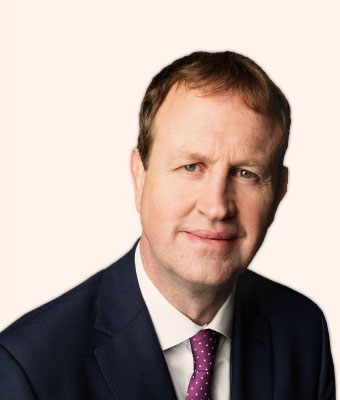
I thank Deputy McGreehan for this timely question. The reason I say it is timely is that, as she is aware, last week marked the anniversary of the murder of Veronica Guerin, which, as the Cathaoirleach Gníomhach, Deputy Maxwell, will be aware as well, had a transformative effect on the policing of Irish criminals. One of the consequences of her murder was that laws were changed whereby we could go after criminals in the civil courts. The proceeds of crime legislation and the Criminal Assets Bureau legislation were direct consequences of that.
It is also instructive to note that when I am at European meetings - I know this is the same with the Ministers of State, Deputies Brophy and Collins - many of our colleagues from other European countries are very interested to hear that Ireland has a system in place to seize the assets of criminals and that it is a system based not on the criminal law but on the civil law and the civil standard of proof. Since that legislation was introduced nearly 30 years ago, it has been cutting-edge legislation that is now being followed by the rest of Europe and, I am sure, further afield.
It is also a timely question from Deputy McGreehan because yesterday I received from the Office of the Parliamentary Counsel a stamped copy of the proceeds of crime Bill that I intend to introduce as soon as possible. The key reform under this legislation is the reduction of the waiting period for asset disposal from seven years to two, significantly accelerating access to seized assets. There is a whole series of other matters in the Bill which I will return to at a future date in the House.
As regards Deputy McGreehan's question about the budget and resourcing of CAB, I am pleased to tell her that the CAB budget for 2025 is €12.75 million, which is an increase of 13% since 2023. Between 2018 and 2024, authorised staff resources in CAB increased steadily from 90 to 101. There are also further details of CAB plans which are available in its strategic plan, which is published on the Department website. It is important to know that we will continue to resource CAB as it is an essential tool in our fight against crime.
I thank the Minister. After the tragic and desperate loss of a lady of the calibre of Veronica Guerin, we have done a lot of good in her memory and name. CAB has been a hugely successful organisation and, as the Minister said, has been mirrored and copied in other countries.
We must ensure any resource that CAB needs, it gets because it is an incredibly effective organisation. We see the reality of crime in County Louth and all across the Border region. We see fuel smuggling and drug trafficking across the Border. Locally, and particularly in north Louth - I am sure it is mirrored across the Border counties - it often feels like we are seeing criminals operate with near impunity. As the Minister knows, the intent behind lowering the threshold for CAB from €13,000 to €5,000 was to root out all crime and ensure no ill-gotten gain was too small to pursue. We owe that to those who are law-abiding.
I have had the honour of going to Walter Scott House to meet Superintendent Gubbins, who heads up CAB. I am very impressed by the work it is doing. Although Walter Scott House is a fine new building, I am aware that the work of CAB is expanding and I am conscious that the expansion of its numbers will require further facilities. My Department has submitted a proposal as part of the review of the national development plan for funding for CAB accommodation. CAB is currently liaising with the OPW to find new accommodation. As any Minister will tell you, negotiations in respect of the national development plan are ongoing. I cannot guarantee it will happen - it is simply part of a proposal submitted - but it is something I am anxious to see occur. I want Deputy McGreehan to know that the Government will continue to support the growth and expansion of CAB to recover assets for the State. It is extremely important for criminals to know that if they stay in Ireland, their assets will be seized if it is not the case that they will be convicted and brought before the courts.
It is good to hear that the Minister has been working on the commitment in the programme for Government. He mentioned the Bill that will come before the House. I reiterate it is important that we see a Border CAB unit looking at the Border region. It is not fair on law-abiding citizens and retailers that we have smuggling and illegal fuel coming across the Border. These are criminals whose criminal activity comes under the guise of smuggling. I want to ensure they are held to account.
I agree with Deputy McGreehan. One of the reasons many serious criminals from Ireland have left and gone further afield is the threat they were exposed to from CAB. That is a positive development.
I want the Deputy to know there is no part of the country that is free from CAB's supervision or surveillance. In all communities around the country, CAB has initiated proceedings against individuals where it is believed they have assets which are the proceeds of crime and I want that to continue. I am sure it is happening in the Border region as well as other regions. It is not simply an organisation that concentrates its attention on Dublin or Cork or the main cities. It is absolutely national in its reach and international when it comes to its co-operation with other agencies.
Again, I agree with Deputy McGreehan. I will continue to resource CAB, which wants to extend its powers. This will happen through legislation I will introduce shortly into the House.
Legal Aid
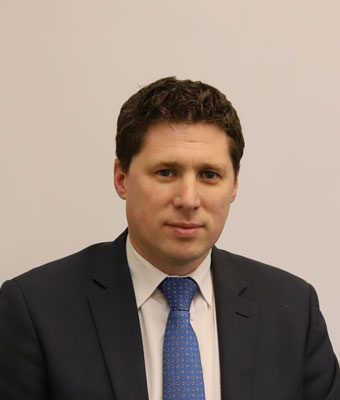
10. Deputy Matt Carthy asked the Minister for Justice, Home Affairs and Migration for an outline of the findings of the report of the civil legal aid review group, which has indicated that he has received the report; and if he will make a statement on the matter. [36599/25]
The Minister will know there is significant concern in the legal profession and elsewhere on the time it has taken for the civil legal aid review group to complete its work. I understand he has now received the report from that group. Can the Minister give us an outline of the findings of the report which he previously cited in response to me and could he give an indication of when that report will be published?
I thank Deputy Carthy for that. As he stated, the civil legal aid review group completed its reports recently. In April, I received a majority report from the group and a minority report from former Chief Justice Frank Clarke. I had the opportunity to read both and am discussing within my Department how I will progress them.
I am satisfied with the need to increase the thresholds available to those seeking access to the civil legal aid scheme. Sometimes people confuse more money for the civil legal aid scheme as being more money for lawyers. It is not about lawyers; it is about ensuring citizens have access to the means by which they can vindicate their constitutional or statutory rights. Law is extremely complex. We keep producing vast amounts of it in this House and we also have European law on top of that. In order to navigate the law, the reality is we need legal advice and assistance.
I propose in the short term to put the reports out for public consultation. While that is happening, I want the Deputy to know I will ask my Department to work on how we can give effect to some of the recommendations contained in the reports. There will be a consequence to increasing thresholds and making civil legal aid more accessible to people. This is something I want to achieve but the consequence is that more work will have to be done. I need to ensure there are resources on the ground for private practitioners and solicitors working within the legal aid board offices around the country to facilitate them in providing for this greater level of work.
I thank the former Chief Justice for the report and I hope to be in a position to publish both reports shortly.
As the Minister may recall, my interest in this matter comes from several different angles but particularly as a result of work I have done with women, predominantly, who have sought protection or barring orders and have tried to secure legal representation under the civil legal aid entitlements but cannot get legal representation. The Minister told me this would be considered in the context of this review. While increasing access to legal aid is absolutely laudable at the centre of this particular crisis, I am told by both women and legal practitioners that the problem is the legal aid fees paid to solicitors on the District Court panel of family law solicitors. That is what is deterring solicitors from taking on cases. Part of the problem for this particular type of court is that there are many adjournments, and this can make it unsustainable.
Thank you, Deputy.
What the Minister has described to me sounds like many further delays. For these women in particular, I want to know if this is going to be addressed.
Yes, it will be addressed. When a very detailed report comes in - or indeed two reports; I have no objection to receiving majority and minority reports - it must be carefully considered. There is no point in me announcing I will implement the report and then people asking when this will be done and how that implementation will take place.
As the Deputy will be aware, civil legal aid is provided by the legal aid board, primarily through a network of law centres and solicitors employed by the board. There are times when the board will engage private solicitors to supplement the services provided by board solicitors in certain areas of law on a case-by-case basis. I am aware of issues arising in respect of family law and predominantly women who must go before the courts because they are in a family law predicament. We need to ensure they have access to appropriate legal advice in order to facilitate them in vindicating their rights under the Constitution and under statute. It is progressing, the reports are completed and my Department is working on them. I hope to put in place a proposal in the near future for the Government.
I understand there are processes involved but this is three years in the making and now the Minister is talking about consultation processes. He must put himself in the shoes of those who want to secure a barring order or a civil protection order but currently cannot get legal representation. If they were listening to two politicians talk about process, the Minister can imagine the frustration that would be there.
Can the Minister give a timeframe for when this particular issue will be resolved? Further, to put on the record, does the Minister also accept there is an issue here for the number of solicitors willing to take on this work? One way or another, it needs to be addressed. Does the Minister accept there are particular geographical issues where this issue is especially acute?
Does he have any short-term measures that he can put in place to resolve what is a crisis for many people?
I accept there is an issue in terms of solicitors being available to do this very important work. Part of the problem is that because the Irish economy is doing so well, it is attractive for solicitors to get work elsewhere, other than in the areas the Deputy is discussing here or other areas such as criminal legal aid under the criminal legal aid scheme. We need to ensure the fees that are payable are heightened to ensure we get solicitors who are prepared to do this valuable work. We need to recognise, and I welcome that the Deputy has acknowledged this, that there is a difference between the story that we are just getting more fees for lawyers and looking at the purpose of it. The purpose of paying more fees to lawyers is to ensure that the women the Deputy talks about, the individuals who want to access and vindicate their rights before the courts, are able to do that. They cannot do that unless they get access to legal advice. I accept that there is an issue and that the fees will have to increase to try to attract more solicitors to do this private work.
Public Transport
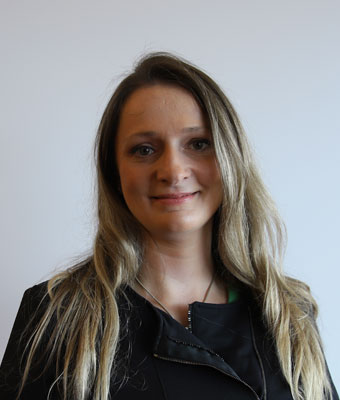
11. Deputy Emer Currie asked the Minister for Justice, Home Affairs and Migration to provide an update on his Department's engagement with the Department of Transport regarding the proposed transport security force; and if he will make a statement on the matter. [36531/25]
The programme for Government commits to creating a transport security force. While this is a priority, responsibility for its establishment lies with the Department of Transport and the National Transport Authority. On 18 June, the Minister, Deputy O'Callaghan, met with the Minister for Transport to discuss the proposed transport security force. The Department of Transport is developing the necessary legislative proposals but the model remains under consideration and the process is at an early stage. New legislation is required, which takes time to develop and implement.
I assure the Deputy that ensuring the safety of public transport passengers and staff remains a key priority while this work is ongoing. Antisocial behaviour affects many areas, including public transport. Responsibility for safety primarily rests with public transport companies, working closely with An Garda Síochána where appropriate. An Garda Síochána has tools to respond to antisocial behaviour on public transport. Garda management works closely with operators such as the NTA, Irish Rail, including DART and InterCity, and Transdev Ireland, which operates the Luas, thereby maintaining a high-visibility and co-ordinated policing presence. An Garda Síochána is actively working to address issues on public transport, including through dedicated operations such as Operation Twin Tracks and Operation Saul. A range of regional and local operations have been put in place by gardaí to prevent and detect criminal activity on public transport.
The aim of Operation Saul, for example, is to provide a safe environment for commuters utilising all public transport services in the Dublin metropolitan region. This operation can reassure citizens, visitors and the business community that Dublin is a safe place in which to visit, socialise and conduct business. In 2024, 683 arrests and 1,339 charges or summonses were effected under this operation.
I appreciate the recent steps to improve transport security, including the increased budget of over €11 million for a security presence through the Department of Transport, Operation Saul and the new public transport hubs. However, we have to keep moving on the commitment to establish a transport security force. In 2024 alone, over 4,200 complaints were received reporting incidents of drug use, violence and sexual assault. Reports of antisocial behaviour on Dublin Bus have almost doubled since the pandemic and there have been incidents on the Maynooth line where schoolchildren have been targeted.
The Department of Justice, Home Affairs and Migration has recently engaged with the Department of Transport, which is positive. We need to keep those meetings going until there is clarity on the legislative framework, the powers and remit given to the transport police and the interaction of the transport security force with An Garda Síochána.
The Deputy is right that this is at the early stages and is in development. It is a priority, as I have outlined. The new transport force will have to interact with An Garda Síochána and that will be an operational issue for both organisations. It is primarily a matter for the parties involved to work out how they will operate the new system once the new transport security force is put in place. The aim of all concerned is to improve the security of the public who are using public transport. I know that An Garda Síochána will continue to play its part in that regard.
I want to raise the issue of Garda numbers in Dublin West. Some 120 new recruits were attested overall in June and 74 were allocated to Dublin. According to local gardaí in my area, only four came to the Garda's K district. Of 150 new recruits in March, 98 were sent to the city centre and four to the K district. The K district consists of Blanchardstown, Cabra and Finglas and is one of the busiest districts in the country. Last year, in one 24-hour period, it had more calls than all of the other Dublin districts combined. Gardaí in the K district have to deal with antisocial behaviour, criminal damage and assaults. I am told it has the highest number of domestic incidents in the country and it has gangland crime, as well as Blanchardstown town centre and Áras an Uachtaráin to manage. There are only four inspectors across three stations for a population of approximately 200,000 people. It is not sustainable. We have brilliant gardaí but we do not have enough of them. What needs to happen for the K district to get the same level of attention and allocation that is currently being given to Dublin city centre?
We discussed at length earlier the whole issue of Garda recruitment. As the Deputy knows, it is a significant priority in the programme for Government to increase Garda recruitment by about 5,000 over the lifetime of this Government. We have made a very good and resounding start. Last month, in June, another 170 trainees entered Templemore, following on from 201 in March, the largest intake since 2019. Some 120 new gardaí were attested in June and 74 of those were assigned to the Dublin metropolitan region, which is the vast majority of those who were attested. How the Commissioner allocates gardaí who are exiting Templemore following their attestation is an operational matter for the Garda Commissioner and something we do not get involved in. The allocation of recruits from Templemore regularly gets raised with me regarding my own area of Limerick. It is challenging but it is something we are working to increase.
Probation and Welfare Service
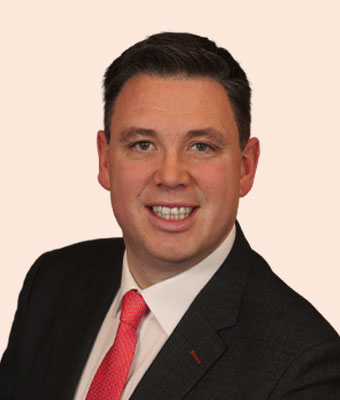
12. Deputy Paul McAuliffe asked the Minister for Justice, Home Affairs and Migration further to a Topical Issue raised on 19 October 2023, if he will outline the current total number of allegations of child sexual abuse involving any member of the Probation Service that he or his Department have been made aware of; if he has considered putting in place a non-adversarial redress scheme, if appropriate; and if he will make a statement on the matter. [36677/25]
I thank Deputy McAuliffe for raising this question. I acknowledge his long-standing interest in this issue and his persistent raising of the matter, which is of significant importance.
I have confirmed with my officials that there have been two historic allegations of child sexual abuse made in relation to staff of the Probation Service. Both relate to alleged incidents in the 1970s by a former staff member who is now deceased. When the first allegation came to the attention of the Probation Service in 2000, An Garda Síochána and relevant services were notified and a criminal investigation was initiated. In recent years, the Probation Service became aware of a second allegation against the same former staff member, who by that time was deceased.
The matter is currently the subject of a legal claim which is being managed by the State Claims Agency on behalf of my Department.
Since the most recent allegation referred to above, the victims' unit of the Probation Service has put out several communications to encourage any relevant victims to contact it. I have been advised that no further victims have come forward. The Probation Service has confirmed that it has no current allegations on hand.
Like Deputy McAuliffe, I would encourage anyone who has been a victim of any kind of sexual assault to reach out for help and support and to report the matter to An Garda Síochána. There is also a range of victim support services available. These are listed on the victims' charter website.
Deputy McAuliffe raised the issue of whether or not the Department considered the introduction of a redress scheme. As I said, there is a case currently being dealt with by the State Claims Agency, my Department is aware of one other case and no other victims have come forward. In all the circumstances, it would seem more appropriate to allow that case that is currently in the system to be concluded rather than starting a new process at this stage.
I appreciate the Minister outlining in detail the previous work that has been done on this case. As he said, there is now confirmation by the Department of two reports of allegations of child sexual abuse. In the Minister's words, they relate to a "deceased" member of the Probation Service. Of course, this matter has also been the topic of much media coverage. The "RTÉ Investigates" programme carried out an investigation, entitled "Scouts Dishonour", in which it referred to the then chief scout, the late Joe Lawlor, and allegations in regard to him and his service in the Probation Service. Joe Duffy, on RTÉ, has also discussed this case in much detail.
I appreciate that these cases are incredibly sensitive. Unfortunately, for victims of abuse, there is a stigma in coming forward, but if you were also the subject of the Probation Service, there is almost a double stigma in coming forward because you have to reveal that as well.
I thank the Deputy. He put that very sensitively and appropriately. I am aware of the allegations made against Scouting Ireland. I recall the "RTÉ Investigates" programme and, indeed, I very much recall the very powerful work done by Joe Duffy on his programme in interviewing people who had been subject of abuse while they were in the scouts. On the Probation Service, there was a slight overlap, certainly in the case of one individual concerned, between the Probation Service and the scouts. Of course, the vast majority of work done by the Probation Service was done in respect of people who were not children but, notwithstanding that, it is an issue that has to be closely watched.
On the basis of the information we have at present, however, in circumstances where there are only two allegations, it would be difficult for me to recommend or propose some form of a redress scheme when the numbers are so limited. I note what the Deputy says, that there may be other people out there who are hesitant about coming forward, but I would be interested to hear his proposals as to how we could encourage them to do so.
Perhaps a redress scheme would be overly complex and result in people receiving justice delayed. Equally, we should not be placing the burden on victims of having to sue the State. That is not necessarily the best way forward. We have seen in other cases where people's only option is to sue the State and often justice is incredibly delayed. Perhaps there is a mechanism here to try to mediate this and to try to come forward with a non-adversarial solution.
The criminal justice process is not an option because the person is deceased but there are also questions about what the State knew about this gentleman's service. He worked for the Probation Service for decades. It is incredibly important that whatever information or files are available to the Department of justice are reviewed and we air what was known. As we have seen with other cases of sexual abuse, it is important there is transparency about what happens.
I will make inquiries in respect of the case that is ongoing at present. If it is the case that there is clearly liability on the part of the State, I would like to see that case resolved in a mediated fashion. I will speak to the Attorney General in respect of that case.
Obviously, the Deputy is correct that it puts many burdens on people to sue the State, but a couple of years ago the Attorney General published a protocol for how the State should deal with persons who were suing it. If it is the case that there is liability on the part of the State, I would like to see that liability acknowledged by the State.
However, sometimes the difficulty in resolving a court case can be in respect of the quantum. I am not saying that is so in this particular case but if there is an issue in respect of quantum, that is when, as the Deputy suggested, a mediator could be put in place to try to see if a mediated settlement could be facilitated.
Local Community Safety Partnerships
13. Deputy Emer Currie asked the Minister for Justice, Home Affairs and Migration for an update on the roll-out of local community safety partnerships in Dublin West; and if he will make a statement on the matter. [36530/25]
I thank the Minister for bringing the regulations into effect for the local community safety partnerships so they can get up and running. This new approach will involve residents, social workers, youth workers, businesses, education representatives as well as An Garda Síochána and State agencies. The initiative is important to us in Fine Gael and I commend the Minister, Deputy McEntee, on developing this vision. Can the Minister provide an update on the roll-out of local community safety partnerships in Dublin West?
I thank Deputy Currie. I am pleased to be able to answer the Deputy's question this time as opposed to the previous time.
The Minister was very keen.
If I am answering the wrong question, my very vigilant Ministers of State will tell me I am doing something wrong. The Deputy is correct in stating that last week, I signed the regulations giving effect to the local community safety partnerships, LCSPs. They came into force on Monday of this week.
As the Deputy will be aware, much work has already been done in respect of local community safety partnerships, but now we have the regulations in place and people will be aware that we have to put in place these partnerships as they are an essential part in ensuring that the public in those particular areas are served.
The regulations outline clearly how the safety partnerships will operate in practice and will ensure that each partnership operates with transparency, focus and strong local engagement. The Deputy will be aware, from the report of the Commission on the Future of Policing in Ireland, that community safety requires multi-agency co-operation. That is why the legislation specifically requires that we have not only gardaí and elected representatives from the local authorities on it, but also people from the HSE or Tusla, in order to recognise that many of the issues that arise do not only concern policing, but also relate to community safety and community partnership.
Deputy Currie raised the issue in respect of her area in terms of her constituency of Dublin West. There is an issue there because administrative boundaries require that certain areas fall into neighbouring LCSPs but the overarching aim is to maintain a co-ordinated place-based response to community safety needs.
I want the Deputy to be aware, in terms of her own constituency and, indeed, all other constituencies, that within my Department there is the National Office for Community Safety. It will have a responsibility in terms of providing guidance to local community safety partnerships as to how they should deal with issues in the area.
Community partnerships have the potential to truly impact community safety because intervention and prevention are not only the remit of the Garda. We have to bring local stakeholders to the table to tackle local problems with local solutions.
I am wondering how the Minister will ensure residents know about this initiative. Will there be a local campaign or a local awareness drive? I believe €5.5 million has been provided to set the partnerships up. How does the Minister envisage these funds being spent? Will there be a community safety partnership office, for instance, situated in the community for people to access?
There is also the community safety fund putting proceeds from crime back into communities, but it is only €4 million. The local partnerships, if they are working, will have strategies and recommendations and those solutions need to be funded and will not always fit neatly under local authority or State agency budget lines. I hope the Minister will take an active role in ensuring the partnerships are working from the ground up as well as from the top down.
I will be taking an active role. It is an important time and occasion, now that these regulations have been signed and are being rolled out. The community partnerships will not be on their own trying to formulate their own guidance because, as I said, there will be a National Office for Community Safety, which is a statutory office that will be based within my Department. That office will be providing guidance for the partnerships with overlapping areas. Such collaboration can include exploring opportunities for joint initiatives, shared resources and joint meetings as well.
As laid out in the regulations, each local community partnership may have up to 30 members. Mandatory members will include representatives from the local authority, An Garda Síochána, the Health Service Executive and the Child and Family Agency. Each local community safety partnership will be supported by two full-time permanent staff within the local authority. Each partnership will be led by a voluntary chair and vice chairperson who will be elected from among the membership.
It is my intent to start meeting these partnerships. It is very important that all of us, and me in particular, start selling them and telling people about the benefits that come from them.
I thank the Minister for the update. I will circle back to the matter of Garda numbers because community safety also depends on that. There should not be inconsistency across the districts in the Dublin metropolitan region. The K district might be losing out to the city centre at the moment but, historically, there have been inconsistencies with other Dublin districts as well. There is potentially one Garda for every 531 people in the K versus one Garda for every 397 people in a neighbouring district that has significantly lower crime statistics. Gardaí in the K are hungry, driven and dedicated, which is very evident when one works with them. The leadership is rolling out very positive and proactive initiatives. It has a very high proportion of gardaí who are still within their probation period. That is how new the force is in the district. Will the Minister examine the inconsistency and encourage evidence-based policy across population, crime statistics and geography? We need to receive the same attention as the city centre.
I agree with the Deputy regarding the K district in Blanchardstown. In fact, a couple of weeks ago, I went to Blanchardstown Garda station and had the pleasure of meeting the gardaí there. They do excellent work. It is a very demanding and busy station.
The Deputy mentioned that I needed to get involved in directing the Garda Commissioner as to where Garda numbers should go. I will not do that. If I start doing that, it will then become a very politicised system whereby the Garda Commissioner simply responds to where the Minister wants gardaí to go. Where will that lead us in the future, if the Minister or Ministers of State ask for lots of gardaí to be put into their constituencies or to have more? I will not do that. I will leave An Garda Síochána, the Commissioner and the senior staff to make a determined calculation as to where they wish new Garda recruits to go. They are the best-positioned people to determine it and they assess all the factors. Just because a Garda recruit does not come to a station direct from Templemore does not mean that stations such as Blanchardstown do not get people transferred there.
Fishing Industry
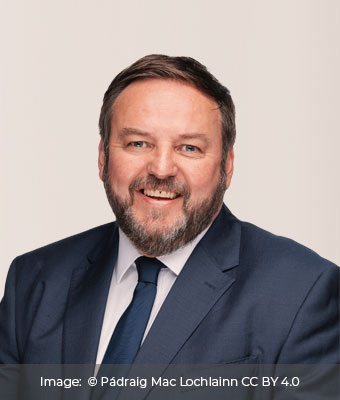
80. Deputy Pádraig Mac Lochlainn asked the Minister for Agriculture, Food and the Marine if he is aware that only 52 persons have availed of fish assist across the State as of 31 May 2025; and if the Minister of State with responsibility for the marine and his Department officials will now engage with the representative POs for inshore and islands fishermen to discuss a financial support or subsidy scheme for the sector. [36266/25]
I ask the Minister for Agriculture, Food and the Marine if he is aware that only 52 persons have availed of fish assist across the State as of 31 May 2025; and if the Minister of State with responsibility for the marine and his Department officials will now engage with the representative producer organisations, POs, for inshore and islands fishermen to discuss a financial support or subsidy scheme for the sector.
I thank the Deputy for the question. As he knows, the operation of the fish assist scheme is a matter for the Department of Social Protection. The primary source of funding for the Irish commercial seafood sector, including inshore and island fishermen and fisherwomen, is Ireland's seafood development programme, which is co-funded by the Irish Government and the European Commission under the European Maritime, Fisheries and Aquaculture Fund, EMFAF, 2021-2027. The measures which are eligible for aid are set out in the regulation governing the implementation of the EMFAF regulation, which is aligned with the objectives of the Common Fisheries Policy. There is no provision for direct income supports in relation to primary producers in the seafood sector under the Common Fisheries Policy. The EMFAF regulation does not make provision for the use of EMFAF funds to provide income supports to primary producers in the seafood sector.
Equally, there is no provision in the relevant EU regulations governing state aid that would allow any Exchequer-funded subsidy scheme for the seafood sector or for fishermen, in particular. I note the Deputy's question revolves principally around the ability of fishermen and fisherwomen to engage with the Department of Social Protection on that. I assure the Deputy that whatever we can do on engaging with that sector, we are happy to do so. By the Deputy raising the question today, it has the capacity to highlight to those people who work in this sector that there is aid and support there, as there is with farm assist, which is again administered through the Department of Social Protection.
I am happy to assist in disseminating that information. It may be something that can be done through press releases by all of us to remind those who find themselves in difficult circumstances that the supports of the Department of Social Protection are there to assist all concerned.
I thank the Minister. The figures are glaring. There are 13,000 active fishermen in the State and the idea that only 52 of them are in need of support is absurd. There is a disconnect. No one can seriously claim the sector is not under pressure. My understanding and sense of it from the figures, which back this up, is the fish assist scheme is too restrictive and limited. It is not that fishermen and fisherwomen are not aware of it - they know about it - but it is too limited and restrictive and it is not fit for purpose. That is why they are not applying but the need is there. The need is in every coastal community and we see it.
Inshore and island fishing communities have been systemically starved of opportunity, denied a fair share of the fish in their own waters, and Government policy has failed them again and again but they are not asking for handouts. These are proud people. They are asking for a viable future. They are asking for proper financial support or a subsidy scheme of some sort that reflects the reality of that situation. The Minister of State and I know it is needed. Will the Minister of State engage with the Minister for Social Protection on foot of this question and debate and collectively take action?
As I outlined in my initial response to the Deputy, it is not possible to apportion any of the funding available to our Department through EMFAF to the income support he talks about. As he knows, and as is the case with farm assist, income support comes through the Department of Social Protection. While that does not fall within my responsibility, I am happy to have a conversation with the Minister, Deputy Calleary, on that. I am also conscious that the supports that are generally available through the Department of Social Protection are funds for individuals in really difficult circumstances. They are not seen as income support. They are really a means to allow individuals to get through a really difficult time, whether it be fluctuations of income or whatever. They are means tested and not really designed to be income supports. I am happy to communicate with the Minister but I do not want to give the Deputy false hope either.
The Deputy talks about the disparity between the numbers of those who are engaged in the sector and those who are drawing down those income supports. I am conscious that no more than in farming, there are some part-time fishermen and fisherwomen who operate in that sector and have income from other sources so their combined income would certainly put them outside the threshold of means testing. It is important to put that on the record as well.
I thank the Minister. To his credit, I know he is engaging with the sector and he has heard from fishermen around the coast.
However, the figures still speak for themselves, notwithstanding that some may be disqualified on income grounds. Some may not need the scheme but we know there is great hardship in the sector. This is not necessarily about creating a new subsidy from EMFAF funding; it is about making the existing scheme work for fishermen. The feedback we are getting and the figures released to my colleague Pádraig Mac Lochlainn in response to his parliamentary question to the Department of Social Protection back that up.
Fishing communities are on their knees in many respects and fishing activity is under huge pressure. The input costs for fisheries are going up. Those concerned have asked time and again for a fuel scheme to help to ease the pressure but the Minister of State’s predecessor refused it time and again. The Minister of State says the door is open and the community has his ear. His engagement is really welcome but we need it to inform not just his work and that of his Department but also that of the whole of government to ensure we will have a sustainable fishing industry.
I recognise that. When I was before the committee chaired by Deputy McGuinness recently, I informed it that I have asked an outside interlocutor to work with the sector generally. Mr. Kieran Mulvey has accepted the role of working with all stakeholders in the sector to identify areas where we can assist and develop a way forward or pathway as part of a strategy that the Department will develop under the programme for Government.
The Department has significantly improved the financial supports available to the inshore fleet in the past year, having implemented a number of schemes to specifically support inshore fishers and improved the aid rates available. These schemes include the small-scale coastal fisheries schemes, which provide unprecedented enhanced grants of up to 80% to inshore fishers for both onboard and onshore investment. Grants of 100% are now in place for inshore fishermen and women participating in the lobster V-notching scheme. An innovative scheme to support the economic development of the inshore fishing fleet, the inshore fleet economic assessment scheme, was put in place in 2024.
Inshore fishers can also access supports under other schemes, such as the fleet safety scheme and the seafood training scheme. All these schemes are administered on behalf of my Department through BIM, as the Deputy knows. Further details on them are available from me. I am happy to continue to work with the sector to try to provide the most support possible, recognising that there are constraints set out in both domestic and European law.
Agriculture Industry
81. Deputy Jennifer Whitmore asked the Minister for Agriculture, Food and the Marine when the Agri-Food Regulator will be granted additional powers of compellability; and if he will make a statement on the matter. [36023/25]
The establishment of the Agri-Food Regulator was a very welcome move but the body clearly does not have sufficient teeth. The regulators themselves have requested additional powers. When will the body be granted additional powers of compellability and could the Minister make a statement on the matter?
I thank the Deputy for raising this important issue. As she will be aware, the independent Agri-Food Regulator, established under the Agricultural and Food Supply Chain Act 2023, performs two key functions: it enforces the law on unfair trading practices, and it performs a price and market analysis and reporting function. The regulator has, since its establishment at the end of 2023, been successful in delivering on these functions.
On the price and market analysis function, over the past year the regulator has published welcome analysis on the egg and horticulture sectors. Such reports are important to assist food suppliers in their decision-making. However, while there has been much positive engagement with the regulator from operators who have voluntarily responded to requests for information, a few operators did not provide the requested data. As a result, the two reports concerned were published using only publicly available data.
In light of its experience concerning these reports, the regulator has reported to me that it requires enhanced powers to compel businesses to provide financial information that is not in the public domain. The Act itself does not permit the regulator to compel the provision of such data; however, the Act provides that the Minister may make regulations on price and market information.
As I have previously stated, I am fully committed to ensuring the regulator is equipped with the necessary powers to fulfil its statutory function subject to the necessary consultative and legislative process. This is necessary to ensure that the additional powers granted are proportionate. I have to strike a balance and be very careful in any key decision I make, having engaged with all key stakeholders and taken on board the points of view of businesses, while also having been very clear and determined to ensure that our Agri-Food Regulator can continue to carry out the work we set it up to do.
I assure the Deputy that the process is under way and that it is a priority in my Department. The role in question is separate from the one associated with the very strong powers of enforcement the Agri-Food Regulator has in relation to unfair trading practices in the agrifood supply chain, in respect of which it continues to carry out work.
I thank the Minister. It is welcome that he is in the process of granting or providing the powers but we need to see a timeline. It has been quite a while since the regulators themselves raised the gaps in their powers and it is important that we see movement on this, particularly given how grocery prices are increasing at present. Members of the public need transparency when purchasing products so they will know where their money is going. There also needs to be fairness for producers. The risk – I think this is what is happening – is that producers will not get their fair share of the value of their produce. Therefore, the information is absolutely required. It is important that the regulator can get whatever data it needs to inform its analysis of pricing. Could the Minister give me a timeline for achieving this?
I want to do this as quickly as possible while also being respectful of a process that involves consultation, engagement with all sides and me listening to the concerns of the industry. The industry has concerns over how the information could be distorted by competitors abroad. The regulation applies only to our domestic market and we export 90% of the food and drink that we produce. These points will be made as well. I want to make sure there are no unintended consequences to giving the additional powers to the Agri-Food Regulator. I have engaged with the regulator on how it, as a controller of data, would handle data responsibly. This is serious, so while I want to give the powers, I want to do it right. I want to do it as quickly as possible but not at the expense of doing it the right way.
In providing the additional powers, is the Minister considering the likes of the large supermarkets and their profits? Obviously, we have a cost-of-living crisis and food prices are rising continually, and farmers are continuing to get less and less for their produce. One of the pieces of the data jigsaw that is missing concerns how much supermarkets are making in this country. Supermarkets must provide their data publicly in the UK, but when they have an Irish arm they have no obligation to provide the associated data on a quarterly basis. Will the Minister consider such provision as part of the process?
Section 12(3)(d) of the Act allows the regulator to seek data impacting on price and margins from businesses within the agricultural and food supply chain. The data include, but are not limited to, prices paid and received and margins. This answers the Deputy’s question in this regard.
I do not want any suggestion to land that the Agri-Food Regulator is not able to operate. It is operating very well and I commend it on its work, which has been valuable to date. I acknowledge the fact that the regulator secured, in November of last year, a conviction of a meat processor in the courts for the non-payment of a cattle farmer in the west. It is getting on with its work. It has highlighted to me some of the frustrations it has found in the system to date. I am reflecting on these and will implement the programme for Government commitment to provide enhanced powers to the Agri-Food Regulator, but I am doing that in a responsible way.
Animal Diseases
82. Deputy Jennifer Whitmore asked the Minister for Agriculture, Food and the Marine to outline his Department’s plans to deal with bovine TB; and if he will make a statement on the matter. [36021/25]
Can the Minister outline the Department’s plans to deal with bovine TB, which he spoke about earlier, and particularly his approach to badger culling and badger vaccination as part of that?
The overall response to TB is to address all elements of its spread. There are three key contributors: wildlife, its control, and the interaction of wildlife with bovines; cattle-to-cattle transmission; and residual transmission in the herd.
As we know, herd incidence has increased from 4.3% in 2022 to 6.04% in 2024, resulting in a 36% increase in the number of herds restricted between 2022 and 2024. As of 22 June this year, over a 12-month period we had a herd incidence of 6.43% with over 43,455 reactors. This disease is having an impact on our farmers and their families both financially and emotionally throughout rural Ireland. This cannot be allowed to continue. It is also having an impact on badgers and on the wildlife the Deputy talks about. It stands to reason that if there is more of it in the countryside, either among our bovines or among the wildlife, there will be more of it in each group. When incidence rises in our bovines, it is rising in the wildlife too. We want to stop the badger getting TB the same way we want to stop the cattle getting it. When we discover animals that have it, they are removed to stop its spread and for their own sake. That is an important intervention.
In my engagement with all key stakeholders including the NPWS, ICOS and all the farm bodies, I have outlined a new approach that I want to take which would involve increased investment from my Department and would address all five key pillars of bovine TB, that is, to support herds that are free of it; reduce the impact of wildlife on the spread of TB; detect and eliminate infection as early as possible in herds with a TB breakdown and avoid a future breakdown; help farmers to improve all areas of on-farm biosecurity; and reduce the impact of known high-risk animals in spreading bovine TB. That would include deer as well as badgers.
I do not think anyone is underestimating or minimising the absolute devastation when a farmer realises they have TB in their herd. As the Minister says, it is not just a financial but also an emotional shock and trauma for the family. The most important thing to do is put in place a system that is going to work for them. The Minister talks about being led by science. I cannot see any definitive scientific evidence to show that badgers are responsible for the spread of TB. Actually, it is the opposite. In 2022 England conducted a study on this and found there was no significant evidence to show any impact on badger TB with the herd. Indeed, Scotland has been TB-free since 2009 and they do not cull at all. If we look internationally and see where it works and where it is being done properly, badger culling does not play a part in it. It is about husbandry, stock intensity, the biosecurity measures and supporting farmers to do that. If we are being led by science, as we absolutely need to be, we must be really clear about badgers and their role, or non-role, in this. We are culling a significant number of badgers and it is not having the desired impact anyway.
If a badger is examined and tested and is found to have TB, then for its own sake it needs to be culled as well as to stop the spread of the disease to other badgers, bovines and others within the community. Vaccination has a role to play but the vaccination process we have used to date has not worked to the same extent. I will be very clear. There are three causes of the spread of this disease and wildlife is one of them. As the Deputy knows in her county and mine, deer are a significant contributor. We have had deer management units established that will play an important role. The Deputy is also right to say there are animal husbandry and other measures in here as well. That is why we have the five pillars of approach, which have 30 proposed actions under them. I said at the start that not all actions need to be implemented but we need a critical mass of them to layer over each other. They would include biosecurity measures like fencing off a badger sett. That makes a big difference. I want to communicate this better with farmers. They think it is kind of a strange thing as it will not stop the badger coming out of the sett. It is not about stopping the badger. The badger does not want to interact with the bovines. Bovines by their nature are nosey. They tend to go and nose in around the sett or the latrine in front of it. Badgers tend to urinate there. That is not what we want. We need to keep the cattle back from them and keep the division between them. Measures like this and raising water troughs are things I want to support farmers to do, as well as the other measures here, to stop that interaction.
I would be really keen if the Minister could send me the studies and evidence that show transmission of TB from badgers to cattle and the incidence. If a badger has TB that is not a good thing for the badger, but the Department culled nearly 7,500 badgers last year and 20% of them had TB. The culling involves snares which not only is an incredibly inhumane way for an animal to die but it is not targeted. It also kills dogs, lambs, and foxes, where they have been disemboweled or have had to chew their own leg off to get away from the snare. This is a really aggressive, inhumane way of culling. I would really like to see the evidence to show this is what is actually going to assist farmers. This programme has gone on for about 70 years now. We spend billions on this every year. We need to get it right for the farmers. The approach that has been taken to date is not getting it right. Unfortunately, it seems that badger culling is going to be a key component of the Minister's reforms going forward. I cannot see the evidence for that so I would really appreciate if he could send it to me.
A series of my proposals would be around changing how we deal with the current vaccination approach. The current approach has been vaccinating without testing the animal. We can now test a badger and have a result within about ten minutes. There are challenges to that on the bovine side. Where an animal tests positive, for its own sake and the sake of everyone else in the sett and the bovines, it does need to be removed, but otherwise it can be vaccinated.
I also want to do a programme of vaccination of badgers that do not have the disease ahead of big projects. Badgers by their nature, if they are disrupted, tend to move significant distances not to have to be moved again. They are quite territorial. When they move, they will move about 1 km. When we know a forest is going to be felled, a new road is going to be built or a big infrastructure project is going to happen that will upset them, we need to be vaccinating them proactively beforehand. Then when they move, they will not be bringing the disease with them and spreading it out. The Deputy will see a number of measures in this approach. I would also be interested in the Deputy sharing that data with me that she said shows badgers are not spreading TB to bovines. By all means, I will consider that in the mix as well.
Solar Energy Guidelines

83. Deputy James O'Connor asked the Minister for Agriculture, Food and the Marine if he is engaging with the Minister for Climate, Energy and the Environment regarding the use of good agricultural land for solar farms; and if he will make a statement on the matter. [36654/25]

I am taking this question in the name of Deputy James O'Connor.
I thank Deputy O'Sullivan for raising this point on behalf of Deputy O'Connor. Deputy O'Connor has spoken directly to me on this point previously regarding his concerns in Cork. The programme for Government has committed to introduce planning guidelines for solar farms and to provide certainty in the development of solar energy. Issues regarding planning fall under the remit of the Minister for Housing, Local Government and Heritage. The rights of farmers and other landowners are, of course, subject to the usual constitutional protections.
As Minister for Agriculture, Food and the Marine, I am committed to driving sustainable agriculture practices that underpin Ireland’s food sector and contribute more broadly to food security through an export market worth over €19 billion. My Department does also offer support for the production of indigenous renewable energy. This is primarily through the solar capital investment scheme, SCIS, under TAMS and the installation of mainly rooftop solar PV technology along with battery storage on Irish farms across the country. As of April 2025, over 3,000 farmers had received approval under the SCIS with 532 farmers having installed panels to date.
It is important to provide farmers with opportunities to ensure they can maximise the income from their holdings, maintain viable holdings and protect our family farm tradition. Hence, my Department provides a wide range of supports for a variety of farming activities and sectors. My Department also has a specific role in ensuring that agricultural lands, as defined under the Common Agricultural Policy, are maintained to a high environmental standard as set out under the cross-compliance framework. Land submitted for payment under the basic income support for sustainability must remain under agricultural management for the duration of the scheme year. My Department also ensures that the required environmental and sustainability practices are implemented on agricultural land in Ireland.
I thank the Minister. I am aware of the scheme he outlined and the number of farmers who have availed of it. It is a very good scheme. The designation of land, land use policy and so on is really a matter for the Minister for local government, but one of the reasons Deputy O'Connor raised this matter with the Minister for agriculture is its potential impact on farming, particularly the dairy sector in the part of the world the Deputy and I represent. We are seeing large solar farm proposals now in the absence of any guidelines or any instruction from the Government. The Minister has said it is in the programme for Government that we will be bringing forward guidelines. They cannot come soon enough. There is concern that some communities are being swamped by these.
Nobody here is saying we do not need solar farms. They are indisputably part of what we need to do in generating energy for the future. However, the nature of the developments is erratic and concerns are being expressed by communities, particularly in my own parish of Knockraha into James O’Connor's area of Leamlara and Lisgoold. There are multiple applications. These farms are transforming the landscape from largely agricultural to what we would argue is a commercial enterprise.
I accept those valid points and the importance of the planning guidelines committed to in the programme for Government. It is why we have that commitment in there. That is a matter for the Minister for Housing, Local Government and Heritage to introduce.
As regards dairy farmers and concerns about the availability of land, there is huge pressure on availability as it is, be that for dairy, tillage, leasing, etc. Land use is under pressure from a variety of directions. The Deputy raised concerns about the dairy sector and I understand his perspective, but it has very high energy costs, so my Department supporting the implementation of solar panels on the roofs of sheds to offset those costs is a good thing for farmers. Solar has a place here. I realise the Deputy is not saying it does not. I am proud that we support farmers to have rooftop solar panels and reduce their energy costs. Whether the individual is a dairy, beef, sheep or tillage farmer, he or she can continue to do the core activity of producing top-quality food in that shed while having a sustainable and steady source of income every year from the shed's roof, which can help in years of income volatility when prices are low.
The Minister is restrained in what he can say. He is the Minister for agriculture, not energy and communications. I take his point about solar that the Department is providing for rooftops. That scheme is very much welcome. However, we are seeing the landscape transforming in front of our eyes. I took my kids for a walk in Leamlara in east Cork a couple of months back and as far as the eye could see, there was panel after panel in what was probably the most productive land in the country. That is the concern we are expressing. We are not saying we are against solar farms; we are clearly not. They are as necessary as wind energy. A large, industrial biodigester was built in my area of Little Island a numbers years ago. Nobody objected to it. The community was actually in favour of the proposal and supported it because it was necessary infrastructure. However, we are expressing the community's genuine concerns about hundreds of thousands of acres. The Minister’s concern should be about the knock-on effects on the agricultural and food sectors. There is a scoping exercise and there will be a public consultation on the guidelines, but we are all here long enough, so let us be honest about it - that will take two or three years. Meanwhile, there will be dozens more of these applications with essentially no guidelines in place. That is the most concerning thing for us.
I thank the Leas-Cheann Comhairle for the opportunity to add my voice to this important debate.
The issue of solar farms on prime agricultural land is a critical one in parts of County Waterford. We all see the advantage of solar power, including solar farms and solar on rooftops. Farmers in rural communities are in favour of this and see the advantages and benefits of it. However, we cannot have development of large solar farms on prime agricultural land take place in what is essentially a legislative and guidance vacuum. We need to see guidelines and they need to be based on consultation with stakeholders in rural communities. We need to understand the impact this will have on agriculture as a sector, but also on the family farm into the future.
This is a massive issue. I have discussed it with the Minister. For decades, we were waiting on planning guidelines for wind turbines, and here we are on the new craze of solar panels. We cannot blame farmers when they are being enticed to set aside land for long-term leases. The best of land in the Golden Vale, in Rathgormuck in County Waterford, and in east Cork is being taken up. This scéal is scary. There are farmers with 500 or 800 cows ceasing production. There will be a food shortage if we do not have some balance very soon.
For fear anyone mistakes me for the Minister for climate or planning, I am the Minister for agriculture. I accept the points that have been raised in that context but I wish to put on the record I was very supportive of planning guidelines for solar in the programme for Government talks. It is the right thing to do; we need a bit of structure on that. I understand the concerns raised by Deputies representing their communities. I also recognise the right of farmers to get that blend right between playing their part for the environment, producing food and making sure they have a sustainable farm income. In general, there is a role for renewables to play in supplementing that income. I refer back to the point on rooftop solar. Irrespective of the price of the sheep, cattle or grain in that shed in any given year, the year that price is low, the solar panels on the roof will still give a return and a steady income. Income volatility is a huge challenge for our farmers. Renewables have a role to play in supplementing farm incomes and encouraging the next generation of farmers to take farming on, as there will be a more sustainable income there.
Common Agricultural Policy
84. Deputy Barry Heneghan asked the Minister for Agriculture, Food and the Marine if he will provide a breakdown of funding uptake and participation levels by scheme under Ireland's Common Agricultural Policy strategic plan to date; how these supports are being geographically distributed and monitored for environmental impact; and if he will make a statement on the matter. [36636/25]
I am taking this question on behalf of an Teachta Barry Heneghan.
The CAP Strategic Plan 2023–2027 aims to improve the economic, social and environmental sustainability of Ireland's agrifood sector. It does this by supporting viable farm incomes and enhancing competitiveness by strengthening the socioeconomic fabric of rural areas and contributing to the achievement of environmental and climate objectives at national and EU levels. The CAP strategic plan, or CSP, includes 28 different schemes or interventions, as they are known. CSP interventions range from income support measures to environmental interventions and include targeted measures to support young farmers and female farmers.
More than 120,000 farmers in Ireland receive CAP supports through a combination of direct payments and targeted rural development supports. A list of all CAP beneficiaries is published each year on my Department’s website, including information on geographical distribution. My Department also publishes an annual performance report, or APR as it is known, each year. The APR for 2023 is available on my Department's website and the APR for 2024 will be published shortly, following approval by the European Commission.
It should be noted that the CAP financial year 2024 ran from 16 October 2023, which was World Food Day, to 15 October 2024. In the financial year 2024, over €1.9 billion was spent on the CAP strategic plan. This included €1.2 billion in CAP Pillar 1 direct payments, which are fully funded by the EU, and €700 million in co-finance payments under CAP Pillar 2, rural development and environment payments. Payments per beneficiary vary according to farm size, scheme participation and entitlement value for direct payments.
Under the new delivery model for the CAP, there is a monitoring system for performance against each of the CAP objectives. Some 16 of the CSP result indicators relate to environmental objectives. The CSP monitoring committee meets at least once a year to review progress and includes representatives from the European Commission as well as a broad range of Irish stakeholders.
With regard to funding uptake, I confirm that Ireland is ahead of other EU member states in drawing our share of EU funding in the CSP to date.
This policy has been a linchpin and a source of very important funding streams and supports for farmers for decades now. However, there comes a time when things need to be tweaked. That is why Deputy Heneghan asked for the geographical breakdown. We in Tipperary and other parts of the country have seen the conglomerates who get phenomenal payments under this scheme. There should be more balance shown towards the west and areas with poorer land conditions. There should be more supports for agritourism and different initiatives, such as environmental schemes, for younger and family farmers.
Looking at the publications every year, it is a table of the rich. There are phenomenal figures for factory farms and big conglomerates. These people are distorting the market in many other ways, especially the big production outlets, which can dictate the price of cattle, be they scarce or not. We need a reconfiguration and recalibration of this scheme.
I am happy to provide the Deputy with the table in written form as a result of this question. It lists the total expenditure per county for all CSP schemes, the number of beneficiaries and the average per beneficiary.
It is quite even. The Deputy's county, Tipperary, saw total expenditure under all CSP schemes of €112,091,305 to 6,652 beneficiaries. The average per beneficiary worked out at €16,851. That compares with Carlow, which is at €17,700; my county, Kildare, at €16,210; Kilkenny, next door to the Deputy, at €17,525; and Laois at €15,750. There is a uniformity in terms of the average per beneficiary, so it is quite balanced and quite fair. We have seen that movement to fairness progress over previous CAPs as well.
The Minister makes a comparison with my neighbouring county and the Leas-Cheann Comhairle's county, Kilkenny. We will be working other matters out on the field of play at the weekend. I hope it will be a good game, and may the best team win.
On a serious note, I accept those figures, but inside them, and to get to those averages, there are massive, phenomenal payments for big conglomerates and stronger farms. I am talking about balance, not only in my county, but also through the west and to ordinary farmers. It is vital that we keep these farmers on young family farms because the conglomerates are gobbling up those farms. Every family farm has a family and they support schools, hurling teams and the teams of the future. They are vital. The supports should be skewed in favour of the smaller farmers and the mixed farmers, and those in food production especially. This has to be recalibrated because the figures are eye-watering.
I wish the Deputy and the Leas-Cheann Comhairle the best of luck in the hurling at the weekend. As a proud Kildare man, we look forward to competing for the Liam MacCarthy with both teams next year, after our win in the Joe McDonagh Cup.
The Deputy can stand up here and talk sentiment, mention the word "conglomerates" a number of times and so on, but the sentiment he displays is not borne out by the facts. The tabular breakdown, which I will provide to him afterwards, shows that, per county, the average per beneficiary works out at €15,585. In Tipperary, the average per beneficiary is €16,851, so there is not the big disparity he talks about. His next-door neighbour of Waterford is at €18,209 to 2,273 beneficiaries. That is the average per beneficiary. Leitrim is at €15,005. The Deputy spoke about the Golden Vale and different counties and farming models west of the Shannon. If one were to take the sentiment of what he said, there would be a big disparity between what is paid to farmers, but that is not borne out by the facts.
Question No. 85 taken with Written Answers.
Farm Household Incomes
86. Deputy Conor D. McGuinness asked the Minister for Agriculture, Food and the Marine the additional supports he will put in place to support family farms in light of the recent finding that only 42% of medium-sized and large farms are economically viable. [36153/25]
I thank Deputy McGuinness for raising this point. The statistic referred to by him is from the recently published Teagasc national farm survey, NFS, 2024 preliminary results. By way of context, in 2024, the NFS results were based on a sample of 818 farms with a standard output of €8,000 or more per annum, representing almost 88,000 farms nationally. Some 65% of farms in Ireland are represented in the survey and 96% of the livestock population is held on those farms.
In 2024, average family farm income increased by 87% to almost €36,000. Year-on-year improvements were recorded for all sectors, with particularly strong results for sheep, dairy, tillage and cattle rearing. As the Deputy notes, 42% of farms were categorised as economically viable. This represents a 15% increase on 2023 and is one of the highest annual viability outcomes on record. When considering this categorisation, it is important to recognise that the NFS includes full-time and part-time farms and that the viability of farms varies across farming systems. Just over one third of NFS farms are classified as full-time farms and two thirds as part-time farms. Many of these part-time farms rely on off-farm income. In 2024, in addition to the 42% of farms categorised as economically viable, the NFS categorised a further 34% as sustainable.
The Government continues to provide strong support to the sector, including through €9.8 billion of Common Agricultural Policy, CAP, supports and targeted sectoral payments. In 2024, income growth and, subsequently, viability were driven in part by additional support payments, which had a particularly positive impact on sheep and cattle systems. Across all farm systems, the average value of direct payments represented 60% of family farm income, with CAP support payments typically accounting for a larger share of income on cattle and sheep farms, and Pillar 2 payments a particularly important income source for smaller dry stock farmers.
The Teagasc survey might show increases in income, but let us not get carried away. We all know that these increases are coming from rock bottom. A rise on next to nothing is still not enough to live on. We have to be clear and truthful with ourselves. The stark reality is that only 42% of farms are economically viable, even after the so-called rebound. Take dairy out of the mix and things are worse again. Suckler farmers are on €13,500 a year and beef farmers are on €18,000. That is far below the minimum wage. It is no wonder that so many farmers have left. They have given up.
While we are talking about rising incomes, farmers are still waiting on ACRES payments, they are still being squeezed by sky-high input costs, especially fertiliser, and they are being told there is no money left in the TAMS budget. This is the lived reality on family farms. I ask plainly, when will we see real targeted income supports that match the reality on the ground for beef, suckler and sheep farmers?
I have to disagree with the Deputy, respectfully. I understand the point he makes about the impact on small-to-medium-sized farms. As regards ACRES payments, however, 99% of 2023 farmers have been paid fully, with 97% advance payments in respect of 2024 and 94% of the remainder having received their balancing payments for 2024 as well. It was not good enough when I came in. I put a lot of focus on and energy into it. There were 14,500 farmers unpaid, there are 1,500 left, and we are moving might and main to get their cases resolved. Significant progress has been made in this area.
I did not say - nobody said - that there was no money left for TAMS. It is not factually correct for the Deputy to say that. I have talked about being responsible in my management of that budget because it is a budget of €440 million that has to be managed from 2021 to the end of 2027. I would not be responsible if I did not flag that I may need to introduce ranking and selection in the future.
The message is out there that TAMS is running low. Let us be clear: the Government has failed to address the crisis in farm incomes and, by extension, rural Ireland family farming. We can talk about surveys and percentages, but families are struggling to make ends meet. There is a cost-of-living crisis gripping communities, urban and rural, all across this State. When we look at farm incomes and the low floor that is there, they need something they can rely on, something that is sustainable, fair and secure. I refer to those rising input costs and the delayed payments. There has been progress, and fair play to the Minister, but it should never have got to that stage and it put so many family farmers under huge financial pressure. Although the percentage of farmers still waiting may be small, they are still waiting and still stretched because of it.
What we need is a radical shift, with a Government that puts suckler beef and sheep farmers at the heart of rural policy, not at the bottom of the pile. Viability cannot be a luxury or a pipe dream. It is a basic requirement for the future of these rural communities.
TAMS has been hugely positive, so when the Deputy suggests that the Government is failing, I disagree with that. TAMS has seen a massive ramp-up and uptake and drawdown of money, and I continue to support that. It is important that the message go out there that if a farmer is considering buying equipment beforehand, he or she is not guaranteed that it will be covered if ranking and selection have to come in. We want responsible activity on the part of farmers and no farmer making an investment that does not meet the criteria afterwards. Ranking and selection are responsible things to do and I will absolutely defend that.
Let me be really clear. The Deputy suggests that the Government is somehow failing farmers. When I came into the Dáil in 2011, the value of agrifood exports from this country was €8 billion. Last year, it stood at €19.2 billion.
Successive Government schemes and programmes, like Food Harvest 2020, Food Wise 2025 and now Food Vision 2030, which are ten-year strategies, have delivered a marked increase in income for our farmers from the value of their produce. I travel the world on trade missions, selling our top-valued produce from the length and breadth of the country. There is a direct link between those extra markets - those increased higher-value markets - that I, along with my Department and An Bord Bia, work with on marketing our food companies around the world. There is a direct link between that and the fact farmers are currently getting record prices for their produce across a whole host of areas. They are not mutually exclusive and we must continue to work to support our smaller and medium-sized farms, but Government is delivering for our farmers not just in terms of supports but in getting the best price for their produce we can.
Questions Nos. 87 and 88 are grouped. There is not sufficient time left in the slot to deal with them so I propose to move to the next item, which is Leaders' Questions. Is that agreed? Agreed.
Is féidir teacht ar Cheisteanna Scríofa ar www.oireachtas.ie.
Written Answers are published on the Oireachtas website.