Regulatory Bodies
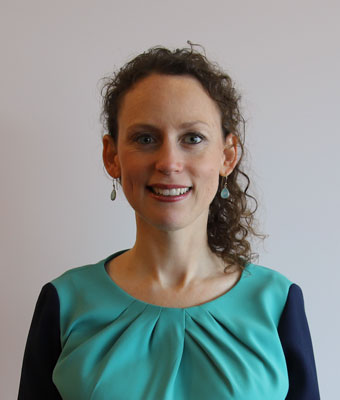
6. Deputy Marie Sherlock asked the Minister for Health her plans to strengthen the inspection and regulatory regime in HIQA; and if she will make a statement on the matter. [34932/25]
We are all reeling from the revelations about Beneavin nursing home and the nursing home in Portlaoise in recent weeks. It is clear that HIQA has given a wide berth to nursing homes when it comes to its inspection regime, which is in sharp contrast, I might argue, to how other authorities regulate, such as the Food Safety Authority and the Health and Safety Authority. I wish to hear from the Minister and Ministers of State as to how the inspection and regulatory regime will be strengthened within HIQA.

I will answer on HIQA specifically and ask the Minister of State, Deputy O'Donnell, for his perspective as well. HIQA plays a crucial role in ensuring high-quality and safe care for patients using our health and social care services. The Government strongly supports HIQA in maintaining and strengthening its critical regulatory role. While it provides an important role, it also needs improvement. A number of changes to both primary and secondary legislation have been made in recent years to expand and reinforce HIQA’s functions. Under the Patient Safety (Notifiable Incidents and Open Disclosure) Act 2023, HIQA’s remit has been expanded into private health services and hospitals. Other legislative amendments have strengthened the regulatory framework in nursing homes, giving HIQA additional new powers in the areas of enforcement, data collection and compliance notices.
My Department has committed significant financial support to HIQA, reflecting its expanded regulatory role. The budget allocation of non-capital expenditure from my Department to HIQA in 2025 is €35 million, which is a considerable increase of more than 60% compared with the €21.4 million allocation in 2022. It is likely HIQA’s regulatory responsibilities will expand further under future developments, such as the patient safety (licensing) Bill, the provisions of which I took to Cabinet this week.
I met with HIQA last week. Along with the Minister of State and I, it is considering what is needed to further strengthen its regulatory role and processes, in particular to reflect the changing dynamic of the nursing home market and sector and the ownership structures within those. That is important. I will continue to work closely with HIQA in reviewing its powers and exploring ways to improve and strengthen its inspection and regulatory regime. As I said, that includes exploring how HIQA can best deal with regulating larger corporate entities that operate in the nursing home space.
It is important to say - and I know the Minister of State, Deputy O’Donnell, has been strong on this - that there is a need to report in real time, rather than some months later. We must have better visibility over this at an earlier stage. HIQA is an important institution in this State which has done exceptionally good work. I have good confidence in it. Everything, be it this House, HIQA and everything else, needs process and institutional development improvement in response to these events.
I thank the Minister. There are four clear systemic issues within HIQA at the moment, notwithstanding that it is a much-trusted institution in the public's mind. That confidence has been dented, however. Clear legislative change and clarity are needed in four areas. The first issue is in regard to the licensing. I welcome what the Minister is saying about the licensing of corporate institutions and their intervention into the market. The second issue is the inspection regime. There is a large degree of ambiguity as to the point in which HIQA can intervene on the basis of an individual complaint or its own inspections. The third issue is enforcement. It is crazy we are having this debate about whether it can fine. While HIQA has powers to go to the District Court, it has never used them. The final issue concerns liability. There is a glaring gap in that regard. Liability on the part of directors does not appear to be pursuable. While staff are going to be pursued for wrongdoing, and rightly so, there must also be liability on the part of the directors.
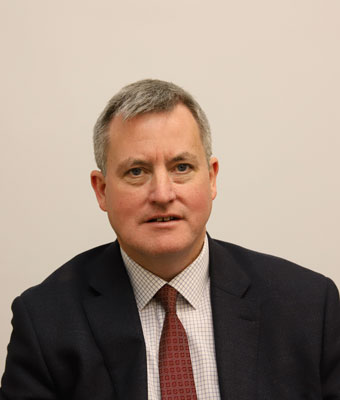
The Deputy and I have engaged intensively at the health committee. I will go through the points she raised. With regard to the licensing, there is absolutely a lacuna there at the moment. Within a group of companies, the licensing inspection is on individual nursing homes and who they are run by, but the parent company is not under HIQA's remit. I want that to be changed. There is an acceptance in that regard.
In respect of the inspection regime, HIQA does an inspection on the day. When it publishes its report, which might be a number of months later, it is based on that inspection. I want to see that report updated with the current position of the nursing homes and whether they have complied with any conditions required of them under the inspections. That makes common sense.
In the context of HIQA’s enforcement powers, it is correct to say that HIQA cannot issue fines directly. We have no issue in this regard. It is something HIQA recommends and we very much support.
When it comes to liability, these are all areas we are looking at. The key thing is that HIQA has acknowledged the need for change in terms of updating schedules. We will work with it on that.
There is an added piece with regard to leadership. In the responses at the health committee last week, in the instance of Beneavin nursing home, there is 100% non-compliance with fire safety systems in that building. We were told that it does not relate to the structure, but rather only to the fire systems.
If the fires systems are not fully operational, there is an immediate fire risk. It may not happen today or tomorrow, but it could happen at some stage and there is a very real patient safety risk. To hear that sort of response and lack of urgency on the part of the leadership of HIQA is deeply troubling. There needs to be very clear action taken to ensure that the leadership team of HIQA is fit for purpose.
The context here is quite simple. I always go back to the needs of older persons in nursing homes. What we saw in that programme with the residents in the nursing homes in Portlaoise and Beneavin was wanton neglect and abuse of older people. We want to look at the regulatory system and how we can improve it. All aspects will be considered. This is ultimately about improvements and ensuring that older persons have the right and entitlement to be in nursing homes that are safe. We are working with HIQA to ensure that we enhance the regulatory system.
It is exceptionally important to acknowledge that our focus here is on HIQA, but HIQA did not do and did not enable what happened in the nursing homes. I want to take a moment to reflect on the fact that the provider and the individuals involved are ultimately responsible. We will also work with HIQA but let us first and foremost direct our ire at the providers of the nursing homes.
Medicinal Products
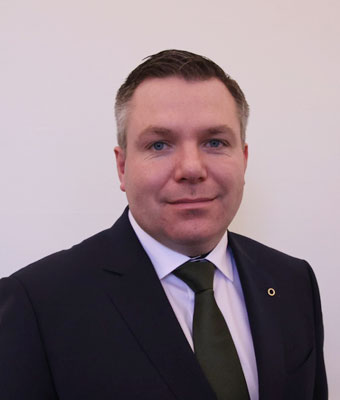
7. Deputy Shane Moynihan asked the Minister for Health if the Belgian model is being examined in the context of the programme for Government commitment to investigate early access schemes for rare disease treatments; and if she will make a statement on the matter. [34617/25]
The Minister is no doubt aware of the cases of those who suffer with Duchenne muscular dystrophy, a matter which has been raised in the Dáil a number of times, as well as with the Minister directly, not least because of the Thompson boys in my own constituency. This has brought into focus the need for an early access scheme for rare disease drugs. I know there is a commitment to this in the programme for Government that has been discussed before. What considerations is the Department is taking into account? Is it looking at other models internationally of how such a scheme might be applied?
I recognise the importance of timely access for patients to medicines, including new medicines. Supported by €128 million of funding, in the past four years the State has delivered access to 194 new medicines. Of these, 74 were for cancer and 49 were for rare diseases. Budget 2025 allocated €30 million for new medicines, to come from efficiencies to be identified by the HSE.
The Government has introduced a suite of new measures to enhance capacity in the HSE’s pricing and reimbursement system, including 34 additional staff, which is a 100% increase, and a medicines application tracker to increase the transparency and efficiency of the process. Access to medicines requires industry and the State to work together, through timely assessment, reasonable pricing and fully completed health technology assessments. This partnership has already directly benefited patients, for example those with cystic fibrosis and other rare diseases. In this spirit of co-operation, I continue to encourage pharmaceutical companies to submit timely applications for their products so as to increase access for patients with unmet needs. It is also the responsibility of the HSE to improve its efficiency and it has been enabled to do that with the provision of a 100% increasing in staffing in that area.
All medicines are assessed from a clinical, economic and ethical standpoint, with no hierarchy of disease. Upon approval by the European Medicines Agency, applications for reimbursement are assessed by the HSE in the order in which they are received from applicant companies.
As outlined in the programme for Government, as the Deputy correctly identified, consideration will be given to various measures to address access to medicines. As part of this, my Department is looking at reimbursement systems across the European Union, including Belgium. We are working closely with our Benelux partners on access to medicines where we have had some previous success.
It is great to hear about the progress that has been made in implementing the recommendations of the Mazars report on this subject that was published some years ago. That goes to the heart of the extra resourcing that the Minister spoke about. She is right; there needs to be a partnership between industry and the State to make sure that these applications are put through immediately and that the HSE can adjudicate on them accordingly. I am very encouraged to hear that the Department is considering other systems internationally, like the Belgian model. This model is particularly interesting because it shows a way in which timely access to these drugs that is not necessarily contingent on EMA approval can be provided. That is based on EU Regulation No. 726/2004. Article 83 of the regulation provides access to medications that are in late stage clinical development, expected to receive EU marketing authorisation and targeting patients with serious conditions. If we had those sorts of parameters for a scheme focused on early access to rare disease drugs, it would be a game-changer for many families that are afflicted with these conditions.
I want to put a little bit of context on this. The State spent more than €3 billion in 2023 providing medicines to patients. We sometimes forget that €3 billion of the health spend goes to providing medicines. That is appropriate but it is a major budgetary consideration as well. With the early access programmes, we have to get the balance right between being able to get access to the drugs and also being able to work out how that programme intersects with the State's ability to negotiate the right price for the drugs.
Regarding Duchenne muscular dystrophy, which the Deputy mentioned, I do not see how the State could be more proactive in trying to support this. On approval from the European Medicines Agency, I asked the CEO of the HSE and the Secretary General of my Department to find ways to support this. The HSE has proactively reached out to the company to ask it to submit an application. I made it my business to speak with the Italian Minister of Health at the EPSCO Council in Luxembourg to ask him to encourage the company to submit an application to Ireland. We will do everything we can because we recognise the life-changing implications of some of these drugs. However, as Minister, I must also point out that we have to get an early access programme right in a way that enables the State to get the best negotiating price for the delivery of drugs for everybody.
I appreciate the efforts of the Minister in this regard and I have conveyed that to the families involved. I am very grateful for the Minister's proactive approach. The beauty of getting an early access scheme right is that it does not necessarily rely on the proactivity of the State to be involved in that process but, rather, the partnership is hardwired into every piece of the system and the State is empowered to get value for money but also to ensure timely access to these drugs. In many cases of patients with rare diseases, time is the issue when it comes to stopping the deterioration of their conditions. I ask the Minister to keep us updated on the Department's progress in looking at these international models and to ensure that the best practice we learn from those is applied in any such Irish case.
I will do so, Deputy.
Questions Nos. 8 and 10 taken with Written Answers.
Hospital Procedures
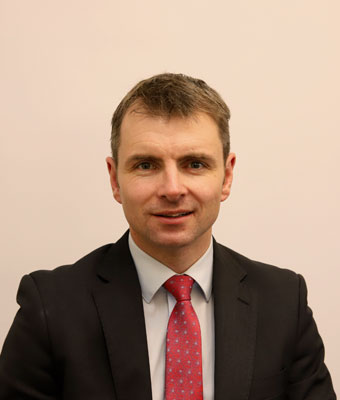
11. Deputy Ruairí Ó Murchú asked the Minister for Health the mechanism by which parents whose children were and are deemed to need hip dysplasia surgery at CHI hospitals at Temple Street and Cappagh will be able to get independent second opinions by experts of their choosing paid for by the HSE; and if she will make a statement on the matter. [33749/25]
I want to ask the Minister the mechanism by which parents whose children are deemed to need hip dysplasia surgery at CHI hospitals such as Temple Street and Cappagh will be able to get independent second opinions by experts of their choosing, paid for by the HSE? I have spoken to the Minister on this previously and I believe she was working with Bernard Gloster on finding a solution to this issue, which is absolutely necessary.
I agree completely with the Deputy. However, my immediate priority is to ensure that there is clinical follow-up and care for patients who have undergone pelvic osteotomy surgery in accordance with the recommendations of the Thomas audit report. I am very aware that there are families around Ireland who are receiving letters and follow-up to say that surgery was not necessary on their child. I cannot imagine the distress that those families experience when they receive that sort of communication. I have spoken to families who are having that experience and it is so utterly distressing for them.
Clinical follow-up to skeletal maturity for children in CHI Crumlin, CHI Temple Street and the National Orthopaedic Hospital Cappagh, NOHC, is already under way for patients. These children have been identified and categorised by age, with a proportion of them being close to skeletal maturity and likely to need just one appointment. The clinic is structured as a one-stop multidisciplinary team model for assessment, and that includes consultation with a doctor, a physiotherapy assessment, an X-ray, if clinically indicated, and immediate documentation of findings. After this, patients enter the recommended normal follow-up process.
As of Monday, 23 June 2025, 115 appointments have been offered to CHI and NOHC patients. A total of 86 patients have been booked and 71 patients have been seen so far. Patients who request attendance at another hospital or with another consultant will have their request facilitated by CHI. It is important to say that the consultant who did the surgery is not the one who is doing the review, in the clinical follow-up. I will get to the expert review as well. I just want to make sure that this is on the record.
In relation to the retrospective reviews of cases, which is the second process, to determine the indications for surgery and whether they were warranted, the HSE is establishing a separate process, involving external experts. Professor Deborah McNamara, the president of RCSI, has agreed to assist the HSE in establishing the expert panel and terms of reference.
I have more information for the Deputy on that.
I do not think anyone will disagree with the assertion that we have had an absolute disaster and failure around children's care. Many have gone through operations they did not need. We need to deal with those children and make sure they are reviewed correctly and properly from a medical point of view and that they get the correct pathways afterwards.
I bring it up and brought it up before because I am thinking of a case in my constituency. A mam has three kids, two of whom had the operation. She has the question mark over their care, whether they needed the operations and all those terrible questions she is dealing with. She has another child who was to have an operation. We are talking about osteotomies. Her issue previously was it was delayed. Most people would believe what a medical expert tells them about whether an operation is needed.
I thank my colleague for tabling this question. We recently had CHI and the HSE in the committee on this issue. In the Gallery were representatives of the hip dysplasia advocacy group. Afterwards, I met one of those dads in the car park, a young dad and an awful nice guy. He was in a ball of tears. I do not know this man. I had never met him before and he had never met me. That is the level of distress these parents are under - crying to a perfect stranger in the car park of Leinster House. It is not something I ever thought I would see or something I ever want to see again.
I ask the Minister for two things. First, will she meet with the hip dysplasia advocacy group? Second, the HSE gave me a commitment that day to make all supports available to the parents. I ask that each and every one of them be offered psychology or counselling supports, given the level of distress these parents are under.
My practice, as much as I possibly can, is to meet people. Like Deputy Clarke, I have met parents and seen the distress. I have parents in my constituency in this situation. There is no difference between our experiences of this. I cannot believe the distress being experienced by the parents of the 71 children. We are already identifying children. Parents are being told through this initial clinical follow-up that their child did not need this.
I will now update the Deputies on the expert review process to follow. We are in the process of establishing that panel. It is not complete but there are a number of experts from Canada and the United Kingdom. It is not surgeons within the system; it is very different. The clinical review follow-up, the first process, is expected to take about six months and for the secondary review panel, the independent expert one, it will take until September for the establishment of the team. We have four at the moment and there are a number of others to come. They need to agree the terms of reference; it is not for us to impose the terms of reference on them. They can assess each case as appropriate once they have begun.
I appreciate the timelines. The clinical review is six months and the Minister is saying it is September for the expert review process. The terms of reference are not set. We would like to think this will deal with the issue of the considerable timeline that would need to be taken into account, the huge number of cases and the disparity. In the case of my constituent, can we find a process to ensure she can get the follow-up care for her daughters and can get an independent review she can trust in relation to her other child, who has been told she needs surgery? Trust is at an all-time low in relation to CHI. We need this work done as soon as possible. I ask the Minister to take into account many of the cases we have brought forward, particularly the parents who got reviews and, on that basis, did not go ahead with operations. I brought an issue like that to the Minister previously.
I do not know the exact details of the Deputy's constituent's case but for any child now indicated for surgery, the assessment is done in a very different way from how it happened before. Any such assessment is done by a multidisciplinary team, including a doctor. It is a cross-site piece of work including a physiotherapist assessment. It is not, as had been the case, that an individual consultant makes decisions in his or her own bubble. This is a multidisciplinary team. The Deputy's constituent or any Deputy's constituent who has a child indicated for surgery can, depending on the timing, get the assessment through the multidisciplinary team. It is very different from what was there before. I hope that will give her more confidence where she has questions relating to her child.
I agree with Deputy Clarke on counselling and psychological supports. Parents who take the advice of clinicians do so in the best interests of their child and now feel they have done something wrong in following that advice. It is a devastating thing to happen to a parent who is only trying to be a good parent and take the right decisions. They need support as much as their children do. I totally recognise that.
Disease Management
9. Deputy Naoise Ó Muirí asked the Minister for Health the status of the chronic disease Mmnagement programme; the number of patients now enrolled; and if she will make a statement on the matter. [34666/25]
The GP chronic disease management programme commenced in 2020 and has been rolled out on a phased basis over four years to adults with either a medical card or, for GMS patients, a GP visit card. The aim of the programme is to prevent and manage chronic diseases. Since 2020, over 680,000 patients have been registered on the programme, including those who have exited the programme. Some 91% of patients now receive routine care in community settings, reducing their reliance on hospitals. An ICGP study found that for patients enrolled in the treatment programme, there were 30% fewer emergency department attendances, 26% fewer hospital admissions and 33% fewer GP out-of-hours attendances compared with their pre-enrolment rates.
The majority of patients manage their conditions through the GP chronic disease management programme. In addition, the 26 operational community specialist teams for chronic disease management, linking the care pathways between acute and community services, are delivering services from integrated care hubs located in or adjacent to primary care centres. They are fantastic. In 2024, over 354,000 patient contacts were provided by community specialist teams for chronic disease management, about 55% ahead of target, and this year to the end of quarter 1, 108,000 patient contacts had already been provided by these teams, which is about 30% ahead of target.
The conditions covered by the programme are type 2 diabetes; asthma; chronic obstructive pulmonary disease, COPD; and cardiovascular disease. The treatment programme supports patients in managing their chronic conditions. Patients receive two reviews in a 12-month period, with each review including a practice nurse and a GP visit. GMS patients over 45 years of age found to be at high risk of cardiovascular disease or diabetes are enrolled in the prevention programme and receive one annual review. The prevention programme was expanded from 30 November 2023 to include adult GMS patients with hypertension and all women who have had a diagnosis of gestational diabetes or pre-eclampsia since 1 January 2023.
I am looking at this programme and it seems to be a quiet success story for the HSE. We hear very little about it. The Minister mentioned statistics regarding fewer presentations at emergency departments. That is a very good measure of success. The Minister mentioned some additional conditions that will be brought into it. I think she mentioned hypertension. It would be useful to have that list.
I see from the HSE's report that the overall uptake is pretty good but it is probably behind for younger sufferers, mainly because it has not been open to them for as long. Are there plans to promote it or make those patients aware they have this option? It is a very good option for those patients.
That is right. It impacts early detection as well. As populations age - which ours is doing - the prevalence of chronic conditions, including multimorbidity, rises. Early protection through the chronic disease management programme prevents the need for more intensive hospital-based treatments. Since 2020, 51% of the new chronic disease diagnoses have been made through elements of this programme. It is not just treating more effectively; it is diagnosing more effectively and being able to divert attention to prevention and early intervention.
As regards expansion of the scheme, a further expansion of the programme to include chronic kidney disease is planned for the end of the year, and further expansion would include rigorous clinical assessment and engagement with stakeholders. Not all chronic conditions can be managed in that way and it is important to recognise the capacity of general practice and how we are trying to grow general practice at the same time. I have listed a number of conditions but I also want to flag that, for example, the Benbulbin hub in Sligo treats a range of different illnesses and it is separate from the hospital, and again and again, prevents hospital attendances.
Dental Services
12. Deputy Ruairí Ó Murchú asked the Minister for Health the progress made by the orthodontic services waiting list initiative for grade 5 patients; the location and number of successful tenderers; the number of patients it is anticipated will be seen in 2025; and if she will make a statement on the matter. [33748/25]
This is a particular issue and there is huge cohort, in particular in the Louth hospital in Dundalk. Those with grade 4 issues were dealt with but those with grade 5 issues, which were more serious, were not. Obviously, the longer we leave this the greater an issue it is. It needs to be dealt with.
I can update the Deputy on the orthodontic waiting lists. As of April 2025, the HSE employs 14 consultant orthodontists and 36 specialist orthodontists nationally. There are almost 35 oral healthcare vacancies at the moment which the HSE is working to fill, including three specialist orthodontist whole-time equivalents, and a further 2.22 dental nurse whole-time equivalents. There are staffing challenges within orthodontic services in the Dublin and north-east region.
At present, both specialist orthodontists posts in Dundalk, which also serve Counties Cavan and Monaghan, are vacant. The HSE is sanctioned to fill those posts and is actively pursuing both temporary and permanent recruitment options. A locum consultant orthodontist post is also being considered. The region also has orthodontic units in Navan and Ashtown, which have a combined total of two consultant orthodontists and five specialist orthodontist whole-time equivalents, currently filled and providing care in the Dublin and north-east region. The HSE is engaged to address the best use of existing funded private procurement options to support delivery of orthodontic care in the region.
Gabhaim buíochas leis an Aire. Could the Minister come back to me regarding the waiting list initiative? We have submitted multiple parliamentary questions on this. This was one of the solutions. There had been a huge number of vacancies. It is positive that attempts are being made to fill these positions but we need to make sure it happens as soon as possible. I saw movement on those who were seen as grade 4 patients and who needed that orthodontic dental work done, but my fear is that those who fall into the grade 5 bracket have a greater medical need and the longer they are left, the greater the issues there may be. I accept the Minister might not have the answer in front of her, but I would appreciate it if she could come back to me with the specifics of this initiative to deal with the waiting lists. We need to make sure there is no hold up and slow down in filling these vacancies related to orthodontic services because the impact this could have could be serious.
I totally recognise that and I commit today to writing to the Deputy with a full answer on these points. However, as regards the waiting list initiative, there is €8.4 million for this year, provided on an ongoing basis this year to address the primary care waiting lists for children, including in orthodontics. The funding is ongoing rather than one-off and is provided to try to reduce the waiting lists and address increased demand for those services. In the area of orthodontics in 2025, €1.35 million is to be invested in the jaw surgery initiative, while €1.5 million is to be invested in the community-based treatment initiative. Up to the end of May, 128 patients had been transferred to private orthodontic treatment, with 33 receiving jaw surgery under that initiative. A higher number of grade 5 patients are commencing, progressing and completing treatment than grade 4, and I recognise the very serious impact that has, particularly on young people, and the need for timely surgery. I will come back to the Deputy with a complete and full answer.
I appreciate the Minister's response. We need information on timelines and tenders so that we can see light at the end of the tunnel in terms of delivering for those patients. The Minister accepts that we are talking about those with the most serious orthodontic need. The sooner that happens, the better. Otherwise we could be talking about people who need far more acute care, which will be a cost to them and their families and to the State. We need to ensure these initiatives, which have been promised, are up and running and work as soon as possible, while ensuring that those vacancies that exist in respect of orthodontic services, particularly in the Dublin and north-east region, are dealt with. This is an issue constantly raised in my constituency office. There is even communication from time to time from those who work in the services who see the stress parents are under as well as the pain and anguish children go through in these circumstances.
General Practitioner Services
16. Deputy Naoise Ó Muirí asked the Minister for Health the progress on increasing the number of GPs and GP practices across the country; and if she will make a statement on the matter. [34667/25]
General practice plays a vital role in our health service but we need more GPs to improve access to services in some areas. To meet that need, the programme for Government has committed to increasing the number of practising GPs through a combination of increased training places and international recruitment. In part, to attract doctors to practice as GPs here, the Government has significantly increased expenditure on general practice, primarily through the 2019 and 2023 GP agreements. The agreements provide for increased fees for GPs, increased and new practice supports, and new services for patients, including the GP chronic disease management programme we spoke about.
The number of doctors entering GP training increased by 80% from 2019 to 2024. As a result, the number of GPs graduating has also increased and will increase more in the next few years. Evidence of strong interest in GP training and high-retention among GP graduates shows the positive impact of the Government's increased investment in general practice.
In addition, recruitment from abroad continues under the HSE and ICGP international medical graduate rural GP programme. Under the programme, doctors work in general practice while undergoing a two-year training programme. Currently, there are 118 such GPs in placement, while a further 18 have completed the course. The number of HSE-contracted GPs has increased by approximately 7% since 2020, although this is a key-target area for growth.
The recent ESRI publication on the future capacity requirements for GP services confirms the need to continue to increase our GP workforce in light of our growing and ageing population. The strategic review of general practice will be completed this year and will provide further recommendations to improve GP capacity and the sustainability of our general practice service.
I thank the Minister for her response. There is an assertion out there that GPs are being trained and are then leaving the country. My colleague, Deputy Colm Burke, tells me that is not the case. The turnover of GPs is typically 5% to 6%, which is very low. The Minister has laid out the potential GPs entering the system through the various channels which is really positive. Perhaps the Minister could deal with the assertion they leave as fast as they come in and that they go abroad the minute they qualify.
My own Dáilcheantar, Dublin Bay North, is quite mature. We have a particularly difficult issue, in that I am contacted a lot by constituents looking to register with a GP, in particular younger people moving into the area and looking to register with a GP practice but who cannot do so.
What we are talking about is the continued need to expand GP services, as we have pushed more and more services into the community and that is where we want services, such as the chronic disease management programme we discussed, to be delivered. It is the case that the number of GPs is increasing, albeit at different rates in different regions, but we have a particular challenge in rural Ireland. That is one of the reasons there is now a dedicated programme in the University of Galway. It is a specific rural GP programme to address some of the different slightly specialised issues. That is why I met the Medical Council recently. It was to address such cases as those of Irish people who trained in this system and got three or four years' experience abroad, who come back to Ireland and wish to work as a GP immediately. We need to make sure those people's registration process is triaged and expedited by the Medical Council, there being no reason those people should not be activated to work, as they wish to do and their communities need them to do, as quickly as possible. I have a good detailed list of the number of HSE contracted GPs. It is increasing. It is an option that was clearly identified in the programme for Government. Not everyone wants to set up a business. Some people want to work in a different structure and we are trying to enable more and more of that.
I support that, given that there are different models clinicians will want to work under. As the Minister said, not all of them will want to take the risk of setting up a GP practice with everything it entails. The Minister mentioned the chronic disease management programme. That is a classic example of where GPs have helped to make a big difference and it is clear from the HSE's assessment that they have been key in all the outcomes the Minister mentioned earlier.
Will the Minister comment on the issue of GPs leaving and whether it is a factor? She may not have that information today. It would be useful if she could share it at some stage so that we can deal with the issue that GPs seem to be leaving. I do not believe it because I know many of them and they are still here.
In fairness to the Irish College of General Practitioners, it has done a huge amount of work as regards having more GPs trained and putting in place a programme for people who have worked abroad and now want to work in Ireland. It has a two year programme whereas for the normal training, people would have to produce evidence of having worked abroad.
One of the things we need to fast-track in a lot of areas, especially growing urban areas, is the provision of primary care centres so a whole range of services are available. One of the things that is happening with GPs is that they are specialising. Therefore, it is important that a primary care centre is in place to provide a whole range of services and it allows GPs to deliver a far more comprehensive service in an area. The Department should work further on and encourage the HSE to deal with the issue of delivery primary care centres in a timely manner.
I agree on the delivery of primary care centres. It is difficult for me to speak in general terms about GPs or other medical staff leaving because there will always be a case of someone who has done that. It is not the general trend of what we are seeing. There is clearly work here. There is the opportunity to set up a business and work in one's own practice. There is the opportunity to work in HSE primary care centres and other more directly employed opportunities, that is to work in different ways and there is clearly a need for that. Notwithstanding that, the contracts in 2019 and 2023 were favourable and there is an opportunity to continue to expand practice. There are now direct diagnostic referrals from GPs to try to get GPs operating at the absolute top of their practice and experience. It is very attractive.
On the recent dialogue in the Dáil about the cost of living and some of the challenges in the price of groceries and other things, it is a source of great frustration to me that we have expanded eligibility for GP access cards to 430,000 people and only 72,000 of them have taken it up. We have tried to communicate. We will do more to try to communicate, but I ask every Deputy to communicate to their constituents as there are people who are entitled to free GP access cards. We are delighted to pay for them and it would be wonderful if they would take it up.
I will go back to Question No. 13 and Deputy Carthy.
Hospital Equipment
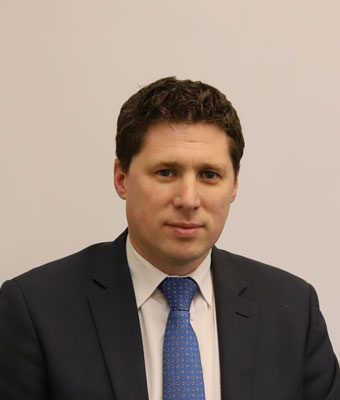
13. Deputy Matt Carthy asked the Minister for Health if she will ensure that a CT scanner and MRI scanner are located within Monaghan Hospital. [34678/25]
I thank the Cathaoirleach Gníomhach for his latitude.
The Minister may be aware there has been a long saga in respect of Monaghan hospital since emergency and other services were removed by a previous Fianna Fáil Government. Will the Minister help with the evolution and redevelopment of Monaghan hospital by ensuring there is a CT and MRI scanner located on the hospital campus?
The Government is fully committed to the ongoing development of regional hospitals, including Cavan and Monaghan which operate as a single hospital entity, with integrated managerial and clinical governance systems, care pathways and support functions. Since July 2020, significant resources have been invested to meet the needs of patients using Cavan and Monaghan hospitals. The total budget for Cavan Monaghan General Hospital has increased by 30% from €115 million in 2020 to €149 million in 2025. Staffing has increased in the Cavan and Monaghan hospital by 295 people since January 2020. That is an increase of 26%. The budget has gone up by 30% and the staffing has gone up by 26%.
Median waiting times for patients attending the emergency department are within 3% of the national average. For those admitted to the hospital through the emergency departments, median waiting times are 10% lower than the national average. Cavan and Monaghan hospital has two CT scanners and one MRI scanner, which are located at the Cavan general hospital site. As with all CT scanners, I will be assessing how and when they are used. Cavan Monaghan General Hospital has made an application to the HSE national equipment replacement programme to replace the existing MRI scanner located at Cavan. This project has been approved and works are expected to be completed by the end of this year.
Cavan and Monaghan hospitals might be put together for operational purposes but it cannot be claimed that a service in one is equal to a service in the other. There are 47 km between the two sites. Perhaps that does not seem like much to some people, but if people are living in an area with no public transport and a poor ambulance service, that matters. When the Minister says that Cavan Monaghan General Hospital has two CT scanners and one MRI scanner, that does not deflect from the fact that Monaghan hospital has neither and that needs to change. There is a medical need. Currently, more than 1,500 people are waiting for an MRI appointment and more than 1,800 people are waiting for a CT appointment. By providing the services in Monaghan hospital, not only would the Minister be providing a service the people of Monaghan deserve, she would also be relieving the pressures that are on Cavan hospital.
Waiting times at Cavan Monaghan are improving a lot. Some 35% of outpatient appointments occurred within Sláintecare wait times compared with 25% in the same period last year, which is an improvement that needs to continue. Some 58% of inpatient day cases occur within the Sláintecare wait times, as do 95% of GI scopes, which is an improvement on 87% last year, and 94% to 100% of those waiting for outpatient, inpatient or day case, and GI scope appointments are waiting 12 months or less. I see progress there.
The application is from Cavan Monaghan General Hospital for the replacement of the MRI scanner located at Cavan. That is the application the hospital has made to the HSE.
The difficulty is that the application for scanners at Cavan hospital is made, as the Minister said, by Cavan Monaghan General Hospital, but Monaghan hospital needs these scanners and as I understand it, the staff there want them. The difficulty is that they have to go through this convoluted process Micheál Martin established that put Monaghan and Cavan hospitals together. What happens? Priorities are chosen and the priorities have never been the people, patients or even the staff at Monaghan hospital and that needs to change.
I am appealing to the Minister to engage directly on the ground with elected representatives, the staff of both hospitals and management of the Cavan Monaghan General Hospital and ask them how it is that there is capacity, willingness and eagerness in Monaghan hospital to deliver a service with MRI and CT scanners that is desperately needed by patients, yet there is a reluctance in the management group to ask for them.
I am sure the Deputy has discussed this in detail with the management group already. I wonder what response he got directly.
As I said, staffing at-----
Deputy Carroll MacNeill is the Minister. I am asking her to ask.
Deputy Carthy is the local representative in Monaghan so I assume he has discussed this in detail with hospital management.
Yes, I am not happy with the response so I am asking the Minister to ask.
The Deputy should allow the Minister to answer.
If the Deputy would like me to answer, I will do so.
The reality is that staffing has increased in Cavan Monaghan General Hospital by 26% but the increase in Monaghan has been 70%, so Monaghan is not being left behind. I look forward to going there and discussing all these issues, including the business cases submitted or not submitted by Monaghan hospital, as I am sure the Deputy already has.
Questions Nos. 14 and 15 taken with Written Answers.
Question No. 17 taken with Written Answers.
Pharmacy Services
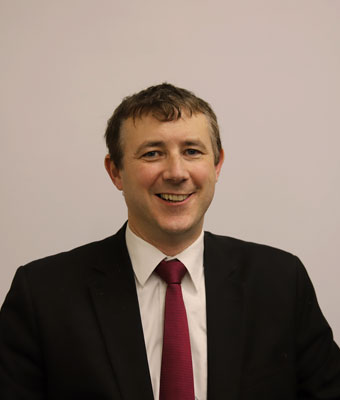
18. Deputy Aindrias Moynihan asked the Minister for Health the up-to-date position on further plans on expansion of the role of community pharmacists; and if she will make a statement on the matter. [34893/25]
Pharmacists have shown time and again their great capacity to expand services and provide more and more services to communities locally, for example, vaccinations, repeat prescriptions and in so many other different ways. Will the Minister outline the next steps in expanding the role of pharmacies in community care?
I thank the Deputy. I am a huge advocate for the reform and expansion of pharmacy services and the Government is committed to ensuring people can access as much care as possible in the community including in pharmacy, which will play a very large and expanded role in this.
The report of the expert task force to support the expansion of the role of pharmacy was published in August 2024. Its findings provide a framework to inform how we are going to do that. My vision for the future includes pharmacists playing a much larger role in the health service. I am happy now to see the progress being made between my Department and the representatives of the Irish Pharmacy Union, IPU, in this regard.
The priority focus is the development and introduction of a common conditions service in community pharmacy. That service will be the first step in enabling full, independent pharmacist prescribing. It will allow pharmacists in Ireland to treat their patients for common conditions such as shingles, urinary tract infections and conjunctivitis. It will also support the development of new revenue streams for pharmacies.
Development of the service is well under way. It is led by the community pharmacy expansion implementation oversight group. That group meets monthly with the aim of developing the necessary enablers for required to establish the common conditions programme. That includes clinical protocols along with the pharmaceutical regulator, new education and training for pharmacists and a package of required regulations.
We aim to have all of these in place to facilitate pharmacies to establish this new service before the end of the year. Deputy Ó Muirí asked about GP care. The huge advantage of this is that it will take some of the work from GPs into pharmacies that can be done more easily. From the patient's perspective, I would like a patient to be able to go into a pharmacy, be diagnosed for a simple and common condition of this kind and pay a fee to do so, and get their prescription there and then rather than go to a GP, pay a GP fee, go back to the pharmacy and pay for the prescription. All of that can be taken into one. The intention is that this would be the basis for beginning this, recognising that taking that approach will expand access to healthcare generally, and that patients in the general medical services, GMS, scheme and so on still have that option with GPs but now with, I hope, increased capacity.
I thank the Minister. She has kind of pre-empted my next question on GPs.
I am sorry.
They are under pressure in the complexity and range and the load of the increasing population. GPs in many places are under pressure, especially in rural communities, and medical experts are available beside them with a willingness to expand out and give support.
On the common conditions, it is good to hear that the Minister is aiming to get that done in the months ahead before the end of the year. There is a limited number of conditions the Minister is focusing in on. What is the plan for expanding that out? Have the details on it been discussed yet? Will the Minister give an outline on expanding the conditions for which it could be available?
The first and most important thing is to take the steps forward to get this going. There was an inertia on that, if I may say, until recently. It has now been progressed and there are detailed negotiations to take the necessary steps forward. I would like to see this in place and operational and then be able to expand it appropriately. I have already said, I think, that the list of common conditions should be expanded. It is not going to be enough but it is no harm to get the practice under way as quickly as possible, make sure it is supported by the appropriate regulatory and training environment, and recognise that pharmacists themselves need more support and more pharmacists' assistants and technicians. They are working under pressure in different ways and need to build their own capacity to do this as well.
My vision for it is that is established, is working well and will be expanded as quickly as possible. Pharmacists are trusted and we need to expand this service as much as possible, recognising that will take that pressure off GPs. For an older woman, in particular, a urinary tract infection can be very dangerous. They need to be seen and diagnosed and get medication early rather than wait for a GP appointment. By moving that into pharmacy, it frees up that slot in a GP practice as well. It is a broader expansion and a good thing generally.
Pharmacists have been raising with me the Veterinary Medicinal Products, Medicated Feed and Fertilisers Regulation Act 2023 and the dispensing of medication for animals. The implementation of the statutory instrument on that is due shortly. They feel very much that this restricts the capacity to make available veterinary medical products, between the cost of getting a prescription and integration with the computer system and in so many different ways. Can we ensure there would be greater integration in, availability of and access to the prescription system? At the moment, a limited number of vets use the online system. Pharmacists are concerned that there is not access to it. Can we also ensure that pharmacists would be enabled to prescribe antiparasitic medicines for food-producing animals?
Deputy Clarke wanted to ask a supplementary question.
I cannot fail to take the opportunity to speak further on the issue I raised with the Minister at committee yesterday around the emergency supply scheme, where somebody from a virtual clinic, or leaving as a previous inpatient of a hospital, has 24 hours to get to their GP if they are a medical card holder and will receive only a seven-day supply of medication. There is a very real opportunity for our pharmacists to be more involved in this scheme. It is absolutely bonkers, to be quite frank, that you would have only 24 hours. It also does not reflect the reality of the prevalence of virtual appointments and the lack of need for forms to be filled in triplicate at this point. There has to be a better way of doing it, and a very important part of that would be our pharmacy network.
I agree completely with the Deputy, and I thank her for that. While I do not have an update for her today - it was yesterday we discussed it - I have instructed my officials to see what can be done, and I will revert to her on it.
I have to say Deputy Moynihan has got me. I do not know, and I am going to have to find out. I can tell him about estradot patches and so many different things but I cannot tell him about vets, agriculture and pharmacy. He has got me, and I am going to have to go back and find a proper answer for him. I commit to writing to the Deputy today to make sure that is done. I ask him to please forgive me; I do not know.
Questions Nos. 19 and 20 taken with Written Answers.
Hospital Services
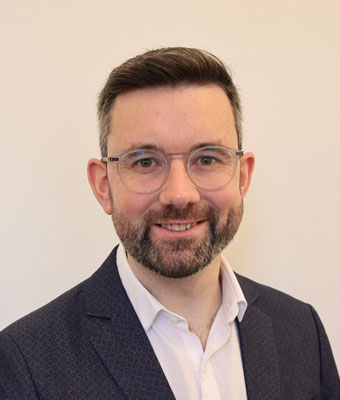
21. Deputy Pádraig Rice asked the Minister for Health if her Department has received a copy of a 2017 report into paediatric urology services, known as the Dickson report (details supplied); if her Department was made aware of the existence of this report by Children’s Health Ireland, CHI, or anyone from Temple Street or Crumlin hospitals prior to CHI’s establishment; her views on CHI’s decision not to publish the report; and if she will make a statement on the matter. [34815/25]
On 19 June, CHI advised the Joint Committee on Health that neither Temple Street nor Crumlin hospitals accepted the Dickson report when it was completed in 2017. My Department received a copy of the report on Friday, 20 June and my officials are reviewing it. I will be seeking assurance from CHI that the matters raised in the report have been addressed.
In light of concerns raised in relation to corporate and clinical governance concerns at CHI, as the Deputy is aware, I have appointed two HSE board members to the CHI board. We discussed yesterday the changes to the service level agreement, the role of the HSE and the internal audit being conducted by the HSE. I do not wish to disrespect the Deputy by repeating those issues he already knows about, but all of those governance changes are being made with a view to supporting the new CEO as she continues to establish her executive team. She needs to implement the recommendations of a range of different reports and at the same time take CHI forward in a constructive and positive way towards the new hospital but also towards the delivery of better paediatric services across this country.
On the Deputy's direct question around the Dickson report, my Department received it on Friday, 20 June and is reviewing it. I can engage with the Deputy further on it.
A number of patient advocacy groups and parents have for a long time been calling for this report to be published. I urge the Minister to consider that and to consider publishing that report along with the others. What we have seen time and again from CHI are issues around transparency, accountability and a reluctance to release information, and we have had to drag that information from the organisation, which is deeply concerning.
It indicates to me that the culture in the organisation is not changing. This is another example of it. Last week we raised the internal investigation with CHI. Its officials told the Joint Committee on Health they would provide us with the legal advice on that internal investigation. We have not received that legal advice from them. CHI did publish a summary, as the Minister mentioned. Is it her view that that summary of the internal investigation is a true reflection of the full report?
I could say about the summary that it is CHI's view that this is the best it can do, recognising some of the HR and legal constraints. I want to see the report published in the broader public interest but it is not necessarily the case that in every instance it should be published. In particular, I am concerned that this was a HR report where people who might be constituents of the Deputy, and for whom he might take a protective trade union perspective as well, participated in a process to try to address a significant cultural issue. It would be very difficult for those people to talk about the experiences they had in this HR process and for their comments to be published in the public domain. While we are trying to get to the issues relating to culture and to governance, I understand the difficulty there for those individuals and CHI's perspective on that.
In relation to the legal advice, in general that is a matter for CHI and the committee directly.
I thank the Minister. There are ways of publishing these reports that anonymise the individuals and redact information that is key but then provide full transparency and accountability because trust in this organisation is now at an all-time low. Families are deeply concerned. We need more information released and more publications. Sunlight is a good disinfectant and CHI has been at every stage reluctant to release information to us.
I also raise concerns about some of the answers to parliamentary questions we are getting from CHI. Its officials are reluctant to answer reasonable questions we are putting to them. I have no doubt they will be before the health committee again. We have a long list of questions to put to CHI. I have concerns around the pace at which the culture is changing. It seems to me that culture change is not happening quickly enough. That reluctance to release information persists and we have seen that time and again with report after report and the one referenced here is another example of that.
I very much respect the Deputy's perspective on that and on the culture piece. I had a good meeting with the new CEO, Lucy Nugent, where I was very clear and reiterated that this is a new CHI for the future with a new executive management team, a new approach and a new culture. She needs that team around her to be able to implement that new culture. She is coming from Tallaght, where there has been good success and where she has a very strong track record in relation to that. I take the Deputy's perspective on the response to parliamentary questions and other matters very importantly and seriously. There is never a difficulty in being forthcoming with information to the extent that it is appropriate legally and from that HR perspective but there is a way in which you can lean in and provide better confidence.
I would be careful with phrases such as "confidence is on the floor". People are attending Crumlin and Temple Street hospitals today. I was there last week. I have a lot of confidence in the medical team there. I have a lot of confidence in the nurse specialists who listened to my voicemail and rang me back and the service and support I receive. That is the majority experience of Crumlin and Temple Street. There is a very important set of problems that we have to address but the majority experience is positive. I have parents contacting me to continue to make that point about their experience. This is parents and children at very vulnerable moments going in to receive hospital care and they are getting it.
We have a body of work together as a Legislature but we just need to be careful about the experience that they are having as well to make sure that we are reflecting it in a universal way.
Local Authorities
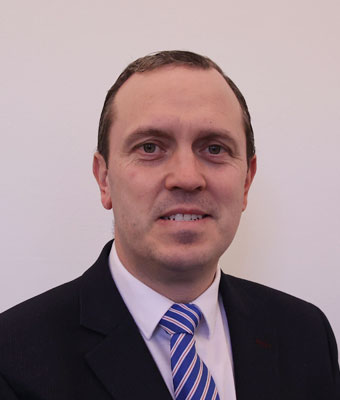
131. Deputy John Connolly asked the Minister for Culture, Communications and Sport the progress made towards meeting the programme for Government commitment to support local authorities in the acquisition of new lands for parks and playing pitches; and if he will make a statement on the matter. [34641/25]
There is a very progressive commitment in the programme for Government to support local authorities in the acquisition of new lands for parks and playing pitches to help build liveable communities. We all know the importance of active recreational spaces. Have efforts commenced to develop a strategy around that commitment?
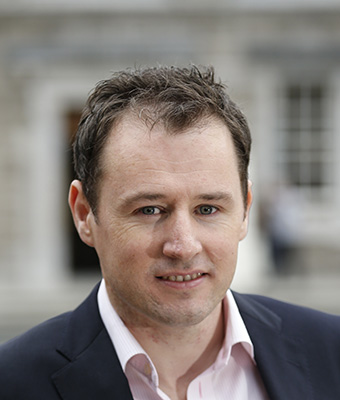
I thank the Deputy for raising this matter. I know it is something he is committed to. We have spoken about it before. Encouraging clubs to collaborate particularly with local authorities under a municipal approach could deliver significant benefits to sporting organisations and opportunities for people in local communities to engage in sport across the country and, from the Deputy’s perspective, in County Galway in particular.
We all know the importance of sport to the well-being and health of our local communities. The availability and ease of access to sports facilities is central to that, whether in a club setting, on public lands or in other amenity areas. Planning for future facilities needs, locations and types is a particular focus of our current sports action plan. In the past, there was not a particular weighting in the sports capital grants towards municipal facilities. There has been support where people are collaborating but, with the sports capital grants reopening next spring, we will look at how we can try to incentivise clubs to come together and, indeed, local authorities to work together too to support that objective.
Accessing land is a particular challenge, especially in some of our cities but also across the country. This is something we will reflect on. There is no funding for land at the moment but we want to develop and structure the next sports capital grants in a way that incentivises people to come together, particularly in respect of existing land that local authorities have, as well as looking at land that schools might have. Secondary or primary schools that need sporting facilities might have land and we can encourage them to collaborate with local sporting clubs in a way that maximises and leverages the investment for everyone in the community and makes sure it is accessible at different times of day. I look forward to engaging with the Deputy further on any ideas he has on how we can best do that. We want to make a real impact through this approach.
The Minister of State noted many of the challenges that sports groups and local authorities meet in the development of facilities. The programme for Government also includes a complementary commitment to conduct a nationwide audit of sports facilities to address shortages in areas where there is a population of over 1,500. The audit will probably find a deficit in the provision of playing spaces in urban areas. I am not familiar with the locations but I have heard from some of my colleagues and from the media that there are significant parts of Dublin city which have no active recreational spaces for clubs to pursue their interests. That is something we need to challenge. It also happens outside Dublin. The demand for land has led to increased pressure in terms of its price. That makes it difficult for voluntary clubs to be able to purchase the land, as the Minister of State noted in his response. The viability of buying land for sporting clubs in our major urban areas is a really significant challenge.
We have asked Sport Ireland to conduct an exercise to assess gaps in particular sporting facilities around the country in order that we get an overall sense of what the facilities are in different areas and are able to factor that into our future sports capital considerations and announcements. My experience, and I am sure the Deputy’s too, is that almost all clubs across all sports are under pressure for space. We had seen very significant uptake in participation, with a significant closing of the gender gap in terms of female participation, which is really important, as well as across age groups and youth participation in many different sports. However, that is putting pressure on playing facilities. I rarely visit a sports club which is comfortable with the space and facilities it has for the demand it has. We need to continue to invest across all sports but we also need to look at where the acute needs are and factor that into the considerations. The work Sport Ireland is doing will be important in informing us around that.
The GAA has done a lot of analysis of its activities in different parts of the country. It is concerned about the future organisation of the GAA in some urban communities because the lack of playing space will limit its ability to undertake activities and increase its membership among new communities. That is worth noting in this debate. As a concrete example, in 2017 Galway City Council developed the Kingston master plan for an area quite close to where I live. It was to include playgrounds, changing rooms, outdoor gym equipment, pedestrian walkway, cycle paths, a pitch and ancillary facilities. We are yet to see that go to planning. We have been talking about it for eight years but, due to the challenge of financing it and some of the land not yet being in local authority ownership, it has not come to fruition.
The Minister of State noted the challenge of purchasing land not currently covered by the sports capital grant. We could have something like the Housing Finance Agency for local authorities to allow them to draw down long-term loans at low interest rates for the purchase of land specifically for community and sporting facilities.
We will look at all of this. I want to ensure that our local authorities are thinking seriously about sporting facilities in their planning for an area and their use of land, particularly existing land. I also want to ensure our schools are thinking about how they can collaborate with sporting clubs. While land is a challenge, there is a lot of latent potential in the land we have. In the past, we did not put enough focus on getting people to co-operate and collaborate and to think how they can work together to develop facilities. We will be considering that very strongly in advance of decisions on the structure of the next sports capital grant, along with consideration of where the acute gaps are.
Deputy Connolly has been speaking to me on a number of projects in Galway. He wants to see real progress there and he has ideas about how we can try to promote this. I look forward to working and engaging with the Deputy as well as with others to see how we can best make sure the sports investment we are putting in makes the biggest impact at local level.
Question No. 132 taken with Written Answers.
Post Office Network
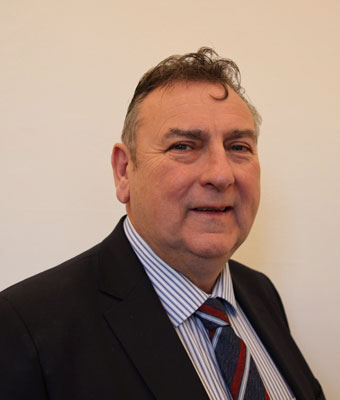
133. Deputy Noel McCarthy asked the Minister for Culture, Communications and Sport the measures his Department is taking, or plans to introduce in the future, to support the post office network; and if he will make a statement on the matter. [30269/25]
I know from having spoken to the Deputy that he is very committed to the post office network and wants to see it developed. I thank him for raising the matter. As he is aware, the Government is committed to a sustainable An Post and post office network which, as we all know, is a key component of the economic and social infrastructure of communities across the country. The programme for Government states that the Government will continue to provide the nationwide network of post offices with funding to ensure their sustainability and enhance the value they bring to local communities. My Department is working to deliver on this and is engaging with relevant stakeholders on funding. In addition, my Department is working with Government colleagues to secure future funding in line with the programme for Government.
As the Deputy knows, €10 million per annum is currently being provided to An Post over a three-year fixed term, which is due to end at the end of this year. An Post then disperses this funding across the post office network, with all contractor post offices benefiting from the funding with the objective of securing their stability and that of the network. The funding is being paid monthly for each 12-month period. There has been over €23 million claimed by An Post for the period 2023 to the end of April 2025 for the network.
As we know, An Post is a commercial State body with the mandate to act commercially and has statutory responsibility for the State's postal service and network. Decisions relating to the network, including decisions relating to specific post offices, are operational matters for the board and management of the company and not an area in which I, as Minister of State, have any function. The postmasters' contract with An Post is a matter for postmasters and An Post and any negotiations are a matter for the parties. The role of Government is very important, which we recognise. We have recognised that with a €10 million investment.
The Minister, Deputy O'Donovan, and I are involved in the budgetary process in order to seek to renew that. We are very committed to making sure the contract is renewed and we do everything possible to make sure post offices stay open and are strongly supported across the country.
I thank the Minister of State for his response. Post offices are vital social links in urban and rural communities. They support local economies by providing essential Government services. However, they need further support, as the Minister of State said. Recent increases in inflation and the minimum wage have unfortunately occurred at the same time as a decline in transaction-based income for postmasters. As such, the post office network seeks to stabilise the existing network and prevent post office closures, in particular in rural and disadvantaged areas. Increased investment would ultimately provide long-term certainty for postmasters across the country, while ensuring the availability of essential Government services to citizens in all social settings. What more can be done to support postmasters and the network?
We will continue to determine how we can ensure we utilise and maximise the post office network in terms of providing face-to-to face services to local communities. As he knows, in many small villages post offices are the last remaining face-to-face service. They provide important services in towns of all sizes, in particular small towns. We want to make sure that we examine how we can utilise the network to the best capacity possible.
We also recognise the importance of making sure that post offices are viable and provide an economically viable income for postmasters. That is why over the past three years we have delivered €10 million per year. We are committed to making sure we renew that funding. We have engaged with the stakeholders and the budgetary process, subject to budgetary considerations, to make sure we continue to support post offices. I was glad to attend the Irish Postmasters Union annual conference recently and engage with it on its ideas. It is something on which Deputy McCarthy has very strong views which he has made very clear. I look forward to continuing to work with him and other Deputies to ensure we support the network.
I thank the Minister of State for his positive response. I cannot speak highly enough of our post office network and the service it provides, in particular when compared with its European counterparts. However, I find it concerning that the Irish Postmasters Union warned this week at the Oireachtas communications committee that there could be significant post office closures if funding is not increased.
Taking this into account, and given the importance of the service, is the Minister of State satisfied with the current level of funding of €10 million annually for the national post office network, in particular in comparison with other EU countries? France and Italy have invested €2.6 billion and €1.3 billion, respectively, over the past four years, while Belgium has outlined investment of over €630 million over four years. Such numbers are greatly above the current funding commitment to the postal network in Ireland.
We are very clear on the importance of Government funding and the three-year contract to make sure post offices are sustained. I have no doubt we would have seen closures over the past three years if it had not been for the Government stepping up to the mark. We are also very clear on the importance of us continuing to step up and support the network.
We have received a submission from the postmasters' union on the renewal of the contract. There are state aid considerations and that technical work is being worked through and fully assessed. It will involve engagement on the part of the Minister, Deputy O'Donovan, and I with the Department of public expenditure. We are very clear on the importance of the network and ensuring that it is supported, along with the importance of Government funding to support the network.
We will continue to liaise with the postmasters' union and An Post on this. The Minister, Deputy O'Donovan, and I will continue to work hard on the budgetary process and with Oireachtas Members, of whom Deputy McCarthy is very much at the forefront in this regard, to ensure the post office network is maintained and kept economically viable and sustainable.
Arts Funding
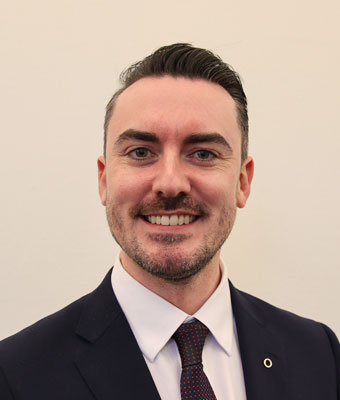
134. Deputy Naoise Ó Cearúil asked the Minister for Culture, Communications and Sport for an update on his plans for a successor scheme for the basic income for the arts; and if he will make a statement on the matter. [34834/25]
138. Deputy Catherine Connolly asked the Minister for Culture, Communications and Sport further to his announcement that the basic income for the arts pilot scheme is to be extended by six months, his plans for the permanent roll-out of the BIA scheme; and if he will make a statement on the matter. [34911/25]
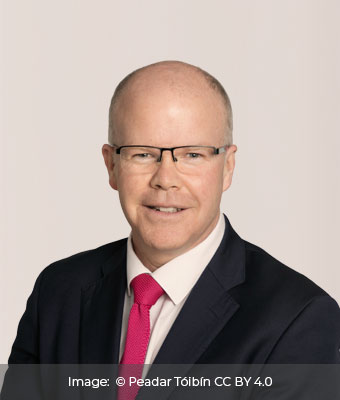
141. Deputy Peadar Tóibín asked the Minister for Culture, Communications and Sport if his Department has undertaken any analysis of the effectiveness of the basic income for the arts scheme; and if he will make a statement on the matter. [34056/25]
The basic income for the arts pilot scheme has already shown a transformative impact. Artists report producing more work, enjoying better well-being and feeling more financially secure. It has been extended for six months to allow for a full evaluation. I ask the Minister outline to his plans for a successor scheme and to confirm that budget 2026 will include ring-fenced funding for its continuation.
I propose to take Questions Nos. 134, 138 and 141 together. As the Deputies will be aware, the programme for Government commits to assessing the basic income for the arts pilot research scheme to maximise its impact. The scheme has now been operating for almost three years and is underpinned by a robust research programme collecting data about all aspects of the lives of the artists and creative arts workers who are participating in the scheme.
There is clearly broad support for the scheme, as is evident from the numerous representations from colleagues to me on behalf of their constituents. Last week, I announced that Cabinet agreed to my proposal to an extension of six months, to February 2026, to allow for further evaluation of the pilot data, which will provide the evidence base for Government to make decisions on the next steps. This will also give sufficient time to engage in stakeholder consultation.
I am aware there is broad-based support for the scheme across the sector, and I have met the National Campaign for the Arts to discuss this. I intend to bring proposals for a permanent intervention to Cabinet as part of budget 2026, using the evidence arising from the research programme and stakeholder engagement. The programme for Government and the Government’s research and innovation strategy note the importance of incorporating the use of evidence into the policy development process and of improving links between policymakers and researchers. This is a key programme to bring research and data to provide an evidence base for Government to make decisions on future policy for the arts.
The rate being paid to recipients is €325 per week and this allows for 2,000 people to receive the payment within the current pilot scheme, which costs €35 million per year for 2,000 recipients. The current scheme costs €105 million for its three-year duration. The full cost of the six-month extension is €16.7 million. The net overall cost of the pilot is likely to be less, given the number of recipients who were previously on social welfare supports prior to entering the scheme.
The scheme's research pilot is designed as a randomised control trial in order to make it possible to identify causality and has benefited from the involvement of external researchers. This randomised control trial includes a treatment group of 2,000, that is, recipients of the payment, and a control group of 1,000 who are not in receipt of the payment. The control group provides the same survey data as those in receipt of the payment and, although that cohort does not get the payment, individuals are paid €650 per year to participate. The differences in outcomes for the treatment group and control group illustrates the impact of the basic income for the arts payment to those in receipt of it. The control group data shows that they suffer more from the precarious and inconsistent nature of their income. It is important to note that even those in receipt of the payment fare worse than the general population in terms of deprivation and depression.
This is the first large-scale randomised control test undertaken by a Department and represents one of the leading impact evaluations under way in the public sector. Evaluation of the pilot is and has been continuous, with participants completing a detailed survey every six months. The Department has undertaken a broad research programme, including two papers based on the baseline survey, that is, information about participants' lives before they received the first BIA payment and two impact assessments that have been published to date.
The Department is preparing a report examining the first 24 months of the scheme, which is due to be published over the summer months. An interview research paper written by an independent researcher was also published recently. This paper collects the experiences of 50 recipients, who have been interviewed by a sociologist.
While the research phase of the scheme is still ongoing, it is clear from the evidence collected to date by the Department on the scheme that it is having a positive impact on participants. This data shows that the BIA payment is having a consistent, positive impact across almost all indicators, affecting practice development, sectoral retention, well-being and deprivation.
In terms of ongoing evaluation of the scheme, work has recently begun with an external independent economic consultancy to prepare a full cost-benefit analysis of the BIA. The aim of a cost-benefit analysis is to compare the benefits and costs arising from a specific policy, in order to determine its net value. Therefore, the costs and benefits arising from the BIA will be measured and compared to determine its effectiveness prior to any decision on a successor programme. In addition to the cost-benefit analysis, the contractors will map available funding opportunities for artists in Ireland and examine how the BIA functions within the broader art ecosystem, to understand if it is a more or less efficient policy than similar supports.
As I mentioned, I also recently published a qualitative research paper, based on interviews with recipients of the BIA. This provides the lived experience of some of those in receipt of the BIA. This report found that the stability of the payment has significantly reduced underlying financial stress, to provide relief and peace of mind that allows recipients to experience a reduced sense of anxiety about meeting their basic needs.
As part of the policy development process, the Department established an interagency consultative committee on the basic income for the arts research scheme. This committee is an opportunity for the research outputs to be shared across relevant Departments and agencies and allows for discussion of the research findings. I know that the BIA support is hugely valued by artists in receipt of it. It has also been the subject of much positive commentary at home and abroad, and makes an important statement about how Ireland values the arts.
A Government decision will be required on any successor scheme to the pilot, and the future of the BIA will be decided when the results of the research are available, something which is facilitated by the extension I have announced. I plan to engage with stakeholders over the coming months to determine what adjustments could be made to the scheme and how the eligibility and other criteria might be refined. I look forward to bringing forward the proposals I have at that stage to my Cabinet colleagues as part of budget 2026.
I thank the Minister for the reply and for the work he continues to do on the basic income for the arts pilot. The scheme has made a real difference to the lives of close to 2,000 artists. We know that the evidence the Minister has mentioned points to positive outcomes across practice development, sectoral resilience and community engagement. Given the Department is preparing the full report and a cost-benefit analysis, will these findings be published in full? I appreciate the Minister will bring them to Cabinet, which will be able to make a decision thereafter, but it would be great if the findings were published and we could see the evidence. Does the Minister accept it is more than just an income support for artists? It is a statement about the value we place on culture and creativity in Irish society. A successor scheme or a continuation must be co-designed with artists, including those with disabilities and from minority backgrounds, to ensure it is inclusive and accessible from the start.
Aontú has supported the scheme from the outset. The reason we have done so is that, unfortunately, poverty and the arts are often synonymous. People who work in the arts probably have the most precarious work that exists in the country. Their lived experience is often the direct opposite of people's understanding of the glamour of the arts. The difficulty I have with this is that we have a project that has been going on for three years and we still do not have a decision on it from the Government. Absolutely we need time to evaluate and to make a decision but I have been long enough around here to have noticed that difficult decisions are often kicked down the road. I have a worry that only one quarter of the people who need this particular payment are in receipt of it. Now we will see another nine months pass without a decision being made on their experience. Theirs is probably the only sector of society which should get an income but whose income is decided on a random basis. It would be great to crystallise the decision as soon as possible.
I thank both Deputies for their support. To reply to Deputy Tóibín, this is not a difficult decision that has been kicked down the road. The scheme was due to end in August and the easy thing to do would have been to wind it up but I did not do that. I have extended it past the budgetary date at the end of the year and into the new year. This will give me an opportunity to use empirical quantitative and qualitative data to demonstrate to the public and to colleagues in the Government that this is a scheme worth retaining. As with any pilot scheme, such as with regard to grassroots music venues, with a pilot there is always a confined number of people at the start. Invariably there will be people who are disappointed. This is the nature of pilot schemes. I welcome the fact that Deputy Tóibín's party supports it.
Deputy Ó Cearúil is right that the concept of this when my predecessor introduced it was to give people the opportunity to practise while, at the same time, taking them out of a poverty trap. The cost-benefit analysis will give us an opportunity to see what has been defrayed by way of social protection payments and what has been offered by way of this payment. We will then have a more holistic view of the outputs regarding what the State has gleaned and gained from making the investment, how the artists themselves have gained, how the community has gained and what the costs are. The costs can be borne and weighed in terms of savings made from the non-payment of social protection as against, on the other side, the assignment of moneys under the basic income for the arts. There is a bit of work to be done on this yet but the community has responded very positively to my position on this, which is that I want it retained. I do not think this is kicking the can down the road. It is making sure before I bring a proposal to the Government that we have all our ducks in a row.
Other countries such as Finland and Germany have introduced similar schemes as part of long-term cultural and economic planning. Has the Department engaged with these international examples or does it plan to do so? Something I am very conscious of, and I know the Minister is also, is ensuring there is no cliff edge for participants when the pilot ends. Many of these artists will have structured their lives and livelihoods around the scheme. We have to allow them a level of certainty and make sure they understand whether there will be a continuation or an end to it at any stage so they are prepared for it. What we need is a permanent inclusive scheme with certainty, as I have said. I appreciate the level of research the Minister needs to do before continuing it. I also appreciate that the pilot scheme will continue until February 2026.
I thank Deputy Ó Cearúil. At a recent meeting of culture ministers in Brussels, a number of colleagues from other member states spoke to me about this and they could not believe, to be quite honest about it, that we had introduced a scheme of this nature. They were envious, to put it mildly, that we have a scheme of this nature and that we have the resources and capacity, based on the economy and the way we have managed the country's financial resources, to introduce this, albeit on a pilot basis.
Deputy Ó Cearúíl is right with regard to a cliff edge. This is why I did what I did last week. I had to make sure we removed the cliff edge. Had I not done anything, and had I just wound it up and brought the data to the Government after the fact, then everybody would be out in August. I did not think that was the most appropriate way to deal with it. I have given certainty to the first 2,000 people. Ultimately this will be a decision for the Government. It will be a resource-based decision. There are competing demands in the Department and between Departments. Everybody who comes in here to ask oral questions will ask about agriculture, roads, schools or doctors. This is a competing demand. I welcome the fact that Deputies from all parties and none are supportive of it. Any support that can be articulated to my colleagues in the Department of Finance and the Department of public expenditure and reform would be very welcome.
Culture Policy
135. Deputy William Aird asked the Minister for Culture, Communications and Sport his plans to invest in cultural infrastructure in rural counties such as County Laois (details supplied); and if he will make a statement on the matter. [34380/25]
What plans does the Minister have to invest in cultural infrastructure in rural counties such as County Laois? These are counties with vibrant local artists and heritage buildings that would benefit greatly from targeted support. Will the Minister make a statement on this matter? County Laois, like many others, has a wealth of artistic talent and historic buildings, which too often are underused and underfunded.
I thank Deputy Aird. As outlined in the programme for Government, the Government believes that culture and the arts are essential to a well-rounded society. Ireland is well-known for our rich, diverse and vibrant arts sector. There have been significant increases in support for arts and culture across the country, including in County Laois, in recent years. Within my Department, a number of measures are in place to support the arts at amateur and professional levels, including annual funding provided to Comhaltas Ceoltóirí Éireann for its work in the protection and promotion of Irish traditional music and culture. The music capital scheme, managed by Music Network on behalf of my Department, provides funding for the purchase of musical instruments to non-professional performing groups, ensembles and professional musicians. The pilot capital support scheme for the night-time economy will support the development of vibrant late-night arts and culture scenes in Irish cities, towns and villages as well as additional capital to assist in the provision of building and equipment needs.
More broadly, under the Arts Act 2003, the Arts Council has primary responsibility for the development of the arts in Ireland. Budget 2025 provided record funding of €140 million for the Arts Council. Additionally, a network of cultural infrastructure, such as Dunamaise Art Centre in Portlaoise, exists throughout the country, with the majority in the ownership of local authorities. Annual support, including programming and revenue supports, is provided to these arts centres by local authorities and the Arts Council. My Department focuses on providing capital grant funding to develop and maintain these arts and cultural facilities. Under stream E of the cultural capital scheme, grants are available to not-for-profit organisations with a defined arts and culture remit. Grants of up to €20,000 are available at a 85% grant funding rate except for local authority-owned facilities, where the maximum grant is 60% of eligible costs. Grants of up to €50,000 are provided at a maximum grant funding rate of 70% or 60% for local authority-owned facilities. As part of the programme for Government, the Government has also committed to examining the feasibility of a minor capital works grant scheme to support arts and cultural facilities that are not funded through the Arts Council. Work on this proposal is under way in my Department.
Laois has a proud cultural identity, rich in music, literature, theatre, visual arts and storytelling. It has produced many artists and continues to support new generations through festivals, exhibitions and community-led initiatives. Towns such as Portlaoise, Rathdowney, Mountmellick, Portarlington, Mountrath and Stradbally all have active community groups that are crying out for adequate spaces in which to perform, rehearse, exhibit and collaborate. The EU just transition fund currently supports innovative projects to promote economic, social and environmental sustainability in the midlands. This is very welcome, but if we are to support the long-term development of the midlands, we must also invest in our cultural heritage assets. This includes infrastructure that celebrates the unique character and history of the region. For example, this could be done through the development of county museums or even a dedicated midlands museum. Such initiatives would generate tourism and employment and provide an opportunity to share the diverse story of Laois and the wider midlands region, from ancient chieftains to achievements in science and aviation.
Deputy Aird has given a good report with regard to the cultural offering of County Laois. I know he is a very proud Laois man representing them in the Dáil. As I said earlier, there is a commitment in the programme for Government to examine the feasibility of a minor capital works grant scheme for the arts scene, which is currently not available. We are looking at it. I would like to develop it under the auspices of something similar to the sports capital grants, whereby we could help small halls, community centres and community arts facilities that are struggling to maintain basic infrastructure. That is something we have committed to in the programme for Government. Work is under way in the Department on that. Subject to budget approval and approval by the Department of public expenditure and reform, I hope to be able to include it in budget 2026.
That is welcome news. I also welcome the Minister's recent announcement that the pilot programme regarding the basic income for arts has been extended. What artists need now is his commitment to make it permanent. The programme should be inclusive, support more artists and address barriers faced by those with disabilities. As the Minister knows, arts and culture are central to our Irish identity, community well-being and global reputation. The national development plan rightly places emphasis on balanced regional development. Create Ireland's programme has made great strides in enhancing the success of and engagement with our country's culture and creativity. However, there is still a significant urban-rural divide when it comes to capital investment in cultural infrastructure. Too often, counties like Laois are left behind. I ask the Minister to commit to dedicated funding for rural cultural infrastructure through capital grants for heritage, buildings, artist workspaces and the development of cultural centres. Rural Ireland deserves more than recognition; it deserves real, sustained investment that matches the energy, talent and heritage that our communities offer every day.
As I said, I am committed to trying to do something in this space. The national cultural institutions are very Dublin-centric. Between the library, the concert hall and the gallery, pretty much all of them are based in Dublin, with the exception of the Crawford Gallery. I am very conscious of the fact that a person should have access to facilities that promote and encourage our cultural and artistic development regardless of where he or she lives, whether that is in counties Laois, Galway, Sligo or wherever.
I welcome the Deputy's acknowledgement of my decision last week regarding the basic income for the arts. As I said in response to Deputies Tóibín, Ó Cearúil and others earlier, that will be dependent on budget 2026. Commitments are laid out in the programme for Government, and we will be anxious to make significant progress in this area over the lifetime of the Government in the next five budgets.
Swimming Pools
136. Deputy Matt Carthy asked the Minister for Culture, Communications and Sport the steps Monaghan County Council should take to secure funding for a swimming pool in Carrickmacross. [34630/25]
My question is more of an appeal to the Minister and the Minister of State to work with Monaghan County Council, the local community and all elected representatives to help ensure that we can deliver a swimming pool complex in the town of Carrickmacross.
I thank Deputy Carthy. As he knows, capital support for new swimming pools and the refurbishment of existing pools continues to be provided by the Department through the large-scale sport infrastructure fund, LSSIF, which to date has allocated €28.9 million to nine swimming pools throughout the country. Investment in a swimming pool for Monaghan, as the Deputy knows, is a matter for the local authority in the first instance. Once the next round of the LSSIF opens, Monaghan County Council will be eligible to apply for funding.
Ireland’s first national swimming strategy, which was published in August 2024, sets out a vision to provide everyone in our country with an opportunity to swim. It includes an action plan containing more than 50 actions across five thematic strands, focusing on providing improved facilities, increasing access for people with disabilities and improving the culture of inclusion, better coaching supports, increasing safety awareness and providing a pathway that allows for the nurturing and development of potential high performers.
Responsibility for the delivery of the strategy’s action plan will be shared across Departments, State agencies and other key stakeholders, including local authorities. Sport Ireland has established an oversight group of key stakeholders to give leadership, policy direction, prioritisation and mobilisation of resources to support, monitor and measure the strategy’s implementation. My current focus is on ensuring project delivery under the first two rounds of the LSSIF, from 2019 and 2024. There have only ever been two rounds. I would expect, and it is our objective, that the period until the next round of the LSSIF will be shorter than the period between the previous two. There were five years between the previous two. There was a significant gap in funding infrastructure until that large-scale sport infrastructure fund was introduced. It will be subject to our capital allocations within the national development plan. Within a much shorter timeframe, we hope to be able to run a new round. Monaghan County Council should work to have its preparation in place in order to be able to apply whenever it opens.
I thank the Minister of State for his response. I urge him to ensure that the new round of funding is opened as quickly as possible. There has long been a demand for a swimming pool among the people of Carrickmacross. When the previous local authority swimming pool programme was in place, there was a substantial fundraising drive in the town but it did not result in a swimming pool.
That was largely, to be quite frank about it, due to a bias within the county council executive at that time. Thankfully, we now have a situation where all partners are on board, including the council executive, the members of the local authorities and particularly the local community and sporting organisations. Thanks to the efforts of Councillor Colm Carthy and the wider areas, we recently had a pop-up pool in the town for a number of months. The period of time it is going to be there has been extended because the demand for it has been so great. There is clearly a huge surge in support for swimming activities. Carrickmacross needs this facility. Will the Minister of State be proactive in supporting towns like Carrickmacross to deliver these facilities?
The first requirement is for the county council to be proactive. While I certainly will be proactive in trying to ensure we secure funding and deliver swimming pools throughout the country, we will only be able to deal with applications that are on our desk. It is highly likely we will not be able to deal with every application, given the level of demand, but we will be doing our best to see real development in this regard.
There is no doubt there are significant gaps in swimming pool infrastructure throughout the country. Swimming is the only national sport at the moment that has a dedicated national strategy, the national swimming strategy, which was published approximately one year ago. As part of that strategy, one of the action points was to develop a sense and audit of the swimming pool facilities across the country. Swim Ireland is undertaking that audit. It is assessing where swimming pool facilities and the most significant gaps are. That will inform how we step out to try to address that. We want to get to a situation where everyone has the opportunity to be able to access facilities and learn to swim. We want people to be able to participate in swimming throughout their life, both in Monaghan and throughout the country.
I am pleased to report that Monaghan County Council is now being proactive. As I mentioned, the pop-up pool has been a huge success. A feasibility study has been conducted by the local authority, which shows and reinforces that the demand is there.
The reason there is a national strategy for swimming is that it is much more than a sport. In fact, people involved in every sport benefit from utilising swimming facilities. There is also a recognition that this is an amenity. Carrickmacross is a growing town that has faced challenges in recent years, not least due its growth but also because many of the town’s amenities have been delivered from within the community. We have not seen the type of Government investment that other towns the size of Carrickmacross have received. It would send a very powerful message if we were to deliver the sod-turning on a swimming pool complex in Carrickmacross within the lifetime of this Government. I again urge the Minister of State to work with Monaghan County Council. While it has a role it needs to play, I ask him to be proactive in opening a round of funding that Monaghan County Council can apply for to make this project happen.
As the Deputy knows, we had a round recently in which almost 30 projects across the country were grant-aided under the large-scale support infrastructure fund, LSSIF. The focus on the short term is to work with all of those applications that were successful in the recent round, as well as with a good number from 2019, to ensure that they are progressing, that funding is getting drawn down and that we see those facilities built. Some swimming pools are a part of that.
We hope to have the next round in a shorter timeframe than the five-year gap between the last two rounds. It remains to be seen what that timeframe will be. I encourage Monaghan County Council to ensure it gets its preparations in place to be in a position to apply at that point. In the meantime, I will be working with Sport Ireland and Swim Ireland to get a full assessment as to where the gaps are across the country. We will then look at how to ensure we get as much funding as possible to develop swimming pools throughout the country and open up applications in order that Monaghan County Council and other councils will be able to apply for pools. We will look to see where we can plug gaps to ensure everyone gets the opportunity to swim, particularly young people. It is about them having that opportunity earlier in their lives to be able to learn to swim in order that they can continue to participate and avail of it throughout their lifespans.
Expenditure Reviews
137. Deputy Peadar Tóibín asked the Minister for Culture, Communications and Sport if his Department has conducted any value-for-money analysis of its spending on Galway 2020; if a breakdown is available on the way in which the €15 million spent by his Department on Galway 2020 was spent; and if he will make a statement on the matter. [34052/25]
One of my biggest frustrations and that of Aontú, in this Dáil and the previous one, is the waste of taxpayers' money and the lack of proper investigations and accountability. The Galway 2020 situation is an example of that. The difficulty with regard to waste is that it often becomes a crisis for a couple of weeks until the media cycle moves on and people forget about it. In the context of Exchequer funding to Galway 2020 and the Government’s decision for that not to exceed 50%, the Comptroller and Auditor General stated that the decision was not adhered to and that funding went far beyond that. He also said the disclosure of information was not forthcoming. Has there been a proper investigation into what happened with Galway 2020?
Galway’s designation as European Capital of Culture 2020 provided an opportunity to promote the city’s culture nationally and internationally. The Government allocated €15 million in two stages, with €14 million allocated to deliver the cultural programme of Galway European Capital of Culture and €1 million allocated for its legacy programme.
The drawdown of €14 million allocated to deliver the cultural programme was completed in November 2020. In line with the programme delivery agreements with the Department, quarterly management and independent auditor reports were received from Galway 2020. The independent auditor confirmed that Galway 2020 followed best practice in transparency, accountability and secured value for money.
In line with the requirements of the European Parliament and Council, every capital of culture is required to have an external and independent evaluation of its programme. This found that Galway 2020 had fulfilled its ambition as set out in its bid book and achieved the general and specific objectives of a European Capital of Culture and the operational objectives relevant to individual European capitals of culture.
An analysis by the independent evaluator demonstrated that the €14 million investment helped provide employment to 894 artists and cultural workers. Cultural projects delivered more than 1,200 events to the public through a combination of physical and online delivery across all art forms, the majority of which were free.
The final payment of €1 million under the legacy programme was made to Galway Culture Company in July 2024. The agreement between the Department and Galway Culture Company required an external evaluation of the programme and an independent auditor’s review, as well as regular monitoring meetings. Key performance indicators and drawdown requirements were also set out for the programme. I recently received the final reporting on the legacy programme. I welcome the analysis by the independent evaluators, The Audience Agency, that Galway Culture Company delivered a successful programme using a budget of €1 million in an effective and efficient way, demonstrating transparency in the way this had been administered and meeting its obligations as stated in the performance delivery agreement with the Department.
I will give more information in my next response.
I thank the Minister. The independent auditor and its outcomes are in direct contradiction to the Comptroller and Auditor General. The project had received more than €20 million in State funding by 2023. The Minister's Department provided approximately €15 million; Galway City Council provided €3.7 million; Galway County Council provided €2.6 million; and the EU provided €1.5 million. The outcome of that was a number of resignations. Several resignations happened and people took cases to the Workplace Relations Commission, WRC.
There is no doubt that Galway is a fantastic city and that much of the money did good work to support local artists. Bad luck with weather and Covid-19 played a role in what happened to Galway 2020. Nevertheless, many people are not satisfied with the value-for-money aspect of the programme and that the Comptroller and Auditor General's questions are still outstanding. Does the Minister not have a concern about that?
To finish my earlier response, the analysis of spending found that the €1 million budget had been allocated under the following strategic objectives: €191,920 to facilitate international and EU relationships and funding; €537,413 to support place-based cultural programming; and €270,668 in supports to the cultural and creative sector. Galway 2020 was delivered in the most efficient circumstances during the height of Covid-19. While this necessitated a complete re-engineering of the year, the Department is satisfied that its funding was applied appropriately.
The Deputy is right that there was an unfortunate sequence of events with weather, Covid-19 and everything else. I think the earlier part of my response, which outlined the independent evaluation and the audit trail in place for moneys expended by my Department, was clear.
It would be unfortunate if we were to insulate the expenditure from the Minister's Department from all of the other expenditure that came from this. A representative of Aontú in the area, Luke Silke, has done significant work on this matter. A large amount of money was spent. Taxpayers have had to fork out for this, even in the years subsequent to 2020. People were still paying for this in 2023. As soon as the Minister started his job, he came across the crisis in the Arts Council with the IT system that never functioned. Privately, he probably shares the same concerns as me around value for money and the waste that is happening in these spaces.
My appeal to the Minister is for him to leave a legacy on this, so that there is full accountability for waste that happens. Full accountability means that there is a cost to the individuals who are not protecting the public purse. If we do not have this cost, we are cursed to wake up to see these same stories repeat themselves.
The Deputy is right in respect of what I did on assuming the office of Minister with responsibility for culture, communications and sport. I became aware of a substantial problem in the Department and a legacy problem in the Arts Council. I have dealt with this in a manner that I believe to be proportionate and responsible in the sense that I have asked Professor Niamh Brennan, in the first instance, to carry out a complete overhaul examination of the culture, organisation and corporate governance in the Arts Council. I have made the commitment that any recommendations from this will be implemented. I have also asked the IPA to look at my Department because I have said on the record in the Dáil that I am not satisfied with the manner in which the Department dealt with it. Regarding Galway 2020, I can only answer here for the Department. I cannot answer for Galway City Council or Galway County Council. I have previously expressed views regarding the role of the Comptroller and Auditor General in respect of local authorities. I believe that would be an appropriate way to leverage this.
Question No. 138 taken with Question No. 134.
Arts Funding
139. Deputy Pearse Doherty asked the Minister for Culture, Communications and Sport the total number of eligible applicants to the grassroots music venue supports scheme who met necessary criteria to avail of the scheme; the total number of successful applicants; and if he will make a statement on the matter. [34898/25]
149. Deputy Pearse Doherty asked the Minister for Culture, Communications and Sport the total number of eligible applicants to the grassroots music venue supports scheme who met necessary criteria to avail of the scheme; the geographical distribution of the successful applicants; and if he will make a statement on the matter. [34899/25]
I want to raise the issue of the criteria that were used for the grassroots music venue support scheme. I commend the Department on introducing this scheme. As a festival director, I am acutely aware of the challenges for major festivals, like our own, but also the grassroots music venue supports. The scheme was very welcome, but it is devastating to learn how the Department divvied out this money on a first-come first-served basis. Not one venue north of Galway or west of Louth got money, despite the fact that there are sound technicians, music technicians and artists playing in venues that were eligible. The whole region has been left out because of the criteria used by the Department. This needs to be examined quickly. Some of these venues need the support and I ask the Minister reconsider the decisions that have been made.
I propose to take Questions Nos. 139 and 149 together.
I launched the grassroots music venue support scheme in March this year to support small, established music venues that promote themselves and are known in the community for programming grassroots music artists, in recognition of the contribution they make to the music industry and the wider night-time economy.
The scheme aims to provide employment opportunities for emerging artists and professionals, including production staff and crew who are dependent on live performances. The scheme operated with a total fund of €500,000 and grants were available of up to €15,000 to host events showcasing the talent of emerging, grassroots artists, performing live music that they have written or created themselves. The scheme was extremely popular and it was closed in early April as it was oversubscribed. A total of 96 applications were received by my Department. Applications were assessed by my officials strictly by order of date and time of receipt and all venues had to meet the eligibility criteria and conditions of funding, in accordance with the guidelines of the scheme. Of the 96 applications received, a total of 45 were eligible for funding. I recently announced the names of 33 venues that were awarded funding under this scheme. Of the 45 venues eligible for funding, there was a broad geographical spread with more than 40% of the venues located outside of the major cities and more than 70% outside Dublin.
The majority of eligible applications were from Munster with a total of 19 venues eligible for funding; 13 applications were eligible for funding in Dublin; ten in Leinster; two in Connacht and one in Ulster. I acknowledge that the number of eligible applications for Ulster is low but we only received four applications for funding from that province and six in total for the north-west region. Unfortunately, we could not allocate funds to the remaining 12 eligible applicants, based on available funding resources. My officials have written to all successful applicants to ask if they will use their full allocation and should any funding become available, they will redistribute the funding to the next eligible applicant on the list. I understand that there may be disappointed applicants but, as I have stated, I recognise the value of this scheme to venues across Ireland and I am committed to considering another phase of this in the not too distant future.
I welcome the scheme and that money was provided. It was announced that the scheme was open and there was a closing date for it. The only venue in County Donegal that is eligible for the scheme is The Social in Gaoth Dobhair. I will give an example and the Minister will be aware of it because all the details were provided. The Social operated 84 eligible grassroots events during the two years that the scheme was available. This means that the venue was, on average, operating one of these events every week. This is a stand-alone facility; this is not a pub. It hosted ticketed events with artists such as The Hothouse Flowers, Muireann Bradley and others from across the island of Ireland. This supported sound engineers, lighting engineers and, most importantly, the acts themselves. To my knowledge, not one venue in the north west has been granted this money.
The Minister announced this scheme that went from €5,000 up to €15,000 and the Department decided that 12 eligible applicants would get no money whatsoever. It would have been fairer for the Department give every eligible applicant €11,000 or thereabouts. There was €500,000 available so each could have got €11,000. However, the Department decided to give the money on a first-come first-served basis, despite the fact that in the case of The Social, its application was in to the Department within a week. They were told that someone got in before them and that was it. That is completely unfair. Good luck to all the venues that got the support. I imagine that there are very few that were as active and had as many eligible events as The Social in Gaoth Dobhair. The Minister will have this data.
My question to the Minister chimes with what Jim McGuinness has been talking about regarding Donegal GAA for a while. Does the Minister not recognise that there are grassroots venues in the north west, that there are acts that need to be supported in these venues and that there are sound engineers and technicians who need to have a way of life as a result of that? The night-time economy initiative in Buncrana is completely different. No venue in Buncrana is eligible. No venue in counties Donegal, Sligo or Monaghan fit the criteria that have been set, bar The Social.
I have outlined the rationale for the distribution of funding under the scheme and I have said that I am committed to additional schemes of this nature in the future. It is remiss of the Deputy to try to run down the officials in the Department. Ultimately, this was a pilot scheme. We tried to give out the money as quickly as possible. I have outlined the number of people outside of Dublin who got it. No matter how the officials in the Department distributed this money, they were going to be wrong in somebody's eyes. They have done a very good job and I hope that there will be cross-party support for the continuation of the scheme in budget 2026. I hope we will have a bigger pool of money and that we will be able to address all of those who were disappointed. There are disappointed people in many other counties as well, which the Deputy did not reference.
I am glad the Deputy referred to the night-time economy officer. There are many towns in the country that are way smaller or way bigger than Buncrana that do not have one. The Deputy did not reference this in his retort. I am sure that the officer is working very closely with venues in Buncrana and I will be able to evaluate the work in the not too distant future.
Regarding this scheme, I intend to have a repeat of it as soon as possible. When I have the necessary resources, we will be able to evaluate the output that of the scheme. Hopefully, we will also be able to address some, but maybe not all, of the disappointment.
I am a Donegal TD. I will not stand here and say that the Department did a great job when it excluded the entire north west from this support scheme. The venue that I am talking about provides more grassroots events than many of the others that were eligible. I am sure that the Minister will be delighted when he goes back to Limerick. How many got the grant in his own county? Was it four or five? That is good for them. I support every single grassroots venue and every single festival. That is really important. However, in Donegal and the north west generally there is an industry that needs to be supported as well. The idea that the Department decided without telling the applicants that funding would be provided on a first-come first-served basis is simply wrong. I commend the Minister on being able to secure this as a pilot project. However, there was enough money in the pool, limited as it was, to ensure that every eligible venue got support. Why is that important? It is important because the acts, the sound engineers and the lighting engineers get the support. There are people in my county and the north west who need that support, just as much as they need it in Limerick, Cork and Dublin. The Department has made a major mistake in how this was allocated. It has completely ignored the north west. Because it is not a huge amount, I appeal to the Minister to provide funding to the other 12 eligible applicants. It would be about €150,000. The Minister should at least make an appeal to the Minister for public expenditure or to his own Department to make sure that every eligible applicant gets their fair share of this support.
I thank the Deputy for the single transferable speech. No matter what I did on this, the Deputy was going to be opposed to it any way. Let us call a spade a spade. There was one eligible application from Ulster. I have said and made it very clear that as soon as we get an opportunity to have a second scheme, I am sure the Deputy will have all the wisdom of Job in articulating what should be in that scheme.
A bit of regional balance and stop screwing the north west-----
You have had a good run now for your video. My priority was to get the maximum amount of money out to the maximum number of locations. Rather than run down the locations that got it-----
I did not run them down.
The Deputy's party should be supportive of the locations that got it, rather than running them down.
The Minister said there was good regional spread. On which map of Ireland does good regional spread mean no venue north of Galway and west of Louth?
Deputy Doherty, please resume your seat.
If the Minister thinks that is true, he is off his rocker.
How is Sinn Féin's infrastructure Minister doing?
That is not good regional spread.
Has Sinn Féin's infrastructure Minister heard of the north west and the hames they made of the A5?
Thanks very much, Minister. Will you make way for the Tánaiste? He has to come in.
I do not want to interrupt.
Now for round two.
Is féidir teacht ar Cheisteanna Scríofa ar
www.oireachtas.ie
.
Written Answers are published on the Oireachtas website.