Aviation Industry

93. Deputy Emer Currie asked the Minister for Transport if he will publish the national policy framework for unmanned aircraft systems before the summer recess; and if he will make a statement on the matter. [34142/25]
My question is whether the Minister will publish the national policy framework for unmanned aircraft systems, UAS, that is, drones, before the summer recess. As part of that, will he implement U-space regulations that have been applicable in EU states since 2023? U-space provides for the creation of a new, dedicated airspace for drones. It is essentially a traffic management system that could play a critical role when it comes to the proliferation and impact of drones flying over residential areas.

As the Deputy knows, the programme for Government includes a commitment to finalise and publish a policy framework for unmanned aircraft systems, otherwise known as drones. This will guide high-level strategic planning and development of the drone sector in Ireland through supporting growth, which we want, and innovation, which we also want, while ensuring safe and secure operations and managing environmental and other concerns.
I am aware that this matter has come up in the Deputy's constituency, especially adjacent to the Blanchardstown Centre area. Work on the drafting of the policy framework has recently been finalised. When I say "recently" I mean I received the draft document last Friday. I am going to review that. I want to make sure I am content with it before I publish it. The policy framework sets out the vision, strategy and priorities for the development of the drone sector in Ireland. There are massive opportunities here and great benefits to it. The framework aims to guide high-level strategic planning and development of the sector in Ireland over the next decade by supporting growth and innovation, as I said. The framework also seeks to ensure safe and secure operations. Many of the issues that will be addressed by the policy framework fall directly within the remit of the Department of Transport. Some others cross over into areas of responsibility of other Departments. The policy framework has been developed through good cross-departmental engagement structures and it will be implemented through similar structures. The framework was informed by the work of an interagency steering group, its sub-working groups, a targeted stakeholder consultation held in 2022 and a public consultation held in 2024.
The Deputy asked if I would like to get this published before the summer recess. Yes, I would. However, I want to review it properly. As I said, I only received it late last week. It will give clarity to the sector but it also highlights a lot of the benefits of the UAS sector to the general public.
I thank the Minister. It is good to see a bit of a move away from the gobbledegook that has dominated the answers I have had so far on drones. The indecipherable regulation-speak reflects the paralysis and powerlessness large sections of my community feel when they are in their homes and gardens listening to the drones above them. Dublin West is being used as a test ground for commercial drones making food deliveries. There have been 170,000 flights in the past 12 to 18 months and that figure is set to soar. There has been no direct consultation with our community and no meaningful complaint mechanism. The Irish Aviation Authority, IAA, oversees the regulations we have but those are risk-based. They have no teeth when it comes to the impact of drones on residential areas. When we build homes we do not just focus on structural specifications but their place in a community. If we want to erect a bus shelter, there is a planning process. The regulations need to be expanded urgently to cover noise, flight paths, schedules, consultation, feedback mechanisms and investment in public information, because currently it looks and sounds like a free-for-all. The U-space regulations give me the most hope for dealing with that.
I have not commenced my review. I appreciate the points the Deputy has made and take them into account. I listened with interest to a vox pop in Dublin West. I think it was on FM104 last week when I was in the car. There had been complaints made by some public representatives. Then there were interviews with people on the street in Blanchardstown and many of them had different views on the matter. Having said that, this is a sector that will grow. We are seeing the benefits with respect to the delivery of medical aids, lifebuoys and other things. There are great advantages to using drones in an appropriate way. I am aware they have been used for food deliveries and other things and the Dublin West area, especially Blanchardstown, is being used as a test area. We will be informed by people's experiences there. I have not commenced reviewing this. I will, in a short space of time, review it in detail and I am happy to receive further input. We have had the public consultation and I do not intend to open it up again. We need to provide clarity on this and the use of drones.
I am aware that there are polarised views and I am also aware of the benefits. My concern is also timing. A corporate entity operating in a space without sufficient regulation will not have the duty of care to communities that is required, and we are seeing that already. A commercial operator in our area is claiming it has received 77 complaints about 170,000 flights, but I would have had that number of complaints in the past seven weeks. Companies are operating within the regulations but that does not make it right. We cannot have a situation where the horse has bolted without the legitimate concerns and rights of residents being addressed. That is just bad planning. I imagine it would have consequences under the Aarhus Convention. If U-space is the answer to getting the balance right, then the IAA needs the funding and resources to implement it now and certainly not in 2030, as some of the replies to parliamentary questions suggest.
While I have the Minister, and maybe a one-word answer would suffice, the legal barriers to DART+ West have been cleared. Will he progress the project and funding it as soon as he can?

I compliment my colleague from Dublin 15. Representatives from that area have been working on the issue of drones for some time. Griffith Avenue residents have raised it on the basis that drone use is expanding to new areas. While it currently relates to food deliveries, we can only imagine the impact it would have if, for example, all parcel deliveries were to be transferred to drones in a short space of time.
The issue here is also about the planning application for the site. We have time restrictions on when we can have takeaways operating. We also need to have time restrictions on when drone deliveries of all sorts can be used.
I am happy to engage with both Deputies on the issue of drones. I want to review the draft document and I will engage with them. I am sure we will be talking to the transport committee about that. This type of technology is here to stay. It is about how it interacts with our communities. There are also major benefits. The Ministers of State, Deputies Canney and Buttimer, have informed me about the use of drones in search and rescue. There are lots of good things there. With food deliveries it is generally people in the area ordering food. There are people who find it of benefit and others who find it butting in on their quality of life.
There is good news on DART+ West and the whole plan with the withdrawal of the judicial review. I want to see this project advanced as quickly as possible. I know Deputy Currie is a big supporter of it, as am I. Deputy Moynihan has an interest in DART+ South West. There is also DART+ Coastal North. The previous Government committed to DART+ in general and it went through the first approval gate. Obviously, the capital review of the NDP is critical to delivery. These projects are critical to Dublin and the greater Dublin area, and I will keep the Deputies informed of progress.
Road Projects
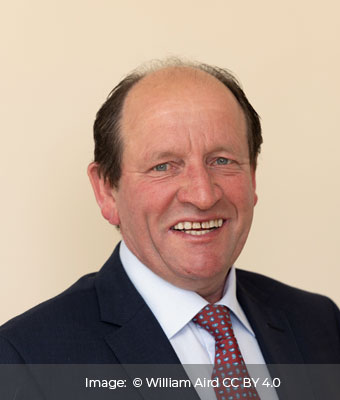
94. Deputy William Aird asked the Minister for Transport to include the Portlaoise northern orbital route and the Mountmellick bypass in the revised national development plan; and if he will make a statement on the matter. [28042/25]
I ask the Government to include both the Portlaoise northern orbital route and the Mountmellick bypass in the revised national development plan. They are not just local road projects; they are critical infrastructure with regional and national significance. As the Minister of State knows, Portlaoise is one of Ireland's fastest growing towns. The town is already under pressure from traffic congestion with heavy volumes of vehicles passing through daily. The northern orbital route has long been identified as a key priority to ease congestion in the town centre, improve road safety and enhance the quality of life for residents and businesses.

I thank the Deputy for the question and for his ongoing advocacy for his county of Laois. The Government has earmarked approximately €5.1 billion for investment in new national roads projects between 2021 and 2030 and a further €2.9 billion for the protection and renewal of the network. I can confirm that approximately €600 million of Exchequer capital funding was provided to local authorities through TII for national roads in 2025.
Regarding the Mountmellick bypass, in 2022 Laois County Council concluded the preliminary appraisal of options process in relation to a bypass of the town. However, a proposed bypass of Mountmellick, unfortunately for Deputy Aird, is not included among the projects that are identified for development during the current NDP timeframe and therefore it was not possible to advance the proposed project at that time.
The Portlaoise northern orbital route project was originally proposed during the 2000s and was to be funded by private developers at the time. However, following the subsequent recession and the funding stream no longer being available, the project was not progressed. While it is referenced by Laois County Council in its draft local area plan, it was not included in the current NDP due to issues of funding.
With regard to the progression of projects such as these, it is important to point out to the Deputy and the House that it is for the local authority, in the first instance, to engage with TII. I assure the Deputy that Department of Transport officials and TII will give any proposal for the progression of these projects full consideration. All projects, including those listed in the NDP or any revision to the NDP, require statutory approval and compliance with the infrastructure guidelines. The programme for Government contains a commitment to increase funding for new roads as part of the NDP review. This would include funding for town bypasses, such as those outlined by Deputy Aird, which improve regional connectivity and promote compact growth in our town centres. Work is currently under way within the Department of Transport to contribute to the review of the NDP, with input from TII and other agencies.
We do not need consideration; we need money. This road is vital to redirect HGVs coming from Rosslare to the west of Ireland. We are trying to move this traffic away from residential areas, schools and hospitals. This route is also essential to future-proof Portlaoise for sustainable growth under the national planning framework. Without this orbital route, development is hindered, traffic continues to choke the town and emissions increase. It is clear that inclusion of the Portlaoise northern orbital route in the revised national development plan is needed now.
The bypass needed in Mountmellick is equally important. Mountmellick has suffered severe traffic bottlenecks for years especially during the school rush hour. This is more than an inconvenience; it is a safety issue. The main streets in Mountmellick were never designed to carry the present volume or weight of traffic, including articulated lorries and agricultural machinery. The lack of a bypass affects the town's viability, slows economic development and poses safety risks to pedestrians and cyclists. It also affects regional connectivity, which we spoke about, between Tullamore, Portlaoise and surrounding areas. A Mountmellick bypass has been on the agenda for decades. It is time to move it into action.
I again thank the Deputy for raising the matter. He makes pertinent points about the orbital route and the traffic congestion. I remind him that Laois County Council received an allocation of more than €1.1 million this year for protection and renewal of the county's road network. With regard to the N80 road safety improvement project in Portlaoise town, including the Mountmellick Road and James Fintan Lalor Avenue, a technical adviser has been appointed, and a feasibility and options report seeking funding for the project is underway. TII is awaiting a submissions report and anticipates that Laois County Council will submit a report seeking funding by the end of this year. On the Stradbally N80 pavement project, tenders are being assessed and it is expected that works will be completed later this year. I remind Deputy Aird and Members that it is up to any council, including Laois County Council, to submit and engage with TII on the review of the NDP. I encourage it to do that, and I am happy to work with the Deputy on the matter. However, he raises valid and pertinent points this evening.
These two projects must be included in the revised national development plan to address fair regional development, align with national goals, reduce emissions, promote balanced regional development and support active travel and safer roads. The Portlaoise northern orbital route and the Mountmellick bypass projects would complement existing investment in the region's rail network. I urge the Minister of State to work with these county councils and Transport Infrastructure Ireland to ensure that the Portlaoise northern orbital route and the Mountmellick bypass are fully recognised and funded within the revised NDP.
When I was a councillor, I sat in Laois County Council during the previous NDP plan, and we were not included. We got nothing out of it. We were told the plan was closed for ten years, but because there was a general election that envelope was opened up. I assure the Minister of State that now that I am a TD, I will make sure these projects are in it. When the Minister, Deputy O'Brien, came off at junction 17 recently, he saw the road that goes down through the business park and travels solely to the west of Ireland. Not one shilling did it get from the former Minister, Eamon Ryan. I pleaded with him to give us money, but not a fivepenny piece did he give us for that. We funded that out of our own coffers in Laois County Council, so the Minister owes it to us to put us into that national development plan.
I hear loud and clear Deputy Aird's advocacy for the importance of this route. I remind him that this Government under the Minister, Deputy O'Brien, the Minister of State, Deputy Canney, and I has seen a further €2.9 million for the protection and renewal of the road network and we are investing €1 billion in new national road projects over the coming decade. I also say regarding the NDP review that it is up to all local authorities to work with TII and the Department to ensure projects get consideration. I hear the Deputy on sustainability and the issue of traffic gridlock and road safety, but the programme for Government contains a commitment to increase funding for new roads as part of the NDP review, as I have said. That is about ensuring we see town bypasses completed and we see work continue and carried out on regional connectivity. Deputy Aird has made a good point tonight. I am sure the advocacy work that he is doing and will continue to do will be well received in the Department. We hear the Deputy tonight, but I remind him that the two road projects I have listed are under way. Laois County Council has appointed a technical adviser and tenders are being assessed. It is important that Laois County Council engages in the NDP review.
I thank the Minister of State for that.
Transport Policy
95. Deputy Paul McAuliffe asked the Minister for Transport to provide an update on the Finglas Luas expansion project; and if he will make a statement on the matter. [34107/25]
I want to raise an issue that is identified in the national development programme, which is the Finglas Luas project. It is a fantastic project that makes a lot of sense, with 4 km and four stops connecting it to an existing line that will give access to thousands of people in my constituency. We are one of the few constituencies in the country that does not have rail services. We are entirely reliant on bus services. However, we hope the Finglas Luas will come out of planning this year, and we want to make sure that next year it goes to construction.
The Deputy knows this project well. It is one of four proposed Luas tram extensions that have been identified by the NTA as part of the current statutory transport strategy for the greater Dublin area. This project is 3.9 km, just short of 4 km, but still extensive as it would extend the Dublin tram network from Broombridge to Finglas.
This is eminently doable. The route will serve an estimated population of 56,000 by 2035 at four new stops, namely, St. Helena’s, Finglas village, St. Margaret’s Road and Charlestown. The Deputy has been a strong advocate for this and continues to be. The project will serve people beyond those communities through interchanges with the bus network and with rail services at Broombridge train station, which is on the planned DART+ West line. In addition, the project provides for a 350-vehicle park-and-ride facility at the St. Margaret’s Road stop, close to the M50-M2 interchange.
Transport Infrastructure Ireland, as the sponsoring agency, prepared the preliminary business case for Luas Finglas, while the NTA, as the day-to-day approving authority, approved it for submission to the Department of Transport. In October 2024, the Government approved the project at approval gate 1 of the infrastructure guidelines. That was a very significant step. TII did not delay. The following month, it lodged a railway order application with An Bord Pleanála. I am pleased to say I understand the board has recently confirmed that a decision will be made before 30 September 2025. It is not often the board comes out with a definitive date like that. That in itself is very significant.
Should the railway order be granted, the NTA will need to provide my Department with a procurement strategy for Luas Finglas, as is normal, under the infrastructure guidelines. Following ministerial approval, the project can enter the procurement stage. Subject to the planning decision, this project will be transformational for residents of the Deputy's constituency and the surrounding area, who will be able to link through the other networks.
It is very welcome that we will have a planning decision by 30 September. The Minister is right that the decision to bring it to the Cabinet for gate 1 was really important. The Minister, Deputy Lawless, really assisted us in doing that. He came on site and examined the potential of it. I was pleased the Cabinet signed off on that.
Almost all the Luas projects that have happened have gone through the planning and procurement phase in one five-year cycle and in the second five years they have been constructed and delivered. That is where we need to focus now. We are looking beyond planning and procurement to the potential of the site. It has the potential to unlock more housing in the area, which is crucial. When we built Finglas west and Finglas south, there was a line through the middle of it. That line was intended for a railway project many decades ago. While this is being prioritised, there is a legacy here. This will deliver for our constituency. I want to ensure the Minister is aware of it, which he is, and that we keep the pressure on the NTA and TII to deliver it.
I have been many times in the Deputy's constituency and in Finglas. I want to see this project move forward to construction and delivery. We have a couple of hurdles but not big ones. We have to get through planning. Should that be granted, there is then the procurement strategy for Luas Finglas under the infrastructure guidelines. Ministerial approval will follow that and the project can then enter the procurement stage. As is the case with all projects, this will go through Government consent and must receive approval at gate 3.
The project has a lot going for it. The construction is relatively simple for the very reason the Deputy highlighted. The railway corridor is there. The population and housing have developed around it and will allow us to develop more. Transport-oriented development is what we want for new homes and businesses.
I await with interest the decision prior to 30 September and look forward to working with the Deputy directly to deliver this project for Finglas.
Gabhaim buíochas leis an Aire. I see we are making good progress on that. We will keep a watchful eye and ensure it continues. Many people on the other side of the constituency will hope for the delivery of the metro project with the same urgency. It is a far more complex and detailed project but one that has been promised for some time. The review of the national development plan is happening in the next couple of weeks. Those two key projects in my constituency are really important, along with the BusConnects projects. The core bus corridors are the quickest and easiest ways to deliver better public transport in our areas. The network design was not uncontroversial and there was a great deal of input from people. I still have issues with certain elements of it but the core bus corridors will be important in providing high-frequency access. Those are my three asks. I wish the Minister the best of luck in his portfolio. It is the first time I have had the opportunity to ask him questions on it. I look forward to working with him on it.
I congratulate my colleague, Deputy McAuliffe, on his advocacy for Finglas Luas. The Minister will know Luas Lucan is very important to me. I am keen to know about the overall set of plans identified by the NTA for extension of Luas lines around Dublin. Will he consider putting a standing Luas project office in place to think of continued expansion of light rail? It is fair to say we have developed an expertise in the construction of light rail. We do it well, on time and in budget. We have a real opportunity to build a comparative advantage so it might be worth considering for the future.
That point is a very good one. TII has built up excellent expertise and knowledge in delivery of those projects. Expansion of the Luas network needs to be looked at in the round and that is being done. Deputy McAuliffe mentioned MetroLink and we expect that to come out of planning with a final decision - not a draft decision - in the month of July. That would be a transformational project for the north Dublin area from the airport right into the city through Ballymun, and indeed beyond. The challenge and opportunity for the Government and everyone in the House is that many of these projects are now coming through planning, including DART+ South West, DART+ West and DART+ Coastal North. All of those projects will be coming through. Moreover, BusConnects will start this year. Twelve projects have come through An Bord Pleanála. Four or five of them are unencumbered by judicial review. I have two tenders back in already. We expect to award a contract on the first one, which will see construction on the first BusConnects corridor happening this year. That is what the public wants to see. It wants to see investment in public transport infrastructure - bus, rail, Luas and metro.
Question No. 96 taken with Written Answers.
Public Transport

97. Deputy Naoise Ó Cearúil asked the Minister for Transport the expected timeline for the roll-out of contactless fare payments on all public transport; and if he will make a statement on the matter. [34135/25]
98. Deputy Joe Neville asked the Minister for Transport if an interim measure, such as payment by app, which happens in other cities, could be explored for public transport until contactless payment becomes an option; and if he will make a statement on the matter. [33948/25]

102. Deputy Barry Heneghan asked the Minister for Transport if he will provide an update on the roll-out of contactless fare payments across public transport services, including buses and trains; the expected timeline for full implementation; and if he will make a statement on the matter. [34183/25]
We have seen the extension of contactless fare payments in cities such as London, Edinburgh, Barcelona and Milan, as well as in the Netherlands. I am looking for the expected timeline for the roll-out of contactless fare payments on all public transport.
I propose to take Questions Nos. 97, 98 and 102 together.
I thank an Teachta Ó Cearúil. For background, the next generation ticketing project, led by the NTA, is for a new, modern public transport ticketing system that will facilitate a variety of payment methods for passengers, including contactless.
In April 2024, the NTA with Government approval entered into a multiyear framework agreement for next generation ticketing with Indra Sistemas S.A. to deliver this project. The initial focus is on the greater Dublin area and it will be rolled out across four phases. This is a major, complex project, with a capital cost of over €160 million - €160 million in Exchequer funds is being invested in this project - to implement it in the greater Dublin area alone, covering the costs of the enabling works to install new equipment for transport operators and the costs for the NTA team delivery team overseeing the project.
Phase 1 of the project in the greater Dublin area is due to launch in summer 2027. I am happy to be able to give that date. We will need to keep a close eye on the progress being made. That will be significant because it will test contactless payment on a small number of new validators or ticket machines. Phase 2 will be ready for summer 2028, allowing passengers on Dublin Bus and Luas services to use the next generation ticketing technology, including contactless payments on validators.
The NTA and Indra are currently planning phase 3, which is implementation across Iarnród Éireann's train services, and phase 4, which is implementation on commuter bus services in and out of Dublin. The NTA will be in a better position to provide timelines once planning is complete.
The timelines are not bad. It is summer 2027 for phase 1. I would like to see that shortening for phases 2, 3 and 4. The fundamental thing is to get the IT system in place. This will be account-based as well. It will be better than the system in Britain, which people might be used to if they use tap-on and tap-off, because they will also be able to have accounts. I am interrogating those timelines.
This would be transformative for our transport system across all bus, rail, Luas and DART services. In the meantime, and as an interim measure, Iarnród Éireann already provides for passengers to download a QR code to their phone, removing the need for a physical ticket on longer journeys. Obviously, we have the Leap card as well, which I use. In addition, the NTA's barcode-based app, TFI Go, already allows customers to buy a range of tickets for bus services outside Dublin, including on all Bus Éireann public service obligation services, Dublin commuter routes operated by Go-Ahead Ireland and all local link rural services nationwide. As part of the young adult fares scheme, 27 private bus operators already sell their tickets on the TFI Go app.
It is good news that this is being advanced. It is a significant investment on behalf of our people, but it is a critical project. I am not at all questioning the complexities involved, but I want to interrogate those timelines further. If we can get phase 1 going by summer 2027, I would be content with that. However, I am not sure I want to wait until summer 2028 for phase 2. I do not yet have timeframes for phases 3 and 4. I will meet with the NTA to discuss this matter shortly. I have already met with the NTA a number of times in respect of it. The Government is committed to this. I want to see it in place; done correctly, obviously, and in a timely fashion.
The Minister has announced extremely positive news here this evening that is extremely welcome. It would be great to see a breakdown of the timelines. What do we need to do in order to get to the first phase in the summer of 2027? Is there a need for procurement of IT systems? Are particular systems for buses, etc., required? It would be great to see the routes included in phase 1 as well. Would it be possible to expedite those later phases? We have to wait until the summer of 2028 for phase 2. Phase 3 relates to Iarnród Éireann and phase 4 relates to commuter buses. Obviously, the vast majority of people who commute to Dublin, particularly from Kildare North, do so by bus or rail. If we could get a breakdown to ensure we meet those timelines and to see if they could be expedited it would be very beneficial.
Can we get a contactless payment system in the interim? Obviously, the timelines have been highlighted. It might be another two, three or four years before things happen. Could we look at putting in place an interim measure that whereby people could use app to make contactless payments? Coming from north Kildare, it does not seem reasonable that we should expect it to take three or four years.
Deputy Neville may have missed the final part of my answer. TFI has the TFI Go app in place, and we have Leap cards as an interim measure as well. The point is taken, however. Many of the resources will be used in implementing this new system. Obviously, some will be used to design it but most will be used to implement it. I have a more detailed breakdown of the major release phases. Phase 1, which, as I mentioned, is scheduled for summer 2027, will introduce a small number of new ticketing machines for a combination of bus, tram and train services. That is to test and improve the functionality of the validators. It is right and proper that this is done before committing to a larger scale development.
We then get to the major release 2, assuming the test phase of the major release 1 works well. This involves installing new validators, initially across the Dublin city bus and Luas networks. This will take some time to complete, which is fair enough, and will involve replacing all of the validators on 1,300-plus buses and approximately 400 validators across 69 stops in the tram network. I understand there is a complexity involved, particularly when you are keeping Leap cards, free travel and all of the existing measures in place, such as the TFI Go app and others I mentioned. You are introducing a new system while you are operating the existing one.
Effectively, you then move into major release 3, which brings in Iarnród Éireann, or Irish Rail. That is a separate release owing to the specific complexity of installing and removing station gates. This will involve quite a lot of physical work on our rail network. In major release 4, the NTA will extend contactless bank card payments and barcode tickets to commuter and other bus services in the Dublin commuter zone. There are four phases, as I have stated, and four different releases. I will be meeting the NTA on this to see if there is any way we can shrink the timelines. However, it is welcome that it will start in summer 2027.
As I said, this is extremely positive news. It is great to see such a development. Indra Sistemas, which is carrying out the work, has done similar work previously in an international context. Are there any binding milestones built into the contract? The reason I ask is because there are four phases, which is excellent, and we can see clear steps to achieve the overarching aim, but the priority should be to ensure that everything is delivered on time and within budget. Could we get an understanding of the contractual arrangements with Indra Sistemas?
It goes without saying that there are more vulnerable users, older people in particular, who would like to continue to use cash. It is important to ensure that option is still available for those people and for those who prefer to use cash.
I thank the Minister for his work on this. It has been a priority for him, and it is great to see progress here so far.
The reason I bring up contactless payments is because I commute from north Kildare. As someone who has used buses and trains over years, I have seen the improvements in the public transport system. At the same time, contactless payments are something we have seen in many other countries and cities. A lot of people would have used them in different places. I see no reason Dublin and Ireland should be any different. That is the reason I tabled my question, but I also wanted to speak to an interim measure we could use. We all use our Leap cards, we all update them on the app and we all update our payments, but, sooner rather than later, it should be a simple case of being able to tap and go. Obviously, it will be a costly and complex exercise but we will need simple steps in place in order that we can identify the costs along the way, how they are orientated and whether the projects are hitting their targets within the timeline. I am very happy that contactless payments are a key focus for the Minister. Hopefully, we look to them being delivered in the near future. The sooner we get an interim measure in place, the better it will be for everyone.
I thank both Deputies for their support. I will meet the NTA and Indra Sistemas, which is developing this system. I will try to secure more specific timelines from the company. It has been very helpful so far. Work is progressing very well. On the contractual arrangements, I do not have that detail right now. I commit to reverting to both Deputies with an update on this after I meet with the NTA and Indra Sistemas.
If we look at other innovations that have taken place, the Leap card was a big step forward from what we had before. The 90-minute fare is very useful. The interaction of the Leap card between all of our transport operators as well is useful. It is not too many years ago that this option was not available to people. Thankfully, because this Government is still committed to free travel for our seniors, there will be no requirement for cash payments for most of them. As the Deputies know, a commitment made by the previous Government and this one is that people with free travel will be able to bring a companion with them, and it is being rolled out right now. Later this year, probably in September, we will bring forward free travel for those between the ages of five and eight. The purpose of this is to recognise that costs are high too for families. We also want kids who are using buses, etc., to get used to doing so in order that it becomes a habit. We had record public transport passenger journeys last year. We want to try to exceed that this year. People are responding in that regard right across urban and rural locations. The Minister of State, Deputy Buttimer, answered questions about the advancement of Local Link. That has been really significant.
We have a great deal of work to do in this space, but real progress has been made. I will keep Deputies Neville and Ó Cearúil up to date. I will revert to them, post my meeting with the NTA, with specific timelines.
Electric Vehicles
99. Deputy John Clendennen asked the Minister for Transport the take-up of EV charging schemes for sports clubs, community facilities and town and village centre residents; and if he will make a statement on the matter. [34002/25]
Will the Minister of State give some information to the House on the take-up of EV charging schemes for sports clubs, community facilities and town and village residents, and will he make a statement on the matter?
I thank the Deputy very much for the question. The Government is fully committed to tackling climate action with practical, innovative solutions that support our economy, communities and future generations. Promoting EVs is a central pillar of our strategy to reduce transport emissions, along with proposals to increase the use of active travel and public transport, reduce overall car usage and increase the mix of sustainable biofuels in the petrol and diesel fuel blends. Having an effective and reliable charging network is an essential part of enabling drivers to make the switch to EVs. While over 80% of charging is expected to happen at home, there is an absolute need for a seamless public charging network that will provide for situations or instances where home charging is not possible.
The regional and local EV charging network plan was launched in April this year and sets targets and strategies for local authorities to drive EV infrastructure development at destination and neighbourhood locations, with Government support. This plan will help deliver the charging infrastructure people need, where they need it, at home, on the road and at key destinations and neighbourhoods across communities.
The shared island funded sports club EV charging infrastructure scheme was officially launched in February 2023 with an allocation of €15 million. The aim of the scheme is to install a network of publicly accessible chargers in communities throughout the country, through their local sports clubs. The scheme was advertised both generally and through recognised national governing bodies for individual sports. Over 220 clubs across the island met the eligibility criteria to continue to the next phase. The next phase has been to procure charge point operators to undertake the works required. This is well advanced and announcements on this will be made in the coming weeks. This will enable sports clubs to engage with the selected CPOs to agree on works to be done and commence the draw-down of the funding.
Many of the community groups that pursued the initiative did so as part of a revenue-generating initiative, but there has been frustration. The Minister of State referred to some of the schemes but there are others that go back as far as July 2023, when expressions of interest would have been sought. These are ongoing. It takes more than two years to get an EV charging station installed at a community centre. There is frustration over how long it takes and the burden of administration. Rather than examining how we deliver the infrastructure, we need to examine the timeframe of delivery and place a serious onus on the agencies and scheme operators to deliver in a much shorter space of time than at present.
In town and village centres, the local authorities have to step up to the mark. Householders on streetscapes that have no access to a connection are frustrated. In other countries, streetlight poles have been used in this regard, and that is one of the initiatives we should be considering.
I agree that the time it takes to put these things in place is not what we would like.
The EU JTF EV charging scheme provides funding to support EV infrastructure at community facilities in the just transition area in the midlands. These include community centres, public libraries, public health centres, recreational facilities and enterprise centres in counties Laois, Longford, Offaly, Westmeath and Roscommon and the municipal districts of Ballinasloe, Athy, Clane-Maynooth, Carrick-on-Suir and Thurles. Ninety-three facilities have met the initial eligibility criteria. All site assessments have now been completed and the process to confirm their viability is now under way.
In addition, Zero Emission Vehicles Ireland, ZEVI, has developed a local authority EV charging infrastructure pilot scheme. This scheme has approximately 26 pilot projects across 15 local authorities. I will open the first of these on 27 June in Galway city. This co-ordinated pilot programme focuses on EV charging for multiple users’ needs predominantly at destination, neighbourhood and tourist locations.
The Department is also funding dedicated EV charging infrastructure officers in each local authority to co-ordinate the roll-out of the infrastructure.
The Minister of State mentioned the EU JTF. This is a fund we need to focus on in terms of delivery. It is far too slow and creating serious frustration. In reality today, we have a greater variety of electric cars and they are more affordable, but there is still range anxiety. Until we can get the network delivered, we will not address that.
More than ever before, we need to consider a network of fast chargers. There are issues over the reliability of the charging stations in rural towns. I have heard anecdotal examples of stations with three out of four chargers not working. I have never pulled up at a petrol or diesel pump that was not working, and I do not believe an EV owner should have to do likewise. We have to provide EV owners with reliability at the same level. I ask the Minister of State to boost the uptake, address the barriers and come up with some sort of framework to deal with reliability. I encourage those behind all the schemes to engage with the communities and explain to them why they take so long. A six-month interval between the submitting of information and the response is simply unacceptable.
I agree with the Deputy that it is not all being done as quickly as we would like. We need to expedite the process to give confidence to people who are considering buying an EV that the infrastructure will be in place and that they will be able to rely on it to get from A to B. Many things have been happening and we are coming to a point where we will see things happening on the ground. We will be working within the Department to push along the projects to ensure they will be delivered in the quickest time possible so people can gain confidence in the EV infrastructure.
Question No. 100 taken with Written Answers.
Bus Services
101. Deputy Emer Currie asked the Minister for Transport to provide a breakdown of the investment made in enhancing existing bus services in Dublin West from 2020 to date; and if he will make a statement on the matter. [34143/25]
My question is to ask the Minister for Transport to provide a breakdown of the investment made in enhancing existing bus services in Dublin West from 2020 to date. A handful of routes – four in total – have been introduced under BusConnects, mainly to replace existing services, and one new route called the W4. While we await the full implementation of BusConnects in 2026–27, our existing services are really struggling with demand.
I thank Deputy Currie for her question. Since 2020, over €18.75 million has been invested in bus services alone in Dublin West, reflecting a really strong and ongoing commitment to improving public transport in the area. This includes funding for both new routes and enhancements to existing services. Notably, new routes introduced over the period include the L52, introduced in 2020, the C5 and C6, introduced in 2021, the high-frequency orbital N4, introduced in 2022, the W5, introduced in 2023, and most recently, the N2, introduced in 2024. Enhancements to existing services have been prioritised, with approximately €1.6 million allocated across the period. However, the most substantial enhancements were delivered in 2020, with more than €1.25 million invested that year to improve service levels and reliability.
Looking ahead, while no new enhancements have been introduced yet in 2025, plans are in place to extend route 40D to serve Hollywoodrath later this year. An additional €500,000 is also committed this year to specifically address punctuality and reliability issues on routes 37, 38 and 70. These improvements were rolled out in April and are already supporting more consistent services.
Furthermore, phase 10 of the BusConnects network redesign, the B spine, is scheduled for late 2026 and will deliver significant improvements for Dublin West, subject to operational readiness and funding. In the interim, the NTA is working closely with operators to identify priority routes where capacity constraints are most pressing. Due to a range of factors, including limited driver availability, a prioritised list of enhancements will be developed based on the most urgent needs. I would welcome the Deputy’s input into that.
I thank the Minister. His numbers are the same as the ones I got through a parliamentary question dealing with capacity issues in each of the years 2020 to 2024. Seventeen million euro in that time had been invested in launching new bus routes in Dublin West, but, as the Minister said, just €1.6 million has been spent on enhancing existing bus services.
That discrepancy tells its own story. The €1.6 million that has been spent on enhancement has been patchy. According to the NTA, nothing was spent on enhancements to existing services in Dublin West in 2023. A year before that, in 2022, spending was a grand total of €97. I would love to know what €97 was spent on. There has been some increase since then. In 2024, €407,000 was invested in enhancing existing bus services in Dublin West. That is a fraction of the nearly €2.9 million spent on new routes. It reflects the reality that people are experiencing. It is just not enough when it comes to the growth and demand in established communities, which is most of Dublin West, and the growth of new communities while we wait for BusConnects.
BusConnects is going to make a real difference. It was held up for many reasons. I would suggest that there were initially route design flaws in much of the BusConnects project when it was first published, but that has been rectified. As I said earlier in response to a question, we will see the first BusConnects corridor under construction this year. We have three that are through planning. Rather, 12 are through planning, but a number are being judicially reviewed, which is another story.
The Deputy is right about the €97 that was spent in 2022. I have no idea what that was. As the Minister of State, Deputy Canney, said, it might have been to replace a wing mirror on a bus. Without being facetious about it, further investment is unquestionably needed. I know the Deputy's area very well. It is a major growth area. It is a young area too. The Deputy will have heard a number of other positive developments relating to additional services mentioned already this evening. We have to look at existing services and their reliability. I will bring the Deputy's intervention and feedback this evening directly to the NTA, which reports to me at the end of the day. It selects and approves the routes and route changes, but we need to make sure that it listens to public representatives too.
I would appreciate the Minister's intervention because I find those figures shocking. We cannot wait until BusConnects is implemented in Dublin West, which could be 2027. The Minister mentioned services for Hollywoodrath, including the 37 and 38. I have fought for those enhanced services. Underinvesting in existing services ignores the commuters in established communities who want to shift to public transport. We have seen more than 2,000 new homes built in the Blanchardstown-Mulhuddart local electoral area over the last five years. Many have been in a completely new area called Hollywoodrath. The Minister was there with us.
I was.
There were no new bus services and limited enhancement of the existing ones. Last week, the Green Party had a motion calling on the Government not to put the brakes on progress, but under a Green Party Minister, our community saw a decline in the reliability of its services. I am depending on the Minister to take the opportunity to change that. While BusConnects is promoted as a transformative project, and it will be, we have to properly invest in expanding and improving the services that people currently rely on in the here and now.
Regarding what the Green Party might say in Dublin West, the Green Party held the transport portfolio in the previous Government. Having said that, the Government is responsible for the delivery of all services across the board and we are heavily committed to public transport. That is why I mentioned earlier this evening the debate we had last week. We have seen a record number of public transport users and growth in every area, including Dublin West, but there are areas where there are pressures on commuters. I have said to all our operators, rail, Luas and bus, that the customer has to be first in this. I have said that to the NTA too. We can look at the projects and investment that are needed, but everything has to be focused on the customer. It is customers who are paying for those journeys and it is their tax euros that are being invested in the system. I am happy to arrange a specific meeting between the Deputy and the NTA. I want the Deputy to give that feedback directly to the NTA about the preparation of additional enhancements. BusConnects will change things significantly right across the country, not just in Dublin. We are really focused on getting those projects under way and this Government will do it.
Question No. 102 taken with Question No. 97.
Road Network
103. Deputy Aindrias Moynihan asked the Minister for Transport if urgent pavement works will be carried out on the N22, in particular the section east of Macroom to Ballincollig; and if he will make a statement on the matter. [34077/25]
There is a need to upgrade the surface of the N22 between Macroom and Ballincollig. TII did not approve funding to the council for the upgrade earlier this year. What options are now available to the council to improve this surface and make the road safer?
I thank Deputy Moynihan. The Government earmarked about €2.9 billion for the protection and renewal of the national road network as part of the National Development Plan 2021 to 2030. As the Deputy knows, the NDP is under review. That includes funding to renew pavement on the new network. In addition, €5.1 billion was earmarked for investment in new national roads projects. While the greater portion of the funding becomes available in the second half of the decade, I can confirm that approximately €600 million of Exchequer capital funds was provided to local authorities through TII for national roads in 2025. Of this, €74 million was allocated to Cork city and county councils.
As part of the current NDP, the N22 road between Cork and Kerry has seen significant development in recent years, not least with the completion of the Baile Bhuirne to Macroom project. In conjunction with the N22 Farranfore to Killarney project, which is being developed, this will deliver greatly improved connectivity between Cork and Kerry. In regard to the section between Macroom and Ballincollig, while it has not been possible so far to allocate funding for pavement works this year, funding has been provided for road safety schemes at Castlemore and Kilcondy. In addition, funding has been provided for a fixed safety camera pilot on the route.
With regard to future investment, the programme for Government commits to increasing funding for protection and renewal. This should allow the pace of road pavement renewal to be stepped up, including the section east of Macroom to Ballincollig. What I am basically saying is that I am aware of the really poor state of this section of road. The Deputy has mentioned it and the Minister of State, Deputy Buttimer, mentioned it to me again this evening.
I am glad Deputy Moynihan asked this question. We need to be more active with our agencies in making sure, as I said to a previous Deputy, that the feedback from public representatives on behalf of their constituents is actually listened to. This section of road needs to be attended to. We will have an increased roads programme for next year and we will try to secure additional funding to make sure this section of road is attended to.
Some 32,000 vehicles travel on this section of road every day. There is a big flow of traffic coming from west Cork. It is a key artery into the city for many people. Road surface is a major aspect of road safety. Traffic travelling at 100 km/h hitting large holes is just dangerous. Drivers trying to avoid these holes by swerving around them present a danger too. Did the council make a specific application for funding for this work this year? Across the country, projects come under pressure during the year. There may well also be other projects that are not able to proceed to construction. Is there an opportunity to reallocate funding towards a priority project like the N22?
I know the volume of traffic on the N22 is high and increasing. The paving is poor. The Deputy mentioned potholes. Following his intervention through this parliamentary question, I will make direct contact to see what remedial works can be done in the interim. I cannot say if funding will be reallocated later this year. We have just recently allocated the 2025 funding but I will ask. Good work is being done on other parts of the N22 but I want to make sure this section is not forgotten about. I will contact TII in this regard, particularly to see what can be done with the local authority in the interim this year. The fixed camera is working to reduce speed in that area. I do not know if a specific submission was received from the local authority, but I will find out for him and take this matter up with TII. I will keep him informed of the feedback from that meeting.
The Minister's intervention is hugely appreciated. This is a vital section of road. The Minister mentioned safety works being approved in Castlemore and Kilcondy. Those junctions are vital, as are so many others along the road, but at those junctions in particular, we have, unfortunately, seen many major accidents and tragic loss of life. The council is moving ahead with those works. This year's allocation will not be enough to build any of it but it will move the project towards construction.
Can those much-needed safety works be prioritised for funding to make that road safer in any future allocation?
The Deputy may take from the fact that we have done a lot of the preparatory work on design and preparation for the schemes in Castlemore and Kilcondy that we want to see them proceed to the next stage. That will be the logical step going forward into 2026. We will make sure that happens. The Ministers of State, Deputies Canney and Buttimer, and I have increased our roads funding this year by about €92 million. We received that draft funding package quite late because the Government had only come in, yet we were able to effect an increase. We will have a more significant increase in our roads programme next year. Government colleagues' interventions, including the Deputy's, regarding what is important in their own areas will be taken in the round because they are the people elected by their constituents. I will reference the particular section east of Macroom to Ballincollig with TII and I will revert to the Deputy.
Is féidir teacht ar Cheisteanna Scríofa ar www.oireachtas.ie.
Written Answers are published on the Oireachtas website.