Work Permits

7. Deputy Cormac Devlin asked the Minister for Enterprise, Tourism and Employment his plans to expand the lists of occupations for roles that are eligible for employment permits; and if he will make a statement on the matter. [32942/25]

This question is important in the context of our economy. Across our economy in health, ICT and engineering, there are skills shortages that need to be filled. Will the Minister of State provide an update on his plan to expand the list of occupations?

The programme for Government outlines our commitment to addressing skills shortages and supporting economic growth through a strategic migration approach. Ireland’s general policy is to promote the sourcing of labour from within Ireland and the EEA. To fulfil this policy, Ireland operates and manages an employment permits system designed to fill critical skills and labour shortages in the short to medium term where those skills are not available within Ireland or the EEA. This targeted approach ensures that Irish enterprise has access to the talent it needs to remain productive, competitive and innovative, particularly in the context of near full employment.
The employment permits system is managed on the basis of two occupations lists. The critical skills occupations list prioritises specific in-demand professional roles crucial to the functioning of Irish society such as healthcare and IT. Minimum annual remuneration for roles on the critical skills occupations list start at €38,000 for those with a relevant degree and €64,000 for those with relevant experience. The ineligible occupations list identifies roles for which a labour supply should be available in the Irish or EEA labour market and so are ineligible for consideration for an employment permit. All roles not on either list are eligible for general employment permits which have a minimum annual remuneration of €34,000 for most roles.
The occupations lists are subject to periodic review. This means that in times of economic expansion, eligible occupation categories may be expanded to provide for labour and skills shortages. During a period of economic contraction, eligible occupation categories can be narrowed and other restrictions applied.
Are there plans to expand the lists? The programme for Government does not just mention visas; it also refers to merging the visa and employment permit systems into one user-friendly, single-application procedure supported by a new ICT system. I understand that a new permit system has been rolled out, and Deputy Mattie McGrath also raised this issue. Concerns have been raised with me by constituents, all of which we were able to resolve. How is the new system performing? Is the new IT system performing well? Is it slower than the previous system? There is much confusion. To support SMEs, the Department could provide more training. There was an online webinar and briefing but more training could be of benefit for SMEs that regularly use the system, whether in healthcare or ICT.
The employment permit system is demand-led and designed to respond to the real labour market needs. The occupations list is reviewed periodically. The next formal review is scheduled for the summer. It will be open to all sectors. We invite many representative bodies, Departments and NGOs to make submissions. It is evidence-based. It is reviewed and overseen by an interdepartmental group on economic migration, the skills and labour market research unit and Department of Social Protection. We recently made 43 changes to the occupations list. That reflects the new critical skills required. We are making changes including in key sectors such as science, engineering and health. I will come back to the Deputy about his question on the ongoing performance of the current system which was implemented as part of an action plan. It has been working well in recent months.
It is welcome to hear that a review will take place and that such reviews happen periodically. Is there a date for when submissions will open? Are they made on a rolling basis? If I go back to my constituents in Galway East and across the network, it would be great to be able to give people an update. I would appreciate an update on the permit system. As with any new system, there have been teething issues but nothing that cannot be worked through. The system will serve the better purpose of shortening waiting times for work permits.
In sectors of high demand, is there any limit to the number of work permits that can be issued for areas where we have significant skills shortages?
I thank the Deputy for his focus on this important area. The consultation will open shortly. We will make that announcement in due course. It will open for an eight-week period. There will be an opportunity for employers, representative bodies and Departments to make submissions. This is very much a transparent, data-driven process. It is open to all sectors. Most recently, we opened the eligible occupation list for town planners in order to deliver the infrastructure and the housing we need, and for social and home care helpers because it is really important we continue to invest in the care of older people. We also have a shortage of HGV, coach and bus drivers. The single application procedure for employment permits and the immigration permissions will be central in terms of how we have one system fit for the State.
Industrial Development
8. Deputy Albert Dolan asked the Minister for Enterprise, Tourism and Employment the number of jobs in Galway currently supported by Enterprise Ireland and by the IDA; and if he will make a statement on the matter. [33001/25]
In Galway, we have a fantastic economy that has grown over the past few years and has only gone from strength to strength. A significant number of people are employed across our IDA and Enterprise Ireland clients. I ask the Minister to provide details of the number of jobs in Galway in either IDA- or Enterprise Ireland-related companies.

I thank the Deputy for his very important question. I am happy to tell him that the Government and I, as Minister of State with responsibility for trade promotion, digitalisation and AI, are committed to developing Ireland's enterprise base across all regions over the next five years. This ranges from backing small businesses and start-ups to scaling up indigenous firms and enhancing our attractiveness as a location for foreign direct investment. Our vision is to foster a dynamic, resilient and inclusive economy that supports sustainable growth and job creation in every corner of the country.
The Deputy's interest, of course, is County Galway and according to the Department's annual employment survey of Enterprise Ireland clients for 2024, there are 329 Enterprise Ireland-supported companies operating in that county. These companies collectively employ 9,687 people, which is a nearly 7% increase in employment compared with 2023. This growth reflects the strength of local entrepreneurship and the effectiveness of targeted supports for indigenous enterprise, which continue to empower businesses to innovate, expand and compete on a global stage.
There were a number of Enterprise Ireland jobs announcements in Galway in 2025. In January 2025, Aerogen announced an expansion that will create 725 jobs over ten years. In May, M&M Qualtech announced 18 new positions at its Galway facility while in June, ICS Medical Devices announced 72 jobs by 2028. In addition, the Galway local enterprise office has been instrumental in supporting small businesses. In 2024, it assisted 258 local businesses, supporting 1,356 jobs and creating 218 new jobs through the provision of over €600,000 in direct grant assistance.
Gabhaim buíochas leis an Aire Stáit. That tells the story. I was expecting to hear numbers like that. A 7% increase in Enterprise Ireland employment numbers across Galway in 2023 to 2024 alone is phenomenal growth and the type of growth we want to see, not just for Galway, but for all of the west.
There are two important aspects I wish to highlight. The first is the planning process for new companies looking to establish in our area to accelerate that growth. We had a fantastic example in my nearest town of Athenry. The Dexcom facility currently under construction is set to employ 1,000 people. It is at the M6 motorway interchange and has rail connectivity. This formed part of the western regional enterprise plan previously. The problem currently lies with infrastructure in Galway city. I need support from the Department of enterprise to encourage the other Departments, be that the Department of Transport or of infrastructure, to ensure access to Galway city is a priority. So many of my constituents commute into the city to access work in Parkmore and it is not fair on them to have their time stolen.
I thank the Deputy for the very legitimate concerns he has raised. On the first piece around planning, he will agree that the Planning and Development Act passed by the previous Government has gone a huge way towards trying to address that. Whether we are in opposition or government, we all know this country has been choked and almost had its development stifled due to planning. We are doing everything possible to address those challenges and make it more attractive for businesses to go through that process. The spurious and vexatious objections that have stifled the ability of companies not just to start up but also to possibly scale up have been detrimental to the growth of our economy. In the previous Government and this Government, we are certainly trying to address it, and we have addressed it in an action-based way through the Planning and Development Act.
As to how we support the businesses that want to scale up, the Deputy will agree that all of our State agencies, be it the IDA, Enterprise Ireland, CeADAR - which is focused on AI development - or a LEO, are doing everything possible to support those businesses in doing that.
I appreciate the commitment by the Government to tackle the planning issues, but we did not have that problem in Athenry, fortunately. It was an eight-week planning process and permission was granted with the necessary conditions to ensure nobody was impacted negatively. It was a positive news story and something we as a Government should promote more to the wider world to show that companies can do business in Ireland, can do it quickly and can grow their business in a safe and reliable environment.
The other point I wanted to make applies in particular to small-to-medium-sized enterprises across the west. Procurement can be quite difficult. I continually raise this, but we need to change the way we are doing procurement to ensure our small-to-medium-sized enterprises can access opportunities close to home. It should not be a case of the large players continually being the ones to get the largest slice of the cake. It should be the case that our small-to-medium-sized enterprises in our localities have access to opportunities as well.
Point taken. It is a very reasonable observation to make. Procurement is a language of its own. We all know that from filling in procurement applications for grants for communities, for example. There is a language and that can sometimes be off-putting, make it difficult and create further challenges for business. However, we are in the business of creating business. We are in the business, as a Government, of supporting business and the Deputy is right, in that we want the world to know this is a good country to do business in and that the Government and the local authorities are ready and open to assist in any way we can.
I take on board the Deputy's point about procurement and will speak to the Minister to see what we can do to address that.
Small and Medium Enterprises

9. Deputy James O'Connor asked the Minister for Enterprise, Tourism and Employment if he will outline his strategy to address the rising cost of doing business, particularly for small and medium enterprises; if he will detail any planned interventions aimed at improving cost competitiveness in areas such as energy, insurance, labour and regulatory compliance; and if he will make a statement on the matter. [33207/25]

10. Deputy Colm Burke asked the Minister for Enterprise, Tourism and Employment the further steps the Department is taking to support small and medium enterprises to reduce the cost of energy; and if he will make a statement on the matter. [32906/25]
16. Deputy Tony McCormack asked the Minister for Enterprise, Tourism and Employment the additional supports being provided to SMEs to address rising costs and staffing challenges; and if he will make a statement on the matter. [33029/25]

I propose to take Questions Nos. 9 ,10 and 16 together.
I thank the Deputies for these important questions on the SME sector. Ireland's SME sector has faced a number of economic shocks in recent years and these have resulted in very significant cost increases. While most of these have been international in nature, with energy price inflation the most significant, there have been costs associated with domestic measures, including policies aimed at improving working conditions. Although there have been improvements in wholesale price inflation, business costs and especially energy prices remain elevated. Our small size and peripheral location contribute to higher electricity prices in Ireland. We also have a widely spread, low-density population, which means that network and connection costs are higher.
The Government has been active in providing support for businesses facing increased costs over the past several years. In April 2024, I announced a substantial package of measures that continue to aid firms. These measures included increased payments under the innovation grant scheme and the energy efficiency grant scheme and the implementation of an enhanced SME test on Government decisions.
The National Enterprise Hub was launched in 2024 and has been designed as an entry point to aid businesses to find relevant supports and help for their business. Most recently, budget 2025 provided for the introduction of the power up grant and introduced changes which reduced costs by means of the increased employer PRSI threshold. The programme for Government set out a commitment to establish a cost of business advisory forum. The first meeting of the forum took place on 11 June where numerous organisations representing Ireland’s enterprise sector were joined by officials from a variety of State agencies and Government Departments. It is anticipated the forum will meet regularly over the coming six months, with each meeting devoted to a distinct area of concern to businesses, including business costs, infrastructure and regulation.
In response to international economic developments and in line with other commitments in the programme for Government, we have also accelerated the timeframe for the development of the action plan for competitiveness and productivity. The action plan is currently being prepared and discussions on competitiveness will be had at the summit in July. The plan will focus on domestic policy measures, which can make the Irish economy more competitive and resilient to economic shocks. It is expected that the plan will address areas that are currently impacting on the ability of SMEs to compete internationally, including costs, SME scaling and increasing the rate of research, development and innovation among firms, which will be critical.
We have taken a number of actions over the past months since my appointment as enterprise Minister, and we will continue in that vein. We are coming to our fourth piece of omnibus legislation in an EU context. At the heart of that is doing things, as I mentioned, simpler, faster and lighter. We need to bring that to the heart of the enterprise sector. The Deputy will be aware we have taken a number of decisions on sick pay, the trajectory to a living wage and trying to ensure businesses remain viable so employment can be retained at the significant point it is. He will be aware also that we have increased employment by approximately 90,000 over the past year. That is 90,000 families with an additional income going into them. We all know that high-value jobs are the best route to meet one's ambition in life and to give everyone a fair chance. We are focused on delivering that.
At our competitiveness summit we will have a significant focus on infrastructure. Working with the Minister, Deputy Chambers, we are trying to put together a competitive fund within the Department. We know the priorities of the current national development plan review are housing, water and wastewater, energy and our competitiveness. Those are the four key areas. That is why, as a Government, we need to prioritise those with a laser focus because if everything is a priority, then nothing is a priority. We need to be clear on that and send that signal strongly to the enterprise sector. We are also focusing, in the context of budget 2026, on our value proposition as a country. It will be key for the SME sector. Taxation changes like VAT will be important for the hospitality sector. It is important in the programme for Government talks that we work towards and deliver on those to ensure we are giving a strong stimulus to those sectors that are most vulnerable. We know across the economy that approximately three quarters of all minimum wage workers exist in retail and hospitality. That is a significant challenge to those businesses because of the regulatory impact it has had. No other Government has done as much for employment rights and supporting the well-being and rights of employees, but we also have to be cautious to ensure businesses remain viable on that trajectory. That is why it is key in decisions taken to ensure that and to ensure businesses continue to grow and prosper. Last week, subject to the establishment of our small business unit, we had our first meeting of the cost of business advisory forum, which had a huge turnout from many of the regulators and a lot of the State agencies. We need to be clear that we are charting a pathway forward. The interoperability of some of these rules and regulations set by independent regulators from different areas and how they impact on the costs and viability of business can be significant. We need to take a number of actions in that regard. That is why the outworkings of that forum will be critical in delivering the Government's vision of supporting our SME sector and keeping that growth.
As I always point out, and as I did in reply to Question No. 2, many of these businesses that employ two thirds of people across our country are operating from the kitchen table. They do not have a finance director or HR director. They are doing all of that work themselves. They are working from five to nine and we in government need to do everything to vindicate their efforts and ensure they remain viable, which is key to our economic success.
I thank the Minister and compliment his Department for all its hard work. We are in an economy with full employment. That does not happen by chance. I refer to all the work that has been done in the past and needs to be done in the future. We are in uncertain times. We are looking at tariffs. We are working with our European partners to negotiate tariffs with the United States. Now, more than ever, we need to be supporting our smaller businesses. I welcome the supports mentioned, but many small businesses in County Offaly and across the country are still not sure how to access them or whether they even qualify for them. I have spoken with business owners who are unaware that certain schemes exist in the first place, and that is a real gap. Will the Minister look at simplifying the application process and at rolling out a strong national and local awareness campaign through the local enterprise office, chambers of commerce and media? We need to meet these businesses where they are, and not just on the websites. Will the Minister also provide figures on how many businesses nationwide and in Offaly have made use of the wage subsidy scheme and upskilling programmes like Skillnet or others under the national training fund?
I want to ask about commercial rates. Small businesses in towns are still under major pressure from inflation, energy bills and wage demands. Will the rates relief continue into next year? They need certainty now.
I thank the Deputy for mentioning those important areas. I turn first to simplification. I have met Enterprise Ireland and our LEO sector, and we are keen to drive the message home that we need conditions that are simple for family businesses to get those supports, critically in the transition to digitalisation and sustainability. If we do not support our businesses, it will not be possible to meet that transition. We have established a National Enterprise Hub that has more than 250 supports from 29 Government Departments and agencies all under one portal. They have a return time of less than 24 hours, with phone operators at the other end of the line to reply to customers. That is critical to assist them with some bespoke examples that pertain to their business models. That has been successful. We have seen a significant increase in callers and people interacting on the website over past months. You can see the advertising campaign under way to make people aware of those supports which we want to get out to businesses.
We also have our SME tests, which I am trying to get into the Cabinet handbook, which direct that an impact assessment must be carried out on all memorandums, primary legislation changes and statutory instrument changes - at the heart of each decision - to demonstrate how it impacts on our SME sector and in thinking small first. It will be important to reach that milestone.
On the National Training Fund legislation, the heads of Bill went before Cabinet this week. That will be keenly focused on our tertiary education sector, but also on our SMEs and how we can get money into upskilling, life-long learning and continuing to train people across our economy. It is critical to our success that we have the skill base to ensure we can grow and absorb the huge opportunity that is out there. That will be very important.
With regard to other supports, we are currently preparing our pre-budget submission for budget 2026. We, along with the Ministers of State, Deputies Smyth and Dillon, have met a number of the sectors. Yesterday we had our enterprise forum where we heard all the views on what our enterprise sector would like to see in budget 2026. They are wide-ranging. As a country, last year was the first time we went over the €100 billion barrier, with a budget of €105.5 billion. That shows the significant improvements we have made, but the Deputy rightly alluded to the significant clouds on the horizon. We have to be careful we are hitting the right parts.
Key from my point of view will be significant changes in the research and development tax credit and, hopefully, we can get small, indigenous companies as part of that. As well as supporting the enterprise sector, we are trying to reduce regulation, which is important, and continuing to get as much scaling up and as many new companies. We have established a target of having 1,000 new companies, through Enterprise Ireland, over the next five years and getting up to 275,000 employees, supported by Enterprise Ireland. We are also trying to ensure significant investment in regional Ireland. It will be core and central to our ministerial team to ensure the regions grow strongly. I know that is something I share with the Deputy.
I now turn to the issue of high-street retail, which is in serious decline. In towns like Tullamore, Birr, Edenderry and similar towns all over Ireland, we see more and more shops closing. Footfall is down, rent and staffing costs are up and the result is that once thriving town centres are slowly emptying out. This is visible, urgent and deeply worrying. The reality is that this cannot be solved by one scheme or Department alone.
We need a national joined-up plan that looks at how to bring life back to our high streets. That includes cross-departmental action, enterprise, housing, local government and finance. We need real incentives for retail on the high street, not just to keep existing shops afloat, but to make it attractive for new retail businesses to open. That could mean help with start-up costs, targeted grants for fitting out vacant units, supports for marketing, rent, or even pop-up retail pilots in empty spaces.
What plans does the Department have to support and revive high street retail? Will the Minister work with his Cabinet colleagues to make this a priority in government?
Absolutely. Retail is the biggest employer in the economy. It is so important to our vision for enterprise.
There are significant supports already in place. One key example I always give is the energy efficiency grant. At the moment, one of the key ways we have to reduce business costs is not to take money off businesses in the first place. Front and centre of that is the energy efficiency grant. I have seen case studies, such as the example of a shop owner in Donegal who has a convenience store with a deli, who, by upgrading his LED lighting and refrigeration, can save €1,500 a month on his utility bills. We want to see business owners involved in schemes like that, in particular in the areas of sustainability and digitalisation. We want to make the conditions easy for them to access it and to get a quicker turnaround in the schemes. We met Enterprise Ireland at its centre of excellence, which liaises with LEOs, this week with that target in mind. We are trying to support businesses as much as we can.
Deputy McCormack quite rightly points out that there are other Departments that are key to the development of our main streets. Vacancy is a big challenge, in particular in regard to accommodation. Getting people to live over the shop, as it were, has been a big challenge because the regulatory burden is very significant in terms of making developments viable in that space. Our new housing plan will be launched in July. I hope we will see actions that involve working with the Minister, Deputy Browne, in that regard to ensure that happens. The Minister of State, Deputy Cummins, is very focused on that in terms of planning exemptions. There is a lot of work we can do.
We are also working closely with the local authorities. We see very different stimulus plans from various local authorities in terms of how they can bring a bit of agility and how they deploy their rates stimuli, rates budget and waivers, etc. We are up for any way we can support an increased number of retailers in our country. The Deputy will see some of the measures that we have taken on retailers' costs in recent months, which we hope will support them and, equally, help retain employment and jobs, which is our focus every single day in the Department.
Enterprise Support Services
11. Deputy Albert Dolan asked the Minister for Enterprise, Tourism and Employment when a new western regional enterprise plan will be published; and if he will make a statement on the matter. [33000/25]
This question is essentially to ask when a new western regional enterprise plan will be published. Will the Minister of State provide some detail on that? The previous western regional enterprise plan from 2021 to 2024 has been a success. It identified a Galway to Athenry economic corridor in which we now see enterprises developing in the form of Dexcom, but we have also seen other developments right across the west. I refer to CREW and BIA Innovator in Athenry. A huge amount is going on. I would greatly appreciate it if the Minister of State could provide an update on when the new western regional enterprise plan will be launched.
I thank the Deputy for his question. Balanced regional development remains a key Government priority. One central aim of the White Paper on Enterprise 2022-2030 is to support balanced regional economic development. My Department and its agencies contribute to this agenda in several ways, including through the nine regional enterprise plans or REPs. These are bottom-up plans developed and led by regional stakeholders, which focus on collaborative initiatives to strengthen the enterprise ecosystem in each region.
As mentioned in response to a parliamentary question during Question Time on 20 February 2025, with agreement from the regional enterprise plans national oversight group at its meeting of 25 April 2024, the current REPs have been extended for one year to the end of 2025. This extension provides an additional year for the continued implementation of the current plans and time to consider the best approach to the development of successor plans throughout 2025.
There is a clear commitment in the new programme for Government to publish and resource new regional enterprise plans. Before we develop these new plans, I am assessing our approach to date so I can set a clear framework for the future and engage all of the relevant stakeholders in each region.
An independent review of the regional enterprise plan initiative is currently under way. The review began in January 2025 and the final report is due to be delivered by the end of this month. A steering group was established to oversee the review.
The REP national oversight group, or NOG, met last week, with the Minister, Deputy Burke, the Minister of State, Deputy Smyth, and me co-chairing the meeting. The NOG brought together the chairs from the regional committees and other key stakeholders to discuss implementation of the REPs and related policies. We will ensure that we also develop a new policy statement in the second half of this year. In turn, that will lead to the development of the next set of regional enterprise plans.
The western regional enterprise plan must have significant consideration of AI and a dedication to it. Ireland has benefited massively in the past 30 to 40 years from having incredible educational opportunities, ultimately leading many people into high-paying, knowledge worker roles. The problem is that, with the speed at which AI is changing, it is a threat to many of the knowledge worker roles. We should not see it as a threat but as an opportunity. We must embrace it and run with it. This western regional enterprise plan should set out clearly that Galway or the west needs an AI hub, whereby all of our tech companies, medtech and pharma in the west can tap into AI and make sure that not only are they using AI to benefit their companies, but they are using it to benefit the west and the country as a whole, because it is going to get hyper-competitive in the coming years. If we do not get ahead of it now, we run the risk of being left behind. Globally, AI is being adopted at a faster rate than any technology previously in the history of the world. It is our chance as a country to get out in front.
I agree with the points and the principles the Deputy has presented. The regional enterprise plan for the west is very much a collaborative initiative and must be focused on digitalisation and decarbonisation and on ensuring that the region itself is put to the fore. We have a good story to tell about sectoral growth in ICT, agritech and medtech. It is great to hear about the large multimillion euro investment in Deputy Dolan's town of Athenry, where Dexcom created 1,000 jobs. We want to support that even further in regard to artificial intelligence. We will shortly publish the cluster programme, which will be important. There will also be a new life science strategy. AI will be central to both our indigenous and FDI investments. Following the publication of the Indecon report on the framework for the new regional enterprise plans-----
I thank the Minister of State.
-----a core element of that will be how we use digital technology to support the plans in the future.
I appreciate the Minister of State's commitment to digitalisation, but I want to hammer the point home. An AI hub for the west is something we need in order to be as competitive as the rest of the country, and world, into the future.
The final point I want to raise relates to agritech and the agrifood sector. There is a role to be played between agritourism, the food sector and what we have already built in Athenry – the BIA Innovator. If the Minister of State has not seen it or visited it, it is an incredible multimillion euro facility with state-of-the-art biotechnology, kitchens and supports in place. It is not just a kitchen; it is a wraparound service for entrepreneurs in the food sector who are trying to make new and innovative products, ultimately leading to them growing and expanding. I would like to hear the Minister of State's consideration of the agritourism and agrifood sector as well, especially in the west, because it is a great opportunity for us.
The fact that the tourism function has moved into the enterprise Department means there is a role to expand within the agrifood and tech sector. In my county, agritech is an important sector. We have McHale Farm Machinery and Malone Farm Machinery.
The west must be a focal point and have centres of excellence. It is great to hear about such positive developments such as CREW and the other sectors within Galway.
It has a really strong ecosystem and that is down to the hard work with the local authorities, public representatives and key State agencies on development and investment. Indeed, I want that to continue within the new west regional enterprise plan. I am sure we will be in touch and I know the Deputy is a huge advocate for business, enterprise and ensuring we create the jobs to ensure people have that quality of life to live and raise a family within their locality.
Business Supports
12. Deputy John Clendennen asked the Minister for Enterprise, Tourism and Employment if usage data relating to the National Enterprise Hub is able to demonstrate the more popular or accessible business supports; if such information will help shape future supports; and if he will make a statement on the matter. [32944/25]
I thank the Deputy for his question on the National Enterprise Hub which was established on 10 July 2024 and since then, the NEH has handled more than 6,000 inquiries from businesses. Monthly numbers have increased consistently and 773 were received in May alone. The primary goal of the NEH is to improve access to Government supports for businesses. We also want to simplify access and reach businesses that have never availed of the many different supports on offer. While my Department leads on the NEH overall, it is run by Enterprise Ireland, EI, and it is very much a whole of Government approach. The NEH has expanded considerably in the last year and now offers information and support on more than 250 Government supports from 30 different Government bodies. The NEH continues to undergo developments to refine and improve its services and to enhance the manner in which data is captured and used to ensure it is providing useful insights that can be used to inform policy.
In terms of the most popular supports, the top three most searched categories in May this year were, as the Deputy might expect, grants and funding; loans, training and programmes; and advice and mentoring. The top inquiries received by the NEH team in May were fund your start-up; become more digital; and get support to expand. They relate to scaling up, digitalisation and AI and seed funding for start-ups. The top individual supports were the local enterprise office, LEO, supports start your own business; the grow digital voucher; LEO and EI feasibility studies; Micro Finance Ireland loans; the LEO energy efficiency grant and the revenue start-up relief for entrepreneurs. SOLAS micro-qualifications, the SBCI growth and sustainability loan scheme, social protection job plus and Skillnet Ireland networking also featured as popular supports.
I am learning every day of all the different schemes and supports that are there so something like this that pulls all of that together and gives it to the business community is essential.
I thank the Minister of State for the update. I fully agree with her. When the Minister of State shares that information, she is essentially giving an insight into what is happening in the market. However, if a business owner sits in front of a computer and is looking for information, they do not necessarily know what they are navigating for. We need to be sharing that detail on the website's home page and using it as an interactive piece. I appreciate this is very early days - it was only established last July - but it has been hugely welcome. The level of engagement is important to share but also the outcome on queries and where the obstacles were is also important. Business people learn from each other in networks, hotels and whatever else on a daily basis and there should be an element of that brought in here as well.
On the grants, this is a constant, evolving and moving piece. We need to not just share that information but give that element of opportunity for businesses to share their sense of the market. As the Minister of State said, that can feed up in many different ways into what our policy can be.
I thank the Deputy. As I said at the outset, the National Enterprise Hub not only gives the information but it is collecting the data too which gives the Government a laser sharp focus on the type of policy, grant aid and supports we need to offer to get to the critical crux of what businesses need to support, grow and scale.
The figures I gave out on the inquiries it has had so far are incredible. There have been 6,000 since it began and in May alone, there were over 700 inquiries. The hub brings together information and resources on more than 250 Government supports and 30 different Government bodies and State agencies. That is always the challenge for business people, especially the small and medium sector that may not have a HR section or does not have a section dedicated to going after where funds are or where they can be availed of. That is always the feedback we would all get. Having that one stop shop, which is the hope and intention of what the enterprise hub is, gives them that one place they can go. It is across 30 Government bodies. That kind of coherence and collective information is critically important.
I thank the Minister of State. She might not believe this but sometimes, I get feedback that the grant systems are too good to be true. When you get an applicant that has gone through the likes of an energy efficiency grant, how seamless it is and how easy it is to apply and get the payment, that feedback needs to get out there more. We will see an increase in that regard. No one can doubt what progress has been made from a Government perspective in this space over time, whether it be sick pay or living wage, but overall prioritising the viability of business. That is the message we need to get out.
There is a narrative that we may not have been as pro-enterprise as we are but this is very much an instrument and tool we need to use to our advantage. It is working but it needs to be maximised and invested in more to ensure there is a level of engagement with it rather than just pushing information out on particular grants. It should be showing what is the top line in terms of what the engagement has been so people are learning from it.
In my short few months in the Department, the Minister, Deputy Burke, has been relentless on the theme of lighter, faster and simpler with what the Deputy is talking about and providing opportunities for businesses to apply for those grants and make it easier and quicker and not as onerous or burdensome. As we all know and we hear it at meetings ourselves, business people ask is it worth the effort. There is a huge effort being made on the Minister's part to get all of the right people around the table and have the forums for those messages to come across, not just to us, the policy makers, but to the officials too who are helping us pull together these grant applications.
The Minister, Deputy Burke, has been relentless on the message of simpler, faster and lighter on not just the burdens of regulation but also on the theme of providing supports to businesses to assist them to scale up and grow.
EU Directives
13. Deputy Sinéad Gibney asked the Minister for Enterprise, Tourism and Employment his Department’s position on the provisions currently contained in the Corporate Sustainability and Due Diligence Directive which may be subject to alteration or removal as part of the EU Omnibus package relating to the risk-based approach to due diligence, harmonised civil liability regime, the requirement to put into effect climate transition plans, and provisions on stakeholder engagement; and if he will make a statement on the matter. [27728/25]
I thank Deputy Gibney for her very important question. Ireland supports the simplification and burden reduction agenda at EU level. Specifically, in relation to the Omnibus on sustainability, the proposals are intended to address disproportionate burdens on businesses, in particular on SMEs, whilst retaining key aspects in relation to corporate responsibility. In relation to the necessity to conduct a risk-based approach, the Commission’s proposal retains the requirement for in-scope companies to conduct risk-based human rights and environmental due diligence of their own operations, those of their subsidiaries and their direct business partners. If plausible information suggests the existence or possibility of adverse impacts arising from their operations or those of their indirect business partners, the company will be required to conduct an in-depth assessment.
If that assessment confirms the existence of an adverse impact, further due diligence will need to be carried out. The proposed amendment in relation to civil liability is to remove the EU-wide civil liability regime in favour of a national civil liability regime. My position, which has been indicated at EU level, is that to avoid a civil liability regime which would vary across EU Member States, Ireland sees the benefits of retaining the EU-wide civil liability regime as provided for and published in the directive.
In relation to the climate action proposal, it seeks to simplify the provisions on transition plans by aligning with the provisions of the corporate sustainability reporting directive. In-scope companies will be required to include implementation actions, planned and taken, in their climate transition plans. The design of climate plans must include targets related to climate change and companies will have to report on achieving those targets on an annual basis. The Deputy may wish to note that under the climate action plan, the enterprise sector is committing to a 35% reduction in emissions by 2030.
Irish enterprises are taking climate action seriously. For example, a recently commissioned survey of more than 300 SMEs showed that 83% of businesses consider sustainability important in their daily operations. As for stakeholder engagement, in-scope companies will be required to engage with their workers and representatives, including trade unions, and individuals and communities.
I thank the Minister for his answer. I am glad to hear there are some elements still supported by the Government, but by removing the risk-based assessment for suppliers we are not identifying where the problems are. We cannot guarantee, then, that our clothes, food and phones are not made using slave labour or in factories like those at Rana Plaza in Bangladesh, whose collapse killed more than 1,100 garment workers in 2013.
A full assessment of low risk for one supplier is potentially being asked for, and this disproportionately affects SMEs. This is not better regulation. Harmonised civil liability gives certainty to business. That is better regulation. Instead, we businesses face having to navigate countless different legal systems. It has been really difficult to get a straight answer on what the Department wants to keep at EU level and what it is seeking to be simplified. I would appreciate the Minister’s clarity on some of his. I urge him to provide more clarity on exactly what the positions are on this crucial legislation.
I am happy to provide the clarity. First, I agree with Deputy Gibney on the harmonised approach to civil liability. That would be important. We want to be careful about member states having very different responses, which could present a very significant challenge. We have made our view on this known in the co-legislative process that is under way. There is a lot of territory to be covered in this.
On the risk-based approach, it is key that in-scope companies have an obligation - I want to be very clear on this - in relation to human rights and the environment. It is so important that we hold companies to account with respect to their corporate responsibility. Ireland’s position will be very clear in supporting aims in this regard, but what I am not supporting is the gold-plating of some of the directives, which primary legislation has often done, to ensure proportionate regulation for smaller companies and companies in the supply chain process but whose work is done at the kitchen table. The responsibility of those that are in scope is very significant. I concur with much of what the Deputy said in her contribution.
The corporate sustainability and due diligence directive came about after years of collective work, consultation and engagement. My concern and that of the Social Democrats is that the Omnibus proposals are really being rammed through without any consideration at the same level. Is the Minister in favour of all the measures cited in my question, particularly the risk-based assessment? Does he support their being removed? If so, why? Since this matter is about to be discussed at European Council level, we need more clarity from the Government on what it wants to happen. I have submitted many parliamentary questions on this because we need the clarity. Without it, we have a huge democratic deficit whereby we do not really know what our Government is going to do to shape this vital EU legislation.
I thank the Deputy and appreciate her concern about this issue. We are happy to engage and work with her as the directive is amended through the Omnibus measures. I am in favour of the thinking on in-scope companies. It is critical that a risk-based analysis be conducted, particularly regarding human rights, the environment and areas critical to the companies’ supply chains, and to ensure principles of good corporate responsibility are upheld in those companies. We are very much focusing on that.
The Department has met Trócaire, Oxfam, Christian Aid Ireland and all the key stakeholders in this area. Our public consultation, as a country, has been very strong on this. What I am trying to achieve here is a balance to address any possible unintended consequences the due diligence directive may have for some small SMEs that can get carried into the supply chain. I want to be careful about that. However, as a country, we really need to stand up for corporate responsibility and ensure companies operate to the highest standard with regard to all their supply chains. The Deputy quite rightly pointed out serious consequences for workers in other jurisdictions who are very much exploited. Therefore, we need to be very careful about this. I will be happy to work with the Deputy on it as we go forward in the European context.
Social Welfare Benefits
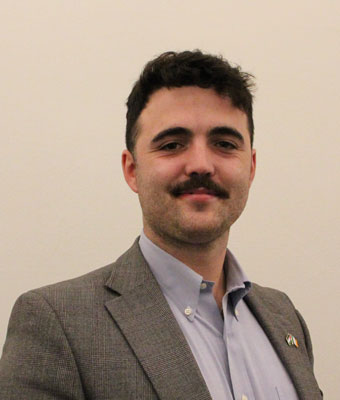
91. Deputy Barry Heneghan asked the Minister for Social Protection if he will provide an update on the progress made by his Department in exploring the introduction of a targeted second-tier child benefit payment for low-income families in light of recent reports highlighting a significant rise in child poverty; and if he will make a statement on the matter. [33150/25]
Will the Minister provide an update on the Department's consideration of a second-tier child benefit scheme? Research by the Economic and Social Research Institute, ESRI, and Social Justice Ireland shows that a growing number of families are experiencing real deprivation despite being just above the income thresholds for most supports. A targeted measure like this could be transformative. Is it being actively considered by the Department?
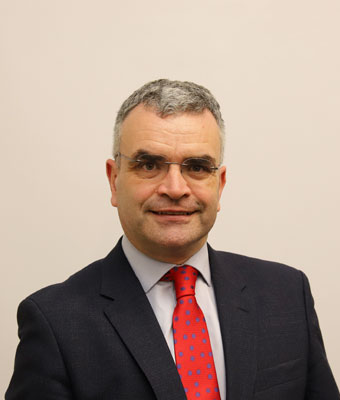
Mar is eol an Teachta, child benefit is a monthly payment to families with children up to the age of 16. The payment continues to be paid in respect of children until their nineteenth birthday where they are in full-time education or have a disability. It is paid in respect of almost 1.3 million children. Expenditure on the scheme in the current year is estimated at more than €2.2 billion. In addition to child benefit, families on low incomes may be able to avail of other social welfare payments, such as the child support payment with primary social welfare payments, which is €62 per week for those aged 12 and over, and €50 per week for under-12s; the working family payment for low-paid employees with children; and the back-to-school clothing and footwear allowance. These schemes provide targeted assistance that is directly linked to household income and thereby they support low-income families with children.
Addressing child poverty is a key priority for the Government. That is why the programme for Government includes a range of measures to support children and their families. One such commitment is to explore a targeted child benefit payment and examine the interaction this would have with existing targeted supports to reduce child poverty. Existing supports include the working family payment and the child support payment. We are progressing this work and have regard to a wide body of evidence, including the work undertaken previously by the ESRI and what was contained in the presentation it made to the Oireachtas committee yesterday. We are also looking at work done by the National Economic and Social Council and the Commission on Taxation and Welfare. We will be considering all this work in the context, not only of budget 2026, but of our revised child poverty target.
Gabhaim buíochas leis an Aire. Aontaím leis.
Child benefit already plays a vital role, but recent estimates are that between 150,000 to 230,000 children are experiencing poverty and we now have clear evidence that a large number of families are still being left behind by this threshold. There is a major impact on these families. They are still working hard, but they are struggling with the cost of living.
Will the Department examine a second tier payment for low- and middle-income families? Once one factors in rent and the extra costs that come with raising a child with any additional needs, it becomes clear that income alone is not the full picture. We are seeing a real squeeze on households that do not qualify for means-tested supports but are far from financially secure. A second tier of child benefit would go directly to where the pressure was most intense and help to close the gap in a fair and targeted way.
Táimid ag obair ar an two-tier payment. We are looking at that but there is quite a lot of work involved and it is a complex issue to examine. In the meantime, budget 2025 had targeted increases in the one-parent family payment and the jobseeker's transitional payment, which increased by €12 per week. The weekly rate of the child support payment, which is very important in this space, increased by €8 to €62 per week for those aged 12 years and over and by €4 to €50 for under-12s. There is also a €60 increase in the weekly income threshold for the working family payment, particularly targeting low-income workers. The child support payment and the working family payment are particularly targeted and focused. I am very conscious that we have a lot of work to do on child poverty. We discussed it in the context of an earlier question and the measures we are taking in that space.
I welcome the fact that the Department is looking at that. Budget 2026 should be focused on that but a second tier payment should not replace what we already have. We need to build on it. It would target families facing higher costs while protecting the certainty and simplicity of universal child benefit. There is an opportunity to act on this evidence. The system works well for many but the people whose doors I am knocking on are struggling. This is a chance to make child income supports fairer and more effective for those who need them most. At the same time, we need to focus on those people across the board, not just in terms of the Department of Social Protection. There are going to be huge issues coming into the winter. We do not know what will happen in the Middle East. There may be increases in fuel and other costs. The Department should look at this to help the people who are struggling the most.
That is our intention. The work of the Department is to help those who are struggling. To give the Deputy a sense of the complexity of this, one of the considerations in the ESRI proposal was to amalgamate the working family payment with the child support payment but that would result in people losing out on what they are getting at the moment. If we are to do this, people cannot lose out. We have to look at expanding the working family payment and the child support payment as part of targeted measures. Anything we do in this space needs to be targeted and focused on those on low incomes, particularly workers. We have to ensure that people do not get a lower payment under a new system than they are currently getting. That could be an unintended consequence of some of the work we have seen today. Whatever we do will be targeted and focused on those most at risk of poverty and those in consistent poverty. I welcome the Deputy's acknowledgement that there are other Departments involved in this effort as well. We need to work on it collectively.
Job Losses

92. Deputy Darren O'Rourke asked the Minister for Social Protection if he or his officials have had engagement with a company (details supplied) and the examiner located there since announcement of the company entering into examinership; the extent to which the Department can support this process to ensure workers there are supported; and if he will make a statement on the matter. [32742/25]
I thank the Deputy for his question. I am very well informed of the situation at Wellman by the Minister of State, Deputy Niamh Smyth. There is significant uncertainty for the employees, their families and the wider community and our thoughts are with those workers. Our priority within the Department of Social Protection is to ensure that affected employees receive access to all necessary supports.
Notification of collective redundancy from the company concerned was received by my Department on 6 June. An official from my Department's employer relations team made contact with the company on the next working day so as to provide the affected staff with information on income, redundancy entitlements and employment supports. A meeting with workers took place this week. In addition, a team from my Department stands ready to meet the workforce, either virtually or in person, to ensure speedy access to income supports, support them into alternative employment, and access appropriate education, training and development options.
We have discussed extensively this morning the jobseeker’s pay-related benefit, which is now available and provides a maximum weekly payment of €450, which will help people through this period of uncertainty. My Department has a range of employment programmes and schemes available to support customers to return to employment or start their own business. When people move onto a jobseeker's payment, the Intreo employment services team works with them to provide one-to-one support focused on what they need to assist them to remain in the workforce. Those affected should note that the easiest and quickest way to apply for a jobseeker's payment is online at MyWelfare.ie. We remain open to working with workers and union representatives in Wellman International, particularly at this very difficult time.
It was a shock for the whole community because we are talking about 217 jobs. Some workers in the area I grew up in and in the wider area have been in that factory for decades. It was known as a really good employer in the area and the impact on both direct and indirect employment is significant. It is an important employer in the area.
In the first instance, this period of examinership is about securing a sustainable future and protecting as many jobs as possible. In the event that there are job losses, we must ensure that those workers are supported. I welcome the fact the Department has had engagement. Further engagement would be welcomed by the workers and their representatives. Is that something the Minister will consider?
Yes. There is a long tradition with this company. There were previous short-term layoffs in 2023 and there was engagement at that time with the Department of Social Protection. There was departmental engagement on 9, 10 and 12 June of this year. We have been notified that there will be a number of redundancies but we will engage with each person. Intreo staff will provide a personalised service to each affected person. Our teams are more than willing to work to provide information on the immediate income support options that are available as well as the training and reskilling options that people may be interested in. We want to ensure that what is a very traumatic experience is made less traumatic if possible. I am more than happy to work with any representatives in the area to make sure that is happening. Our primary concern is for the workers and their families. We want to minimise difficulties as much as possible at this very difficult time.
In the first instance, this is about protecting as many jobs as possible. I have raised with the Minister for enterprise the importance of making every effort to identify an investor and save as many good jobs as possible. This is also about ensuring that those who lose their jobs are supported in every way possible in terms of understanding their rights and entitlements and the supports that are there for them, including support to retrain and find alternative employment. The Minister mentioned that pay-related social welfare was now in place for those employees. Unfortunately, we had a similar situation with Tara Mines some time ago, and it was not in place then. Is it the case now that it is in place and is available for those workers?
Yes, jobseeker's pay-related benefit has been in place since March of this year and will apply. We have already received quite a number of applications - over 10,000 - so that is very much in place. Furthermore, the experience of MyWelfare.ie and people being able to apply online gives us a quicker turnaround and ensures that people do not have any major gaps in their income. There are also wider supports available through Intreo for those who may be made redundant, including training supports and assistance to seek future employment.
Many of the workers have been with the company for a long time. For people who have not had to seek a job for some time, there is backup and support available in terms of preparation and training. That is very important and valued work the Department is doing. It has done so on a confidential and personalised basis, with full respect for people's situations at this very difficult time. We will continue to work to ensure that support is made fully available.
Child Poverty
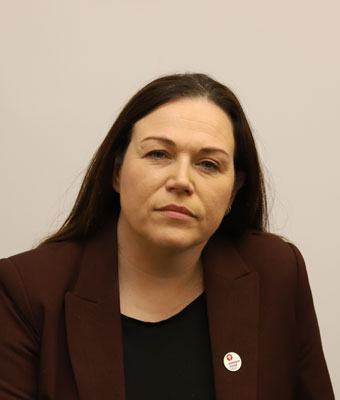
93. Deputy Louise O'Reilly asked the Minister for Social Protection if he is aware of the child poverty monitor report from a group (detail supplied); if he has any plans to address its findings; and if he will make a statement on the matter. [33106/25]
The child poverty monitor published recently by the Children's Rights Alliance makes for very depressing and alarming reading. Far from being equal to its commitment to tackling child poverty, the Government is overseeing a rise in rates of child poverty. The Minister and I both know that the only way to address this issue in any meaningful way is through in-cash payments that are targeted directly at those who need them. I ask him to outline his plans in this regard.
I am aware of the report the Deputy referenced and I share her concern regarding the data from the 2024 survey on income and living conditions, SILC, presented in the report. However, as I said earlier this morning, the data does not fully capture many of the Government actions in recent years to address child poverty. SILC asks people each month to provide income and poverty status data for the previous 12 months. This creates a timing issue in that the SILC 2024 data does not include the impact of many of the measures announced in the budget of October 2024 and does not fully include the impact of measures announced in October 2023 or, indeed, October 2022. The budget measures announced in 2023 and 2024 involved the largest ever social welfare packages, which will take some time to be reflected in the SILC data. I expect that when the data begins to reflect the budget measures from 2023, 2024 and 2025, which include significant increases in the child support payment, double child benefit bonuses, free school meals, free schoolbooks and the newborn baby grant, we will see an improvement.
To be clear, even in that context, we have work to do. In fact, a huge amount of work is already under way. We are looking beyond the data to fully understand the real challenges we face. We had a very good discussion at the social inclusion forum recently and will do so again at the pre-budget forum in July. We want to ensure payments are targeted, as the Deputy said, and reaching the people who really need them. I have already gone through a number of measures this morning, particularly with Deputy Heneghan. I spoke about the focus on the working family payment and child support payment and the impact the increases in those payments will have. We will continue to support those kinds of targeted payments to those on the lowest incomes, as well as measures in other areas that are brought forward by the Department. Our actions will be guided by a new child poverty reduction target and by the work of the Taoiseach in this area.
My worry is that we have had targets previously and they were missed by a mile. A concerted effort is needed. When we talk about deprivation and child poverty, we are talking about households in which members are unable to afford two pairs of properly fitting shoes that are in good condition and suitable for daily activities, or a warm waterproof coat. It is unimaginable that poverty on this scale is happening in the State when it really does not need to be occurring. The statistics show who needs to be targeted, including, in particular, lone-parent households, especially where there are teenagers, who bring additional costs. What we are hearing in the media from the Minister's Government colleagues is really disturbing. The notion that there might be people sitting either at parliamentary party meetings or around the Cabinet table, God help us, who believe the cost-of-living crisis is over is deeply disturbing. The cost-of-living crisis is very much not over and it must be urgently addressed by the Government.

I share Deputy O'Reilly's concerns. Looking at the child poverty monitor, we see the failure of the 2020 roadmap for social inclusion, which included a target of reducing consistent poverty among adults and children from 5% to 2%. Five years later, we are still at 5%. The roadmap has been an abject failure.
One of my concerns when it comes to child poverty and poverty within families is their lack of resilience to deal with emergencies and other issues that arise for them. I have in mind the inability, because of the assessment of need crisis, to access the special education supports that are needed. There is also the issue of people who, were there no housing crisis, would be paying differential rents on council houses. They are now paying differential rents for housing assistance payment, HAP, properties plus cash top-ups to the landlords. The resilience to deal with such situations is gone from families and households. I want to see an all-of-Government approach, involving the Departments of housing, health and children, as well as the Minister's Department, to get to grips with this issue.
Tuigim go mór cé chomh dáiríre is atá an fhadhb seo. Is é sin an fáth go bhfuil a lán oibre déanta ag an Rialtas. We fully understand the challenges but a lot of work has been done in this space. The ESRI has shown, backing up Deputy O'Reilly's view, that direct social transfers by way of child-related cash and in-kind payments have lifted an estimated 157,000 children out of income poverty and 94,000 out of consistent poverty. I have given the background to the SILC data not to avoid any responsibility but to point out the issues. The consistent poverty rate for children reduced from 7% in SILC 2022 to 4.8% in SILC 2023 before increasing to 8.5% in SILC 2024. However, until eight to ten years ago, that rate was always above 10%, fluctuating up to nearly 13%. Pointing out fluctuations is not saying we do not have a challenge. We are very focused on that challenge, which is why we made the biggest ever social protection package available in budget 2025, the impact of which is not reflected in the SILC data.
The Minister must acknowledge that the direction of travel is not good, as we see from the SILC data. I respect what he is saying and it may be that the data starts going in a different direction, but I do not believe it will. A lot of the investment he mentioned involved one-off, non-recurring payments to deal with an acute cost-of-living crisis. That crisis has not gone away and is still acute. The Government is saying there will be no one-off measures in the next budget. How will it tackle the rates of child poverty? We do not need to do a poll to know those rates are unacceptable. How will the Minister deal with this issue in the absence of one-off measures? He is relying on such measures to make the argument that when they wash through, there will be a change in the figures. In the absence of those measures, long-term measures will have to be put in place to tackle the acute cost-of-living crisis that is impacting on children very severely. The figures bear that out.
We recognise that the cost of living is still incredibly challenging. Not all the measures we have taken have been one-off measures. The hot school meals and free schoolbook schemes are continuous improvements that will directly assist in reducing child poverty. The expansion of the hot school meals scheme, in particular, was not recognised in the SILC data.
Deputy O'Reilly and I are at one on the importance of targeted payments. The child support payment and the threshold for the working family payment increased significantly in budget 2025. Those measures are very much targeted at families and children who are currently under the most pressure.
Deputy McGuinness spoke about resilience. The first measure to point to in response is the domiciliary care allowance. I have really focused on reducing the delays in the processing of applications and appeals for that payment. From May to June, we have reduced by half the number of appeals on hold, which will assist families who qualify for the allowance. I will continue to keep a laser focus on that payment in particular. That will address the first cohort of people to whom the Deputy referred.
Departmental Schemes
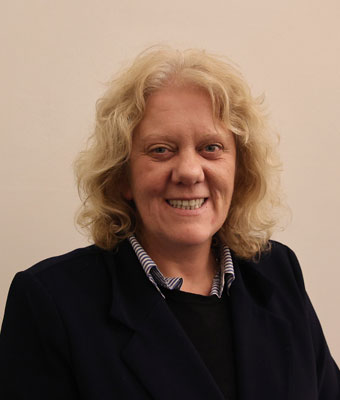
94. Deputy Paula Butterly asked the Minister for Social Protection his plans to extend the free travel pass to children in receipt of domiciliary care allowance; the number of children who would benefit; the estimated cost of this extension; and if he will make a statement on the matter. [32745/25]
I thank Deputy Butterly for her question. The free travel scheme provides free travel on our main public and private transport services for those who are eligible. There are over 1 million customers with direct eligibility. The estimated expenditure on the free travel scheme in 2025 is €107.6 million.
The programme for Government has committed to examining an extension of free travel to include children who benefit from the domiciliary care allowance. DCA is a non-means-tested payment of €360 a month per child. In addition, all recipients of DCA qualify for the carer's support grant in June of each year, which is worth €2,000. If the free travel scheme were to be extended to include children benefiting from DCA, it is estimated that some 65,000 children would benefit from the measure in 2026. Based on an additional 65,000 children benefiting, it is estimated that extending free travel to include those children would cost in the region of €7 million in a full year.
It is not possible to deliver all of our programme for Government commitments at once and the extension of this scheme, along with other potential budget measures, is being considered in the context of the budgetary resources available. I am positively disposed to this measure and I note the Deputy's support for it but it will have to be looked at in the context of other priorities. At this time when we are quite far out from the budget, we are not in a position to make any commitment as to whether the measure will be included in budget 2026. I understand the importance of the scheme, particularly for children who are in receipt of DCA, as regards access to appointments and leisure activities. It is a priority we will be maintaining a close eye on.
I thank the Minister. I will go back over the criteria for free travel. One can get a free travel pass if one is in receipt of disability allowance, blind pension, carer's allowance or invalidity pension. Leaving out the domiciliary care allowance is an anomaly in itself. It is quite unfair. The domiciliary care allowance is provided to parents and guardians of children under 16 who have a severe disability and who require substantially more care and attention, which involves more costs, than a child of the same age without a disability. It is based on the children's level of physical and mental impairment and the ongoing care they need. Free travel would often be of great benefit because there are a great many costs associated with taking care of a child with severe disabilities. I refer to treatments, appointments and loss of income. This would be of great benefit to people in more urban settings.
I fully recognise the importance of DCA. That is why we in the Department have put such a focus on it. We have particularly focused on trying to reduce the waiting periods for appeals and applications. I fully understand how important it would be to extend free travel to include those in receipt of DCA for many reasons, including medical and social appointments.
Regarding free travel, we are currently focused on implementing the decision made in budget 2025 to expand the free travel companion pass to everybody over the age of 70. As of next September, everybody over that age will be able to avail of a free travel companion pass. Last July, we expanded the free travel scheme to support people who were medically certified as being unable to drive for a period of 12 months or more. This includes people with epilepsy, for example. We are expanding the scheme on a planned and budgeted basis. The expansion that will be implemented from September is currently being rolled out within the Department. People are receiving correspondence about that companion pass. This will be one of the biggest expansions of the scheme in its history.
I welcome all of these changes but I will go back to the issue. These children are under 16 years of age and have severe disabilities. Their parents and carers are put to the pin of their collar both financially and emotionally. Allowing them a free travel pass would not only ease the financial burden, but ease the transition. As I was saying previously, this is particularly the case in urban areas. It is no good to anybody in a rural area because we do not have a sufficient transport system. This should be a priority for the next budget. I urge the Minister to consider it.
I absolutely guarantee it will be considered. I fully understand the pressures those in receipt of DCA are under. We want to enhance their lived experience. It will be considered, in line with other commitments within the programme for Government. It is a commitment within the programme for Government and will be delivered on within the lifetime of this Government. I note the Deputy's strong support for the measure. We will continue to work with her on it.
Community Employment Schemes
95. Deputy Aengus Ó Snodaigh asked the Minister for Social Protection the current strategy for community employment, the number of sponsor groups, participants and supervisors and whether any changes are planned to the scheme this year; and if he will make a statement on the matter. [26196/25]
On behalf of my colleague Deputy Aengus Ó Snodaigh, I ask the Minister for Social Protection the current strategy for community employment, the number of sponsor groups, participants and supervisors, and whether any changes to the scheme are planned this year. Will he make a statement on the matter? This relates to community employment in the round, including CE schemes, Tús, RSS and others.
Tuigim cé chomh tábhachtach atá na scéimeanna seo. Tá siad ag déanamh an-jab i ngach cuid den tír. Tosóimid le CE agus beimid in ann RSS agus Tús a phlé ar ball. Community employment schemes make an extraordinary contribution right around the country. I have engaged with many of the schemes over recent months since my appointment as Minister. There are currently 19,693 participants and 1,223 supervisors on 810 CE schemes across the country. Government investment in CE will amount to some €370 million in 2025. This is an investment in communities and in people right across our island.
The objective of CE is to enhance the employability of disadvantaged and long-term unemployed people by providing valuable work experience and training opportunities within their local communities as a stepping stone to employment in the open labour market. CE also supports important and essential local community services.
A number of changes have been made to support CE sponsors in the recruitment of participants. Provision has been made to allow participants who reach 60 years of age to remain on a CE scheme until they reach the State pension age. Flexibility has been granted to sponsors to retain existing participants for extended periods in cases where a replacement cannot be recruited immediately. There have been changes to the eligibility criteria to extend eligibility to the adult dependants of those in receipt of jobseeker's allowance and there has been a pilot scheme to extend eligibility to over-50s who are in receipt of credits or a combination of credits and jobseeker's benefit. These changes have resulted in an increase of approximately 500 in the number of participants in CE in the past 12 months.
I assure Deputies McGuinness and Ó Snodaigh that I am keeping the eligibility criteria, durations and referral process under active review. Personally, I no longer see CE as a labour market intervention. It is much broader and wider than that and has a much bigger impact. I am asking my Department to look at it in a much broader context than the labour market perspective that has traditionally been taken.
I welcome that and gabhaim buíochas leis an Aire as an bhfreagra cuimsitheach sin. Is cinnte go bhfuil an-éileamh ar an scéim seo i measc na ngrúpaí pobail. Níl sé díreach mar gheall ar dhaoine a chur ar ais ag obair nó traenáil chuí a thabhairt dóibh. Tá sé chun tacú leis na pobail ina bhfuil siad ag maireachtáil agus ina gcónaí.
Regarding the CE and Tús schemes, part of the issue is that there does not seem to be a great deal of joined-up thinking between the two. There is no easy avenue to go from one to the other. While somebody who is on a Tús scheme for 12 months can join a CE scheme, the reverse is not true. There are disparities between the training available to people on a Tús scheme and that available to people on a CE scheme. That needs to be brought into line. There needs to be a broader approach to training for those on Tús schemes. We must also be clear that Tús schemes are not always suitable for community groups because the right supports are not available for participants and community groups when people with particular needs or difficulties are being taken on. It may be a little difficult for a community group to take that on.
Gabhaim buíochas leis an Teachta as sin. Tá sé seo tábhachtach. The schemes have a lot in common; there are a lot of differences, though. All the schemes - CE, Tús and RSS - were set up with different priorities and different cohorts in mind, initially achieving different things but as they have evolved doing many of the same things. I am definitely looking at all the schemes. They play a vital role. As I look around, there is not a Deputy in the House who does not understand that role. It is a vital role for communities but especially for the participants. I acknowledge in particular the work of supervisors in all three cohorts: CE, RSS and Tús. I have been delighted to be able to make some changes as regards their positions. As I said, their work is so important, not just for the communities that benefit but also for those on the schemes. I want to make sure they are as relevant and as up to date as they were when they were started.
Gabhaim buíochas leis an Aire as sin. I welcome his commitment to keep these under review and to look at them in the round because there is a lot of crossover.
With regard to the RSS, I would like to know the Minister's opinions on reform of that and the pilot scheme and moving it to the rural dwellers scheme or bringing more of that in. At present, as the Minister knows, you need either a fishing licence or a herd number to qualify for that scheme. It would be suitable to many more people living in rural Ireland who could avail of it and for whom a placement through that scheme would be very valuable and very important to them and could lead to really positive change in their lives. I would like to hear a little more about that from the Minister, if he does not mind.
Without being cheeky enough to suggest a work programme for the committee, as regards the interaction of CE, RSS and Tús, I would love to engage with Members on that or to hear what they could come up with on it. Deputy McGuinness has raised an important point that the schemes have evolved over the years. It would be good to maybe stand back and look at them to see if they are delivering for the participants. We know they are delivering for communities, but the profile and the needs of participants have changed, and I want to make sure they are delivering. I will leave that to Deputy O'Reilly and Deputy Wall. Maybe it is something to work on.
As regards the RSS, I have examined fully the RSS review group that was commissioned by the former Minister of State, Joe O'Brien, and I am finalising some work within the Department on that. I am absolutely with the Deputy in terms of the rural dwellers pilot. It would be good to get that up and running. It may feed into any work I have just suggested about the three schemes and their interaction.
Social Welfare Benefits
96. Deputy Aisling Dempsey asked the Minister for Social Protection his plans to suspend the periodic means test reviews for carers in receipt of carer's benefit; and if he will make a statement on the matter. [33130/25]
I ask the Minister his plans to suspend, or indeed abolish, the periodic means test review for carers in receipt of carer's benefit.
The carer's allowance is the main scheme by which my Department provides income support to carers in the community. There are currently more than 100,000 people in receipt of carer's allowance. Expenditure in 2025 is estimated to be over €1.24 billion.
My Department also provides other supports for carers which are not based on a means assessment, including the carer's support grant, carer's benefit and domiciliary care allowance.
Carer's allowance aims to provide income support to those whose earning ability is greatly impacted by their caring responsibilities and who need income support.
The programme for Government has set out a timeline which commits to significantly increasing the income disregards for carer's allowance in each budget with a view to phasing out the means test during the lifetime of this Government.
Significant changes have been made to the carer's allowance means test in recent years. From July, there will be a further increase which will see the weekly income disregard rise from €450 to €625 for a single person, and from €900 to €1,250 for carers with a spouse or a partner. This amounts to cumulative increases to the disregards of €292.50 and €585, respectively, since June 2022. These increases make the scheme accessible to more people and may increase payment rates for those currently on a reduced rate. A carer in a two-adult household with an income of approximately €69,000 will still retain his or her full carer's payment. The same carer with an income of €97,000 will retain a partial payment. Before the disregards were increased in June 2022, these figures stood at €37,000 and €60,000, respectively, for a two-adult household.
Means reviews form an important part of my Department's control mechanisms to help ensure people are in receipt of the correct amount. It is important to remember that reviews can lead to increases in payments to recipients as well as reductions. My Department undertakes periodic reviews to help minimise incorrect payments.
Gabhaim buíochas leis an Aire for that and the very welcome news he has given us in terms of the income disregards. That will be very beneficial to many across the country, I am sure, but specifically in my area of Meath West. Many families have been in touch with me about this matter. I was this morning in a meeting of the committee on children. I am very privileged to have been appointed Leas-Chathaoirleach of the committee this morning. We had the Children's Rights Alliance in with us and I raised with it the issue of the child poverty monitor report, which has already been referred to here today and which I think everyone would say makes for very stark reading. I asked the Children's Rights Alliance about measures like this and asked it how much of a difference it could make to people and it has said to me that to families with children with disabilities, getting rid of this periodic review would make a huge difference. It would be an important part of budget 2026, if the Department could at all progress those discussions.
I congratulate the Deputy on her appointment as Leas-Chathaoirleach of the coiste.
Means reviews are an important part of control mechanisms. The C and AG and the Committee of Public Accounts have told us that these reviews need to continue not just for control but also to avoid a situation, such as happened in the UK, where people unwittingly amass very significant overpayments, which had to be recouped and caused very difficult situations for families.
We will ensure that repeated requests for information are minimised and that every effort is made to conduct and complete those reviews as quickly as possible to avoid undue stress. We do not want to cause undue stress. We are very aware of the important role family carers play in society but, equally, we have to balance that awareness and that concern for those carers with a duty to ensure that those in receipt of social welfare payments meet the criteria and receive the correct payment. I absolutely assure the Deputy we will continue our work on minimising repeated requests for information.
Again, I thank the Minister for his response. Our ambition and our goal are to get rid of the means test completely, and this is a really significant part of it. These people save us untold money every day in the care they provide in their own families. For example, in one family in my area the mother works part-time just for her own mental health, just to have a little breather from the issues she has at home with her child, and the father took on two jobs to pay for the private therapies that they need but have not been able to access publicly. When they underwent a periodic review recently, they lost their access to any payment. That was obviously devastating for them. It is a blow. They feel it is an insult. I know that is an individual case and we have to govern collectively, but I just-----
Thank you, Deputy.
I will not comment on individual cases, but we seek to support families such as that who are in need. In order for us to do that, there will always be rules to ensure that schemes are targeted and that we have the resources to meet the scheme. As I said, we are answerable to the Committee of Public Accounts and the C and AG in that regard. They have said the reviews have to continue to ensure that the right payments are being made and that the right people are getting supports from the Department. As I said, however, we will ensure that repeated requests for information are minimised and, where a review happens, that it happens in as quick a way as possible. In the context of the number of payments being made across all schemes by the Department, the number of reviews is actually relatively small. I will provide the Deputy with those figures in the next session.
Social Welfare Code
97. Deputy Micheál Carrigy asked the Minister for Social Protection when he expects to publish the comprehensive review of means testing across the social welfare system as committed to in the programme for Government; and if he will make a statement on the matter. [32707/25]
I thank Deputy Carrigy for his question. Continuing from where we finished with Deputy Dempsey, there were 14,791 control reviews in 2024, which is quite small in the overall carer's allowance paid out but it is a balance that has to be reached. On Deputy Carrigy's question, means tests are a central part of any social protection system to ensure that resources which are limited are targeted at those most in need. Ireland's system of social transfers consistently ranks among the top performers in the European Union for poverty reduction. A key factor in this achievement is Ireland's use of means testing in targeting resources for the most vulnerable in our society. Research including that presented at last week's budget perspectives conference of the ESRI indicates that targeting of supports to more vulnerable cohorts through means testing continues to be important, even as societal income overall increases. Means tests and income thresholds are kept under regular review and a number of significant changes have been made in recent years. A number of changes to means testing which provide for higher income disregards have been introduced in recent budgets. These disregards ensure that where people are in receipt of a social assistance payment and are working, a certain level of income from that work is not assessed in the means test. We are currently conducting a comprehensive review of means testing within the entire social protection system. The aim is to examine various means-tested schemes and identify issues related to their respective means tests. There are more than 90 schemes, many of which are means tested so this is a complex and detailed task. It is my intention that the review's findings will be completed in time to guide decisions regarding potential changes to means testing, particularly in the lead-up to budget 2026 and most definitely in the lead-up to future budgets. The review is nearing completion but it is complex and will require thorough evaluation when completed.
It is a key commitment in the programme for Government to review the means test across the entire social welfare system. A more consistent, transparent and targeted approach is needed. It needs to be a priority to ensure low-income families, carers, those with disabilities and part-time workers are not unfairly penalised. I ask the Minister to ensure this review addresses anomalies across the schemes and takes into account the real cost of living today and the need to support people trying to balance work and caring. Clarity and a timeline for publication would be welcome. I ask for it to be prioritised in the Department so that this review is done in time and we can make changes for budget 2026.
It is complex as it involves 96 schemes, many of which are means tested. A good outcome will be consistency across schemes and in how means testing is applied. We had a discussion this morning about areas it may not need to or should not apply to in the context of work done by those on these schemes. Even though the Department has a budget of €27 billion, resources are still scarce and they have to be targeted. I want to ensure they are targeted for those most in need, which the means test assists us to do. It has consistently been shown in EU figures to ensure that we target those most in need. A lot more work needs to be done in that space. It is a priority but it is complex given the volume of schemes and the various challenges.
I welcome the Minister's comments on prioritising those most in need. That is what we need to do, particularly for low-income families, carers, those with disabilities and part-time workers. I welcome consistency in the future. As a public representative, I do not see consistency in how applications are treated. People who are ultimately entitled are turned down on one or two occasions and have to go through an appeals system when it should have been granted the first time. I appeal for consistency in means testing in the future.
That is an important aim and one we will try to achieve. This review is not happening in isolation. Means tests and income thresholds are kept under regular review. We made a number of significant changes in recent years. Significant changes have been made to the income thresholds for the working family payment and income disregards for disability allowance, the blind pension, the fuel allowance and farm assist have increased. Next week, on 3 July, the carer's income disregard will increase to €625 for a single person and €1,250 for a spouse or partner which represents an increase for between €332 and €665 since 2021. We are reviewing the overall means test but making changes budget after budget which will continue over the course of the next number of budgets.
Social Welfare Payments
98. Deputy Mairéad Farrell asked the Minister for Social Protection to provide an update on plans to abolish the carers allowance means test; and if he will make a statement on the matter. [32278/25]
This was talked about quite a bit during the election. What update does the Minister have? An féidir leis an plean atá aige le fáil réidh leis seo a leagan amach go cruinn dúinn?
Gabhaim buíochas leis an Teachta as an gceist faoi chúramóirí. Tá sé thar a bheith tábhachtach go seasaimid leis na cúramóirí agus an jab iontach a dhéanann siad gach lá. The programme for Government sets out a timeline which commits to significantly increasing income disregards for the carer’s allowance in each budget with a view to phasing out the means test during the lifetime of this Government. This is a major change to the carer's allowance and to the Irish social protection system. It is important that we make progress in a way that is sustainable and does not unduly limit our scope to support other vulnerable groups in society. There are a number of estimated minimum costs of between €600 million per annum up to €3 billion per annum. It is important to manage the changes to the means test in a way that takes account of budgetary resources. It is also important to note that we will continue the process of easing the means test. On 3 July, the weekly income disregard for the carer's allowance will increase from €450 to €625 for a single person and from €900 to €1,250 for carers with a spouse or partner. This amounts to cumulative increases in the disregards of €292.50 and €585 respectively, or 88%, since June 2022. The increases in July will mean that a carer in a two-adult household with an income of approximately €69,000 will retain their full carer's payment and even those with an income of €97,000 can retain a partial payment. After the July change, some 99% of current carer’s allowance recipients will be on a full rate of payment. Many of the remaining 1% will see an increase in their rate of payment. We are continuing to work through the research in this regard. I intend to achieve this programme for Government commitment in the lifetime of this Government. It is also important to note the Department provides non-means-tested supports, including the carer’s benefit, domiciliary care allowance and the annual carer’s support grant of €2,000, the highest ever, which was recently paid to more than 138,000 carers on 5 June.
The most important thing is clarity. The Minister said the Department will do a job of work to analyse how this will be achieved over the lifetime of this Government. Will the Minister be able to publish that as soon as job has been done? For carers, being able to predict exactly how it will impact them over the coming years will be important. Carers do a huge job and save the State vast sums of money every year but they do it for the love of the person for whom they care. That love is at the centre of all of this. For an awful lot of carers, everything else in the lives focuses around this. For them to have that level of predictability would be very welcome.
Based on our record to date, we have made such significant changes that there is predictability. We will continue to make significant changes to the income disregard. There was an almost 88% in the disregard and the highest ever level of the carer's support grant.
I continue to invest in carers agus sa jab tábhachtach atá a dhéanamh acu i ngach cuid den tír gach uile lá. Beimid ag cur airgid leis an obair thábhachtach sin i gcomhthéacs na chéad cháinaisnéise eile.
Is féidir teacht ar Cheisteanna Scríofa ar www.oireachtas.ie.
Written Answers are published on the Oireachtas website.