Early Childhood Care and Education
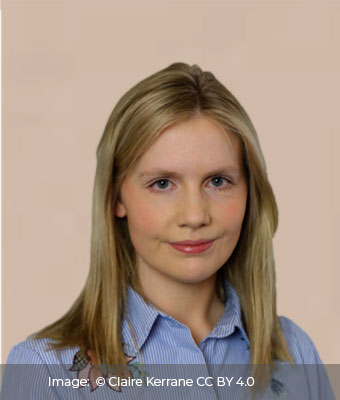
71. Deputy Claire Kerrane asked the Minister for Children, Disability and Equality the steps she is taking to retain early years educators in the sector, and therefore retain capacity; and if she will make a statement on the matter. [32746/25]
I wish to ask the Minister about our early years educators. Staff turnover rates are high, particularly for private providers. We also have issues with capacity and retaining our early years educators. Of course, pay is a key issue. What areas is the Minister looking at to ensure we retain our early years educators in order to build on the capacity that is very much needed?
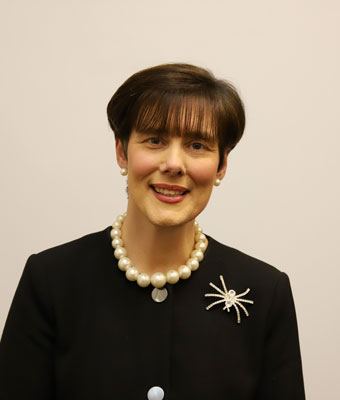
I acknowledge that many early learning and childcare services report recruitment and retention challenges. In general, these challenges are not caused by insufficient supply of staff, but by high levels of turnover. Data from the sector profile survey shows a turnover rate of 24.5% in 2023, with almost one third of the turnover rate due to staff moving from one provider to another. I note that new data on the number of educators or practitioners working in the sector increased by 10% between 2023 and 2024.
Turnover is linked to pay and working conditions. However, while the Government is the primary funder of the sector, the State is not an employer of staff. Neither I nor my Department set pay or working conditions. The joint labour committee process is the mechanism by which employer and employee representatives can negotiate minimum pay rates, which are set down in law through employment regulation orders. Outcomes from the joint labour committee process are supported by the Government through core funding, which has seen its allocation increase from €259 million in year 1 to €350 million for the coming year 2025 to 2026. An additional €45 million has been ring-fenced to support employers in meeting the costs of further increases to the minimum rates of pay. This allocation is conditional on updated employment regulation orders.
I recently met joint labour committee representatives - in fact, I met them again today - to acknowledge their important role and to emphasise the Government’s expectation that any newly negotiated orders fully utilise the ring-fenced the funding available. My officials also continue to discuss issues of recruitment and retention with stakeholders through a subgroup of the early learning and childcare stakeholder forum. While the general consensus of the group is that pay is the single biggest issue, the group continues to identify other actions, including: a student fast-track process; the assessment of unfinished qualifications; and an agreement to promote careers in the sector.
I thank the Minister. We have known for quite some time that pay is the single biggest issue. It has become and continues to be the main issue. While the work of the joint labour committee continues, we are now well into June and it unfortunately appears there is a wide gap between one side of the table and the other on the joint labour committee. SIPTU is seeking that providers must pay a minimum of €15 per hour to our early years educators. As this process continues, I am concerned that we do not appear to be getting anywhere.
A total of €45 million is on the table. In fairness to the Minister, while she has, of course, said she is independent of the process, which I respect, she has been direct in saying that the money needs to be spent to build and ensure the highest increase possible. I welcome the Minister’s meeting today. Does she see any further progress on the issue of pay?
There is agreement across the House that money ring-fenced for staff should go to staff. I acknowledge that has been Deputy Kerrane’s personal view from the beginning. I met joint labour committee representatives today and I have met them previously. While they are entirely independent of me, it is important I take every opportunity, as the Deputy has, to articulate that money on the table is specifically ring-fenced for staff. It should go directly to them.
While I referenced it briefly earlier, I wish to mention that although pay is a key component, other important issues were identified by the group as well. For example, the student fast-track process was an important issue for the group where students who have reached a particular level, such as level 5, could be acknowledged for that and work as they moved to levels 7 and 8.
I would like to see the figures from previous JLCs on the amount of money brought forward by the Government in previous budgets and the amount of money that was actually spent on whatever the increase was. We will find quite a gap there, particularly when we look at the last increase and the length of time it took to achieve that. It was little or nothing in real terms.
Regarding the JLC itself, we all recognise that pay is a major issue. Once this JLC has concluded its work, which I hope will be sooner rather than later, and ahead of September, would the Minister be willing to look at the process again and perhaps conduct a review of how pay is determined? While I appreciate entirely that the Government and the State do not pay the wages, it is providing significant funds from taxpayer money. A total of €45 million is being provided in the latest round, as just one example. Based on the process and the Minister's meetings and engagements on this issue, on which she has been forceful, does she think it would be worthwhile after this next increase to look at the process in place?
I will absolutely know a lot when this process concludes. I have always been clear that there are two elements to this, namely, the providers and the employees. One cannot work without the other. They must work together in the best interests of the children we serve. The mechanism we have currently, as the Deputy has outlined, is the joint labour committee. We have all made our views clear as to how we would like to see that process work, while respecting the independence of the committee.
I will be in a better position to judge everything once all of this process is concluded. I want the best possible outcome. I have been clear in that regard. I hope that will be delivered. Our core aim is to ensure that we have viable costs for parents and a sufficiency of places and that staff who work in the sector are suitably recompensed.
Disability Services
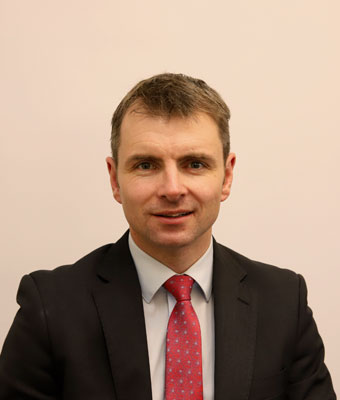
72. Deputy Ruairí Ó Murchú asked the Minister for Children, Disability and Equality to provide an update on the current unfilled positions in CDNTs across the State; to outline her plans to deliver on assessments and therapies for children with autism; and if she will make a statement on the matter. [32285/25]
Will the Minister of State provide an update on the current unfilled positions within CDNTs across the State and outline the plans to deliver on assessments and therapies for children with autism? We are all shocked with the assessment of need situation. Some 15,000 children at this point are being failed when it comes to the delivery of those assessments. Basically, the Government is in breach of the law. This figure could rise to 25,000. I will repeat what Cara and Mark Darmody said. Not only are they utterly dissatisfied with these figures, but they also do not believe the Government has explored the capacity in the private sector in this regard.
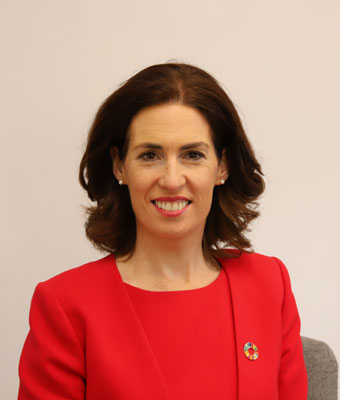
I thank Deputy Ó Murchú for his question. This Government is committed to enhancing the delivery of supports and services for all children in Ireland with additional needs, including autistic children. It is important to emphasise that an autism assessment or an assessment of need is not required for a child to access primary care, CDNTs or CAMHS. The Government accepts that waiting lists for assessments of need are too long. We are working to ensure that all children's disability network teams are fully staffed with the appropriate expertise and that the waiting list is reduced.
I am advised by the Health Service Executive that the most recent CDNT data available show that there are 2,009 posts filled in CDNTs across the country and 445.4 posts vacant. A workforce survey conducted in April this year shows that staffing levels in CDNTs across the country rose by 8% when compared with a previous review in October last year. By way of comparison, some 29% of posts in CDNTs were unfilled in October 2023. In April this year, the percentage of unfilled posts fell to 18%. This represents an overall growth in the workforce of 414.5 whole time equivalents in CDNTs between October 2023 and April 2025.
These posts have been delivered through the concerted efforts of the HSE, my Department and other partners, including the Department of higher education. I recognise the work done to address this issue but I also know the CDNT vacancy rate remains too high and intensive work will continue in this year to bolster CDNT services through ensuring sufficient team members are available across the country.
There are 414.5 whole-time equivalents. I thank the Minister of State. As she said, while this is a welcome increase a huge number of posts still need to be filled. I fear we are still talking about another four or five years, based on that growth, to deal with the number of unfilled positions. I have asked this before but does the Minister of State believe that if we fill all these positions, given how long that will take, we will have a fit for purpose service? There are issues in the delivery of the assessment of need. While I have no issue with having conversations with stakeholders, particularly SLTs, OTs and whoever else about the best way to deliver both assessments and therapies, I am very afraid of a move that is just about changing the law so the Government is not in breach of the law on assessments of need.
A number of things are happening here. There is an increased demand for assessments of need. We are all very aware of the reasons for that. For many, it is about getting access to services as well as wanting to know about a disability and getting a diagnosis. All these form part of the demands on the system. The Deputy will know we are doing work through a Cabinet committee on disability. We have been meeting very frequently to examine the assessment of need process. We are rolling out regional assessment hubs across all the regional health areas across the country to get through these waiting lists but this is not just about reducing waiting lists. This is about ensuring that children and adults are getting access to the therapies they require. That is very much at the forefront of my mind. If that requires legislative change, that is something we will look at but we are also doing domestic and international recruitment, incentives for retention, recruitment drives within the CDNTs and going into secondary schools and promoting the value of working within CDNTs and in these positions across the country.
Recruitment and workforce planning are absolutely necessary. We all know the plan needs to be about delivering therapies to those who require them. There are still issues regarding schools and others where, no matter what answer I get from the Government benches, parents are still being told they require an assessment of need.
What is the plan in relation to the assessment of need? I get where the general plan is but can I have a timeline for when the Minister of State believes all these positions will be filled? I fear that pay and numbers might have contributed to the suppressed positions. Does she believe that if all these positions were filled, and I accept she may be looking at changes to assessments and therapies, the service could then be provided to the children and families who are being failed now?
To answer the last question first, ensuring that children have access to the therapies they need is absolutely my priority and our priority as a Government. It is for that reason that my colleague the Minister, Deputy McEntee is continuing the work that myself and the Minister, Deputy Foley did when we were in the Department of Education on special education with in-school speech and language therapists and occupational therapists going in to our special schools. That will also alleviate the demand for these therapies across the country. We are also looking at increasing the clinical placements in CDNTs and developing that pipeline of initiatives to ensure we retain and attract more therapists.
In our third level institutions 150 extra speech and language and occupational therapist places were provided from last September. We want to increase that number every year. The Minister for higher education, Deputy Lawless, is working very hard on that. This is a real concerted effort by the Government to ensure that children and adults have access to the therapies they need.
I cannot give the Deputy a definitive timeline but I assure him we are working really hard to try to ensure children get access to these therapies.
Disabilities Assessments
73. Deputy Claire Kerrane asked the Minister for Children, Disability and Equality the actions she has taken to date to reduce the assessment of need waiting list; and if she will make a statement on the matter. [32747/25]
My question follows on from the previous one. What actions is the Minister of State taking to reduce the ever growing waiting lists for assessment of need? We know from the HSE that it expects the waiting list will exceed 24,000 and will be closer to 25,000 by the end of this year.
As I have said, the Government absolutely recognises that waiting times for assessment of need are far too long and we are committed to reforming the assessment of need process.
Both this Department and the HSE have been working intensively to progress measures to address these waiting times. I want to emphasise again to parents that while children have a right to apply for the assessment of need, they do not need one to access health services, including those provided by primary care, CDNTs or mental health services.
Demand for assessments of need, as we all acknowledge, has increased significantly in recent years, which is a reflection of both the increase in population and an increase in the number of families exploring all options to ensure their children receive appropriate services.
The HSE advises that in 2024 it received more than 10,000 assessment of need applications, which is more than double the 4,700 applications received in 2020. The most recent data from the HSE show that at the end of March over 15,000 assessment of needs were overdue for completion. To address this, the HSE is working to increase its capacity to deliver assessment of need. Over the past year, there has been an improvement in the number of assessments of need completed, with an increase of 30% in 2024 compared to 2023. Recent HSE data show that this trend is continuing this year with a 65% increase in completed assessments of need in the first three months of the year compared to the same period last year.
This has been achieved by a number of measures, including the assessment of need waiting list initiative agreed by the Government, which targets those families waiting longest for an assessment of need with funding provided for the procurement of assessments from approved private providers.
As I said earlier in reply to the Deputy’s colleague, regional assessment hubs are being rolled out by the HSE. They are aligned with the six new HSE regions. We are also reviewing potential legislative changes in consultation with the Office of the Attorney General to support the effectiveness and efficiency of the assessment of need process.
I thank the Minister of State for her reply. She may not have them with her but is it possible to get figures? She gave percentage increases of 30% and 65% in the first few months of this year. If she has the figures for what that means in the numbers of assessments of need, that would be really helpful.
While the Government continues to build public capacity which is very important, the Minister of State previously said that funding will not be an issue in accessing private capacity. Has the HSE examined how much more private capacity can be reached to see how many more people can be taken off the waiting list?
Can the Minister of State update us on staffing and the set up and establishment of the regional assessment hubs? Where are they at in terms of their establishment and set up? What will they mean for people in those areas on the waiting lists?
I do not have a breakdown of the numbers of children who have gone through the process but there has been a 65% increase in assessments in the first three months compared with the same period last year. Even with that said, we know we have a lot more work to do to get through that. I might not have said it earlier, but we absolutely acknowledge people’s statutory right to have access to an assessment of need process. What we want to do here is make sure we have the pipeline of therapists coming through. We are relying on the private sector too and we allocated in budget 2025. Those private assessments are being carried out this year. I can get the exact figure. It is approximately 2,800 this year but I will come back to the Deputy to confirm that.
We are examining what we can do in regard to therapy assistants to try to assist therapists in getting clinical placements within CDNTs. The Minister for education is ramping up in-school therapies in our special schools. My door is open. If there are other suggestions from the Deputy, I would welcome them.
I thank the Minister of State. I presume and expect that, as we come to budget 2026, she will consider further capacity to reduce waiting lists further, in particular as the HSE is expected to exceed a waiting list of 24,000 by the end of the year, an incredible figure. We need to consider how much we can get from private capacity.
In her final response, the Minister of State might speak about regional assessment hubs. When will they be established? What will they mean for people on waiting lists? Do we know how many children and people on waiting lists will be seen? How will the system work and play a role in reducing and tackling long waiting lists?
Regional assessment hubs are being rolled out. We had a meeting with the CEO of the HSE, Bernard Gloster, on that. I can get updated information for the Deputy on that. My understanding is that they are starting to be rolled out. That will help to reduce waiting lists.
We have also worked with the HSE to seek to introduce specific recruitment and retention initiatives for therapists to work in CDNTs, along with a CDNT sponsorship programme with bursaries for fourth year and postgraduate students, linked to the acceptance of a traditional job offers.
There have been recruitment fairs, including one in May where one of the focus areas was on therapies and therapists. We are going into secondary schools around the country to encourage people to work in social care and talking about the value of working in these areas. There is a huge drive to encourage more people to get into this area. We also need to examine other Departments which are drawing on the assessment of need process where they do not need to and it is not required.
Childcare Services

74. Deputy Barry Ward asked the Minister for Children, Disability and Equality regarding the gradual reduction of childcare costs as committed to in the programme for Government; the steps she has taken to progress this policy; and if she will make a statement on the matter. [32763/25]
I am sure the Minister campaigned, as I did, on the issue of childcare during the election campaign. It has remained a live issue since. We are committed to reducing that cost gradually. It is a commitment in the programme for Government. Will the Minister update us on the progress on that policy?
I thank the Deputy. Earlier this month, I announced the introduction of maximum fee caps for all partner services in core funding from September 2025. The fee freeze will remain in place for all partner services with fees below these caps. This is an important step towards the reduction of childcare fees to €200 per month over the lifetime of this Government.
Maximum fee caps were introduced for new services last year, and this September they will be extended to existing services. Under the new fee caps, the highest possible fees will be no more than €295 per week for a full day of 40 to 50 hours per week. Once the national childcare scheme subsidy is taken into account, the maximum fee for a parent in this situation will be less than €200 per week. This latest measure builds on a range of supports already in place.
The early childhood care and education, ECCE, programme provides two years of preschool without charge and has participation rates of 96%. The national childcare scheme complements ECCE, giving universal and targeted subsidies to reduce costs to parents. Recent improvements include the extension of the universal subsidy to children under 15 and two increases to the minimum hourly subsidy, now worth €96.30 per week for 45 hours. Almost 220,000 children benefited from a subsidy in 2024. Since last September, children in childminding settings can also benefit from national childcare scheme subsidies.
In addition, the fee management system introduced through core funding has made sure the investment in affordability is not absorbed by unnecessary fee increases. Core funding has enjoyed high participation rates to date, with 92% of services taking part. Preparations for the first Estimates process for this Government are under way and I am committed to bringing forward proposals to make further progress in this area. Work is also under way to develop an action plan to build an affordable, high-quality and accessible early learning and childcare system, informed by stakeholder consultation. This will set out future steps to reduce the cost of childcare further to €200 per month.
I thank the Minister for the update. I appreciate the progress that is being made on the fee caps. Is there a timeline for when we can achieve that? I know the commitment is within the lifetime of the Government, but the sooner we can do this the better.
As I am sure is the case for the Minister, parents contact me constantly to tell me they are being forced into making unpalatable financial decisions about work and what they do with their children. Many families cannot go to work because it is simply not financially viable for them to do so. We need to ensure that is never the case. These are important life decisions that people should be able to make freely. I know the Minister will agree with this.
If this is not done by the end of next year, for example, will we be in a position to report serious progress at that stage? Rather than waiting for the lifetime of the Government, can we do something more quickly to deliver for parents? Parents are crying out for our commitment to be delivered and we all know how important it is.
I want to be clear. This is a commitment over the lifetime of the Government. The more quickly we take steps the better, and the more quickly we will be able to deliver.
In the fewer than five months during which the Government has been in office, we have taken the first very significant step regarding fee caps. We should not underestimate the significance of fee caps. Families who, prior to this, were paying €325 saw a reduction to €295, and with the subsidy they are now paying less than €200 per week. That is an example of the trajectory we wish to follow.
I also acknowledge that, while we were doing that for the significant number of people paying very high fees, the fee freeze remains in place for the others. There are a number of different streams. The objective is to ensure the costs for parents are affordable, there are sufficient places and staff in the sector are being remunerated appropriately.
I acknowledge the progress that has been made and I do not want to belittle that progress. Fees of less than €200 per week are a significant step forward. I appreciate the budgetary commitment I hope we will see later this year in that regard to ensure we continue on that trajectory. I also acknowledge that it is a commitment over the lifetime of this Government, but I know the Minister will appreciate that, the sooner we can do it, the better for everybody involved.
The Minister mentioned sufficient places. That has to be the dual threat that comes with this. Can we put in place a policy to ensure childcare facilities are not closing down? A service in the Presbyterian church on York Road in Dún Laoghaire closed without explanation recently, which has caused massive upset for the parents involved.
I live in Honeypark in Dún Laoghaire, an area with a lot of young families. I note a site earmarked for a childcare facility has now been advertised for sale in the commercial property pages of The Irish Times. Are we ensuring there will be sufficient places, continued delivery of childcare facilities and places for the children who need them?
I have always been very clear that this is like a triangle. There is no point in reducing fees if there are no places for children to attend, and there is no point in having children available and reduced fees if we do not have staff who will work in the sector. There are three elements to this.
On having sufficient places, I want to be clear. Sufficient funding has been provided by Government in terms of core funding. There has been an unprecedented level of investment by Government. There has been a net increase of 226 providers moving into this area. Notwithstanding that, we have to continue working in the area.
The Government recently announced the building blocks scheme, which will provide an additional 1,500 places. Equally, there is a commitment from Government, through the forward planning unit, that where there is a lack of capacity being delivered in certain areas, we will move forward with a public model where that might be necessary.
I note the 226 net increase, which is a significant figure and certainly to be praised. In the context of places like where I live in Dún Laoghaire, where the cost of property and rent is much higher, is the Department doing anything to specifically safeguard urban childcare environments where the living costs for people working in those centres might be higher? We know teachers are leaving the education sector because they cannot live in Dublin and are going elsewhere. The same is true of childcare facilities. Is the Minister aware of childcare facilities that are closing? Is her Department doing any analysis of why that might be?
Are steps being taken to safeguard the facilities against this happening? Appreciating the work that has been done, the unprecedented investment the Minister mentioned, the progress we have made and the progress we have yet to make, will the Minister assure parents in Dún Laoghaire, in Dublin and in Ireland that if their children are in childcare, those facilities will, to the greatest extent possible, continue to provide services? The Minister appreciates the need for sufficiency of service and the need to support these childcare providers.
Obviously it is a core objective of the Government that we would maximise the number of providers in place. To do this we are lending support to private providers through schemes such as building blocks. We have also said we will step in where there is an absence of providers in an area. We are doing work on how this public model would look and what it would look like. Issues have been raised about the commitment in the planning guidelines to have places available for populations of 75 houses. Childcare facilities have been built which are not being used as childcare facilities. I am working with the Minister for housing to ensure there will be updated guidelines for planning in this respect. If a facility is built it needs to be used for the purpose for which it was built, in this instance for the provision of childcare. Significant work has been done to support smaller providers. Previously the lower base of funding they had was a guaranteed €8,500. The base income that is guaranteed has increased to €14,400. Quite a body of work is under way.