Air Corps
1. Deputy Donnchadh Ó Laoghaire asked the Tánaiste and Minister for Defence his views on the implications of reduced capacity at Casement Aerodrome at Baldonnel caused by a reduction in staff. [31320/25]
There is a great deal of concern at the moment regarding the situation at Baldonnel. The recent departure of some air traffic control personnel is resulting in a significant reduction in the capacity of Baldonnel, with consequent significant implications for Government aircraft and Air Corps aircraft and, more widely, for sea rescue and so on.
I am seeking an update on the situation and how the Minister intends to resolve it.
I thank Deputy Ó Laoghaire for raising this important matter. It provides me with an opportunity to set out the position and the immediate steps that I and the Government have taken to ensure that air traffic control services operating at Baldonnel are restored to full service.
Initial indications from the military authorities were received by my Department in May on the likelihood of challenges in regard to service provision. Since then, significant engagement has taken place and a number of immediate actions have been identified. This week I sought and secured Government approval for the following measures: the introduction with immediate effect of a service commitment scheme for air traffic control personnel; new entry options to air traffic control service, namely a direct entry option; new promotion opportunities within the service; and outsourcing of aspects of the training provided. All of these individual actions are now being actioned and are aimed at ensuring that existing personnel and indeed those known to be considering leaving the service are incentivised to remain in the service. These actions build on other specific measures that have been introduced, including the provision of a mentor in provision of air traffic control and the introduction of a bespoke air traffic control cadetship competition in 2024 which has been advertised again this year. The actions pursued are aimed at delivering an ongoing stream of qualified people to fill vacancies as they arise. I assure the Deputy that I am firmly resolved to ensure minimum disruption to services. My officials are also actively engaged with their Air Corps colleagues in securing additional resources, including from external service providers, to ensure all avenues are being examined.
Looking to the longer term, I advised Cabinet this week of my intention to conduct a peer review of how our air traffic control services are provided as compared with how other militaries provide similar services. There is a worldwide shortage of air traffic controllers. We have seen pinch points like this before. It is important that we learn from how other militaries are addressing similar challenges.
I thank the Chief of Staff for working with me closely on this. I was asked to get that service commitment scheme in place with immediate effect. We have done that this week and I now expect people to get on with it.
A couple of issues were raised there. We discussed the issue of service commitment levels in our last session. It reflects the fact that this is an issue across a number of areas in the Defence Forces for specialist personnel. There is severe competition with the private sector. It appears to have hit a particular pinch point in Baldonnel. This is the home of the Air Corps. It is the most important military aerospace facility in the State and it is, in effect, operating nine to five. Former TD Cathal Berry, our erstwhile colleague, identified this as a perfect example of a single point of failure with the potential to cause the entire operation to end. The entire basis of functioning of the Air Corps is challenged by this. In addition, he and others flagged that this issue has been brought to the attention of the Air Corps, of the Department of Defence and the Defence Forces more generally for some time now. When was the first recommendation made to the Government regarding a service level commitment for air traffic controllers?
The service commitment scheme has been referenced for a number of years, from my recollection, and it is no more than my recollection. I believe it might have surfaced around 2021 in a list of recommendations but I am open to correction on that year. Generally, the way of progressing these issues is through local bargaining. In fairness, the Deputy will recognise that normally the Department of public expenditure and reform would say to go through the local bargaining, there is a pot of funding there and the issues should be worked out. In light of the importance of the issues highlighted and as this is our national military airfield, we have decided to act outside of local bargaining. These decisions are very rarely taken outside of normal public sector pay processes. We are doing that because of the immediacy of it.
I want to say two things to try to reassure people. I was told by military leadership that if we got this in place, it would make a very real difference in ensuring that people who had been considering leaving will stay. Therefore, I expect significant restoration of services at Baldonnel very quickly. Contingency arrangements have been put in place with other agencies. I want people, including bad actors, to know that there are measures in place to ensure that there are contingency arrangements.
Local bargaining seems to be the solution to a lot of things and I am not sure how far that 1% is going to stretch to fix all of those issues. It seems to me that this was allowed to get beyond the eleventh hour before it was addressed. This is in the context of people talking about the need to take issues around defence seriously, yet it was allowed to escalate to the position of the national airfield functioning nine to five, and struggling to do so, as far as I understand.
At what stage does the Minister believe full cover will be restored such that aircraft will be able to land outside the hours from 9 a.m. to 5 p.m.? There is a potential issue in the medium run with regard to the EU Presidency and the need for defence cover for Heads of State arriving here and so on. Has the Minister any concerns regarding the implications of this for helicopter emergency medical service support, particularly on the west coast and Shannon?
On the latter point, I do not. I have been assured that contingency arrangements are in place. The Deputy is right about how we need to look more at the pinch points in our Defence Forces in general, and I will come back to this in a moment.
I expect significant restoration of services at Baldonnel to happen very rapidly. I expect that to be the case because in my conversations with military leadership and the new Chief of Staff of the Defence Forces, I was made aware that a number of air traffic controllers may leave the Air Corps to work in other environments, as they are entitled to do. Providing this service commitment scheme may make a fundamental difference with regard to them changing their position. We have delivered our bit in terms of the Government putting this in place. I expect Defence Forces leadership and Air Corps leadership now to do their part and I know they will.
I agree with the Deputy on the broader point - there is a question on this from either him or Deputy Crowe listed for later and I will come to it - regarding how we look specifically at some of the technical skills required in our Defence Forces, separate and distinct from how we look at broader issues around recruitment and retention. There is great sense in that.
Military Neutrality
2. Deputy Sinéad Gibney asked the Tánaiste and Minister for Defence the human rights monitoring mechanism, if any, planned for missions without a UN mandate in light of the proposed removal of the triple lock, given the potential lack human rights monitoring at UN level in missions without a UN mandate; and if he will make a statement on the matter. [31235/25]
4. Deputy Donnchadh Ó Laoghaire asked the Tánaiste and Minister for Defence if he will outline his proposals to remove the triple lock neutrality protection; and if he will make a statement on the matter. [31322/25]
We have discussed the issues pertaining to the abolition of the triple lock many times. I am reading the draft Bill which seeks to do this. I am struck by the apparent lack of human rights monitoring mechanisms which could be included as safeguards for deployment, given the removal of the human rights monitoring at UN level. What human rights monitoring, if any, is envisaged to ensure missions in which we take part are human rights compliant?
I propose to take Questions No. 2 and 4 together.
I thank Deputy Gibney for the question. As she is aware and has alluded to, I brought forward the general scheme of the defence (amendment) Bill 2025, which amends the legislation underpinning overseas deployments of the Defence Forces. This was agreed by Cabinet on 4 March. The Bill will, among other things, provide for the modification of the existing requirement regarding the dispatch of the Defence Forces for service outside the State as part of an international force. Under the current proposals in the general scheme to amend the existing legislation, the requirement for a UN mandate will be removed. I wish to again underline that the legislation in place currently allows members of the UN Security Council, by means of a veto or indeed threat of same, to bind Ireland's hands in its international peacekeeping engagements. The veto by a UN Security Council member on a proposed resolution for a full and unconditional ceasefire in Gaza on 4 June last is further evidence of this. It is simply untenable for this Government to continue with this policy.
I recently saw some people at a press conference opposing the abolition of the triple lock and then asking me to send the Navy to the humanitarian blockade in Gaza. There would not be a UN mandate to do that. The inconsistency in respect of this is quite breathtaking.
I strongly believe that such consideration on international engagements should be within our sovereign control. The people of Ireland decide where our peacekeepers go. Their democratically elected officials decide, not people who have never received one vote in any constituency in this country. That is how our democracy works. It is how many neutral countries work as well. The triple lock is not the norm in other neutral countries. In my view and the view of the Government, the decision-making should be within the remit of the Government of the day and the people's representatives in Dáil Éireann, people who have been democratically elected.
I very much recognise, however, that in removing the UN Security Council mandate there is a need to provide alternative safeguards to underpin the future dispatch of Defence Forces personnel.
I am very open to the Deputy. This is why we publish draft legislation and have pre-legislative scrutiny. I am very open to working across the House on this. So far my thinking on this is that in parallel with removing the UN mandate requirement, I have proposed that governing principles will be included in the legislation. Those already proposed in the draft Bill will require that the mandate of these operations must be consistent with and adhere to the principles of the UN Charter and international law. The UN Charter is the bedrock here. If there is a view that we need to strengthen that, I am happy to engage. In assessing any request to participate in a mission, among the main considerations are its compliance with Irish law and our foreign policy. Other elements include consent of the host nation. This is important as I have heard people asking if this could apply to non-peacekeeping or peace enforcing. Further elements are trust in partners in the operation and that the operation operates in accordance with international law and is consistent with the UN Charter. In evaluating proposals to join an operation consideration of the legal framework, rules of engagement, concept of operations also form the basis of deliberations. I would also like to highlight the current legal framework that applies for EU military missions. Under Article 21 of the Treaty of the European Union the Union’s action shall be guided by the principles of democracy, the rule of law, the universality and indivisibility of human rights and fundamental freedoms, respect for human dignity, the principles of equality and solidarity, and respect for the principles of the United Nations Charter and international law.
During the drafting process these principles will be refined to make sure we provide legal effect to them, and I would welcome any further suggestions on safeguards from the committee and from Members. I look forward to the pre-legislative scrutiny report of the Committee on Defence and National Security. I wish to underline again that the proposed amendments to the legislation are in keeping with Ireland’s values and policy of being militarily unaligned and being militarily neutral, and these changes do nothing, and do not wish to do anything, to undermine that policy. As this House is aware, Ireland’s policy of military neutrality is characterised by the non-membership of military alliances or common or mutual defence arrangements, which is set out in the Constitution. These legislative proposals have no effect on the Constitutional provision that underpins this policy.
The Tánaiste mentioned hypocrisy around calling for humanitarian naval action in Gaza----
Inconsistency
----which of course is not covered by the triple lock anyway. The Tánaiste mentioned the triple lock not being the norm in other neutral countries, and once again I say that they have not had the same journey to neutrality that we have had. They did not have the same engagement with the Nice and Lisbon treaties which required us to enshrine the triple lock for that purpose.
I will go back to the main point of the question today, which is around human rights monitoring. I welcome the principles the Tánaiste has outlined such as consent for nations. They are great principles but they are not monitoring. They absolutely are not active monitoring. The only organisation that does active monitoring is the UN. The other organisations the Tánaiste mentioned do not have the primary purpose of peacekeeping and therefore do not apply the same level of human rights monitoring. Even in respect of the UN Charter, which the Tánaiste mentioned, he is not talking about applying it by the letter. He is talking about the principles, which once again falls short of that human rights monitoring. I welcome the opportunity to engage on this.
We will have a fair few engagements on this. I am not all that convinced there was a lack of clarity, but if there was a necessity for clarification on humanitarian evacuation, drug interception or rescue of civilians, the Government should just legislate for that. That is my suggestion. As far as the Irish people are concerned, we do peacekeeping with the UN. The UN is not perfect but we do peacekeeping with it. We do not do peacekeeping with NATO or other organisations. That is the standard that offers us the highest level of international law, of confidence.
One of the bases on which Irish troops can be deployed is that of strengthening international security. I am sure the Tánaiste will agree that is very broad. Can he tell us a bit more about what he has in mind?
I thank the Deputies for their concerted engagement. I definitely did not use the word "hypocrisy". I know the depth of feeling that people have in relation to Gaza. I am just making the point that there is an inconsistency - I think that is the word I used - in relation to it. I do not want to use a loaded phrase because I have huge respect for people who are quite rightly highlighting the situation in Gaza. I am just making the point that we are living in a world that is so turbulent we can no longer rely on international partners to necessarily provide sanction. We cannot even get the UN Security Council to agree a motion in relation to Gaza. That is the point I am making on the current level of dysfunctionality around the veto.
I take very seriously the points Deputy Gibney makes and appreciate her professional background and expertise in these areas. I am happy to work constructively on this issue. We have a clear difference on the triple lock. I respect that difference. It is clear we are not going to resolve it. If Government intends to do what it does intend to do, it is legitimate that the Deputy asks about the safeguards and human rights monitoring. I am happy to engage on how we can strengthen that and try to address it in legislation. Deputy Gibney is right that I did refer to principles of the UN Charter, which is the fundamental grounding here. We are very much open to looking at how we can refine and strengthen that and give it legal effect. I will constructively engage with any recommendations that come from the Oireachtas committee and the pre-legislative scrutiny report regarding that.
To Deputy Ó Laoghaire, I genuinely welcome the points he makes at the start on being happy to legislate to provide greater clarity. This Bill is looking to do a number of things. All is not the triple lock. I think that is the point the Deputy is making. We are looking to reform and change the triple lock, absolutely, but we are also looking to do other things that are separate and distinct from the triple lock, which I think provide clarity for our people on rules around deployment in terms of rescuing Irish citizens from abroad, for example. I welcome the Deputy's constructive support on that. I do think the Deputy picked one element of the draft Bill there. It does have to be read in the round. We are very clearly saying in the draft legislation that people could only be deployed where there is the active consent of the host country and the likes. However, in terms of keeping international security, there is absolutely no doubt our troops in Lebanon are helping to keep the security of Lebanon right now.
I thank the Tánaiste. On the dysfunctionality he has described in the UN, this is exactly the time for us to recommit to our engagement with the UN, to help resolve the difficulties we are experiencing at Security Council level. As we have been at pains to point out throughout this debate, and will continue to highlight, the triple lock can be satisfied by the UN General Assembly. I had answers from the officials of the Department of Defence to that effect, which confirmed that the General Assembly can satisfy it. The same thing was put out in the literature on the Lisbon and Nice treaties. Some of the Government spokespeople will talk about the difficulty that might present but again, it is exactly the time to commit to that and make sure we work within the UN structures rather than stepping away from them at this crucial time of volatility on our globe.
I thank the Tánaiste for his engagement on the issue of human rights monitoring. We will be bringing forward suggestions on how we can satisfy that.
On the safeguards and so on, the difficulty is who the arbiter will be. The arbiter will be the Government of the day, which will be the self-same Government that intends to deploy the troops.
The courts.
That does create a difficulty, if a Government is so motivated to deploy troops and it is being asked to evaluate. I understand the arguments the Tánaiste has made about the UN Security Council. It seems to me that it is a sovereign act by a sovereign Parliament to decide that this is the threshold. We have decided that this is the test. The Parliament here sets tests for numerous areas of public policy. Sometimes we ask other organisations to do that. We asked the Low Pay Commission to set tests as to an appropriate method of determining low pay. We do ask outside bodies at times where we trust that they have a certain standard to be an arbiter. The Government is going to be an arbiter. That is fundamentally what is proposed in the legislation.
The courts arbitrate on our law, Irish courts. They are the arbitrator of any law passed here and ensure that the Government of the day, any Government of any hue - the Deputy might be in government one day - keeps within the laws of the land as passed by the Oireachtas. The law is arbitrated on by the Irish courts, not any Government. There is an arbitrator and it is our courts system.
The Deputy is right that the test today on whether we can deploy peacekeepers is the UN Security Council. My contention is that it is now the wrong test and we need to change the test. The Deputy has referred to things like external bodies and the Low Pay Commission. The Government of the day and the Oireachtas appoint people to the Low Pay Commission. The geopolitical situation has evolved significantly over the last several years and extraordinarily rapidly in the last number of years. The idea now that a UN Security Council where we have the likes of Russia threatening to veto things is really serious. I touch wood and hope this does not happen, but we have brave men and women in Lebanon today serving under a UN mandate.
We all support them fully. I visited them and they are doing a great job. What if the UN does not renew that mandate? Would it be the view of the Opposition that those peacekeepers should come home, even though it is my view and I think that of the Oireachtas and of the overwhelming majority of people that they are doing an incredible job? What if Donald Trump, Vladimir Putin or any of the leaders of the permanent members of the Security Council decide they are going to try to save a bit of money this year and are not as committed to multilateralism? In the context of the Elon Musk review being spoken about at the minute, what if it is decided there is a further need to pull back funding from the UN? Are those people going to decide whether the men and women of Óglaigh na hÉireann have to come home from southern Lebanon? That is not what I think should happen.
Air Corps
3. Deputy Donnchadh Ó Laoghaire asked the Tánaiste and Minister for Defence to outline, further to recent Dáil debates, his views on past health and safety measures in the Air Corps, and potential engagements with interested groups; and if he will make a statement on the matter. [31321/25]
This question relates to issues relating to the safety measures, or lack thereof, that potentially existed in terms of Air Corps aircraft maintenance personnel over the course of recent decades. We spoke about two broad areas during our last discussion. One was the court-related issues. I flag that in response to the points the Minister made last time, several people have told me the engagement with the State Claims Agency is not anything like it should be. Even separate to that, there is the need for a policy-oriented response from the Department.
In fairness to the Deputy, he put me on notice that he is going to raise this issue on each and every occasion, quite rightly and understandably considering the seriousness of it. As I set out previously, and as I am obliged to set out every time this question is posed to me, and despite the constructive way in which the question has been put forward, any discussions we might seek to have or any comments I make are necessarily limited in light of the ongoing litigation in respect of this matter currently being before our courts. I have set out this position in the House previously. There is a limit to what I can say in the circumstances to avoid intrusion into the independent role of our courts in respect of these matters.
The issue of alleged exposure to chemicals in the Air Corps is, as the Deputy said, the subject of a number of litigation cases, the management of which has been statutorily delegated to the State Claims Agency. I do, though, wish to advise the Deputy - while remaining faithful to the limitations I have just set out - that at my request and following on from our discussions my officials have started to develop preliminary options and begun a process of the consideration in relation to any possible actions that may inform the general position of those who allege experiencing harm arising from potential chemical exposure. The initial exercise is under way. It is exploratory and arises from my undertaking to the Deputy during previous sessions of oral parliamentary questions. I do not want to go into too many specifics at this point. This is primarily because a considerable portion of the nature and scope of any proposal will need to take account of what can be done without cutting across the current litigation cases and in the context of agreeing these limits and appropriate consultation.
This is not in my prepared answer, but I would be very happy to have a briefing with the Deputy on this matter and to ask my officials to sit down and hear his views and thoughts. As I said, there is a challenge in respect of meeting individual people but perhaps we could have my officials engage with the Deputy concerning some of his thoughts on this matter. I know they are working to try to make progress.
I again draw the Deputy’s attention to the point I made during our previous discussion on this matter, namely, that there is an ongoing process of engagement between the State Claims Agency and current plaintiffs. I did ask that this process be given the time and space. I am interested to know what the Deputy is hearing in respect of that engagement.
On that point, while I understand there are restrictions on what the Minister can respond to me on, a former personnel member who was a part of aircraft maintenance said there was no current active engagement between the State Claims Agency and litigants despite what the Minister had claimed in the Dáil the previous week. The former personnel member stated that nobody from the State Claims Agency had talked to any survivors since before the recent settlement of a particular case. I ask the Minister to take that information away. I know there are limits on what he can say in response to me, but I ask him to take this information with him and put it to the State Claims Agency that there is not engagement.
Aside from that, I am glad to hear what the Minister said in respect of options being looked at. In terms of what we should be looking at, this seems clear to me. There are things that need to be worked up, but one of the most fundamental things is a health review and analysis of health outcomes. Related to that, it must be ensured that people are not out of pocket as a result of the healthcare situations they have found themselves in.
I will very much take away the point made by the Deputy there in respect of a lack of engagement because my note tells me there is an ongoing process of engagement. Clearly, both cannot be factually true. I will, therefore, personally undertake to clarify this point with the State Claims Agency and I am happy to revert to the Deputy.
As I said, my officials have begun an exploratory process to consider what options may be available to me from a policy perspective to consider this issue further. Without straying too far, my thinking is that there are legal cases and I would like all these resolved insofar as they can be in a constructive manner. Legal cases, however, always require cause and effect and being able to prove cause and effect. Regardless of that threshold, if there are people in our country who have health needs, there are examples in the past of where we have endeavoured to meet those health needs, separate and distinct from any legal process and trying to establish cause and effect, which people have every right to try to do. These are the two separate issues I am trying to grapple with. I do think of times in the past when, without any admissions of liability, the State has taken actions to try to meet the health needs of some of its people. This is something we should explore.
That is in the area we need to be looking at. There are potentially more things than that, but that is one of the crucial areas. It is not only the case here that other sectors or categories of people have had wrongs inflicted on them and sometimes it is difficult to put them all through the courts for a variety of reasons, but it has also been the case internationally. I have raised previously with the Minister some of the responses in Australia and the Netherlands in the context of aircraft maintenance personnel. The self-same issue has arisen elsewhere and it has been on the healthcare side of things.
Regarding what the Minister said about exploring options, I have two questions. What kind of timescale are we looking at? I would welcome the opportunity to have a briefing with the Minister and some of his officials, but, equally, it would hardly be appropriate if it was simply Members of this House who had that opportunity. There are representative organisations, such as the Air Corps Chemical Abuse Survivors organisation and potentially others. It would be only right that at some stage in this process they would have the opportunity to have an engagement.
When the time is right and the advice to me is that it is appropriate for me to have meetings, I will be very happy to engage. I obviously have the Deputy in a separate and distinct category as the spokesperson on defence for the largest Opposition party. I am happy to engage with him to see if we can constructively make progress. I will ask, and I have already asked, that we look at the examples in the other jurisdictions referred to by the Deputy. I do not have an exact timeline in relation to this matter. I am informed there are significant complexities in this regard. Perhaps at a meeting or a briefing we could tease through some of this issue in a bit more detail and then no doubt return to it at the next session of parliamentary questions as well.
Question No. 4 taken with Question No. 2.
5. Deputy Tom Brabazon asked the Tánaiste and Minister for Defence the actions his Department is taking to ensure that Casement Aerodrome is fit for purpose in terms of infrastructure, capacity, and operational efficiency. [31286/25]
Like other speakers this morning, I wish to raise the issue of the aerodrome at Baldonnel and the problems that have manifested in respect of air traffic controllers. We note that there have been problems with air traffic control on three occasions since 2010 and that a report was done internally in 2021. It does not appear to have been acted on in a meaningful way to date. I know the Minister made some announcements in this regard yesterday, but my concern is that support flights for An Garda Síochána and air ambulance services are being missed out on as a result of the service not operating fully as it should.
I thank the Deputy for raising this issue. He is right that there have been real challenges in terms of pinch points regarding specific positions our Air Corps is fundamentally reliant on and the air traffic controllers is the most obvious and current example. In fairness to my predecessors in this role, I point out that the context has changed significantly even since that 2021 report. We have seen an increase in commercial activity in terms of there being other opportunities for air traffic controllers in Ireland. We have also seen a growing shortage of air traffic controllers globally. Both of those things have added to what was already a challenge back in 2021.
We have, though, taken big and significant decisions this week. The Minister, Deputy Chambers, and I agreed to go ahead with the service commitment scheme for air traffic controllers, which is an extension of the scheme available to pilots in the Air Corps. It will be extended to air traffic controllers. As I pointed out in reply to an earlier question, it is unusual to do this outside of regular processes, for want of a better phase, but we are doing it as a recognition, as the Deputy rightly said, of the fundamental importance of these air traffic controllers not just to Baldonnel but to our country, to our security and, of course, to our Air Corps.
My Department is investing some €50 million in national defence infrastructure this year, with a further €12.5 million being provided to the Defence Forces on a fully delegated basis. In respect of Casement Aerodrome at Baldonnel specifically, the following projects, costing a total of €5.8 million, have been completed in recent years: new redeployable modular accommodation; an upgrade to hangar 3; main technical stores refurbishment; and a watermains upgrade. In addition to this, planning is under way for a new barracks service store, a new accommodation building, a new gym, a new crash rescue building, an upgrade to building 12; and a new ATC tower. I am looking forward to visiting Baldonnel because my Department has recently completed the development of an airside master development plan to further develop Casement Aerodrome.
I welcome all the additional promised investment in the Air Corps. When the Garda Commissioner was before the justice committee earlier this week, he pointed out that one of the main methods for tackling the scrambler scourge in the city is through deploying the Garda helicopter, which principally operates out of Casement Aerodrome. In circumstances where it is only operational half of the week, his hands must be severely curtailed in that regard. We need to do whatever we can to get this problem resolved at the earliest opportunity.
I fully agree with the Deputy. My Department and the Defence Forces have been working in close collaboration with An Garda Síochána, the health service and the Air Corps to ensure contingency arrangements are in place while we resolve this pinch point.
I had a good meeting with the excellent new Chief of Staff of the Defence Forces, Rossa Mulcahy. I wish him well in his role. My management board in the Department of Defence and I had an excellent meeting with him and the leadership of the Air Corps. There is a list of things that needs to be done, as the Deputy said, arising from the 2021 report, and even beyond that. The big ask of Government was the service commitment scheme, which we implemented this week at Cabinet. We have taken the decision to provide the funding. That is now available. Air Corps management believes it will make a big difference.
There are also a number of other operational recommendations that fall to the leadership of the Defence Forces. They now need to get on with them. This has to be a collaborative effort to put all of the pieces in place to build a sustainable service. I reassure those who watch these debates that there are contingency plans in place, including ones to support An Garda Síochána in its excellent work.
I welcome that last contribution and I look forward to seeing the fruits of that work.
Special Educational Needs
85. Deputy Darren O'Rourke asked the Minister for Education and Youth to outline, in the context of special education preparedness for September 2025, the number of children with special educational needs but currently without an appropriate school place for September 2025, and the plans to address this; the way in which special needs assistant, SNA, posts will be allocated to these children and all children with special educational needs in September 2025; if all schools with new special classes due to open in September have had their SNA allocation confirmed, for example; and if she will make a statement on the matter. [31563/25]
With regard to special education preparedness for September 2025, how many children with special educational needs are currently without an appropriate school place for September 2025? What plans are there to address this? In what way will special needs assistant be allocated to these children and all children with special educational needs in September 2025? Have all schools with new special classes due to open in September had their SNA allocation confirmed, for example? I ask the Minister to make a statement on the matter.
Some 399 new special classes have been sanctioned so far for the 2025-26 school year. Of these, 287 are at primary level and 112 are at post-primary level, increasing the number of special classes by 103% since 2020. This means overall that there will be 3,700 special classes and 129 special schools in operation throughout the country. We will continue to build on that.
Just under 3,300 children and young people were identified to the National Council for Special Education, NCSE, under the new parents’ notification process by mid-February 2025 as needing a special educational placement for the upcoming school term. Close to 4,000 places are being made available nationwide between the new provision being provided, through the normal movement of students from primary to post-primary and students finishing post-primary.
The work now is focused on ensuring that these children enrol in these available places. The vast majority of schools opening new special classes have opened for admissions.
A small number have not but that is being addressed. The NCSE is engaging closely with the small number of schools to ensure they offer places as quickly as possible to the children seeking them. Schools were informed last week of their SNA allocations for this coming September, including for all new special classes. Special classes generally receive two SNAs per class. That is alongside their special education teacher and it is no different this year. Budget 2025 provided for 1,600 SNAs, the largest ever allocation in a single year, meaning there will be more than 23,100 in our schools in September, supporting our mainstream teachers as well as our special education teachers. It is the role of the NCSE to manage the allocations of SNAs across the country and to ensure that all of the additional SNAs provided for by this Government are allocated to support children with the highest level of need, so they get the highest level of support. It is important that we continue to meet this need across our education system. The programme for Government clearly commits to the recruitment of additional SNAs to provide greater support to students and schools. All SNAs and all new classes have been allocated and we want to build on that for next year.
I will drill down into those headline figures. They are figures which have been iterated for some time. My question was on the number of children with an identified recommendation that has been notified to the NCSE but who do not yet have an appropriate school place for September. Do we have that figure today? The Minister outlined that some schools have not yet opened up their offering and that is an issue in itself. Last year we were notified at the start of September that 126 children did not have a place. On Saturday there was a protest in Dublin and it was said 60 children did not have a place. There were an additional four children that Rachel Martin from FUSS Ireland and the equality in education campaign said did not have a place. My colleague, Deputy Daly, has identified five children in Murhur National School who do not have a sanctioned class or a place. Do we have that figure? If not, why not?
The Minister of State, Deputy Moynihan, and I have been meeting with the NCSE to make sure we are on top of the figures and understand where we are. As of yesterday, more than 92% of children have been allocated places or are in the process of that happening. Outside of Dublin, where there are still places to be allocated, there are pathways for every child. For example, in our county of Meath, there are no places to be allocated for primary or post-primary schools and, in terms of special school allocations, there are two but there are pathways for those two. We have an outline of all the counties and where there are larger numbers, there are clear pathways. The challenge we still have - I do not think anybody has denied this - is with Dublin. We have been working with the NCSE, which is engaging with all the schools. I thank it and acknowledge that a huge number of schools are taking on extra classrooms. Our special schools are expanding and providing greater levels of support than ever before but the need is greater than ever before. There is a huge body of work happening, looking at the need and making sure we have the required spaces and that they match up. Nobody wants children travelling for hours on end every day to get to school. Where schools have been sanctioned and have not opened, they are being spoken to and engaged with regularly to make sure that happens. Every new classroom has been sanctioned since the end of April so there is no reason any school should not have opened its allocation process. We are working closely with schools. I appreciate it is not straightforward for some but it is important we get this done as early as possible. We do not want to be here in September not knowing where children are going.
The Minister will be before the committee and I, as well as all those in opposition, would appreciate detailed, regular updates between now and September on the progress being made. Headline figures tell one story but I hope, as we accommodate more children, we can get the detail on that.
I make the point again on the children in Dublin and the four children in Sligo. I can send on details. There are five children in Murhur National School, Moyvane, County Kerry. There is potential there to accommodate children. There is physical space but a classroom is not sanctioned, although there is demand for it.
I will ask a follow-up question. We have long got responses referring to more than 22,000 SNAs employed, plus 1,600 sanctioned in budget 2025. Now the Minister tells us there are 23,100. That is 500 short. She said in every response we got - I am sure this will be reflected by others - that more than 22,000 SNAs are employed in the system and 1,600 extra SNA posts were sanctioned in budget 2025. In her response to this question, she said 23,100 would be allocated for next year. There is a shortfall of 500. Can the Minister explain that?
On the children the Deputy mentioned, I will not be specific but that is why this process is important. If we do not know about a child and their needs, it is hard to identity and allocate support to them. For any child known to the NCSE in Kerry or anywhere, as far as I and the NCSE are concerned, there are places available and being provided. That is being worked through at the moment. The biggest challenge is in Dublin and we are trying to work through that.
The new system the Minister of State and I are putting in place will bring things forward. The NCSE has written to all schools and highlighted to parents that they should notify the NCSE by 1 October if their child will require a special education place or special education school for next year, so we can allocate those places by 31 December 2025. We are bringing everything forward by four months to make sure this time next year we are not still in this position talking about allocating children.
On SNA allocation, I will have to look at the figure in parliamentary questions the Deputy mentioned, but the figure I have is we will have 23,100-plus towards the end of this year. That includes the 1,600 extra. It is a significant increase, 30% more than we had five years ago. Adding that to the SET teachers we have, it is 44,000 extra supports in classrooms for the 79,000 teachers we have. It is a huge increase but we want to and will do more.
State Examinations
86. Deputy Eoghan Kenny asked the Minister for Education and Youth to outline her engagement with stakeholders, including trade unions representing teachers, regarding the proposed reforms for the leaving certificate, as of June 2025; and if she will make a statement on the matter. [30862/25]
I would appreciate if the Minister would outline her engagement with stakeholders, including trade unions representing teachers, regarding the proposed reforms to the leaving certificate, as of June 2025, given that last Friday the largest post-primary teacher union in Ireland voted strongly in favour of industrial action over the reforms proposed for September.
I will take it back to what we are discussing, and that is leaving certificate reform. It is important to stress we are living through a period of rapid change and it is essential that we equip children and young people with the skills and competencies they need to succeed and thrive in a changing world. That is a central purpose of senior cycle redevelopment, which builds on junior cycle reform which started to roll out in 2014. Senior cycle redevelopment will also spread the assessment load on students by reducing the focus on high-stakes terminal examinations. Our students are engaged in them at the moment and we wish continued success to all of them.
The introduction of the first tranche of new and revised leaving certificate subjects will take place in September 2025 as previously announced. The approach taken to the redevelopment has always been about collaboration and meaningful engagement with all our stakeholders since this process commenced. Last Friday was only a few days ago, but a huge amount of engagement took place prior to any vote. From December 2024 until early April, my officials met with both unions to discuss senior cycle redevelopment. About eight meetings happened in that regard. In April, I invited the TUI and the ASTI to engage in intensive discussions with my Department to develop a package of supports which could assist schools, teachers and students during the roll-out of the new senior cycle. I had two other engagements with the unions and attended their convention and congress.
Following the six meetings, which were part of the package of supports discussions, my Department and the unions concluded talks with the publication of the measures which were voted on recently. The unions voted on the package of measures and, subsequently, whether industrial action would take place, depending on that outcome. In parallel my officials have engaged with representatives of school management bodies, whose voices helped to inform the above discussions, as well as representatives of school leaders. My officials regularly engage with student representatives, including the ISSU, which I have also met a number of times, and with parent representatives, including the National Parents Council. I have met that body as well. There is also the senior cycle redevelopment partners’ forum, which is chaired by former chief inspector, Dr. Harold Hislop, and is a representative stakeholder engagement group which underpins the necessary collaboration. All of these groups have been met significantly in the last while and that engagement will continue as we continue to roll this out.
I absolutely agree and the Labour Party agrees that reform of the leaving certificate curriculum is necessary. I say that also as a secondary school teacher whose subject, namely, business, will be rolled out in September. It has been just under a week since the vote. Has the Minister spoken to the general secretary of the ASTI since the vote last Friday? There has been an overwhelming majority from the ASTI. Some 68% do not agree with the support measures proposed by the Department and 67% of the 70% turnout of voters stated they are willing to go as far as industrial action to stop leaving certificate reform being implemented in September. This is a clear sign that those on the ground in our classrooms do not agree with leaving certificate reform. Surely the Minister can agree that teachers, who are not in this Chamber and are not policymakers but are the ones teaching the students at the centre of this, do not agree with leaving certificate reform. Does the Minister accept that?
No, I do not. The Deputy said himself that teachers want leaving certificate reform. It is something they agree with. I point to the fact 73% of TUI members voted in favour of the measures. The ASTI and the TUI engaged very positively with my Department on this package of measures and asked for much of what is in this document. The vote was not on whether they support leaving certificate reform or otherwise; it was on whether they wanted additional supports to enact something they have already agreed to. Both the ASTI and the TUI as part of the public sector pay agreement which was negotiated and agreed in early 2024 signed up to co-operating with senior cycle redevelopment at that stage. A similar commitment is contained in the education sectoral plan, which was agreed in September 2024. All of what we have discussed are additional supports to protect them. To answer the Deputy’s first question, my Department has written to both associations. I noted the outcome of the ballots of both the TUI and the ASTI and have restated that leaving certificate reform will go ahead. It is absolutely essential it does. I have restated that the package of supports which is still on the table for the ASTI is balanced and fair and was brought about by that positive engagement. That package is still there. I want to ensure that students and teachers benefit from those supports, which is something we all want to see happen.
The Minister referred to the TUI. There is a complete divide between post-primary teachers throughout the country on whether or not they have the correct training and whether schools are fully resourced to roll out leaving certificate reform in a mere couple of months' time. I understand packages have been put forward to resource our schools, but we are talking about 100-year-old infrastructure. There are science laboratories that are not resourced and supported and an absence of lab technicians to support teachers. I understand that teachers across the country signed up to this but they were under the pretence that schools would be fully resourced and they would be properly trained. The majority of teachers have no training in AI. The Minister is standing over leaving certificate reform that is 100% going to support children of more affluent families. There is no denying that. They will have the opportunity to receive more grinds, go to external teachers and have better ICT equipment. Children in poor socioeconomic areas will not have those opportunities. Is the Minister willing to stand over that? I cannot believe she is.
Is the Deputy willing to stand over the current situation? It is already the case that students with more money can access grinds and better supports. What we are doing is actually making it fairer. I had a group meeting recently with people from across different divides, including a woman who works in Maynooth University and comes from a very difficult background where she was not encouraged to go to school or supported at home. She told me not to stop this reform as, for children most at risk of disadvantage, this takes away challenges such as not having supported exam time. These children might be better at practical things and would be better off getting support in classrooms. These are the people I am thinking of.
In respect of AI, it is here now. It a challenge. Students are sitting exams at the moment. We cannot say that no students have used AI in developing studies and things they can learn off and reproduce during an exam. Let us be honest, that can happen. What we need to do-----
The Minister is asking teachers to sign off on that.
I am saying we need to support teachers to embrace AI and we need to make sure they can deal with challenges when they arise. There is more work to do; I appreciate that.
There is no indemnity for teachers.
Information is being provided and more work is being done. An AI committee will be set up and teachers will be part of it. It is very important we get this right. AI is here to stay and we need to make sure we benefit from it.
The integrity of the exams will be lost.
School Curriculum
87. Deputy Darren O'Rourke asked the Minister for Education and Youth if, in light of the deep concern regarding, among other things, the resourcing of schools, training of teachers and impact of artificial intelligence on the validity and authenticity of additional assessment components, and the related recent vote of rejection by the ASTI union, she will pause her accelerated plan for senior cycle redevelopment and re-engage with teachers and their representatives to ensure their concerns are addressed and the quality and integrity of the leaving certificate is maintained; and if she will make a statement on the matter. [31564/25]
In light of the deep concern relating to, among other things, the resourcing of schools, training of teachers and impact of artificial intelligence on the validity and authenticity of additional assessment components, and the related recent vote of rejection by the ASTI union, will the Minister pause her accelerated plan for senior cycle redevelopment and re-engage with teachers and their representatives to ensure their concerns are addressed and the quality and integrity of the leaving certificate is maintained?
As has just been discussed, senior cycle redevelopment is about recognising and meeting the promise of education and enabling students to navigate the dynamic and ever-changing world around them by helping them to develop their talents, skills and understanding. Every child is different and has different abilities and, by bringing in these additional assessment components, we will make sure every child has the opportunity to show that. Senior cycle redevelopment will also reduce pressure on students by moving away from single exams worth 100% of the marks. It builds on a significant amount that has been done on additional assessment. There are 28 subjects in the established leaving certificate that already do this. I benefited from it when I studied art and music and know how positive it can be when a student is not solely focused on the 100% exam. I am sure many others here know that as well. I and many others believe pausing senior cycle redevelopment would not be in the interest of meeting that promise. That is why it was confirmed in April that the programme for redevelopment will proceed. Importantly, at that point I provided students entering fifth year in September, and their parents, with clarity and certainty. They have chosen their subjects and know what they are doing and that this change is taking place.
Senior cycle redevelopment is already under way. It is important to stress that. Students began to experience the changes from September 2022 when changes were made to the leaving certificate applied and vocational as well as the revised transition year programme statement, which is now in place. We are seeing record levels of transition year participation. Regarding the school year just concluded, we know that students have been able to access modules at levels one and two of the senior cycle for the first time. These are children with additional educational needs and it is very welcome that we now have this for the first time. Both teacher unions have been heavily involved in the redevelopment programme from its outset and I am grateful to them for their intensive engagement, not only in recent months but through many years.
The Deputies referred to the ASTI ballot result but I point to the fact the TUI voted in favour of the planned support measures by a margin of 73% to 22%, while the ASTI members voted to reject the package. Senior cycle redevelopment has also been strongly supported by students, the National Parents Council, the Ombudsman for Children and many others.
We need to separate some of the issues here. Nobody is arguing against senior cycle redevelopment. What is relevant is the approach. We need to be clear that the issue is the accelerated approach and the level of preparedness at school and departmental levels across the board to make these changes. The resourcing of schools is a very clear issue. The resources to adequately resource schools are not there and neither are the plans. It is the same with the training of staff.
I wish to focus on the issue of artificial intelligence. I firmly believe the impact of artificial intelligence has not been adequately assessed. The Minister stated students will have the opportunity to look at AI and then replicate it in an exam scenario. That is not the issue. Rather, it is that the actual AI material is presented as the student's own work. There is no scrutiny or oversight of that. Researchers from Deakin University stated, "Generative artificial intelligence ... increasingly allows students to complete assessment tasks without possessing the relevant knowledge or skills." That is a fundamental empirical piece. The issue here is the integrity and quality of the leaving certificate.
As to the Deputy’s first point, I refer to the former Minister, Ruairí Quinn, who introduced junior cycle reform in the face of challenges. That work was followed up on by another former Minister, Jan O’Sullivan.
Very soon after that, in 2016, leaving certificate reform started. This is not accelerated. It takes time and will be done on a phased basis.
On the supports, in the past six months alone, €20 million in additional funding has been provided specifically for science subjects, including agricultural science where we have increased that funding, and there will be more. I can commit to the Deputy that there will be more funding for our science labs to make sure they are up to scratch and that they have the supports and the resources they need. More training than ever for the leaving certificate is being provided. Papers are being provided earlier. There are more papers than there normally would be. Everything we can do is happening and if we need more training, I am saying now and have said it to the associations that we will provide that.
As to guidance, the point I was making is that in our current exams, a student can simply remember an essay and replicate it. That is not going to change. It is about understanding how we utilise the benefits of AI and teaching children how to use it. When they go in to the workforce, nobody will be telling them they cannot use it.
In summary, there are the measures to date, papers have been presented for AI, more work is being done and there is the AI advisory council. We need to keep working with teachers throughout all of this to make sure everybody benefits from what will be part of our daily lives.
Very real concerns have been articulated regarding the use of AI. I made that point from the research in Deakin University. This week, at the Oireachtas Joint Committee on Artificial Intelligence, I asked the witnesses from Research Ireland how this impacts at third level. They said they have specifically changed their assessment process to ensure AI is not being presented as a student's own work. There are fundamental questions about authenticity, validity and equity that have to be considered. I do not think they have been adequately considered in respect of artificial intelligence. I appreciate the point the Minister is making in that it is here and we have to figure out ways to deal with it. However, to the point that it can be presented as students' own work and that they may give a false impression that they have skills or knowledge they do not have, it is about the integrity of the leaving certificate. I feel, as do others, that given the consideration of those facts, we all surely have the ambition to ensure the integrity and the quality of the leaving certificate is maintained.
The significant body of work being done with the inclusion of the TUI, the ASTI and all the representative groups is to make sure we produce the best leaving certificate possible to support students in the best way. We are not introducing 100% additional assessment components. There will still be, for the vast majority, 60% of an exam, which is still stressful enough but obviously it is not 100%. Twenty-eight subjects already have additional assessment components, so we are already grappling with AI. It is here and we need to make sure we are working with it, that we are understanding it and that we do not prevent change from happening because we do not know what will happen this time next year.
As to the request for a pause for a year, the technology we might have this time next year has not even been created yet. That is how quickly technology is moving. We cannot pause change because we are not sure what is coming down the tracks, but we do have to acknowledge it is a challenge. It is new, it is different. We need to make sure students are prepared for it and that they are learning and not just using technology that is not helping them. If we take a step back and look at what we are preparing young people for, it is not just the world but also working life. Companies and businesses with new ways of doing business are saying technology is part and parcel. It is going to be there, so we need to work with students in that regard. I fully accept we need to support teachers in this 100% along the way. Work is under way to make sure we have even more guidance and support. As this is rolled out, the AI advisory council will really help in that regard.
Special Educational Needs
88. Deputy Jen Cummins asked the Minister for Education and Youth her plans to redesignate special schools that cater to children with mild general learning disabilities. [30858/25]
I wish to ask about schools that cater for young people with mild general learning disabilities. I recently had the pleasure of visiting Scoil Eoin in Crumlin in my constituency and seeing the absolute care and love in that school for those students. I was really taken with how well they are provided with an excellent service for their education but also for their future. What will happen now with regard to this school having to broaden its admissions policy?
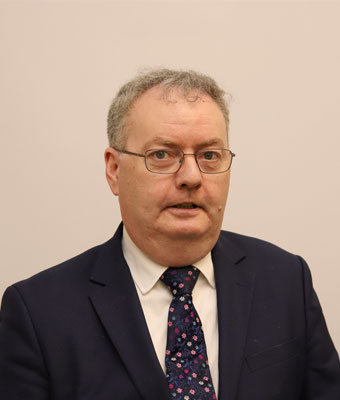
I thank the Deputy for the question. The Government is committed to the provision of additional special school places for children with more complex educational needs. Over 300 new special school places are being provided for in the coming school year, 2025-26. Five new special schools are being established in addition to 11 new special schools having opened over the past five years. Special school capacity is also being expanded in a number of special schools.
Along with providing additional special school capacity, the Department and the National Council for Special Education are considering that it may be necessary to look at the profile of our existing special schools. It is not the intention to exclude children who require special school places from accessing certain special school settings, but instead to work to ensure children with complex educational needs can apply to their own local school. The Deputy will agree that situations are arising where children with additional needs are travelling past special schools in their locality to attend special schools farther away. This is not fair on children or their families. This is down to the fact that children cannot apply for admission to their local special school simply because they do not meet the narrow designation of that specific school. This needs to be addressed and the Department is looking to engage with stakeholders in that regard. This is not a new departure. The National Council for Special Education reports that over half of these mild general learning disability special schools have been diversified, which means children with more complex needs can enrol in their local special school.
I thank the schools that have worked with us to broaden their designation. The Department will continue to support schools in this endeavour so that more special schools can better support children with complex needs in their local community. Approximately 30 of the 129 special schools were originally designated as schools for children with mild general learning disability. The establishment of these special schools predated the significant expansion of supports offered in mainstream schools through additional special education teachers and the resources of special needs assistants. I will come back in on that.
I accept there are children who will pass by special schools to go to other schools because there is no capacity for them in that school, whether that is because of the admissions policy or because of what they are catering for. Notwithstanding that, could we not as a country, seeing as we are quite rich, have schools that cater for mild general learning disabilities as well as schools that cater for more complex needs? Do we have to have catchall special schools? That is the phrase that is being used. Could we not have schools with expertise for those mild general learning disabilities and also schools that cater for more complex needs?
I have visited these schools. My party colleague Deputy Whitmore is working very closely with New Court special school in Bray and colleagues throughout the country are working with these schools. They provide excellence in education for those students who may not have the same opportunity in mainstream schools. I fear that if those children have to go back to mainstream, they may not thrive as well as they are in special schools. I understand completely that children should not be passing schools locally and I get the Minister of State's point in that regard, but could we not have both?
I take the point, but it is important that special schools, special classes and special places for children with additional needs are as local as possible to pupils' own communities. In various debates on special education, we constantly talk about people who are travelling long distances, be that in urban or rural Ireland, for those places. That is something we really are very serious about tackling.
On students with mild general learning disabilities, the experience over the past 20 years regarding mainstreaming is that a lot of it has been very successful. Yes, there are children whose needs will not be met in mainstream schools and we want to ensure we have that for them. We want real engagement with stakeholders because many of the schools throughout the country, as the Deputy has mentioned, are doing extraordinary work. We want to continue that but we want serious engagement as well. It is also important that we accommodate children as locally as possible to their own community.
To that end, could we pause that for this September so that those schools can be engaged with further by the Department and the Ministers to allow them to negotiate a timeframe for those students who are already in the school but also for students coming in?
I want to make clear I do not want to delay any child getting a school place for September. That is not my intention and I know it is not the intention of any of those schools because I accept we are in dire straits for those children. However, I am fearful for those children who are thriving in those schools as to what happens if they go back to mainstream schools or if we have children who are in mainstream schools who are not coping and would not have a place to be.
We cannot be experts in every aspect of education. When we have schools, which are expert at working with children and bringing them to the best of their ability educationally and socially, and all the other things that come with special schools and mainstream schools, we need to ensure that is protected.
Most of the 30 mild general learning schools have worked extremely well with the National Council for Special Education over the past while to broaden their profile and to accept students with autism and more complex educational needs. Both the Minister, Deputy McEntee, and I have worked extraordinarily hard over the past number of months on making sure that we have a place for every child in September. That is a fundamental issue. We are trying to make sure that it is done early every year but in some of the information that we correlated over the past while, where there were some vacancies in some schools and children were travelling long distances away from those communities, if we are genuinely serious about making sure we have inclusivity, we have to tackle those issues and go under the bonnet to see what the challenges are and how we can make it more inclusive. I take the point on it but it is important we utilise every space available to make sure we have the most appropriate place for children. The schools have engaged. We will continue to engage with the stakeholders because we need everybody on board in relation to these projects.
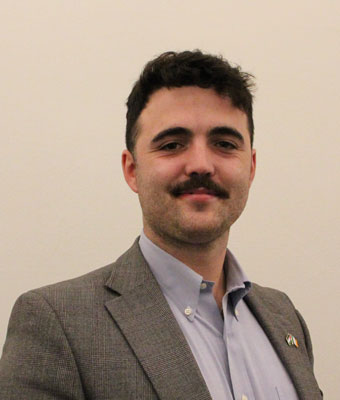
Gabhaim buíochas leis an Aire Stáit as an gcúirt a thug sé ar Ghaelcholáiste Reachrann. Bhí gach duine an-sásta é a fheiceáil ansin. I thank Deputy Ó Muirí and the other TDs in Dublin Bay North for asking the Minister. It was good to see her there and the school was delighted that she visited.
Has the Department been speaking to the planning authorities and trying to expedite the building of this school? The Minister met all the teachers. It is important for the Irish language in north Dublin that this school building gets built. I thank the Minister again for her visit.
At the outset, I acknowledge the recent school visit. I was invited by the Deputy as well as Deputy Ó Muirí and others. It was important for me to visit the school. I have heard from the Deputies so often of the challenges the school faces but, in particular, how wonderful the school is. It was wonderful to meet with an príomhoide, Eimer Nic an Rí, agus all the staff there and to have an opportunity to speak to them and to see how committed they are not only to the school but to the students. Many of the teachers are from my constituency and travel up and down. I got the full experience with the rain and jumping between prefabs, which I know they have to do on a daily basis. I am absolutely committed to supporting the development of this school, to making sure the students and teachers have the environment they need to be able to do even better and to build on the fantastic work that is already happening there.
As the Deputy will be aware, the programme for Government includes a commitment to expand opportunities for students to attend Gaelscoileanna and Gaelcholáistí. I believe the project to deliver the new 600-pupil building for the school supports this commitment.
As I said, I recently visited the school and saw first hand the importance of this planned building project. I know there have been many challenges along the way to get even to the point at which we are now, including the requirement for a new planning application. The new grant of the planning, which was received in December of 2023, with a number of conditions attached, has progressed and it has meant that we are in a situation where a design team is in place. I confirm my Department's staff is engaging intensively with the design team and with the patron throughout this entire process. My officials will be in contact with the school authority as soon as the design team completes its review. As I said to Deputies Heneghan and Ó Muirí when I visited last week, the intention is very much that come September, we will be able to issue the tender, that that process will start and, hopefully, early next year, we will be able to start putting boots on the ground, turning sods and making sure this building starts to happen.
The project will build on capital expenditure of €405 million, which was invested in Irish-medium schools between 2020 and 2024. I hope this is a strong demonstration of our commitment to Gaelscoileanna and choláistí across the country.
I welcome the fact the Minister stated she is committed. I thank all the TDs in Dublin Bay North for a unified push towards this. It is very important. The school has been waiting 25 years. It cannot wait 35 or 45 years. The students who are there now do not trust the system. I welcome the fact the Minister has committed to that and that it will go to tender by September. With all the pressure we can apply, is the Minister saying that construction will begin in Q1 to Q2 of 2026? If so, I thank the Minister from the bottom of my heart, on behalf of all the parents, students and people in north Dublin who are trying to access education through the medium of Irish.
Tá sé thar a bheith tábhachtach go bhfuil an deis ann do na daoine sin agus go bhfuil siad in ann an teanga dhúchasach agus gach rud a fheabhsú i mBaile Átha Cliath Thuaidh. Tá gach duine an-bhródúil as an nGaeilge ansin ach ní raibh an foirgneamh buan ann agus bhí sé sin drochbhéasach.
We have set out the timeline. As of yesterday, there is nothing to suggest there are any issues with the work under way between the design team, the school and my Department, which means, I believe, that come September, we will be able to issue the tender. From speaking to some of the teachers when I visited the school a few weeks ago, I know that is the biggest concern. They have got to certain points and it has gone backwards. We need to make sure that once we get to the tender stage come September, nothing stops it progressing and once that is awarded, works can start as quickly as possible.
From other projects that have progressed recently, the tender process will take a couple of months. Once a builder is appointed, it often takes a bit of time to get everything in play and up and running, but I would expect that at the latest, all going according to plan, by the end of Q1 or, if not, early Q2, works should be able to start. As I said, as of yesterday, there was nothing to suggest there is anything preventing that from happening.
Tá sé deas é sin a chloisteáil. Tá mé thar a bheith sásta leis sin. It is important the children know that education through the medium of Irish is being taken seriously by the Government. In the previous Government, we saw a decrease in the number of children learning through the medium of Irish. It is something the Government needs to turn around. In the programme for Government, there are clear commitments to education through the medium of Irish and I like the way the Minister outlined them there. This is one of the most important things for me in my constituency but I would like to see this spread wider. I will not be so Dublin-centric. It is something the Department of Education and Youth can do, with more commitments and more construction of permanent buildings for Gaelscoileanna. In Dublin 2, 6, 4 and 8, they are looking for another Gaelscoil. I welcome the fact the Minister acknowledged that and I look forward to passing on the information to Gaelcholáiste Reachrann.
As I said, €405 million has been invested in Irish-medium schools in the past four years alone. It means there are now 248 Gaelscoileanna and 50 Gaelcholáistí across the country. I want to see that increase.
Work is currently under way in my Department to develop a new policy on Irish-medium education. This is outside of the Gaeltachtaí. A policy for the Gaeltacht was announced recently and by all accounts, it has had a positive impact. We want to build on that and put a similar structure in place. We have had a comprehensive public consultation process in this regard. A task force is due to be established under the policy to explore issues relating to the various different models of Irish-medium education provision. This will be a key element of supporting our programme for Government commitment to expand opportunities for students to attend Gaelscoileanna and Gaelcholáistí.
Specifically on the school, I acknowledge Deputies Heneghan and Ó Muirí and others who have campaigned and supported and done everything possible to make sure that this project can come to fruition. I hope I am there to be able to see it through and to make sure that commitment is followed through on. As of now, we are working on track and on time and I hope to be able to fulfil that.
Questions Nos. 89 and 90 taken with Written Answers.