Naval Service
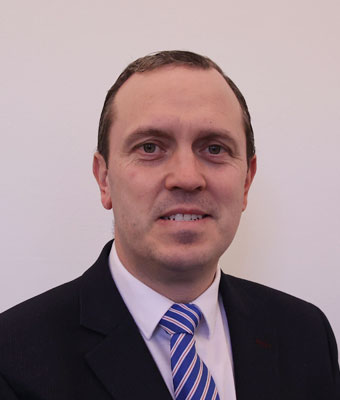
6. Deputy John Connolly asked the Tánaiste and Minister for Defence for an update on the development of a national maritime security strategy; and if he will make a statement on the matter. [31156/25]
As the Minister is aware, the Commission on the Defence Forces report proposed the development of a national maritime security strategy. I hear welcome news this morning that a public consultation process on the development of the strategy has been opened as of this morning. Will the Minister provide us with further information as to how the strategy will develop and evolve from here towards its completion? Will he provide a timeframe as to when we will see the strategy completed and ready to be enacted?
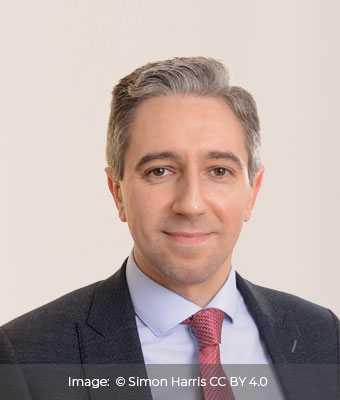
I thank Deputy Connolly for highlighting this important matter, that is, the need to have Ireland’s first ever maritime security strategy. I heard it said that we would have a new maritime security strategy in place by the end of the year. While it is true that it will be in place by the end of the year, it will be Ireland’s first ever maritime security strategy. I thank the Deputy for raising this important issue. I am launching a public consultation on Ireland’s first ever national maritime security strategy today. The purpose of this strategy is to map out our country’s approach to maritime security over the next five years, with a particular focus on dealing with emerging threats and vulnerabilities and protecting our subsea infrastructure. The public consultation will run for four weeks. I invite individuals and groups with an interest in this area to make a submission. The intention is to have a new maritime security strategy approved and published before the end of this year.
We are an island nation with one of the largest sea areas in Europe. It is absolutely vital we have a robust and effective maritime security strategy in place. This strategy will be crucial to assessing any potential threats and vulnerabilities. We need to have a particular focus on protecting our undersea infrastructure. I invite the many people who have an interest and expertise in this area to make their views known and to bring forward their ideas on how we can put in place a strategy that will ensure we take this critical opportunity to have a new and robust approach in order to safeguard our waters. I hope we can have open and constructive dialogue in order to get this strategy right in the time ahead. It is the first strategy of its kind. We need to prioritise the risks and threats we face in our maritime domain and then include a plan to address the most urgent and immediate concerns.
The Minister has outlined well the potential threats that exist to our subsea cable infrastructure and to other aspects of our maritime domain, which require addressing and this strategy. One other recommendation that came from the report of the Commission on the Defence Forces was that the powers required by the Naval Service for effective enforcement in support of national security in the maritime domain should be addressed as there appears to be some inconsistency between the pieces of legislation in this area. Has the Minister any plans to address that issue? There seems to be an inconsistency between the Sea-Fisheries and Maritime Jurisdiction Act 2006, the Maritime Security Act 2004 and the Maritime Safety Act 2005. Is a consolidating piece of legislation needed in this area?
One further recommendation of the Commission on the Defence Forces was the development of a naval base for the Naval Service Reserve in Galway. This should form part of this strategy. The Naval Service has no coastal cover on the west coast between Limerick and Donegal. A naval base in Galway, therefore, would be appropriate.
I thank Deputy Connolly and the Cathaoirleach Gníomhach, who agrees with him. I thank him for highlighting this matter. There are a couple of things in this regard. The Deputy is right that the Commission on the Defence Forces recommended exactly what he said it did. I will bring forward, either over the summer or early in the autumn, the next iteration of the implementation plan for the Commission on the Future of the Defence Forces where we will take forward more recommendations. We are also looking at a new national security plan for Ireland more broadly, which will be co-ordinated by the Department of the Taoiseach. Its purpose will be to ensure there are no silos or, as the Deputy mentioned, overlapping pieces of legislation. The maritime situation can also be considered in that context.
On the issue of the naval base, I will speak directly to the leadership of the Defence Forces to get their sense on this matter. There will absolutely be a need for more naval bases in our country. There is no doubt about that.
In the time available to me, I wish to say that getting this strategy right is so important. We live in a country where approximately 78% of our energy needs are imported on ships or via pipelines, approximately 90% of our trade is transported by sea and 95% of international data and voice transfers are routed through our undersea fibreoptic cables. The majority of transatlantic data passes through cables situated in Ireland’s economic exclusive zone.
I welcome that the Minister will engage with Defence Forces personnel regarding a base for the Naval Service Reserve in Galway. There is little coastal coverage for the Naval Service between Limerick and Donegal, which is quite a wide area. Some of the subsea cables to which the Minister referred come into the country through Galway, including some of the transatlantic ones. Indeed, some cables come in north of Galway as well. One cable comes inland in County Mayo.
Of course, Galway already has Defence Forces personnel within the city. We have Dún Uí Mhaoilíosa Barracks in Renmore, which the Minister has visited twice since his appointment. In the context of the recommendations of the Commission on the Defence Forces, this recommendation for a base for the Naval Service Reserve is a prudent one. It would fit well into the development of the national maritime security strategy and a national security plan.
I hear the compelling case Deputy Connolly is making loud and clear. I will talk to the Naval Service directly and to the Chief of Staff with regard to our plans for the expansion of naval bases in the country. I am proud to acknowledge, as the Deputy has acknowledged, the great tradition Galway has in its contribution to Óglaigh na hÉireann. I had the honour of visiting Renmore on two occasions to see the proud sense there is in Galway of the contribution that Renmore and our Defence Forces based there have made.
I always like to recall the fact that we live in a country where approximately 80% of our population live in coastal counties. While we have a small geographic land mass, we have a massive amount of ocean around us. We are duty bound for our own people, and more broadly in the geopolitical and geosecurity area, to take this really seriously. We want to get maritime security right and have the strategy in place by the end of the year. I very much welcome constructive submissions.
Defence Forces
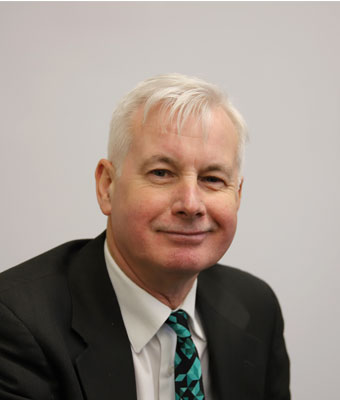
7. Deputy Seán Crowe asked the Tánaiste and Minister for Defence if he intends to establish a special review body to examine means of retention of skilled technicians in the Defence Forces; and if the timeframe for the process. [30785/25]
While the Minister has addressed this issue earlier, the greatest challenge for our Defence Forces is the constant drain of skilled technicians. It is seriously hindering our operational capability, especially in the Naval Service where ships are tied up at dock. Will he commit to establishing a specific review body tasked with examining how we can stem the flow of knowledge and training out of our military?
Although it is a phrase I might not use too often, Deputy Crowe is right. This is a real issue which he has rightly challenged.
We have made very good progress on recruitment and retention in the Defence Forces, but we have a lot more to do. The Deputy's question gets to the heart of the fact that the statistics I can quote belie or ignore the fact there are real pinch points in respect of certain technical skills our Defence Forces require. When we lose those numbers of specialist personnel, we see how quickly it can cause real operational difficulties in Casement, as we have discussed this morning, as well as in other parts of the Defence Forces we have discussed previously. I thank the Deputy for putting this question down.
Since my appointment as Minister for Defence earlier this year, my initial focus has been on stabilising the numbers of Defence Forces personnel and facilitating the capacity for further increases. I am determined to achieve real progress on this issue and I have been very clear with the Chief of Staff of our ambitions in that regard. Challenges undoubtedly exist, particularly in the recruitment and retention of specialist personnel, as the Deputy referenced. This specific challenge is presently felt by employers across the economy at a time when we have full employment.
The Government has introduced a number of measures in recent years to try to make progress on recruitment and retention in the Defence Forces. There has been significant progress on pay and we should not forget that. Recruits on completion of training now start at €41,465 in year 1, which represents an increase of 49% over the past six years. School-leaver cadets upon commissioning earn €45,341 while in full-time education, and the pay of graduate cadets now commences on €50,667. A further pay increase of 1% is due under the current pay agreement in August and a number of additional pay-related items are being negotiated as part of local bargaining arrangements. Increases in the recruitment age to 39 years for those roles that had a recruitment age below that, and to 50 years for direct entry specialists, have been introduced. The mandatory retirement age has been increased to 62. Private secondary healthcare has been rolled out to all members of the Permanent Defence Force. The provisions of the working time directive have been extended across the Defence Forces, subject to certain exemptions.
Whether it is pay, conditions, pensions or, dare I say, accommodation, there must be something we can do to compete with the private sector. When the review body is established and given terms of reference, it should do a deep dive into the levers that can be used to make the Defence Forces an attractive career, rather than just the fact they are trained up by some of the best instructors.
I welcome the initiative on air traffic controllers but it should not be a one-off. We need to look right across the services. It is could and should be done.
I agree with the Deputy. What I am saying is I have a very open mind on his question. I believe we will need to do something in this space and I am considering what would be the best structure to put in place to examine this is because we should not just talk about recruitment and retention in general in respect of the Defence Forces. I hope and think we will be able to make more progress. We made some last year and I think we will make more this year. The Deputy’s point about the deep dive into the specialist areas, the pinch points and how the Defence Forces are doing at a time when the country has full employment is important. These people are highly skilled. It is not really an issue to recruit them but it is an issue to retain them. As the Deputy noted, the service commitment scheme we brought in for air traffic controllers is good. That is one area. There are also other pinch points, including in the Naval Service.
We have local bargaining structures. They are meant to advance some of this but I am very open to considering, with colleagues in the Government, whether there is a better way of doing a deep dive. I intend to consider this with my officials over the summer and will come back to the Deputy in the autumn with my thinking on it.
I welcome the fact the Tánaiste will look at it. We have seen the strains in different elements of the different services, such as ships not being able to be deployed. It is not just happening in Ireland. Services are facing these challenges across the world. I welcome the Tánaiste's indication that he will look at this over the summer and come back to us in the autumn. If there is common agreement across the Government, this review needs to be established sooner rather than later. I look forward to the Tánaiste’s report in the autumn.
I thank the Deputy. As I said, we have objectively made good progress on pay, with a 49% increase in pay for a recruit entering the Defence Forces for training compared with six years ago, and rightly so. A school leaver can now be in full-time education and earn €45,341, while graduate cadets now commence on €50,000. We have also extended access to healthcare, brought in the working time directive, increased the mandatory retirement age and the recruitment age and made the patrol duty allowance payable the Naval Service. There is also the decision we took this week regarding air traffic controllers, and the new Naval Service tax credit has been extended for a further five years. Good things have been done, in addition to the extensive training opportunities provided to all personnel, but there is no doubt more needs to be done. I will explore with Government colleagues and my civil and military management teams how we can look further at this and whether we need to bring in external expertise to inform this work.
Military Neutrality
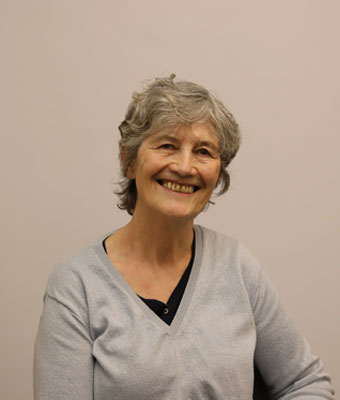
8. Deputy Catherine Connolly asked the Tánaiste and Minister for Defence the basis on which the decision has been taken to legislate for the removal of the triple lock; and if he will make a statement on the matter. [31260/25]
12. Deputy Darren O'Rourke asked the Tánaiste and Minister for Defence if he accepts that abolishing the triple lock was not necessary to release humanitarian deployments or secure the evacuation of Irish citizens abroad, as heard at a recent meeting of the Oireachtas Joint Committee on Defence and National Security; and if he will make a statement on the matter. [30282/25]

43. Deputy Roderic O'Gorman asked the Tánaiste and Minister for Defence to provide an update on legislation he is bringing forward with respect to the triple lock; and if he will make a statement on the matter. [30079/25]
48. Deputy John Clendennen asked the Tánaiste and Minister for Defence if the proposed changes to the triple lock will impact on Ireland’s policy of being militarily neutral; and if he will make a statement on the matter. [30705/25]
51. Deputy Paul Murphy asked the Tánaiste and Minister for Defence if the general scheme of the defence (amendment) Bill 2025 removes, rather than reforms, the triple lock; and if he will make a statement on the matter. [31229/25]
Gabhaim buíochas leis an gCathaoirleach Gníomhach. Baineann mo cheist leis an nglas triarach agus an cinneadh atá déanta fáil réidh leis. My question relates to the triple lock. Will the Tánaiste outline as clearly as he can the basis on which the decision was taken to legislate for the removal of the triple lock? If he can outline that in a rational way, I would be very interested.
I propose to take Questions Nos. 8, 12, 43, 48 and 51 together.
I will outline the policy rationale. First, I would mention the electoral commitment. I promised the people of Ireland, when I ran in a general election, that if I were elected to government, I intended to do this and I intend to keep my promises. It was in my party’s manifesto. I think it was in our partner’s party manifesto. It is in the programme for Government and we intend to act on it. We put it before the people as a proposition in our manifesto. We are in government with a mandate from the people and I intend to deliver on that mandate.
Under the UN Charter, the UN Security Council has primary responsibility for the maintenance of international peace and security. Shame on the council, by the way, for not being able to even pass a motion on Gaza in recent days. It is not working. It is letting the world down and letting the people of Gaza down. As this House will be aware, the five permanent members of the UN Security Council can use their veto power to prevent the Security Council from taking decisions, including those related to mandates for peace operations. We have seen this illustrated most recently last week, where a UN Security Council resolution simply calling for an unconditional ceasefire in Gaza was vetoed. In practice, even the threat of a veto by a permanent member, rather than its actual use, is often enough to prevent the council from taking action. We have seen this on many occasions in the recent past, including in respect of the conflicts in Ukraine as well as in the Middle East.
This untenable situation has led the Government to the decision that we need to change the legislation that governs how we despatch our Defence Forces overseas. The programme for Government clearly sets out this Government’s intention to reform the triple lock legislation and this is intended to be done while also ensuring that amendments to the legislation are in keeping with our values and policy of military neutrality. I reiterate, as I did earlier, that I want to work with people on that. We have vastly differing views on the triple lock - I respect that difference - but I want the legislation to look at how we can ensure that we are in keeping with our values and policy of military neutrality. It cannot be emphasised enough that we have no desire to alter our policy of military neutrality. The proposed amendments to the legislation are in keeping with Ireland’s values and policy in this regard. As this House is aware, Ireland’s policy of military neutrality is characterised by the non-membership of military alliances or common or mutual defence arrangements. These legislative proposals have no effect on this policy.
Having regard to the current ineffectiveness of the UN Security Council and the outcome of the consultative forum on international security in June 2023, the Government approved the proposals to bring forward the general scheme of the defence (amendment) Bill to govern overseas deployments into the future. The proposed changes will ensure that our legislation is fully up to date and fit for purpose. By making the changes proposed, we will be removing the veto power of Security Council members over Ireland’s international engagement, thereby allowing us to reinforce our sovereignty and have the Government and the Dáil make a decision to despatch the Defence Forces overseas.
To address the question raised by Deputy O’Rourke and to clear up any misconceptions: the Bill proposes to amend the legislation on how Ireland deploys its troops overseas, both on peace operations as part of an international force and overseas for purposes other than as part of an international force. These include, for example, evacuation operations of Irish citizens abroad, which have become sadly more frequent due to the volatile geopolitical situation.
These provisions are separate to the triple lock provisions. There are people in this House who vehemently oppose the removal of the triple lock who are in favour of some of those provisions. I do not wish to conflate them and they should not be conflated. I think they got a little conflated during pre-legislative scrutiny. There are separate provisions here, namely, the triple lock provisions and those providing clarity on, for example, evacuation operations of Irish citizens. I want to be truthful and clear on that.
As I said in response to Deputy Gibney some moments ago, I am open to refining the legislation and want to do so. Pre-legislative scrutiny is not just something to go through to tick a box. It is about how we make this legislation have the safeguards that Members of this House want, how we make sure the UN Charter, which we value, is at the heart of all that we do and how we look at things such as human rights monitoring.
These are all good things that we should do. We have produced guiding principles in the draft legislation around being welcomed by the host country and the likes. We need to determine whether people think such measures are robust enough. A scrutiny process is under way and is expected to last around eight weeks. Following its conclusion, it is intended to draft a Bill to go to Government for approval and I hope to bring it through the various Stages of the Oireachtas.
I will want to provide ample opportunity to scrutinise and debate the content of the Bill and work constructively. No one has done this today, but I ask that we do not reduce every conversation to asking about military neutrality. Quite a number of militarily neutral countries have no triple lock. There are many ways in which a country can be militarily neutral and not have a triple lock. People in Ireland, including me, have a deep love of our military neutrality and want to be militarily unaligned. It is clear that the people of Ireland have an overwhelming desire for that.
However, I also think they understand the need to reform the current structures. As I said, we have troops in Lebanon today doing brilliant and amazing work. It is the longest unbroken commitment to peacekeeping. I am very proud our troops are doing that under a UN mandate. What is the view of those opposed to these changes if that mandate is not renewed this autumn? There is no discussion on this, but hypothetically, if Donald Trump, Vladimir Putin or anybody else decided, for whatever reason, not to renew the mandate at the UN Security Council, is the view that Irish peacekeepers should not continue their excellent work in Lebanon? That is not my view, but is it the view of the House? I say that to be constructive. These are the real-life things we may have to tease our way through in the time ahead.
Obviously, I cannot respond to the Tánaiste's five- or six-minute reply in one minute. He made many promises. We had promises in the Nice and Lisbon treaties and, separately, we have promises to end the housing crisis. There have been many solemn promises the Government has not fulfilled. For the Tánaiste to stand here and say he will fulfil a promise is not a response to the question I asked. My question asked about the basis leading to this decision. I would have thought that somewhere a document sets out the problems.
The continuous referral to the difficulty with the veto has always been framed in terms of the Russian veto being used. Even today, on his third occasion to speak on this, the Tánaiste spoke about the recent decision of the failure of the UN in calling for a ceasefire. He failed to call out who used the veto. America used the veto.
Sorry-----
The Tánaiste has referred to hypothetical situations, which, he has told us in the past, he does not like to talk about because he instead prefers to deal in reality. The reality is that America used the veto to stop a ceasefire and allow genocide to continue.
To be clear, the United States of America used the veto. I have no issue about that. I think I referenced the President of the United States on a number of occasions today in regard to my concern about the potential use of the veto. The United States used the veto, and I think it was an appalling use of it. It is a sign of the dysfunctionality of the Security Council. I fully agree with the Deputy on that.
Regarding Nice, Lisbon, etc., I am talking about what we ran on in the election. Nice and Lisbon are very important and we gave commitments in our manifesto. We articulated them not just in this Government but in the previous Government. This proposal is not coming as a surprise to the Deputy or anybody in the House. I believe the Irish people see a very clear difference, as we have seen in recent public polling, between valuing military neutrality and recognising that we can have an informed discussion about how we reform and change the triple lock. I do not think the two issues should be conflated.
Every time we try to have a conversation on defence, security or peacekeeping, we are accused of attacking military neutrality. We are not. Military neutrality is not owned by Deputy Connolly, the left or anybody else. It is owned by all of us. It is deeply valued on a cross-party basis, including by my party. We have no proposals to change military neutrality. I want to work with the Deputy to make sure that the legislation is clear. We might have differences in terms of the proposal on the triple lock but we should seek to get the legislation right.
I am not just talking about hypotheticals, although I accept what I said about Lebanon was hypothetical. On previous occasions in the House, I have mentioned the challenges we have already faced in respect of the veto. I do not understand what the problem is with the people who elected Deputy Connolly in Galway, me in Wicklow and others in Dublin making a decision such that the Government and the people's representatives can reach agreement. Deputy Ó Laoghaire asked about oversight structures, which are in place. Every law that is passed has arbitrators, namely, the courts. Why would we give that sovereignty away?
I have looked at other militarily neutral countries, ones the Deputy would not doubt at all are militarily neutral, and I am happy to discuss them when we deal with the legislation. She or I could not and would not question their neutrality. They do not have a triple lock. The idea that it is either the triple lock or no military neutrality genuinely does not stand up to scrutiny. One can favour the triple lock, but it is not the same as saying the triple lock must stay or military neutrality will be threatened. There are many examples of countries that are proudly militarily neutral that do not have a triple lock, and the Deputy would not suggest that they are militarily aligned.
There is a way of getting this right and I look forward in the first instance to the report coming back from the committee following pre-legislative scrutiny. My predecessor hosted an international forum on defence and security that examined the issue of the triple lock. There has been much work done on this over quite a number of years. There are genuine different views in the House and I respect that, but there is a way of getting legislation right that guards military neutrality while also recognising that we have to be able to deploy peacekeeping troops in a manner that does not succumb to a UN Security Council veto.
I do not know if the Minister understands the Lisbon and Nice treaties. We had to vote a second time because of people's concerns regarding the militarisation of Europe and neutrality. We got solemn declarations, or whatever they are called, in the Nice and Lisbon treaties and the then Government forced the people to vote twice. The Taoiseach has told us the triple lock is a fundamental and core part of our neutrality. Perhaps the Tánaiste should ask him when that changed.
If the Government is asking us to change something as fundamental as our policy of neutrality, it should lay out in black and white what led to that decision. Which veto was used and at what time? Which country has used the veto the most? It has all been America. America has played an appalling role lately in voting against a ceasefire. Now more than ever, we need to use our voice. Earlier, the Tánaiste referred to the volatile situation in the world. That is why we need to stand up, not reactively but proactively.
It is difficult to cover everything because there was extra time. I am not sure what the position is regarding that, but other TDs were grouped with this question.
The way it works is that each TD gets one minute.
Do I get in again or is this the end?
This the end.
That is all I wanted to know.
That is the way it works.
It is unfair the way it has worked out.
I understand, but that is the way it works.
I am disappointed in how the heads of the Bill have been presented. I think there is support for 80% or 90% of what needs to be achieved in terms of our national security, or we could at least reach accommodations, such as on the extraction of our citizens from war zones. The Tánaiste will launch the national maritime strategy today, which I welcome and is much needed.
There is an emotive element to the triple lock, which will envelop all of these issues politically. Issues will be conflated. The Tánaiste said in his first contribution that they are separate, which is the case, but he knows the reality of political discourse in this country. We need to have a sophisticated discussion on all elements of national security and the triple lock, but they should be done separately. We do not need to rush into removing the triple lock as part of the legislation. A process of reform is ongoing in the United Nations and we should lead on that. We should try to improve the United Nations. We fundamentally believe in it, and any future of peacekeeping outside the United Nations is not something we can take a punt on at this point.
Most people would link the triple lock with our foreign policy and neutrality. A lot of people would be surprised at the proposal, given that during the Nice referendum campaign the Government parties were very silent on this issue and there was no real view that there would be a move to change it. The current position comes as a bit of a surprise. To follow on from what an Teachta Connolly said, perhaps the Tánaiste could explain in the remaining time the rationale and motivation to upend a system that has been in place since the 1960s. It is a huge step. There has been no real debate, but rather an announcement that it will be changed. The worry people have is that a fundamental part of our policy on foreign affairs will change all of a sudden.
The Tánaiste will, perhaps, give examples later of Afghanistan and some of the challenges there but other challenges in the world face us today and people need to have a clear debate on this.
People need to have a clear debate and people need to stop the spread of misinformation. I heard the leader of Sinn Féin, Deputy Mary Lou McDonald, speak about sending our sons to war. Let us get real. There is no proposal to send anybody's son to war. There are genuine differences on the policy of a triple lock. That is great and a legitimate thing to have. We also have to be truthful about this. The legislation is printed and it is there for people to read. I would love the Deputy to refer me to the line in the legislation that makes him believe we are sending anybody's son in Ireland to war. We are not. This is about peacekeeping. I am extraordinarily proud, and I think we all are, of what our peacekeepers are doing. It is a legitimate question to ask whether there is a better way of doing it. I believe there is and some people believe there is not. Some people believe my way is not the right way and that the current way is fine. That is grand and let us debate it. This idea of scaremongering and saying we are sending people to war and we are sending people to Iraq, come on, that is not true. It might get the emotion going but it is not the factual debate we need to have.
I take the point about not rushing this, which Deputy Duncan Smith has made. I do not intend to rush this. We have the pre-legislative scrutiny and the committee is doing its job well from what I can see. It sends its reports back. We need to make sure there is ample time to scrutinise this issue.
On the purpose of improving the United Nations, I fully agree. The Taoiseach will be there next week. We are very committed to the United Nations and to multilateralism at a time when it is under attack from many sources. We are increasing our multilateral funding and support for the UN all of the time. UN Security Council reform, unfortunately, is not likely in the near term. There are ways we need to work through what it is.
I believe we can get a landing zone here that is correct if there is a wish to do that. If there is a wish, which there is not from everybody in opposition, to suggest this big bad Government wants to scrap military neutrality and send your sons to war, we will not make any progress. That is misinformation and disinformation, and it is downright factually incorrect.
This is a question about how we effectively and appropriately deploy Irish peacekeepers to do the brilliant job they have been doing. There are real-life examples. No new peace support operation has been approved by the UN Security Council since 2014. Operation Althea in Bosnia is a recent example, whereby issues arose in 2022 on the continuation of a UN Security Council mandate and Ireland was faced with the real possibility of having to withdraw men and women from the mission as the roll-over of the mandate was not immediately forthcoming. There continue to be concerns as Russia has become very critical about it. It is very possible that Russia may veto a future renewal. We saw in 2015 that Ireland could not participate in the EU security mission in the Mediterranean, then called Operation Sophia, for more than a year after it started because of the lack of a mandate. In 1999 a permanent member of the UN Security Council vetoed the renewal of the United Nations preventive deployment force, and because the subsequent European Union peace operation in the Former Yugoslav Republic of Macedonia did not have a Security Council mandate we could not participate. In 2017 we could not participate in the Maritime Analysis and Operations Centre.
Question No. 9 taken with Written Answers.
Defence Forces
10. Deputy Duncan Smith asked the Tánaiste and Minister for Defence to provide an update on the incident in southern Lebanon where Irish peacekeepers came under fire from the Israel Defence Forces; and if he will make a statement on the matter. [29866/25]
36. Deputy Conor D. McGuinness asked the Tánaiste and Minister for Defence the contact that has been made with the Israeli Government after Irish peacekeepers in southern Lebanon having most recently came under fire from the Israel Defence Forces, IDF, at the end of May, which followed on from attacks by the IDF on Irish diplomats; how the Israeli Government has sanctioned the IDF soldiers involved in firing live ammunition at Irish citizens; and the security guarantees for Irish peacekeepers and diplomats he has demanded from the Israeli Government. [31306/25]
39. Deputy Aindrias Moynihan asked the Tánaiste and Minister for Defence to outline UNIFIL’s engagement with the Israeli authorities on the recent shooting incident involving Irish peacekeeping troops in southern Lebanon; the response that has been received on any engagement with UNIFIL with the Israeli authorities on this recent incident; and if he will make a statement on the matter. [31160/25]
This question is on the shots fired at our peacekeeping soldiers in Lebanon. Will the Tánaiste provide a comment on this?
I propose to take Questions Nos. 10, 36 and 39 together.
I thank Deputy Smith for raising this question. Our peacekeepers in Lebanon are part of an international UN-mandated force under the command of UNIFIL. They are part of Ireland's long and proud history of peacekeeping, and I know from my recent visit to our troops in UNIFIL that they are making a really important contribution in a very challenging environment. They are acting as the international community's eyes and ears on the ground. I want to take this opportunity, joining with Deputy Smith and everybody in the House, to state again our thanks to our personnel for the valuable service they carry out in support of international peace and security in the region. I reaffirm once again that their safety and security is a matter of the highest priority for me as Minister for Defence and for the Irish Government. I also thank their families for the sacrifices they make.
To address the incident referred to, while the Irish patrol was not directly targeted by the Israel Defense Forces in the incident on 29 May, the firing of ammunition in the vicinity of an Irish patrol is considered extraordinarily reckless. Such actions are completely unacceptable in terms of the safety of our peacekeepers in the execution of their mandated duties. In my view, it was simply an attempt to intimidate our peacekeepers. We saw an attempt to intimidate our diplomats relatively recently and now we have seen an attempt to intimidate our peacekeepers.
The incident in Yaroun was unconscionable, and I categorically condemn any endangerment of our peacekeepers. On hearing of this development, I immediately directed that my officials convey a formal démarche to both the United Nations and the Israeli mission to the UN in New York to express my deep concern regarding the unacceptable nature of the incident and the actions of the Israel Defense Forces. In this regard, our permanent representative to the United Nations in New York made contact with the Under Secretary General for Peace Operations at the UN, Jean-Pierre Lacroix, on 30 May, immediately after the incident. The deep and well-founded concerns of the Irish Government in relation to the incident were clearly and frankly conveyed to the UN.
Also on my instruction, our permanent mission to the UN expressed our grave concerns and anger directly to the permanent mission of Israel to the United Nations and, through them, to the Israeli Government. Ireland has also requested that UNIFIL formally raise these concerns as a matter of urgency with the appropriate Israeli authorities. Should any further incident of this nature occur, we will continue to do so without hesitation.
I reassure the House that I remain in regular contact with the Chief of Staff with regard to the deployment of our personnel in UNIFIL. The Department is also regularly kept apprised of all developments in those areas where Defence Forces personnel are deployed. There are robust force protection measures in place to support the security and safety of all personnel, and these measures are continually reviewed and enhanced as necessary to address any emerging threat.
We have to be clear about what is going on here. It is a constant attempt to undermine peacekeeping by the Israel Defense Forces. Then they come out with whataboutery and state they will look into matters and issue apologies. It misses the point. There needs to be accountability in relation to those who fired these shots, which were clearly an absolute breach of everybody's basic understanding of international laws and rules in relation to peacekeeping. Sadly, it is not an isolated incident because when our permanent representatives to Palestine were visiting a refugee camp, as diplomats during their duties, we saw a similar incident when shots were fired in their direction. This is a pattern of intimidation by the Israeli Government and the Israel Defense Forces.
I thank the Tánaiste and I welcome the swift and stern diplomatic response we had to this incident through the United Nations. As the Tánaiste has said, this is a pattern of behaviour. There is no sense this pattern will stop. We are lucky there were no injuries or loss of life but if, God forbid, we see further instances such as this or an escalation, what is open to us as a State in terms of escalating actions against Israel? Will we continue to démarche through the United Nations? We know that legislatively we have the occupied Palestinian territories Bill coming through the foreign affairs committee and we will debate it there but what else can be done? We had a delegation from the Palestinian Authority meet the foreign affairs committee to discuss issues such as planning and water services. Senior operations people gave an absolutely stark vista of Gaza, the West Bank and everywhere in terms of Palestine and Israel's actions. This pattern we are witnessing in terms of peacekeepers is just one of a host of aggressive actions by Israel against Palestinians and peacekeeping.
I thank Deputy Smith. I believe that when the representatives of Palestine met the foreign affairs committee and addressed the matter, they referred to Ireland and possibly Algeria as two of the most supportive countries of their actions. Perhaps that is not articulated enough in the House. This country, the Government and the Oireachtas are doing everything we possibly can, and we will continue to do everything we possibly can, to support the people of Palestine, support international law and support human rights. It was good to hear that recognised by Palestinians at the foreign affairs committee as recently as this week.
Yes, we will continue to demarche but it is well beyond time for real practical actions against the Israeli Government. This is why Ireland has called for the association agreement review. We have a Foreign Affairs Council meeting on Monday week. What I would say today in the House is that I hope and expect the European Commission on that occasion to bring forward a list of options on what actions Europe can and should take on Israel's clear breach of our association agreement. It is my view, the view of Deputy Smith and the view of most Members of the House that the agreement should be suspended as Israel is clearly in breach of the human rights clauses, which are not just there for padding. It is clearly in breach of the human rights clauses. In the absence of that decision, which would require unanimity of the European Union, the very least we should expect is that the European Commission present to the Foreign Affairs Council options as to immediate measures and sanctions that can be taken. There has to be cause and effect between the breach of an agreement and action being taken by Europe.
Yes, we will bring forward the Bill regarding the occupied Palestinian territories. I hope to bring it to the Cabinet next week; or if not next week, then certainly the following week. The Bill will go to the Oireachtas committee this month and it can begin its scrutiny process. We will continue to use every avenue available. The Taoiseach will represent our country at the UN two-state solution conference, which I think is next week.
One of the most practical things we should all be pushing for through our own political groupings in Europe is for a speedy review of the association agreement. There is no reason, in my view, in the wide earthly world why the European Commission should not be presenting options for member states to consider in terms of the breaches that have clearly taken place. That would be real, tangible action that Europe can and should take regarding the Israeli Government.
That is interesting. Is it the Tánaiste's hope or expectation that the Commission will bring some options to the Foreign Affairs Council meeting on Monday week?
The occupied territories Bill will be coming forward. I am sure the Tánaiste's attention has been drawn to the legal action that has been taken by a transnational group of lawyers against Airbnb due to its operation of services in the occupied territories. Senator Frances Black hosted a briefing in the audiovisual room on Tuesday morning. There was a very strong legal opinion that under the definition of trade we cannot separate goods and services. I am sure the Tánaiste's attention will have been drawn to that in the spirit of wanting to get this Bill right, and he knows our position in terms of including services in it. Again, this is all about bringing tangible sanctions against Israel for its actions. It was not lost on me, the Tánaiste or anyone else who heard it that the Palestinian people see allies all over the world. They mention Ireland and Algeria, and it should not be lost on anyone on either side of the House that our actions here make a difference to the Palestinian people.
It is fair to say that we will be seeing continuity in Israel's pattern of behaviour. It is not surprising for an entity that engages in genocidal action. The shooting at Irish peacekeepers and diplomats was an absolute disgrace. We know the actions we need to take, whether it is the occupied territories Bill and the inclusion of services. I agree with the Tánaiste that the Commission needs to take action regarding the EU-Israel association agreement. All I can say is that it is a disgrace. We also have to find a way to ensure we are not facilitating the sale of Israeli war bonds by whatever means possible.
I have two questions. One of them relates to Seán Rooney. We have to do right by peacekeepers and make sure we do everything for them. I know there is a case at this point. The Tánaiste will not be shocked at the question I am going to ask now regarding Michael McNeela, who lost his life in Lebanon in 1989. His mother received the pension but when she died, his father, John, did not. I have spoken to the Tánaiste about it before. It is something that needs to be resolved. Discussions between the Tánaiste's Department and the Department of Social Protection were meant to take place about finding an interim solution, but the legislation needs to change.
Irish peacekeeping troops were fired on. It is not the first time; it has happened through the years with Israeli forces and their proxies in that area. The fact is this is not the first time. Is it true to say that the co-ordinates of the Irish troops are given to the so-called Israel Defense Forces, that the bunkers are not moved, and that they know where the peacekeepers have been for a long time? They know exactly where the troops are. They know exactly what they are doing regarding the attacks on these troops.
One of my colleagues made the point yesterday that the Israeli war bonds are facilitated by the Central Bank. The rounds that were fired at the Irish peacekeepers were possibly paid for by those war bonds. It highlights the challenges we are facing with regard to the conflict in that zone and what we need to do. We need to be more proactive on this issue.
The Governor of the Central Bank outlined the legal and practical situation yesterday at the Oireachtas committee. Nobody wants to see anything happening that in any way provides any support, direct or indirect, to the Israeli Government's horrific actions and the genocidal activity. We have to operate within the laws of the land and the laws of Europe, but we continue to work our way through all issues.
Deputy Smith asked whether it was my hope or expectation, which is a fair question. It is certainly my request and the request of a number of European countries. I would think it is a legitimate expectation, but I do not yet know. The people of Ireland and Europe are watching on. They are looking at the European Union - I am a big fan of the European Union; it has been great for our country - as a major peace project. It is one of the most successful peace projects in the world. The majority of EU member states agreed to a review of an agreement, something Spain and Ireland had been seeking for more than three years. There is an onus on the EU now to maintain credibility by ensuring that review is swift and has clear consequences. We should see those actions. We need to see those actions quite quickly.
On the issue of services, as I have said before with regard to the occupied Palestinian territories, I am very supportive of the policy rationale for it. However, I have to get the law right. It is likely that the draft Bill will be for goods, as per the commitment in the programme for Government, but, to be very clear, as I have said to Senator Black, the Oireachtas committee will then scrutinise if it is possible to include services. I have also asked the Attorney General for updated advice regarding that to get advice external to my own Department's legal advice. I expect to receive that shortly.
I thank Deputy Ó Murchú for raising the case of Seán Rooney. I want to see every support possible provided to the Rooney family. We will work our way through all of those issues. I also want to see justice for Seán Rooney and his family. We will continue working in that regard.
I also thank Deputy Ó Murchú for raising the case of Michael McNeela. In fairness, he raised it with me long before anybody else ever did. I thank him for doing that. I heard Michael's father, John, on the radio, and you could not but be moved. I extend my deep sympathies to John on the loss of Michael. There is a legitimate policy question here. One would imagine this affects a very small number of people with very particular tragic circumstances. The engagement between my own Department and other Departments is ongoing. I do not want to say more than that until I make more progress, but I am very sympathetic and supportive to seeing whether action can be taken.
Air Corps
Bogfaimid ar aghaidh go Ceist Uimh. 11. Tá Ceist Uimh. 11 á tógáil le ceisteanna Uimh. 20, 23, 29, 34, 42, 62, 66 agus 79.
11. Deputy Duncan Smith asked the Tánaiste and Minister for Defence the urgent actions he and his Department will take to ensure that the 505 squadron at Casement Aerodrome at Baldonnel is fully staffed and will not be forced to continue to operate at 50% capacity and a reduced flying schedule; and if he will make a statement on the matter. [29865/25]
20. Deputy Brian Stanley asked the Tánaiste and Minister for Defence if he is aware that it has been reported that the Air Corps is to end 24-hour operations and reduce its service to an 8 a.m. to 8 p.m., five-day week from June 2025, as a crisis in air traffic control has reached a critical point; and if he will ensure that this will not be the case and that operations will be remaining in place 24-7 yearly. [30316/25]
23. Deputy Paul Lawless asked the Tánaiste and Minister for Defence if he will address the impact of staffing shortages in the air traffic control unit at Baldonnel, which have resulted in the scaling back of operations to five-day coverage; if he is concerned that this reduction limits support to the Irish Coast Guard and restricts the ability to respond to crime, search and rescue, or emergency events outside of office hours; and if he will make a statement on the matter. [30708/25]
29. Deputy Cathy Bennett asked the Tánaiste and Minister for Defence the reason the Air Corps has reduced operations to a five-day work week. [31309/25]
34. Deputy Mark Ward asked the Tánaiste and Minister for Defence his plans for recruitment of air traffic control staff at Baldonnel Aerodrome; and if he will make a statement on the matter. [30989/25]
42. Deputy Seán Crowe asked the Tánaiste and Minister for Defence the measures that will be put in place to resume full-time flight operations at Casement Aerodrome as a matter of urgency. [30786/25]
62. Deputy Cathal Crowe asked the Tánaiste and Minister for Defence for an update on plans to base Air Corps aircraft at Shannon Airport; and if he will make a statement on the matter. [31129/25]
66. Deputy Cathy Bennett asked the Tánaiste and Minister for Defence when he was first apprised of the possibility of the Air Corps reducing its operational hours; if he received recommendations as to how the situation could be averted; and the actions he took to prevent the situation from arising. [31310/25]
79. Deputy Darren O'Rourke asked the Tánaiste and Minister for Defence the measures he is taking to ensure the Air Corps remains fully operational at Casement Aerodrome in Baldonnel; his plans to recruit air traffic controllers and other personnel; and if he will make a statement on the matter. [30283/25]
What urgent actions will the Tánaiste and his Department take to ensure that the 505 squadron at Casement Aerodrome at Baldonnel is fully staffed and will not be forced to continue to operate at 50% capacity and at a reduced flying schedule?
I propose to take Questions Nos. 11, 20, 23, 29, 34, 42, 62, 66 and 79 together.
I thank Deputy Smith for this question. It is a very important one on an important issue; it is a critical matter. I have already set out to the House a number of immediate steps that I have taken to ensure the restricted air traffic control service operating in Baldonnel is restored to full service. In May, this issue was brought to the attention of my Department. It is a very frustrating issue, in many ways, because it shows how dependent we are on a very small number of people. I do not cast any aspersion on them; people are perfectly entitled to move and everything else, but it is a small number of people. If a certain number of people leave a service, the whole service finds itself at reduced capacity. We have got to move beyond that.
A request was made when I brought together the Chief of Staff, the head of the Air Corps and others that one of the practical measures the Government could take is to immediately introduce the service commitment scheme. There was a view, I think it is fair to say, from military leadership that this would be a significant and helpful step in ensuring the retention of people in the here and now to get the service back up and running to the 24-7 service that it needs. We took that decision on Tuesday at Cabinet. It is now a Government decision and it has been made. I have conveyed it to the Chief of Staff of the Defence Forces and they can now, I say respectfully, get on with it in terms of engaging with any individuals who may benefit. I know it is something that is recognised as significant by the Air Corps. This is just one of a number of things that need to happen because I think - and certainly hope - it will get us to a much better place. I hope it gets us to that place relatively rapidly.
There are clearly other things that need to happen, many of which are on the operational side as well. I have said very clearly to the leadership of the Defence Forces and my own leadership that we need to see a rolling series of updates on what they are doing in implementing the various recommendations. We have, as I said, introduced a service commitment scheme for air traffic control personnel. We have approved new promotion opportunities within the service. We are also open to the outsourcing of aspects of training provided. All of these individual actions are now in train and are aimed at ensuring that both existing personnel and those known to be considering leaving the service are actively incentivised to remain.
These actions build on other specific measures that have already been initiated as regards recruitment. It is important now that we see that action.
It is unusual - and I hope this shows the sense of urgency we are attaching to this - to take these steps outside of a pay process or outside of local bargaining. Local bargaining was the route through which I think the Government and others would have originally envisaged these matters being considered. The fact that we have separated this from local bargaining highlights the critical nature of getting this matter resolved.
Indeed. The fact that this had to take place outside of collective agreements highlights how unusual it is, and I acknowledge the Tánaiste's action on this. However, the reason this has happened is underpinned by a structural issue in terms of our airfields in the Dublin region, specifically Weston aerodrome. The Irish Times has reported that we have been losing technicians to the privately owned Weston aerodrome, which operates the privately run Coast Guard service. A ten-year, €670 million public contract underpins Weston aerodrome. We now know that some Garda operations are taking place out of Weston and we are having a brain drain from our public service from Baldonnel into Weston. We are fighting an uphill battle because of that. We talked about manifestos earlier. As per our manifesto, we do not understand why a publicly run Coast Guard service cannot operate out of Baldonnel or Dublin Airport, as previously spoken about. That is the structural issue at play here.
It is of little good spending €2.5 billion on jet flight capability if we are operating on a nine-to-five, weekday basis. Can we have some assurance that full-time flight operations at Casement will be brought back online at the earliest possible opportunity? Can we also have assurance that the air ambulance service is not affected?
Yes and yes. Yes, the plan is to get the service back up and running on a 24-7 basis as quickly as possible. The exact timeline for that, to be blunt, depends on the individual conversations the Air Corps leadership is having with individual people in terms of air traffic control. Those conversations are under way and I am hoping for a readout with an update on that very shortly. There are provisions in place to ensure the continuance of the emergency air ambulance, which I think is based in Athlone, generally. I do not want to be pedantic because the service is not operating at full capacity in terms of hours, but it is operating from eight to eight as opposed to nine to five. Those are the current operational hours, with contingency arrangements in place outside of those hours as well.
Deputy Smith is correct. I will not get into the specifics around any individual commercial enterprise other than to say it is factually true to say there has been an increase in commercial activity in this area even since the 2021 report was carried out. We are operating in an environment where we have a global shortage of air traffic controllers and increased commercial competition for air traffic controllers. Those two factors were decisive in saying we need to go ahead with the service commitment scheme in the here and now to make sure that working in the Air Corps, as well as being a huge commitment to the security of our State and public service, is sustainable for people who have families, mortgages and lives like everybody else. We had an earlier question from Deputy Crowe on this. It raises a broader issue of those pinch points where there are specialist personnel who are significantly qualified, very happy to join the Air Corps and very proud to serve, but after a number of years other opportunities present themselves and, as per human nature, people will be attracted to them too. We will have to do a deep dive rather than play whack-a-mole such that it is this today and that tomorrow in terms of those pinch points around specialist personnel. I am considering bringing in external expertise to advise in that regard.
That is encouraging but, again, when commercial interests impact critical public services such as what should be operating out of Baldonnel, the State needs to act and look at those structural problems. One of them is the Coast Guard contract. It has been well debated here and in committee in the last Dáil and will be again. We have nearly €750 million of public funds helping to underpin a commercial enterprise at the expense of Baldonnel. That will need to be looked at. I accept, and I think the Tánaiste accepts, that this cannot be done in, as he put it, a whack-a-mole scenario; it has to be done strategically. This has highlighted a structural problem which needs to be resolved in the coming months and years.
One of the other TDs raised earlier the Garda helicopter. Again, for those of us who need the Garda helicopter - certainly, it is regularly used right across my constituency - I would be concerned about that. I do not know if the Minister has any influence in that regard, but if it is not going to operate at weekends, is there another site we could use for that? It is critical for supports in all sorts of ways. Whether it is a serious accident or a serious incident, the Garda helicopter is brought in. The idea that we would not be able to use it on the ground is simply appalling. I would be interested in the Minister's views on that.
I agree with the point Deputy Smith makes about the need for that kind of structural, strategic look at those key pinch points, those personnel, and I take the point he makes about commercial activity.
To Deputy Crowe's point, without over-commenting on it for a load of operational and security reasons, there are workarounds in place to ensure support for the Garda in terms of the Garda air support unit and our air ambulance situation. I assure the House that contingency planning is in place in this regard. The Government was asked by our military leadership to do something this week, that is, to provide the service commitment scheme. I was told that if we did, it would be quite impactful in getting the hours back up and running to where they need to be. We need that follow-through now as quickly as possible, and that is where my focus will be.
Question No. 12 taken with Question No. 8.
National Security
13. Deputy Naoise Ó Cearúil asked the Tánaiste and Minister for Defence the role his Department will play in the preparation of a revised national security strategy; and if he will make a statement on the matter. [30994/25]
As the Tánaiste knows, the programme for Government committed to the development of a revised national security strategy, one that reflects the changing threats and geopolitical realities Ireland now faces. Progress has been made with the establishment of the national security council and secretariat, but five years on from the original commitment the full strategy remains outstanding. Can the Tánaiste outline the role his Department is playing in finalising this crucial work and when we can expect to see the draft strategy published?
I thank Deputy Ó Cearúil for the question. As he rightly says, our programme for Government, Securing Ireland's Future, sets out a number of commitments relating to national security. It is probably the most robust programme for Government in terms of national security and the focus, quite rightly, on security and security defence infrastructure. It acknowledges that this is a time of geopolitical upheaval and challenges to democracy internationally, with threats and challenges arising from the rapidly changing geopolitical landscape across the world.
In this context, our Government will bring forward a number of measures relating to justice, defence, cybersecurity and central co-ordination, a review of our existing structures and a national security strategy. All are pieces of a puzzle with a view to enhancing further our national security.
The Taoiseach recently established the ministerial national security council, to which the Deputy alluded. As Tánaiste and Minister for Foreign Affairs and Trade and Defence, I and the Minister for Justice, Home Affairs and Migration are also members of that council. Both the Department of Defence and the Defence Forces have current roles and responsibilities relating to national security, including the fact that the Secretary General of the Department of Defence and the Chief of Staff are members of the National Security Committee and will attend meetings of the newly established ministerial security council. The ministerial council will ensure that at the highest level there is a structured, ongoing review of our strategic national security interests and systematised monitoring of progress with delivery on the Government's commitments in this area, including the delivery of our new national security strategy.
Our national security strategy will reflect the changing geopolitical landscape, notably the altered security situation in Europe, and will ensure a whole-of-government approach to defence and deterrence. The preparation of that strategy is being co-ordinated by the national security secretariat in the Department of the Taoiseach, with inputs provided by a range of relevant stakeholders, including both my Departments; the Department of justice; the Department of Climate, Energy and the Environment; our Defence Forces; the Garda; and the National Cyber Security Centre.
The preparation of a draft strategy covers a broad range of national security issues and it will include the implications of more recent security, defence and international developments and their related impacts, including the implementation of the Report of the Commission on the Defence Forces. The timeline is a matter for the Department of the Taoiseach, but I expect it to be later this year.
As the Tánaiste is aware, the nature of national security has fundamentally changed.
We are no longer talking solely about traditional military threats but, rather, hybrid threats, cyberattacks, disinformation campaigns, energy security, technological vulnerability and foreign interference. The world has moved at pace, from the war in Ukraine and the instability in the Middle East and particularly in Gaza, right through to malign actors targeting critical infrastructure across Europe. Ireland still remains exposed. Our neutrality must not be mistaken for complacency. A small, open economy such as ours is deeply vulnerable to economic, technological and political shocks. However, we have strong foundations and it is important to get that across. We are not lame ducks. We have An Garda Síochána, the Defence Forces and an emerging intelligence capacity. These need to be fully integrated under the national security strategy, as the Tánaiste mentioned. We should not be simply reactive, but genuinely anticipatory and robust in our preparations.
I agree with everything the Deputy has said. We face multiple and varied threats. This is not just Ireland but all other European countries as well. I was cheering inside when the Deputy said that neutrality cannot be used as an excuse for complacency. We all value military neutrality but sometimes when defence and security are mentioned in here, questions are raised about military neutrality. In fact, being militarily non-aligned and neutral, if anything, places a greater obligation on us to take our own defence and security seriously, because we are not in a military alliance that would allow us to rely on others to do so. That is why we have to step up spending on defence and security and also on justice and the infrastructure required by An Garda Síochána. As someone who has been in government for quite a long time now, I am really encouraged by the level of co-ordination we are seeing, the structures that are being put in place and the breaking down of silos, real and perceived. Today we are moving ahead with the national maritime security strategy, which is another piece. This recognises that Ireland is a small country geographically speaking in terms of land mass, but it has a vast ocean and has undersea cables and the like that need to be protected. Yes, we have a lot of work to do on this but we have strong foundations and we need to build on them in the time ahead. We will do so with the ministerial council on national security and our new national security strategy.
The Tánaiste has outlined the issues quite succinctly and well. One thing to bear in mind as well is whether the strategy will incorporate external expertise to ensure that it reflects best international practice. That is not necessarily expertise from the private sector. We would be looking to our partners in Europe specifically, and then obviously to our Canadian and American partners, when it comes to the protection of deep-sea cables. Crucially, it will need to provide a clear national security doctrine that allows the State to protect itself across all domains, not just in traditional defence. The Tánaiste has outlined that it will do so. It will not be single-faceted; it will be a multifaceted approach and it will be quite detailed. The illusion of security is not enough. As the Tánaiste mentioned, quite rightly, just because we are a neutral country does not mean we should not be able to defend ourselves. Resilience must be real, structured and forward-looking.
The Deputy is absolutely right. I can assure him that it will be all of those things and it will be multifaceted. Certain Departments have primacy in terms of their direct responsibility for the security of the State and the country. My Department and the Department of justice are obvious ones in that regard. However, all Departments and all agencies have a role to play. That is why I think it is so appropriate that this work is co-ordinated by the Department of the Taoiseach, the ministerial council on national security is chaired by the Taoiseach and the national security secretariat resides within the Department of the Taoiseach. That convening role and ability to pull everybody together on this is both welcome and necessary. I will seek a note for the Deputy on this. I assure him that seeking external expertise, particularly international experiences and how we can learn from other jurisdictions, is very much under way. I see this very clearly in my own Department with the issue of maritime security. We are looking at what other coastal nations have done and making sure we can learn from best practice.
Questions Nos. 14 to 16, inclusive, taken with Written Answers.
Defence Forces
17. Deputy Peter 'Chap' Cleere asked the Tánaiste and Minister for Defence if he will report on his recent visit to Lebanon; and if he will make a statement on the matter. [30835/25]
80. Deputy Ruairí Ó Murchú asked the Tánaiste and Minister for Defence if he will outline any progress made recently in the case of a Defence Forces member who was killed on UN duty in Lebanon (details supplied); and if he will make a statement on the matter. [31241/25]
I raised earlier the issue of Seán Rooney. We know there is a legal case at this point. We have had many interactions on this and I think there is agreement across the House that we need to seek justice for Seán Rooney and his family. We also need to make sure that, through all the processes, what is learned is carried forward such that the absolute best protocols are carried out in the context of our Defence Forces.
On a question completely unrelated to the triple lock, it also means that at times we probably need to have straight conversations with the UN about its responsibility, even in providing information. I ask the Tánaiste to give an update on the Government's interactions in trying to seek that justice and making sure all is done for Seán Rooney.
I propose to take Questions Nos. 17 and 80 together.
The Government remains fully committed to seeking and securing justice for Seán Rooney, his family and for the men and women of Óglaigh na hÉireann who served with him with pride and distinction. During my recent visit to southern Lebanon, I conveyed this in very clear and blunt terms to the new Lebanese Government, its defence minister and its foreign affairs minister. I understand the issues in respect of the separation of powers and the independent judicial system but the Irish people have been long-standing supporters of the people of Lebanon. We are proud to stand by the great people of Lebanon. We are proud to support Lebanon, its security and the very fragile peace there that we wish to uphold. However, we expect that, after the brutal murder of Private Seán Rooney, heaven and earth is moved to make sure that the perpetrators of this heinous crime are brought to justice. From my engagement with my Lebanese counterparts, who are new to government, I took that our message is understood and our depth of feeling is shared by them as well. I will be keeping in close contact with them and with our embassy presence in the region.
Without wanting to cut across any court proceedings or anything else, there is obviously an obligation on the United Nations as well to support the provision of information in every way possible to the Rooney family. Seán Rooney's family deserve answers and they deserve truth. I will be doing everything I possibly can to make sure we assist and support them in every practical way.
I welcome what the Tánaiste has said. I agree that heaven and earth needs to be moved to get justice for the family. I accept that we are now out of time and that I will get a written answer. I will follow up on this issue. I also ask the Tánaiste that we resolve the issue regarding John McNeela and the payment on the basis of Michael McNeela's sacrifice. That is the only right thing to do.
Schools Building Projects
91. Deputy Catherine Connolly asked the Minister for Education and Youth further to Parliamentary Question No. 105 of 29 April 2025, the status of the development of a school (details supplied), currently at stage 2(b); the timeline for the completion of the project; and if she will make a statement on the matter. [31299/25]
My question on the status of the development of a school is specific. I have given the details. It is currently at stage 2(b). I would be grateful if the Minister could give me a more precise timeline for the completion of the project and more specific details.
At the outset, I recognise this project has been ongoing for some time. The major building project for the school referred to by Deputy Connolly will provide a new 16-classroom primary school with additional classrooms for pupils with special education needs.
Following planning conditions imposed in 2018, a redesign was necessary. At that point, additional capacity was added to the school and subsequent planning was achieved in September 2023.
The project is at an advanced stage of architectural planning, stage 2(b), detailed design, where the design team has secured all statutory applications and is preparing the suite of tender documents. The stage 2(b) submission was received by the Department in March 2025 for review by the multidisciplinary team. This is under way. Once this is complete, the next step will be a meeting of all stakeholders regarding the stage submission report. Since 2020, the Department has invested more than €6 billion in schools throughout the country under the national development plan, NDP, involving the completion of almost 1,400 school building projects.
The Government's support for this investment has delivered real benefits for school communities. A recent Government decision has approved €210 million in supplementary capital funding for the Department to support the provision of special education accommodation and meet school place needs. This brings the total capital allocation for 2025 for the Department to €1.6 billion.
As part of the NDP review process, the Department is engaging with the Department of public expenditure with respect to NDP allocations for the period 2026 to 2030. It is expected that there will be clarity on these allocations over the course of the summer, allowing the Department to plan its capital investment programme for the 2026 to 2030 period in line with prioritised needs and reflecting, as appropriate, wider Government priorities.
I thank the Minister of State. He clearly and honestly acknowledged that this has been going on for some time. Even if we take 2018 as the start, when it was redesigned, we are in the eighth year now in which this school has been in dire need of a new school. I know it is at stage 2(b) and the Minister of State has confirmed the submission was given to the Department in March of this year. Maybe he could tell me how long that process is going to take, when it will come out of that review process and how it will get into the next stage. Will he give me a timeline? Given the background and the extraordinary length of time it has taken, the school needs hope at this point. It has been patient but it needs a timeline for precisely when it will be completed.
Yes, the submission has been with the Department since March. These reviews take time. I do not have a specific date for the Deputy but I will endeavour to get that information to her as a matter of priority. Both the Minister, Deputy McEntee, and I will follow up to ensure that it is done as speedily as possible. I will endeavour to come back to Deputy Connolly with that timeline and a report as to how the process is going through the Department.
I appreciate that hands-on approach and that the Minister of State is going to come back. However, he can imagine the frustration over such a length of time. The Minister of State said that this takes some time to review. What time roughly? Are we talking six months, three months, nine months? How many are in that? What is the difficulty? What is the delay? Maybe if he cannot come now, if he can do his best now and come back to me in writing in relation to it, that would be very helpful to the school.
I will come back to the Deputy on it in writing. The documentation submitted in March, as I understand it, is quite a detailed document and involves a lot of work to make sure it is properly gone through. I give the Deputy a commitment that we will work to make sure it goes through the Department as speedily as possible, and we will come back to her in writing.
Question No. 92 taken with Written Answers.
Special Educational Needs
93. Deputy Albert Dolan asked the Minister for Education and Youth when a decision will be made on the allocation of a special needs assistant, SNA, for a school (details supplied); when the subsequent appointment of the SNA will take place; and if she will make a statement on the matter. [30791/25]
I am looking for an update on the status of a request for SNA support for Gurteen National School in County Galway. Gurteen has applied, gone through the process, had its review and was hopeful that over the Easter break it would have been able to interview people. Can I please get an update on the status of that application for SNA support?
I thank the Deputy for the question. The Government is fully committed to supporting children with special educational needs to fulfil their full potential, and the programme for Government makes a number of commitments to deliver on this objective. The National Council for Special Education, NCSE, has responsibility for co-ordinating and advising on education provision for children with special educational needs, including the allocation of special needs assistants. The NCSE contacted all schools on 6 June to advise them of any changes to the SNA allocations for the coming school year, 2025-26.
In regard to Gurteen National School, I am pleased to confirm that the NCSE has advised me it has allocated one additional SNA to the school for the next school year, 2025-26. I am very much aware of the central role that SNAs play in the successful inclusion of students with additional needs and significant care needs in schools.
Looking back over the past 20 years at SNAs and the work they do, we should always compliment them because they really have made our education system more inclusive. They help to ensure that these students can access an education to enable them to achieve their best outcomes and reach their full potential. The number of SNAs available for allocation has continued to increase annually, resulting in a significant increase in the number of SNA posts employed by schools. Budget 2025 provided for 1,600 SNAs, the largest number ever allocated, which brings to over 23,000 the number of SNAs in our schools. The NCSE manages the allocation of SNAs to schools and it is the responsibility of the NCSE to ensure that these resources are allocated to the children with the greatest level of need.
That is fantastic news for Gurteen. I thank the Minister of State and the Minister for their commitment to special education. It is vital and the needs have to be met. The most important thing is that every child have a fair chance in school and get the support he or she needs to thrive.
I attended the Irish National Teachers' Organisation, INTO, briefing yesterday. Its proposal for special educational needs co-ordinators, SENCOs, in schools is a really worth considering. I have no further questions but I appreciate the update on Gurteen.
I take the point. I also met with the INTO yesterday in regard to its pre-budget submissions. It outlined the challenges in respect of SENCOs. The provision of special education has developed extraordinarily throughout the country over recent years. We have to pay tribute to school leadership and the school communities, be they teachers, SNAs or the other support people who make that possible. We have to look at how we are going to make it more inclusive and what better way we can structure the system to improve it. The Deputy's suggestion is certainly something that we will look at.
School Admissions
94. Deputy Ruairí Ó Murchú asked the Minister for Education and Youth the work being done to ensure appropriate primary and secondary school placements for all children for the 2025-26 academic year; if this work includes updating of admissions policies; and if she will make a statement on the matter. [31242/25]
What work has been done to ensure appropriate primary and secondary school placements for all children? We know about the issue that has existed in regard to those with special needs. Can we ensure that everything is in place for the academic year 2025-26? We know the constant problems there have been, with parents having been put through the mincer, for want of a better term. We need to ensure we are looking after all our citizens properly.
Deputy Crowe also has a question on this issue.
My question is to do with placements but also displacements. Challenges in the school system include cases of schools having lost a teacher because the Ukrainian children were moved out of the school. This happened in two schools in my constituency. It is outside the control of the school. We are told there will be extra resources and supports for these children, but here is a school in my constituency that has lost a teacher because of outside factors. That is not covered under the circular in regard to school placement and so on. I have written to the Minister directly. I should have put down a question for today. I have learned that for the future. Is there any flexibility from the Department in regard to these matters? It is placement but it is also displacement.
In respect of special classes and the huge issue of provision, the Government is totally committed to the provision of special classes and special needs places to allow children to grow to their full potential. Almost 400 special classes have been sanctioned for this year. Of these, 287 are at primary level and 112 are at post-primary level.
In April of this year, the Department wrote to all schools opening new special classes requesting them to begin admissions processes without delay. The NCSE is engaging closely with schools and patron bodies to ensure that schools offer places to children seeking them as quickly as possible. The vast majority of schools opening new special classes have opened for admissions. The NCSE is engaging with a number of schools in Dublin to ensure the admission process is initiated as quickly as possible. Where these schools do not move to commence admissions processes, the NCSE will use the statutory powers under section 67 of the Education Act 1998 to direct schools to enrol children.
My Department recently wrote to all schools outlining the need for all schools to review their admissions policies to ensure these policies are in keeping with best practice and are facilitating those children who most need access to a special class placement. Schools should also ensure they are working closely with the NCSE to support the children known to the NCSE by mid-February 2025.
An appeal mechanism is available to schools in respect of appealing a decision that was made on the number of teachers in the school. I am not sure whether that process has been followed. The other thing I would say is that the Deputy might forward me the details. I do not have a document with me in respect of that particular school but I would be happy to follow it up.
Some of the complaints have been that in many cases, particularly when we are talking about secondary schools, we are aware of the children who are in primary school and coming into that age bracket. It is about making sure everybody is talking to everybody else to ensure the NCSE, the schools and the Department have the information. I agree that action did need to happen on school admissions policies. I have proposed legislation in respect of the fact that for kids with additional needs, there should be a two-year run-in. I know changes have happened. A two-year run-in would allow the school to prepare whatever resources are required and we would actually have those places on hand. That is an absolute necessity.
I am grateful that the Minister of State came back to me on Shelagh national school. It is a matter of making sure the second unit is put in place. We have to look again at school-based therapies. Is there a possibility of any timeline for this in respect of special schools, schools with units and then mainstream?
There are a couple of things there. We understand the challenges that are ahead of us in terms of post-primary education because of the information we have at primary level. The Minister, Deputy McEntee, and myself are acutely aware of it and are working extremely hard on it. One of the things we agreed very early on was to bring back the date from 1 February to 1 October to give better planning. I take the Deputy's point. We had some challenges in respect of primary school because the NCSE or the Department had not been notified of children with additional needs. We are going to plan that better.
On the Deputy's own county of Louth, I think we have facilitated everybody who was requiring a place in Louth this year. An awful lot of great work has been done by the NCSE, the Department and the SENOs, and of course the school communities. The Government has made a decision and a memo was taken to the Government this week in respect of therapies within the schools. That is an ongoing discussion which has taken place over the last while at the Cabinet subcommittee on disability. They will be rolled out to the special schools this year. We have a lot of work done on that and an awful lot more that we will be doing over the next while.
I welcome the answer but I agree with the Minister of State that more work needs to be done. We are still being contacted by those who do not have places for next year. We need those cases sorted as soon as possible. It is not right. I would appreciate if the Minister of State could come back to me in writing with some more detail on the timeline for school-based therapies. I will be pushing this. On the common application system, it needs not to be a common application system from the point of view of failure. It has to be about delivery. We know the issues that exist. I do not know if it is the Minister of State or the Minister, Deputy McEntee, who would need to deal with that but it is very hard not to deal with the issue.
Deputy Dolan spoke about the INTO and the necessity for SENCOs. I agree with him on that. The INTO has also spoken about the fact that the capitation funding is not cutting the mustard. We heard what the CPSMA said today along with the principals of Scoil Aonghusa , St. Joseph's CBS, Tullyallen NS and Scoil Naomh Feichín, all in Louth. Deputy Joanna Byrne has dealt with some of those issues previously. We are talking about schools that are almost running into the ground because they do not have funding. This is not funding for the extras; it is to keep the show on the road. It needs to be addressed.
On the therapists within the schools, that is being rolled out from September into the special schools. The plan is for the special schools in the first instance and then on to the special classes. They will be great enablers to provide the best possible outcomes for children with additional needs throughout the education system. An awful lot of work has gone into it over the last while. I compliment the Minister, Deputy McEntee, as well as the previous Minister on their commitment and the work they have done over the last while. It is something we are very focused on. We want to make sure that it happens in a meaningful way and that it strengthens the education system going forward. This is a very important piece of work for the Government and for the Minister, Deputy McEntee, and myself to ensure it is done.
On the issues raised by the INTO yesterday, I did hear the commentary on the radio this morning. We are listening very carefully to all of the issues at school level. The Minister, Deputy McEntee, and I have been visiting schools around the country. We are getting information at every level on it. We will be working to ensure we do the right thing by schools and the school communities.
School Accommodation
95. Deputy Mark Ward asked the Minister for Education and Youth for an update on the application from a school to replace their 50-year-old prefabs (details supplied); and if she will make a statement on the matter. [30986/25]
I am asking for an update on the application from St. Kevin's Community College in Clondalkin to replace their 50-year-old prefabs. These prefabs are old. They are not fit for purpose. They are not a good learning environment for pupils or a good working environment for teachers. I have health and safety concerns that I have reported to the appropriate authorities. When will these 50-year-old prefabs be replaced?
I am aware that my Department is in receipt of an application for capital funding under the additional school accommodation scheme from the school in question. The school applied in late 2024 for the additional school accommodation and for prefabs to be replaced. This is currently being assessed under the ASA scheme. This application seeks the replacement of accommodation that is 50 years old, as the Deputy said. I appreciate that this is an absolute priority for the school.
Since 2020, my Department has invested over €6 billion in our schools throughout the country under the national development plan, involving the completion of over 1,375 school building projects. We are supporting investment, including by way of supplementary capital funding, and it is delivering real benefits for school communities. A recent Government decision to approve €210 million in additional funding for my Department brings our allocation for this year to €1.6 billion.
As part of the NDP review process, all Departments, including my own, are currently engaging with the Department of Public Expenditure, Infrastructure, Public Service Reform and Digitalisation with respect to NDP allocations for the period 2026 to 2030. Like every Department, I want to build on the capital funding we have and try to increase it further. It is expected that there will be clarity on these allocations over the course of the summer period, and this will allow my Department to plan its capital investment programme for next year right up to 2030 in line with prioritised needs and reflecting, as appropriate, wider Government priorities. Maximising existing capacity in schools to meet needs is very important. The progression of prioritised individual projects to meet the most urgent needs in the 2026 to 2030 period that cannot be met through existing capacity - while there is a huge amount of projects already under way - across schools in the local area will be considered on a rolling basis from autumn onwards after the NDP allocations are finalised. In respect of this project, we have to see what the overall allocation is for next year, and how we fit all the projects into it including the school in question. The school will be considered in that context. I do not have a timeline for the Deputy but it is being assessed. It will come in at the end of the year and we will look at it the same way as other projects in this context.
I am a former pupil of St. Kevin's Community College and have been working with the school for a long time - not just since 2024 - to get these prefabs replaced.
The school and I have been receiving some contrasting information from the Department in the last months. In April, a communication referred to when the school had appointed a design team and the site presenting technical challenges, and that the Department was awaiting a decision from the school authority regarding how to proceed. The school was never asked to appoint a design team, so I do not know what that communication coming back was about. In May, the Department contacted me again and confirmed that the school's application was being considered by officials and that they had been in contact with the school authority in relation to the application. Yesterday, I got the response from the Department that the Minister has given me now in relation to the additional school accommodation scheme for St. Kevin's. The assessment has been completed. What was its outcome? The Minister said it is difficult to give a timeline, but 50 years is a long time to have prefabs in situ. I am pressing to see if we can get some sort of timeline to get these prefabs replaced.
If anything needs to be clarified with the school, we will make sure that is the case and where work needs to be done, we will ensure this is made clear to the school. What is happening now is that the assessment is taking place, but this is something that will have to be looked at as part of the 2026-2030 overall budget. We do not have that absolute figure at the moment, so my Department is engaging with the Department of the Minister, Deputy Chambers, as is every other Department, to see what a revised NDP allocation would look like. Once those figures are understood, that will enable me, working with the Department and, in particular, the buildings unit, to look at what projects can and will take place in the years ahead.
To outline the work being done in County Dublin alone now, construction projects worth €1.24 billion have happened in recent years. Some 302 projects were completed in those five years. Currently, 51 projects are under construction. There are 18 modular projects at an advanced stage of delivery and 73 different projects at various stages of detailed design included. While I absolutely appreciate this is a priority for the school given the length of time involved, we must ensure given the scale and number of projects we are able to provide resources and supports to as many schools as possible with the budget we have and that is being worked through now.
I first attended St. Kevin's 37 years ago and these prefabs were in situ when I went to school. It is a school in an extremely disadvantaged area, but one that often punches above its weight. In fact, the Taoiseach visited the school last year to see the award-winning DEIS Connect programme. I wonder whether he knew there were kids in 50-year-old prefabs out the back. As I said, I used these prefabs when I went to school. I have aged in the last 50 years and I can only imagine how much these prefabs have aged. I visited the school a few months ago. I do not say this lightly, but I was genuinely concerned about the health and safety of the pupils and their teachers. I walked across the floor and I genuinely thought it was going to give way. I reported this to the Health and Safety Authority. An investigation is ongoing. I genuinely think it is wrong that pupils today in my area are still using the same prefabs I used 37 years ago. Those prefabs were 15 years old when I used them 37 years ago and the pupils there are still using them.
The Minister said the assessment is taking place now, but the response I got yesterday stated it has been completed.
It has taken place-----
Okay.
Yes.
It has been completed. I am again going to press to see when these prefabs are going to be replaced. Will it be in the next six months, next year or the year after?
Looking at the budget we have, my priority is to do several things. First and foremost, it is to ensure we have the capacity for students starting school in September this year and beyond and that we are forward planning. We still have a growing school population. While we know it is levelling out, in primary school numbers, and particularly in certain areas in Dublin, these numbers are still increasing. It is the same in my county of Meath and in the surrounding areas like County Kildare. We will continue to have an increasing population in our post-primary schools and this fact must be front and centre when we are making building plans. The second priority after that is ensuring we are replacing old buildings and prefabs, especially those that are not fit for purpose and have been there for as long as the Deputy mentioned. As we are negotiating and working on what that budget looks like now, I cannot give the Deputy a timeline. I can say the priority is to ensure we have places for students, we have new buildings where we need them and we are replacing accommodation that is not fit for purpose. This is certainly a project that will be a part of that conversation. It did go in at the end of last year. Obviously we want projects to move as quickly as possible, but this one is in the early stages. As I said, though, the priorities are to ensure we are providing places while also ensuring that buildings that are not fit for purpose are also replaced.
Education Schemes
96. Deputy Donna McGettigan asked the Minister for Education and Youth to broaden the criteria to allow more schools to be classified as DEIS schools; and if she will ensure that schools, such as one in County Clare (details supplied) which takes in students from three DEIS schools, are classified as DEIS as a consequence. [30557/25]
I acknowledge that there was an expansion of the DEIS programme in 2022. Given that we are in a cost-of-living crisis, will the Minister consider ordering another review and expansion of the programme? Will she also order a review of the qualification criteria with a view to broadening them out so more schools can be included in the programme? Can she also confirm that the period to appeal the 2022 expansion closed that year and will she consider an open-ended appeals process?
I thank the Deputy for raising this important issue. Tackling educational disadvantage and, in particular, supporting students who are most at risk or in need of support to achieve their full potential is a priority for me, for the Minister of State and for this Government. The DEIS programme is a key policy of the Government to tackle concentrated educational disadvantage at school level. It provides a targeted range of supports and is additional to the universal supports provided to all schools, such as the introduction of free schoolbooks and free hot school meals. My Department invests over €180 million annually to provide additional supports to almost 1,200 schools in the DEIS programme and this supports approximately 260,000 students. One in four students is currently attending a DEIS school and getting those additional supports.
I am determined to close the performance gap between DEIS and non-DEIS schools even further, because it has closed due to the introduction of this scheme, and to introduce more innovative solutions to tackle disadvantage. The programme itself has changed and opened up in the years since it was first introduced in September 2006. In 2017, it was extended to an additional 79 schools. It was then extended to 332 additional schools on top of that from September 2022. The Deputy mentioned that timeline. Included in those most recent expansions of the programme were the schools with the highest levels of concentrated disadvantage. This was identified through a refined DEIS identification model. Schools could not apply but essentially had it applied to them. I know some schools could appeal based on information that they felt had not been updated or that they had provided. Schools were not required to apply for inclusion, as I said. The detailed paper on the refined DEIS identification model is available on gov.ie. If we are to build on the expansion of the DEIS programme, and this is what we are doing now, I clearly said when I came into this Department that we wanted to introduce a new DEIS plan. It is in that context that any changes would potentially take place. I wish to ensure we have a programme that works for as many students as possible, is as targeted as possible and is applied in as fair a way as possible. Any changes to the application process or to the way it is applied that might allow newer schools in will have to be done as part of the new plan. It is intended that it will be published by the end of this year.
Go raibh maith agat. Some secondary schools receive pupils from DEIS primary schools but they are not classified as DEIS schools themselves. In my constituency, St. Patrick's Comprehensive School is one of those schools that receives DEIS pupils. All of a sudden, there is a cliff edge for those pupils suddenly missing out on supports they badly need. These pupils are often from households suffering deprivation, so receiving extra help with learning, subsidised schools meals and help with the cost of schoolbooks, etc., is essential for the entire family. Payment rates for the back-to-school clothing and footwear allowance are slightly higher this year but a far cry from those of 2011. I urge the Minister to order a new review to ensure those schools turned down for this DEIS expansion are able to appeal and are able to apply again for inclusion in the DEIS programme. It is extremely unfair for those pupils coming from DEIS primary schools not to receive the same supports in their secondary schools.
I thank the Deputy and appreciate the example she outlined. I know in some situations there may be two schools next to each other where one is included in DEIS and the other is not. Siblings from the same household might even be going to both schools. Because of the way the DEIS programme is applied now, it is based on the population in the school and it is possible to have differentiations. Even though students might be coming from three DEIS schools into another school, the overall make-up of the school may not hit the DEIS criteria or fit the bands or levels. I wish to ensure - it is difficult because there will always be somebody outside of the criteria that we have to put in place - that children in non-DEIS schools still get that support. This is really important in the context of the new DEIS plan, as is the case now.
We have several pilots under way that involve schools getting the home school liaison and school completion programmes even though they are not designated as DEIS schools. It is about expanding this out. Historically, we know there are schools that had those positions even before the DEIS programme was in place. There is one in Navan, where I recently met students. The only reason those students are still in school and doing their leaving certificate is because of those positions. I hope the new plan will create as fair a system and structure as possible and also ensure that where schools are not designated, and some of them will not be, they can still get those targeted supports directly to the students who need them.
I welcome that. Hopefully, the expansion of this scheme will come in, especially for those in need and those in disadvantaged areas.
We have seen a dramatic rise in the number of children in child poverty in the past year. It now exceeds 100,000 children, according to the Central Statistics Office. That is certain to mean that the deprivation profile of some of the schools that did not qualify in 2022 has deteriorated to the point where they may now qualify. While the Roadmap for Social Inclusion 2020-2025 pledged to reduce consistent poverty to 2%, it was at 3.6% in 2023 and has actually increased to 5% in the latest figures. These are households that our school pupils come from. It is no wonder, therefore, that child poverty has increased even more dramatically. According to the Child Poverty Monitor, the rate of consistent poverty among children has almost doubled, from 4% in 2023 to 8.5% in 2024. This shows the clear need for these schools to be brought in under DEIS.
More broadly, I wish to highlight that the child poverty unit established by my former colleague and our former Taoiseach, Leo Varadkar, is still there in the Department of the Taoiseach. We continue to work together to look at ways in which we can support the most vulnerable. The DEIS programme is key to that. It is not just the new DEIS plan but also the DEIS plus scheme we have committed to in our programme for Government. Work is well under way in that regard. It is about ensuring we do everything possible to support those most acutely at risk, such as those suffering from intergenerational trauma and children who are not at school.
As well as building on the DEIS plan that is being worked through the DEIS plus programme, I have announced a number of measures to deal with absenteeism. If our children are not in school, we cannot give them the support and every opportunity they need. It is really important we build on the positive work that is being done. Overall, it is about getting the supports to the children who need them. We will continue to have designated schools, but we will also continue to have children in schools that are not part of a DEIS programme. We need to ensure those children receive the resources as well. I am absolutely committed to working with everyone to make sure that happens.
Early School Leavers
97. Deputy John Clendennen asked the Minister for Education and Youth the latest figures for school completion rates; and if she will make a statement on the matter. [30703/25]
Will the Minister provide an update on the latest figures for school completion rates?
The most recent figures available regarding school completion rates report on students who began their post-primary education in 2017. Of those students who entered first year in 2017, 90% sat the leaving certificate examination in 2022 or 2023. A total of 97.8% sat the junior certificate - now called the junior cycle - examination in 2020. While the latest retention rate to leaving certificate stage of 90% represents a decrease of one percentage point on the retention rate for the 2016 post-primary entry cohort, Ireland has one of the lowest rates of early school leavers in comparison with our European counterparts. Looking at the timelines, children who started in 2016 completed their leaving certificate or junior certificate during Covid times when there were no exams. Naturally, that led to a somewhat higher rate. A series of reports which record retention rate trends in post-primary schools over the past 26 years are available on the Department’s website. Of course, ensuring children remain in school as long as possible to undertake the leaving certificate and junior certificate is a priority for all of us.
In addition to the universal supports available to schools, such as school guidance and well-being supports, there are targeted supports such as the school completion programme, which covers 783 schools with a total population in excess of 250,000 students, and the Traveller and Roma education strategy. I know from speaking to members of the Traveller and Roma communities recently that their focus is on the junior cycle rather than just the senior cycle, unfortunately. Those numbers are very challenging at the moment. We need to do everything we can to support those students, particularly those who are most at risk, in order that they stay at school and achieve the best they can. Those supports are a key part of our response to supporting those children. They work in tandem with other supports, including the home-school community liaison, HSCL, co-ordinators and the education welfare service under my Department’s DEIS programme.
My Department, in conjunction with the Tusla education support service, TESS, is also undertaking a five-year plan to improve school attendance, as I mentioned. Those measures were introduced and announced recently. They are being rolled out. I wish to mention the Anseo programme, which is the new evidence-based framework to help schools analyse and respond to attendance data. This is central to everything we do. If we want children to stay in school to complete their exams, we need to make sure they are there in the first instance. That is feedback I am hearing strongly.
I firmly believe the Minister has made great strides on the issue of school completion. Initiatives such as free school books, hot meals, transport and even the school clothing and footwear allowance announced this week are all helping to encourage more people to stay engaged in education. Youth services have an important role to play as well. Some of the initiatives Laois and Offaly Education and Training Board, LOETB, has rolled out in my constituency are making a difference. While Offaly has one of the lower levels of school completion rates, we only get one allocation due to us having a double-county ETB. Our allocation is one third of what some of the higher allocations are for ETBs throughout the country as a result. I ask the Minister to acknowledge the need for youth services to work in parallel with the education process in order to support those dropping out of school completion at an earlier time.
I fully agree. Our youth services have such an important role to play in supporting those who are most at risk and in dealing with issues of attendance and providing that support outside of school hours. When we talk about formal education, our youth services are the informal side of that in so many instances. That is why I welcome that the area of youth has now come into the same Department as education because there is a role for both areas to work hand in hand.
My Department, which now has responsibility for youth services, will be rolling out new funding streams for the UBU Your Place Your Space scheme. They are important supports put in place throughout the country and administered through the ETBs. Each ETB will be able to apply for those supports and resources when the scheme opens. Similar to the situation in Offaly and Laois, Louth and Meath Education and Training Board, LMETB, encompasses Louth and Meath and, therefore, only has one application and will have a similar challenge. It is about building up the capacity in each county over time. Obviously, if we can benefit one county in an initial year, we will try to make sure those resources are spread as far as possible.
I acknowledge the work many of our youth services and volunteers do. They play a significant role in supporting children outside of school hours. They often support those who are most vulnerable. They have a positive role to play when it comes to school completions, school attendance and supporting children overall.
While we see an increase in the youth population in Offaly, we also see an increase in youth dependency rates. That is a call more than ever before to see this funding allocated where it is needed most. In the context of the Minister’s previous role as Minister for Justice, if we can ensure this funding is allocated and effective, we mitigate the possibility of antisocial behaviour, mental health issues, substance misuse and criminality in general. It has an important role to play. We must look at what the likes of LOETB have done in recent times. It has proven to be so effective with limited budgets. We now need to see targeted measures across both counties, particularly in Offaly, to ensure we are doing this in an effective manner. I ask that, rather than looking at specific projects, we identify where geographically we need this and then we provide it on that basis in the months ahead.
In a lot of instances in the past, what happened with funding being provided was that we focused on specific projects because there had been specific needs in areas, whether they were related to drug abuse, crime, mental health or various different challenges that young people identified. What I want to ensure is that we are looking at the geographical spread. We know young people in rural areas are just as impacted as people in urban areas, although the issues might be different. The new programme and funding that will be announced will have a particular focus on geography to make sure we have that spread and that we are looking at counties and areas which might not have benefited to the tune or in the same way as some urban areas have in the past. That does not mean urban areas will be excluded. Obviously, it is about making sure everyone gets their fair share.
I reiterate, and I agree with the Deputy, that our youth organisations have such an important role to play in identifying and supporting young people at the earliest stages possible in order that it does not get to the extreme situation where young people are engaged with youth diversion programmes or the youth justice system. We must support them at the earliest stage possible. As Minister, I want to make sure I can do that through as many different streams as possible. There are a lot of different organisations across different counties and we want all of them to benefit.
Questions Nos. 98 and 99 taken with Written Answers.
School Facilities
100. Deputy Conor D. McGuinness asked the Minister for Education and Youth following her announcement that she will give €65 million in minor works and ICT funding for schools, if she will explain the rationale for providing the same minor works grant to all schools when older buildings need increased funds to be maintained; if older school buildings will receive increased minor works funding; and if she will make a statement on the matter. [30148/25]
On behalf of Deputy McGuinness, I ask the Minister to explain, following her announcement that she will give €65 million in minor works and ICT funding for schools, the rationale for providing the same minor works grant to all schools when older buildings need increased funds to be maintained and whether older schools buildings will receive increased minor works funding.
As part of the Government’s ongoing commitment to supporting schools, I recently announced €65 million in minor works and ICT grants. This funding provides schools with flexibility to address small-scale infrastructure improvements and to invest in IT equipment and digital infrastructure.
The minor works grant is provided on a standard flat rate plus a per capita basis. This provides the most straightforward and consistent basis for provision of the grant funding to all eligible schools. This approach allows schools to plan and carry out essential maintenance and improvement works, based on their own identified priorities.
I recognise that some schools, particularly those in older buildings, may face more significant maintenance challenges. My Department is currently carrying out a national energy and condition survey of all schools. This is due for completion in 2026. The subsequent analysis of this data will help determine priorities going forward, including any potential future refinements to the minor works grant regime and provide a strengthened evidence base for an effective prioritisation of capital investment. This will form part of broader planning by my Department of capital investment in schools for the period 2026-30 in line with prioritised needs and reflecting, as appropriate, wider Government priorities, informed by NDP allocations once they are known.
In the interim, schools can engage with my Department through the relevant application-based capital schemes. I recently announced a new climate action summer works scheme and the application process for this scheme is currently open for all schools, with a closing date for receipt of applications of 30 June. I would say to schools if they are looking to apply to get it in by 30 June. The emergency works scheme also remains available as required to address very urgent issues.
A review is happening which will give a really good sense of the state our school buildings are in. We committed to a minor works grant in the programme for Government. If we can change, adapt or amend it so that the schools which need more funding through that grant get it, we will be able to do that once we have that information. However, it will be next year before we have all that information.
There was very significant disappointment, which I raised in a Topical Issue with the Minister of State, Deputy Moynihan, on the day of the announcement that the overall funding for the ICT and minor works grants were down from €79 million last year to €65 million this year. All that related to the ICT funding. All this fits into the wider piece of funding for schools. There is a real issue around the increasing costs and the flatline of the overall capitation in particular. This morning the CPSMA said that in the last five years running costs have increased in the region of 70% but capitation funding is at 2008 levels. It has had unprecedented numbers of calls from schools in financial difficulty. This is a major concern. Yesterday, the INTO’s pre-budget submission had an ask of an additional €75 per child in capitation funding.
To clarify on ICT, we gave a commitment as part of the overall strategy that we would provide €200 million to schools over the lifetime of the strategy. What had been provided to date was two amounts of €50 million but they were not exactly every year so they were spaced out. I want to make sure that every year schools get the grant, that they know they are getting it and how much. The €35 million is for this year. I want to make sure there is a further €35 million next year and the following year. Schools are telling me that they want to know they are getting it and how much they are getting. It is not a reduction and I want to make that clear to schools. The intention is very much that it be the same next year as opposed to the end of next year or into the year after.
I appreciate that schools are under pressure and that there are challenges for schools with increased costs as there are with any businesses, homes or any other body or organisation. That is why there have been increases in the budget in the last number of years. The capitation that was announced in the last week for the upcoming September has meant it has gone from €200 to €224 per student. I appreciate that is not what people are looking for and they want more. It is very much my intention, as set out in the programme for Government, to increase that even further in the upcoming budget negotiations. Obviously that has to be worked through.
It is absolutely needed. This morning the CPSMA outlined results of its survey with an increase in insurance costs of one third, an increase in utility costs of 50%, an increase in cleaning costs of in excess of 80%. It is also clear the funding proposed for this year’s budget will not match the increasing costs that schools face. There is an ask for a comprehensive assessment. I welcome the piece on energy costs but the same is needed for the overall running costs of schools. There is an ask from the CPSMA, and others I am sure, for an assessment of the real life running costs of schools. They argue that the supports being provided by the Government do not match those costs. The real impacts are on the school communities which cannot go to the pockets of their parents. That has a real impact on educational disadvantage for those disadvantaged communities.
I want to stress that the Department is there and available to engage with schools. While we have seen an increase in the number of people coming to the FSSU it is not to the level that we are hearing more broadly. I encourage schools which may be in difficulty and have a challenging time ahead with their finances to engage with the Department.
The DEIS grants and status mean that students and schools get an increased rate for various things and increased supports but I appreciate that is often not enough. The commitment in the programme for Government is very clear. We will continue to increase capitation. In this month alone, the level for primary school will increase to €224 and will also increase for post-primary students to €386. That is an increase in primary alone of €30 million in the last year. My intention is to make sure in the years ahead we continue to increase that capitation. We also need to find ways in which we can save money for schools. For the 28 schools announced this week where over €80 million will be spent on retrofitting, that will help reduce their overall energy costs. That is why it is really important. The summer works scheme is focusing solely on environment and climate because that helps bring down the bills. We need to support schools in looking at insurance and other costs. That is something I am looking at currently.
Questions Nos. 101 to 109, inclusive, taken with Written Answers.
Educational Disadvantage
110. Deputy Darren O'Rourke asked the Minister for Education and Youth the number of additional home school liaison officers and educational welfare officers her Department will provide to schools across the State for the 2025-26 academic year; the number of unfilled posts currently; the funding and recruitment processes she intends to provide to fill new and existing vacancies; and if she will make a statement on the matter. [31224/25]
The DEIS programme is a key policy of the Department to tackle concentrated educational disadvantage at school level. The Tusla education support service, TESS, is under the remit of my Department and has three strands: the statutory Educational Welfare Service, EWS, the home school community liaison scheme and the school completion programme. These all work extremely well and support a huge number of students every year.
The scheme is an important support under DEIS, promoting partnership between parents, teachers and community family support services. All DEIS urban primary and all DEIS post-primary schools are included in the scheme. It is delivered by 528 full-time home school liaison co-ordinators, who are teachers in these schools and assigned to these duties either in individual schools or in clusters of schools. None of those 528 posts are currently vacant. The primary role of the EWS is to ensure that every child either attends school regularly or otherwise receives a certain minimum education. Educational welfare officers are based throughout the country and work with children, young people and their families who are experiencing difficulty with school attendance. The main priority of the work is around the educational welfare of children and to ensure that concerns around attendance are addressed before attendance becomes a crisis issue. Currently there are 153 EWOs operating across the six Tusla regions, including 23 EWOs who provide services to the most vulnerable children, such as children in care, and five temporary EWO posts allocated to trial innovative approaches to supporting attendance. I have met them. They are people who literally go out and stand outside children’s bedroom doors to make sure they are supported to come in to school. They do really excellent work.
A national EWO recruitment campaign took place in February 2025 from which all vacant EWO posts are currently being filled. All of the posts are filled or being filled. The funding is there and we need to make sure they are in place where they are not as soon as possible.
Any increases to overall capacity will be considered in the context of the budgetary process in my Department. We have spoken a lot about the DEIS programme and a new DEIS plan. This is about making sure we keep what we have that works well. I cannot commend enough the work of the home school liaison co-ordinators, teams and the educational welfare officers. What we need is more of them and that is very much my intention.
To conclude on that point in the interests of time, I agree entirely with the Minister that is where the focus needs to be. We talk about school completion and absenteeism. The work done by home school liaison officers and educational welfare officers is incredibly important and life changing for individuals and families. It is about breaking the cycle. The Minister will have the absolute and full support of this side of the House if there is an opportunity to expand those services and supports for children because they make such a difference.
Is féidir teacht ar Cheisteanna Scríofa ar
www.oireachtas.ie
.
Written Answers are published on the Oireachtas website.