European Council
1. Deputy Malcolm Byrne asked the Taoiseach to report on his attendance at the European Council on 20 and 21 March. [16780/25]
2. Deputy Ruairí Ó Murchú asked the Taoiseach to report on his attendance at the recent European Council. [22206/25]
3. Deputy Ivana Bacik asked the Taoiseach to report on his attendance at the European Council on 20 and 21 March. [15145/25]
4. Deputy Paul Murphy asked the Taoiseach to report on his attendance at the recent European Council. [25527/25]
5. Deputy Ruth Coppinger asked the Taoiseach to report on his attendance at the recent European Council. [26851/25]
6. Deputy Shane Moynihan asked the Taoiseach to report on his attendance at the recent European Council. [27215/25]
7. Deputy Naoise Ó Cearúil asked the Taoiseach to report on his attendance at the recent European Council. [27219/25]
I propose to take Questions Nos. 1 to 7, inclusive, together.
I attended the European Council meeting on Thursday, 20 March where leaders continued discussions on Ukraine and European defence and security. Other topics discussed were the Middle East, competitiveness, the next multi-annual financial framework, MFF, new own resources, migration, oceans, multilateralism and the western Balkans. Leaders were joined by the UN Secretary General, António Guterres, for a working lunch and a euro summit took place on the margins of the meeting.
We were also joined via video conference call by President Zelenskyy for an exchange of views on Ukraine. Leaders recalled the principles to be adhered to in negotiations for a comprehensive, just and lasting peace set out at the 6 March special European Council. We welcomed the joint statement by Ukraine and the US on a ceasefire proposal, humanitarian efforts and the resumption of US intelligence sharing and security assistance. The European Council called on Russia to show real political will to end the war and stated that a credible pathway to peace must include humanitarian relief efforts, including prisoner exchange, release of civilians and the return of Ukrainian children unlawfully deported to Russia and Belarus.
Continuing our discussion on European defence and security from the 6 March special European Council, and in light of the publication of the Commission's White Paper on the future of European defence, leaders called for the ramping up of member states' defence readiness within the next five years. The need to invest in defence is important for the security and preparedness of member states.
On the Middle East, leaders took stock of the latest developments and deplored the breakdown of the ceasefire in Gaza and the refusal of Hamas to hand over the remaining hostages. We called for the immediate return to full implementation of the ceasefire and hostage agreement. On Syria, leaders condemned the widespread violence against civilians, stressing the importance of a peaceful and inclusive transition. We welcomed the end of the political impasse in Lebanon.
The discussion on competitiveness focused on simplification, reducing the administrative burden, reducing energy prices and increasing private investment through the savings and investments union. The European Council welcomed the competitiveness compass, the clean industrial deal and the omnibus simplification packages presented by the Commission.
On the multi-annual financial framework, leaders had a first exchange of views on the next iteration of the European Union's long-term budget. The Commission is expected to publish its proposal for the next MFF in July.
On migration, leaders took stock of developments and called for progress on areas such as the Commission's proposals on returns.
The European Council also welcomed the proposal for a European oceans pact, highlighting the importance of oceans and the blue economy. The pact was a focus of the European Maritime Day event held in Cork on 21 to 23 May and was formally launched yesterday in Nice by the President of the Commission, the President of the Council and European Ministers, including me.
On multilateralism, the European Council underlined our commitment to upholding the UN charter and remaining a predictable and credible partner in driving forward the UN80 initiative aimed at reform of the United Nations to reflect a changing world.
I thank the Taoiseach for his comprehensive outline of what happened at the European Council. He indicated we will have initial sight of the next multi-annual financial framework this month. It is critical that we see a fully funded EU budget. From Ireland's point of view, it is critical that the Common Agricultural Policy, CAP, is fully funded and is not just there to meet current requirements. While it is essential and correct that we support Ukraine's path to membership, CAP must be sufficient to meet the needs of an enlarged European Union, particularly in terms of Ukraine being a sufficient beneficiary under Pillar 2. Perhaps the Taoiseach could outline some further detail on that.
Regarding European competitiveness, and I know the Taoiseach has been very supportive, it is critical that we see movement on the capital markets union to ensure greater availability of capital throughout Europe. This does not just benefit business; it also benefits consumers because consumers in Ireland could see better value in terms of financial and insurance products. I would be grateful if the Taoiseach could provide detail on those.
On Ukraine, I condemn outright Russia's increasingly heavy and brutal bombardment of civilian infrastructure. We have seen more civilian casualties in Kharkiv and Kyiv in recent days. It is appalling to see that and I join with Deputy Malcolm Byrne in looking for an update on a timeline for possible accession. Ireland has been at the forefront of supporting Ukraine's proposed accession to the EU.
I raised earlier the plight of the crew of the Madleen and asked the Taoiseach to take steps at EU level to address the concern that many of us feel at reports that Israel is to be in attendance on 23 June at an EU southern neighbourhood ministerial meeting. I understand that there is considerable disquiet in many member states, including Ireland, at the prospect that the Israeli foreign minister might even participate in this meeting, the purpose of which we are told is to deepen EU co-operation with Israel and other southern partners, including Palestine, Egypt and Jordan. I would like an update on that. I know the Taoiseach did not have time to address that point when I raised it earlier with him.
The Taoiseach referenced the galloping militarisation happening at EU level. It underlines the importance of Ireland's neutrality in that context and the importance of the struggle to defend that neutrality. Significant numbers will be on the streets this Saturday at 2 p.m. at the Garden of Remembrance to do so. What we have heard about the triple lock has confirmed the basic point the Taoiseach made in 2013, which was that it is at the core of our neutrality. What we have seen in the heads of Bill and what we heard in the Oireachtas committee from the Department of Defence two weeks ago has underlined our fears and the fact that what is proposed is a total abolition of the triple lock and the effective end of what is left of neutrality. Would the Taoiseach agree with the Department of Defence in committee that the heads of Bill would allow Irish troops, more than 50, to be sent abroad without UN approval as part of US-led coalitions or as part of NATO or EU-led missions? Does the Taoiseach agree with it that it would have meant that troops could have been sent to participate in the invasion of Iraq?
One of the most brutal things I have seen is the picking up by ICE of children and people off the streets of the US yet how far away from it are we given what happened here last week where 35 people, including five children, were deported to Nigeria? The report from the children's school principal and those who knew them said that they had been fully integrated in the school for three years and that so many of the schoolchildren were upset. They came to the Red Cow IPAS centre and it told them they were going to deported and other children were listening to this. It is a high price to pay for a bit of virtue signalling to the far right - €325,000 or thereabouts to deport 35 people so that the Minister for justice can look like the strong man and this Government looks like it is doing something against racists because that it is exactly what it is.
Shame.
It is a shame. The Minister was asked what the alternative to deporting children was. Maybe listen to what Simon Harris said when children were deported a few years back and he rallied behind them but the Taoiseach has just decided that this is popular.
I thank the Taoiseach for the report. I note that in the conclusion of the European Council meeting in March competitiveness featured largely. I would like to hear more about what discussions were had about keeping the Commission honest in terms of following the simplification agenda. We know from the Draghi and Letta reports that there is a need for an impetus towards the simplification agenda that is not just the deferral of regulation but involves looking at how we ease the burden on businesses in the EU to allow them to not only compete with counterparts in the US but those in Asia and to make sure Europe is at the forefront of the technological innovations that are coming down the track.
In addition and related to that is a need for a co-ordinated approach to a European research and lifelong learning agenda. What steps are we taking to ensure that Irish universities can be centres of excellence and that across the piece, we encourage European universities to be at the forefront of innovation, skills development and lifelong learning we need? Could the Taoiseach provide me with an update on the free trade agreement negotiations between the EU and India?
I thank the Deputies for raising a variety of issues. Deputy Malcolm Byrne focused on the multi-annual financial framework. This will be a very challenging debate, which we commenced last March. I met the President of the Commission about six weeks ago for a substantive meeting on a range of issues. I emphasised the importance of the Common Agricultural Policy retaining its core ring-fenced funding framework. One of the issues will be around how we can increase it. The significant pressure on the multi-annual financial framework will be more and more pressures to spend more in different areas but no concrete proposals in terms of additional revenues. I also emphasised the importance of the Horizon research programme. Speaking about competitiveness, investment and research is crucial for the future of Europe and Ireland.
I agree with the Deputy on the capital markets union. I have been pushing strongly to try to reach an accommodation on a savings and investment union, which is the new name for the capital markets union. We would have had concerns about some aspects of it but I think we can get agreement. The Commission will be making its proposals soon in respect of that.
The major pressure will be defence in that some member states fear an existential threat from Russia. I note that Deputy Paul Murphy used the phrase "galloping militarisation". That would probably be a phrase that the Baltic states would use about Russia. They feel a significant imperative to have some defensive capability and they will not have the wherewithal to do that within their own capital resources so they feel they should be able to avail of some funding but this is to be discussed. There are pressures and that is the origin of the pressure - the Russian threat and the fear of Russian militarisation, aggrandisement and attacks on other countries. Deputy Bacik is right in condemning Russia's attack on Ukraine, the continuing focus on civilian infrastructure, the killing of children and civilians and the foot dragging about the return of children who have been abducted by Russia from Ukraine and taken to Russia or Belarus.
The crew of the Madleen deserve credit for their bravery in highlighting the issues. I do not have the background regarding the southern neighbourhood meeting and I need to get it. I will get the Department of foreign affairs to revert to the Deputy about that.
Deputy Paul Murphy raised what he called the galloping militarisation EU agenda and the triple lock. I sanctioned this legislation because I believe it is no longer tenable that Russia or any of the permanent five should have a veto on Ireland's participation in peacekeeping. The Bill will make it clear that any peacekeeping initiatives in which Ireland will engage will be in accordance with UN principles and the UN charter and over 50 makes sense. It makes logistical sense that it would be over 50. We have participated in NATO peacekeeping missions and African Union and EU missions before. They are all UN-designated organisations that are under the UN framework.
NATO.
There can be NATO peacekeeping that is accordance with UN principles and the UN charter and the UN acknowledges that such as in the Balkans and so forth. It is not the end of neutrality. Neutrality is defined by membership of a military alliance. We are not members of a military alliance and we have no intention of becoming members of a military alliance. The idea that Russia would have a veto over Ireland's-----
It does not.
A Security Council resolution can be vetoed by Russia.
Yes but the General Assembly-----
The General Assembly was used decades ago. It is not a feasible option for sanctioning peace initiatives and the Deputy well knows it. It is not a viable or feasible approach. Every peacekeeping mission in which we have participated has been sanctioned by the Security Council and it is increasingly becoming more problematic to even get agreement on humanitarian corridors in places of conflict as we have experienced in Syria, Ethiopia and other areas.
The issue of deportations involving families is very traumatic and stressful for children but every country in the world has rules, passports, visas and routes of legal migration. No country in the world has an open border. Ireland does not have open borders and we have always had rules and frameworks. There must be a pathway to legal migration and if people do not qualify, we must take action. That is the context for what the Minister for Justice, Deputy O'Callaghan, has been doing. It is not about trying to look strong or anything like that but there must be a clear policy framework that is well articulated and understood.
It is like what Trump is doing, is it?
We have had increased migration in the context of the numbers now applying which went from an average of 3,500 in 2019 to approximately 14,000 to 15,000 in the past two years. This has a serious impact on services and our system. We need to accelerate it and make it faster for both the application and appeals processes but the message must be there that there are rules in Ireland and they must be seen to be applied. That is the bottom line.
Deputy Moynihan raised the issue of the competitiveness agenda. The omnibus legislation has been significant, particularly for the car industry. The vast majority of small companies and industries have now been exempt from much of EU legislation to try to give greater flexibility and freedom and to make it more competitive. The savings and investments union has been progressed by the Commission and has taken soundings. We have a strong financial services sector in Ireland and we would have a clear interest in this. Luxembourg would be another example, with Germany, France and a few others but those would be the key countries in this respect. I will unleash a lot of capital for venture capital and the new start-up and entrepreneurial sectors. There is much to be gained from trying to bring that over the line in the coming year and I will be positive about that at EU Council level.
The issue of research is the other key part of the competitiveness agenda and is something I am very much focused on. The president of the Commission is hopeful and has made progress on the European Union trade negotiations. There will be a significant agreement. It is interesting to counter forces of protectionism in trade and tariffs on trade. There are other agreements being worked on energetically by the Commission that are counterintuitive to other pressures. The committee is very focused on that.
On Ukrainian accession-----
On Ukrainian accession, Ireland has been one of the leaders in pushing for an acceleration of accession and the Commission is working away on it. Hungary is against it and its negativity has slowed down the process by indicating its opposition to the various processes involved in the Ukrainian accession to the European Union. This is a pity as I believe the people of Ukraine see their future in a European Union. They see protection in it with regard to freedom of expression, freedom of movement, free speech and better opportunities to develop a quality life in economic activity. Ukraine sees Russia and looks at the European Union and is very clear on where it wants to be.
Disability Services
8. Deputy Ivana Bacik asked the Taoiseach when the Cabinet Committee on Disability will next meet. [16741/25]
9. Deputy Ruairí Ó Murchú asked the Taoiseach when the Cabinet Committee on Disability will next meet. [23471/25]
10. Deputy Ruth Coppinger asked the Taoiseach when the Cabinet Committee on Disability will next meet. [26852/25]
11. Deputy Martin Daly asked the Taoiseach when the Cabinet Committee on Disability will next meet. [27569/25]
12. Deputy Paul McAuliffe asked the Taoiseach when the Cabinet Committee on Disability will next meet. [27570/25]
13. Deputy Pádraig O'Sullivan asked the Taoiseach when the Cabinet Committee on Disability will next meet. [27571/25]
14. Deputy Catherine Ardagh asked the Taoiseach when the Cabinet Committee on Disability will next meet. [27572/25]
15. Deputy Paul Murphy asked the Taoiseach when the Cabinet Committee on Disability will next meet. [29326/25]
16. Deputy Aisling Dempsey asked the Taoiseach when the Cabinet Committee on Disability will next meet. [29816/25]
17. Deputy Conor D. McGuinness asked the Taoiseach when the Cabinet Committee on Disability will next meet. [30139/25]
18. Deputy Mark Ward asked the Taoiseach when the Cabinet Committee on Disability will next meet. [30180/25]
19. Deputy James Geoghegan asked the Taoiseach when the Cabinet Committee on Disability will next meet. [30254/25]
I propose to take Questions Nos. 8 to 19, inclusive, together.
The Cabinet committee on disabilities has been established to oversee the implementation of programme for Government commitments in the area of disability, with a specific focus on children’s disability services and disability services more generally under the forthcoming new national disability strategy. The Cabinet committee on disability last met on 5 June – a few days ago - and is due to meet again on 7 July.
Under the programme for Government, we are committed to delivering a step change in disability services. To deliver on this, I have established a stand-alone Cabinet committee on disability. This Government is committed to advancing the rights and improving the lives of people with disabilities. We will prioritise the publication of and fund a new national disability strategy, setting out a vision to 2030. We will adopt a whole-of-government approach and advance the implementation of the United Nations Convention on the Rights of Persons with Disabilities and the optional protocol to the Convention of Persons with Disabilities.
I am also establishing a disability unit in my Department. The unit supports the work of the Cabinet committee on disability. It also supports the work of the Minister for Children, Disability and Equality, Deputy Foley, and other Ministers in driving cross-government work and collaboration to improve the lives of people with disabilities and to enable them to achieve their potential. A work programme for the unit is currently being finalised which will inform the overall resources and staffing required for the unit. A ministerial meeting and three Cabinet committee meetings have been held to date, in addition to broader cross-government engagement on the finalisation of the next disability strategy.
It is important to ensure the work of my Department does not duplicate others. Rather, it should further drive innovation via troubleshooting getting things done, give momentum to policy implementation and improve delivery of services. In recent times, we have focused on the provision of a national in-school therapy service. We have made very good progress on that and we hope to be in a position to start this in the forthcoming academic year. We are also working on a whole range of other transport and mobility issues. I have spoken to the Minister for Transport, Deputy O’Brien, about these matters and I am working with the Minister for Finance, Deputy Donohoe, to bring them to a conclusion.
The Department of Social Protection recently announced enhancements to the wage subsidy scheme to increase participation rates. Our last Cabinet subcommittee meeting focused on the issue of assessment of need and the national school in-therapy service as well as respite and residential care.
I welcome the proposals we have seen, which I believe went to the Cabinet today, to create nearly 500 new third level places in key health and social professions, including physiotherapy, occupational therapy and more. As I said, this is welcome because we all recognise the enormous shortfall in services. The concern remains that it will take years for these new places to generate more qualified people.
As my colleague, Deputy Sherlock, documented last week, children are currently waiting far too long to see a therapist. The number of children waiting more than a year to see a psychologist had risen to almost 11,000 at the end of last year, from just under 4,000 four years ago, while the number on speech and language therapy waiting lists has soared by 200%. There is a crisis in services and concerns regarding how long it takes CORU to recognise and register graduates with qualifications from abroad.
What can be done now to bridge this current urgent gap in services to ensure there will be enough therapists to see children who are on these waiting lists, languishing and awaiting crucial services?
There was a march on Saturday through the streets of Dublin in horrendous weather. It was organised by parents, especially mothers, in a group called FUSS and Equality in Education Ireland. They are ordinary women who have had to spend their whole lives organising to get rights for their children. Many of them still do not have school places and many parents have contacted me who are in the same position.
Danu Community Special School is a school I have raised before.
What is it called?
The Taoiseach's Government promised 12 families that they would have places in the school last September. All those children are sitting at home or doing another year in preschool because Government failed to deliver. All that is needed are modular buildings but we have to be honest here: this is linked to chronic underinvestment in the public sector and to the housing crisis. We cannot get therapists. It is great that the Government has increased the places but most of these people are leaving the public sector or emigrating. We cannot get teachers either - I know teachers failed to live up to the Government's expectations by rejecting the latest plan for the leaving certificate - and especially not in special education, where people are not trained or resourced. Will the Taoiseach guarantee that there will be a school place for every child who needs one in September?
I rise again to discuss therapeutic supports for children. As the Taoiseach said, the in-school therapy programme has been a huge success.
Even people in the Department were blown away by how many applied for the positions. Therapists like working in the school environment. It is the best place for therapies to be delivered to children and for their parents, the majority of whom work. In CHO 7, more than 2,700 people in Dublin South-Central are waiting for first contract. Some 2,100 of them have been waiting for more than 12 months. They do not even have a diagnosis yet. The dogs on the street know the CDNT model does not work. There was an intimation it would be scrapped before the general election. It is not working. I have never spoken to a parent who is happy with it. There is huge haemorrhaging of staff from CDNTs. I do not know where the bottleneck is. Why keep this model of care going when it is broken? Therapies need to be delivered in the school environment. It is the best place. Clinicians and therapists want to work in a school environment. The Taoiseach came from a school environment himself. It is a nice place to work. The staffroom is a friendly place. Teachers are good people. People like a nice work-life balance.
Two weeks ago, I raised with the Taoiseach the issue of unnecessary surgeries on children said to have hip dysplasia and unnecessary osteotomies. I questioned why the surgeons responsible had not been suspended or at the very least suspended from carrying out osteotomies. Since then, I have learned it is even worse than I feared. There was a meeting last Tuesday to decide on surgical indicators into the future for which children should get these operations. The two surgeons representing Temple Street were involved in doing unnecessary surgeries, according to the audit. The people responsible for the crisis are now writing the rules for who will get these operations in the future. It is mind-blowing. I do not know if the Government is aware of that. Does the Taoiseach think it is appropriate that the two surgeons representing Temple Street in these meetings conducted a significant number of unnecessary operations, according to the audit? Instead of driving it, they should be nowhere near this process.
I thank the Taoiseach for his comments and continued focus and priority on disability matters. A cross-departmental approach is the only way we will improve disability services and the lives of those affected by disability. I am heartened to hear of progress on the work programme being worked on currently and that a new strategy document will be prepared. However, I have a question about progress in workstream 15 in the current action plan for disability services. It focuses on a strength and drive to support people with disabilities to live a life of their choosing. I recently met a mother representative of many other mothers and carers in Meath West and the nation who want their children to live as independently as possible so that when the parents are no longer around, their disabled children can fend for themselves as much as possible.
September is just around the corner. Despite a flurry of announcements earlier this year, there is still no sign of delivery on special education. I say that because Knockmahon National School in Bunmahon in my county, Waterford, received approval from the NCSE in 2023 to provide an autism class but was refused funding this April. St. Mary's nationals school in Grange also in County Waterford was given no answer as to why the Department has ignored a SENO report asking for an increased SNA allocation. Scoil Gharbháin in Dún na Mainistreach, Dún Garbhán, was granted funding by the Department in December 2024 for space needed this September. Contact from the design team which was promised in February has not come. Garranbane National School just outside Dungarvan needs a second autism class immediately. A modular option would take two years at the minimum and would push back the prospect of a permanent building with additional mainstream classrooms and the school is forced into an unenviable choice. Extra space was sanctioned in St. John's Special School in Dungarvan by the Minister earlier this year. There is no sign of delivery or impetus from the Government to get those spaces. Ballycurrane National School in west Waterford is still waiting for a reply from the Department to a letter sent in January asking for its views on provision of a special class.
Thank you, Deputy.
Sustained political will is needed. It will not happen by itself. The announcements are great but on their own they are nothing. I mentioned seven schools in west Waterford which have written to me in the past two months. We need to see concerted political action from the Government to ensure those spaces are available in September.
At the weekend, I attended the Equality in Education protest in Dublin. The parents I met had a simple message. They want fairness and equality for their children with disabilities in education. No child should be left behind. Every child should get the support they need so they can grow, learn and flourish. Every child should be given every opportunity to reach their full potential. Not to do so is criminal. Denying any child an appropriate education is morally reprehensible. Parents should not have to fight for such a basic right for their child but fight they must. There are several families in my area in Dublin Mid-West who have not secured an appropriate place for their child for this September. I can send the details to the Taoiseach. Will the Taoiseach guarantee that every child with special educational needs will have an appropriate school place in September?
I thank all the Deputies for the issues raised. Deputy Bacik asked the initial question about therapists. Approximately 461 were approved by the Cabinet today. That was sweating the existing asset, if you like, within our third level system, seeing how many additional places we can provide in addition to those already in place across a range of therapies. The Minister for Further and Higher Education, Research, Innovation and Science was asked by the Cabinet subcommittee that met two months ago to come back in a month and tell it what can be done with third-level colleges. In fairness, the Minister, Deputy Lawless, came back and secured an additional 461 places. That is just an initial step. There will be a more comprehensive programme to get additional investment in the universities with higher numbers again and additional capacities for therapists for next year. That will be crucial. The idea of an assistant therapist grade will also be explored, which could be very effective and useful in supporting therapists in schools or in CDNTs. I think that was the core issue the Deputy raised.
It was about recognition of qualifications by CORU.
There will be engagement between the Department of Health, the Minister for Health, the HSE and CORU because there is an issue around recognition of qualifications for those who travel from overseas, even from the United Kingdom and within the European Union. It takes too long, given therapists are crucial. In other professions such as medicine it happens much more quickly in terms of mutual qualifications. There seems to be an issue in the therapy grades. I am concerned about that. We need to engage with CORU to get a proper understanding of that and see if the approval process can be accelerated.
Deputy Coppinger raised the issue of school places, along with a number of other Deputies. Huge efforts are being made. There has been a huge expansion of special education. Before the year is out, I think more than 11 special schools will have been established in the past three or four years. Five are being established this year. There are a lot more special classes - close to 400 special classes have been sanctioned. There are some issues. It should not take two years for a modular build. I do not understand that. The whole idea of modular is to do it faster. I was at the company recently that did the new Lucan Educate Together school, which is all modular. It is completed and it is a fine building. It involved modern methods of construction. The timeline could be late autumn for some of the sanctioned buildings to be provided. If Deputy McGuinness sends me the list of schools in Waterford, I will follow through with answers in respect of each case. He said some were at design stage. I cannot follow every individual process but we, including the Minister of State, Deputy Michael Moynihan, and the Minister, Deputy McEntee, are sparing no effort on the special education front. We have a record number of special needs assistants - there are more than 22,000 SNAs in our system. We will work with other countries in the European Union such as Finland to look at best practice across Europe in respect of disability and to examine whether more can be done with behavioural therapists.
There may be better deployment of different disciplines that would be more impactful and effective. The Minister brought proposals to Cabinet today on the common enrolment idea. There will be some trials next September. Can we bring forward the date by which parents signal their need for a place so the whole process starts much earlier in the school year and by the end of December, say, everyone will be in a much clearer position? That will not happen overnight, but we will make progress on it next autumn. That is absolutely crucial so parents have a degree of certainty and are not fighting all the time with different schools.
We still have some challenges in the Dublin area and I want to acknowledge that. We are working flat-out to see can we close that gap. We have made significant progress in the rest of the country. We have more places provided for now than people looking for places. The issue is to ensure there are not geographical gaps. That could happen. It is being worked on intensively.
On Deputy Ardagh's question about the in-school therapy service, there was a time prior to Progressing Disability Services or the CDNT issue when special schools had therapists. The Progressing Disability Services model was launched around 2013 and probably got substantial resources in 2017-18, so it has had faltering progress resource-wise. It has had huge difficulty in recruiting and retaining, notwithstanding the allocation of resources in the past few years. Before the election, we put it as part of our manifesto and it is part of the programme for Government that we would have a national in-school therapy service. That is now commencing but it will take time to bed down. We are going to start in special schools then expand it out to special classes and into mainstream. It is not designed as an alternative to the CDNT. We will need CDNTs across the country. In some parts of the country, apparently, they work. I am trying to be objective about this. My views are well-known. I am told it works in Donegal. However, we need to have proper alignment between the school teams and the CDNTs within the HSE. A multidisciplinary approach within the school setting is an optimal way to help children with additional needs. That is the aim and we are absolutely determined to achieve this in the first phase with all special schools. We will do the first half of special schools and then the next and then special classes and then mainstream. It will have a huge impact on schools as well. That will enable the CDNTs to focus on particular cases and can ease the work of therapy.
The time is up on this particular set of questions.
I apologise. On dysplasia, I did not know that and was not aware of it. I will relay it to the Minister for Health. To Deputy Dempsey, I say independent living is important. She is correct a lot of parents have real anxiety about later life and if anything happens. That is something we are focused on. I spoke about Waterford, I think. To Deputy Ward, we are working to do everything we can to get places for children in schools. That is ongoing, focused, relentless work.
Departmental Programmes
20. Deputy Pat the Cope Gallagher asked the Taoiseach for a report on new shared island projects. [16782/25]
21. Deputy Cormac Devlin asked the Taoiseach for a report on new shared island projects. [22202/25]
22. Deputy Shane Moynihan asked the Taoiseach if he will report on the work being carried out by the shared island unit with sport's governing bodies in promoting its objectives through grassroots engagement. [22408/25]
23. Deputy Naoise Ó Cearúil asked the Taoiseach to report on the recent work of the Economic and Social Research Institute as part of the shared island initiative. [22483/25]
24. Deputy Ruairí Ó Murchú asked the Taoiseach to provide an update on the shared island initiative. [23472/25]
25. Deputy Paul Lawless asked the Taoiseach if he will provide details of the new projects that will be delivered under the shared island scheme in the next five years. [25742/25]
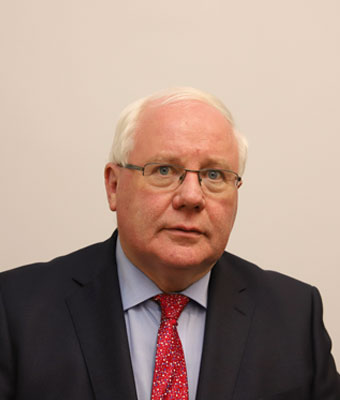
26. Deputy Brendan Smith asked the Taoiseach for a report on new shared island projects. [25991/25]
27. Deputy Ivana Bacik asked the Taoiseach if he will provide an update on the shared island initiative. [26916/25]
28. Deputy Paul Murphy asked the Taoiseach for a report on new shared island projects. [29327/25]
29. Deputy Ruth Coppinger asked the Taoiseach to provide an update on the shared island initiative. [29590/25]
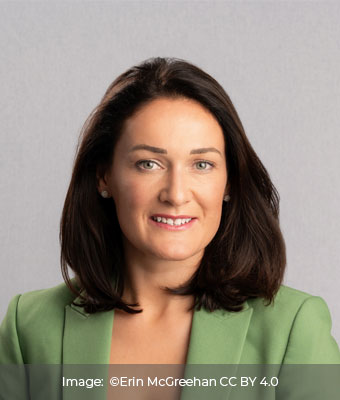
30. Deputy Erin McGreehan asked the Taoiseach for a report on new shared island projects. [29727/25]
31. Deputy Conor D. McGuinness asked the Taoiseach for a report on new shared island projects. [30140/25]
I propose to take Questions Nos. 20 to 31, inclusive, together.
On 10 April, I announced the new phase of the Government’s shared island initiative in a keynote address to the fourth shared island forum. Our programme for Government sets out an ambitious agenda for building a shared island, backed by a further €1 billion commitment to the shared island fund out to 2035. Already on 25 February, the Government announced over €50 million from the shared island fund for new programmes to run from 2025 to 2030 on sustainable tourism, arts and cultural heritage, civic society co-operation and community-led nature restoration. Government Departments have been tasked to bring forward further new shared island projects proposals this year that will implement our commitments to more strategic all-island investment and co-operation across virtually all sectors over the next five years.
At the shared island forum I also announced a new dimension to the initiative to commence later this year called the shared home place programme. This will be open to the people from every corner of the island to build new connections through our place-based heritage. It will engage also with Irish communities in Britain and further afield and with the contributions of Irish, Anglo-Irish and Ulster-Scots traditions across the island of Ireland, recognising how these are an integral part of the heritage of every county today and crucial to how we approach and build our future.
On sport, our programme for Government affirms we will promote an all-island approach to hosting major international sporting events. Sports governing bodies and clubs have successfully applied to the shared island civic society fund and reconciliation fund of the Department of Foreign Affairs and Trade for support for cross-Border grassroots engagements and tournaments.
On 28 April I launched an overarching report of the Economic and Social Research Institute’s joint research programme with my Department as part of the shared island initiative, which has produced 16 reports to date. All reports are publicly available on gov.ie. Research is an essential part of the initiative and on 28 April I also announced a new phase of further joint research with the ESRI commencing this year. We need data to inform all-island investment and co-operation priorities as we build a shared future together on this island. The huge untapped further potential of all-island co-operation is a major takeaway from the ESRI’s overarching report. This reflects the Government’s commitments to expand and progress our shared island initiative so that we bring co-operation and relationships across the island of Ireland to a new level.
Without doubt the shared island initiative is one of the signature achievements in taking forward the spirit of the Good Friday Agreement and ensuring there is reconciliation and also that we see this shared island as our common home place. I am struck also by the Taoiseach's mention that sports governing bodies have been engaged by applying to the various funds for activation across the island. I wonder whether he could say more about how his Department and the Department of foreign affairs are pro-actively engaging with the sports governing bodies to see what initiatives are working well for them in terms of achieving the objectives set out by the shared island fund. I met representatives of Basketball Ireland recently. They told me about a number of initiatives they are seeking to explore in Northern Ireland. As we know, the vast majority of governing bodies on the island operate on an all-island basis. There is potential here for us to encourage that integration and the objectives of the shared island initiative by pro-actively engaging with the likes of Basketball Ireland, Cricket Ireland, the IRFU, the GAA and so on. I would love to hear the Taoiseach's thoughts on that matter.
Like Deputy Moynihan I very much welcome the measures in the shared island initiative. It has gained support from all political traditions on this island. The Taoiseach may remember that when he launched the initiative I raised with him the need to have an enterprise initiative within the shared island programme. Subsequently, local authorities on both sides of the Border were enabled to put in joint submissions in regard to the development of work space enterprise centres, innovation centres and research centres. I am very anxious that initiative is given impetus because, as the Taoiseach has often heard me say in the House, those of us who live in the central Border area – I have the privilege of representing two of the southern Ulster counties, namely, Cavan and Monaghan – along with our neighbours in Fermanagh, Tyrone and Armagh are very conscious we need to support local enterprise. Fortunately, over the years local authorities and voluntary organisations developed enterprise centres. Some of the small companies that commenced their operations in enterprise centres in my constituency subsequently became international corporations, to their great credit. From speaking to local statutory agencies I know there is a need for more work space and enterprise centres. The local authorities do not have the resources to do these particular developments. It would be a great investment in the central Border area to advance that proposal the Taoiseach gave the go-ahead to some time ago.
The Taoiseach has outlined some of the work of the shared island initiative. Dealing with legacy is an important part of the work being done. The British Labour Government has committed to changes but no agreement has been reached yet, and there are a number of areas where families have been seeking answers and where the Government here has a role to play. I ask in particular about the issue of Denis Donaldson. His family have been seeking answers and the case has of course been highlighted recently. He was murdered in 2006 in Donegal. His inquest has been adjourned 27 times over 19 years. The Minister for justice recently pointed out there is a Garda investigation under way, but his family are seeking an inquiry. I understand they have written to the Taoiseach, the Tánaiste and the Minister for justice. What is the position of the Government on this matter and does it have any plans to meet the family? I think the family’s solicitor has pointed out they do not qualify as victims under the legacy Act so they are in a very particular position. What is the Taoiseach’s position on their request to meet him?
A shared island should not have an invisible hard border for non-EU migrants, but that is the case currently. I have raised this multiple times. In the past a somewhat sympathetic hearing was given to the likes of the North West Migrants Forum.
In this atmosphere of performative cruelty by the Government on migration, I fear it will not make any moves on this. I would be interested to hear it.
I follow up on the question raised by Deputy Coppinger. We are talking about primary school kids being taken out of their home, other children who go to school with them being traumatised, the principal talking about the impact this is having, and then the Minister, let us be clear, goes onto social media and boasts about it. It is Trump-like. That is who Jim O'Callaghan is aping, trying to look hard on migration and trying to problematise migration to distract from the failures of the Government. I have one question. It has been reported in some places that at least some of the children being deported were born in Ireland. Is that the case?
There were worrying and horrific scenes in Ballymena last night of hundreds, potentially thousands, of people gathering. It would appear some racist attacks were committed on homes. It follows an alleged serious sexual assault on a teenage girl, and I extend my solidarity to that girl and her family. Two teens have been accused, and as soon as it became potentially the case that they were non-nationals or were from another country, these crowds gathered in what is becoming a familiar pattern in the North, the South, in the UK, etc. First, I condemn the attacks that appear to have taken place on the homes of non-nationals, including a Filipino family. We have to come out and make this clear. Gender-based violence is gendered violence. It has nothing to do with nationality. Northern Ireland has an horrific history of violence against women - a native history. According to a recent Ulster University survey, 98% of women there have experienced at least one form of violence in their lives. It has the second highest femicide rate in the EU. The PSNI says there is a domestic violence report every 16 minutes. Unless those facts are brought out north and south of the Border, racists will continue to use this issue to stir up the racism they want. We need real action on gendered violence.
I thank the Deputies for raising a variety of issues. Deputy Shane Moynihan asked about the sports front. There has been a range of investments. Casement Park is a significant one, with a €50 million allocation. There is also the sports club electric vehicle, EV, charging scheme, which got into difficulty in terms of procurement and the roll-out of public EV charging points in community sports clubs across the island. In September 2024, the Department of Transport announced that more than 220 sports clubs across the island were eligible to apply. There were then issues with different standards and approaches North and South. In any event, the Department of Transport now expects delivery to progress quickly once the procurement process is completed. It was launched in early April. That is just one illustration. To give another example, the shared island fund unit allocated €12.5 million to the Dublin-Belfast rail service, which was matched by the Department of Transport. The new hourly frequency has resulted in a 50% rise in passenger numbers on the Enterprise service. That is enhancement of transport connectivity, which is good for SMEs and good for business. The shared island initiative has been able to bring that about, apart from all the other projects we have funded. Sixteen research projects have now been published by the Economic and Social Research Institute, which makes for a transparent piece of work. There is a compilation of those research outcomes on different issues on both sides of the Border.
On Deputy Brendan Smith's question, there is a proposal on workspace hubs in the central Border area. That is progressing and I will ask the unit to engage with the Deputy and to fill him in on the details of that. The shared island unit funded an earlier enterprise project between Donegal and Derry. That also took some time to get together, but the local authorities have identified it as an issue of concern in the central Border area. The shared island initiative has been effective as a catalyst to get local authorities North and South talking and working together to create a pipeline of projects for the future.
On Deputy Bacik's question, the shared island initiative does not deal with legacy issues. However, I am engaged in those issues with the Tánaiste and Minister for foreign affairs. We have made progress on the legacy issue with the United Kingdom Government. We believe there should be an investigate arm to whatever vehicle is finally decided on to have a permanent structure to deal with legacy issues. I believe that needs to happen. There have been ongoing discussions between the United Kingdom Government and the Irish Government. I hope they come to a conclusion in the coming month or so. It could be more than a month, but that would be the objective. A lot of engagement has happened. In respect of the murder of Denis Donaldson, I will speak to the Minister for justice. If the Garda is investigating, that needs to happen. It cannot cut across that but, on the other hand, I hear there is significant trauma. The family have written and there has been publicity of late in respect of that. I will speak to the Minister for justice about it.
On Deputy Paul Murphy's question, most people do not perceive that there is an invisible hard border.
That is why it is invisible. It does not affect most people.
But they do not see it as a hard border.
For a migrant it is.
We have been criticised on the opposite side, on the other side of the scale. There have to be rules around migration. I think the Deputy's view is that there should not be, which is fair enough and he is entitled to have a view, but I think his view is that there should not be any rules at all.
These are EU migrants who are legally present in the North and cannot travel to the South. That is the point I am making.
That is not sustainable. I thought he was talking about asylum seekers coming North and South.
Not in that part of my question.
Anybody who is legally resident in Northern Ireland can travel to the South.
No, they cannot. That is why it is a hard border.
We have reached the point where we have to move to the next piece of business.
Deputy Coppinger raised an important issue. Gender-based violence is not nationality focused, or exclusive to any person irrespective of race, creed or colour. It is something we need collectively to rid out of society. It takes a lot of work. We have policies relating to it in this Government. As Minister for Justice, Deputy McEntee, did a lot of good work in this area. Her successor, Deputy Jim O'Callaghan, is following up on that. Under the shared island initiative, we have a joint programme on gender-based violence with Northern Ireland to try to develop a programme to educate and get awareness of the issue.