Renewable Energy Generation
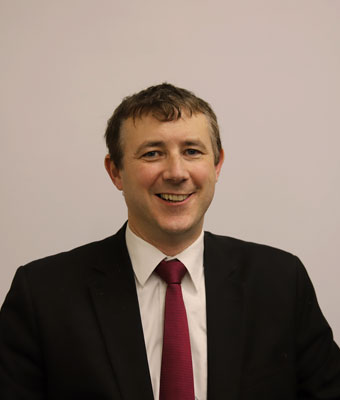
105. Deputy Aindrias Moynihan asked the Minister for Climate, Energy and the Environment the number of times the biomethane implementation group has met; when the group is next to report to his Department; when the biomethane sustainability charter will be published; and if he will make a statement on the matter. [30331/25]
Residents in areas where anaerobic digesters have been proposed have been raising concerns about the suitability of the infrastructure in the area. They have been pointing out, for example, the absence of planning guidelines. When will the biomethane implementation group publish its charter and set out guidelines to clarify the situation for community groups, local authorities and promoters of such projects?

I thank the Deputy for the question and welcome the opportunity to provide an update on the Government's progress on delivering on our biomethane ambitions. The Government has committed to supporting the production of up to 5.7 TW of indigenous produced biomethane by 2030, a key pillar of our national and EU climate and energy targets. A critical first step on this journey was the publication of the national biomethane strategy, which outlines 25 strategic actions to drive growth across the sector. To oversee this work, the biomethane implementation group, chaired by my Department, was established in 2024. It has met four times to date, bringing together key Government Departments, agencies and sectoral stakeholders. The group will meet again in September of this year and is currently finalising a progress report that will be published shortly on www.gov.ie. This report will provide updates on the key deliverables including the biomethane sustainability charter and the development of the biomethane information hub and communications strategy.
The charter is a priority action under the strategy. It has now been finalised following extensive consultation and is being prepared for publication. The charter will set out best practice guidelines to ensure that anaerobic digestion is developed in a more environmentally sustainable manner, protecting waste, soil, biodiversity, and ensuring that health and safety standards are maintained. This work is part of a broader policy framework that includes forthcoming renewable heat obligations and the heat networks Bill, both of which are progressing through Government and will provide the regulatory certainty and investment signals needed to scale up renewable heat and district heating infrastructure. In short, we are moving from strategy to action. The biomethane implementation group is central to ensuring that we can translate a coordinated policy into accountable and transparent action.
The implementation group was established last year and tasked with drawing up the guidelines and the charter. We know that the various stakeholder groups are going to find a way to have an input into that charter. Where do community groups stand? What level of engagement has there been with various different community groups? What opportunity have they had to have their voices heard at the table? To what extent has there been engagement with local communities, particularly in areas where these plants are already being proposed?
I am conscious that the Deputy is raising a question around the streamlining of the planning process. Certainly, I fully recognise the need for correct planning guidelines. Anaerobic digesters themselves are significant infrastructure projects so we need to ensure that these developments are sustainable, sensitive to local communities and are aligned with land use and ecology considerations. We want to improve clarity and consistency on this matter and included in the biomethane strategy is a commitment to developing an online information hub and to support public understanding and planning authority awareness of anaerobic digestion technology.
Planning policy is in the remit of my colleague, the Minister of State Deputy Cummins. We are working closely to align our Departments' commitments and the national planning policy that can evolve the timely and responsible development of these anaerobic digestion facilities.
Residents in the areas where anaerobic digestion plants are proposed have raised concerns about the digestate, for example, and whether it would be grass based or municipal waste. Would the charter and guidelines set out and specify that? How would we monitor that? Would the charter have teeth in order to be able to back that up and enforce it? Will the guidelines set out land usage policy, whether areas around a facility would remain in farming or steered towards grass production for the anaerobic digesters?
In the absence of guidelines, plans have been advancing in various different areas and in some cases, projects are already in place while others are moving through the process. Will the guidelines, when they are available, apply to existing plants and ones that are going through the process now?
The biomethane sustainability charter is the priority deliverable. It will chart the Government's commitment around many of the actions to which the Deputy has referred here in relation to ensuring that biomethane production in Ireland is environmentally sustainable.
The charter will undergo extensive consultation with key stakeholders and will inform the guidance of the biomethane implementation group. We want to have the best practice guidelines for the sector, covering water quality, land use and ensuring biodiversity protection and health and safety standards. The charter is all about ensuring we can scale biomethane production to ensure we meet our climate commitments, that it is done in a more environmentally sustainable manner and that we strike the balance between community concerns and our ambition to meet climate targets.
Recycling Policy

106. Deputy Matt Carthy asked the Minister for Climate, Energy and the Environment his proposals to increase the amount of polyethylene terephthalate, PET plastic recycled in Ireland. [30328/25]
The deposit return scheme is well known to people, sometimes for the hassle of it and sometimes for the economic benefit of it. A huge proportion of the plastic that is collected under the scheme is shipped as waste plastic out of Ireland even though there is at least one company in this State that could manage quite a large part of the process. Is the Minister of State making efforts to ensure a greater proportion of the plastic that is collected is recycled in Ireland?
In 2022, the most recent year for which EPA statistics are available, Ireland recycled 32% of plastic packaging waste. This exceeds the current target of 22.5% but meeting the stricter targets of 50% and 55% for 2025 and 2026, respectively, will be more challenging. These figures are in respect of all plastics, including PET. The EU list of plastic waste codes does not isolate individual polymers. Given the volume and grade of materials collected through our waste collection system, plastics are mostly recycled abroad for reasons of economic viability.
However, measures are under way that will help to boost recycling rates for plastics, including PET, and make recycling on the island a more attractive proposition for investors. These measures include the national deposit return scheme, as the Deputy mentioned. For the first time, a separate high-quality stream of PET is now available for recycling. Together with the requirement under the single-use plastics directive for incorporating 25% of recycled plastic in PET beverage bottles from 2025, rising to 30% from 2030, the case for investing in recycling here has never been stronger.
In keeping with the polluter pays principle, extended producer responsibility schemes have a key role in meeting national collection and recycling targets and supporting investment to ensure as much as possible can be recovered and recycled domestically. Repak, the extended producer responsibility scheme for packaging, and Re-turn, which operates the deposit return scheme, are both working with investors to maximise the recycling of all types of plastic packaging here in Ireland.
It is regrettable that the figures the Minister of State gave a date from before the introduction of the deposit return scheme. The information I have is that by the end of this month, 17,000 tonnes of plastic will have been collected under the scheme but only 3,400 tonnes of that will have been brought to a factory in the State. I mentioned previously to the Tánaiste in the House that Shabra Plastics and Recycling, a company in my constituency, can do a large part of the work. The process involves the bottles being washed, flaked, pelleted and then returned as bottles. Shabra can do the first two parts, that is, washing and flaking. The immediate environmental benefit from this is that four lorry loads of plastic bottles become three lorry loads of flakes. Is Repak obliged to follow any environmental consideration in the operation of the scheme? It seems to me it is not.
We are absolutely committed on this side of the House to moving to recycle more plastic in Ireland. We need to be honest about the current reality that the waste management sector, including plastic recycling, operates in a global market and that a large part of the plastic recycling collected, including under the deposit return scheme, is traded internationally, based on volume and quality and on economic viability. That is why we introduced the enhanced producer responsibility schemes such as Re-turn and Repak. In fact, Repak provides subsidies of €100 per tonne for plastic reprocessed in Ireland. We certainly recognise that we need to do more. The Government is very much focused on solutions. We are looking to incentivise the building of the infrastructure and building the partnerships needed to ensure Ireland leads the way in regard to waste management, especially for PET and plastic bottles.
I do not know how the Minister of State can say Ireland leads the way on plastics recycling when, in fact, we are leading the way in shipping those materials all over the world. We need to build capacity. As I mentioned, Shabra Plastics and Recycling can do a large part of the work and could do it all if it puts in a pellet production line. That would involve a huge investment, however, and the company would have to have enough plastic coming in do it. I hope the Minister of State accepts the real difficulty is that the plastic is achieving more money elsewhere. Repak is selling it to the highest bidder without any environmental consideration. That is a problem because it not the best option environmentally and it is preventing us from reaching what the Minister of State has stated is his objective, namely, to have more of the plastic recycled in Ireland. Will he engage with the domestic industry and with Repak to end this absolute scandal?
I would challenge the figures the Deputy outlined. In 2024 alone, Re-turn collected up to 12,000 tonnes of PET plastic, 34% of which was processed by Irish companies, and, separately, Repak funded the recycling of more than 8,300 tonnes, which represented 42% of reprocessing in Ireland. Is it enough? No, it is not. We are well aware we need to make a significant step forward. We fully recognise that Ireland's recycling infrastructure needs to grow. The Minister and I are very conscious of that. The enhanced producer responsibility schemes like Repak and Re-turn are investing in domestic capacity. We want to grow that but it is a challenge in terms of the scale. The most recent regulations by way of the single-use plastics directive and the packaging waste regulation are driving market demand for recycled materials like PET plastics. We want to male significant strides in this regard in the future.
Question No. 107 taken with Written Answers.
Energy Infrastructure

108. Deputy Darren O'Rourke asked the Minister for Climate, Energy and the Environment for an update on the North-South interconnector project; and if he will make a statement on the matter. [30279/25]
Will the Minister provide an update on the North-South interconnector project?
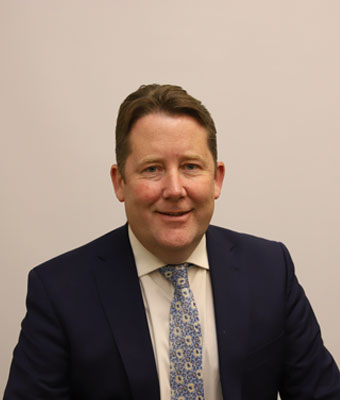
The North-South interconnector is an essential transmission infrastructure project that will link the electricity transmission network between South and North on the island of Ireland, leading to a much more secure, affordable and sustainable supply of electricity across the island, operating in a single electricity market. The project is fully consented in the State and in the North, with full planning permission granted for overhead lines in both jurisdictions. Once complete, the North-South interconnector will facilitate the connection of 900 MW of renewable generation, which is enough to power 600,000 homes. It is an incredibly significant project that is of critical importance to all citizens on the whole island.
In March 2023, the Government noted and published an independent report on the project, which concluded it would not be feasible to run the North-South interconnector underground. That was the third review of the project and it confirmed that the findings of the 2018 report remained valid.
As a transmission project, it is being undertaken by EirGrid, which is independently regulated by the Commission for Regulation of Utilities, The CRU is accountable to the relevant Oireachtas committee and not to me, as Minister. The Government does not have any role in the delivery of the electricity infrastructure on the ground. In February, EirGrid announced a delay in the completion of the North-South interconnector. Following this, I met with it and set out that this Government supports electricity grid delivery and that the interconnector was central to it. Separately in March, I responded to correspondence from Monaghan County Council setting out the Government's support for this project and I asked the council to engage with EirGrid. My officials and I will continue to work to support the quickest possible delivery of electricity grid projects and the North-South interconnector.
I am firmly of the opinion that this project will never be delivered at the current rate and if the current approach is maintained. I do not say this with any degree of satisfaction. I accept the points made by the Minister in terms of the strategic importance of it and need for it and everything that goes with that but there have been incredible delays. I foresee this continuing because at the root of it is belligerence on the part of EirGrid. I do not believe EirGrid is fit to deliver this project because it is being so belligerent and is ignoring the concerns of communities. The third report contained real criticisms of EirGrid and its approach to a cost-benefit analysis, particularly with regard to carrying out an ENTSO-E cost-benefit analysis in line with those guidelines. EirGrid has never conducted a comparison between overground and underground that holds up to international standards and the local community can see that.
The project should have been delivered by 2030 and now it will not be. The revised date is 2031. We need the interconnector. Work has started in the North subject to challenge there too. Work should start in the South too. There are lessons to be learned. Engagement in some areas has been difficult. I am not going to apportion blame on either side. I have been in the Oireachtas since 2007. I know we have dealt with the east-west interconnector. The North-South interconnector has always a bone of contention in certain areas but if we want more renewables on our grid, if we want a stronger grid and if we want to reduce energy prices for customers on the island of Ireland, this project is needed. The reviews have stated clearly that undergrounding is not an option. It is fully consented in the North and the South. The project should proceed. While there should be more engagement, the project needs to proceed because it is critical.
We are talking past each other, which has been the difficulty. I am being straight with the Minister. It is my firm belief, as an elected Member who knows these communities, that this project is not going to proceed as currently planned. The only way I see it being delivered is underground. The 2021 review said that in the future, not only qualitative but more quantitative elements and evaluations shall be introduced in the cost-benefit analysis for the assessment of grid investment alternatives as well the operational impact of high voltage alternating current and high voltage direct current electricity cable technologies in line with ENTSO-E cost-benefit analysis guidelines. It specifically stated that EirGrid failed to adequately conduct an international standard cost-benefit analysis of overground versus underground over the full life of the project. The local communities can see that. At every hand's turn, their concerns have not been adequately addressed by EirGrid and they are fundamentally opposed to the plan as is. I do not see it being delivered overground.
I reaffirm everything Deputy O'Rourke said. The statement read by the Minister could have been read by every single Minister for the environment since 2006 when this project was mooted. Since 2006, Minister after Minister has devolved this issue entirely to EirGrid and said it was an operational matter and since 2006, EirGrid has made a mess of this. The Minister said he will not apportion blame. I will apportion blame to the pigheadedness of EirGrid. It is a model exercise in how not to deliver public infrastructure projects because it has failed and refused to engage with communities and the facts as they are developing. I urge the Minister to check what he said in this Dáil about the reports that have been produced because the most substantive of them described undergrounding of the interconnector as a credible option, which is the opposite of what the Minister said here. I encourage the Minister to look at that and revert. The only question I would put to him is whether he will meet the campaigning groups on the ground to get a full sense of the challenges of presenting this project through overhead power lines because it is not going to happen on the current trajectory?
This is a critical piece of infrastructure for the island. It has gone on for far too long. I remember this as well going way back to 2005. I remember protests in north Dublin about undergrounding coming from Wales into Rush and discussions and arguments around electromagnetic fields. I respect Deputy Carthy's point of view but he did not mention that there are many residents and landowners who have consented-----
How many?
Could the Deputy let me answer? There are many residents who have consented. There is a need for further engagement but the reality is that if we go back through a planning process again, we would be talking about 2040. What will have happened then is that we will have less ability to bring more renewables on to our grid and will not have reduced costs for consumers North and South so we need to find a way forward on this. This is fully consented. It has gone through the planning process. I met residents in Monaghan during the previous Dáil.
Energy Policy
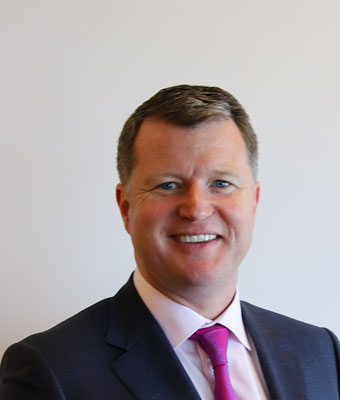
109. Deputy Malcolm Byrne asked the Minister for Climate, Energy and the Environment his views on whether it is critical that Ireland generates sufficient energy to meet both housing needs and the requirements of a digital economy; and if he will make a statement on the matter. [30257/25]

138. Deputy Roderic O'Gorman asked the Minister for Climate, Energy and the Environment to outline the framework his Department uses to balance between competing energy needs of different sectors of the economy; and if he will make a statement on the matter. [30074/25]
Are the Minister and his Department sufficiently ambitious to ensure that Ireland will generate sufficient energy to meet housing needs and the requirements of the digital economy?
I propose to take Questions Nos. 109 and 138 together.
Ireland's energy policy is focused on achieving a sustainable, secure and competitive energy system with key elements centred around reducing greenhouse gas emissions, increasing renewable energy generation - 40% of our energy was generated through renewables last year - as well as improving energy efficiency and ensuring energy security. Members will see from previous questions how difficult this can be in certain areas with the politicising of projects that will hinder our delivery of much-needed grid infrastructure.
The new programme for Government outlines the Government's position regarding energy, housing, FDI policy and many other goals and reflects the balance between the various needs, opportunities and challenges facing the country. It also states our ambition to achieve energy independence by harnessing our untapped renewable energy resources and recognises that increased and unprecedented investment and delivery in our grid and expanding our energy generation capacity are priorities. Three main priorities in the NDP review are energy, housing and water. Price review 6 later this year will see a multiple of price review 5 and the investment in our grid because we need to expand our grid capacity for generation and distribution to meet the needs we have.
Transitioning to a renewables-led system remains a key priority to ensure Ireland’s energy security and economic competitiveness. Energy security underpins the delivery of essential infrastructure, including new housing developments and digital services. Digital services are critically important for the future economic development of this country. It is not a question of one or the other.
The CRU will bring forward the large energy users document that went out to public consultation, particularly with regard to PR6. When it does, we will see a plan-led approach not only to grid development, but also to energy delivery for all of our business sectors, the digital sector and housing. It will take into account the need for 50,000 homes per year over the period of PR6 as well as the additional energy required to meet the targets of nearly 1 million EV charging points.
The system operators, EirGrid and ESB Networks, assess the expected future demand on the system, for example, economic and population growth, housing, EVs and heat pumps, as part of the network development plans. These plans form a vital part in the system operator's submission to the next price review. This sets out the level of investment required for the next five years, which will probably be in the region of €13.4 billion to €15 billion. If we compare that to previous investment of approximately €5 billion, it is unprecedented but it is needed.
The CRU is currently reviewing the proposals from ESB Networks and EirGrid for the requirements for investment. Submissions made to the CRU propose a significant uplift in the investment, which will come to pass, in distribution and transmission to support the requirements of a growing population and economy. The exact level will form part of the CRU's final determination. The programme for Government seeks to address the challenges between balancing energy needs by committing to scale up investment in critical infrastructure and our electricity grid. It will be advantageous for customers and enhance the data centre and digital economy footprint to support continued FDI investment.
I am glad the Minister has clarified how the ambition of the Government is to meet those future needs. The future is both green and digital. It is wrong that the debate has been presented by some as a choice between one and the other. The critical issue is that we have a sufficient supply, particularly of clean energy, to meet our future needs.
On the new economy, data centres often get a very bad reputation. I want to highlight the recent €3.5 billion investment by Echelon in Arklow. This was the first grid connection for data centres approved in more than four years. Despite Sinn Féin opposition, the local Sinn Féin TD made sure to show up for the announcement of that investment and the future jobs that would be available there.
I get annoyed when this is presented as a debate of one or the other. The Minister is right; we must meet the energy requirements in total.
It is important to outline that Ireland is at the most extreme end of vulnerability because of the growth of data centre demand. We host approximately 120 data centres. Today, they consume 21% of all energy we produce. Forty centres are in planning and development right now. No other country reports a higher share of domestic energy consumption by data centres than Ireland.
We understand the importance of the digitalisation of our economy but this can only be done in a way that serves the environment and people best. This is what was correctly alluded to by the Minister's own Secretary General recently. AI-supporting data centres consume much more energy than the typical data centre. How will the Government strike this balance? Will it prioritise housing over data centres when it comes to connections or will it step up LNG-fuelled electricity production to make up the difference and, as such, annihilate our climate targets?
We are not going to annihilate our climate targets. This Government is as committed as the previous Government was to the energy transition, reducing emissions and working as hard as we can to achieve the targets that have been set.
On the expansion of renewable energy, 40% of all our energy last year was generated through renewables. We have made incredible progress in that regard, not just in the previous Government, but since 2005. In 2005, 7% of our electricity was generated by renewables, but that figure is 40% 20 years later. There are real opportunities with offshore renewables. There are now five projects out to further information and planning on the east coast and there has been the Government decision on the national DMAP to accelerate the delivery of offshore renewables.
Investment in our grid is absolutely critical. The level of investment over the term of this Government in our grid, both in distribution and generation, will be unprecedented. It will be multiples of the previous one. We must also ensure as a country that we remain at the cutting edge of new technologies.
Housing is an absolute priority for this Government. In the previous Government, we delivered 135,000 new homes. It was not a question of any sector above housing; housing was the number one priority and remains so. Under the national development plan review, however, the three main priorities are housing, water and energy. That is critical. I do not think anybody could or should disagree with that.
Look at the jobs underpinned by the investment in data and digital infrastructure in this country. Some of the largest employers in this country - in Deputy O'Gorman's own constituency - are located in Ireland because their data is located here, too. There is headroom to 2030 on already committed connection agreements, and that is not instead of housing. Those who present this as an issue of data centres getting connections instead of housing are simply not correct. It might be populous to say that but it is not correct.
The Minister's own Secretary General presented it that way.
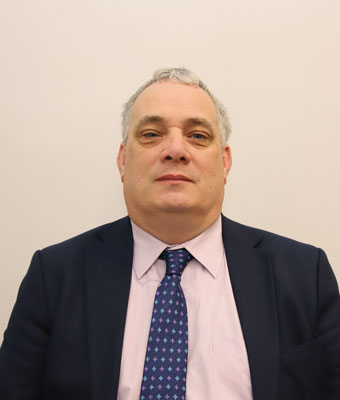
Deputy O'Gorman will have his chance to speak in a minute.
I welcome what the Minister is saying. The Secretary General might wish to reflect on some of her words because the Minister's Department is responsible for ensuring we have a sufficient level of energy. My frustration, as I know is the Minister's, is about the delays, particularly when it comes to offshore renewables. We are talking about 5 GW of offshore wind energy being generated by 2030. Our target then will be to get up to 20 GW by 2040. We need to start thinking at that level. I do not like it being presented as we only have this much energy, so we have to make a choice. We have got to be ambitious, even if it requires the Minister banging heads together every Monday morning, to ensure that we meet the renewable energy targets to fund the housing we need but also the digital economy. I welcome the Minister's ambition in that regard. The future is both green and digital.
The Taoiseach and the Minister for public expenditure, Deputy Chambers, rejected the warnings raised by the Minister, Deputy O'Brien's Secretary General that Ireland would be forced to choose between housing and AI data centres. I believe they and the Minister are far too quick to dismiss concerns by the most senior civil servant in the latter's Department.
There has been positive growth in energy generated by renewables in recent years but we are also seeing this being eaten up by the increased demand of data centres. We need to be honest, in that there are some choices ahead of us. The Government needs to set out how those choices will be balanced. Currently, 21% of all energy produced in this country is consumed by data centres. Our digital economy is well supported and any additional growth cannot be at the expense of the nine housing connections, nor can it be done by increased fossil fuel dependency.
The Minister mentioned the plan earlier. When will that plan be ready and can he commit that it will entail no increased use of electricity generated from gas?
There is no dispute within my Department and the Secretary General is a very committed public servant who I work with extremely well. We are all in agreement that we need to expand our energy generation through renewables, which we are doing, and improve our grid resilience and the capacity of our grid across the country. This is what we will be doing to ensure that we can meet not competing demands, but demands across all sectors. Housing for our people is fundamental. It is never in question.
Deputy O'Gorman stated that our digital economy was now well supported by that 21% of energy it was using. I am assuming by him saying this that he supports this happening or would he reverse that? Our job is to ensure we expand renewables in particular. While respecting the planning decisions recently made by An Bord Pleanála, some of those projects are now out to further information, which will delay their commencement, but those ORESS 1 developers are still committed to developing those offshore renewables.
We learned a lot from that. We also have the south coast DMAP which went through without a judicial review. The accelerated national DMAP which will be completed by 2027.
Let us not forget about onshore. There is significant interest in the next auction this year. There will be significant participation in onshore wind and onshore solar. Look at what we have been able to do on solar - in 2018, 0.6% of energy was generated through solar in this country. Now, on a good day it is about 14%. The average in the last full year was just over 3%. It is growing and growing. That is clean, green energy, it is our energy, it is sustainable, and it is reducing our dependence on fossil fuels and on others for supplies of our energy. The Greenlink interconnector from Wexford to Britain is now electrified. There will be completion shortly of the Celtic interconnector. All that energy infrastructure has been put in place. There is no question of us increasing our dependence on fossil fuels. We are moving on and will continue to do that.
Question No. 110 taken with Written Answers.
111. Deputy Roderic O'Gorman asked the Minister for Climate, Energy and the Environment if his Department's policy correctly reflects the balance between energy demand for housing versus energy demand for data centres; and if he will make a statement on the matter. [30075/25]
Many jurisdictions over the past decade have been dealing with the dramatic rise in energy consumption driven by the growth in data centres. We are no different here. Our challenge is probably even greater. I believe, and it is witnessed by what has been said by the Minister, the Taoiseach and others, that there is a clear preference for increased data centres and their use. Will the Minister outline how that will be balanced with other elements of the economy?
There is no clear preference for data centres over anything else. That is just not correct. Our priorities are for the delivery of housing and additional water infrastructure, investing in our energy grid and supporting indigenous jobs and investment and FDI. This is a red herring, trying to bring forward the narrative that we are not connecting houses to the grid because we are connecting large energy users instead. That is not true; that is not the case. We have already contracted headroom to deal with large energy users up to 2030. Independently of me - it is not just me saying it - the Commission for Regulation of Utilities, through EirGrid and ESB Networks, has already put forward its plans up to 2030, which will deal with 50,000 homes per year, the homes Government said it wants to deliver over its term, and deal with economic growth. Look at what our energy system has been able to do. Going back to 1990, the economy has grown sixfold, the population is up 50% and we built 135,000 homes in the previous Government, of which the Deputy was part. No one came to me and said an estate was not being built because there was a big data centre or large pharmaceutical or other company across the road. I will not say it is dishonest but it is disingenuous to continue with this argument that there is a conflict between economic growth, investment in our grid and housing growth; there is not.
The Minister used the words "disingenuous" and "red herring". I am referring to a warning raised by the Secretary General of the Minister's own Department. It is a warning and an issue. She spoke about a balance between AI, particularly the highly intensive data centres required for new AI developments, and housing. If there is a red herring, it was not I who raised it originally. I made the point in an earlier question about 21% use of energy by data centres here in Ireland right now. The next nearest country is Singapore at 7.5%. That is the difference. It will grow to 28% if all of those 40 data centres about which I spoke earlier are granted planning permission. The Minister already set out how some of the big offshore wind projects have been delayed because of An Bord Pleanála's decisions. How will we bridge that gap and, at the same time, decarbonise the huge parts of our economy that still rely on fossil fuels and need to be decarbonised?
There is still significant potential in onshore renewables. I mentioned the auction later this year, RESS 5, which I believe will be heavily subscribed. These projects already have connection agreements and planning permission. There has already been significant growth there. We want to see construction in our offshore renewable projects in the next couple of years. I am just being honest; it unlikely we will see those projects fully connected to our grid by 2029 or 2030. There will possibly be one. The remainder will come in early 2030 and 2031. Life exists post 2030. The year 2030 is a target date set clearly in our climate targets but there are years after that. Last year, we hit 5 GW of onshore. We have vast potential to do a lot more and we will because we have put the infrastructure in place to do that. We will continue with the auction and engagement process with the development sector in relation to our renewables.
I thank the Minister for his honesty about the risk of some of those projects not delivering within the 2030 timeline. Would it be the Minister's belief then that if those renewable projects are not going to deliver in that timeline, we must look at the timeline within which new data centres are brought on? There are 40 in various stages. Some have been granted full planning permission. If they are all brought on to the system between now and 2030, that will be a further 7% growth in the overall total of our energy system being used by data centres. If our renewables are not coming online at the speed we and the Minister would like, do we also have to take a similar approach to delaying the connection of further data centres to our system? Will the plan about which the Minister spoke be cognisant of that?
The plan will be cognisant of what energy capacity we have. That is across the board. I do not give the connection agreements. They are done independently. The Deputy will know that some data centres have not been given connection agreements. It has already happened where it is not deemed appropriate. We need to plan for the future too. That is why I mentioned 2030 and that life exists post 2030. Some project timelines for planning and delivery will be past that date. The priority for this Government is delivering housing for our people and investing in our grid, water and public transport. Electric vehicle charging and the advancement of electric vehicles also takes capacity from our grid, as will heat pumps and more homes, jobs and people. PR6 takes that into account. CRU will then look at connection agreements, especially the large energy user policy on which it has engaged with stakeholders, not just on the data centre side but across the board.

112. Deputy Ruairí Ó Murchú asked the Minister for Climate, Energy and the Environment if he will provide an update on the preparation of the business case seeking to establish future State funding, from 2026 to 2030, to support efficient district heating projects; and if he will make a statement on the matter. [30338/25]
Will the Minister of State provide an update on the preparation of the business case seeking to establish future State funding to support efficient district heating projects? I have spoken to the Minister of State before about the wider issue of district heating. Stakeholders in the industry say the support scheme for renewable heat, for example, needs to be looked at to make it more fit for purpose to deliver district heating. We have a specific issue with communal heating systems which also needs to be addressed, which I will deal with later.
District heating can play a key role in improving energy efficiency and reducing greenhouse gas emissions. Government policy is supportive of the expansion of district heating to contribute to the diversification of fuel supply to decarbonise the heat sector. A district heating steering group was established to support the development of district heating in Ireland. The steering group report, which was approved by Government in July 2023, contains a range of recommendations setting the future policy direction for the development of the sector, including with respect to providing financial support for district heating infrastructure. In line with the district heating steering group report recommendation to provide financial support for district heating, the Department and Ministers are seeking a multi-annual financial allocation for effective district heating projects over the period 2026 to 2030. Investing now in the early phase infrastructure will deliver key backbone elements for district heating networks that will decarbonise heat for larger anchor customers within the decade and can be further leveraged, through future investment, to target smaller heat loads in the medium to longer term.
As part of this process, and in line with the infrastructure guidelines, my Department, in partnership with the Sustainable Energy Authority of Ireland's district heating centre of excellence, is preparing a business case seeking to establish future State funding from 2026 to 2030 to support efficient district heating projects in suitable locations, usually urban areas with high heat density.
It would be good to have a timeline for when the Minister of State sees that business case being in place. I think we all agree on the necessity of renewables and decarbonisation. We have seen some district heating projects that make complete sense where waste energy, rather than remaining waste, is piped in and used as a means of providing heat. We need as much as possible of this done as soon as possible. The Minister of State talks to the stakeholders, I assume. I would like an update on the interactions with the companies that are looking to put plans in place because they are still talking about how there is insufficient support. We have schemes that are not fit for purpose from a point of view of delivering. I will deal with communal heating systems and the particular issues in a moment.
We are currently actively working to enhance the support scheme for renewable heat to better support district systems. Included in that is ensuring we have industrial waste heat from sectors like pharmaceutical manufacturing and data centres. The SEAI, which administers the scheme, has already completed its 2024 annual review. That made clear recommendations on adapting the scheme for large-scale district heating. That includes raising the investment aid cap to reflect the current intensity of district heat infrastructure. Others were ensuring the eligibility for key components like pipework, energy centres and network connections. We are looking at working to ensure we can support these recommendations. The Minister is also progressing the heat network Bill, which will provide the regulatory certainty but also customer protections and licensing frameworks. What we need to do is come together on this.
I ask him the Minister of State to come back to me in writing on where that is. Obviously it is very positive. We all want to have schemes that are fit for purpose. We want to see we can actually deliver district heating systems at scale. I return to the Achilles' heel that exists with communal heating systems. I spoke to the Minister before about Carlinn Hall and I spoke to the previous Minister many times. He opened this particular housing estate. It has 200 homes and unfortunately the system that was biomass-fed is now gas-fed. We need to find an alternative. I have spoken to some companies and the SEAI about it. There may be something in train, in which case it is a proposal we will be bringing to the Government. There has been a feasibility study in the area on geothermal energy, a solution that would probably require a number of parts. I hope to get a promise from the Government on delivering for the people concerned. This obviously became a huge issue when gas prices went through the roof, but it is also an environmental disaster. There is a legal framework in an awful lot of other countries to deal with this issue, but it is an anomaly we still have here.
Glaoim ar an Teachta Byrne.
Gabhaim buíochas leis an gCathaoirleach Gníomhach. I entirely agree with Deputy Ó Murchú on the importance of district heating systems, but a very successful model to examine is the one operated by South Dublin County Council which heats facilities of TU Dublin and the council. It was opened by the previous Minister, Eamon Ryan. It provides a sufficient level of low-carbon heating to a number of connected buildings in the area. Where does that heat come from? It is generated by data centres operated in south Dublin. It is a very successful model and one that can be followed.
I suggest Deputy Ó Murchú write formally to the Department about the specifics of the scheme he is interested in. We will certainly get a response to him.
To add to Deputy Byrne's point, we are building momentum in this regard and we can see there are practical realities on the ground in many communities. He talked about the large-scale operation in south Dublin. There is also one in Blanchardstown. Fingal County Council uses waste heat from a data centre to serve public sector businesses and residential customers. There is also a strong pipeline outside Dublin. In Waterford and Galway private developers are working with local authorities to submit preliminary project scopes to the SEAI. There are also feasibility studies in Dundalk, Drogheda, Naas, Maynooth and Arklow and more towns are expressing interest. The Department is currently working with the district heating centre of excellence in the SEAI and we want to ensure this vision is clear and that we can deliver district heating so it can become a mainstream low-carbon solution for many Irish communities.
Question No. 113 taken with Written Answers.
Táimid ag rith as am agus mar sin ligfidh mé don Teachta Daly Ceist Uimh. 114 a chur agus freagra a fháil air.
Departmental Schemes

114. Deputy Pa Daly asked the Minister for Climate, Energy and the Environment the progress in meeting the 2030 retrofitting and heat pump targets; the measures his Department taking to accelerate this; and if he will make a statement on the matter. [30274/25]
I ask the Minister to outline the progress made towards meeting the 2030 retrofitting and heat pump targets. Similarly to the EU targets, these measures seem to be out of reach for many people who are of limited means. What measures are his Department taking to accelerate this?
I will be really quick because I will supply the Deputy with the written answer, but I should have said earlier that I have tasked the SEAI with looking at options with its grants. I do not mean increasing the amount of grants but seeing how we can break them down and make them more accessible. I am also doing that with electric vehicles and looking at options for low- to middle-income families, including scrappage and seeing whether there is anything we can do in rural parts. The heat pumps seem to have plateaued in relation to delivery last year, though not on new homes. They have been extremely successful on new homes. The retrofitting and installation of heat pumps can be extremely invasive for householders as well. The technology is not there yet with plug-in heat pumps, so unless there is a very deep retrofit on the home, people do not opt for them. I have asked the SEAI to come up with certain options for that on how we might be able to break down our grants with respect to what levels of work one needs to do. I have received a report on that and I am assessing it. I will bring forward options, including, most importantly, perhaps new options, for householders over the coming months.
Is féidir teacht ar Cheisteanna Scríofa ar
www.oireachtas.ie
.
Written Answers are published on the Oireachtas website.