Medicinal Products
Veoza offers an alternative to HRT for women at menopause. It is a game-changer for so many, especially those for whom HRT is contraindicated. These are typically cancer survivors for whom hormone therapies are just not an option.
Veoza was introduced into Ireland early last year and costs approximately €80 per month for the women using it. The pharmacoeconomic assessment has been ongoing since last spring. The Minister of State will be aware that Ireland has one of the slower processes across Europe for approving qualifying new drugs. Many other countries have approved the use of Veoza, and GPs are currently prescribing Veoza in Ireland as well. At €80 per month that is a difficult cost. When it is not included in the drugs payment scheme, DPS, that €80 is over and above any other medical cost the person may have. Many of these people have already fought cancer and may have other medication costs associated with that. The €80 payment for Veoza each month is over and above the costs of those medicines.
Some people may choose to take a non-hormone option, but for a limited number of people it is the only option. It is the only route available to them. When there is only a limited number of people, that means a limited cost to the State on the DPS. Studies have shown the dramatic quality of life improvement for those who are using Veoza. Symptoms reduced as quickly as within the first week. Since the pharmacoeconomic assessment commenced last spring, there has been a significant policy advancement for women with menopause care with the introduction of the free HRT in the this year's budget and implemented last week. That made a drug option available from the State to people for menopause care. Is this policy decision feeding into the pharmacoeconomic assessment? Surely it is, as it would be a significant change in policy since the assessment commenced. It would surely add to the case for approving Veoza on the drugs payment scheme.
I mentioned that in Ireland we would have a slower process for approving new drugs under the DPS. Is there an indicative timeline for the pharmacoeconomic assessment? If there is not, will the Minister of State's officials raise it with the National Centre for Pharmacoeconomics to get a direction? Each month this goes on, this is an added cost for the women who are waiting. Has the Minister of State also examined the possibility of Veoza being included in a variant of the free HRT scheme?
I thank the Deputy for raising this issue, which I am taking on behalf of the Minister for Health, Deputy Carroll MacNeill. I will provide some background and then address the Deputy's question.
Fezolinetant, marketed under the trade name Veoza by Astellas Pharma is a medicine used to treat moderate to severe vasomotor symptoms such as hot flushes and night sweats associated with menopause. The European Medicines Agency granted marketing authorisation for this product in December 2023. The company marketing this medicine made an application for addition to the HSE reimbursement list in February 2024. The HSE has statutory responsibility for medicine pricing and reimbursement decisions, under the Health (Pricing and Supply of Medical Goods) Act 2013. HSE decisions on which medicines are reimbursed by the taxpayer are made on objective, scientific and economic grounds on the advice of the National Centre for Pharmacoeconomics, NCPE. Formal processes govern applications for the pricing and reimbursement of medicines and new uses of existing medicines to be funded or reimbursed, or both. In March 2024, the NCPE completed a rapid review of Veoza. Factors that are evaluated during rapid review include the cost of the drug relative to potential comparators, uncertainty in comparative clinical effectiveness, uncertainty in cost effectiveness and the potential drug budget impact. On this occasion, the NCPE recommended a full health technology assessment, HTA, of Veoza to assess its clinical effectiveness and cost effectiveness compared with the current standard of care. Subsequently, the HSE commissioned a full HTA and a pre-submission consultation took place between the NCPE and the company in April 2024. The next step in the agreed process is for the applicant to submit a full HTA dossier to the NCPE. To date, a full HTA dossier has not been received by the NCPE. Given the substantial budgetary impact of the funds sought by the applicant, the company must engage with the pricing and reimbursement process in order for the application to progress.
The State acknowledges the importance of access to medicines and has made considerable investments in new medicines in recent years. A record of more than €3 billion, almost €1 in every €8 of public funding spent on health in 2023 was spent on medicines. This is an unprecedented level of investment in supporting patients through the availability of the latest and wide range of medicines. Between budget 2021 and budget 2024, an additional €128 million was allocated for new medicines, which facilitated the introduction of 194 new drugs for reimbursement by the HSE, including 74 for treating cancer and 46 for treating rare diseases. For 2025, funding of €30 million has been allocated to enable access to new medicines. This will come directly from efficiencies to be achieved by the HSE. Throughout this year and over the coming years, we will continue to focus on investment in medicines including through the maximisation of the considerable budget available, to ensure patients can access medicines in as timely a way as possible.
While the assessment is ongoing, this is costing €80 each month for women who do not an alternative option available to them. It has been a constructive move to get free HRT available to people. However, it is almost like it is dangling out there and there is a cohort of women who are not able to avail of it and damn it they have already had a hell of a challenge seeing off their cancer. It does not make to have a game-changer drug available and just not made available. We have what appears to be one of slowest processes for approving new drugs under the DPS. There must be some way of improving that and making drugs available in a more timely manner, especially when we see that the same drugs are being approved in other states across Europe. These women have seen off their cancer but because of their medical condition, they do not have the option to go for HRT. This other option is almost available to them. It is available to women who can afford to pay the €80 over and above the DPS threshold. Is there a way of prioritising it? Is there any indication of a timeline for approval? Will the Minister of State raise that with his officials and give some guidance to women across the country who would avail of Veoza?
I once again thank the Deputy for his interest in this important area. I will bring his comments to the attention of the Minister for Health and the officials in the Department. As the initial reply stated, the next step in the agreed process is for the applicant company to submit a full HTA dossier to the NCPE. To date, a full HTA dossier has not been received by the NCPE, which awaits that submission from the applicant company.
As stated, I will bring the points the Deputy raised to the attention of the Minister and her officials. The Deputy made a very cogent point on a particular issue for women.
Nursing Homes

This matter relates to nursing homes and the lack of enforcement of standards. Last week, we witnessed shocking scenes in the Residence nursing home in Portlaoise and the Beneavin nursing home in Dublin. I am sure the Minister of State is aware that there are other cases as well. We saw was: a shocking level of neglect; abusive behaviour; residents told to soil on incontinence pads; elderly, vulnerable residents left lying in urine for hours at night, calling for help but getting none; rough handling; shortages of sanitary goods and other basic items; and no assistance with eating, which is a major issue. There are 15 or 20 minutes allocated to getting people fed. Some of these people cannot feed themselves, so the food is not eaten. Then it is taken away as if they are not hungry that day, when they might be very hungry.
A former carer in Portlaoise nursing home has informed us that the RTÉ programme only touched the surface. She described at length what she saw during her time working in the nursing home over a number of years and outlined the appalling practices there. There are some shocking examples, and these occurred before anything came out on RTÉ. An elderly mother was looking to have her incontinence pad changed and, despite repeated requests, it did not happen. Her family eventually took her out of there. A man with Alzheimer's from another town in the county was recognised by a former neighbour walking around the town - he did not even know where he was - and contacted one of his family members. They got him back to the nursing home. He was wandering around and nobody had missed him. A plan was agreed and corrective measures were to be taken, but these were not implemented.
The protected disclosure was about a third nursing home. It was not about those two nursing homes at all. The person making the protected disclosure had to go to RTÉ because nothing was done for two years. The shortage of staff was not addressed. The abuse and neglect continued despite families bringing it to the attention of management and being assured that improvement plans would be put in place and it would be addressed. This did not happen.
Worst of all, the nursing home continued taking admissions despite being banned by HIQA. Where are the sanctions? There are none. HIQA has failed miserably. I had faith in HIQA up to about ten days ago. I have no faith in it now. I have lost all confidence in its ability to monitor care in nursing homes and enforce regulations and rules. Will we have a Garda investigation into some of the criminal activity we saw? Has HIQA issued financial penalties? Has it deregistered any of the nursing homes owned by these large companies. I understand that the one in this case owns 27 homes.
I met representatives from the Irish nursing home alliance today. They outlined that 77 small independent nursing homes have closed in the past five years. Most of this happened due to strict demands. HIQA holds such homes to the letter of the law in order to make sure they are closed. Ballard Lodge in Portlaoise, which was providing excellent care - I never heard a complaint against it - closed recently. That is one of the most recent casualties of HIQA standards. These smaller homes are being held to the standards. Abbeyleix public nursing home was almost closed 13 years ago because of HIQA demands, but a large public campaign that and others were involved in stopped it from happening. Thank God we kept it there. Why does it appear there is a more lackadaisical approach to the larger multiples such as that which we saw last week on the television? Have they got more clout? I do not know.
I thank the Deputy for raising this very important issue. We were all shocked and appalled by what we saw on the "RTÉ Investigates" programme last week. I appreciate the opportunity to comment on the matter. I especially recognise how incredibly difficult it has been for the residents of the Residence in Portlaoise and Beneavin Manor and their families. We heard that first hand from the family of Audeon Guy this evening on "Prime Time".
I want to make it clear that poor care, neglect and any form of abuse of individuals residing in long-term residential care centres is wholly unacceptable. The highest standards of care and dignity must be always upheld, without exception. Every nursing home resident deserves the highest standard of care at all times. To achieve this, registered providers must adequately support their staff. Having effective governance and management arrangements in place ensures that staff are equipped to deliver person-centred care to residents.
The distressing footage aired during the "RTÉ Investigates" programme highlighted serious issues of non-compliance within these facilities. The welfare of residents and their families remains a paramount concern for me. Action is being taken to address these failures and strengthen oversight to ensure the protection and well-being of all individuals in these nursing homes.
First, I fully expect HIQA and the office of the chief inspector to utilise all powers available to them to ensure rigorous oversight and accountability in nursing home care. HIQA's chief inspector has confirmed their continuous intensive engagements with the two nursing homes concerned and has committed to providing me with an update on their progress by the end of this week. I assure the Deputy that my Department and I are monitoring developments closely, with both these nursing homes and the welfare of residents remaining my highest priority.
Second, I have formally requested an overview of the nursing home operators owned by Emeis. The chief inspector has committed to furnishing an interim report to me by the end of this week and a full report by the end of next week, providing an overview of regulatory history, including but not limited to regulatory compliance, escalating enforcement actions and any additional conditions of registration.
Third, the directors of nursing from both local HSE community support teams have been on site at the two nursing homes in question. Additionally, local safeguarding and protection teams are actively reviewing all safeguarding concerns raised in relation to these facilities.
I and Department of Health officials met with representative bodies and stakeholders from the nursing home sector earlier today. The engagements were constructive, with an immediate focus on delivering the highest quality of care to residents of nursing homes in Ireland.
On the safeguarding points the Deputy made and on adult safeguarding in the sector more generally, the Government is fully committed to strengthening existing protections. We will publish a national adult safeguarding policy for the health and social care sector shortly. The policy will commit to the development of adult safeguarding legislation for the sector and will build on the range of existing legislation, policies and procedures already in place in the sector for preventing, reporting and responding to abuse. The Government has included a health (adult safeguarding) Bill in its current legislative programme to facilitate this. It is recognised that this will be an important further development in preventing abuse and protecting vulnerable adults from abuse.
What happened in the two nursing homes featured in the "RTÉ Investigates" programme was appalling. It was sheer neglect and abuse of older people. This is something that I, the Department and the Government take very seriously. It is something I want to ensure, through the process I have outlined, never happens again.
I thank the Minister of State. I would like an explanation for a whistleblower having, after two years of inaction on the part of the chief inspector and HIQA, to go to the media to highlight all of this. Surely that is a scandalous situation. They say you judge a society by how it treats its weakest. The weakest are the elderly and the very young - infant children. The Minister of State said the chief inspector will carry out a review. The chief inspector has failed in relation to three nursing homes, and possibly many more. My understanding is the chief inspector's position, legally, is supposed to be separate from the inspections carried out by HIQA operatives, yet HIQA staff must have their reports approved by the chief inspector.
HIQA does the report but it is filtered through the chief inspector despite the fact that there is supposed to be separation. Why does the chief inspector have to approve all of these reports? The problem is that this rests on one person. One person's determination or judgment will decide what will or will not happen. HIQA cannot issue the report without that approval.
When will unannounced inspections be carried out? They must be thorough and strict inspections. When will there be effective sanctions? What about deregistration and financial penalties? Are there financial penalties? I do not know. Perhaps the Minister of State can tell me whether there are penalties in law. When will this important legislation - the 2017 Bill on safeguarding the elderly - be enacted? It has been sitting there for eight years. We are all to blame for that but primarily the Government is to blame because it is a Government Bill. I would like to see it progressed. I understand that the officials have drafted the Bill but we have not seen it in the House. We need to do this urgently.
There is a commitment in the programme for Government to bring forward an adult safeguarding policy for the health and social care sector. I expect the issue will be brought to the Cabinet before the summer recess. Following that, we will be looking for approval to progress a health and adult safeguarding Bill, which is in the current legislative programme. It is a matter of absolute priority.
I am on record as saying that I would like to see inspections taking place more quickly and timeframes for protected disclosures. The Deputy will appreciate that I want to work within a process. Immediately after the two nursing homes were named by RTÉ, I met representatives of HIQA and requested two things. The first was that HIQA would engage intensively with the nursing homes. It committed to doing that. The second was that it would provide a report on the Emeis group and all its nursing homes. I asked for an overview of all its nursing homes and its regulatory history, including but not limited to regulatory compliance, escalating enforcement actions and any additional conditions of registration. I expect to receive a report with an update on the two nursing homes by the end of this week. I also expect an interim report in respect of the Emeis group by the end of this week and a more substantive report on it - the full report - by the end of next week.
This is all about older people in nursing homes. I want them to have safe environments. We all have elderly relatives. It is something I feel strongly and passionately about.
State Examinations
I wish the best of luck to all those sitting State examinations - the junior and leaving certificate examinations - across the country. Sitting State examinations can be a challenging and gruelling experience but it can be extra challenging for those with additional needs and dyslexia.
Unlike other countries and third level, the State does not provide additional time to students with dyslexia during State examinations. The State is doing a cruel disservice to these students by not providing them with additional time. I would like to see this change and the Minister to consider the proposal that extra time be provided for junior and leaving certificate students at next year's examinations.
I know from my own experience as somebody with dyslexia that the additional time provided at third level makes a significant difference. In University College Cork, UCC, I got ten minutes extra per hour in each examination. I also got great support from the disability support service in the university. I went on to do a master's degree in Oxford and was provided with 15 minutes extra per hour, a tutor and the option to type examinations. It is challenging that students must break through educational barriers to get supports and that the higher one goes up the educational ladder, the better the supports that are in place, which is counterintuitive. We need to provide students at second level with the same kinds of supports that are being provided at third level.
These kinds of supports are in place in other countries. In the UK, students are provided with 25% extra time. In Italy, it is 30%. In France, it is 33%. It is deeply unfair that students in Dundalk do not get extra time but those in Newry do. We need to consider this proposal seriously. Due consideration should be given to reforming the rules in advance of next year's junior and leaving certificate examinations.
We had a briefing in the AV room from students Sive O'Brien and Madison Moore from Our Lady's Bower Secondary School in Athlone. They talked about their own experiences as students with dyslexia. They did a project for the BT Young Scientist and Technology Exhibition that looked at the international evidence and made a strong case for providing this additional time. Other students across the country have also advocated for these changes. In my own county of Cork, Alice R. Perks was speaking out about this. She spoke powerfully on 96FM. She is a published poet. She was calling for extra time in examinations.
Dyslexia Ireland has also been campaigning on the issue. Some 33,000 people have now signed its petition calling for extra time. There are also recommendations from others. Professor Áine Hyland made a recommendation in 2008 to provide for additional time but it was not acted on. The Ombudsman for Children raised concerns around reasonable accommodation in a report in 2016. What is holding this up? Why is the change not being made? Why are we not providing better reasonable accommodation for students with dyslexia?
While we talk about the challenges, it is also worth highlighting some of the positives. There is a great organisation called Made By Dyslexia, which highlights some of the positives of being dyslexic, including better reasoning skills, communication skills and visualisation. Richard Branson, who is also dyslexic, calls it his superpower. EY has published a report about better problem-solving skills. There are challenges for these students but some of them also have additional skills.
We in the Social Democrats would like additional supports, not just for the State examinations, but also throughout the second level experience. We also want better teacher training around dyslexia, dyspraxia and neurodivergence more generally. That needs to be ongoing throughout the school experience.
Is the Government going to provide the additional time that is being called for in next year's junior and leaving certificate examinations? If not, why not?
I thank the Deputy for giving me the opportunity to provide an update on this important matter on behalf of the Minister for Education and Youth, Helen McEntee.
The State Examinations Commission has responsibility for the reasonable accommodations at certificate examinations, RACE, scheme. A central tenet of the RACE scheme is to ensure equitable treatment for all candidates. The range of accommodations provided within the scheme has been designed to ensure fairness for all when facilitating candidates in demonstrating their level of achievement. It is important to note that access to the scheme is needs based rather than based on a specific diagnosis.
The review that the Deputy raises is being undertaken by the State Examinations Commission during a time of senior cycle redevelopment and in the context of the wider special educational needs policy landscape. It is a comprehensive and system-wide review of the scheme. The programme for Government commits to developing an appropriate mechanism to allow additional time for students with specific needs and in certain circumstances, and also to ensure that those who use assistive technology can do so in State examinations. The review now under way by the State Examinations Commission will seek to take account of these and all relevant issues, and best practice internationally. The review is being directed by the board of commissioners of the State Examinations Commission and overseen by a steering group, with the terms of reference published on the State Examinations Commission website. The steering group is chaired by the CEO of the State Examinations Commission and is composed of external members drawn from government, academic and international organisations, and internal State Examinations Commission members of staff. The inclusion of internal State Examinations Commission members of staff as well as external members is designed to ensure that rolling changes can be implemented as the review progresses rather than awaiting a big bang approach at the end of the full review period. This will ensure any changes are implemented as early as possible in the interests of students.
Already on a pilot basis for 2025 examinations, additional time for vision-impaired candidates who are under the care of the visiting teacher service is being increased from ten minutes per hour or part of an hour to 15 minutes for the junior cycle, leaving certificate applied and the leaving certificate examinations.
This increases the additional time for these candidates to between 25% and 38% of the total examination duration. For example, in an examination of two and a half hours, additional time of 15 minutes per hour increases the total examination time now provided by 30%.
The consultation to take place over the coming months will inform any appropriate changes to the shape of the scheme for the 2026 State exams and beyond, with the details of the scheme for 2026 to be communicated to schools before the end of this year in line with normal timelines. Given the wide range of difficulties for which accommodations are sought, it is intended to seek the views of users through extensive consultation and engagement so as to capture all perspectives and ensure all voices are heard equally. This will include young people with special educational needs, their families, and representative organisations, including Dyslexia Ireland, and is to take place over the coming months.
The State Examinations Commission absolutely acknowledges that there is increasing complexity in the special educational landscape and, by extension, in the impact on candidates with special educational needs taking the certificate examinations. The extensive consultation and engagement to be undertaken as part of this comprehensive review will provide an opportunity for the views of those affected to be incorporated into the consideration.
While I welcome the review, as I set out, we now have reports going back as far as 2008 that have called for this change to be made. Many people will view the Minister of State's answer as a delay. What we want is an answer on whether the Government will provide the additional time for students' exams that has been called for. It is ten minutes extra per hour in their exams.
It is also worth saying that the international evidence is already there. I have set out what other countries do. We also know what third level institutions in Ireland do, so we do not need to reinvent the wheel. We do not need a very wide consultation on this. We can look to what is happening in third level institutions throughout the country, where students with dyslexia are provided with additional time in their exams. It is deeply unfair that students get these accommodations at third level that are not being provided at second level. This is something that should be given real consideration. I would like the Minister of State to discuss this with the Ministers at the Department responsible. Students deserve a clear answer on whether this will be changed for next year. They have waited long enough for this.
As I said, views have been expressed quite clearly by people. More than 33,000 people have signed a petition calling for extra time. This is an issue that young people themselves are now speaking out about. It is not a massive change but it will make a real difference for those students. It will put them on a level playing field with other students, taking into account the challenges they face because of dyslexia, and give them the extra time to deal with comprehension, reading and a slower writing pace. The least the State Examinations Commission can do is provide these reasonable accommodations for students sitting their State exams. They are tough enough. They are gruelling exams and students with additional needs, dyslexia or other issues should not face these additional barriers. Reforms should be made. I would like the Minister of State to commit to doing that.
As I mentioned, almost one in four candidates at the 2024 certificate examinations were provided with some form of reasonable accommodation within the RACE scheme to support them in accessing State examinations, underlining the importance of the scheme. Deputies may be aware that an extensive range of accommodations are currently available for candidates with dyslexia. These include an individual reader, a reading assistant, an exam reading pen, a word processor, a recording device, additional time for any candidate who is using a scribe to provide for a time overhead in dictating answers, and a waiver from spelling, grammar and punctuation.
As the State Examinations Commission has affirmed, its review of the RACE scheme will seek to take account of all the relevant issues, including the question of additional time and best practice internationally. The State Examinations Commission's intention is to consult extensively with stakeholders, including representative organisations, as it progresses its review, which is of course crucial. The Minister, Deputy McEntee, welcomes its intention to progress any changes that may arise from the review on a rolling basis to avoid unnecessary delay in facilitating candidates to perform to the best of their ability in examinations. The Minister also welcomes the State Examinations Commission's commitment to addressing any issue and to improve the RACE scheme to best meet the needs of candidates with special educational needs now and into the future, while ensuring fairness for all candidates.
The Deputy asked me to bring the points he raised back to the Minister. I undertake to do so. He will appreciate that I am not in a position to give any confirmation of what might happen in the examination process next year. It is not under my remit. Equally, I do not think the Minister, Deputy McEntee, would have been able to give a confirmation today when a review is under way, but I undertake to relay back to her the points the Deputy raised.
Miscarriages of Justice
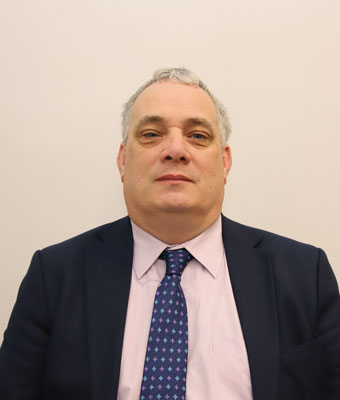
I do not know how much the Minister of State knows, or even remembers, about what occurred in 1976 and thereafter following the robbery by the IRA of €150,000 from a train at Sallins, County Kildare. It was an audacious robbery at the time that hit all the headlines. What did not really hit the headlines afterwards was the Garda Síochána arrest, torture and beating of confessions out of six men. There was also a sleeping judge in the Special Criminal Court who subsequently died, a retrial thereafter, convictions and the overturning on appeal of those convictions. There has been a failure since to acknowledge the miscarriage of justice and the cruel and inhuman treatment of the men. The Minister of State might know of Nicky Kelly, who went on the run during the first trial and returned when the convictions of two others were overturned. He ended up having to go on hunger strike because all appeals failed, despite the fact that the others had their convictions overturned. Eventually, the only way to free him was to pardon him. These men are elderly at this stage with broken health. It is not just about those who are convicted. There were others who did not receive the full sentence of the court who were broken and tortured.
Nobody can deny the world has moved on from the 1970s. Oversight and transparency is the name of the game, in many ways, and are more respected. There is intolerance of any type of misbehaviour or criminal acts in An Garda Síochána, not only by members of An Garda Síochána but by the public and the political sphere. At the time, however, there seemed to be an acceptance of it. RTÉ broadcast a documentary a number of years ago, "Crimes and Confessions", which outlined the existence of a Garda "heavy gang" that seemed to be a law unto itself and seemed to have the cover of the political masters of the time. That has been followed up recently by a podcast by the Irish Independent newspaper, which further outlined the failures in this instance and the need to address these failures.
It is not just myself asking. Obviously, the men themselves, namely, Brian McNally, Nicky Kelly, John Fitzpatrick, Mick Barrett and Osgur Breatnach, have relentlessly campaigned to get the State to acknowledge the truth of what occurred to them. Last year, Claire McEvoy, acting co-director of the Irish Council for Civil Liberties, ICCL, stated:
The human rights violations inflicted upon the Sallins Men by An Garda Síochána and accepted by other parts of the Irish criminal justice system were part of a systemic pattern of human rights violations endemic across many years in Ireland’s history. The Irish State has systematically failed to address their treatment and the systems which enabled this treatment to occur.
This, in a nutshell, is why there needs to be an inquiry into this.
I thank the Deputy. This happened before I was born so my memory does not stretch that far back. I am taking this matter on behalf of the Minister for Justice, Home Affairs and Migration, Deputy O'Callaghan. I will respond to the issue raised by Deputy Ó Snodaigh on the Minister's behalf.
Deputy Ó Snodaigh is aware that the issue concerns an investigation conducted almost 50 years ago, which resulted in the courts overturning the convictions of two people in 1980, a presidential pardon for a third person in 1992, and the payment of financial settlements. At the time, this case unquestionably cast a shadow on the trust we place in our criminal justice and policing systems to ensure justice is done. Miscarriages of justice serve absolutely no one. Those wrongly accused suffer greatly, as do victims and families who feel that they did not get justice. It is important to emphasise, however, that this case occurred several decades ago and I can say, without question, that the safeguards which were available at that time to those who were the subject of investigation were very different from those in place today.
As the Deputy is aware, following the Ó Briain and Martin committees, the Criminal Justice Act 1984, which regulates the treatment of persons in custody, the Garda Síochána (Complaints) Act 1986, and the Criminal Procedure Act 1993 containing a new appeal procedure based on an alleged miscarriage of justice, were introduced. In this century, the State has continued to enact legislation to develop and update our oversight processes, most significantly through the Policing, Security and Community Safety Act 2024, commenced by the Minister, Deputy O’Callaghan, in April.
Ireland has an exceptionally robust system of independent oversight of policing in place. Moreover, a human rights ethos is at the heart of the Garda code of ethics and in recent years a strong organisational focus has been put on embedding the principle that human rights are the foundation and purpose of policing into the everyday actions of members of An Garda Síochána.
The Deputy will appreciate that the establishment of any public inquiry is something which can only be proceeded with where it is warranted. The primary concern is that the matter at issue must be considered of significant public concern in the sense that the concern to the public is live or there has been a recent significant development and an inquiry would assist in establishing the facts.
Given all the developments that have taken place in the intervening years, including the adjudication by the courts and the granting of a presidential pardon, I am advised that the Minister is not aware of any matter of urgent public interest which would warrant reopening the matter. As the House is aware, the Minister is considering a petition received from a number of civil society organisations calling for a statutory inquiry into the Sallins case. I can offer assurances that the petition is receiving attention and the Minister expects to respond to the petitioners shortly.
The Minister received this correspondence almost two years ago, so it is taking a long time to receive attention. The matter itself should be receiving attention even though it is 50 years on. There is no doubting the innocence of the men; that is not why we are seeking an inquiry. The reason is the fact that the State had a system where there were rogue gardaí and non-rogue gardaí. Did the heavy gang exist at all and was it State policy? Why was it not accepted that there was a judge asleep on the bench? The reason the first case collapsed was that the judge died. Despite the denial, why was there torture of the men in question? Why, despite the fact it was obvious to everybody that the Irish Republican Socialist Party, IRSP, was not involved in the robbery, did the State continue with the convictions? Why, even when the initial convictions were overturned, did the State continue to go after Nicky Kelly and then pardon the men with no apologies to any of them for the trauma they went through, for the brutality and for the fact the State's case was that they inflicted the wounds on themselves, despite it being virtually impossible for them to do so because they were in Garda custody the whole time?
There has been no apology. The State is living in denial. The inquiry being sought is into the treatment of the men and not whether they were guilty. That has already been well established at this stage. As I said, there has not been an apology. It is not just the men themselves seeking an inquiry. Human rights organisations that are well respected not only in Ireland but abroad have demanded that the State look into this matter. It is bad form two years on that the Minister for justice still has not responded or has not met any of the men or their representatives.
Again, on behalf of the Minister for justice, Deputy O'Callaghan, I thank the Deputy for raising this issue. As outlined, the case in question has been the subject of court proceedings, pardons and associated compensation settlements. More generally, the rights of suspects and the policing oversight regime have been completely transformed. I referred to the Policing, Security and Community Safety Act 2024, which provides a new governance and oversight regime for policing. A key part of the Act is the reformed and strengthened independent Office of the Police Ombudsman to investigate allegations of Garda wrongdoing. Another key part is the Policing and Community Safety Authority, which has significant powers of inspection and engagement and can engage with the Garda Commissioner and senior leadership team in public sessions. Our policing and criminal justice system has seen substantial and comprehensive change over the past 50 years.
In order for a public inquiry and all that entails to be warranted, it must serve an urgent public interest. With all of the developments that have taken place, there is no obvious purpose that would be served.
I assure Deputy Ó Snodaigh that the Minister, Deputy O'Callaghan, is examining the petition received from a number of civil society organisations seeking a statutory inquiry into the Sallins case and I am advised that the Minister intends to respond to the petitioners shortly. Deputy Ó Snodaigh alluded to the Minister having information for the past two years. As a matter of fact, the Minister, Deputy O'Callaghan, has been in office for approximately five months. Any fair-minded person would say that in those five months he has been very much on the ground. I take on board that he states he intends to respond shortly and I take his word on this. I will relay back to the Minister the points Deputy Ó Snodaigh has raised.
An Garda Síochána
The next Topical Issue listed for debate is in the name of Deputy Kelly and it is to discuss the need for greater for greater investment to resource An Garda Síochána with the Minister for Justice, Home Affairs and Migration.
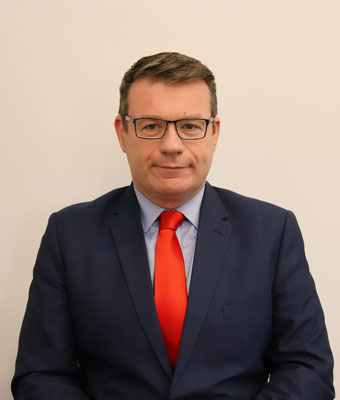
I thank the Cathaoirleach Gníomhach.
I am quite happy to listen to Deputy Kelly and relay his concerns to the Minister tonight but the information I was given was that this Topical Issue was withdrawn and I do not have a brief from the Department. I am not a Minister of State at the Department so I may not have a suitable answer for Deputy Kelly tonight. If he wants to proceed and make his intervention, I am happy to listen to it and relay it back to the Minister, Deputy O'Callaghan. Another option is for Deputy Kelly to withdraw his matter and have it taken tomorrow. I am conscious he has waited until 12.05 a.m. and I am more than happy to sit here and take on board the points he makes this evening.
I will put it to the Cathaoirleach Gníomhach. In fairness to the Minister of State, he has been honest and direct. It is now 12.09 a.m. and I have spent five or six hours at committee meetings and then waited five or six hours to do this now.
The floor is yours, Deputy.
Wait a second though; the floor is mine but the Minister of State is saying that I withdrew this matter. I did not. It is on the system, as we can see with our own eyes. Obviously, I would expect the Minister of State to have a briefing. In actual fact, I believe the Minister or the Minister of State responding should be from the relevant Department. Is there any point in me doing this now? Where will this go if I do not take it this evening? Will it be prioritised?
What we can do is to raise it with the Ceann Comhairle for the next round of Topical Issues, if the Deputy so wishes.
When will that be? The next round will be at 9 a.m. It is now 12.10 a.m. It is after midnight.
Our options are limited.
I want to know what happened here.
I want to make sure the Deputy gets a fair go at it.
To be fair to the Minister of State, he can only sit and listen to me. He is not even from the right Department. I will be sharing information. He will not be able to respond on the fly. It is detailed information. He will not be able to respond because he has no briefing and is not from the relevant Department, and it is now ten minutes past midnight. I was told by the Ceann Comhairle this morning, in writing, that my matter had been picked. I met the Ceann Comhairle and she told me in passing that it had been picked. I have waited all these hours to do this. It is up on the system, yet the Minister of State was not informed and we have no information or reply. What is the point in my going ahead? I want to know what relief I will get and what happened.
We can raise it with the Ceann Comhairle in the morning and ask that the Deputy be accommodated in raising the matter as quickly as can be facilitated. Whether that is in the morning or on Thursday will be a decision for the Ceann Comhairle.
At what time will I be informed in the morning? Will it be at 8.55 a.m.? This is farcical.
I will not pre-empt what the Ceann Comhairle is going to do, but we can raise the matter with her because I want to give the Deputy-----
I am not being difficult, but for this to happen at this hour of the night or morning - and I am not blaming the Minister of State - is farcical. It is an absolute farce to be waiting for all these hours and then be left in this situation. I do not see the point in proceeding.
Does the Deputy want me to raise it with the Ceann Comhairle to be included in the morning?
To be helpful, the matters for the morning will already have been selected and the relevant Deputies will be coming in for them. Perhaps I am speaking out of hand, but I do not think even Deputy Kelly will be ready to come in at 9 a.m. after staying here until 12.10 a.m. I will give a commitment. I accept that the error was probably made by the Department of Justice.
I do not know.
It was an error, and errors can happen. To be fair to Deputy Kelly, however, he has waited until 12.10 a.m. I do not have the information to hand to be able to give him the comprehensive answer that he deserves and that is warranted. I am sure the Minister, Deputy O'Callaghan, will facilitate the hearing of this matter on the earliest possible date that suits Deputy Kelly and the Minister or a Minister of State from his Department, with the agreement of the Ceann Comhairle. Between the three of us, I think we can get it sorted out quickly.
Is that fair enough?
Let me just have it documented that it is a farce to be left here until 12.10 a.m., waiting for hours, and then treated like this. In what other work environment would people be treated like this? We are all into family friendly environments.
I want to make sure the Deputy gets the opportunity. We will raise the matter with the Ceann Comhairle to ensure that he does. I thank the Deputy for his patience.
I do not have patience.
Cuireadh an Dáil ar athló ar 12.13 a.m. go dtí 9 a.m., Dé Céadaoin, an 11 Meitheamh 2025
The Dáil adjourned at 12.13 a.m. until 9 a.m. on Wednesday, 11 June 2025.