Financial Services
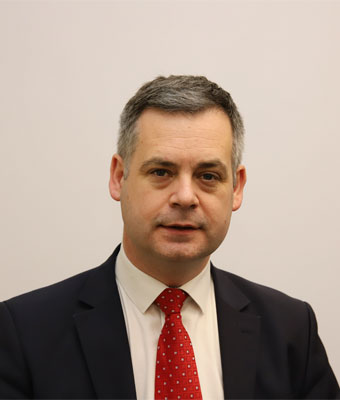
1. Deputy Pearse Doherty asked the Minister for Finance to outline Ireland’s role in facilitating the sale of Israeli war bonds across the EU; and if he will make a statement on the matter. [28803/25]
Last night, the Government shamefully voted against legislation brought forward by me and Deputy Mary Lou McDonald that would end the practice of the sale of Israeli war bonds being facilitated by the Irish Central Bank. I would like the Minister to take the opportunity to outline to the Irish people the role Ireland has in facilitating the sale of these bonds. For example, what would it mean if the Central Bank did not approve the prospectus relating to such bonds, which, in reality, are not war bonds? A genocide is happening in which, unfortunately, Ireland is now complicit by facilitating the sale of these war bonds.
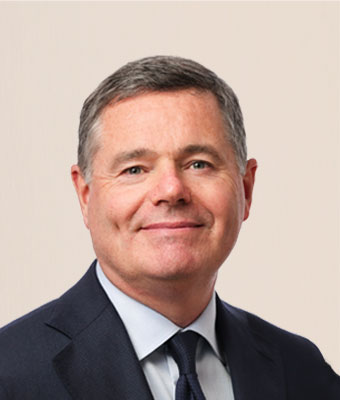
As I already outlined in the House earlier this week, the Central Bank does not sell or oversee the sale of Israeli bonds. It is important to be clear as to the role of the Central Bank because it has been misrepresented repeatedly. To be clear again, the Central Bank's role under EU legislation is to assess the bond prospectus to ensure that it includes all the disclosure requirements of the EU prospectus regulation. Neither the issuer - in this case the State of Israel - nor the financial products become regulated or endorsed as a result of the assessment.
The Central Bank is designated as the Irish competent authority for the approval of securities prospectuses under the relevant regulation. As the competent authority, the Central Bank is responsible for assessing whether a prospectus has been drawn up in compliance with the disclosure requirements of the regulation. Once the bank is satisfied that the issuer has disclosed the required information, in the required manner as set out in the regulation so that investors can make an informed investment decision, there is no discretion and it must approve it. It is important to reiterate that by approving a prospectus, it does not endorse the issuer or the securities.
The Central Bank has been clear that it can only refuse the approval of a prospectus once it has the legal basis to do so. The Governor of the Central Bank in his correspondence to the Joint Oireachtas Committee on finance, public expenditure and reform and the Department of the Taoiseach set out this view. The Government's position on this matter has been clear and I have set it out to the House during the week.
That is not true. The Minister said there is no discretion for the Central Bank when the information in the prospectus is accurate and it must approve it. That is not the case. What the Minister failed to admit is the Governor of the Central Bank said that there are three ways it can not approve it - one, the information is insufficient in the prospectus; two, the existence of EU sanctions prohibiting the provision of services or assistance in connection with the issuing of securities by the Israeli; or, three, national restrictive measures to the same effect. That is what we are dealing with.
The Minister can dance around these words all he wants. For example, he said, "they are not regulated.". Nobody is suggesting these war bonds or genocide bonds are regulated. Nobody is suggesting it is the Central Bank or the Governor who is selling them. It is the State of Israel that is selling them but it cannot sell them without being facilitated by the Irish Central Bank. When the Irish Central Bank approved the prospectus, it approved the prospectus because the Minister's Government will not provide restrictive measures. Those bonds are then not only sold here but throughout Europe. It is shameful what the Minister, Deputy Donohoe's Government has done and even at this stage, he should revisit this issue.
I am glad Deputy Doherty has restated his view because it is important to be precise about the role of the Central Bank. The Deputy's exact words on this issue, which he has just restated, were that the bonds are being sold through the Irish Central Bank. They were his words in this debate on Tuesday night. The leader of Sinn Féin went on to say that we are allowing the Irish Central Bank to trade in Israeli war bonds. The Deputy knows that is not the truth. The Deputy knows that is not the case. The Central Bank of Ireland is neither selling nor trading in these bonds. I invite the Deputy to now correct the record because what he has done is state something that is not the case. His words were very clear. He said that the bonds are being sold through the Irish Central Bank. They were his words. The words of Deputy Mary Lou McDonald were that the Irish Central Bank is trading in bonds. They are his words and I invite him to correct the record.
The Minister's response is pathetic. The facts are - and he knows it - the Central Bank has facilitated the sale of Israeli war bonds. That is a fact. Nobody in this House disputes that. The fact is the Governor said that to stop that, he needs national restrictive measures. The fact is the Minister's Government will not do it. Maybe he had another call with an Israeli minister to assure him that legislation would not go through also. Does the Minister remember that call he denied ever happened but it appeared in leaked information from the ministry in Israel? The fact is these war bonds are being sold. The fact is that if it was not for the Central Bank, they would not be able to be sold, not only in Ireland but in other countries throughout Europe. That is a fact. The fact is his Government is allowing that to happen.
It is not a minor issue. It is not an issue about words. It is the fact that genocide is happening right before our eyes and the Minister and his Government have made a decision to not intervene in areas where they can intervene and where we have the powers under EU law to issue measures, using the policy exemption, to make sure the free trade of capital can be restricted at a national level.
The Deputy did not respond to my point.
I did.
I laid out very clearly his words. Very interestingly, when Deputy Martin Kenny stood up, he said "we are not suggesting that they are being sold by the Irish Central Bank".
I said that earlier.
He said "we are not suggesting any of that.".
I said that earlier.
In the Deputy's contribution on Tuesday night, both Deputy Doherty and the leader of Sinn Féin referred to the bonds being sold through the Central Bank of Ireland, which is not the case, and he referred to the Central Bank of Ireland trading in bonds, which is not the case. It is so important, as I attempt to continue to-----
To defend the fact we are funding genocide.
-----recognise the suffering of the people of Gaza and the many practical steps the Government of Ireland is taking to aid them, to give them support-----
Pathetic.
-----that we also deal in the truth. In relation to the final allegation that was made by Deputy Doherty, let me again state to the House that no such call was received by me. I have made that very clear. I find it very interesting that the Deputy is more willing to accept the word of the department of finance of Israel than me.
I would love to know the Minister's motivation for allowing or for supporting the funding of genocide. That was the issue.
Insurance Industry
2. Deputy Pearse Doherty asked the Minister for Finance the steps he is taking to address the situation where insurance companies for multiple consecutive years are recording profit margins two or three times the industry average; and if he will make a statement on the matter. [28804/25]
Maybe the Minister's response to this question will not be as pathetic because his words will ring hollow to the children who are being ripped apart in Gaza. The bombs and bullets are funded because Israeli bonds are being facilitated through the Irish Central Bank and he is the Minister of Finance who can actually stop that. It is disgraceful.
I am asking the Minister to explain the steps he is taking to address the situation where insurance companies here are recording profits that are multiples of our European competitors.
I want to call out the behaviour of Deputy Doherty. His language and the way he is attempting to treat this issue, which is so serious, is thuggish. His behaviour is thuggish. Yesterday, the leader of Sinn Féin referred to harassing the Government on this issue.
It was the Taoiseach who referred to that.
I have come into House to attempt to deal----
As a point of order, the Minister is making accusations against somebody who cannot defend themselves. It was the Taoiseach who made that accusation and I will not accept the Minister calling me a thug or my behaviour thuggish while he protects and defends the situation where Israeli war bonds are here. I will not stand and allow the Minister to suggest that I am thuggish in that manner because we know what this is all about. This is far too important and I will not allow him to characterise my behaviour or standing up for what I believe in that way.

I will give the Minister's time back.
I can stand up for what I believe but I can do so in a way that is respectful of the views of others. I can make the case for what I believe in without constantly interrupting and demeaning the good intentions of others.
Hear, hear.
For the record, I used the words of Deputy McDonald yesterday. That was the word she used. Despite everything, I still try to respect Deputy Doherty's good intentions in spite of the many reasons I should not. I simply ask the Deputy to do the same of me.
In relation to the very important matter he raises here, I recognise the concerns on profitability levels in certain segments of the market. Structural reform and ensuring the long-term affordability and sustainability of the Irish insurance market, while ensuring a viable insurance sector, are priorities for this Government.
The insurance market’s profitability in 2022 and 2023 was supported by significant reserve releases following the Covid-19 pandemic. After a number of years of losses, the National Claims Information Database data shows that the insurance market was profitable again in 2023. For liability insurance, the operating profit was 13% in 2023, and the long-term average operating profit was 2.1% between 2009-2023. The motor insurance market had an 8% profit in 2023, with a long-term average profit of approximately 5 % between 2009-2023.
Globally, 2023 was characterised as a hard market with higher premiums, stricter underwriting conditions and higher reinsurance costs. In contrast, industry insights suggest that 2024 showed a softening market with increasing competition and falling rates which have translated into lower premia in some market segments, but further work is needed.
That is why the Government is developing a new action plan for insurance reform that will prioritise further competition in the market. It will include further work, including with insurers, to enhance transparency and promote affordability across all types of insurance. My Department has concluded the public consultation and is reviewing the various submissions.
The question I continue to raise relates to when the Government is going to deal with the issue of the costs that people are paying for motor insurance and home insurance and that sports groups, organisations, community groups and small businesses the length and breadth of this State are paying for public liability insurance. The profits being made by the industry are eye-watering. When representatives of the industry came before the finance committee, they told us they would target a 4% to 5% increase; not 4% to 5% over the past ten to 20 years but because that is the industry norm. Insurance premiums have increased and we have seen double-digit profit margins for the past three years. The margins they are making are two and three times the European average. I have supported all the reforms that have been introduced in this House. However, I argued that such reforms cannot be about boosting the profits of the industry; they have to be about putting money back into consumers' pockets. That is where the Government is failing over and over again.
I thank the Deputy for raising that issue and acknowledging the scale of the reforms the Government has brought in, and his own role in that regard, which I acknowledge. I also acknowledge the Consumer Insurance Contracts Act 2019, which was the subject of a motion the Deputy brought forward. Part of that Act has not yet been commenced, but most of it has. There are various measures the Government brought in: the personal injuries guidelines; the reform of the Personal Injuries Resolution Board Act 2022; the banning of price walking; the establishment of an office to promote competition; the publication by the Central Bank of its national claims information database; the work that has been done by the CCPC; the establishment of an insurance fraud co-ordination office; and the work done by the Garda, Insurance Ireland and the Alliance for Insurance Reform. All that work was not done to create higher levels of profitability. It was done to create a more competitive sector for those who depend upon it. I want to see that translated into lower prices.
The problem here - and this is not the first time I have highlighted it - is that I, on behalf of Sinn Féin and the Alliance for Insurance Reform, said we needed commitments from the insurance industry that if reforms were introduced, then premiums needed to be reduced. The Minister's former party leader, Leo Varadkar, gave headlines to the newspapers six or seven years ago to the effect that he was giving the insurance industry six months or else. What did he mean by that? Just taking the past 12 months, insurance premiums for motorists have gone up a whopping 9%. Motor insurance is at the highest level it has been in five years. It is more than double the European average. What is driving motor insurance premiums up? There is only one thing: it is profit and corporate greed. The industry is able to do this because the Government is not going to do anything it, despite the words of the former Taoiseach six or seven years ago. There is no stick when it comes to this issue. That is why the insurance companies are taking a hand not only at the Government but at their customers. What is happening is not right. What measures does the Minister plans to take to ensure that these reforms will result in meaningful reductions for consumers as opposed to whopping profits for the industry?
With regard to motor insurance, it is the case that the figures in the year to date are up 9.7%. If you look at where it was for the month of April, they were up 0.2%. The figures are now 34.4% lower than they were at their peak in 2016. If you look at motor insurance, prices are now down by 2.2% since the implementation of the personal injuries guidelines and down 5.1% since the Cabinet sub-committee on insurance reform was set up. We have seen some developments there.
The Deputy is at it again. He is inferring that the Government is doing nothing, when I have laid out what the Government is doing. What we will be doing now is that I and the Minister of State, Deputy Troy, will be working on the new further action plan for reform. We will also be engaging with the insurance sector and looking at what further options we need to consider. We have done our bit, and so has the Oireachtas. We need to see better value for the consumer as a result of that.
Financial Services

3. Deputy Paul Nicholas Gogarty asked the Minister for Finance his views on postal orders as a means for making payments for bills with State agencies and local authorities, especially among those with limited IT skills and no chequebooks; whether such organisations have the right to refuse postal orders; if so, whether this could be amended through his offices; and if he will make a statement on the matter. [27878/25]
We know that the use of cheques in this country has declined dramatically, especially since Covid. The current rate of use is now half what it was in 2023, and has probably declined more. I do not have the up-to-date figures. Many people do not have chequebooks anymore or if they do, they are stashed away in a box somewhere and are not used that much. Equally, there are many older people who do not have bank cards because they do have bank accounts. In this context, what are the Minister's views on postal orders as a means of making payments to State agencies and local authorities, especially among those with limited IT skills and no chequebooks? Do these entities have the right to refuse postal orders? If they do, can this be amended through the Minister's offices?
I ask that Deputies stay within the time limit.
I thank the Deputy for this question, particularly as maintaining a variety of payment options in the State is important for the economy and for ensuring the financial inclusion of consumers who are older, on fixed or lower incomes or at risk of digital exclusion.
The availability of non-digital payment options ensures that certain vulnerable groups are not excluded from participating in our society. This is why cash access has been ensured via the recently passed Finance (Provision of Access to Cash Infrastructure) Act 2025 and why cash acceptance was recommended in the national payments strategy of 2024. Launched in October 2024, the strategy recommended cash acceptance or cash facilitation in the public sector where a public body levies fines or fees or where it provides goods or services for a charge. If a body cannot accept cash directly, it must arrange for the facilitation of cash payments via third party. In November, the Secretary General of my Department wrote to all other Secretaries General notifying them of this recommendation. Departments and bodies under their aegis will be required to confirm, via their annual reports, that they are in compliance with this recommendation.
It is my view that postal orders fall within the scope of facilitating cash payments via a third party. Postal orders are accepted by a number of local authorities and State agencies such as the Revenue. If the Deputy would like more information on the volume, use and operation of postal orders, An Post is the appropriate body to ask. I will certainly raise this matter with an Post because I accept that the point the Deputy raised is important.
What I am more interested in is the Minister raising it with the agencies. For example, South Dublin County Council has cash offices in Tallaght and Clondalkin, but many people who rely solely on public transport find it very hard to get to those places. I wish to give a specific example regarding resident parking permits for an area that have to be paid through South Dublin Parking Services. When a resident tried to make an arrangement to do this by phone, they were told, "Sorry, cheques only, we are not accepting postal orders". I acknowledge that this was a contractor acting on behalf of a local government agency, but there seems to be a miscommunication at that point because I have heard other stories about other agencies. I do not have the time to go through it, but maybe a communication should be issued to explicitly state that postal orders should always be accepted as legal tender in these cases.
I will raise that matter with the Minister for housing. The information I have does cover off where we are with our State agencies but does not deal with the local authorities at the level the Deputy has just referred to, and, in particular, the specific case to which he referred. I accept that for our more elderly citizens who need to use local authorities and other services, not being able to use cash broadly can be, for them, more than an issue of convenience. As I said, I will follow up on this with the Minister for housing and will revert to the Deputy.
Fiscal Data
4. Deputy Pearse Doherty asked the Minister for Finance in the context of rising costs and higher prices hitting households, to outline the surplus that the State will run in 2025; and if he will make a statement on the matter. [28805/25]
I remind Deputies that only one person is to stand in the Chamber at a time.
Will the Minister outline the surplus the State will run in 2025?
That is in the context of the Government ruling out a cost-of-living package in the budget. We have heard this from the Minister and the Taoiseach. It is a reflection of a Government that is out of touch and that does not understand the real pressures ordinary people are under. This is despite surpluses of billions of euro being recorded not only this year but in previous years. People are really struggling because the actions of the Government have left them high and dry in some cases.
When it comes to inflation, it is important to emphasise the reason so many people are still struggling with it, and I accept it is a challenge for many, is not because of the actions of the Government. Inflation within our economy and the way it has gone up has not been caused by the Government of Ireland. It has been caused by factors that are outside of our control, in many cases. I refer to the cost of energy and what has happened with supply chains across the world.
To answer the Deputy's question, we are currently - and I say "currently" - projecting a general Government surplus for this year of €8.7 billion, nearly all of which is caused by the corporate tax receipts most Members of this House, including I believe Deputy Doherty, have always acknowledged are highly volatile and that we cannot depend upon them.
The reason I say we cannot do the one off measures we have done in the past again is that while the cost of living is still high, the rate of inflation we have seen that justified us doing those packages has fallen dramatically. When we brought in the various large cost-of-living measures, it was done in anticipation they would be one-off. That turned out not to be the case but what has turned out to be the case is that inflation has fallen. We were in a situation where inflation was well in excess of 10% and growing so quickly but now it will be, I hope, between 1% and 2% and growing at a far more normal level.
I accept prices are high and that this is a challenge for so many people but the rate of price increases has fallen dramatically. What the Government will aim to do is to provide the support we normally do through, for example, social welfare measures that feature in every budget as opposed to the repetition of measures which if they became normal, I would be concerned they would not be affordable.
Some inflation is absolutely beyond our control. Other high prices are as result of price gouging or Government failures. Our pillar banks had combined profits of €5 billion last year, much of that came from the fact homeowners and savers were short-changed. We have double digit rent increases. New rents outside of Dublin are rising by 9% with 12 counties experiencing double digit rent inflation increases. That is because the Government will not enact our legislation to ban rent increases. We have crippling childcare costs despite the Government's commitment to reduce them. We still do not have a plan to do that. The Minister's party promised a plan within 100 days and that is another promise that has been broken. There are eye watering insurance costs and the Government is not doing anything to ensure that savings resulting from reforms are passed on. We have the highest electricity costs in Europe. This is also at a time when we will record significant surpluses in the region of €8 billion to €9 billion each year and the Government is leaving people high and dry because they need support at this time and a cost-of-living package is absolutely necessary.
It is not the case to say that some inflation is caused by forces outside our control. Looking at the inflation we have gone through in recent years most of it has been caused by issues outside of our control. What has happened with the cost of food and energy has been cause by the awful war on the people of Ukraine and the huge changes that have happened in supply chains and the way goods are supplied across the world after the pandemic.
I accept there are issues that definitely contribute to the cost of living and that develop within our own economy. However, I make the case that if we accept that corporate tax receipts are absolutely at risk, because of the global issues we now confronting and that have not been raised yet in the Dáil today but which we discussed at the finance committee last night, it would not be proper for me to use receipts and money I know may not be permanent to fund measures that could become permanent.
Yet it was proper for the Minister for Finance to sign off on the first piece of legislation he introduced, which was to give a big increase to junior Ministers and increase the number of super junior Ministers, which is something we are challenging in the courts. Inflation is also caused by the Government. When the Government decided to increase the carbon tax, it put up the price of petrol and diesel. It put up the price of home heating oil and gas, which the Government did last month. These are things that are under the Government's control. When the Government decides not to ban rent increases, inflation goes up and families are under pressure. These are things that could be under control if the Government would intervene. Given that the Government has not taken these measures, families are struggling now. We see from the CSO and from surveys by the Society of St. Vincent de Paul and others that here are many families who simply cannot even put a hot dinner on the table.
I ask the Minister for Finance, in the context of recording surpluses in excess of €17 billion this year and next year, that there would be a cost-of-living package, not to spend €17 billion on it but to recognise people have been short-changed by the Government and to recognise there is a need for one in this year's budget.
Referring to being short-changed, if the Deputy looks at the measures the Government has brought in recent years, the various one off measures brought in on budget day did make a difference to people at a time during which the cost of living was so high and inflation was going up. In regard to the carbon tax the Deputy referred to, it is also the case that carbon tax funded the allocation of €951 million to various measures that are helping not only with fuel poverty but with the transition to a lower carbon future. Every day of the week, Members from the Deputy's party look for more of these measures while being against the taxes that pay for them. I have to be honest in acknowledging that if we want to invest more in a greener and lower carbon future, we need to have a way of paying for it. The Deputy does not take the same approach.
I do.
He has not explained how we will pay for this.
I have.
He is against the carbon tax.
I absolutely-----
What the Deputy is proposing here is that we use receipts that we fear might not be available to us in the future to fund permanent measures. Incidentally-----
No. I did not say that.
-----if we had been implementing the measures proposed by the Deputy in the past-----
I did not say that.
-----we would not have this surplus available to us at all.
Housing Schemes
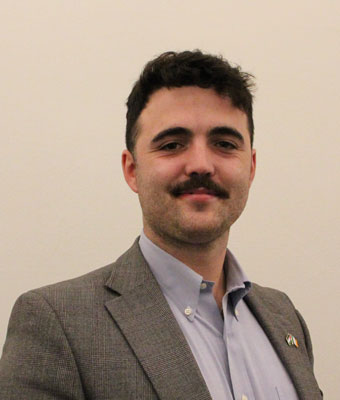
5. Deputy Barry Heneghan asked the Minister for Finance if he will provide an update on the review of the help to buy scheme; if consideration is being given to adjusting the eligibility criteria or value thresholds in response to recent changes in house prices and inflation; and if he will make a statement on the matter. [28246/25]
My question concerns the help to buy scheme and its future direction. The programme for Government commits to both retaining and revising the scheme. Given the significant rise in house prices, particularly in north Dublin, has consideration been given to adjusting the eligibility criteria or value threshold to ensure the scheme remains relevant and accessible to first-time buyers of my generation?
I thank the Deputy for raising this. The help to buy scheme is a plan to assist first time purchasers with the deposit if they need to buy or build a new house of apartment. It also has as an aim to encourage additional supply of new homes by supporting demand. The Deputy knows what the help to buy scheme is so I will not go into the detail of it.
The scheme has supported almost 55,000 individuals or couples. The estimated value of it has been €1.2 billion and the scheme has now been extended until 2030. It is reviewed in accordance with the Department of Finance’s tax expenditure guidelines on a regular basis and any revision to the scheme would have to be considered as part of the annual budget and finance Bill process. I look forward to hearing the Deputy's view on the scheme.
I reiterate my thinking on the future of the scheme. I do not believe the scheme should be extended to second hand homes. I appreciate this can sometimes be a difficult argument to make but a criticism and risk of a scheme like this is that we have to avoid adding to the cost of new homes being purchased by home purchasers. There is a risk that if the scheme was made available for homes that have already been built the money we are making available at the moment would simply go into making the homes more expensive as opposed to what I believe it does overall, which is to help with the supply of homes within a certain price bracket. Beyond that, I look forward to hearing the Deputy's views on the future of the scheme.
Gabhaim buíochas leis an Aire. I welcome the Minister said that. I have met developers in north Dublin and across the country and they told me that the Housing Finance Agency was meeting just once a month. Completed buildings are sitting empty in the middle of a housing crisis, yet there does not seem to be a sense of urgency in the Department. Housing is not the Minister's Department, but as Minister for Finance, will he be increasing the number of times the agency meets in order to show people that we are serious about tackling this crisis and show investors that Ireland can be trusted?
In Dublin Bay North, I regularly hear from first-time buyers who are doing their best to secure a home close to work. However, many new builds in the area now fall out of the existing eligibility cap, making this scheme inaccessible to those it was designed to support. These people are not high earners or looking for luxury properties. They are ordinary people being priced out by rising market values. Will there be a threshold change to the scheme?
The issue of the threshold change is a matter that will be considered budget to budget. I caution that any changes could affect the price of a home, particularly at a point when we still have so much we need to do to increase supply.
Regarding the important point that the Deputy made about the Housing Finance Agency meeting, I believe that refers to meetings of the board. The Deputy is concerned that, by only meeting once a month, it could be delaying important decisions. I will follow up on that. It is appropriate that a board meet approximately once a month, but that should not delay important decisions at a time when we need all the finance we can get to build more homes. I will raise that matter.
I thank the Minister for his answer. It is exactly that - the board is meeting once a month. Developers and investors are seeing this. It is holding developers up and adding many costs for them, which they do not like and discourages the building of homes.
The scheme is valuable and it is right that it is being retained. I look forward to the budget and seeing what this Government will do. Revision is needed to ensure that the scheme reflects today's market. This includes updating the price gap and ensuring that the rules are clear and consistent. This is an opportunity to make a good scheme more responsive and fair for today's buyers, particularly for the buyers of north Dublin.
I am familiar with the needs of home buyers on the northside of Dublin, including within the Deputy's constituency. We will give consideration to this issue as part of the work we do for the budget. I emphasise that, at a time in which supply is not being built as fast as the Deputy or I want, we need to be careful that we not make a change to a scheme that could inadvertently add to the cost of homes.
We will take the Deputy's points on board and consider the issue he raised. In the context of our exchange, I will examine the issue of the frequency of board meetings to ensure that it is not creating undue delay in decisions that lead to homes being built.
Departmental Bodies
79. Deputy Mairéad Farrell asked the Minister for Public Expenditure, National Development Plan Delivery and Reform to provide some details on the work his accelerating infrastructure task force will be undertaking; what we can expect by way of the reports it will produce; and the assurances in place that the recommendations it makes will be acted upon. [27880/25]
After those remarks, I must state that it is important the record has been corrected. I would hope that all Members carry our history with them when they make contributions and understand that there are families who can be impacted. It is important for us all to realise the importance of our words.
My question relates to the accelerating infrastructure task force. What can we expect by way of the reports it will produce and how can we be assured that the recommendations it makes will be acted upon?

I launched the new accelerating infrastructure task force on Friday 16 May. At the task force's first meeting, the terms of reference were agreed and there was a discussion of the work plan of the Department's newly established infrastructure division over the coming months.
Primarily, the role of the task force is to provide its members' expertise and guidance to assist my Department's work programme of identifying and addressing barriers to the delivery of infrastructure in order to accelerate the development of critical infrastructure. This work programme focuses on the energy, transport and water sectors. This focus has been adopted because all three of these elements are required to underpin the development of all economic and social infrastructure, whether in healthcare, housing or childcare, and to support our economy's competitiveness.
As noted, the terms of reference for the task force have been established and agreed with the members. These specifically set out that the role of the task force is to: provide strategic guidance and expert input to policy proposals to speed up infrastructure delivery; provide guidance and advice to officials to ensure that barriers to infrastructure delivery are identified accurately and represent the most significant barriers that are impeding timely and effective delivery; provide guidance and advice on the development of a small number of high-impact reform actions that are robust, achievable and timebound that will be rigorously focused on addressing the challenges identified - these actions will be brought to Government for approval; and oversee the subsequent implementation of these reform actions, supported by the Department’s infrastructure division and the Departments and agencies responsible for implementation.
There are 12 members of the task force. Six are independent experts experienced in infrastructure delivery and the other six are ex-officio members taken from commercial semi-State entities at the front line of infrastructure development and the local government sector. I will chair meetings of the task force. I anticipate that it will meet monthly.
The first task my Department is progressing, and, hence, the first task the task force will oversee, is a systematic assessment of the barriers impeding the development of critical infrastructure. This task will be undertaken through a combination of research work, direct stakeholder engagement and a process of public engagement which will be launched shortly. I expect to bring a report on these barriers to Government in July, incorporating feedback from the task force. Thereafter, the focus will be on identifying actions that can overcome these barriers, seeking Government approval of these actions and ensuring they are implemented.
The reason I asked this question is because in recent years various different task forces and expert groups have been set up. We have the construction sector group, for example. I was quite puzzled as to why this new group had to be set up as opposed to its members just being added to the construction sector group. As we know, that expert group was set up to help tackle the housing crisis. I read some of its reports - they were excellent - but I never really saw how its recommendations were translated into Government policy. I am a bit worried that the new task force will go the same way. In other words, that there will be some good reports, committee appearances and fanfare but little follow-through. Will the Minister provide specifics as to how any recommendations will carry over into Government policy or legislation? As he knows, there are no serviced sites in south Conamara. This is an incredibly important issue we need to tackle. I want to see actual progress resulting from these reports.
The construction sector group has a distinct and separate mandate. It continues to do excellent work. We have identified, and the Deputy will have seen this in her broad engagement with people in south Conamara or, indeed, with stakeholders across the economy, that there are many barriers impeding delivery. The task force’s central mandate is to have a short period to identify these barriers, develop significant reforms to cut through some of the processes involved and the barriers to delivery and ensure that we oversee the implementation. That is responding to the genuine concerns around the level and pace of delivery. That has not been the central focus of the construction sector group, which, as stated, has a distinct and separate mandate. The new task force is seeking to accelerate delivery of the basic infrastructure that is lacking in parts of our country. It is looking at impediments, at why projects are taking too long in terms of the design and concept phases and at how project lifecycles can be shortened in order to drive delivery. That will improve the basic infrastructure in the Deputy’s constituency and many other parts of the country.
I hope this works, but the proof of the pudding will be in the eating. I am worried that the task force will become a place where things are said and reports are written, but that nothing will come from this. Of course, it is important to listen to expert recommendations and bring them together. Some incredibly good reports have been published. In that context, we could fill the House with excellent reports. However, these reports are never actioned. That is the issue. I want to ensure that the task force does not become some kind of a holding excuse and that it will actually bring forward recommendations that will mean we can tackle the relevant issues.
The Minister said he is going to bring some of the recommendations forward in the summer. In six months' time, we will have a good idea of what is happening in terms of a progress update. While the Minister has made this task force a signature initiative, we need to make sure something is done in respect of the recommendations it puts forward. Other groups have made recommendations and either nothing came of them or the Government did not listen. We need to ensure that, as in the case of Conamara, there will be serviced sites and whatever else is needed,
I do not disagree with much of what the Deputy said. There are often too many reports which contain endless recommendations. We have tried to change our approach to how this process is working. It is how we can identify high-impact reforms that are implementable and timebound that will make an objective difference. That has been the central mandate of the task force. That is why there will be a report by the summer. The outworking of it, and the core remit of the task force, is to oversee, with me chairing it, the implementation of this across government. That is the mandate it has been given.
Having hundreds of recommendations in hundreds of pages of a particular report means that the specific actions are lost. That is why we are taking a focused approach to how we develop the work programme of both the infrastructure task force and the infrastructure division. The task force is also tasked with examining international best practice in the context of how we can measure Ireland against that. We know we have a significant infrastructure deficit. Some of that is in our delivery systems and in the processes that have developed over many years. All of that will fit within the recommendations that will come by the summer. It is about trying to move the dial on infrastructure delivery.
Departmental Staff

80. Deputy Ged Nash asked the Minister for Public Expenditure, National Development Plan Delivery and Reform the number of staff in his Department's new infrastructure division; the respective grades and areas of responsibility of staff; and if he will confirm the division's key responsibilities and deliverables for 2025; and if he will make a statement on the matter. [28801/25]
Will the Minister elaborate on the staffing composition of the new infrastructure division within his Department and on what he views as the key responsibilities and deliverables for the division in 2025? This is a key objective of the Minister and is contained in the programme for Government. Will he inform the House as to what the priorities are for the rest of this year?
The programme for Government significantly expanded my Department’s work on infrastructure and included the establishment of a new infrastructure division. The division's specific responsibilities and deliverables are being progressed as part of the Department's forthcoming statement of strategy, which will go to Government in advance of the summer.
To be of assistance to the Deputy, the key Government commitments that the infrastructure division will be responsible for delivering in the short term are: an early review of the national development plan by July; expanding the Department’s infrastructure expertise to assist delivery through the redeployment of sectoral experts to the Department; the establishment and provision of support to the newly established accelerating infrastructure task force; and preparing a report to Government to identify the barriers to delivery and subsequent actions in order to accelerate the completion of infrastructure across our economy. This report will be prepared on the basis of broad stakeholder engagement, public engagement and a review of international best practice in order to construct a detailed evidential assessment for subsequent action.
This infrastructure delivery work is in addition to the infrastructure division’s ongoing work across its national investment office functions, construction procurement and overseeing certain departmental Votes. The establishment of the division has seen a significant increase in its constituent units' staffing levels. It is led by a deputy Secretary General and comprises an assistant secretary and five units, each of which is led by a principal officer.
On the current breakdown of grades, including vacancies up to an including principal officer, there are five principal officers, 20 assistant principal officers, 18 administrative officers, four higher executive officers, two executive officers and six clerical officers. In addition, five individuals with key sectoral expertise in the delivery of strategic infrastructure and the planning process have been deployed to support the work of division from EirGrid, ESB Networks, Transport Infrastructure Ireland, Uisce Éireann and An Bord Pleanála. Staff from the Department's communications unit are being made available to support the public engagement of the division in delivering its key outputs. This brings the current total headcount for the infrastructure division to 62.
That is not an insignificant number of staff. Can the Minister confirm that those from State agencies who will be working in the division will continue to be paid by their parent agencies? I assume that will be the case.
The Minister was quoted in The Irish Times yesterday as saying that the acid test will be delivery.
I assume the action plan on infrastructure delivery the Minister referred to will be published side by side with the review of the national development plan in July. That would make a lot of sense. In that action plan and the national development plan, will he commit to ensuring there are deadlines and milestones around key projects? That will be the way in which he and his Government colleagues will be held to account on actual delivery. Will he also confirm what countries he has looked at for best practice on delivering key infrastructure projects when considering setting up this Department? Are there examples we can look to for inspiration?
I make the point that it is all too slow and that is the basis of the reform process happening in parallel with the work of the review of the national development plan. That is why additionality by itself will not move the dial and why the report on the barriers to infrastructure delivery will be finalised in July. That will work in parallel with the updated review of the national development plan, whether they are published on the same day or not is something we have to sequence. However, the plan is to have both prepared to set out the issues in the area of reforms. As I have said, the acid test will be how we forensically examine the project life cycle. There are countless examples that everyone in this House is aware of, where it is simply taking too long. We are systematically examining all aspects of the project life cycle to try to truncate timelines and do that on a systematic basis to accelerate delivery. As part of the international metric, we are looking at best practice in terms of the World Bank, the IMF and the OECD. We are also interested in looking at common law jurisdictions where there is a lot of commonality on infrastructure delivery, like New Zealand, Australia and the UK. What is also really interesting are the different timelines that exist in many US states that have taken different approaches to infrastructure delivery, many of which are confined by constraints and cannot get things done, and others which have unlocked delivery. Providing that international comparison with the evidence base from published research will help complement the systematic exercise happening domestically around the project life cycle.
Will the Minister consider finding a way to include people with international experience from outside this jurisdiction in the division? I do not know the identities of the people involved and, in some ways, it is none of my business. I wish them well, because if they do a good job our country succeeds, so we should give this initiative a fair wind. However, a lot of the people involved in the infrastructure division and task force will themselves have considerable experience with delayed projects. I am not apportioning blame here, but they may have been responsible in their own positions for projects we would associate with significant delays. Will the Minister put on the record of the House an example of a project that has been delayed in recent years, and that has frustrated all of us, which he thinks would not have been delayed in the way it was if a division like this and the task force he referred to earlier had been in place? What particular project is his priority over the next few years? He said the acid test will be deliverables. What is he going to deliver? Will he name a project?
There are countless projects in the national development plan that are caught in endless delays. This is not about the work I am doing at the centre of Government. It is not about one particular project or pet project that the Deputy or anyone else might have. It is about how we change the life cycle of projects universally, so we accelerate for priorities set out in the national development plan. We are taking the international experience as a key evidence base for how we bring about the reforms that need to be stood up. Whether in housing, energy, transport, or water infrastructure, too many projects are in endless processes where the public have seen indicative allocations many years ago and they have still not seen delivery. It is to give confidence and momentum and show there is a pipeline to the construction sector that can be commenced. This systematic exercise is required. Of course, there are people and different State agencies, bodies or Departments that have been involved in parts of the delays contributing to this. That is why we have a blank canvas in how we change that for the better. That is the measurement and metric of the outworking of the reforms that will advance.
Office of Public Works
81. Deputy Mairéad Farrell asked the Minister for Public Expenditure, National Development Plan Delivery and Reform his plans to reform the OPW following the latest report from an organisation (details supplied); and if he will make a statement on the matter. [27881/25]
This relates to the latest Deloitte report into the OPW. Will the Minister of State outline how he plans to reform the organisation and what his future steps will be in that regard? There was huge outcry when people saw the bike shelter and the cost of it at €336,000. You would get an ambulance for that price on Inisheer, which does not have an ambulance.
The publication of the internal audit report by the OPW, following the review of projects costing €500,000 and under is welcome. It follows a commitment to learn from the bike shelter project and presents the internal audit findings, control recommendations and management response. The OPW has accepted and is actively implementing all the recommendations within the report. The internal audit report enables us to focus on continuing to strengthen ways of working across the OPW. The OPW takes a structured approach to delivering value for money across both the capital and current expenditure programmes, with the capital expenditure programme grounded in principles and requirements of infrastructure guidelines and adherence with the capital works management framework. The capital works management framework aims to deliver cost certainty, better value for money, and more efficient project delivery. This is achieved through standardised contracts, guidance notes and a structured approach to project management. The OPW follows this policy instrument to deliver a compliant tender process and construction projects, ensuring that projects achieve value for money, are delivered in an efficient manner and meet the needs of the Government and our clients across the system. In addition, guidance on capital works projects with an estimated value of less than €500,000 has been developed. This new guidance covers approval and oversight for smaller capital works projects and will further strengthen our project oversight, regardless of project size.
There are a number of reasons it is important to raise this. We have been talking about reports that were not acted upon, and I hope it will not be the same in this case. Although Deloitte's report is the latest one, it is not the first report on the OPW. We had damning report in 2014. That was an external London-based firm. Following that, there was a "Prime Time" special, PAC hearings and other examples of failure to get value for money. In 2022 we had another review; this time it was an internal Government study into how much money was spent on the portfolio. It looked at five buildings to compare rental costs with either purchasing or constructing an equivalent building. In all cases looked at, it was found to be much cheaper to build or to buy. In other words, they keep making wrong decisions when it comes to getting value for money. We are obviously talking here about the bike shelter. I see what the Minister of State says about guidance for projects under €500,000. Does he have full confidence this will be acted upon and that exactly how the OPW spends money will be looked at?
Following the OPW chairman's report on the bike shelter and his appearance before the Oireachtas committee, he was frank in acknowledging the overall cost of delivering the covered bike shelter at Leinster House was unacceptable in the wider context of value for money and value for the taxpayer. Following his commitment to learn from the bike shelter project, the chairman wanted independent assurance on the practice relating to capital projects under €500,000. In addition, he widened the scope of external review to include the wider internal audit process within the OPW with a view to making improvements. I welcome the published report, which presents internal audit findings, control recommendations and management response. The audit report makes a number of recommendations about control measures that will enhance capital expenditure practice for these projects. The OPW has internally accepted the implementation of the recommendations in the report. The new guidance approval and oversight of smaller capital projects is now being implemented across the OPW. The management board will review and drive the implementation of the internal audit recommendation to ensure we continue to improve our approach. The commitment to robust governance of the internal audit function within the OPW has been further strengthened by the appointment of an additional member of its team and a head of internal audit principal officer.
My question is on what actual reform we will see taking place in the OPW. I am sure the Minister of State is against these overspends and I take it he was not in office at the time but it has continued over a number of years and there have been reports over a number of years. What reform will take place in the OPW? Does the Minister of State have confidence it can properly manage its property? Is its property management function working? Does the Minister of State have confidence in it? What exactly will change organisationally? We hear about the bike shelter and it causes huge public anger, understandably, but often we only get this information because somebody like Ken Foxe puts in an FOI request and successfully gets the FOI request returned. We need to look at it in its entirety. How could we change what is happening in the OPW?
I have 100% full confidence in myself as Minister of State and in the OPW. It is a 35-page report with 18 recommendations. Some people criticised the delay regarding the report. That was because I, as Minister of State, wanted to make sure we implemented all the recommendations in the report. We put our hands up. There were mistakes made. We have to improve and we are improving. Based on the final report, I will make sure those recommendations are insisted on and gone through. The OPW and I will work together to ensure better value for money for the taxpayers and people of this country.
Public Services Provision

82. Deputy Cian O'Callaghan asked the Minister for Public Expenditure, National Development Plan Delivery and Reform his views on the increased level of privatisation and outsourcing in the provision of public services, its effect on cost overruns and outcomes for citizens; and if he will make a statement on the matter. [28802/25]
What controls and monitoring are in place for the runaway train of public money being used to outsource and privatise public services?
My Department works to serve the country, its people and the Government by delivering well-managed and well-targeted public spending, delivered through modernised, effective and accountable public services.
The process around outsourcing set out in the public service pay agreement states that where outsourcing is being considered in respect of an existing service, both official and staff sides will consult on the development of a service plan which evaluates and compares the in-house service and the outsourcing option. The public service pay agreement 2024-2026 reaffirms the commitment to the above and states that where a dispute arises through the application of this process, parties will seek to resolve it through direct dialogue. Where this fails to resolve the dispute, parties will use the dispute resolution mechanism set out in chapter 5 of the agreement. Accordingly, where a dispute arises, it will be subject to a six-week period of initial bilateral engagement at local level between the parties. Where agreement cannot be reached, the dispute will be referred to the WRC or, if necessary, the Labour Court. Where a conciliation or arbitration scheme applies, the issue will be referred within six weeks to the conciliation machinery under the scheme and, if unresolved, to the arbitration board. The Labour Court or arbitration mechanism is the final stage in the dispute resolution service.
My Department has been responsible for a number of recent reform initiatives, including the Better Public Services strategy, which aims to deliver inclusive, high-quality and integrated public service provision. Better Public Services is aligned with the ten-year strategy for the Civil Service, Civil Service Renewal 2030, which is built on three core themes: digital first and embedding innovation; workforce, workplace and organisation of the future; and evidence-informed policy and services. It is also aligned with Connecting Government 2030: A Digital and ICT Strategy for Ireland’s public service.
There are no functions, roles or services within my Department that were outsourced to the private sector which were previously carried out by civil servants.
To speak more generally on the scale of recruitment of public servants, over the past five years we have seen an extensive and positive expansion in the numbers of public servants across many areas of remit, and rightly so. If there are any changes, there is a process under the public pay agreement to manage them.
I thank the Minister for the answer, which was really about the industrial relations processes around agreements and outsourcing. I am asking what financial controls and monitoring are in place. There is a myriad of examples of what should be public services being outsourced with detrimental outcomes for the users. We saw this week the National Treatment Purchase Fund has created perverse incentives. There are hundreds of examples of these. Emergency care for vulnerable teenagers is one. There are private companies getting contracts of between €10,000 and €15,000 per week to provide one placement with staff that are not trained in accommodation where there is no cutlery in the kitchens, where the bedsheets are not cleaned and where the teenager is brought to the Centra every evening to buy a chicken roll for dinner. Companies are making huge money from this service that should be provided by the State. Emergency measures are put in place and, years later, are still in place. What controls are there are on this misuse of public money which should be providing high-quality services that people need?
All public bodies are obliged to treat public funds with care and to ensure the best value for money is obtained wherever public money is spent or invested. It is the responsibility of the relevant Department to ensure procedures are in place for compliance with all required procedures within the Department or office or the bodies under its aegis. It is a matter for each Accounting Officer with the associated agencies to ensure compliance with the Public Spending Code, public financial procedures and relevant circulars and to ensure value for money and appropriate consideration of alternative options. They also need to take account of the requirement 8.25 of the 2016 code of practice for the governance of State bodies, which requires an annual report on adherence to the relevant procedures and the Public Spending Code.
On the leasing of services generally through service level agreements and State provision of services, the issue of external service delivery was covered in Building Momentum, the public service agreement. In that agreement, the parties reaffirmed their commitment to the appropriate use of direct labour, where consistent with efficient and effective public service delivery. The provisions of recent public service agreements relating to external service delivery will continue to apply.
I cannot speak to the specific examples the Deputy referenced except to say the trend of public service recruitment in the past five years has been significant across many front-line areas of public services and we are committed to continuing to drive increased provision of public services in how we frame the budgets in the future.
As Minister with overall responsibility for public expenditure and reform, does the Minister see a role for himself in this? This is happening across Departments. I will provide another example, namely, homeless emergency accommodation by private providers. Some are making huge profits and in some instances are providing emergency accommodation where there are bloodstains on the sheets and where people who stay there report being assaulted or robbed by staff who are not properly trained. We see it in social care and home care for elderly people. It has been outsourced and privatised. People are paid poorly and not getting proper conditions. That then affects the older person or person getting the service. It is not just an industrial relations issue, although that is important. There has been in recent years more and more outsourcing of key services that should be provided directly with good value for money and good quality. This is happening across multiple Departments. Is there anything the Minister can do?
Some of the examples the Deputy references are shocking. Where there is maltreatment or misuse of public funds, it should be reported to the Accounting Officer, Department and line Minister involved. There are often service level agreements that underpin the money put forward for the service to be provided. If it is not being provided or the public good is being undermined or not followed through in the context of the service level agreement, that should be reported and there should be full accountability through the relevant Department or Accounting Officer. The objective in the development of many services is good public services, led by increased recruitment across the public sector. There are instances where a particular Department or agency, because of an issue that might arise, requires a service level agreement to be stood up but that should be complied with. The dignity and protection of vulnerable people is essential within that. Any instances of people not being treated appropriately should be reported and the service level agreement adhered to in full in the context of what was meant to be provided to the individuals involved.
Public Sector Pay
83. Deputy Ruth Coppinger asked the Minister for Public Expenditure, National Development Plan Delivery and Reform if he will examine providing pay incentives to public sector workers where there are acute recruitment and retention issues; and if he will make a statement on the matter. [28899/25]
What incentives will the Minister provide for public sector workers because of the acute shortages we are seeing? Some 382 roles in the national children's hospital are unfilled. There are 700 vacancies for psychiatric nurses. There are 529 unfilled posts throughout the children's disability network teams, CDNTs. Some 500 new social workers are required per year. Some 75% of secondary schools are unable to fill teaching posts. There are 9,000 unqualified individuals in our schools. Need I go on? This is having a massive impact throughout society. Unless the Government admits there is a real problem and institutes a city allowance or other allowances to attract workers, we are in for a continuation of the impact of this crisis.
I thank the Deputy. As she is aware, a broad range of factors influence staff recruitment and retention. As a result of Ireland's significant economic growth, unemployment is low and labour market conditions remain tight. Labour and skills shortages are presenting recruitment and retention challenges for employers across the labour market, including the civil and public service, as the Deputy mentioned. Despite this, staff numbers in the public sector have continued to grow significantly. Between 2015 and quarter 1 of 2025, which is the most recent data available to my Department, overall estimated public service numbers in full-time equivalent terms increased by over 36% from 302,000 to over 411,000.
The public service is a good employer and continues to offer competitive pay and other terms and conditions to attract and retain staff, including flexible working arrangements, opportunities for continuous professional development, pension provision and secure employment. In the case of recruitment policy in the Civil Service, for which I have policy responsibility, my Department works closely with the Public Appointments Service and other Departments to achieve the objectives set out by the 2024 plan for Civil Service renewal and to ensure that the State remains an employer of choice.
The Deputy referenced remuneration. As she is aware, pay in the public service has been governed by a system of collective agreements since the negotiation of the Croke Park agreement in 2010. These agreements have enabled the Government to increase pay for our public servants in a fair, sustainable and affordable way. The current agreement runs for two and a half years from 2024 to mid-2026 and the total cost amounts to €3.6 billion. The agreement provides for increases of 10.25% over a two-and-a-half-year period. This is made up of general round increases totalling 9.25%, as well as a provision for a local bargaining mechanism equivalent to 1% of the basic pay cost.
Under the current agreement to date, public servants have benefited from pay increases totalling 6.25%. There is one further general round of 1% for all public servants due on 1 August. This will be followed by two further general round increases in 2026, with an increase of 1% in February 2026 and an increase of 1% in June 2026.
The agreement also contains a local bargaining provision, which allows management-----
I thank the Minister.
I will follow up in the next round.
In our mutual constituency, the resounding message at the doors is that young Castleknock is in Australia. That was said to me. I was told I would not meet anyone over the age of 23 in the area.
The Mayor of London estimates that a worker needs £9,600 extra to live in inner London. There is a London weighting allowance, for example, for the NHS, whereby a worker in inner London is paid 20%, or up to £8,172, more. An allowance of 15% is available to those in outer London to attract NHS staff.
The teacher shortage is acute in Dublin and all cities and urban areas, as it is everywhere in the country. How can we expect teachers to live in Dublin when the average rent is €2,377? How can we expect people to do that? They are going to emigrate and we will see a continuation of the situation. The impact on disadvantaged schools and students with special needs will be severe.
As I was going to say before I had to conclude, there is a local bargaining provision that allows management and unions to negotiate changes to pay and terms and conditions up to a maximum of 3% of pay costs for the relevant grade. The first instalment under this provision, equivalent to 1% of pay costs, is due to be implemented from 1 September 2025 and negotiations are commencing at local level across the public service.
This agreement, like its predecessor, is weighted towards lower paid public servants. Over the lifetime of the agreement, the lowest paid public servants will see cumulative benefits of up to 17.3%, inclusive of the local bargaining provision, compared with the standard benefits of 10.25%.
The Deputy asked about housing. This is why the State's overall investment in housing as part of the national development plan is critical. Last year during the budgetary process, we advanced the expansion of the renter's tax credit to respond to the relative price of rent in the economy. That will be a continued focus for the Government in the national development plan and through the budgetary process.
In other words, the Government is not going to do anything. That is the reality. It is going to stick by these collective agreements that do not serve all groups of workers. I will give the examples of the Tories, who I would not be singing the praises of at any time. Due to the teaching crisis in the UK, a scheme was introduced to make bursaries available. To teach chemistry, for example, a prospective teacher will get a scholarship of £31,000 and a bursary of £29,000, which is much higher than the average industrial wage. Postgraduate bursaries are being introduced. Irish people are going over to the UK to do their teacher training because they will be paid the average industrial wage. They will then stay in the system in the UK for a period. Australia has hard-to-fill vacancies and introduced scholarships in the amount of 5,000 Australian dollars. A non-UK student who is coming to the country to teach languages, physics, science or whatever else will get a bursary. Our Government is doing nothing. We need a city allowance for public sector workers. We need special education allowances. We need to consider how we will lift the hardship from public sector workers. Otherwise, they will continue to fly to Australia and other places all around the globe and our crisis will continue.
Many public servants working here are involved in the bargaining process, which the trade unions were centrally involved in for the current public pay agreement. That collective pay agreement has brought industrial peace to our country relative to many other countries in Europe and elsewhere. It is important for that collaboration to continue.
The emphasis of the current public sector agreement is on lower paid workers, including teachers, nurses and others as they exit college. There are significant other supports that we are trying to ramp up in the context of the budget we set out last year, including the renter's tax credit.
The local bargaining mechanism is also an opportunity for trade unions to involve themselves in that process and the additionality that is available through it. The outworking of this pay agreement is providing significant increases to core pay when we consider the overall increases over a two-and-a-half year period. We want to continue that collective approach when it comes to pay and industrial policy.
Ukraine War
163. Deputy Donnchadh Ó Laoghaire asked the Tánaiste and Minister for Foreign Affairs and Trade for an update on his Department's recent engagements with the Government of Ukraine in respect of the ongoing conflict and efforts made to reach a ceasefire. [27399/25]

We all condemn Vladimir Putin's war of aggression on Ukraine and its recent intensification. It has resulted in a considerable loss of civilian life and many reprehensible attacks on civilian infrastructure. It represents the largest land conflict in Europe for nearly 80 years. Progress towards a ceasefire has been extremely slow. We all hope for a peace, but one that is sustainable. What is the Tánaiste's current understanding of the situation?
I thank the Deputy. Ireland’s support for the Government and people of Ukraine is steadfast. This remains a key focus of my Department’s engagements with Ukrainian interlocutors at political level; with the Ukrainian Embassy in Dublin through the Irish Embassy in Kyiv; and at EU and international level, where I continue to raise Ukraine as a matter of priority.
The Ukrainian foreign minister regularly joins the monthly meetings of the Foreign Affairs Council to provide an update on the situation in his country. On 20 May, the council discussed how the EU could step up its military support for Ukraine, play a constructive role in any potential peace process and contribute to security guarantees as part of a peace agreement. This followed an informal meeting of the council in Lviv on 9 May, as well as a ministerial meeting of the core group for the establishment of a special tribunal to ensure that those responsible for Russia’s aggression face justice. The Minister of State, Deputy Richmond, attended these meetings as a further signal of the Government’s steadfast support for Ukraine. In April, the Minister of State, Deputy Byrne, visited Odesa to open an underground school shelter co-funded by Ireland and then travelled on to Kyiv for meetings with Ukrainian interlocutors focused on Ireland's commitment to supporting Ukraine, including on its EU accession path. On 6 May, the Ukrainian foreign minister joined the Global Ireland Summit virtually, where he provided an update on the latest developments and current needs and expressed appreciation for support offered by Ireland to Ukraine to date. Across these engagements, Ireland has underlined our commitment to working with Ukraine and our partners to achieve a comprehensive, just and lasting peace that protects Ukraine’s sovereignty, independence and territorial integrity in line with the principles of the UN Charter, and provides the necessary security guarantees so that we do not see a return to Russian aggression in the future.
Ireland has provided extensive political, humanitarian, non-lethal military and economic support to Ukraine since February 2022. This includes €138 million in humanitarian assistance and stabilisation supports. Recently, Ireland committed €100 million bilaterally in non-lethal military support to Ukraine.
Obviously, it is incredibly frightening when you are dealing with the reality of underground schools. There is huge desire internationally for peace but the fear is Vladimir Putin is just playing along. The Ukrainian Government obviously has a desire for peace, but I imagine it would have to be on a sustainable basis. It has an appetite for real negotiations. We have seen attacks on energy infrastructure, civilian infrastructure and on the home city of President Zelenskyy, Kryvyi Rih. We all condemn these attacks and it is difficult not to be somewhat cynical about the attitude towards peace of Vladimir Putin. During a recent set of peace talks in Istanbul on 16 May, Russia sent a low-level delegation. How serious are they? We have many issues with the US Administration but it was previously inclined to offer latitude to Russia. It seems to be running out of patience. Does the Department have an expectation of what may come from the next round of negotiations on 2 June?
I very much welcome what the Deputy says because it reminds us of the fact there is only one aggressor here. It is Russia. It is Putin. There is a President of Ukraine and a President of Russia. The President, Government and people of Ukraine are willing and ready to accept an unconditional ceasefire for a period of time to provide space for proper talks and negotiations on a lasting, just, enduring peace. Russia talks about peace but there is always a caveat, hurdle or obstruction. All the time while talking about it, obstructing and refusing to accept an unconditional ceasefire, it continues to bomb civilian infrastructure and attack Ukraine, its civilians and its energy infrastructure. I have been in Kyiv and met people whose homes have been destroyed by Russian shelling. Russia talks about peace but it is never just yet. That is why the world cannot let up and why, I think, we will need further sanctions against Russia, including at EU level.
I welcome the Tánaiste's criticism of Russia's warmongering and cynical approach to peace talks. It is important that the international community escalate pressure in that regard. The Irish position has been that Ukraine must be at the negotiating table. There is an absolute logic to that. The European Union needs to be at that negotiating table also. Does the Tánaiste believe more is required from the EU to build international pressure on Russia? That means moving on whatever sanctions can work. I assume the United States will take a position. We will deal with many issues where we are in no way happy with how America is operating in the world but it can play a decent role here. There are means by which the European Union, America and the international community can build a peace process and a sustainable peace.
The Deputy is right. We cannot walk away from supporting and standing by Ukraine. We all want peace. We all want to see the killing and the war end. We want to see the prisoners released. We saw some degree of a prisoner exchange recently. However, we do not want a peace that rewards aggression or that rips up the UN Charter. We do not want a "peace" that does not involve Ukraine. Therefore, the most important thing to do is keep the pressure up. That is why we have to support further sanctions against Russia. We welcomed the adoption of the 17th package of sanctions on 20 March. This package builds on significant bodies of sanctions the EU has put in place since the launch of Russia's full-scale invasion in February 2022. These sanctions are clearly having an economic impact but given Russia's continuing aggression in Ukraine, we need to see further sanctions. The Commission and member states are now working on proposals for an 18th package and these proposals are expected to focus on reducing Russian revenue from the energy sector, as well as further measures to prevent Russia from accessing battlefield goods and technology.
Middle East

164. Deputy Duncan Smith asked the Tánaiste and Minister for Foreign Affairs and Trade if he will call for an emergency special session of the UN General Assembly and table a resolution calling for collective measures to allow for the delivery of humanitarian aid to Gaza and protection of its citizens; and if he will make a statement on the matter. [27478/25]
The Tánaiste will recall the House yesterday approved a motion developed by the Labour Party and formally supported by Sinn Féin, the Social Democrats, the Green Party and others, mandating the Government to call for a special General Assembly of the United Nations to promote and instigate certain collective measures in respect of Gaza. Given the motion has effectively been adopted, how does the Government plan to implement it?
Exactly. I would add that I spoke very much in favour of that motion yesterday. I said I not only was not opposing it but also wanted to see it taken forward. I believed it a constructive addition to the discussion. Government and Opposition need to work more together on the common values we share and our desire to see an end to the genocide taking place in Gaza, perpetrated by the Israeli Government.
Before coming to the Deputy’s question, I wish to take a moment to express my deep sadness at the shooting dead of two staff members of the Embassy of Israel in Washington on 21 May. I condemn this attack in the strongest possible terms and send my condolences to the families of those killed.
When it comes to Gaza, I fully share the Deputy's deep concern at the appalling humanitarian situation. I have consistently condemned any arrangement for humanitarian assistance - I think that is at the heart of the Labour Party motion - that does not ensure access for the entire population. Recent days have seen a small amount - if you could even call it that - of aid being permitted to enter Gaza. It is completely out of proportion with the scale of humanitarian need, which continues to grow.
Alongside that, it is linking humanitarian aid to political and military motivation, which you can never link to access to food and basic humanitarian aid. I, along with international partners, continue to apply pressure on this point and the motion in the House yesterday was helpful in that regard. Close co-ordination with like-minded partners is central to the work we are doing.
A shared priority with European and regional partners at this time is the UN high-level International Conference for the Peaceful Settlement of the Question of Palestine and the Implementation of the Two-State Solution. The conference will take place in New York in June and will be co-chaired by France and Saudi Arabia. The conference was mandated by way of a resolution adopted on 18 September 2024 at a reconvened tenth emergency special session of the UN General Assembly on Palestine. That will provide an opportunity for Ireland in person and at a very senior Government level to raise the issues we have discussed. We are already beginning to raise those issues. I had a meeting with my officials today. I will come back in on that point.
It is important that the motion be implemented and that the will of the House be accepted by the Government and implemented at every opportunity. We have used the opportunity of the special General Assembly well. In recent times, we called for the upgrading of Palestine's status in the context of the UN General Assembly and the UN more generally, which is to be welcomed.
Ireland has led the way internationally on Gaza. There are no two ways about it. This time last year, we took the decision to recognise the State of Palestine. Collectively, across the Chamber, our views were prescient in respect of the EU-Israel association agreement. Other countries are now starting to pay attention and are catching up with Ireland. There will be an opportunity next month for us to continue to show courage and leadership in this space by doing exactly what the motion called for, that is, UN-backed and -administered aid immediately into Gaza, a ceasefire and the development of a UN-backed peacekeeping force.
That is absolutely the case. I do not mean to be pedantic, but as I said yesterday, there has in the past been an emergency special session of the UN General Assembly on this issue. If it is reconvened and becomes the vehicle by which we can bring forward the resolution discussed yesterday in the House or another mechanism is required, we are all open to working on this and the outcome is the same.
I appreciate what the Deputy has said. I do not view Gaza as a partisan issue because we all want to get to the same place of a two-state solution, an end to the genocide, accountability for the war crimes that have been committed, the release of the hostages and the flow of humanitarian aid. To be honest, we need some of the big countries to move. I know from my engagement with my European counterparts that their populations are concerned, as Irish people are. I hope that, in the build-up to the UN special conference next month, some of the big European nations - and I have noticed a change in their tone and comments in recent days - take a step forward and recognise the State of Palestine. We should not underestimate the importance that would have on the global stage. I call on those countries, as I am sure the Deputy would, too, to join us in recognising the State of Palestine.
I absolutely would. A window is now opening because we have seen a step change in the UK, France and Canada over the past week or ten days in respect of their perspective on Gaza, the genocide, what is happening there and what needs to happen. We have also seen a step change in Germany, especially in our sister party of the Social Democratic Party of Germany, SDP. The Chancellor has made interesting remarks about the completely unacceptable behaviour of the Israeli regime and state.
Ireland will be chairing one of the working groups at the two-state solution conference next month. In order for the two-state solution that this House and State officially support, we need a viable Palestinian state. Quite frankly, the ethnic cleansing and genocide that have been perpetrated by Israel are designed to obliterate the notion and the understood legal position of the aspiration for a two-state solution. At this point, the Tánaiste may not be in a position to be crystal clear about our priorities when chairing that working group but he might put on the record what function we will have, which working group we will be chairing, if he is aware, and what opportunities we can exploit and use to ensure there continues to be momentum behind the motion adopted in the House yesterday.
I thank the Deputy. He is correct that Ireland will be pleased to play a central role at that UN conference. We have been invited by France and Saudi Arabia to co-chair one of the working groups. With Türkiye, we will be co-chairing one of the eight working groups that form part of the conference. Final details of the work programmes for each working group are to be established in the coming days. Intensive work and close political co-ordination with European and Arab partners are continuing, including through a meeting of the Madrid group, of which Ireland is a part, last Sunday. That was a precursor to the UN meeting.
The UN conference will provide an important opportunity to advance discussions on concrete initiatives, which is an important phrase, towards implementing the two-state solution, such as the implementation of the Arab recovery and reconstruction plan for Gaza, which will include addressing the need for security arrangements on the ground that respect Palestinian sovereignty and take account of Israeli security needs. A lot has happened in recent days that has been drowned out because of the horrific actions of the Government of Israel. The Arab plan talks about a future for Gaza without Hamas. There is a considerable amount of work with which we could move forward if Israel were to stop its war crimes and let the aid in and the hostages out. We can then have an exciting discussion about recovery and reconstruction.
EU Meetings
165. Deputy Donnchadh Ó Laoghaire asked the Tánaiste and Minister for Foreign Affairs and Trade for an update on his engagements with the EU-Israel Association Council, following the recent meeting of the council; and if he will make a statement on the matter. [27400/25]
We are watching genocide on a daily basis. It is incredible to many of us that there remains business as usual in trade, even preferential trade, between the EU and Israel. Too many countries have failed to raise their voices, as the Tánaiste has already mentioned to some degree. We have seen movement but we need more. We need the humanitarian conditions that exist in the EU-Israel association agreement to be put in play. If that is the will of many of the people of the EU states in question, then we need the states to follow through.
I agree with the Deputy. Following a meeting of the Foreign Affairs Council last Tuesday, the EU High Representative announced that the EU would finally conduct a review of Article 2 of the EU-Israel association agreement. This is an important decision that reflects the grave concerns held by member states regarding the situation in Gaza. We went from two countries - Ireland and Spain - calling for this to 17 countries at that meeting of the Foreign Affairs Council.
The EU remains steadfast in its calls for the release of all hostages by Hamas, the urgent resumption of negotiations and, crucially, a free-flowing surge of humanitarian aid. However, we are now seeing agreement from a clear majority of member states on the need to exert more effective influence on Israel to reverse course, halt its military operations, to put it mildly, and to cease its obstruction of lifesaving aid. Such a step is about using the European Union's influence to effect positive change on the ground. As the House is aware, Ireland and Spain called for this step to be taken in February 2024. Since then, the situation has only become immeasurably worse with catastrophic consequences for the civilian population and a real risk of famine.
It is my strong view that if Israel is deemed in breach of its obligations - and how can it not be? - such a finding must be followed by concrete action. The human rights clauses in these agreements are not just there for padding. They are not discretional extras. They must have impact. There must be a consequence to breaching the human rights clauses in the agreement. This is a position I have reiterated clearly, alongside my counterparts from Spain, Slovenia and Luxembourg, in a joint letter to the High Representative in advance of the Foreign Affairs Council meeting. We underlined in that letter the need for a review to be undertaken urgently. Based on this work, the High Representative, working with the Commission as a whole, should bring forward concrete proposals for appropriate measures. As I have made clear in the Dáil this week, it is Ireland's view that the operation of the association agreement should be suspended pending the outcome of a review of Israel's compliance.
At this point, there is considerable urgency. We see what people are facing in Gaza. We are talking about the starvation of one in five people. More than 54,000 people have been killed. The most recent figure was 3,924 deaths since the so-called ceasefire. This is a terrible term to use, but Israel okayed 800 truckloads of aid last week. We hear that only 500 made their way in. It is obvious what Israel is doing.
We welcome the fact that we are now talking about a clear majority but we need a timeline for this review. We need to see the appropriate measures the Tánaiste has spoken about as soon as possible. We must ensure we do whatever we can.
I agree that there is an issue with these clauses. There needs to be a better means of dealing with these issues into the future but the people of Gaza do not have time for us to get better rules. We need to deal with what we have in front of us at the moment. What is the Government's plan? What is the plan of the European Union? Does the Tánaiste foresee this happening in a reasonable timeline? I do not know what "reasonable" means in this context.
The Deputy is right. It is offensive, to put it mildly, that it has taken this long to get to the point of reviewing the association agreement. It is as clear as day that the human rights clauses of the association agreement are being breached. I understand there needs to be a review to establish that, and I get that, but this is something that we called for in February 2024.
I welcome the fact that there is now a clear majority of member states, big and small with different political governments in power, that have recognised this now and joined the Irish, Spanish and Dutch position on this. The fact that there are 17 member states shows how Europe is speaking up about how these atrocities need to end in a way other parts of the world are not. I want that review to be quick. I hope it can be. I expect it can be. We have waited long enough for it to commence, now it needs to conclude in an efficient manner. I accept this is not the majority position in the European Union but our position is that the agreement should be suspended.
In the meantime, we will go ahead with our own domestic legislation and I encourage other European member states to look at what we are doing and also consider banning trade from the occupied Palestinian territories.
In fairness, we have to put whatever pressure we can on the EU-Israel association agreement but we also have to deal with what we can domestically. On the occupied territories Bill, when will the scheme be sent to the committee? It is anxious to do the pre-legislative scrutiny, but the committee is not permitted to schedule scrutiny until it has received the Bill. The Tánaiste is well aware of the appetite that exists for the Bill to be enacted by the summer recess. On what date will the committee get the Bill from the Tánaiste and his Department? He keeps talking about legal issues. He says he is open to there being delivery on the issue of services, but we need this expanded upon. What are the legal issues?
I do not want to revisit Tuesday's debate. We tabled Israeli war bond legislation. A large number of people have an issue with the Central Bank facilitating the sale of those bonds. We got the OPLA to do look at the Bill. If the Government disagrees with the Bill, is there another means of dealing with the matter so that we can ensure that our Central Bank is not facilitating this?
Every day, the Government looks at what more we can do and is happy to always constructively look at that with the Opposition. I, too, do not want to revisit that debate other than to say the Minister for Finance outlined the Government's position based on legal realities and on the legislation not achieving what we believed Sinn Féin thought the legislation would achieve. However, there is a hell of a lot we actually agree on as regards Gaza. I know that it sometimes does not suit people politically to agree, but this issue it is so important that we have to lean into what we actually agree on and what we can get done.
The Deputy asked a direct question on the occupied Palestinian territories Bill. I cannot give him a date in June but I can tell him it will go to the foreign affairs committee as early in June as possible. In fairness to my officials, they only got the formal Government decision on Tuesday. They now have to draft the Bill. As the Deputy can imagine, they are working away on the general scheme. I have spoken to the Chair of the committee. It will be for him and the committee to decide what they wish to do in terms of how they wish to schedule it. There is a lot of cross-party unity of purpose in terms of a Bill. As I said to Frances Black, I hope one of the outcomes of this Bill is that it genuinely inspires other parliaments and governments to table similar legislation.
Trade Agreements
166. Deputy Jennifer Whitmore asked the Tánaiste and Minister for Foreign Affairs and Trade the engagement he has had with his “like-minded” European counterparts on the EU-Mercosur free trade agreement; and if he will make a statement on the matter. [16073/25]
The looming threat of Mercosur is causing enormous stress in the agricultural community. What level of engagement has the Tánaiste had with like-minded European counterparts, by which I mean those who also do not want to see the Mercosur free trade agreement go through, and will he make a statement?
I thank Deputy Whitmore for raising this issue. I share her view and her awareness in terms of the anxiety and concern that there is from farmers, climate activists and many people about this Mercosur free trade agreement. I believe we all share the view that free, fair and open trade is something that we in this country support. It is something that we have done well from economically and beyond that. It is an important part of our economic model. We all get that, and recent developments in the global trading environment have highlighted even more so the importance of market diversification, including an expanded set of EU free trade agreements that support more opportunities for exports and investment, help support jobs and growth at home, maintain strict EU standards on food safety, animal and plant health, and support better environmental and human rights standards around the world.
However, we have always been clear that such agreements have to defend our must vulnerable sectors and that farmers' livelihoods must not be undermined through weak or ineffective environmental standards in other countries. Our position is and remains that which was clearly outlined in the programme for Government, which states that the Government will work "with like-minded EU countries to stand up for Irish farmers and defend our interests in opposing the current Mercosur trade deal.". In our trade negotiations, we have always been guided by standing up for and defending the interests of Irish farmers while also trying to secure enhanced market access opportunities for them and Irish agrifood exports.
Since the Commission announced the conclusion of negotiations, officials from my Department and other Departments, including the Department of Enterprise, Trade and Employment and the Department of Agriculture, Food and the Marine, have been working together to carefully analyse the text of the additional legal instrument addressing sustainability commitments. I wish to assure the Deputy that my officials and I have continued to engage at EU level at every opportunity with the European Commission - I had a meeting directly with the trade Commissioner, Maroš Šefčovič, on this - and counterparts in EU member states, including like-minded countries. We discussed this recently at a Foreign Affairs Council trade meeting. We did this to voice our concerns with the agreement and to interrogate the outcome of negotiations.
I specifically had a meeting with the French foreign minister, Mr. Jean-Noël Barrot, on 14 April that was exclusively on the topic of the Mercosur agreement where we both reiterated our opposition. This engagement is ongoing.
I thank the Tánaiste. France is one of the leading countries in opposition to this. It has said it does not want to see European farmers being used as an adjustment tool for trade. Similar to the Tánaiste, they question the environmental concerns about the deforestation of the Amazon and the weaker agricultural standards in Mercosur countries.
Poland is backing France in a blocking minority within the European Council. Will Ireland also formally join that blocking minority? At this stage, we need to get some formal systems and processes in place so that our agricultural and environmental sectors' fears are allayed and they know Ireland is doing everything possible. The Commission wants to finalise this deal by the year's end. It is important that we formally join France and Poland to oppose this deal.
Our opposition to the agreement is as strong as France's and, potentially, Poland's will be. Let me reflect on whether and when we will formally join that group and revert to the Deputy, but I have been clear in my conversations with the French Government about our opposition. I do not see any sign of the French Government's position changing on that.
Technically, the agreement is undergoing what they call "legal scrubbing" at the moment. It will then be translated into all official EU languages. There is some uncertainty over what form the final Commission proposal to member states will take. It could either be a mixed agreement, which would require unanimous member state approval, or it could be a split agreement with the trade elements applied on an interim basis. As the Deputy mentioned, this is when a blocking minority would come in because it would then require qualified majority voting.
In the interim, relevant Departments will continue their detailed analysis of the agreement. We will continue to work with like-minded countries and make our points to the European Commission about the concerns we have. It is expected that the Commission will present the final agreement package, combining the 2019 agreement and the additional legal instrument, in late quarter 2 or early quarter 3 of this year.
If it is split and trade is dealt with separately, my understanding is that it will cause us concerns.
Regarding European partners, has the Tánaiste had any conversations with the Netherlands and Italy? My understanding is that their framing of this is softening. Is the Tánaiste or is the State also trying to have conversations to get them back to a position where they are opposing it?
I am concerned about recent reporting in The Business Post that said the Department was saying it was not as worried about the Mercosur deal and it was not as bad as people thought. Will the Tánaiste provide some comments on that? That is a very worrying message to be sent out to the sector. On the face of it, it would indicate Ireland was not fighting as hard as it should against the agreement if there was a general acceptance within the Department that it was not as bad as it could be.
We are continuing to engage. I had a meeting with my Italian counterpart, Antonio Tajani, a while ago on this. I intend to seek to speak to him again on it because I read some commentary in a report I got back from Italy recently about some broader discussion in Italy on it. I have not heard directly from the minister on it, so I do not wish to misrepresent Italy's position.
In fairness to the European Commission, it is a statement of fact to say that the new legal instrument is trying to make improvements. That is true. The new deal makes the Paris Agreement an essential element. There is a new deal around concrete commitments to tackle deforestation. There are commitments on trade, women's empowerment and the development of a sustainable supply chain. I acknowledge that the Commission is endeavouring to make the agreement better, but I am also not convinced that the additional legal instrument provides the necessary legally binding assurances that Ireland has insisted upon since way back when. It is for that reason we continue to oppose the agreement.
We have always been willing to work and engage. There have been some improvements but does it meet the threshold of the legally binding assurances we need? It does not.
Trade Relations
167. Deputy Donnchadh Ó Laoghaire asked the Tánaiste and Minister for Foreign Affairs and Trade for an update on Ireland's engagements with the EU regarding draft reciprocal trade tariffs. [27401/25]
We have seen further highly provocative statements by the US President. Some of this is calculated, I have to assume, to spook and bully. We have obviously seen an element of a timeline further down the line with regard to us facing tariffs but it seems, unfortunately, we cannot dismiss them. What is the latest position with respect to engagement with the EU on countertariffs?
Ireland’s consistent position remains that we need substantive, calm, measured and comprehensive dialogue with the United States. I am pleased to say this is also the position of the European Union, which has shared a constructive proposal for scoping out a negotiation between the two sides. At the same time, we understand the need for the EU to undertake further internal preparations in case negotiations are unsuccessful. This often gets misrepresented. The European Union does not want to see tariffs or trade barriers. In many areas, we are offering zero for zero in terms of tariffs but we would be pretty darn foolish to go into negotiations without negotiating from a position of strength. We have to have a backup plan and do preparatory work if the United States continues to wish to harm our economic interests. This is a sensible and measured approach.
It should be remembered that to date, the EU has not imposed any tariffs on the US while EU and Irish exporters are subjected today to 10% tariffs on exports. We have shown extraordinary restraint in the face of great provocation. We must also be upfront in that there are still risks of further sectoral tariffs, including due to the section 232 investigations on pharmaceuticals, semiconductors, and now aircraft and aircraft parts.
On 8 May, the European Commission published its draft list of proposed rebalancing measures against the US. The list concerns imports from the US to the EU worth around €95 billion. It covers a broad range of industrial and agricultural products. In addition to the list of proposed rebalancing measures, the Commission published a much shorter list of EU goods exported to the US, and public consultation is currently open for comment until 10 June.
Since this dispute began, I have been in frequent communication with Commissioner Maroš Šefčovič and I recently met with the Commissioner and fellow trade ministers at an EU Trade Council meeting in Brussels on 15 May. My officials and I are also engaging with business stakeholders to understand potential impacts, including through the Government trade forum, which I chair. We will continue to convey these to the European Commission and urge stakeholders to participate in the EU’s public consultation directly.
Our message is clear: the EU is ready to move forward. We urge the US to engage rapidly and to reach a fair and timely solution.
We all get the idea - tariffs and trade wars are bad for all concerned. What has been proposed by the President of the United States could fold a huge level of world trade. It would not be beneficial to America, Ireland or the European Union and would have a huge impact on the global economy, none of it good. I do not think anyone has come up with a way to win a trade war.
I agree that we need cooler heads to prevail but a large number of people work in the multinational sector. Some of those sectors invested in the US market, and they will be very concerned. My primary question relates to the EU's response. Could we get more of an update on what this retaliatory package would look like? We all welcome that areas such as pharma and dairy would not be included. I accept that the European Union, like any other outfit, is going to come up with something that would impact America. We would obviously like to protect whiskey businesses and whatever, but when we are talking about 50% tariffs, there is not going to be a whole pile of protection for everybody. We just hope that it is more bluster than it is reality.
I think the Deputy is right and I also hope that is what it is. I learned a long time ago not to respond to every Truth Social post or every tweet. We need to be calm and substantive in our engagement here. I welcome that President von der Leyen and President Trump spoke on the phone the other evening. That provided more of a window of space for engagement. I welcome that engagement.
I also note the federal court ruling in the US that some of the tariffs imposed by the US Administration exceed President Trump's authority and that the US Administration is now appealing this ruling, so much uncertainty remains. A number of points remain unclear but what is very clear is that the European Union and Ireland will continue to do everything possible to reach a negotiated, mutually beneficial agreement with the US.
The Deputy is right, though. If we get into a situation where tariffs become the norm, that would be extraordinarily worrying. Even 10% tariffs on certain sectors of our economy and other economies in the European Union would have a real and very negative impact. We are working on this around the clock. We need to keep on pushing for a negotiated solution. We will work with the Opposition and keep it briefed, as we have done, as these negotiations progress.
I will accept that there will not be clarity on the question of what exactly the package is going to look like. I have no doubt about that but I will ask the question. We are making the case for those sectors we would like to protect but every other state in the European Union is making the same arguments. It is necessary that we represent Irish views, needs and wants.
We also have to deal with the fact that we have to build up our indigenous sector. We know the issues as regards the failure to invest in infrastructure and, some would say, our excessive reliance on tax incentives. It is vital that we engage with the EU on key products and exports, that we explore new markets, develop supports for jobs in sectors under threat and tackle energy costs that are undermining our business and competitiveness. We know the issue that exists with respect to housing - the Tánaiste hears it from ISME, IBEC and others - and then investing in our infrastructure. Will the Tánaiste give an outline of the state of play regarding preparations for supports for businesses and diversification and any engagements there are with those sectors, particularly medtech and pharma, as well as others we believe will be impacted?
First, on what the countertariff measures might look like, it is open to consultation until 10 June. The Government will make its views known. It is also open to every sector and person to make a submission, and we are encouraging people to do that. What we saw the last time we engaged on this was that we actually made some progress in removing some items from the list of retaliatory measures that were of particular concern to our economy, farmers and drinks industry.
Pharma is an area of major concern. I met with all the pharma companies recently through the Irish Pharmaceutical Healthcare Association. Similarly, I met the medtech and aircraft leasing industries recently. At our Government trade forum, we are diving into different sectors of the economy at each meeting as well. The Deputy is right, though, as regards controlling what we can control.
On market diversification, the Minister, Deputy Burke, and I will bring forward a new plan on that issue within the next month but I got Government approval to progress the ratification of CETA, the trade agreement with Canada, this week as an example of market diversification. In July, the Minister, Deputy Burke, will also bring forward a competitiveness plan as to how we support small and medium enterprises.
Passport Services
168. Deputy Noel McCarthy asked the Tánaiste and Minister for Foreign Affairs and Trade to outline the increase, if any, in staff numbers in the Passport Office this year; the staff positions in the Passport Office that were filled as a result of any increase; his Department’s plans to further boost staff numbers in the Passport Office ahead of the busier summer holiday period; and if he will make a statement on the matter. [27613/25]
I thank Deputy McCarthy for the question. The passport service is experiencing a high level of demand for passports as our citizens prepare for upcoming summer travel plans. Thanks to operational and staffing plans implemented by my Department, I am pleased to say that the passport service is successfully responding to the current level of demand, and we have issued over 440,000 passports and passport cards to date this year. All turnaround times are at their target level and there is no backlog.
This time of year is particularly busy for the customer service hub based in Balbriggan. I was out there recently meeting staff, and I am pleased to say that agents in the hub are responding to almost 2,400 phone and webchat queries per day, which is an extraordinary number. Ensuring that the passport service has enough staff to respond to demand is a key priority for my Department and is kept under constant review. The passport service undertakes advance workforce planning based on the forecasted demand for passports and my Department’s management board approves this staffing plan annually.
As a result of this extensive planning process, the passport service is well resourced to meet forecasted demand for 2025. There are currently 858 staff working in the passport service, which represents 98% of the approved staffing target. This includes 133 temporary clerical officers who have joined the passport service since November 2024. We now have the highest number of sanctioned staff ever in our passport service.
Having recently visited the largest passport office in Balbriggan and seen the work being done there by staff who are responding to customer queries, managing huge volumes of documents and processing applications from start to finish, I say "thank you" to them for the work they are doing. I am satisfied that the current level of staffing is appropriate to meet demand for this critical citizen service.
I encourage people, as we all should, to please check their passport because that can help with meeting the demand. We can always try to help people in difficult situations. It is much easier if people check their passport, and they will be much less likely to get in trouble with the family as well. You do not want to be the one who tells them they cannot go on their summer holidays.
I welcome the Tánaiste's response. I acknowledge the important work of the Department of Foreign Affairs and Trade and the passport service in overseeing a considerable increase in the number of passports issued over the past five years. I also welcome the rise in staff numbers over the same period.
As public representatives, we often see a large rise in the number of passport queries in the run-up to the school holidays and I have no doubt this is one of the passport service's busiest periods of the year. That is why it is important additional staff are hired during this period, which the Tánaiste has acknowledged, to ensure the current turnaround times are kept and no processing backlogs emerge. What percentage of additional staff recruited for the summer period will be permanent appointments?
In addition, it is my experience from engagement with the passport service that sometimes production issues can unfortunately emerge. As such, is the Department giving any consideration to further increasing passport production facilities in the State?
I will double-check that I am correct but my understanding is that of the 858 staff, approximately 133 are temporary clerical officers. I will double-check the split between temporary and permanent staff.
I thought the Deputy might have a particular interest in Cork so I checked and found that 117 staff are working in the Passport Office in Cork. It is not possible to have any more staff in Cork because the building is now full. However, the second bit of good news I have for the Deputy is that there are plans to move the passport service in Cork to a new building. I believe that will be ready next year, which will give us an opportunity to further expand our footprint and staffing numbers in Cork as there is need and demand for that.
From budgetary and staffing points of view, I am satisfied we are in a good place. We will review this if we need to step up a bit. We can do that but at the moment, all of the projections are that staffing and demand are aligned. We need to continue to keep a very close eye on that.
I wholeheartedly welcome the news about the possible move to a new building in Cork that will open next year. Are any efforts being made to increase the time period when an adult renewal application is instead considered on a first-time basis? Currently, a passport renewal is considered a first-time application if the previous passport was issued more than 15 years ago. I thank the Tánaiste for the continued work the Passport Office is doing.
I thank Deputy McCarthy. I will check with the Passport Office if it plans to look further at that. There is always a passport reform process under way. We have seen a number of reforms. We have come a very long way from the Covid backlog and all the challenges then to now having a system that is very efficient. It is a good example of public service reform and also of digitisation. I meet so many of my constituents, and I remember this from getting my own passport, who say you take the picture on your phone while standing in your kitchen, send it off online and you are often shocked at how quickly the passport arrives in the post. That is not to say there cannot be improvements. I hear stories from colleagues about how the process interacts with the gardaí who are witnessing the forms. Gardaí are very busy so are there better ways to do that. There are challenges, and rightful ones, about making sure we have very robust procedures for getting a first-time passport for a child because we need to get child protection right. Then there is the point the Deputy made about when is a passport considered a first-time passport for an adult as well. Let me take that point away, examine it and give it some consideration. We are in a reasonably good space here and I thank all of the staff who worked to make that a reality.