Grant Payments
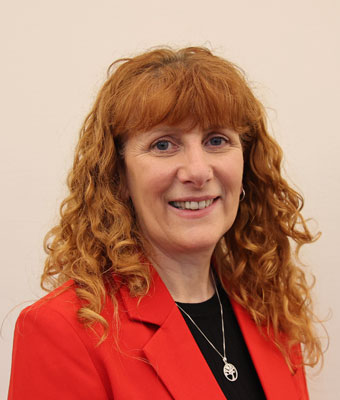
3. Deputy Donna McGettigan asked the Minister for Further and Higher Education, Research, Innovation and Science if he will reform the Student Universal Support Ireland, SUSI, assessment criteria for independent living given that students under 23 years are assessed as dependent on their parents even if they live independently, as are those over 23 years who cannot leave home due to the housing crisis; and if he will make a statement on the matter. [26577/25]
There are issues with the SUSI grant and people being able to access it. Will the Minister reform the SUSI assessment criteria for independent living? Students under 23 are assessed as dependent on their parents, even if they live independently, and those over 23 who are forced to live at home due to the housing crisis are assessed as dependent on their parents. Will the Minister reform SUSI?
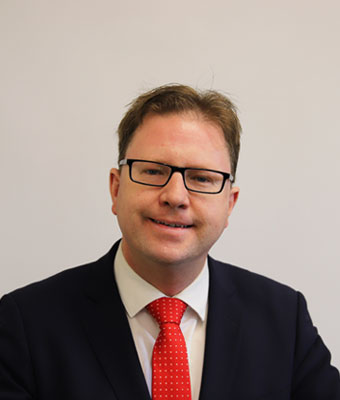
I thank the Deputy for her question. Was that Question No. 3?
My apologies, I mixed up the questions.
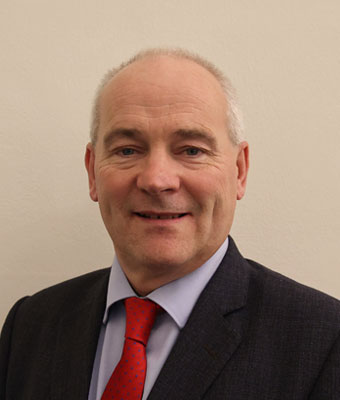
We will take Question No. 3 and go back to Question No. 1 afterwards.
I thank the Deputy for her question and interest in the area. She is her party's spokesperson in this area and I wish her well in that role. I look forward to working with her across the floor in the coming years.
Regarding students who are considered to be dependent at the age of 23, this is part of the wider student grant system and scheme, which is kept under continuous review. Every year, the Department publishes an options paper that sets out costed reforms and changes to the scheme. I am currently engaged in that process and have had several stakeholder events, including meeting students' unions and other interested parties. I intend to publish a paper later this year before the budget on this which will inform public and political debate on what options should be prioritised.
There are many different parameters and moving parts. When you change one, it has a knock-on effect on another. I look forward to a discussion, informed by the options paper, as to what are the appropriate measures and how we make them.
In examining changes to eligibility criteria, which this question is about, I must consider how a change might impact on a particular cohort when compared with the demands of other cohorts and across the rest of the sector. I must also have regard for the availability of resources in the Estimates process.
In general, for student grant purposes, students are categorised according to their circumstances either as students dependent on their parents or legal guardians, or as independent mature students. A student may be assessed as an independent student if they have attained the age of 23 on 1 January of the year of first entry or re-entry to an approved further education course or an approved higher education course and if they have not been ordinarily resident with their parents from the previous 1 October. Otherwise, they are assessed as a dependent student which means they are assessed with reference to parental income.
Applicants who do not meet the criteria to be assessed as an independent student for grant purposes or who cannot supply the necessary documentation to establish independent living for the required period may still apply to the awarding authority, SUSI, to have their grant eligibility assessed as a dependent student.
More than €351 million has been allocated in 2025 to student grants to aid access to education. That student grant scheme has recently been expanded-----
Thank you, Minister.
-----with increasing thresholds. We will come back to that later.
We all want to work together for fairness, justice and equality in education and one of things we can do to help us is the reform of the SUSI grant. For too long, SUSI has been a barrier rather than a bridge for many of our young people. This is supposed to be a scheme which enables access to education but instead for many it is yet another wall that blocks their future.
Let us speak plainly. The age of 23 - that so-called threshold for being classed as an independent student - is actually a barrier for some. Looking at one family's situation - this family contacted both the Minister and I - they feel that middle-wage earners are being punished because of this. They said when their means test for SUSI was being completed, it did not take into consideration tax, PRSI or USC charges because their child is independent but they cannot prove it so their income is taken into consideration. They have received a minimal amount from SUSI and must now pay €10,000 in rent, student fees, food and travel. This really needs to be looked at.
I am aware of the issue which has been raised with me by the student unions and I have come across this in my review of the different schemes. It is fair to ask and test this to see what is appropriate.
The Deputy mentioned that one of the families she had been in contact with had stated the difficulty in assessing and establishing that independence. Documentation accepted by SUSI includes: a letter confirming the address is registered with the RTB, if they are renting a property; a local authority lease agreement or a letter to confirm they are renting under the RAS scheme; a letter on headed paper from a rental agency confirming the tenancy - these are all in situations where the individual is living outside the family home; a letter to confirm the receipt of rental allowance; or a utility bill in the applicants name - this could be something like a phone bill, broadband bill, gas bill, utility bill, etc. Those items can be submitted as evidence that a student is living apart. The real difficulty arises in some cases where they are not living apart; they are living at the family home but are estranged and may not have the opportunity to move out, although they may wish to.
I accept this is not straightforward and these are the issues we must examine in the options paper to see what is appropriate. It may not be appropriate to give a blanket exemption because this may not be a good use of resources but it is something on which we need to strike the right balance.
I am glad to hear the Minister will be looking at this but there are other people who for myriad reasons - some deeply disturbing - have had to leave home and are living with other family members. They are independent but do not have bills, rent or other things in their name and are finding it difficult to get evidence that they are separate from their parents. As there is a breakdown in communication, the parents will not give them this. It is not a simple if-or situation and it must be looked into. It is not fair on those people who are running from home for certain reasons. They are trying to make their lives better but these barriers are being put in their way and they cannot get the bills or the evidence.
If you look at it, it really is not for them and there needs to be a compassionate mechanism for students estranged from their parents - one that puts the student's life experience first and not a bureaucratic checklist.
The Deputy might call it a bureaucratic checklist but I am sure she would also agree public moneys should be carefully managed. It would not be appropriate to have a free-for-all where we do not need any proof or documentation and anyone who applies can get appropriate payments. I imagine the Deputy would agree this would not be appropriate either. If we accept that neither extreme is a good place to be, then we must find the point in the middle, that is, the level of documentation and support that is required and appropriate. That is the way with every use of public moneys and every type of grant scheme right across the different Departments. That is the way it has always been and should be.
The question is to find a balance that is not overly onerous or unreasonably attainable which safeguards the underlying resources that are ultimately available to other students and families and must be managed in that regard.
There are other funds in addition to SUSI that are available for students who might be in financial difficulty. We have the student assistance fund to support students both full time and part time for different exceptional needs. We have PATH 5 which is a new access pathway into third level education, particularly for Traveller or Roma communities. We also have accommodation and grants for students in disadvantaged areas. There is a number of different funds which can support students in difficulties even beyond the SUSI system.
Third Level Education
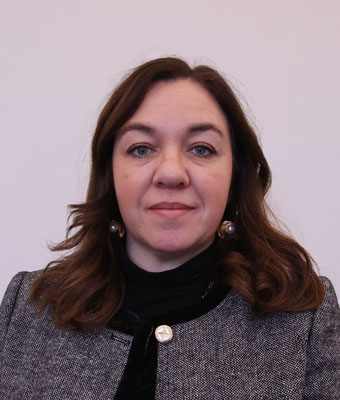
2. Deputy Jen Cummins asked the Minister for Further and Higher Education, Research, Innovation and Science his plans to address the deficit some domestic universities are experiencing. [26519/25]
Some of Ireland's third level institutions are facing a critical shortfall in core funding, something repeatedly highlighted by the OECD, the European Commission and our universities. Despite rising student numbers and growing demands in staff and infrastructure, core funding remains well below the required level to ensure quality, accessibility and efficiency. Can the Minister outline what steps his Department is taking to address this core funding gap, and will he commit to a roadmap towards significantly increasing core investment in our higher education sector?
To answer the Deputy's second question, yes, I will commit to increasing funding in education. I have announced that already and brought this before Cabinet where I secured approval to do so.
The National Training Fund is a €1.485 billion pot of moneys which is collected through employer levies to support training and educational needs. There is a need for legislation to unlock that fund because the fund, as it is currently construed, has a particular set of categories under which it can be spent. I wish to broaden them to include core funding for the higher education institutions among other things. This requires a minor legislative change but that is a Bill I intend to bring before the Houses this year. I am currently working on drafting heads of Bill with my Department and legal teams. I secured Cabinet approval for that recently. That will mean an additional €150 million per annum will be included in the core funding to universities, which is a really significant move. This, of course, stems from the Funding the Future framework, which was published in May 2022. It followed the Cassells report from a few years earlier, which identified options available to put higher education on a sustainable footing and examining different options for our core funding for the universities. That is now progressing. It is in the programme for Government and is a commitment we have made. It is something I have already advanced in my first few months in office and, as I said, I have Cabinet approval to now progress that further through legislation, which I hope to bring before the Houses at the earliest opportunity.
I acknowledge there is additional funding of €50 million in the budget for 2025 under Funding the Future. It is great to hear there is an additional €150 million. The Irish Universities Association has welcomed the multiannual approach the Minister's Department has outlined.
Investment in education only stands at 2.8% of GDP. It is among the lowest in the OECD, which has an average of 5.7%. I am concerned the financial constraints compromise the quality of education and the well-being of students and staff and it seems contradictory to be attracting foreign talent from abroad when our domestic institutions are in dire need.
I am happy that legislation is going to be progressed with the heads of Bill. I urge the Minister to try to do this as quickly as possible. We will lose talent. The Minister wishes to attract talent from abroad but we cannot lose the talent we have already. Students going abroad is also a difficulty.
I agree with Deputy Cummins. We are very much on the same page on this. With regard to talent from abroad, I want Ireland to be a welcome place for scholars but that includes supporting our own - the people already here - and attracting more. The best-in-class research and innovation, STEM and humanities studies all work best when people collaborate at every level, including internationally, so that we have a fusion of the best minds. It is not recognising borders, barriers or arbitrary rules that other jurisdictions might be currently raising, which I do not agree with. We must be that safe haven and promote independent thought, academic freedom and integrity. As well as it being the right thing to do, there is a significant economic uplift to that. We see money spent on research and innovation, for example, usually has a 5:1 return.
I visited the CÚRAM research centre at the University of Galway last week. It has achieved a 12:1 return. For every euro the State is spending, therefore, €12 is being recouped in terms of the wider economic impact of the research and the economic benefits of it. We should do it for its own sake but it also produces demonstrable returns for investment in education and research.
I agree it is really positive when we have those returns, as the Minister outlined. I know that is one element of looking at education. I want to be clear about what I am saying with regard to attracting people from abroad to come here. I am not saying this is not a good idea. However, when the headlines are focusing on how much money is going to be spent on each of those people, it can read as being a little unbalanced. I totally agree that when we have international talent and academics coming here, we are able, with the students in the universities, to see the best that we have internationally. The Minister is right; in this world, which is becoming smaller in a way but is quite divided, we need to try to find ways that we can all work together. The academics coming from abroad and those here need to be welcomed and we need to have the infrastructure in place. I am glad the Minister has clarified that it is not about pitting one against the other, because I was a little bit nervous when I read that. I was thinking that we cannot be attracting others if we have deficits here, but I am glad the Minister clarified that.
I thank the Deputy. I intend for the funding to support the entire sector. The Deputy mentioned some figures. I would also be a bit concerned by the current level of our research and development spending as a percentage of GDP. We need to increase that. The private sector is spending a lot, so public sector spending needs to increase. That will be reflected in what I am hoping to achieve through the national development plan, in terms of increased infrastructural spending across the research and education ecosystems, further and higher education and the entire tapestry. That is the building block that everything else is based on, if we have those systems right. It is part of the wider base and I will elaborate on that further over the coming months, but I intend to use the national development plan as part of the springboard for those projects.
Mental Health Services
1. Deputy Donna McGettigan asked the Minister for Further and Higher Education, Research, Innovation and Science if he is satisfied with the current level of mental health supports available to third level students; and if further investment is planned; and if he will make a statement on the matter. [26576/25]
I want to raise the pressing issue of the mental health crisis among third level students. We are failing our young people in this regard. The mental health services available to students in our colleges and universities are underfunded, understaffed and overwhelmed. Is the Minister satisfied with the current level of mental health supports available to third level students and is further investment planned?
I appreciate the Deputy raising this important issue, as the mental health and well-being of our third level students is a matter of deep concern and ongoing priority for this Government. The Government and my Department remain committed to enhancing mental health supports across the sector. My Department has allocated a total of €32 million to support higher education institutions in meeting the mental health and well-being needs of students since 2020.
This funding supports institutions in directly meeting the needs of students through counselling services as well as delivering the national student mental health and suicide prevention framework. As autonomous institutions, the exact disbursement of the funding is a matter for each institution depending on its own prioritisation of needs. They are entitled to do this because they are independent from the perspectives of management and governance. They have been advised to distribute the funding in support of specific student-facing areas, such as the recruitment of additional student counsellors and assistant psychologists, head of service posts, training and awareness raising. We can offer advice, but they ultimately retain discretion over how the funding is allocated.
The majority of new posts created through this funding have been counsellors, reflecting the capacity-building phase of the implementation of the framework. Over recent years, there has been a mixture of core funding and once-off Covid support funding, but as of 2020, €5 million annually is being allocated on a recurrent, sustainable basis. I mentioned that over that time, €32 million has been allocated. Institutions can also draw resources from other areas within their overall Exchequer and other funding sources. A number of other funds are available to them, which I might return to later because there is quite a list. I will refer to those when I hear where the Deputy's next question is going.
I am glad to hear that the Minister is going to put funds into this. It is a very hard issue for students to deal with. Some of the issues they are dealing with include the skyrocketing cost of accommodation or even the type of accommodation they live in. Some students are just leaving home and are stuck in accommodation that is not working for them. Mental health should be treated with the same urgency and importance as physical health. Many are juggling work and study just to keep their heads above water. One of the findings of a survey done my colleague Deputy Conway-Walsh was that one in four first-year students was not aware of the mental health supports and counselling services available to them. One solution to the problem would be just letting them know that the services are available and can be accessed.
The existing funding framework for mental health services in higher education is insufficient. It is resulting in underfunded and understaffed counselling and healthcare services on campuses. At this time, I am not aware whether the additional funding will be enough to bring services back up to the proper ratio.
Some examples of the types of projects being supported through that funding include the national student counselling database implementation project. This facilitates the identification of trends in the mental health needs of students attending student counselling services. It measures and monitors what trends are coming through from access to counselling services and identifies areas for further attention.
There is a platform called Togetherall, which provides 24-7 peer support. Psychological counsellors in Higher Education Ireland are being supported in their work, through the higher education institutions. Research and co-ordination around suicide and self-harm is being performed on an ongoing basis. A screening tool that is being developed selects the most appropriate person-centric interventions for students with mental health presentations. This tracks the well-being outcomes of students who engage with the service. A national health and well-being assessment tool has been developed to enable institutions to implement and progress the healthy campus charter and framework. There is also an ongoing review of the national student mental health and suicide prevention framework. A lot of actions are being taken and a lot of good projects are under way. These are meaningful and impactful for the individual students, as well as for the host institutions. Ultimately, the institutions retain autonomy as to what other projects they may wish to implement.
The counsellor-student ratio should be 1:1,000 but at the moment I think it we are at 1:1,500. We need to bridge this gap. I am glad to hear about Togetherall and that it is a 24-7 service but is there a waiting list for it? Students struggling with their mental health today should not have to wait weeks for help. They should not have to choose between paying rent or paying for therapy and they definitely should not have to suffer in silence. I believe that the Minister will be willing to work on this and I know I will continue to push until all students have been listened to and their burden in respect of mental health is helped. This is a very serious issue and we all should be working towards a solution.
If we consider some of the ratios, one counsellor for every 1,000 students was the suggestion from the International Accreditation of Counseling Services, IACS, to which the Deputy referred. There are different views about that report as to whether that is the optimal way to measure ability and whether that is the right metric but I certainly note what the Deputy is saying. The national student mental health and suicide prevention framework, which I mentioned, has identified that in an Irish context, there remains a need to develop a public indicator. The questions are what the correct indicator for us in this system is and how we can manage and ensure that adequate provision is being made for different students. This work is ongoing with the HEA at the moment to see what an appropriate metric in our system is.
Regarding the retention rate, there are many reasons for students dropping out. Mental health may often be one but there is a variety of other reasons. The non-progression rate fell slightly in 2021-22, from 13% to 11%. I do not have the figures for the most recent years but it is beginning to go in the right direction. There can be complex reasons that students do not progress. It is not only to do with mental health.
Student Accommodation
4. Deputy Catherine Connolly asked the Minister for Further and Higher Education, Research, Innovation and Science his plans to increase the provision of student accommodation in Galway; when the new national student accommodation strategy will be published; and if he will make a statement on the matter. [26176/25]
My question relates to student accommodation in Galway. Where is the national strategy? I ask this in the context of a city where a recent survey found that almost one fifth of students at the University of Galway are living with family members or are in emergency accommodation. Those surveyed represented 8.5% of the student population. About 12% of respondents reported that they were living with family, while 5% said they were living in temporary or emergency accommodation.
I had the pleasure of visiting the University of Galway last week. I met the chair, the president and the students' union and we had a good discussion on this and many other matters. I admired the fine quadrangle and had the opportunity to inspect some of the research projects around the campus as well. It was a really worthwhile visit to see the really good work being done there.
Regarding student accommodation provision, access is a central concern. Access and supports are important to ensure that students can avail of higher level education and that they can do so in a way that does not involve long commutes or living in cramped accommodation, which will be an enabler to them. I am very aware that these are barriers for many students.
One of the most significant barriers students face today is the cost and availability of accommodation, if they can get it in the first place. My focus is on delivering targeted and effective interventions that promote equitable access to higher education across the country. This means addressing the challenges that may prevent students from progressing to or through third level education because of the difficulties outlined.
Four key tools are being deployed to address student accommodation. The first is the development of a standardised design approach to improve efficiency and reduce costs. That is something my Department is working on and I will publish it this summer. The intention is to have a standard design akin to the second level school programme. The second tool is the use of enhanced supply and demand data to inform planning and investment decisions, so we can see the different patterns in different regions. The third is the technological sector student accommodation programme to support regionally balanced, institution-specific delivery models. That is under way as a separate programme. The fourth tool is a national student accommodation survey, which is designed to capture the lived experiences and needs of students across the country. We might well guess some of the issues and hear from our constituents and from representations made to us by various bodies, but the survey will have an empirical analysis that will better inform demands in this area, where the pressure zones are and what needs to be applied in different areas. We will continue to work with universities and other higher education institutions. I intend to publish the student accommodation strategy later this year.
Will the strategy be published later this year?
Yes.
I welcome the standardised design. It is very practical. That has been done all over England with great cost savings. Let us go back to Galway. Approximately 19,000 students are in what I still call the NUIG. Then there is the Atlantic Technological University, ATU. There are more than 40,000 students in Galway in just two third level institutions. I know the Minister does not like the term "vulture funds", so I will use "investment funds". The Government has given carte blanche to investment funds to come in and build student accommodation anywhere they like, with all the tax reliefs. I come from a university city where we built up a relationship between town and gown given the importance of the universities to Galway. Now people are coming in and building accommodation six, seven and nine storeys high just because there is money to be made, regardless of the area and the feelings of residents. The investment funds have carte blanche to build exactly what they want, where they want, while we wait for the standardised design.
We are probably veering into questions for the Minister for housing rather than me. I am not aware of the seven-storey buildings the Deputy talks about. There are already 1,891 purpose-built student accommodation beds on campus in the University of Galway. The latest figures tell us the university accommodation is oversubscribed, however, as it has received more applications per bed than there are beds available. Additional accommodation beds were provided last year in Dunlin Village. The Deputy may be familiar with it. It provides 674 purpose-built student accommodation beds. In Queen Street, 300 new beds are being developed. The most recent data from last month tells me that 1,739 new purpose-built student accommodation beds have been built in Galway in the recent past. Student accommodation beds are being provided but I want to see more of them, or as many as can be introduced into the system through public and private channels, so that we have a good supply of accommodation to students and a good choice available to meet the very evident demand.
It is worth noting that, as of this week, 71 beds are being advertised on the rent-a-room scheme. Digs accommodation is still a very popular option that many take up. There are currently 71 beds available in Galway.
I am not straying into the housing area. I am putting the issue into the context of a city where we have a massive housing crisis. I do not exaggerate. People have been on a waiting list for 20 years. We jump for joy when someone gets a house after 15 years. That is the context. In addition, we have two universities. A disaster of a decision was taken years ago before the arrival of the ATU. The Corrib Great Southern hotel should have been bought by the Government, as it would have solved half the problems. Of course, it was not bought. It was sold on to a bidder with lots of money and then left vacant. The problems have been created not just by the universities, which I blame, but by Government policy. Now investment funds are coming in. It is unusual that so many residents would stand together. I count at least nine residents' associations that are extremely upset. I do not want to find myself in a position of being against student accommodation. I have cried out for student accommodation on campus, State-provided land, so that the prices come down, rather than having it provided by for-profit investment funds that will use them during the summer for other purposes with little regard for residents in the area.
It is not unusual for student accommodation to be used for other purposes during the summer months. Most of the higher education institutions do that themselves. It is part of the challenge of finding a solution. I want to see the maximum available beds for student accommodation based on a formula that works, first and foremost, for students. Many of the higher education institutions look to use student accommodation as a revenue-raising tool in the summer months, and I understand they are financing their activities on that basis. Ultimately, the focus should be on the student.
Deputy Connolly mentioned ATU a couple of times. ATU Galway is participating in the technological sector student accommodation programme. The overall standardised design is a work in progress and there is an overall strategy. There is already a stand-alone TU sector student accommodation programme and ATU Galway is part of that. In terms of the submissions that are being made, the HEIs usually drive projects that come to the HEA and my Department for approval. They are considered and any submissions made will be advanced. I am very keen to address this because I am conscious that it is a real issue for many students.
Further and Higher Education
5. Deputy Gillian Toole asked the Minister for Further and Higher Education, Research, Innovation and Science the timeline for the single-phase delivery of the new campus for Dunboyne College of Further Education and Training, Dunboyne, County Meath, to be funded from as many relevant streams as possible, including but not limited to SOLAS, sports capital and national training funding. [26525/25]
I wish to ask both the Minister and the Minister of State the timeline for the single-phase delivery of the new campus for Dunboyne College of Further Education and Training, Dunboyne, County Meath, to be funded from as many relevant streams as possible, including but not limited to SOLAS, sports capital funding, national training funding and national development plan funding. This college began with 50 students and two courses and it currently has 1,300 students, 70 courses and 45 apprenticeships.
I thank the Deputy for her question. I am pleased to say this is my first opportunity to respond to an oral question. I am also pleased that it relates to Dunboyne College, which I know. I am familiar with the great work that is happening there.
Louth Meath ETB, LMETB, is being supported by SOLAS in developing its preliminary business case, PBC, proposal for Dunboyne under the FET college of the future major projects fund and they have met as recently as this month to progress the application. The proposal put forward by LMETB relates to the development of a new fit-for-purpose facility on a greenfield site in Dunboyne to replace the existing rented accommodation in Dunboyne. It is one of 12 projects being progressed under this fund.
LMETB is refining its business case proposal and once completed, it will submit it to SOLAS for evaluation. The evaluation panel will be available to meet as soon as the updated business case is received. Business cases that meet the evaluation criteria will advance to the next stage of development: pre-tender, project design, planning, and procurement strategy. The development of a robust PBC is fundamental to the requirements of the infrastructure guidelines. The appropriateness or otherwise of a phased development of the proposal, which the Deputy inquired about, is a matter for the evaluation panel to determine.
Funding for all projects under this programme, including the proposal from LMETB for Dunboyne, will come from within the FET college of the future major projects fund envelope. The Department and I are committed to delivering this project as part of 12 key projects that were announced under the FET college of the future major projects fund.
Deputy Gillian Toole: I thank the Minister of State for her updated information. I reiterate that this college is delivering. At various times in this Chamber we have discussed the need for occupational therapists, speech and language therapists and the development of apprenticeship programmes and construction studies. LMETB colleges can deliver that. This process began in 2015 when Dunboyne was added to the building list of the then Department of Education and Skills. Currently, the rent roll is just short of €100 million a year to 23 landlords. That includes transportation costs. Such costs are unsustainable. Currently, the college is operating from an industrial estate where numerous health and safety issues arise. It is an absolute waste of money. I plead for the single-phase case, because since this process began in 2015 there has been a lot of to'ing and fro'ing with the Department. There has been significant engagement, including by staff members whose core function is the education of the students whom they highly value.
I thank the Minister of State for the updated information. I reiterate that this college is delivering. At various times in this Chamber, we have discussed the need for occupational therapists, speech and language therapists and the development of apprenticeship programmes, as well as construction studies. LMETB colleges can deliver that. This process began in 2015, when Dunboyne was added to the building list of the then Department of Education and Skills. Currently, the rent roll is just short of €100 million a year to 23 landlords. That includes transportation costs. It is unsustainable. The college is operating from an industrial estate where numerous health and safety issues arise. It is an absolute waste of money. I plead for the single-phase case because this process began in 2015 and there has been a lot of toing and froing with the Department. There has been significant engagement, including by staff members whose core function is the education of the students, whom they highly value.
I will begin with a comment. The Deputy spoke about a one-stage process. Whether it is a phased development or a one-stage development is a matter for the evaluation panel. The proposal is to develop fit-for-purpose accommodation on a greenfield site in Dunboyne. As the Deputy said, the college is currently located in poor accommodation in a large number of rental premises in an industrial estate. LMETB submitted its preliminary business case for evaluation in September 2024 and that needed to be refined. It submitted it again in March of this year and further refinement was needed. SOLAS is working with LMETB. Everybody wants to see a successful application from Dunboyne because, in truth, we want to get on with building this new facility.
We are absolutely united in the spirit of getting this project progressed. Again, I would push the case in this instance based on the financial implications and the history of the project. There is no doubt of the intention in the programme for Government, where the intention is to communicate, collaborate and encourage more interdepartmental and intradepartmental collaboration. That is why I make the suggestion for alternative funding streams so it is not just limited to the FET fund.
On 24 February 2022, the Minister's predecessor and now Tánaiste, Deputy Harris, gave a commitment on record and on film, stating that he was delighted to confirm there is ring-fenced funding in place for the delivery of a purpose-built college for Dunboyne College. I am just asking for the honouring of the single-phase delivery of the project.
I hear what the Deputy is saying and I know that what she is talking about is a ring-fenced, purpose-built building. I know the envelope that is available is available to all of the 12 different colleges that are looking for this funding. All have been approved and they just have to get through this preliminary stage. I know Dunboyne is working very hard with LMETB. Without being certain about this, I would be confident that, within the next short period of time, we will get to a point where its application can be successful and progress to the next part of the process. Eight out of the 12 original applicants have got to this point and I have no doubt Dunboyne will get there soon. It is a big piece of work and very important for the region. Like the Deputy, I recognise the really good work that is carried out by the college. I and my Department stand ready to support it.
Housing Provision
63. Deputy Conor D. McGuinness asked the Minister for Rural and Community Development the work he has undertaken to date to address the crisis impacting on rural communities where young families are unable to find a home in the area they were raised in; and if he has met the Minister for Housing, Local Government and Heritage to discuss the matter. [26532/25]
Rural communities are in crisis. Young families who cannot find homes in their communities are being pushed into larger urban centres, which are already under pressure. Rural communities, ár gceantair Ghaeltachta san áireamh, are facing an existential threat. What specific steps are the Minister and his Department taking to support rural and coastal communities facing decline due to the total lack of housing opportunities and availability?
Gabhaim buíochas leis an Teachta as ucht a cheist. Our Rural Future is the Government policy for sustainable rural development in Ireland, putting forward a vision for vibrant rural places that are attractive to people, particularly young people, who wish to study, live, work and raise their families in rural Ireland. More than 170 measures are outlined in the policy to support sustainable economic and social development and environmental and cultural well-being. The delivery of these measures is clearly cross-governmental, with a range of Departments contributing in their own areas of responsibility.
In response to Deputy McGuinness's question on housing in rural areas, my colleague the Minister for Housing, Local Government and Heritage holds policy responsibility. As part of my Department's role in overseeing the delivery of Our Rural Future, officials in my Department and I regularly engage with the Department of Housing, Local Government and Heritage. I will formally meet the Minister, Deputy Browne, next week on a range of issues, including housing agus tithíocht sa Ghaeltacht freisin.
This activity includes membership of the cross-departmental steering group on the national planning framework, engagement on the development and delivery of the Housing for All strategy and the delivery of initiatives under the town centre first policy, which is delivered jointly by our two Departments. The Department of Housing, Local Government and Heritage is also a key participant in the development of the new Our Rural Future policy, which will take effect from 2026. We have had a number of public and stakeholder consultations on Our Rural Future policy. Of course, the issues of housing and the necessary infrastructure to support housing development for our rural communities have come up in those engagements.
The new Our Rural Future policy will absolutely reflect the importance of rural housing and the many programme for Government commitments in this area. I look forward to continuing to work closely with the Minister, Deputy Browne, and his officials but also with the House to provide maximum housing and, most importantly, sustainable communities in rural areas.
The Minister mentioned Our Rural Future. While I am glad to hear that the next iteration of the Government's rural development policy will look at housing, the previous one did not do so in any meaningful sense. In fact, it had more to say on rural broadband than on rural housing. I believe that is part of the fundamental problem. This Government and its predecessors have wasted years when housing should have been developed. Rural communities need action on housing. They need delivery of affordable and social homes and provision of affordable serviced sites. Coastal villages like Ardmore are facing a demographic cliff edge. Tá ár gceantair Ghaeltachta, cosúil leis An Rinn i bPort Láirge, ag feitheamh le blianta i gcomhair tithíochta inacmhainne agus sóisialta. Families are crying out for help. While the Minister is right that much of the responsibility lies with the housing Minister, the Department of Rural and Community Development needs to step up. The recently passed national planning framework offers zero ambition. It remains to be seen what Our Rural Future mark 2 will promise and actually deliver when it comes to rural housing.
I agree with the Deputy in many respects that there is a rural housing challenge. However, planning permissions have been granted for almost 6,000 one-off homes on average every year since 2020.
Over 90% of those are built in rural settings. Within our Department, we have put in place a large number of policies to support the communities around that. Funding of €164 million for 30 rural regional regeneration development projects was announced in May 2024, an additional €20 million for town and village renewal and also €109 million for community centre investment. They are facilities that encourage and sustain communities. We will be working with the Minister, Deputy Browne. I look forward to engaging with Deputy McGuinness as urlabhraí Shinn Féin but also as a member of the committee with regard to what our rural future should look like. The year 2026 is very different from 2020, and there are huge opportunities we want to maximise as well as addressing the challenges. The opportunities are there, however. We want to take them and run with them.
I look forward to having those discussions with the Minister both at committee and in the Chamber and, indeed, offline because this is an issue that is not going away any time soon. Much time has been wasted over the last five to ten years when we should have been developing housing, but it is never too late to start doing the right thing. It needs to be focused on keeping rural communities alive because the consequences of an action are playing out before our eyes in my constituency, which I am more familiar with, in An Rinn, Bunmahon, Dunmore East and Ardmore, which I mentioned. GAA clubs cannot field teams. Schools are losing pupils and are at risk of closure in some cases. Families are under huge emotional and financial distress and are being taken apart from each other. That social fabric and social support and infrastructure are not where they should be, and they should be the cornerstone of our rural communities.
This is the cost of Government inaction over the last five to ten years. We cannot continue in that same vein. I welcome the Minister's comments today that this will be a major focus of the next rural development policy, but he can understand a little of my cynicism when we passed in this House a number of weeks ago the national planning framework, which had zero ambition. It had so little to say about rural communities, rural development and rural housing.
We get a sense of the national planning framework now as local authorities are being invited to submit new proposals for housing in terms of rezoning land. I would also point to the vacant property refurbishment grant, which has opened up houses. The Deputy is a rural TD as well; he can see that houses that were closed for generations have been opened up. In Waterford City and County Council alone this year, 319 applications have been received to date, with 184 having been approved. That is people moving back into homes in areas that were closed for 20 or 30 years or even more. That shows it is a mix of new and existing stock. All of this is part of the work that is under way from the Department of housing in this space.
Child Poverty
64. Deputy Mark Wall asked the Minister for Rural and Community Development his Department’s role in addressing child poverty under the six priority areas identified by the child poverty and well-being unit; and if he will make a statement on the matter. [26343/25]
Regrettably, child poverty is on the rise in this country. It is particularly challenging in rural areas but in many of our communities as well. What is the Department's role in addressing child poverty under the six priority areas identified by the child poverty and well-being unit?
Within my Department, the social inclusion and community activation programme, SICAP, is the primary social inclusion programme. It aims to reduce poverty and promote social inclusion and equality in Ireland through supporting communities and individuals using community development approaches, engagement and collaboration. I thank and commend our SICAP teams all over the country for their work. Although addressing child poverty is not an explicit target of SICAP, services and supports are typically delivered to children experiencing poverty and disadvantage through other general target groups, including the heads of one-parent families, people experiencing educational disadvantage and those living in jobless households or households where the primary income source is low-paid or precarious. SICAP also features youth as a thematic focus area. It supports development of youth groups, arts and crafts, games, sports, etc. and, in particular, preventative early school leaving initiatives, youth-focused active citizenship and leadership programmes and mental health and well-being programmes. Targeted supports are provided in many SICAP areas for particular groups of young people in specific areas. Collaboration is a critical success factor for services delivered through SICAP.
Local development companies that support the delivery of SICAP locally engage with agencies such as Tusla, children and young people's services committees and school completion officers to ensure that relevant and specifically targeted supports are provided for specific children in each community. In that context, services delivered through SICAP contribute directly and indirectly to addressing the priority areas identified by the Deputy, including income supports and joblessness, early learning and childcare, reducing the cost of education, addressing family homelessness and, in particular, integrating our public health and family support services. We will continue to support SICAP. We also provide support through the scheme to many national organisations providing specific local responses depending on the circumstances of a local area.
First, I join the Minister in thanking the staff of the many SICAP groups in the country, across 31 local authority groups. They do tremendous work - there is absolutely no doubt about that - but the figures we have been presented with from the Central Statistics Office, CSO, show that child poverty in this country has almost doubled, from 4.8% to 8.5%. As I said, it is a particular problem in rural Ireland, notwithstanding the work that SICAP does and the fact that we have a lack of services, particularly around transport whereby people are not able to access hospital appointments, job opportunities, etc. That is having a direct effect on child poverty in rural Ireland.
What we need to see is what is happening in Scotland. I would be interested in the Minister's thoughts on this. They have a child poverty reduction Act, which goes across departments and gets reports from every department of government on what they are doing to tackle child poverty. The Minister might come back and let me know if that is something his Department is looking at along with the other Department he serves and also as a cross-government response to the unacceptable rise in those child poverty figures.
With my other hat on, we are absolutely focused on those child poverty figures. I am not happy with them. We will be bringing forward a number of initiatives in this year's budget. The Deputy touched on something we need to do a lot more work on, namely, rural poverty, in particular, and hidden poverty. The area of transport is one the Deputy has identified. Under the current CLÁR initiative, we are supporting organisations to acquire vehicles. In the CLÁR 2 programme, which has just closed for applications, we will be looking at supporting organisations to get vehicles to provide rural transport, particularly in the education frame. We have done that over a number of iterations of that scheme. For those with special education needs and disabilities, transport in rural areas is particularly challenging for younger people and children. In this year's CLÁR 2 stream of funding, we will be looking at supporting organisations that are addressing that transport issue specifically.
There is also greater flexibility and greater potential for Local Link to provide services in this space. I will work with my colleague the Minister of State, Deputy Canney, to ensure that Local Link is focused in the best way possible, working with the local development companies. Local Link has a very strong working relationship with local development companies in this space. We can fill gaps there using the Local Link provision as well.
I will again put on record my thanks to the Local Link service. It has made a difference in rural communities but there is no doubt it can do more, particularly in areas like Ballitore, which is a small village on the outskirts of my hometown. However, there is a lack of services coming from that particular village, which, as the Minister said, is impacting on those who are seeking education and employment or just seeking social interaction. It is having a direct impact, as I know, on children in that area. It is not just there; there are other villages as well.
The Minister mentioned SICAP - as I said, I pay tribute to those who work in the area - and stated that child poverty was not an explicit target. I ask that it become an explicit target for SICAP. That is most important if we are to be serious about tackling an almost doubling of figures of child poverty in this State. SICAP should be entrusted with developing rural communities to set and see child poverty figures. It should become a specific target of what it does day in, day out. That is a necessary step forward for SICAP and what it will do if we are to become serious about tackling that almost doubling of the child poverty figures the CSO has recently given us.
As I said, it is not a specific focus, but it is very much part of SICAP's work through all its engagement with organisations. Many of the SICAP teams give specific local responses to specific situations and children or family situations in communities, depending on what they work with.
They work closely with the Child and Family Agency and the area school completion units. That is one of the strengths of SICAP. It is local and targeted. As part of our overall response to the challenges of child poverty, I will examine how we can engage SICAP. We cannot do that without resourcing it more, and I acknowledge that we have to deliver that. We may ask SICAP to give us more measurement of what it is actually doing. It is doing phenomenal work in this space, a lot of it unseen, as all of us in the House know. It makes specific interventions but does not shout about that. We may have to look at capturing that. I will consider the proposal.
Sports Organisations
65. Deputy Louise O'Reilly asked the Minister for Rural and Community Development if he is aware of recent media reports from GAA clubs about their concern regarding the decline in population in rural Ireland; the impacts this has on the clubs; if he plans to address this; and if he will make a statement on the matter. [26571/25]
I listened very carefully to a recent report on the "This Week" programme from reporter Peter O'Connell. He referenced rural decline and depopulation and linked it specifically to a number of GAA clubs in the west of Ireland. One was St. Senan's in Kilkee. I note the chairperson, Diarmuid Keane, referenced that rural towns need significant Government aid if they are to continue to be viable. I want to hear the plans of the Minister in that regard.
I thank the Deputy. I heard the report and have seen the work done by many county boards across the country, led by the uachtarán of the GAA. I am very much aware that the GAA works in communities locally and nationally to address this challenge, through its national demographics committee and each county demographic officer. As I said, Our Rural Future contains a wide range of measures that will ensure all rural areas are attractive and viable places for people to study, live, work and raise their families.
Our Rural Future has had a number of significant funding investments in recent years, namely, the rural regeneration and development fund, the town and village renewal scheme and the outdoor recreation infrastructure scheme. The ethos of these schemes is to put facilities into the kinds of small towns and communities the Deputy referenced. Through Our Rural Future, many GAA clubs have become involved in the consultation process that is under way. I will extend an invitation to the national demographics committee of the GAA to meet me with its proposals from clubs across the country. We are currently involved in public consultations and we have just finished an online consultation in that regard.
In recent years, we have invested in the national broadband plan. We have made improvements in rural transport, something I have discussed with Deputy Wall, and we want to continue to do that. Through initiatives under, for example, the community recognition fund, we have made substantial investment in facilities in GAA clubs to make them even more attractive. I am focused on working with clubs and an organisation that has a presence in every parish. It has a contact system that very few other organisations have.
I am aware that in many areas we need a targeted approach. Some areas are doing well, but others are not. There was a 7% increase in population across the country between 2011 and 2022, but other areas show a large decline. I want to focus on that. While Our Rural Future is a broad document, I will also look for focused responses.
It is the job of the Minister to treat us to the greatest hits of his Government and all of the rest, but in truth the statistics and facts speak for themselves. The situation was laid out very clearly for us in the RTÉ report. St. Senan's in Kilkee last reached a county final in 2009, when it had 52 adult players on its senior and junior teams. In 2025, the club now has access to at most 23 adult players for the junior team, while at underage level it has been amalgamated with two clubs immediately to the west of it, O'Curry's and Naomh Eoin, but it is still struggling.
When an organisation like the GAA is coming together to highlight an issue like this, I am glad the Minister is listening, but we want action and not just listening. The GAA has highlighted issues like access to remote working. We could be here all day. From his previous brief the Minister will know a complete bags was made out of the right to remote working. The legislation has left people without that right. Access to remote working is one way to address this issue. An increase in funding for the LEADER programme and a reversal of the cuts imposed during austerity are required because funding has not caught up. There is work to be done in the here and now, but the Minister also needs to examine the historical damage done and rectify it in order that rural communities will be in a position to survive.
We can all quote facts. There is a challenge, and I know the challenge in my county. Nevertheless, the CSO figures show a 7% increase in population in highly remote areas between 2011 and 2022. The OECD figures show that many rural and remote areas in Ireland showed some of the highest population growths between 2001 and 2021 within the OECD. I accept that within those figures, there are anomalies and we need to focus on the reasons.
We cannot ignore the investment that is happening through the rural regeneration and development fund, the outdoor recreation infrastructure scheme and the town and village renewal scheme. In particular, the town and village renewal scheme has an element for local authorities to involve GAA clubs, which are in many cases the drivers as well as the identity point for many rural communities. I will work with the uachtarán of the GAA and the national demographics committee as we frame a new rural future. I also encourage local clubs to work and participate in the consultation process, in particular those facing challenges.
I look forward to inviting people to the national youth assembly on rural development because it is young people who are at the heart of many of these clubs. That meeting will take place at the end of September 2025 and will be part of the Our Rural Future consultation. I look forward to many GAA clubs sending delegates to that.
I am sure they will because this is an issue about which they have become incredibly exercised, and for good reason. I am using St. Senan's as an example because it was the club that was highlighted in the RTÉ report, but in the immediate surrounding areas 66% of the houses are holiday homes. When a house comes onto the market, young people who might want to stay in the area and are interested in playing GAA or providing a few players for a team in the future are being outbid by people who are coming into the area. I know that in the Minister's county, an innovative suggestion was made regarding holiday homes. I would be interested in knowing what he might have to say about that.
It seems like rural communities are up against it all the time. As I said, they are still trying to make up the deficit because they were creased during the austerity years and that funding has not been made up. As well as increasing funding to the LEADER programme, there needs to be a real and sustained focus on social and affordable homes for working people to rent and buy. At the moment, it feels like the market is very cruel and very much against young people who might want to buy a home and establish themselves in a rural community.
We had a discussion on this with an Teachta McGuinness in our first question. We will work with the Minister, Deputy James Browne, on a range of initiatives on rural housing and increasing supply through local authorities, which have been asked to supply more land through the vacant homes scheme, which is opening up closed-up communities in many rural areas. In May 2024, my Department announced €164 million in funding for regenerating rural communities the length and breadth of Ireland and €20 million for the town and village renewal scheme. That is investment that is going into communities as we speak, including the smallest communities. Some €100 million through the community recognition fund is supporting many GAA clubs in improving the quality of their facilities.
The Deputy spoke about remote working. We are supporting broadband connection points across the country, a major investment on the part of my Department in addition to the national broadband funding. Through Roinn na Gaeltachta, táimid ag cuidiú leis an údarás chun na haonaid Gteic a bhunú, the specific broadband hubs for Celtic areas, Gteic.
There is a huge range of initiatives to invest in facilities. We have very much turned the corner on what the Deputy called austerity cuts by investing in rural communities. We are making major capital investments and increasing facilities. I am very focused on housing in rural communities as well.
Rural Schemes
66. Deputy Liam Quaide asked the Minister for Rural and Community Development the supports available for the acquisition of buildings for community use to help the regeneration of rural towns and villages; and if he will make a statement on the matter. [26170/25]
In villages and towns throughout Ireland, there are vacant or derelict properties that represent a blight on their locality. They are like husks of wasted potential, preventing residents from having local community centres or some form of social or commercial hub. Bringing these vacant and derelict properties back into use would support the revitalisation of rural Ireland. Will the Minister outline the supports available from his Department to assist local communities in acquiring such buildings for community purposes?
I thank the Deputy. The town centre first policy is a major cross-government policy that aims to tackle vacancy, combat dereliction and breathe new life into our town centres. Central to the town centre first approach is a range of capital support funding that includes the rural regeneration and development fund and the town and village renewal scheme.
Both schemes facilitate the acquisition of buildings for community use and have already delivered landmark projects which tackle the issues Deputy Quaide referred to, such as vacancy and dereliction.
The rural regeneration and development fund, RRDF, allows for the purchase of land and buildings, and provides funding for the development and construction of large-scale capital projects in rural areas, villages and towns throughout Ireland. Since 2018, €588 million has been allocated to 243 projects throughout the country.
Under the town and village renewal scheme, there is a specific building acquisition measure, which was introduced to support local authorities to acquire derelict or vacant buildings to allow for town regeneration. More than 50 properties have been purchased to date at a cost of €11 million. The main town and village renewal scheme has introduced a new option, which allows local authorities to acquire land to facilitate town regeneration. In addition, the main scheme has supported projects that bring vacant and derelict buildings back into use as multipurpose spaces through the purchase and renovation of vacant and derelict buildings.
The 2025 town and village renewal scheme is currently open and allows for the discreet purchase of land and buildings under the building and land acquisition measure, as well as wider project plans under the main scheme. In recent weeks I have visited a number of these projects throughout the country and I have seen the difference they are already making in towns and villages. This is only because they have the support of their local authorities and, in particular, the support of the local community within that town or village. They are community driven and community owned. When this community involvement is there, the project will be successful.
I thank the Minister for his response. I want to raise the particular example of Ballynoe in my constituency of Cork East where a former HSE dispensary building, a property owned by the State, has sat empty for several decades at least. Local residents believe it was last in use in the late 1970s or early 1980s but it has remained empty. It now sits boarded up with the gates locked and no access to the site. It is an eyesore for anyone passing it. Over the years the village of Ballynoe has seen its shops close. It has lost its butchers and its local pub and, in recent years, its only post office closed. A similar story has played out, as the Minister knows, in so many of our rural villages. Local residents have come together and set their sights on taking ownership of the derelict former HSE dispensary building. They want the opportunity to turn this property into a community hub, a remote working hub, a library or a space for people with additional needs. They are very open to various possibilities.
I cannot comment on the exact area of Ballynoe but what Deputy Quaide has described sounds exactly like a prime property for the town and village renewal scheme or the RRDF. For instance, in Drumshanbo in County Leitrim I visited a former Garda station that has been acquired and is being developed into a fantastic facility. Throughout Leitrim on a recent visit I saw former State properties that have been developed by groups such as that mentioned by Deputy Quaide, working in conjunction with the local authority.
The first port of call for that group should be Cork County Council, so they can work together. It is exactly the type of scheme we want to see. When the community group works with the local authority they can define the ask and what the new building will look like. It is very important that in developing a project such as this there is a relatively good business plan in place, or, for want of a better word, a development plan, so people are very certain of what will be there and that the building will be sustainable. There are dereliction officers in every local authority who are able to assist with the programme. Through the RRDF and the town and village renewal scheme we have funded old Garda stations, old FCA buildings, old schools and old railway stations that are being refurbished into exactly the type of hub Deputy Quaide has referred to.
I thank the Minister for his encouraging response. I hope the Department will help the local community when it makes the application. On behalf of the community council in Ballynoe I have already been in touch with the HSE, which has indicated to me that it is its intention to sell the building. In line with the HSE property protocol and Department of public expenditure rules, it will be offered to a State stakeholder before being placed on the open market. The Ballynoe residents are asking for the opportunity to lease the building and repurpose it for community use but they will need particular support to restore the building since it has sat in a derelict state for so long. It will be asking for funding from the Department. I am very pleased to hear the Minister's words today. The community is eager to create an intergenerational space. It is open to various options but it really wants to bring back more life into the village of Ballynoe.
I cannot comment on the HSE plans for the building as I do not have those details. I will say that this year, the building and land acquisition measure under the town and village renewal scheme allows local authorities to purchase up to three vacant buildings. The total fund available is up to €500,000. I would certainly encourage Deputy Quaide to have a discussion with the Minister, Deputy Carroll MacNeill, on the HSE element. As I have said, there are numerous projects throughout the country. I am more than happy to give Deputy Quaide details if the local committee wishes to visit them to see how successful they have been in terms of taking the journey. I commend the communities which do this and take this on. It is a big undertaking. The Department is there to support them through the undertaking, not only through funding but also with advice and access to other communities that have undertaken this journey.
Departmental Schemes
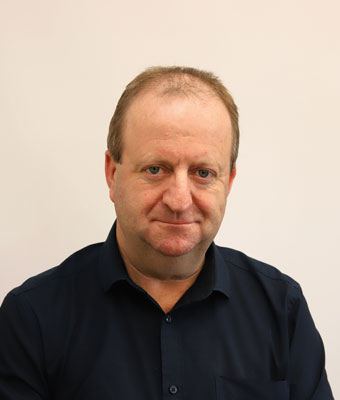
67. Deputy Michael Collins asked the Minister for Rural and Community Development the proposals to address the estimated 4,000 roads that remain outstanding under the local improvement scheme; and if he will make a statement on the matter. [26586/25]
The local improvement scheme, LIS, is very important for rural communities and rural roadways. At this time, the Minister might be able to explain the Department's proposals on how it intends to address the estimated 4,000 roads that remain outstanding under the scheme. I would appreciate if the Minister explained it to us.
I thank Deputy Collins. The local improvement scheme is a vital support for rural communities to improve non-public rural roads and local laneways. Since 2017 almost €170 million has been provided by the Government to local authorities under the scheme. I will repeat that figure of €170 million. In April 2024 €40 million in funding was announced for the LIS for all local authorities for 2024 and 2025, with €2.87 million allocated to Cork County Council. While the Department provides funding for the scheme, it is administered by the local authorities which have responsibility for selecting and prioritising roads. It is absolutely clear to me, locally and as Minister, that there is strong demand for the scheme. However, progress has been made, with more than 5,500 road improvements being completed under the scheme to date. Significant numbers apply for support, which is why base funding for the LIS has increased year on year since 2021.
The programme for Government commits to supporting rural communities, including a commitment to increase funding under the scheme. I am working with the Minister for public expenditure, Deputy Chambers, to ensure we have funding in place not only to continue the scheme but also to address the backlog that Deputy Collins has referred to. We are engaging with the ongoing review of the national development plan, and within the Department I am monitoring capital expenditure as the year progresses to ensure any savings arising under our capital budget and in other schemes can be reassigned to the LIS. I absolutely know and understand its value. I appreciate its value. It is very important to local families and local people. It will certainly be a priority scheme for me during my time in the Department.
I thank the Minister very much. It is a very important scheme. It is a great scheme for anyone who qualifies. The problem, as I have said, is that 4,000 applications remain outstanding and have not qualified. For all the funds that have gone into it, they are not half enough of what needs to go into it. I have spoken to Deputy Danny Healy-Rae on this issue several times. It is a big issue in his area. It is also a big issue in west Cork. The problem is that the moneys coming into west Cork are not enough to go anywhere near what needs to be done. I know of people who have been waiting for seven or eight years. A politician said to me one time that it is not a form that should be filled out because people get very annoyed and frustrated at having to wait seven or eight years to get funding for the roadway to be done. When people fill in the form they expect that it could be done within a year or two, a reasonable amount of time. While the system is successful when people get it, they can be a long time waiting. Some people who fill in the form pass away before they even get to see the roadway being done.
I thank Deputy Collins. I would point out that since 2017 Cork county has received €12.9 million for the LIS. It is the third highest amount nationally. It is not the Department's role to select individual roads. That is a matter for each local authority. We are looking at local authorities on the waiting list and the individual expenditure by local authorities on the scheme. I want to make sure that we are getting value for the money we are investing in it and that we are getting consistency from local authority to local authority.
Certainly, I will be looking for additional resources. I am already engaging with the Minister, Deputy Chambers, about the national development plan, NDP, review and budget 2026 on that matter. We have also expanded the eligibility of the scheme in recent years so that is definitely adding to demand for it. That expansion was needed and was important for supporting local families. I assure the Deputy that Deputy Danny Healy-Rae and the Minister of State, Deputy Michael Healy-Rae, are working closely with me to secure additional funding for this.
I appreciate that and thank the Minister. We desperately need that extra funding in some areas. The Minister said that County Cork receives the third highest amount of funding. He will be aware that Cork is the biggest county in Ireland, so we are way down the ladder if that is the case. I am not trying to be critical. The Minister is doing his best to get additional funding and we appreciate that, because there is a desperate need. People should not be waiting six or seven years.
I filled in forms for a gentleman in 2017. We have spent the time since then on the phone trying to make sure it gets across the line, perhaps once an month. Ellen in my office never gave up on it. It was only last week that he was told that his road will go ahead in a month's time, which is great and it is a success. However, there is frustration. I find that people are annoyed with the political system. When I knock on the door or talk to them, people say "you never got that road done for me". That is not the way it works. There is not enough funding going into County Cork, unfortunately, and the roads are not being done. We see that there are 4,000 to be done nationally so there is a massive amount of money to be got here for the local improvement scheme.
I have figures that show that at the end of 2024, 175 roads in Cork were awaiting repair, 264 have been completed since 2017 and 23 will be done in 2025. The full allocation will be used. That gives the Deputy a sense of the demand in Cork, but it is replicated across the country. LIS roads are very much part of my daily work. The scheme is very important to communities. That is why the eligibility was expanded in recent years, but in expanding it, demand increased. I assure the Deputy that I am working to secure additional funding for the 2026-27 programme to support local authority members who are at the coalface of this and local families and communities.
Voluntary Sector
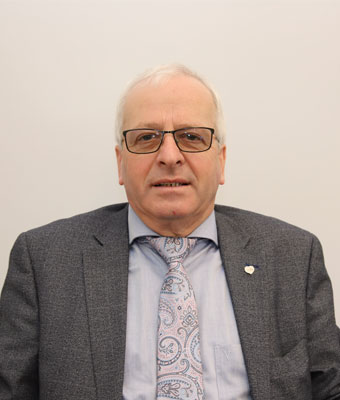
68. Deputy Mattie McGrath asked the Minister for Rural and Community Development if he is aware of the growing difficulties faced by community and voluntary organisations across County Tipperary in maintaining essential services due to the chronic inability to fill vacancies in publicly supported non-profit, voluntary and community organisations; the urgent measures being taken to ensure the sustainability of these vital community services; the measures he can implement to support community organisations who cannot fill vacancies where communities risk losing vital services; and if he will make a statement on the matter. [26462/25]
I ask the Minister about community employment, CE, schemes and the fact that it is now almost impossible to retain participants on them. I am chair of a scheme. I know it is not totally the Minister's remit, but it has a huge impact on rural organisations, rural communities and their viability and sustainability. Will the Minister make a statement on the matter?
I thank the Deputy. This question fits across both of my roles.
This Government recognises and values the many contributions made to society by not-for-profit, voluntary and community organisations in Tipperary and I commend the Deputy's work in this space. The Department of Rural and Community Development supports the community and voluntary sector through a number of schemes, most notably the community services programme, CSP, the social inclusion and community activation programme, SICAP, and the scheme to support volunteering. The CSP supports 428 community based organisations, with a budget of in 2025 of €55.4 million. This provides local services through a social enterprise model. In 2023, the majority of CSP-funded organisations were awarded five-year contracts, which has provided certainty in terms of operations and employment. In addition, and in recognition of the higher costs arising from increases in the statutory minimum wage, the contribution towards employment costs for those organisations with medium or high funding needs has increased. The SICAP, as I previously mentioned, is a national programme delivered in both rural and urban areas by local development companies to help those in the greatest need. It aims to reduce poverty and promote social inclusion and equality by supporting disadvantaged communities and individuals. My Department has contributed more than €47.4 million in 2024 for SICAP and has committed more than €48.9 million for 2025.
Finally, Ireland’s volunteering structures are recognised as a model of best practice. More than 1 million people volunteer regularly in Ireland and I am committed to supporting them in this work. Funding from my Department to the volunteering sector has increased from €3.1 million in 2020 to €7.3 million in 2025. We are aware that challenges remain, especially in the schemes referred to by the Deputy. I am working in the Department of Social Protection to make changes to those schemes so that we will be able to attract more participants to them and encourage more people to get involved in their local communities through the fantastic work of the community employment scheme, the rural social scheme and Tús.
I thank the Minister. I know he is hands on. He understands it because he is from a rural community. There is just an impossible strain on the voluntary boards that are trying to fill these positions, trying to get the work done and keeping the whole plethora of areas going. Schemes such as rural transport services, meals on wheels, day care, community centres and Tidy Towns groups are under enormous strain. While many of the groups receive State support, that is no good if they do not have the workers. The scheme needs to be tweaked. Some years ago, people were allowed, if they had done three years and were a certain age, to carry on their work until retirement age. That needs to be looked at again. That was allowed. We are told we nearly have full employment and it is hard to get participants. The people on our CE scheme work with the supervisor Seán Byrne over three villages, Ballymacarbry, Newcastle and Ballybacon, that straddle two counties. It brings things together as well. Tipperary might have been on the hurling field last week against Waterford but we work together with a ní neart go cur le chéile attitude and that is the way it is. I compliment all the participants on all the schemes throughout Tipperary and everywhere else. They do a meaningful job and they do not get much reward at times. They get little remuneration, but they do excellent work.
Despite all our GAA talk, we had managed to avoid last weekend until the Deputy's intervention. That suited me anyway.
We have made announcements this week under the growing social enterprise fund. Borrisoleigh Community Centre in Tipperary has been awarded €15,000 for solar panel installation. Canon Hayes Recreation Centre, with which the Deputy is familiar, has been awarded €11,559; Cloughjordan has been awarded €15,000; the Newport development association has been awarded €3,800; and €45,000 has been awarded to the Millennium Family Resource Centre, FRC, in Tipperary to assist it in its work. These kinds of specific interventions are assisting local groups in the county to continue the work and grow the expansion of the service. As I said, with my social protection hat on, we are looking at what we can do to enhance the schemes to make them more attractive for participants. Schemes are totally dependent on their supervisors. I acknowledge the amazing work of supervisors on CE schemes, RSS and Tús. I am happy that we secured some pay awards recently in that space and we will continue to grow the impact of the schemes.
I acknowledge the work they do. A man on the volunteer boards went to places in Tipperary like Knockanrawley FRC, Millennium FRC in Glengoole and of course Spafield FRC in Cashel. Recent data have shown there are 106 vacancies now across the schemes in Tipperary. It is difficult at this time of year to cover everything, including Tidy Towns, the GAA, community groups and all the other issues, such as meals on wheels and community centres. We just do not have enough staff. I thank the officials we deal with in the Department who help us out and have given us rollover extensions to keep the schemes alive because we cannot get the participants. The participants are needed so the criteria must be made easier to meet. We are especially looking for people on the schemes who are in their late 50s to be allowed to stay on them until they retire, because there is little possibility of them retraining and going back to work. Our scheme has been successful in progression. That is part of our problem because we have put people back to work as self-employed and into jobs. It has been great because it benefits the participants and the community. I appreciate that the Minister is trying to tweak it and that he will do so. I look forward to a positive outcome where our schemes continue to do the valuable work they are doing in Tipperary.
The schemes do superb work. I compliment the Deputy and all the volunteers who run them and are on the boards. I have the report into the future of the rural social scheme, which I am considering at the moment. We will be making some announcements imminently around that.
Again, on making it easier to get participants, I believe, as I have discussed with the Deputy previously, that the schemes have changed. They are no longer entirely labour market activation schemes. They are much more community social support schemes.
The changes I am looking to make will reflect the change of that scheme. It is important we give people the chance to support local communities. It is a matter of pride for them and a matter of identity for many people. We must review how we look at the schemes and approach them. That is something I am currently very focused on.