Care Services
6. Deputy Aisling Dempsey asked the Minister for Social Protection for a report on his attendance at the annual carers’ forum; and if he will make a statement on the matter. [46023/26]
I ask the Minister for Social Protection for a report on his attendance at the annual carers' forum. I note the Minister's earlier reply so I have no difficulty making that more brief because of the answer he gave to the House a moment ago.
I thank Deputy McAuliffe. The annual carers’ forum was held on 7 May this year and I was delighted to attend and speak at the forum. The carers' forum is an important platform within the Department of Social Protection and allows family carers to engage directly with my Department and officials from other Departments to discuss important issues and carers' invaluable role in Irish society. I thank Family Carers Ireland and Care Alliance Ireland for partnering with my Department in organising the forum and contributing to its success. The event brings together family carers, carer organisations and Government officials in structured dialogue and, more importantly, for the sharing of personal lived experiences.
A broad range of issues were addressed, including proposals relating to the carer’s allowance means test and measures aimed at improving access to supports. The workshops also highlighted cross-Government concerns, such as access to respite services, which we discussed earlier, housing and transport. We published a comprehensive note of proceedings on my Department’s website.
We fully recognise the vital contribution of family carers and as a Government, we are committed to supporting them. I am pleased to confirm that, from next month, the weekly income disregard for carer's allowance will increase from €625 to €1,000 for a single person and from €1,250 to €2,000 for carers with a spouse or partner. These are the highest ever increases. They will enable individuals with higher incomes to qualify for carer’s payments. For example, a carer in a two-adult household with an income of approximately €110,000 will retain their full payment and even with an income of €138,000, they will retain a partial payment. Additionally, the annual carer's support grant was paid earlier this month at a rate of €2,000 to over 147,000 carers at a cost of €336 million. We will have further engagement at our annual pre-budget forum on 1 July with the carers groups. These will all inform my priorities for budget 2027, the work for which is under way.
I note this question was transferred to me from Deputy Aisling Dempsey. She has spoken to me about the issue of carers. In the previous election, Family Carer's Ireland campaigned very strongly for abolishing the means test for carers. The commitment was very clear that we would do that over the lifetime of the Government. The increase in the income thresholds has to be acknowledged. As the Minister said, it has increased to €110,000 for a full payment and €138,000 for a partial payment. That very significantly includes the vast majority of people who were in that category and came to us to ask to abolish the means test.
Of course, it is not just about getting access to the payment. It is also about acknowledging that this is real work, it should not be means tested and it should not be linked to the income of your partner. I want to acknowledge that in the first budget that was a very significant amount of money spent that was not spent elsewhere. I acknowledge it was done in terms of carers.
I thank the Deputy. As I reiterated to Deputy Healy, in the Family Carers Ireland State of Caring in Ireland report, it estimated that 68% of families can now access a carer's payment. We have made a very strong commitment in terms of abolishing the means test for the carer's payment during the lifetime of the Government which, as I remind people, is due to go until 2029. There are many other areas and the State of Caring in Ireland report outlines there are many challenges with respite in particular and access to transport. They were articulated very strongly on 7 May at the carer's forum. I took the chance this year and last year to get that shared experience and hear directly from carers.
I particularly want to pay tribute to and thank the young carers' group who were there. There are examples of young carers going to school and college and coming back and taking up caring responsibilities. I really want to look at what we can do to support our young carers, as well as carers as a whole.
I thank the Minister. To return to that point I made, often carers are women. Having spoken to them, I know they feel particularly aggrieved that just because their partner has done an extra five or six hours overtime a week or they have got a pay rise, that in some way means they lose their payment. That underlines the point that this should not be a means tested payment. It should be an acknowledgement for work done on behalf of the State. They are saving the State money. The quicker we move towards the abolition of the means test, the quicker we will be able to resolve that injustice. I acknowledge that the cases of the vast majority of people who would have previously come to my clinic on this issue have been addressed. Those people earning over €140,000 have not yet been addressed but obviously the Government is going to deal with that. I acknowledge the work the Minister has done.
There continues to be anomalies. I am due to receive a report into means testing generally across all of our Department's schemes in the coming weeks and we will be considering that. We obviously have to have means tests in many cases. We have made a commitment in relation to carers, but the kind of situation the Deputy has just described, where the caring spouse of somebody who works hard has to pay the bill for that and gets their allowance reduced, is not fair either. We are going to try to ensure this is as hassle-free as possible. Carers do extraordinary work, but it is very clear from our interaction on 7 May that there is more we can do across government to reduce the burden on carers. In many cases, it is getting out of their way. In many cases, it is facilitating things such as respite and transport. As I said, I want to work with colleagues across government, particularly the Minister, Deputy Foley, and the Minister of State, Deputy Moynihan, at the Departments of children and education, respectively, in respect of young carers and what more we can do for them.
Social Welfare Rates
7. Deputy Paul McAuliffe asked the Minister for Social Protection if he will give consideration to changing the living alone allowance in the coming year; and if he will make a statement on the matter. [46357/26]
I acknowledge my colleague, the Minister of State, Deputy Ardagh, and I apologise for my enthusiasm in my first round of questions. I think I submitted too many. I ask the Minister for Social Protection if he will give consideration to changing the living alone allowance. I note his previous reply to Deputy Hayes as well.
I commend the Minister of State, Deputy Ardagh, on her appointment and wish her every success in her new role.
It is acknowledged, as we have done this morning, that those who live alone and are dependent on certain payments from my Department face a higher cost of living than a two-person household. It is for this reason that the living alone increase is available to those in receipt of qualifying payments from my Department. The living alone allowance is a supplementary payment to those who are 66 or over, living alone and in receipt of a State contributory pension, State non-contributory pension, bereaved partner’s contributory pension, bereaved partner's pension under the occupational injuries benefit scheme, incapacity supplement under the occupational injuries benefit scheme or deserted wife's benefit. It is also paid to people aged under 66 who live alone and are in receipt of a disability allowance, invalidity pension, incapacity supplement or blind pension. It is not a stand-alone payment and for this reason it is only available to those in receipt of one of those specified payments.
In total about 260,000 people receive the payment weekly. The current rate of the living alone allowance is €22 a week. It has increased by over 144% since 2019, when it was just €9 per week. The most recent change to the rate was in budget 2022 when it increased by €3, from €19 per week to its current rate of €22 per week. Any future changes to the qualifying criteria or rate of pay for the living alone allowance will have to be considered in the overall budgetary context, including possible increases to primary rates and other supports available. I look forward to input from colleagues, particularly around the qualifying criteria for the living alone allowance as well as the rate of pay. Many anomalies have been highlighted around the qualifying criteria. Deputy McAuliffe referred to one of these earlier and those are the areas I want to see if we can iron out over the course of our budgetary considerations.
The anomalies here are an issue. I know sometimes there might be three individuals sharing a home who are not in any way related to one another, and that can provide some complications. We have been able to resolve this issue in some cases. When we are dealing with anomalies, there is that issue of people sharing a home as to who gets the fuel allowance. If one person gets it, then other people in the home do not. That is something I ask the Minister to examine.
The other thing I would say regarding the living alone allowance is that when the State spends money it inevitably has an impact on inflation. Regarding increasing the living alone allowance, this relates to costs which people already have and are already paying. People have to pay their household bills and so on. It is an area that does not have as much of an inflationary impact as perhaps increases in social welfare payments would. I am not advocating for increases in the payments but I am saying it is something to be conscious of that the living alone allowance itself does not have as much of an inflationary leakage or impact. It is something to consider.
I was wondering there, Deputy.
I want to focus this year on targeted interventions to address those particular cohorts of people who are most at risk of falling into poverty. I want a situation where we can iron out rules within the systems that may be doing that inadvertently and may be driving people in that direction. As I said earlier, there is the situation of somebody who loses their spouse or partner and is immediately faced with the same bills but with half the income. We need to work better in terms of making the living alone allowance available quicker and providing information on it. There is also the fuel allowance. I am also conscious we have not increased the living alone allowance since budget 2022, so we have some way to catch up there. The Deputy and Deputy Séamus McGrath in particular have been consistent in their work on this and I look forward to all colleagues providing input on this because it is something we all get in our constituency clinics on this particular payment.
State Savings Schemes
8. Deputy Shay Brennan asked the Minister for Social Protection for an update on the operation of MyFutureFund - the automatic enrolment retirement savings system; and if he will make a statement on the matter. [46027/26]
On behalf of Deputy Brennan, I ask the Minister to provide an update on the operation of MyFutureFund, the automatic enrolment saving scheme.
The programme for Government contained a commitment to introduce the automatic enrolment, AE, retirement savings system. The aim of introducing AE is to address the pension coverage gap that exists in Ireland and to provide workers with greater comfort and security regarding their retirement income. MyFutureFund was commenced on 1 January 2026. All elements of the system are operating as planned. The employer and participant website portals are fully functional and there is a very high level of compliance by employers registering for the scheme and remitting contributions.
Since 1 January, based on analysis of payroll data from Revenue, over 835,000 employees have been automatically enrolled in MyFutureFund. These employees work for approximately 112,750 employers. In addition, more than 9,000 employees have applied to join MyFutureFund voluntarily. Approximately €323 million of contributions have already been collected for investment with the three contracted investment managers. This includes the employer and the State top-ups, meaning contributors have already seen a 133% increase in their fund over and above their personal contribution. In years to come, with these expected investment returns and top-ups, participants should continue to see their funds accumulate to deliver a significant savings pot for their retirement.
The National Auto-Enrolment Retirement Savings Authority, NAERSA, is the statutory body responsible for the administration of MyFutureFund. It is running a campaign on social media, print, radio and TV highlighting the benefits of MyFutureFund for participants. Alongside this, my Department will continue to work closely with NAERSA to ensure awareness of the scheme, the easy administration for employers, and the benefits of saving for retirement for employees. I thank the staff and board of NAERSA for their exception work on the introduction of MyFutureFund, and all the team within my Department, particularly Mr. Tim Duggan who led the work and is just retiring as assistant secretary. I thank him not just for his work on automatic enrolment but his contribution to the State generally.
I join with the Minister in those comments. The establishment of the auto-enrolment scheme was a very significant measure. It had been spoken about for many years. Provision for people's future retirement is incredibly important and auto-enrolment makes it easier for people to make that decision. There is an opportunity to opt out of the scheme. While we have very significant numbers enrolled in the scheme, we want to make sure those numbers do not decrease as time goes on. I encourage the Minister's Department to do everything it can to communicate the benefits of involvement in this scheme or any other pension scheme. We must ensure that people plan for their future and have that greater degree of financial independence. I ask the Minister about ongoing participation in the scheme and how the Department is monitoring those numbers.
It has been very successful so far. A Revenue analysis shows that 835,000 workers have been automatically enrolled. Over 9,000 have joined the scheme voluntarily and 112,750 employers are involved. Contributions thus far total €323 million. As I have said, the National Automatic Enrolment Retirement Savings Authority is running a campaign outlining the benefits of MyFutureFund. That will continue as the opt-out process opens. I know people are under pressure. I am very conscious of that pressure but I made the point during the run-in to the introduction of MyFutureFund that, if you get to the age of 66 and have no retirement plan in place, you will face a massive drop in income. Going from €48,000 or €50,000 a year to €16,500, which is what the State contributory pension provides, is an extraordinary drop. MyFutureFund gives those 835,000-odd people a substantial cushion to alleviate the impact of that drop. That is what it is about. It is about looking to your retirement, when you will not be earning the kind of money you may be earning today, and making provision for that.
I appreciate that. I reiterate my point on ensuring that people remain within the scheme. I was recently at an apprenticeship fair and one of the people encouraging people to take up apprenticeships indicated that, by participating in the workforce earlier, they would be contributing to their pensions for a much longer period than people who went on to third level. The numbers are staggering. Whenever you start paying into your pension, those extra few years make a huge difference. That is the reason the auto-enrolment scheme is so important. It is the reason it will have a real impact over decades. It is also why I want to ensure that we retain as many people as possible within the scheme and that the benefits are communicated.
As I have said, the benefits are very much there. Somebody at the age of 23 may feel they are a long way from the age of 66. Looking around the room, I do not see anybody in that space. I assure the Members I am talking about the age of 66. However, it does happen. You get there very quickly and you do not notice it. We genuinely do have a major gap in pension coverage in this country. It is fine now, when we have four workers for every person over the age of 66, but, by the time we get to 2050, which is not that far away, we will have two workers for every such person. I reiterate that the State pension will continue to be the bedrock of our pensions system but we also have to ensure that people have adequate income provision for their retirement years. That is what MyFutureFund is about. We are the last country in the OECD to do this. That is not something to be proud of but it has allowed us to learn from systems across the OECD and from mistakes that were made. We have tried to ensure that our system is user-friendly and that it supports participants and delivers the outcomes we want. The figure of 835,000 enrolees has shown that to be right.
Employment Schemes
9. Deputy Malcolm Byrne asked the Minister for Social Protection to provide an update on the wage subsidy scheme, and any incentives to support employers taking on employees with intellectual disabilities. [46367/26]
On behalf of Deputy Malcolm Byrne, I ask the Minister to give us an update on the workings of the wage subsidy scheme and any other initiatives that are available to employers and those who have intellectual disabilities and need employment. I believe there is scope to improve the wage subsidy scheme, to include others and to encourage employers to participate more fully.
I thank Deputy McGuinness for raising this matter. Supporting disabled people and reducing the disability employment gap are key priorities for me. The wage subsidy scheme is the key disability employment support provided by my Department. It aims to encourage employers to offer substantial and sustainable employment to disabled people through a subsidy.
In 2024, the Department published a review of the wage subsidy scheme following a public consultation. We aimed to make the scheme more accessible and more flexible. As a result, the minimum hours were reduced from 21 hours per week to 15 and the scheme was expanded to the community and voluntary sector and the non-commercial semi-State sector. In addition, we changed the language of the scheme to align with the social model of disability.
One of the recommendations made was to regularly review the subsidy rate. The national human rights strategy for disabled people also includes a commitment to examine an increase in the subsidy rate. The rate was reviewed in the context of budget 2026. As a result, the number of bands was reduced and the subsidy rates were increased. The base wage subsidy paid to employers who employ disabled people is now €7.50 per hour, an increase from €6.30. Employers who employ 25 or more employees on the wage subsidy scheme can still avail of a grant of €30,000 towards the cost of employing an employment assistance officer. Budget 2026 also provided for the expansion of the scheme to those who acquire a disability while in employment, those who have a progressive or degenerative condition that worsens, and those who transfer from invalidity pension to partial capacity benefit.
We hope these changes encourage more employers to hire more disabled people to increase uptake of the scheme and I am engaging with employer organisations to this end. Later this morning, I will attend the Light the Way event hosted by MrPRICE, one of our leading providers of employment for disabled people that work with the wage subsidy scheme. I have also made administrative changes to the wage subsidy scheme to centralise processing to ensure a more consistent and quicker service for those employers that are in receipt of a subsidy under the scheme.
Does the Minister believe enough is being done to inform employers of the scheme, its benefits and how it assists both employers and those who have an intellectual disability? Does more need to be done to promote the scheme? I come across a lot of people who have intellectual disabilities or acquired disabilities who would like to return to the workforce to do some work and whose health would benefit from being involved in the workforce and working a meaningful number of hours per week. If more was done to promote and expand the scheme, perhaps working with family resource centres and organisations like Talking Heads in Carlow, more employers would take up the scheme. There are plenty of people in the disability sector who would be willing to engage.
I completely agree with the Deputy. Last year, we ran an overall information campaign about the wage subsidy scheme. This involved normal advertising. It led to a very small increase. We met on this issue this week. I intend to target chambers of commerce, which have a very direct connection to local businesses. Many national businesses support and use the programme. I want to see more local businesses involved because local visibility is important. I will certainly expand our outreach to include family resource centres. If any Deputy would like to suggest organisations that have a local reach and that can get us into local businesses, I am more than happy to work with them. We will be engaging. We are setting up meetings with local business organisations. We deal with the employer organisations on this matter. I want to involve organisations that have more local connections to employers and that can engage with them. I acknowledge the many local employers who do excellent work on this. As a Department, we will be running a themed week in October, work and skills week. This will look at the employment vacancies that are available and matching those with disabilities to those vacancies. Any employer that does not engage with the wage subsidy scheme is missing out on a really talented bunch of people.
I encourage the Department to have an open day where employers can come and meet those who have a disability or those with an acquired disability to see how they can match those who want work with their companies. There are many organisations that are now funded to prepare young people in particular but anybody who is disabled or intellectually disabled to encourage them back into the workforce and to give them the tools necessary to contribute to that work. The employers do not see enough of that interaction and enough of what is available to them from this whole disability sector. I refer to the Talking Heads organisation in Carlow and Kilkenny and to those with acquired brain injuries and disabilities. Much more needs to be done to give them the opportunity to come back into the workforce. They have something to contribute.
Again, I do not disagree. We have a designated employment personal adviser in the 62 Intreo offices nationwide for disabled people to meet and discuss employment options. I have changed the work and access scheme. The work and access scheme offers seven different supports to facilitate those with disabilities in the workforce. I changed it to include assistive technology, which is a new thing. In May 2026, there were 1,568 employers supporting 2,621 employees through the wage subsidy scheme. That is not enough. We have the worst disability employment gap in Europe. I am determined to address it and make changes to address it. It will also be a key part of my priorities during the European Presidency, as to how we can learn from Europe. There may be areas that Europe can learn from us in the context of reducing this gap.
Social Welfare Benefits
10. Deputy Colm Burke asked the Minister for Social Protection the number of additional people that will benefit from increases in the carers allowance means test threshold due in July 2026; whether he has engaged with the Minister for Health and her Department to ensure that carers allowance income will not be included under the medical card means test so that those who benefit from the expanded threshold will not be at risk of losing their medical card; and if he will make a statement on the matter. [46277/26]
I very much welcome that a large number of additional people will benefit from increases in the carer's allowance means test threshold, which comes into place on 1 July. Has the Minister engaged with the Minister for Health and her Department to ensure that carer's allowance income will not be included under the medical cards means test, so that those who benefit from the expanded threshold will not be at risk of losing their medical card? I ask him to make a statement on the matter. I have heard from a number of people who have decided not to apply until the issue is clarified.
I thank the Deputy for his question.
The programme for Government contains a commitment to continue to significantly increase the income disregard for carer's allowance across a series of budgets with a view of phasing out the means test over the lifetime of the Government. Budget 2026 has increased the earnings disregard for carer's allowance to €1,000 for a single person and €2,000 for a couple. Those changes will be effective from July this year. These are the largest ever increases in the carer's allowance income disregards and are evidence of our determination to deliver on our commitment to carers.
Since 2022, the disregard will have increased cumulatively by €667.50 per week for a single person and by €1,335 per week for a couple. This measure will benefit both those current recipients who are on means-reduced rate and who will see an increase in their payment rate and those people making new claim applications who otherwise would have been subject to a means-reduced rate in 2026.
On foot of the increases in the carer's allowance income disregards, a single person providing full-timer care, who also does part-time work this year, will be able to earn just over €54,000 and receive a full carer's payment. Similarly, for a couple household, a person who is providing full-time care and where their partner earns approximately €108,000 per annum will receive a full carer's payment. In its recent report, Family Carers Ireland acknowledged the significant progress made in increasing income disregards for carer's allowance. It stated that 68% of households are now falling within the financial eligibility criteria.
We are still looking at what the estimated take up will be. For budget purposes, we have prepared estimates on the basis that approximately 3,000 carers nationally will benefit. Given that the scheme is demand led, and it is likely that many who are outside the means test would have not have previously applied for carer's allowance, it is very difficult to estimate the potential inflow from this measure with certainty. We will engage with the Minister for Health around the Deputy's proposal on the means test. It certainly was an issue that was raised with me on 7 May at the carer's forum in relation to supports for carers. Supports for carers, including the medical card and respite, are highlighted in the Family Carers Ireland's state of caring report. The Minister, Deputy Carroll MacNeill, is somebody who is very supportive of our work in this space. We will engage with her.
I very much welcome the Minister's reply. However, where I am coming from is about the people who are marginally outside under the old scheme who now qualify under the new changes that the Minister has made. I very much welcome those changes because people who are providing care in the home for their immediate family or for relatives are providing a fantastic service. What I am concerned about now is where people are pulling back from applying because they are afraid of losing their medical card. That is extremely important to them, especially for anyone who is providing care but also has their own medical challenges and are still well able to provide that care. That is why I am looking for clarification. As the Minister knows, the qualifying criteria for medical cards has not changed for quite some time. That is another issue that needs to be reviewed but that is not under the Minister's Department. Can we get clarification before 1 July on this issue? It is going to affect quite a number of people who will not put in the application at this stage.
To be clear, the medical card means test is a matter for the Department of Health and the HSE. It is not a matter for the Department of Social Protection. Our commitment in relation to carers is increasing the income disregard with a view to phasing out the means test for carers between now and 2029 - the lifetime of the Government. There is the carer's support grant and increasing the weekly rates for that income for carers. I assure the Deputy that I will engage with the Minister in relation to the forthcoming increase in the income disregards. I share his concern that those who qualify are not taking it up. This is not just with carers but across a number of schemes. I want to ensure that those who can qualify for this can take it up without fear of losing other benefits. Those who are performing carer duties do exceptional work. We need to make their lives a lot easier and take the complications away. We will definitely engage with the Minister, Deputy Carroll MacNeill, in relation to this urgently in the context of 1 July. She is very committed and is very supportive of work in relation to the income disregards. She is very committed to the work of family carers.
I very much welcome the reply. The changes that are coming into effect on 1 July are very good. There are a huge number of people who provide a good standard of care in the home rather than people having to go into full-time residential care in nursing homes. They are providing an invaluable service. It is important that we make sure that we tick all the boxes and that they are discouraged from continuing to provide that care because they qualify for the allowance but they are afraid of applying for it as they are afraid of losing their medical card. That is an issue that we need to get clarification on. Again, I thank the Minister for the work that has been done in this area and the number of additional people who are now going to come in under the qualifying criteria, so they can get the carer's allowance in support of the work that they are doing.
I reiterate to the Deputy that we will engage with the Minister, Deputy Carroll MacNeill. We are looking at all of our schemes to see what is stopping people from applying. At the start of the session this morning, Deputy O'Reilly raised other points in that space. I am open to feedback in relation to that. As we go to a situation where somebody on €108,000 can still access the full carer's payment, we obviously have issues that not everybody is applying for it. I am going to drill down on those issues. We will the carer's organisations, Family Carers Ireland and the carer's allowance to increase awareness of the income disregards being increased in the manner that they are. Many people may not be aware of that income disregard, particularly carers. One point that is consistently made to me, and to all of us, is that carers often do not have the time to look at this kind of information because they are so busy, focused and engaged in their caring role.
We have to work with the organisations and family resource centres in every way to get the information about the supports available out to people. I will engage with the Minister for Health on the matter.
Children in Care
11. Deputy Naoise Ó Muirí asked the Minister for Social Protection if he will provide an update on the programme for Government commitment to examine pension provisions for foster carers; when he expects this to be introduced; and if he will make a statement on the matter. [46325/26]
Matters relating to foster care are the responsibility of my colleague the Minister, Deputy Foley. However, the Government acknowledges the very important role of all carers, including foster carers. We remain fully committed to supporting them.
Once the minimum requirement of ten years' paid contributions is met, the State contributory pension system provides a range of measures to recognise caring periods outside of paid employment. These include PRSI credits, homemaking disregards and home caring periods. Homemaking disregards and home caring periods recognise caring periods of up to 20 years outside of paid employment in the calculation of a payment rate. Foster carers are entitled to benefit from these measures on the same basis as other family carers and parents. Questions of equity would arise if access to pension benefits was afforded to any of these groups, including foster parents and carers, on a preferential basis.
Since January 2024, long-term carer's contributions can be awarded to those who have cared for incapacitated persons for a period of 20 years or more. These contributions are treated the same as paid contributions for State contributory pension entitlement only and can be used to fill any gaps in a person's contribution record, including satisfying the minimum ten years of paid contributions required for eligibility. Foster carers who have cared for an incapacitated dependent or dependents for over 20 years also benefit from this provision. These measures assist foster carers to access the State pension system and recognise the years spent caring for children in the same way as biological or adoptive parents while ensuring that our pension system remains sustainable.
Changes to any aspect of the State pension system have to be considered in the overall policy and budgetary context including the sustainability of the Social Insurance Fund. I am very much aware of the importance of their work. I am happy to work with the Deputy on any proposals he may have in this space over the lifetime of the Government.
There are nearly 4,000 foster parents in Ireland who open their homes long term to children who often come from difficult and traumatic starts in life. The Minister has met them, as have I. It is a vocation for those families. At times, I wonder how they do it because of the workload involved, but they are really committed. Part of the challenge is that the number seems to be dwindling. There were over 4,000 a few years ago. Now, there are 3,800 foster parents who have 6,000 children in their care. I do not want to see a move away from a really good family-based environment for those children either back into institutional care or into private care where they will lose the family connection built up with those children. Everything we can do to encourage parents to get involved and keep them in that area is to be welcomed and explored. I appreciate the challenged the Minister set out but looking at pension provision should be part of that.
I agree; an extraordinary service is provided. It gives stability and changes outcomes which would otherwise be very different. Tusla manages the foster parent-foster carer system. It pays the foster carer allowance which is €400 per week for per child under 12 and €425 per child 12 or over. That is to offset expenses. Accordingly, it does not affect tax. It is not assessed as a means for social assistance payments. We will look at further supports but anything we do in the State pension context has to have the overall sustainability of the State and equity in mind. I would love to be able to give the Deputy a guarantee around that but I have to look at those elements as well in terms of our pension system and facing the challenges we discussed in the previous discussion with Deputy McAuliffe. I agree with the Deputy on the vital work being done. The Minister, Deputy Foley, worked closely with me in relation to this matter. We want to continue to work with foster carers.
I welcome the Minister's comments and the commitment to the effect that he and the Minister for children, Deputy Foley, will continue to look at and develop this area. To come at it from the children's perspective, the CSO analysis of children who come through foster care shows they have higher rates of absenteeism from school, leave school earlier and their educational achievement generally is lower. Everything we can do to support these children, who have had a really difficult start in life, is to be considered and welcomed. I come at it from the point of view of the foster carers. I know things like the back-to-school clothing and footwear allowance may be an option for consideration. I would welcome all of the supports we can consider to try to make the provision of support for those children a little easier.
I accept the Minister's comments in relation to pensions, the integrity of the pension system and how important it is to manage that, but I hope the Government and the Minsters will consider this matter in the round, seek to make progress and see if there are ways it can be developed for foster carers in the future to keep the family-based service going well.
We made changes last year in relation to the back-to-school clothing and footwear allowance. Where we can, we will continue to do that. From the perspective of the children fortunate enough to receive foster care, it is a changer for them. Many have gone through multiples of carers and generations so it is an area I am looking at.
I am also looking at the area of kinship. Along with Deputy McGreehan, I met the Kinship Care Ireland last year. We want to see how we can do more to support that but I would not like to give false expectation either. There are many complex issues around pensions and eligibility we are trying to work through. We have to work through them with the overall sustainability of our pension system in mind. We will work with the Deputy and the Minister, Deputy Foley. Tuigim cé chomh tábhachtach is atá an obair seo le haghaidh na tuismitheoirí seo. Caithfimid seasamh leo.
Social Welfare Schemes
12. Deputy Colm Burke asked the Minister for Social Protection to confirm whether an examination of improvements to key ancillary benefits such as the fuel allowance, household benefits package and living alone allowance to support older and vulnerable groups has occurred as per the programme for Government; if not, when this examination will occur; and if he will make a statement on the matter. [46276/26]
The programme for Government contains a commitment to protect core welfare rates while ensuring that available resources are targeted at vulnerable groups. It also includes a commitment to examine key ancillary benefits, including the fuel allowance, household benefits package and living alone allowance to support vulnerable groups. This is an ongoing activity as part of the Department's budget planning each year. As part of budget 2026, I increased the weekly rate of fuel allowance by €5 which increased the weekly rate payable by 15% from €33 to €38 a week or €1,064 per fuel season. In addition, in March I extended the 2026-27 fuel allowance season by four weeks, which added an extra €152 to households in most need of support and increased the fuel season amount to €1,216 for this year. Estimated expenditure on the scheme in 2026 is €557.4 million.
The household benefits package comprises the electricity or gas allowance and the free television licence, with an annual payment of €580 per recipient. The Department will invest approximately €317 million this year in this package. The living alone allowance is a supplement to a primary social protection payment of €22 per week, €1,144 a year, made to people aged 66 or over in receipt of certain social welfare payments and who are living alone. The estimated cost of the living alone allowance this year is €298 million.
In budget 2026, we extended the fuel allowance to all recipients of the working family payment. This benefits some 50,000 families. In addition, from September, those moving from disability allowance or blind pension to take up employment will continue to receive their fuel allowance for five years after exiting their payment.
These improvements, which are targeted, have resulted in many more households qualifying for the payment and have resulted in the budget for the scheme increasing to an estimated €557.4 million in 2026 compared with €290.4 million in 2020. I will continue, as part of the budget planning process, to examine improvements to key ancillary benefits.
I very much welcome that over €28.9 billion is being provided in range of areas via budget 2026. There is a concern, however - and this was outlined this morning on "Morning Ireland" - that we may soon have an inflation rate of 5%. That is on the upper end of the scale. Because the cost of fuel and hearing are both increasing, we need to take action to keep pace with that in order to ensure that we have adequate supports for people who are vulnerable and who are very much dependent on the social welfare system. It is in this context that I am asking about whether the review has occurred and what we need to do in the context of planning forward, especially for budget 2027.
Absolutely. We will be looking at those targeted supports. This year, we have increased the fuel allowance rate by €5 per week and extended the season by four weeks. Most importantly, we sponsored the working family payment in order that those on low incomes can access the fuel allowance payment. We ensured that we backdated this to 1 January. That is the kind of area I want to look at in the context of targeting payments to support those under the most pressure and, in particular, to support, as we have discussed at considerable length this morning, those in receipt of the living alone allowance. Anomalies in this regard have been highlighted by Deputies Burke, McAuliffe and O'Reilly. We want to look at those.
There are a lot of areas in which we can iron out difficulties. As Deputy Hayes stated earlier, the living alone allowance and the fuel allowance affect people in different ways. We have to make sure that we try to ensure consistency. That will be part of our overall budgetary process, but that is done within a very tight financial window in view of the other challenges the Department faces.
I fully understand that. As was stated earlier, I have a number of people who are living in rural areas - the position would be the same in the Minister's constituency - in circumstances where there are two old-age pensions coming into the household. If one of the parties dies, there is a sudden drop in income. However, the cost of heating and travel for those individuals remain substantial. This is a huge challenge, especially for people in rural areas. The matter needs to be looked at very carefully. I fully understand that there will be many demands in healthcare and other areas in the context of the forthcoming budget, but this is something we need to keep pace with in order to ensure that people who are in receipt of social welfare supports do not lose out because of the inflation that is either going to occur or that has occurred over the past 12 months.
The incidences the Deputy cites relate to an area I am very focused on and concerned about, namely where a person loses their partner and then faces a massive and sudden drop in income while the bills remain the same. We will be looking at all of our schemes in that context. This year, we have taken action to increase the fuel allowance and expand the scheme. On foot of the war in Iran, we expanded the season by four weeks. That is a very targeted payment. I do not know if the Deputy was here earlier for the discussion on how we target that and how we can ensure that it is targeted more by allowing people the choice to spend the money on whatever energy source they want. The position with the living alone allowance is similar. There has been an increase since 2019, and an increase in the overall budget, which is substantial, but still not enough people are getting access to it and too many are left facing a cliff edge and a financial challenge at a time of huge personal loss and grief. We need to do something in that regard, because this is not the right way to have it.
Social Welfare Benefits
13. Deputy Richard Boyd Barrett asked the Minister for Social Protection to outline any additional disability-related supports he is planning to introduce in the upcoming budget to help disabled people with the increasing costs of living; and if he will make a statement on the matter. [46362/26]
Is Deputy Murphy taking this question on behalf of Deputy Boyd Barrett?
Yes. I am fairly certain it was emailed in.
There is no request in front of me, but that is okay. Away you go, Deputy Murphy.
This question relates to the cost-of-disability payment. Obviously, a big political issue over the past six months was the cut in the budget of €1,400-plus for disabled people and the call for emergency cost-of-living disability payments. In response, the Government stated that it is working on a cost-of-disability payment and is going to introduce it in budget 2027. The Minister had promised to bring forward a concrete proposal by the end of the month, but this has not appeared yet. Where is it? Will the Minister guarantee that it will be included in budget 2027?
I am not in position to discuss in detail any measures that will be in budget 2027. Work is under way in relation to that, and the details have to be discussed within Government. However, we have made it clear that we recognise that there are significant additional costs which disabled people face in their daily lives. We are committed to addressing this as a priority over the term of this Government. That is why we have the commitment to introduce the permanent cost-of-disability payment. This initiative will add to work done in the context of budget 2026. As part of an overall package of €1.15 billion for new social protection measures, expenditure in respect of disabled people and their carers was increased to just over €6 billion per annum. The budget contained significant targeted measures to support disabled people, including increases to core welfare rates, the largest ever increase in the child support payment, the largest ever increase in the income disregard for carer's allowance, increases in the rate of the domiciliary care allowance and improvements to the wage subsidy scheme.
In the national human rights strategy, there was a commitment to establish a strategic focus network summit on the cost of disability. Considerable work is under way in this regard. We hosted a summit at the Aviva Stadium on 13 May. Last week, I spent an hour and a half with the joint Oireachtas committee discussing the cost-of-disability payment. A public consultation payment process ahead of the summit on the cost of disability received over 1,100 submissions. I will shortly bring to the Government the report relating to the summit, the submissions made and details of the interaction with the Oireachtas committee last week. Given the high level of submissions, work on this matter is continuing. I would like to thank the team in my Department who are giving considerable attention to it.
The submissions request that universal payment be made to all people with disabilities, but with a recognition that a differentiated approach could be developed over time to reflect the fact that some forms disability give rise to higher challenges and costs than others. We are continuing to engage with disability groups. A specific workshop on disability matters was hosted as part of the national economic dialogue and we will continue to engage, including at our pre-budget forum on 1 July and with the network of disabled persons organisations that we have within the Department. I intend to bring a proposal to Government as part of my budget 2027 discussions. This is a priority for me.
I do not question that the Minister knows the real impact of having a disability, and he knows the figures. He stated at the conference that the additional cost for households with a disabled person is up to €555 a week. I am sure the Minister knows that the official risk of poverty rates are 32.5%. When we take into account the cost of disability, however, this rises to over 65%, which is obviously immense. The issue is whether the Government is going to deliver on what it said in the context of the uproar, rightly, about the budget last year and that we were going to introduce this. The Minister told the conference he would bring a concrete proposal on a new cost-of-disability payment to the Department by the end of June. The Minister did not repeat that commitment in his answer here. I wonder will the Minister repeat it now. It does seem to me that the timeframe is very tight in terms of this actually being delivered for budget 2027. Disabled people cannot be asked to wait again for another budget, which I worry we are on track for.
I will absolutely be bringing it to Government. I still hope to do so if not by the end of June then very early in July. That is a consequence of 1,100 people who participated, including three of the four political parties represented in the House at the moment. I cannot recall receiving a submission from the Deputy's party in relation to how it might work or with regard to making the tough choices as to how it might be paid and how it might be outlined. Sinn Féin and the Social Democrats are the two other parties that are represented here. On the day of the summit, we engaged with various groups to discuss how it could be paid.
To be absolutely clear, I cannot write the budget at this point. I wish I could and give the Deputy a guarantee on it. There will be very robust discussion, but I cannot make it any clearer that it is a priority for me to introduce a permanent payment and then to allow it to develop over the lifetime of this Government and future Governments.
We have people currently going through all the submissions to ensure that they are recognised, and I will be in a position to bring a proposal to the Government as a consequence of the budgetary process, but we are also very clear that we are going to engage with the disabled persons organisations, DPOs, and the representative organisations as part of that ongoing process. It will not be done in isolation.
The tough choices I am in favour of the Government making are putting a levy on data centres, putting a wealth tax on the multimillionaires and increasing corporation tax. They are the tough choices that we make in our budget proposals on an annual basis and in which we included a cost-of-disability payment for a number of years. They are better tough choices than forcing disabled people to live in poverty.
The Minister is saying that it will not be the end of June or early July any more. I presume he accepts that that is a very tight timeframe for a concrete proposal to make its way into a budget. The Minister made the point, and the point was made at the conference, that the cost would not be insignificant if a universal payment was introduced, which we support. This needs to be in the budget. There need to be measures to address the deep poverty that disabled people are sinking into. The figures are going to be worse reflecting this year's budget. I stress very strongly that this needs to be done as soon as possible, and it needs to be included in the budget.
The Deputy's proposals would drive people into unemployment, reduce our tax bases and reduce our ability to actually address this because without a sustainable economy and without sustainable resources, we cannot make these kinds of payments. That is not a tough choice. The Deputy is making a choice that will impair our ability to address and assist people with disabilities.
What we are trying to do is have a programme that works and has a backup. We had 1,173 responses to the process. That was an extraordinary response, and each response has been gone through. There were 1,086 responses from individuals and 87 responses from groups and other organisations.
The Taoiseach, the Tánaiste and the Minister of State, Deputy Canney, as the three Government leaders, attended the cost-of-disability summit on 13 May and are very much engaged in this process. They took time out of their diaries to engage with it and listen. We have done a lot of pre-work in relation to this. This will not be something that will be landed on colleagues in government when it comes, and I continue to work on this daily. We had a very good session of about an hour and half at the Oireachtas committee last week where we went through the proposals of other parties that were willing to put choices on the line in relation to this payment.
Questions Nos. 14 and 15 taken with Written Answers.
We are nearly out of time. I will allow Deputy O'Reilly to ask the next question, with one response from the Minister.
Social Welfare Payments
16. Deputy Rose Conway-Walsh asked the Minister for Social Protection his plans to improve turnaround times on decisions regarding applications for supplementary welfare allowance to cover transport costs for getting to hospital appointments for patients who receive notification of an appointment at short notice and do not have sufficient time to apply and wait for approval of their travel supplement; and if he will make a statement on the matter. [46361/26]
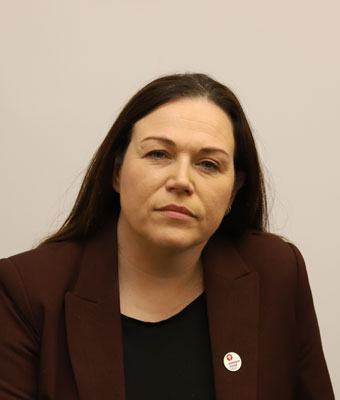
I thank the Cathaoirleach Gníomhach for being very fair. I am taking this question on behalf of my colleague, Teachta Rose Conway-Walsh. It is to ask the Minister for Social Protection if he has plans to improve turnaround times on decisions regarding applications for supplementary welfare allowance to cover transport costs for going to hospital appointments for patients who may receive an appointment at short notice and do not necessarily have the time to wait for a decision.
The answer is "Yes". I am going to engage with Deputy Conway-Walsh and any other rural TD, in particular, who may have other examples in this space. I am very much aware of people getting appointments at short notice and - this is a real bugbear of mine - people getting appointments at a time that they have to stay overnight the night before because they cannot get transport. I will engage directly with Deputy Conway-Walsh in relation to her proposal in this space.
Gabhaim buíochas leis an Aire.
Rail Network
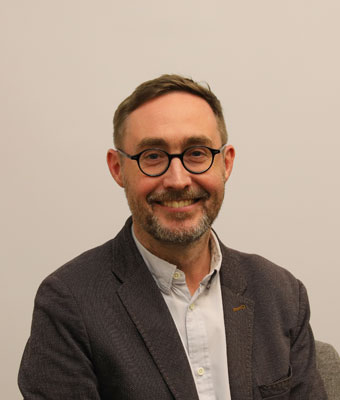
108. Deputy Eoin Ó Broin asked the Minister for Transport the reason he is delaying funding for DART+ South West; and when he intends to release the funding for this vital public transport project. [46305/26]
Will the Minister provide an update on when he intends to approve and release the funding for DART+ South West, which is a vital public infrastructure project for Dublin Mid-West? It is urgently needed and it is greatly delayed. Public representatives and, crucially, people living along that rail corridor were deeply disappointed when the Minister made the announcement last year that he would not honour his predecessor's commitment to approve the funding and have the project start as a matter of urgency. I would welcome an update on the matter.
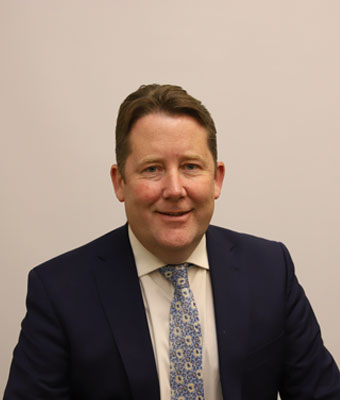
The DART+ programme, including DART+ South West, is a priority investment for me as Minister and for the Department of Transport. Collectively, the programme will triple the length of the electrified Dublin commuter rail network and double its capacity, with customers starting to experience tangible benefits from the middle of next year when services to and from Drogheda come into operation. That is the first iteration of the programme.
In terms of DART+ South West specifically, a major milestone was cleared in November 2024 when the project secured full planning approval. Procurement for both DART+ South West and DART+ West is now progressing, with pre-qualification questionnaires for design and build works advertised for both in May 2025.
Last year, the national development plan allocated funding to advance DART+ West into construction from late next year. DART+ West must proceed first in terms of the infrastructure programmes, as it includes a new depot to house the expanded DART fleet and necessary city centre capacity upgrades to expedite the subsequent delivery of DART+ South West. The two projects are interlinked. The procurement approach will see supplier frameworks established across both projects for common project elements. That will enable us to advance the projects sooner. NDP funding was also allocated to commence the compulsory purchase order process for DART+ South West. That commenced in February this year.
I will continue to engage with colleagues on this project. It is my intention, through the frameworks I have outlined, to deliver elements of both projects together, including the depot. There is some scheduling to be done between the two projects but they are an absolute commitment for us and we intend to deliver them.
The problem is that what the Minister has described is a very different scenario from what was promised by his predecessor, who indicated that funding would be announced and approved in 2025 and the project would be completed by 2030. From all the conversations I am having with public transport providers, I do not accept that the electrified depot capacity is the problem. My view is that the Government simply is not willing at this point to commit the funding for DART+ South West. That means the project will not start until 2028 or 2029 at the earliest and possibly not until 2030. The hard-working people of Dublin Mid-West will then have to wait another four to five years, which takes us into the middle of the next decade.
I think the Minister is misleading the House and the public when he tries to link the refusal to bring forward the funding for this project as a matter of urgency to infrastructural provision elsewhere in the system. Can he at least tell us----
The Deputy's time is up. The Minister to respond.
I have not misled the House. I do not do that and the Deputy should withdraw that comment.
The Minister is famous for it.
This is the first time the Deputy has come into the Chamber for transport questions to even ask about this project. He is feigning an interest in it. Other colleagues across other parties regularly advocate for this. The Deputy does not like good news and he does not like to see any progress on anything because it does not suit-----
When will we get the funding?
-----his political narrative.
When will we get the funding?
Deputy Ó Broin, allow the Minister to respond.
I have missed the Deputy from my days in the Department of housing. He continues to barrack people all of the time. He lost that debate too, in the last general election. We are going to deliver this project. We have published an NDP that is fully funded. We are bringing the funding forward on this for DART+ West and DART+ South West. It is clear; I have said it and that is what is happening. There is no resiling from that whatsoever. This period of time is actually the delivery period for many transformational public transport projects right across the country. It might disappoint the Deputy to actually see those commencing and being delivered because it gives him less to give out about.
I would be more than happy to commend the Minister and welcome an actual announcement on the actual date the funding is going to be released. I would even write him a personal letter of thanks on behalf of my constituents. The problem is that he took a decision to delay a vital piece of public transport infrastructure for five years on a commitment given by his predecessor. Those are the facts. Yes, it is the first time I have come here, but the Minister knows I have been raising this matter with him since he became the Minister responsible, and I did so with his predecessor. It is a very simple question. When will the NTA have the funding? Procurement is going to take possibly about a year, then it is ready to go. Is the Minister saying that if the NTA is ready to go and commence construction in 2027 or 2028 he is willing to provide the funding or are we going to have to wait until we get the NDP review and maybe the funding will be released by 2030? All I am asking for is an actual date. The Minister had a long track record of misleading the House under his previous responsibility. I will not stand for it now, just like I did not then.
I am in the Chair. You should not make those remarks, Deputy Ó Broin, unless they are-----
Unless they are factually accurate, which they are.
No, hold on a second. You should allow the Minister to answer the question you have put in time.
I have respect for his constituents but it is very difficult to respect the Deputy when he continues to behave in this way. I completely reject what he has said. It is the first time in 18 months that he has come into this Chamber and bothered to take the time to raise this project that apparently he cares so much about. I contrast that with his colleague, Deputy Shane Moynihan, who has regularly raised it, advocated and sought meetings with the NTA.
As we all have. When will it get the funding?
Deputy Ó Broin, allow the Minister to use his time to answer or leave the Chamber.
He will not answer the question. He has 27 seconds. When will the NTA get the money?
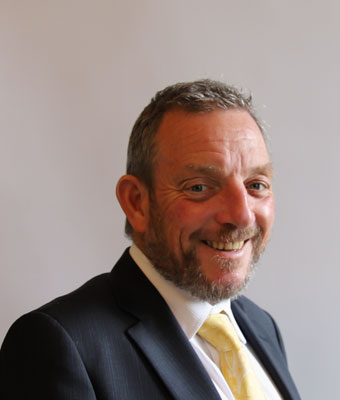
He is going to leave the Chamber after the question.
I do not know how things operate in Sinn Féin but I have a fair idea. The Deputy may get away with bullying people in his own party but he will not bully or barrack me.
When will the NTA get the money? It is a simple question.
Is there any point in even trying to answer?
I am going to move on to the next question because there is no point.
Pathetic, Eoin, pathetic.
No answers, as usual, Minister.
You are pathetic.
Bus Éireann
109. Deputy Darren O'Rourke asked the Minister for Transport the measures he is taking to address the deteriorating service on the 103 Bus Éireann route serving areas including Ashbourne and Ratoath; and if he will make a statement on the matter. [44955/26]
I want to ask about the measures being taken to address the deteriorating service on the 103 bus route serving areas including Ashbourne and Ratoath to and from Dublin. There is huge frustration about the services. Not a day passes without constituents raising concerns about the service, not just to me but also to Government colleagues in Meath and in Meath East. We need improvement on these services.
I thank Deputy O'Rourke for raising this matter which I am taking on behalf of the Minister of State, Deputy Canney. The NTA has statutory responsibility for securing the provision of public passenger transport services nationally and for the scheduling and timetabling of these services, in conjunction with the relevant transport operators. The services are subsidised and the NTA is responsible for the routes, fares and shared systems.
In the case of route 103 serving Dublin to Ratoath via Ashbourne, Bus Éireann is responsible, as we have said, for the management and day-to-day operation as the operator, alongside the other PSO services. The performance of all public transport operators is monitored by the NTA as part of the contractual arrangements in place between the operators and the NTA. The contracts allow for not just the monitoring of performance but also the publication of the annual performance reports and, importantly, for the imposition of financial penalties to reinvest into the network in places where performance does not meet the minimum required standards, as well as reasonable incentive payments where performance exceeds the set standards.
In terms of punctuality, the 103 has unfortunately been generally performing below the minimum contractual standards since the start of this year. However, adhering to on-time performance can be challenging given the length of the route, the variability of traffic conditions in towns and villages along the way, as well as general traffic congestion in Dublin city centre. The point the Deputy is making about improving the services is not one that we can gloss over and we need to listen to his articulation of the issue on behalf of the many people who are frustrated.
I understand from the NTA that since the start of this year lost kilometres on the 103 route have been higher than desired, primarily due to mechanical issues and bus breakdowns. In line with its prescribed allocations and available resources for the year, the NTA is currently working with Bus Éireann to introduce a revised timetable on this route later this year.
Additionally, the NTA is also meeting Bus Éireann weekly at senior management level to review all service performances and monitor the operator's plans to improve reliability. We as a Department have asked the NTA to promptly apprise us of the progress to address these challenges. When we get a report we will get back to the Deputy.
As I said, there is not a day passes that constituents do not raise concerns in relation to the service. Sometimes it is better to use their words rather than mine. I will give an example from the last 24 hours.
To Whom it may Concern,
I am writing this email as i am so disappointed and disgusted with the Bus Eireann service Ratoath/Ashbourne to Dublin. Number 103.
I have lived in Ashbourne since 2004 and now in 2026 the bus service is worse than it was 22 years ago. How is that possible?
Constantly late, no shows, the last few weeks there have been buses cancelled both ways, no explanation given and the notice given for the cancellation maybe less than 20 mins. When i am trying to get home from work i get on at Harts Corner, the buses are usually full and don't stop, especially when schools and colleges are open. The bus due at Harts Corner at 17:10 is usually a coach, what's the point in that?
[...]
There are only so many times an employer is going to listen to the excuse, the bus was cancelled or full.
What do we say to these constituents? What does the Minister of State say to them?
First of all, it is not acceptable that there is that level of frustration and lateness for work. I accept that the issue is there. As I outlined in my initial response to the Deputy, there is engagement with Bus Éireann. We need to ensure that the frustration of people is now replaced by delivery of services. That is why the Minister, Deputy O'Brien, the Minister of State, Deputy Canney, and I have been engaged fully with the NTA in terms of the review of not just the service, with the provision of staff in terms of fixing broken buses, but also in terms of the reliability. That is why we are very anxious that in this year it is about sustainability and building resilience.
Where there are issues, there are fines. I know the fines are not good or acceptable to the person whose email the Deputy read out. I will take back the Deputy's comments. As someone who uses the bus service in Cork city, I know that people are looking for reliability and punctuality and we must build confidence in the system. I understand that and I will take back the Deputy's points. I am not familiar with route 103 but I certainly find it unacceptable that the person's email is a common one. That should not be the case.
It is very common. Across the political spectrum, local representatives at Oireachtas level and local authority level have met the NTA and Bus Éireann but it is like we are banging our heads off a wall. That is why I am raising this specific route here today. Considerable residential development is happening in Ashbourne and Ratoath and it is welcome but these services are not fit for purpose. If the Minister of State has this information I would appreciate it and if he does not I ask him to send it on to me. He has acknowledged that there are failures in these services. Has Bus Éireann been fined in relation to this and, if so, to what extent? It is important that the Minister of State puts the focus on this. There is a review of the Navan-Dublin bus corridor. There should be a detailed review of this service, the Dublin to Ratoath via Ashbourne corridor. It is hugely important and very popular. Lots of people want to use the bus but are not getting the opportunity of a reliable service.
I do not have the information the Deputy requested but I will ask my officials to communicate with him. The Minister, Deputy O'Brien, the Minister of State, Deputy Canney, and I, as a Department, have asked that a report on the route be directly given back to us.
As the Deputy said, it is a critically important route. What is happening is unacceptable. We have been very clear on that. For us, punctuality is critical, Reliability is equally important. We, as Ministers, and the Department are very much of the view that we must build sustainability in order to stabilise matters. The Department, working with the NTA and Bus Éireann, has put in place plans in respect of mechanics, drivers and recruitment. We have spoken to the Department of Enterprise, Tourism and Employment regarding visas and work permits.
What we want is a transport system that operates for the travelling public. If Deputy O'Rourke sends us the information he has, we will certainly communicate with him in respect of the fines. There have been fines levied on the bus providers, as the Deputy knows.
Rail Network
110. Deputy Paul McAuliffe asked the Minister for Transport to outline the latest timeline of construction for the Finglas Luas extension project following the resolution to legal action earlier this year; and if he will make a statement on the matter. [46345/26]
Will the Minister outline the most recent timeline for the construction of the Finglas Luas project following the resolution of the relevant legal action earlier in the year?
I thank Deputy McAuliffe for tabling this important question. I am sure he will agree that Luas Finglas is an exciting project that has the potential to transform Finglas and the wider area around it. There are about 58,000 households in that area. The project will also provide benefits for those living far beyond the immediate community. The park-and-ride facility at St. Margaret's Road and the interchanges with heavy rail and bus at Broombridge, which Deputy McAuliffe and I visited, will allow anyone using those services to connect with the wider public transport network. This is a fantastic project. Importantly, the project will reduce journey times, get people out of cars, help with decarbonisation, provide a more efficient transport system and support the development of businesses and housing in the area.
As the Deputy will be aware, we have had a clean railway order in place since October 2025. Three judicial review applications were submitted. However, these have been successfully resolved. I commend TII and the parties involved on the work they did in this regard. This means that Luas Finglas now has, in effect, full planning permission. In November, my Department published its NDP in which it noted the construction of Luas Finglas.
The project team in TII is currently preparing for future phases of the project, including drafting and updating the detailed business case, the procurement strategy and the tender documents. TII is seeking to position the project to a ready-to-start stage, with the aim that the main design and build contract being tendered at the start of next year. I want to bring this forward at that point in order that we can look to accelerating it with a view to getting into construction in 2028.
This project will have immense benefits for Deputy McAuliffe's area. He has been a really strong advocate for it. If we look at the previous NDP, the project was sitting in the middle of the 2030s. TII is really excited about this project. It is 3.9 km of off-road development. We can bring it forward. The final documents are being prepared. We can get the project out to tender at the start of next year and then, hopefully, get into construction in 2028.
The Minister summed up the project very well. There was a time when I came into the House seeking to explain the project to people and extoll its virtues. The point the Minister has made is that the case for Luas Finglas has been won. The funding is there and the reality is that we have to get on with the job putting the project out to tender and having it built.
This will be a transformative project. Only last week, the Land Development Agency purchased a significant piece of land adjacent to that relating to the Luas project for what it hopes will be affordable purchase and affordable rental accommodation. That would not have been possible without the Luas project. This shows the very real, tangible and immediate impact of the project.
I hope that later this year and early in 2027 we can start to do some of the enabling works that will allow us to proceed with the larger project next year and into 2028. I also hope that the project will be delivered in the next two or three years. I thank the Minister for the work he has done in respect of this project. He has played no small part in pushing it along the line.
As stated, this nearly 4 km extension to the Luas and linking up with heavy rail will be a game-changer for the Dublin north-west area and for the wider north Dublin area as well in light of the interconnection with other services. We are going to bring it forward. Deputy McAuliffe and I have sat down with senior officials from TII and have worked through the details of the plan. The TII did super work in being able to resolve the judicial review. That puts us in a position whereby we can invest and get this project started. We want to get it out to tender. There is already significant interest in it. We will have a competitive tendering process, which we obviously have to go through. We will get that done. Subject to everything going well, we will be getting this into construction in 2028. I do not see any reason why we cannot do so.
This extension of the Luas and linking it up with other services at Broombridge will be the most tangible sign of real change regarding our rail network in the Dublin area. I am very excited about it. I am looking forward to work commencing. I keep Deputy McAuliffe fully abreast of developments. The benefits for his constituents and for people in the wider area of this Luas extension are difficult to actually quantify. In the context of housing, business, quality of life and climate, it ticks every box. We are going to move it forward.
It was great to have the Minister out at Broombridge to see where the current line ends and to look over at Tolka Valley Park in order to see where the line will continue. I have already talked about the benefits. There will also be a park-and-ride facility that will be of benefit to the wider area. There are some sporting facilities, including an all-weather facility, that we can develop in Tolka Valley Park in conjunction with Dublin City Council. This is also going to create employment along the way. We are going to see some movement from employment land to housing land in terms of zoning, but the Luas will bring more jobs to our area.
I want to acknowledge TII. Its representatives have been passionate about this project. They have come out and met with residents. We have not always been able to get agreement, but they literally fought for this project on the streets, outside people's homes and at community meetings. The way we will reward them for that work is to ensure that everything possible is put in place from a Government perspective. I know it has been.
I also want to acknowledge all the community people who fought for this project. I include my colleague and former Deputy Noel Rock, who also fought for this, in that regard. We did not often give each other much acknowledgement. In fairness, there are people who champion these projects. Success can have many mothers and fathers. This will be a real benefit for my constituency.
It is good of Deputy McAuliffe to acknowledge former Deputy Noel Rock, who is no longer here. It is very easy to do that, but fair play. It was very magnanimous of Deputy McAuliffe to do so.
I have been out there. I know the area very well. TII has done superb work on this. Its public consultation and outreach into communities in respect of the project is an exemplar. We are now at the delivery phase, not just across this project but also in the context of our wider rail network. We will start Luas Finglas and we will have our new trains on the northern line, which is the start of DART+ Coastal North. I have already mentioned DART+ West and tried to answer Deputy Ó Broin about DART+ South West, but he just continued to shout me down, which is fine. There are some who do not want to see this progress happening, but this project is happening. I am looking forward to visiting the area again with Deputy McAuliffe in order to walk the new route. We will keep him fully abreast of the situation.
Question No. 111 taken with Written Answers.
Bus Services
112. Deputy John McGuinness asked the Minister for Transport if the discontinued route 4 bus service from Waterford to Dublin-Dublin Airport and the stops along the route will be reinstated following the withdrawal of a service (details supplied). [46260/26]
I want to raise the fact that Expressway has pulled out of providing services on route 4. We are faced with a public service obligation route being provided from Waterford to Carlow. I attended a public meeting on the matter in Mullinavat and have attended two further meetings since. I want to reflect the anger of the people who attended those meetings regarding the lack of a response from the National Transport Authority, NTA, and the lack of proper explanation from the very beginning of this debacle.
I thank Deputy McGuinness for raising this matter. For context, Bus Éireann operates both PSO services and Expressway intercity services. The latter operate on a commercial basis and do not receive any State subvention. We are aware that Bus Éireann recently announced the withdrawal of some services which operate under its Expressway banner. Deputy McGuinness referenced route 4, the Waterford via Carlow service, in this regard.
The point the Deputy makes reflects a lot of the frustration experienced by people. He referred to the meeting held in Mullinavat. It is important that Bus Éireann and the NTA communicate with people, the travelling public and public representatives in a very clear and cogent manner. It is unacceptable that the decision in this regard, which was taken following a financial and operational review, was not communicated by Bus Éireann in terms of the need to provide clarity and certainty to people.
In saying that, Bus Éireann has said to us that in regard to the Expressway performance over recent years, it was concerned about the long-term financial sustainability of the company as a whole.
The NTA, as Deputy McGuinness has referenced, is the licensing authority for the commercial bus sector. As is the case with any such commercial route withdrawals, the withdrawal of these routes triggers the NTA's public service obligation termination process, the outcome of which has been published by the NTA.
I know the NTA - and I will ask it to communicate directly with Deputy McGuinness - has undertaken a detailed assessment of the potential impact to customers. The review identified that the loss of route 4 would, as we have heard, significantly reduce the capacity and connectivity between Waterford and Carlow, and that is regrettable. The NTA has introduced a new Transport for Ireland, TFI, route 365, as subsidised by the bus service to maintain vital transport links and support regional accessibility. I would be anxious to hear how that service, which will have four daily returns, will meet the needs of the people Deputy McGuinness speaks about and I would be happy to communicate with the NTA on his behalf as well.
That is a statement of fact, I suppose, in respect of the response given but, in reality, it does not address the real issue of the connection between Waterford and other towns along the route to Dublin and Dublin Airport. There are students who use that route to go to college. There are those who visit the hospitals in Dublin and elsewhere, or those who go to the airport. There are those who are, maybe, socialising and use the bus service. It has been withdrawn. Bus Éireann has shown a total disregard for its customers by the manner in which it withdrew it and by the lack of information it has given. The National Transport Authority has missed the point in relation to the connection through all of those towns from Waterford to Dublin and Dublin Airport. I ask that this route be examined again, that a proper service be provided and that the customers be informed.
The new 365 route will provide four daily returns, which will provide access for passengers travelling from Waterford and Carlow to Dublin via the counties in between. Passengers travelling onwards will benefit from connections in Carlow to existing bus and rail services to Dublin and beyond. As I said, the route will be operated by Bus Éireann on an interim basis. The new service will provide four return journeys. It will ensure continued access for passengers travelling from Waterford, Carlow and the surrounding counties will be provided for.
I take the Deputy's point on the need to have the travelling public communicated with. He said it was a "statement of fact". I hear what he is saying. I will communicate the Deputy's frustrations and the concerns of the people in regard to the NTA missing the point about the connection piece. As the Deputy knows, the Minister, Deputy O'Brien, and I are not the people directly engaged in that but we will ask the NTA to account for it and report back to us on the matter. It is an important point. I know the town of Carlow well and the Deputy makes good points with regard to hospital and college. It is a large centre of population as well.
We are missing the point here. The customers are central to all of this and their needs must be met in a modern world. The Minister of State talked earlier on about the need to use public transport. We talk about our carbon footprint and so on. This flies in the face of all of that. They are not being given the service in rural Ireland. There is a real problem here in regard to communication and providing the solution to this issue. The only solution is to speak to the customers and put on a service that will provide the same kind of service as Expressway, to do it more efficiently and to ensure that the connectivity to rural Ireland is maintained and enhanced. It is not good enough.
I want to repeat that the communication from the NTA was not what I find acceptable and the customers and the public are not being informed. They are not being listened to. Please engage with them.
First of all, the point the Deputy made in regard to communication is critically important. The NTA should communicate clearly and succinctly people. The route 365 will have four daily return journeys. There will be that continued access but I hear the points Deputy McGuinness has made. I understand what he is saying. Connectivity is important. We have seen the success of Local Link and it has grown exponentially around the country in regard to rural transport. I will communicate the points made very eloquently here this morning with the NTA on behalf of Deputy McGuinness and the people he has spoken about.
We are committed, as a Government, to providing all of our citizens, no matter where they are, with reliable and realistic sustainable mobility options. I know that public transport, as I said earlier - I do not recoil from this - plays a significant role in that. The NTA and the Department will, following this morning's questions, liaise with Deputy McGuinness on the provision of services and if the route 365 does not work, then there obviously has to be a reappraisal of what the situation is.
Public Transport
113. Deputy Paul Murphy asked the Minister for Transport if he will seek additional investment in public transport in light of the fuel crisis; and if he will make a statement on the matter. [46090/26]
My question to the Minister is on whether he is going to seek additional investment in public transport in light of the fuel crisis. Two days ago, the Minister got the Climate Change Advisory Council's annual review of transport. It is pretty damning as an assessment in that, already, the sectoral emissions ceiling has been exceeded. The 2025 one is projected to exceed the second one. The report also calls for investment to be expedited in a range of public transport infrastructure projects. Will the Minister go along with that?
I am taking the question on behalf of the Minister. As the Deputy knows, offering a more affordable and sustainable alternative for many people, public transport has had a particularly important role to play in responding to the demand driven by fluctuating geopolitical developments, as we have said, which are consequently and consistently impacting the cost of fuel. As we all know, rising fuel costs increases the likelihood of car users switching to public transport. We have seen that but that modal shift is unpredictable. What we do have is an increase in people using public transport.
As the Deputy knows, in respect of targeted measures to further support the impacted sectors, in April of this year Government approved and introduced a range of measures to mitigate rising fuel costs, including the road transport support scheme and additional supports for bus and coach operators, including providing TFI Local Link and school transport services. These supports, worth approximately €120 million over three months, are helping operators manage current pressures and maintain service levels.
While operating in an uncertain environment, the immediate priority for our Department and the NTA has been to protect existing services and ensure continuity across the network within the resources allocated to the public service obligation, PSO, programme in 2026. Where opportunities arise to enhance services in a timely and practical way, these will be actively considered and progressed.
The Department of Transport and the NTA continue to remain in close contact with operators to monitor demand and operational impacts. It is important to outline that we are carefully considering all aspects of what is happening at the moment within the available of resources, so that we can continue to provide effective, sustainable public transport where we can see benefits for the people. Additionally, our fare structures in Ireland for public transport compares very favourably with our European counterparts. I will come back further in the supplementary with other comments.
I thank the Minister of State. We are in a deep climate crisis and we are missing our sectoral emissions targets with regard to transport, as well as our targets as a whole, by a very wide margin. We are in a cost-of-living crisis. An immediate answer to both of those is investment in public transport. Yet, what the Government is doing is delaying investment in necessary public transport projects. I will quote from the Climate Change Advisory Council review:
... under the current National Development Plan ... DART+ South West construction will not commence until post 2030 and construction of Luas Finglas ... will not commence until 2029. The delays in construction for these shovel-ready projects are unnecessary. The Council believes that allocation of funding to advance both projects should be expedited and strongly recommends that the Government commit funding to these projects in Budget 2027.
Is the Government going to do that? Why is this delay taking place? The Government cannot blame planning or funds. Is it because of grid issues? Data centres are effectively using up all of the power in the greater Dublin area.
The fundamental point Deputy Murphy misses is that we secured an extraordinary allocation of €940 million - an uplift of 43% - for our PSO services in the budget. I reiterate what the Minister said earlier, namely that the focus for this year is on stabilisation. It is about ensuring services that are already in place can operate reliably and sustainably and that we see progressive improvements in other services.
The other point is that we are meeting our climate change objectives. More and more people are moving to public transport. There is a commitment to electrify the fleet. We have seen more investment than ever before in that area. We are very much committed to having a reliable public transport system that is a movement away from the old style of public transport provision to electric trains and buses. We are seeing that across the country and in the city of Dublin.
Can the Minister of State repeat that? Did he just say we are meeting our climate change targets?
We are meeting them in terms of moving away from fossil fuel vehicles to-----
Can the Minister of State repeat it on the record? We are meeting our climate change targets.
I am saying that we are moving towards the electrification of the fleet.
That is not meeting our climate change targets. Our legally binding climate change targets are set out. They state that we have to reduce emissions in this sector or that sector by certain amounts. The Climate Change Advisory Council review states, "The sector has likely exceeded its first sectoral emissions ceiling (2021–2025) and is projected to exceed its second (2026–2030)." The Government is not meeting its climate targets. It is not coming anywhere close to meeting its climate targets. It is trying to lull people to sleep by saying things that are inaccurate such as, for example, that we are meeting our climate change targets.
We are electrifying the-----
The fundamental point the Minister of State is missing is that the Government is choosing to delay investment in public transport against the advice of Climate Change Advisory Council. That is a fact.
Did the Deputy read the NDP?
I will ask again. Is the reason the Government is not proceeding with the project down to the fact that all of the power is going to the data centres?
Sure that is-----
I refer to the briefing note prepared for the Government's major project governance oversight group, which warned that there is insufficient power in the ESB network to support DART+. The target is 100%, and we need ten times more power. Where will that come from?
I know Deputy Murphy does not want to hear good news.
I would like some good news.
It is the job of the Opposition to hark and bark, and that is all right. We are politicians, and I understand that. One in every four euro is going on public transport investment and one in every eight euro is being spent on public transport. I reiterate that there has been 43% uplift in the budget for this year.
That was not the question.
I ask Deputy Murphy to read the NDP for transport. Has he read it?
I have.
The Deputy will have read about the Government's commitment to the provision of public transport, the electrification of the fleet, the purchase of new vehicles and the move away from diesel engines.
We are not charging the vehicles. The NTA told the Committee of Public Accounts that we are not charging them because the data centres are using all the power. We have electric buses that are sitting there not being charged.
This is not a back and forth. Allow the Minister of State to answer the question.
The Deputy does not want to hear good news. If he had his way, we would have no BusConnects, no Cork commuter rail, no MetroLink and no DART and he would be asking what are we doing.
We do not have 60% of BusConnects.
The reality is that we are developing a transport plan-----
Where is BusConnects?
Deputy Ó Broin got his answer earlier and did not like it.
I will be coming back in shortly. The Minster of State need not worry.
Road Network
115. Deputy John McGuinness asked the Minister for Transport if he will provide an update on progress regarding approval of the completion of the final two stages of the Kilkenny ring road and the maintenance and upgrade of the existing sections of the same road. [46261/26]
On the completion of the next phase of the Kilkenny ring road, I am seeking to establish what stage the process is at, when it is likely to be approved and when the funding will be made available. I made a recommendation to the Minister, because funding is coming directly from the Department's budget, that the €50 million or so needed to cover the project should be set aside in lump sums each year in order that when the planning process is completed, the necessary funding will be in place.
I am taking this question on behalf of the Minister. In accordance with section 13 of the Roads Act 1993, as amended, the improvement and maintenance of regional and local roads is the statutory responsibility of each local authority. Work on such roads is funded from councils' resources, supplemented by State road grants. The initial selection and prioritisation of works to be funded is a matter in the first case for the local authority. Any new road projects in respect of which State funding is sought are assessed by our Department on a case-by-case basis. All projects proposed by local authorities for consideration must comply with the requirements of the infrastructure guidelines and the Department's transport appraisal framework. Given the limited funding available for regional and local road improvement works, it is important for each local authority to prioritise projects within these requirements.
In the case of the Kilkenny city north transport project, the Kilkenny ring road, it aims to reduce city centre congestion and improve cross-river connectivity via a potential northern ring road extension. In January 2023, in line with Government requirements, Kilkenny County Council produced a strategic assessment report for the Kilkenny northern ring road extension and a draft was forwarded by our Department for review. Since then, both the public spending code and the Department’s transport appraisal framework guidance have been updated. In 2024, following the provision of funding from our Department, Kilkenny County Council submitted an updated project outline document, POD, for the Kilkenny city north transport project. While this process was underway, funding was also allocated for traffic and junction analysis in the Butts Green area of the city to further assess and better understand traffic patterns.
In 2025, following a review of the POD by our Department, €200,000 was allocated to the Kilkenny northern transport project to allow Kilkenny County Council to progress it to phase 2, the options stage. This year, Kilkenny County Council appointed a design consultant to progress the options stage. An additional €300,000 was allocated by the Department of Transport, which will continue to liaise with Kilkenny County Council as the project progresses. For this year, €718 million was allocated through the regional and local roads grant programme for improvement and maintenance, with approximately 90% of this funding allocated to road maintenance and renewal. I will come back in with more information for Deputy McGuinness in a moment.
Just to be clear, there are two issues I am trying to address here. One is the completion of the next phase of the northern part of the ring road around Kilkenny. I ask the Department to liaise with Kilkenny County Council to proactively move that process and consideration forward so that we can get to the point of approval quickly. The completion of that section has been delayed for some time. I see no reason why we cannot look at the final phase of the project in order to ensure that there will be no time lost in completing the full northern extension of that ring road.
The second point relates to the fact that TFI looked at the existing ring road and instructed the council to implement safety measures, which it has failed to do. I am asking if TFI will examine the matter again and come up with a more efficient plan.
Who has failed?
TFI has failed.
I will ask the NTA to liaise with Kilkenny County Council. As Deputy McGuinness knows, it is mainly the responsibility of Kilkenny County Council to decide its programme for road maintenance.
On the safety issue, I will certainly ask the council to liaise and engage, particularly as safety is paramount. I know that Kilkenny County Council has received significant moneys for road protection and renewal works. It is certainly important that there is collaboration and both entities work together to ensure the existing sections of roads can be completed.
In terms of the north ring road, there has been the appointment of a design consultant. I will ask our officials to liaise with council on the matter because it is important. I know it from Deputy McGuinness's ongoing advocacy and it is critical to the growth of Kilkenny and the area.
There are a lot of cooks in the kitchen in the context of all of this. Sometimes, too many of them can spoil the dish. I ask that there be some communication between all of those involved, namely Kilkenny County Council, the transport infrastructure people and those responsible for funding in order that the mess they have made of the Black Quarry roundabout might be addressed and to prevent traffic from backing up right along the ring road. There is still a problem with safety that should be addressed. I accept what the Minister of State said about the northern part of that ring road. I will work with Kilkenny County Council to ensure that we move quickly through the process. I again ask for the support of the Department as we do that.
As the Deputy will appreciate, I do not have information in respect of that issue. I will certainly ask about the Black Quarry roundabout and ask people to liaise with Deputy McGuinness on the matter. I take the point the Deputy makes that too many cooks spoil everything, but it is important Kilkenny County Council, as the lead agency, can liaise with other stakeholders.
I will ask the Minister, Deputy O'Brien's officials to liaise with Deputy McGuinness.
Transport Costs
114. Deputy Pa Daly asked the Minister for Transport if he will rule out fare increases in budget 2027; and if he will make a statement on the matter. [45499/26]
Tá ceist Uimh. 114 á thógáil ag an Teachta O'Hara ar son an Teachta Daly.
Safeguarding long-term financial sustainability while being responsive to passenger needs remains a central commitment under the programme for Government. Achieving this requires a careful balance between delivering high-quality reliable services and ensuring that the network is adequately resourced to meet growing demand. Passenger numbers have continued to rise in recent years, with a record-breaking 363.5 million journeys undertaken just last year.
As the statutory body responsible for regulating fares across services operated under PSO contracts, the NTA is central to shaping a public transport system that is fair, efficient and accessible. Through its management of fare strategies, it helps to ensure that pricing structures support social inclusion and the modal shift while also underpinning the financial viability and resilience of the network.
Public transport fares in Ireland remain comparatively low due to a range of targeted measures introduced in recent years. For context, Ireland's farebox recovery average stands at 38% when compared to a 44% European average. Including the young adult card, the 90-minute fare and free travel for children under nine years of age, such targeted initiatives have significantly improved affordability and accessibility. They also increase reliance on subsidy, making fare revenue a critical component of maintaining a financially sustainable PSO model.
In line with international best practice, prioritising the reinvestment of the fare revenue is essential to support service improvements, expansion and system resilience. Maintaining a stable funding base is, therefore, critical to sustaining service levels and ensuring public transport continues to meet passenger needs over the long term.
Regarding budget 2027, the PSO funding allocation will be subject to the annual budgetary and Estimates process. As is standard in all budgetary deliberations between Departments and State agencies, a comprehensive assessment of all service provision costs and requirements will be undertaken, with a strong focus on ensuring value, fairness and accessibility for all passengers.

I thank the Minister of State. The cost of fares is obviously a significant expense for people who rely on public transport. At a time when households right across the State are struggling with rising costs, rising rents and rising everything else, there is a need for the Government to be upfront with people as to whether commuters will face an increase in public transport fares. In the Minister of State's response, he has not given any clarity as to whether fares may increase.
I want to raise the taxsaver scheme because this is one area where commuters try to save money on their fares. While many people have the opportunity to participate in that scheme, it is only available to commuters who are employed at companies that are taking part in the scheme. It has been raised with me that this requirement means that a whole cohort of people are being excluded from the scheme. I understand that the Department of Finance has a role in that also. Has the Department of Transport given any consideration to extending this scheme to all employers to make everybody eligible to benefit from it?
Everything will be considered in the budgetary deliberations for next year. As the Deputy knows, all deliberations between our Department and the various agencies under it are subject to a thorough assessment in terms of their service provision, cost and requirements. There is a strong commitment to and focus on ensuring that value, fairness and accessibility for all passengers is achieved. Looking at what we have done, we have made public transport accessible for people through the young adult card, the PSO uplift and the funding of cost-of-living measures.
The point the Deputy makes as to how we can get more people to use public transport and to incentivise them is one on which we must reflect. I certainly have heard it from many people in terms of the taxsaver scheme. If we look at the whole national fares strategy, it is one we are always looking to examine, review and analyse. As the Deputy says, this is about getting people in that modal shift. He referred to other routes in his earlier contributions. I will certainly take the Deputy's point back to the Minister and the Department, but I cannot give any answer this morning because the budgetary process has not commenced yet.
It would be good if changes could be considered. A related issue I wish to raise is the significant difference that commuters in Galway are paying for rail fares compared to other parts of the State, particularly Dublin. I had a constituent in touch with me highlighting that rail passengers between Athenry and Galway city pay €5.10 each way for a 20-minute train journey. At the same time, a commuter travelling between Clonsilla to Connolly Station in Dublin, a journey of roughly 30 minutes, can travel for approximately €2.60 each way. Athenry to Galway is a commuter route. There is clearly an unfairness in passengers on those trains having to pay significantly more - double what a commuter in Dublin could expect to pay. At a time when the Government is trying to encourage and promote the use of public transport, why are commuters in Galway paying twice what commuters in Dublin could expect to pay for their rail fares, especially given that public transport is much more limited in the west? Will the Minister of State review this difference in fares and ensure that commuters in Galway are treated fairly when it comes to the cost of public transport?
I think the Deputy has raised this matter before. The important point I would make is that we are committed as a Government to maintaining a fare strategy that is fair and equitable. We are committed to helping to ensure that the pricing structure supports social inclusion and the modal shift, whether it is in Cork, Galway, Dublin or Offaly. It does not matter where. For us, our public transport provision is very important. If we look at the comparison to Europe, the farebox recovery average stands at 38% compared to the 44% European average.
I will take the point the Deputy makes back to the Department. We are committed to improving the offerings for people. We have a very good model of fare strategy, and if there are improvements to be made, let us make those happen.
Question No. 116 taken with Written Answers.
Bus Services
117. Deputy Grace Boland asked the Minister for Transport the number of electric buses currently in storage; the total cost of their storage and maintenance over the past three years; the projected cost of continued storage and maintenance until deployment; and if he will make a statement on the matter. [46183/26]
The public accounts committee has, after protracted correspondence, finally got to the bottom of where we might be in terms of the cost of storage of 384 buses over the last four years, with 98 electric buses still in storage. These are much-needed buses that should be servicing our community. Will the Minister of State specifically tell us the cost of those electric buses, and also the projected cost, given that we are still counting for the 98 buses still in storage?
Delays in the entry into service of new buses are very much regrettable. However, I must emphasise that the storing of buses while we deploy charging infrastructure is preferable to deferring their purchase in the first place until we have a charger available for every bus. If an alternative approach had been adopted where buses were only purchased after charging infrastructure was installed to ensure no delay in fleet absorption, the cost of purchasing fleet would have significantly escalated in recent years due to inflation. As an example, if electric bus purchases were deferred by one year from their actual order placement dates, the additional purchase cost of the buses would have been approximately €12 million, compared to around €7 million in costs that have actually been incurred as a result of bus storage.
As of today, over 250 battery electric buses have been accepted into the Dublin Bus and Bus Éireann fleets across the country, including the operation of our first fully electric services in Limerick and Athlone. Ninety-eight battery electric buses are currently awaiting deployment pending the installation of charging infrastructure. The 56 buses to be deployed in the greater Dublin area are planned to enter service later this year. The 42 remaining buses for use in Galway are all planned to enter into operation late this year and early 2027.
There can be a 12-to-48-month timeline when ordering a new electric bus, while installing charging infrastructure typically requires securing planning approval and subsequent procurement of charger supplier and installation. Achieving full alignment between the delivery of the new electric bus fleet and the charger installations is challenging. The delay is regrettable, as the Deputy said. To help address the mismatched timelines of charging capacity and fleet delivery in future, the NTA plans to award a new national electric bus charging infrastructure framework later this month. This framework, from which suppliers can be accessed for depot electrification projects anywhere in the country in the future, will replace the fragmented, project-by-project procurement approach to date. I hope that gives the Deputy some answers to her question.
If hundreds of electric, zero-emission buses sitting in storage represents value for money, I would like the Department to publish a full cost-benefit analysis, the opportunity cost and the opportunity lost. Will the Minister of State please confirm that the Department will do that?
I will have the Department communicate with Deputy Boland. I take the point she makes and it is a very fair point. The overarching point is we must be conscious of spending public money and I take her point on both.
Is féidir teacht ar Cheisteanna Scríofa ar www.oireachtas.ie.
Written Answers are published on the Oireachtas website.
While we are waiting, I welcome a group from Scoil Íosagáin, Coolgreany, who are guests of Deputy Ó Súilleabháin, to the Public Gallery. I hope they enjoy this morning's proceedings.