Road Network
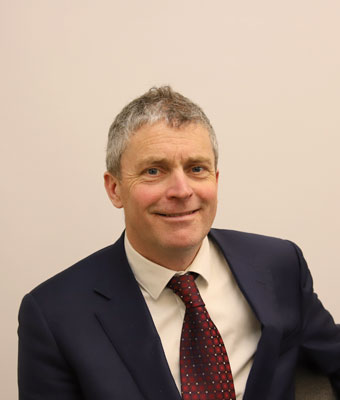
1. Deputy Pa Daly asked the Minister for Transport the measures he is taking to ensure regional and national roads in Kerry are adequately maintained; if he has considered conducting a review into the state of the regional and national road network in Kerry; and if he will make a statement on the matter. [23023/25]
What measures is the Minister for Transport taking to ensure that regional and national roads in County Kerry are adequately maintained? Has he considered conducting a review into the state of the regional and national road networks, particularly in Kerry? Will he make a statement on the matter?
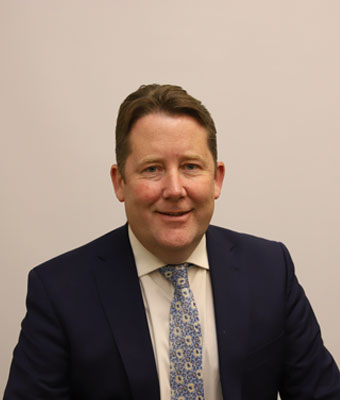
I thank the Deputy for his question. I am pleased that the Government has earmarked €5.1 billion for capital spending on new national roads projects from 2021 to 2030 as part of the national development plan, NDP. For the information of the House, we have commenced our review of the NDP. I will seek additional funds for the capital side of my Department. As it currently stands, a further €2.9 billion has been earmarked for the protection and renewal of the existing network.
In addition, I can confirm that approximately €600 million of Exchequer capital funds were provided to Transport Infrastructure Ireland, TII, for national roads in 2025. Kerry County Council received €10.2 million for protection and renewal of national roads and €3 million for the construction of new national roads from this overall allocation. The protection and renewal budget will allow for the progression of numerous road improvement works, such as pavement renewal and measures to improve safety for cyclists and pedestrians on the national road network in Kerry. Allocations have also been provided to upgrade the N86 between Tralee and Dingle, and, as the Deputy knows, to continue the development of the N22 Farranfore to Killarney project. A number of new national roads projects, which are included in the current NDP have been delivered, including a bypass of Listowel.
With regard to regional and local roads, each local authority has statutory responsibility, in accordance with the provisions of section 13 of the Roads Act, for the improvement and maintenance of their regional and local roads. Works on those roads are funded from local authorities' own resources and are supplemented by State road grants. Of these grants, the vast majority, approximately 90%, are targeted at the maintenance and renewal of the network with approximately 10% of the remaining funding invested in new roads and bridges.
In 2025, Kerry County Council was allocated €33.36 million for the maintenance and improvement of their regional and local roads network, which is an increase of more than €3.2 million, or 10.7%, on its 2024 allocation. Of this, €28 million was allocated to road protection and renewal.
I thank the Minister for the reply. There is a danger with Government announcements and there was such an announcement on 28 March. Those announcements often include a boast about funding but when the details are checked, it does not seem that there is enough there and there is no delivery. Many people feel they are only being codded. While I recognise that some progress has been made, the reality is that progress has been too slow.
The Minister mentioned the N86. It came up recently at a meeting of Kerry County Council that all that will be done for the N86 will be the provision of some extra fencing. There is money allocated for fencing on that road.
There are other issues in Kerry. I am regularly contacted by constituents about Listry Bridge, which is on one of the main tourist routes in the county between Killarney and Dingle. This very busy tourist route suddenly narrows into one lane over a bridge. There have been multiple collisions on that bridge over the past few years. There are also concerns about the tightening of the road in Fossa. It seems there is good funding available in the plan but delivery on the ground is causing concern.
In respect of Listry Bridge and other specific issues in the Deputy's constituency, we will take a note as he raises them. I assure him that the figures I have given are real. There are significant increases in funding for new roads and for maintenance and renewal. I agree with him that speedy delivery is key.
The funding provided for the N86 from Tralee to An Daingean is not just for fencing. A total of €1.25 million will be available in 2025 and it would want to be a very expensive fence if that were all we were doing. I assure the Deputy that is not all that we are doing.
As I mentioned, we are advancing the review of the NDP and hope to have it concluded by July or early August. We will have a significant roads programme for the remainder of this decade and 2026, in particular. I can see the funding that is coming along the way. I agree that delivery is key and critical. We want those improvements delivered and our budget expended, which I predict it will be.
There are concerns among engineers in Kerry. One concern is that they had tender documents available for the bridge near Glenbeigh National School and between Ballinclare and Ballinasare on the Dingle road. Tender documents were available and all the work was done but suddenly the funding that was believed to be available was cut.
I also raise the issue of local improvement schemes, LIS. As far as I can tell, their funding has been slashed for 2025. I raised the matter with the Deputy's colleague, the Minister for Rural and Community Development, Deputy Calleary, in March but am still waiting for an answer. People from all over Kerry, including Listry, Asdee, Ballyconry and Dromod, have raised the issue. It seems there was kite-flying by local Government-supporting Ministers. It seems that funding has been slashed by 52%. When we received the figures, the allocation for 2024 and 2025 was €2.6 million, but the 2024 spend was €1.7 million. When we subtract one figure from the other, we are left with €821,000, which is a decrease in funding. Will the Minister confirm there was a decrease for LIS roads? What was the thinking behind that? Another version of events has been given to the people of Kerry.
The LIS falls under the remit of the Minister for Rural and Community Development. It does not fall within my Department.
I have given the funding figures and have used Kerry as a good example. We are looking at a 10.68% increase in funding for roads this year. There is a total allocation of €33.36 million for maintenance and improvement, which is on top of the funding for new roads. That is significant.
There is always more to do. We have the plan of work programme. The Deputy might ask the engineers in Kerry what they are referring to when they say tender documents have not been submitted because a project was cut. We have not cut any projects. In fact, we must prioritise projects. Much of the work in respect of the allocations for this year was concluded late last year. We are looking at schemes and the key will be what can be delivered. We will certainly be looking at that in detail for the 2026 allocations.
Departmental Policies
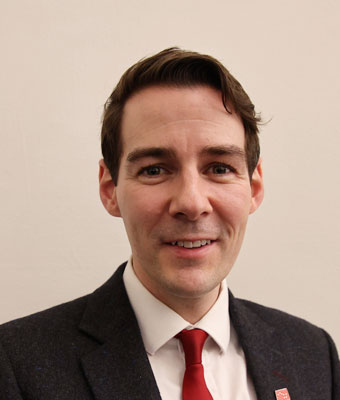
2. Deputy Ciarán Ahern asked the Minister for Transport when he intends to bring forward a new national aviation policy; and if he will make a statement on the matter. [23103/25]
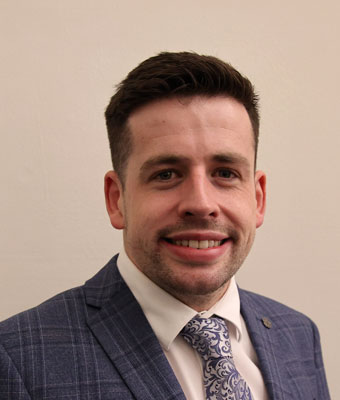
I raise the issue of aviation policy. Will the Government consider reviewing aviation policy in light of the fact that aviation policy has not been reviewed since 2015? I raise the matter in particular as a member of the cross-party Shannon Airport Oireachtas group. Shannon Airport is one of the most underused pieces of infrastructure in the State and we need to make much better use of it.
I thank the Deputy for the important question. A number of Deputies have asked about national aviation policy. We are dealing with the 2015 national aviation policy, NAP. It established a policy framework for the development of the aviation sector in Ireland, which is critical. It is designed to create an environment that encourages the sector to enhance Ireland's connectivity, to foster the growth of aviation enterprise and maximise the contribution of aviation to Ireland's sustainable economic growth and development.
While the principal goals of the 2015 NAP remain valid, and it continues to guide decision-making, my Department has commenced preparatory work, at my request, on a review of the NAP with a view to bringing forward a new NAP. We will be engaging with the transport committee on that policy. The review will update existing policy in the context of developments in the sector in the period since 2015. Much has changed since then.
The Deputy referenced Shannon Airport, where we are seeing good growth. I agree with him that there is headroom and more capacity there. Shannon Airport can take up to 10 million passengers. In 2024, there were 2.1 million passengers. We are projecting approximately 2.21 million this year. It is also good to see significant growth in Cork Airport and all our other airports. We are seeing further growth in Ireland West Airport and the airports in Kerry and Donegal.
The update of our NAP is critical. The work has commenced. There will be detailed stakeholder engagement. Importantly, there will also be engagement with transport spokespeople across the House and with the Joint Committee on Transport. There is a fair bit of work to be done and I do not expect this to be concluded this year. I want input. We need to grow connectivity. As a country, we are successful in the whole area of aviation. We need to see how we can update that further. I agree with the Deputy that the policy needs to be updated. We have started the work and I am happy to engage specifically with the Deputy on the matter.
I thank the Minister and tentatively welcome his reply. I am from the west of Ireland, as is the Minister of State sitting beside the Minister, and Shannon Airport is critically important to us in the mid-west. It is not something I agree with, but we know that the Government is going to try to lift the passenger cap. It is a fact of life. We need to gain some additionality for regional airports. Will the Minister look at expanding the regional airports programme to allow access to airports such as Shannon Airport? It is a matter the CEO of the Shannon Airport Group, Ms Mary Considine, has raised and will raise again when she meets the Minister. We need to wean the country off Dublin Airport, although not in terms of the key point-to-point connectivity. At the moment, there are 16 flights per week from Dublin Airport to Amsterdam Airport Schiphol. We could do with two flights per week from Shannon to Schiphol.
I had a good meeting with the Shannon Airport Group. It was one of the first meetings I had when I took over as Minister. The group has raised the issue of regional airports and how it might be able to access funding. There is a passenger cap to access that funding at the moment but we are considering that. Shannon Airport can stand on its own two feet. It is doing very well. We need to encourage airlines to use the other airports. We have been clear, however, that the Government cannot direct an airline to fly out of any airport. The airports need to be competitive and hungry for business, as I know Shannon and Cork airports are. The passenger growth at Cork Airport has been significant.
I might come back to the Deputy on the passenger cap during my supplementary response. We have committed to working with stakeholders to remove the passenger cap at Dublin Airport. That commitment was included in the programme for Government. However, that will not happen instead of anything else. We need to consider how to grow all our airports. There is capacity in Shannon and Cork airports that should be used.
I have met with DAA officials, who operate Cork and Dublin airport and I have also met with Shannon representatives.
It is not about being anti-Dublin or anti-Dublin Airport. It is about giving us more options outside of Dublin, both in the mid-west and Cork, to avoid having to travel up the motorway to fly to key European destinations. I welcome the fact the Minister said he will examine the regional airports programme. While Government cannot force airlines to fly from a particular airport, it can create policy levers and incentives to make it more attractive for airlines to fly out of the likes of Shannon, Kerry and Knock airports. That really needs to be examined.
Looking at where we came from, there was 7% year-on-year growth between 2023 and 2024 in our regional airports. That growth is happening. Shannon is profitable. I do not think anybody is necessarily looking for subsidies or additional funding – capital funding, maybe - to improve facilities. I want to see more routes flying out of Shannon and Cork and that is happening. There has been about a 17% increase in passenger numbers in our regional airports since 2019. That is good but we can build on it. We have headroom. There is capacity in Shannon and Cork and I would like to see it utilised. The airports need to be hungry for business too. They need to go out and fight for business and for airlines to have additional routes flying out of their airports. Dublin, Cork, Shannon and Ireland West Airport in Knock are all important parts of our infrastructure. Allowing people to fly to other destinations from closer to home makes a lot of sense.
Public Transport
3. Deputy Pa Daly asked the Minister for Transport the efforts he is making to improve the experience of commuters on public transport; and if he will make a statement on the matter. [23024/25]
What efforts is the Minister making to improve the experience of commuters on public transport? The performance of public transport operators is closely monitored by the National Transport Authority, NTA. The Minister previously said on certain routes buses were late and even not turning up at too great a frequency and that the NTA was carrying out a review of the incidents that had taken place. Has that review been completed? Does he have it? There are concerns across the country about the transport system and its difficulties.
I thank the Deputy. The review is not concluded yet. I have not received it. He is right to highlight the importance of the passenger experience. When we think of our public transport system, passengers and customers have to be central to it. Public transport is not just about moving from A to B – it is a vital service that connects individuals to work, education, healthcare and their communities. That is why I am firmly committed to ensuring our public transport system offers services that are accessible, reliable, affordable and, in particular, safe.
On reliability, we have major infrastructure plans under BusConnects for each of our five cities, as well as introducing improvements to the vehicle location system for the fleet, which will improve the reliability of the real-time passenger information system. That remains a frustration for passengers on some routes. Real-time information is key. We need to see construction start on the BusConnects corridors in Dublin and roll that out to the other cities. Most of those projects are through planning. Three are not subject to judicial review, so we can start them; others are held up and there are objections. BusConnects, particularly in our cities, will be critical to improving the passenger experience.
We are supporting accessibility through our commitment to expand the availability of public transport across the country. This commitment is supported by both international and national frameworks, including the UN Convention on the Rights of Persons with Disabilities and our national sustainable mobility policy, which promotes a whole-journey approach to mobility and inclusive access for all. All new infrastructure is designed with accessibility in mind and significant progress has been made in improving accessibility. This year, my Department has increased funding by 67% for the retrofitting of legacy infrastructure to make it more accessible, particularly for those who have additional needs or are disabled and our senior citizens.
Equally important is the safety of passengers and staff across the public transport network. The NTA’s 2024 passenger security report shows that while reported incident rates remain low at 2.2 per 100,000 passenger journeys, incidents are being raised. Even one incident is one too many.
I thank the Minister for the reply. We have seen that, where services have been provided, the increase in passenger numbers has been up to 50% on some routes. People want services to be affordable, accessible and reliable. I spoke recently to some students from UL who travel up and down to Kerry. On a Friday, the Dublin coach regularly does not turn up and they are left to get the next bus or even the bus after that. What is the Minister doing to address the situation? Is he monitoring the scourge of ghost buses, not only in Dublin but in the rest of the country as well?
In the recent revision of the national planning framework, there was an opportunity to address the infrastructural deficits. As has become the hallmark of this Government, another opportunity was missed because there is no national policy objective to address regional connectivity and transport specifically.
People who want to get public transport up the west from, say, Kerry to Sligo and beyond have to change buses a number of times. Even students, if one bus is late, are punished and have to buy another ticket, even though they are relying on the same Bus Éireann service to continue on that journey.
I understand that. People need to be certain and sure they can rely on their public transport system. In the main, they are and our public transport operators operate very well. We saw record passenger numbers on public transport last year. People are responding because fares are affordable but there are issues from time to time, particularly in relation to our bus fleet and buses not turning up. That is why I have met the NTA on a number of occasions and charged it with reviewing the phenomenon of buses not turning up. I assure the Deputy that is not just focused on Dublin. To be fair to my predecessor in the previous Government, the availability of public transport in rural areas has been transformed. We need to go further, unquestionably, but we see the success and expansion of, particularly, rural link. The Minister of State, Deputy Buttimer, will know that well. I have met many of the groups myself. There is a real opportunity to do more but there has been great improvement over the past four or five years and we want to build on that.
I have two final questions. First, the last time we debated on Oral Questions I asked the Minister to explicitly rule out public transport fare increases. Has he come to a decision on that?
The second question has been rumbling on since Covid. It seems that in the transport plan, there is a policy to have a food and drinks ban on train services to the west. For people travelling, students, old age pensioners, everyone - even five or six TDs get the train up from the west - they cannot get any food or drink on those trains. The Minister will say it is a matter for Iarnród Éireann but he is Minister for Transport. We have received assurances in recent years. That the tender would be awarded in early 2024 was mentioned. A response from Irish Rail said that though the tendering process was in its advanced stages, the NTA had yet to make a funding decision on it. People get up early in the morning and have to wait four hours without even a glass of water on the train. We received responses in February and May but the service is still not restored.
On fares, my focus is on investing in our fleet and infrastructure. That will be Government's focus. This five years to the end of the decade can see a step change in our infrastructure. We have seen some significant projects in Ceannt Station, Galway, and Kent Station, Cork. In Waterford, there has been significant investment in a new bus depot and in the train station. We are looking at how we can do that better. Affordability in public transport is key. We have to be mindful of the levels of fares. The decision was made to bring in free travel for five-to-eight-years-olds. We want to see what we can do for students also and there have been fare reductions. I am not ruling out anything because we need to be able to fund investment in our fleet as well.
On the food and beverage matter, I will have to follow it up for the Deputy. I do not have an answer on that.
4. Deputy Jennifer Whitmore asked the Minister for Transport if he will introduce a policy to ensure that there is no increase in public transport fares until we are on track to meet our transport-related carbon emissions targets; and if he will make a statement on the matter. [23026/25]
I ask the Minister to introduce a policy to ensure there is no increase in public transport fares until we are at least on track to meet our transport-related carbon emissions; and if he will make a statement on the matter.
The Deputy is no doubt aware of the considerable amount of research, both domestically and internationally, on what drives increased passenger numbers on public transport. I am happy to report there has been strong growth in passenger numbers in recent years, with numbers trending at plus 9% in 2024 versus 2023. In October 2024, public transport surpassed 1 million PSO passengers a day for the first time ever, with an average of 1 million passenger journeys recorded daily. This growth continues in 2025, with a recent 9% increase in passenger numbers in the last period compared to the same period last year.
The Deputy is right to highlight the importance of ensuring more people are incentivised to make the switch to public transport and also the challenge we face in meeting our transport-related emissions targets. The main drivers are fundamentally around issues such as the availability, frequency and reliability of transport, as discussed earlier. I am pleased to say that progress is being made on each of those issues but, equally, I acknowledge that while the work is well under way, much remains to be done.
On availability, we are rolling out new services across the country under initiatives such as BusConnects in the cities, the town services in the bigger towns and Connecting Ireland in rural Ireland. We need to continue this progress in the years ahead. In terms of frequency, we are supporting the rollout of increased service levels on existing services and ensuring enhanced frequency on new services as they are rolled out. Again, we need to build on this progress in the years ahead. On reliability, we have major infrastructure projects under BusConnects for each of the five cities, as well as introducing improvements to the vehicle location system and real-time passenger information, all of which will improve the reliability of the system. We need to see construction start on those BusConnects corridors in Dublin and roll that out to the other cities too.
Of course, I acknowledge that the affordability of public transport is also important, particularly for certain cohorts of society.
The Minister of State should conclude.
I will come back in with a supplementary reply.
I find it interesting that, literally, the only mention of affordability came in the last sentence of a two-minute contribution, and my question was about fare pricing.
I know we have seen an increase in the number of people using public transport, which is fantastic, but we need to see more of it. Our emissions are stubbornly high in the area of transport and while we have seen a slight reduction, it is nothing like what we need to see. There has been a 6% increase in public transport emissions and as there are a lot more people in Ireland now, that is projected to continue to rise. We need to see a 12% reduction in public transport emissions this year to meet our targets for 2025 but that is clearly not going to happen.
Disincentivising people from using public transport by putting up fares is not the way to do it. We have seen increases in train fares for people in Greystones, Kilcoole, Sallins, Kilcock, Balbriggan and Skerries. That is the wrong way to go about trying to encourage people onto public transport.
On the last point regarding the increases in some areas, there have also been massive decreases in other areas because the new ticketing and fare system for Dublin has created a fairer way of dealing with this.
To go back to the affordability of public transport, it is important to state there have been many fare changes in recent years. For example, the Government is expanding free child fares and maintaining the young adult student leap card at 50% off, and there is also a 90-minute fare. These are initiatives to try to incentivise people to use public transport, which is happening. However, we also have to ensure that the frequency is put in place. For example, to take the rail line from Athenry to Galway as a typical example, we are putting in a passing loop to make sure we can get additional trains in and out and make the service more frequent. We are trying to do that across the country and there is huge investment happening in Dublin. Improvements are happening all of the time. Public transport is a good news story.
If the Minister of State were to talk to my constituents in Greystones and Kilcoole, they would not be particularly in agreement with him about public transport being a good news story. They have seen an increase of 30% in their fares and children have seen an increase of 200%. It is very hard to sell that as a good news story to people in those towns, particularly when the train service for areas like Greystones, Kilcoole and further south in Wicklow is essentially a part-time service as we do not have services on the majority of bank holiday weekends.
I also want to mention that the services south of Dublin are due for major disruption on the bank holiday weekend of 2 June, which is the VHI mini-marathon weekend. The majority of women who go into Dublin for that mini-marathon and all of the charities that rely on them will be severely impacted by these service disruptions. I ask the Minister of State to directly contact Iarnród Éireann to ask it to reverse the decision. I understand the need for maintenance but on such a major event weekend, it is ridiculous that Iarnród Éireann is cancelling services south of Dublin.
I understand the Deputy’s frustration in terms of lines having to be taken out of service but that is a health and safety issue for passengers. Maintenance has to be done. I can guarantee the Deputy that no matter what day of the week or hour of the day it is done, it will not suit everybody. It is a reality in public transport.
Tens of thousands of women will be travelling in.
Absolutely. In general terms, a huge amount of work has been done in the area of public transport, be it BusConnects, Local Link or the train network right across the country. We have a huge amount yet to do. We have to make it more efficient and more attractive. In particular, we have to give young people the experience they need so when they are going out into the workforce, their first project will not be to buy a car but to use public transport, which they have had a good experience of.
I look forward in my ministerial role, with my two ministerial colleagues, to continuing to develop the system, removing the parts of the public transport system that are not working and replacing them with a more efficient system for everybody.
Departmental Policies

5. Deputy Louis O'Hara asked the Minister for Transport if work has commenced on a new State aviation policy; and if he will make a statement on the matter. [23069/25]
I ask the Minister to provide an update on the new State aviation policy and also provide more information on the process of the review that he mentioned earlier.
As the Deputy said, this has already been raised by Deputy Ahern. I am happy to say, first, that we are committed to reviewing and updating the national aviation policy, which will bring about a new policy. That will involve stakeholder consultation. Effectively, we will publish a draft in the coming months. The draft will go out to public consultation and consultation in the House, and I would expect Deputy O'Hara and all interested Members to have an input into that. We have also committed in the programme for government to a new regional airports policy, the regional airports programme 2026-2030, and the preparatory work on that is being done.
That does not stop what we are already doing in the sector. We want to see continued growth in aviation and I have already referenced some of the numbers across all of our airports. We are projecting some 40.39 million passengers for 2025 across all airports, although that is a projection and it comes with a bit of a health warning. That is at or about what it was in 2024. We are seeing growth in our regional airports and we want that to continue. As referenced earlier, we have seen Cork and Shannon grow and the projection for Ireland West is a further increase in passengers.
The national aviation policy needs to support that and we have committed to reviewing, updating and publishing a new national aviation policy. I am very happy to engage with the Deputy and colleagues across the House as we put that new aviation policy together. It will go in front of the Oireachtas Joint Committee on Transport at the appropriate time and I expect the committee will more than likely hold hearings with stakeholders to get their views. This will be a piece of work to be done across the House.
As has been said, it is ten years since the State aviation policy was updated so I hope it is something that can be progressed as quickly as possible. The national planning framework, which came before us recently, made very limited reference to the role that the State’s regional airports will play into the future. The development of these airports must be a clear strategic priority, especially in the context of balanced regional growth. When we consider that over 84% of all flights in the State are processed through Dublin Airport, there is clearly underutilisation of our regional airports, which are predominantly in the west and include those at Shannon and Knock.
This means less tourism in the west of Ireland. It means our infrastructure continues to lag behind the rest of the country. I cautiously welcome the comments of the Minister on the review but I ask him to provide a clear timeline on when this will be finalised. We do need the review as soon as possible. It is most important that it rectifies the current imbalance and ensures greater utilisation of these airports.
I cannot give Deputy O'Hara a timeline, and I am not at all being evasive, because we have commenced the preparatory work for the review. There will also be an updating and there is a clear commitment in the programme for Government on updating the regional airports programme. There will be a new programme for 2026 to 2030. This means we would need most of the work concluded this year or by the end of quarter 1 next year. This very much depends on stakeholder engagement and engagement from all members and on how the Oireachtas joint committee operates.
There is capacity in our regional airports and I want to see it used but the Government cannot direct airlines to fly out of other airports. Airlines decide where they fly. Our airports need to be hungry to go after this business also. We saw this in Cork last week, when the Taoiseach and the Ministers of State, Deputies Buttimer and Canney, were there, with regard to a €200 million capital investment in Cork Airport. We have also seen investment in Shannon Airport to be able to grow its numbers. This is something we want to support our airports to do. It is not one or the other. It is not Dublin Airport or the regional airports. We can grow all of our airports
I thank the Minister. I met representatives of Shannon Airport recently. I am also on the cross-party Oireachtas group. Obviously every airport wants more airlines but they also want support in terms of policy from the Minister. They want the State aviation policy to reflect the need to develop regional airports.
I want to raise the issue of bus and rail links to airports, in particular Shannon Airport and Knock airport. It is key to supporting their development. Will bus and rail links to regional airports be considered as part of any review? On this issue, it was raised with me recently that additional Bus Éireann Expressway services between Galway and Shannon Airport this summer are being outsourced to private operators. Before this decision was made the NBRU in Galway drafted two comprehensive operational plans that would see existing Bus Éireann resources and personnel deliver these required services but Bus Éireann has not engaged with the NBRU's proposals and has maintained its decision to outsource the services. Will the Minister outline the Government's view on the privatisation of bus services, especially in the context of the services I have mentioned?
Public transport connectivity and services to our airports are obviously critical. They are served relatively well. This can always be improved. I would expect it to be part of the input into our national aviation policy. While the existing policy from 2015 needs to be updated, it is not redundant at all. If anything, if we look at the growth in numbers in our airports throughout the regions and focus on our regional airports, particularly over the past five years, it has been significant. New routes are required. I have met the Shannon Group myself. I had a very good meeting with it. I know my colleagues have also met it. It has some specific asks which we will consider as part of updating and reviewing the national aviation policy. Every Deputy in the House and other stakeholders will have an input into it through the Oireachtas joint committee.
With regard to servicing of airports by our bus fleet this is happening now. I am not familiar with the matter raised by Deputy O'Hara relating to Bus Éireann. If he wants to correspond with me on it I will have at look into it for him.
Question No. 6 taken with Written Answers.
Departmental Bodies
91. Deputy Joanna Byrne asked the Minister for Tourism, Culture, Arts, Gaeltacht, Sport and Media to provide details from all agencies under his remit of capital projects that cost more than €500,000 and were either abandoned or materially failed to be delivered; and if he will make a statement on the matter. [22926/25]
93. Deputy Aengus Ó Snodaigh asked the Minister for Tourism, Culture, Arts, Gaeltacht, Sport and Media the other agencies, along with RTÉ and the Arts Council, under his auspices that have had failed or partially failed multimillion euro IT projects; if he will make full disclosure of when his Department became aware of any issue with each such IT project; and if he will provide the correspondence between his Department and each agency in relation to same. [23118/25]
This question is to ask the Minister to provide details for all agencies under his Department's remit of capital projects costing more than €500,000 that were either abandoned or materially failed to be delivered, and if he will make a statement on the matter.
I propose to take Questions Nos. 91 and 93 together.
I thank the Deputy. Following my appointment as Minister, issues were brought to my attention regarding a failed ICT project in the Arts Council and an unused X-ray machine in the National Gallery. Both projects were funded directly from my Department. Given the serious nature of the issues, I wanted assurance in relation to capital expenditure in other areas under the aegis of my Department. I therefore requested the Secretary General to write to all the State bodies under our aegis in the culture, sport and media sectors seeking information with regard to expenditure on capital projects since 2020 to provide assurance to me and, more importantly, the public, regarding the management of the capital expenditure. Bodies were asked to provide budgetary information on capital projects costing more than €500,000 since 2020. In addition, bodies were asked to identify if there were other capital projects below this level that should be brought to the Department’s attention for any other reason such as where there has been significant expenditure on projects that were abandoned or have materially failed to deliver on their objective.
I recently received a report from my officials in respect of this aspect. The responses received provide assurance that there are not widespread issues similar to those that arose at the Arts Council and the National Gallery. However, an issue was identified in the RTÉ response relating to expenditure on one ICT project. I was concerned about this and I met with the director general on 8 April to discuss further the background to the project, the reasons for the failure to deliver and assurance that this would not happen again.
I asked for written confirmation of the measures in place to protect against such a project failure in the future. The director general subsequently wrote to me last week and his response noted that an external review of this project had taken place in 2023 and the lessons from that report have been incorporated into all major capital projects. RTÉ has taken a number of steps over the past 18 months aimed at mitigating the risk of such an issue recurring. While it is disappointing this happened, it is important to note that it is in the context of a significant number of substantial projects delivered annually by the broadcaster.
I commend the Minister on instructing his Department to initiate this exercise and on providing transparency regarding what may be a huge waste of public money by multiple bodies under the aegis of his Department. Unfortunately for him, these wastes of money seem to follow him. When he was previously Minister with responsibility for the OPW, there were issues with money being wasted, such as the €1.4 million spent on a security hut and the €330,000 spent on the Leinster House bike shed. He will say he is not responsible for this and I understand that, but what he must do is identify who is responsible and address it. This should not be with more window-dressing to ensure there is never the opportunity for this to happen again.
These constant financial scandals would bring down governments elsewhere but they are unfortunately par for the course here. With uncertainty in the world due to Trump's tariffs and not knowing what may happen with the Ukraine war, financial responsibility is of utmost importance. If our economy hits any bump in the road at all, it will fall flat on its face with all this public waste of money.
I do not know if there is a question there. There is certainly a big statement, and I have addressed that statement previously with regard to the OPW. The Deputy will appreciate the Accounting Officer for the OPW came before the finance committee and the public accounts committee and laid out in real terms what happened with regard to the Office of Public Works. No more than I did not know what happened in RTÉ, I had no detail with regard to the OPW. I know this predates the Deputy, but significant time was spent questioning RTÉ officials in these Houses regarding its previous financial performances, the collapse of the licence fee and their contractual obligations as a broadcaster and everything else. This was never unearthed. The Deputy is right, and I appreciate that she has acknowledged that once I became Minister and realised there was a significant problem in the Arts Council and another in the National Gallery, I took it upon myself to ask if there were others. It is on that basis that I am addressing it. However, and I have addressed this issue previously, whether in the Department of Health, or with regard to expenditure in individual schools, in the Department of Education, Ministers cannot possibly be expected to know individual day-to-day expenditures. That is what Accounting Officers are for and that is why we have decision-makers in bodies. That is why I have taken it upon myself to ask those people responsible for this to come forward with explanations. That is what has happened in this case but I appreciate the comments the Deputy made at the start.
The Arts Council's €7 million IT project failure and RTÉ's €3.6 million IT project failure are the headlines, instead of €10.3 million being spent wisely and well. Let us think of all the sports clubs, musicians and arts and cultural bodies that could have done so much with more than €10 million. It simply cannot continue, and I commend the Minister on his efforts to address it. Sinn Féin wants to see all semi-State bodies under the remit of the State auditor and I hope the Government will support that going forward. This is seen as international best practice. The Government could move to do that today if it were really interested in ending this constant waste of public money. Time will tell whether it supports that in the near future.
We have beaten the Deputy to it because RTÉ has been put under the remit of the Comptroller and Auditor General and all State entities, including An Post and the other ones I will be taking responsibility for once there is a transfer of function order, come under the auspices of NewERA, which to all intents and purposes is a holding agency or accounting body to keep a watchful eye on the semi-State sector to make sure the public is properly represented. We are doing that. I go back to the central point. The Deputy is right that €10 million used by the Arts Council and RTÉ would make a huge difference to individual sports clubs. What I am going through at the moment is an investigative process to find out what happened and who is responsible. I am sure the Oireachtas committees on public accounts and media, now they are up and running, will probably want to examine this as well. They may well unearth something we have not, and if they do, I will welcome that as well.
I will come to this on a different path. This Minister and the Minister for Finance, Deputy Donohoe, have acted as if some of this information about the Arts Council and RTÉ is new. We know that Deputy Donohoe's former Department of public expenditure was aware of the issues relating to the Arts Council as far back as 2013, and Deputy O'Donovan's Department - even though he was not the head of it - was provided with a large volume of correspondence over the lifespan of the project in the Arts Council. It is so large in fact that the Minister has so far not agreed to publish it. That project was tracking red as early as 2021. I know the Minister has looked for other projects that are costing the taxpayer millions of euro. What other agencies are affected at this stage, other than RTÉ and the Arts Council?
At the moment there are none to my knowledge. That is not to say there will not be. I did not expect there to be three in the first place, and I certainly did not expect that we would be back to RTÉ again after everything that happened, but we are. I turn to information that has been compiled and the investigative process under way. I would like to think Members support that immediately on becoming aware of this I asked Professor Niamh Brennan, one of the foremost authorities on corporate governance in Ireland, to carry out an investigation into this matter. I have given fairly wide terms of reference. There will be implications. There is no doubt about that, and I am as anxious as the Deputy to hear who said what when, and to whom. I do know it came late in the day to me, and when it did come, after my appointment, I dealt with it. Who knew what prior to that is something I want to get to the bottom of, which is why I have tasked Professor Brennan and the others on the investigative panel to do that body of work for us.
I am glad the Minister raised the issue of Professor Niamh Brennan. This is not a criticism but she carried out a report and review in the culture of governance in RTÉ and she totally missed that this €4 million write-off had been discussed repeatedly by the RTÉ board in 2023, and that there were issues in that project in 2019. Can the Minister in any way assure us in the reviews she is doing that she will not miss other flaws or gaps in the reports from either RTÉ or the Arts Council? This is to ensure that when all of this is finalised, we are assured that the accounts are fully acceptable, but also that any project floundering - as were both IT projects in both organisations from early on - will be scrapped before the expenditure of huge amounts of taxpayers' money.
There is one important thing to point out here, which is that the Department has no role in the sanctioning of capital expenditure within RTÉ. I know the Deputy knows that. With regard to Professor Niamh Brennan, the Deputy's assessment has been quite unfair. I know him a long time and I know he will reflect on that. The work she did on RTÉ unearthed a serious culture that had failed the organisation, the employees, the licence payers and the Oireachtas, and has ultimately resulted in a situation where we now have a body of work under way in RTÉ that will transform it into a far smaller, slimmer and more efficient organisation that is fit for purpose and in which the public has trust. The person who really drove that, by virtue of the report, was Professor Niamh Brennan. That is why, culturally, I also have to get under the bonnet of the Arts Council because that impairment or loss of money was lurking around for a long time. The Deputy is absolutely right, and the whistle was not blown on it. Once I became aware of it, I dealt with it, and the person in this country who has the greatest level of experience in that area is heading it up for us.
I did not mean to question her at all. I was just saying that she failed to see the hole in the accounts concerning that €4 million for IT.
I thank the Deputy. I know everybody is anxious to see what we will ultimately get to by way of a report and how quickly. What I do not want to do is put pressure on the group I have assigned to carry out the work for fear people will say I am in any exercising undue influence. I want a report I can stand over and present to the Oireachtas. I am sure it will be debated by committees and the people relevant to the information contained in it will come before them and will be accountable and co-operate with them in full.
Economic Policy
92. Deputy Robert O'Donoghue asked the Minister for Tourism, Culture, Arts, Gaeltacht, Sport and Media if he will consider establishing a night-time economy commission or advisory group in each major city to provide expert guidance and recommendations, informed by local research and consumer feedback. [22933/25]
Will the Minister consider establishing a night-time economy commission or advisory group in each major city to provide expert guidance and recommendations informed by local research and consumer feedback, to support those operating in the creative arts and culture space, and to offer more people to enjoy the night time and help cultural institutions to extend their opening hours into the evening?
Since becoming Minister, I have been particularly interested in the amount of work my Department has been undertaking on the night-time economy. This has primarily been focused on supporting the development of safe and vibrant nightlife across the country. In 2022, the Department invited all local authorities to put in a night-time economy pilot initiative. The aim is to stimulate night-time activity supported at local level by the appointment of a night-time economy adviser.
An independent panel selected nine locations across the country to take part in the pilot, namely, Dublin city, Cork city, Limerick city, Galway city, Kilkenny, Drogheda, Sligo, Buncrana and Longford town. The Department has provided funding for a two-year full-time night-time economy officer in each one of these selected locations and in recent weeks, I confirmed funding for these posts until September 2026. Having established local committees in each of the locations, the advisers have been conducting local surveys to engage with the local community, gathering data to inform policy decisions, and have been consulting with their advisory committees to aid in the process of developing ideas for the night-time economy in their own locality. It is clear that the requirements vary from town to town and city to city, and following feedback from stakeholders, each adviser develops and publishes an action plan for their specific location.
This year, following a tendering process, we appointed Communiqué International to undertake an independent review of the night-time economy pilots to advise on possible options for the future of the initiative. The review will also critically examine the structures involved in supporting the advisers, the funding levels, the visibility of each in their respective areas and their impact on the economy in the local area. I expect the report from that review in the coming weeks and I look forward to the findings of the review. I will also shortly meet the national implementation group for the night-time economy to hear at first-hand from stakeholders across government and others about their priorities and how best we can continue to work together to improve the quality of night-time activity across Ireland.
I welcome the Minister's actions and look forward to the review. I urge him to consider establishing the night-time economy commission or advisory group in each of the major cities. Our cultural life does not end at 5 p.m. as he knows, and neither should our planning. By grounding these commissions in local research and consumer feedback we ensure that we reflect on the unique needs and opportunities for each community, from live music to theatre to hospitality, and transport the night-time economy as a powerful driver of jobs, tourism and well-being. Cities that nurture it see not only economic growth but safer, more vibrant public spaces. The Labour Party is happy to support this so we can shape a more inclusive, creative and sustainable cultural future, one that shines after dark.
I thank the Deputy for his positive remarks. Any suggestions that will be made on this will be welcome. As I said a while ago, once I have had a chance to meet all the relevant stakeholders and also had the chance to review the documentation that is going to be submitted to the Department when it is done, I will have no problem in engaging with Opposition spokespersons on their suggestions. We are going to be heading fast into the budgetary cycle when we are going to be preparing for the Estimates for next year. I would like to hear the practical ideas of how people feel that town centres and city centres can be improved both from a cultural and social point of view but also in terms of practical measures the Department can help with and with which local authorities can also help. Many people often refer to things that are outside the scope of the Department in terms of arts and culture - it might be public realm - or it might be local authority-related matters - but there is no reason that our role cannot be used as a conduit for information to flow to the relevant agency in that matter.
Question No. 93 taken with Question No. 91.
An Ghaeltacht
94. D'fhiafraigh Deputy Catherine Connolly den Aire Turasóireachta, Cultúir, Ealaíon, Gaeltachta, Spóirt agus Meán cén pleananna atá aige chun scéim na ndeontas tithíochta Gaeltachta a reáchtáil arís de bhun Acht na dTithe (Gaeltacht) (Leasú), 2001, chun tacaíocht a chur ar fáil do chainteoirí Gaeilge a bheadh ag iarraidh teach a thógáil nó a athchóiriú sa Ghaeltacht; agus an ndéanfaidh sé ráiteas ina thaobh. [22816/25]
Baineann mo cheist go sonrach le cúrsaí tithíochta sa Ghaeltacht agus go háirithe le mír 9 d’Acht na dTithe (Gaeltacht) (Leasú), 2001. Faoin mhír sin, tá cumhacht ag an Aire agus ag an Roinn airgead agus acmhainní deontais a chur ar fáil do chainteoirí Gaeilge chun tithe a athchóiriú nó tithe a thógáil. Níl an mhír sin á húsáid faoi láthair ó 2009 ar aghaidh, áfach. Is mian liom soiléiriú a fháil cén fáth nach bhfuil sí in úsáid.
Gabhaim buíochas leis an Teachta. Mar is eol don Teachta, tá cúraimí na Gaeltachta agus na Gaeilge ag aistriú chuig an Aire, an Teachta Calleary, faoi láthair. Bhí sé le bheith anseo inniu ach ní raibh sé in ann teacht go dtí an Teach inniu mar gheall ar chúrsaí pearsanta. Rinne an Rialtas ordú Dé Máirt chun na feidhmeanna Gaeltachta a aistriú go foirmiúil ó mo Roinn chuig an Roinn Forbartha Tuaithe agus Pobail, a bheidh mar Roinn na Gaeltachta amach anseo. Tiocfaidh an t-ordú i bhfeidhm ar an 1 Meitheamh. Is é an tAire, an Teachta Calleary, a thabharfaidh freagraí ar cheisteanna na Dála as seo amach. Maidir leis an gceist seo, áfach, rinne an Rialtas ordú Dé Máirt feidhmeanna na Gaeilge a aistriú go foirmiúil. Ar an ábhar sin, tá mé an-eolach ar na dúshláin atá ann i gceantair Ghaeltachta tithíocht a chur ar fáil ar phraghas réasúnta do dhaoine áitiúla. Is dúshlán é seo atá níos leithne ná an Ghaeltacht féin ar ndóigh. Tá an Rialtas seo an-ghníomhach sa réimse seo.
Cé nach bhfuil sé i gceist ag an Rialtas scéim na ndeontas tithíochta Gaeltachta a reáchtáil arís, tá an Roinn ag obair go dlúth leis an Roinn tithíochta agus le Údarás na Gaeltachta chun tacaíochtaí breise a chur ar fáil do mhuintir na Gaeltachta. Tá cainteanna ar siúl idir an Roinn tithíochta agus oifigigh na Roinne Gaeltachta maidir le pleanáil i gceantair Ghaeltachta. Tá grúpa oibre bunaithe ag an dá Roinn, mar aon le hÚdarás na Gaeltachta agus údaráis áitiúla, chun an cheist seo a scrúdú. Mar chuid den obair seo, tá an Roinn Tithíochta, Rialtais Áitiúil agus Oidhreachta ag dréachtú treoirlínte pleanála Gaeltachta faoi láthair ag teacht le gealltanas a tugadh sa chlár Rialtais. Ó thaobh na Gaeltachta de, tabharfaidh an Bille um Údarás na Gaeltachta (Leasú), 2024 cumhachtaí nua don údarás talamh a chur ar fáil le haghaidh tithíochta i gceantair Ghaeltachta.
Gabhaim buíochas leis an Aire. Tuigim nach luíonn an cúram seo leis. Tuigim a chás. Tá sé ag seasamh anseo in ionad an Aire, an Teachta Calleary. Is cúis díomá agus imní go bhfuil sé ráite go neamhbhalbh ag an Rialtas anois nach bhfuil sé chun scéim na ndeontas a thabhairt ar ais. Ní thuigim cén fáth mar bhí sé sin ag feidhmiú go maith. In 2009, cuireadh €4 milliún ar fáil don scéim seo. Mar is eol don Aire, tá géarchéim thithíochta sna Gaeltachtaí uilig. Is í an Ghaeltacht i nGaillimh an Ghaeltacht is mó sa tír. Tá BÁNÚ ar an dtalamh agus i dteagmháil le gach Teachta Dála go rialta le cur in iúl cé chomh deacair is atá sé tithe a thógáil sa Ghaeltacht agus na himpleachtaí atá ansin don teanga. Is bealach éifeachtach é seo. Tá an reachtaíocht agus an mhír ann ach níl an Rialtas ag baint úsáid astu. Seachas abairt amháin le rá nach mbeidh an scéim ar ais, níl aon chúiseanna tugtha ag an Aire dom cén fáth.
Tuigim go soiléir cé chomh tábhachtach is atá an cheist seo. Nuair a bhí me i Roinn na Gaeltachta, bhí an-suim agam san ábhar seo. Tuigim cé chomh tábhachtach is atá sé ní hamháin do na ceantair Ghaeltachta ach freisin do dhaoine lasmuigh den Ghaeltacht a bhfuil suim acu sna hábhair a bhaineann leis na Gaeltachtaí timpeall na tíre.
Maidir leis an Roinn, beidh cruinniú ag an Aire, an Teachta Calleary, agus ag an Roinn le hÚdarás na Gaeltachta an tseachtain seo chugainn. Beidh mé in ann, b’fhéidir, iarraidh air teacht ar ais do na hurlabhraithe Gaeltachta agus Gaeilge sa Teach seo nuair a bheidh an cruinniú sin críochnaithe. Cé nach bhfuil an tAire ann faoi láthair, déanfaidh sé a dhícheall an cheist seo a fhreagairt an tseachtain seo chugainn.
Gabhaim buíochas leis an Aire. Is maith an rud é go mbeidh cruinniú idir an t-údarás agus an tAire mar beidh an Bille um Údarás na Gaeltachta (Leasú), 2024 os ár gcomhair arís an tseachtain seo. Bhí cruinniú le bheith ann idir BÁNÚ agus an tAire freisin. Tá súil agam go mbeidh an cruinniú sin ann sula dtagann an Bille os ár gcomhair arís. Arís, níl aon chúis tugtha ag an Aire nó ag an Roinn cén fáth nach bhfuil siad ag baint úsáid as an mír seo. Tá sí ann agus tá cumhacht ag an Roinn agus ag an Aire deontais a chur ar fáil chun daoine a chumasú chun athchóiriú a dhéanamh ar a gcuid tithe. Ní thuigim é. Tá muid ag caint faoi Údarás na Gaeltachta, údaráis áitiúla agus an Roinn. A fhad is atá muid ag caint, agus gach duine ag obair i mbealach nach bhfuil tagtha le chéile, beidh géarchéim tithíochta againn. Ní féidir glacadh leis.
Aontaím leis an Teachta. Tuigim cé chomh tábhachtach is atá an t-ábhar seo. Tuigim cé chomh fada is atá muid sa Teach seo ag caint ar an ábhar seo. Maidir leis na ceantair Ghaeltachta, is é sin an polasaí is tábhachtaí do na daoine a bhfuil cónaí orthu sa Ghaeltacht.
B’fhéidir go mbeidh an tAire, an Teachta Calleary, in ann teacht ar ais chuig na hurlabhraithe Gaeltachta agus Gaeilge nuair a bheidh sé ar ais an tseachtain seo chugainn, sula dtagann an Bille os comhair na Dála, chun déileáil leis an ábhar sin.
Tourism Industry
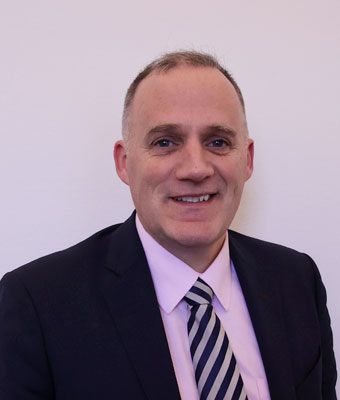
95. Deputy Naoise Ó Muirí asked the Minister for Tourism, Culture, Arts, Gaeltacht, Sport and Media the way in which his Department will work with officials throughout government to ensure the tourism industry is supported across all regions; and if he will make a statement on the matter. [23102/25]
I ask the Minister the ways in which his Department will work with officials throughout Government ensure that the vital tourism industry is supported across all regions and if he will make a statement on the matter.
I thank the Deputy for raising this important issue. As I said to Deputy Connolly earlier, this is an issue that is on the way out of our Department. Last Tuesday it was finalised that my colleague, Deputy Peter Burke, will be answerable on tourism. Following the making of a Government order on Tuesday, statutory responsibility for the sector will transfer to the Minister, Deputy Burke, from 1 June. He has already had a number of engagements with key tourism stakeholders across a range of priority areas.
The programme for Government sets out a clear commitment to growing Ireland's tourism industry. Through support for Tourism Ireland and Fáilte Ireland, we want to showcase Ireland as a high quality and accessible destination for both national and international visitors. In addition, the Government will work with Fáilte Ireland to develop a balanced regional spread of tourism throughout the country, promoting and advancing the Hidden Heartlands, Ireland’s Ancient East, the Wild Atlantic Way, and Dublin.
The Tourism Policy Framework 2025-2030 was published by the previous Government last November. I understand that the Minister has asked officials to consider how commitments in the new programme for Government align with the policy framework and to prioritise the finalisation of a new tourism policy which reflects the programme and other Government priorities. I would also like to note that Fáilte Ireland has put in place a set of regional tourism strategies out to 2027 which will be implemented by localised destination and experience development plans. These five-year plans follow a best practice destination stewardship approach, co-created and jointly managed by all key stakeholders in a destination.
In terms of ensuring that all regions benefit from overseas tourism, we know ongoing selling points for Ireland are our scenery, culture and history. Tourism Ireland will be launching a new slow tourism campaign in overseas markets in June, focused on helping people get around the regions and explore the island. In terms of the domestic market, Fáilte Ireland is continuing its investment in destination development, capital projects, marketing, and festivals across the country. Furthermore, the Minister, Deputy Burke, launched a new business events strategy on 29 April to promote the development of our world-class business events sector and realise the full economic benefits of business events for the island of Ireland.
Déanaim comhghairdeas leis an Aire. Ní raibh seans agam comhghairdeas a dhéanamh leis as a phost nua sa Rialtas.
I wish to raise a number of items, the first of which is the quality of tourism statistics. Good quality data is really important for tourism policy planning and for making progress in determining where Government resources should go in tourism. There has been an issue, as highlighted in the media recently, in this regard. The Central Statistics Office, CSO, does good work in this area but there is a bit of a dispute as to what is the right data in terms of tourism. The Government has a responsibility to try to resolve this. We should explore ways to enhance the quality of our tourism statistics. We need to get good quality data that we can act on. We also need to see better collaboration between the CSO and Revenue Commissioners which already collects data from tourism businesses. The Minister mentioned Tourism Ireland and Fáilte Ireland, both of which have a role to play there. Tourism is almost like an export business because it involves people from abroad, in the main, coming in and it is very important to reach into the regional economies in Ireland.
The second item is the tourist tax, a matter of quite a bit of debate at the moment as the Minister knows. A tourist or bed tax is becoming more and more common across the world. We have a report from the capital city taskforce which has to be funded and implemented and the tourist tax could play an important role in that regard. It is a common tool used across Europe in particular. On regional tourism, my area of Dublin Bay North has Howth, Bull Island, Dollymount, St. Anne's Park, the Casino in Marino and Fairview Park. It has lots of good, local attractions but the city of Dublin's tourism is very much events-based in the city centre. It would be useful to look at supporting suburban tourism around Dublin, not just around the country but in parts of Dublin and to develop strategies in that regard.
There is a lot there. I thank the Deputy for his kind remarks as Gaeilge at the outset. The Deputy will be glad to know that in regard to the tourist tax, I have no role in that. That is a matter for the Minister, Deputy Donohoe, and the Department of Finance. I have personal views on a tourism tax. I do not think that levying a tax on people who are trying to get into the country is a good idea. I could be proven wrong by others but that is a moot point.
Regarding the CSO and the Revenue Commissioners, as a former Minister of State in the Department of tourism, I know that it is very important to have accurate data. There are always people who will dispute the numbers and how they are collected, especially for inward tourism. How do people get onto the island? Some arrive into Belfast Airport and drive down, some arrive by ferry and drive down and so on. It is a moot point but it is well made. There is probably scope for a greater level of collaboration between Revenue, CSO, Fáilte Ireland and Tourism Ireland. That is something that I will feed back to the Minister, Deputy Burke.
On the tourism tax, I understand the Minister's point which, as he said, is moot but from my perspective, if I am lucky enough to have the opportunity to travel to a European capital, the fact that I am paying a tourism tax in that city to help with its infrastructure does not deter me.
It does not deter people but one of the things that local authority members should look at first is their capacity to raise revenue from existing streams rather than levying a new tax on people. Often there is a rush, for instance, to reduce the local property tax, LPT. Some people are totally opposed to the LPT and have a fundamental objection to it but at the same time, they come up with the concept of a tourism tax. The two things do not sit well together, to be honest. The Dublin local authorities have the potential to look at their own internal revenue bases first before a tourism tax is foisted on people.
We should be looking to do both. We have a report to be implemented which needs new sources of revenue. A tourism tax and other options should all be on the table because it is important for the city.
I think we will leave that matter to the Minister, Deputy Donohoe.
Defence Forces
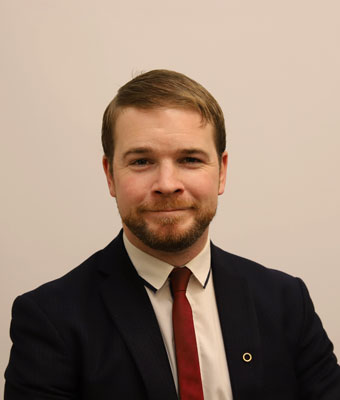
152. Deputy Donnchadh Ó Laoghaire asked the Tánaiste and Minister for Defence if he will consider the introduction of service commitment schemes to retain key specialist functions within the Defence Forces and if he will make a statement on the matter. [18075/25]
We all share a great deal of concern about the challenges faced by the Defence Forces in recruitment and retention. It is severe right across the organisation but it is felt most keenly in the area of specialist staff such as air traffic controllers, engineers and explosive ordnance disposals officers. This is a major challenge. There is a lot of competition from the private sector. We need to consider this and how we retain some of this crucial staff.
I agree with the Deputy about recruitment and retention. We can have all the investment plans, and we need to in the Defence Forces, but the men and women in the Defence Forces constitute its most important resource. Given that this is a country with full employment and very skilled individuals work in the Defence Forces, how we recruit in the first instance and then crucially retain them is a very fair question raised by the Deputy.
My Department has one service commitment scheme in place in respect of Air Corps pilots and these matters are always kept under review. Recruitment and retention of Defence Forces personnel is, and must be, a Government priority. There are challenges with recruitment and retention in the Defence Forces with particular challenges relating to specialist personnel. Our focus has been on ensuring that existing recruitment and retention frameworks are fully optimised and are responsive to the needs of the Defence Forces while at the same time introducing a number of new initiatives in this space.
While there is always more to do, there has been significant progress on a range of fronts, including pay, in recent years. Recruit pay on completion of training, which takes approximately 24 weeks, starts at €41,465 in year one rising to €42,875 in year two and €44,176 in year three. For officers, as of 1 March 2025, a school leaver cadet on commissioning is now paid €45,341, which is a second lieutenant position. In 2019, a school leaver cadet on commissioning was paid €30,884 so there has been quite a significant increase. In the past five years a cadet's pay on commissioning has increased by €14,457, or by 49%. Furthermore, after two years, they are promoted to lieutenant and their pay rises to €50,677. I say this because I am not sure whether these changes are fully known. There might be people watching and following this debate and we want to make it clear to them that pay issues in the Defence Forces have changed in recent years. Of course, there is more to do and I will come back on this in a moment. Other developments include the extension of private secondary health care to enlisted ranks, the restructuring of the patrol duty allowance paid to the Naval Service to encourage seagoing activities, a technical pay 2-6 review completed and implemented that is targeted at specialist and technical personnel and developments relating to the Organisation of Working Time Act 1997.
Much of the Tánaiste's response related more to the recruitment side of things. We have a significant challenge in that regard and we are not out of the woods by any manner of means.
We are not.
My specific question primarily relates to the retention of highly skilled people. I have put to the Tánaiste previously that much of the debate on this topic has been for an external audience. In truth, for all the big speeches, much of the substance of what is needed to ensure the sustainability of the Defence Forces is absent. The Tánaiste has been talking about fighter jets while we have sent boats to sea in recent months without a functioning main gun because we do not have artificers to operate it. I understand that whole classes have come out of some of the schemes and all but two or three of them have been bought out by major private sector firms. I understand that in recent weeks, three or four people involved in air traffic control at Baldonnel have left the Defence Forces, which creates potentially significant difficulties for the Air Corps and the Government jet. If the Tánaiste would comment on that, I would welcome it.
The problem I am identifying is in retaining staff. We need to consider schemes to ensure that personnel are retained and not taken by the private sector.
I was not talking about fighter jets but was asked about a question about them at an Army barracks. I said I want to get to level of ambition, LAO, 3, which talks about that degree of air cover. We need a better understanding of what happens and the capabilities in our skies and seas. The Deputy is right that the key to being able to activate any of this is having the personnel to operate any such infrastructural capabilities, and we can debate the merits or demerits of each of those.
I am not saying this is what he is saying, but it is not fair to completely decouple pay from considerations of retention. If pay is very low, personnel are not going to be retained in an organisation. The changes in pay are helpful. The extension of private secondary healthcare, restructuring of the patrol duty allowance and the extensive training and education opportunities that now exist in the Defence Forces, which are possibly unrivalled in many parts of the public service, are also helpful. Increasing the mandatory retirement age to 62 is a retention measure and increasing the maximum recruitment age to 39 also brings people in.
The Deputy asked if I will consider the introduction of service commitment schemes to retain key specialist functions. My answer is that we already have one and I keep under review whether we need to do more in respect of particular specialties that we want to retain in the Defence Forces.
As I understand it, the scheme to which the Tánaiste referred relates specifically to pilots.
That is correct.
The Defence Forces face challenges. If anybody is going to be decoupling the issues of pay and recruitment, it certainly will not be me. It is very much the case that they are linked. The point I am raising relates to the retention of existing staff and not recruiting new staff, which is also a challenge. Aside from the category that is covered by the service commitment, there are whole areas with significant problems. I will later ask the Tánaiste a question about cybersecurity. How are we going to be able to retain people, particularly in Ireland, with the number of tech companies here? How are we going to be able to retain people with cybersecurity expertise with the competition we could face?
I have made a point about the issues relating to artificers. There are also issues in respect of explosive ordnance disposal officers. The cyber, tech, IT and pharmaceutical sectors are seeing staff members being trained by the State and the Defence Forces and understand the benefits of recruiting them. There is not enough in the Defence Forces to keep those personnel. These schemes have been used in the past. I encourage the Tánaiste to consider them in advance of the next budget so we can retain staff.
Let me be clear that I do not rule out what he has suggested. I am not in any way naive. While I can point to figures that show marginal improvements in the numbers of Defence Forces personnel, I am also aware we are nowhere near the established numbers we need. That marginal improvement provides a degree of false comfort in some of the specialties where we need to continue to recruit and, crucially, as the Deputy said, retain in the Defence Forces.
As he referenced, there is the new service commitment scheme. I am always open to exploring options to continue to drive recruitment and, particularly, retention. I am open to receiving and considering any proposed initiatives and carefully assessing them against operational requirements. They need to work within broader pay policy. There is a broader issue about pay policy. We often talk about issues at a macro level. Within many organisations in the public service, and the Defence Forces is no different, there are particular pinch points in respect of a group of people or skills. There does not necessarily need to be a contagion effect so we see that spreading across all elements of the public service. How we tease through these issues is complex but important.
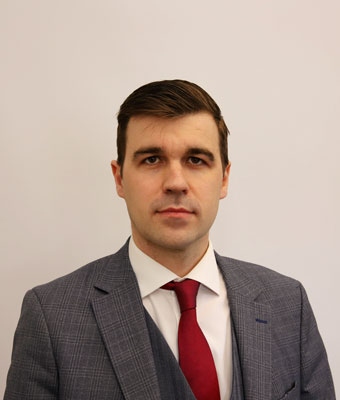
153. Deputy Duncan Smith asked the Tánaiste and Minister for Defence to provide an update on the planned negotiations for a radar detection system; the expected cost of the system; a timeline for the delivery of the system; and if he will make a statement on the matter. [23068/25]
It is a national embarrassment that we are without detection systems in our skies and waters and must rely on the Royal Air Force, RAF. We have outsourced that element of our sovereignty for a long time. The Tánaiste brought a note to Cabinet on a radar detection system that he wants to bring on board. Will he provide to the House more details on the timelines and costs involved?
I thank the Deputy for raising this issue. When we look back at the Commission on the Defence Forces and everything else, radar and sonar are two key areas on which we must move. The Deputy and I can largely agree on that point. These are no-brainers. We must have a better understanding of what happens in our skies and seas. We need that capability.
It is a key priority for me to ensure that the operational capacity of the Defence Forces is maintained and developed in line with the decision the Government has already made to move to level of ambition 2, as defined by the Commission on the Defence Forces, by 2028. The commitment in the programme for Government states that when we have arrived at LAO 2, we will move to level of ambition 3.
The commission recommended the development of a primary radar capability to ensure that Ireland can maintain a complete recognised air picture, and that this should be a top priority. The commission also advised that in the absence of a complete recognised air picture, there are vulnerabilities which need to be addressed for various reasons, including the protection of our national sovereignty in the air for the purposes of civil aviation safety and the maintenance of co-operative relations with neighbouring states, which are also impacted by this capability gap.
On foot of this, a project team comprising senior civil and military personnel was established to progress a military radar programme. This programme of work is ongoing and I am pleased that good progress has been made. There are three elements to the military radar programme: land-based long range primary radar; ground-based air defence systems, to include a counter-unmanned aerial systems capability; and maritime or ship-borne radar. When fully addressed, the recognised air picture will incorporate this suite of military radar systems, which will have the capability to detect all aircraft traversing our airspace, including any that may be operating with their transponders turned off.
Full delivery of the programme will be complex but will be fully rolled out by 2028. That roll-out will start in 2026, which is sometimes missed in the discourse. In each month and quarter from 2026 onwards, we will start to see progress and the roll-out will be fully completed by the end of 2028. I will go back to Cabinet later this year with the recommendation so we can press "Go" for the roll-out in early 2026.
I thank the Tánaiste. We are so far behind in our capability. Is it envisioned that what is going to be provided and online for the State will be of the highest technical standard compared with other states? Will we be bringing in equipment to a specification that is perhaps ten or 20 years behind other states?
We must improve our national security. Only when we are minding our own shop can we promote our positive neutrality. State actors who were previously allies of ours are no longer trusted so we need to invest, though not at the cost of housing or health, in our national security. This is one basic element that needs to be done.
This issue can be decoupled, to use the word the Tánaiste used in his response to the previous question, from debates around the triple lock and neutrality. This is basic, and is something we need to do to the highest standard.
I fully agree with the Deputy. I like, and will cog, the phrase "positive neutrality". That is what we should be talking about. I certainly have no plans to change Ireland's military neutrality. There is an overwhelming consensus in this House and significant support across the country for military neutrality. We should be proud of our neutrality. It is not just a cornerstone of our Defence Forces policy but also our foreign affairs policy. We need that vision of positive neutrality. There are many neutral nations that spend a lot more on their own security. In fact, one could argue that being neutral places a greater obligation on a country in light of its need to invest in its own national security because it is not a part of a military alliance and should not be able to rely on others to come to its aid. This is in the national security space.
Perhaps a benefit, if there is one, of being one of the last in Europe to get this right is that we have access to the best information about what modern, fit-for-purpose radar systems look like.
The Government has taken a decision to work government to government on procurement. That will involve the delivery of modern fit-for-purpose capabilities in this space.
The provision of modern fit-for-purpose capabilities is important. There would be more trust from this side of the House if we were not having the parallel debate on the triple lock and what is coming down the tracks there. There are places we can land on in terms of the extraction of Irish citizens and ensuring that capability can be raised but the multilateral backup of the UN for peacekeeping missions is still vital. I am concerned that debate will impact on issues like this or investing in our cybersecurity. I do not want that to happen because these are things we have to do. These are the basics of national security. The fact the Tánaiste is trying to do these in parallel will be politically difficult and harbour mistrust on this side of the House that we are moving towards military alliances, be it NATO or through the European Union. That is something we cannot countenance and we do not need to.
We certainly do not and there is no proposal to join NATO or anything like it. I value military neutrality. Understanding and debating what it means, though, is very useful. It means being militarily unaligned but one can be militarily unaligned and still take national security and defence seriously. I accept there are very different views in the House on the terms, conditions and parameters on which we decide to deploy personnel abroad for peacekeeping. The Deputy is right that we have to get to a point. We are about to set up an Oireachtas committee on national security and I really welcome that. The Deputy's party leader, Deputy Bacik, makes the point - and I agree fully - that we need a much greater and more honest exchange among Government and Opposition. We do not talk about it enough. We should be able to have informed conversations that do not simply run into an alleyway because all we talk about is neutrality. We may all have different views but we all agree on military neutrality. I certainly agree military neutrality is important but we should enable ourselves to have the space to talk about it. We are militarily neutral but what do we need to do to give the men and women of Óglaigh na hÉireann the equipment they need to keep this country safe and to have access to good information? We know about the shadow fleet. If, God forbid, anything ever went wrong, the Deputy would be asking me much more difficult questions on why we did not go down this route.
Military Neutrality
155. Deputy Sinéad Gibney asked the Tánaiste and Minister for Defence if a peacekeeping mission deployment has ever been unable to proceed due to the lack of agreement of the UN General Assembly, as provided for in the in the Defence (Amendment) Act 2006, since the introduction of the triple lock following the Nice and Lisbon treaties; and if he will make a statement on the matter. [18307/25]
156. Deputy Donnchadh Ó Laoghaire asked the Tánaiste and Minister for Defence if he will outline his proposals to remove the triple lock neutrality protection; and if he will make a statement on the matter. [18077/25]
In the context of the ongoing discussions around the triple lock, which have been referenced, and the Government's proposal to dismantle it, I ask the Tánaiste and Minister for Defence whether a peacekeeping mission deployment has ever been unable to proceed due to the lack of agreement of the UN General Assembly since the introduction of the triple lock, which is a measure provided for in the Defence (Amendment) Act.
Are the Deputies happy to do them in this order?
Apologies, I skipped Question No. 154 by accident.
So we will do this and come back. Is that okay?
I propose to take Questions Nos. 155 and 156 together.
I thank Deputies Gibney and Ó Laoghaire for raising this important matter. I accept we approach this from very different points of view. I do not doubt the Deputies'
bona fides
on this and ask that they do not doubt mine. I value military neutrality. I am not proposing Ireland joins any military alliances; I am proposing that the triple lock in its current form poses challenges and should change. We will have an opportunity to tease through legislation and vote accordingly. I welcome the opportunity to speak on this question. I know the questions are grouped but Question No. 155 refers to the roles of the UN General Assembly and Security Council.
Since 1958, Ireland has contributed to a range of UN missions across the world. I recently had the honour to visit our troops stationed in Lebanon and saw first-hand the vital role they are playing with UNIFIL, where many thousands of Irish soldiers have been deployed over a number of decades. The UN Charter unequivocally sets out the primacy of the UN Security Council with regard to all matters relating to international peace and security. In practice, peacekeeping missions are only ever deployed on the basis of mandates from the UN Security Council. Under the charter, it is the Security Council alone that holds the power to take decisions that member states are obligated to implement. The UN General Assembly cannot compel a peacekeeping operation. That remains the province of the Security Council. In certain instances, where a matter has been considered by the Security Council and has been the subject of a veto, the General Assembly may consider the matter and make a recommendation to UN members for collective action. The term "recommendation" is key here, however, with a recommendation being devoid of any binding legal force.
UN General Assembly resolutions cannot compel action, therefore. Only once in history has the UN General Assembly invoked the "uniting for peace" resolution and recommended a peacekeeping operation. This happened nearly 70 years ago, when it established the first UN emergency force in the Middle East in 1956, which proceeded with the consent of the parties involved. I have a lot more to say on this but we will have to go back and forth.
My question is somewhat different from Deputy Gibney's, although hers makes an important distinction that needs to be made. People have been talking about the Security Council. There is no dispute that the world is changing. That is recognised. It is a question of what Ireland's place in this changing world is. If we remove the triple lock neutrality protection, we will potentially expose ourselves to significant external pressure to participate in missions that the Irish public does not wish to participate in and that, according to the Tánaiste's bona fides, he does not wish to either. It is a rash approach and one not in our strategic interests.
Several of the examples given are not, in fact, covered by the triple lock. The triple lock was brought in in 1960 in respect of peacekeeping missions. The triple lock legislation and the defence Acts do not prevent the rescue of Irish civilians or prevent us participating in missions to intercept drugs or anything like that. To examples such as those given, we have no objection. The triple lock is the problem there.
I thank the Tánaiste for his answer. Once again he said he supports military neutrality but it appears not when we see the actions the Government is taking and this proposal before us. While he positions the change as something he has to do because he cannot secure the UN mandate, the facts do not justify it. I am left to assume he does not want to have that UN mandate applied to our peacekeeping missions and the human rights monitoring and transparency it demands. The reality is the General Assembly endorsement can satisfy our triple lock.
I will go through some of these facts. China vetoed the renewal of the Macedonia mission in 1999 due to its recognition of Taiwan. No peacekeeping mission has been blocked since. In fact, many UN peacekeeping missions have had their mandates renewed, including the Golan Heights, and UN mandates were given to Operation Sophia and the mission in Haiti established last year. The Tánaiste mentioned the time the General Assembly was used. They based it on the "uniting for peace" resolution, which can be deployed. These are the facts and the Tánaiste's answer does not adequately address them. Can he point me to when a peacekeeping mission has been prevented or even hampered because the General Assembly did not do its job?
Can I ask a question back? Does the Deputy accept there are countries in the world which are absolutely neutral militarily and there is no question of it, and which do not deploy a triple lock mechanism for their decisions around peacekeeping? I genuinely do not believe the issues should be conflated. There are a number of examples. The European Union peace operation in the former Yugoslav Republic of Macedonia did not have a UN Security Council mandate and Ireland was unable to participate in that mission despite wanting to do so. In 1999, a permanent member of the UN Security Council vetoed the renewal of the United Nations preventative deployment force. The EU security mission in the Mediterranean - the then Operation Sophia - did eventually get a UN mandate until 2016 but Ireland could not consider contributing to the mission for quite a period because that mandate was not in place.
Let us take a very real one. I was in Lebanon recently. I also met the men and women in Renmore barracks who are about to go out to Lebanon. What would we do - this is up for renewal this year - if any member of the UN Security Council decided for budgetary or other reasons not to renew the mandate? There is not a person in Ireland who wants us to end the peacekeeping mission in Lebanon. I am not saying we are. We are very committed to it but, hypothetically, if that happened this year, if I was standing here taking questions and a permanent member of the Security Council had vetoed renewal of the mandate, would the Deputy want me to bring the troops home from Lebanon? That is what I would have to do.
There was not a person in Ireland who wanted us to withdraw troops from the Golan Heights or was in favour of that, and that was done for budgetary reasons. That was for budgetary reasons because of the Government. That was the primary obstacle.
The last time Irish troops were pulled out of a peacekeeping mission, it was entirely the decision of the Irish Government and it was not informed by anything to do with the triple lock. I do not think that particular example bears it out.
I would again make the point that it is not the case that there are some UN missions that will go ahead without us because of the triple lock that we would otherwise like to participate in. There are no UN missions without the UN mandate. The UN is imperfect but the point is that if we are talking about participating in UN missions without a UN mandate, we are talking about participating in non-UN missions. We are talking about participating in missions without knowing what kind of missions they are.
The Minister talked about conflating the two issues. The Irish public can be forgiven for that, given the context of the various referenda and the statements of successive Irish Governments, primarily made up of Fianna Fáil and Fine Gael, which made that connection themselves during the course of referenda when arguing that the triple lock was a crucial protection for neutrality. That was the argument made then. I think the Irish people can be forgiven for remembering that.
In answer to the first of the two questions posed by the Tánaiste, I am aware that, of course, there are other countries that are militarily neutral that do not have a triple lock. However, they did not arrive at their position of neutrality in the same historic pathway as we did with the Nice and Lisbon treaties, simple as that. The other question the Tánaiste asked concerned whether the people of Ireland want those missions to be stopped, which once again brings us into the hypothetical - the “What ifs?” or “Would you?” - and the Minister of State, Deputy Byrne, did exactly the same when we had a debate on this a number of weeks ago. This veto is posed as a "What if?” or "Why are we there?" It seems the Government wishes to justify this massive policy change with no examples of the actual issue arising for peacekeeping. EU missions have received UN mandates before. I mentioned, for example, Operation Sophia and, in that instance, the mandate guaranteed the human rights monitoring and other checks and balances that are vital to missions like these. We pulled out of the UN mission in Syria not due to a lack of mandate but due to a lack of troops. The reason we had that lack of troops was that we committed to a non-UN-backed EU battlegroup that is not accountable to either the European Parliament or the European Court of Human Rights.
If I genuinely believed that we were boxed in in the way the Tánaiste describes, I would be with him on this, but there is no evidence to that effect. That is why I am left asking why we are pivoting away from human rights accountability and transparency in the deployment of our troops and jeopardising our long-held gold standard reputation for peacekeeping.
We are not doing that. Any missions we participate in will have to be in line with the values of the UN Charter. In fairness to everybody in this House, we are having this debate before we all have a chance to scrutinise the legislation, and I accept that reality. I am looking forward to getting to tease it out line by line so we can all understand what we are being asked or not asked to do.
What is the timeline for that?
The timeline is “very shortly”, that is, I expect I will be in a position to publish it this month. Certainly, it will be published very shortly, but in and around that time.
I have a difference of view to Deputy Ó Laoghaire on this. I think people in Ireland do differentiate between military neutrality and the triple lock. I know politicians do not pay any attention to polls, definitely not, but if they did, they would know there is a significant gap between the number of people who absolutely support military neutrality and the number open to hearing how we change how we deploy our peacekeeping troops. In many ways, much of society is ahead of where this debate is.
The Deputy asked me for a simple example or to name an opportunity where Ireland wanted to participate in a peacekeeping operation and could not because of the lack of a UN mandate.
No, I asked when it was prevented by the UN General Assembly.
A specific example of where we wanted to participate was the European Union peace operation in the Former Yugoslav Republic of Macedonia. When the European Union wants to deploy peacekeepers and the Irish Government and the Dáil want to deploy peacekeepers, I do not think it is up to Donald Trump, Vladimir Putin or, frankly, anybody else to decide whether we can do that.
I will now go to Question No. 154.
Air Corps
154. Deputy Donnchadh Ó Laoghaire asked the Tánaiste and Minister for Defence to outline, further to recent Dáil debates, his views on past health and safety measures in the Air Corps, and potential engagements with interested groups; and if he will make a statement on the matter. [18076/25]
Over the course of many years, it seems many Air Corps personnel, primarily young working-class people who took jobs in the maintenance department of the Air Corps, were exposed to very hazardous and dangerous conditions with very few, or effectively no, safety precautions, certainly nothing by way of masks, adequate ventilation and so on. There are huge concerns about the health implications this has for those former personnel, and I will detail that later. I want to specifically ask the Minister if he has engaged with any of those affected or their representative groups and how he intends to ensure their health is safeguarded and supported.
I thank the Deputy for raising the matter and for constructively discussing it with me at the last parliamentary questions session on defence matters. I have had engagement with my officials to try to tease through some of this since we last discussed this. As I set out on the last occasion this was raised in the House, and I feel obliged to repeat now, any discussion we have or certainly any comments that I make are necessarily restricted by the existence of ongoing litigation that is active before the courts. I want to see a resolution in this regard. I am advised there is currently active engagement between the State Claims Agency and litigants to determine if mutually agreeable resolutions can be found to their cases. I want to see that happen and I encourage the State Claims Agency to continue that approach, as I know it will. Trying to bring this issue to a resolution that works is important.
The ultimate priority for me and for the Defence Forces is the protection of the health and well-being of members of the Defence Forces in carrying out its essential service to the State. It is also important to me that, where possible, litigation of this nature can be concluded on reasonable terms agreeable to all parties to spare people having to take other routes. In the event that this cannot be achieved, the matter will fall to be determined by the courts but, again, I need to remain fully cognisant of my own position in that litigation.
It would be valuable in the engagement process that is now genuinely under way that it be allowed the opportunity to proceed without prejudice, and to see if we can get to a point where there is an achievable outcome that is acceptable to all parties. The question of alleged or potential historic exposure to chemicals in the Air Corps is a matter of considerable importance to me and I maintain an open mind in terms of future discussions and engagement. I have made the point that, in the past, there have been other areas where even if the State did not accept liability, people did try to meet the health needs of those impacted. I have asked that my officials continue to give thought to that issue and to keep me updated on the progress in relation to the State Claims Agency engagement and those further questions that I have asked it. I am saying in the Dáil today that I would like time to be given to that process of engagement that I genuinely believe is now under way.
I do not accept that for one second. Over many years, this House has dealt with many issues that have been proceeding through the courts and the State rightly did not intervene as between the two different parties or try to disturb the process of the courts. However, that is totally separate from whether the State itself identifies that there is a policy issue and a need for a policy response in relation to a category of people without interfering in the court process. That has happened numerous times, for example, with regard to the Magdalen laundries and different things like that where schemes were set up. There is nothing at this moment in time to prevent the Minister, without interfering in court cases, from engaging with representatives of those who were affected to ask what the State can do in terms of an examination of the health outcomes.
The best example, although it may not be perfect, is the one I gave from Australia, the Study of Health Outcomes in Aircraft Maintenance Personnel, SHOAMP, which identified the implications because personnel were facing serious issues.
Maybe I was not clear but I thought I was saying something similar. There is a process ongoing in relation to the State Claims Agency trying to see if the legal cases can be resolved in a way that is to the satisfaction of both parties. In addition to that, I have also asked my officials, on the basis of the last exchange we had, to give consideration to other actions we may be able to take to try to meet the health needs of people. That is the point I am making. There is an engagement process under way now between the State Claims Agency, which has a delegated function from me, so it acts on behalf of the State and the Government, to see if we can get this to a position where those who have been impacted are satisfied and the State is satisfied too. All I am suggesting today, and I am constraining myself in not wanting to say anything unhelpful or that cuts across that process, is that I want to give it a little bit of time. I am happy to engage constructively on it and I have asked my officials to continue to think further on some of the points I have made to them, many of which have been influenced by the points made to me by the Deputy in this House some six weeks ago.
I put the Tánaiste on notice that I will be bringing this up again in six weeks and six weeks after that too. I am going to continue to pursue this. I would like it if we could bracket the State Claims Agency part and put that to one side because that is not what I am talking about. That needs to proceed and I hope it works out well, or as well as possible, for those affected.
One of the key points is that not everybody can afford to take the State to court. One of the organisations representing people is the Air Corps Chemical Abuse Survivors, ACCAS.
It does not comprise clinicians, and I am not a clinician, but it has identified 97 untimely deaths, and I believe it has used that phrase deliberately and carefully. It will take a health study to identify what can be connected or what is connected to chemical exposure but it seems to me, given that a direct connection was found in Australia and the Netherlands, these men, as it is almost exclusively men, perhaps with one or two women, were exposed to very dangerous chemicals. A lot of them are really sick. Many of them have died, and their families and friends believe they did so prematurely. This is very serious. I encourage the Tánaiste to engage with the ACCAS and any other relevant people to try to find a policy solution, aside from the courts solution.
I thank Deputy Ó Laoghaire. The differentiation he has made between the two processes is useful. The point he is making to me is that a number of people are not involved in legal proceedings, and they never wish to be involved in legal proceedings for whatever reason, but there are health issues that either have impacted them or are impacting them and their families have concerns about this, and there is a need to examine the health cause and effect, for want of a phrase, and to examine what other jurisdictions have done. This is something I will undertake to do, and I will come back to Deputy Ó Laoghaire on it. I expect he will be asking me about this again.