Public Transport
7. Deputy James Geoghegan asked the Minister for Transport his plans to expand free public transport access for children; and if he will make a statement on the matter. [22821/25]
8. Deputy Roderic O'Gorman asked the Minister for Transport the timeline for the introduction of free public transport for children under the age of nine that was announced in budget 2025; and if he will make a statement on the matter. [22834/25]
I have already wished the Ministers of State, Deputies Canney and Buttimer, well in their roles but this is the first time I have been here when the Minister, Deputy O'Brien, has been in the Chamber and I want to wish him well. I found him very approachable as a Minister when I was a councillor and I am looking forward to the continuity of service as a TD. What are the Minister for Transport's plans to expand free public transport access for children and will he make a statement on the matter?
I propose to take Questions Nos. 7 and 8 together.
The National Transport Authority has statutory responsibility for the regulation of fares charged to passengers in respect of public transport services provided under public service obligation, PSO, contracts. Obviously this statutory responsibility supports the implementation of agreed Government priorities.
I assure the Deputy that the Government is committed to delivering an accessible, reliable and affordable public transport system for all our citizens, including children. Under the programme for Government, our commitments include the roll-out of contactless payments, keeping fares affordable and examining the further expansion of free public transport for children.
Specifically, budget 2025 included a measure to extend free child fares on PSO services to children aged five to eight years old. The NTA is working to develop and implement this change, with the new scheme expected to launch in quarter 3 of this year. This targeted initiative is designed to help with the cost of living for families and to encourage children to start using public transport from an early age.
The Government is also continuing funding supports to allow for the continuation of other fare initiatives, such as the 90-minute fare, the young adult and student Leap card, and 20% discounted fares on PSO services, all of which help make public transport more affordable.
Furthermore, the NTA recently introduced a new distance-based zonal fare structure for the greater Dublin area. This move aims to makes fares equitable, more consistent and easier to understand, with significant reductions for many commuting from outer areas, aligning prices more closely with distance travelled. Obviously, I acknowledge that while the new structure is fairer for all, it does mean that some people are now paying a little bit more. I assure the Deputies that I am committed to making public transport as accessible and affordable as possible, while also ensuring that our system remains financially sustainable in the long term.
I thank the Minister of State for his response. It is good that we have contained in the programme for Government a commitment to expand free public transport for children. It is very welcome that the measure announced in the budget to extend the age from five to eight years and then to nine years of age, will be introduced in quarter 3. There is a certain practicality to all of this. I regularly use the S4 bus route with my seven-year-old and five-year-old. To be fair, the service relies on the honesty of the passenger getting on the bus to identify whether their kid is six, seven, eight or nine years of age. No bus driver looks for ID from nine-year-olds or eight-year-olds. We should face up to the policy, which is that it is a good thing we are giving children of primary school age access to public transport and that it does not cost the State that much. The measure itself in the previous budget cost approximately €8 million. It is very worthwhile. We know it is a measure that will work well and I look forward to its continued expansion.
As we have discussed, in budget 2025 which was announced last October my colleague, the then Minister for Transport, Eamon Ryan, secured funding to roll out free public transport across our public transport network for children aged under nine. This initiative had a number of purposes. It was aimed at reducing congestion by providing commuters with a cheaper alternative. It was also built around creating the habit of using public transport among young children. Very importantly, in the middle of a cost-of-living crisis it was designed to save commuters money. It builds on the other public transport initiatives the Green Party introduced, which the Minister of State referenced. In 2023 there was a 20% cut to all public transport fares. These were the first cuts since the 1940s. There was also the introduction of the young adult travel card. Will the Minister of State give us a bit more detail on when in quarter 3 he expects to see this new initiative rolled out?
I thank both Deputies. I, too, acknowledge the work done by the former Minister for Transport, Eamon Ryan, in developing and bringing forward more public transport initiatives and services and making them more affordable. I want to acknowledge this in the House. Coming back to the question on quarter 3, I do not have the exact date but I will meet officials and I will come back to Deputy O'Gorman with a date when we have it. It is important to say that universal free transport for all, and not only for those under 18, would require an additional €786 million in Exchequer funding annually, before considering increased demand. A large amount of money would be required to provide free transport for everybody.
The Government is expanding the child fares, and maintaining new adult fares and the student Leap card 50% off. It is important for students and for young people, as the Deputy said, to get a good experience in terms of reliability, safety and punctuality and to have it at a reasonable price. If we can continue to give that experience to young people, they will continue to use public transport for the rest of their lives. The aim of all these policies is to encourage people to use public transport, take cars off the roads and avoid the congestion. We will have a better society and a better life as well. This comes at a cost and we cannot do it all at once. We have to bring in measures which will be effective, which we can afford and which will be rolled out.
With public transport, we have seen a huge increase in numbers right across the different services. It is good news. It is a good story but we need to continue that to incentivise people. My two colleagues and I will continue to push the policies to make sure we see the results on the ground.
One of the issues specific to Dublin when it comes to children taking public transport is, of course, the Luas. The Luas is a very busy tram, particularly at peak times. As we have seen, when we expand and invest in the Luas, we grow the passenger numbers. In that context, I would ask the Minister of State to support inquiring into getting the Luas extension from the Point to Poolbeg into the national development plan review. Obviously, the Finglas Luas application has already got planning permission. It is important we demonstrate that there is a continued flow of work that will be made available to the contractors who will ultimately build that extension. It would be excellent for Dublin if, in the context of the national development plan review, we got that Luas extension to Poolbeg included in that as well.
I thank the Minister of State for his commitment to come back with a more specific date. Now that we are in May, we should be giving commuters specifics in terms of when this funding that has been put aside will be used and when they will get the benefit.
One issue the Dublin Commuter Coalition has raised is whether there be a requirement for identity cards. Generally, identity cards are not used, but if some bus driver or operator decided to insist on them, will children under nine years of age need an identity card to prove their age? The Minister of State might clarify that.
On the wider issue, all Departments are starting to collate their budgets. Is reducing public transport fares a priority for the Minister of State and the Department in this budget? The Minister of State set out the cost for free public transport for everybody. No one is expecting miracles from the Minister of State in this budget, but is he looking to reduce some of the public transport fares in budget 2026?
Again, I thank the Deputies. I would say, first of all, when we talk about the national development plan, there will be huge competing asks within that plan. Of course, the three Ministers here will be putting forward our best foot in terms of projects within transport, be it roads, public transport or whatever. It is important the Deputies understand that we will be putting in plenty of projects that need to be done which the Department and the officials have been working on.
There is a huge ask within the Department of Transport for funding for capital projects but the capital projects are to enhance our services. If you take Ceannt station in Galway, what is happening in Kent station in Cork and the fact that we are now looking at putting in the passing loop in Oranmore to create additional frequency into Galway city where we have huge problems with traffic congestion, we are doing these works. There is a pipeline of works to be done. The all-island rail review, which was commissioned by the previous Minister, Eamon Ryan, is now the basis for investment in rail across the country.
On Deputy O'Gorman's question about identity cards, I am not so sure we need to be using identity cards. Discretion is there to be used. Nobody should be not allowed onto public transport but, of course, there has to be a limit. Fair play by consumers in the use of the system will keep it viable.
At the end of the day, what we need to do is to take more cars off the road. We need to make sure the public transport is there. The other issue in relation to all of this is that we have residential settlements close to train stations so that you can walk to the train station. If you look at what is happening in Ceannt station in Galway, it is linking the development to the pedestrian accesses around the city which is putting it all together. There is a lot of forward planning going on.
Question No. 9 taken with Written Answers.
Rail Network

10. Deputy Louis O'Hara asked the Minister for Transport the actions his Department is undertaking to address capacity issues on InterCity rail services; and if he will make a statement on the matter. [22868/25]
This is to ask the Minister what actions his Department is taking to address capacity issues on InterCity and regional rail services, particularly in the context of increased numbers of people using public transport, as the Minister mentioned.
I thank the Deputy for his question. There is no doubt that the very strong passenger growth in recent years poses some challenges at certain times for the public transport network, including the InterCity rail network.
Like the Deputy, I am eager to see improved rail services rolled out across the network. We know that when people are offered reliable and frequent services, they are more likely to choose public transport. Higher frequency also helps ease capacity issues.
The Government is, therefore, supporting this shift through significant infrastructure investment, which will be critical. This includes funding for key initiatives such as the DART+ programme; the new DART+ fleet, which is being tested in Inchicore and which I expect to be tested shortly on the northern line, in particular; the proposed replacement of the Enterprise fleet; and the introduction of 41 new InterCity railcars.
Iarnród Éireann has experienced strong post-Covid growth in passenger demand, matched by record investment to expand services. Capacity and service delivery continue to be considered in every decision we make.
To meet demand, Iarnród Éireann is deploying all available fleet during peak times. In 2024, 41 additional InterCity railcar carriages were introduced, boosting capacity on key routes, in particular, Sligo, Galway, Westport and Belfast. Its DART+ fleet investment will deliver 185 electric and battery-electric carriages in the coming years, with more planned. We have taken possession of the first order of them. The first units have begun arriving and will enter service in 2026, following testing and approval.
The issue of overcrowding on services, particularly at peak times in and out of Galway city at stations such as Athenry has been raised with me. I have met Irish Rail to discuss this. For example, we have only two carriages on the first train arriving into Galway city at 8.10 a.m. every day. We have seen serious overcrowding and it has been a safety issue.
As the Minister mentioned, there are new carriages arriving in Dublin. They will not become operational until 2026. Irish Rail has informed me that once these new carriages become operational in Dublin, the diesel carriages that are currently being used there can be moved to regional routes but that will be dependent on the new stock passing testing, etc. There is no real guarantee for commuters experiencing delays and capacity constraints right now that the position will improve. The passing loop at Oranmore will allow for more regular services but that is further down the line. We have a serious issue in the interim. Is the Minister looking at a solution to that?
The new InterCity railcars are being tested right now. We have received them. As the Deputy correctly said, Iarnród Éireann mentioned to him that once they come into use in 2026 additional railcars will then be provided to other routes.
Two carriages on a train at peak times is, I would suggest, insufficient. I am sure the Deputy has raised that specific issue about that train service with Iarnród Éireann. On the basis of the Deputy's intervention here, we will too.
The Minister of State, Deputy Canney, has already referenced in response to previous questions the very significant work that is happening around Oranmore station redevelopment and track works. There will be a new platform and a passing loop at Oranmore station. That was granted planning permission last February and construction is expected to start by the end of this year. That will greatly increase capacity and frequency, in particular, on that service.
It needs to happen. We are being told it will commence by the end of this year.
I welcome the Minister's commitment to raise this issue with Irish Rail. I will also raise the lack of early morning services into the city. As I have mentioned, that first train arrives at 8.10 a.m. Again, there are restrictions with the single track but is that going to be looked at? There are issues with morning services being late. I ask the Minister to engage with Irish Rail on that and on the need for more services later into the evening for commuters returning home.
Will the Government look at fully double-tracking the line from Athenry to Galway? The passing loop at Oranmore is very welcome but it will not future-proof our rail services against increased demand. We have growing towns and villages. If the western rail corridor is to be reopened and if we are to build a proper commuter rail service, we will need full double-tracking. I urge the Minister to progress that.
The Minister of State, Deputy Canney, has direct responsibility for the all-island rail review. I expect that matters such as the double-tracking the Deputy has mentioned will be considered as part of that. On timetables, punctuality and reliability, the management of timetables is a matter for Iarnród Éireann. Where specific matters are raised in questions here, we note them and feed them back to the company. I am sure the Deputy does likewise for his constituents. The reliability of the train service is generally very good across all of our routes. Where issues arise, they certainly need to be addressed. The previous Government embarked on the most significant investment in our rail network across the country we have seen in decades and this Government will accelerate it. It takes time to build that infrastructure. I have already given the examples of Kent Station, Ceannt Station and Waterford. I have visited the rail line at Shannon Foynes Port, which is under construction and being tested right now. Good things are happening. The NDP gives us the opportunity to seek additional capital to do more things.
Public Transport
11. Deputy Roderic O'Gorman asked the Minister for Transport if he can provide an update on the delivery of next generation ticketing, given that one year has passed since the signing of the contract for this upgrade; the timeline his Department is considering for the completed process; if he intends to expedite this process; and if he will make a statement on the matter. [22832/25]
In April of last year, the National Transport Authority awarded a comprehensive framework contract to the Spanish firm Indra Sistemas. This contract is for the design, supply, installation and operation of a new multi-modal ticketing system. Will the Minister give us an update on the roll-out of that scheme? When does he believe passengers will be able to tag on and off using a credit card or phone?
As Minister for Transport, I have responsibility for policy and overall funding for public transport. The NTA has responsibility for the development of public transport infrastructure including ticketing and technology projects. The next generation ticketing project is very significant and will provide a transformative upgrade to the ticketing system for public transport passengers in Ireland. The project will facilitate a variety of payment methods on public transport services. This will involve a new-generation account-based ticketing scheme that incorporates both mobile and card-based payments for passengers.
As the Deputy outlined in his original contribution, a competitive procurement process was concluded in April of last year. The NTA awarded an overall framework contract for the design, supply, installation and operation of the new multi-modal ticketing system to a Spanish information technology company, Indra Sistemas, which has designed, installed and operated similar systems internationally.
Implementing such a major and complex system across multiple transport operators requires pretty significant co-ordination. The project involves ensuring that all payment processes adhere to the highest security standards to protect customers. Comprehensive cybersecurity verification and testing will be conducted to safeguard the system against potential threats and to ensure that customers are charged correctly. In addition, the operation of the new ticketing system will involve the introduction of new financial management processes and customer support systems and the establishment of maintenance, logistics and operational teams. All of this has to occur while the current ticketing systems continue to operate.
I put all of this on the record because it shows the breadth of work that needs to be done to bring this into operation. The NTA is making great efforts to ensure this transformation and beneficial project for public transport passengers is delivered as effectively as possible. I have asked for target dates for delivery and we are probably looking at the year after next, 2027. That comes with a health warning because the ICT system must be tested to ensure it is robust. This will be transformational for public transport passengers across all transport modes.
Notwithstanding the complexity of the problem, I am disappointed that we do not have more clarity as to when we will see the actual roll-out. I know it will take some time but this contract was signed a year ago and I would have hoped that, after a year of preparatory work, the company, the NTA and the Minister would have been able to give us clarity as to when we will actually see roll-out. This is a big project costing €100 million. It is a lot of State investment. After a year, I believe we are within our rights to expect more clarity as to when we will actually see this. We are a long way behind other European countries. The Leap card is great. I use it every single day. However, if you leave it behind or if you are a tourist or in Dublin on business, not being able to tag on and off with a phone or card is a real disadvantage. That puts us far behind other European countries. I ask that the Minister go back to the NTA to get more clarity on the timeline for roll-out.
I am also very anxious to see this. The Deputy is right; the Leap card is great. That is fine but, if you go to London or other parts of Britain, you can tap on or off with a debit card or credit card, which works fantastically well. When we bring in our system, it will be ahead of those in Britain and most of Europe because it will also involve account-based ticketing. I have asked for a timeline and I have engaged with the NTA. To inform the Deputy and the House, while I do not have an exact timeframe, we are aiming for 2027. In advance of questions this morning, I again met officials last night to try to get a more specific timeline for delivery because this will make a very significant difference to the passenger experience for residents and visitors alike. This is a big project. As the Deputy has said, it is €100 million of investment. It needs to be done correctly. The Deputy will understand that there are many checks that need to be carried out in advance of the roll-out of the ICT system. Work is well under way. I will come back to the Deputy with a firmer timeline but, to give him an indication, we are looking at 2027.
I understand that a scheme of this scale and complexity will take time but, when you are working with a private sector company, if you do not give it a clear deadline, it will take all the time it can. It is very important that we get that timeline. I am glad to see the Minister is taking such a hands-on approach and has been engaging with his officials on this. He can rest assured that I will be asking him about the issue regularly because it is very important.
Will the Minister talk a bit more about this idea of an account-based system, what that actually means and how it will put us ahead of the approach adopted in the UK? Will people who do not have accounts such as tourists or people who are here on business be able to use this system or will people have to register an account before tagging on and off? An account-based system is good but we also need a system that is flexible for tourists and people who are here on business who just want to use public transport on a once-off basis.
I know the Deputy will be raising this issue regularly and he is right to do so because it will make a very significant difference. We will certainly be putting as much positive pressure as possible on to ensure delivery. I will be watching the timeline very closely and, as it becomes firmer, I will keep the Deputy informed. It will not be necessary for someone who is visiting to have an account to tap on and tap off. Account-based ticketing will be very useful for residents. It will allow them to see what is being spent. If you go to England and are tapping on and off with your debit card, you do not see that automatically. This is for residents who regularly use rail, bus or Luas services. It will be across all modes of transport. It is complex. I am not using that word to excuse any delays. I do not envisage delays. As I have told the House, the best date I have for delivery is 2027. We will certainly be keeping a very close eye on this because it will make a very significant difference to customers right across the country.
Rail Network
12. Deputy Albert Dolan asked the Minister for Transport if he is aware of the ongoing issues affecting the rail service between Athenry and Galway city, including persistent capacity constraints, service delays, and overcrowding during peak times; and the specific measures being considered to improve reliability, increase service frequency, and add additional carriages to better accommodate growing passenger demand on this route. [22564/25]
One of our greatest assets in the town of Athenry is now becoming one of our greatest pain points. Train services into Galway city are wholly inadequate. We need to see significant investment in additional carriages arriving at Athenry.
As mentioned previously, there are only two carriages going in on the first train in the morning. To put it bluntly, people are packed in like sardines. It is a complete disaster and it is very unfair on the people who are using this service.
I thank Deputy Dolan for the question and I share some of his frustration as well, no more than the earlier comments from Deputy O'Hara. I know the Deputy is intensely interested in this issue. As we said earlier, there is no doubt there has been very strong passenger growth in recent years. It does pose challenges at certain times on the public transport network, including on the Athenry to Galway corridor. That has been recognised by Irish Rail. The good news is that a range of measures is being examined to address the issues raised by the Deputy, but to be clear some of these measures have short-term, medium-term and longer-term time horizons so I cannot promise to fix all issues at the one time.
With regard to the short-term measures, last year a revised timetable was introduced that saw an increase in services for Athenry, resulting in total daily services increasing to 39 per day. The changes also increased the number of pre-9 a.m. arrivals into Galway from Athenry from two services to three services every weekday morning. These measures were assisted by the entry into service of 41 additional intercity rail carriages last year, which has helped with capacity issues on the network generally. More, however, needs to be done.
In addition, the upgrade works at Ceannt Station are scheduled to be completed next year. These works, along with the new passing loop at Oranmore station, are vital short-term measures to create additional frequencies getting in and out of the city. Permission was granted in February and construction is expected to commence by the end of this year. These infrastructure projects will deliver additional capacity and efficiency to the rail network.
On medium-term measures, the Deputy is aware that the new DART+ fleet is currently being tested and will begin entry into service over the coming year. While this new fleet is DART-specific it will have a knock-on benefit of allowing the release of existing fleet for deployment elsewhere including from Athenry to Galway. The question of where these are to be deployed is currently being reviewed by the NTA and Irish Rail.
I agree that the passing loop is welcome but it points out a huge issue with how we manage infrastructure in this country. Galway County Council was granted urban regeneration and development fund, URDF, funding in March 2021 for that passing loop. It was March 2024 before Irish Rail submitted a planning application for the passing loop. I welcome that it is to commence construction this September. If it has taken three years for Irish Rail to go for a planning application, what does that say about how urgent and how big this issue is in the minds of the country and the State? I want to see increased capacity and increased frequency in Athenry to ensure the people of Athenry who are using public transport and trying to do their bit have a good service they can depend on. I have had reports of people fainting and passing out on the train in the morning. It is genuinely that dangerous.
I share the Deputy's frustration about the length of time it takes to get projects delivered. This Government has been in place for three months. Our mantra is that we are a Government of implementation rather than a Government of strategising and that is the important thing. We will continue to work on that.
The passing loop will be very effective. It will be very important and construction is going to start on that towards the end of this year. I will be putting my shoulder to the wheel with the Minister, Deputy O'Brien, and the Minister of State, Deputy Buttimer, to make sure we get that started at the earliest possible date.
There is long-term ambition in the all-island rail review to ensure that we actually do a lot of passing loops right across the country as well as opening up existing railways again. It is great that we are talking about this because five or six years ago a lot of people were saying that we should be closing the line, especially from Athenry right down to Ennis because nobody was using it. Some 650,000 people are using that now. There is a statement in this that we have additional demand because the services are being provided. In the Department of Transport we are making sure that we not alone meet current demand but that we plan for the future as well.
Absolutely there can be no doubt that the economies of public transport have completely flipped the script over the last few years. We have seen fares come down and the cost of using a car has gone up. It makes more sense for people to use public transport. As the Minister of State well knows, Athenry is a booming town with huge growth potential over the coming years. We need to see a double track line all the way into Galway city. I do not know if this will come through the national development process or the all-island rail review but I seriously think we need to be looking at Athenry as the main connection point to Galway city and ensuring that people have adequate access to that public transport.
Recently we saw the announcement and now construction, with potentially thousands of jobs, of the Dexcom facility in Athenry. Athenry will be a hub and a connection point for the west. It is so important that there are adequate rail and bus services.
I must also raise the point that there is currently no bus serving Athenry into Galway city. Athenry is a town of 5,000 people and I hope the Minister of State would tackle that as well.
I am aware of the issues the Deputy has raised on the bus connections from Athenry to Galway. I believe a private operator was doing it but it was pulled. Basically I do not disagree with anything the Deputy is saying. It is important first of all that we look at the immediate steps we can take to start improving things, such as the provision of additional carriages and the installation of a passing loop in Oranmore. Double tracking is a more medium- to long-term project. It is part of the all-island rail review that I will be looking at. I am charged with the delivery of that rail review. We have lots of exciting projects on that. We need to just get them prioritised and get those done quickly that can be done quickly. We need to plan for doing the others in a way that ensures there is continuous work. There is no doubt that if we provide the infrastructure for public transport, people will use it. The fares are reasonable. All the time we are trying to get young people to think "If I am going someplace, I will go on a bus or a train". If people are living close to a train station, they do not need a car. We need to look at the planning framework for that as well.
Departmental Policies
13. Deputy Donna McGettigan asked the Minister for Transport to provide an update on the review of the National Aviation Policy to maximise the use of our regional airports, as promised in the programme for Government [20950/25]
51. Deputy Cathal Crowe asked the Minister for Transport when he expects to initiate a review of the National Aviation Policy; the tentative timelines that the review will follow; the details of the way in which stakeholders will be consulted as part of the review process; and if he will make a statement on the matter. [22501/25]
90. Deputy Maurice Quinlivan asked the Minister for Transport when he expects the review of the Government aviation policy to be completed; his plans for airports outside of Dublin; and if he will make a statement on the matter. [22420/25]
265. Deputy Pa Daly asked the Minister for Transport if work has commenced on a new State aviation policy; and if he will make a statement on the matter. [23074/25]
We are looking for the new aviation policy to be reviewed. I have heard the Minister say it will be reviewed. I understand that we have to get this right but this clearly needs to be done as a matter of urgency. The Minister has not given us clear timelines on this. Perhaps the Minister could really push this and give us clear timelines.
I propose to take Questions Nos. 13, 51, 90 and 265 together.
A lot of Deputies have raised this matter. There are questions here from Deputies McGettigan, Cathal Crowe, Quinlivan and Pa Daly. It speaks to the importance, which all of us understand, of our aviation sector. Ireland has done extremely well from a connectivity perspective. For example, Dublin Airport is the fifth best connected airport in Europe. Dublin is being used as a hub and people can connect now through the UAE and via all the additional routes into the USA. That is a positive thing.
I referenced earlier the additional capacity we have in our regional airports. Thankfully we have seen quite significant growth in Shannon and Cork airports. A large investment of €200 million in Cork Airport was announced last week by the Taoiseach.
The national aviation policy that we operate under is the 2015 policy. After ten years it is appropriate that this is reviewed in detail and that we bring forward not just an update but a new aviation policy that would see us good for the next ten years. This is the cycle we are looking at. We have started the work on that. In a response earlier, I mentioned to Deputy O'Hara that we will do a review and an updating of the regional airports' programme for 2026 to 2030. This will encompass aspects particularly in relation to funding and other things we may be able to do there. I am anxious that we do that but I do not want to rush it either. We will need people's input here and we will need the Oireachtas joint committee to input into it also, so I cannot give the Deputies an exact timeline. I am not being evasive; it is just that the work has started. A draft will be prepared and we will publish a draft. I expect there will be input from the Oireachtas joint committee. Stakeholders will want to make an input into that too. What we receive back will also need to be assessed in advance of us actually coming forward with the completed aviation policy. I expect that is probably going to take the rest of this year and into early next year. I would expect that but I do not have a firm timeline on it. We are still growing our airports and the aviation sector. There are new technologies and new businesses coming in as well.
Ireland is highly regarded as a world leader in aviation. That still happens, but this is a process that we need to undertake. I have given a commitment to the House and to the Deputy today. That is something that has commenced and we will be seeking the input of all Deputies to that policy.
I understand all of what the Minister has said with regard to what needs to be done. However, I believe the stakeholders would probably say they are already at where they need to be with it, so maybe it could be expedited. Many tourists visiting Ireland travel to the west, and many are brought in by bus. They are brought through Dublin Airport, take a bus to the west and take a bus back up. This is not helping the economy in the mid-west or tourism. It means they do not stay there and contributes to air pollution. In reality, they could have flown directly into Shannon or the west. The positive impacts of regional balance and a national aviation policy will play a part in Shannon Airport. It is a key gateway to the west of Ireland and the Wild Atlantic Way. Shannon Airport plays a vital role in promoting regional development by supporting balanced growth across the country. More regional balance will help ease congestion in Dublin and ensure the economic benefits of international connectivity are served nationwide. It will boost tourism, trade and investment in the mid-west, create jobs and drive local prosperity.
As my colleague said, these questions focus on when we can see a review. Does the Minister have any idea when the draft review will be done? When will the review be completed? Shannon Airport is one of the regional airports we will be championing. As the Minister knows, Shannon Airport is the gateway to the Wild Atlantic Way. It serves the mid-west region. As we have said in the past, it is the fulcrum of the prosperity that is in the area, and thousands of people are dependent on Shannon Airport. It is a fantastic airport and is under-used. It has the capacity for up to 5 million people but it does not get anywhere near that many, unfortunately.
I am sorry; I have just run up Kildare Street and did not realise my question was part of a grouping. We want to know when the review will happen. Importantly, when someone applies for a landing slot at the moment, it is solely judged through the metric of "Yea" or "Nay". It is either approved or disapproved by the IAA. We could have a regional development criterion to that application. It is unfair that 12 flights a day go from Dublin to Schiphol whereas none goes from Shannon. Hopefully the Minister can review this.
I thank the Deputy and will let him take a breath.
A flight from Clare would have made it easier.
It would have. He could have used the bike.
I have answered the Deputy's colleagues earlier. We are updating the national aviation policy and we will be bringing forward a new one, on which I will need all inputs. The Deputy and his colleagues have regularly championed Shannon Airport. Shannon is a fine airport. I raise the growth in the airport since 2019. In 2019, 1.72 million passengers travelled to Shannon Airport. In 2024, the figure was 2.1 million. We are projecting a further increase this year. The Government does not, and I say this respectfully, direct airlines as to where they go; the airlines choose where they go. I met with the Shannon Airport Group, which has a very good management team. It is very anxious to secure new business. The airports have to fight for that business too. We can support the airport through our investment in it. We will be bringing forward a regional airport programme for 2026-2030. The Shannon Airport Group in particular has put forward some specific asks in that regard, which we will consider. I expect the work on the regional airport programme to be concluded this year.
As I mentioned to Deputy McGettigan, we expect the national aviation policy to be published by quarter 1 of 2026. I do not have a firm timeline on it. It is not something that should be rushed, because this aviation policy will be for the next ten years and we need stakeholder engagement on it. It is an opportunity for us as well to look to see how things can be rebalanced. It is not Dublin instead of everything else. Dublin is the 5th best connected airport in Europe. People generally treat it as a destination as well. Shannon has the capacity to grow and accommodate 10 million passengers. Cork can grow further as well, and we want to see that happen. We want to support the airports in that regard.
The Government is committed as well, in the programme for Government, to the lifting of the passenger cap at Dublin Airport. There has been a stay on that, as the Deputy knows, with the ECJ case. That stay is in place for the remainder of this year, and probably the most of next year. We are working on legislative options in that regard. I use this opportunity in the House to continue to encourage DAA to engage with the planning authorities right now, and to engage in a positive way. Aviation is a major growth sector for us. It is critically important, as an island, that we improve our connectivity in what is an uncertain world. I will be looking forward to all interested parties and Deputies feeding into the national aviation policy and the new plan, which we will bring forward.
I welcome all that the Minister has said. I know he cannot make airlines land in certain airports, but I am sure he can help make the other airports more viable for these airlines to land in. We would welcome working with him in that regard. We have seen the chaos in Dublin Airport. This is not an anti-Dublin Airport statement at all. We welcome the lift on the passenger cap too, but the regional balance needs to be looked at. It is very unfair to have 86% of flights going out of one airport and not the others. As the Minister said earlier, Shannon Airport has seen an increase of 17%. There is room for a further increase; it can go up to 5 million or 10 million, as the Minister stated earlier. Therefore, we need to work on this together, and work on it soon. It is a matter of urgency.
I do not know whether it should be a ten-year strategy for aviation given aviation operates on a seasonal basis. So much can change from a winter to spring period. New routes get set up and some get pulled. It would be better to have a five-year plan with a midway review. I was out of breath earlier as I ran up Kildare Street and did not realise this question had been grouped. I make the point that when an airline seeks to operate a brand-new route, it applies to the Irish Aviation Authority for a slot or a permit. When that permit is lodged, it is approved or disapproved in a matter of weeks. However, Project Ireland 2040 is the bible by which this Government has set out its goals for balanced regional development in healthcare, housing and a whole load of other areas and realms. However, there is no reference to aviation in it. It is wrong that Dublin has an 86% dominance in the aviation market and that airports such as Shannon, Cork and Knock are vying for everything else. It is also wrong that there is hub connectivity 12 times a day from Dublin to Amsterdam Schiphol while there is none from Shannon. Putting a regional development clause in that policy would be transformative in terms of bringing more flights to the west of the country.
Nobody is asking the Minister to rush the review or to do a review that would not be comprehensive, but as he knows, the last review was done ten years ago. People in the mid-west region and in Mayo and Galway are waiting for what the outcome of that review will be. Shannon Airport, as I said, has the capacity to handle 5 million passengers per year. In 2024, it serviced 2.1 million passengers and, therefore, has the capacity to grow. Four members of the Shannon International Airport Oireachtas Group are in the Chamber today. We met recently with the chief executive of Shannon Airport Group. From that meeting, I can verify that the chief executive and the wider group, as the Minister said, are ready and willing to expand their operations if they can get the supports from the Government. I worked in the travel industry for 19 years; I know we cannot tell airlines what to do. However, as my colleague, Deputy McGettigan, said, we can support the airlines and make it more attractive for them. That has to be what we do. We cannot go on with this situation. We are probably the only country in the world where 80% of the flights from the country go from one airport. That has to change. We have significant capacity for our airports to deal with those issues.
I want to talk to the Minister about the importance of Ireland West Airport, or Knock Airport. I am sure that will be no surprise to the Minister or Ministers of State. I raise the importance of it in terms of the development of the Atlantic economic corridor, particularly the SDZ scheme there. If that is built to its full capacity, it could deliver more than 95,000 sq. m of commercial business and enterprise space and create 4,200 jobs. In the whole geopolitical climate and challenges we are facing at the moment, it is critical that this is done sooner rather than later. I welcome the fact that a project manager was appointed last year, but I ask the Minister for a specific timeline. How does the Government aim to fast-track that development zone in order to enable the further development in the region? Obviously, that includes the western rail corridor, and the connectivity to the airport is hugely important. I know the Minister of State, Deputy Canney, is very familiar with that. I know the Government cannot dictate what flights go where, but will the Minister consider, when talking to Aer Lingus, whether it would be possible for a flight from Heathrow to the west of Ireland to be scheduled on Friday evenings and going back late on Sunday evenings to facilitate all the workers who are commuting to and from London and the region?
I thank Deputy Conway-Walsh for her contribution.
In response to Deputy Crowe, I want to see all our airports grow. I would like to see more flights out of Shannon, Cork and Ireland West. We see growth in all those airports as well as further projected growth this year in Cork, Shannon, Ireland West and Kerry and small growth in Donegal. For the information of the House, I am working on the preparatory work on the PSO for the Dublin-Derry route, which was a commitment in the programme for Government and one which got excellent support from the Taoiseach and the Tánaiste, particularly through the shared island fund. We are working on that. A Dublin-Derry air route in 2026 is a commitment we would like to see delivered. On an all-island and an all-Ireland basis, it is critical. I have engaged with colleagues in the North on that.
I have met with Shannon Group. I have met with DAA, not just on Dublin but on Cork as well. I will meet representatives of the other regional airports shortly to go through their plans.
In response to Deputy Conway-Walsh, I am familiar with the potential investment there and we want to support that as best we can. Looking at the industrial zones or commercial zones around our airports, the on-campus jobs are critical but there are also the indirect jobs. Take Dublin Airport as an example. About 22,000 people are employed directly on campus, with about 135,000 indirect jobs. As airports grow, for every additional 1 million passengers there are about another thousand direct jobs. That is how important aviation is.
I will work with colleagues on this. The cross-party group on Shannon is earnest and very supportive of further growth in Shannon. I will support it in what it needs to do. As Deputy Quinlivan knows and as has been rightly said here, the Government cannot direct airlines where to fly, but I have met with our airlines. I have met with Aer Lingus and Ryanair. I have met with Airlines for America. We have discussions with them as regards Ireland as a whole. We see that Aer Lingus's and Ryanair's commitment to Ireland is very firm. Where it makes sense to add routes, they will, and I encourage them to do that.
As regards regional airports, that piece of work should be finished by the end of this year.
As regards national aviation policy, I take the point made and I am taking a ten-year view. That can be reviewed along the way. It is not set in stone. It should be a living document; a living plan. We have significant investment in our airports. I referred to the €200 million investment in Cork Airport, which is really significant. It will transform that airport. The three Ministers here - myself and the Ministers of State, Deputies Canney and Buttimer - are very supportive of our aviation sector and fully recognise the importance of the sector to our economy and our society.
Driver Test
14. Deputy John Paul O'Shea asked the Minister for Transport further to Parliamentary Question No. 312 of 1 April 2025, to provide an update on the number of driving test assessors currently assigned to Cork; the number if the projected doubling of testers at the end of April was achieved; and if he will make a statement on the matter. [22670/25]
52. Deputy Colm Burke asked the Minister for Transport the steps his Department is taking to reduce the waiting time for driving test appointments at test centres in Cork; and if he will make a statement on the matter. [22681/25]
272. Deputy James O'Connor asked the Minister for Transport the plans to address the long driving test wait times in County Cork and nationally; and if he will make a statement on the matter. [23107/25]
I ask the Minister for Transport, further to Parliamentary Question No. 312 of 1 April 2025, to provide an update on the number of driving test assessors currently assigned to Cork; the number if the projected doubling of testers at the end of April was achieved; and if he will make a statement on the matter. It is a serious issue nationally but particularly acute in Cork.
I propose to take Questions Nos. 14, 52 and 272 together.
I thank Deputy O'Shea for his question. As he knows, under the Road Safety Authority Act 2006, the Road Safety Authority, RSA, has statutory responsibility for the national driving test service. I have been advised by the RSA that, following a recruitment process, the number of testers in Cork has increased from nine to 16 and it is envisaged that this number will increase to 18 by the end of the year. I acknowledge that current waiting times for driving tests are far in excess of what is acceptable and I reassure Deputies that measures are being taken to address this issue. I met with the RSA last week to discuss this issue and instructed the authority to return in two weeks with sustainable proposals which will provide a faster resumption to the service level agreement of ten weeks' waiting time.
To support the RSA in increasing testing capacity and improving service delivery, in September 2024 my Department sanctioned an additional 70 permanent positions for driver testers. This increases the total number to 200, which represents a doubling of the number of testers from 2022. The recruitment process is under way, with the first tranche of new testers now being deployed into service. As additional testers enter the system, testing capacity will increase and progress should be seen on reducing waiting times in the months ahead.
As a condition of the sanction given in September, the RSA was required to put in place a plan to restore the ten-week waiting time target as soon as possible. When this plan was first put forward by the RSA, it envisaged a return to the target by November 2025. I have told the authority that this is not acceptable given the level of delay already being suffered by learner drivers. I have instructed the RSA to review the plan and identify further measures that will bring forward the date for achieving the target. The RSA has assured me that service will be restored to the target level in a reasonable time, and I am determined to ensure that this happens.
As I said, I will meet the RSA again next week. I want to see its plan, which I will monitor continuously. As far as I am concerned, this is a crisis that we need to get resolved as quickly as possible.
I thank the Minister of State for his engagement on this matter and his public statement last week asking for the RSA to come back to him with further information on reducing these waiting lists. This is a particularly acute issue in Cork. We have more than 4,000 people waiting for a driving test in Mallow, 11,500 people waiting for a Wilton driving test, and more than 2,000 in Ballincollig and a further 2,000 people in Skibbereen waiting for a driving test. That is more than 20,000 people waiting. The Minister of State is right when he says we have young people who are on provisional licences and who need to have this test. One young fella came into my constituency office last week. He will start an apprenticeship at the end of September. He is really struggling to find this test in time because he will not be able to commute to and from his house to get that apprenticeship going. I am also dealing with a girl who sought and got a job for the summertime and unfortunately cannot travel. That is a real challenge. These are the real-life challenges that are there for these young people who are trying to get a test. I encourage the Minister of State to engage with the RSA again and to come back with a further update. I welcome the fact that there has been an increase in the number of testers in Cork but we need more.
I had two people on to me this week. One person got their appointment for 22 December in Wilton, in Cork. The other person's appointment is for 5 January 2026. That is an outrageous period of time that people have to wait for a test. I have parents on to me. One parent's son has to be dropped to work at 4 o'clock in the day and his other parent has to collect him after midnight every night because he is not able to drive to and from work. He has gone through training and has been driving for quite a while but still cannot get a date for a test. We are talking about over eight or nine months' waiting time. This has to be sorted far earlier. I fully understand that people were recruited, but the whole process seems to take forever as regards dealing with the waiting time and dealing with the young people who need to get the test done and get a full driving licence.
I thank both Deputies for their contributions. I think every TD has received correspondence from young people or parents in the same position. I received an email last week from a parent about their son, whose test has been postponed eight times since he applied for it. The dates have been shifted out. That is not acceptable to anybody.
My meeting with the RSA leadership last week focused on the need to reduce the current waiting times. I have instructed them to identify further measures that would bring forward the date. As I have told them, nothing is off the table as to how we address this. I will meet them again next Wednesday. They have given me assurances that the service will be restored in a reasonable time. I do not accept the wording "reasonable time"; I want to see specific dates by which that should happen.
I will say two other things, in fairness. Over the last two years, 8,000 people have not shown up for their driving test. That is not acceptable either.
People are not even notifying the driver testers that they are not going to be there, which would give an opportunity to somebody else. Over the past two years, we have lost 8,000 tests because of people not showing up. This needs to be highlighted as well. It is very selfish of people not to show up for their tests or to at least provide notification if they cannot show up. I accept an emergency can happen on occasion but to have 8,000 no-shows is not good enough.
The demand for driving tests has increased. The busiest year in history was 2024, when 253,000 tests were carried out. This was up from 196,000 tests in 2023. We know there is increased demand and people need to get their driver licences so they can go to work or college. Many people cannot find college accommodation so they have to commute some way, especially if there is no public transport access. We must deal with this issue. As I said, this is an emergency. I am in ongoing discussions in this regard. No idea is off the table in trying to reduce the numbers as quickly as possible. The Minister and the Minister of State, Deputy Buttimer, are working closely with me on this matter to ensure we deliver earlier times and get the ten weeks back as the acceptable norm, and to reduce it even further. If we can reduce it in the first instance, then we can keep reducing it. We also want to create certainty in terms of when a test might be happening.
We only have two minutes left, so I will give each speaker 30 seconds. I call Deputy O'Shea.
I thank the Minister of State, Deputy Canney, for his continued engagement. The Minister of State, Deputy Buttimer, who is also from Cork, is well aware of the situation in the county. I agree with the Minister of State that we have many no-shows and this unfortunate. It is important that the RSA comes back and offers young people the opportunity of late cancellation appointments. I know people who have cancelled in the past number of days and late appointments would have been accepted on that basis. That progress is encouraging and we must try to keep the momentum going to reduce the waiting lists.
I thank the Minister of State very much for his reply. What we need to do, however, is to set out a clear plan to try to get the waiting time back to ten weeks. At the moment, there appears to be no plan. There is a plan to recruit people but targets do not appear to have been set. This is extremely important. It will probably take three years, and a clear plan should be set out now for the next three years in respect of how we can get the waiting time down to ten weeks.
It appears there is not a shortage of driving instructors but there is certainly a shortage of driving testers. Some of the instructors could be brought over on secondment to do a day or two a week, perhaps in their own county or in the neighbouring county, so they could try to clear some of this backlog. That suggestion was made to me recently by the driver of a large vehicle, who said the waiting time was inordinate and has disrupted the company's logistics chain. Why not use some of these people and bring them in on secondment? I was a teacher for 14 years. When the Department of Education had a gap in a certain area, it would seek secondments to backfill the shortages.
To respond to Deputy Crowe, as I said earlier, nothing is off the table. In the past, we have used private instructors to do testing, so nothing is off the table as far as I am concerned. Turning to Deputy Burke, what he said is exactly the point. I want to see what is going to happen on a weekly basis, how the numbers are going to be reduced and how the additional testers will be put in place. I need to see the workings of this process. I will not accept half-hearted programmes. I need to see this done clinically and we need to monitor it continuously. Hopefully, we will get the waiting time reduced, and we will start to do it straightaway. It is a big problem but in fairness we are working on it. I accept everything the Deputy said is true. It is shocking because we have front-line workers and young people in this situation and their lives are being disturbed so much. They lose confidence in everything if they do not get their driver licences.
Ceisteanna Eile - Other Questions
Question No. 96 taken with Written Answers.
Sports Facilities
97. Deputy Barry Heneghan asked the Minister for Tourism, Culture, Arts, Gaeltacht, Sport and Media if he and his Department officials will visit a new clubhouse development (details supplied) to speak with the board. [22889/25]
I wish to raise an issue on which the Minister of State has engaged with me regarding Raheny Shamrocks Athletics Club and a development that the board of the club has been working really hard on. I welcome the fact the Minister of State has been speaking to the board. I ask him to comment on the fact that the northside needs more investment in this club and in running tracks across the board.
I thank the Deputy for raising this matter and I know that Raheny Shamrocks is a club to which he is very committed. His question today relates to the potential for a visit from me to the clubhouse, which is something that both Deputies Heneghan and Brabazon have raised with me. I received an invitation from Deputy Brabazon previously and I responded to the effect that I will be visiting the club on 20 May. I look forward to seeing both Deputies then and to meeting club members.
The club has a wonderful history and a great tradition. Raheny Shamrocks is an iconic athletics club, not just in Dublin but across the country. It is one of the oldest athletics clubs in the country, with former members, including Olympians Dick Hooper, Pat Hooper, Paddy McGrath, Mick Clohisey and most recently, Sophie Becker. The club is also very well known nationally for hosting the Raheny five mile road race which raises very significant funds for the local hospice and is one of the most anticipated five mile runs in the racing calendar.
As the Deputy knows, the Department runs two capital funding programmes for sport, namely, the community sports facilities fund, CSFF, formerly the sports capital and equipment fund, and the large-scale sport infrastructure fund, LSSIF. Over a quarter of a billion euro was allocated to over 3,000 community sports clubs and facilities in 2024 from the 2023 round of the CSFF. That represented the largest ever investment in sports facilities in communities across Ireland. Raheny Shamrock Athletic Club previously received funding under CSFF in 2018 and again in 2020. In 2024, the second round of the LSSIF was launched and received an unprecedented demand for funding of €665 million. Out of the 96 clubs that applied, 35 were successful, with €173 million allocated. Raheny Shamrocks submitted an application to that fund which was not successful. Should additional funding become available, we are assessing how that can be dealt with in terms of a reserve list.
I very much look forward to meeting Raheny Shamrock Athletic Club during my visit, seeing the proposals and meeting Deputies Heneghan and Brabazon and committee members on 20 May.
It is great to hear that the Minister of State will be coming to the club. Raheny Shamrock Athletic Club has a significant history of producing Olympians not just for the northside but for all of Ireland, such as Dick Hooper, Mick Clohisey and Sophie Becker as well as paralympians Orla Comerford and David McNally, and Brian Fay, who I went to school with. With over 850 members, the club still has a waiting list for juveniles. There are way more running tracks on the southside. I believe the estimate is six or seven public tracks compared with two public tracks on the northside of Dublin. I do not know if this is because previous northside politicians did not raise it enough with the Department. Will the Minister of State commit to possibly looking into Dublin City Council adding a 400 m running track to St. Anne's Park to be used by future Olympians? More than 90,000 people live with 4 km of St. Anne's Park. Is there any chance that the Department would investigate that?
I know the club has done wonderful work there historically but also in terms of seeking to develop the club in recent years. It was supported in 2018 and 2020 through sports capital grants. I know it purchased a new building in Raheny and is considering how it can develop it having purchased the old Catholic church in Raheny village. I look forward to seeing how we can work with it in the time ahead. We will open sports capital grants next year. The large scale sports infrastructure grants first opened in 2019, with the second round in 2024. We will look at how that evolves over the next period. Of the €297 million allocated in the past year for sports generally, €79 million was allocated to athletics initiatives on a national scale. Under the large scale sports infrastructure fund, six projects were backed by Athletics Ireland and were awarded €25 million.
I welcome the fact that the Minister of State said that. Regarding the lack of running tracks and the number of Olympians, maybe northsiders are just better runners. I ask that the capital plan that, please God, will go to Raheny Shamrock Athletic Club not be a one-time investment. If Dublin City Council could do this, it could charge people, which would build revenue for the council. We would also prevent further use of hospital services because people would be fitter. Like the significant fines we are facing from the EU, a stitch in time saves nine. We need to invest in youth and our clubs. I welcome the fact that the Minister of State has engaged with me and I thank him from the bottom of my heart on behalf on all the parents whose doors I knocked on who are looking for this. St. Anne's Park needs the investment. Children still have to go into bushes to get changed or to use the bathrooms. Significant things need to be done. I thank the Minister for State for his engagement with this so far.
I thank Deputy Heneghan, who is a former teacher, for raising this matter. This club has really deep roots in Raheny and Clontarf and further afield. It is well known throughout the country for its excellence but at its core, it has very strong community roots and really deserves our support. We look forward to seeing the Minister of State visit it. I hope we can work together to progress the club's case.
I thank Deputy Ó Muirí for his representations and support for the club. The challenge at a national level is the number of asks. If we look at the large scale infrastructure fund most recently, we can see that there were 96 applications nationally and, of these, 35 projects were successful. This meant that €173 million in total was allocated out of an ask in terms of the numbers that came in of €665 million. This is always the challenge but we have seen significant progress in backing the wonderful clubs across all our sports nationally. They all want to do more, we want to back them in doing more and we will be considering how we can do that in terms of additional funding. I look forward to seeing Deputies Heneghan, Ó Muirí and Brabazon with the club when I visit in the coming days.
Tourism Promotion
98. Deputy Tony McCormack asked the Minister for Tourism, Culture, Arts, Gaeltacht, Sport and Media the specific measures his Department is taking to support and grow the tourism sector in County Offaly, including investment in local attractions such as Lough Boora, the Slieve Bloom Mountains and the Grand Canal greenway; and if he will make a statement on the matter. [22676/25]
120. Deputy Tony McCormack asked the Minister for Tourism, Culture, Arts, Gaeltacht, Sport and Media the current and planned initiatives by his Department to promote tourism in rural counties such as Offaly, particularly in the context of enhancing sustainable tourism, leveraging local heritage and natural assets, and supporting community-led tourism enterprises, and if he will make a statement on the matter. [22675/25]
What specific measures is the Department taking to support and grow the tourism sector in County Offaly, including investment in local attractions such as Lough Boora, the Slieve Bloom Mountains and the Grand Canal greenway?
I propose to take Questions Nos. 98 and 120 together.
The Deputy will appreciate that tourism is now the policy responsibility of the Minister, Deputy Burke. Following the making of a Government order yesterday, statutory responsibility for the sector will transfer to the Minister, Deputy Burke, from 1 June. However, I can say that the Government recognises the central importance of the tourism sector to Ireland's economy and communities.
County Offaly is included in Fáilte Ireland's Ireland's Hidden Heartlands regional tourism development strategy 2023-27. This roadmap sets out a strategic approach to unlock the commercial potential of the region while ensuring development is sustainable and benefits accrue to local communities and protect our natural environment. Since its inception in 2018, Ireland's Hidden Heartlands has made a significant impact on the promotion of tourism while showcasing natural assets and local heritage and giving support to the surrounding communities.
Fáilte Ireland is also actively working on the ground in Offaly in 2025, meeting with communities across the county to help them understand the opportunities tourism can offer and also to guide them towards relevant Fáilte Ireland supports. Fáilte Ireland is working in alignment with other stakeholders in the county, including Offaly County Council, Offaly Tourism and Offaly Local Development Company.
The Slieve Bloom mountain biking trail was officially opened in April 2023 and is part of the international mountain biking project, which received an investment of approximately €13 million through the rural regeneration and development fund. The trail is the most extensive one built to date in Ireland, with more than 80 km of trail riding. It positions Ireland as one of the best international destinations for trail riding. A project is also under way to replace and upgrade pedestrian-cycle signs for Slieve Bloom trailheads in towns. This project has now moved to installation phase, which is due to be completed in 2025.
Under the just transition fund, Bord na Móna has been awarded €3.6 million towards the creation of up to 79 km of new walking and cycling trails across suitable parts of the Bord na Móna land bank, including the following areas of Offaly: Offaly east between the Grand Canal greenway and Mount Lucas; and Offaly west between Clonmacnoise, Ballynahown and Lough Boora. The Grand Canal greenway, a 70 km cycle and walkway connecting west to east Offaly, was officially launched in October 2024. This greenway offers an opportunity for tourism businesses to optimise their potential and improve the visitor experience and commercial performance in the area. As the Deputy is aware, greenways are under the remit of the Department of Transport, but I am advised that Offaly County Council is working in partnership with Waterways Ireland and Bord na Móna to support industry and communities to develop amenities and maximise the potential of the assets within the county.
While investment in Clonmacnoise and progress on Birr's telescope are welcome, Offaly remains one of the most underpromoted yet richly endowed counties for tourism in Ireland. We have an incredibly varied and beautiful landscape, including the Slieve Bloom Mountains, lush farmlands, boglands, greenways, rivers and lakes. Our heritage is world class - Clonmacnoise, Birr Castle, Croghanhill and Durrow Abbey, which is the original home of the Book of Durrow, one of Ireland's most treasured manuscripts. We are also home to Tullamore Dew, which is a globally recognised whiskey brand, and vibrant waterways with towns like Banagher and Shannon Harbour. When I hosted New Zealand's ambassador to Ireland recently, he was taken aback by Offaly's natural beauty and untapped tourism potential. While I welcome all we have done, we need to concentrate more on smaller counties like Offaly to promote tourism in the country.
I will pass on the Deputy's remarks to the Minister, Deputy Burke, who is a neighbour of Deputy McCormack. I do not disagree with much of what the Deputy said. I was previously a Minister of State at the old Department of Transport, Tourism and Sport and I also had responsibility for the OPW. I know one of the principal national sites of the OPW is Clonmacnoise. I met Offaly County Council when I had responsibility for the OPW to see what it wanted to do around the strategic use in a sustainable way of Clonmacnoise and how it could be of benefit to the surrounding towns and villages. I would encourage the collaboration between the OPW and Offaly County Council.
If it continues, there are probably opportunities through the schemes I have already referred to, such as rural regeneration and development funding, which falls under the remit of my colleague, the Minister, Deputy Calleary. There are opportunities for State agencies to be the lead agency with responsibility for making applications for that type of funding. I am sure from what I heard when I met representatives of Offaly County Council in the OPW, that it is their intention to use the strategic assets they have around the county, particularly those that are under the auspices of the OPW, to benefit the towns and villages in County Offaly.
I thank the Minister. While his continued support is appreciated, it is crucial that we move from potential to progress. The Offaly tourism plan is a strong foundation but it needs national-level commitment to truly deliver. The Book of Durrow, one of Europe's oldest illuminated manuscripts, deserves to be celebrated in its original home, yet Durrow Abbey remains closed. Sites such as Lough Boora and the Slieve Bloom trails are ideal for ecotourism but lack the investment and infrastructure to thrive. The EU just transition tourism regenerative fund sparked remarkable engagement from local businesses and community enterprises but its tight deadlines were a barrier for many. The appetite is there; we just need the tools.
Will the Minister explore a longer-term funding programme to focus on community-led regenerative tourism in just transition counties? Can we look forward to Offaly being prioritised for future pilot projects in sustainable rural tourism, given its diversity in assets and the strong local momentum?
The Deputy has made some positive suggestions about areas in his county that he knows intimately. One of the best things to do would be to have direct engagement with the Minister, Deputy Peter Burke, perhaps with some of the other Oireachtas Members from County Offaly. The county council has already done much of the preliminary work. As a man from the neighbouring county of Westmeath, I am sure that the Minister, Deputy Burke, is acutely aware of the potential of the Hidden Heartlands brand of Fáilte Ireland. That all came from the successes of the Wild Atlantic Way and the need for a similar brand in the midlands. It has proven to be positive.
The Shannon is one of the best assets the county has, and not just because it flows to Limerick. It is an amazing amenity. I have used the boats on the river during holidays. There is a lot going for the county. The best thing to do would be for the Deputy and the other Government representatives from the county to sit down with the Minister, Deputy Burke, and Offaly County Council to see what is the best way forward in terms of engagement with State agencies.
99. Deputy Darren O'Rourke asked the Minister for Tourism, Culture, Arts, Gaeltacht, Sport and Media the initiatives he is implementing to promote tourism in Kells, County Meath, to enhance the town’s appeal as a destination for visitors. [22820/25]
111. Deputy Darren O'Rourke asked the Minister for Tourism, Culture, Arts, Gaeltacht, Sport and Media the initiatives he is implementing to promote tourism in Meath and enhance the region’s appeal as a destination for visitors. [22819/25]
What initiatives are being implemented by the Minister to promote tourism in Kelly, County Meath, to enhance the town's appeal as a destination for visitors?
I propose to take Questions Nos. 99 and 111 together.
This is the third time I have said the following but I will repeat it for the record. Tourism is now the policy responsibility of my colleague, the Minister, Deputy Peter Burke. Following the making of a Government order on Tuesday, statutory responsibility for the sector will transfer to the Minister, Deputy Burke, from 1 June. He has already had a number of engagements with key tourism stakeholders across a range of priority areas and the Government recognises the central importance of the tourism sector to Ireland's economy.
In addition, I note that the programme for Government provides that the Government will work with Fáilte Ireland to develop a balanced regional spread of tourism throughout the country, promoting and enhancing the Hidden Heartlands, Ireland's Ancient East, the Wild Atlantic Way and Dublin. County Meath is included in Fáilte Ireland’s Ancient East regional tourism development strategy 2023-27. Ireland's Ancient East is not only internationally renowned for its rich heritage but also for the variety of tracks and trails by which the region can be explored and discovered. Its diverse landscape provides the visitor with a rich tapestry from which to unlock the living culture unique to the place and underpinned by 5,000 years of heritage and tradition evidenced by its many historical sites.
Under the strategy, the ancient destination experience development plan, DEDP, which includes Meath, provides a destination-wide tourism development focus, harnessing existing plans and examining new projects to create a world-class destination with "ancient" as the core development theme. A key project in the ancient DEDP for delivery in 2025 is the development of a place-making plan for Kells that will link the various cultural assets within the town as a collective visitor proposition. Examples include the Spire of Lloyd experience, the Kells Type Trail, the round tower and crosses, St. Colmcille’s house and interpretative experiences.
The reimagined Boyne Valley drive has the objective of moving the existing Boyne Valley drive up the tourism value chain from a point-to-point journey between some of Ireland's most important and compelling heritage sites to a wider immersive visitor proposition that becomes a 5,000-year journey through time and is a key element of the ancient DEDP.
The key achievements in County Meath to date include the continued growth of the world-class Púca festival, which has contributed greatly to an emerging tourism destination. The Púca festival, developed by Fáilte Ireland in partnership with Meath County Council, plays a key role in attracting visitors who support revenue generation and job creation in local communities. The original Irish Hallowe'en was a time for feasting, gathering and storytelling as darkness turned to light and the shape-shifting spirits roamed the night. The Púca festival is a vibrant and contemporary three-day festival strongly rooted in tradition with a programme of events centred around spectacle, music and food. The festival received national funding of €1 million from Fáilte Ireland in 2024 to deliver a high-quality cultural festival, contemporary and distinct from Hallowe'en events in other cities, all set against the backdrop of an historically authentic setting. With over 49,000 attendees, the Púca festival has played a significant role in establishing this event as a must-see for tourists from local areas and abroad.
I am sure the Deputy is also aware of the work that has been carried out at the Knowth and Brú na Bóinne sites. Knowth is a culturally significant site and a partnership between Fáilte Ireland, the National Monuments Service and the Office of Public Works has enhanced the experience for visitors in Knowth, encouraging more people to visit the site and wider County Meath.
Fáilte Ireland continues to work with the Slane estate to develop its visitor proposition. The strategy centres around the development of a master plan aligning the estate's key assets, namely, the castle and distillery, and other places in the wider estate property linked to the emerging greenway. The current focus is on developing a three-year business plan with specific short-term actions aligned to the master plan. Fáilte Ireland will continue to work with the representatives of Slane Castle, which is a key driver of tourism in County Meath, to oversee the implementation of the business plan.
Meath is also included in the Keep Discovering campaign 2025, with both TV and print adverts to raise the profile of the county and attract both national and international visitors. The campaign reminds Irish and Northern Irish consumers that while they think they know Ireland, there is always something new to discover and encourages everyone to keep discovering.
I thank the Minister for the response. I acknowledge the changeover of portfolios between Departments. I say to the Minister and his colleague, the Minister of State, Deputy McConalogue, that there is a real overlap between tourism product in Kells, for example, and arts, culture and sport. For example, the Hinterland Festival of Literature and Arts happens at the end of June and includes contributions from the Kells Type Trail. I encourage the Minister to come to the festival; he would be more than welcome. We also have the Samhain Festival of Food and Culture. Our preseason soccer tournament for kids is among the biggest in Ireland. It plays a significant role in encouraging people into the town. We also have a 36-hole golf course, which is an attraction. We also have the River Blackwater. The anglers in Kells do a fantastic job of maintaining and protecting that natural resource. We also have the likes of Girley Bog, which is just outside the town, as a natural amenity.
I appreciate the Minister's answer but the frustration among the community is that the town is working hard to put itself on the radar when the plans are not there to connect and draw people into the town of Kells. We must tap into the Book of Kells and the name of the town. Considerable numbers of people come to the Dublin area, for example, and there is potential to bring them on day trips to Kells. Is that immense potential being considered?
I entirely agree with the Deputy that the overlap between arts, culture, sport and tourism is enormous. I refer to the impact of Listowel Writers' Week in County Kerry, for example. All festivals, especially the larger ones, have an impact by bringing people to particular areas. The same is true for sporting events. Money is generated in Limerick by Munster Rugby, as it is in Dublin by Leinster Rugby. There is obvious synergy there and we are acutely aware of that and want it to grow. This year, for instance, we have a committed set of international sporting engagements, including an NFL American football game.
Government is also supporting the Ryder Cup in Adare in 2027 and there is a number of others that will generate not only people coming in for the weekend of the event but also legacy. Such an event generates a huge spin-off for the place it is on, like Adare in County Limerick, for its hinterland and for the entire country. I said to Deputy McCormack that local authorities are the best placed people to know a locality and get people into an area.
The advantage County Meath has that counties in the west and south of Ireland do not have is it has an airport on its doorstep through which millions of people transit per year. The marketing plans for that will have to be geared around, in many cases, short-term stays and - the Deputy is right - getting people out of Dublin. Other counties have done it quite successfully. Look at Wicklow and the impact Glendalough has. It is hugely successful. Kildare has the Japanese Gardens in Newbridge. There is a lot of potential for counties around Dublin to use Dublin as a staging post. That is probably the old Pale. Newbridge, Kildare Village, the Japanese Gardens and Glendalough have done it very successfully.
The heritage that is in County Meath is nowhere else in the world. There are places in the county older than the pyramids, which are all, thankfully, in the charge of the State under the Office of Public Works. We made significant investments there in my time. There is also the advent of a national park. The potential is enormous; it is just about bringing it together. In fairness to Meath County Council, it is doing very positive work in that space.
The Minister is absolutely right. We look to the monastic settlements, the round tower, the high crosses, St. Columcille's House and the Spire of Lloyd. The Minister mentioned those. There are incredible sites of historic significance. The Minister will know, and I suppose it is the point he is making, that local individuals and communities through their effort and initiative have made so much happen, including GAA, soccer and other sports clubs. We have the best handball club in Ireland, I would say. It is a sport that is often under-recognised.
I draw the Minister's attention to a project supported by various Departments which taps into the type trail the Minister mentioned and the association of the Book of Kells with the creative art around type, lettering and font. It is the establishment of a printworks bringing old printers back. It would essentially be a print museum and it is hoped it will be launched and opened in the coming weeks or months. I particularly commend Mark Smith, who is a local community activist and working artist, including with the local authority and mental health organisations, on his role in that. I encourage the type of support provided so far by various Departments to continue, as well as the work with the local community in Kells, the same as in other areas, to ensure the potential that is there is realised. I invite the Minister - and will also invite the Minister, Deputy Burke - to come to Kells to see the huge potential that is there related to his role in the arts and culture and that of his colleague, the Minister of State, in sport.
No doubt I will get an opportunity. The Deputy might send me the details on that and I will have a look at it. I have had many dealings with Louth and Meath tourism. I know they will set aside their collegiality for the Leinster final but it is great to see the Deputy sitting beside a Louth person. Hopefully, Louth will undo the wrong done to them.
No, no, no.
I could not agree with the Minister more.
I am just offering an opinion but I wish Louth the best of luck. I wish Meath the best of luck as well but I hope Louth make the breakthrough this year. Louth and Meath County Councils are cheek by jowl with each other and work effectively together. The River Boyne provides an obvious link between the two counties that both are adept at exploiting. There are an awful lot of State assets there. Oldbridge is in County Meath but is essentially a resource for the people of Drogheda and is a massive State resource owned and operated by the Office of Public Works. All the monuments in the Boyne Valley attract tens of thousands of visitors. The most important thing is to get them to spend money. You do not want to put them back onto a bus. It is one thing to get visitors when they are all straight onto a bus to the next place. You have to wonder what value that kind of tourism is to the locality. Getting people to stop and spend is the most important thing.
I had a fair bit of dealing with this in my previous role with responsibility for tourism and OPW and I know Louth and Meath tourism are working hard to get people to stay. In some cases, their proximity to Dublin is a disadvantage. They are within an hour's striking distance on the bus and visitors are back again to have dinner, a few drinks or whatever in Dublin that night. To reverse that is a big challenge. The road improvements made into Louth and Meath mean they become closer which is, in some ways, a disadvantage. They are fortunate to have two good councils working well in the space and I wish them both the best of luck on Sunday.
Sports Funding
100. Deputy Colm Burke asked the Minister for Tourism, Culture, Arts, Gaeltacht, Sport and Media the amount that was spent by his Department in supporting sports clubs and organisations in Cork in 2024; and if he will make a statement on the matter. [22679/25]
105. Deputy Robert O'Donoghue asked the Minister for Tourism, Culture, Arts, Gaeltacht, Sport and Media if he will consider more funding so that all local communities can have access to modern, fit-for-purpose sporting facilities. [22771/25]
108. Deputy Cathal Crowe asked the Minister for Tourism, Culture, Arts, Gaeltacht, Sport and Media when his Department will run the next sports capital programme; and if he will make a statement on the matter. [22505/25]
137. Deputy James O'Connor asked the Minister for Tourism, Culture, Arts, Gaeltacht, Sport and Media if he will outline the plans for the next round of sports capital funding; and if he will make a statement on the matter. [22898/25]
Will the Minister outline the amount spent by his Department in supporting sports clubs and organisations in Cork in 2024?
I propose to take Questions Nos. 100, 105, 108 and 137 together.
I thank the Deputies for their questions. The programme for Government commits to supporting the sporting community across the country to ensure more people participate, reap the benefits of sport and fulfil their potential from grassroots right up to high-performance level. We are achieving this and will continue to achieve it through a number of measures, including maintaining sports funding to get more people participating at all levels of sport, particularly targeting cohorts in society where there are lower than average participation levels. This includes people with disabilities and older people.
The community sport facilities fund is the primary vehicle for Government support for the development of sports and recreation facilities. We had a round of that last year with significant investment and more than 3,000 community sports clubs and facilities received record funding under that. Under the large-scale sport infrastructure fund, significant funding of €173 million was announced in November last year, supporting 35 projects.
Cork is the particular focus of Deputy Burke's question. We saw €7.3 million paid to 130 sporting organisations, and allocations of €32.5 million were made to 367 Cork sporting organisations across the large-scale sport infrastructure fund and community sport facilities fund. That is €32 million in total for Cork. Since 2018, that figure is €77 million.
One of the largest projects funded to date under the first large-scale sport infrastructure fund was the Athletics Ireland and Munster Technological University, formerly CIT, community sport project on the Bishopstown campus of the university. The project was awarded large-scale sport infrastructure fund funding of €9.2 million in January 2020 and additional funding in December 2023 of just over €5 million, bringing the total for the project to €14.3 million for all three phases. To date, we have seen €4.1 million of that drawn down. That is significant support for Cork, as well as across the country. We look forward to continuing to support clubs to develop their sporting facilities through future rounds.
I thank the Minister and fully agree with him there was a huge amount of funding provided last year and over the past ten years. It is a huge initiative for sports organisations. I find that for every euro the sports organisations get in grants, they raise another €5 through voluntary effort. The facilities provided have been superb.
An issue I want to focus on is large-scale housing development and forward planning. We do not appear to be doing enough work in that area. I ask that the Department would look at that. There is an area in my constituency, Glanmire, which has insufficient areas available for young people.
In fact, the local GAA clubs are coming to the point where they will have to make a choice as to whether to admit everyone who wants to come in or put a limit on that because of access issues. Some 30 acres have been lying idle for the last ten years. I know the FAI had it and is leasing it back to the local soccer club, but that is a project that could come under the large-scale projects scheme. There were two very good projects in Cork in 2024, one at Castleview soccer club and the other where Cork County Council has been working with the athletic club in Mallow. There was €3 million in funding between those two projects, which are very significant. However, Cork only got €3 million out of the €173 million total for the entire country.
Glanmire is an area where large-scale funding needs to be put in place to develop the facilities that are required for the very young population in that area. There are very good sports organisations there, working hard to cater for the increased population. Throughout the country, the Department needs to focus on making sure that sports facilities are put in place and that it is not just housing.
It has been wonderful in recent years to see the strong increase in participation across many sports and how that has been driven forward and facilitated by the wonderful volunteer ethos at local level in terms of organising and facilitating so much sports activity through clubs on an ongoing basis. There is also great work in terms of leveraging sports capital grants and developing those facilities. That is something we want to continue to back, as a Government, and I know it is something the Deputy wants to see continue in Cork. We will be reviewing the criteria for how we do future sports capital funding grant applications to make sure we are leveraging those funds as much as possible. We also want to make sure different clubs are coming together as much as possible at municipal facilities, for example, so we make the maximum use of the facilities that are being built to benefit as many people as possible in the local community. We have seen significant progress in Cork, and the Deputy mentioned Glanmire as somewhere he would like to see further funding go in. We will be looking at all of those and offering future opportunities to see how we can continue the work that is under way and the significant progress that has been made to date.
If the Minister of State is in Cork at any stage, he might come to my home parish of Inniscarra, which has 50 acres of sports grounds. The rugby club, the soccer club, the GAA club and the camogie club all have their own individual pitches, all of which were developed over the past 25 to 30 years. They are very well planned facilities and are all together in one area. We need to do that where there are large urban developments, rather than taking a piecemeal approach where this is done literally when many of the younger population have grown up and moved out of the area. It is an issue we need to address.
I thank the Minister of State and the Department for the work they are doing and the way they have delivered, in particular in the last eight to ten years. On Monday of this week, I was at a sports club which is undertaking a €200,000 development. While I was there, the club was doing a walk to raise the remaining money it needs. It has the sports grant but it needs to raise the additional money. It is a huge community effort. The Department is also doing a very good job. It is important to plan for major, large-scale urban development.
I would certainly be delighted to visit because it sounds like one of the prime examples of what is possible and how, by collaborating, we can maximise the impact of this investment. That is something we want to see more of across the country and, anywhere there is an opportunity to do that, to back it. We are also looking at how we can work in as strong a way as possible through integrating and working with schools and school settings so those facilities that might not otherwise be used often during the day, where possible, can be available close to the schools. It is about taking a strategic approach, continuing to back the wonderful work that clubs are doing and making sure the investment they are making, and the State is making to support them, is delivering the best possible return on participation in local communities and giving opportunities for people across all ages and capabilities to participate in sporting activity.
Arts Policy
101. Deputy Aengus Ó Snodaigh asked the Minister for Tourism, Culture, Arts, Gaeltacht, Sport and Media when the second research report into the basic income for the arts pilot scheme will be completed and published, and if he will commit to a continuation of the scheme in some form following the pilot’s completion later this year. [22803/25]
The question relates to the second research report on the basic income for the arts pilot scheme. When will it be completed and when will a decision be made on the continuation or otherwise of the scheme?
The programme for Government commits to assessing the basic income for the arts pilot research scheme to maximise its impact. The basic income for the arts pilot research scheme began with the first baseline survey in October 2022 and will conclude in August 2025. The data from the pilot will feed into Government consideration of the next steps. The Department is currently working on a report examining the first 24 months of the scheme and this report will be available before the end of the pilot. A further qualitative research paper, written by an independent researcher, will be published in the coming weeks. This paper collects the experiences of 50 recipients who have been interviewed by a sociologist. A cost-benefit analysis is also being undertaken at present.
While the research phase of the pilot scheme is still ongoing, it is clear from evidence collected to date under the scheme that it is having a positive impact on participants. Two impact papers have been published to date and are available on the basic income for the arts website on gov.ie. This data shows that the basic income for the arts payment is having a consistent, positive impact across almost all indicators, affecting practice development, sectoral retention, well-being and deprivation. Artists in receipt of the support are typically able to devote more time to their art, produce more pieces of work and experience a boost to their well-being through greater life satisfaction and reduced anxiety, and are protected from the precariousness of incomes in the sector to a greater degree than those who are not receiving the support.
I assure Deputy Ó Snodaigh and the sector that I fully appreciate the importance of basic income support for artists. I know there is broad-based support for the basic income for the arts research project in the House. I will be meeting shortly with the National Campaign for the Arts to hear its views on the scheme in detail. My officials met with the campaign on 25 April. I am acutely aware that the pilot is due to conclude in August and it is my intention to make an announcement on the next steps in the coming weeks.
It would be welcome that there is some type of confirmation of where next for the basic income for artists. It is to end in August, which is strange because it is a month earlier than the full three years, given it did not start until October 2022. The real question is the timeline. These reports are needed before an assessment can be fully made as to whether to continue this or extend it. While these reports are due at some stage between now and, I presume, budget day, can we be assured there will not be a cliff edge where the scheme ends and the funding finishes altogether? If that happens, those on the basic income scheme will see it end within the three years and there will be no additionality for them or income for those who are expecting to go on another scheme.
I am conscious of the concerns that people in the scheme have. I pay tribute to my predecessor in this area, Catherine Martin, who did a huge amount of work to initiate the whole concept. It was born out of a time when the country was bedraggled, with Covid and everything else, but it has proven its worth in terms of the qualitative and quantitative amount of work that can be produced by people who, as I said in the earlier part of the response, are protected from worry about the precarious nature of their finances.
There are a number of steps that we have to take. First, there are a number of hurdles that I have to jump. As I said in my earlier response, I will hopefully be in a position shortly to make an announcement with regard to the scheme's future. I know the month of August is not that far away and people want to see certainty. It is my commitment to try to make sure we get the best possible outcome for the scheme going forward. It was a pilot but, as the Deputy will appreciate given he is the Chairman of an Oireachtas committee, we have the upcoming budget negotiations with regard to the 26 expenditure ceilings. This is a priority for me and for the Department, and I want to use the opportunity in the Dáil today to make that clear.
There is concern out there and the Minister will probably get that when he meets the National Campaign for the Arts. Both his own party's manifesto and that of Fianna Fáil promised to continue it, yet the programme for Government looks to assess it. That assessment is to be done between now and budget day, which is a very tight timeframe. If it falls, potentially at the end of August, that means there will be no basic income for artists until the budget gives effect to a new one or to something else.
The concern is this very tight timeframe. In the initial roll-out of the basic income for artists scheme it took many months for new participants to be assessed. If it were to be rolled out again it would create a lacuna at the end of August rather than a continuation, a new round of another 2,000 artists or an extension of it.
Deputy Ó Snodaigh is right that a number of different things have to be considered. As Deputy Ó Snodaigh has said, these include whether it is the same group, a new group, a wider group, or a smaller group. All of this has to be assessed. The engagement I hope to have with the campaign will also help to inform me on this. Deputy Ó Snodaigh is also right that as two distinct political parties in advance of the election we made commitments on this. I am sure Deputy Ó Snodaigh will acknowledge that this was a very good scheme. It was introduced at a time when people did not expect it or fully understand what it would do but now can see what it has done and the value of it. My basic premise is to get the scheme, a scheme, or a version of the scheme continued. It would be very regressive if we did not have it. It will have to form part of budgetary discussions in the Department. I have five distinct areas of responsibility - arts, culture, communications, media and sports - and this is a priority for me with regard to the arts element of our budgetary discussions. I look forward to hearing the suggestions of the Opposition and I will engage with spokespersons, including Deputy Ó Snodaigh, off-line and outside of the House on their views on this and how the scheme could be changed, altered and improved.
Before I call on Deputy Malcolm Byrne to speak on Question No. 101, on behalf of Deputy Keira Keogh I welcome the students from Sancta Maria College in County Mayo and their teachers Mr. Connaughton and Ms Keane. They are very welcome to Dáil Eireann and we hope they enjoy their day.
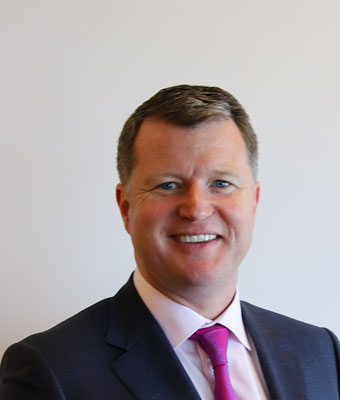
Specifically on Question No. 101, I welcome the fact the Minister has stated clearly it is a priority to continue with the basic income for artists scheme. I agree with Deputy Ó Snodaigh that we are coming very quickly towards August. As a first priority for the 2,000 recipients of the basic income for artists scheme there needs to be an indication as to whether it will be continued for the same 2,000 people. We also need to have certainty on whether the current scheme will be extended or will it be opened to many more artists. I acknowledge the Minister's praise for the former Minister Catherine Martin on this. I welcome the Government's commitment on it but there is an urgency for the Government to make clear what will happen with the scheme.
I join the Leas-Cheann Comhairle in welcoming the students from County Mayo to see the Dáil and their people's house in live action. They are very welcome. With regard to Deputy Byrne's questions I covered most of them when answering Deputy Ó Snodaigh but I can go back over them again. It is a priority of ours and it is in the programme for Government to do an evaluation. It was in the manifestoes that we would proceed with it. Obviously we will have budgetary discussions from the summer onwards, in which I will engage with the Ministers, Deputies Chambers and Donohoe, on expenditure and taxation measures in the Department. On top of this we have an evaluation we must conclude. Both Deputies would agree that the basic thing the Dáil would expect would be to evaluate the existing scheme before I give any commitment one way or the other on a new scheme, a modified scheme or a continuation of a scheme. This work is under way and as soon as I have formulated all of this and gone through all of it, it is my intention to make an announcement fairly soon on the future of the scheme. I hope to be in a position to do this in a matter of weeks.
I appreciate the answers the Minister has given and I appreciate that he will make an announcement. I understand he is awaiting the second report but in the first report, as the Minister acknowledged, quantitatively and qualitatively the basic income scheme for artists was viewed as a significant success. It is important for those in receipt of it that some indication is given to them as to whether after August they will be in a position to be able to continue with the basic income for artists scheme or whether the Minister plans to broaden it or restrict it. We are speaking about a couple of months and primarily for those on the scheme it is important to at least let them know what will happen.
This is why I am doing what I am doing. I am going to try to do this as quickly as possible. All Deputies in all parties on both sides of the House would say it would be foolish in the extreme for me not to at least evaluate all of the reports that are available and will be available to the Department before I make a decision. As soon as I can do so I will do it and I will be back to the House. I am sure both Deputies will be forthright in their views once I have made a decision.
Sports Funding
102. Deputy Ruairí Ó Murchú asked the Minister for Tourism, Culture, Arts, Gaeltacht, Sport and Media if he will outline any engagement there has been between his Department, the Louth county board of the GAA and GAA headquarters about the funding of the new GAA stadium in Dundalk, County Louth; and if he will make a statement on the matter. [22861/25]
This has been a really great time for Louth football. We had the Leinster final win by the under 20s against Meath, the minors won last night against Dublin and are now through to their Leinster final and, hopefully, an historic injustice will be righted on Sunday against Meath. I would say there is much support around the House on this. It is vital that the GAA stadium in Dundalk is delivered upon. While there has been good news from Croke Park, it is about ensuring the Government is playing its part in it.
I thank Deputy Ó Murchú. I know of the great excitement in the county this week in the run-up to the Leinster final this weekend. It has been added to by the under-age success, which has been wonderful to see and is a great reflection on the great work done by Louth GAA at all levels. I look forward to seeing the game this weekend. If it is half as dramatic as the previous one, I am sure it will grip the entire country.
With regard to Deputy Ó Murchú's query on the large-scale sports infrastructure fund application made by Louth GAA last year for a new stadium in Dundalk, he knows the background to this with regard to the fact there was no funding in this particular round. I welcome and note the recent announcement by Louth GAA that it has agreed a funding package to commence development of a new stadium in Dundalk. The large-scale sports infrastructure fund application was for the second part, or phase 2, of the stadium, with phase 1 commencing with the potential for a 4,000-seater stand. We had approximately €680 million of applications to the large-scale infrastructure fund last year, with €167 million awarded to 37 projects throughout the country. We are now assessing whether additional funding can become available and how a reserve list could potentially operate for those who were not successful in getting funding last year, and Louth GAA will be considered in this context. It is certainly welcome to see the recent announcement on Louth GAA being able to commence and having the finances to develop the new stadium, which I know will be of great benefit to it. I wish Louth GAA well with it and I look forward to engaging further with it on its plans and its future potential.
The Minister of State might have an interest in a particular game at the weekend, I would imagine. We will all be glued on Saturday to the match between Armagh and Donegal. It should make for a very good weekend of football. I commend the work done by Louth GAA and the teams under Fergal Reel, Ger Brennan and Johnny Clerkin. I wish them the absolute best of luck and we all hope for a great game of football. From a Louth point of view, death or victory is what we require.
We all welcome the engagement and the package agreed for the first phase of development of the Louth GAA stadium in Dundalk. It is €24 million. I am aware that Louth GAA is on the reserve list for the scheme and I would like to think that decent consideration would be given to this. Does the Minister of State have any further update on the timeline and how projects on the reserve list, such as Louth GAA, could get further?
Even beyond that, what timeline are we looking at for the reopening of LSSIF into the future? The idea is to make sure that we are talking about projects that are ready for the road, that are fit to be built straightaway and that there are no delays with.
The LSSIF was first announced with a funding round in 2019. It is a relatively new fund in that regard, with the objective of trying to ensure that the Government can work to support the development of large-scale sporting facilities across the country.
So far, we have had two rounds, in 2019 and 2024. Between both of those, €297 million has been invested, which is making a significant impact on the development of really good facilities across the country. We had 96 applications in the most recent round, 35 of which benefited from funding. The demand was much higher than the level of funding.
The potential for additional funding is something we have to consider. That is very much subject to the budgetary capacity for that and, alongside that, the capacity for a reserve list as well for those applicants not successful previously.
I know the benefit it would be to County Louth. It is great to see the stadium progressing and Louth GAA moving forward with it. Certainly, we will consider it in the context of future funding opportunities as well in phase 2.
It is necessary that LSSIF funding would follow through for the stadium in Dundalk. My understanding was Louth GAA and Drogheda United were on that reserve list. The argument that was made was shovel-ready projects would get first dibs but given what is happening, particularly with Louth stadium, the first phase of which will be under way, we have to consider additional funding. We have to make sure that happens.
I want to find out whether my understanding is the case. Are we talking about the LSSIF being opened more regularly, that is, on a two- or three-year basis, and that we know that is happening? We know the huge piece of work that needs to be done not only with Drogheda United but, hopefully, with an opening for Dundalk FC, which also needs to have huge works done at Oriel Park.
It will be very much dependent on funding. That is something on which we will have engagement in the budgetary process to see what the potential is.
The opening and announcement of new funding under the sports capital grant and the regional grants under the sports capital facilities fund have generally been every two years. I expect in the first part of next year to open up the sports facilities fund.
On the large-scale funding, there have only been two rounds so far, in 2019 and 2014. The funding requirement for that is heavy. It will certainly be our objective to try to do it within a shorter timeframe in terms of a new round but that will be entirely dependent on the budget as well.
The focus for now is making sure that those who receive funding move forward and in the short term, assessing the potential for additional funding or, in relation to those that were not successful in the most recent round, additional capacity.
Soláthar Tithíochta
103. D'fhiafraigh Deputy Mairéad Farrell den Aire Turasóireachta, Cultúir, Ealaíon, Gaeltachta, Spóirt agus Meán cén obair atá ar siúl aige maidir le soláthar tithíochta sa Ghaeltacht; agus an ndéanfaidh sé ráiteas ina thaobh. [22886/25]
Cén obair atá á déanamh ag an Aire chun soláthair tithíochta sa Ghaeltacht a fheabhsú? Is géarchéim é seo. Ar ndóigh, tá géarchéim tithíochta ann ach tá géarchéim tithíochta ar leith sa Ghaeltacht. Cén obair atá á déanamh aige ina thaobh?
Mar is eol don Teachta, tá cúraimí na Gaeltachta agus na Gaeilge ag aistriú chuig an Aire, an Teachta Calleary. Bhí sé le bheith anseo inniu ach ní raibh sé in ann teacht go dtí an Teach inniu mar gheall ar chúrsaí pearsanta. Rinne an Rialtas ordú Dé Máirt chun na feidhmeanna Gaeilge agus Gaeltachta a aistriú chuig an Roinn forbartha poiblí agus Gaeltachta. Tiocfaidh an t-ordú i bhfeidhm ar an 1 Meitheamh. Is é an tAire, an Teachta Calleary, a thabharfaidh freagraí ar cheisteanna Dála a bhaineann leis na réimsí seo as seo amach.
Ó thaobh cúrsaí tithíochta de, tuigfidh an Teachta go bhfuil cuspóir uaillmhianach ag an Rialtas seo 300,000 teach a thógáil roimh dheireadh 2030. Rachaidh an cuspóir seo chun tairbhe in gach cearn den tír, an Ghaeltacht san áireamh. Tá cainteanna ar siúl idir an Roinn tithíochta agus oifigigh na Roinne Gaeltachta maidir le pleanáil i gceantair Ghaeltachta. Tá grúpa oibre bunaithe ag an dá Roinn, mar aon le hÚdarás na Gaeltachta agus údaráis áitiúla, chun an cheist seo a scrúdú.
Mar chuid den obair seo, tá an Roinn Tithíochta, Rialtais Áitiúil agus Oidhreachta ag dréachtú treoirlínte pleanála Gaeltachta faoi láthair, ag teacht le gealltanas a tugadh sa chlár Rialtais. Ina theannta sin, tá Údarás na Gaeltachta ag fiosrú bealaí faoi láthair chun tacú le soláthar tithíochta sna ceantair Ghaeltachta. Cuirtear in iúl dom go bhfuil an t-údarás ag plé leis na páirtithe leasmhara ábhartha ar fad maidir leis an gceist ríthábhachtach seo.
Gabhaim buíochas leis an Aire. Cé go dtuigim gurb é an tAire, an Teachta Calleary, a bheidh i gceannas ar na cúrsaí seo, tá an tAire, an Teachta O’Donovan, ag bord an Rialtais. Tá muid ag plé le géarchéim thithíochta sa Ghaeltacht le tamall fada. Tá mé tar éis freagra ar cheist Dála a fháil ar ais atá ag rá nach bhfuil muid cinnte cén uair a fhoilseofar na dréacht-treoirlínte pleanála Gaeltachta, cé gur gealladh iad in 2021. Cé go dtuigim gur Rialtas nua é seo, tá an dá pháirtí, Fianna Fáil agus Fine Gael, arís i gcumhacht. Bhí siad chun an cáipéis a fhoilsiú, ach níl sí foilsithe. Níl aon am luaite anois maidir le cén uair a bheidh na treoirlínte foilsithe.
Tá fadhb ollmhór ann i gcomhthéacs na seirbhísí do suíomhanna ionas gur féidir tógáil orthu. Níl na serviced sites ann in áiteanna cosúil le deisceart Chonamara nó fiú don chomhairle contae é féin i nGaillimh. Cén plean atá ag an Aire ina leith ionas gur féidir tithíocht a chur ar fáil?
Mar a dúirt mé leis an Teachta Connolly níos luaithe ar maidin, bhí an tAire, an Teachta Calleary, dóchasach go mbeadh sé anseo chun na ceisteanna sin a fhreagairt ach tá cúrsaí pearsanta aige faoi láthair agus níl sé in ann teacht go dtí an Teach ar maidin. Tá cruinniú aige an tseachtain seo chugainn le hÚdarás na Gaeltachta chun an ábhar a phlé. Tá an-suim aige i gcúrsaí tithíochta. Tá limistéar Gaeltachta ina Dháilcheantar i gContae Mhaigh Eo freisin. Tá an-suim aige san ábhar sin. Tuigim cé chomh tábhachtach is atá sé. Chaith mé tréimhse i m’Aire Stáit agus an Ghaeltacht faoi mo chúram. Tuigim cé chomh tábhachtach is atá na cúrsaí seo. Ar aon nós, beidh an tAire, an Teachta Calleary, ar ais arís an tseachtain seo chugainn. Beidh cruinniú aige leis an údarás agus beidh mé in ann labhairt leis ar an ábhar seo le go mbeidh sé in ann teacht ar ais chuig an Teachta chun an t-ábhar seo a phlé léi.
Tuigim cás an Aire. Tá súil agam go bhfuil chuile shórt all right leis. Tá cúpla rud is féidir leis an Rialtas seo déanamh - rudaí gur chóir go ndéanfadh an Rialtas deireanach i ndáiríre – lena n-áirítear na dréacht-treoirlínte pleanála Gaeltachta a fhoilsiú láithreach ionas gur féidir comhairliúcháin poiblí a bheith againn agus na treoirlínte iad féin a bheith againn ina dhiaidh sin. Chomh maith leis sin, bhí sé ráite againn i Sinn Féin agus ag mo chomhghleacaí, an Teachta Ó Snodaigh, gur chóir go mbeadh ciste airgid i gcomhair maoinithe do thithíocht sa Ghaeltacht mar tá géarchéim ar leith ann.
Chonaic muid an méid a bhí ráite ag Uisce Éireann an tseachtain seo nach bhfuil an t-airgead aige agus go bhfuil poll airgid aige i ndáiríre. Má tá muid dáiríre go mbeidh suíomhanna agus na seirbhísí sa Ghaeltacht, i gceantair cosúil le deisceart Chonamara, mar ní féidir tógáil muna bhfuil na seirbhísí ann, muna bhfuil an t-airgead ag Uisce Éireann lena dhéanamh, tá muid i bponc agus ní bheidh muid in ann brú ar aghaidh. Is iad sin trí rud a d’iarramar.
Tuigim an fhadhb. Tá a fhios ag an Teachta, nuair a bhí mé i m’Aire Stáit le cúraimí na Gaeltachta agus na Gaeilge fúm, rinne mé mo dhícheall an t-ábhar sin a phlé agus a réiteach. Níl aon amhras agam ach gur ceist dheacair í. Tá an-chuid oibre déanta ag an Roinn Gaeltachta agus an Roinn Tithíochta, Rialtais Áitiúil agus Oidhreachta chun an ábhar sin a réiteach. Mar a dúirt mé níos luaithe agus mé ag labhairt leis an Teachta Connolly, tá sé seo ar ceann de na pointí is tábhachtaí don Aire. Tá sé ag iarraidh é seo a phlé amach agus a réiteach le hÚdarás na Gaeltachta agus leis an Roinn nua an tseachtain seo chugainn. B’fhéidir go mbeidh sé in ann teacht ar ais chuig na Teachtaí Farrell agus Connolly, agus chuig na Teachtaí eile a bhfuil suim acu sa Ghaeltacht agus sa Ghaeilge, chun an ábhar sin a phlé.
Go gairid ar an gceist seo, ní díreach na treoirlínte pleanála a bhí geallta dúinn agus do Thithe an Oireachtais ó 2021 ar aghaidh. Tá ceist mhór ann maidir le tithe samhraidh agus Airbnb. I gcomhthéacs na rialacha nua atá ann do Airbnb, ní rialacha nua iad mar ní bhaineann siad leo. Tá sé sin ar cheann de na bunfhadhbanna. Fiú na tithe atá sa Ghaeltacht, níl siad ar fáil do phobal na Gaeltachta.
Caithfear déileáil leis sin. Ní gá go ndéanfaidh na treoirlínte pleanála Gaeltachta déileáil leis sin in aon chor. Tá ceist eile ann maidir le ciste infreastruchtúir ar leith do cheantair Ghaeltachta.
Aontaím leis an méid atá ráite ag an Teachta Ó Snodaigh maidir le cé chomh tábhachtach is atá an t-ábhar sin. Bhí ceist eile aige ar an ábhar sin ach tá an t-am caite againn. Beidh ar an Aire, an Teachta Calleary, déileáil leis an ábhar sin sa Bhille atá os comhair na Dála faoi láthair. Dúirt sé liom go mbeidh sé in ann é sin a phlé le hurlabhraithe Gaeltachta agus Gaelainne na bpáirtithe uile sa Dáil. Beidh sé in ann an obair sin a dhéanamh tar éis cruinnithe a bheith aige le hÚdarás na Gaeltachta agus leis na húdaráis áitiúla a bhfuil suim acu san ábhar sin, mar shampla, Comhairle Chontae na Gaillimhe agus Comhairle Contae Mhaigh Eo, comhairle contae an Aire féin. Beidh sé ar ais arís an tseachtain seo chugainn agus beidh sé ag déileáil leis an ábhar sin.
Cybersecurity Policy
157. Deputy Barry Heneghan asked the Tánaiste and Minister for Defence the steps being taken to strengthen our cyberdefence capabilities in light of increasing global threats to digital infrastructure; and if he will make a statement on the matter. [18129/25]
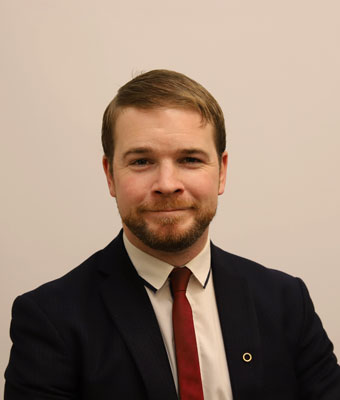
165. Deputy Donnchadh Ó Laoghaire asked the Tánaiste and Minister for Defence the progress his Department has made regarding the establishment of a joint cybersecurity command and other actions related to cybersecurity contained in the Report of the Commission on the Defence Forces. [18071/25]
Inniu ba mhaith liom caint faoi rud éigin atá i mbéal an phobail faoi láthair. What steps are being taken to strengthen Irish cyberdefence capabilities, especially in the environment we are in at present? Cyberattacks are no longer hypothetical. They are a real and growing threat to our economy, our national security and our democracy. The Tánaiste has spoken about this before but I want to know what steps have been taken since the formation of the Government to protect the Irish people and to protect our economy and our national security.
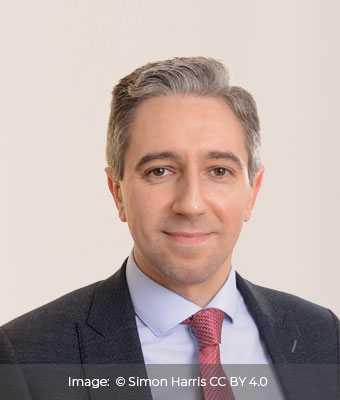
I propose to take Questions Nos. 157 and 165 together.
I can advise the Deputies that the Defence Forces have established a new joint cyberdefence command. This new command will be able to conduct full spectrum operations to robustly defend against cyberthreats and support Defence Forces operations at home and overseas, and enhance national cyberdefence resilience and contingent capabilities. Deputy Heneghan is right that this is a real and growing issue. Following the establishment of this unit, the Defence Forces cyberdefence strategy for 2024 to 2027 was published last year. This strategy sets out a road map to ensure our Defence Forces achieve operational capability in this new domain.
I am pleased to say the assignment of 19 specialist posts in the Defence Forces has been approved to kick-start the operation of this unit, which is headed up by an officer of general rank. In addition to this, the Department is engaging with the Public Appointments Service to recruit ten civilian cyber specialists who will be embedded in this new cyber unit, and we want to see these posts filled as soon as possible. They have been sanctioned and we want to get them started. To this end, the Public Appointment Service has launched a campaign to recruit for the role of principal officer, cyber lead. The closing date for applications for this post was 10 April. Additionally, competitions will be launched imminently to fill two additional roles at the level of engineer grade 1. These roles will be focused on cyberthreat intelligence and cyber resilience. I am pleased to say we are significantly expanding the number of people working in this area.
I should also mention that officials from my Department and the Defence Forces work closely with the Department of the Environment, Climate and Communications and the National Cyber Security Centre. That Department is the Department with lead Government responsibility for cybersecurity in Ireland. We work collaboratively to support measures to address cyber challenges. I am satisfied that from a defence perspective we are on a much-needed positive trajectory to ensure the new cyber command unit is well positioned to meet the ambitions we have set out in the cyber strategy.
Gabhaim buíochas leis an Tánaiste. Tá sé iontach le cloisteáil go bhfuil an obair sin á déanamh aige. It is great to see the Tánaiste is working collaboratively with the Defence Forces to establish this new unit but we need to see our Defence Forces equipped, trained and empowered to meet these real threats. I ask the Department to meet the universities, one of which, DCU, I just left. They are developing new courses but to develop the talent in our population to work in these new Defence Forces offices we need to introduce new courses which are constantly evolving. As happened when the HSE was hacked, I ask the Minister to look into all Departments across the board to make sure they are running with up-to-date systems that are adequate and working. It is about building long-term resilience at every level of the State. I thank the Tánaiste. I would like to see this being done quickly and effectively, given the emerging threats that are ever-growing in this climate.
This is clearly an ever evolving and growing area that will be of crucial importance to the Defence Forces and our security in the coming time. The Tánaiste instanced the new committee and it is very important that it is given adequate briefings on these issues as they arise and develop. The Tánaiste mentioned the cybersecurity command had been established. The most recent report I saw in The Irish Times was that it was to be established. Perhaps there is more up-to-date information than that. I understood the Department and the Defence Forces had advertised for a cybersecurity lead. Perhaps the Tánaiste can inform me on whether the person has been appointed. I tabled my question to seek an update on the establishment and the Tánaiste is saying it has been established. Perhaps he will give me a timeline on when it was established and whether the lead person has been appointed and when they took office.
I am checking the tenses in my answer, and my answer tells me the Defence Forces have established a new joint cyberdefence command. The truth is in what I said. We have seen the assignment of 19 Defence Forces specialist posts to kick-start the unit and it is headed up by someone of general rank. Deputy Ó Laoghaire is also correct that we are filling the principal officer role for cyber lead, which will supplement the ten civilian cyber specialists. The closing date for that post was 10 April. This post has not yet been filled. Additionally, a competition is about to be launched for two additional roles at the level of engineer grade 1. I will write to the Deputy specifically on when I intend to have those people in place.
I will come back to the point Deputy Heneghan made on skills. He is right on this. I am a former Minister for higher education. We have to work with our universities. We have great universities. It is about making sure our universities have a clear understanding of the pipeline of skills our country needs and that we have a clear understanding of what the universities are doing. There generally is good collaboration but I might look specifically at having Defence Forces third level engagement with the Minister, Deputy Lawless, and the relevant universities on this.
Deputy Heneghan asked more broadly, beyond the Defence Forces, how we make sure all Departments and agencies are secure. I remember the HSE hack and the hack of a number of universities, including MTU. The National Cyber Security Centre is responsible for advising and informing Government IT critical national infrastructure providers overall. It has the overarching role and it sits in the Department of the environment. It is headed by Richard Browne and we all feed into it through relevant Departments.
I welcome the fact the Tánaiste will engage with the universities. As I have seen growing up and going through the education system, mol an óige agus tiocfaidh sí. If we do not invest in education and universities and give them the option, they will go. As the Tánaiste mentioned, cyberdefence depends on highly skilled personnel. I welcome the fact the Tánaiste has mentioned this. I have many friends in the Defence Forces and from speaking to them I know they would like to go down this route. An Garda Síochána also plays a key role in this. It is not only international risks as we also face internal risks from crime gangs learning how to send fake texts and emails. A great deal of investment needs to go into this to protect our vulnerable, including the elderly who fall victim to these hacks. I welcome that the Tánaiste has already mentioned this. I would like to see it being done as quickly as possible.
This comes back to my earlier question a little bit. We will continue to have a significant challenge in recruiting and retaining key staff for an area such as this unless something significant changes. If we get things right, the Defence Forces can offer a very rewarding and interesting career for people who have the skills and capabilities in this area but I do not think we are in the right position at present. I did not take a note of the number of staff the Tánaiste mentioned but we are speaking about a number of staff being recruited or seconded for the cybersecurity command. The long-term ambition is 100 additional staff under level of ambition two and up to 300 or another 200 additional staff under level of ambition three. Where are we at with regard to specialist staff?
I would also make the point, not strongly but as something that needs to be considered, that I would be somewhat of the view that we need to consider carefully the ecosystem around cybersecurity. We need to be careful about having too many cooks in all the different agencies that could potentially have a role. I am not saying they do not all have a role but that needs some consideration and thought over the next while.
The Deputy is absolutely correct. One of the issues the Government is giving consider to is that ecosystem. The Deputy will be aware that we have established for the first time a Cabinet committee on national security, chaired by the Taoiseach, in which I and the Minister for Justice participate. We are developing a national security strategy.
I agree cyber affects us. Deputy Heneghan asked me to look into all Departments and every agency, but where the buck stops and where there are clear lines of responsibility is important. We are clear in terms of the lead function being the National Cyber Security Centre but Government will give consideration to that overall national security architecture.
Coming back to the Deputy's point about the new Oireachtas Committee on Defence and National Security, which the Deputy's party colleague will chair, it will provide an important opportunity to try to make sure we can have, within the respective parameters of the importance of sensitive information, a good flow of information and briefings. I am willing and eager to co-operate with that new committee. We do not discuss national security issues and threats and cybersecurity nearly enough in the Oireachtas and I welcome the creation of the new committee.
The Deputy's numbers are correct. So far, we have 19 from the Defence Forces plus ten civilians. That brings us to 29 when fully populated, which is not yet. Obviously, that is to start the unit. We will obviously be seeking to grow that in the time ahead.
Defence Forces
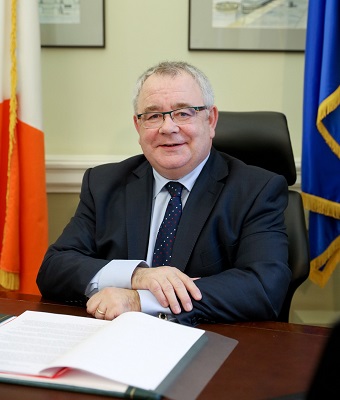
158. Deputy Seán Ó Fearghaíl asked the Tánaiste and Minister for Defence his plans to radically restructure Defence Forces recruitment; and if he will make a statement on the matter. [17594/25]
I understand that at the end of February there were in excess of 7,500 personnel enlisted in the Permanent Defence Force. This is just over 4,000 short of the ambition outlined in the programme for Government. We need to increase enlistment by 50%, which is a substantial target to achieve. Would the Tánaiste have any indication at this stage when he would hope to at least get the enlistment above the 8,000 figure because it is important that we get back to a critical enlistment across all aspects of the Permanent Defence Force?
I thank Deputy Smith for the question. The Deputy is correct. Recruitment and retention have to be a key priority for Government because so much else of what we want to do, in terms of the national security space, the capability of the Defence Forces and the infrastructure we want to purchase and secure, relies on having men and women to operate and operationalise much of that.
Figures provided for 2024 give us some cause for hope in terms of a stabilisation in numbers. It was the first year in quite a number of years where we saw modest growth but we certainly saw a stabilisation in the number of people in the Defence Forces. There were 708 personnel inducted into the Defence Forces in 2024 and this is the highest number in over five years.
The current strength of the Permanent Defence Force, as at 9 April 2025, the latest date for which this figure is available, stood at 7,545 personnel. The Defence Forces have further advised that they are targeting 800 inductions at a minimum for this year.
The Deputy's question is a fair one. I suppose being able to predict the number is not an exact science because it depends on retirements, etc., as well. If we had 708 inducted last year and if we could get to 800 inductions this year, there would be a real clear trajectory of growth but it would also give us a great sense of confidence that the Defence Forces had the ability to ramp up their numbers in terms of inductions.
We need to step up the scale of ambition even further in terms of making greater progress and I have had good engagement and conversations with the Chief of Staff of the Defence Forces and made him clear of Government's ambitions in that regard.
Recruitment to the Defence Forces and the positive trajectory has not happened by accident. It has happened because we have taken a number of decisions. We established a joint induction training centre in Gormanston, and the military authorities have advised that when fully operational, this will enable induction training to be provided to 900 recruits per annum. Recently, the largest recruit class of 72 recruits was welcomed into the facility.
In February 2025, my Department signed a contract for the construction of a new modern gymnasium, with multipurpose hall, as well as a purpose-built obstacle course at the Gormanston camp. This contract is scheduled to take 15 months to complete.
There has been significant progress on pay, which is also important. We need to make sure we get the message out that recruits on completion of training now start at €41,465 inclusive of military service allowance in year 1, which represents an increase of 49% over the past six years.
It is good to know there is stabilisation. Hopefully, stabilisation and an increase in enlistment would give more momentum to recruitment and obviously to the important retention aspect as well.
The programme for Government has a welcome commitment to build on improvements in the recruitment process, including a nationwide programme for transition year and third level students and better representation of women at all levels of the Defence Forces. Are there particular measures being implemented this year to implement those commitments?
Also, there is a commitment to examine incentives and structural changes to make a military career accessible to a wider range of candidates and to encourage existing personnel to extend their military careers. Far too often, I have seen very young people leave the Defence Forces with the ludicrous situation a few years ago where some people had to leave after 20 years' service. There were young women and men in their early forties who were forced to retire. It made no sense whatsoever. Most of them have gone on to other careers. I made representations on behalf of many of them but they could not be kept on because of the contract they went in under. I sincerely hope that no organ of the State will ever introduce such a type of recruitment and terms of employment in the future.
I thank Deputy Smith. I may have a look at that. The point the Deputy makes is a fair one. We are seeing an increase, thankfully, in the number of people joining the Defence Forces. We want to see a greater increase in diversity within the Defence Forces, and most particularly in terms of female participation.
I am pleased to say that already a number of initiatives have been implemented to increase the level of female participation in the Permanent Defence Force. This includes the establishment by the Defence Forces of a female-specific recruitment team which co-ordinates attendance of tri-service female-specific recruiting teams at national, regional and local events, attendance by male and female representatives at all recruitment events, and a gender perspective incorporated in all advertising. The appointment of a gender adviser at senior military rank in 2024 was an important development. There are fitness-test requirements tailored for females. The recruitment office is also actively reaching out to female applicants in the recruitment pipeline in order to support them throughout the application process should they need any further support or advice because we often see here, and in the Garda as well, a high number of people who apply but that does not always result in the same number of people coming in. There is a particular focus where we see an application from a female in terms of reaching out and saying, "You want to be in the Defence Forces. How can we work with you?"
I am pleased to say we also now have a Defence Forces women's network established with the aim of increasing the participation of female personnel at all levels of the organisation.
I thank the Tánaiste for his further response. I genuinely believe that if we had a stronger Reserve Defence Forces, it would be a great conduit for enlistment in the Permanent Defence Force. I represented two Border constituencies during many bad years on this island. I saw the importance of the Reserve Defence Forces along the Border working in the communities that I have the privilege of representing and living in.
Over the years the Reserve Defence Forces recruited many young people who may have been vulnerable to other unsavoury groups. Many of those young people went on to have star careers in the Permanent Defence Force. We should have a strengthened Reserve Defence Forces. It can be an extra welcome ingredient in getting more people enlisted in the Permanent Defence Force.
The Tánaiste will have the opportunity to talk to some of the people who would have served in the Border areas during the bad days. Unfortunately, that went on for many decades. I knew many Army personnel at all levels who I lived among and who I came across in my daily activities because their presence was needed in our communities. They will give the Tánaiste a clear and positive message about the importance of the Reserve Defence Forces and what they could do in the future, not going back to the work that they did in the past but as a recruitment process to strengthen the Permanent Defence Force as well as carrying out their own important work.
I fully agree with the Deputy. When we talk about the Defence Forces, we need to talk about the total number of men and women who are available to come to the aid of the State, if and when that is required. Of course, an important component of that is the Permanent Defence Force but it is also important that there is inter-locking between that and the Reserve Defence Forces' men and women who can be called up and can assist in ways as the need arises.
I have had good meetings in recent weeks with the representative body in relation to the Reserve. I have had good conversations about how we can make sure we do more in terms of those constant connectivities and links between the Permanent Defence Force and the Reserve.
I am also very eager for advertising campaigns to be run and recruitment information to be disseminated about the Reserve Defence Forces. I would very much welcome an opportunity to meet with people who served in the Border region along with the Deputy to discuss that further.
Departmental Meetings
159. Deputy Catherine Connolly asked the Tánaiste and Minister for Defence further to Parliamentary Question No. 117 of 5 February 2025, if the minutes of all meetings with an organisation (details supplied) will now be provided; and if he will make a statement on the matter. [18047/25]
My question is very specific and relates to a specific organisation. It is about a specific series of meetings the Department of Defence has had with the Irish Defence and Security Association. This is my third time asking for the minutes of these meetings. On the last occasion, whoever was in the Tánaiste's place told us it was his intention to publish these minutes. I have two notes here. To say they are opaque would be extremely generous. Will the Tánaiste answer my question?
Deputy Connolly is referring to meetings between officials from the Department of Defence and the Irish Defence and Security Association. As she is aware, the IDSA was established in 2021. Its mission is:
to ensure Ireland develops appropriate, leading edge and trusted defence and security capabilities in the land, sea, air, space and cyber domains, in order to protect our society, create jobs, drive research and enhance Ireland’s economic growth
National defence industry associations are the norm in most EU member states. They provide support to industry operating in defence markets in a number of ways. They create networks, disseminate information and assist contractors to find suitable sub-contractors. They are important for our small and medium-sized enterprises, particularly as I have been very clear about our ambition to increase our capabilities. I want Irish companies to be able to benefit from that.
In that context, the IDSA plays a role in enhancing awareness between Irish industry and my Department through periodic engagement. Departmental engagement with the IDSA is primarily around identifying opportunities to support Irish enterprise and research bodies in accessing EU funding streams and providing support and opportunities to companies, especially SMEs, to develop technologies to keep our Defence Forces safe whether they are on missions and operations overseas or undertaking a range of duties at home and abroad.
The minutes requested under Parliamentary Question No. 117 of 5 February 2025 refer to meetings the Department held with the IDSA. Minutes are available for meetings since October 2024, when scheduled meeting arrangements were put in place. The minutes of two meetings, which took place in October 2024 and December 2024, have now been published on the website of the Department of Defence. Officials from my Department held a subsequent meeting with the IDSA on 10 April and the minutes of that meeting will be published on the Department's website shortly. I have directed the Department of Defence to publish the minutes of all meetings held with the Irish Defence and Security Association on its website.
I did not see those minutes. Perhaps we did not look properly. I do not know. I welcome that they are there. I will take back the word "minutes" because these are not minutes. What I have are two notes. To describe them as "minutes" is utterly wrong. In the notes of one meeting that was held in Newbridge, we see that a person took the notes in October 2024. We have no idea of the agenda or of the outcome other than that "It was agreed that ... and some of his team" and so on. It is vague and opaque and we have no idea of the purpose of the meeting. We also have a note dating from 12 December. Again, there is no agenda laid out. This one only tells us where the meeting was held when we go down into the text. They are very opaque as notes of meetings. It is like somebody wrote them up because the question was asked.
Let us look at this organisation. It was set up in 2021. Ben Tonra is a member. He is on record declaring that he had been volunteering to set up this organisation for some time. This is a man who has serious views on neutrality being selfish. He is part of this organisation that lobbies for the international arms industry. That is how I see it. The Tánaiste can correct me if I am wrong. I am over time.
I hope the Deputy will let me take a look at the minutes and let my office provide her with clarity as to where they are. I hope she will give me feedback on that. My note tells me that, in summary, the minutes of the meeting on 2 October largely refer to preparations for the Department's participation in an IDSA event held in November and that the minutes of the meeting on 12 December refer to enhancing communication between the Department and the association and scheduling future periodic meetings. There is also reference to a brief discussion on the European defence technology industrial base, EDTIB. I am told the minutes were published on the Department of Defence website on Monday, 7 April 2025.
We may have different perspectives on this. I believe transparency is important but that it is okay to talk to industry representative bodies. I have been very clear that we are going to be spending a lot more money on national security and defence. So are most European countries. We are doing it in the context of being militarily neutral. Irish companies need to be enabled and to have the information to benefit from that investment.
The arms industry is supplying arms for genocide to be carried out in Palestine. The Tánaiste knows that. He has spoken about it. This group represents the arms industry, it lobbies for the arms industry and it has an open door to the Department. I know of a series of meetings. Is the Tánaiste confirming that the minutes, or whatever we are going to call them, of all 11 meetings that have been held are available? He should be able to confirm that. He should be able to tell me the nature of those meetings, where they were held, how long they lasted, who attended and so on. None of that is apparent. It is completely opaque. If the Tánaiste wants transparency, the least he can do is to give us an accurate record of the meetings and to tell us their purpose, who called them, their outcomes and so on. This is the arms industry. It has no moral conscience and exists for profit. Its weapons are being used to murder people and to commit genocide. As a neutral sovereign State, if our Department of Defence is meeting a lobbying group, at the very least it should be open, transparent and accountable about it. When the people who are involved are on TV shows or the radio, they should make declarations as to their background and interests.
I am not sure whether the Deputy would use that sort of language outside the House. It is quite an extraordinary thing to say about an association established with the mission "to ensure Ireland develops appropriate, leading edge and trusted defence and security capabilities in the land, sea, air, space and cyber domains". The Deputy has said the most extraordinary things about the association. I have never met with the association in my life and do not speak for it but it is entirely appropriate that the State interact with people who represent industry because-----
Does that include the arms industry?
The Deputy attaches to everything-----
It is not everything.
-----that has to do with national security the arms industry. We are going to need to procure radar, sonar and uniforms for the men and women of the Defence Forces. The Deputy may disagree but the Government is clear that we are going to level of ambition 2 as set out in the Commission on the Defence Forces report. We then want to go to level of ambition 3. That is going to require spending money and Irish companies should be in a position to benefit. That is all it is about. We do not publish the minutes of every meeting that every Government official has with every agency on a Government website but, in this case, I am happy to do so because I believe the Deputy is right. The minutes were published on the website on 7 April. As I have said very clearly, those minutes refer to meetings that took place since October 2024. I have been very clear that I want meetings to be scheduled and structured and that minutes should be published after each of them.
Defence Forces
160. Deputy Ryan O'Meara asked the Tánaiste and Minister for Defence when the professional instructor payment will be paid to commissioned officer instructors in the Defence Forces, as committed to by the Government; and if he will make a statement on the matter. [17824/25]
I ask this question on behalf of Deputy O'Meara. As the Tánaiste will know, Uachtarán na hÉireann today paid tribute to members of the Civil Defence. Ireland's Civil Defence has been in existence for 75 years. I am sure we all compliment them on the great work they do in our local communities.
I welcome the Tánaiste's announcement during the week regarding instructor allowances for officers in the Defence Forces. The announcement of instructor payments for officer members who are heavily relied on to plan, supervise and deliver crucial training along with their non-commissioned instructor colleagues is a vital measure in recruitment and retention, which we spoke about earlier. Will the Tánaiste let us know when this particular measure will be implemented?
I join with Deputy Smith and Uachtarán na hÉireann in paying tribute to our Civil Defence volunteers. It is an incredible organisation. While lots of things did not go to plan during Storm Éowyn, I was briefly in Monaghan in the Deputy's constituency while on the way back from somewhere else and met some of the Civil Defence volunteers and the work they did was incredible. I know that was replicated right across the country. I was in Roscommon opening the new state-of-the-art Civil Defence headquarters only a couple of weeks ago. Deputy Smith is right to pay tribute to the Civil Defence, particularly in the year of its 75th anniversary. All of us on all sides of the House thank the volunteers for what they do.
The Deputy will have seen my recent announcement confirming the introduction of a payment to officer instructors in the Defence Forces. Over recent months, my Department has engaged with the Department of Public Expenditure, NDP Delivery and Reform, with a view to recognising the upskilling of officer instructors through the introduction of a professional instructor payment. I thank the Minister, Deputy Chambers, for working with me on this. The security of the State and its citizens must be a key priority for any government. It is our most solemn obligation. In that context, this Government has committed to strengthening our Defence Forces. Of course, to strengthen the Defence Forces, we rely heavily on the expertise and experience of instructors, who deliver high-quality training programmes to new recruits.
These programmes act as a key driver to transform culture and to modernise the Defence Forces to ensure that the State has a professional Defence Forces capable of undertaking roles assigned by Government.
In order to achieve the necessary scale of change, the Commission on the Defence Forces report highlighted core areas that needed to be addressed, including the transformational change to modernise the organisation's culture through re-engaging in a different way with its core values, renewing its contract with its people, and with modern work practices. A higher level of education of specialism is, therefore, now required for officer ranks as well. Professional instructors will play a critical role in ensuring the training is carried out in relation to that culture. This is an important incentivising measure. The new measure will apply to nearly 100 officer rank instructors who must possess advanced education specialist expertise and substantial experience. It will be restricted to those officers serving as instructors in the Defence Forces training roles who have completed the required instructor courses.
I thank the Tánaiste for his reply. I will ask just one further supplementary question, given that other Members are waiting to ask questions also. The Tánaiste will be aware of another issue of interest to Defence Forces' organisations, which is the finding of the defence sector arbitration board on 18 November. It upheld a ruling that the terms and conditions the director of military prosecutions should be amended to remove the prohibition on that officeholder holding membership of a representative association. I believe this issue may have not yet come to the Tánaiste's attention. I do not believe that person should be barred from holding membership of a representative organisation if he or she so wishes.
I thank Deputy Smith for bringing that matter to my attention. I will, in consultation with my officials, reflect on that judgment, and no doubt in my engagement with representative bodies. I look forward to visiting a number of their conferences and we will have an opportunity to further discuss that. I am happy to come back to the Deputy once I have considered the issue.
Naval Service
161. Deputy Cormac Devlin asked the Tánaiste and Minister for Defence when the Naval Service’s two new inshore patrol vessels, LÉ Aoibhinn and LÉ Gobnait, will enter service; and if he will make a statement on the matter. [17726/25]
168. Deputy Noel McCarthy asked the Tánaiste and Minister for Defence to outline the Naval Service’s current fleet complement; the number of ships that are fully crewed and at sea; his Department’s plans for the further upgrading of the fleet; and if he will make a statement on the matter. [18005/25]
184. Deputy Séamus McGrath asked the Tánaiste and Minister for Defence the number of naval vessels in the ownership of the Naval Service; and the number currently in active operation-deployment. [17827/25]
188. Deputy Peadar Tóibín asked the Tánaiste and Minister for Defence the number of Naval Service ships in day-to-day use; the number docked due to understaffing; and the current location of these ships. [17270/25]
Last October the then Tánaiste and Minister for Defence, Deputy Micheál Martin, approved the berthing of the newly refurbished and purchased inshore patrol vessels, the LÉ Aoibhinn and the LÉ Gobnait, at Dún Laoghaire Harbour. Will the Tánaiste update the House on the timeline for these vessels being fully commissioned and fully operational, and the current status on discussions between his Department and Dún Laoghaire Rathdown County Council regarding the berthing and their long-term presence in the harbour?
I propose to take Questions Nos. 161, 168, 184 and 188 together.
The Naval Service currently has a fleet of eight commissioned vessels. These eight vessels consist of two P50 class large patrol vessels, four P60 class offshore patrol vessels, and two P70 inshore patrol vessels. The military authorities have advised that three of the P60 class offshore patrol vessels are currently available for operations and conduct patrols on a rotation basis. The fourth P60 vessel is currently undergoing a planned maintenance period. The LÉ Aoibhinn is fully operational and is regularly deployed on maritime defence and security operations within Irish territorial waters and the Irish exclusive economic zone, primarily along the east coast.
Taken together, this entails that at the moment there are two vessels actively operational at sea. The two P50 class vessels, the LÉ Róisín and the and LÉ Niamh are currently in operational reserve on the recommendation of the Naval Service.
Deputies will be aware of the challenges facing the Naval Service in recent years, namely around recruitment and retention. To that end, I am pleased to say that we have recently seen a positive uptake in the numbers of new recruits joining the Naval Service. This upturn, in my view, is attributable to a range of measures, including the doubling of the patrol duty allowance, which took effect in January 2024. The effect has been that no patrol days have been cancelled or lost during 2024 or to date in 2025. A total of 97 personnel were inducted into the Naval Service in 2024, consisting of 80 general service recruits, 13 cadets, two re-enlisted personnel, one direct entry electrical artificer, and one direct entry chef. To date in 2025, a further 37 personnel have been inducted into training in the Naval Service and the most recent strength figure available as of 9 April is 745 wholetime equivalent personnel, of an agreed establishment strength of 1,094.
In addition, we have invested heavily in improving the building infrastructure at Haulbowline, particularly focusing on improving the accommodation provided to serving personnel when on duty. To date, €13.5 million has been invested in providing additional accommodation. Since the inception of the Defence Forces infrastructure development plan €18.5 million has been invested in various projects across the naval base.
Extensive work is ongoing to oversee a turnaround in the level of operational activity by our Naval Service and to this end I instructed a team consisting senior military officers, led by our Chief of Staff, and my senior officials to conduct a detailed workshop with the Naval Service. We need an action plan now for the Naval Service. On foot of this three-day workshop, conducted in March, a detailed report from the military authorities is being prepared to include courses of action to increase the numbers of ships at sea.
With regard to contact with Dún Laoghaire, I do not have the most up-to-date information on that but I know how important the issue is to Dún Laoghaire. Having a presence on the east coast of Ireland, and particularly in Dún Laoghaire, is an issue of concern for Deputy Devlin, and I see great wisdom in it too.
I thank the Tánaiste for his reply. The strategic positioning of those inland patrol vessels in Dún Laoghaire would allow for increased patrol and coverage, particularly along the eastern and south-eastern coast, and would help address the ongoing pressures the Naval Service is experiencing. I raised this matter consistently in the last Dáil with the Tánaiste's predecessors. Until the former flagship, the LÉ Eithne was decommissioned it had been twinned with Dún Laoghaire throughout her long and distinguished career. I now formally request that the Government consider one, or ideally both, of the new vessels be twinned with Dún Laoghaire Harbour again. This will not only continue a proud, local naval tradition but will also help to cement the harbour's future role as a permanent hub for the Naval Service. This is something the town and the wider hinterland would be very eager to support. I would appreciate a commitment to keep me briefed on this matter as it progresses.
I will indeed keep the Deputy briefed on this matter. I am very happy to visit the harbour in Dún Laoghaire with him and Oireachtas colleagues. I know this is an issue of real interest to people in Dún Laoghaire, to the people on the east coast, and to the Naval Service. In addition to the operational benefits this could well bring, there is also a secondary benefit, which is the visibility of the Naval Service to the young men and women on the east coast who may wish to join and be recruited. There is a very proud tradition, of which we should be rightly proud, of the Naval Service in Cork as our national Naval Service presence in Cork. We are very proud of that and we are investing more in that. Imagine the benefit if the service also had a visibility and a presence on the east coast in somewhere like Dún Laoghaire. Let me talk further to the Chief of Staff and to officials in my Department and we can arrange a follow-up discussion on this shortly.
Will the Minister for Defence outline the Naval Service current fleet complement, the number of ships that are fully crewed and at sea, and his Department's plans for further upgrading of the fleet? Will he please make a statement on the matter?
I thank my colleague, Deputy Noel McCarthy, and I thank him for inviting me to Haulbowline, which he has done for a number of weeks. I very much look forward to visiting it with Deputy McCarthy and with colleagues in Cork because I am pleased to say we are investing heavily in improving the building infrastructure at Haulbowline. We have had a particular focus in recent years on trying to improve the accommodation to support our serving personnel while on duty. We have spent €13.5 million so far in providing additional accommodation. Since the inception of our development plan €18.5 million has been invested in various projects across the Haulbowline naval base as well. My senior officials, the incumbent Chief of Staff and others were down there recently for that three-day workshop to see what more we can do to support the Naval Service.
In direct answer to the Deputy's question, on 9 April 2025 there were 745 wholetime equivalent personnel within the Naval Service. I am pleased to see an uptick in the number of people now signing up. New recruits joining the Naval Service is much needed and requires constant attention.
I thank the Tánaiste for his response. I have huge respect for the Naval Service and the job it does. I have family members directly involved in the service. I was pleased to see the significant increase in funding provided to the Defence Forces in the last budget. I particularly welcome the Commission on the Defence Forces' recommendation of an accelerated programme of naval vessel replacement. In reference to this, how many of the current fleet have completed a mid-life extension programme to date, and how many are proposed to undergo such a programme in the future?
I thank the Deputy. I know that he and his family have a proud family history of serving our State through the Naval Service. I thank them and all families across our country who have proud traditions with Óglaigh na hÉireann. I welcome the fact we now have the largest Defence Forces budget that we have ever had in our country, but we have a long way to go in terms of investing in the capabilities we need, and in particular having a better understanding of what happens up in our skies and below our seas. Debate in this House often gets drawn down an alleyway into one about military neutrality. We have no plans to change military neutrality but that is not an excuse or a cop out for not properly investing in our national security.
On the Deputy's specific question on mid-life extensions, I will ask the Defence Forces for the latest information on that.
I will provide that to the Deputy in writing.
I thank the Tánaiste for his presence today.
Much of what I was intending to ask has already been discussed with regard to the number of vessels at the disposal of the Naval Service, the number in actual deployment and the number we are capable of resourcing and staffing to commission them into deployment. I am very fortunate to live within a couple of miles of the Naval Service HQ in Haulbowline and to represent the area nearby, and we are very proud of the great work that the Naval Service has done and is doing. As the Tánaiste has said a number of times during this discussion, the importance of defence is an area that is increasingly becoming important for us as a nation. We all know the great work that the Naval Service does in protecting our territorial waters. My key question relates to the number of vessels available, the staffing requirements and where exactly we stand with regard to being able to deploy those vessels on a day-to-day basis.
Deputy McGrath knows from his own community and constituency the importance of the pride within which the Naval Service is held across our country, particularly in the part of the country where he lives because people are so familiar with the service there. I look forward to visiting Haulbowline with him in the time ahead. The Naval Service currently has a fleet of eight commissioned vehicles: two P50-class large patrol vessels, four P60-class offshore patrol vessels and two P70 inshore patrol vessels. The military authorities have advised me that three of the P60 class are currently available for operations, and they are conducting patrols on a rotation basis. The fourth vessel is currently undergoing planned maintenance. Basically, it means there are approximately two vessels actively operational at sea at any time. The big thing we need to do for our Naval Service in addition to getting more ships at sea is to provide sonar capability. As the Deputy knows, we hear about suspicious ships from time to time near the part of the country where he lives. Having that sonar capability, as well as our radar capabilities, would make a real difference to the security of the State.
I welcome the Tánaiste's response. As I outlined earlier in terms of the importance of defence and protecting our territorial waters, the role of the Naval Service has expanded quite a lot in recent years in terms of maritime surveillance, protecting our marine assets, deterring criminal activity and smuggling and so on. It is welcome that we have a number of vessels at our disposal. I heard earlier that the direction of travel regarding recruitment and so on seems very positive, even though we are a bit short in terms of our overall headcount. The priority this Government is giving defence is very welcome, and I welcome the Tánaiste's role in that. I ask that he continues to prioritise defence, particularly the Naval Service, as we are an island nation and it is critically important for us.
The Deputy is right. We have to invest more in defence. In fairness, a lot of work was done, much of it by my predecessor, the Taoiseach, in terms of the Commission on the Future of the Defence Forces. That was a very helpful and important piece of infrastructure. What we do not need to do, however, is every time we try to spend some money on defence, everybody asks about funding for another Department. We do not do that with regard to anything else. If somebody says we are giving more money to the Department of education, people do not ask about the Department of Health. Yet, any time we talk about spending more on national security, people ask why we are not putting more money into every other public service. National security is not just something that is nice to have. It is really important. If, God forbid, we did not invest more in this and did not have the capabilities and something happened off our seas or in our skies, we would be facing more difficult questions in terms of why we did not make those investment decisions. We are in a good place. We have a long way to go, as the Deputy rightly said, to get to where we need to be in terms of the numbers of people in Óglaigh na hÉireann. It is all a jigsaw and is interlinked; if people start to see more investment, increased capability, more operations and the likes, it makes the Defence Forces more attractive. The reverse is also true. We need to get all the pieces of the jigsaw together.
I thank the Tánaiste for his response. Will the items we discussed today, namely, the commissioning, operational timelines, berthing arrangements and twinning with Dún Laoghaire, be actively considered? Will his officials engage directly with me on the next steps?
I express my own gratitude to the men and women of our Defence Forces for their continued service and bravery, both at home and abroad. Given today is the 75th anniversary for our Civil Defence, I congratulate it on its service here in Ireland.
My officials and I will keep in close contact with the Deputy on those issues as well. I thank him for his words of tribute to members of the Defence Forces. I am very conscious that, this week, men and women who have served in the 125th battalion in Lebanon are beginning to return home. I was in Renmore Barracks, where the 126th battalion is getting ready to be deployed to Lebanon. I met very excited soldiers, and sometimes nervous mothers, grannies, wives, husbands and children worried about their relative being away from the family. The sacrifices that the men and women of Óglaigh na hÉireann and military families make is something we should rightly pay tribute to and acknowledge. The Civil Defence in the Deputy's own community, my community and across the country makes an incredible contribution. On its 75th anniversary, Deputy Devlin is so right to rise and pay tribute to it today, and I join him in that.
Defence Forces
162. Deputy Darren O'Rourke asked the Tánaiste and Minister for Defence to outline his plans for investment at Gormanston Camp; and if he will make a statement on the matter. [17085/25]
Will the Tánaiste outline his plans for investment at Gormanston Camp?
I thank Deputy O'Rourke for raising the question and the opportunity it provides to discuss some of the various investments and infrastructure improvements that are either currently under way, or are being planned, at Gormanston Camp in County Meath. As I know the Deputy will be aware, this training installation has now been designated as the Defence Forces’ Joint Induction Training Centre. Its function is to accommodate the induction training of all future recruits into the Defence Forces. In February of this year, my Department signed a contract for the construction of a new modern gymnasium at a value of €7.8 million for a multipurpose hall, as well as a purpose-built training obstacle course at Gormanston Camp. This project, I am pleased to say, is now under construction, and the estimated date for completion is May 2026. Last month, my Department also signed a contract for the construction of a new locker block for enlisted personnel at Gormanston Camp, valued at €1.5 million. It is estimated it will take nine months to complete that.
In addition to this new facility, the following construction works and projects are also under way at Gormanston: the upgrade of blocks A and B and the provision of a new running track. These projects, with a combined value of €1.1 million, are due to be completed this year. In the coming years, projects which are at various stages of procurement design and planning will deliver new buildings for Gormanston Camp at a combined value of more than €14 million. The buildings in question are a dining hall and an accommodation block with capacity for 100 people.
All of the projects I have mentioned are part of and are included in the Defence Forces infrastructure development plan, which sets out a programme of project delivery up to 2027. The capital allocation for building works in military installations and barracks around the country for the last five years was approximately €170 million. This year the capital allocation stands at €50 million for capital investment, with a further €12.5 million for ongoing maintenance and running costs.
That investment is welcome. It was welcome news in February. It is also welcome that the work is under way. It will be this time next year when it will be ready. Does the Tánaiste have an indication of when it will be operational or the numbers of people that will pass through it? I understand that it is for all units of the Defence Forces to use as a training camp. I wish to get a sense of the level of activity that might be there.
I will read my note to give the Deputy the up-to-date figures. I am told that in 2024, 577 recruits were inducted, consisting of 451 Army, 46 Air Corps and 80 Naval Service recruits into the Permanent Defence Forces. As of 28 February, which is the last date I have for figures, 34 recruits were inducted so far this year. On 19 March 2025, Gormanston welcomed its largest recruit class at 72 recruits, and when fully operational, it will have the capacity to accommodate the induction of 900 recruits per annum.
The Deputy asked about timelines. As he rightly said, the works that were signed for in February - the multipurpose hall and the purpose-built obstacle course - are now under construction and are due to be completed by May 2026. That construction has started. I need to check the difference between when it will be completed and when it will be operational. I do not expect there is a timeline there of much significance, but I will come back to the Deputy directly on that.
I thank the Tánaiste. As I said, it is a welcome investment. I recognise the security considerations and other considerations, but is there an opportunity for the local community to access, in some shape or form, the likes of those facilities?
We recognise that there are security considerations and other considerations, but if, for example, there were a transition period during which the facilities were not being used or some arrangement could be made, is it possible that something like that could be considered? Between Gormanston and Stamullen there is a growing population and a real shortage of amenities generally. Specifically, I refer to Stamullen FC, for example, the local soccer club. This is something we have tried to raise in the past. We would like to see this very welcome investment used to its full potential, notwithstanding the security constraints.
I am smiling because this is one of the questions I get asked most frequently when I go around the country. The Deputy is right that our barracks often have good facilities and communities ask if they can get in too. Obviously, there are requirements from a security point of view, but there is also the issue of wanting our communities to be familiar with them. There have been good examples. This comes up a lot in the context of Cathal Brugha Barracks. It came up in the context of Renmore when I was there recently. I met a local community group wanting to know. In general, I have found the position of the Defence Forces and the Chief of Staff to be one of wanting to work with local communities where possible. "I do not know" is the honest answer to the question about Gormanston, but I will talk to the Chief of Staff about it and I am happy to come back to the Deputy with a written update.
Questions Nos. 163 and 164 are to be taken together. Only one of the Deputies is here.
163. Deputy Ruairí Ó Murchú asked the Tánaiste and Minister for Defence his Department's plans this year for funding, resourcing, recruitment and retention at the Defence Forces; and if he will make a statement on the matter. [16861/25]
164. Deputy Tony McCormack asked the Tánaiste and Minister for Defence if he will provide an update on the current recruitment and retention challenges facing the Defence Forces; the measures being taken to address these issues; and if he will make a statement on the matter. [17650/25]
Could the Tánaiste detail the plans this year as regards funding, resourcing, recruitment and retention at the Defence Forces? We all know that if we take this over a five-year period, we have had more losses than we have had recruitment. It is a huge issue. We are well away from reaching what is necessary for level of ambition 2. I think that at present we could be below the numbers required even for level of ambition 1. What is to be done?
I propose to take Questions Nos. 163 and 164 together.
It is a fair point. It is a matter of lies, damned lies and statistics. It depends on when one measures the point. I am going to say progress has been made in the last year and the Deputy is going to say, "Actually, if you look back over a number of years", and both could be true. The reality is that there are some encouraging signs of a stabilisation now as regards recruitment and retention, but I am also very truthful on this in that there is a long way to go to get to where we need to be, so there is certainly no room for complacency at all. What is interesting, though, is that we are seeing through the application process very significant interest in joining the Defence Forces, and that is to be welcomed.
As of 9 April of this year, as I said earlier today, we have seen 7,545 whole-time equivalent personnel in the Defence Forces. That is 6,074 in our Army, 726 in our Air Corps and 745 in our Naval Service. We need to continue to build on this. I am pleased to say that we had 708 people inducted into the Permanent Defence Force last year. That was the highest number in over five years. The Defence Forces - I meet them regularly on this; I spoke to the Chief of Staff on this recently - are hoping to induct 800 at least this year as well. That would be encouraging. In addition to that, we are seeing an encouraging trend gleaned from the discharges figure for last year. Last year, there was a discharges figure of 674. That was 81 fewer than the previous year and the lowest in four years. Therefore, last year saw the highest number inducted in over five years and the lowest number of discharges in over four years. We have to build on that. There are encouraging signs that this year will build on it, but let us keep the focus on that. I think some of this has happened because of some of the decisions we have taken and are taking and some of the work the Defence Forces have done. The points the Deputy's colleague Deputy O'Rourke just put to me are a part of it. Having that new joint induction training centre established in Gormanston was important. That will have really good facilities to train up to 900 recruits each year. As I said, the centre recently saw its largest recruit class to date, with 72 people go in the doors. We are putting the facilities in there, including gyms, multipurpose halls and purpose-built obstacle course. They are state-of-the-art training facilities. It is an example of our commitment to supporting people who join the Defence Forces. We now have the largest Defence Forces budget ever.
We have seen a very significant improvement in pay. The pay of recruits on completion of training now starts at €41,465 in year one. School leaver cadets upon commissioning earn €45,341 while in full-time education, and graduate cadets commence on €50,667, inclusive of military service allowance. It should be noted that interest in a career in the Defence Forces grew significantly in the last year. We had 13,384 applications, an increase of a third on the previous year. I am pleased to say this trend has continued this year with over 4,000 applications received by the end of March. We have increased the maximum recruitment age to 39. We have increased the mandatory retirement age to 62. We have extended private secondary healthcare to all Permanent Defence Force members. In addition, we have seen the patrol duty allowance payable to the Naval Service personnel at sea doubled, the Naval Service tax credit extended for a further five years and, very importantly, the provisions of the working time directive extended to the Defence Forces, subject to some exemptions but for the first time ever. There is a lot of work to do, but those are the plans for the time ahead and the progress we believe we have made to date.
I appreciate the answer, particularly the statement that we still have more to do. Obviously, we are starting from a point of view of legacy issues as regards pay and conditions.
Has any detailed study been done of the reasons for the discharges? As much as there was an improvement last year, and we hope for a greater improvement as regards recruitment versus discharges this year, we have a significant journey still to go. Then it is a matter of, on the basis of where we are at the minute, through forecasting, when we think we will have the numbers within the Defence Forces that we require even in relation to LOA 2.
The Tánaiste mentioned earlier the national security framework. How exactly will it operate in relation to the cybersecurity framework? When will we have some sort of detail as to how that will look? I am always curious as to how the National Cyber Security Centre fits in with the piece of work the Defence Forces have to do.
I am always conscious when speaking to this that people who are not friends of Ireland look in on these proceedings, so as regards national cybersecurity, let all of those who look in be aware that we have cybersecurity structures in place. We have an excellent National Cyber Security Centre. As Deputy Heneghan reminded us earlier, however, there is so much we need to do in this space. The Government will consider, through its national security strategy, the overall infrastructure and ecosystem, as I think Deputy Ó Murchú's colleague referred to it earlier. That is due later this year.
I do not have - I certainly do not have in front of me - an overall breakdown of the rationale or reasons behind people's discharges. What I can tell the Deputy from the paperwork on this that comes across my desk is that the reasons tend to be varied. His question has provoked a thought in my mind. I will ask - I would be happy to share with him the response - if there are three or four big issues and if there is anything we can glean further from that. I have asked the Chief of Staff and the Defence Forces to prepare for when I bring the updated implementation plan on the Commission on the Defence Forces to the Cabinet later this year, the roadmap as to how to get to the establishment figure we require for LOA 2. I think this year the test will be whether we can get to the 800 inductions.
I would appreciate it if that information could be shared.
Question No. 165 taken with Question No. 157.
Question No. 166 taken with Written Answers.
Official Engagements
167. Deputy Catherine Callaghan asked the Tánaiste and Minister for Defence if he will provide an update on his recent trip to Lebanon and, in particular, his meeting with Lebanese officials about the ongoing legal proceedings in the matter relating to the death of a person (details supplied); and if he will make a statement on the matter. [18043/25]
182. Deputy Ruairí Ó Murchú asked the Tánaiste and Minister for Defence if he will report on his meetings in Lebanon recently about a case (details supplied); and if he will make a statement on the matter. [16860/25]
203. Deputy Seán Crowe asked the Tánaiste and Minister for Defence if he will report on his recent visit to Lebanon; on the engagement he had with his counterparts in the Lebanese Government, particularly regarding the case of a person (details supplied); and on his views on how conditions could be improved for Irish Defence Forces personnel serving on peacekeeping duties there; and if he will make a statement on the matter. [15503/25]
My question is about Private Seán Rooney. The Tánaiste put in the public domain the fact that he was having engagements in Lebanon and that he was dissatisfied. The family and the rest of us all want to see justice. We have not seen that progress. I believe the Tánaiste and the Government are dissatisfied. How did the engagement go there? Has he any update on the post-incident internal inquiry? I think there is a bit of time still to run on that. I ask particularly about the engagement with the UN from the point of view of ensuring that the information would be provided as was required by the coroner. I think there was an initial discussion on a framework, but we also want that information to be supplied to the family. I believe the family are also looking to travel to Lebanon.
I propose to take Questions Nos. 167, 182 and 203 together.
Let me first, as we always do when we speak about this, extend our deepest sympathies to the family of the late Private Seán Rooney and thank him for his service. None of us can fathom the unimaginable pain and grief of his family. I want them to know that we think of them and are motivated every day by getting them truth and justice in relation to what happened to Private Rooney.
On the UN question specifically, on 6 August last year the coroner wrote to the UN requesting access to two reports on investigations that were carried out by the UN on 14 December 2022. The coroner has requested in her correspondence that the UN become an interested party for the purpose of the inquest, and my understanding is that the UN responded to the coroner's question in early March. We continue to apply absolute pressure and clarity of thought to the fact that Private Rooney deserves justice and that those responsible for his death must be brought to justice.
During my meetings in my recent visit to Lebanon I raised in the strongest possible terms our deep frustration at the slow pace of proceedings before the Lebanese military tribunal concerning those charged with Private Rooney's killing. I made clear the lack of progress is causing enormous distress, particularly to the family of Private Rooney. We remain in close contact with the Lebanese authorities and his family.
Will the information be supplied to the families?
I will engage on that.
My question is also about Private Seán Rooney. As the Tánaiste knows, I have a special interest in the Middle East and in peacekeeping as a former UN peacekeeper. I travelled that road from Tibnin to Beirut Airport as Private Seán Rooney did. Can the Tánaiste provide us with an update on his recent trip to Lebanon? He outlined it to Deputy Ó Murchú, but if he has something else to add, I would be very grateful to hear it.
I thank the Deputy for her own service and the unique insight she brings to debates in this House having served in Lebanon with our Defence Forces. I very much welcome the opportunity to update the House on my recent visit to Lebanon. A central focus of that visit on 26 March was on my meetings with the Lebanese Ministers for foreign affairs and defence. At those meetings, my first with both individuals, I left the Ministers in no doubt with regard to the absolute determination of the Government to ensure those responsible for Private Rooney’s death are brought to justice. During my meetings with both Ministers, I raised in the strongest terms our deep frustration at the slow pace of proceedings before the Lebanese military tribunal concerning those charged with Private Rooney's killing. I made it clear the lack of progress is causing enormous distress, particularly for the family of Private Rooney. We are mindful of the independence of Lebanon's judicial system but I reiterated that it is essential to see real movement and real accountability given the delays in the trial to date. I also noted the postponement of the most recent hearing of the trial on 12 February, with the next one not scheduled until 17 September.
The Lebanese Ministers acknowledged the seriousness of the case and assured me of the commitment of the new Lebanese Government in bringing the perpetrators to justice. They also took the opportunity to express their condolences to the family of Private Rooney and to Ireland and their appreciation for Ireland's long-standing commitment to peacekeeping through UNIFIL. I conveyed to both Ministers our strong sense of frustration and I also formally handed over a letter to the Lebanese Minister for foreign affairs further underlining the importance of seeing urgent and concrete progress on this issue.
While I was in Lebanon, I was delighted and honoured to see the men and women serving there, to see how they serve with absolute distinction, to see Camp Shamrock and to see a contingent that has spent so much of their time over there in bunkers. At that stage they had been there for approximately five months and the equivalent of one month had been spent in bunkers, just to give a sense of the volatility of the region. I was very pleased to see when I was there, though, that those serving there were back out on patrols and that the situation, while it can always change, was a little bit more stable. I know many of the personnel have served with distinction. They were beginning to think about coming home as well and looking forward to reuniting with family. I was honoured to be in Renmore Barracks for the review of our troops before the 126th Battalion heads off in the coming days. I take the opportunity again to thank everyone who has served with the UNIFIL mission. I thank all the men and women of Óglaigh na hÉireann, including the Deputy, for their service. We should be very proud as a country of the great contribution our peacekeepers have made around the world and particularly in Lebanon.
Is féidir teacht ar Cheisteanna Scríofa ar
www.oireachtas.ie
.
Written Answers are published on the Oireachtas website.