Saincheisteanna Tráthúla - Topical Issue Debate
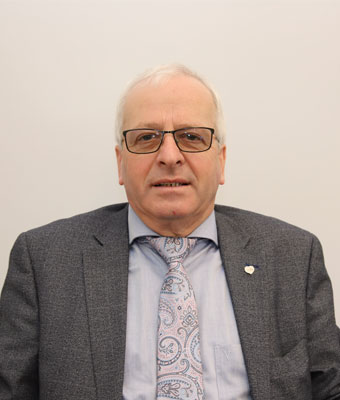
Before we start, I would like to express on my own behalf and that of the House good wishes to our new Pope elected this evening while we were doing the session. I wish him well. Our hearts and prayers are with him. I thank everyone who supported the cardinals for their diligent work. It was a speedy process. Go n-éirí go geal leis an bPápa nua.
Air Services
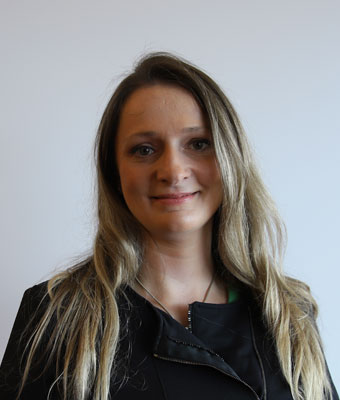
We have seen the rapid growth of commercial drone activity in Ireland, especially in my constituency of Dublin West. Manna Drone Delivery has been piloting a delivery service from a local base in Blanchardstown Shopping Centre and another site in the vicinity at junction six at the M50, which is the subject of some dispute. The company completes more than 300 deliveries daily within a radius of 3 km. The company has stated that by this summer its services will expand to cover around 500,000 residents across Dublin, with plans for ten drone bases citywide by the end of the year. Potentially, these will serve up to 1 million people.
This is no longer a trial or a novelty. It represents a significant modal shift in how goods and services are being delivered in our communities. It looks like it is here to stay and therefore demands our attention from a planning and regulatory perspective. While business innovation is welcome, as are the potential reduction in carbon emissions and the timely delivery of medicine and medical equipment, it brings to the fore issues we cannot ignore. These include protecting the public's privacy, ensuring safety and managing the day-to-day impact on people's lives, especially in densely populated areas. It is important that we support innovation while addressing the very real concerns of local communities, like noise pollution. The noise levels of drones in Dublin West can reach 60 dB to 65 dB above WHO recommendations for daily noise exposure. There are flight paths over residential areas. When we knock on the doors of houses like we do when we are canvassing and spend a significant time in an estate, it is possible to experience a snapshot of what residents inside that 3 km radius are now living with. It is a near continuous hum of drones overhead. Some liken it to the noise of a lawnmower. It is fine every now and again right beside you, but not all the time above you. We are used to the noise of passing traffic or a passing train during the day.
Rather than asking them, are we really telling residents that they must accept this change in their environment, this disruption and, to some, this intrusion without debate or public consultation? Currently, our planning and regulatory system does not support that. The first-hand experience of nearby residents must be taken into account as we move forward with developing a clear framework for commercial drone operations. It is essential that we do not let innovation outpace regulation. Some have that said drones are completely unregulated, but that is not true. Two EU regulations currently apply. One governs how drones are operated by weight and the other sets technical and safety standards for the drones. However, they focus on aviation safety and risk and do not take into consideration the needs of communities and residents who do not know who to contact to raise concerns or make a noise complaint. In addition, they do not know what their rights are. The national policy framework for unmanned aircraft systems currently in development needs to be launched. A national public awareness campaign on the role and responsibilities of the Irish Aviation Authority, IAA, and the rights of residents is necessary. We also need a clear distinction between the role of the planning authority and the IAA, and the establishment of a U-space, an unmanned traffic management system. This would allow authorities to define controlled flight zones, schedule flight times over residential areas and ensure that drones are safely and responsibly integrated into shared airspace.
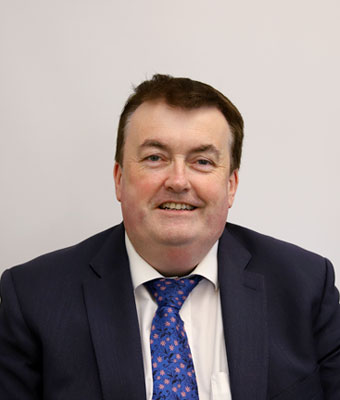
I thank Deputy Currie for raising this matter which I am taking on behalf of the Minister for Transport. From the aviation safety perspective, the regulation of the recreational and commercial use of drones, or unmanned aircraft systems as they are technically known, is provided for under European Union regulations that are directly applicable to Ireland. Two drone-specific EU regulations ensure that drone operations across Europe are safe and secure. In that context, Commission Delegated Regulation (EU) 2019/945 and the Commission Implementing Regulation (EU) 2019/947 set out the common rules for the regulation of drones and drone operators, including training, licensing and registration. Regulation 2019/947 sets out the operational rules that apply to professional drone operators and those flying drones for leisure. Regulation 2019/945 sets the common EU-wide technical requirements for drones, which are the features and capabilities that drones must have in order to be flown safely. This regulation also seeks to foster investment and innovation in this sector through a harmonised framework across the European Union. The aim of the EU drone regulations is to achieve the same level of safety for drone operations as manned aviation.
The Irish Aviation Authority, the civil aviation regulator, oversees the implementation of the EU drone regulations and standards. The drone regulations are operation centric and focus on the risk of drone operations, so regulation is lighter on low-risk operations and more demanding on higher risk operations. Under the EU regulatory regime, drone operations are classified into three broad categories - open, specific and certified - with different regulatory considerations applied across each category. Commercial drone operations may fall into any one of these categories depending on the risk associated with the operation. Low-risk commercial drone operations, such as aerial photography, may fall in the open category where regulation and oversight of operations are lighter. Other commercial drone operations, including drone delivery operations, are more closely regulated. These types of commercial drone operations may fall into the medium-risk specific category, which may require specific authorisation by the IAA. This type of authorisation is recognised in all EU member states. To obtain operational authorisation, an operator must provide a comprehensive safety portfolio which includes assessing and addressing both ground and air risks with appropriate mitigations. These might include, for example, co-ordination with air traffic control and fitting the drone with a parachute and flight termination system.
At national level, SI 24/2023, Irish Aviation Authority (Unmanned Aircraft Systems (Drones)) Order 2023, which replaced an earlier drones order, came into force on 2 February 2023. It states the investigative and enforcement powers of the IAA and provides for arrangements between An Garda Síochána and the IAA in relation to enforcement of EU drone regulations. It also includes a section on privacy rights, which draws the attention of drone operators to the need to prepare a data protection impact assessment where required, in accordance with the EU general data protection regulation. In addition to complying with EU drone regulations, drone operators must also comply with national laws, including environmental, planning and, as mentioned, privacy laws.
In addition to the two EU drone regulations to which I referred, there is also a European regulatory framework, comprising Regulations (EU) 2021/664, 2021/665 and 2021/666, which allows for the safe development of the drone services market, including drone delivery and the integration of drones into airspace. The U-space regulation - Regulation (EU) 2021/664) - emerged to support commercial operations with drones, especially those entailing greater complexity and automation, to provide for the safe integration of a number of drone flights in a volume of airspace. Essentially, U-space is an area of airspace where drone operations may only occur with the support of U-space services. At a minimum, these must include network identification, traffic management, flight authorisation and geo-awareness. U-space full services are not envisaged to happen until 2030. The establishment of U-space in high-density drone use areas may mitigate some concerns related to privacy and security.
The Minister of State's response proves my point. I thank him for it. This is heavy on regulation rather than on the rights of residents and communities. The language used is not at all consumer-friendly. Meanwhile, we are seeing the fast development, growth and expansion of these deliveries and services and they are impacting communities. We have to make sure the regulations and public information are keeping pace with that innovation. The national policy framework currently in development needs to be launched. This framework needs to be consumer-friendly. U-space services are the critical part of this because it gets down to the nitty-gritty of flight paths over housing estates. The Minister of State indicated that he does not see this as being fully envisaged until 2030. That will be too late. The IAA is collaborating with Maynooth University and Dublin City Council on a drone innovation partnership that will inform the development of an unmanned traffic system in the Dublin city region. Fingal County Council needs to be part of that. Other councils should be part of it too. The U-space approach needs to be prioritised.
This is not about curbing innovation. It is about building the right regulatory foundation so that innovation can grow with public confidence and local support. However, that is not happening. We need to take a consumer-friendly approach to engaging with and consulting the public on issues like this in order to make it relatable, relevant and explainable to residents who have legitimate concerns about noise and intrusiveness.
Aviation is obviously a highly regulated area, but I agree with the Deputy that the rapid pace of drone innovation and its commercialisation have created a challenge. The Government is aware of the impact of that and of the growing drone sector, particularly in the context of the increasing volume of operations. The programme for Government includes a commitment to finalise and implement a policy framework to guide high levels of strategic planning and the development of the drone sector in Ireland through supporting its growth and innovation but also ensuring other aspects, including safe and secure operations and managing environmental concerns.
A public consultation seeking feedback from the public on several key areas, including how to respond to public concerns about the increasing use of drones, how to position Ireland as a potential front runner in this emerging sector and the responsible development of the drone sector, was held in 2024. The policy framework seeks to strike a balance, as the Deputy stated, between those concerns. I will take her comments back to the Minister as I know she will. As someone who represents a constituency that is similar to hers, some of her concerns have been raised with me on an ongoing basis, particularly in relation to noise impact of continuous drone operation in residential areas. I very much hear what the Deputy is saying.
Legislative Reviews
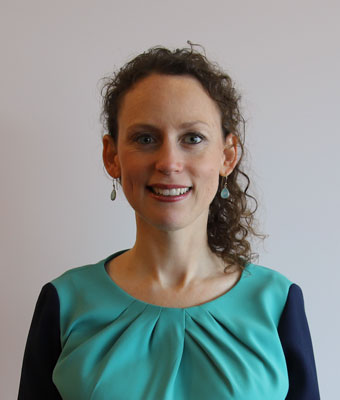
I am calling for an urgent and speedy review of the Assisted Decision-Making (Capacity) Act 2015. Many of us recognise and applaud the intent and ambition of the Act in supposedly giving greater power and autonomy to vulnerable individuals and to significantly increasing the numbers registering enduring power of attorney, EPA. The reality has proved very different, however. I want to relay to the Minister of State the enormous frustration among many people with the operation of the Assisted Decision-Making (Capacity) Act. This is not about one single piece of the Act but about the operation of both the enduring power of attorney and the operation and bureaucracy around that, the decision-making representative and the process of registration. The frustrations relate to access to the system of registering for an EPA, the cost, the length of the procedure and who recognises it. It is supposed to be a legal document and yet I have accounts of banks, insurance companies and other financial institutions that are refusing to recognise an enduring power of attorney. The anger relates to the decision-making representative piece as well where parents are forced to go to court just to represent the needs and well-being of their adult children or siblings. They have very serious concerns about how onerous the bureaucracy is around all that and the costs, but also in terms of the balance of rights and responsibilities. I believe there are four key concerns.
A number of families told me they have spent thousands of euro trying to complete the process of registering for enduring power of attorney. One family spent €4,800. That is the very opposite of what the Act set out to achieve. It is downright exclusionary of the very people we are seeking to try to help here. We have confusion about the role of the solicitor. Obviously, we have the 2024 practice instruction from the Law Society of Ireland with regard to engaging only with applicants from start to finish as opposed to just for the legal practitioner statement. The Decision Support Service, DSS, told one constituent of mine there are only three solicitors in the country who are willing to do that single piece of the legal practitioner statement. That is contradicted by the replies to parliamentary questions I have received. We need clarity between what the DSS is saying and what the Department of Justice is saying.
Then, we have difficulties with recognising an enduring power of attorney. In one case, a woman had to battle with a fair deal office, then AIB and then Aviva just to have the enduring power of attorney recognised in terms of dealing with her dad's affairs. The Decision Support Service was of zero help in this regard. The process as she described it was absolutely tortuous. Is it any wonder we have seen a reduction in numbers in the EPA process over the past two years?
The other critical point is with regard to the wardship system. By 26 April next year, all wards of court are supposed to exit the system and yet we have seen a very small number of those voluntarily exiting the system. What is going to be done in that regard?
I want to cover the significant issues with regard to the decision-making representative, DMR. I know of one gentleman who went through the courts process, which legal aid did not fully cover, by the way, because he had to pay for the capacity assessment for his sister. He went through all that and then he came to us when he had to submit the initial report, and then what will come up next year is the annual report. It is 34 pages long, it is not downloadable, and it is tortuous in terms of filling out.
I have had parents come to me with very serious concerns about the care of their adult children now within certain institutions in this country because of the Assisted Decision-Making (Capacity) Act in terms of the level of autonomy in decision-making that is being given to their child, which may actually go against their health and well-being.
I thank Deputy Sherlock for raising this important issue and for offering me the opportunity to respond.
The Assisted Decision-Making (Capacity) Act 2015 was commenced in 2023, and it represents a landmark legal reform in this country. The Act replaced the 1871 Victorian-era wards of court system with a rights-based model for tiered decision support arrangements. It is a key component of our compliance with the United Nations Convention on the Rights of Persons with Disabilities, UNCRPD, and has positioned Ireland as a leader on capacity law internationally. The 2015 Act was developed in close consultation with a wide range of stakeholders and was welcomed by disability groups, advocacy groups and safeguarding groups alike. A review of the Act not later than five years after its commencement is required under the legislation itself, and the programme for Government also commits to a review.
In assessing the operation of the Act, it is important to bear in mind that the Act represents ambitious and systemic reform of a system that predates the Irish State. We need to distinguish teething pains and the adjustment of sectors and professions to significant change from the areas where the Act itself must be improved. Legislative review can only be approached with the insights of a sufficient period of operation. Where improvements to the Act may be necessary, they will be made. In that regard, the operation of the Act is continuously monitored to ensure its effective operation. Issues arising are examined and addressed, as appropriate, and co-ordinated by an interdepartmental steering group chaired by the Department.
The Minister has been paying close attention to the operation of the Act and is pleased to see that the available data shows significant and increasing numbers of people engaging positively with the new system. To date, the Decision Support Service has registered almost 4,000 decision support arrangements, including more than 2,300 enduring powers of attorney, indicating a robust uptake. Ensuring the accessibility and efficiency for decision supports is vital. While some aspects of the Act relate to court processes, within the Minister’s direct remit is the availability and quality of DSS services. Both the Department and the DSS have engaged with a wide range of stakeholders to understand the experiences of the Act and to identify and address any difficulties that may be arising.
In the main, experiences have been extremely positive, but action has been taken to address barriers to accessing services and supports. This has included engagement with the legal profession in respect of their role in the EPA application process and the establishment of a dedicated EPA helpdesk to ensure individuals who require additional assistance in completing an online EPA application are supported in doing so. Individuals who are unable to utilise the online portal, for a variety of reasons, are facilitated in making an EPA application manually. Officials in the Department will continue to monitor and review the operational issues as they arise. In all aspects, the Minister’s primary concern is that the Act delivers appropriate, safe and rights-based supports.
I thank the Minister of State for that. It is important to understand and listen to the experience of those who have the working knowledge of how this Act has operated. Five years is simply too long a period for a review of this legislation to take place. I want to relay to the Minister of State some of the views of the Huntington's Disease Association of Ireland, which talks about how the Assisted Decision-Making (Capacity) Act upholds a person's right to refuse services, but that robust checks are required to ensure a person's disability does not lead to a violation of their human right to health and social care, welfare entitlements, family relationships, social engagement, protection from exploitation, nutrition, housing, etc.
At the heart of the UNCRPD, which has been ratified by Ireland, is that we obviously want to promote and move away from the paternalistic attitudes towards those with intellectual and physical disabilities in this country to ensure they have their human rights and fundamental freedoms. However, we also have to consider when those disabilities may actually impact on their decision-making. I believe the legislation as currently drafted is too blunt in that regard and that there is confusion within the providers of care in this country. I will give the Minister of State one example.
I met a couple in February who talked to me about their daughter. She is in her 40s, and she has a particular condition where she has to be careful about the sugar she takes because of the various impacts. In the care home previously, if that woman wanted to have three slices of chocolate cake, she would be warded off that and told it is going to have a negative and adverse impact. Now, however, that family is telling me they are powerless to intervene. If this adult wants that, she is going to get it. The reality is we have to have a much better balance between looking after the welfare and well-being of these individuals, while absolutely recognising their right to make decisions where it is possible.
I reiterate that the Minister’s aim is to ensure the most effective operation of the assisted decision-making (capacity) legislation and to ensure that its principles are upheld and that its objectives of promoting and enshrining the rights of those with capacity difficulties to retain as much autonomy as possible are realised. We must always make sure that our laws are working for the people they are intended to serve. For this reason, the Act itself has a built-in review of its operation after a five-year period following commencement, recognising that with any significant change some issues will need to be addressed with the benefit of a period of operation and hindsight. Critical to the forthcoming review will be the experiences of stakeholders and, in particular, of service users. The role of the interdepartmental steering group that I mentioned earlier, which has been monitoring implementation since the commencement of the Act, will also be critical. The Minister will continue to work with all stakeholders to ensure that the required review of the Assisted Decision-Making (Capacity) Act captures the lived experience of people with capacity difficulties and ultimately ensures that people in Ireland are supported in retaining their autonomy and dignity in circumstances where they lose the capacity to make certain decisions and require appropriate, accessible, safe, and rights-based support.
School Accommodation
I thank the Minister of State for being here to answer this question. I wish to raise the issue of an additional accommodation scheme application from Ballinora National School in County Cork. I previously submitted parliamentary questions on this issue and the responses indicated that a decision was awaited. I understand that a positive decision has been issued to the school that funding will be made available. The question now relates to the timing of this. We are now in the month of May and need to have this ready for the new school year. The school community, parents and school management are very concerned about the time available to them to get this up and running, to secure temporary accommodation and so on. I ask that every effort be made by the Department to ensure that the school will be assisted in ensuring that it can have this additional accommodation for the new school term. This essentially will allow the school to have a second junior infant class. The demand is there. As a public representative, I have had a lot of parents contact me who are deeply concerned about the uncertainty relating to the provision of this second class. They need to be sure that they can send their child to this particular school in their local community, which is what they want to do. Unfortunately, the decision from the Department was slow in coming. When it did come it was very welcome but there is huge concern about timing and the ability to make this happen for the new school term. I seek reassurance from the Minister of State that every effort will be made by the Department to work with the school to ensure that this will be up and running so that parents, school management, staff and the principal can have a degree of certainty. I will not use all of the time allotted but would appreciate whatever level of assurance the Minister of State can give on this.
I thank the Deputy for the question and for giving me the opportunity to reply on behalf of the Minister for Education and Youth and to outline how the Department is working to ensure that there is appropriate school accommodation in place to meet the school place needs of all children. I stress that enabling students to receive an education appropriate to their needs is an ongoing priority for the Government. To plan for school place needs, the Department divides the country into 314 school planning areas and utilises a geographical information system, GIS, to anticipate school place demand. Information from a range of sources including child benefit data, school enrolment data and information on residential development activity is used for this purpose. Additionally, Project Ireland 2040 population and housing targets inform the Department's projections of school place requirements.
While the Department is aware of enrolment pressures and demand for additional school places in some areas, it is important to note that where enrolment pressures arise, it may not be as a result of lack of accommodation but may be driven by the following factors: duplication of applications, school of choice, single sex schools and external draw. Notwithstanding the aforementioned issues, in some areas demographic pressures and other factors are driving a requirement for additional school places. Where demographic data indicates that additional provision is required, the delivery of such additional provision is dependent on the particular circumstances of each case and may be provided through the utilisation of existing unused capacity within a school or schools, extending the capacity of a school or schools, or the provision of a new school or schools. The expansion of existing schools is typically delivered by means of the Department's additional school accommodation, ASA, scheme. It is open to all school authorities to make an application for additional accommodation through the ASA which is available at www.gov.ie.
Since 2020, the Department has invested more than €5.9 billion in our schools throughout the country, involving the completion of more than 1,350 school building projects. Between projects currently under construction and projects moving to construction in the coming months, investments by the Department are adding in excess of 610,000 sq. m of new and modernised capacity to the school estate. This is a record level of investment in schools. It will expand the number of school places, significantly increase provision for special education and upgrade and modernise our school infrastructure. The impact of this will be felt in communities right around the country. The programme for Government recognises the importance of strong capital investment in the school building programme and supporting this with enhanced allocations through the national development plan process.
With regard to the school referred to by the Deputy, I can confirm that the Department of Education and Youth received an application under the ASA scheme for temporary accommodation for the upcoming school year. The assessment of the school's ASA application is complete. I can confirm that departmental officials have engaged with the school in recent days and have approved temporary accommodation to facilitate the intake of a second junior infant class at the school. This engagement will continue over the coming weeks with a view to delivering permanent accommodation solutions to the school and its community.
I thank the Minister of State for his response, which I welcome, particularly the section towards the end where confirmation is provided about engagement with the school in the past few days and the positive funding decision for the provision of temporary accommodation. I particularly welcome the commitment to engagement over the coming weeks with the school. It is important that active engagement takes place to ensure that this can be put in place for the coming school term starting at the end of August. That is where the concern lies. I will leave the Minister of State with one request, which is that he relays that concern back to the Department. There will be a need for active engagement to make this happen in time.
Again, I thank the Deputy for raising the matter. I reassure him that I will convey that concern back to the Minister to ensure that continued engagement takes place. I have no doubt that the Deputy will continue to raise it and engage on it himself too.
Special Educational Needs
I thank the Ceann Comhairle for the opportunity to raise this very serious issue. A number of ASD units were approved for three secondary schools in south Tipperary. Three principals and their staff, boards of management and parents of children with special needs were waiting for places and expected them to come on stream. In fact, the SENOs asked them to generate space and accommodation and all of the resources needed to deal with an extra class this year. However, they got shocking news from the Department a couple of days ago to the effect that the classes would not go ahead because the number of special classes in the national tally have been rolled out, which is a total of 399 classes. This is a shocking indictment. To think that some civil servant or some person in the NCSE has decided that we have met a target, the job is done and the box is ticked. This is a body blow to the parents, the children with additional and special needs and the principals of these schools. One of the schools affected is Coláiste Dún Íascaigh and I have permission from the principal to mention the name. The school has worked with the SENO and the Department and the needs are there. It has pupils with additional needs who are being catered for in mainstream classes. There was real energy and synergy from the whole body of the school to have extra room and an additional six pupils catered for. These people had the clear impression they were being enrolled and were thoroughly delighted, so arrangements were made. This is a body blow.
The Minister of State with responsibility for special education is not here. I am asking him to go back to the NCSE and literally instruct it to not renege on the commitment it made to these children - not to the building, board of management or principal, Mr. Peter Creedon in Cahir, but to the families and particularly to the children. Are we going to allow a situation to develop where, because we have reached a certain quota, it becomes a box-ticking exercise, the quota is met for this year - 399 special classes - and it is a case of "sorry, tough"? This is supposed to be about the person. Under the Constitution, every child is entitled to an equal education and every opportunity in life. To think that we could even send out that kind of bland email saying that we have met the quota so it is a case of tough, we are not going ahead with those three classes in those three schools in south Tipperary, is wrong. There are probably many more around the country. In this case, the groundwork has been done and ploughed and many arrangements have been made. The parents are exhausted from trying to get a place and were definitely very pleased to have the knowledge heading into the end of the school year that their children would have a place next year. It is just not acceptable that a bureaucratic system can make a cold bland statement saying that we have reached a quota. It is about people. We are talking about human beings. I believe the Minister of State is committed so he needs to go back to talk to the NCSE, see if that body is fit for purpose and get it to change its decision in this case.
At the outset, I stress that enabling students with special educational needs to receive an appropriate education is an absolute priority for this Government. It is the Government's priority to ensure all children have an appropriate school placement and that the necessary supports are provided to our schools to allow children with special educational needs to flourish and prosper. There continues to be an increasing need to provide additional special school and special class places to support children with complex needs. To meet this need, 16 new special schools have been established in recent years and capacity has been expanded in a number of others. As the Deputy is aware, five of these special schools have been established for the 2025-2026 school year in counties Cork, Dublin and Monaghan and in Nenagh in County Tipperary.
As the Deputy is aware, the Minister of State, Deputy Michael Moynihan, visited a number of schools in Tipperary in recent weeks, so he knows first-hand the wonderful work being done in schools in the county as well as the need to bolster provision. Of the 400 new special classes places provided for in budget 2025, 399 of these classes have been sanctioned for the 2025-2026 school year. These new classes have been confirmed earlier than previous years. A total of 17 of these are in County Tipperary, which will provide just over 100 new special class places. These will be added to the 3,335 classes already in operation in the country, of which 138 are in Tipperary. The NCSE is engaging with another school to open two more classes, which will bring the number of new classes to 401. For the coming school year, there will therefore be a total of 155 special classes across County Tipperary supporting more than 900 children. The location of these classes has been decided based on known local demand, and schools that have capacity to expand have been approached in the first instance to accommodate the classes.
The NCSE actively encourages expressions of interest from schools to open special classes, and the efforts taken by boards of management in expressing their interest are to be commended. However, it is not always possible to open a special class in every school that expresses an interest. When assessing the needs in the local area, the NCSE identifies schools in the neighbouring vicinity with available special class vacancies or capacity and assesses their capability with consideration to demographic and statistical data. At a local level in County Tipperary and nationwide, the NCSE examined which schools had capacity to expand and focused on medium and larger primary schools with available accommodation and no existing special class to open a new special class for the 2025-2026 school year. This consideration will continue to factor in planning for the 2026-2027 school year. This will ensure classes can open quickly as existing accommodation can be reconfigured in a more streamlined and efficient manner. It also ensures new provision is established in as many schools as possible. This not only provides parents more options when deciding which schools to apply to but ensures provision continues to grow in a diverse number of schools across regions.
As in other years, however, where schools have no available accommodation, especially at post-primary level, and there is known demand in a local area, the Department will continue to provide additional classroom accommodation to provide necessary places. I know that both the Minister and the Minister of State, in keeping with the commitment in the new programme for Government, will be working to secure further funding in the upcoming budget to provide further special class and special school places in 2026 in County Tipperary and throughout the country.
I appreciate it is not the Minister of State's reply - he is reading it out - but it is not about quotas, deadlines and systems like that. It is about ordinary children with needs. It is not fair on the schools that expected to open these schools to now have to wait to see if the decision will be reversed. By the Minister of State's account, I do not think it will be. We are approaching the end of the school term and principals have already been including the expected allocation in their numbers. One such school is Coláiste Dún Iascaigh in Cahir, which was approached by the SENO to consider accepting an additional ASD satellite class. I commend the principal, Peter Creedon, and Ms Fiona Greene, who is the co-ordinator, on their work to ensure the needs of all students are met, but this is increasingly difficult. There are a number of students with a diagnosis of special educational needs in mainstream classes with no supports, and a number of children with complex needs do not have a place in the special class. Many principals like Peter Creedon have taken time to engage with the NCSE over recent months and have made plans for these new classes but have been told they cannot now proceed, not because of a lack need but because the Government has reached its target regardless of need. This is so cruel. We are talking about human beings. Schools across my constituency are affected by this. If they have to wait another year to open these classes, it will create an even greater backlog as there will be even more students driving the list next year and students will be taking up places in the school without the support they need. That is the important thing. This is a retrograde step. Do not get me wrong. It is hugely welcome that the Department has put in 399 new classes this year, but the demand exists for more and we need to provide those places, particularly where those commitments were made and those expectations were created.
I restate that in excess of 28,000 children are now being supported in special schools and classes. The number of special classes has increased by 100% since 2020. It is the statutory responsibility of the NCSE to work with schools to provide sufficient special education provision each year. As I outlined, budget 2025 provides funding for 400 new special classes - up to 300 additional special school places. The NCSE has announced the location of 399 of these in April, which is much earlier so as to give information at an earlier period in the year. This has provided much-needed clarity to parents as a result. Any schools not sanctioned this year will remain as potential options for future years when demand requires classes to be established. The Department and the NCSE are looking to the 2026-2027 school year and will continue to monitor the need for additional special school provision based on demand. If the Deputy has any particular query about the specific school or children, the Minister of State, Deputy Michael Moynihan, will be more than happy to follow up directly with him as he is not here today.
Overseas Development Aid

I want to raise an issue that is of significant concern to me, the Green Party and many Irish people, namely, the impact of the highly politicised attack on overseas aid by the US Government. All of us in this House will be aware of the extreme and really quite extraordinary steps taken by the US Administration, in particular the almost slapstick efforts by Elon Musk to shut down wholesale entire federal agencies or strip away funding from what is deemed to be ideologically opposite to the Administration's agenda.
We saw how fabricated the whole casus belli was when we heard Karoline Leavitt single out a programme here in Ireland, supposedly funded by the United States Agency for International Development, USAID, as a "DEI musical", as if it funded actors to sing on stage about equality themes. I spoke at that event in the US embassy and, of course, it was in no way similar to what Ms Leavitt described.
Political theatrics aside, there are the most serious life and death consequences to what is happening. We in Ireland and the European Union should not be standing by impassively. The effective shutting down of USAID and the freezing of its significant aid and development budget has put hundreds of thousands of lives at risk, including the lives of many children.
To give a few examples, the freeze in humanitarian assistance in Sudan has led to the shuttering of over 1,100 communal kitchens that were set up to help those who have been left destitute by the civil war in that country. In Congo, the aid group Action Against Hunger will stop treating tens of thousands of malnourished children from May. The charity has said that will put those children in mortal danger. In Senegal, the biggest anti-malaria project has closed. It distributed bed nets and medication to tens of thousands of people. In Yemen, 220,000 displaced people will lose access to critical maternal healthcare, protection from violence, rape treatment and other lifesaving care, according to the United Nations Population Fund.
There are thousands of similar USAID programmes that have been paused indefinitely and the impact for the world's poorest communities cannot be overstated. USAID has effectively shut down and 80% of its operations are suspended indefinitely. Some €8.2 billion in funds remain frozen and are likely to remain so. Regardless of the outcome of legal challenges, even if the executive order is overturned and the exemptions for lifesaving programmes are carved out, with a Republican Congress in power for the next two years, it is fair to say that these cuts are here to stay.
The impact is being felt here, too. GOAL received €103 million annually from USAID, which was its largest donor. It has had to lay off 930 people, which is 30% of its global workforce. Concern received €53 million annually. It has had to make 400 staff redundant. Trócaire received €1.3 million each year and Self Help Africa received €300,000 per year.
We are faced with this appalling and utterly unnecessary impact. In light of that, the Irish Government must step up. We must urgently signal that we are prepared to increase our overseas development aid, ODA, budget significantly to try to offset some of the impact. We know that hundreds of thousands of lives are being put at risk. We must work closely with our EU neighbours to try to scale up an emergency fund that can have a truly global reach and ensure the impact of the US retreat from supporting the most vulnerable on our planet is lessened.
I thank the Deputy for raising this matter. I have a reply to read on behalf of the Minister but the Deputy knows what the Minister would say. I want to talk as someone who held the job. There is only one disagreement I have with what the Deputy has said. He said that hundreds of thousands of lives are at risk. I think it is millions. I have seen these issues at first hand. I have travelled across Africa. Irish Aid and our NGOs do an incredible job. The scale, breadth and depth of what USAID was doing on the ground was one of the largest operations in the world, if not the largest. It was unmatched. The absolute devastation of USAID, and the impact it will have on the countries the Deputy so eloquently mentioned in his contribution, cannot be overestimated. It is one of the harshest cuts that the US Administration has introduced. It does not receive enough attention on a global basis because of what else is happening but it goes right to the heart of those people who will pay the price. They are the poorest children and people in the poorest countries across the world. The Irish Government is conscious of that. We are going to work with our NGOs and the UN partnerships we have.
We are not in a position, and very few countries in the world are in a position, to make up the damage that has been done by the cuts to USAID. However, I know the commitment is there, having worked in the Department and seen that commitment in the staff and people within the Department, on the Irish Aid side, and in the incredible work being done by our NGOs. As the Deputy rightly mentioned, many people give tirelessly of their time, lives and careers to work in this space that includes some great agencies, including Concern and GOAL, etc. To see those jobs being lost and wiped out is devastating. I hope that collectively, on a European and international level, through UN involvement, and in working to see what we can do within our own Government commitments, we can, in whatever way possible, work with the agencies to have an impact on what is happening. As I said, I do not think any country would ever be able to compensate for the devastating impact of what has happened to USAID.
I thank the Minister of State. I am pleased he was able to bring his own experience within the Department and his passion for this issue to his answer. Around the world, people are deeply disturbed by the callous actions of the US Administration in cutting support for the most vulnerable. Bill Gates today accused Elon Musk of killing the world's poorest children by leading this set of actions.
There are knock-on consequences. We see others emboldened by this. We have seen the disappointing decision of the UK Labour Party Government to retreat on its own aid commitments.
We know it is not a matter of filling in the money that has been lost. Ireland has a structured ODA system. We support particular countries and types of projects. I am not proposing we interfere with that in any way. However, the scale of the impact of the cuts mandated on USAID is so severe that we cannot just wait until next year's budgetary allocation. It is not that Ireland can make up that difference of $8 billion. We cannot do that. However, we can, working with the European Union, look to start a fund to try to bridge some of that gap. We need to look at those projects that are most essential. We must look at the diseases that are going to spiral out of control because the teams that are currently funded by USAID have had to withdraw. I urge the Minister of State to work with the European Union and like-minded countries to bring together the necessary funding so we can go some way towards bridging the gap. Let us lead by example by putting additional money on the table and do what we can to protect the most vulnerable on our planet.
I thank the Deputy. He makes the valid point that while what has happened with USAID is the most impactful, we have also seen impacts in the range of countries that have reduced their aid budgets, including the UK. At the heart of what we do has always been the process of reaching the furthest behind first. We target our ODA on that basis. The Government is committed to that approach and I reaffirm that it remains at the heart of our approach. There have been annual increases to our ODA. We are working towards a target of achieving 0.7% of gross national income. That commitment remaining at the heart of where we are and our approach to our development aid programme is welcome and important. I know that involves an ongoing determination on our part to ensure we maximise our relationships with our European and international partners and our NGOs to ensure we can get the best benefit from spending our money. We commit to increasing our support for our own programme and working towards that 0.7% target.
Cuireadh an Dáil ar athló ar 6.49 p.m. go dtí 2 p.m., Dé Máirt, an 13 Bealtaine 2025.
The Dáil adjourned at 6.49 p.m. until 2 p.m. on Tuesday, 13 May 2025.