Housing Schemes
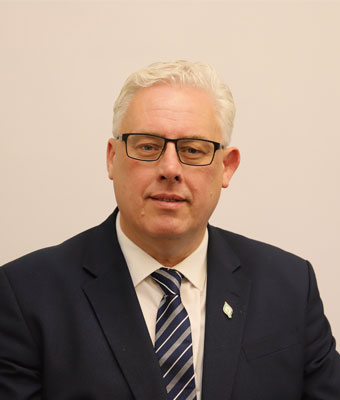
On Tuesday, the Taoiseach said in this Chamber that he could not understand how €20 million had already been allocated for Cork City Council for the tenant in situ scheme. He could not understand where the money was. He did not doubt its sincerity, but he could not understand what had happened. That is a shocking admission from a Taoiseach. Let us lay out the facts here today.
Cork City Council purchased 173 homes last year, eight more than it was originally sanctioned for. It received sanction for 50% more in June and was allowed to proceed. The Department sanctioned eight extra units. That meant 135 homes were purchased and closed in 2024, with an additional 38 homes bringing the total to 173 homes agreed and approved by the Department of Housing, Local Government and Heritage at the end of last year. This saved 100 children and 134 adults from becoming homeless, equal to 40% of Cork City Council's homeless prevention measures.
This year, the Government provided €20 million. From that, €5.5 million has already been spent on 135 houses purchased last year and a further €12.7 million is needed to complete the purchase of 38 homes by the end of last year. An additional €3.5 million is needed for the refurbishment of the homes purchased last year. Despite €20 million in funding, Cork City Council has a deficit of €1.7 million. The problem is that the council agreed to buy 33 homes and notified families and landlords that they would do so. Families now face homelessness.
I raised this issue with the Taoiseach yesterday. I asked him a question and want to ask the Minister of State a straight question. Is the Government going to provide money to Cork City Council to purchase 33 homes for the 33 families who will be homeless in the next week or two? It is a straight question and I am looking for a straight answer. This is not for me. This is for the people I represent in Cork who are at risk of homelessness. They will have to tell their children over the weekend or next week that they will become homeless because the Government decided to cut funding for the tenant in situ scheme.
We told the Government this in March when we debated our Private Members' Bill and asked that the tenant in situ scheme be saved. The scheme works. It is one of the few things the Government did right. Tenants want houses to be purchased, landlords are willing to sell and local authorities want to purchase them. The only problem is that the Government will not provide the money. This is happening at a time when the country is awash with money and we have billions of euro to do this.
Cork City Council did its job and what the local authority was supposed to do. It should be commended for it. The Government did not do its job because it is not providing the funding.
I was contacted by a woman who works in the public sector and does not want to speak out publicly because of her job. She will be homeless. Imagine that she will have to go into a government job and tell her colleagues that she and her daughter will be homeless because the tenant in situ scheme is gone. This is a straightforward question. Before the Minister of State names everything that the Government is going to do and what it has spent, I want to ask him one question. Is this Government going to give the money to Cork City Council to save those 33 families from homelessness? Yes or no?
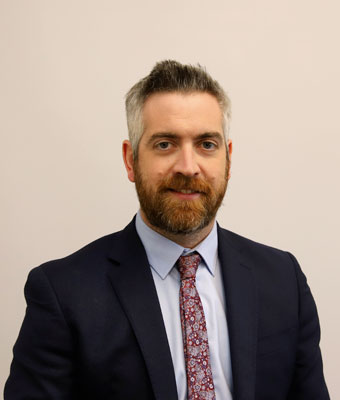
I thank Deputy Gould for raising this important matter. I am glad to have the opportunity to discuss the second-hand acquisitions programme, which includes the tenant in situ scheme in Cork city. This Government and Department are committed to increasing the supply of new build social and affordable homes. Increasing the overall housing supply is key to addressing the housing challenge and in particular preventing and ultimately eliminating long-term homelessness. At the same time, there is a need to supplement this new build programme with second-hand acquisitions to respond to acute local situations where households in receipt of social housing supports such as housing assistance payment are at risk of becoming homeless or where there is an urgent need to acquire a property to respond to a particular need.
This second-hand acquisitions programme is targeted at four specific categories: to respond to tenants in situ who have received notice of termination; to support exits from homelessness services, to respond to the housing needs of people with a disability and older persons requiring urgent housing responses; and to buy and renew acquisitions which tackle vacancy. The introduction of the tenant in situ scheme in 2023 has seen a significant ramping up of second-hand acquisitions and, for example, in the period 2023 to the end of 2024, more than 3,300 second-hand homes were acquired, with 2,100 of them being tenant in situ acquisitions, at a cost to the Exchequer of more than €900 million.
The Government has approved capital funding of €325 million for the second-hand acquisitions programme for 2025, which is part of almost €2 billion in Exchequer funding committed for social housing provision in 2025. Cork City Council has been allocated €20 million for its acquisitions programme in 2025, which, as noted, includes tenant in situ as one of the priority categories for the second-hand acquisitions programme. Based on average unit acquisition cost from 2024, this allocation should allow Cork City Council to purchase in the region of 70 second-hand homes in 2025. The Department is aware that Cork City has a significant carryover of costs from its 2024 programme, including acquisitions that closed in early 2025, which is causing an additional burden in prioritising how best to proceed with tenant in situ acquisitions. I am informed that the Department is working closely with the council.
I appreciate Deputy Gould's concern. He has raised this before. He has raised the plight of his constituents who he knows who may have notice to quit or may be at risk of homelessness. I appreciate that and the efforts that he makes. I hope that every effort is made to resolve this. I think there are things that could be done. We are seeing situations where the new criteria that we have set out are being applied to houses for which discussions about buying them under the tenant in situ scheme had been entered into in 2024. Perhaps that can be looked at. I appreciate the equation the Deputy set out, that the allocation falls short of living up to the agreements or to tenant in situ acquisitions that were set in train in 2024. There is an issue. I understand that the Department is working closely with Cork City Council. Cork County Council is in a similar situation. It has been allocated around €15 million for 2025. Its commitments for 2024 that have not got over the line yet are around €13 million. Discussions and further work with local authorities will have to be done to resolve this.
I understand a Cabinet subcommittee on housing is meeting today. I do not know the outcomes of that yet. I am not sure if that meeting has finished. I will relay the points the Deputy made to the senior Minister. I will work with the senior Minister, Cork County Council and Cork City Council to try to resolve this. The Deputy is right that it has worked. It is a good scheme. It is continuing but it needs to work for all local authorities.
The Minister of State is wrong. It is not continuing. We have a letter from Cork City Council from 4 April, stating that the tenant in situ scheme has stopped in Cork City Council. We have tenants who went into the council, looking for the forms to apply, and the council would not even give them the forms. It said that it has no money left. I read out where all the money has gone. The Minister of State gave me an answer about €20 million. The €20 million is gone. There is no point talking about money that is spent. There are homes there. I spoke about a lady who was mentioned at a special meeting in Cork City Council on Tuesday at which every councillor in Cork supported a Sinn Féin motion to keep the tenant in situ scheme operating, including Fine Fáil, Fine Gael and the opposition. Everyone supported it. The Minister of State said he is working closely with others.
Annette Hawkins and her child will be homeless next week. She has been living in the house for 21 years and the Minister of State and his Government will be making her homeless next week. Jason Cashman, another man, is going to be homeless next week. He would have been homeless in February but the landlord let him stay there because the landlord thought the house was being bought. We have 33 families who are going to be homeless between now and the summer. Where are they going to go? The Minister of State is talking about discussions, about how it is going to be looked at, his personal opinion and ending long-term homelessness. Homelessness will go through the roof in Cork. Two hundred children are already in emergency accommodation in Cork and Kerry. This scheme saved 100 from going into emergency accommodation last year. The Minister of State's policy will potentially put 100 more children into emergency accommodation.
Does the Minister of State not get it? Does he not understand? Why has he put limits? People want to live in the houses. They do not want to be homeless. I ask the Minister of State for a straight answer. Will he and the Government give the money to save the 33 families from homelessness? Many more families need a tenant in situ scheme. It is a crazy decision and an absolute disgrace. Shame on the Minister of State. I am asking a straightforward question. Will he give them the money? Yes or no?
Since the second-hand acquisition programme was established, Cork City Council has delivered a significant programme, complementing its strong record of new build output in the city. Over the past three years, Cork City Council has acquired 285 second-hand properties, scaling up significantly in 2024, with 135 homes acquired, of which 79 were tenant in situ acquisitions. Taking Cork County Council's acquisitions over the last three years, including both local authority and approved housing body acquisitions, the council represents approximately 7% of all acquisitions nationally, based on the number of units. I can reconfirm that the tenant in situ scheme is not closed in Cork City Council.
It is closed in Cork. I have it in writing here that it is closed in Cork.
The allocation of €20 million to the council in 2025 represents 6% of the total fund available across 31 local authorities. To date, €6.8 million has been paid to Cork City Council in 2025. The Deputy is right that that represents strong delivery in the tenant in situ scheme. In fairness to them, I know that Cork City Council and Cork County Council have strong delivery of new builds for social homes, which has to be commended. Housing for All has always been flexible and has always been up for review. Where challenges are presenting themselves, like they are presenting themselves in Cork City Council, where there are commitments from a previous year, in fairness, local authorities have to work within parameters and budgets and because the tenant in situ scheme is such an effective solution, the council has obviously gone over what it was allocated in 2024. I get the Deputy's point and the equation. Through those commitments, there is a shortfall in the 2025 acquisitions. My understanding is that the Department will work closely with Cork City Council and Cork County Council to get through this.
Is that a yes or a no?
I cannot give a yes or no answer. As I said, the Cabinet subcommittee on housing is meeting. I will certainly work with the Deputy and the local authorities to try to find a resolution to this, because I agree with the Deputy that the tenant in situ scheme is a key way of preventing homelessness.
Will the Minister of State have an answer by next week? That is all I am looking for. These people have families. They have children and jobs. They want an answer by next week.
Primary Care Centres
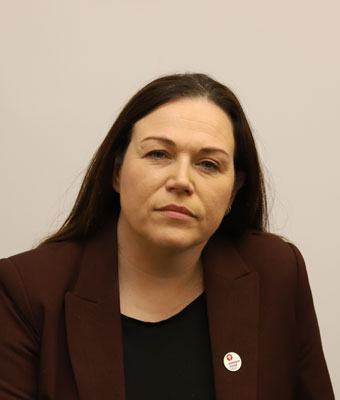
I thank the Minister of State for being here to discuss the Topical Issue concerning the need for primary care services for my constituency of Dublin Fingal West which is, as I am sure the Minister of State is aware, one of the fastest growing constituencies in this State. We also have a very young profile; we do not necessarily fit with the profile of the rest of this State.
There is no hospital in my constituency to be fighting about but equally, there is a real, serious lack of primary care services. When the people in my constituency need to access the health service, they must leave. If they need a hospital or the services provided by a hospital, they must leave. They travel to Drogheda, to Beaumont, to James Connolly memorial hospital or the Mater but they must leave. They cannot get those services in our area. At least once a week on the social media forums such as Balbriggan Connected or Skerries Connected or in Rush, Lusk and the surrounding areas, somebody will post into the group asking if anyone knows of any GP who is either taking patients or taking patients with a medical card. There then begins a succession of replies advising people that no, there are no GPs in the area, or even if you have a GP in the area, you will wait for days and in some cases weeks to see the same GP.
The Government talks a lot about Sláintecare and has done precious little about it. I sat on the future of healthcare committee and I remember the lofty plans. It was adopted by almost every party in here but it falls to the Government to implement it and it has badly fallen short. Nowhere is that more evident than in my own constituency. We have a primary care centre in Balbriggan that was set up on the back of what was generally regarded not just by me but in the media as a political stroke. We wonder sometimes in north County Dublin if perhaps the origins of our primary care centre is the reason why it is so neglected. The HSE will say it is operating at full capacity but it has 27 vacancies waiting to be filled. It has also been confirmed to me that there are no immediate plans to develop phlebotomy, X-ray or diagnostic services in Balbriggan Primary Care Centre. If the Government is not going to put it into Balbriggan, which is the biggest population centre in my constituency, where is it going to put it? Alternatively, is the message to my constituents a simple one: they must wait and if they require simple services like an X-ray or diagnostics, they must travel outside the area? That is not good. It is not good for patients and it certainly is not good for my constituents. It makes a mockery of the commitments given under Sláintecare.
Some years ago, I submitted a box full of petition postcards to the former Minister for Health, Deputy Harris - I think I did the same when Stephen Donnelly was Minister for Health - requesting access to diagnostic services within my constituency. Rooms lie idle in a primary care centre while people are travelling miles to get simple services that should be available to them in their own community. In this day and age, with all the commitments the Government has given and all the fine words it has said regarding Sláintecare, it should not be too much to ask that we have proper primary care services within my constituency of Dublin Fingal West to serve people living in towns like Rush, Lusk, Skerries, Balbriggan, Oldtown and all across north County Dublin. As I said, the absence of these services means my constituents must travel miles for very simple, basic healthcare services.
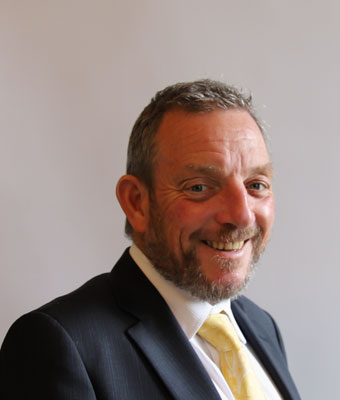
I first congratulate Deputy O'Reilly on her appointment as Chair of the petitions committee. I served on that committee for eight years and I wish her well because it is an extraordinarily important committee of the Houses.
I hear the Deputy's concerns and I thank her for raising the matter. As the former chair of the health committee, I understand fully the Deputy's articulation of the issues surrounding the provision of primary care and healthcare. The Minister for Health has asked me to convey to the Deputy her apologies for not being here, to thank the Deputy for raising these matters and for the opportunity to update the Dáil on the provision of primary care services in Fingal West and, in particular, Balbriggan Primary Care Centre. I have taken note of the comments the Deputy has made and I will bring them back.
The area of Fingal west is located in the integrated health area of Dublin north county and delivers a wide variety of integrated community and primary care services to meet the health needs of the local population. The health and social care services currently available in Balbriggan Primary Care Centre, PCC, include primary care therapy services and community specialist teams for older people, alongside a chronic disease hub.
Disability services located in Balbriggan PCC also include the children’s disability network team. There are two community mental health teams in the primary care centre which accommodates the second highest attended CAMHS clinic in 2024. In addition, several social inclusion services operate from Balbriggan PCC, including a social inclusion liaison officer, a Roma clinic and the north Fingal community development project. A central objective of the programme for Government is to deliver increased levels of integrated health and social care with service delivery re-oriented towards general practice, primary care and community-based services to enable a “home first” approach.
It is acknowledged – as the Deputy has rightly said - that the Balbriggan area has grown significantly in recent years, with the population increasing by 12% between 2016 and 2022. Among towns with more than 10,000 people, Balbriggan is the youngest town in Ireland with a diverse population. The Minister is committed to building capacity in primary care, as outlined in the programme for Government, by recruiting additional staff numbers, promoting advanced practice roles in the community for health and social care professionals and increasing the number of college training places for health and social care professions. The Minister for Health acknowledges there are challenges, particularly with local vacancies articulated by the Deputy in her comments here this afternoon, which are impacting the waiting times for access to services.
The establishment of the HSE’s six health regions means services can plan and deliver around the specific needs of people in each area. Each of the health regions has its own budget, leadership team and responsibility for local decision-making and continuing to work towards the Sláintecare objectives. Each of the six health regions and each national service has been provided with a specified number of whole-time equivalents in terms of staffing and can replace, recruit and prioritise staff within that approved number. This has provided the health regions with further control to focus resources where there is the greatest need and greater capacity for decision-making at a local level regarding prioritisation and filling of available posts.
As I said, I will take Deputy O’Reilly’s points back. I know some of the points she raised have not been addressed in the reply I have given and I accept that. I am here on behalf of the Minister, as the Deputy will understand but I will take the points she has made back to the Minister regarding idle spaces and the lack of delivery. She is right; there is a need to urgently expedite the whole issue of primary care in many of our emerging towns and the area she has mentioned is one.
What I heard was "you must wait, you must travel, you are not getting the services." I have been at this for nine years. We have a primary care centre and it is a white elephant or whatever that expression is. It is not being utilised to its greatest extent. There are empty rooms and diagnostic suites that should and could have facilities in them to ensure people did not have to get into their cars or call an ambulance and travel outside of my area to put pressure on hospitals in other areas that are already under immense pressure.
Balbriggan Primary Care Centre cannot even provide immunisation facilities for older people and children. There is a chronic waiting list for GPs in north County Dublin. It is acute in Balbriggan and yet every time I ask whether the Minister will look to directly employing GPs, even just to clear the backlog, the answer is stonewalled and silenced. The Minister of State mentioned the community specialist teams for older people, the children's disability network team and the community mental health teams but none of those are staffed; none of them are fully staffed. All those teams require recruitment. I reiterate that the HSE has told me in no uncertain terms that there are no immediate plans to develop phlebotomy, X-ray or diagnostic services in Balbriggan Primary Care Centre.
I ask, on behalf of the people of Balbriggan and the area surrounding it who will be able to utilise the Balbriggan Primary Care Centre, that the Government please include in its immediate plans phlebotomy, X-ray and diagnostic services for Balbriggan Primary Care Centre.
It is a fast-growing area. The demand is only going in one direction. I ask that at the very least the deficits be made up and some provision be made to future-proof it. The Minister of State mentioned Sláintecare but what is happening in Balbriggan and the areas served by Balbriggan Primary Care Centre is the very opposite of Sláintecare. It is telling people to get into their cars and travel for services.
I understand the Deputy's frustration. Primary care and the utilisation of the centre are perhaps matters that the HSE is best placed to tackle. Equally, the local regional health forum is a forum where the Deputy and other public representatives can put pressure on the HSE. However, I take the Deputy's point. Again, on behalf of the Minister, I wish to reassure the Deputy and I thank her for raising this important issue.
The Government is as committed as the Minister is to the development of primary care and community healthcare services, as committed to in the programme for Government. To expand and develop community care services, recurring annual funding of €195 million has been provided to the enhanced community care, ECC, programme. This suite of strategic reform initiatives seeks to reduce dependency on the hospital system by delivering increased levels of healthcare provision in the community setting, with service delivery reorientated towards healthcare general practice, primary care and community based services, which is what the Deputy has articulated and is what we are committed to.
Since its launch in 2020, the ECC programme has significantly expanded, with more than 2,800 additional healthcare staff recruited and the successful establishment of 96 community health team networks and 53 of the planned 60 community specialist teams for older people and chronic disease. Aligned to the ECC programme, GP access to community diagnostics provides a direct referral pathway to GPs for patients to access community-based radiology scans, including X-rays, DXA, MRI and CT scans and chronic disease tests. This service has received significant funding of almost €47 million for its continuation this year, and will provide 240,000 community radiology scans and up to 161,000 chronic disease tests within the year.
The Government fully recognises the frustration in the local area, as articulated by the Deputy, in regard to waiting times and lack of availability of services. It also recognises that much work needs to be done to fill vacancies at local level and address waiting lists. To this end, a joint Department of Health and HSE programmatic approach to primary care waiting lists is under way to develop both short-term and long-term solutions to the long waiting lists for primary care services in order to ensure consistent, equitable and timely access to primary care services.
Hospital Waiting Lists
Bogfaidh muid ar aghaidh go dtí ceist Uimh. 4 atá in ainm an Teachta Rory Hearne. Sula nglaoim ar an Teachta, cuirim fáilte roimh Erin, Caolán agus Aisling. Tá fáilte rompu. Is iad sin páistí an Teachta Hearne. Tá sé ag caint ar a son agus ar son an phobail ar fad.
I thank the Cathaoirleach Gníomhach and say hello to my kids in the Public Gallery.
I want to talk about Beaumont hospital. It is a core provider of healthcare for the half a million people in its catchment area across north Dublin, which includes my constituency areas of Finglas, Ballymun, Whitehall, Santry and many others. Beaumont hospital is a key public service, a key provider of healthcare and provides many people with high-quality care. Unfortunately, the hospital, as with much of our healthcare service, is under severe pressure. The issues in Beaumont hospital have been raised in this Chamber by my colleague and constituency predecessor, Róisín Shortall, and others. Unfortunately, much remains to be done to support the hospital to be able to deliver the quality service that the public in my constituency and further afield needs.
Almost 5,000 staff are employed in Beaumont hospital. On this International Workers' Day, I thank the staff at the hospital for all the work they do in very difficult and challenging circumstances, particularly the nurses who provide amazing care to patients, but also the porters, cleaners and all the staff who keep a hospital going, and the doctors and administration staff who do incredible work against the odds.
Unfortunately, in 2024 HIQA undertook an inspection of Beaumont hospital and found that on the day of the inspection 28 patients were accommodated on trolleys and in armchairs. HIQA noted at the time that the arrangements were not fully effective at the time of inspection to manage the mismatch between service demand and hospital capacity. I want to highlight this today and ask the Minister to respond.
I also want to highlight the issue regarding waiting lists at the hospital. I will raise one example, the case of a constituent, Margaret, who contacted me recently. Margaret saw a consultant in Beaumont hospital after her GP found two lumps in her breast. This consultant then referred her to the BreastCheck unit in Beaumont hospital. She waited three months for an appointment, despite being advised that her case was urgent and the turnaround should only be two weeks. She did get an appointment but this was simply to check again the presence of the lumps. She was advised by letter that a follow-up appointment would be required if a biopsy was necessary. This was all against the backdrop of her waiting anxiously beyond the advised two-week timeline for urgent cases like this.
Is it acceptable that this is what patients are facing? I understand that Beaumont hospital is to receive capital investment but there needs to be a sense of urgency for everyone like Margaret who face unacceptable waiting times. These delays have life-altering consequences.
By the HSE's figures there are currently 3,412 patients on the wait list for inpatient procedures and a staggering 40,493 people on a waiting list for outpatient procedures at Beaumont hospital. I would appreciate the Minister of State's response to this.
I join the Cathaoirleach Gníomhach in welcoming the Deputy's kids, Aisling, Erin and Caolán, to the House. I thank the Deputy for raising the important matter of Beaumont hospital and in congratulating and thanking the staff of Beaumont hospital on International Workers' Day for the work they do. I do not have the answers to some of the questions raised. However, if the Deputy supplies the details, I will pass them onto the Department and get an answer for him.
I welcome the opportunity, on behalf of the Minister, to recognise that waiting times for many scheduled appointments and procedures are too long, not only in Beaumont hospital but in hospitals throughout the country, and that many patients are waiting an unacceptably long time for care. The Government is focused on having a public healthcare service in which everyone has timely access to high-quality, scheduled care where and when they need it. The Department of Health continues to work with the HSE and the National Treatment Purchase Fund, NTPF, to identify ways to improve access to care. On 12 February this year, the Minister for Health published the waiting list action plan for 2025, representing the Government’s commitment to reducing waiting times for patients and improving access to hospital care.
In keeping with this commitment, significant funding of €420 million was allocated to the waiting list action plan for 2025, with €190 million for the HSE and €230 million for the NTPF. With the 2025 plan, we will continue to build on the progress delivered to date under the multi-annual action plan approach. The most recent waiting list figures, published by the NTPF for March, show an increase in waiting list volumes in the year to date. The delivery of elective care in the early months of the year is always impacted by the winter surge in demand for unscheduled care and because of elevated levels of respiratory illness circulating. However, we are starting to see signs of stabilisation in April and expect to see the volume growth mitigated over the coming weeks. The national trends are reflected in the figures specific to Beaumont hospital. At 40,556, the number of patients waiting for an outpatient appointment has increased by 5% since December 2024. In the same period, the number of patients waiting for an inpatient or day-case procedure has increased by 10% to 9,455 and the number waiting for a GI scope has increased by 30% to 1,583.
However, as the Minister has consistently said, what is much more important than the numbers waiting, is the length of time these people are waiting for treatment. There is a more positive position here, with 91% of outpatients, 82% of inpatients and 99% of those awaiting a GI scope waiting 12 months or less.
The Government is committed to the ongoing development of acute hospital infrastructure, and since 2020 significant resources have been invested in Beaumont to meet the need of patients. The hospital budget for 2024 was €504 million, a 29% increase in just four years. Staffing at the hospital has grown by 13% since January 2020. This includes 257 more nurses and midwives, 75 more medical and dental staff, and 37 more health and social care professionals. Under its hospital bed expansion plan a total of 289 new and replacement beds will be delivered by 2031.
Ireland’s acute hospitals are treating more patients than ever before. The latest activity report published by the HSE outlined that there were approximately 3.9 million outpatients and 1.9 million inpatient or day case procedure, IPDC, attendances during the full year of 2024. In comparison with the levels of activity delivered in 2023, these figures represent increases of 9% for outpatient departments, OPDs, and 5% for IPDC activity. In Beaumont, outpatients attendances increased by close to 12% and IPDC by almost 3% between 2023 and 2024.
In addition to this planned care, our hospitals also treated approximately 1.8 million patients during this same period in emergency care, which represents a 9% increase on the full year 2023 and reflects the continuing demands on our hospitals. With increased investment across the public hospital system and through the 2025 waiting list action plan, the Department of Health, the HSE and the NTPF are taking the next steps in progressing the multi-annual approach towards achieving this Government’s vision of a public healthcare service where everyone has timely and transparent access to high-quality scheduled care services, where and when they need them.
I note the Deputy's remarks about Margaret and the BreastCheck waiting lists. If the Deputy has the details and wishes me to bring them back to the Department, I will do so.
Gabhaim buíochas leis an Aire Stáit for the response. I appreciate the work being done in our health services across the country. We have to accept that the care being provided, even though doctors, nurses and administrative staff are doing their best, is not up to what is needed in all cases. Too many people in this country are left waiting on trolleys, including in Beaumont, and left waiting for appointments. What we have not seen is the full implementation of Sláintecare, which was the cross-party policy that was agreed. It is true investment has increased but the population has increased. The need has increased. We must match the level of need that is there with investment. It is simply not enough.
The Minister of State said in his response that there has been a significant increase in waiting lists in Beaumont Hospital since last year. When we look at this, of those 40,000 on the waiting list, 2,500 have been waiting for more than one year and 790 have been waiting for 15 to 18 months. To be waiting 18 months for an appointment is unacceptable.
Margaret's case is unacceptable but she is not the only one. I have been contacted by constituents who are on lengthy waiting lists for urgent care. They are worried, scared, and feel as if they are being passed from pillar to post.
This is a broader issue of dignity for patients. It is an issue of dignity for staff. We need to retain our doctors and nurses, which is linked to the housing issue and housing crisis. We need to give proper, quality employment and housing to staff and provide a quality public service.
I thank Deputy Hearne. It is about dignity, which I fully accept. As a former Chair of the health committee and as a TD, I am very much aware of this. People are waiting for too long for procedures and outpatients appointments, not just in Beaumont Hospital but across our hospital network. The Government is committed to addressing these issues. It is a priority of the Government and of the Minister for Health.
The importance attached to reducing waiting lists is demonstrated by the level of investment over the last number of years through the multi-annual waiting list action plan, including €420 million this year. As I said, this investment, together with additional significant investment across our health budget, means our acute hospitals are delivering higher levels of activity than ever before. As I outlined to the Deputy, the budget and staffing at Beaumont Hospital have increased significantly during a five-year period.
However, despite the increased level of activity, we are seeing a growing and an ageing population, which is leading to an increased demand and unprecedented levels of additions to our waiting times and waiting lists. As the Deputy said and as we all know, this has resulted in the number on our outpatient waiting lists and on a significant number of other lists growing which means they are higher than we would wish. We must focus on waiting times rather than the overall volumes on the lists.
A growing population and increased and expanded services will always drive appropriate referrals for consultations and procedures. Focusing on waiting times is the proper metric and here the system is showing progress and outcomes are improving. By continuing to build capacity in our public health system, employing more staff and continuing to make targeted interventions through the waiting list action plan, we will continue to make progress in our ultimate aim of achieving the Sláintecare waiting time target of ten weeks for an outpatient appointment and 12 weeks for an inpatient day case procedure.
I join with the Deputy in thanking the staff for the work they are doing. We are increasing investment and will ensure our health system is of a high quality, scheduled around the care of the patient. That is the most important thing we should be doing.
Tourism Industry
Skellig Michael, or Sceilg Mhichíl, has been a UNESCO World Heritage Site since 1996. The rock on which monks lived, worked and prayed hundreds of years ago is named after the Archangel Michael. We all could do with a little help from him. Skellig Michael's place in the history and culture of Kerry and Ireland is undisputed but it is also vital to the local economy of south Kerry, Iveragh and the whole county. It attracts visitors from all over the world and even more so since the filming in recent years of some of the "Star Wars" films there.
Landing passengers on the island requires a licence and these are confined to 15 boats carrying 12 passengers each. That is 180 passengers per day. Last year, temporary licences were awarded to 15 operators. I now call for the awarding of 18 temporary licences, confined to ten passengers each, keeping the 180 passenger cap to ensure this season can be operated for the good of all concerned and on a one-season basis only. Full licences will be reverted to the usual from 2026 onwards.
Every bed and breakfast, guesthouse, hotel, shop, filling station, restaurant, bar and coffee shop between Killarney, Killorglin, Glenbeigh, Portmagee, Ballinskelligs, Valentia Island, Waterville, Caherdaniel, Castlecove and Sneem depend on Sceilg Mhichíl for much of their annual income and livelihood and its visitors. If the influx of visitors attracted by Skellig Michael is stopped by landing licences not being issued, it will have an enormously detrimental effect on the local economy. Landings must be allowed to continue as the economy of south Kerry and Iveragh, an area bereft of any other large employment, is liable to collapse completely and it would, in all seriousness, find it nearly impossible to recover from. It would cause the closure of many small businesses as they would not be viable and many families would be without partial, or full, income in some instances.
Landings on Skellig Michael are subject to fair weather conditions. Every year, days are lost due to high winds, rough seas and storms. It is critical that Skellig Michael is open to visitors landing on the rock on 10 May. Every day lost is money out of the pockets of those involved in tourism and employed in this important area in our county.
My appeal on behalf of the people of south Kerry and Iveragh is that we protect their livelihoods, protect our incomes, and protect their jobs by keeping Skellig Michael open to passenger landings for 2025 until a solution is found to the present impasse.
This is the second time today that I have raised this hugely important issue for the people of south Kerry, and of the county, in Dáil Éireann. I raised the matter earlier with the Tánaiste, Deputy Harris, and I am again pleading with the Minister with responsibility for the Office of Public Works, OPW, to intervene and get Skellig Michael open for business as usual on 10 May. I am delighted to have been appointed by An Taoiseach as Fianna Fáil's spokesperson on tourism and in this regard the issue of licences and the opening of Skellig Michael to visitor landings is absolutely vital.
I congratulate Deputy Cahill on his appointment. He is a very fine ambassador for the tourism sector not just in Kerry but across the country. I wish him well on that. I heard him raise it this morning with the Tánaiste during Questions on Policy or Legislation.
First, to briefly put context on it, the Office of Public Works conserves and manages Ireland’s national heritage estate, which comprises 780 national monuments and 32 national historic properties, with over 5,000 acres of designed landscapes and parks. This estate includes two UNESCO world heritage sites, namely, Sceilg Mhichíl in County Kerry and the Brú na Bóinne complex comprising Newgrange, Knowth and Dowth in County Meath. In 2024, over 16 million people attended and visited OPW-managed heritage sites to explore and enjoy Ireland’s iconic heritage sites such as Clonmacnoise, the Rock of Cashel, Dublin Castle, Kilmainham Gaol, the National Botanic Gardens of Ireland and Kilkenny Castle.
As Members will be aware, Sceilg Mhichíl is situated 16 km off the coast of Kerry. It was founded by St. Fionán around the sixth century and is the home of an early monastic site. The monastery came into State care in 1880. The OPW manages the island and conserves the built heritage of the island, including the monastic site.
The OPW has been managing visitor access to the island for decades and has a detailed management plan and operating procedures relating to visitors. Due to severe sea conditions, the island cannot be accessed during the winter. The visitor season, as Deputy Cahill has alluded to, generally begins around mid-May and runs to late September each year and the OPW staff are present on the island at all times during this period. Access to the island is highly dependent on weather and sea conditions and there are days in every season when visitors cannot land due to unsuitable weather or maritime conditions.
The OPW, together with the Department of Housing, Local Government and Heritage, published a ten-year Sceilg Mhichíl management plan for 2020 to 2030 which sets out the State’s approach to managing and conserving the built and natural heritage of the island and ensures sustainable access for visitors to enjoy the outstanding universal value of this unique world heritage property. There are over 90 actions in the plan and it is in this context visitor access and numbers to the island are strictly managed.
Access to the island is regulated by limiting the number of boatmen who are permitted to land passengers at the island during the visitor season. The established number allowed is 15 boats. A boat permit system was originally introduced to improve health and safety on the journey to and during visitation to the island after the deaths of two visitors to Sceilg Mhichíl in 2009. The OPW’s approach is to sustainably manage visitor activity to the island in line with the agreed UNESCO policy and visitor management plan.
I can advise Deputy Cahill that the OPW does not make any profit from the operation of the boat permit system. The OPW does not receive any income from this and does not charge visitors to visit the island, nor does the OPW get involved in the setting of prices for the boat trip to the island as it is considered the prerogative of permit holders to set their own prices. I would like to think that the OPW enjoys a strong working relationship with the boat permit holders, as well as recognising and sharing the same goal - to showcase the island at its best while at the same time making sure that we are protecting its special qualities for the next generation.
The season is due to commence on 10 May and it will run until 29 September. Last year, 15,800 people visited the island, with numbers limited to 180 per day in order to sustainably manage and conserve the delicate archaeological remains as well as the diverse flora and fauna of the island. Regarding this current competition, under European procurement rules the compliant procurement process for this competition was an open competition via eTenders. It is awarded for a five-year period, to be renewed on a yearly basis but subject to adherence to terms and conditions. The volume of applications exceeded the number of permits available and I can only acknowledge the disappointment felt by some at the outcome of the competition.
As publicly reported, the results of the permits competition are now the subject of legal proceedings. As such, I cannot comment further on the current competition to award boat permits but I do understand the Deputy's concerns.
I thank the Minister of State. I cannot emphasise strongly enough the importance of Skellig Michael opening on time to the tourism industry in my county. It is fair to say they are very concerned. Every day, there is obviously a loss of earnings, and I ask the Minister of State to engage with his colleague, the Minister of State, Deputy Kevin Boxer Moran, and ask that he do everything in his power to resolve this issue on time. I am aware of the legal proceedings but I am also acutely aware of the knock-on effect that the closure or any delay in the opening of Skellig Michael to visitor landings will have on the local economy.
I wish to re-emphasise the importance of Skellig Michael to our county and country. Visitors come from all over the world every year to specifically go there. They spend and stay, and they will always be welcome. It is absolutely critical that it is opened on 10 May.
I already mentioned poor weather conditions, etc. There are obviously many every season, particularly in recent seasons. I ask the Minister of State to engage with his ministerial colleague and ask him to do everything on behalf of the people of Kerry to get this wonderful amenity opened as soon as possible.
I again emphasise that I hear Deputy Cahill. Sceilg Mhichíl is a site of extraordinary significance and the OPW is seeking to carefully manage the built and natural heritage of the site for the enjoyment of current and future generations. The OPW recognises the significance of the Skelligs with regard to tourism and the economic activity of Kerry, as articulated by Deputy Cahill, and in particular the Ballinskelligs region. The OPW has worked collaboratively with local stakeholders for many years to ensure this site of outstanding universal value is protected in line with the best practice of UNESCO world heritage standards and works, but that it is also accessible and can be enjoyed by a range of visitors who deliver a significant economic value to the region each summer. The OPW is committed to working with all locally to ensure this will continue to be the case. It must be acknowledged that, for now, the OPW cannot comment further on the award of permits for the season given that the competition process to award such permits is subject to judicial proceedings.
Hospital Procedures
This is an important issue. The irony of two men discussing a women's health issue is not lost on me. I thank Dr. Gerry Agnew, a consultant gynaecologist at St. Michael's Hospital in Dún Laoghaire, and Dr. Suzanne O'Sullivan, president of the Institute of Obstetricians and Gynaecologists in Ireland, for bringing this to my attention.
The issue I want to raise regards treatment for stress urinary incontinence, which affects one in three women over the age of 45. It is a substantial issue. It is solved by the insertion of a thing called the mid-urethral mesh sling, which has been used extensively around the world for treatment of this condition in women since the late 1990s.
There are essentially two ways to treat the condition. One is a conservative way that is non-surgical and involves physiotherapy. It involves urinary pessaries, for example. The other way is surgery, and the surgery involves the insertion of this mesh sling. The reality is that where the conservative treatments fail, the surgical treatments are much more effective, and they are not available in this country. The mid-urethral mesh is just one of the solutions that can be put forward but it offers shorter operating time to perform, shorter recovery time for the women who undergo the surgery because of its minimally invasive nature, lower rates of subsequent repeat incontinence surgery, and lower rates of complication. It is something that has worked.
In the late 2000s, the idea was taken that they would expand the use of these meshes into other areas, including prolapse surgery. That did not work. It had complications and it did not have the same rate of success. Throughout the world, relevant authorities rowed back on that but Ireland blindly followed the UK surgeon general and withdrew these mesh slings from the market. All of the meshes used in surgeries were withdrawn from the market in July 2018 and they have not been put back on the market since then. This means that meshes being used in all vaginal surgeries have been removed from the market. It is now seven years later, and they still have not restored it despite the fact that although it does not work for prolapse surgery, it works very well for the stress urinary incontinence surgery. Specialists in Ireland have been offering all the services they can but ultimately not the surgery, and the extraordinary thing is that the surgery is available throughout the European Union, just not in Ireland or the UK. It seems to me that this does not make sense at all.
The worst thing about that is that doctors here - gynaecologists, urogynaecologists and surgeons - were performing this operation in Ireland with enormous success for years. Since 2018, they have not been able to do that, with the result that they refer their patients abroad to hospitals in the rest of the European Union. A constituent contacted me regarding the one in Amsterdam.
That hospital provides a very successful service. The Irish women who need to undergo this surgery now find themselves having to go abroad. They are supported in that regard by the HSE but not in every respect. There are additional costs involved, including travel, accommodation, etc. It is tremendously unfair that they should have to go abroad for this surgery when it would make much more sense to deliver it in this jurisdiction.
The persistence in providing inferior options for treating this condition leads to multiple attendances at urogynaecology and urology clinics. It has a devastating effect on waiting times for appointments for patients, who, in previous times, were successfully treated and discharged back to their GPs. They now must continue to attend those services, which takes up time and resources. If we are in favour of choice for women, we should be in favour of giving them this choice in this jurisdiction, rather than relying on exporting the problem to other countries around the European Union. It defies explanation as to why that is happening. The removal of this product from the market is not supported by the international organisations representing physicians who practise in this area. They all want to see it restored. The medical evidence is that it should be restored. However, there appears to be a bureaucratic and certainly nonsensical block on its restoration. Can this situation please be fixed?
I am taking this matter on behalf of the Minister for Health. I congratulate Deputy Ward on his appointment as Chair of the European affairs committee and wish him well in the role.
He has raised a very important matter regarding women's health and the healthcare provided to them. The urogynaecological transvaginal mesh is used in the surgical treatment of stress urinary incontinence and pelvic organ prolapse in women. Such mesh devices have been widely used to treat those conditions over the past two decades. For many women suffering the distressing symptoms of stress urinary incontinence and pelvic organ prolapse, surgical procedures using synthetic mesh devices have provided a more effective and less invasive form of treatment than traditional surgical procedures.
However, as the Deputy noted, concerns about the safety of mesh devices have arisen in many countries because of the frequency and severity of complications associated with their use. In November 2017, in response to public and patient concern about the ongoing safety of mesh devices, the then Minister for Health, Deputy Harris, requested the Chief Medical Officer to prepare a report for him on the clinical and technical issues involved in ensuring both the safe and effective provision of mesh procedures in urogynaecology and an appropriate response to women who suffer mesh complications.
In July 2018, the CMO asked the HSE to pause all mesh procedures where clinically safe to do so, pending confirmation of the implementation of specific recommendations in the CMO's report. In November 2018, the CMO's report on the use of urogynaecological mesh in surgical procedures was published. It contains a number of recommendations regarding the safe and effective provision of mesh procedures in urogynaecology and an appropriate response to women who suffer complications as a result of undergoing such procedures. The CMO's report included 19 recommendations across four key areas, namely, patient information and consent, aftercare for women suffering complications, clinical and professional recommendations, and information systems.
In 2018, the HSE commissioned a review of the CMO's recommendations. In 2019, it began work on the recommendations, providing regular progress updates. The Covid-19 pandemic subsequently delayed that work. Implementation of the report's recommendations will provide significant assurance that all patients presenting for treatment for stress urinary incontinence and pelvic organ prolapse, and all women who develop mesh-related complications, receive high-quality, patient-centred care in accordance with accepted evidence and supported by robust clinical governance mechanisms.
In 2023, the HSE established a national vaginal mesh implant oversight group to oversee vaginal mesh implants in HSE acute hospitals in terms of both primary implant surgery and tertiary complications services. The focus of the group was to review and assess implementation of the recommendations as set out in the CMO's report and assess the appropriateness of resuming urogynaecological mesh procedures, cognisant of international developments and approaches in this complex area. I have noted the Deputy's comments regarding services in other jurisdictions. The Department recently received a report from the HSE's national vaginal mesh implant oversight group. Officials are actively liaising with the HSE on all aspects of this work to ensure comprehensive implementation of the CMO's recommendations.
I again thank the Deputy for raising this very important matter. I will convey the points he raised to the Minister for Health.
Cuireadh an Dáil ar athló ar 6.15 p.m. go dtí 2 p.m., Dé Céadaoin, an 7 Bealtaine 2025.
The Dáil adjourned at 6.15 p.m. until 2 p.m. on Wednesday, 7 May 2025.