Further and Higher Education
6. Deputy Catherine Connolly asked the Minister for Further and Higher Education, Research, Innovation and Science further to Parliamentary Question No. 11 of 8 October 2024, the status of the proposed new further education college in Galway city; if the revised business case, as requested, has been evaluated; to provide a breakdown of the €450 million national allocation over four years to four capital funding programmes announced on 14 February 2022; and if he will make a statement on the matter. [14544/25]
I wish the Minister the very best of luck in his new role. I do not know whether Deputy Harkin is taking this question. It relates to Galway and a campus of further education. I was delighted when this announcement was finally made in November 2022. It was announced that there would be an adult campus, a campus of the future. There is a great need for it because so many properties are being rented in Galway. I would appreciate an update on that because I think it is slipping.
I am aware of the Deputy's interest, and indeed the interest of the Minister of State, Deputy Harkin, in all items on the west coast, and this development no less.
I know the Deputy is well aware that Galway and Roscommon ETB is being supported by SOLAS in developing its preliminary business case proposal under the FET college of the future major projects fund. The proposal put forward by Galway and Roscommon ETB relates to the development of a new state-of-the-art FET campus on a site adjacent to the Mervue training facility. Due to the close proximity of this training centre to Atlantic Technological University, ATU, and the University of Galway, the new development proposes to strengthen tertiary provision in Galway city and in the wider region. I understand GRETB has submitted its business case proposal to SOLAS for evaluation, which is currently targeted to take place in early April. Following evaluation, business cases that meet the evaluation criteria will advance to the next stage of development: pre-tender, project design, planning and procurement strategy.
The funding envelope referred to by the Deputy relates to part of my Department's overall capital NDP allocation and provides for initial funding for the establishment of four new capital programmes. The FET college of the future major projects fund was established to address existing deficits in FET infrastructure and to support projects that drive reform and facilitate consolidation and integration of further education and training. The strategic infrastructure upgrade fund was established to support smaller-scale investments in existing FET infrastructure. The technological sector strategic projects fund was put in place to provide additional capacity to strengthen the role of TUs as drivers of regional development. The higher education strategic infrastructure fund was open to all higher education institutions to cofund strategic projects to a maximum of 50% to deliver high-quality infrastructure for higher education institutions. Those capital investment programmes have supported an ambitious transformation agenda across both sectors and will help ensure that our campuses are flexible and future-proofed to meet the needs of our learners and teaching staff.
As regards the allocation of the overall funding, the overall approach the Deputy has asked me about, I know it is kind of a multipart question but, as regards the big line items, I hope my reply gives some information.
I thank the Minister for the background. I have the background and I welcome that. My concern is that there is slippage as regards this project. The ETB in Galway is the second biggest in the country. It is unique in that it covers the Gaeltacht area and the islands. It has 19 post-primary schools and two community national schools and a huge amount of buildings rented at an enormous cost in an unsustainable manner for adult education. We were therefore delighted when this was announced. A preliminary business case was submitted and the ETB did everything right in January 2024. Then it was told to come back again. It was told to reduce its 25,000 sq. m to 10,000 sq. m, inexplicably. Then it was asked to reduce it further and it stood up and said, "No. Our vision was for 25,000 sq. m and now you are making us do it at 10,000 sq. m." Now I am not sure where we are in that regard. I ask the Minister to give some clarity as to when this will be delivered and the reason for the reduction.
For the record, as regards Galway and Roscommon ETB, I think €1.03 million in funding just in the current year is already earmarked, even aside from this project. I am aware, however, that there was a request for the square footage to be reduced. I think there was an application for 25,000 sq. m. The college was invited to submit a revised business case. There was a meeting with SOLAS and Department officials with all 12 ETBs included in this package, including Galway and Roscommon ETB, in April and May 2024 and each ETB gave a presentation on its proposals. Following those meetings, each ETB, including Galway and Roscommon ETB, was provided with feedback on affordability, value for money and relevant regional and national FET policy objectives. Based on that, all ETBs were asked to refine their business case proposals to ensure they delivered on priority infrastructure requirements within available funding parameters. ETBs were invited to submit their proposals to SOLAS for evaluation. GRETB recently submitted its business case proposal, and that is the evaluation scheduled for the first week in April, so we are not too far off a milestone. The Minister of State, Deputy Harkin, is following this with great interest as well. That is where it is at, so it is effectively next week or next fortnight.
I welcome that there is a date, but there is the history and the fact that the ETB was twice asked to revise downwards its plan and its vision. We attend regularly meetings on updates with GRETB. I keep calling it the old VEC. In any event, there is cross-party support for this. It looks like the ETB is being forced to accept the 10,000 sq. m, even though it was asked to reduce it even more. There will be a phase 2 sometime in the future. That was never anticipated. It was anticipated it would be all one project. And what is going into phase 2? Apprenticeships, the Irish language and the potential there to upskill people in the public sector because of the Official Languages Act and other legislation and because Galway is a bilingual city and because the Gaeltacht comes under the remit of what I call the VEC. For the life of me, I cannot understand what analysis was done as regards the request - the order, really - to reduce. April is the deadline for a "Yes" or "No" to the business case, is that it, and then the other steps come in?
It would be unhelpful for me to comment on the particular facility in terms of the details of it because I am not informed on it. It would be unfair to the project. However, I take the Deputy's point that phase 2 will now follow and will undoubtedly provide important services. I think her suggestion is that it would be better to do the whole thing at once, if I understand her correctly. That is a natural, intuitive argument to make. I have seen elsewhere that sometimes projects can be overly ambitious - I am not making any comment on this particular project but am speaking in a general sense - and have had a large scope and a large vision but ultimately have failed to get off the ground or failed to get to where they need to be. Sometimes it is better to take it in chunks and in stages and to meet funding with ambition at a moment in time, address the immediate needs and then look to build on that. There are horses for courses, and different courses can be taken in different projects. SOLAS is engaging intensively with GRETB and, as I said, that process should progress next month.
I will take a supplementary question from Deputy McGuinness.
Deputy Connolly mentioned slippage, and it is something we must all guard against. I wish both the Minister and the Minister of State well in their briefs in the time ahead and I look forward to a constructive working relationship. I ask the Minister for an update on both the veterinary and the pharmacy courses at South East Technological University.
These are crucially important. They were announced last year to great fanfare and after much anticipation. Are we still on course for those courses to begin in September 2025? As other speakers have said about other parts of the country, the agricultural and equine sectors are very big in Waterford and the wider south-east region. We need that veterinary capacity in our new university. There is also a burgeoning pharmaceutical sector operating in Waterford city and county, including in my own town of Dungarvan, and in the wider region, including Kilkenny and Wexford. We need to know that this pharmacy course will be available in September 2025. I would be grateful for an acknowledgement or update from the Minister regarding both of those.
The Deputy is being a little bit elastic in his supplementary question. A question on Galway and Roscommon ETB has morphed to include pharmaceutical course provision at the Waterford campus of SETU. I will run with it, however.
We are on the theme of slippage.
We are also on the theme of constructive collaboration. I do not know if the Deputy was in the Chamber for my interaction with Deputy Fitzmaurice but I fully agree with both Deputies. I am very keen to see these courses proceed. The provision on high-end professional qualifications in areas such as veterinary science and pharmaceuticals will be a hallmark of the technological universities. I am a big supporter of both.
On the point regarding agriculture, I have visited both colleges. Since being appointed, I have been visiting as many as possible of the higher education institutions, stakeholders and facilities that are under my remit. I have visited both colleges and spoken to both management teams. The points the Deputy and Deputy Fitzmaurice have raised have very much been on the agenda. There has been slippage. The institutions have put their hands up and said that because these are complex courses, a regulatory approval process must be undertaken and laboratory equipment and specialist facilities are required. It is not as easy as flicking a switch to turn it on, despite their best efforts. I will have to come back to the Deputy on the position regarding the pharmaceutical course but the working date for the veterinary course is September 2026. I will come back to the Deputy on the pharmaceutical course.
I congratulate Deputy McGuinness on his creativity.
Question No. 7 taken with Written Answers.
Student Accommodation
8. Deputy Jen Cummins asked the Minister for Further and Higher Education, Research, Innovation and Science his Department's plans to provide adequate protections for students renting in digs accommodation. [14649/25]
I wish the Minister the very best of luck in his new role. I look forward to working with him. How does the Government plan to protect third level students who are in digs accommodation? Over recent weeks and months, we have had people into the audiovisual room explaining the very difficult situation they are in with regard to their accommodation. Digs accommodation may not be the first preference for many students and it may not be ideal for either the student or the landlord but, in a housing crisis, it is often the best option they have.
I thank the Deputy. She mentioned the audiovisual room presentations and so forth. As I have told the House this morning, I am a new Minister and am reading into the brief. If Members know of groups or interested parties who wish to engage with me, they should feel free to direct them my way. I cannot guarantee I will meet everybody every time but I will do my best to meet with stakeholder groups and take their points on board.
As the Deputy will know, digs accommodation is a long-established and traditional source of student accommodation that remains popular. I will continue to encourage and support it. We need as many rooms and accommodation options as possible. I am committed to making sure that the student experience and quality of student life remain as high as possible. I am conscious of students having long commutes and how that can detract from college life. Ultimately, student accommodation is needed in all its forms. It is something I am sure we will return to in these debates and something I will be focusing on.
The Deputy's question is on the need to safeguard students in digs accommodation and how that might be done. In line with the Housing for All objectives to increase protections in the private rental accommodation sector, in 2023 my Department published a voluntary regulatory framework and sample licence agreement for use by students and homeowners. This identified the key issues to consider when entering a licence agreement for digs accommodation. Previously, it was somewhat ad hoc and more of a private contractual relationship. I hope that guidance has been helpful. That licence agreement should be of assistance to those entering into such arrangements. That framework and licence agreement are on the Government website. I can send them to the Deputy if she does not have them but they are certainly available online. They have also been shared with all higher education institutions to allow them to be included on their respective student accommodation websites. We are trying to get that message and that sample agreement document out there.
My Department also offers economic support for students experiencing financial difficulties. The student assistance fund can assist students in third level institutions who are experiencing exceptional financial need. That is available to students who are unable to meet costs associated with day-to-day participation, including the payment of rent and utility bills. We had a discussion about SUSI grants and different supports a few moments ago but these are additional supports for students in exceptional circumstances. I will engage further in my supplementary replies.
I thank the Minister for that. I agree that there needs to be a variety of accommodation. My own daughter is in college and travels quite a long distance to get there-----
As does mine.
-----because there is no on-campus accommodation, which would be ideal for a great many people. It is also very expensive. I live in Dublin 8 and quite a lot of student accommodation was built in the area over recent years. However, it is totally unaffordable for the average student with rents of €1,250 per month. If it is a five-week month, it is €1,350. That accommodation is totally unaffordable for most students. Digs accommodation is affordable but the difficulty is that, as we have heard over the last while, students can be thrown out at a moment's notice and there is no protection. I am a little bit concerned that the protection the Minister has mentioned is voluntary. It should not be voluntary but mandatory.
My daughter also commutes to college and I would prefer if she did not have to commute such a distance. I see at first hand that it can detract from quality of life. I have met student unions, most recently the union in Maynooth, and have heard that message conveyed. I completely get it and appreciate it.
On the framework being voluntary rather than mandatory, there is always a risk at a time when we are trying to increase supply and where there have been traditional arrangements in respect of digs accommodation. It is not quite the same as a tenancy or private rental arrangement. There is a degree of informality about it. There is a balance to be struck if we are to avoid scaring potential digs providers out of the market. It is often a "mom and pop" operation, a householder with a spare room or an elderly person who takes someone in during the college week. It arises in those types of situations. Of course, we need to protect students and all of those entering into arrangements but that must be balanced against the risk of an overly burdensome framework discouraging those people from participating, which would lead to a shortage of supply, which also would not be a good thing.
The flipside is that parents sending children into digs accommodation cannot be sure they will be fully protected. That is also a challenge. I agree with the Minister that there definitely needs to be balance from the perspective of both the landlord or digs provider and of the student. These students are often in their first year and do not have a big network so we need to have that protection in place. The students union at the University of Galway did a survey of members and found that 28% of students said their accommodation had a negative impact on their education. To go back to what previous speakers have said, a negative impact on education can make it more likely that people will drop out. We do not want that because education is absolutely vital to progression in this community and society. We want to do the best we can for students. It would be fantastic if the framework could be a little bit more mandatory. I do not want the Minister to frighten people away but we do need to protect students more.
I also wish the Minister well in his role. I previously held the role my colleague, Deputy McGettigan, now holds and I very much enjoyed it. It is an area in which the Minister could make great progress, not least with regard to accommodation. There are serious problems with digs accommodation. That is why my colleagues, Deputies Ó Broin and Farrell, introduced legislation in the area last year. I take on board what the Minister has said about this being an emergency measure and not wanting to shut down any streams of accommodation. However, it is absolutely essential that this sort of accommodation be registered. I hope the Minister has been listening to the students unions and the great work they are doing in this area. I also have great concern about the Atlantic Technological University's Castlebar campus. I met with the students union there two weeks ago. There is no accommodation. There is not even any accommodation in the pipeline for that campus. The student accommodation that was there is being repurposed. Where university towns have potential but there is no accommodation, the university cannot expand in the way it needs to.
On ATU, I recently sanctioned the purchase of 16 acres by ATU Sligo. This is a site just opposite the college campus. The Deputy may be aware of it. That will come on stream in due course.
I am asking about Mayo.
The Deputy is talking about Mayo. All politics is local. I understand that. I might have to come back to her on the details of the situation in Mayo.
Third Level Education
9. Deputy Conor D. McGuinness asked the Minister for Further and Higher Education, Research, Innovation and Science the steps his Department is taking to address the challenges faced by young carers and young adult carers pursuing courses at third level. [14632/25]
This is a very serious issue. My question relates to the situation of young adult carers in higher and further education.
We had a comprehensive debate on the more broad topic of young carers and young adult carers in this House last week. My question relates to the Department's efforts, schemes and steps to support young carers and young adult carers to access education, stay in it and benefit from it.
This is a very serious issue, which I take on board. It is one I am keen to progress. It is governed by the national access plan for higher education 2022-28 which sets out the ambition for an inclusive and diverse higher education sector. An important component of that plan is its recognition and naming of additional priority groups which are considered marginalised or disadvantaged. This includes students who are carers. Many supports are provided that seek to address the struggles and challenges that arise. The principal financial support is the student grant scheme provided by my Department. The special rate of maintenance grant is the highest rate of maintenance grant available and is targeted at students most in need. I confirm that carer’s allowance and carer’s benefit are both eligible social welfare payments for that special rate of maintenance grant. In addition to carer’s allowance, the carer’s support grant and the domiciliary care allowance are classified as income disregards. These payments are not included when calculating reckonable income for the purposes of student grant eligibility. The student assistance fund is also available to students experiencing exceptional financial need. It is designed to support students from socioeconomically disadvantaged backgrounds with ongoing needs for financial support and to provide emergency financial assistance for other students.
My Department also recognises the need to offer support for more flexible forms of learning. Last year, a new part-time fee scheme for specified undergraduate courses was launched. The aim is to provide additional flexibility of course provision to students who are socioeconomically disadvantaged and may not, due to their particular circumstances, be in a position to study full time. My Department is committed to examining diverse and flexible pathways. Some include non-traditional options such as Springboard+ programmes, microcredits where you can take mini courses and stack them together to achieve particular qualifications, and tertiary programmes where you can commence study in an FET college or institute closer to home with the option of progressing to a more traditional university setting in later years. These are all attempts to make it flexible and accommodate those who may struggle more to access traditional courses.
Gabhaim buíochas leis an Aire Stáit as an bhfreagra sin. I thank the Minister for his response. The most recent census in 2022 tells us that there are almost 5,000 young carers in this State. Undoubtedly, the number of young people and young adults providing care is much greater as it often goes unreported, unsupported and unacknowledged. By unsupported I mean people who do not avail of many of those payments. The number of young people providing the highest level of care, more than 43 hours a week, doubled between 2016 and 2022. From speaking to young carers, social workers, social care workers and advocates, it is clear the increase is down to a chronic lack of services, ranging from access to healthcare, disability services and supports, underfunding of the wider social care sector and mental health services and drug and alcohol strategies that have never been properly resourced. Not only financial supports are needed. Academic and social supports are needed as well as the communications piece so that young carers and young adults providing care know they can avail of supports in their chosen universities or colleges.
I do not disagree with any of that. That is why my Department is rolling out multiple diverse and more flexible pathways and financial supports and also non-financial supports. I spoke about the variety of other grant aids and the maintenance grant and how various social protection payments are disregarded from those grants to ensure there is no loss of income for people who take up a place. In addition, on the non-financial aspect, I spoke about Springboard+, microcredentials and tertiary programmes which are all new innovations. A lot them did not exist a couple of years ago until the Department was created and began to examine these areas in more detail. There is also the part-time fee scheme, which allows fee supports under the Student Support Act to be available to students studying part time. That is another new innovation; it was introduced in recent years as part of this Department. They are all opportunities to acknowledge full-time education is not an option for everybody and attempt to meet the learner on their own terms and to widen the pool of people availing of higher education.
I thank the Minister for the elaboration. It is clear there are supports available. It is about accessing those supports and for students to know they are available and make sure they are kept under review so that they can respond to emerging challenges, unforeseen challenges and circumstances and continue engagement with advocates in particular and young carers and young adult carers. Another related factor is older carers - mature students, people returning to education who provide care or who during the course of accessing further education find themselves having to provide care. It is important that while we talk about young carers and young adult carers, we also have regard to mature students who perform a caring role as well and make sure every step possible can be taken to ensure they can access and stay in further and higher education and avail of the full benefit of that education.
I will not repeat myself but all the measures I introduced in terms of flexibility, financial supports, non-traditional routes to education and geographically distributed access points, including those close to the learner's home, will contribute to and support that endeavour. I hope they are already assisting learners.
We will now move to Question No. 11 from Deputy Ó Snodaigh.
Oideachas Gaeltachta
11. D'fhiafraigh Deputy Aengus Ó Snodaigh den Aire Breisoideachais agus Ardoideachais, Taighde, Nuálaíochta agus Eolaíochta cad é líon na ndaltaí atá ag déanamh staidéir trí mheán na Gaeilge ag an tríú leibhéal gach bliain ó 2020 ag aghaidh; cad atá beartaithe aige chun an líon sin a mhéadú agus chun an rogha lán-Ghaeilge a leathnú; agus an bhfuil ról an oideachais lán-Ghaeilge ag an tríú leibhéal pléite aige leis an Aire Oideachais chun a chinntiú go bhfuil sé cuimsithe sa pholasaí don oideachas lán-Ghaeilge lasmuigh den Ghaeltacht, agus sa oholasaí comhtháite don Ghaeilge sa chóras oideachais. [13978/25]
Tá an cheist seo dírithe ar cad go díreach atá beartaithe chun an líon beag daltaí nó mic léinn atá ag déanamh-----
It is Question No. 10.
Apologies; we will let Deputy Ó Snodaigh continue and Deputy Farrelly can go next.
Okay.
Now that he has started he may as well keep going.
Is ceist í seo maidir leis an líon beag mac léinn atá ag déanamh staidéar trí mheán na Gaeilge sna hollscoileanna. Cad é atá an tAire chun déanamh chun an líon sin a ardú sna hollscoileanna go háirithe, toisc go bhfuil sé chomh beag sin?
Gabhaim buíochas leis an Teachta Ó Snodaigh agus leis an gCathaoirleach Gníomhach as ucht na ceiste seo. Freagróidh mé i nGaeilge í, ach ós rud é nach bhfuil mo chuid Gaeilge chomh láidir le Gaeilge an Teachta Ó Snodaigh, rud a bhfuilim ag obair go dian air chun feabhas a chur air, freagróidh mé na ceisteanna forlíontacha i mBéarla agus cuirfidh mé na freagraí ar aghaidh chuig an Teachta i nGaeilge ina dhiaidh sin.
Tá ról tábhachtach ag ár gcóras ardoideachais maidir le tacú le húsáid na Gaeilge agus í a chur chun cinn. Tá freagracht reachtúil ar an Údarás um Ard-Oideachas a chinntiú go gcuireann institiúidí ardoideachais an teanga chun cinn agus go n-úsáideann siad í. Ba chóir a thabhairt faoi deara, áfach, go bhfuil na hinstitiúidí ardoideachais neamhspleách ina gcuid straitéisí Gaeilge, lena n-airítear soláthar agus leathnú na gcúrsaí ollscoile a chuirtear ar fáil trí Ghaeilge. Ní choinníonn an tÚdarás um Ard-Oideachas taifead faoi láthair ar líon na mac léinn atá ag staidéar trí mheán na Gaeilge san ardoideachas. Mar sin féin, chuaigh oifigigh i mo Roinn i dteagmháil leis an Údarás um Ard-Oideachas agus dúirt sé go ndéanfar athbhreithniú ar na sonraí atá ar fáil do mhic léinn chun an t-eolas seo a bhailiú. Nuair a bheidh sé seo socraithe, scríobhfaidh m’oifig chuig an Teachta leis an eolas cuí ar lá eile. Suíonn oifigigh mo Roinne ar an gcoiste stiúrtha don pholasaí nua don oideachas trí mheán na Gaeilge lasmuigh den Ghaeltacht, i dteagmháil le hoifigigh ón Roinn Oideachais agus páirtithe leasmhara eile chun an Ghaeilge a chomhordú ar fud an chórais oideachais. Cé go bhfuil na hinstitiúidí ardoideachais neamhspleách, cuireann mo Roinn maoiniú €900,000 ar fáil gach bliain chun tacú-----
Gabhaim buíochas leis an Aire.
An bhfuil mé thar am? Ceart go leor.
Gabhaim buíochas leis an Aire as an bhfreagra sin, ach níl aon rud nua ann. Tá a fhios againn go bhfuil ag teip go huile is go hiomlán ar an Údarás um Ard-Oideachas líon na gcúrsaí Gaeilge a ardú sna hinstitiúidí seo. Tá an ceart ag an Aire. Tá na hinstitiúidí neamhspleách ach tá siad spleách ag an am céanna. Tá siad ag brath ar an Stát do mhaoiniú. Is féidir leis an Stát, tríd an Údarás um Ard-Oideachas nó trí mhaoiniú, níos mó brú a chur orthu cúrsaí Gaeilge a chur ar fáil do na mic léinn.
Is é an figiúr atá ann go dtí seo ná go bhfuil 50,000 páistí ag dul trína mbunoideachas iomlán i nGaeilge. Titeann an figiúr go dtí 17,000 ag leibhéal na meánscolaíochta agus 3,000 ag an tríú leibhéal, is é sin, na hollscoileanna agus na hinstitiúidí eile. Is titim ollmhór é sin agus caithfimid rud éigin a dhéanamh faoi.
Gabh mo leithscéal as Béarla a labhairt sa supplementary but I must do so for the sake of the accuracy of the reply. My Gaeilge is not quite as líofa as an Teachta Ó Snodaigh's, although I am ag foghlaim mo Ghaeilge arís gach lá.
I completely agree with the Deputy about the 5,000 students coming through and the need for provision to match that at every level of the system. Given the increased interest agus an méid suime i measc páistí in oideachas through the medium of Gaeilge, it is something that I want to support. I will endeavour to do so, working with my colleague, an tAire, an Teachta McEntee. It is something that I suspect we will return to but I want to put on record my support for the principle and assure the Deputy that we are working towards that.
Tá sé go maith go n-aithníonn an tAire go bhfuil géarghá ann, agus ní hamháin maidir leis an méid a dúirt mé faoi dhaltaí ag teacht amach. Tá dualgas anois ar an Stát a chinntiú go bhfuil 20% dóibh siúd a n-earcófar chuig an Státseirbhís inniúil ar an nGaeilge. Beidh innealtóirí, banaltraí, dochtúirí lia agus é sin ar fad i gceist. Muna bhfuil na cúrsaí ar fáil, ní bheidh na dochtúirí agus Státseirbhísigh leis an nGaeilge cheart ann amach anseo. Caithfidh an Stát seirbhísí a sholáthar i nGaeilge i gceantair Ghaeltachta. Beidh níos mó de dhíth amach anseo. Chomh maith leis sin, caithfidh níos mó fógraíochta a bheith as Gaeilge. Ní leor an líon beag cúrsaí atá ann faoi láthair. Caithfidh i bhfad Éireann níos mó a bheith ann. Ní múinteoirí amháin atá i gceist. Tá gach uile chúrsa eile ag teastáil. Caithfidh an tAire, an tÚdarás um Ard-Oideachas agus na hinstitiúidí tríú leibhéal díriú isteach air sin.
Cinnte. Cloisim everything the Deputy says. Táim very much aware of the issues that he raises. There is a lot of sense there and I will take that on board.
Apologies, Deputy Farrelly. We will take Question No. 10 now.
Student Accommodation
10. Deputy Aidan Farrelly asked the Minister for Further and Higher Education, Research, Innovation and Science if he will provide an update in respect of the provision of student accommodation for Maynooth University; his plans for investment in this area; and if he has engaged with the HEA on this matter. [14259/25]
I will start by taking the opportunity to wish both the Minister and Minister of State very well in their new and exciting portfolios. I wish Deputy Lawless well in particular, as he is a constituency colleague. I was delighted to hear the news and really wish him the very best in his role.
I wish to ask the Minister about his plans with regard to investment in student accommodation in Maynooth. Are there any plans for investment there and what is the extent of his communications with the university and the Higher Education Authority on the matter?
Gabhaim buíochas leis an Teachta. I thank the Deputy for his kind words and equally offer him comhghairdeas on his election. It is good to see him here representing Kildare North.
With regard to the student accommodation in Maynooth University, at the outset I should say again that I fully appreciate the importance, and am committed to the provision, of high-quality, affordable, multioption student accommodation because we need to enhance the student experience. That is not just a woolly goal. It means cutting commuting times and allowing students to immerse themselves in college life thanks to the practical benefits of being close to the college. It allows for late-night tuition, involvement in societies and the fulfilment of what college is about. It is important for quality of life and the practicality of not turning up tired for lectures after a long commute. All of those things are important. As I mentioned earlier, my daughter is a commuter to college so I do understand the challenges facing students.
On the overall plan, as a short-term measure to address the challenges faced by students in accessing accommodation, the Government approved funding to higher education institutions to activate projects with planning permission that had stalled due to cost and viability challenges. We took the approach in recent years, in order to turbocharge the availability of on-campus accommodation, of looking for expressions of interest for projects with planning permission that were effectively shovel ready but had stalled for various reasons. We looked to reactivate those. Under that measure a percentage of student beds are ring-fenced for targeted groups of students. The target groups are those identified as being most disadvantaged using the SUSI, NAP and DARE schemes as the metrics.
The Maynooth University student accommodation scheme is one of the projects being funded as part of this short-term activation programme. That project is currently on site, with 116 beds under construction and expected to be delivered for the 2025-26 academic year. Maynooth may be the first university to come through the programme and is leading the way in that sense. That is very welcome.
I am a very proud former student of Maynooth University and I also worked there for a number of years. I was also a councillor representing the Clane-Maynooth municipal district. The Minister will be well aware that there is something quite unique about Maynooth in terms of the student town. The population essentially doubles during term time. The student accommodation issue is not isolated to students benefitting in the primary case but directly impacts everything else, in terms of living, working and growing up in Maynooth.
Having spoken to the president, the students union and to students themselves, it is clear that there is a growing concern that Maynooth, with its designation under the Regional Spatial and Economic Strategy, RSES, has a population that is set to continue to grow and evolve. If we can unlock the potential of student accommodation aggressively, that will have a direct knock-on impact on everything else, including things like infrastructure, GP services, public transport and so on. It is a key piece of the jigsaw. I welcome the commitment from the Government and encourage the Minister to continue to be as ambitious as possible for Maynooth.
I fully agree and share the Deputy's ambition for Maynooth. For that reason, I immediately made inquiries about progressing that project when I took office. A total of 116 student beds will come on stream this year in Maynooth. The university will be first to come out of that programme. I am also meeting the university president, Professor Eeva Leinonen, tomorrow. I will be visiting Maynooth for an event tomorrow, which the Deputy may also be attending, where I will meet the president. I have met her a number of times already and have engaged with a number of the principals of the student union at Maynooth. I am very mindful of that.
We have a two-pronged strategy. There is the student bed activation project which I already mentioned. That involved taking projects that were shovel ready and had planning permission but where a regulatory or cost issues arose and seeing if we could move them forward. That is what we have done here and in other colleges. There is also a longer term student accommodation strategy which is currently being drafted and on which I am very much focused. That strategy will introduce measures such as increasing supply of accommodation for students, reducing the cost of delivery using standardised design guidance, promoting the more efficient use of existing building stock and examining vacancy. We are trying to do more, faster and better.
I have one more supplementary question but do not expect the Minister to be able to answer it today. Given the uniqueness of Maynooth, would the Minister consider a working group, involving representatives of the Department, the council, the HSE and others, to sit around the table to get the sustainability of this development right? Maynooth is a decarbonised town and there are lots of different and very important stakeholders at play with regard to the development of Maynooth. It might work really well in terms of getting the long-term planning right if we got those stakeholders together as part of a working group.
I will allow a supplementary question from Deputy Conway-Walsh.
I did not have enough time on accommodation earlier. We need a change of thinking here. Student accommodation has to be an integral part of third level education and it has to be an investment. I do not think we need another strategy, even though I welcome that, because we have enough strategies on student accommodation to pave the way from here to Mayo. We need the investment. The effect of not having enough student accommodation on young people's mental health is huge. I am also acutely aware of the wider accommodation crisis and the cost of living for families. We see electricity bills and every other bill going up. The impact of having to look for student accommodation in the first place and then not finding any that is affordable is huge. It is putting huge pressure on families and students and is limiting their life opportunities. Students are making decisions based on where they can afford to live and that is not right.
I will respond in reverse order, taking Deputy Conway-Walsh's points first. I am not sure I accept that there is a line of student accommodation strategies from here to Mayo. Student accommodation was not a government function until very recently, when it came into my Department. It is an easy thing to throw out in a debate but I do not know how accurate it is.
I presume the Deputy will agree that we need to reduce the cost of provision, which means we can do more with less. I presume she also agrees that we need to standardise design guidance, as we have done for secondary schools, for example. We also need to promote the efficient use of existing stock. There are good reasons for rethinking this. I am a new Minister and am currently looking at what is working and what is not working.
I hope the Deputy will agree we are doing that. I am engaged in that process at the moment.
As with everything else, I welcome suggestions and inputs. Much as I would love to convene a working group for Maynooth and north Kildare, I remind Deputy Farrelly that I am Minister for the entire country.
It could be a pilot project.
Indeed. I am actively engaged with the university and will be there again as soon as tomorrow. I hope there will be ongoing engagement into the future.
Questions Nos. 14 to 16, inclusive, taken with Written Answers.
Institutes of Technology
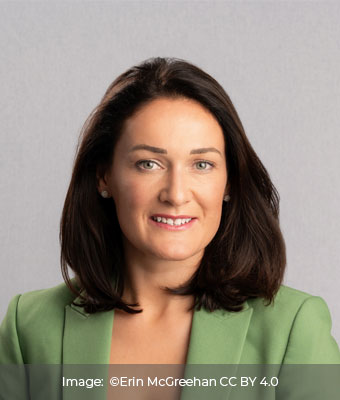
17. Deputy Erin McGreehan asked the Minister for Further and Higher Education, Research, Innovation and Science if his Department has engaged with Dundalk Institute of Technology regarding the progression of the institute to university status; and if he will make a statement on the matter. [14626/25]
My question concerns Dundalk Institute of Technology, DkIT, which is of huge importance for the entire north-east region, educationally, economically and socially. I am hugely ambitious for the institution. It is the only IT that is left without university status. Last June, DkIT and Maynooth University signed a letter of intent confirming there will be a joint strategic engagement on future collaborations over the coming years. This is a hugely significant and exciting departure for both education bodies. What is the Department doing to support it?
I am aware of the Deputy's ongoing advocacy for all things Dundalk, and, indeed, for Louth. We have discussed her interest in this matter previously, most recently when I attended the opening of the new FET centre in Dundalk, which involved a very significant Government commitment of almost €30 million in the education space for the region. I was delighted to open the centre, along with Deputy McGreehan and other colleagues.
I am familiar with Dundalk Institute of Technology. I had the opportunity very recently to meet its president, albeit informally. I will be meeting him more formally and visiting the college in the near future. It is a critical institution both for the region and nationally. As with all higher education institutions, its positioning within the overall higher education landscape is a matter for its governing body in the first instance, within the context of national policy and the relevant legislation. My Department and the HEA have engaged, and continue to engage, with DkIT. Support continues to be provided in the context of the overarching national strategy on higher education landscape restructuring.
Most recently, DkIT was allocated €3.85 million through the technological sector advancement fund. The institution's strategic plan for the period 2024 to 2028 sets out an ambition to achieve university status through the development of a strategic collaborative partnership with an existing university. I am aware and very much supportive of the fact that DkIT signed a formal agreement with Maynooth University in January 2024 setting out the intention of both institutions to explore joint strategic engagement on future collaborations over the coming years. Without wishing to predict or set out the path they may follow, that collaboration, which I expect will deepen, is welcome. The collaboration with Maynooth University provides a pathway into the future for DkIT. I am very supportive of that, as is the HEA. I will have the opportunity in the near future to visit the college more formally. I will continue to engage on the matter.
I absolutely acknowledge the huge investment the Government has provided to the HEA for DkIT. It is a fantastic and hugely important institution. As this is a new departure from what the HEA legislation initially set out, namely, ITs collaborating together, I want to make sure there are no barriers to progress. When the ducks are being put in a row, if regulatory or legal change is needed to ensure the college's status for the future and in order that there will be no blockage from a legal or policy point of view that would prevent DkIT and Maynooth University from collaborating on university status for the former, that change must be made.
Regarding the policy framework, I do not foresee any blockage. However, there is a technical difficulty, which is why DkIT has not already been subsumed. The Technological Universities Act 2018 provided that two or more institutes of technology could jointly seek technological university designation through a process. At that time, a number of applications were invited. DkIT's governing body did not pursue that option at the time. We have to respect the autonomy of institutions and decisions made by their governing board.
The situation has now moved on. I understand a new governing board is in place at DkIT and there is a renewed engagement, which I welcome and support. There is great potential in the collaboration that is already progressing with Maynooth University. It makes sense for lots of reasons, including alignment of courses and programmes and geographical factors. The two institutions will very much complement each other. It is already showing itself to be a very productive engagement. Without wanting to commit, and respecting the autonomy of the institutions, I expect closer and more formal collaboration into the future.
I thank the Minister for his continuing support on this matter. I look forward to his coming to Dundalk again very soon and visiting DkIT. It was not about finding a fit with another institute of technology; it was about finding the right fit. Maynooth University is the right fit. The academic strengths of the two institutions complement each other. It is a win-win for both.
As I said, I have had an informal meeting with the president of DkIT. I have studied the situation and am very familiar with it. DkIT is something of an outlier in that most of the ITs have been assimilated at this stage. The direction of travel is to have stronger collaborations in order to achieve a sum that is greater than the parts. That is already being done very successfully in many of the TUs around the country. DkIT is working away with Maynooth University and that collaboration is progressing well. The Deputy is very supportive, as am I, of all they are doing. I look forward to working together to progress that.
Qualifications Recognition
12. Deputy Rose Conway-Walsh asked the Minister for Further and Higher Education, Research, Innovation and Science to provide an update on the process of getting qualifications obtained in Britain recognised in Ireland since the cessation of the mutual recognition of professional qualifications in 2021. [14517/25]
My question relates to the process of getting qualifications obtained in Britain recognised in this State, particularly since the cessation in 2021 of the mutual recognition of professional qualifications. The Minister's Department serves as the national co-ordinator and the national assistance centre for EU Directive 2005/36/EC on the recognition of professional qualifications. The directive provides the main legal framework to facilitate the mutual recognition of professional qualifications between the EU and EEA member states.
As the Deputy correctly noted, the European directive on the mutual recognition of professional qualifications ceased to have general applicability to UK award holders post Brexit, that is, after December 2020. Qualifications from the UK were automatically recognised during the transitional period, which ran from 1 February to 31 December 2020. If a qualification was recognised during that time, the professional can continue to practise in Ireland or the EU.
While this overall formal framework no longer applies to the recognition of qualifications from the UK, there is ongoing extensive experience within the various competent authorities, which, in consultation with my Department and other Departments, have developed revised pathways for recognition for applicants with UK professional qualifications. Anyone wishing to practise in a regulated profession must meet the professional qualifications required by law. People should contact the relevant competent authority or regulator if they have queries or wish to advance that process. There is no requirement to have a qualification recognised in order to seek employment in unregulated professions. Of course, as the Deputy will understand, certain professions are regulated for a reason, with a high standard being necessary. There must be some rigour in that regard.
There is a small number of professions where it is not possible to provide for continued recognition of UK qualifications in Ireland due to provisions in Irish law based on EU directives or regulations. Some of them relate to a requirement for establishment or residence in an EU member state. Inevitably, as divergence occurs over time following Brexit, it may be the case that mutual recognition becomes more difficult in certain areas if standards and requirements begin to change. My Department continues to engage with the UK Department for Business and Trade on this matter. At our most recent meeting, in January 2025, both Departments agreed to monitor developments at EU and UK level to assess impacts arising from any further initiatives.
This is a real problem, including in a North-South context. We want to encourage student mobility across the island, which is how things are progressing. However, there appears to be a particular issue in regard to the health and social care professionals regulation body, CORU. In 2023, there were media reports that qualified Irish physiotherapists returning to Ireland from Britain, having attained their degree in one of that country's leading sports science universities, had to wait more than a year for their qualification to be recognised by CORU. Esther-Mary D'Arcy, professional adviser at the Irish Society of Chartered Physiotherapists, has said we are facing the worst recruitment crisis in the history of the State, with professional practices screaming out for staff. I accept that CORU must be thorough but the problem is the length of time the process is taking. If it is a capacity issue, more staff must be brought into the body.
I am also dealing with the case of a constituent from Mayo who has a postgraduate certificate in education from a university in England. She is registered to teach by the Teaching Council but this accreditation body has deemed her to fall short in philosophy of education and sociology of education.
I thank the Deputy. On her last point about the constituent's query, if she wants to send that to my office I will happily take a look at the details of it. I will say, based on prior knowledge before I was ever a Minister in this Department, the Teaching Council has a particular set of requirements. Somebody even within the State may come a cropper - the Deputy mentioned, I think, philosophy or some of the courses. There is a very specific set of requirements around undergraduate subject choice and then usually a postgraduate qualification in teaching methodology. Those two must be combined or follow in sequence to be recognised by the Teaching Council. I do not know the details of the Deputy's constituent. I am happy to take a look at it but it may be less to do with the UK qualification and more to do with the qualification itself. I wanted to flag that; it may be of interest or assistance to the Deputy's constituent.
There is provision within the CTA, the existing agreement, and some professional sectors such as veterinary, architects, legal and others can come to an agreement which would, I suppose, be arrived at between the two professional bodies and the sectors. That would effectively reinstate the EU professional qualifications directive for that sector. That could be implemented by the competent authority on request and will form part of future developments.
In that case, that person was paid less than her counterparts and is documented as an unqualified teacher. My question is: how can she be registered to teach with the Teaching Council yet be branded as an unqualified teacher? It just does not make sense.
In October last, the Australian Government announced that doctors from Britain, Ireland and New Zealand will have their ability to practice in Australia fast-tracked under new changes introduced by regulators. Why can we not do the same here? We have such a shortage of human capital here to fill jobs. It is something we seriously need to consider. We are talking about a welcome home for our diaspora, The Gathering and the céad míle fáilte, but let us get the practical supports in place to enable our qualified citizens to return home and fill the thousands of vacant public sector posts across health, social care and other disciplines.
Again, I will go back to our need for an all-island approach to what is happening in education and third level education. We need it streamlined across the island. We need to get ready for the constitutional change that is coming down the line.
On the Deputy's Teaching Council case, I will take the details away but it is not uncommon, unfortunately, that people have different levels of accreditation or recognition within the system, notwithstanding the Teaching Council registration. I am not going to make any comment on the individual's situation. I do not know but if it is of any assistance, I have come across a case in my own constituency work in the past and that is not uncommon at all. Often it depends on the actual original qualifications pursued, or the particular subject choices pursued by the student, whether they meet the requirements or not.
As is the case in supplementaries, the Deputy's supplementary spans a number of areas. I think she was talking about returning from Australia.
Yes, to fast-track. They brought in a policy to fast-track. Why can we not do the same here?
For which professions?
It was for the medical professions - for doctors in particular. It was for doctors from Britain. The doctors from Ireland are being fast-tracked there; why can we not fast-track our own who are living abroad?
I think we can because my own sister is a doctor who qualified in Australia and returned to Ireland and is now practising. It is evidently happening, from personal experience. On the wider arrangement, I recently spent time in India on a St. Patrick's Day trade mission. I was engaged on the reciprocal arrangements there, of which there are many. We have a reciprocal arrangement with multiple states around the world. If there are particular gaps, I am open to hearing about them. It was not in the original question so I do not have a full brief on that but I am happy to take a look at it.
Third Level Fees
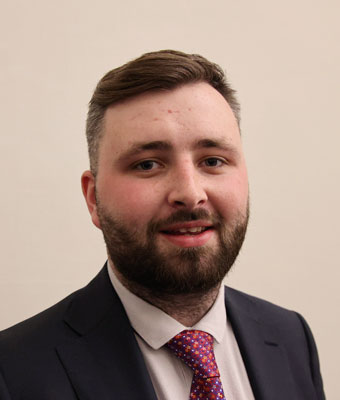
13. Deputy Eoghan Kenny asked the Minister for Further and Higher Education, Research, Innovation and Science given the programme for Government commitment to "continue to reduce the Student Contribution Fee over the lifetime of the Government to ease the financial burden on students and families at the start of each academic year, in a financially sustainable manner", to outline his Department's plans to reduce the student contribution fee; and if he will make a statement on the matter. [14569/25]
I ask what plans the Minister and his Department have to reduce the student contribution fee, given that the programme for Government commitment is to "continue to reduce the student contribution fee over the lifetime of the Government to ease the financial burden on students and families at the start of each academic year". I am quite concerned about the Minister's comments on 15 March this year, where he said that it may not be the best use of public moneys. I am aware that two other Deputies have also asked this.
I thank Deputy Kenny, and I will treat with the programme for Government commitments and the rest later. I would be interested to know whether the Deputy agreed with the rest of my comments in that article because I did talk about targeted supports. I talked about addressing the cost of education and improving access to education. I talked about the existing support schemes and whether they should be widened or revisited to ensure the net is cast exactly where it needs to be.
Are they even progressive supports, targeted at those most in need? I am not convinced that a universal measure, blanket-applied without any regard for means or indeed surplus means in some cases, is appropriate and a good use of public moneys. There are competing demands such as student accommodation, course provision, quality of education and the core training fund, or the core gap we have spoken about in other parliamentary questions. I would welcome any engagement on this topic around what priorities should be pursued and what the opportunity costs would be of prioritising some measures above others. That is a really important point.
My intention in dealing with this issue is to consult. No decisions have been made yet, and we are still in the early cycle of the budgetary process but it is important to have that debate. In that regard, I am holding an event next week where I will engage with student bodies, the universities, access officers and the representatives of different associations, including students' unions, taking their views on board in terms of understanding what the barriers are to access to education, what the costs associated with education are, and with regard to existing supports. We heard earlier that 143,000 students already benefit from the free fees initiative - almost every undergraduate, bar perhaps those in some private colleges and some repeat courses for people taking a second degree course. Some 66,600 students additionally benefit from that student contribution fee being paid in full or part. A very significant cohort of people is already receiving significant State support.
I understand the desire to continue to broaden that pool. My view is that we should do so in a targeted fashion that provides support and respects those most in need, as opposed to a blunt instrument which may not be the best use of those funds. I am open to discussion on it.
When the SUSI grant is being made available, in terms of means, it is taking into account both parents and the individual. If a student has a part-time job outside of college, it is taking into account those means as well, so there is no encouragement there for a student to have a part-time job.
I am quite concerned at the lack of communication between the Minister and the Tánaiste. On 11 November, the Tánaiste stated that a huge priority of his was to abolish student fees. Less than four months later, the Minister on 15 March stated that it is not the best use of public moneys. I would be quite concerned at that.
I met with the USI, of which my colleague, Senator Laura Harmon, was a former president. There are serious issues with regard to housing. I will give the Minister an example. In Cork, we have purpose-built accommodation for 1,534. We have 38,000 students in Cork between UCC and MTU. The average rent for a house in Cork right now is more than €2,000. That is one example of what the Minister can tackle but I would be concerned at the wording from him and the Tánaiste.
I thank the Deputy. We are in a new Government; I am a new Minister. We have had an election. The outworking of that election is a coalition Government. Not every policy of every party is going to be fulfilled. No party won a majority.
The programme for Government.
Yes, the programme for Government will be honoured. The programme for Government commits to a reduction in the student contribution fee in a financially sustainable way, which I will do, of course. I am not going to renege on a programme for Government commitment. I am going to follow it fully but how do we do that? Is it abolition, as Deputy Boyd Barrett argues for? That is €1.5 billion every Government term. How many student accommodation beds could we build for €1.5 billion? How many courses could we provide, and how many more SUSI grants could we provide? What other ways could we usefully deploy that money? Would every recipient of that €1.5 billion be categorised as somebody in need? In a universal scheme, I think probably not. These are the conversations that we have to have. If we could even progress the measures that support those most in need and address access to education in a financially sustainable way, we will have these conversations. I am holding an event next week to start that conversation.
I thank the Minister, and I appreciate that. The Minister has the opportunity to have the same impact the former Minister, Niamh Bhreathnach, had in 1995. He has that opportunity to make that same impact where, across all socioeconomic backgrounds, third level education was fully accessible because third level fees were abolished. The Minister could have that same impact the former Labour Party Minister, Niamh Bhreathnach, had. I am asking the Minister sincerely and I am absolutely willing to engage with him on this. It is about solutions ultimately. I hope the Minister is going to allow Deputies across the House to give him that opportunity, whether it is abolishing fees or perhaps looking into the means testing or increasing the threshold.
I am conscious of time, Deputy. We are just out of time. I will give the final word to the Minister before we move on to the next item.
Donogh O'Malley or many others could be referenced in this debate. My party has always prized education and put it to the fore. Education is the bridge to all that we do as an economy and subsequently as a society because it is the private enterprise, created by a successful education system, that creates the public good and the resources that we then use to support the public good. Deputy Kenny touched on the many competing challenges and the many potential alternative pathways through this in his supplementary question. That is what I want to explore in the coming weeks. We are very early into the budget cycle, and I look forward to those discussions.
Social Enterprise Sector
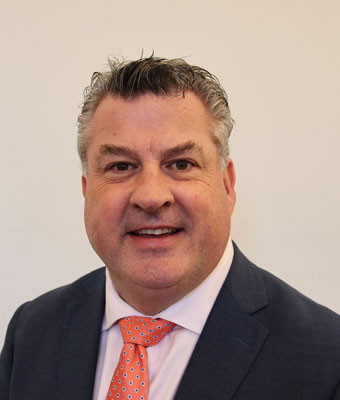
78. Deputy George Lawlor asked the Minister for Rural and Community Development to interact with local development companies to promote the creation of a national social enterprise policy. [6714/25]
This question was originally submitted to the Minister for Enterprise, Trade and Employment and then transferred to the Department of the Minister, Deputy Calleary. I submitted the question to the Department of Enterprise, Trade and Employment on the basis of the 4,300 social enterprises that are making a significant contribution to the Irish economy. In 2021, it was €2.34 billion, with 57% of this in urban areas and 43% in rural areas. Social enterprises record a significant employment contribution, accounting for some 85,000 people in the workforce. While the social aspect of this issue is being covered and looked after, we need to look at this from a business point of view as well.
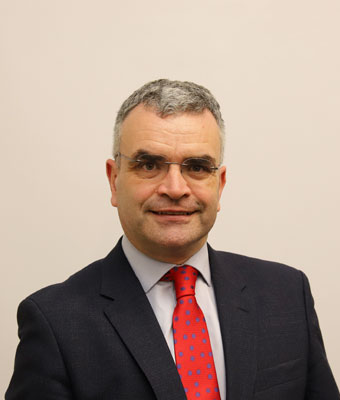
I thank the Deputy. Having just transferred from the Department of enterprise, I understand the rationale for his question. The Department of Rural and Community Development has had policy responsibility for social enterprise since the Department was established in 2017. Trading for Impact: National Social Enterprise Policy 2024-2027 was launched in July 2024. This policy was the successor to the first national social enterprise policy, which was published in 2019.
The development of Trading for Impact was carried out in partnership with the social enterprise sector to which the Deputy referred. A series of bilateral meetings were held with key stakeholders, including Departments and sectoral representative bodies and networks, which included the local development companies, and the Local Development Companies Network, LDCN, formerly known as the ILDN. There were a number of regional stakeholder events. Finally, a public consultation took place and 43 submissions were received from stakeholders.
In addition, my Department commissioned two major pieces of research to underpin the development of Trading for Impact. The first was a baseline data collation exercise on the scale and scope of social enterprise in Ireland and the second was an OECD in-depth policy review of the social enterprise and entrepreneurship ecosystem in Ireland.
Trading for Impact details 57 policy actions under five key objectives. Implementation is to be informed by a stakeholder engagement group made up of key stakeholders. The membership of this group will be announced shortly. It is an area I will be very interested in working in, alongside the Minister of State, Deputy Buttimer. I had many meetings with the CEO of Social Enterprise Republic of Ireland, Mr. John Logue, during my time at the Department of enterprise. There is massive potential here. We also need to support existing social enterprises.
I welcome the Minister's commitment to social enterprise. He is correct to suggest the LDCN had a number of consultations throughout the county, and continues to do so. However, there is a belief among LEADER companies in particular that a more specific targeted support for social enterprise in more disadvantaged areas may be necessary. They say one of the biggest challenges facing them as social enterprises is the balance between meeting the social need - be that in the context of those employed in the enterprise or otherwise - and the business acumen required in the context of the running and operation of the business. As was put to me by a person immersed in the area of social enterprise, often the passion to fix an issue affecting one's community needs the same business passion to make it work. They are, of course, using the benefit of SICAP to bridge the gap between the social and commercial control aspects, with training and mentoring supports.
Are the Minister and his Department officials open to sitting down with social enterprises in our local development companies to look at a proposal with regard to the business running element of it?
The Minister of State, Deputy Buttimer, and I look forward to working with the Local Development Companies Network, which has just rebranded. This will be a key area of focus. The Deputy touched on the issue of management capability.
People have really good ideas but, unfortunately, the execution of this can often be a challenge and can often intimidate people from taking the step. I certainly want to work in that space but also in my role as Minister for Social Protection on the back to enterprise scheme to address those issues and give people the backup and scaffolding that is needed to take the jump and move from an idea to implementation, be that a social enterprise or under the back to enterprise scheme. I would like to work on this in cohesion between the Departments of Rural and Community Development and Social Protection as far as possible.
I welcome the Minister's comments. I think he hit the nail on the head: often people who have very good ideas do not have the necessary business acumen or are afraid to put themselves forward and present a business plan. Wexford Local Development has three fabulous in-house social enterprises in Kafé Konnect, EPIC and the Little Jobs Service. Kafé Konnect is a terrific example of how people who have been left on the margins can be immersed into the area of helping themselves, working among themselves. Under the stewardship of Julie Codd in Wexford Local Development, Kafé Konnect has been a hugely successful commercial enterprise. There are many and varied benefits of this. Kafé Konnect deals with people who are recovering from addiction issues and is now running a wonderfully successful business venture. I invite the Minister to come to Wexford at some stage and view it at first hand. I will even stand him a coffee on that basis.
The Deputy need not worry; the Minister, Deputy Browne, has promised me a coffee down there any day. It sounds like a fabulous project. Those are the kinds of projects we want to see. They sound very much like community services projects that support 430 community-based organisations to provide local economic environmental services with 1,700 full-time posts and 340 manager posts, supported by the Department. Last year we published the Achieve Together social innovation coaching and mentoring programme, which is cofunded under Ireland's ESF operational programme. That provides bespoke mentors and coaches to existing CSP-supported organisations for a 12-month period. That will address some of the issues that we discussed in the previous question in terms of sustainability and providing better services. That is definitely the kind of model I want to see grow. We hope to roll out the Achieve Together programme across the country and make it available to other organisations.
Harbours and Piers
79. Deputy Catherine Connolly asked the Minister for Rural and Community Development if the final business case for the redevelopment of Inis Oírr pier has now been received; and when approval will be granted to proceed with the project. [14535/25]
Baineann mo cheist le hInis Oírr, an chéibh atá ansin agus an fhorbairt atá beartaithe di. De réir mo thuisceana, tá dul chun cinn déanta, ach ba mhaith liom é sin a chinntiú ar an taifead, mar fuair an fhorbairt seo cead pleanála in 2008 agus tá sé ardaithe go mion minic agam ó toghadh mé ar dtús in 2016. An féidir leis an Aire an dul chun cinn a shoiléiriú dom agus é a chur ar thaifead na Dála?
Mar is eol don Teachta, is le Comhairle Chontae na Gaillimhe an t-údarás maidir le cúrsaí forbartha na gcalaí ar na hOileáin Árann, Inis Oírr ina measc. As the Deputy knows, there are regular meetings between officials from my Department and Galway County Council to discuss and monitor pier development on the islands. The last meeting was held on Wednesday, 12 March, and the next meeting is scheduled for 8 April.
With regard to the development of Inis Oírr Pier, Galway County Council is the contracting authority. It is responsible for all aspects of procurement. I understand that Galway County Council has formally completed the assessment and evaluation of all tender responses and a successful tenderer has been identified. Earlier this week, Galway County Council submitted the final business case to my Department, seeking approval to proceed with the project. This represents decision gate 3 as set out in the Government's infrastructure guidelines. The final case, which was received on Monday of this week, is now being reviewed by my Department. It will be checked for completeness in terms of the required elements, such as the overall cost and affordability of the proposal, and the benefits and risks associated with it.
I know the Deputy has worked very hard on this and she will appreciate that this is a significant project, ní hamháin le haghaidh mhuintir Inis Oírr ach le haghaidh mo Roinne freisin. Caithfimid a bheith láidir sa tuiscint go bhfuil gach rud ceart agus cóir. Therefore, we need to be satisfied that the final business case meets the required standard. I have asked my Department to complete the review with care and attention and bring a recommendation to me as quickly as possible. I will keep the Deputy totally informed on this.
Tuigim an fhreagracht atá ar an Roinn, agus ní mór don Roinn an jab a dhéanamh i gceart, ach táimid ag dul siar píosa fada go 2008. D'fhógair Tuairisc go raibh dul chun cinn iontach déanta. The Minister is now telling me that it is before his Department for a final decision. I understand from the very positive article in Tuairisc that a time has been set out for the work to start and to be completed. I understand that work is now to be completed in 2027 at the latest. There are conditions relating to the innealtóirí, the engineers, having Irish and so on and staying on the island. Is the Minister aware of that detail? An féidir leis tuilleadh sonraí a thabhairt dom ó thaobh an chonartha de? Cén uair a bheidh an obair ag tosú? Cén uair a bheidh sé críochnaithe? Céard iad na coinníollacha?
Níl na sonraí sin agam inniu, ach déarfaidh mé léi má tá siad ann. Ní cheapaim go bhfuil siad ann ag an bpointe seo, mar nílimid ach ag dul go dtí an tender stage. Beidh sé sin mar chuid den tender. Ach táim ag iarraidh go mbeidh-----
Maybe there is a mix-up between the islands. I understood there was a positive announcement for Inis Oírr and the extension of the pier.
Are we talking about Inis Oírr?
Inis Oírr.
Tá sé agam anseo go bhfuaireamar the tender report on Monday. Ní fhaca mé céard a leagadh amach ar Tuairisc, ach táimid ag iarraidh é seo a dhéanamh chomh luath agus is féidir. Dúirt mé le hoifigigh mo Roinne, nuair a phléifear an cheist seo, go gcaithfear é a dhéanamh go cúramach ach go sciobtha mar táimid ag fanacht chomh fada chun é a dhéanamh. Tiocfaidh mé ar ais chuig an Teachta leis na sonraí sin. Ceapaim go mbeidh na sonraí cosúil leis sin mar chuid den chonradh idir-----
Bheadh sé tábhachtach soiléiriú a thabhairt dom.
Gan dabht. Tá sé tábhachtach go mbeidh Gaeilge ag aon duine atá ag obair ar an togra seo agus go mbeidh siad ag fanacht ar an oileán.
Táim sásta leis sin. Tiocfaidh an tAire ar ais chugam.
Question No. 80 taken with Written Answers.
Road Projects
81. Deputy Pa Daly asked the Minister for Rural and Community Development the efforts his Department is making to increase the resourcing of local improvement schemes; and if he will make a statement on the matter. [14571/25]
I ask the Minister about the efforts his Department is making to increase the resourcing of local improvement schemes and make a statement on it. In Kerry in particular over the past eight years, 225 roads have been improved but that is about 30 per year and, as the Minister probably knows, there are 500 roads on the list, which means it will be 25 or 30 years before we will get to all of the roads on the list.
The local improvement scheme supports improving non-public rural roads and laneways not usually maintained by local authorities. Since its re-establishment in 2017, almost €170 million has been provided by the Government to local authorities under the scheme.
In recent years, my Department has increased the year-on-year base funding for the scheme and has redirected savings from other areas of the Department to the scheme as they have arisen. In April 2024, €40 million in funding was announced for the scheme across all local authorities to cover 2024-25. As the Minister of State, Deputy Buttimer, said, we have recently opened the 2025 scheme and invited local authorities to submit their lists of priority roads for completion in 2025.
Since 2017, Kerry has been allocated a total of €10.37 million in local improvement scheme funding. This figure includes the 2024-25 allocation of €2.57 million.
Each year my Department carries out a review of the scheme to ensure allocations across local authorities are made as fairly and efficiently as possible. My departmental officials also work with local authorities to ensure that funding is fully utilised each year.
Our Rural Future sets out that the Government will continue to invest in the local improvement scheme. I am personally committed to it and see the value of it in my county as well as in Kerry. We are endeavouring to get extra resources into it to ensure the backlog, as discussed between the Minister of State, Deputy Buttimer, and Deputy Charles Ward, is addressed. We are awaiting from each council a list of priorities for 2025. They set those priorities.
I thank the Minister for the reply.
By way of context, a lot of people in County Kerry, from various areas such as Listry, Astee, Ballyconry, Ballyduff and Dromod in south Kerry, have been asking me about this. There has been a certain amount of kite-flying over the last few months by Government-supporting Independent TDs who have been announcing that there has been an increase in money for the local improvement schemes. However, from the statistics the Minister has quite generously provided to me we see the 2024 allocation is €2.569 million for 2024 and 2025, but the 2024 spend was €1.747 million. When one subtracts the 2024 figure from the allocation for the scheme in 2024-25 we are left with €821,000 for 2025, which is a decrease of 52% on what was previously allocated by the Government. Will the Minister confirm that there has been a decrease in the spend assigned for rural roads in Kerry as opposed to the increase that was flagged recently?
I am not going to confirm anything at this stage. We have opened the scheme and are looking through the applications. One thing that worked in my Department under the previous Minister, Heather Humphreys, is that we allocated money to it from savings in the Department. The Minister of State, Deputy Buttimer, and I have asked that this continue. I am engaging with the Minister for Transport, Deputy Darragh O'Brien, regarding funding from that Department because the LIS is really important. We introduced changes to try to make it more open to people this year.
I also draw attention to the fact that some local authorities spend it differently and seem to spend it more efficiently than others. I am looking at the amount spent per kilometre of road. We will be doing a little bit more work on that with the local authorities. For instance, one local authority spends €15.60 per square metre, while another spends €49.15. This is a relatively small island. I know there are cost disparities but there cannot be that level of cost disparity. The average across local authorities is €31.19. I agree that different LIS and different roads require different budgets but I will be doing some work on this. I have asked my Department officials to do some work on those kinds of disparities between local authorities. Neither of those local authorities are in Kerry by the way. I want to get to understand them and I want to ensure we are getting value for money, given the substantial investment we are making.
Going over the statistics since 2017, as the Minister referenced, it seems to me that Kerry County Council and the roads department there have been quite efficient. I believe that €5,000 less than the full allocation was spent in one of those years. It seems that it was €21,000 less than the full allocation in 2020. It does seem to me that when we subtract the 2024 amount from the combined 2024-25 figure, the actual amount allocated to Kerry has decreased, which is very unfortunate given the 30-year waiting list. I would like to have clarity that it is indeed the case, as indicated by the statistics, that the amount for Kerry has decreased rather than increased, which was the story going around County Kerry from some of the people who are supporting the Government.
Four Members have indicated they would like to come in with a supplementary comment. I ask them to be really mindful of their time and to keep their contributions nice and short. They have a maximum of 30 seconds each.
Since its introduction in 2027 the LIS has been hugely successful and it is massively oversubscribed. It is very important and there is a huge demand for it in my constituency of Carlow-Kilkenny. Additional funding will be required. In the context of next year's budget I implore the Minister to fight as hard as he can for rural towns and villages in my constituency such as Clara, Ballyhale, Windgap, Glynn, Rathanna, Ballinkillin, Drummin, Ballymurphy, Conahy, Muckalee, Pilltown, Glenmore, Fiddown, Mooncoin, Carrigeen and Skeaghvasteen. All have multiple applications to the scheme.
What about Faugheen?
There is huge demand out there. It is a hugely successful scheme. If we could just get additional funding, it would be most welcome for those towns and villages in Carlow and Kilkenny.
I feel the same with regard to the local improvement scheme, coming from the rural county of Longford. Significant funding has been provided in recent years through the Department when the previous Minister, Heather Humphreys, was in that role. If the Minister, Deputy Calleary, looks at his list he will see that every penny allocated to Longford County Council was spent. I wish to highlight that we have the capacity to get more roads done if additional funding is made available to the local authority. I thank the Minister.
I thank the Acting Chair for his consideration this morning. Rural roads in County Louth could not have enough money from the perspective of walkers, tourism and agriculture. My question relates to special circumstances, such as if there was an extreme weather event, for example. In the previous two years LIS funding was awarded to a particular road when it was damaged and decimated in an extreme weather event. In those circumstances, would the Department look fondly on them and give them money to make sure the road was brought up to a better standard?
I wish the Minister and the Minister of State well in their portfolios. The explanations are very worthwhile given the discrepancies in costs. Some counties' totals are quite alarming. Obviously drainage and topography will mean a lot.
I welcome the relaxing of the requirements relating to applications by individual households. The connectivity of the people in those houses on those little boreens out to the public roads is so important. These are the little people we always talk about. They are the people we represent and they do not get much by way of anything else. It is a great scheme. I appeal for more funding to be provided. Applications into Tipperary County Council are not being taken now. It is dealing with the 2024 list. Obviously money is probably a problem. Anything the Minister can do for them will be appreciated.
The local improvement scheme is one of the best schemes we have seen in terms of reaching corners of all parts of rural Ireland that may not necessarily have street lights or that may be waiting for broadband to be delivered. We should be encouraging councils to clear all their backlogs rather than breaking it down into districts or otherwise. If we can see a way to a situation where applications are sought, funding is provided and those lists are cleared, we must work in that regard. If we have a situation where districts are split, we can see waiting lists of years in some locations and a matter of months in others. We need to streamline it to ensure consistency right across counties.
I note the Members' participation and the interest in the scheme. It was reintroduced in 2017. Base funding has increased year on year since 2021. Last year an additional €10 million in funding was secured. The Minister of State, Deputy Buttimer, and I will be monitoring capital expenditure across the Department to utilise any savings and LIS is a priority for us. I have engaged with the Minister for Transport, Deputy Darragh O'Brien, and his Department on getting extra funding. Deputy McGreehan made a very solid point about storm and weather events. We have increased substantially the funding since 2021 to address that and to give councils the chance to address that. Ultimately, the councils submit their lists and they submit their roads to our Department, so it comes from within the council. With their local knowledge, they can identify what their priorities are. We really leave it to the councils, based on their local knowledge and their local priorities, to decide what they need to submit to us.
Departmental Funding
82. Deputy William Aird asked the Minister for Rural and Community Development if he will allocate funding to the community recognition fund for 2025. [14504/25]
I am asking for an extension of the community recognition fund in 2025. The community recognition fund was a major initiative designed to facilitate and support communities across the country that are hosting people from Ukraine and other countries around the world. The community recognition fund has been key to enhancing the social fabric of our communities, fostering inclusion and improving the quality of life for residents across Ireland. The initiatives supported by the community recognition fund have improved infrastructure, strengthened community networks, encouraged active lifestyles and supported local organisations.
The community recognition fund was first introduced in 2023 to recognise the huge efforts made by communities in welcoming and supporting people coming to Ireland.
Through the 2023 allocation €50 million in funding was approved for some 900 projects. To further support communities a further €50 million in funding was announced under community recognition last March. The additional funding is specifically targeted at projects located in cities, towns and villages that are hosting beneficiaries of temporary protection or international protection applicants.
In August 2024, €16.4 million was approved to deliver 185 community projects across the country.
On 24 February, together with the Minister of State, Deputy Buttimer, I approved over €14 million to deliver 164 projects across the country for the second tranche. The closing date for the third and final tranche has now passed and officials in the Department have commenced the process of reviewing the proposals submitted by each local authority. We will be announcing the successful projects under the tranche in the coming months.
My immediate priority is to get the remaining projects approved and ensure the €100 million already allocated for the scheme is fully delivered to ensure all funded projects are completed as quickly as possible. To do that, we will continue to consider how we can further support towns and villages that are welcoming people. Any decision in respect of a further round of funding under the community recognition fund will be considered in the context of those deliberations and the annual budgetary process.
That is good news. I take it that the Minister is going to have the fund available in 2025. The aim is to complete and maintain community development initiatives and plan for future needs. The enhanced social cohesion measure was great for the community. The promotion of the health and well-being element was too. Numerous people and clubs have benefited from walking tracks. There has been a major benefit to the community. The empowerment of the local organisations that got involved was great for everybody.
In my native County Laois, the community recognition fund had a positive impact through several key projects in Portlaoise, Ballylinan and Rathdowney. The Minister will know of all the people who benefited in his county, Mayo. The successful projects in Laois are key examples of the benefits of the community recognition fund. Extending the fund to 2025 would ensure even more communities can benefit from financial support, leading to a stronger and more inclusive society. I thank the Minister for considering this vital extension to the fund, which has already proven it can enhance the well-being of communities across Ireland.
I thank Deputy Aird. As he said, there has been fantastic delivery in Laois through the community recognition fund, but that is coming from the communities themselves. Over €2 million was allocated across 2023 and 2024. There were 48 projects in 2023, 43 of which have been completed. Ninety-nine percent of the 2023 allocation has been drawn down. Under the fund for 2024, €1,012,996 was approved for eight projects. I look forward to the early drawdown of the funding for those projects.
As the Deputy said, the initiative is community-led. It involves working with communities in the towns that propose projects in engagement with their local authorities. It involves very good expenditure and I want to make sure now that the money is all drawn down and the projects are delivered. I do not want to announce projects but not see them delivered on the ground. It is essential that they be delivered and that is going to be our focus now.
All the work in County Laois is near completion and the next round is awaited anxiously. At least seven or eight groups would be disappointed if they thought they would not be included, and that is why I am asking for such an important fund to be extended into 2025.
I support everything said about the local improvement schemes. They are most important to rural counties, and my county is a rural one, as the Minister knows. The Minister and Minister of State should both remember that the people who can benefit from local improvement schemes are those who are paying their household charges. They are entitled, at least, to have the roads done.
Several groups got funding under the community recognition fund, which is absolutely sound, but there is an issue in that two applications made by Louth County Council were refused. When I compare them with others, I am not entirely sure why they were refused. I ask that the Minister examine them. They relate to St. Patrick’s Day and Christmas. The council is involved in long-term festivals. Louth County Council decided that the applications were legitimate and submitted them. It saw amounts of money similar to what it required provided in other areas. This needs to be examined.
I ask that the community gardens project in Muirhevnamore be considered. It is for the next round. It involves an absolutely brilliant piece of work, in an urban setting, that allows people to have allotments and all those things we like and need to see a lot more of.
I am aware of the case. We have given feedback to Louth County Council on why the two applications could not proceed. However, the council has not lost any money as a consequence. It is important that it has been asked to submit alternative projects or further details on the proposed projects. The next project the Deputy mentioned, the community garden, is being assessed, and I will keep the Deputy informed about progress.
It is very important to note that no money is being lost by Louth County Council as a consequence of the two projects not proceeding. We have engaged with the council on why there is concern in the Department about the projects.
Departmental Schemes
83. Deputy Pa Daly asked the Minister for Rural and Community Development for an update on the town and village renewal scheme; and if he will make a statement on the matter. [14577/25]
I would like an update on the town and village renewal scheme. Will the Minister make a statement on that?
The town and village renewal scheme, which was introduced in 2016, has to date allocated over €177 million to almost 1,800 projects nationally. The scheme, which sees our local authorities work with community actors, primarily targets funding at rural towns and villages with populations of less than 10,000.
I am delighted to announce that the 2025 scheme has been opened for applications. The 2025 scheme is intended to support revitalisation and continue its work by focusing on stimulating town centre economic and social regeneration, along with the regeneration of villages. This will be achieved through projects that support sustainable employment, town centre resilience and regeneration, the enhancement of streetscapes, and the bringing of vacant and derelict buildings or lands back into use as community multipurpose spaces.
Under the 2025 scheme, there are three main funding streams available for project applications. Under what we call the main scheme, local authorities can submit applications for one project up to a value of €500,000 and for up to thee further projects with maximum values of €300,000. In addition, as part of a new development this year, counties with offshore islands or ceantair Ghaeltachta, tá cead acu application amháin eile de luach €300,000 a dhéanamh. The second stream is the project development measure that provides up to €50,000 to undertake the required planning and development work to underpin the development of successful projects. Finally, the building and land acquisition measure is available once again, following on from the success of the support provided in this area in recent years. This funding stream makes up to €500,000 available to each eligible local authority to purchase vacant or derelict buildings for later development as community facilities.
All the details of the 2025 scheme are available on my Department's website and my officials will continue to liaise with local authorities. I am happy to provide information to any Deputy who wishes to assist community groups in his or her area.
I thank the Minister for the reply. It will be particularly relevant to towns in Kerry, particularly Listowel, Dingle, Kenmare and Cahersiveen. Since Covid, many people have been returning to rural towns to live. However, town centres in Kerry, maybe with the exception of Killarney, are under severe pressure. There is a lot of dereliction in them. Is the Minister satisfied with the progress made to date on the collecting of levies? He mentioned the derelict sites measure. There is a register that county councils are obliged to maintain. It seems Kerry County Council has not been active enough in commencing compulsory purchase orders. I see from the latest statistics available that zero sites were acquired by agreement in 2023, and zero sites were acquired compulsorily. There were levies of €231,000 but zero received for sites, and €979 in total was received. Therefore, there is an outstanding levy figure of €703,000. The authorities must act to use the schemes already in place if what is wanted is to renew the town centres.
I agree with the Deputy on that. There are powers available to local authorities under the Department of housing and local government and they should be used more. To assist in that regard, my Department has funded 26 town regeneration officers in local authorities. Their job is to drive the delivery of the town centre first programme, which entails a suite of supports for which we have allocated €4.5 million to regenerate town centres through a bottom-up approach.
It will allow for the development of a second phase of 26 town centre first plans, the establishment and development of town teams in smaller towns across the country and looking at that project development measure, which I referred to, as to the pipeline.
Within County Kerry, town and village renewal has funded the purchase and regeneration of the Sisters of St. Clare convent in Kenmare into a community space. It has funded public realm enhancement in Ballybunion of up to €250,000 and the redevelopment of the disused craft workshops around Blennerville Mill in the Deputy's own town up to €500,000. We refurbished the former Garda station in Moyvane as a community activity with €250,000. Sixty-seven projects have been funded to date under town and village renewal in Kerry, a lot of them with a town centre focus, but with the partnership between the project development manager and the town centre teams and town centre first, we can get to somewhere like where the Deputy describes.
I am glad the Minister brought up the town centre first approach because I see it was in the last programme for Government and it is in the current one. If it was the case there was a priority for town centre first, then the Department of Justice or the Courts Service would not be deciding to close the current courthouse in Tralee and to move it to another side of town without any plan to do anything at all with the building, which is right in the centre of town and has been there since the 1840s.
The current proposal is preposterous in my view. Rather than doing a job like was done in Kilkenny with a budget of €20 million odd for every new courthouse or rather than using an An Post depot that is for sale and refurbishing that or refurbishing the current courthouse, it is planned to close it down and move across to the Denny site, which has been given by the Kerry Group, while limiting any development there and not having any additional benefit to the town. It is not too late to reverse that decision but we will wait and see. I ask the Minister to talk to his colleagues in government about what can be done to do that.
Anything to do with town centre refurbishment and regeneration should be done on a cross-government basis. Under town and village renewal and under the building or land acquisition measure, there might be potential for Kerry County Council to look at doing something if that plan continues. We are absolutely committed to town centre first and getting plans in place to identify this kind of project in advance and to look at the use of buildings in advance so they do not just get landed on people without notice and there is some sort of a plan. The town regeneration officers, the town centre first suite of supports and the building or land acquisition measure under town and village renewal gives the possibility, opportunity and chance to do that.
As I said, we have previously funded the repurposing of courthouses. If Kerry County Council has a plan in relation to that building, I encourage it to discuss that. From the Department of Rural and Community Development, we have funded the employment of people within local authorities to apply for these plans and for the funding. It puts huge pressure on local authorities and it requires a level of expertise but we have made that funding available to do that.
Gaeltacht Policy
84. Deputy Catherine Connolly asked the Minister for Rural and Community Development further to Parliamentary Question No. 92 of 10 October 2024, the status of the development of Caladh Mór pier on Inis Meáin; whether the independent consultant has been appointed; and if he will make a statement on the matter. [14536/25]
Táimid ar ais arís go dtí na hOileáin Árann agus an uair seo Inis Meáin agus An Caladh Mór. An cheist atá agam ná has the independent consultant been appointed and can the Minister give us details? I will use the 18 seconds to ensure there is no confusion between this question and the last question. It has clearly been reported they are about to start their work on the céibh in Inis Oírr in the autumn. The Minister might clarify that in due course if he can today, ar eagla na míthuisceana.
I will definitely come back to the Deputy later. It will not be before the end of this time but I will clarify that because I have had a number of conversations with officials around pier development while preparing for questions and I have asked for more information on all of them.
In relation to cúrsaí sa Chaladh Mór ar Inis Meáin, mar a dúirt mé leis an Teachta, is í Comhairle Chontae na Gaillimhe an t-údarás le haghaidh foirgnimh agus céanna ar na hOileáin Árann, Inis Meáin ina measc. I understand my Department gave approval to Galway County Council in December 2024 to proceed with the appointment of consultant engineers to develop the preliminary business case, incorporating a strategic assessment, for marine infrastructure improvement options on the island. Galway County Council confirmed to my Department at a meeting between officials, which was held on Wednesday, 12 March, that the independent consultant engineer has been appointed and has started work on the project. The assessment will examine all options that are available for improving the marine infrastructure on Inis Meáin, including piers for use by passenger and cargo ferry services.
I am advised the tender document explicitly included a series of requirements regarding public consultation and engagement with island representatives, ensuring that the entire community of Inis Meáin has input into this process. To that regard, Galway County Council held a public consultation day in Ionad Pobail Inis Meáin on 19 March to ensure all stakeholders and those living on the island were aware of the process being undertaken and were given the opportunity to express their views.
The consultants, together with representatives of Galway County Council, held meetings with various groups and business owners earlier that morning. The consultation was then open to all from 4 p.m. to 7 p.m. to come in to discuss concerns or preferences for future infrastructure development. I understand the consultant engineers are due to complete their programme of work later this year. We will continue to engage with Galway County Council. I want this project to be completed and to progress as quickly as possible. I have asked for a report on the consultation day and the feedback that was received on that to be given to me as soon as possible.
I thank the Minister. The previous Minister took a hands-on approach on this and I am sure this Minister will too because of the utter frustration at the delay. If my frustration is evident, the Minister can imagine what we are enduring on Inis Meáin with business there - a number of businesses - and with the people on the ground. This was to be completed years ago and we are still at it.
I welcome the fact there was a public meeting. That was on 19 March of this year just gone.
Yes.
That is very welcome. The meetings that have taken place have been as a result of the previous Minister pushing the whole matter and taking a hands-on approach in relation to it.
For my understanding, is it the position that the consultants have been appointed and are doing a preliminary business case all over again regarding this project? When will that preliminary project be ready? You cannot imagine how many times I and colleagues from Galway West have stood up on the floor of this Dáil and then gone to meetings that are utterly frustrating because we do not know where we are going with it.
I know from discussing this with officials about the Deputy's interest in this and I know my predecessor, the then Minister, Heather Humphreys, drove this. Certainly, on the basis of discussions I have had, I am not happy it has taken so long and I intend to sit on it and drive it on as well.
The business case is expected to take around nine months. The work is under way but it is expected to take that time. There are a lot of complexities to this in relation to Caladh Mór agus an Céibh an Chóra. I am trying to get my head around all of those complexities as well. I can assure the Deputy I will work with her and with colleagues of all parties there to ensure we progress this as quickly as possible and there are no further delays. I have asked for a report on the consultation day to be given to me as soon as possible in order that I can ensure the concerns that were expressed are captured within the business assessment process, they are not ignored and it was not just a box-ticking exercise. I absolutely agree with the Deputy. I cannot begin to imagine the frustration and anger of pobal Inis Meáin. Tá sé tábhachtach go bhfuil siad mar pháirt den fhreagra ar an bhfadhb seo.
Gabhaim buíochas leis an Aire. Luaigh sé An Caladh Mór agus Céibh an Chóra, agus tá an ceart aige, ach ní thuigim cad atá tarlaithe. Tá a fhios agam go bhfuil castacht i gceist. Tá a fhios agam é sin agus ní saineolaí mé ach táimid ag dul timpeall i gciorcal an t-am uilig agus ar ais arís anois go dtí an tús agus an preliminary business case. Ar a laghad tá sé ráite ag an Aire anois gur naoi mhí atá i gceist. Nine months - a woman cannot hear the words nine months but we think of a pregnancy. Hopefully, at the end of the nine months there will be a delivery of something substantial in relation to this.
What is the further plan after the preliminary case is ready in nine months' time? I welcome the fact the Minister is going to take a hands-on approach. I do not look forward to the next meeting with muintir Inis Meáin agus an lucht gnó ansin. Tá siadsan thar a bheith corraithe ó thaobh an easpa dul chun cinn.
I do intend to go to Inis Meáin at some stage to see for myself, not just on the pier issue but on all island issues. The Minister of State, Deputy Buttimer, and I will be working collectively as regards the islands. I understand a number of marine assessments and studies have been undertaken on the island over the past few years, including bathymetric surveys and a marine simulation exercise. The bathymetric surveys were carried out on both Céibh an Chóra agus an Caladh Mór. They were provided to the consultant engineers as part of their work. Also, they have been provided with the study that was carried out by the National Maritime College, Cork, as regards the marine simulation exercise. That simulated the type of vessel that will be used for passenger and cargo ferry services to the island. Those data have been provided and will be given to determine the viable options to provide the most important thing, which is safe and accessible harbour facilities. I know the Deputy will be tabling this question every month and we will keep actively engaged on it in between Question Time as well.
Departmental Programmes
85. Deputy John Clendennen asked the Minister for Rural and Community Development if there is a central set of criteria which apply under the local enhancement programme, given that the funding is decided at a local level; and if he will make a statement on the matter. [14607/25]
I wish both the Minister and the Minister of State well in their new roles. I ask if there is a central set of criteria which apply under the local enhancement programme, given that the funding is decided at a local level, and if the Minister will make a statement on the matter.
I congratulate Deputy Clendennen on his election.
The local enhancement programme is targeted towards enhancing facilities in disadvantaged communities identified in local economic and community plans. The programme seeks to provide small grants to a wide and diverse range of local community groups, to assist with the purchase of equipment and improvements or repairs to their facilities. Deputy Clendennen, as a former chair of the LCDC in his county, and being centrally leading in the administration of the LEP in Offaly, will recognise that 113 projects and 13 women's organisation to the tune of €186,553 were approved last year in Offaly. I thank Deputy Clendennen for his work on that.
The funding is administered locally by local community development committees across the country, with support from their local authorities. As Minister of State with responsibility for community, along with my colleague, the Minister, Deputy Calleary, we fully understand and recognise that community and voluntary organisations are at the heart of our country. We see it every day and we look at our Members across these Houses who advocate and support our community groups, and it is very important to what we do.
Since 2018, €65.9 million has been provided in funding for the programme, under various iterations, supporting over 23,000 community groups and organisations.
The 2025 local enhancement programme is a €7 million fund launched in November of last year. The funding consists of €6 million in capital supports and a further €1 million in current funding for community groups to assist with their energy and running costs. The funding can be used to support parish halls, community centres, local development associations, social clubs, senior citizens' groups, men's sheds, women's sheds and much more.
The local enhancement programme is designed to ensure that local priorities are identified and met. Given the local focus of the programme, the local community development committees are best placed to assess whether projects address local priorities and are targeted at addressing areas of disadvantage.
Gabhaim buíochas leis an Rialtas as an obair le deich mbliana anuas chun tacú le tuath na hÉireann. It is important to look at the last ten years and see the progress that has been made in rural Ireland, with the establishment of this very Department in providing a strategic plan, a focus and funding for every rural community. Through the Local Government Reform Act 2014, I have seen first hand, through the establishment of the local community development committee and as a former chair, the difference it can make. However, none of this can be done without the support of volunteers, and it is important to recognise and acknowledge the work they do in every community right across Offaly and across the country. In Offaly today, the local community development committee will approve 213 grants under this scheme for 2025. It is a key support for successful groups, but there are some that did not qualify due to-----
Thank you, Deputy.
Gabhaim buíochas leis an Teachta as ucht an mhéid a dúirt sé mar gheall ar an Roinn.
My Department provides guidance to the local community development committees on the eligibility criteria. The guidelines require projects to be in keeping with the ethos of the programme. The Government is very much aware of the challenges facing community and voluntary groups and we are very much committed to supporting them. Both the Minister, Deputy Calleary, and I will work with community development committees to ensure that they qualify but also that we support them because, as I said, they are at the core of what we do in our towns and villages and in our rural and urban areas and they play a critical role. We would be lost without them as a country.
I ask that feedback might be taken from local authorities on the applications that were made and the sums that were sought versus what was actually allocated to see what shortfall there was, if any. It is important where good initiatives come forward that they get the full support of the Government and the State.
Second, there is a time element as regards the administration burden on local community groups. I ask that the Department give consideration to the establishment of a portal online that would allow the likes of community groups to upload all their credentials and documentation on the one occasion and that would be there as an ongoing record. I am conscious that some of these positions on local voluntary groups can be on a transient basis. A chair or a secretary could move on as well as the email address. We need to move to a position where we have generalised email addresses for committees. Also, if they have a portal identified, it ensures there is no breakdown. It also reduces the administration for local authority staff.
The Minister of State highlighted in his reply the funding for community centres. They recently had a round of the community centre funds announced. I want to ask a question about that with regard to an appeal mechanism on that. I had a parish hall in Newtown Cashel, County Longford, that was unsuccessful due to an error in a letter of comfort as regards the length of time the hall was available. Will there be an appeals mechanism on unsuccessful applications, particularly, as I said, since community centres play such a vital role in all our communities throughout rural Ireland?
Pobal has, as the Deputy knows, independently assessed the community centre investment fund. Information will be given back to the community centres in question and I will talk to the Deputy further after that.
As regards Deputy Clendennen's point, the idea of the portal is a good idea. He is right that people move on and there is a lacuna then and a burden of administration placed on the voluntary effort. I will talk to Deputy Clendennen with the Minister, Deputy Calleary, about the suggestion of the online portal because it is good and deserves merit.
Question No. 86 taken with Written Answers.
Men's Sheds
87. Deputy Mattie McGrath asked the Minister for Rural and Community Development if he will address the funding shortfall for men's sheds; and if he will make a statement on the matter. [14353/25]
I ask the Minister for Rural and Community Development to address the funding shortfall for Irish men's sheds, specifically following the loss of the IMSA sustainability grant, and to make a statement on the matter.
I thank the Deputy for his question about men's sheds. I absolutely agree that men's sheds have been a very positive development for communities across Ireland. They provide a safe, comfortable and inclusive environment where people can share skills, work on meaningful projects and connect with their communities. I am absolutely committed to supporting the work of men's sheds.
The programme for Government includes a commitment to continue to fund men's sheds. My Department currently provides a range of supports which are available to men's sheds. These include the €7 million local enhancement programme 2025, which allowed men's sheds to apply for running costs, as well as small capital works for their facilities; the SICAP; and the LEADER programme, where funding is not targeted at any particular group but focused on a thematic approach.
My Department also provides funding directly to the Irish Men's Sheds Association under the scheme to support national organisations to support administrative costs.
In previous years, ring-fenced funding was provided to the Irish Men's Sheds Association for distribution to its members. This funding followed on from proposals submitted by the IMSA. Late in 2024, my officials reached out to the Irish Men's Sheds Association regarding its funding requirements. It was advised that the IMSA was not in a position to submit a proposal for funding at that time but indicated that it would be in contact with my Department in 2025.
I will meet the Irish Men's Sheds Association along with the Minister of State, Deputy Buttimer, in the coming weeks to discuss its proposals and I will update the Deputy afterwards.
I am glad the Minister will meet with the Irish Men's Sheds Association, IMSA. It is a pity that when the Department reached out to it late last year, it was unable, but hopefully this will be sorted out and we will get proper, meaningful support for the many men's sheds throughout the country, especially in Tipperary. We have men's sheds in Clogheen, Carrick-on-Suir, Clonmel, Fethard, Mullinahone, Tiobraid Árann, Cashel and Thurles. They are tremendous organisations, and we cannot forget mná na hÉireann either. There are some women's sheds. We have one in Cahir town, Cathair Dhún Iascaigh. It is very important that this voluntary effort is supported by the Government.
The association is not looking for massive amounts of money. It just wants enough to keep going without having to do a lot of fundraising, which is stressful. I look forward to the Minister meeting with the national group. I hope this matter can be resolved. In fairness to the previous Minister, she was generous to the men's sheds. It is a pity this went off the track but I hope we can get it back on the line again.
Deputy Healy raised this issue with me last week. There is no issue. We have provided funding over recent years. We wanted to provide funding last year but were unable to find a mechanism to do so. The Minister of State, Deputy Buttimer, and I will have a meeting with the Irish Men's Sheds Association. In the meantime, I refer the Deputy to the local enhancement programme. There was money in that for local men's sheds. That will be decided on in the coming weeks.
Is féidir teacht ar Cheisteanna Scríofa ar
www.oireachtas.ie
.
Written Answers are published on the Oireachtas website.