Housing Provision

6. Deputy Cormac Devlin asked the Minister for Housing, Local Government and Heritage his targets for the delivery of starter homes; and if he will make a statement on the matter. [12736/25]
The programme for Government specifically references starter homes. There is a very strong challenge in housing generally to deliver increased supply but the provision of starter homes to give individuals and families the prospect of owning a home is something we need to deliver on as a Government. Will the Minister of State outline his targets on this?

I thank the Deputy for raising this question. I know housing delivery in particular is something he is very passionate about and that he has always been dedicated to.
As part of the programme for Government, the Government committed to launching a new, comprehensive starter home programme across the public, private and approved housing body, AHB, sector. This promotes home ownership and secures long-term rental tenures for young people and fresh start applicants. As stated in the programme for Government, the starter home programme will support and deliver an average of 15,000 starter homes per year, including through the first home scheme and the help to buy support, in addition to other affordable purchase and cost-rental schemes.
The Government is fully committed to delivering affordable housing at scale and to continue accelerating housing supply across all tenures. The Government’s ambition is to build on the progress made to date under Housing for All, and deliver more than 300,000 homes in the period from 2025 to 2030 equating to an annual average of more than 50,000 homes per year, building up to 60,000 in 2030. Work on translating these revised national housing targets into local, tenure-specific targets is ongoing and at an advanced stage. This work is expected to be completed in the coming months and will be published after the work on the revised national planning framework is complete.
These tenure-specific targets will both inform the revision of existing affordable housing targets and further inform the development of the starter home programme supports set out in the programme for Government which will be set out in the new housing plan.
Yesterday, we saw the figure for house price growth of 8.1% last year. The Minister of State will understand there is a lot of concern among first-time buyers, both individuals and families, that the prospect of owning their own home is getting further and further away from them. That is something the Government needs to be acutely aware of. While I welcome the provisions in the programme for Government and the commitments to the help to buy and first home schemes and the continuation of the croí conaithe, etc., we need to keep these under review and try to do everything we can as a government to make home ownership a reality for as many people as we can. I ask the Minister of State and the Department to redouble their efforts on this with the provision of starter homes, which will allow home ownership to become a reality for the majority.
The Deputy is right. The trends relating to the cost of purchasing properties is concerning but we firmly believe the best way to address that is by delivery. That is why we are committed to delivering 300,000 homes from 2025 to 2030. Since Housing for All started we have delivered 10,000 affordable solutions and that is gathering momentum. Keys for many of the affordable housing schemes in our county of Cork have been given out over the past 12 months or so and there are more in the pipeline. That is something we have to focus on.
A total of 15,000 starter homes a year will make a difference as well as the expansion of the first home scheme and repurposing the local authority home loan, which people have availed of but we need to make it flexible. The Deputy mentioned reviewing the targets. The Minister has committed to a flexible and agile approach to this so that if solutions need to be adapted, we can do so.
The target of 15,000 a year is significant and something that the Government will do its level best to achieve. The specific measures I outlined earlier are very welcome.
I want to raise one specific point about the first home scheme. It is an important vehicle for home ownership. It is a form of affordable housing, without doubt, but many new properties are falling outside the limits of the scheme. That needs to be reviewed in my constituency of Cork South Central where new three-bed semi detached houses are over the limit for the first home scheme. We do not necessarily want to chase price growth and we do not want to be part of the problem by increasing house prices but we have to examine the scheme if it is not working for many prospective purchasers.
Reviewing the home loan and making it more workable and accessible for more people is very welcome and the expansion of the first home scheme to secondhand properties is something that the programme for Government also commits to.
The Deputy raised a relevant point about the first home scheme. It is increasing in popularity as reflected by the numbers of people choosing to avail of it. If the goalposts seem to be moving in respect of the cost of houses and many properties are falling outside the scheme, the Minister has made a commitment to be flexible and agile in reviewing the schemes if that is needed. That will be ongoing. Decisions made on an approach to housing will not be set in stone. The previous Government and this Government have shown, and will show, that flexibility and adaptability.
7. Deputy Séamus McGrath asked the Minister for Housing, Local Government and Heritage his plans for ramping up the delivery of affordable purchase homes and his targets for the coming years. [12532/25]
This also relates to affordable housing. There will be full agreement across the House on the need to increase our delivery of affordable housing. I am pleased that in the city and county of Cork many developments have been brought forward by the city and county councils. My question relates to the ramping up of delivery of affordable housing. It is a critical vehicle for those seeking home ownership. We need to be very ambitious in our targets and I seek detail on that this morning.
I know from our time shared on Cork County Council the delivery of affordable housing was something on which the Deputy was insistent and I am glad that much of this is coming to fruition. The Government is fully committed to working with all stakeholders to deliver affordable housing at scale and to continue accelerating housing supply across all tenures. The Government’s ambition is to build on progress to date under Housing for All and deliver more than 300,000 homes in the period from 2025 to 2030 with an annual average of more than 50,000 homes per year building up to 60,000 in 2030. These revised national housing targets will inform the revision to existing social and affordable housing targets at a local authority level and work is ongoing in this regard.
Since 2021, more than 10,000 affordable housing supports have now been delivered from a standing start via our delivery partners and schemes such as the affordable housing fund, the first home scheme and the vacant property refurbishment grant are making it affordable for many to purchase a home. To date, nearly 1,300 local authority affordable purchase homes have been delivered and a substantial pipeline is in place to deliver affordable purchase homes. This is being supported with resourcing for the local authorities, with more than 140 additional staff assigned to work on their affordable housing programmes, ensuring we will see delivery ramped up.
My Department publishes programme-level statistics on affordable and social housing delivery activity by local authorities and delivery partners in each local authority area. Data up to quarter 3 2024 is published on the statistics page of my Department’s website. Affordable housing schemes are operating at scale and this momentum will continue as the pipeline is developed by local authorities alongside AHBs and the Land Development Agency.
I welcome the Government’s commitment. One particular group to whom I have committed to being a strong voice in the House is those prospective purchasers who find themselves falling between the supports.
They are those individuals, couples and families who are outside the social housing income limits. Their income is over those limits so they do not qualify for social housing. Affordable housing really should be the vehicle for them to gain home ownership. Unfortunately, we find in many cases that they are not able to avail of the affordable housing schemes simply because they are not affordable enough for them. This issue has been raised previously but we need to provide some assistance to those individuals and families. The affordable housing scheme needs to be reviewed. We need to make it more affordable as well as increasing overall targets and improving our delivery. It has to be accessible and affordable. We have to deal with the cohort who are not currently getting support from Government. I know the programme for Government addresses this but I would like to see it happen at the earliest possible time.
I am very familiar with his passion for affordable housing. He was always an advocate for social housing of all sorts and in Cork county in particular, he has been one of the key voices in ramping up the delivery of different affordable housing solutions. There is a project to deliver 60 cost-rental homes in Kilnagleary, Carrigaline, which is very close to the Deputy's home area and is something he advocated for. Our commitment today is that such projects will be ramped up at speed and we will deliver them as quickly as we can. Since the publication of Housing for All, 10,000 affordable housing solutions have been delivered. We need to do more; we need to accelerate that delivery. That is the commitment given by the Minister and the Department today. I agree with the Deputy about homeowners who are falling between the cracks. In my previous answer, I spoke about the need for flexibility and adaptability. The momentum is there.
The Minister of State's words of commitment are welcome. Issues relating to additional staff for local authorities are very important. There is a fundamental issue in respect of affordable housing that very often when proposals come to local authorities, the default position seems to be to fall back on social housing delivery rather than affordable housing. That mindset needs to change. We have to build the systems so that affordable housing becomes a reality. The cost to the State of affordable housing is a lot less. It is providing a mechanism for the cohort I described to gain home ownership. We need to ramp it up. Affordable housing needs to be affordable and, at present, in many cases, it is not. The State is already subsidising the delivery of affordable housing to a large extent but we have to do more to give hope to those individuals and families who are trying to gain home ownership.
I thank the Minister of State for making specific reference to the schemes in south Cork. They are schemes I am very aware of and I am putting a strong focus on trying to ramp up delivery. It is good to hear the commitment this morning.
Before Housing for All, there were no affordable housing schemes. Many of these schemes are in the process of being designed or built, or keys are being handed over for the first time. There is momentum and we expect acceleration in terms of scaling up and the number of affordable housing schemes that will be available. I have to give credit to Cork County Council officials in particular. Their social housing delivery has been among the best, top notch, and they deserve credit for that. I also see their embrace of affordable housing schemes in my own area, which the Deputy will be familiar with, in places such as Bantry, Clonakilty and Bandon where the first affordable homes schemes are coming online. That should be replicated throughout Ireland. The Minister has committed to these types of schemes being replicated throughout the country. I appreciate the Deputy's concern about the issue and his constant dedication to pushing these housing solutions across County Cork.
Vacant Properties
8. Deputy Maurice Quinlivan asked the Minister for Housing, Local Government and Heritage the plans he has to increase the funding per unit for refurbishing vacant and derelict local authority houses; and if he will make a statement on the matter. [12669/25]
My question is about local authority vacant homes, known as voids. Are there any plans for Government to increase the money allowed to each local authority per unit? It is an issue that causes concern across the State, particularly when people live next door to a local authority house that is boarded up, which can be the case for a number of years. Is the Minister of State increasing the funding per unit?
I thank the Deputy for the question. I know voids and refurbishment are issues he has raised previously. The management and maintenance of local authority housing stock, including pre-letting repairs to vacant properties, is a matter for each individual local authority under section 58 of the Housing Act 1966. Local authorities also have a legal obligation to ensure all their tenanted properties are compliant with the provisions of the Housing (Standards for Rented Houses) Regulations 2019.
Notwithstanding this, my Department provides annual funding support to local authorities in preparing vacant units for re-let under the voids programme. Since 2014 to the end of 2024, Exchequer funding of €361.6 million has been recouped to local authorities, which has supported the refurbishment and re-let of 25,672 dwellings. The emphasis of the programme is on those refurbishment works necessary to comply with the Housing (Standards for Rented Houses) Regulations 2019 to ensure quick turnaround and re-letting times. All future works should be deferred and carried out under planned maintenance over the life cycle of the asset. Under the voids programme, there is no upper cap that can be spent on an individual dwelling providing the overall average per dwelling of €11,000 is maintained. Funding is also available under the energy efficiency programme of up to €48,850 and can be used in parallel with voids funding where turnaround times are not affected. As part of the programme for Government, consideration is being given to the introduction of a new voids programme with a view to further improve turnaround times of vacant social housing units.
I thank the Minister of State. I am not sure I heard him correctly in respect of a limit of €11,000. Limerick council gets €11,000 per unit for each house it does up. The average cost per unit to the council is €48,000. The cost of refurbishment is a major problem, which the council cannot afford itself. We need to look at the issue clearly. Local authorities such as Limerick cannot refurbish these properties without meaningful support from central government. The current grant was not even increased in line with construction inflation. These sites are eyesores which bring down the value of property when they could be used to house local families. I was dealing with a family recently who are living in emergency accommodation in a hotel. The mother was looking out at the estate she comes from, where three local authority houses have been boarded up for more than two years. The system is not working properly. As I have said in this House previously, void houses can be a magnet for antisocial behaviour and dumping rubbish, with people gathering around them. It is not fair on the neighbours. We need a better system whereby councils are funded and can deliver the return on these houses.
I agree that void houses are an issue, not just from an antisocial behaviour point of view. They are low-hanging fruit in terms of getting houses back into the social housing stock, where they are desperately needed. Some local authorities are better than others but, to be fair, a lot of progress has been made. More than 25,000 voids have been returned to the housing stock in recent years, which means the schemes we have introduced are working. I do not have specific figures in respect of Limerick local authority. Certain local authorities are excellent in terms of turnaround speed, getting their voids back into the housing stock quickly and availing of the grants that are in place. To clarify, the average allowed per house is €11,000 but there is no upper limit per house for refurbishment. This can also be done in conjunction with the energy efficiency schemes. A significant amount is available under those schemes. I agree with the Deputy that we need to get all voids back into the housing stock as quickly as possible.
Limerick council has done a very good job when it can, when it has the money. The process is cumbersome. They have to go through bundles; they cannot just do one but have to do a couple. It takes quite a while to come back. Many of the houses that are boarded up have only minor works to be done. While waiting for authorisation from the Department, they end up being boarded up, which costs €3,000 to €4,000. Nobody wants to live next to a house that is boarded up. It is not fair when there is family coming to visit. The estate does not look great. The issue here is making the process simpler and funding the councils to be able to deliver. For instance, in Limerick there are always 200 vacant houses. When we get 20 done, 20 more come onstream. There is no plan to address this, to get it back to zero and start again. That is what we need to do. We need to change the system. It is low-hanging fruit, as the Minister of State said. This is the fastest way to deliver social housing and people are in need of those properties.
I will try to be constructive but, following on from my colleague, €11,000 is a joke of an amount of money. I appeal to the Minister of State to increase that amount. A local authority that has a property that will cost between €50,000 and €80,000 to fix will leave it idle and fix the voids that are cheaper.
The Government is only giving €11,000 plus the grant for the retrofitting, so call it €25,000. Therefore, all the cheaper houses are done first, but what happens then is that the local authorities are leaving the houses that are worst affected idle for years. Houses in my constituency have been left idle for three or four years and it then causes antisocial behaviour and dumping. Can the Minister of State imagine the environment in which the children are growing up? Without criticising the Minister of State because he is new into the job - I said this to previous housing Ministers and I will say it to him now - will he please increase the funding? Many local authorities do not have the budgets to carry out that work. In Cork, there are hundreds of boarded-up void houses. Can the Minister of State imagine being homeless and looking at them? It is a sin.
I thank Deputy Gould for his contribution. As I said, €11,000 is not a limit - more can be put into individual houses - but that is an average. It can also be combined with those energy efficiency grants. Much can be done in terms of improving houses with those energy efficiency grants, which, as I said, are upwards of €48,000. If there are problem areas, I know the Minister, Deputy Browne, has an open-door policy. If there are geographical areas or certain areas in which certain issues need bespoke approaches, I am sure conversations can be had in that regard. However, to say the scheme is not working is unfair. Some 20,000 voids have been brought back into use. Obviously, I was more familiar with the county council than the city council but certainly the work that Cork County Council did in bringing a lot of these long-term voids back into use was quite impressive. To say the scheme is not working is unfair, but if there are problematic areas or houses that have been void long term then perhaps there can be discussions in terms of bespoke solutions.
Question No. 9 taken with Written Answers.
We move now to Question No. 10 in the name of Deputy O'Reilly.
Rental Sector
10. Deputy Louise O'Reilly asked the Minister for Housing, Local Government and Heritage for a breakdown of the purchases progressed under the tenant in situ scheme in Fingal west for 2023 and 2024; the number of applicants in total for both years; the projected purchases for 2025; and if he will make a statement on the matter. [12894/25]
The question is a fairly straightforward one. I am looking for some information regarding the tenant in situ scheme. It genuinely seems like the third or fourth secret of Fatima, or whatever it is. Trying to get information out of the county council can be incredibly difficult but it should not be because this is a very important intervention. It is a homeless prevention measure. For the avoidance of any doubt, any person who applies for the tenant in situ scheme and does not get it is given some very helpful advice by the county council, but the Minister and I both know they are just heading straight into emergency accommodation.

The tenant in situ acquisitions programme has been a key measure in the prevention of homelessness since its introduction in 2023. Therefore, Government has agreed funding to continue the programme for 2025. My Department has notified local authorities on the extension of the programme, and a circular setting out the arrangements will issue shortly.
In 2023, Fingal County Council purchased a total of 221 homes, exceeding the allocation of 125. In the first nine months of 2024, Fingal completed 116 secondhand acquisitions, exceeding its allocation of 100. My Department does not hold data on the number of acquisition applications that have been withdrawn or rejected, nor does it hold data on the timelines for such acquisitions. This information, and the details for requesting a review on decisions made, may be available from individual local authorities.
My Department publishes comprehensive programme-level statistics on a quarterly basis on social housing delivery activity by local authorities and approved housing bodies in each local authority. Comprehensive data on social and affordable housing is published on my Department's website up to quarter 3 2024, including completed acquisitions. Data for all of these schemes up to quarter 4 2024 is being collected and collated at the moment.
I am looking for the specifics with regard to 2025 as well. I have constituents but I am not going to give the Minister too many details because it is absolutely mortifying for people to have their entire private lives traipsed across the Dáil. I know a woman who is the survivor of domestic abuse, and so is one of her daughters who she is living with. It is herself, her daughters and her grandchildren. They have now been given a notice to quit, and the advice they got from the council was that if they were in receipt of a valid notice to quit to contact the homeless services. People are told that if they have a housing application with another local authority, they should direct it to the parent authority and if they do not have one, they can join the housing list. People are advised to get themselves private rented accommodation. There is no private rented accommodation in my constituency - absolutely none, zero. That advice is quite frankly insulting. Just so the Minister knows, this woman told me it is hopeless. She said she cannot sleep with the stress. She works nights, and she spends her days awake, frantic, worrying about where she, her daughters and grandchildren are going to live. If the council has that information from the Minister, that is welcome. However, what it needs is an instruction from the Minister's Department to get going on purchasing these homes. As I said, for the avoidance of any doubt, it is a homeless prevention measure for people who are not successful under this scheme or who have to leave because the scheme takes too long and who are going into emergency accommodation. There is no rental accommodation for them.
I thank the Deputy for this important question. I am very much aware of the housing crisis right across this country that causes very serious pain and suffering for individual families as a result. That is why I am determined to get our housing deliveries increased at a significant level. The tenant in situ scheme is a programme to ensure that people do not become homeless. That is why €325 million has been made available for this year. Local authorities will be issued a circular in the very near future notifying them of their allocation of funding to purchase houses under the tenant in situ scheme.
The advice people are given is that their application will be noted, and a member of the team will be in contact once they have further details and clarity from the Minister's Department. It is, therefore, incredibly important that he gets that information out as soon as possible. It is long overdue but as is often the case with this Government, it might be better late than never. We are talking about human beings. The stress of this is unbelievable. I am not sure if it gets through to the Minister what it must be like to go to sleep every night and to just not know. People do not want to overhold, but they are being advised that this might be the only option because there is nowhere else for them to go. There is nowhere for them to rent - I think we can all agree on that - and emergency accommodation is not where people want to go, particularly if they have kids who have additional or special needs or if they themselves have special needs.
I am dealing with a man in his 60s who is overholding. The stress of that is absolutely incredible. They are waiting for information from the Minister's Department with regard to a homeless prevention measure in the middle of a housing crisis the Government has caused. I really do not get any sense of urgency from the Minister this morning with regard to this, and I will convey that back to my constituents, but it will give me absolutely no pleasure to do it.
We have a supplementary question from the Deputy's colleague.

The tenant in situ scheme has been one of those successes with regard to preventing homelessness. We need that circular or the criteria to issue as soon as possible and, obviously, the funding to be provided to local authorities. We have had a huge number of cases. Louth County Council made a large number of purchases that saved an awful lot of people from dreadful circumstances, but a huge number have been stalled within the last period. I accept checks and balances with regard to purchasing houses that are up to standard are needed but there have also been times when the local authority is not looking at old local authority housing stock and is literally looking at what are almost brand new houses, and I have spoken to the Minister before about how there needs to be flexibility with regard to the money from, let us say, a maintenance point of view. While I accept they need to be up to a certain specification, there needs to be flexibility. That needs to be built into the system. I can think of one young woman in a house in a local authority housing estate that should be bought even from an estate management point of view. It would be a win all round, including for her, for that particular estate and so on. That flexibility needs to be in place but we need this to happen as soon as possible.
I can assure the Deputies that this is an absolute priority for me. It is not ideal that it was not resolved before the general election. The funding is now in place. I will be acting with absolute speed to get this circular out. The very same people who are in that very distressing situation come to me. It might surprise Deputy O'Reilly but they do come to Fianna Fáil TDs as well-----
I see the responses you send them. You should be ashamed.
-----and they come to my office and my clinics.
I would not be-----
The Deputy does not have a monopoly on sympathy in these situations. We are doing everything we can to address the housing crisis.
Housing Provision
11. Deputy Catherine Ardagh asked the Minister for Housing, Local Government and Heritage the support his Department is providing for the provision of cost-rental apartments at St Michael’s Estate in Inchicore; and if he will make a statement on the matter. [12742/25]
St. Michael's Estate in Inchicore was meant to be a flagship cost-rental development, but progress, as we know, has been slow. Planning permission was granted in July 2023. Dublin City Council is seeking a loan of €132.5 million to fund the cost-rental units. Given that work on the site was due to start this month - main construction is not now expected until November - can the Minister clarify what exactly is causing the delays and whether loan approval is holding up the project?
I thank Deputy Ardagh for raising this very important question regarding St. Michael's Estate in Inchicore. She has been pursuing a campaign and working extremely hard on the matter for some time.
Under Housing for All, the Government set out plans to deliver 54,000 affordable homes, including 36,000 affordable purchase and 18,000 cost-rental homes, by 2030. To deliver on this objective, the Government has put in place a comprehensive range of supports for affordable home ownership and cost-rental homes being delivered by local authorities, approved housing bodies, the Land Development Agency and via the first home scheme, which is a strategic partnership between the State and retail banks.
To assist the delivery of cost rental homes by local authorities, funding is made available by my Department from the affordable housing fund to reduce the delivery cost of homes to local authorities and thereby reduce the cost of rents to a level at least 25% below market rents in the area. Dublin City Council is availing of the highest level of funding support available from the fund, at €150,000 per unit, to facilitate the proposed redevelopment of lands at Emmet Road, Inchicore, which includes the site of the former St. Michael’s Estate. A total amount of €66.15 million has been approved in principle from the fund to support the 441 cost-rental homes proposed within the project. The development will have 578 homes in total, a community hub library, a creche, a supermarket, other retail outlets and a series of new public open spaces to create a vibrant new neighbourhood in Inchicore.
That is all very welcome but construction is yet to start. It looks like it will not be starting until late this year, with a completion date in 2028. As the Minister explained, this is a fantastic project of 578 mixed-tenure units plus 52 social housing units by Circle Voluntary Housing Association. It will be a fantastic development, but is there anything that the Minister can do to expedite the funding for the project or to provide direct financial support to the council in order that there will not be any further delays with the funding?
I again thank Deputy Ardagh for raising this matter. I know how hard she has pursued it. I do not foresee any further delays. There should not be any further delays. As stated, €66.15 million has been approved for allocation from the fund. This is an exceptionally large amount of money that is needed. Such a large amount deserves to be granted in respect of a project of this type. I will certainly do everything I can to ensure that we get shovels in the ground this year and get this much-needed project off the ground.
Dublin City Council plans to outsource the management of this development. Can the Minister confirm if that decision will affect the affordability of tenancy protections for cost-rental tenants? Additionally, if the €132.5 million loan is not approved quickly, what alternative measures can be taken to ensure that the project moves forward without further setbacks?
This project has been the subject of considerable debate in this Chamber and of strong cross-party support since it was announced in 2018. There will be further delays. Those delays will be as a result of the imposition of the four-stage approval process by the Department. The four stages include unnecessary design approval, cost appraisal and lengthy procurement. We argued with Darragh O'Brien previously that this could be used as a pilot to run those approvals in parallel with tendering and procurement. We stated that we would work with the Department to try to achieve that. The latter is something that Dublin City Council would like to see. Is that something the Minister is willing to explore?
Will the Minister confirm if the loan approval sought by Dublin City Council been sanctioned by his Department? If not, when will it be granted?
I thank the Deputies for their questions. Unfortunately, I cannot comment on the management situation. In the context of Deputy Ó Broin's question, I will get an answer for that. I do not have the information to hand.
Housing Schemes
12. Deputy Catherine Ardagh asked the Minister for Housing, Local Government and Heritage the support his Department is providing the tenant in situ scheme in 2025; and if he will make a statement on the matter. [12743/25]
The tenant in situ scheme has been hugely successful for many constituents in Dublin South Central. Nationally, it has prevented 20,000 people from losing their homes. Colleagues from across the House have all had people coming to our clinics who are waiting for this scheme to be properly recommenced. In light of the announcement of additional funding, which is very welcome, how many extra homes will be secured through the scheme by Dublin City Council specifically, particularly given the huge demand that exists in the city of Dublin?
I thank Deputy Ardagh. Tenant in situ acquisitions have been an important measure in the prevention of homelessness since their introduction in 2023. Government has therefore agreed to continue such acquisitions in 2025 and has increased the funding available for second-hand social housing acquisitions from the €60 million allocated under Housing for All to €325 million. This is being done through the allocation of an additional €265 million.
My Department has been engaging with local authorities on the operational details for the second-hand acquisitions programme. A circular setting out the arrangements will issue shortly. That may be an answer to the Deputy's specific question in respect of Dublin City Council.
Under revised arrangements for second-hand acquisitions in 2025, local authorities will receive a capital funding allocation for the acquisition of homes for the following priority categories: tenant in situ, the elderly and disabled persons, exits from homelessness and buy and renew acquisitions that tackle vacancy. The provision of a capital funding allocation will help promote best practice in obtaining value for money and will provide local authorities with the flexibility to respond to needs and priorities locally within the categories of need being prioritised.
Tenant in situ acquisitions continue to be supported and prioritised where other solutions cannot be found for the affected tenants. It is a matter for local authorities to assess the circumstances of each case and decide the appropriate action. The arrangements for 2025 will ensure a more targeted and focused acquisitions programme.
I thank the Minister. The extra funding is extremely welcome. The demand for the scheme continues to grow. We all have people literally looking to get into our constituency offices to try to find out when the scheme will be recommencing. Can the Minister confirm if the new allocation will fully meet the need that exists or will a further increase be required? Are there measures in place to speed up the process relating to purchases, especially as some tenants have been left waiting months. The bureaucracy relating to trying to get approved for these schemes has been very difficult to deal with in the past. Obviously, different local authorities have different methods of conveying the properties. Some do not use electronic fund transfers and some are only using cheques. Is there a streamlined process for local authorities to purchase properties?
I thank Deputy Ardagh. In fairness to her, she is one of the many Government backbenchers who have called for both the continuation of the tenant in situ scheme and clarification in respect of it. We are glad to be able to confirm that the tenant in situ scheme will continue this year. It is important to provide clarity for people out there. I absolutely agree with the Deputy on that. The scheme has been a success. Well over 2,000 households have avoided homelessness because of the tenant in situ scheme. That is why the Minister said earlier that there is a commitment to continue with the scheme.
As to whether or not local authorities will be resourced enough to deliver what is necessary, as with all Housing for All solutions, adaptability and agility are very important. In addition, some local authorities have been better than others in terms of delivery of social and affordable homes, but that has to be the key focus. The best way we can end homelessness and provide homes for all is by housing delivery. That, along with availing of the supports available under the tenant in situ scheme and the delivery of social and affordable homes, has to be a key priority of local authorities.
Has the Government considered streamlining the application process? Do all local authorities have the necessary resources to ensure quick turnaround once the circular is issued? If demand exceeds the current budget, will further funding be made available by the Department?
In the context of what I said earlier, we all get that the tenant in situ scheme absolutely worked and saved people from homelessness. We are very worried about the tighter criteria. I am specifically asking for some flexibility where local authorities have for the past while been almost only looking at brand-new purchases, or close to that, because they were afraid of getting caught, for want of a better term, on the hook from the point of view of maintenance. There is a problem with maintenance in general. We have all dealt with those who work in maintenance and know that at times it is a question of robbing Peter to pay Paul. We need to look at this particular solution. Estate management issues can often be addressed where it makes sense to buy back the house in a local authority housing estate that is occupied by a very good tenant. We need situations like that to end in success for all in order to remove the threat of people falling into homelessness.
I thank the Deputies. Addressing Deputy Ó Murchú on the issue of flexibility, the Minister already mentioned that in the context of any circulars or correspondence to local authorities, there will be a degree of flexibility. It will be certainly up to local authorities to implement the scheme.
There is nothing at all wrong with having some form of prioritisation. Most schemes involve prioritisation. It is good practice. I do not think it is something we should row back on in the context of this scheme.
Deputy Ardagh spoke about streamlining the process. Local authorities will be urged to turn around, as quickly as possible, any tenant in situ purchases where this is deemed to be a solution to avoid homelessness. The proper resources will be provided in that regard. In order that there be no ambiguity, I reiterate that the tenant in situ scheme will continue. That is down to calls from the Opposition but also from many of our backbenchers, who have, for the past few weeks, been urging the Government to continue with the scheme. That will happen.
Water Charges
13. Deputy Naoise Ó Cearúil asked the Minister for Housing, Local Government and Heritage if he will rule out any return of water charges; and if he will make a statement on the matter. [12727/25]
Ba mhaith liom gach rath a ghuí ar an Aire, an Teachta Browne agus an Aire Stáit, an Teachta O’Sullivan. I wish the Minister, Deputy Browne, and the Minister of State, Deputy O'Sullivan, well in their new briefs.
In the programme for Government, there is no mention of water charges. However, there was an article in the Irish Independent last week and then a furore was created by the Opposition on social media to the effect that there was in some way an attempt to facilitate the return of water charges. Will the Minister rule out any return of water charges?
I thank the Deputy for tabling this important question. I will address some of the issues that have arisen. The Government decided in 2017 that water charges would not be levied on domestic customers and that the funding of domestic water services would instead be met through general taxation and paid through my Department's Vote. This position remains unchanged.
There is a provision for charging for excess use of domestic water services contained within the Water Services Act 2017. This provision is known as the household water conservation charge. It reflects the recommendations made in 2017 by the Joint Committee on Future Funding of Domestic Water Services and the previous programme for Government commitment to implementing these recommendations. The rationale behind the household water conservation charge was to encourage water conservation. It was not intended as a revenue measure.
No further work is being done on this issue. This measure is not in the current programme for Government. as the Deputy rightly pointed out, and there are no plans to introduce it.
That is reassuring. The Opposition spokesperson on housing blew this up on social media, saying that the Government was trying to sneak this in by the back door. The Minister confirmed in the media - he has done so again now - that there is no attempt to reintroduce water charges. It is incredulous that there was an attempt to construe that there was going to be a return to water charges. It is clear that there is no attempt on the Government's part to introduce water charges. This Government has listened to the people. Water charges are not mentioned in the programme for Government.
I again thank the Deputy for raising this matter and giving me the opportunity to reiterate the Government's position on it. I reiterate that there is no work being done on this issue. The measure is not in the current programme for Government. There are no plans to introduce it. We will not be taking any further action in relation to it.
There is a wider conversation to be had about excess water usage in society. By and large, households are responsible when it comes to use of water. It is great that the Government is committed to not reintroducing any type of water charges or introducing water charges for excess use.

While this discussion is going on, the people of Lismore in County Waterford are without water again today. This will be the seventh time in recent months that the entire town of Lismore has been without water. Outages are becoming more frequent. They last 24 hours or more in many cases. They are impacting local businesses, families and a care home. One of the largest secondary schools in County Waterford has been closed on several occasions because of water outages. These outages are also impacting childcare facilities.
A delegation from Lismore has requested meetings with Uisce Éireann. Is the Minister willing to meet with a delegation of townspeople from Lismore to discuss this issue in the interests of ensuring that the town is prioritised. We have all this talk of water charges, excess use and wastage at a time when we have a system that is not fit for purpose, with Victorian pipes and a lack of capacity. Will the Minister meet with a representative delegation of people from Lismore to discuss this issue?
I wish to inform the Minister and the other Deputies talking about excess water usage that water in Cork is undrinkable. Some of the time, it is not fit for human consumption. In Gurranabraher, the area in which I live, test data is coming back stating that the levels of manganese are so high that the water is unfit for human consumption. Still, we cannot get a "do not consume" notice from Irish Water. The HSE is washing its hands of the matter and the EPA is running for cover. Right now, there are water charges in Cork, because people are spending between €20 and €30 per week on water. Does the Minister know that manganese can have a devastating effect on young children's neurological development? That is what the people of Cork are drinking. Many people do not have the money to buy water, and that is what Fianna Fáil and Fine Gael have given to us.
Cork City Council was to meet with Irish Water, the HSE and the EPA yesterday. The meeting was cancelled because Uisce Éireann will not come to city hall to answer questions. For two and a half years, we have had dirty and unsafe water in the second city in this State. The Deputy is coming in here talking about water charges. For five years, Fianna Fáil and Fine Gael have stopped-----
Do not shout at me, Deputy.
Come on Deputy, you are way over time.
Where in the programme for Government is a referendum on water-----
Cathaoirleach, he is way over time.
Deputy, sit down. Thank you.
-----to protect the people.
Let us stick to the initial topic.
I welcome the new Deputy's strong opposition to the introduction of this unjustified charge. I just want to let him know that in a matter of weeks we will table legislation - to be debated in this House - to remove Part 2 of the Water Services Act 2017 to ensure that neither this nor a future Government can introduce such a charge. I very much look forward to the Deputy's and the Minister's strong support for removing that Part from the original legislation. We simply do not trust his Government on this issue. However, if the Deputy puts his money where his mouth is when we introduce the Bill and votes for it, we might take a different view on the matter.
Hear, hear.
We are dealing with major infrastructural issues with regard to Uisce Éireann. There are housing developments in respect of which there are plans to put in initial water treatment schemes on the basis that there is not capacity in the rest of the system. In the part of Dundalk I live in, we have an issue in removing wastewater. We have had near flooding incidents on multiple occasions. We have had a long-term issue with brown water and manganese reacting with chlorine. Pilot schemes are in operation and seem to be successful, but we need to see all this working as soon as possible.
I concur with Deputy Ó Broin and welcome the fact that there seems to be opposition across the board at this stage regarding the return of water charges, because they are not the solution. A major part of that has been the reaction of the public over the past while. That is what will determine that there will be no return of water charges. We would like absolute support for Deputy Ó Broin's legislation.
There will not be any return. That has always been clear. There was a proposal by the previous Government to bring in water conservation charges. It is noticeable that Sinn Féin did not table a Bill to change the legislation during the previous Government's term of office. It has now put forward a Bill that has made the front page of a newspaper. It is interesting that when it was proposed to do this, Sinn Féin did not have any particular legislative proposals to stop it.
We voted against the Government legislation.
On Lismore, I do not have the information to hand. I will certainly raise the matter with Uisce Éireann, however. If the Deputy sends me the details, we will follow up on that. Of course, I am sure the situation in Cork is always kept under review by Uisce Éireann. However, I will again raise that matter with Uisce Éireann.
Question No. 14 taken with Written Answers.
Housing Policy
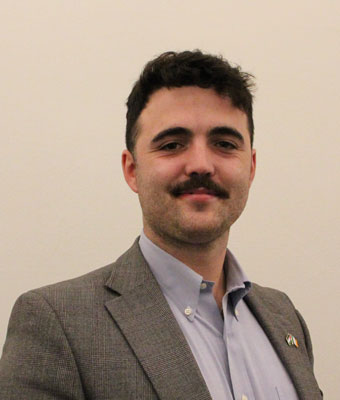
15. Deputy Barry Heneghan asked the Minister for Housing, Local Government and Heritage to provide an update on the role of accessibility officers in Dublin City Council and Fingal County Council; what oversight is in place to ensure future housing developments meet universal design standards; and if additional measures are being considered to improve accessibility in social and affordable housing projects. [12947/25]
Go n-éirí leis an Aire ina phost nua. Will the Minister provide an update on the role of accessibility officers in all councils, but particularly Dublin City Council and Fingal County Council? What oversight is in place to ensure future housing developments meet universal design standards? Are additional measures being considered to improve accessibility in social and affordable housing projects?
I thank the Deputy for raising this important question on the role of accessibility officers in Dublin City Council and the oversight mechanisms that are in place to ensure future housing developments meet universal design standards.
These are issues in respect of which he has long campaigned, even before he came to the Dáil.
Under the Disability Act 2005, each local authority is required to have at least one officer authorised to act as an access officer. Per the Act, the access officers in each local authority are responsible for providing or arranging for and co-ordinating assistance and guidance to persons with disabilities in accessing the services provided by the local authority. Each chief executive is responsible for the staffing and organisational arrangements necessary for carrying out the functions of the local authority.
Part M of the building regulations sets out the minimum statutory requirements that a building must achieve in respect of access and use. Part M aims to ensure that regardless of age, size or disability, new dwellings are visitable. The accompanying technical guidance encourages building owners and designers to have regard to the design philosophy of universal design and to consider making additional provisions where practicable and appropriate.
Housing for All provides the overall framework within which the National Housing Strategy for Disabled People 2022-2027 operates. Under it, we are committed to ensuring that affordable, quality housing is made available with an appropriate mix of housing design types provided within social housing, including universally designed units. Local authorities play a key role in the planning and provision of social housing in their areas and decide on the number and types of dwellings to provide based on identified need. The National Disability Authority is undertaking an economic and social evaluation of the universal design housing model. My Department will consider this analysis as soon as it is published.
Gabhaim buíochas leis an Aire. I thank him for noting that this is something I did at local level. I would really like to see it carried through. As he stated, an independent framework is provided for in section 63 of the Local Government Act. However, section 26 of the Disability Act 2005 places an obligation on public bodies, including local authorities, to have one accessibility officer. I have spoken to people in Dublin City Council and Fingal County Council. In that context, I want to know what enforcement mechanisms the Minister has to push local authorities to comply with the Disability Act 2005. As many accessibility officers work part time and do not have clear job descriptions, their work on disability inclusion is often treated as an add-on rather than the main focus.
Their work should certainly not be treated as an add-on; it should be focused on ensuring compliance with the Disability Act. We have had a number of these officers in my local authority in County Wexford. They have been absolutely excellent in ensuring that the relevant requirements are met. I will certainly reach out to the local authorities to remind them of the importance of this role. I will also remind them that the role should be focused on the terms of what the officers involved should be doing, that is, ensuring people with disabilities have fair and equitable access – not just equality but actual equitable access - and ensuring their rights are being upheld. This is a human rights issue.
The needs of people with disabilities are something with which I am particularly familiar. This is certainly a matter on which I will follow up. If the Deputy has any particular situations to highlight, he should provide the details to me and I will follow up on them.
It is great that the Minister will reach out to local authorities. I do not want to be Dublin Bay-North centred; this is for all local authorities. The main point is that we are already required by law to protect the rights of disabled people by ensuring there is equality, accessibility and non-discrimination. The Government has a pivotal role in providing local authorities with adequate resources to fulfil their obligations under the United Nations Convention on the Rights of Persons with Disabilities. This requires a significant increase in funding for local government. I called for that yesterday and I am calling for it again. Local government is what we need to be funding because those involved know the people on the ground and the people they are dealing with. I urge the Government to do that. It creates a more equal system where no region is left behind.
I certainly agree with the Deputy. As someone who has served on a town council and a county council, I am a great believer in local democracy. We will be strengthening the role of county councillors throughout the country. We will be setting up a task force soon which will report quickly to ensure that councillors have their role to be able to hold officials to account where they are not meeting the standards. While we have highly capable officials throughout this country, there are times when perhaps the focus is not put on those key equality issues that should be. I certainly intend to ensure that happens. We will look at the funding piece as well in the context of local authorities. I will certainly pursue this matter.
Question Nos. 16 and 17 taken with Written Answers.
Housing Schemes
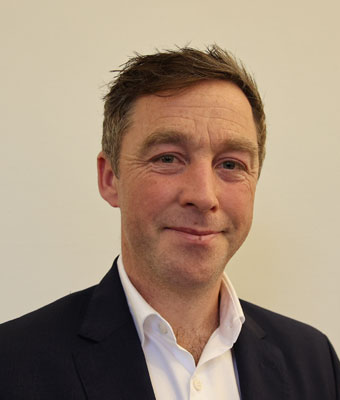
18. Deputy Rory Hearne asked the Minister for Housing, Local Government and Heritage his plans to reverse the decision to restrict eligibility and funding for the tenant in situ scheme; and if he will make a statement on the matter. [12897/25]
This question relates to the tenant in situ scheme, which we discussed last night. Will the Minister reconsider the framing and limitations he is putting on the scheme? While it is welcome that he is committing to continuing with the scheme, this will not actually involve a continuation of the scheme that has been in place because the new limitations will change the nature of it.
Tenant in situ acquisitions were introduced by Government in 2023 in response to a reported uplift in sales by landlords under the HAP and RAS schemes. Such acquisitions have been an important measure in preventing homelessness. The Government therefore agreed to continue the programme in 2025. My Department has notified local authorities about the extension of the programme. A circular setting out the arrangements will issue shortly.
The introduction of additional eligibility criteria for acquisitions this year is to ensure that priority categories such as tenant in situ, elderly and disabled persons and people exiting homelessness can benefit in an equitable manner from the second-hand acquisitions programme. Under revised arrangements for 2025, local authorities will receive a capital funding allocation for the acquisition of homes for priority categories, namely, tenant in situ, elderly and disabled persons and people exiting homelessness, as well as buy and renew acquisitions that tackle vacancy.
The provision of a capital funding allocation will help promote best practice in obtaining value for money and provide local authorities with the flexibility to respond to the needs and priorities locally within the categories of need being prioritised. The tenant in situ acquisitions continue to be supported and prioritised where other solutions cannot be found for the affected tenants. The arrangements for 2025 will ensure a more targeted and focused acquisitions programme.
While I appreciate that the Minister is committing to continuing the scheme, will he provide the evidence to back up why he is targeting it? Why is it not being provided on a general basis in order to give local authorities the flexibility and funding to respond to whatever household is facing eviction or homelessness? Why does it have to be only families? Why is the Minister saying-----
It is not only families.
I know, but prioritisation means local authorities will have to decide. Local authorities will have a certain budget and will be able to purchase properties and keep some people in their homes, but not others. We are in this system of prioritisation rather than a general ability to apply the scheme. That means restricting some local authorities in their ability to do it.
We had a discussion about this matter last night. I mentioned that there are 17 applicants on ice in Waterford at the moment. That is 17 families dealing with anxiety. It is also 17 landlords who are considering pulling out and going to the open market. This signal being sent from the Department is to dissuade applicants. Local authorities are not encouraging people to make applications, but rather the opposite. A clear message is being sent out to landlords to go to the open market and not to engage with the local authority on this. That is leading to an increase in the risk of homelessness. This needs to be addressed again.

We still have not had a proper rationale as to why the Minister has decided to curtail this scheme. Now that single people are excluded from it, and we know single people are not moving on the housing list at the speed we would like due to the shortage of available units, can the Minister outline what new measures the Government will be bringing forward to stop them from entering homelessness and emergency accommodation? This is a major issue.
It is not true that the tenant in situ scheme is being continued as it was. There has been a change to it. In the context of the removal of the funding for refurbishment, will the Minister reconsider this and, in the context of the circular that is to be issued, allocate local authorities funding for refurbishment under the scheme?
In fairness, I think I was supposed to respond before Deputy Hearne, so if he wants to speak after me again, I have no difficulty with that. With the tenant in situ scheme, we believe that criteria need to be applied to it. It was introduced as a temporary measure. It is there as a last resort to prevent people from going into homelessness. I responded to all of this last night. It is somewhat frustrating that no one from the Labour Party or the Social Democrats was there last night for my response. Perhaps the two Deputies are now learning that, due to the pressures in the Oireachtas, there are many times when we cannot be in the Chamber every single moment. Anyway, we will leave it at that.
I answered the question. Single people are not excluded. Putting the contrary out there is complete misinformation. I would be concerned that single people would not apply for the scheme because of the misinformation being put out there by both Deputies. There is flexibility in it. Like so many other schemes, there is a prioritisation being applied. That happens with local authorities for social housing schemes as well. We are prioritising families, older people and people with disabilities. I do not understand why the Deputies have an issue with prioritising the most vulnerable.
Drug Dealing
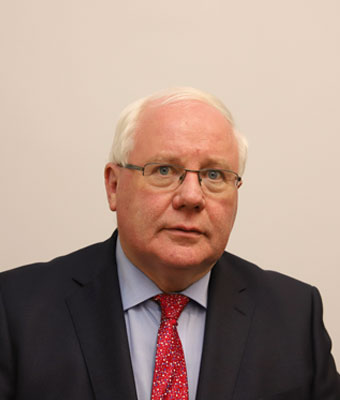
118. Deputy Brendan Smith asked the Minister for Justice how he intends to address the prevalence of drugs in rural Ireland and its consequences on community safety and criminality in rural areas; and if he will make a statement on the matter. [12683/25]
I wish the Minister and Ministers of State well in their new roles. I compliment An Garda Síochána, the Revenue Commissioners and other statutory agencies on the work being done locally and nationally to deal with the scourge of drugs. As we all know, drug addiction and drug abuse are very complex issues and we need a multifaceted approach that includes health services rehabilitation as well as the criminal justice system. I ask the Minister to outline any additional measures that will be implemented locally and nationally to deal with what is a growing and very concerning epidemic at present throughout rural and urban Ireland.
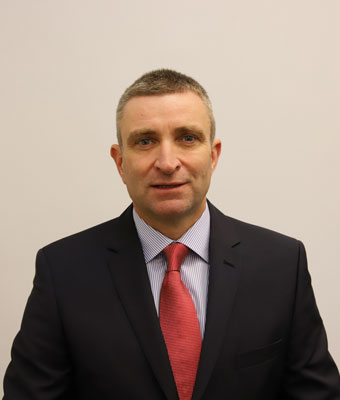
I thank the Deputy for his long-standing interest in this issue and for raising it. Tackling the scourge of drug dealing and targeting the work of organised crime groups, which inflict intimidation, violence and misery on families and communities in rural Ireland, is a top priority for the Government and our Department. As part of budget 2025, €36 million has been allocated to youth justice services. This investment will facilitate an increase in the capacity of youth diversion projects for the young people who need them the most, as well as increased supports for families and early interventions for children who may be at increased risk of becoming engaged in criminal activity. This approach is strongly supported by evidence from the University of Limerick. The projects are community-based, multiagency youth crime prevention initiatives that primarily seek to divert young people at risk of involvement in antisocial or criminal behaviour, or both. I was very pleased to announce two new projects last month, which will achieve the target set out in the Youth Justice Strategy 2021-2027 of full national coverage.
The Government is also fully committed to providing An Garda Síochána with the resources it needs to fight crime. This is reflected in the unprecedented allocation of €2.48 billion in budget 2025. That was a 27% increase in budget since 2020. We were delighted to witness 149 new gardaí passing out of Templemore two weeks ago and to see more than 200 trainees, the largest intake since 2019, enter the Garda College recently. This increase in Garda numbers is allowing for sustained investment in front-line policing and in specialist units such as the very successful drugs and organised crime bureau. An Garda Síochána continues to implement the enhanced national anti-drugs strategy in Operation Tara, the focus of which is to disrupt, dismantle and prosecute drug trafficking networks at all levels, namely, international, national and local, that are involved in the importation, distribution, cultivation, production, local sale and supply of controlled drugs.
The Department of Health leads on Government policy in the area of drugs, and this policy is guided by the whole-of-government national drugs and alcohol strategy, which sets out a health-led response to drug and alcohol use.
I thank the Minister of State for his reply. I look forward to more youth justice projects being rolled out. They are a great investment in our young people and a great investment in communities where there is particular disadvantage.
As the Minister of State will be aware, this issue needs to be addressed with the utmost urgency. It is really heartbreaking to listen to parents, siblings and family members who have lost loved ones through the use of drugs. They are victims of the people who are peddling drugs and causing untold hardship in every community. I recalled in this House previously that I listened to a mother who lost her son and husband. She outlined very clearly the role drugs played in their deaths. They were two young people. It is absolutely appalling. We also need more awareness campaigns, and not just for teenagers or young adults. Based on what I hear in weekly conversations, we need campaigns for every age group in the country. We are hearing daily of the prevalence of drugs in places we never thought they would be present. The Government has an obligation to provide safer communities for all and the one thing we hear about nowadays is that drugs are everywhere.
The Deputy represents a Border constituency and I re-emphasise there is ongoing close co-operation between An Garda Síochána and the Police Service of Northern Ireland to tackle cross-Border criminality, including through the mechanism of the joint agency task force established under the 2015 Northern Ireland Fresh Start Agreement. This task force is producing results and helping to keep people safe in really practical, visible ways through customs seizures, identifying victims of human trafficking and joint days of action against organised crime groups. North-South co-operation in policing and criminal justice continues to be a priority for the Government. The Minister met his counterpart in Northern Ireland, the Minister, Naomi Long MLA, last week to discuss how best to combat serious and organised crime on our island. We look forward to continued co-operation on that.
I thank the Minister of State and again welcome his emphasis on the need for intensified cross-Border co-operation because we know these evil criminals who are peddling drugs across borders. There should be no tolerance for people who are peddling drugs and passing around cannabis or a line of cocaine, whatever social stratum they come from. We have all listened to presentations where professionals working in this area outline the horrors inflicted on people through the use of drugs. We need to get that message out very clearly.
I fully appreciate that we need to support people who unfortunately become addicted through different facets of their existence and of their lives. I have helped some of those people, alongside local support groups, in my constituency of Cavan-Monaghan and across the north east. We need to resource the advocacy groups who are working with parents and with victims of the use of drugs. I know people who have recovered who are in gainful employment today, rearing their families and contributing to society. Thankfully, we have those instances where people with adequate supports can recover. We want to ensure in all policies that we do not lose sight of the fact that people can recover with adequate supports. At the same time, we cannot lose sight of the fact that criminal gangs and the people I mentioned earlier who are peddling death and destruction in every community in our country must be dealt with through a severe criminal justice system.
We have to be absolutely straight in the sense that Ireland at the minute is absolutely awash with cocaine and we are dealing with addicts who would previously have had an issue with heroin. We are probably talking about crack cocaine and that obviously leads to a particular set of issues particularly as regards crime and the impact on the wider community. I agree with Deputy Smith. He is probably talking about the family addiction support network that we have both engaged with and that deals with families who are suffering because of the issues caused by addiction. We could not have enough resources for youth diversion projects such as those being operated at The House in Cox's Demesne Youth and Community Project, Muirhevnamore and beyond at this time. We need to get absolutely real. We are talking a multiagency approach. We need to deal with the fact of ongoing criminality, the bad examples that exist that we are all aware and know of. We have seen examples of where the Criminal Assets Bureau has taken action. We need to see more of that. I have seen drug dealers who have had houses taken off them. It is just the cost of doing business and then they are back in action again. I have spoken to the senior Minister before about the chaos caused by drug addiction and by criminality and pointed out that we do not have the powers, whether we are talking about Tusla, the councils or right across to An Garda Síochána. There needs to be a real conversation. We need a real plan to deal with all of us.
Deputy Smith has referenced community safety and criminality in rural areas in particular, as has Deputy Ó Murchú. I reiterate that rural and community safety is not just a job for An Garda Síochána alone. It requires a multiagency, multisectoral and a whole-of-government response. Supporting the work of our national rural safety forum, the Department of Justice first published the Rural Safety Plan 2022-2024. That plan has a vision to ensure people in communities in Ireland feel safe and are safe in their homes, in places of work and in their local environment. It does so by identifying five key areas on which we will focus to achieve the overall goal. These are: community safety, burglary and theft, roads policing, animal crime and heritage crime. We are going to produce a second rural safety plan for 2025 to 2027 later this year and we can speak further about that in due course.
Question No. 119 taken with Written Answers.
An Garda Síochána

120. Deputy Albert Dolan asked the Minister for Justice the plans in place for Garda stations in east Galway that currently have no gardaí assigned to them; and if he will make a statement on the matter. [12713/25]
I raise an issue currently in Galway East around Garda stations that currently have no gardaí assigned to them. These buildings are lying vacant and empty. I mention three in particular, namely, Ardrahan, Eyrecourt and Ahascragh. These Garda stations currently have no gardaí assigned to them. Are there any plans in place to ensure they are staffed and that they serve the communities they were built to serve?
I thank the Deputy for his question. I assure him the Government is committed to ensuring that An Garda Síochána has the resources it needs to fight crime and a strengthened, well-resourced Garda organisation is central to this policy. Our budget for 2025 saw an unprecedented level of funding of €2.48 billion for the year which, as I referenced previously, is a 27% increase since 2020. I have also referenced that we had 149 new gardaí passed out two weeks ago and that we saw more than 200 trainees enter Templemore in the past number of days.
While the Garda Commissioner is operationally responsible for the allocation of Garda resources, we engage with him regularly to ensure our gardaí have the resources they need. We are informed that when allocating and transferring Garda members to and from any division, consideration is given to the commitments and undertakings outlined in the annual policing plan. Garda authorities have informed us that the four stations referred to by the Deputy currently have no gardaí assigned to them but it is crucial to note that these areas are still being actively policed. Gardaí attached to larger stations within the Galway county east community engagement area, supplemented by the Galway division roads policing unit, the Galway division crime unit and the Galway division drugs unit, respond to policing needs in the communities referred to. The divisional officer will consider the allocation of gardaí to these stations with the Galway county east community engagement area should additional resources be allocated to the Galway division. The new operating model is intended to release more front-line gardaí, provide a stronger focus on community policing and transform the delivery of policing services locally. It reflects best international practice and will ensure each division has the resources and skills to deliver a wide range of community policing and specialist services based on the demands in their area.
I really appreciate the investment that is being made in An Garda Síochána and I appreciate the drive that is currently taking place to recruit more gardaí. I welcome the fact that those rural stations mentioned will be considered in future allocations. What is important as well is that these are fine buildings and they have an opportunity to provide accommodation for young gardaí. A big issue is that if these buildings are not used, they will fall into disrepair and will not be maintained. I see it right across Galway East where these Garda stations were lived in. They provided a vital service and allowed people to embed themselves in the community. That community policing thing is something that is really important in our constituency because people want to know their local gardaí. They want to be connected to them and they want to know that when they need to access forms or paper work to be signed, they can do so. I really appreciate any commitment that can be given to Galway East Garda stations.
The Deputy is correct to raise the issues that impact on his constituency. There is no doubt that the three of us here on the Front Bench are taking note of what he is saying and we will convey his views to the Garda Commissioner. To reiterate, a number of years ago, this House passed a major Bill, which means the entire operational side of An Garda Síochána is in the gift of the Garda Commissioner and his office. It is he and his team who decide upon the allocation of manpower within each Garda division and the number of gardaí to be allocated right across the country. That is something into which we do not have direct input. As a public representative, the Deputy is entitled to, and is right to, raise the concerns he and his constituents have. At the end of the day, we are all practising constituency politicians also and we want to see our own areas policed effectively. That is why the top line job of Government is, which is set out within the programme for Government, that we want to drive recruitment. We are doing everything we can to do that. I have outlined to the Deputy what we are doing. The programme for Government sets out very ambitious plans to get more men and women into An Garda Síochána, to have them attested and policing our front lines and to get them out into our streets in our towns and cities and across our rural communities.
I appreciate it is the Commissioner's role to allocate the divisional split across the country. One idea the Government could consider for the future is, similar to how in Galway County Council we have our rural library scheme whereby people can access books in their community on a weekly basis, we should have a community policing service where a van would go around to every community in Galway East and other constituencies. What would happen is that people could use this at a set time, they would know it would be there and they would be able to access forms, get their passport stamped and get relevant documents sorted.
This service is not currently being provided in many rural stations. In east Galway, people currently have to travel to Athenry or to another constituency like Oranmore to access it. If this service was in communities where people knew about it, they would access it. I would appreciate the Minister's consideration of this. Maybe it is something he could raise with the Commissioner as well.
This is absolutely something we can raise in our next discussion with the Garda Commissioner and his team. In my own experience, I have seen many community outreach and engagement activities by An Garda Síochána so it is not something beyond their capabilities. I do not see any reason why it cannot be done and we will certainly offer that as a suggestion.
Questions Nos. 121 and 122 taken with Written Answers.
Question No. 124 taken with Written Answers.
125. Deputy Peter 'Chap' Cleere asked the Minister for Justice the number of gardaí currently assigned to stations in counties Kilkenny and Carlow; and if he will make a statement on the matter. [12596/25]
I congratulate all Ministers on their new elevations and I wish them well in their posts.
My question today specifically relates to the Kilkenny-Carlow constituency and the number of gardaí currently assigned to stations in both of these counties.
I thank the Deputy for his question. The introduction of the new garda operating model, which has been rolled out in the Kilkenny-Carlow Garda division, will provide more front-line gardaí, increased Garda visibility and a wider range of policing services for people in Carlow and Kilkenny.
It is important to emphasise this supports greater service delivery across the division through four functional areas, one of the most important being community engagement. This will allow for a greater, more consistent focus on community policing in all divisions.
I am informed that as of 31 January 2025, the number of gardaí assigned to Kilkenny and Carlow is 313 members. There are also 52 garda staff assigned to the division, an increase of 92% since 2015. Garda staff working alongside gardaí, carry out vital roles to increase availability of gardaí for front-line duties.
It is also important to state that a total of 98 vehicles are allocated to the Kilkenny-Carlow division, including 38 marked cars, 37 unmarked, 19 vans, two motorcycles, one 4x4 and one other SUV or minivan used for prisoner transportation.
As the Deputy can see, considerable investment is being provided. I am aware from speaking to him the importance of having greater Garda visibility on the ground in Kilkenny and Carlow. The way we will achieve this is by getting recruitment up in An Garda Síochána. We must try to get more people to join An Garda Síochána. It is a great career and I am sure there are many people in Carlow and Kilkenny who would consider it as a career. We as TDs have an obligation to encourage people to consider a career in An Garda Síochána because unless we get the numbers, we will not be able to provide the level of community and general policing we wish to see.
The recent drive for new entrant Garda numbers was hugely successful and very welcome. My appeal to the Minister is that when these filter down through the system, that as many as possible are filtered to rural towns and villages. We have 18 Garda stations in Kilkenny and eight in Carlow, operating at varying levels. One station in my own town of Graiguenamanagh, which is a substation of the Thomastown office that also covers Goresbridge, a couple of years ago had two sergeants and ten gardaí. At present, we have only one sergeant and four gardaí in that area.
In the town of Goresbridge, which is just down the road from me, the Garda station opens for one hour, twice every eight days. We are talking about community policing and while I absolutely agree with the Minister with regard to getting recruitment up, we need visibility and people on the ground. I implore him to encourage as much filtration down the country as possible.
I am interested in what the Deputy said about the reduction in numbers in Graiguenamanagh and other areas in Kilkenny. I will keep a close eye on this. When people are attested as members of An Garda Síochána, the Commissioner decides where they should be allocated. It is extremely important there is fair allocation throughout the country. It is not an operational matter for me and I cannot get involved in that but I hear what Deputy Cleere is saying loud and clear in respect of the need to get more new recruits into our rural areas.
We could see an increase in recruitment to the force. On 10 March, 201 new recruits started in Templemore. This is the highest we have seen since 2019 and is an indication that numbers are increasing. The recruitment campaign run throughout February was very successful. We had 6,784 applicants and I hope to see good numbers coming through. However, I hear the Deputy loud and clear on getting more gardaí on the ground in Kilkenny and Carlow.
I welcome the news of 200 new entrants. We would be more than happy to accept those into Carlow and Kilkenny in one blow if the Minister wanted to use it as a pilot scheme.
In all seriousness, I am encouraged by the recent recruitment campaign and that brings peace of mind, especially for our older and more vulnerable people in communities right across the constituency. They love seeing gardaí on the ground and that visibility on the beat. Whenever there is an event and gardaí are sourced, people feel safe. It is our duty to make sure we continue to support those Garda stations.
Finally, a couple of Garda stations are currently not operational. If the Minister could have a look at that to ensure all 18 Garda stations in Kilkenny and the eight in Carlow have some sort of physical presence on a regular basis, it would be much appreciated by the local communities they represent on the ground.
Garda properties are valuable resources. If we have them, we should use them for the benefit of the State or the benefit of the public in having a Garda presence there. I will raise that issue with my Department.
The Deputy also made a very valid point about how the public want to see members of An Garda Síochána on the ground. We sometimes take that for granted. In many countries, communities do not want to see their police force on the ground. In Ireland, it is completely different. Every Deputy will say that when they are at a public meeting on policing, the one thing the public wants to see is more gardaí on the street. That is a reflection of the good relationship the Garda has with the public. It is something we must cherish and we must ensure we preserve it because if that relationship is lost, it will be very hard to get back. We are in the fortunate position that we have such a good relationship and I am committed to improving it, assisting the Garda and keeping that level of public support going.

123. Deputy Matt Carthy asked the Minister for Justice his plans to increase the training intake capacity for An Garda Síochána; and if he will make a statement on the matter. [12801/25]
Further to the previous debate, I hope the Minister will accept what I consider to be an absolute fact and that is we now have a clear and ongoing crisis in respect of Garda numbers and in particular Garda visibility within our communities. That crisis will not be addressed unless we substantially increase the training uptake capacity for An Garda Síochána. What measures does the Minister intend to apply in order to achieve this?
It is important to remember we have civilianised much of the Garda force. At present, we have approximately 14,200 attested members of An Garda Síochána and approximately 3,500 civilian members who also work for the force.
In recent years, as a result of civilianising or using civilians for tasks that were previously performed by the gardaí, we have managed to get approximately 900 gardaí back out on front-line duties. This is one mechanism but we need to be smart in terms of ensuring we can get more attested gardaí out on the streets. We do not want to see them in offices or courtrooms; we want to see them out on the ground.
Regrettably, one of the consequences of having a very successful economy is it is hard to attract people into certain jobs. There is some change coming, however, in this regard. People are now becoming aware of the fulfilment they can get from a career within An Garda Síochána. As I mentioned in response to Deputy Cleere, the recruitment process that took place throughout February has been successful. A total of 6,700 people applied to An Garda Síochána, which is a good sign.
As I said earlier, on 10 March, 201 new recruits started in Templemore. That is the highest number we have seen since 2019 and is an indication we are getting numbers back up to what they can be. Templemore can take 225 recruits through each module and we could have four or five of them. Many gardaí can be trained in Templemore each year. I will also consider other mechanisms, however, and I have asked for a report from the Department in respect of how we can train gardaí elsewhere.
This is not in any way seeking to question or undermine the appropriateness of Templemore. That will always remain. However, we need to consider whether there are other mechanisms for training people within An Garda Síochána that do not require them to spend all that time in Templemore. They are issues I am considering. However, I am open to any innovative ideas Deputy Carthy has as to how we can get the numbers up because, as he knows, it is hard to recruit people. We need to get people into An Garda Síochána and I would encourage the Deputy, and in fairness I know he will do this, to try to encourage people to join because it is a fulfilling career.
It absolutely is. A career in An Garda Síochána has the potential to be a very fulfilling life experience. However, the difficulty is not people applying to join An Garda Síochána but, with due respect to the Minister, it is the intake capacity and the experience of some people who apply but who do not make it into Templemore - in other words, they have a negative experience which they convey to others that would in time prevent them from following suit. Some 750 recruits left Templemore in 2023. Last year, 2024, the number was 631. The strength of the force at the end of 2024 was just about 14,000 which is only 200 more than at the start of the year and 500 less than when Fianna Fáil and Fine Gael formally came into government in 2020.
I note that in recent weeks the Commissioner said that it will not be possible to meet the Government goal of 1,000 new members this year and it is likely to be as low as 800. The Minister is on record as saying that he wants to see an additional 5,000 gardaí by the end of this Dáil term. It is incumbent on him to say, given the current parameters, how the hell he is going to make that happen.
I thank the Deputy. I am conscious of the intake capacity into Templemore. As I said, if we can get 225 in each time, they would be very good numbers. Recently, we have been getting up to 201 and we are doing very well.
The Deputy mentioned the numbers of attestations for 2023 and 2024. The 2023 number was higher than 2024. That was because in 2023 there were five attestations as opposed to four in 2024. Sometimes there can be an alteration in figures because of the fact there were more attestations in a particular year.
I have said that my objective is, and it is in the programme for Government, to secure the recruitment of 5,000 gardaí during the course of this Government, over five years. It is an ambitious task. I am seeking to achieve it. Part of the method by which I am doing it is through the recruitment campaign. The first recruitment campaign has been a success. The second way I am seeking to do it is to try to encourage people to join. The third way we are seeking to do it is that we have improved the training stipend for gardaí when they are in Templemore. We have increased that and we will consider increasing it further. Many steps are being taken.
We also need to be honest. There are consequences to operating in an economy with full employment. People have lots of options. However, we have to get people into An Garda Síochána.
Government representatives have increasingly cited the increase in population as a rationale behind the increase in crime figures. For example, earlier this morning the Minister cited it as an explanation for the increase in the number of people offending while out on bail. Yet, we have a Government target that has 15,000 members of An Garda Síochána, a target that is nowhere near being met at the moment. Surely the Minister accepts that target is not enough considering the increase in population and what are very clear demands from communities all over the State, who do not see enough gardaí within their communities at present.
At some point, will the Minister give the Dáil a comprehensive report and update on the work of the Garda recruitment training capacity planning group? He mentioned some aspects of potentially expanding Templemore or changing the way it functions but have there been any real deliberations in terms of the potential of opening a second Garda training college? That is something that I think would be very appropriate and much needed.
I thank the Deputy. I will deal with the last point first. A recruitment and training capacity group has been established to support the achievement of increased recruitment in An Garda Síochána. The group is due to report to me in mid-2025. It is looking at a range of issues, including how to ensure that there is the training capacity to meet the Government's ambitious recruitment targets for the next five years. One of the issues that I know it will look at is whether or not an alternative training college or institution would be of benefit in trying to get more gardaí in. That will, to a large extent, depend on the level of interest we get from members of the public seeking to join.
In regard to the Deputy's comments about the population, of course, that is going to require there to be greater policing. As the population increases and as we create more criminal offences here in this House, there needs to be greater numbers of gardaí. However, we also need to look at innovative methods. We should not underestimate the role being played by civilians within the force. For too many years, gardaí were doing jobs that could be done by civilians, such as HR, management and accounting jobs. Those are now being done by civilians. The benefit of getting civilians in to do these tasks is that we get more members of An Garda Síochána out on the streets. As I said, because of increased civilianisation over the past number of years, we have seen up to 900 gardaí get out onto front-line duties. That is the approach. We need to look at innovative measures and to try to recruit more numbers. I still have a target of 15,000 attested members in the force and a target of trying to recruit 5,000 members during the course of the Government.
Domestic, Sexual and Gender-based Violence
126. Deputy Cathy Bennett asked the Minister for Justice the number of domestic abuse refuge spaces in the State; his target for the delivery of additional refuge spaces by year; and if he will make a statement on the matter. [12811/25]
I congratulate the Minister on his new post. Will the Minister outline the current capacity of domestic violence refuge spaces and his intentions to increase this to an adequate standard?
I thank Deputy Bennett. I welcome the fact that she has asked me a question related to domestic and gender-based violence. It is an extremely important issue. My predecessor did much excellent work in that area. It is an area that I am committed to working on as well. The Deputy will be aware that there have been a number of developments in Ireland in recent years in respect of combating domestic violence, for instance, a key priority for me and for Cuan is the development of domestic violence refuges throughout the country but in particular in the Cavan and Monaghan region. Cuan is working with the key stakeholders, including Safe Ireland, the Department of housing, Cavan and Monaghan County Councils and the Housing Agency to progress the development of an eight-unit refuge in the region which will also include community-facing ancillary support services. Cuan has worked with Safe Ireland to fund and resource a project manager post and a change manager post in addition to supporting the organisation to form the local partnership that is needed to drive the project. Last November we welcomed the start of a site selection process for this refuge. That process is ongoing. Developments will also include safe home accommodation as both I and Cuan are aware of the need for services to be accessible to those living in rural areas.
It is important to point out that Cuan has been providing funding to Safe Ireland in Cavan and Monaghan. Last year funding of more than €230,000 was provided to Safe Ireland in Cavan and Monaghan, which operates a support service delivery, delivering advocacy, accompaniment, outreach support and information regarding options. In Monaghan, the Castleblayney area is supported by a number of Cuan's funded services, including the national 24-hour domestic violence helpline, which is operated by Women's Aid. In addition, emergency refuge accommodation services are available in the neighbouring town of Dundalk. Part 8 planning permission has been granted for the development of a new domestic violence shelter in Dundalk, comprising 16 units and six replacement units.
I am delighted to hear that the Minister is committed. I hope he will be able to make the necessary changes. The Government delivered seven spaces by the end of 2023. It delivered 12 in 2024. The language I have heard the Minister use referring to 54 units under construction, or due for refurbishment this year, suggests to me a net increase of less than 54. In the best case scenario that would mean he plans to deliver nearly 70 next year.
However, it is also the case that this target seems ambitious only in terms of how low the bar has been set. The Istanbul Convention suggests Ireland should have in excess of 500 spaces. Is the Minister confident in meeting the 2026 target? Does he accept that it must be an interim target?
We should look at where we are. At present, we have approximately 159 refuge units. As I said, another 54 are set to be either under construction or are due for refurbishment in 2025. This will bring the total number of units, including those under construction, to 213 by the end of the year.
In addition to the development of refuge spaces, Cuan and I are committed to delivering additional safe homes which provide appropriate accommodation in certain circumstances. Cuan is concluding a review of domestic violence accommodation delivery and development and is working closely with my Department and the Department of housing to look at what measures need to be accelerated in order to meet the target by the end of the strategy.
We are seeking ways to streamline processes and speed up delivery of domestic violence accommodation. The target is 280. That is the ambition. I hope to be able to meet it. I am committed to trying to meet it. Obviously, we are doing as much as we can to ensure that we can get there.
I again put it to the Minister that 280 is well below the 500 needed under the Istanbul Convention. A number of weeks ago, I sought a Dáil debate on the provision of these services in my constituency of Cavan-Monaghan. The Minister will be familiar with the fact that the people in our community are among those without any refuge spaces at all. It is a deep concern that the current ambition of the Government is that the people of both counties will continue to go without. This arises directly as a result of not only the Government's lack of delivery but also the Minister's lack of ambition. The Minister has set an inadequate target. As a result, the people in Cavan and Monaghan will bear the brunt of inadequate capacity. Deputy Jim O'Callaghan is the responsible Minister. Will he commit to opening a refuge in Cavan and another in Monaghan?
We need to be clear. The previous Minister for Justice committed to ensuring that there would be at least one refuge in every county. In January, Cuan confirmed to me what the Minister has repeated here, namely that rather than delivering one refuge in both Cavan and Monaghan, the plan has changed to one centre between the two counties. That is not good enough, particularly when we consider the circumstances that would lead somebody needing to enter a domestic violence refuge. If a person lives in Carrickmacross and the centre is in Belturbet, the distance between the two is 67 km. That is further than the distance from this House to Navan. That is not acceptable, particularly in view of the disruption that arises in the context of school life. The two counties we are talking about have virtually no interconnectivity in terms of public transport. This must be taken into consideration in light of, as I say, the emergency situations in which people may find themselves. Will the Minister revert to the commitment given by his predecessor not to deliver a centre for between Cavan and Monaghan, which is taking far too long, but, rather, to deliver one for Cavan and one for Monaghan? The latter is the minimum that is required.
My priority is to get a domestic violence refuge for the Cavan and Monaghan region as quickly as possible. The Deputy is looking for two. We need to get one in there, I would have thought, immediately and promptly. That is what I am working on. As stated, a lot of work is being done with key stakeholders in terms of progressing the development of an eight-unit refuge for the region that would include community-facing ancillary support services. I am committing to putting one refuge in the region.
I note what Deputy Bennett said about the Istanbul Convention. I would be interested in discovering what is the level of compliance with the requirements of the Istanbul Convention in other countries. I would be surprised if they were all in compliance.
So, because they do not do it, we do not do it either.
We are trying to do it. We have a target of getting up to 280. That is the target I am seeking to achieve. I understand the concerns of Deputies Bennett and Carthy regarding the fact that there is not a refuge centre in Cavan-Monaghan. The Minister of State, Deputy Niamh Smyth, has spoken to me about this. Deputy Brendan Smith has done so as well. This is something I want to expedite. I want to ensure that there is one there.
Once we get one in the region, the Deputy can start advocating for others. However, I cannot give her a commitment at present that there will be one in each country. I need to get one into the region.
The commitment was already given.
An Garda Síochána
127. Deputy Naoise Ó Cearúil asked the Minister for Justice if he will provide an update on the progress of section 50 regulations required to open up and facilitate the transfer of a PSNI officer to the ranks of An Garda Síochána; and if he will make a statement on the matter. [12512/25]
We have seen an exceptional Garda recruitment campaign recently in February. I commend the Minister and An Garda Síochána on this. However, there are ready-made police officers and there is a barrier to them becoming gardaí. Can the Minister provide an update on the progress of section 50 regulations required to open up and facilitate the transfer of a PSNI officer to the ranks of An Garda Síochána and will he make a statement on the matter?
As the Deputy will be aware, the Policing, Security and Community Safety Act, which was enacted by the Houses of the Oireachtas last year, is yet to be commenced. I intend to commence it shortly. The new Act continues to honour Ireland’s commitments under the existing 2002 agreement between the Irish and British Governments on police co-operation. When the Act is commenced, section 94 will allow the Garda Commissioner, at the request of the Chief Constable of the PSNI, to appoint a member of the PSNI as a member of An Garda Síochána on secondment for a period of not more than three years.
My Department is preparing regulations to facilitate, in line with the 2002 agreement, serving PSNI members who have served at or above the rank of inspector for a minimum period of two years to be eligible to enter competitions for appointment to the rank of superintendent in An Garda Síochána. These regulations will also provide that serving PSNI members who have served at the rank of superintendent or above for a minimum period of two years will be able to enter competitions for appointment to the rank of chief superintendent or assistant Garda commissioner in the Garda Síochána.
The Deputy raised specifically section 50 of the Act. In order that other Members will be aware, section 50 provides for the continuation of certain powers of the Commissioner to appoint persons to ranks below superintendent as currently set out in section 14 of the 2005 Garda Síochána Act. Section 50 will ensure the Commissioner can continue to exercise these functions, while also ensuring the continuation of service of any person appointed under the current provisions.
There is currently no provision for the direct transfer or promotion on a permanent basis of serving PSNI officers at the rank of sergeant or below into An Garda Síochána. This position will, in consultation with my United Kingdom and Northern Ireland counterparts, be kept under review. I thank the Deputy for the question.
While I appreciate that the Minister will be consulting with his counterparts in the UK, at a time when we have an acute shortage of gardaí and require additional officers, there are members of the PSNI who wish to become gardaí. They are living in the Republic and commuting to the North. They are ready-made police officers ready to act.
There are many such members. One in particular who I am aware of has been writing to and speaking with the PSNI, An Garda Síochána, the Department of Justice and the Policing Authority for over ten years seeking a pathway of transfer from the PSNI to An Garda Síochána. We have an invisible border on this island. This is a situation where consultation further down the line is not sufficient for existing members of the PSNI who wish to become members of An Garda Síochána.
The Deputy makes a valid point. We are at a stage where we are trying to recruit as many members into An Garda Síochána as we can. The Deputy has indicated that there are serving PSNI officers living in this jurisdiction who would like to become members of An Garda Síochána. At present, their difficulty is that in order to become a member of An Garda Síochána through the standard route, they would have to go to Templemore. That would involve them having to give up their jobs in the PSNI, which would be extremely difficult. I appreciate the significance and import of what the Deputy is saying.
Section 50 states that the Garda Commissioner may appoint, in accordance with such matters as may be contained in regulations in relation to such appointments, persons to any rank below the rank of chief superintendent. I will consult with the senior management in An Garda Síochána. I would like to know if there are many members of the PSNI living in this jurisdiction who would like to transfer over. Obviously, there would have to be certain requirements in order for them to do so. I would have thought that if those requirements can be met, it would be a useful method of trying to increase numbers on the force. I will consult with the Commissioner and my Department in respect of the matter.
I thank the Minister. I appreciate him looking into this matter in more detail. I will work with him outside the House in respect of the case to which I refer.
The number involved is not huge. To my knowledge, it is in the teens. These are people who are working in the PSNI. They have spent a lifetime in policing and have a considerable amount of experience that could contribute a great deal to both community and specialised policing in this jurisdiction.
I will work with the Minister on the particular case to which I refer. I would appreciate it if he would bring it to the attention of the Garda Commissioner. I would also appreciate it if we could look at a more formalised pathway in the future to allow members of the PSNI transfer to An Garda Síochána and to allow members of An Garda Síochána to move to the PSNI, where appropriate, as well.
Another relevant point is that there is nothing stopping people in the North who are not in the PSNI from applying to become members of An Garda Síochána. I suspect the terms and conditions of An Garda Síochána are more favourable than those relating to people who join the PSNI. That is something we need to focus on. People from the North are welcome to apply to seek to join An Garda Síochána.
I will go back to the Commissioner and I will also discuss the matter with officials in my Department. I would be interested to know, because it is not a statistic we have, how many PSNI officers are living in the South who would be interested in joining An Garda Síochána. The Deputy indicated that one he knows has been writing to various entities. I would have thought individuals should write to express an ambition or desire to join An Garda Síochána. I would think that would prompt a response from Garda management.
Departmental Policies

128. Deputy Barry Ward asked the Minister for Justice further to Parliamentary Question No. 507 of 4 March 2025, his views on whether the rights of the child and the best interest principle are met by mandating the consent of both parents in cases (details supplied); if the current position can be reviewed; and if he will make a statement on the matter. [12510/25]
This is a matter I raised with the Minister on 4 March by way of a question for written reply. It relates to the mandated requirement for two parents to give consent for certain processes or assessments, even passport applications, in circumstances where one of the parents is either absent or estranged from the family. It can be very difficult for both parents to sign those forms. This disproportionately affects women. Can this be reviewed?
This is an important question. The issue to which it relates is sensitive in terms of how it can be dealt with. The guardianship of infants is set out through regulation and law under the Guardianship of Infants Act 1964. A significant modernisation of the law in this area was brought about in 2015, with the enactment of the Children and Family Relationships Act 2015. This legislation extensively amended the Guardianship of Infants Act 1964. The amended Act aligns with Article 42A of the Constitution, which requires that provision be made by law that the best interests of the child shall be the paramount consideration in the resolution of all proceedings concerning the guardianship or custody of, or access to, any child.
Section 31 of the Act sets out a wide range of factors that the court is required to take into account when determining the best interests of the child in such proceedings. In cases where difficulties arise from the absence of agreement between parents or guardians, for example in relation to health or education issues, or passport issues as the Deputy mentioned, section 11 of the Act allows for an application to be made to the District Court for a direction on a question affecting the welfare of the child.
More generally, my Department is leading a programme of family justice reform as set out in the first family justice strategy, which focuses on the needs and rights of children and providing the assistance parents need when making decisions that affect all of the family. The actions outlined in the strategy stress the centrality of children to many family justice matters and the need to ensure that their best interests are considered, in conjunction with their constitutional rights. This will be achieved through the implementation of over 50 actions across nine goals, with timelines for delivery up to the end of 2025. A number of these actions have already been completed and I would be pleased to provide further updates to the Deputy on this work as he requires.
I am very conscious of what the Deputy has said about the difficulty that can arise in respect of where one parent is not involved and there is an obligation for permission from both parents. That can create significant difficulties, particularly when no involvement from the other parent is ongoing in the child’s life. This is a sensitive issue. I would be interested to hear what the Deputy has to say in respect of proposals. I will consider whatever he does have to say.
The Minister hit the nail on the head with what he said at the end. Much of the answer relates to the situation set down in law where there is an agreement between parents but that is not the circumstance I am envisaging. For example, if a child needs a medical or educational assessment or the renewal of a passport and one parent is simply not present, it is not a matter that the parents do not agree - one could almost assume that if a parent were present, there would not be a difficulty - it is the notion that a parent, in order to get their child’s educational or psychological needs assessed, requires the consent of a parent who may not even be in the jurisdiction. This is hugely problematic. The answer cannot be that they have to go to the District Court every time to make an application to overrule that. I am not even sure if the legislative framework covers that in circumstances where the specific scenario is where there is disagreement between the parents and, presumably, where both parents would be represented in an inter partes application. It feels like there is a bureaucratic block here and a scenario which has not been envisaged in the context of the legislation. A review might bring about a more functional system in relation to parents in these particular circumstances.
The Deputy identified a good point in the context of where a child just needs a medical or educational assessment. If it is the case that the consent or agreement of both guardians is required, that can be very problematic. I accept the validity of what the Deputy says. There is the option available under section 11 of the guardianship Act that allows for an application to be made to the District Court, but parents should not be put to that expense, inconvenience and the level of time commitment involved in order to get a direction in respect of the welfare of their child.
I will have a look at the legislation. I would appreciate if the Deputy would do so too. If there is a minor amendment that is required, I would be happy to sit down and discuss it with him if he would like to introduce it by way of a Private Members' Bill. I would happy to talk to him in respect of that. Outside of changing the law, we are limited in what we can do in trying to get agreement or trying to ensure that the consent of both parents is not required. I suspect that does require legislative change. I would be interested in talking to the Deputy in respect of what that change could or should be.
I appreciate that commitment. I will engage with the Minister. I do not know if this is something that is applied in a way that is intransigent by different State agencies. I do not know the answer to that. I also do not know if it is the case, for example, that a parent, now in the situation where a child needs a particular assessment goes to the District Court, can make that application in circumstances where he or she could not serve notice on the other parent of the application being made because there is no contact whatever. We know there are families where one parent is estranged. This specifically, and much more commonly, affects women who are left looking after a child in the absence of the father rather than the other way around.
I appreciate the Minister’s commitment. I will engage with him and hopefully we can come to a solution to make this work better.
If it is the case that the matter has to go to court and the consent cannot be obtained, for example, where the other parent has no involvement in the child’s life, I would have thought that a District Court judge would take that into account and recognise that there has to be some practical solution to the application that is being brought if the parent who is minding the child needs to get the authorisation of the other parent or guardian in order for some assessment to be carried out if that person is not available or is simply not interested in the child. I would think that most District Court judges would adopt a very sensible approach to that and recognise that the application being brought should be consented to. However, we should try to make life easier for people in difficult situations like that. The method for us to make life easier for them is to try to remove any legislative obstacle that exists in respect of it. I will look at the legislation and discuss it with the Deputy.
Question No. 129 taken with Written Answers.
An Garda Síochána
130. Deputy Erin McGreehan asked the Minister for Justice the number of gardaí currently assigned to stations in Louth; the number of these deployed for tackling drug crime; and if he will make a statement on the matter. [12522/25]
This question relates to the number of gardaí deployed at stations in County Louth and, in particular, the number deployed to tackle drug crime.
I thank the Deputy for raising the question on the numbers of gardaí in County Louth. I have been advised by An Garda Síochána that the numbers deployed tackling drug crime specifically cannot be shared for operational reasons. I commend An Garda Síochána on its excellent work yesterday or the day before when it apprehended a very large seizure of cocaine that was illegally and unlawfully brought into the country. That is a continuation of very considerable success that the Garda has had in recent years.
There are currently 14,167 Garda members across the country, an increase of around 10% since 2015. Of this number, there are 364 Garda members assigned to stations in County Louth. As I said, for operational reasons the Garda does not want me to identify how many are working in the area of drug crime. However, I commend An Garda Síochána on its recent success in Louth, where it seized drugs with an estimated value of €230,000 in Dunleer, and an estimated value of €1.9 million in an operation across Louth and Dublin. There is considerable work being done by An Garda Síochána in respect of apprehending criminals who are bringing drugs into the country.
The work is ongoing in respect of what is happening in the Deputy's constituency of Louth. It is important that the Garda be resourced in respect of its constant campaign against drug trafficking. It has had considerable successes recently. Some of the larger cases going on in the Central Criminal Court relate to large amounts of drugs that have been seized by An Garda Síochána and that were being unlawfully imported into the country.
Is féidir teacht ar Cheisteanna Scríofa ar
www.oireachtas.ie
.
Written Answers are published on the Oireachtas website.