School Curriculum

1. Deputy Darren O'Rourke asked the Minister for Education if she is aware of the concerns raised by school leaders in relation to the accelerated roll-out of senior cycle reform; if she accepts that the accelerated timeline does not allow enough time for essential preparations; and if she will make a statement on the matter. [8924/25]
As this is the first ministerial questions session, I wish the Minister and Minister of State the best of luck in their roles. This is a very important time and I hope we can make progress.
Is the Minister aware of the concerns raised by school leaders with regard to the accelerated roll-out of senior cycle reform, if she accepts that the accelerated timeline does not allow enough time for essential preparations and if she will make a statement on the matter?
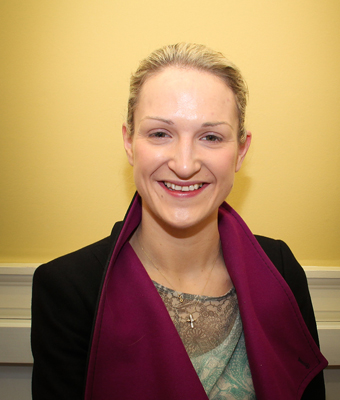
I look forward to working with all colleagues, particularly in this area. I thank the Deputy for asking this question as it is an important and live issue, in particular for students who will sit the leaving certificate in the years ahead. It is for this reason that, in the last few weeks, I have met nearly all the unions and representative bodies representing teachers, principals, schools in general, boards of management, parents and, importantly, students. These conversations were not just about senior cycle reform. What was clear when it came to senior cycle reform is that we are all on the same page and want to ensure we have a senior cycle that is modern, fit for purpose and, above all, prepares our young people for the world we live in today.
What is also clear and what we all agree on is that we need to support our teachers and schools in rolling out that programme. I am absolutely committed to continuing the programme of reform of senior cycle to ensure that students benefit from up-to-date curriculums, more diverse skills development and assessments and that we also reduce stress levels. I am also absolutely committed to working with schools, school leaders and teachers in that regard.
The world is changing rapidly and it is essential for all of us to properly equip students to succeed in this changing world. The approach to senior cycle redevelopment is about collaboration and engagement with our stakeholders and partners in education to try to deliver this. That engagement commenced back in 2016 and there has been detailed engagement and consultation since then. In 2023, it was announced that the first tranche of two new subjects and seven revised subjects would be introduced in schools in September of this year. Therefore, the first class taking these new and updated subjects will complete their leaving certificate in 2027.
The introduction of the new assessment models will help students to develop new skills and reduce the amount of pressure on students. This builds on what is already in place across 28 of the 40 curricular leaving certificate subjects. This is not new when it comes to the additional assessment component but we are trying to modernise and ensure that it applies to the vast majority of subjects.
I welcome the fact that the Minister has met stakeholders. It is important that she meets all of the stakeholders in the sector at the earliest opportunity. If she has met them, she must surely have heard their concerns. I have not heard that reflected in her response thus far but they will have detailed them to her. They relate to a range of areas, principally capacity and preparedness, whether in terms of the development of curriculums, the readiness of schools in terms of IT, laboratories and the capacity to take on these changes. The Minister said there is a commitment, as I believe there is, to make this happen in the right way but that takes time and capacity. Is she hearing that from the stakeholders and, if so, how is she responding?
I think our stakeholders have outlined a number of things clearly. First, they want to ensure teachers feel appropriately trained and equipped because they want to ensure they are giving their best and students get the best outcomes. A number of training programmes have been developed and delivered already and my intention is to try to intensify that and provide even more supports and resources for teachers.
Second, it is about ensuring schools and equipment, particularly for the science subjects, are up to speed. While schools have been given a science implementation support grant, which means that some schools are getting funding ranging from €13,000 to €24,000, with our DEIS schools receiving an additional 10% uplift, I am looking to see if we can provide more to ensure our schools have the equipment they need. We have other programmes, in particular drama, film and theatre studies, where schools have to get cameras, lighting and audio, computer and staging equipment. All of these elements are being provided.
Third, there is an issue or concern around artificial intelligence. AI is here and the technology is here to stay but teachers want to know how to use it and incorporate it into how students are working, as well as how they should assess it. There is guidance in place but my Department is working with the National Council for Curriculum and Assessment, NCCA, to ensure we have even more guidance prepared for our teachers.
We have spent more time identifying those issues than on spelling out exactly what the timeline will be between now and September for teachers, in the main, and, related to that, for school communities, parents and, most important, students embarking on this new programme from September, if that is the timeline. That detail has to be spelled out to school communities and school leaders at the earliest possible opportunity. If that timeline is not there or there is no schedule to roll it out for this September, the pause button will need to be pressed. I am not convinced from what I have heard so far this morning that such a necessary and detailed plan is there or that a plan for its implementation is in place. If it is not going to be ready, there is a real and continuing risk that this is going to be a very negative experience for all concerned.
The most important thing here is that students benefit from the updated curriculums. In order to support teachers, I have asked my Department to intensify engagement. There are meetings happening on a weekly, if not biweekly, basis to ensure we look at how we can provide more and additional training, to ask if more resources need to be provided, to look at how we ensure that clear guidance is in place when it comes to AI and, above all, to ensure that teachers, principals, schools and, in particular, students are supported to avail of what I believe will be a very important transformation for them. There will also be the publication of papers at the beginning of April. Exam papers are usually printed the year before. In this case, it will be done two years before the exams and there will be four papers for each subject, two papers at each level, in Gaeilge and Béarla. This means there will be 72 papers published. It is very important to show the type of exams, projects and assessments that will be coming down the line also. I am absolutely committed to supporting schools, school leaders, teachers and students to ensure they get the best out of this and are as prepared as they can be. This is a very important reform, as we all agree.
School Accommodation
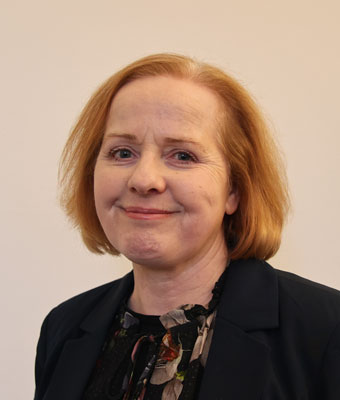
2. Deputy Ruth Coppinger asked the Minister for Education if she agrees that the demographics are such in Dublin 15 that there is a need to maintain a school (details supplied) at its existing location and for extra capacity in the Tyrellstown area; and if she will make a statement on the matter. [7671/25]
I know the Minister is new to her brief so she may not be familiar with these locations. With regard to Ériu Community College, the Department of Education took an arbitrary decision to move the school from its temporary location to an area 8 km away until such time as it gets its permanent location. The Minister knows that in a suburban area of Dublin, that has a huge impact. I ask her to change that decision. That is a huge demand from the community.
I thank the Deputy for raising this question. I appreciate, particularly in areas of huge growth, how important it is to have an adequate number of schools and schools adjacent to and near where students are living. That is the most important thing.
My Department has a robust forward planning process which considers population and enrolment data. When it comes to the Dublin 15 area, the Department tells me there is sufficient post-primary school capacity to cater for the existing population. Looking ahead it is also making sure we are looking at projected population expansion, new developments and other people who may come into the area. One relevant indicator is that there are more first-year places available in the existing post-primary schools than there are sixth-class pupils living in the Dublin 15 area.
Furthermore, officials in my Department have an ongoing engagement with Fingal County Council in respect of planning new residential developments. Based on this available information and other elements, the school capital projects in the existing schools building programme are expected to cater for the projected additional school place demands resulting from such developments. My Department is satisfied there is no requirement for a new school in that area. However, it has established that there is currently considerable movement of Dublin 15 pupils out of the local communities in which they live to attend post-primary schools. This is most acute in the Mulhuddart-Tyrellstown planning area where enrolment numbers are significantly lower than the school-going population. There are currently more than 1,000 post-primary school pupils leaving this area each day to attend school in other parts of Dublin 15.
Ériu Community College, as the Deputy mentioned, was established in 2020 on an interim basis in Dublin 15. This was in response to the identified deficit of local capacity. My Department has determined that Hollywoodrath is the most appropriate permanent location for this school and will provide much-needed capacity in the Mulhuddart-Tyrellstown area, while freeing up capacity in other schools in Dublin 15. That assists in addressing the imbalance of post-primary school capacity across the area. I will refer to the other schools where we know there is additional capacity.
The reality is that both areas need secondary schools. I will give the demographics. With all due respect, the Department of Education has had an inglorious history of misplanning educational need in this area and, I am sure, in many others. Ongar, where Ériu Community College is currently located, had the highest birth rate in 2024, according to the CSO. Some 32% of the population is under 18, so where are they to go to school? The only school in the area is at capacity. Fingal, overall, has the youngest population in the country, so there is going to be a massive need for schools in all locations. I know the need in Tyrellstown, which is an area in which my daughter went to school. It needs a school as well. That is the reality. We are asking the Minister to stop the penny-pinching. People should not have to campaign for schools. They should be able to get a school. There are no transport links whatever between both areas.
I will outline the capacity that exists in that area. Hansfield Educate Together Secondary School was established for 1,000 pupils. It has 848 pupils enrolled at present. Edmund Rice College, which was established for 1,000 pupils, has 813 pupils enrolled at present. An extension planned for Castleknock Community College will provide approximately 200 additional places. That is essentially a school between the three colleges which have capacity. In addition, there is scope for further expansion in the existing post-primary schools should additional places be required. It seems the demand and need are in the Tyrellstown area, where 1,000 pupils are leaving the area to go to other schools. The intention was that this school would never be permanent. It was to be a temporary base until the new school was developed. I appreciate this might impact the students who are currently in the school, as the Deputy mentioned. They are moving 9 km away. However, by the time the permanent school is built, the majority of those will have moved on. The class of 2027-28 will be new. However, the transition for those who are left will have to be carefully managed. The Department will continue to review this. As the Deputy said, we have to do that because demographics change over time.
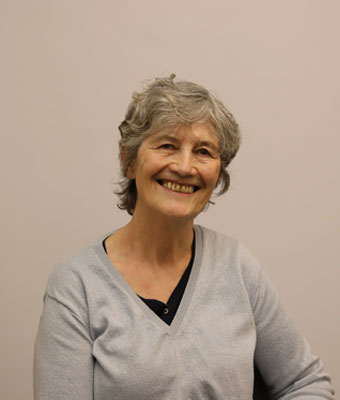
We are way over time.
There are TDs in the area from the Minister's own party demanding the schools. This is not just the Opposition. There is unanimity that both locations need schools. If the Minister is telling parents they have to go to Tyrellstown from the Ongar catchment, which is a different catchment, does she have transport lined up? I have already sent her Department a group of parents who have no transport between these areas. They cannot get school transport and there is no bus link. The reality is that this is penny-pinching by the Minister's Department. There is no other reason. It will be a blow to Dublin 15 to cede that this school will move, because we need schools in both locations and we are sick, sore and tired of having to have public meetings and protests for mainstream schools. I will say nothing of the fact that there is a task force in Dublin 15 on special education. The Minister has already demonstrated that her Department cannot plan educational provision in the area. This is yet another example and we want her to reverse this decision.
The reason that Ériu Community College is moving back is that there are 1,000 pupils moving out of the Mulhuddart-Tyrellstown area every day to attend other parts of the school. I appreciate the Deputy's point that other parts of the community are expanding and growing. The Department has to plan ahead looking at the data it has and is available. To plan for school provision, you have to look at the demographic data. It is divided into 314 different school areas from a range of sources. There is the CSO data, the child benefit data, school enrolment data as well as developments in the local authorities. The Deputy has outlined it is a young and growing population. This is taken into consideration when there is a new development and new schools are being looked at and, in particular, what area they should go into. It is on that basis that these decisions have been taken, but I am open to this because I know in the south of Meath in my home county there has been a massive growth in population. Where we need additional schools to those that have already been planned, we need to always keep these figures and projections under review. It will take time for this school to move to its new location, so the students the Deputy has mentioned will most likely serve their school time-----
Thank you, Minister, we are way over.
-----and finish their schooling in the area they are currently in. Of course, any issues around transport and so on have to be addressed.
Special Educational Needs
3. Deputy Darren O'Rourke asked the Minister for Education what additional demand for special class and special school places for September 2025 is now anticipated at primary and secondary school level; what measures she is taking to ensure the necessary school buildings, staff and resources are in place to meet that demand; if emergency measures are expected; and if she will make a statement on the matter. [8925/25]
I ask the Minister about school places in south County Meath. We will need additional places in Dunshaughlin for this September. What additional demand for special class and special school places for September 2025 is now anticipated at primary and secondary school level? What measures is the Minister taking to ensure the necessary school buildings, staff and resources are in place to meet that demand, if emergency measures are expected, and if she will make a statement on the matter?
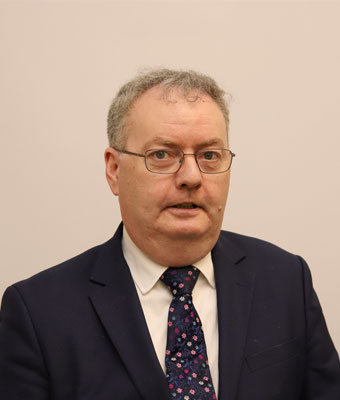
I thank the Deputy for the question, and I look forward to working with everybody in this role for the betterment of all because there are, as always, huge challenges in education, which is the bedrock of our society.
The Government is fully committed to children with special educational needs to fulfil their full potential and the programme for Government makes a number of commitments to deliver this objective. Up to an additional 2,700 specialist places, made up of 400 new special classes for an average of six children each and 300 special school places, will be provided for the coming year. The NCSE has already sanctioned in excess of 209 new school classes and is engaging intensively with schools and school patron bodies to confirm additional special classes as soon as possible. On top of this, there will be well more than 1,000 places available through the normal annual movement of students progressing and graduating out of schools. There also remain special classes with vacant places in some areas of the country.
Supporting the increase in provision are an additional 768 special education teachers and 1,600 special needs assistants. This means we will have more than 44,000 professionals in our education system dedicated to supporting children with special educational needs. A range of new measures to support the forward planning of special education provision was set out in Circular 0080/2024. These include new measures to address a challenge raised by the NCSE with regard to not knowing about some of the children seeking specialised placement in recent years. Parents of children with special educational needs seeking a specialised placement are now required to engage with the NCSE, so that all children who require a place for September can be supported to secure one in a timely manner. It is hugely important that we make sure those places are available in a timely manner.
That is the point, and I have not heard from the Minister of State that they will be. The question was about what additional demand for special class and special school places for September 2025 is now anticipated on the back of that new process. The Minister of State did not answer that question. In fact, he spelled out what we knew already, which is what the Department is planning. How does what the Department is planning match with, or not match with, what the actual demand is?
We have repeatedly heard from all quarters a real frustration as to how the Department, its agencies and the Government do so poorly at planning despite the fact that we have CSO data, AIM data, reports on children and now the new NCSE forms. Where stands the demand at this stage? How does it relate to the Department's planned roll-out of capacity?
As we understand it, the plans we have in place and the placements we are working on with school patrons and schools right across the country will exceed the demand and there will be sufficient places. However, we will have to work with all families and school authorities to make sure they are in place in a timely manner. We have to be better at getting information through the AIM programme and the domiciliary care scheme. All of that information has to be available at an earlier date. One of the challenges we face is ensuring that places are made available to families and children with additional needs in a timely manner. We have to push back on that date. We have had serious engagement with the Department and the NCSE over recent weeks to make sure that is done in a timely fashion because families need to know. We are working through that in a very serious way right now and will continue to do so in the coming weeks.
There is a protest at the Department of Education scheduled for tomorrow. It is a 24-hour sleep-out by parents who are demanding appropriate places for their children. They should not have to do that. It is disgraceful and shameful that they have to. I send them solidarity and tell them that I will certainly do everything I can to keep this on the agenda and to push for an appropriate place for every child. That includes a place for this September. The question is then on appropriate places. There are not 126 but 177 children who are on home tuition because they are waiting on a special education placement. I asked whether emergency measures will be needed to deliver this capacity in the timely manner the Minister of State has talked about. For example, will the school buildings be in place? What measures are going to be taken to ensure they are?
Everything that is needed is being put in place. This includes school buildings and spare capacity in schools. If necessary, section 37A will be invoked to ensure we have places. The Department and the NCSE are extremely serious about making sure that this is done. They have been working very hard over recent weeks to bring that about and will continue to do so in the coming weeks. I understand that the NCSE has engaged with parents over recent days in respect of the protest. It will be engaging with all parents, families and communities to make sure that we look after the most vulnerable children who are looking for specialised places or specialised classes. We are working with might and main to ensure that happens in a timely fashion.
4. Deputy Richard O'Donoghue asked the Minister for Education the reason a school in Limerick County received confirmation from her Department that its special education needs hours provided will be cut by 2.5 hours, even though the criteria state that a developing school would not lose hours. [8972/25]
Why has a school in my constituency got confirmation from the Department of Education that the SEN hours provided will be cut by 2.5 hours even though the criteria state that a developing school would not lose hours? I am talking about Meenkilly National School in Abbeyfeale.
I thank the Deputy for the question. My clear understanding is that there is no proposed reduction in special education teaching, SET, hours for the school referred to by the Deputy for the 2025-26 school year. This school has seen a reduction of over 2% in enrolments since the 2024-25 school year and its SET allocation remains at 22.5 hours for the 2025-26 school year.
The special education teaching allocation model is a standardised allocation model that provides schools with additional teaching hours to support the teaching needs of students in mainstream classes. The allocation model uses a variety of statistical data to complete allocations. This includes enrolment data, educational needs profiles, which consist of literacy and numeracy data, and data on educational disadvantage. This data is sourced from within the education sector to ensure it is validated and accurate.
For the 2025-26 school year, close to 15,000 special education teachers have been allocated to schools. Almost 86% of schools will see either an increase in their allocation of hours or retain their previous allocation. For the schools where there has been a reduction, this is driven by demographic change in the area and a reduction of enrolments in the school. The vast majority of these schools will see a reduction of five hours or less. Where schools believe they need additional SET teaching resources, they can apply to the NCSE for a review and, if they are needed, these will be provided in advance of the next school year.
I thank the Minister of State for his response but, on the criteria for this, enrolments make up 25%, pupils' standardised test scores in second, fourth and sixth class make up 68.5% and educational disadvantage is based on pupils' addresses. If you are within an urban area, you will not have any need because you have infrastructure in the area around you. Many rural schools have little infrastructure and students must travel long distances to school. Their numbers sometimes fluctuate because the population is lower and they do not have the proper infrastructure. Planning laws and other regulations made here stop the populations of these areas from increasing. I want to see a two-tier system that will protect rural schools and help them to grow while giving us the same criteria as regards education into the future.
I come from a very rural community myself and I see the fantastic work that is being done right across the education sector in both rural and urban areas. Practitioners at school level, teachers, SET teachers and special needs assistants, make an enormous contribution. The method of allocating SET hours is very carefully monitored and has been over many years, going back to the time of resource teachers. A model has been brought in that fairly and accurately reflects the needs within the school community. I reiterate that there is no proposed reduction in the SET hours for this school in the 2025-26 school year.
This is about the SEN hours that are being provided. On the criteria, a letter from the Department came to the school. The Department says the school is losing 2.5 hours while the Minister of State is saying it is not. Surely to God there has been a mix-up in the paperwork somewhere. I will work with the Minister of State to rectify that. I will again go back to equal opportunity in education. Regulations from this House have stopped people from living in rural areas. If we are to rebuild communities, it is our schools that support local businesses, sports, families, recreation and mental health. They support everything. We have a letter from the Department that says one thing but the Minister of State is saying another. We can rectify this. I have no problem with that. What I am trying to say is that we need to make sure that rural schools are protected. If there must be a two-tier system to allow the same infrastructure to be put in so that we can support and grow our schools in the same way as urban schools, I will work with the Minister of State on that. However, in the interim, I need them to be protected and for there to be no reductions in hours.
It is vitally important that all schools, including rural schools, are protected. Many smaller rural schools provide fantastic facilities. Where children who have additional needs go to rural schools, the school community is smaller. Those schools work extremely well. I take the point that these schools support everybody. As the population grows, it is important that rural schools and urban schools are all protected because they are all vital pieces of infrastructure. I would like to see the letter the Deputy has in this regard.
I will forward it to the Minister of State.
I have no difficulty with that but our information clearly states that there is no reduction in SET hours for the 2025-26 school year.
School Staff
5. Deputy Darren O'Rourke asked the Minister for Education to outline her assessment of the teacher recruitment and retention emergency at primary and secondary school level; the measures she intends to address it; and if she will make a statement on the matter. [8926/25]
Will the Minister outline her assessment of the teacher recruitment and retention emergency at primary and secondary levels and the measures she intends to take to address it?
The Government is fully committed to ensuring that every child has a positive school experience and is supported to reach their full potential. Key to that is making sure we have the teachers, not just at primary level but also at post-primary level, and that teaching staff in schools are qualified, engaged and supported in the work they do.
As with all sectors, there are recruitment challenges in some, but not all, schools. We know particular areas and parts of the country are affected. To address teacher supply issues, the Government has already implemented a number of measures that have led to an increase of 20% in initial teacher education graduates. In other words, the number of student teachers increased by 20% between 2018 and 2023, which has resulted in a 30% increase in the number registered with the Teaching Council since 2017.
Between 2018 and 2024, there was a significant increase in allocated teaching posts at primary and post-primary levels, with more than 5,500, or 13.08%, at primary level and 17%, or more than 6,000, at post-primary level. We acknowledged that there needed to be an increase and we introduced a number of measures in recent budgets, including a STEM bursary, a professional master of education, PME, fee refund scheme and an expansion of upskilling programmes. These were in addition to workforce planning for teachers and SNAs, reflecting the commitment to ongoing investment in the education system to address teacher supply.
The Department has also been working on an analysis of the teacher workforce. Data for March 2024 show that there were more than 78,000 qualified teachers employed in Ireland, with 43,000 at primary level, including special schools, and more than 35,000 in post-primary schools. I will make this data available in the near future.
I am looking at what further measures we can take. The most acute issue is at post-primary level, in particular for certain subjects. I know from speaking to the unions recently that certain schools cannot provide subjects or they have pulled back from them because the teachers are not available. At a very early stage I asked my team and the officials in the Department to look at what is working, what more we can do and where we can think outside the box. Some of that will require simple changes. Other changes may require funding. As such, they will have to be part of the overall budgetary process.
Will the Minister give us a timeline for those proposals and outline the nature of them? I appreciate that some may require funding. The picture is one of a crisis and emergency. At primary level, there has a shortage of more than 2,500 teachers for the 2024-25 academic year. There are many unfilled posts, and a large number of schools have had to use unqualified staff to cover absences.
At secondary level, it was reported in a recent survey that 64% of schools have unfilled vacancies due to recruitment and retention difficulties and that 20% have been forced to drop subjects as a result. One of the measures that was previously introduced, but there seems to be a delay in relation to it this time round, is the likes of a time-bound provision for people who could do their droichead or induction in Ireland if they trained elsewhere. I know from the Teaching Council that this was due to happen in quarter 1 but that it been delayed slightly. Is that something the Minister would like to introduce?
On the Deputy's final question, that work is under way. I hope to see it implemented or progressed in the coming months. I am very aware that while it will not resolve matters, it is will support the provision of additional allocations or teachers. It is very important to me that we do not just support the teachers in schools but also that we have more coming through colleges. I will be working closely with the Minister for Further and Higher Education, Research, Innovation and Science, Deputy Lawless, to make sure that we have the relevant and adequate spaces to provide teachers with training and also that we support teachers in schools where there may be a desire to upskill, retrain or move between the various different levels as well.
As stated, in the very early days I asked the Department to look at what other ways we could support teachers. The programme for Government clearly sets out a commitment to the development of a workforce plan to recruit and retain teachers, but also to encourage teachers to return. Many teachers have travelled abroad for different reasons - to experience different countries and ways of living - but I want to make sure that as many of them as possible return and, importantly, that they will come back and teach in schools here when they get home.
The recognition of experience abroad is important. I encourage the Minister to engage with her colleague the Minister for Housing, Local Government and Heritage, Deputy Browne, on the housing crisis, which is a major issue for teachers and a major driver when it comes to people leaving the country and not taking up teaching here.
In responding to the situation relating to recruitment, we must continue to increase the number of training places and look at alternative pathways into the sector. However, we must also look at the position in respect of retention. I ask the Minister to consider two points in that regard and to come back to me on them. One relates to investment in leadership at school level. I refer to posts of responsibility. These are positions that were hollowed out during the years of austerity. A related matter that has come up a number of times at both primary and secondary level is the likes of issues such as parental leave and the lack of flexibility in that regard. Surely parental leave should be able to be taken one or two days at a time. It would be more attractive for teachers and it would also provide continuity for students.
Perhaps I should have said at the outset that teaching is an attractive career. That is reflected in the fact that there has been a significant increase in the number of people who have applied to become teachers and who have registered with the Teaching Council. The increase of 13% and 17% in both primary and post-primary allocated teaching posts reflects the fact that we committed to increasing the overall number of teachers. I appreciate that we need to do more. For that reason, I hope as soon as possible to outline a number of ways in which we can encourage even more entrants into the profession and that we can retain and support those who are there. That could be, for example, by working through a new overall pay agreement. In recent years the starter salary for teachers has increased significantly through those negotiations. They must happen on a whole-of-government basis.
We are focused on what more we can do to support those in leadership positions and to provide resources to make sure that we have a continued increase in the capacity of our capital programme, which has seen billions invested in recent years. All of this will help us address the challenges that exist but also provide positive opportunities for students and teachers.
Widow's Pension
82. Deputy Louise O'Reilly asked the Minister for Social Protection the terms of the widow's or widower's pension, particularly in respect of non-married or cohabiting couples, and the judgment of the Supreme Court on 22 January 2024; the expected timeline in terms of the legislative changes that are required in respect of this decision; and if he will make a statement on the matter. [9018/25]
I welcome the Minister and wish him the very best in his new role. I very much look forward to working with him in a constructive way, which, as he knows from our previous engagements, is how I work. I will not say it is my trademark; I am sure he knows what I mean.
My question is a very straightforward one. It relates to the Supreme Court judgment issued in January 2024. I am looking for information on the timeline for legislation. If the Minister would also speak a little on backdating of payments, that would be useful.
I congratulate the Deputy on her new role and wish her well. I look forward to working with all Deputies in my role in the Department of Social Protection.
Under the law as currently enacted, entitlement to a widow's, widower's or surviving civil partner’s contributory pension is only available to a surviving partner who was party to a marriage or civil partnership. However, as the Deputy is aware, on 22 January 2024, the Supreme Court delivered its judgment on the entitlement of an unmarried cohabitant to a widow's, widower's or surviving civil partner's contributory pension. The Supreme Court judgment found in favour of the claimant, Mr. O'Meara, and his children. In simple terms, the court found that section 124 of the Social Welfare Consolidation Act 2005, as amended, is inconsistent with the Constitution insofar as it excluded Mr. O'Meara from the category of persons entitled to benefit from it. The court reached that conclusion on the basis of the equality guarantee contained in Article 40.1 of the Constitution.
The Supreme Court judgment notes that to resolve the issue raised by its judgment, a legislative amendment is required. In June 2024, the then Government approved the priority drafting of the legislative changes required. The general scheme of a Bill was referred to the Office of the Parliamentary Counsel, OPC, for priority drafting and to the joint committee on social protection. The draft legislation raised a number of complex issues that require the advice of the Attorney General. There is ongoing engagement. A stamped draft of the Bill has been received. I intend to bring it to the Government imminently in order to obtain approval for its introduction.
I will deal with the other issue the Deputy raised in our subsequent exchanges. I acknowledge the work of Deputy Kelly, in particular, and of Deputy Buckley, who have consistently raised this issue with me in the weeks since my appointment.
The Minister's news is very welcome. If he could put a date on "imminently", it would be even more welcome. He referenced the case taken by John O'Meara. In the aftermath of that case, which he won, Mr. O'Meara was reported as saying, "We are all equal as regards families." However, all families will not be equal until the legislation goes through. This will impact on 150,000 cohabiting couples. I am dealing with cases in my office, as I am sure the Minister is, where people are grieving following the death of their cohabiting partner. When they try to claim whatever form of social welfare they might be entitled to, they find their assessment is based on the previous year, when they had two incomes. The system is very dismissive of their grief. Their relationship - their family - is real, yet the State does not recognise it. I know it is not lost on the Minister, as is often said, that the Department would be quick enough to go after people if they owed money back to the State. I hope he will address the matter of backdating. According to Treoir, there are people in this situation who have had to sell their homes in order to keep themselves afloat.
I absolutely agree that grief does not distinguish, including in the circumstances we are discussing. Under the draft legislation, it is proposed that a person who becomes eligible for the scheme will be able to claim, irrespective of the date of death of his or her partner. It is also proposed that the claims will be backdated to the date of the judgment, which is 22 January 2024, that found the existing law to be inconsistent with the Constitution. Where the death preceded that date, it is not proposed to backdate payments prior to the date of the judgment. This approach reflects established principles on payments where provision is found to be unconstitutional. There are other supports available to people. If there are cases arising, I will deal with them with Deputy O'Reilly or any Deputy. Deputy Wall has tabled a similar question on this issue.
With regard to backdating, my concern is not just in respect of the case taken by John O'Meara. There are cases in the system that predate the judgment. Will the Minister give some consideration to those people, as well as people who are experiencing issues on an individual basis? I do not imagine the numbers will be huge. However, we have seen a large increase in the number of cohabiting couples. This issue needs to be fixed for the future. I imagine that, looking back, we are not talking about a huge number of people, but we could be talking about an awful lot of hardship. I understand the logic of backdating to the date of the judgment but there will be cases that are in the system and it would not be fair to those people to tell them they must go all the way to the Supreme Court to get the backdating. Some consideration might be given to setting up a high-level group to troubleshoot those cases, all of which will be individual. I genuinely do not think we will be looking at large numbers. However, we are talking about people who have suffered real and extreme hardship. As the Minister said, grief does not discriminate. These people were bereaved and they found themselves on the wrong side of a law that was very unequal and unfair.
I would not like to create an expectation. I want to be very careful. People are going through enough without me creating false expectations. We will look at the kinds of cases involved and the figures to see whether there is some way forward. I do not have any flexibility regarding the date of backdating, which is the date of the judgment. However, I want to try to be flexible. People are going through a terrible enough journey without inflexibility adding to their burden.
83. Deputy Mark Wall asked the Minister for Social Protection when he intends to bring forward the Bill to support cohabiting couples by providing pensions for bereaved partners; the number of applications received for such a payment since the O’Meara case; if supplementary payments will issue to those qualified applicants in advance of the legislation passing; and if he will make a statement on the matter. [8577/25]
I welcome the Minister and wish him well. As Labour Party spokesperson on social protection, I look forward to working with him over the lifetime of this Dáil.
My question is very similar to the previous one. In addition, I ask for the number of applications received for the payment since the O'Meara case and whether the Minister will consider supplementary payments to qualified applicants in advance of the passing of legislation.
I congratulate the Deputy on his election to this House. I look forward to working with him.
The State has always distinguished in a number of its laws between the rights of couples whose relationship is formalised in a marriage or civil partnership and the rights of other couples whose relationship is not formally registered. There was a backdrop to that in regard to succession, property rights and taxation. Since the Supreme Court judgment, we have been reflecting on the changes we need to make. We prioritised the drafting of necessary legislation, which underwent pre-legislative scrutiny by the previous joint Oireachtas committee on social protection. As I said, we will imminently bring a Bill to the Government. I will keep in touch with all Deputies in this regard. I acknowledge the work of Deputy Kelly in this area.
On the Deputy's specific query, we currently have 331 applications on hand. As we have just discussed, it is proposed within the general scheme of the Bill that payments will be backdated to the date of the judgment in January 2024 or, if later, the date of death.
The specific number of claims we have at present is 331.
I thank the Minister for acknowledging the work that Deputy Alan Kelly did in relation to this. I also thank the O'Meara family for the work they did to ensure that those who are entitled to a payment can have one. It was a long road for them. They stood steadfast and got a result for many people.
As mentioned, this issue may affect over 150,000 couples. The Minister informed us that 331 applications are on file. It is my understanding, from dealing with constituents through my office, that the Department is asking people to send in an application and is holding applications on file subject to the legislation coming through. I was a member of the previous committee on social protection which discussed this. Of the 331 applications, how many date from before January 2024?
I do not have that specific figure but I will seek to provide it to the Deputy.
The analysis carried out by my Department anticipates that there will be 500 new cohabitant recipients expected annually in the initial years, with an annualised cost of approximately €50 million. It is difficult to predict those numbers with certainty. It is the Department's intention, once we have the legislation passed, to engage in an information campaign so that people who may not be aware of their entitlement will be made aware of it. We will give people the capacity to apply.
I also acknowledge the work of the O'Meara family, who had to take this case amid their grief. I thank them for that work. I will engage with them, through Deputy Kelly, in the near future.
There is an expectation out there, as the Minister indicated. Those who have applied are waiting on the results of the O'Meara case. I am dealing with a number of people whose partners passed away before January 2024. The Minister mentioned not building up expectations. Is the Department considering making a payment to those people? Will the Minister give a commitment today that he will consider a payment for them? In my question, I asked that he consider issuing a supplementary payment. Given we are only talking about 331 applications, it is important that nobody is left behind. Following the judgment in the case taken by the O'Meara family there was an expectation that these people would qualify for a payment. The previous committee on social protection discussed at length a retrospective payment for those families who have gone through grief, as the Minister and others mentioned. Will the Minister consider a payment for those who do not qualify or even a supplementary payment for those whose partners passed away pre-January 2024?
I do not want to create an expectation that the Department will not be able to meet. While I understand where people are at, our hands our tied to the 22 January 2024 judgment date. However, there are other supports that we may be in a position to make available to families in this situation and we will look at those. However, in relation to the specific payment and backdating, I am looking at 22 January 2024 as the judgment date. I would like to engage with people around this but people have been through enough without having to respond to a false expectation. If there are cases, we will look at them and at other potential supports.
Social Welfare Code
84. Deputy Louise O'Reilly asked the Minister for Social Protection if he intends to abolish the means test for the carer’s allowance; if this will be phased out; if he can provide a detailed timeline for it; and if he will make a statement on the matter. [9019/25]
This is a subject we discussed at length during the most recent election. I am pleased that, due to pressure from the organisations representing carers and from members of the Opposition, including my party, the two parties that now make up two thirds of the Government committed to the abolition of the means test for carers. As yet, we do not have a detailed timeline in relation to that. My question relates to the means by which this will be done, and the timeline.
The carer’s allowance is the main scheme by which my Department provides income support to carers in the community. There are currently 98,311 people in receipt of carer's allowance. Expenditure on the scheme in 2025 is estimated at over €1.24 billion.
The primary objective of the carer's allowance payment is to provide an income support to people whose earning capacity is substantially reduced. In the case of other payments to people aged under 66, this may be because the person is ill, disabled or becomes unemployed. In the case of carer’s allowance, it is to acknowledge that a person cannot work full-time owing to his or her caring responsibilities.
We have made a number of significant improvements to income thresholds in the means test in recent years. In July this year, the weekly income disregard for carer's allowance will increase from €450 to €625 for a single person and from €900 to €1,250 for carers with a spouse or partner. This amounts to cumulative increases to the disregards of €292.50 and €585, respectively, since June 2022, an 88% increase.
As the Deputy said, the programme for Government sets out a timeline which commits to continue to increase the income disregards for carer’s allowance in each budget, with a view, subject to budgetary space, to ultimately phasing out the means test during the lifetime of this Government. This is a significant commitment, costing a minimum of €600 million per annum. That figure is based on existing claimants of carer's allowance who would qualify for a higher payment, plus existing recipients of domiciliary care allowance and the carer's support grant who would become eligible if the means test was removed. This also assumes new claim inflows remain unchanged. However, the cost stretches to a potential €3 billion per annum if everybody who self-declared as a carer in census 2022 was to qualify.
Most important, I want to make progress but we have to make it in a way that is sustainable and that balances the allocation of the available budgetary resources each year across all priorities. That is why we have committed to a measured and phased approach over the five budgets we plan to deliver in the lifetime of this Government.
I will have to substantially redefine my understanding of what a significant commitment means if that is what the Minister believes it means. I asked for a detailed timeline and what I got instead from the Minister was a very watery indication that he might at some point do something. We talked at lot about this during the election. The commitment was given and carers need to know it will happen.
In March 2024, the previous Minister announced an interdepartmental group on carers. I have not seen its report, if it has been published. As of last week, I had not seen it. That report needs to be published. If it has not been published, can the Minister commit to its publication?
The Minister referred to a figure of €3 billion. We all read that figure in the media. I have not seen a detailed breakdown. The figure of €3 billion, as the Minister said, refers to where every single person doing any kind of caring declares themselves. The Minister knows that will not be the figure, so it is a red herring that has been put out there.
The Minister needs to be clear that this is a commitment given by the Government and that it will be done by the end of the Dáil term. That is not what he said in his reply. He said he might try. Carers deserve that commitment. They save the State approximately €20 billion each year. The State needs them and they need to know the Minister will look after them.
We have been clear that we will increase the income disregards for carer's allowance in each budget. It is our intention to phase out the means test during the lifetime of this Government. We were clear on that in the programme for Government and I am clear on it as Minister for Social Protection.
I value the work of carers, which is incredibly important, but I would be wrong to say we will do this by a certain date. We have five budgets. We will engage with the carers organisations as we prepare for the first budget, and with carers generally. I will engage with the Oireachtas committee on social protection, when it is formed, on this issue.
This is a priority for me and the Government. I am confident that we will be able to fulfil our commitment, but budgets have to be negotiated each year. I assure the Deputy and carers that carers will be a priority. As we negotiate our budget priorities each year, this commitment will be a priority.
According to Family Carers Ireland, three in four of the family carers it surveyed indicated that the people they support do not receive sufficient formal support and 72% had never received any respite. The Minister should think about how his words will sound to a person who is stuck at home and does not have access to respite, as is the case for most people. As the Minister knows, that is because the waiting lists are chronic and the lack of staff is causing severe distress for people.
The Minister gave a commitment that it would be phased back and he is walking it back now and saying he will do his best in negotiations and the budget has to be negotiated. Will he give an indication of how he will get it phased out? If this Government does run its full term, and I think I am not the only person in this State who wishes that it will not, is he saying definitively that by its end the means test for carers will be abolished? Is he confident that will be the case? That is the kind of rhetoric that he and his party engaged in during the run up to the election.
No one has an exclusive concern for carers. The last Government did a great deal of work in increasing the income disregard and the carer’s support grant. I intend to engage with all the carers organisations around that. I am very focused on the work they do and the burden they face on a daily basis. There is a commitment in the programme for Government that we will phase out the means test over the lifetime of the Government. I do not know where we will be this time next year or this time two years in relation to budgetary allocations. It is my intention to deliver on the programme for Government commitment in relation to carers that we will, over the course of five years, phase out the income disregard.
On the Deputy’s other query about the report, I hope to receive that in the next few weeks and we will consider that. I would like to see it debated at the committee on social protection and, most importantly, would like to see a debate with the carers groups and the carers themselves around that report.
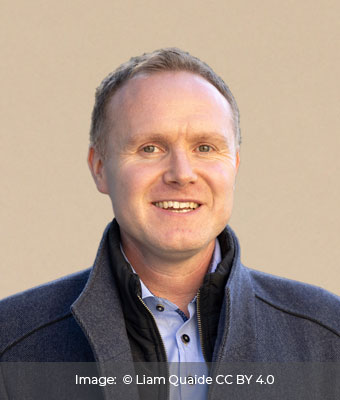
85. Deputy Liam Quaide asked the Minister for Social Protection his plans to include healthcare workers suffering with long Covid symptoms within the occupational injuries benefit scheme; and if he will make a statement on the matter. [8935/25]
I welcome the Minister and congratulate him on his appointment.
A cohort of healthcare workers with severe long Covid who contracted the virus at the height of the pandemic in high-risk settings are suffering with chronic disabling symptoms and have not been able to return to work as a result. I know this because in my previous role as a psychologist I worked with many of these workers. Some have been out of work for four years and nearly up to five years. Will the Minister grant these workers who sacrificed so much on behalf of all of us, who are now paying an enormous price with their quality of life, the financial security of an occupational injury scheme?
I thank the Deputy and congratulate him on his election. I look forward to working with him.
In November 2023, the Department of Social Protection published a report on the inclusion of long Covid in the occupational injuries benefit regulations. This report concluded that Covid-19 did not satisfy the statutory criteria for recognition as an occupational illness or accident at work. Specifically, it found that presumptions about workplace transmission would not be sustainable as it is not possible to establish with confidence that the disease has been contracted through a person's occupation and not through community transmission. This is because the data that was available showed that community transmission was the primary means of transmission. However, the Department of Social Protection's range of income supports, including illness benefit and invalidity pension, at the same or higher rates of payment as occupational injuries benefit, are available to people who cannot work due to the effects of long Covid.
With specific reference to employees in the health services the report found that the temporary scheme of paid leave for public health service employees was the appropriate channel through which a targeted sectoral support should be considered. A temporary scheme is a matter for my colleague, the Minister for public expenditure. That scheme has been extended a number of times, most recently to conclude on 30 June 2025. Any employee remaining unwell after that date may utilise the full provisions of the public service sick leave scheme which will provide further support.
I understand what people are going through with this condition. As a House, and as the Oireachtas, we should do more work on this condition and I look forward to working with the Deputy on that.
The long-term prognosis for these healthcare workers is very unclear. They often suffer from a range of symptoms which include debilitating fatigue and malaise after very modest levels of activity and there is no clear treatment pathway for them. In some cases, healthcare workers have been out of work for between four and five years. Many were infected in early January 2021 following the so-called meaningful Christmas in which restrictions on movement were crudely lifted by the Government against public health expert advice, resulting in spiralling infection rates. That is something the State really needs to take into account. Many healthcare workers now afflicted with long Covid were particularly exposed to infection at the most critical stages of the pandemic in the course of providing vital care to others. This was at a time when many other workers were being protected by working from home. Some were not equipped with adequate PPE and many had not yet been called for vaccination at the time of infection. The State has a duty to look after them.
My own Department has 78 people in receipt of illness benefit with a Covid-related certification. Covid-related claims account for 0.6% of all illness benefit claims that were awarded so far this year. As well as illness benefit, my Department provides an invalidity pension and a disability allowance scheme for those who cannot work due to an illness or disability. That includes those who have not recovered following a Covid-19-related illness. I do not have statistics for the number of persons on these schemes who are suffering from long-Covid as there are often multiple conditions in the application process. My Department is available to try to support people through the invalidity pension and through the disability allowance if that can be done.
On the temporary extensions of the special Covid leave with pay, these healthcare workers should not have to endure repeated last-minute cliff-edge moments regarding their financial security. They are being left in limbo for months on end while talks between trade unions, Departments and the HSE have remained at an impasse. They often do not know if they will be able to pay their mortgage in a matter of weeks. This is chronic stress heaped on so many other challenges. It is utterly heartless of the Departments of Health and Social Protection to put them through this. An occupational injuries scheme for healthcare workers afflicted with long Covid has been recommended by the EU strategic framework on health and safety at work. Healthcare workers with severe long Covid should be provided with pay security by the State into the future to remove financial stress from the many other challenges they face.
The temporary scheme of paid leave for public health service employees was identified in the report my Department published in November 2023 as the appropriate channel to target specific supports for employees in our health services. That scheme is being dealt with by the Minister for public expenditure. He has extended it. I will bring the Deputy’s concerns to him about its future extension and maintenance and running.
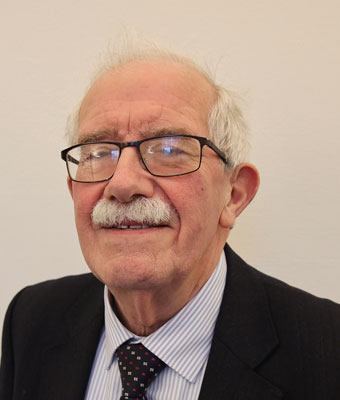
86. Deputy Seamus Healy asked the Minister for Social Protection the detail of how and when he intends to implement the Programme for Government commitment to abolish the income limit for the carer’s allowance; and if he will make a statement on the matter. [8927/25]
I congratulate the Minister on his appointment and wish him well in the Department.
Both Government parties in their election manifestos committed to the abolition of the means test for the carer’s allowance. The public believed when those parties formed a Government that the means test would be abolished, if not immediately then certainly in the 2026 budget in October. There seems to be no clarity about that now and I ask for clarity on that today.
I thank the Deputy and congratulate him and welcome him back to the House.
Carer’s allowance is an important income support for people who have caring responsibilities. That is clear from the fact that there are nearly 99,000 people in receipt of the payment and expenditure on the scheme in 2025 is estimated to be over €1.24 billion.
In common with other welfare payments to people aged under 66 years the purpose of the payment is to provide an income support to people whose earning capacity is substantially reduced. In the case of other payments that may be because the person is ill or disabled or becomes unemployed. In the case of carer's allowance, it is to acknowledge the person cannot work full-time due to their caring duties and responsibilities.
A number of significant improvements have been made to the income thresholds in the means test in recent years. Those thresholds, as I said to Deputy O’Reilly, have increased by 88% since 2022 and now amount to €625 for a single person and €1,250 for a couple. That means that a couple earning over €95,000 per annum would still qualify for a partial payment.
Recognising the important work of family carers, the programme for Government commits to continue to increase the income disregards for carer's allowance in each budget with a view to phasing out the means test completely during the lifetime of this Government. The work that has been done with an increase of over 88% since 2022 gives a good indication of where we intend to go on that.
The reason we must phase that commitment is because we must manage the available resources to balance the objective of supporting carers with other priorities, including supporting other groups who are supported by the Department. The means test has significant cost potential but I have to balance that with other priorities.
Nevertheless, I assure the Deputy and the House that carers are a priority. I very much value and appreciate the work they do, and this is a priority for the Government and for me, as Minister.
I thank the Minister for the reply, but we still have no clarity on when this means test will be abolished. As I said, the public believed the means test was going to be abolished either immediately on the formation of the Government or, at the very least, in budget 2026 in October of this year. From what the Minister said, there is absolutely no clarity on that. I acknowledge there have been increases in the limits over the years, which are welcome, but the commitment is to abolish the means test and that should and must be done, sooner rather than later, on the basis of the commitments given both in the election manifestos and in the programme for Government. Carers save the State €20 billion a year and give 19 million hours for free every week. They do exceptionally good work and save the State billions of euro. It is incumbent on the Government to abolish the test immediately.
I absolutely acknowledge the work of carers, which we see at first hand, and that is why it is also important we acknowledge the extent of the improvements the previous Government brought in for carers over recent years. We introduced the long-term carer's contribution scheme in January 2024, which allows a person who has been a full-time carer for an incapacitated dependant for 20 years or more to use long-term carer's contributions to cover gaps in their contribution records, allowing them to qualify for a contributory State pension. As stated previously, we have also increased the income disregard and, as part of budget 2025, the carer's support was increased to €2,000, the highest rate it has ever been. Moreover, with the support of carers and following engagement with them and their representative organisations, the capital disregard was increased from June 2022, which allows carers to have capital of up to €100,000.
I intend to engage with carers' groups and organisations regarding further supports and to engage with the Oireachtas committee on social protection in this space. I assure the Deputy this is a priority for me.
In 2024, the Parliamentary Budget Office estimated the cost of abolishing the means test as €375.3 million, which is very similar to the figure Family Carers Ireland gave, of about €389 million. That is very small money in the scheme of things. The work of family carers ensures that people with disabilities can remain at home and do not have to take up expensive beds in hospitals or nursing homes. It is self-financing and there would be huge savings to the State from abolishing the means test. Doing so is necessary and urgent and will accrue great savings to the State.
Absolutely. Carers' work is extraordinary and there is also the benefit of having somebody remain at home. Leaving aside the financial sides of things, having somebody remain at home is much better for their long-term recovery and long-term living. In the context of budgetary discussions, we will review all the figures. I will engage with the carers' organisations but also with the committee on social protection, when it is established, and we will look at all those issues. I absolutely assure the Deputy, and all Deputies, that carers are a priority for me, and I will have very good and constructive engagement with them. It is a priority within the programme for Government that I intend to be focused on delivering.