Tax Credits
6. Deputy Naoise Ó Cearúil asked the Minister for Finance the number of rent tax credit claims that have been made in County Kildare for 2024; if the increase in the value of the credit for 2025 is leading to any increased uptake; and if he will make a statement on the matter. [5013/25]

Tá ceist Uimh. 6, atá in ainm an Teachta Naoise Ó Cearúil, á tógáil ag an Teachta Aindrias Moynihan.

Gabhaim buíochas leis an gCathaoirleach Gníomhach. Since its inception two years ago, the rent tax credit has provided significant assistance to people who are renting. Can the Minister give an indication on the take-up of that credit, particularly with regard to County Kildare, and also County Cork if he has those data available? As the rent tax credit was recently increased at the last budget, can he give an indication whether the increased value of that credit has increased its take-up?
I am going to have to disappoint the Deputy as I have the information for Kildare but not Cork available this morning. Of course, I can get that information for him and will share it with him quickly.
The rent tax credit, as he outlined, has been brought in. In budget 2025, it was increased to €1,000 for a single person and €2,000 for a jointly assessed couple. This increase applies for 2025 and also retrospectively for 2024 in recognition of the cost-of-living pressures facing many renters. The statistics relating to the rent tax credit for 2024-25 are only available for PAYE taxpayers. They are, therefore, made on a taxpayer unit basis.
As regards County Kildare, it was 8,634 taxpayer units for 2024 and 985 for 2025. Most claims for credits, however, take place after the year end. I expect that the bulk of claims for this year will not be made until next year. I see no reason at all for this year's figure to be lower than what it was in 2024. Of course, I will provide the Deputy with the information for Cork and will write to his office in that regard.
I appreciate that the Cork figures may not be as readily to hand. I look forward to reviewing them later. The credit has been a real support for many people who are renting and it is easing some of the burden. We have included in the programme for Government that there would be further improvement on the credit. I am trying to get an understanding on any engagement or discussions the Minister has had up to now on making improvements and enhancing it, be that through doing it over five budgets or in one or two of the earlier budgets. Can the Minister provide any indication or discussion he has had in this regard? It has been a valuable relief for many renters both last year and the year before that. I wish to ensure that this commitment is grown upon.
The commitment in the programme for Government is very clear. We recognise the value and support this credit has provided. Over time, in the different budgets the Government will bring forward, we will seek to improve it, as will be the case with other important credits and tax reliefs. It has played a role in helping with the affordability of rents for many tenants. I agree with all the Deputy said in this regard. I am confident, as we bring budgets forward, that we will be able to make progress on the relief and support that it offers to those who are renting.
Is mór an cabhair é an faoiseamh cánach dóibh siúd atá ag tógáil áit chónaithe ar cíos. Tá sé mar chuid den chlár Rialtais amach romhainn go gcuirfí leis seo agus go gcuirfí breis cabhrach ar fáil do dhaoine. An bhféadfadh an tAire insint dúinn cén plean nó comhrá a bhí aige go dtí seo ar conas é sin a leathnú amach agus forbairt a dhéanamh air? The programme for Government also commits to helping renters who are seeking to become home buyers with a series of targeted measures, both in the tax system and in the first home scheme, for example. While I appreciate it is early, has the Minister had any discussions up to now with regard to the tax changes in that area? Can he give us a sense as to how he sees that being rolled out in the years and budgets ahead?
We have not yet had discussions in that regard, to be frank with the Deputy, because of how early we are in the lifetime of this Government and in preparing for the next budget. Of course, we have schemes in place such as the first home scheme, which is a shared equity scheme, and the help to buy scheme. They are designed to help everybody looking to buy their first home, particularly new builds in the context of the help to buy scheme, and make a contribution to the deposit for that. That applies to everyone. It is of particular help to those who have challenges in building up their deposit. We appreciate the importance of those schemes in both helping with affordability and providing the incentive for supply to increase. As I said, between those particular schemes and where we are with the rent tax credit, they are the kinds of interventions that I hope are of help to many in dealing with the high cost of housing at the moment.
Trade Relations

7. Deputy Ged Nash asked the Minister for Finance to provide details of any assessments made by his Department on the impact on the Irish economy of the possible introduction of certain tariffs by the US Government that will act as a barrier to trade between the United States and the EU; the preparations his Department is making to deal with this issue; and if he will make a statement on the matter. [5148/25]

12. Deputy Richard Boyd Barrett asked the Minister for Finance the preparations and scenario planning he is undertaking to deal with the possible implications for the Irish economy of the policies of the new Trump administration in the United States; and if he will make a statement on the matter. [5105/25]
My question relates to a matter which has been raised on two separate occasions in the House this morning, that is, the impact of potential tariffs being considered by the US on Ireland and the EU's trade with the US and any assessments the Department may have undertaken at this stage on that impact. The Minister addressed the matter earlier but I have a couple of related questions in the follow-up discussion.
I propose to take Questions Nos. 7 and 12 together.
To facilitate a back-and-forth discussion on the issue, I will quickly emphasise what I said in reply to Deputy Connolly earlier. Of course, due to Ireland being an open trading economy, we can be strongly affected by changes that happen in global trade. We are currently considering these potential scenarios and they will be outlined in the stability programme update in April.
One of the implications of all of this that is probably less well understood is the fact that Ireland is the ninth-largest foreign direct investor in the US economy and that Irish firms are responsible for a substantial number of good jobs in the US. Of course, President Trump is nothing if not unpredictable. We were expecting some form of white smoke from the White House this week as to what any potential tariffs may look like. Obviously, Ireland is especially exposed. On that basis, obviously, much of the responsibility in dealing with tariffs would be an all-of-government responsibility. The Minister for enterprise, Deputy Peter Burke, will have a lead role, as will the Tánaiste and Minister for trade, Deputy Harris. From the Minister, Deputy Donohoe's, own point of view, however, does he accept - and this is a long-standing issue about which we have been told time and again - that we need to broaden our tax base to try, insofar as we can, to insulate our own public finances from the threats that will potentially arise?
Of course we need to do that. We have made efforts to do that in recent years and need to continue to do so. That is why changes with regard to carbon taxation continue to be essential. It is why changes that we will make in the time ahead to our PRSI system to ensure that our Social Insurance Fund is sustainably funded in the years ahead are really vital. As regards other things we need to do, that is why I have made the case over many years for running budget surpluses.
Imagine where we would be today if we were considering the economic risks we face and we were borrowing lots of money. The risks we are all about to discuss would be multiplied even further. Thankfully we are not in that position but as I said earlier, we also need to look at the investments we can make that deal with not only the needs of our society but also make us more economically competitive and sustainable. That work is currently being overseen, in particular by the Minister, Deputy Chambers as we look at changes we can make to our national development plan.
Donald Trump is on a wrecking mission, that is obvious, although I would caution against allowing his Administration to bully us. The reason they have to make America great again is the American economy has declined massively. It used to have 40% GDP, which then went down to 20% by 2014 and it is now down to 15%. The American empire is in decline and Donald Trump personifies that decline. He is trying to reassert global hegemony by bullying people and we should not be bullied. Most of the multinationals here are here because they make a lot of money and they are not going to run away and leave those profits behind.
Having said that, the key thing is we have to diversify our economy. We are too vulnerable, not just to Americans but to a small number of flipping oligarchs - I do not care what country they are from - including a tiny number of the Elon Musks of this world and their equivalents in multinationals. That is the problem. We need to diversify our economy and we need to tax these people more. The Minister says expand the tax base by carbon taxes; I say wealth taxes, financial transaction taxes and taxes on wealth and capital so that these people do not control our fate.
There is an obvious contradiction in what the Deputy is saying.
There is not.
Of course there is.
It is a contradiction of what the Minister says.
It is great to hear the Deputy make the case for the resilience of foreign direct investment, which is a new departure for him that I welcome but, on the one hand, what he is saying-----
I have been making that argument for years.
-----is this employment has a value, and there are lots of these employers in Ireland, and then he is making the case that we should tax them even more and apply wealth taxes to them.
Yes.
How is that going to help with the challenges we have regarding the safety of our public finances and keeping jobs in Ireland if we are going to tax them more and more? Of course we need to diversify our economy. Of course we need to ensure we have more sources of growth in our jobs market but it should be noted that we have never had more people at work in Ireland and the public finances are in surplus, which is due to the fact that we have a variety of different employers in our country, all of whom are contributing to the creation of jobs and our tax revenues.
Is it Deputy Nash again or myself?
Is Deputy Nash coming in one more time?
We have one supplementary question each left.
There is more than a grain of truth in what some colleagues said earlier but I would not put it in the way they have. There is an imbalance in the Irish economic and enterprise model and we are all aware of that, notwithstanding that we have to recognise the incredible work being done by Enterprise Ireland. I remind Deputy Tóibín to look at the Enterprise Ireland job statistics from last year. They are quite extraordinary and they compare very favourably with IDA Ireland's but there is a larger job of work to be done in that regard. I have no doubt that looking at the focus on the indigenous economy that we need to keep a close eye on research and development tax credits, for example, and how we can better operate those to encourage the development of indigenous enterprise, to grow sustainable Irish jobs and to ensure high potential Irish companies go global from here.
I have always argued that multinational capital is not quite as mobile as the Minister thinks. They make big investments and do not just run off and leave them overnight. The Government parties have argued that they have to get down on their knees and offer them zero-rate taxes. The rate is 12.5% in theory but in reality it is less than 1% for Apple, as we know. In reality, it is an effective rate of approximately 5% across the board for multinationals but the truth is they are making a lot of profits here, far more than anywhere else. They need access to the European market, by and large, they want to be in an English-speaking country and they need a skilled workforce. That is something the Government should be thinking about because we are falling down in that area. Our third level institutions are falling down the international league tables. We are putting fees in the way of people getting MAs and doctorates and so on. That is the kind of investment we need to make ourselves more resilient against the behaviour of the Elon Musks and the Donald Trumps of this world.
I agree with Deputy Nash that we need to continue our efforts to diversify our economy and to support employers of all different shapes and sizes. I thank him for recognising the work of Enterprise Ireland in this regard. It does exceptional work. I believe the strength of our food sector and the growing strength of our energy sector within our economy are examples of how we can strengthen the diversity of employment and the diversity of where we can generate economic growth in the future. That remains the key mission of the Government to create the money and resources we need to invest back into the better society and to deal with all the issues the House is well aware of.
Deputy Boyd Barrett knows I have great respect for him as an individual. While I disagree with many of his views, I have always admired their consistency. I have to honestly say to him that the points he is making here today at best sound naive, if not quite dangerous, given the risks we are confronting here today.
Trump is dangerous but the Government can go on talking to him.
For the Deputy to suggest, given the difficulties we clearly face, on which I answered questions earlier regarding the implementation of a current global tax deal, that jobs and our competitiveness could be secured by going beyond that and taxing more by bringing in new forms of tax, shows no understanding of what it takes to create a job and keep it in Ireland. The path the Deputy is advocating for is one that would lead to a weaker and more vulnerable economy. It is a course of action that I am certainly not going to follow.
Anois tá Ceist Uimh. 8 i m'ainm féin, ach á tógáil ag an Teachta John Connolly.
Tax Exemptions
8. Deputy Pádraig O'Sullivan asked the Minister for Finance if he shares the concerns that the disabled drivers and disabled passengers' scheme is no longer fit for purpose; and if he will make a statement on the matter. [4906/25]
Tá mé an-sásta an cheist seo a chuir ar an Aire ar son an Teachta O'Sullivan. Mar is eol dó, bhí díospóireacht againn aréir inár bpáirtí parlaiminte ar an ábhar seo. Last night at our parliamentary party meeting, this issue was raised and concern was expressed by a number of Members about the application of the disabled drivers and disabled passengers scheme. The Minister will be aware that the scheme offers those eligible to avail of a repayment of VRT and VAT on the purchase of vehicles and to exempt those eligible from paying motor tax. Concern is being brought to our attention, however, by a high number of refusal rates on such applications and by people finding the application process quite complex and difficult to navigate. Does the Minister have any intention of adapting the scheme?
I congratulate Deputy O'Sullivan on his election to Dáil Éireann and I thank him for his first question to me on what I know is a very important matter. My Department and I share concerns that the scheme is no longer fit for purpose and believe it should be replaced with a needs-based, grant-led approach for necessary vehicle adaptations that could serve to improve the functional mobility of the individual.
Under the previous Government, the national disability and inclusion strategy, NDIS, transport working group recommended that the disabled drivers and disabled passengers scheme be replaced with a modern, fit-for-purpose vehicular adaptation scheme. This is in line with the general view that we need to move away from a medical criteria-based approach to a needs-based approach.
Subsequently, under the aegis of the Department of the Taoiseach, the subgroup convened to progress these proposals for needs-based, grant-aided, modern vehicle adaptation supports to replace the disabled drivers scheme, DDS, have produced a report that has been submitted to the Department of the Taoiseach, for its consideration.
In that context, any further changes to the existing scheme would run counter to proposals to entirely replace the scheme with a modern, fit-for-purpose vehicular adaptation scheme. The programme for Government commits to progressing the review of the scheme and this is very much a matter for a wider government response.
While I do not have responsibility for disability policy, I do have responsibility for a number of the other issues raised by the Deputy. I will work with my Government colleagues to progress this matter in the coming months.
I apologise to the Deputy. I referred to him using the name of the Deputy who put down the question in written form. I have not met Deputy Connolly before. I congratulate him. I am sorry I opened by referring to him as another TD.
That is no problem. I could not be mistaken for a better person.
I welcome the Minister's response and the sentiment contained in it, particularly the information that a new scheme is being proposed in this area. This would be welcomed by all Members of the House and many sectoral interests working on behalf of people with disabilities. In respect of the report submitted to the Department of the Taoiseach, is there any update about when that might be published and will there be a debate on the issue among Members?
I do not have a timeline regarding the publication of that report - if indeed it will be published. Of course, any changes we would make would be subject to debate in the Chamber and because they may require legislative change, they will be discussed by the Committee on Finance, Public Expenditure and Reform, and Taoiseach. There will, therefore, be ample opportunity for the Deputy to put questions to me on the matter and for me to hear his views on it.
I welcome that.
Middle East
9. Deputy Matt Carthy asked the Minister for Finance the current total number and value of State investments in companies which derive profit from their activities in illegal Israeli settlements; the total number of such investments; his views on whether such investments help entrench and sustain Israel’s illegal occupation; his further views on whether such investments run contrary to rulings of the International Court of Justice; and the amount of profit Ireland derived from such investments since 2022, by company, by year, in tabular form. [4903/25]

14. Deputy Pa Daly asked the Minister for Finance if he will consider reviewing and amending the Ireland Strategic Investment Fund for companies that operate in illegal Israeli settlements. [5223/25]
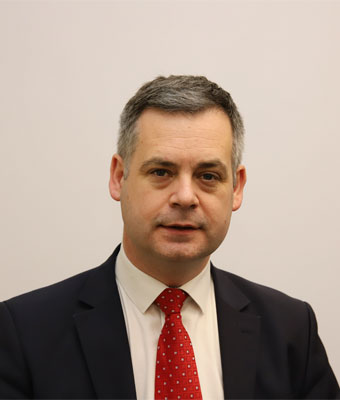
This is an issue we have raised on numerous occasions. My colleague has legislation before the House that has, unfortunately, been blocked by Fianna Fáil and Fine Gael in the face of a genocide. The question asks for the current total number and value of State investments in companies that derive profit from their activities in illegal Israeli settlements, the total number of such investments, the Minister's view on whether such investments help entrench and sustain Israel’s illegal occupation and run contrary to rulings of the International Court of Justice and the amount of profit Ireland derived from such investments since 2022, by company, by year and in tabular form.
I propose to take Questions Nos. 9 and 14 together.
As Deputies are aware, the UN maintains a database of businesses involved in certain specified activities relating to settlements in the occupied Palestinian territories, OPT. At the end of 2023, direct investments by the Ireland Strategic Investment Fund, ISIF, in companies on the UN database was approximately €4.2 million in 11 companies. ISIF’s indirect investments included eight companies, totalling approximately €9.4 million. ISIF divested from six of these companies with a total value of approximately €2.95 million in 2024. The six companies were Bank Hapoalim BM, Bank Leumi-le Israel BM, Israel Discount Bank Limited, Mizrahi Tefahot Bank Limited, First International Bank Limited and Rami Levi Chain Stores Limited.
ISIF continues to monitor its holdings to ensure that investments are within ISIF’s risk profile and investment parameters. Given commercial sensitivities, ISIF does not comment on individual investment decisions. ISIF publishes information on the overall return of its global portfolio as part of the National Treasury Management Agency's, NTMA, annual report but does not publish a breakdown of returns by each individual investment.
The amount of investment by ISIF in the companies on the UN list is small compared with the market capitalisation of many of these companies. It is also small - if not very small - relative to the size of the Irish economy. It is not clear as to the level of income such companies derive from activities in the occupied territories. It is not certain that these investments, therefore, in themselves represent a significant contributory factor in maintaining Israel’s presence in the occupied Palestinian territories.
The issue of whether investments by ISIF in particular companies which, as part of their business model, have some activity in the occupied Palestinian territories runs contrary to the rulings of the International Court of Justice would need further consideration. I understand that discussion is ongoing at EU level on a legal analysis of the advisory opinion from the court.
The National Treasury Management Agency (Amendment) Act 2014 sets out ISIF’s mandate with regard to the investment of the fund. Under the amendment Act, the agency has responsibility for determining, monitoring and keeping under review an investment strategy for the fund in accordance with the investment policy for the fund.
On the issue of amending the fund, ISIF has a policy of limited disinvestment. For example, the Fossil Fuel Divestment Act 2018 provides for the divestment by ISIF from certain fossil fuel undertakings. This builds on ISIF’s existing investment exclusionary strategy in respect of cluster munitions and anti-personnel mines, coal production and processing and tobacco manufacturing.
I note the Minister said that ISIF considers a variety of factors. I presume genocide, killing civilians and facilitating illegal settlements are included in that. I acknowledge that there has been some divestment from illegally occupied Palestinian areas and the Golan Heights but this is not the entire story. It is important to realise that it had been reported that ISIF still had a €1.3 million shareholding in the Israel Defense Forces-linked Palantir Technologies we heard about last December. The Israel Defense Forces, IDF, have used Palantir-supplied technology to target civilians in Gaza after a deal with the US company was announced in January 2025. There is also €1.1 million worth of shares in a controversial Israeli tech firm that partners with Israeli arms manufacturers and is run by former IDF intelligence officers who have faced demands to stop doing business in Russia.
The Government has been content to allow IDF cargo planes to fly through Irish sovereign airspace. One junior Minister in the previous Government had cause to meet Israelis and instead of being reprimanded, was promoted. It seems the Government is prepared to pay lip service to the Palestinian people but is not really prepared to shout "Stop". Is the Government looking at divesting from all of these funds or does the Minister consider the matter complete?
I disagree strongly with the Deputy's overall analysis regarding the Government's stance on the people of Palestine. From the decision we made regarding the recognition of the Palestinian state, one supported by the entire Dáil, to the ongoing funding we have provided through multilateral and international organisations to support those people, who have seen such harm and loss of life in recent months, our stance is very clear and is understood and valued by those who represent the people of Palestine at a political level.
Regarding the Deputy's point about divestment, if I look at the value of the shares held directly and indirectly by ISIF, it is not clear that they play any role in supporting the occupation of Palestinian territories. The Deputy referred to the fact that there has been much legal analysis and debate about this. I will consider the content of that advice in the coming weeks, particularly the legal assessment about the impact of the decision of the International Court of Justice on these kinds of matters.
It seems that some of the direct investments that were mentioned, which are controlled by ISIF, are not pooled investments. They are in banks such as Bank Leumi-le Israel BM, which is one of the largest banks in Israel. For decades, this bank has facilitated the expansion of illegal settlements. It granted a loan for a construction project in the Palestinian village of Azzun and bankrolled five illegal settlements. I note from the programme for Government that the Government has committed to progressing the Control of Economic Activity (Occupied Territories) Bill but what is progressing is kicking the can further down the road. This is what it seems like to many people. The Government seems to be dragging its feet and watering down its commitment.
It seems to me it is not being strong enough. It is not shouting "Stop" and saying that we will not invest in anything that has any risk of further displacing or killing people, including the weakest and most vulnerable civilians. The ceasefire in Gaza is in danger because Israel has violated it several times. We need to be stronger, to shout that we will not tolerate this anymore and completely divest from anything that is displacing people.
My colleague, Deputy Daly, has outlined clearly and in detail the activities of some of these companies in which Ireland is investing. I will put the issue to the Minister again. We have raised it numerous times during meetings of the finance committee where we have tried to pursue the legislation. What the Minister has told the House is that millions of euro of taxpayers' money are invested in companies that derive their profits from the illegal Israeli settlements. That is repugnant to hundreds of thousands of people who cannot stop it. The only person who can stop it is the Minister. The idea that their taxpayers' money, which they pay when they have finished their week on the shop floor, is being invested, no matter how big or small the investments - and millions are being invested - in companies that are operating in illegal Israeli settlements is repugnant and should stop today. That is what this is all about. It is not about asking whether €4 million is going to have a big impact or not. It should not be happening at all. It should be stopped immediately. It should have been stopped ages ago but it really needs to stop now. I am asking the Minister to engage with the Ireland Strategic Investment Fund, ISIF, to ensure that we divest from those investments without delay.

Hear, hear.
It is important to acknowledge that the overall size of the Israeli economy is €500 billion. That is how big that economy is. ISIF is enormous, and many different investments are taking place across the world. We have already seen ISIF divest from companies within Israel. As I said in response to the House earlier, it is not clear to me, given the scale of the investment that ISIF has, both directly and indirectly, that it is in any way playing a role-----
The State is making profit from illegal settlements.
-----in funding the kinds of activities and the approach that this Government has been clear in condemning. I have said to the House that I am aware of all of the legal debate that has taken place about the Sinn Féin Bill and the issues that have been raised. I am, of course, going to consider the issue further.
Tax Code
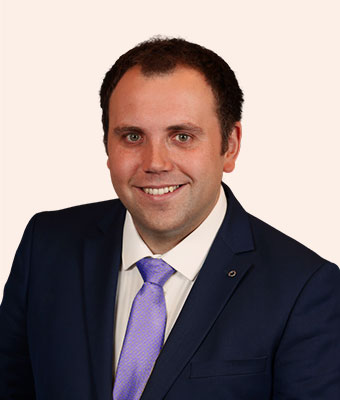
10. Deputy Cathal Crowe asked the Minister for Finance if he will consider amending inheritance tax thresholds for individuals who have no children of their own or nieces or nephews; and if he will make a statement on the matter. [4854/25]
Gabhaim buíochas arís leis an gCathaoirleach Gníomhach agus tugaim leithscéal an Teachta Crowe don Teach.
I am sure that, like us all, the Minister has received substantial correspondence on this issue. There is a perceived discrimination in the application of inheritance tax that impacts families who have no children of their own. As the Minister will be well aware, strong bonds exist between aunts, uncles, nieces and nephews. Often in such situations, the nieces and nephews become the primary carers for their aunts or uncles. The income threshold is ten times greater for a child than it is for a niece or nephew. Is any consideration being given to amending those rules?
The Deputy should note at the outset that capital acquisitions tax, CAT, is a beneficiary-orientated tax that is payable by the recipient of a gift or inheritance as opposed to the person providing that gift or inheritance. The relationship between the person giving a gift or inheritance, the disponer, and the person who receives it, the beneficiary, determines the maximum amount, known as the "group threshold", below which CAT does not arise.
The group A threshold is currently €400,000 and applies where the beneficiary is a child, including adopted child, stepchild and certain foster children of the disponer. The group B threshold is currently €40,000 and applies where the beneficiary is a brother, sister, nephew, niece or lineal ancestor or lineal descendant, such as a grandchild, of the disponer. The group C threshold is currently €20,000 and applies in all other cases. Gifts and inheritances between spouses and civil partners are exempt from CAT.
Where a person receives gifts or inheritances that are in excess of the relevant tax-free threshold, capital acquisition tax at a rate of 33% applies on the excess benefit. There are a number of exemptions and reliefs from this tax that may apply depending on the circumstances of the case, many of which do not require that any specific family relationship applies.
The Deputy will be aware that there would be a significant cost in making substantial changes to the CAT thresholds and those who can access them. Therefore, any consideration of this type must be balanced against competing demands and as part of the annual budget and finance Bill cycle.
I thank the Minister for the response. We are all aware when proposing any change that it must be balanced against other areas within the Exchequer. The concern is that some people are entering a phase of their lives where they must give consideration to this issue. Our worry is that what they are passing on to their relatives is as much a tax burden as an asset. There should be some consideration of that point. Consideration should be afforded by bringing forward some type of equity in respect of the inheritance of somebody's principal private residence. If a family is going to leave their home to a descendant, we should bring greater equity to the thresholds for that purpose.
I thank the Deputy. I am well aware of the kinds of issues he has raised. I am sure his constituents raise them with him. Times of inheritance are obviously difficult moments for families. Tax bills at times of sadness can be considerable. As I said in my earlier answer, any change to this form of taxation brings a particular, and perhaps significant, cost. That must be considered as part of our normal budgetary process. I certainly take on board what the Deputy has said. It is a matter that has been raised with me and other Ministers for Finance over the years. There are good reasons that decisions on the issue have not been made in the way in which the Deputy is advocating. In the time ahead, we will consider the issue again. I thank the Deputy for raising it.
I thank the Minister for his response and for giving the issue further consideration.
Credit Unions
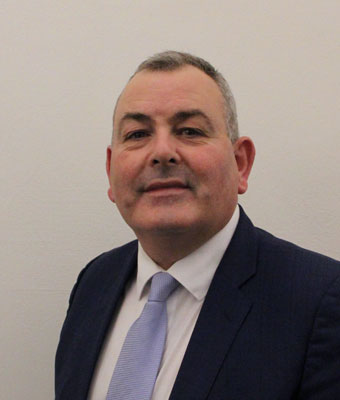
11. Deputy Tom Brabazon asked the Minister for Finance his plans to engage with the Central Bank to review credit union lending limits to enhance their ability to serve their members. [5037/25]
Gabhaim buíochas leis an gCathaoirleach Gníomhach. I dtús báire, ba mhaith liom a rá gurb é an chéad bhabhta dom a bheith ag labhairt os comhair an Tí seo. Teastaíonn uaim buíochas ó chroí a ghabháil leis na daoine i nDáilcheantar Chuan Bhaile Átha Cliath Thuaidh a chuir anseo mé. Is mór an pribhléid agus an onóir dom a bheith anseo agus teastaíonn uaim buíochas ó chroí a ghabháil le mo bhean chéile Liz agus mo chlann féin, mo thacadóirí, baill an pháirtí agus mo chairde uilig ar fad a chabhraigh liom san fheachtas chun teacht anseo.
I thank my family and the party members, supporters and friends who got me here. It is a wonderful privilege to become a Member of this House. I sincerely thank them. I say to the people of Dublin Bay North who put me here that I hope to repay their trust with diligence and hard work.
Does the Minister of State have any plans to engage with the Central Bank to review credit union lending limits to enhance their ability to serve their members?
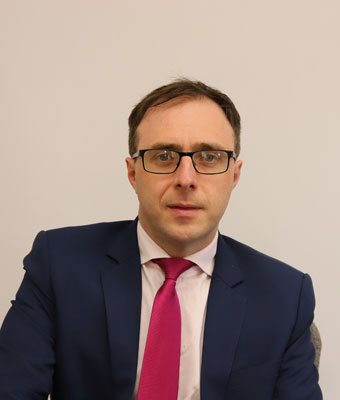
I compliment Deputy Brabazon and congratulate him on his election and his maiden contribution to the Dáil. I wish him well in the years ahead and assure him that any support or help we can give him in his endeavours to represent the people of Dublin Bay North will be forthcoming.
In January 2020, revised Central Bank lending regulations were put into effect on credit union house and business lending only. There is no regulatory limit on personal, unsecured lending which comprises approximately 87% of the credit union loan book.
At that time, the feedback statement set out the Central Bank's intention to perform and publish an analysis of credit union sector lending three years post the commencement of the amendments to the lending regulations in order to assess and analyse the actual impact which the changes to the lending regulations have had and to inform any decisions on the need for future change. The Central Bank commenced that analysis in quarter 4 of 2023 and consulted with credit union stakeholders on this matter. The former Minister of State and my officials had multiple constructive and open engagements with the Central Bank as part of that review.
On 11 December 2024, the Central Bank published consultation paper 159 - Consultation on Proposed Changes to the Credit Union Lending Regulations alongside a report on credit union lending on the Central Bank website. In the consultation paper, the Central Bank is proposing a number of targeted material changes to the credit union lending regulations in concentration limits for house and business lending and lending practices for specific categories of lending.
The Central Bank is now consulting on the following proposals for change: decoupling the limits to prescribe new separate concentration limits for house lending and business lending; removing tiering whereby all credit unions regardless of asset size may avail of the same concentration limits; and adjusting the lending capacity available to all credit unions for house and business lending, within the new concentration limits with house lending to be 30% of total assets and business lending to be 10%.
I welcome that there is a substantial section in the programme for Government on credit unions. I also welcome the pledge that has been honoured to retain a dedicated Minister of State with responsibility for financial services, credit unions and insurance. I congratulate the Minister of State on his appointment to that role. I also wish to mention the former Minister of State, Deputy Fleming who made a very significant contribution to this whole area in the previous Government.
Late last year, the Central Bank of Ireland published a review of the regulatory framework for credit union lending and launched a public consultation on proposed changes to the framework. The proposed changes will ensure the regulatory framework remains appropriate to the sector and will provide greater scope for the those credit unions which wish to undertake further house and building lending. Does the Minister of State expect to make progress on this soon?
I also compliment my predecessor in this role, the former Minister of State, Deputy Fleming as well as Ministers of State, Deputies Richmond and Carroll MacNeill who did a lot of work in the area with the review of the credit unions which are such an important financial institution in all our communities right across this country and provide a great service. Take unsecured personal lending. Some 87% of credit union loans are personal lending but they do have the capacity to offer services in the area of mortgages and business lending. That is why the proposals are there now to increase the capacity to 30% in mortgages and 10% in business lending. We are in the process of finalising that. I will meet the relevant officials in my Department and the Central Bank in the coming weeks to try to bring that to a conclusion. It is good news for credit unions. I know from engaging with my own credit union in Mullingar, the North Midlands Credit Union, that it is looking forward to these new lending limits so it has the opportunity to offer greater services to its customers.
The whole idea of increasing the lending limits will introduce a better service to the credit union membership as well as increasing competition within the financial services sector which is very welcome. I look forward to that.
Has the Minister of State had a chance to engage with the credit union movement on this proposal since his recent appointment? Has consideration been given to bringing the credit union movement under the scope of the dormant accounts legislation?
I have not formally engaged with the credit union yet but it is on the agenda in the coming weeks. However, I have engaged informally. My own credit union had me at its schools table quiz last Thursday night and used the opportunity to talk to me about some of the challenges it is facing. I will be engaging with the credit unions in the coming weeks. The Deputy will be aware that the programme for Government contains a commitment to establish a five-year strategy to set out clearly, in consultation with the credit union movement, how we would like to see it develop and grow over the next five years. Credit unions do provide an invaluable service in their respective communities and offer an opportunity for greater competition in the financial services market. I will work with the credit union movement and Members in this House to clearly set out how we would like to see, develop and grow it in the coming years.
I engaged with my officials on the dormant accounts question earlier this week. How that might work in the future is under review.
Question No. 12 taken with Question No. 7.
Tax Yield

13. Deputy Cian O'Callaghan asked the Minister for Finance for an update on the Revenue Commissioners' review of the taxes paid by Irish real estate funds; and if he will make a statement on the matter. [5042/25]
I start by congratulating Deputy Brabazon both on his election and on his maiden contribution. I know he has been a very hardworking, committed public representative for many years.
In 2020, the Minister said that investment funds were engaging in aggressive behaviour to avoid tax. He introduced a range of measures that were supposed to clamp down on this tax avoidance. Since then, these property investors have seen their tax halved despite growing the size of their portfolios by more than €8 billion during the same period. A review was commenced by Revenue in 2022 to investigate this tax avoidance. Where is this review? How many more years will the Minister allow this to continue?
The Deputy might clarify when he responds the source of the figure of €8 billion, please, so that we are clear on the particular point he is making.
I am advised by Revenue that in 2022 it commenced a compliance-based review of the Irish real estate fund, IREF, sector with one of its aims being to identify the reasons for the reduction in the amount of IREF withholding tax paid in 2021 relative to 2020, in each case arising from prior year taxable events. This gross payment data is published as part of Revenue’s annual corporation tax payments and returns publication.
I am further advised by Revenue that a large factor in the apparent reduction in tax collected in 2021 over tax collected in 2020 was the length of time it took for refund claims in respect of prior years to be received. Revenue also advise that some IREFs reported that the Covid-19 pandemic impacted the value of investment property, meaning they recorded losses in accounting periods ended in 2020.
I welcomed a recommendation of the Commission on Taxation and Welfare 2022 to undertake a review of the IREF regime. On 22 October 2024, my predecessor as Minister, Deputy Chambers, published the funds sector report “A Framework for Open, Resilient & Developing Markets”.
On IREFs, the funds review team recommended consideration of a public consultation to set out potential options for an entity-level tax for IREFs. Officials in my Department are reviewing this recommendation, as part of a wider consideration of the funds review report which I, in turn, will consider in due course.
I will come back to the Minister on the source of that figure.
So that I am clear, is the review commissioned by Revenue in 2022 published? The Minister referred to the other reports and reviews that are going on but will he clarify if that review is published?
A report published by the Central Bank last year found that 78% of the homes owned by investment funds were bought as existing properties. The report also found that institutional landlords increased monthly rents by about 4.1% more than other landlords. These funds are driving up rents, increasing house prices and locking out first-time buyers. Will the Minister, at very least, close down these loopholes that are allowing them to get away with tax evasion? Was the Revenue review published?
The review was a compliance review undertaken by Revenue and therefore it would not publish a document in relation to that, respecting taxpayer confidentiality. However, it has indicated, as I shared with the Deputy, the tax payments that were made by that sector to the Exchequer over recent years. For 2023, that figure stands at €31.8 million. In 2017, that figure was €8.3 million. Therefore, there has been an increase in the tax paid.
We need a broader consideration of how we are going to deal with the housing needs that are so clearly there. I believe the Deputy acknowledges that in order to meet the housing needs which are only growing, the private sector must play a role. Part of how the private sector will do that is by allowing the savings and pensions in other parts of the world to be invested in providing homes here in Ireland.
We do need to deal firmly with tax compliance issues, as has been done, and we need to find ways by which more homes can be built.
The Minister has been very selective in the years he quoted in relation to taxation.
The Minister knows well that the tax decreased. In fact, he said that there was aggressive behaviour to avoid tax. The purpose of the review conducted by Revenue was to look at how those loopholes could be shut down. Has there been any action on foot of that review, the results of which have not been published? Will the Minister be taking action? In 2017, the sector was much smaller and, of course, was paying less tax. This is a selective use of data.
Tá brón orm. I was only reading out a base figure in the interests of time. Let me be non-selective and read out all the figures for each year since 2017. Those figures are: €8.3 million, €28.2 million, €72 million, €73.8 million, €43.1 million, €37.6 million and €31.8 million, respectively. In recent years-----
Exactly. They have halved.
-----we have seen it at that figure. This is the reason Revenue instigated the compliance intervention that it did. I have made changes. I did so by means of tax legislation in order to ensure that issues that were being raised with me by Revenue were acted upon, and that happened. As soon as further information becomes available for the sector, it will of course be shared with the Deputy and made public.
Programme for Government
66. Deputy Ged Nash asked the Minister for Public Expenditure, National Development Plan Delivery and Reform when he will conclude the process of workforce planning referred to in the programme for Government for the public sector; and if he will make a statement on the matter. [5124/25]
Will the Minister put on the record the position relating to the programme for Government commitment on the process of workforce planning? It is referred to in the document adopted by the House. Will he elaborate on precisely what that means, what the process involves and when he expects to complete that initiative?

I thank the Deputy. The programme for Government states that this Government will undertake a programme of workforce planning to identify the optimal staffing model within the public sector to meet the needs of our changing demographics. In considering the approach to this, I will have regard to the responsibilities of other Ministers in relation to relevant issues such as recruitment in their respective sectors and taking account of the existing policy context.
Regarding overall public service staffing, the estimate for public service staff numbers for the end of 2025 is just below 428,000 in full-time equivalent terms. This is the highest ever level of employment in the public service and will represent an increase of almost 22,500 full-time equivalents on the latest reported figures of 405,000 for September 2024.
Public service staffing levels are largely managed through a policy of delegated sanction. This was introduced in 2015 to provide offices and Departments with flexibility to manage identified business needs subject to remaining within overall pay ceilings, which are agreed as part of the budget and Estimates process.
Delegated sanction allows Departments to fill vacancies through recruitment, promotion or both, in specified, designated grades up to and including principal officer standard. Delegated sanction is subject to the overall pay bill ceiling as set out in the Revised Estimates Volume. Projected staffing numbers and composition should fall within the parameters of the Department’s pay bill.
With regard to the public service workforce, I highlight a number of policy developments designed to ensure our public services are well positioned and equipped to meet the current and future needs of our citizens. We launched the Better Public Service 2030 transformation strategy, which sets out our vision for a public sector workforce of the future that is skilled, motivated and reflective of the people we serve. This strategy provides a framework for all public service bodies to identify and implement transformation priorities under the workforce and organisation of the future pillar. Public service bodies are working under this framework to ensure a public service that is more diverse, agile and inclusive and reflects Irish society to better serve the Government and the public, ensure that its staff are skilled for the future and to ensure it is an employer of choice by attracting, retaining, upskilling and developing its staff.
I have other items I might go into later.
I am glad the Minister made the point that the public sector ought to be the employer of choice. It needs to be the exemplar and best practice needs to be shown. A degree of workforce planning in the ranks of junior Ministers has taken place this week. The Minister claimed that because of an expanded population we require additional Ministers of State. We had that debate yesterday. He is right that public sector employment levels will grow to a record high this year and that is to be welcomed. There is a degree of misalignment between his position and that of the Parliamentary Budget Office, and its analysis made available to The Irish Times a couple of days ago. The Minister may have seen the piece published yesterday, where it was estimated there would be 415,000 civil and public servants by the end of this year. He said his figures are that it will be in excess of 420,000. He might explain his understanding of the Parliamentary Budget Office's position. His assessment may include local authority workers and he might clarify that.
I can revert to the Deputy on the specific background to the figures and I am happy to do that. On the overall point, as our demographics change and our population grows, we want to make sure - similar to the Deputy's party - we have increased numbers of people working in the public service and that it is in a place where people want to join it and it is an attractive place to work. That is obviously reflected in overall pay policy, which is central to retaining and recruiting staff into our public service, and supporting upskilling and reskilling members of the public service to meet the future needs and objectives we share in the Oireachtas, and the policies we agree. I am happy to provide the background to the specific figures provided to me in the context of the 428,000 full-time equivalents by the end of 2025. I can send the Deputy a note on that specific matter.
IBEC has even made an assessment in recent years and has caught up with the position of the Labour Party and others that our State is not only too small to service current economic and social needs, but future economic and social needs and ambitions. I will make two points. The first is that when we talk about agility, the public sector and the private sector need to be agile. There is now competition for talent. It was disappointing to see individual Departments going on solo runs last week on unilateral proposed changes to their policies on blended work. That position has changed in recent days where they have agreed to engage with trade unions. It is important that the public service should be an exemplar of employment practices.
We obviously do not include section 39 workers, who are balloting for industrial action, in our public sector employment figures. There used to be a connection and alignment between their pay grades' terms and conditions and those of equivalent grades in the public service. That is not the case at the moment and that needs to be addressed because they are carrying out the work of essential public services in the health-related activities contracted to them by the State.
I acknowledge the contribution many section 39 workers make in disability, health and social care organisations across our country. As the Deputy will know, there is an industrial relations process in that regard. This is being co-ordinated by the Department of children and disability, which has many section 39 workers under its direct remit. My own Department is engaged with the Department in respect of that. The WRC is the place for that engagement to take place.
On blended working, as the Deputy will know, my Department sets the overall policy. Different Departments then manage it in the context of their specific needs. I have responded to him directly in my replies to recent parliamentary questions on that issue and the ongoing work on blended working.
Defective Building Materials

67. Deputy Charles Ward asked the Minister for Public Expenditure, National Development Plan Delivery and Reform if the he will engage with the Department of Housing, the OPW and Donegal County Council to explore a viable alternative solution for affected homeowners in Elm Park, Buncrana, including the option of providing grant funding for the purchase of alternative homes rather than rebuilding on an unsuitable site; and if he will make a statement on the matter. [5217/25]
107. Deputy Charles Ward asked the Minister for Public Expenditure, National Development Plan Delivery and Reform if urgent consideration will be given by the OPW to addressing the flooding situation in Elm Park, Buncrana, where nine properties were built on a floodplain and have been severely impacted by both defective concrete and previous flooding; and if he will make a statement on the matter. [5218/25]
Will the Minister engage with the Department of housing, the OPW and Donegal County Council to explore viable alternative solutions for the affected homeowners of Elm Park in Buncrana including the option of providing grant funding for the purchase of alternative homes rather than rebuilding on a floodplain? Will he make a statement on the matter?
Which question is this?
It is Question No. 67 but it is grouped with Question No. 107. Both are in the name of Deputy Ward.
I do not have the reply. I understood that it had been changed. I do not have it.
Will the Minister of State come back to me on it?
I will. I will come back to the Deputy. I am sorry about that.
Questions Nos. 68 and 69 taken with Written Answers.
Departmental Functions
70. Deputy Ged Nash asked the Minister for Public Expenditure, National Development Plan Delivery and Reform to provide details on the full number of staff who will be assigned to the proposed dedicated infrastructure division in his Department; if he will provide details on the range of skill sets that will be available within the division; and if he will make a statement on the matter. [5127/25]

77. Deputy Ryan O'Meara asked the Minister for Public Expenditure, National Development Plan Delivery and Reform when the new infrastructure unit in his Department will be established; and if he will make a statement on the matter. [4922/25]
This question is on the commitment made in the programme for Government to create a dedicated infrastructure division in the Department. Will the Minister put on the record the range of skill sets that will be available, the number of staff to be employed and the overall complexion of that particular division, which will be critical to the development of crucial infrastructure in our country?
I propose to take Questions Nos. 70 and 77 together.
The programme for Government sets out the clear ambition to prioritise the delivery of transformative, critical and growth-enhancing infrastructure over the next five years by delivering projects as early as possible and within budget. Extra emphasis has been given to my Department through the placing of a real focus on infrastructure and the creation of a dedicated infrastructure division led by a deputy Secretary General. The division will provide greater oversight and support across government in regard to infrastructure delivery to ensure delivery agencies can better deliver the infrastructure needed by our economy and the national development plan.
My Department is presently giving full consideration to the skills and resources required to support it to deliver on the specific mandate of the new division. Any additional skills and resources will complement the Department's existing staff in the national investment office, which consists of staff with economic and financial expertise, staff in the construction procurement policy unit, who have expertise in procurement, architecture, engineering and surveying, and staff in the commercial skills academy, who have expertise in engineering and professional development. The requirement for additional analytical, technical, procurement and project management expertise within the division will be scoped out with a view to using this expertise to support all of the national development plan delivery bodies with major infrastructure projects.
It is important to note that many of the Department's wider Vote sections also support national development plan delivery through their day-to-day oversight of spending and delivery by sectoral Departments, including the sanctioning of capital spending and providing advice to Government and sectoral departmental policies. Further functions within the Department also deal with issues that impact on this delivery. These include public sector pay policy in the sanctioning of technical posts and salaries required for specific expertise and the Office of the Government Chief Information Officer, which has oversight of larger digital transformation projects. These officials have other responsibilities in respect of their sectors or wider current spending policies and will therefore support the infrastructure division in its work.
As proposed within the programme for Government, the division and its staff will work with Departments and agencies to expedite infrastructure delivery by identifying barriers and progressing reforms to boost delivery and by using the levers at the Department's disposal, including its role in resource allocation, the proposed Cabinet committee on infrastructure and the use of cross-governmental oversight structures.
I thank the Minister very much. The creation of this division seems to be a halfway house between Fine Gael's manifesto commitment to a Department of infrastructure and Fianna Fáil's own ambitions in this area, as reflected in its general election manifesto. The division will be headed by a deputy Secretary General. That is also the case in some other Departments. I believe the Department of Justice has a deputy Secretary General. The way the Minister has described this suggests that expertise will be pulled into this division from other Departments. Will this then mean a diminution of expertise in, for example, the Department of Transport? Many of us in the Oireachtas are concerned about delays to major transport projects around the country. How might that work? The Minister will understand, will accept and has experienced in his role the principle that finances follow functions. When a Department is split up and functions move, the resources move with them. Is that the case?
We are scoping out the overall staffing needs of the division but, to be clear, the overall intention and policy focus in the establishment of this division is not to shallow out or undermine the expertise or delivery systems we have within existing Departments. This is very much to complement and enhance delivery systems, to focus on barriers to delivery and to progress the overall reforms that will be required to drive delivery across different Departments and agencies. That is the overall intention here. This is not about trying to shallow out or undermine good delivery systems. It is about leveraging overall expertise to drive better delivery of infrastructure in our economy. That is why we will use additional analytic and specialist expertise by working with colleagues in the Department of Finance, who will obviously have a view on overall infrastructure delivery in our economy. We will also work with the NDFA and NewERA to enhance delivery. That is why the role of the NTMA and its inputs on overall infrastructure delivery were reflected in the general election campaign. We are trying to establish a greater centralised focus on, and greater oversight of, delivery to underpin the outputs and outcomes. The Deputy is correct; there are a number of examples of projects. In many instances and in certain areas, these are being driven on and are being delivered on budget and on time. In other instances, there are ongoing delays and members of the public are frustrated that they are not seeing the projects set out in the national development plan. We want to accelerate and boost delivery within the infrastructure division. We have overall responsibility for capital spending in the economy. That is why we are scoping out specific staffing needs but it is very much to complement the work of existing Departments, to support them in driving better delivery and identifying barriers and to get feedback from them on those barriers so that we can try to eliminate them and achieve the infrastructure delivery we need.
I will put the Minister behind the 8-ball, if I may. I have no doubt from speaking to his Government colleagues that Government has one, two or maybe even three principal objectives in respect of the expeditious delivery of critical infrastructure in the early part of the term of this Government. What are the most important infrastructure development projects that could be supported by this new division? The Minister must have something in mind. I have no doubt that he does. I have a slight concern.
It was a concern that probably surfaced in the context of the election campaign in November but also subsequent to that in the programme for Government negotiations. I am not sure if there were any issues at all between Fianna Fáil and Fine Gael. I refer to the idea of whether a department of infrastructure should be set up. The settled view seems to be that setting up a Department is complicated and it takes time, while the priority is delivery. What does the Minister want to deliver? What projects does he think this initiative will help him to deliver quicker?
First, we will review the national development plan to identify a new ambition and focus on overall delivery. What we have set out previously, for example, in regard to the state aid case concerning Apple, is that the strategic priorities of our economy are housing, water, energy and transport infrastructure. The other pillar is health digitalisation. That has been a missed opportunity for too long. It is hugely important in the context of our healthcare infrastructure. The fragmentation and limitation of the digitalisation of our health system have undermined overall productivity and value for money but also the support for patient care and outcomes. We can support healthcare workers and professionals in their day-to-day jobs given the opportunities that presents.
They are some of the strategic priorities that we have set out. That will be reflected in the context of the review of the NDP. Complementing the overall capital allocation we aim to try to drive better delivery across the board. As we are establishing a new division, that is what we are currently scoping out from a skills perspective. Separate to that is how we identify some of the areas where there were delays in advancing projects in the past in order to try and accelerate their delivery. We have pretty ambitious commitments to ensure the NDP review is conducted and completed by the summer of this year. Then it is about trying to underpin that in the context of a multi-annual plan. We are driving that on.
We have a lot of work ongoing in the context of the Apple escrow and also other funds. We are working with the Department of Finance on that specific strategic infrastructure. If we take the overall housing supply in our economy, we have set new housing targets. The key to unlocking that is energy, water and transport infrastructure in particular. They are key to driving overall housing delivery. Accelerating that will be central to our new national development plan.
Flood Relief Schemes
71. Deputy Noel McCarthy asked the Minister for Public Expenditure, National Development Plan Delivery and Reform to provide an update on flood prevention measures being undertaken in Rathcormac, County Cork; and if he will make a statement on the matter. [5074/25]
I wish both the Minister and the Minister of State well in their roles. I look forward to working closely with them.
Could I get an update on flood prevention measures being undertaken in Rathcormac, County Cork, and if he will make a statement on the matter?
I congratulate the Deputy. In the past, I had a great working relationship with his predecessor, so I look forward to working with him in the future.
To date, six communities across Cork county are protected from significant flood risk by completed flood relief schemes. Through the catchment flood risk assessment and management, CFRAM, programme, the largest study of flood risk was completed by the Office of Public Works in 2018. It is not possible to progress all 150 flood relief schemes identified by the 2018 flood risk management plans simultaneously, due to the limited availability of the required professional and specialised engineering skills. However, the Government is committed to funding these projects through the €1.3 billion available under the national development plan.
Since 2018, and working with local authorities, the OPW has trebled, to 100, the number of flood relief schemes at design and construction. The flood risk management plans identified 15 additional flood relief schemes for Cork county. Under the national delivery model, Cork County Council is leading the delivery of six flood relief schemes with nine planned in the next phase, including Rathcormac and Castlemartyr. The OPW is funding nine engineering staff in the council to support its delivery of this programme of schemes.
The OPW is piloting a new delivery model to inform the most efficient delivery to be applied for the future 50 tranche 2 schemes nationally, including Rathcormac. The OPW understands that the council progressed interim flood mitigation measures for Rathcormac, which were funded under local climate adaptation and resilience grants. These works included the installation of a flood embankment, the upgrade of storm infrastructure, drainage channel clearing and works to roads to improve drainage.
Cork County Council can introduce localised flood mitigation measures in Rathcormac with 90% funding from the OPW's minor flood mitigation works and coastal protection scheme ahead of a flood relief scheme commencing. Under the minor works scheme, applications are considered for projects that are estimated to cost not more than €750,000. Rathcormac is included in the Midleton and east Cork individual property protection scheme, which is a Cork County Council scheme with €5.8 million funding from the OPW. Under this scheme, property owners who experienced flooding during Storm Babet in October 2023 may be eligible to apply for receipt of individual property protection measures. Property surveys are currently ongoing, with floodgate delivery to suitable properties commencing in the coming weeks.
I thank the Minister of State for his response and for the update. I commend the officials in the OPW and Cork County Council, and the previous Minister of State with responsibility for the OPW, Deputy Kieran O'Donnell, on the work done to date, and the establishment of the individual property protection scheme for east Cork.
While I acknowledge that areas such as Midleton, Castlemartyr, Mogeely and Killeagh were devastated by the flooding caused by Storm Babet in October 2023, I must highlight the plight of Rathcormac, which has long been identified as a flood risk. This, unfortunately, came to pass following Storm Babet, with many properties devastated by flooding. This is something that will forever be remembered in the community. I have no doubt that those who were impacted will continue to be fearful of a repeat whenever the area is subject to prolonged rainfall. I acknowledge that Rathcormac is included in tranche 2 of the CFRAM programme, but is there a possibility of it being prioritised for works and included under tranche 1 of the programme?
I set out the details regarding Rathcormac. There is availability through the minor works scheme for the local authority to come to my Department to seek funding under that scheme, while we wait for the bigger scheme. We are looking at a pilot scheme for tranche 2, which Rathcormac comes under, but the pilot scheme is not yet finished. I understand it is a year from completion.
The minor works scheme is the Deputy's best option at this time to try to help the people at Rathcormac with future flooding resistance. I will visit the area. I know the Deputy has sought that in recent weeks. I will let him know when the visit is happening. I will call and see the people myself.
I again thank the Minister of State for his response. I previously mentioned his predecessor and the good work he did within the Department. When he visited areas in east Cork last year, unfortunately, he did not get the opportunity to visit Rathcormac. Following the Minister of State's response, I would appreciate it if he could get an opportunity to visit. The people of Rathcormac would be very grateful for that. His visit would reassure them that work will be done in the near future. I thank him very much for his response. It is very positive that he will visit as soon as possible.
Flood Risk Management
72. Deputy Ruairí Ó Murchú asked the Minister for Public Expenditure, National Development Plan Delivery and Reform if his Department is considering natural flood management and other mitigations in relation to estimated rising sea levels and protecting property that is prone to this risk; and if he will make a statement on the matter. [5073/25]
I wish the Minister and the Minister of State the best in their Ministries. The first time I met the Minister of State, Deputy Moran, it was in Dundalk in a previous iteration when I was a councillor dealing with the major flood protection issues facing County Louth and in particular Dundalk itself.
I am asking a specific question on natural flood management and other mitigations to protect property in the face of the estimated rising sea levels. We know we need to look at everything that can possibly be done in this regard. What is the OPW's position on this particular solution?
In the first instance, it is the responsibility of each local authority to investigate and address local coastal protection. The minor flood mitigation works and coastal protection schemes were introduced by the OPW on an administrative, non-statutory basis in 2009. The purpose of the schemes is to provide funding to local authorities to undertake minor flood or coastal erosion mitigation works or studies to address localised flooding and coastal protection problems within their administrative areas.
Applications for funding from local authorities for measures or studies costing up to €750,000 can be made under this scheme. Funding of up to 90% of the total cost is available, subject to meeting specific economic, technical, social and environmental criteria.
The Government recognises the risks associated with climate change and that increases in sea levels and storm surges will result in more frequent coastal erosion. In response to these challenges, the recommendations outlined in the report of the interdepartmental group on national coastal change management strategy are being implemented. Among the key recommendations of the report is the assignment of the lead co-ordination role to the Department of Housing, Local Government and Heritage, which is responsible for chairing an interdepartmental steering group on coastal change.
The OPW has been designated by the Government as the national lead co-ordinating body for the assessment of coastal change hazards and risks and the assessment of technical options and constraints. These assessments will build upon indicative assessment work previously undertaken by the OPW under the Irish coastal protection strategy study, and comprise a substantial, multi-annual programme of works to assess coastal risk nationally, and then in detail at higher risk locations as a basis for then determining potential viable works to manage this risk. This work will contribute to the work of the interdepartmental steering group on coastal change.
The OPW has commenced work programmes and projects to deliver on recommendations from the national coastal change management strategy report to develop the understanding of how our coast is evolving, identify areas prone to erosion, survey the coastline and coastal defences and assess coastal change hazards and risks.
The reason I submitted this question is probably related to the programme with Richard Boucher-Hayes, which I am sure many of us saw. It referred to the use of absolutely natural protections, which have been used in many places. It is expected, with rising sea and river levels, that we will have flooding. Sometimes we need to accept this, ensure we flood the places where there are few or no houses and ensure dissipation afterwards. It is just a case of ensuring we are considering natural methods.
We know there are some really innovative non-natural methods, which we have seen in the Netherlands and other places, that have to be put in place. We need to see the full delivery of the CFRAM protections. I have a further question on that but I will deal with it later.
It is just about making sure that we are considering everything from an innovation perspective and using everything, realising that even if we do our absolute best from here on in, we will see rising water levels.
I did not get to finish my response earlier. I assure the Deputy that we are considering natural methods of protection.
We talk about fluvial flooding but coastal erosion is becoming a huge problem. I have seen it in the past, including when I served here with responsibility for the OPW, and I expect it in the future. It will be a major problem. All people, not only those in the OPW but also all Members of the House, need to work together, because the problem has a frightening effect on families right along the coast. Based on what the Deputy has put forward, I assure him that works are being done to ensure we take all measures to protect the coast, particularly the communities involved.
The Minister of State does not need to respond to my next comment. I welcome what he has said. We just need to consider this in all senses. One would be doing something like what I propose only with agreement from a farmer or other relevant person. It would basically be to suit and protect the community overall. I believe I will get an opportunity to elaborate when dealing with the next question.
With agreement from Teachtaí Nash and McGuinness, may Deputy Ó Murchú take Question No. 80 now, before he takes the Chair? Agreed.
I am renowned for brief questioning.
Brevity.
80. Deputy Ruairí Ó Murchú asked the Minister for Public Expenditure, National Development Plan Delivery and Reform the status of the catchment and flood risk management plan under CFRAM for County Louth; the progress on its implementation to date; the funding that has been allocated to the scheme to date; and if he will make a statement on the matter. [5072/25]
This relates to the CFRAM flood risk management plan for County Louth. It is about progress, implementation and ensuring what is proposed will happen. The Minister of State is well aware of the issues that relate to Dundalk and the rest of County Louth. It is a case of ensuring we deal with them as soon as possible. During storms in the part of Dundalk in which I live, we have an issue with getting rid of wastewater. These are all issues that will need to be addressed.
I have to apologise to the Deputy. I am new in the game and have not got the response to the question with me. However, I will send it on to the Deputy.
That is okay. I appreciate that. The question was just to get an update. We all know the importance of the issue and I have no doubt that the Minister of State does. It is a matter of ensuring we are not facing and dealing with floods. We will move on.
National Development Plan
73. Deputy Aengus Ó Snodaigh asked the Minister for Public Expenditure, National Development Plan Delivery and Reform the steps he will take to ensure that planned expenditure on projects in the national development plan are properly costed and have realistic start and completion dates; and if he will make a statement on the matter. [5044/25]
I would like it if the Minister detailed the steps that are going to be taken to ensure that planned expenditure on projects under the national development plan are properly costed and that the projects have realistic start and completion dates. Many have been frustrated in that we have seen far too many cost overruns and a lack of completion dates.
The previous Government committed to €165 billion in capital investment through the national development plan, published in 2021. As a percentage of national income, annual capital investment is now among the largest in the EU. In 2025, €15 billion will fund vital infrastructure in areas such as housing, transport, education, enterprise, sport and climate action. An additional €2.25 billion of windfall corporate tax receipts has been allocated from 2024 to 2026 to provide funding for critical infrastructure projects that are at an advanced stage, as well as to the existing climate action fund. Ensuring that projects are properly costed with realistic start and completion dates is vital in achieving value for money from this investment.
My Department is responsible for the infrastructure guidelines, which replaced the public spending code for capital appraisal since the end of 2023. These set the value-for-money requirements and guidance for evaluating, planning and managing Exchequer-funded capital projects. Management and delivery of investment projects and public services within allocation and the national frameworks is a key responsibility of every Department, Accounting Officer and Minister.
The 2019 update to the public spending code, the introduction of the external assurance process and the major projects advisory group, and the most recent updates were informed by a number of different factors. These included recommendations arising from several reports, including the 2017 IMF report Technical Assistance Report – Public Investment Management Assessment and the PWC independent review of the escalation in costs at the new children’s hospital, a consultation process involving key stakeholders, as well as international evidence.
The introduction of the infrastructure guidelines in 2023 focused on reducing the administrative burden in delivering major capital projects which came as part of the Government’s priority action to maximise the delivery of projects. This was implemented through reducing the number of approval stages and streamlining the requirements for major projects, while retaining the international best practice governance and oversight arrangements already in place. This will ensure that vital infrastructure projects will be delivered on time.
I will continue in my next contribution.
It is very hard for people to have faith in the Government, definitely on the back of what the previous Government oversaw regarding the national children’s hospital, cost overruns, there being no idea of a completion date, and a change in completion dates. The current Government needs to take this seriously, just as it needs to take seriously the need to stop the wastage of public money.
It is incredible that there is a wall – I looked at it – that cost the guts of half a million euro. It is also incredible that we have a bike shelter here that cost an arm and a leg and a security hut just up the road from here that cost €1.4 million. Regarding all such matters, it is extremely important that the Government take value for money seriously and tackle the issues of cost overruns and completion dates. I hope this will be an absolute priority for the Minister.
It is an absolute priority. On the specific items or examples the Deputy has raised, I have met with the chair of the OPW, along with the Minister of State, Deputy Moran, as regards the specific concerns relating to particular projects. In certain instances, members of the public have been extremely concerned, as indeed I think anyone in the political system is, about particular cost overruns. The OPW has been held to account in the Oireachtas. It is important that we have central guidance and oversight to ensure value for money and ensure that there is proper standardisation, that the design protocols are in place and that projects can be delivered at a lower cost and in an effective timeframe. That is why, as part of the appraisal for projects under the infrastructure guidelines, sponsoring agents are asked to critically consider the potential schedule and cost implications of a project, which is further developed as a project progresses through the approval gates and more information becomes available as it moves from a preliminary to a final business case, before the awarding of a contract. It includes both detailed financial and economic appraisal and accounting for all appropriate levels of contingency. That is all set out in the overall infrastructure guidance.
It is very difficult for people to believe that this will be taken seriously by the Government because we have been seeing more crazy sums of public money being wasted. I will have a Bill forthcoming in this Dáil which will clearly help to identify cost overruns, deficient contractors and wasteful public procurement spending of public moneys. I know this is the first time the Minister and I have worked together like this, but when I point out issues and things I do not agree with, I like to come with legislation that I believe can tackle them. I hope we can work constructively together on these issues and try to bring in legislation that will stop this kind of wasteful spend. Obviously, I do not expect the Minister to agree to my Bill when he has not seen it, but I do hope we can work constructively together. I have not congratulated the Minister and the Minister of State on their new positions so I do that now and I hope we can all work together constructively.
I thank the Deputy and I welcome that. The Minister of State, Deputy Moran, and I are happy to work with everyone on a constructive basis on the common objective across our respective responsibilities in the Department. I take very seriously the concerns that have been articulated relating to value for money on particular projects, well-documented ones, many of which were unacceptable in terms of their cost overruns. It is important that there is that anchor of discipline on overall spending when it comes to capital projects in our economy and that there is a focus on delivery at the lowest cost. A lot of that comes down to the design process and, in terms of bigger capital projects, where standardisation is possible and where design protocols are there, ensuring that the appropriate governance is in place to manage particular cost overruns and that there is intervention at a management level if things are escalating from a cost perspective. We have an overall capital envelope that is ambitious to drive better infrastructure delivery in our economy, but value for money has to be at the centre of that. That will be a real focus for me as we establish an infrastructure division in my Department while also ensuring we have better discipline on overall spending and value for money.
Question No. 74 taken with Written Answers.
Anois, an Teachta Nash agus Ceist Uimh. 75. I thank you for your patience.
Civil Service
75. Deputy Ged Nash asked the Minister for Public Expenditure, National Development Plan Delivery and Reform when he plans to commence and conclude his planned review of the Civil Service blended working policy framework; and if he will make a statement on the matter. [5125/25]
I would like the Minister to put on the record of the House the programme for Government commitment on the context around the planned review of the Civil Service blended working policy framework. As I mentioned in another context earlier, in recent weeks the Department of Social Protection, for example, went on what I might describe as a solo run and requested that staff return to the office a minimum of two days per week from this month. The situation has changed since, but I ask the Minister to elaborate on the current position of the Government, and on his position, on the commitment to a Civil Service blended working policy framework review.
The Government has committed to review the Blended Working Policy Framework for Civil Service Organisations to consider how the implementation of this approach best delivers public services. My Department will consider the commitments and actions set out in the programme for Government which fall under its remit, including the commitments and actions relating to blended working.
The Blended Working Policy Framework for Civil Service Organisations was published by my Department in March 2022. The framework provides broad strategic direction to individual Departments and offices in the Civil Service in developing tailored policies on blended working that are appropriate to their business needs.
The framework already provides for reviews, in consultation with stakeholders, on an ongoing basis to adapt to any changes required to meet the needs of business and employees and to incorporate any broader strategies and approaches to new ways of working. Civil Service organisations are encouraged to review their policies regularly to ensure that they continue to meet their business needs.
The Civil Service remains committed to ensuring that the public have access to services underpinned by efficient public service delivery. In this context, ongoing reviews of the impact of blended working on organisations, the workforce and the public are essential. The framework recognises that employers require flexibility to decide on the blended working arrangements that best suit their own business and service delivery needs, having regard to the policy or service delivery context in which they operate.
In July last year, my Department published the blended working evaluation model with a view to assisting Civil Service organisations in effectively assessing the impact of blended ways of working on the workforce, organisations and the public. The outcome of these evidence-based assessments will help to inform future policy direction to ensure that blended working evolves to best serve those organisations, the workforce and the public.
It seems to me that the Department of Social Protection jumped the gun with its solo run on this. It jumped the gun on the programme for Government commitment. Nobody has any difficulty with a review. The existing policy, though, has been in place only since 2022, and I would not advise the Civil Service and public service or the Minister to take any example from the code of practice of the Workplace Relations Commission that applies, for example, to the private sector. That is essentially a charter for refusal for workers who want to engage in more hybrid work and have more work-life balance in that regard. I said earlier that the public service should be an exemplar in terms of employment practices, pay and terms and conditions. It is a very competitive labour market at the moment for the skills that are available in our labour market, and that will be very important as regards the ability of the Civil Service and public service to attract talent over the next few years.
On that basis, pending the outcome of engagement with trade unions and the completion of the work on the framework, will Deputy Chambers, as the Minister with responsibility for the public service, instruct individual Government Departments not to change their existing frameworks and policies at least until such time as their engagement with the relevant trade unions and the completion of this initiative?
The blended working policy framework encourages all individual Civil Service organisations to carry out regular reviews of their own blended working policies in consultation with all stakeholders, including employee representative groups at a local level. The current blended working policy framework for the Civil Service organisations recognises as well that employers require flexibility at a local level to decide on the blended working arrangements that best suit their own business and service delivery needs. That is how this has evolved since it was introduced a number of years ago. It is a matter for each Civil Service organisation to assess those needs and to develop tailored blended working policies appropriate, for example, in the context of what the distinction is between in work and remote work. That has been managed very well across the Civil Service and public service since it was introduced and it has been supported by my Department in the context of the blended working evaluation model, which respects that discretion in the context of each Civil Service organisation.
If I am reading correctly what the Minister is saying, he is comfortable with what the Department of Social Protection did in recent weeks, essentially instructing staff to come back to the office without agreement two days a week. By the way, that may seem reasonable to some, and I am not saying it is unreasonable. What is unreasonable is the lack of consultation and the unilateral nature of that decision, which appeared to blindside staff and their representative organisations, Fórsa in this case. Nobody has any difficulty - I certainly do not - with tailored, customised solutions to address the workplace needs and business environment in individual Departments and agencies because they are all different and all have different needs.
However, we need to agree on a core set of principles that would apply across the Civil Service and public service on approaches to blended, remote and hybrid work. Any initiative the Government undertakes or plans to undertake - I would appreciate it if the Minister put it on the record of the House when he intends to have this process completed - must be informed by evidence. Productivity, performance and all those very important things should be included and any examination needs to be robust and decisions need to be evidence based. However, I am not seeing much of that.
I respectfully disagree because we have a blended working evaluation model and that is providing significant insights and evidence. It was published by my Department in July last year and is designed to assist organisations in effectively assessing the impact of blended working on the ways people work. The model provides for a mechanism for continuous improvement. This enables organisations to gain valuable insights, share learnings and identify areas for enhancement.
I have also put on record that the framework encourages individual Civil Service organisations to carry out regular reviews. The business needs of the wider public service are fragmented and different based on the respective roles, remits and responsibilities that particular civil or public servants have. The framework we have respects that, which is why the process of consultation is also reflected in the policy framework we have, which involves engagement of stakeholders, including employee representative groups at a local level. The overall process, as it has evolved since it was introduced during Covid, has been respectful.
Question No. 76 taken with Written Answers.
Question No. 77 taken with Question No. 70.
Flood Relief Schemes
78. Deputy Conor D. McGuinness asked the Minister for Public Expenditure, National Development Plan Delivery and Reform the plans, schemes or supports he and the Office of Public Works have in place to offset the risk of damage to life and property in areas prone to flooding in severe storm conditions, such as Tallow, County Waterford. [4186/25]
Gabhaim buíochas leis na hAirí. Déanaim comhghairdeas leo beirt ar a gceapachán. What plans, schemes or supports do the Minister of State and the Office of Public Works have in place to offset the real risk of damage to life and property in areas prone to flooding in severe storm conditions, such as Tallow, County Waterford? I reference Tallow because during Storm Babet in 2023 flooding occurred there that had a very serious impact on homes, families and businesses in that area. Thanks to representations from my colleague, Councillor Donnchadh Mulcahy, and me, dredging work will take place in the Glenaboy river but some structural works need to take place on the Glenaboy and the Bride rivers and the wider Blackwater river basin.
Nationally, 55 flood relief schemes have been completed, which are providing protection to over 13,500 properties and an economic benefit to the State, with damages and losses avoided estimated to be in the region of €2 billion. In 2018, to facilitate the development of a programme of works, the OPW completed a strategic study called the national catchment flood risk assessment and management, CFRAM, programme. The CFRAM programme resulted in the publication of 29 flood risk management plans which provide the roadmap for the Government’s €1.3 billion investment in flood relief measures over the lifetime of the national development plan to 2030.
Since 2018, as part of a phased approach to scheme delivery, this funding has allowed the OPW, in partnership with local authorities, to treble the number of schemes at design, planning and construction to some 100. The CFRAM programme did not propose structural flood risk management options to Tallow as it was considered to have a low level of flood risk. The OPW is aware that in October 2023 a flood event occurred in Tallow during Storm Babet. The OPW is reviewing the level of flood risk in Tallow as part of its national review of preliminary flood risk assessments, as required under the EU floods directive. Officials from my Department have previously liaised with Waterford City and County Council regarding recent flooding events in Tallow and OPW engineers will meet Waterford City and County Council over the coming weeks to discuss the flooding at Tallow and measures available to the council to manage that risk.
Gabhaim buíochas leis an Aire Stáit as an bhfreagra sin. I thank the Minister of State for that answer but it will be cold comfort to residents of West Street in Tallow who are grappling with the fact that no structural works are proposed by the OPW to the Glenaboy and the Bride rivers. We are all aware that the ferocity and frequency of these winter storms and severe weather events are increasing. People on West Street have begun to put their lives, businesses and homes back together after that flooding event in late 2023. While they welcome that dredging will take place after a very long period of engagement with the National Parks and Wildlife Service, Inland Fisheries Ireland, the OPW and Waterford City and County Council, there is much to do. Some structural works need to take place to increase capacity in that catchment area so flooding does not occur again.
Another point of note is that Tallow did not receive any visits from the Minister of State's predecessor. People are sore about that because businesses and property in the area suffered huge damage. I ask the Minister of State to consider visiting Tallow, meeting the residents of West Street and letting that feed into his future responses.
The local authority can apply for funding under the OPW’s minor flood mitigation works and coastal protection scheme to address flooding experienced in Tallow. The purpose of this scheme is to provide 90% funding to local authorities to undertake minor flood mitigation works or studies costing up to €750,000 to address localised fluvial flooding and coastal protection problems within their administrative areas.
I advise the Deputy to speak to the local authority first as the minor works scheme is available. It is very much driven by the local authorities. It is something I, in taking up this role, will be driving on that bit further because the local authorities can do more. There is no question that the money is available to support them. I am not going to tell the Deputy today that I will visit Tallow as I have many places to visit. I will be here for five years, however, although I hope we will deal with the problems quicker than that for him.
I welcome the commitment to keep an open mind on these things. I think we all acknowledge that local authorities are the first port of call, especially for minor works. I understand from the representations I have received that Waterford City and County Council wants to do these structural works. However, the Office of Public Works has not recommended structural works at this location. That is incorrect. I urge the Minister of State to visit the location as soon as possible to see how things are on the ground and speak with the residents there because they have a very different perspective.
As I said, the OPW will provide assistance to the local authority but the latter needs to drive the scheme and push it on. The money and the minor works scheme are in place. All the local authority has to do is put forward its proposals through the scheme. My engineers and staff are meeting local authorities in the Deputy's area and we will see what comes out of that.
Question No. 79 taken with Written Answers.
Questions Nos. 81 and 82 taken with Written Answers.
Ceist Uimh. 83 is in the name of Deputy Nash. We will only get a bit of it done.
I am trying to identify the question.
It is on a public infrastructure Act.
I thank the Minister for the prompt. I have been here all morning as I had finance questions earlier as well.
Programme for Government
83. Deputy Ged Nash asked the Minister for Public Expenditure, National Development Plan Delivery and Reform to outline his vision for a public infrastructure Act as referenced in the programme for Government; how this will improve delivery, value for money and accountability in relation to public infrastructure development; if he will provide details on any models his Department is evaluating which are in place in analogous countries; and if he will make a statement on the matter. [5128/25]
I ask the Minister to elaborate on what his intentions are for the introduction of an infrastructure Act and what that will involve.
I thank the Deputy. The Government has committed to €165 billion in capital investment through the national development plan published in 2021. As a percentage of national income, annual capital investment is now among the largest in the EU. In 2025, €15 billion will fund vital infrastructure in areas such as housing, transport, education, enterprise, sport and climate action. An additional €2.25 billion of windfall corporation tax receipts has also been allocated from 2024 to 2026 to provide funding for critical infrastructure projects that are at an advanced stage as well as to the existing climate action fund.
The programme for Government acknowledges delays to project delivery result in higher costs and hamper our ability to provide the necessary infrastructure to service a modern society and economy. It also represents a real risk to our competitiveness and to our attractiveness as a location for foreign direct investment. Achieving value for money in a timely manner while reducing cost and schedule overruns is a vital part of delivering the NDP. Therefore, the programme for Government commits my Department to reviewing the infrastructure guidelines and creating a public investment Act that would require sponsoring agencies to meet timelines on the development of project appraisals and other evaluations so as to reduce delays in decision-making and embed value for money across all capital projects.
My Department is responsible for the infrastructure guidelines, which replaced the public spending code and were published in December 2023, with an effective date of 1 January 2024.
These set the value-for-money guidance for evaluating, planning and managing Exchequer-funded capital projects. Management and delivery of investment projects and public services within allocation and the national frameworks are a key responsibility of every Department and Minister. The public spending code, which is a guide to evaluating, planning and managing public investment, provided a set of guidelines and a project lifecycle from conception to completion, which gave Departments and public bodies the tools to appraise project proposals in line with international standards.
I would like a chance to respond but it seems we have run out of time. I did not even expect to get to this particular question, given the time allocated this morning. I wish to make the point, now that there are more Members present, that the reason we got to that question is because many Government TDs are not here to take their own questions. That is quite extraordinary considering much of the political debate in this Chamber in recent weeks has been taken up by Government representatives saying they will not have sufficient speaking time.
Is féidir teacht ar Cheisteanna Scríofa ar www.oireachtas.ie.
Written Answers are published on the Oireachtas website.